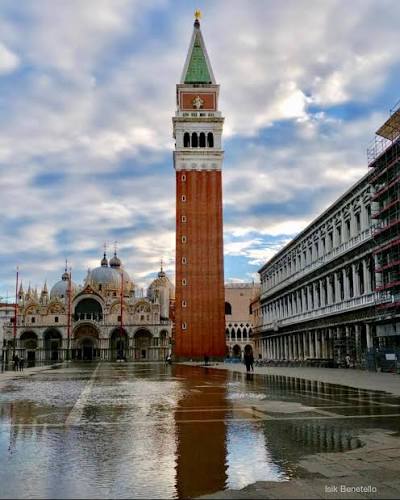
This morning started with a walking tour of the Plaza and area. The hotel was only a block from St. Marks Square, famous for its pigeons. We walked through the Square to the Campanile across from the 15th century clock tower. At 323 feet high, the remarkable San Marco Campanile is Venice’s tallest structure, providing anyone arriving by sea their first glimpse of the city. Featuring the shining golden statue of the archangel Gabriel atop its green spire, which once served as a lighthouse, this bell tower was originally constructed in the ninth century, when it was used as a watchtower.
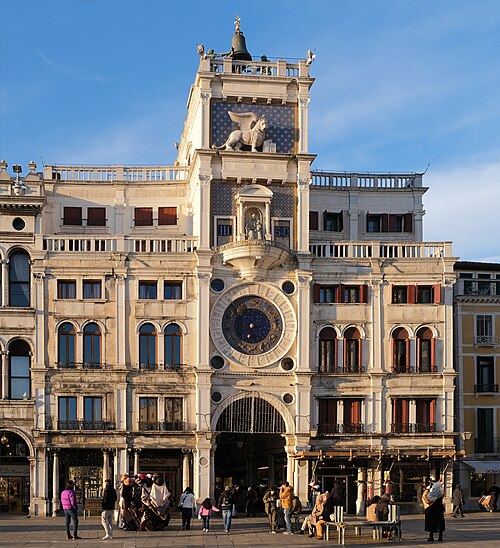
The clocktower completed in 1499., is Famous for its intricate astronomical dial, bronze “Moors” that strike the hours, and legendary history, On a terrace at the top of the tower are two great bronze figures, hinged at the waist, which strike the hours on a bell. One is old and the other young, to show the passing of time Below this level is the winged Lion of St. Mark with the open book, before a blue background with gold stars. Below again, is a semi-circular gallery with statues of the seated Virgin and Child with panels showing the time. Below this is the great clock face in blue and gold inside a fixed circle of marble engraved with the 24 hours of the day in Roman numerals. A golden pointer with an image of the sun moves round this circle and indicates the hour of the day.
Looking at Basilica
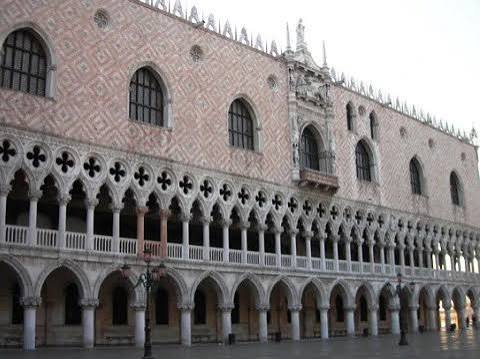
The two distinct pink (red Verona marble) columns, located on the upper west-facing gallery, were where the Doge announced death sentences.
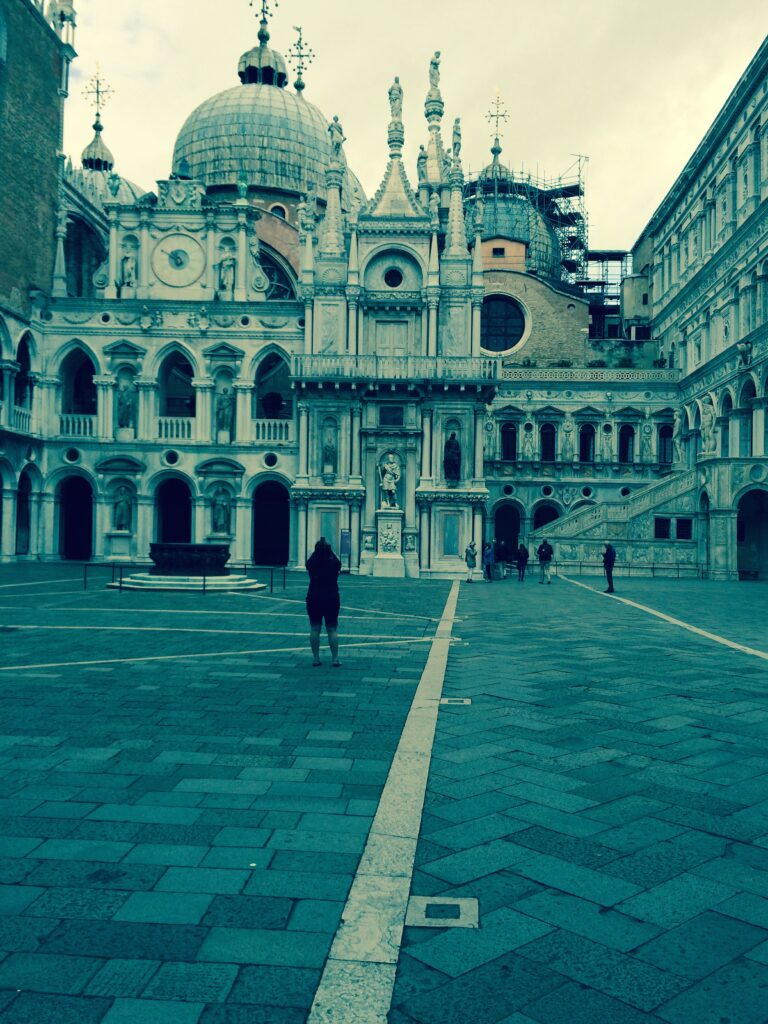
Then we saw the exterior of St. Mark’s Basilica. The tour guide explained that everything used to build the Basilica was “stolen” from somewhere else: various marbles and tiles. We will have a comprehensive tour later.
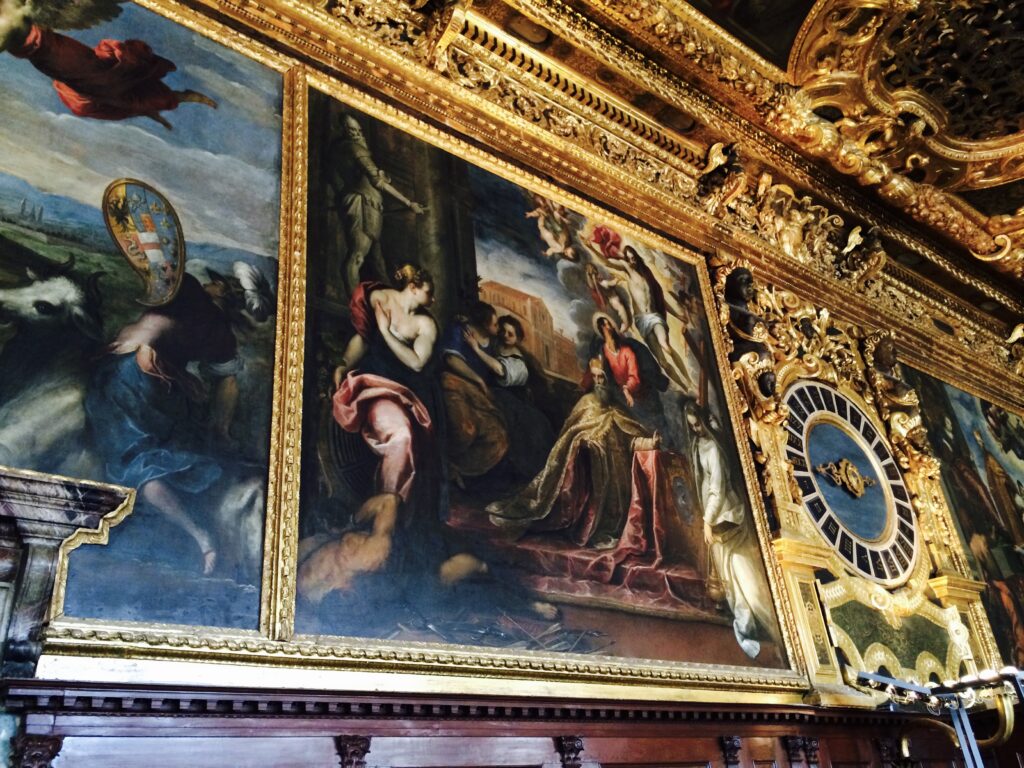
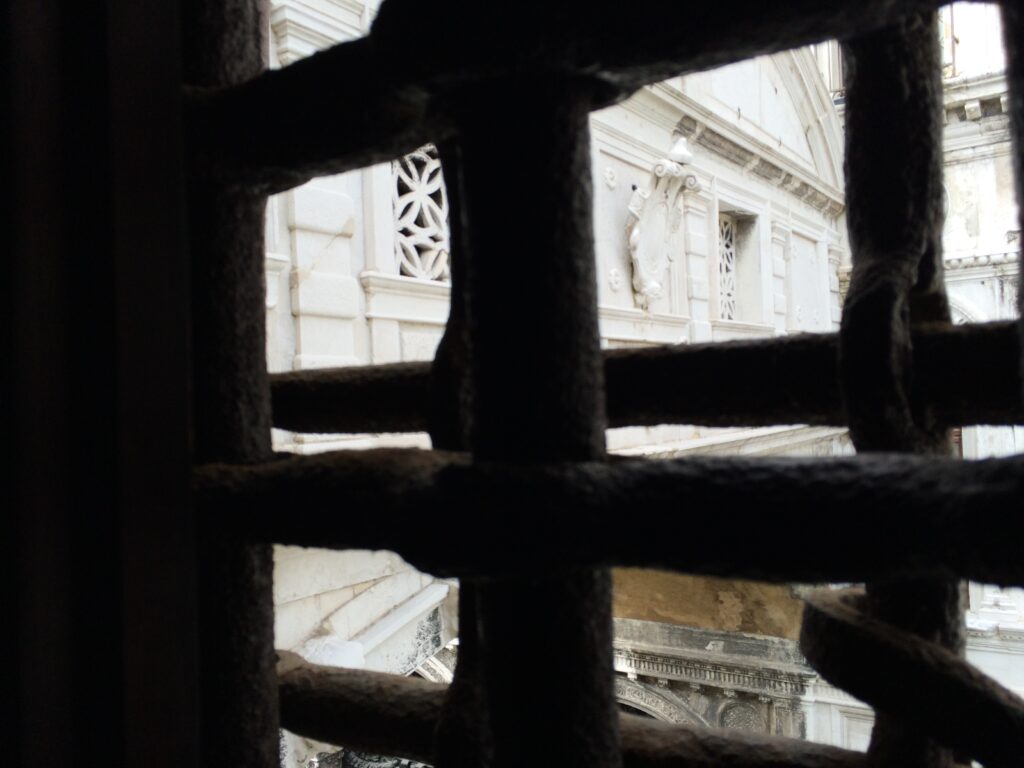
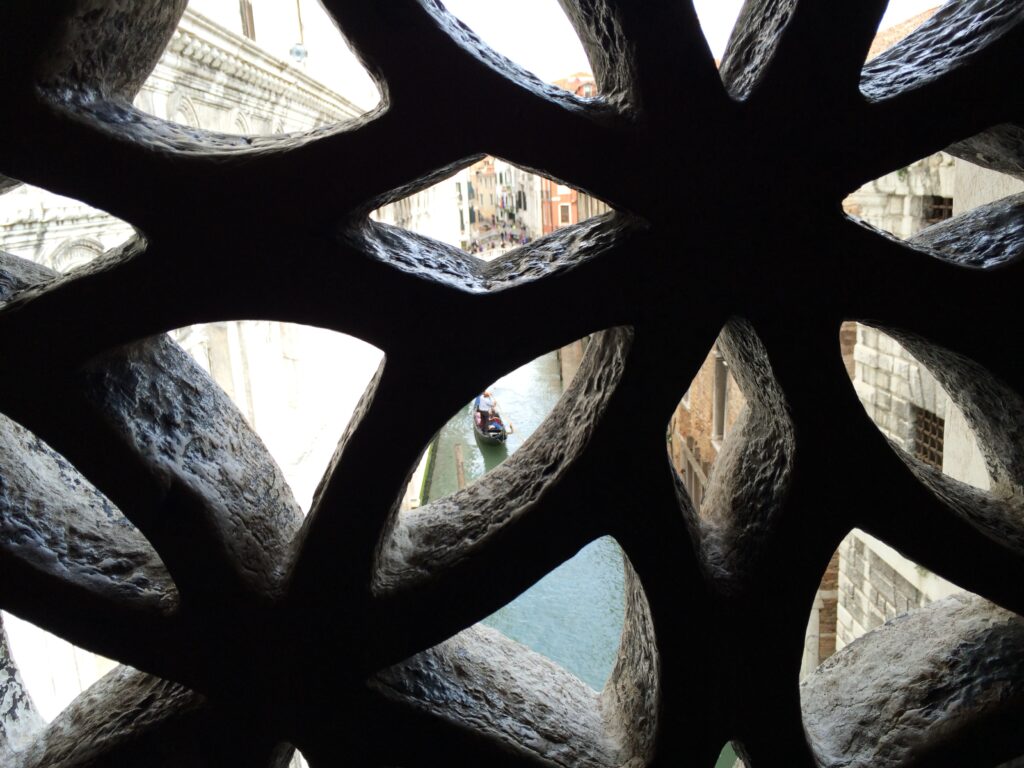
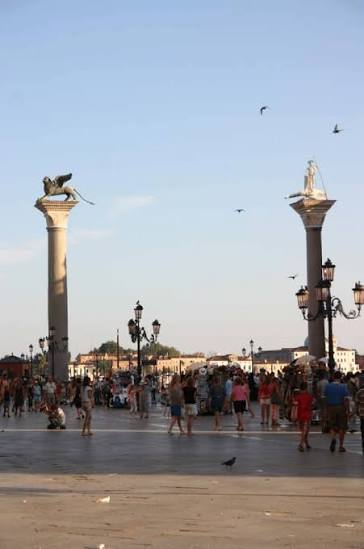
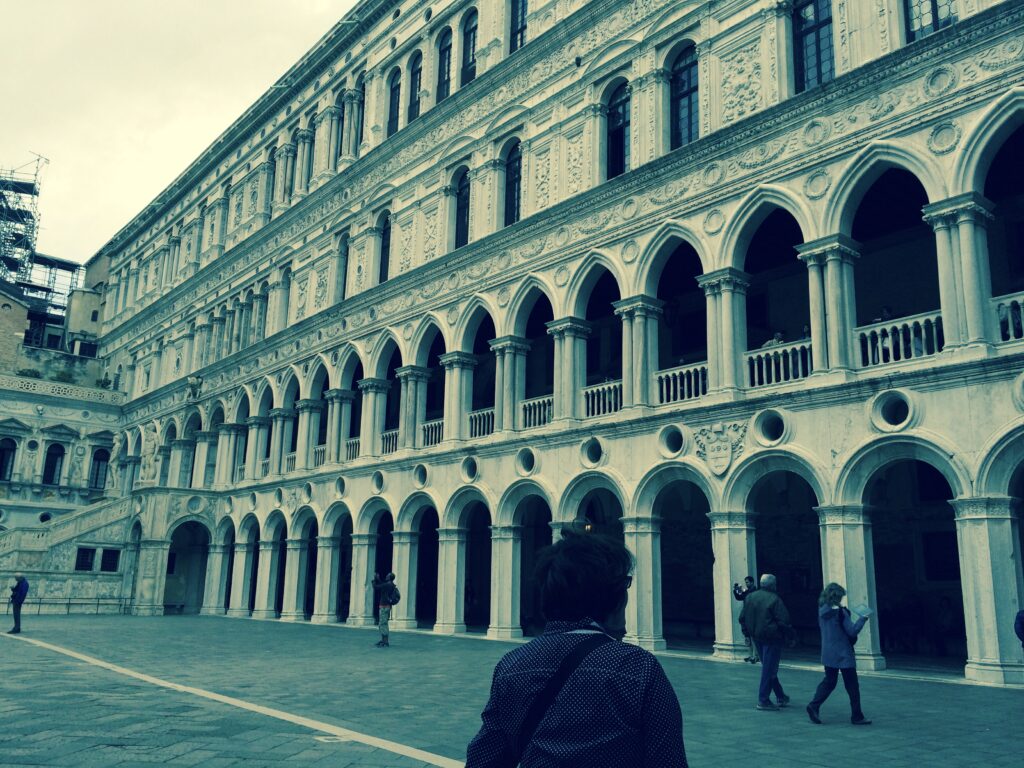
Adjacent to the Basilica was the Doge’s Palace, a 14th century Gothic masterpiece with a pink marble exterior and lacy stone arches. This was the seat of Venetian Government for 1,000 years. We had an extensive tour of the palace. The palace houses wonderful art by Titian, Tintoretto, and Veronese. There was the Golden Staircase and the Bridge of Sighs leading to the prison. Outside, along the piazetta, each column is different. Between the ninth and tenth column, death sentences were declared; executions were carried out between the freestanding columns in the piazetta next to the canal.
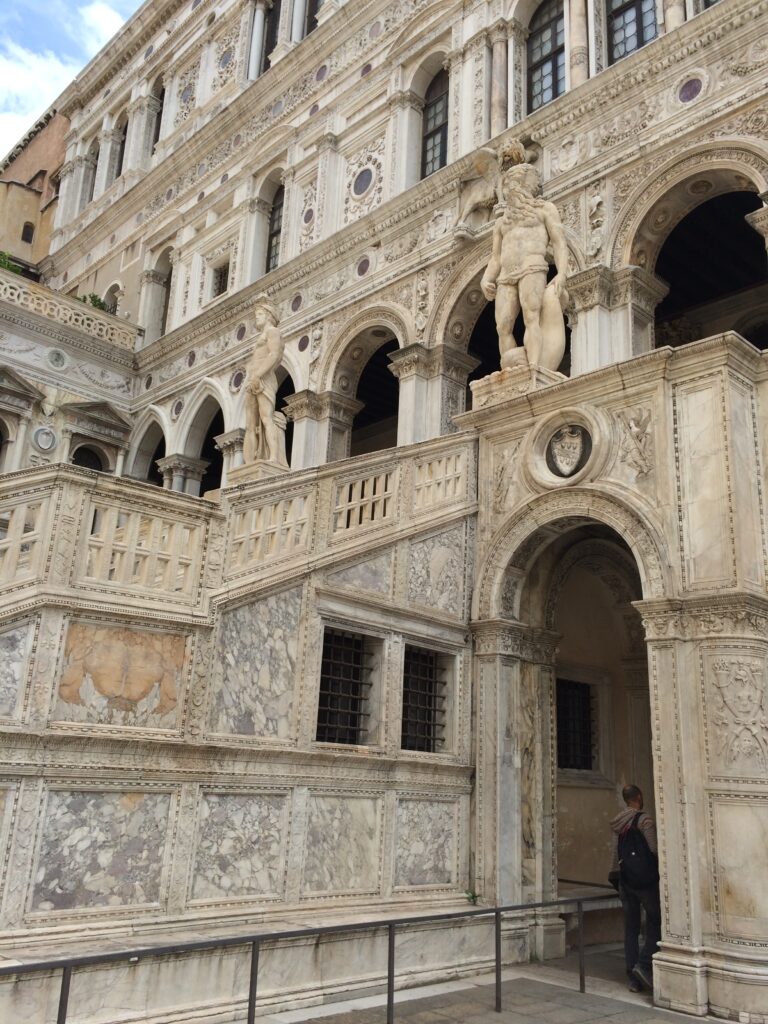
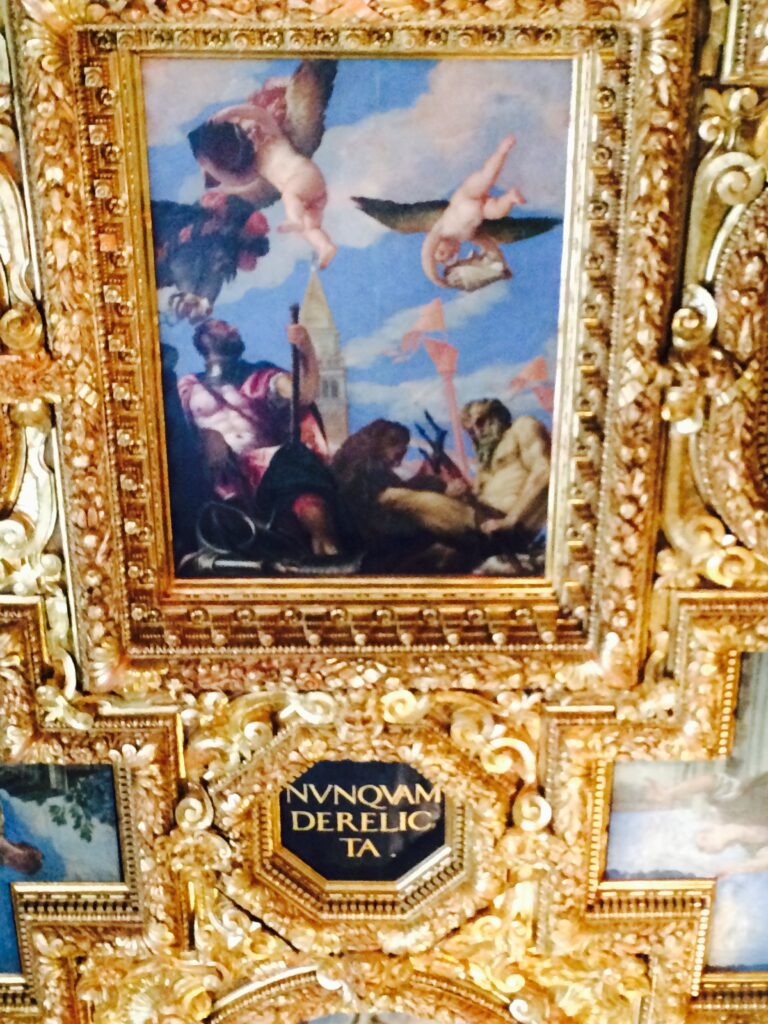
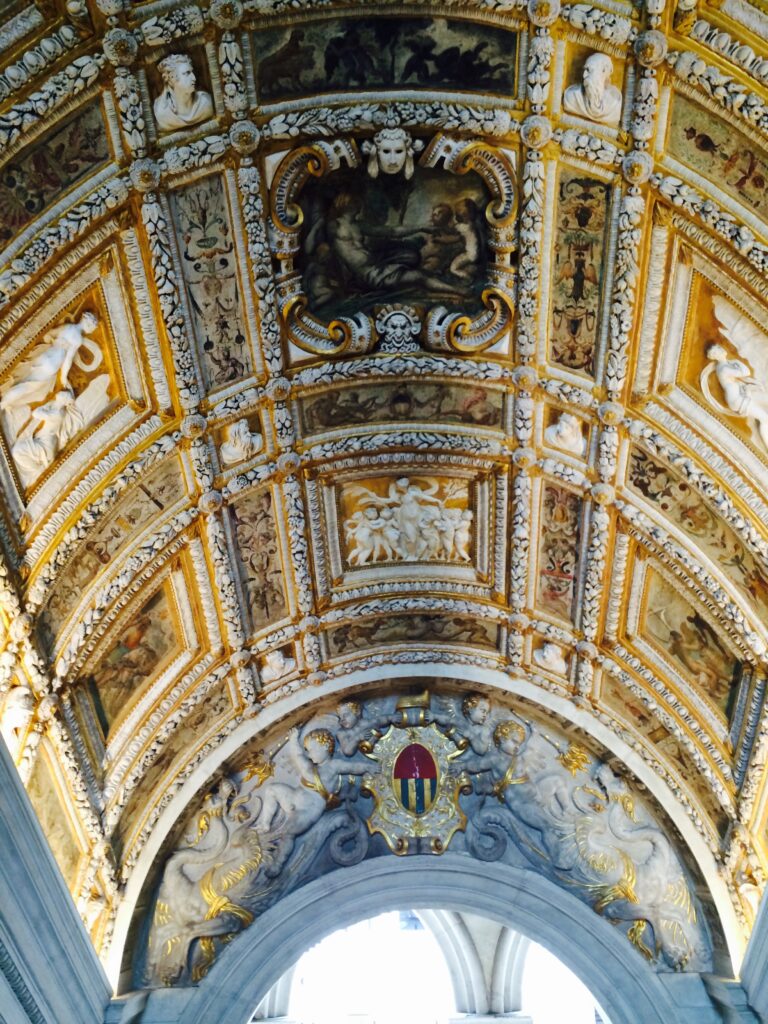
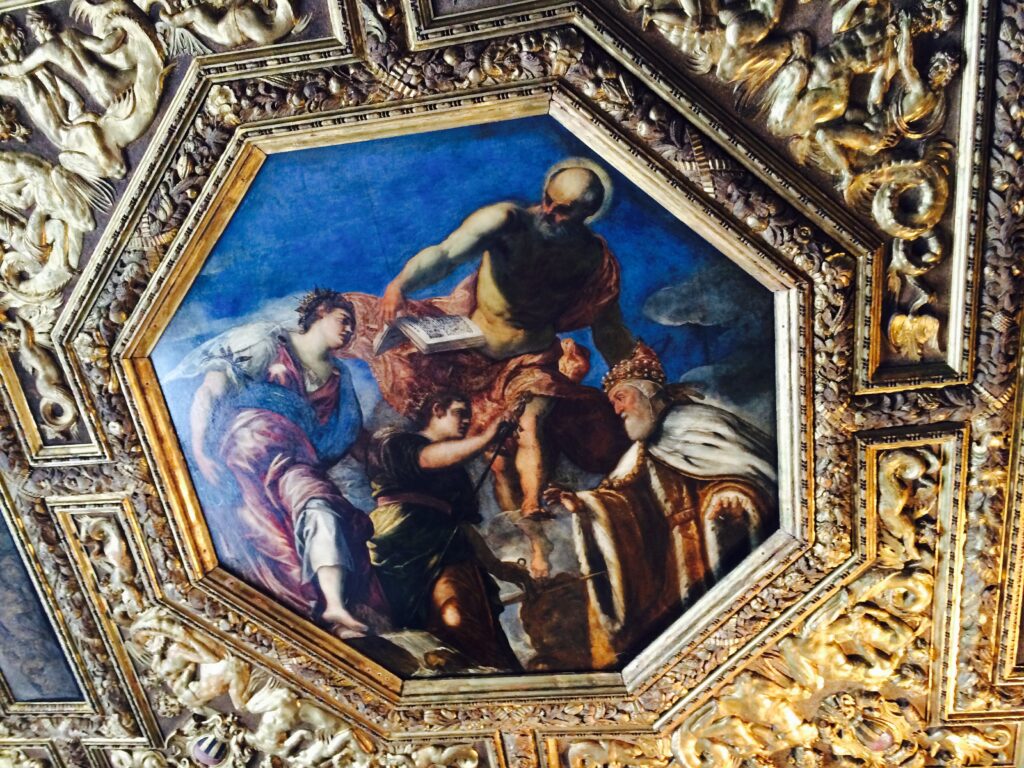
On the canal side gateway to the piazetta are two pinnacles, with two figures of the Cardinal Virtues; the gateway is crowned by a bust of St. Mark over which rises a statue of Justice with her traditional symbols of a sword and scales. In the space above the cornice, there is a sculptural portrait of the Doge kneeling before the St. Mark’s Lion, symbol of Venice. Erected in the 12th century, these imposing granite monoliths were taken as spoils of war and served as the ancient, ceremonial gateway into the Republic of Venice. Across the Square from the Palace were various buildings housing a library, shops, and three museums. They were built in the same 14th century Gothic style.
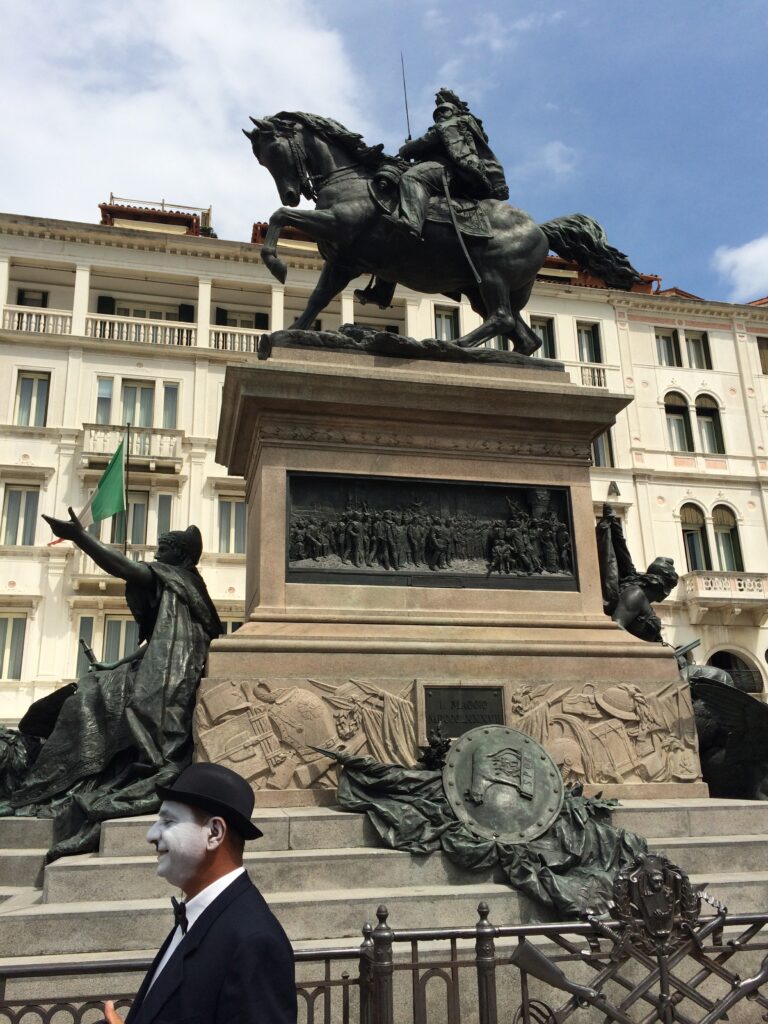
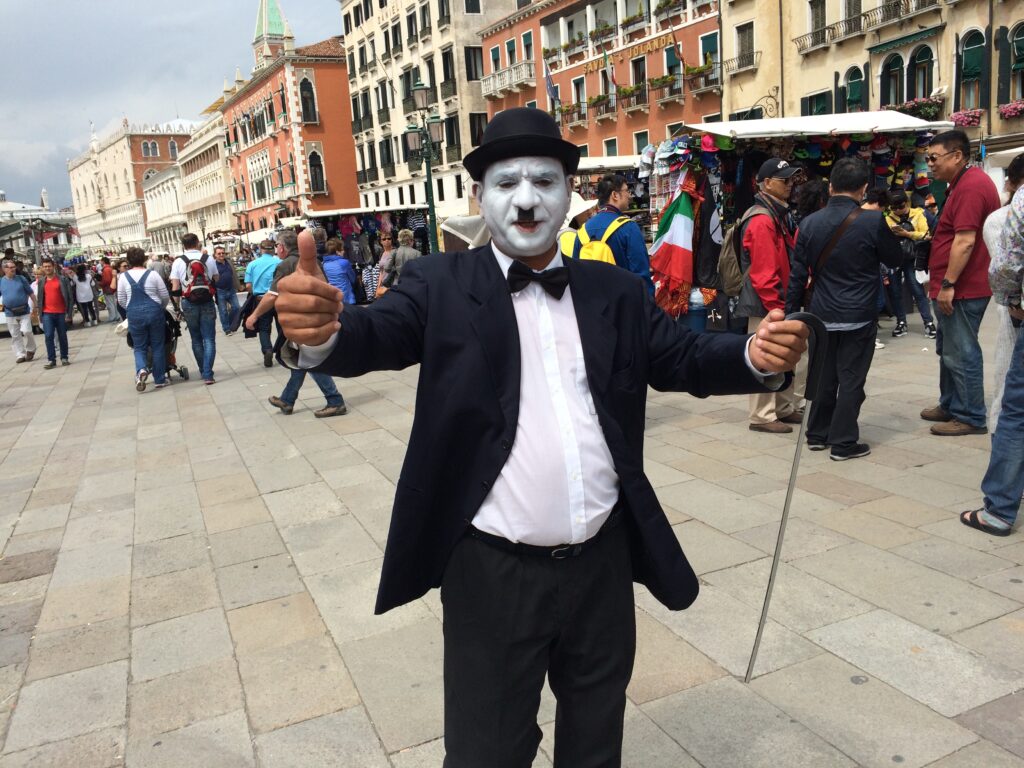
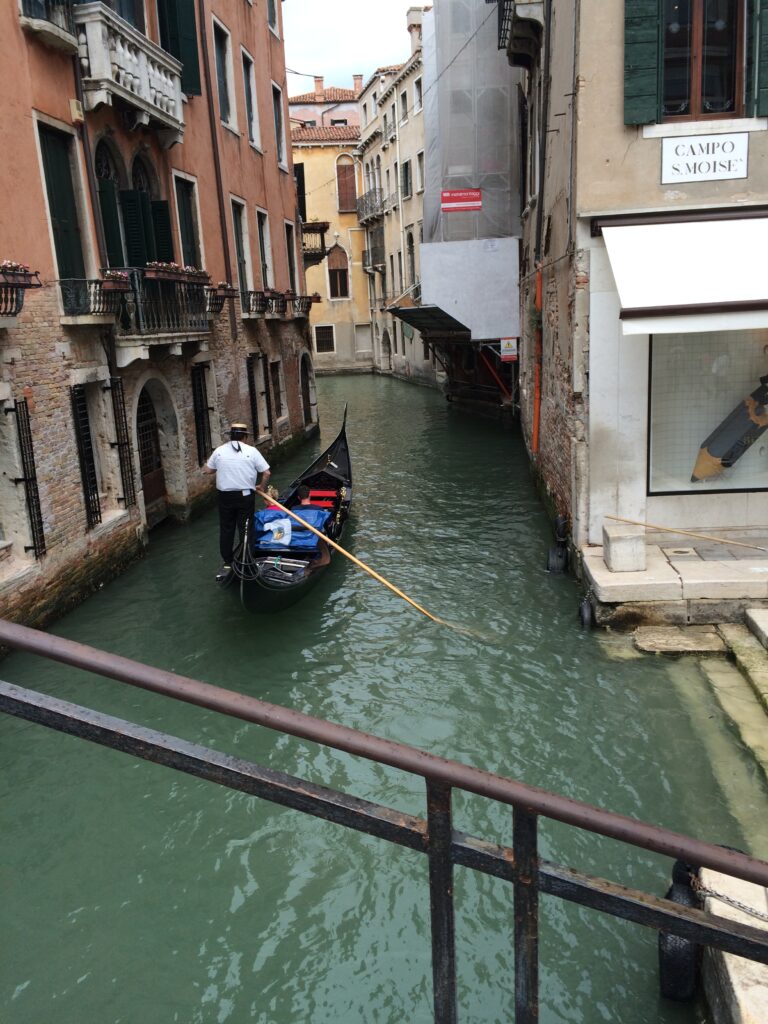
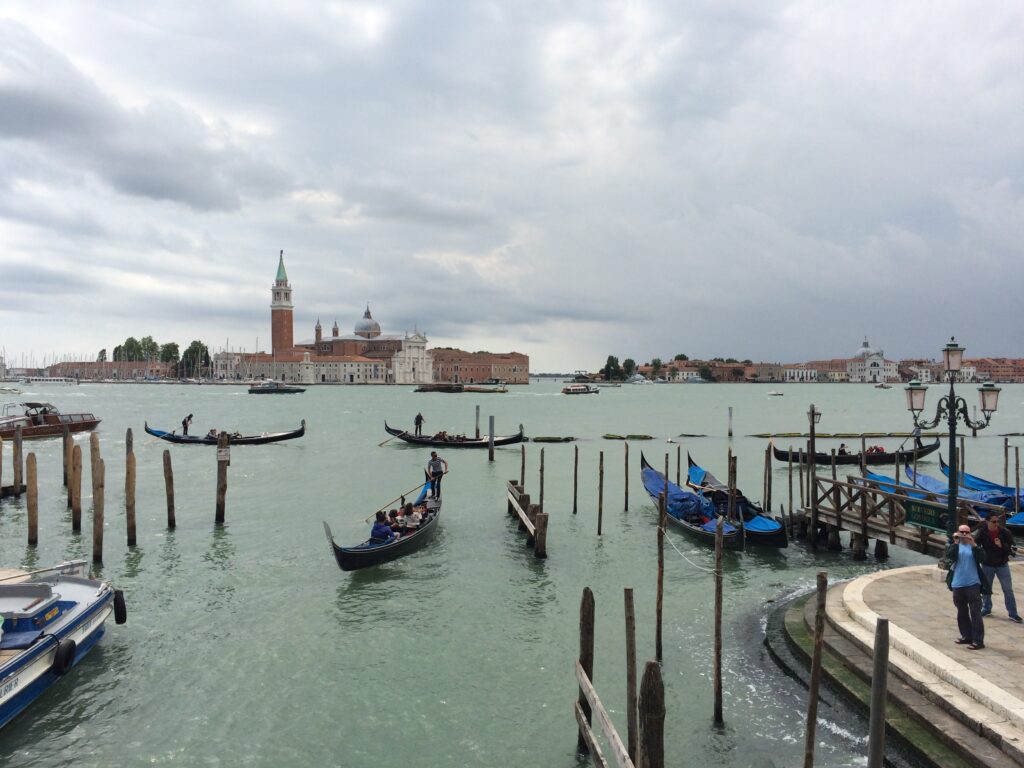
Walking along the canal, we saw the monument to Victor Emanual II, the first king of a united Italy. t was sculpted by Ettore Ferrari and inaugurated in 1887 to commemorate the tenth anniversary of the king’s death. There was also a mime entertaining people. We passed by canals with gondolas. It was lovely.
Our afternoon was free, so we explored the museums on the plaza. The National Archaeological Museum was established in 1523 by Cardinal Dominico Grimani.. This Museum has a great collection of Greek and Roman sculptures, ceramics, coins, and stones dating back as far as the 1st Century B.C. It tells the story of a city of art and its collections donated over the years.
Next was the Correr Museum, one of the most important museums in the city of Venice. It houses works of great historical and artistic value in areas such as painting, sculpture, furniture, naval instruments and much more. Through these objects, this museum tells the history of Venice from its foundation to its union with Italy in the 19th century. Here you will find objects that reflect each of the aspects that have marked the life and history of the current Venice. furniture, naval instruments and much more. Through these objects, this museum tells the history of Venice from its foundation to its union with Italy in the 19th century. Here you will find objects that reflect each of the aspects that have marked the life and history of the current Venice.
The third “museum” was the Marciana Library, one of the largest Italian libraries and the most important one in Venice. Inside are some of the best collections of Greek, Latin, and Oriental manuscripts in the world. It is located at the bottom of San Marco Square between the Belfry of San Marco and the Zecca Palace of Venice. After these explorations, we ate at the Marco Polo restaurant in the Square.
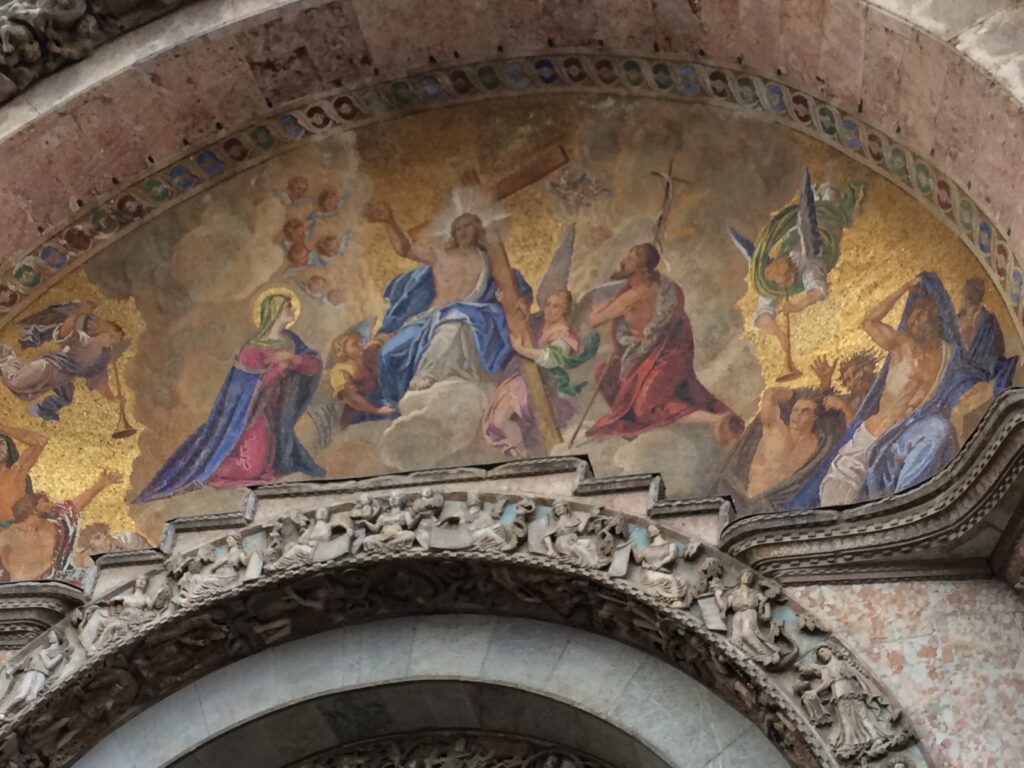
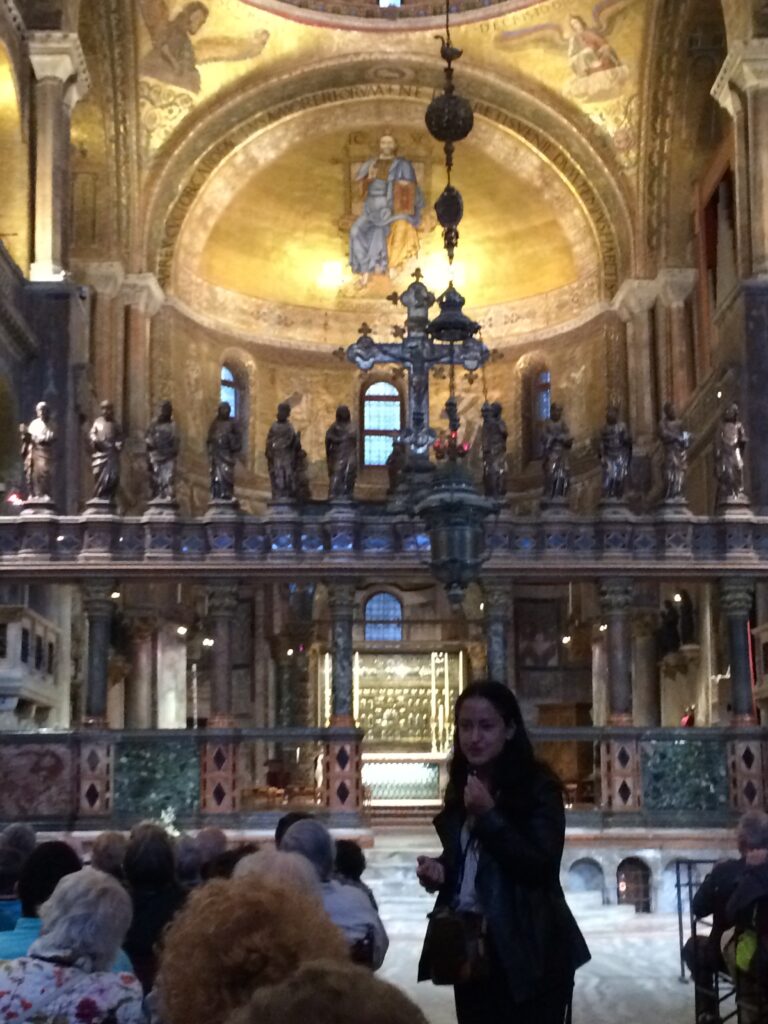
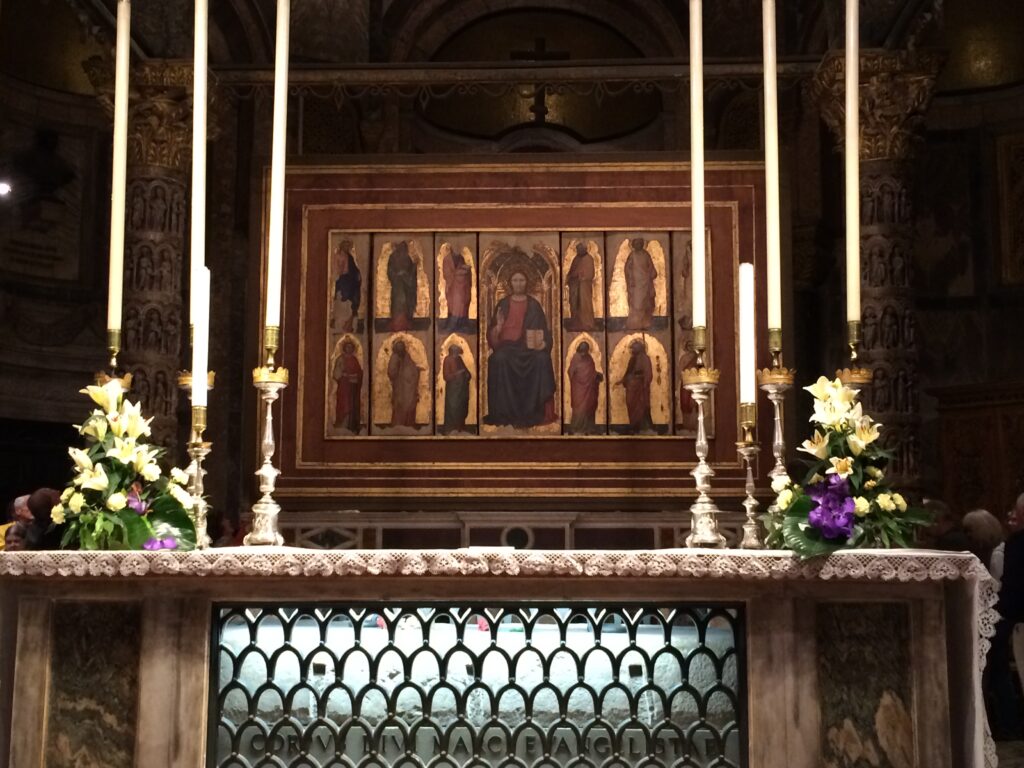
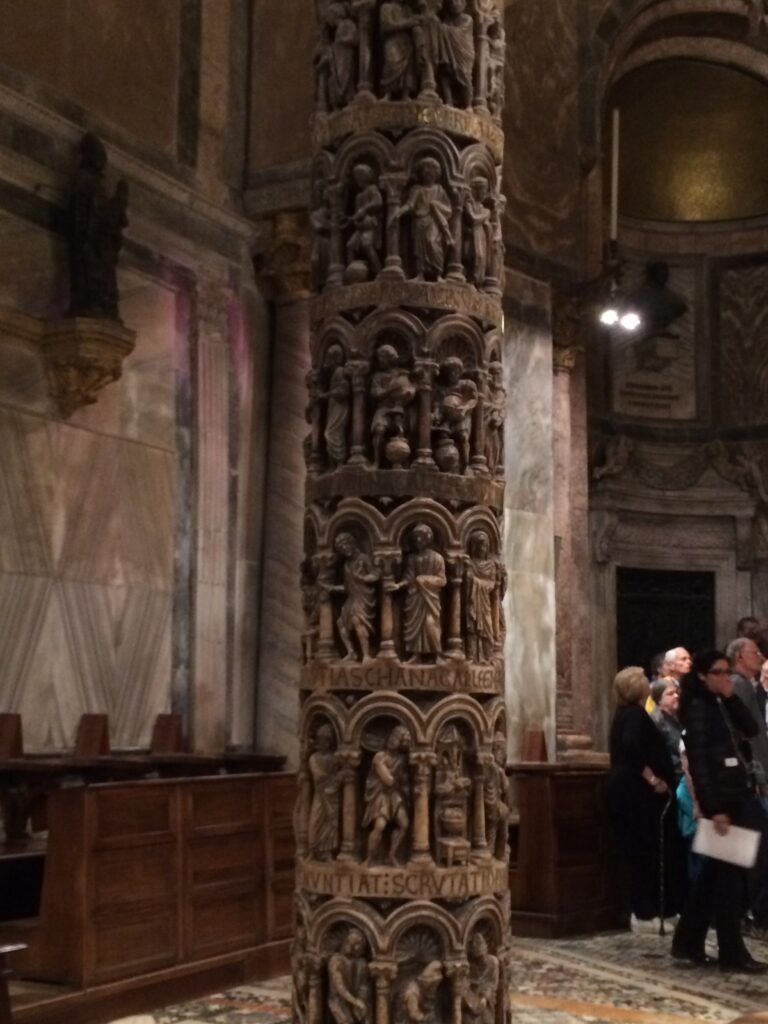
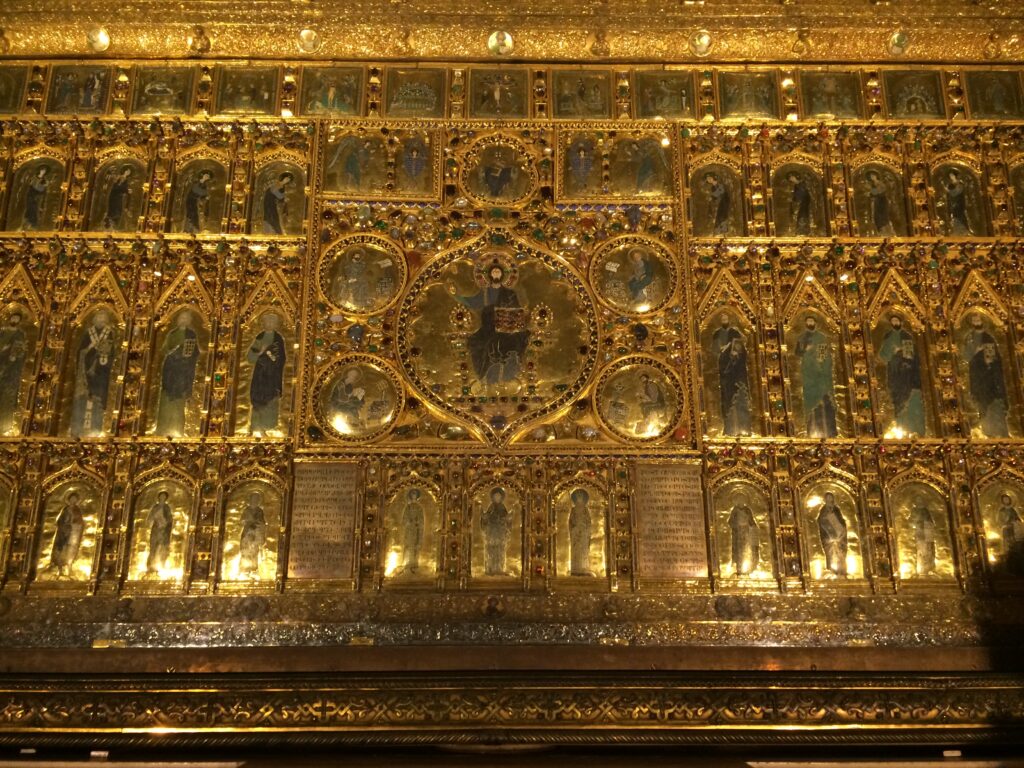
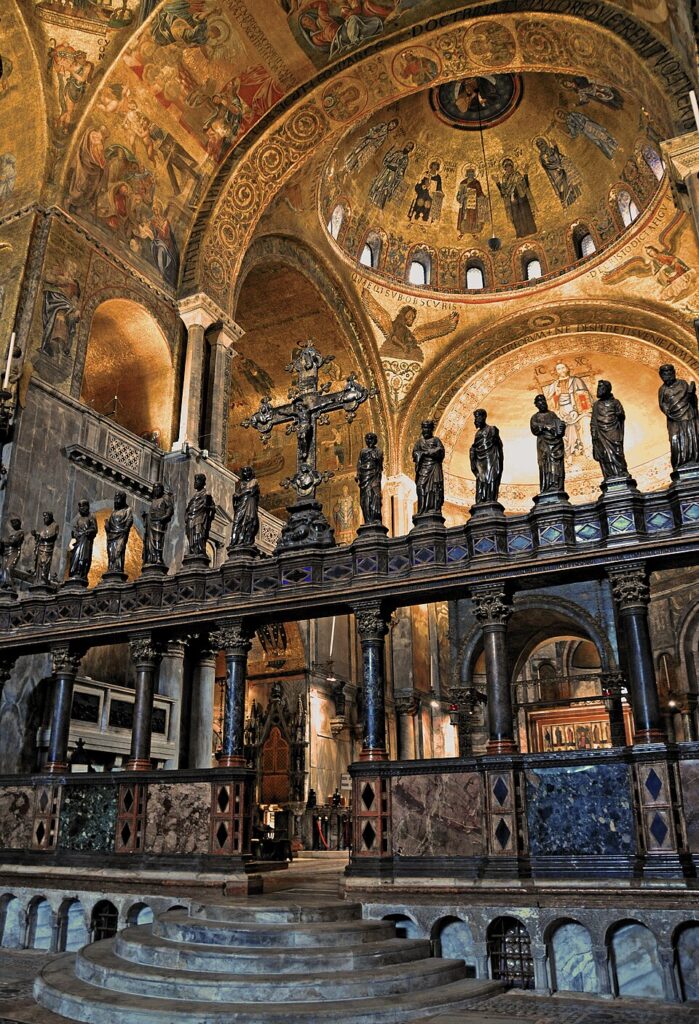
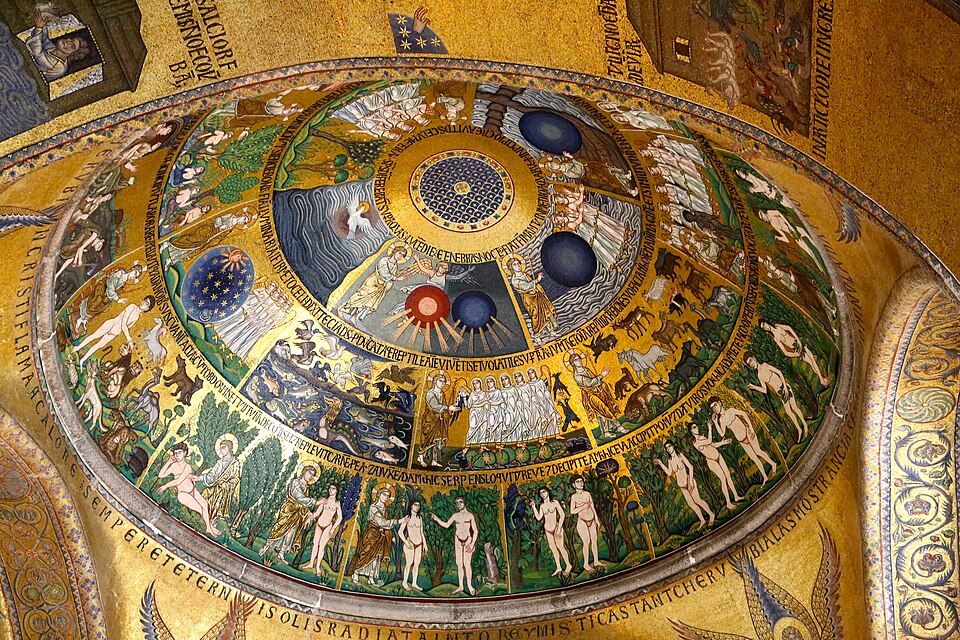
After dinner, we had a private tour of St. Mark’s Basilica. The church was built in 828 C.E. as a tomb for St. Mark. The story is that his body was snuck out of Alexandria in a casket of pork, so the Muslims wouldn’t find it. No one knows for sure whether St. Mark is actually buried there, but his tomb is there. After a fire in 976, the church was rebuilt and became the Doge’s private chapel. It is now the Cathedral of Venice. It has large bronze doors, above which are beautiful mosaics of the Life of Christ. There are also mosaics of the Life of St. Mark. On a balcony above the doors is a team of Bronze horses. The Basilica is in the shape of a Greek cross. The marble floor, which dates from the 12th century, has animal designs. The interior is completely covered with mosaics of Biblical scenes and people. At the front, behind the altar is a large reredos. On the side commonly facing out are pictures done in enamel. On high feast days it is turned to reveal a sculpted gold altar piece. Venice is built on mud. All the buildings are constructed on pylons several feet down. The cathedral is sinking and in many places the floor was uneven. It is also atilt.
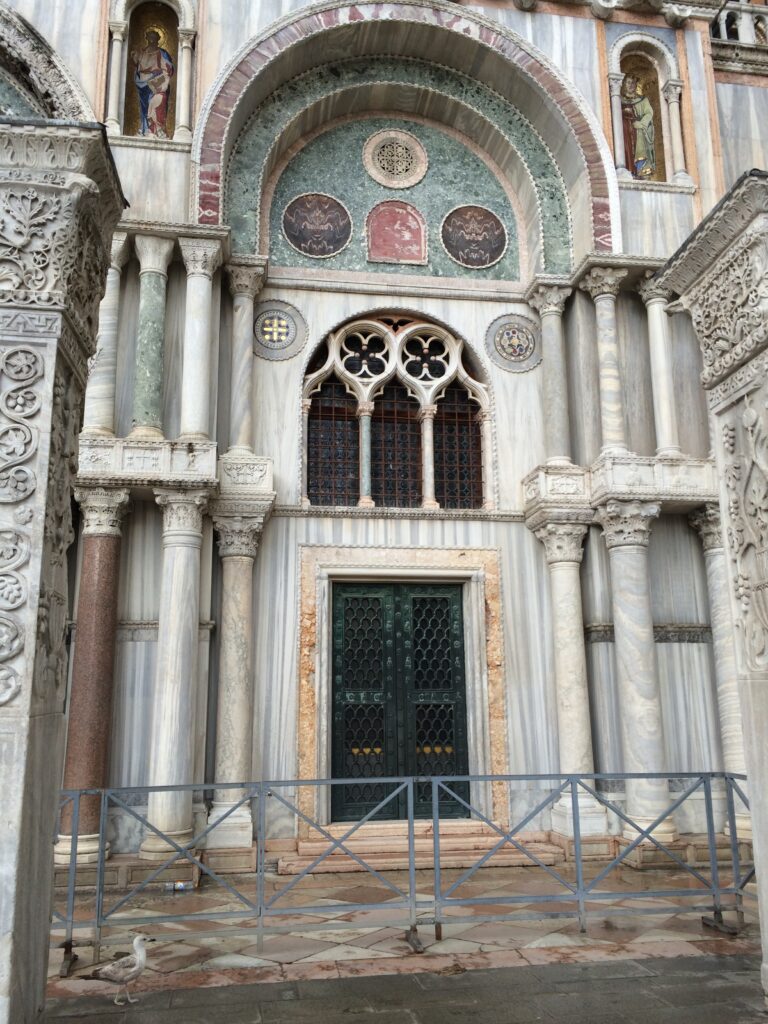
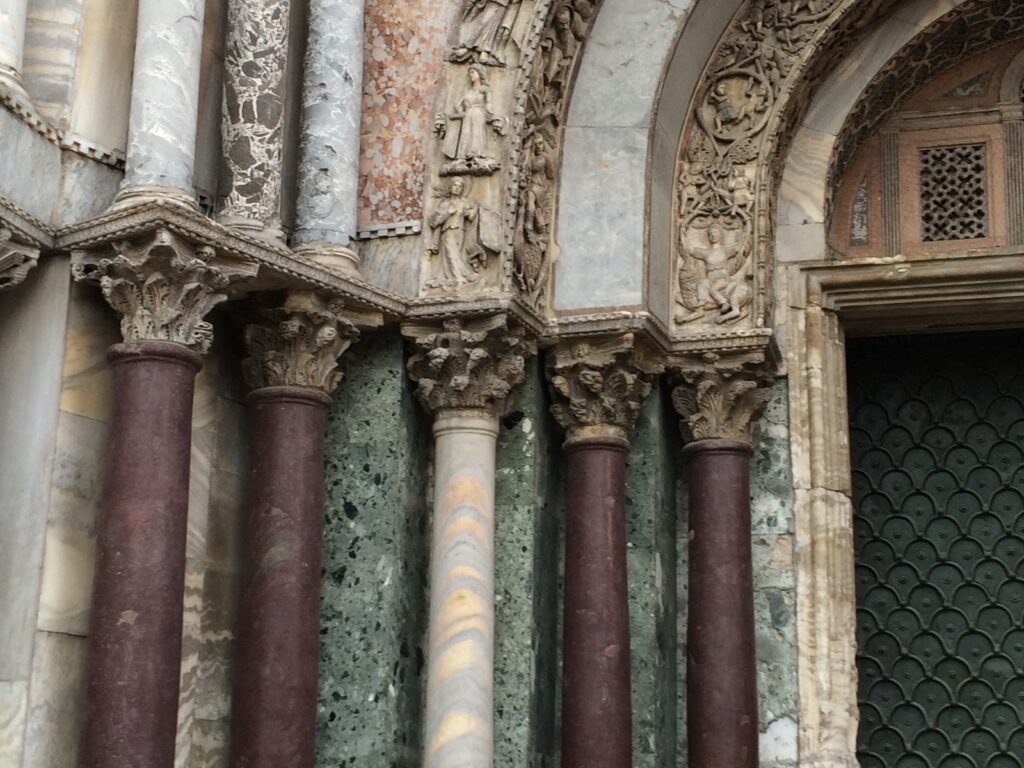
Note Colors
Depicting Life of Christ
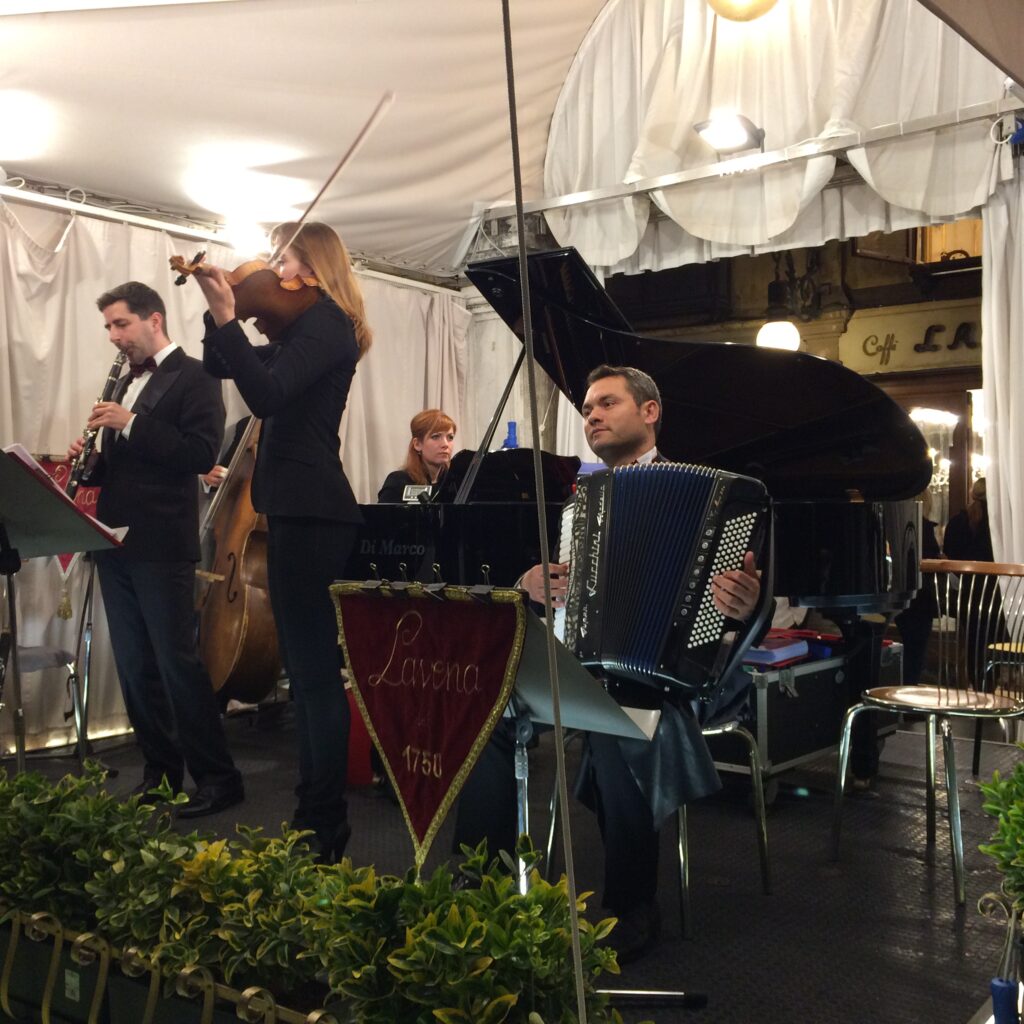
After the tour we strolled the Piazza, stopped, for gelato and wine, and returned to the hotel to pack.
Leave a Reply