Having left Australia, our next destination is Indonesia, a country in Southeast Asia and Oceania between the Indian and Pacific Oceans. Comprising over 17,000 islands, it is the world’s largest archipelagic state and 14th-largest country by area. The archipelago has been inhabited since prehistoric times. By the second millennium, it had become a crossroads for international trade linking East and South Asia. Hinduism, Buddhism, and Islam have all shaped the various islanders. Indonesia proclaimed its independence from Dutch colonial rule after WWII. Our first Indonesian port was Kupang, West Timor.
Kupang, West Timor
Kupang, West Timor, Indonesia, is located on the south coast of the island of Timor, in the eastern part of the Indonesian archipelago. It is the capital of the province of East Nusa Tenggara and is on the northern shore of Kupang Bay. It was an important port and trading post during the Portuguese and Dutch colonial eras.
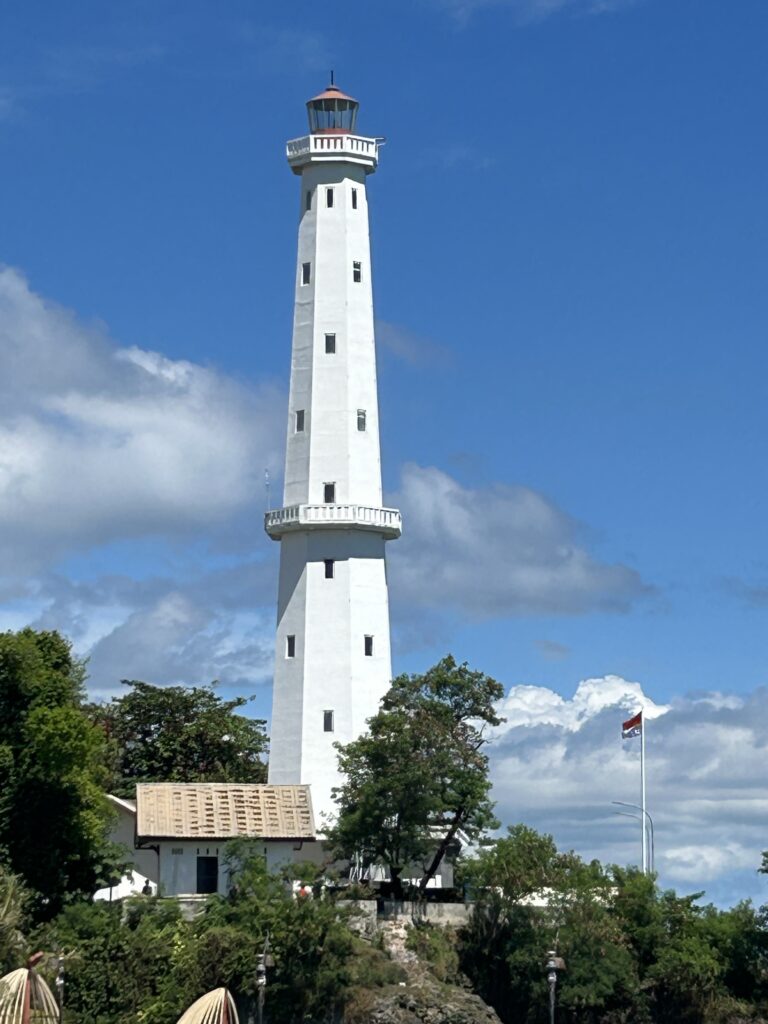
In the town, you see the historic Fort Concordia with its lighthouse, built in 1613 by the Portuguese. This well-preserved fort offers a glimpse into the colonial era and features remnants of the original cannons, dungeons, and barracks. Nearby is the Portuguese cemetery where headstones reflect the city’s colonial past. Kupang was the final destination of William Bligh, who was set adrift in an open boat following the Mutiny on the Bounty.
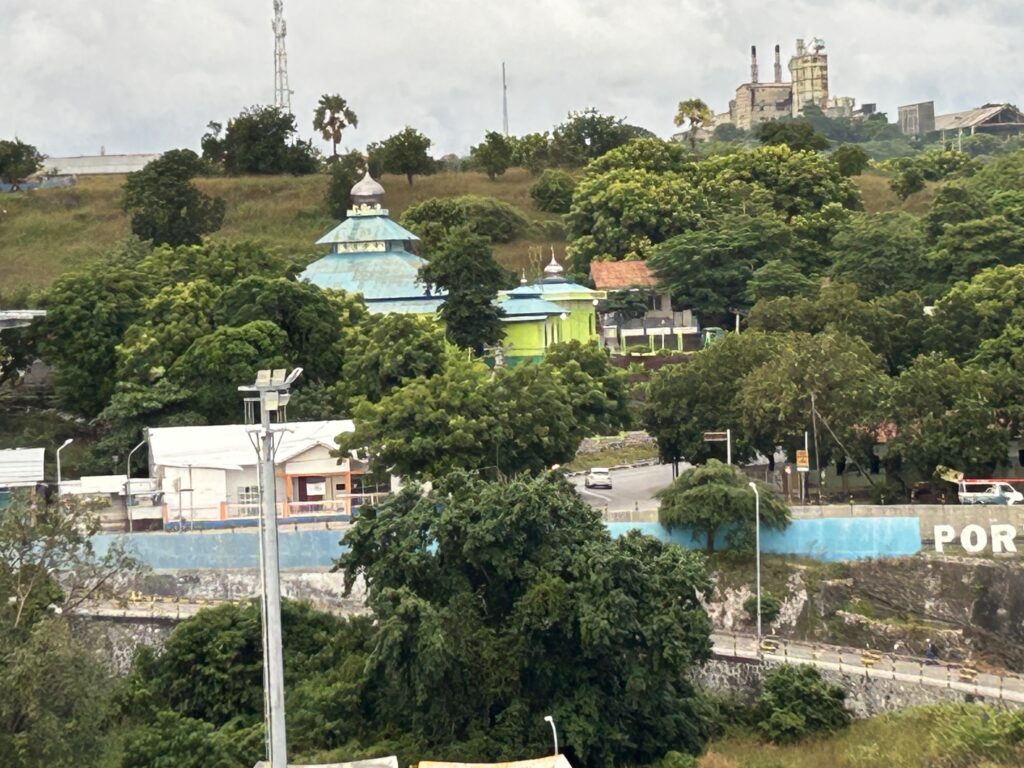
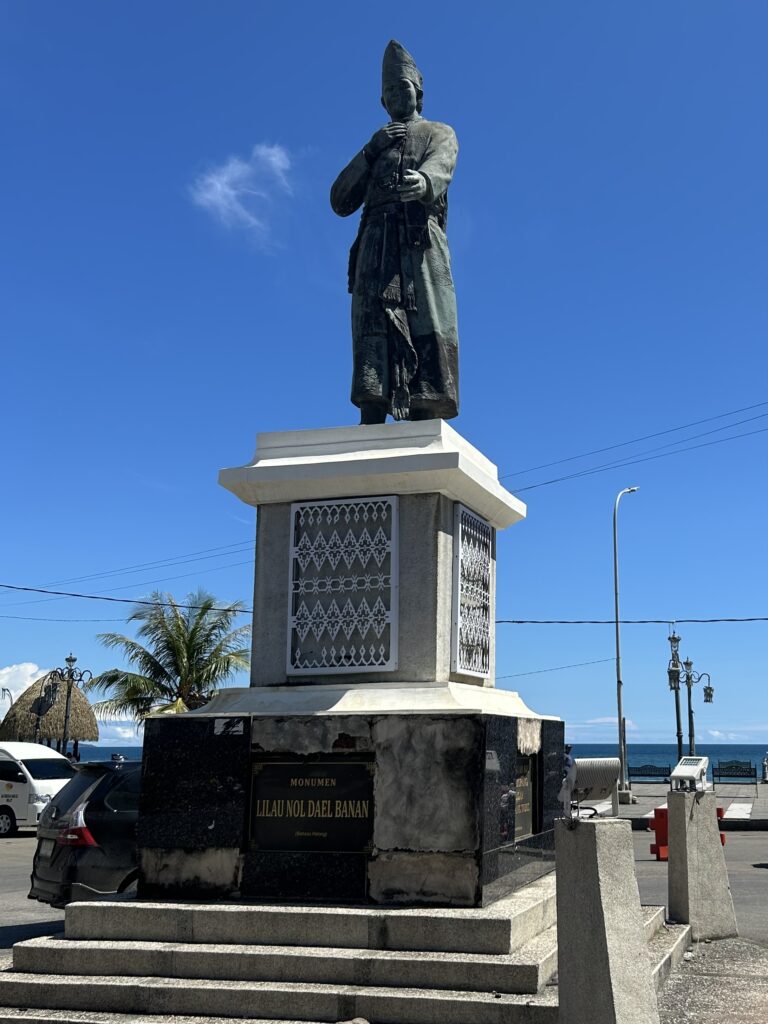
Our shuttle took us into Lai-lai Bisi Kopan, Kota Lama (Tedis Beach), a captivating waterfront area. The name means “the place from which Kupang originated” in the Helong language. Here is Fort Concordia, the lighthouse, and cemetery. In the center of the market area is a statue of Lord Kopan, the leader of the Kopa community. From the waterfront you can see the surrounding islands.
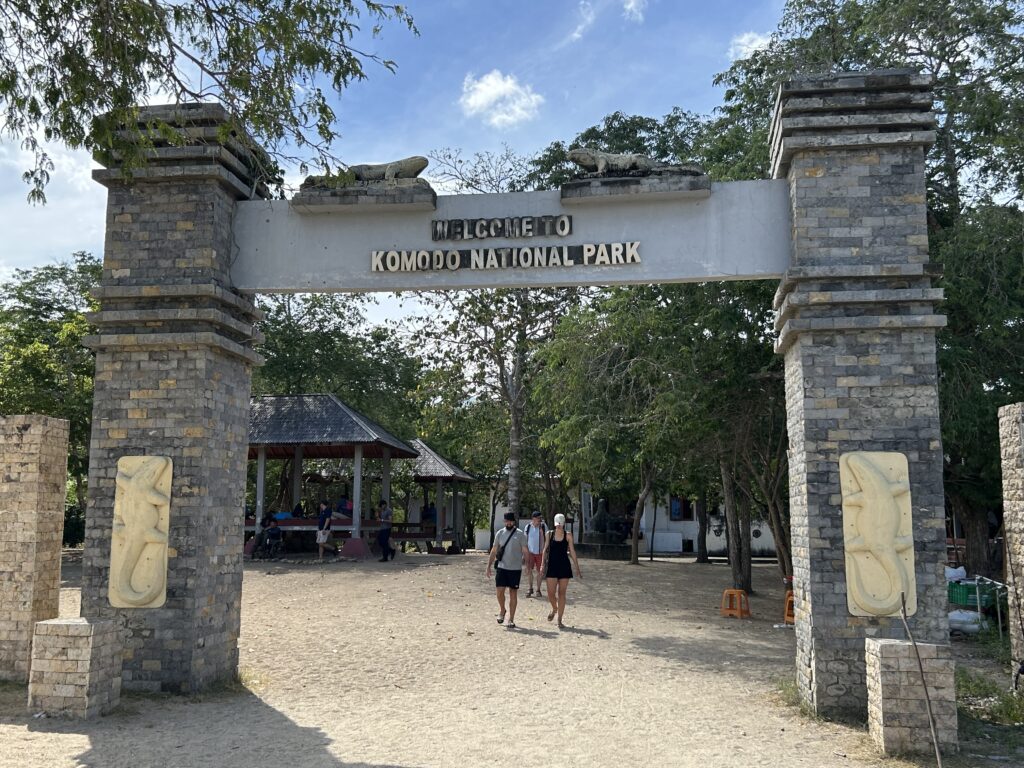
Komodo Island
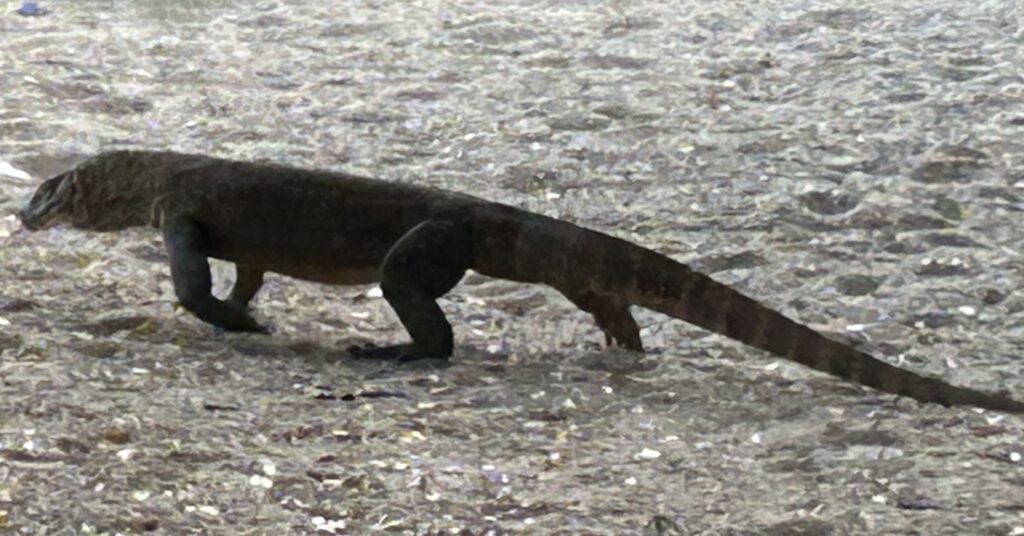
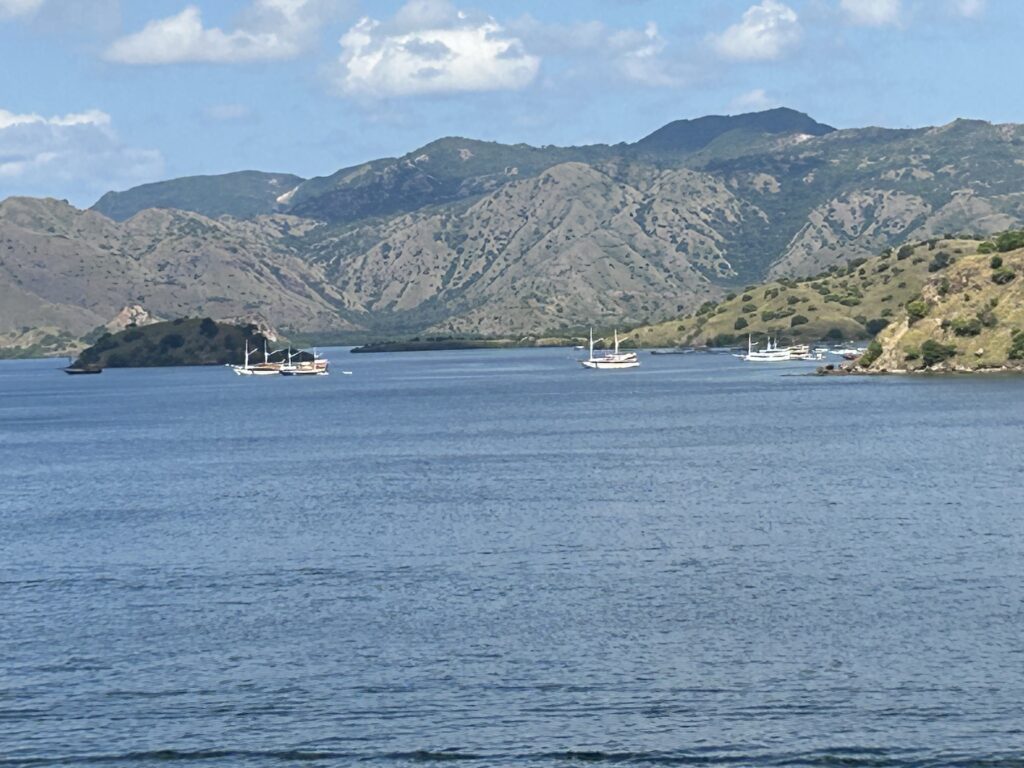
The island of Komodo is famous for being home to the beastly Komodo Dragon, the world’s biggest lizard and pink sand beaches. Komodo National Park is a UNESCO site that includes dozens of islands and coral reefs. The Park’s three main islands are Komodo, Rinca, and Padar.
About 5,700 lizards live on the island of Komodo, the only place in the world where they are found.
The island limits visitors to 1,000 per day. Only tour participants can go onto the National Park trails. As I was too late to get a National Park tour, I was lucky to go in and see a dragon on the beach.
Bali
Bali is an Indonesian island located in the western-most end of the Lesser Sunda islands between Java and Lombok. With miles of black and white sand beaches, active volcanoes, highland rainforests, terraced rice fields, mangrove forests, and one on the world’s richest coral reef systems, Bali is a favorite destination of travelers from all over. Few places carry the same quite serenity as Bali. Just eight degrees south of the Equator, Bali is only 95 miles long and 50 miles wide. It lies between the Indian Ocean and the Java Sea. It is a Hindu Island, but its form of Hinduism is more relaxed. It has a moderate caste system with caste playing a role only for religious rituals. There are no “untouchables” and people of different castes can have any occupation and may be poor or wealthy. There are no restrictions in marriage between castes. Its Hindu philosophy is that of Tri Hita Karana, meaning harmony between humans, the divine, and the natural world.
Its tallest volcano is Mt. “Mother” Gunung Agung, an active stratovolcano that erupted between 2017 and 2019. It is 10,308 feet tall.
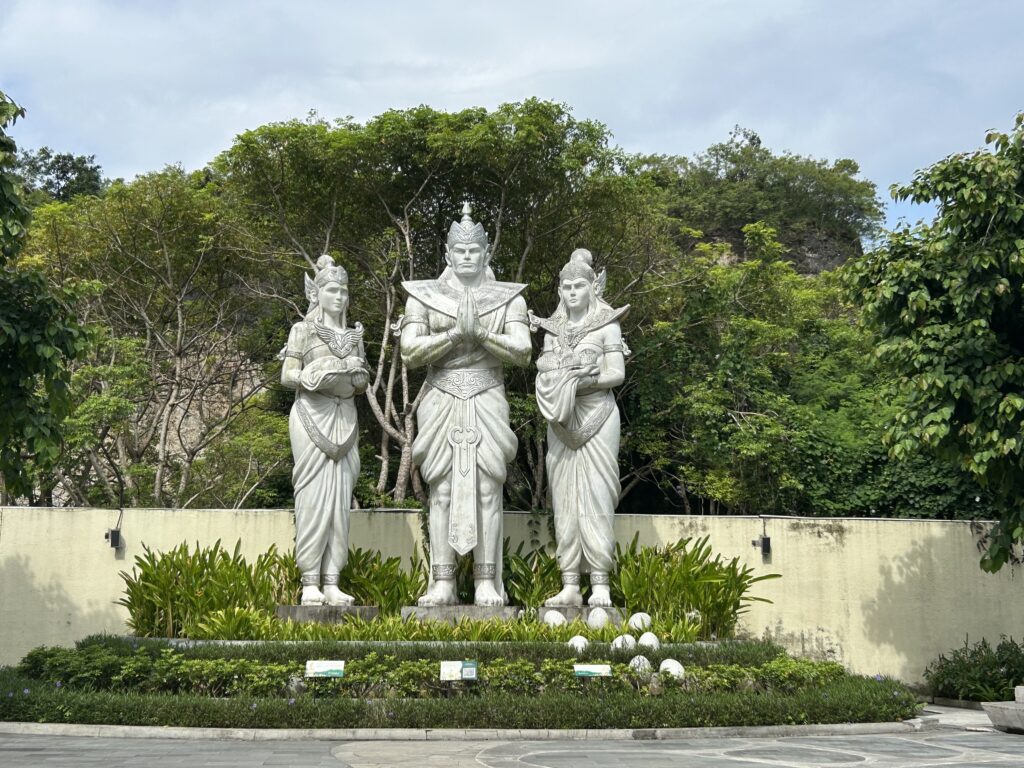
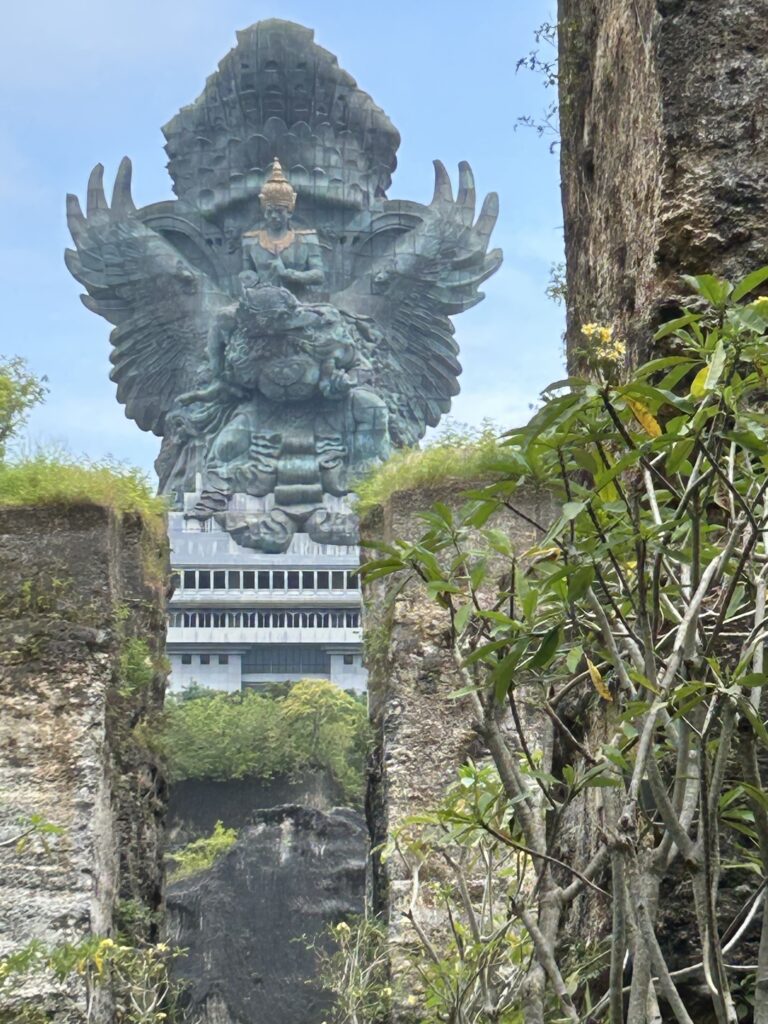
The biggest and most famous statue in Bali is the Garuda Wisnu Kencana (GWK) statue. Nearly 400 ft. tall, it is the fourth tallest statue in the world. The giant statue depicts the Hindu god Vishnu riding Garuda, the mythical bird who became his companion. Inside the statue is a museum that explains the significance of the statue and details the entire construction process. You can also go up to the top in an elevator where you can look out across the island. Surrounding the statue is the GWK Culture Park.
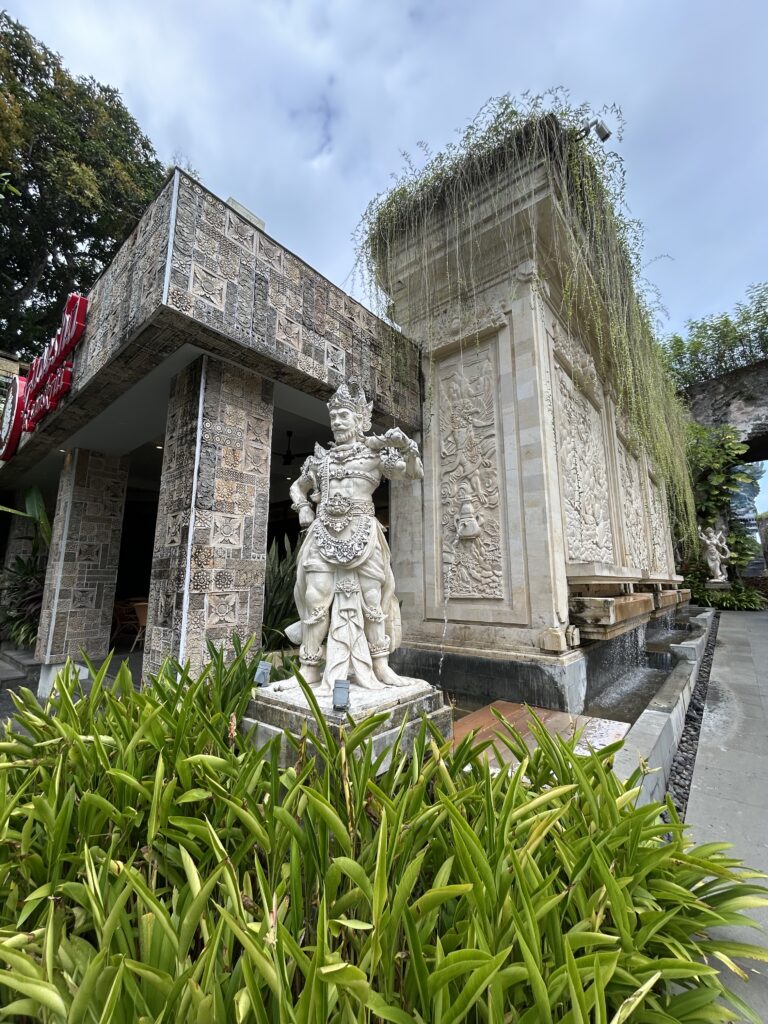
On our second day in Bali, we took an all day private tour to the UNESCO Taman Ayun Temple, a serene Balinese haven situated in Mengwi Village, located 30 kilometers away from the port. This tranquil temple with its landscaped gardens and multi-story roof is a testament to the creativity and craftsmanship of Balinese design.
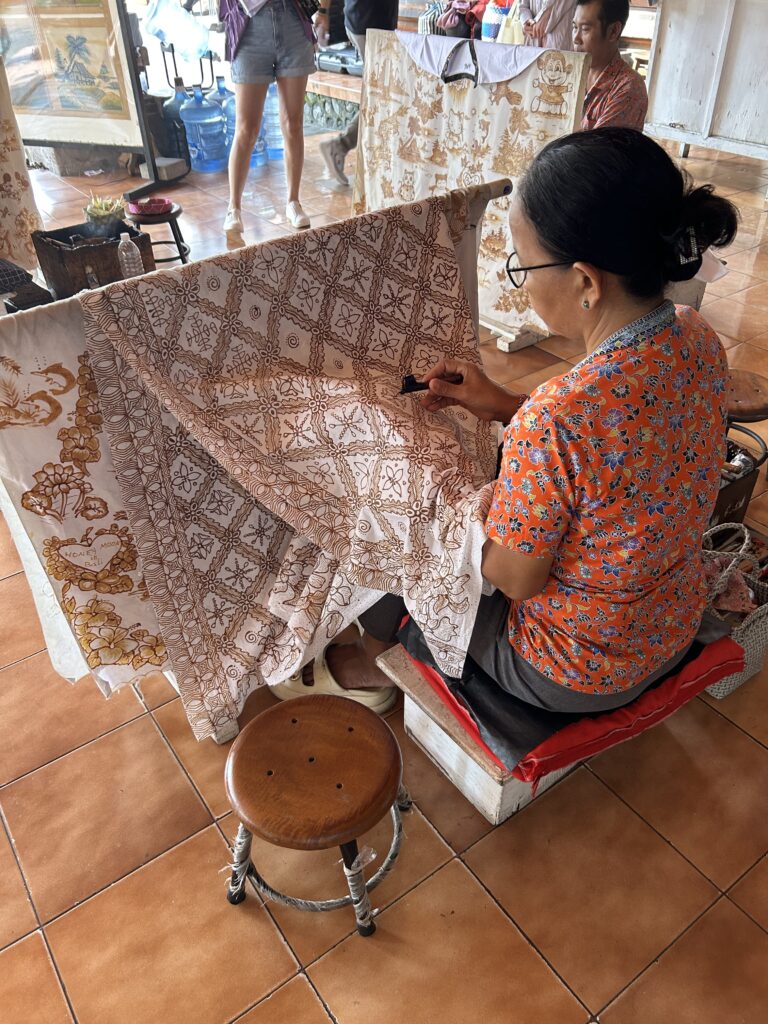
On the way, we made two stops since the temple did not open until 11:00.. First we visited a Batik factory where we saw the Batik fabrics being designed. We purchased two sarongs to wear at the temple. Then we went to a silversmith and watched them work as well as look at the beautiful objects that had been created.
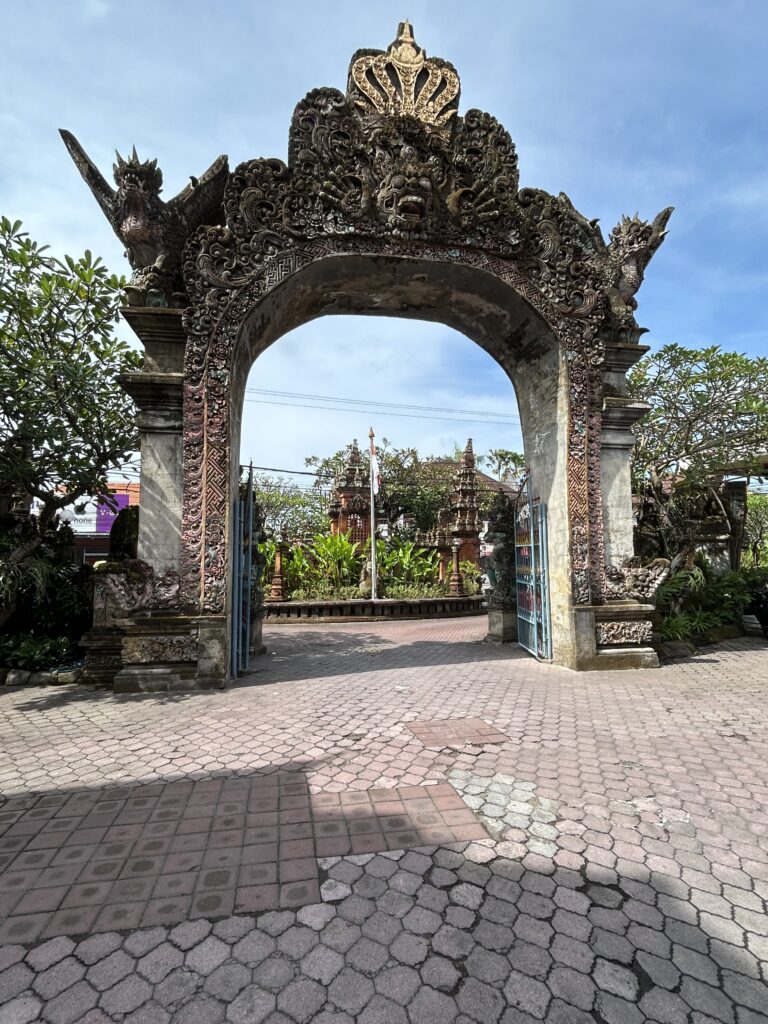
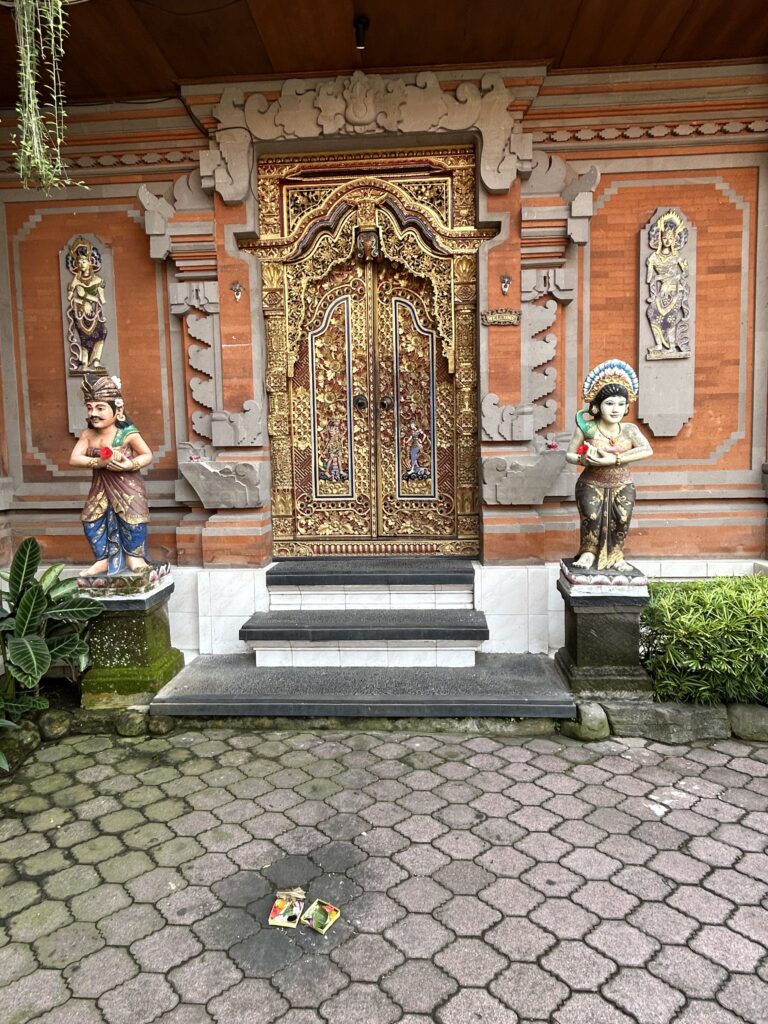
Taman Ayun Temple is one of Bali’s most scenic and culturally significant temples. Its elegant architecture, lush gardens, and a serene atmosphere were fitting as it once served as the royal temple of the Mengwi Kingdom. It was built in 1634 by Gusti Agung Ngurah, the founder of the Mengwi Kingdom. Over the centuries, it has served as a place of worship for local Hindus, particularly dedicated to the gods Brahma, Bishnu, and Shiva. It is one of Bali’s nine directional temples, constructed to protect the island from evil spirits and is an active temple today.
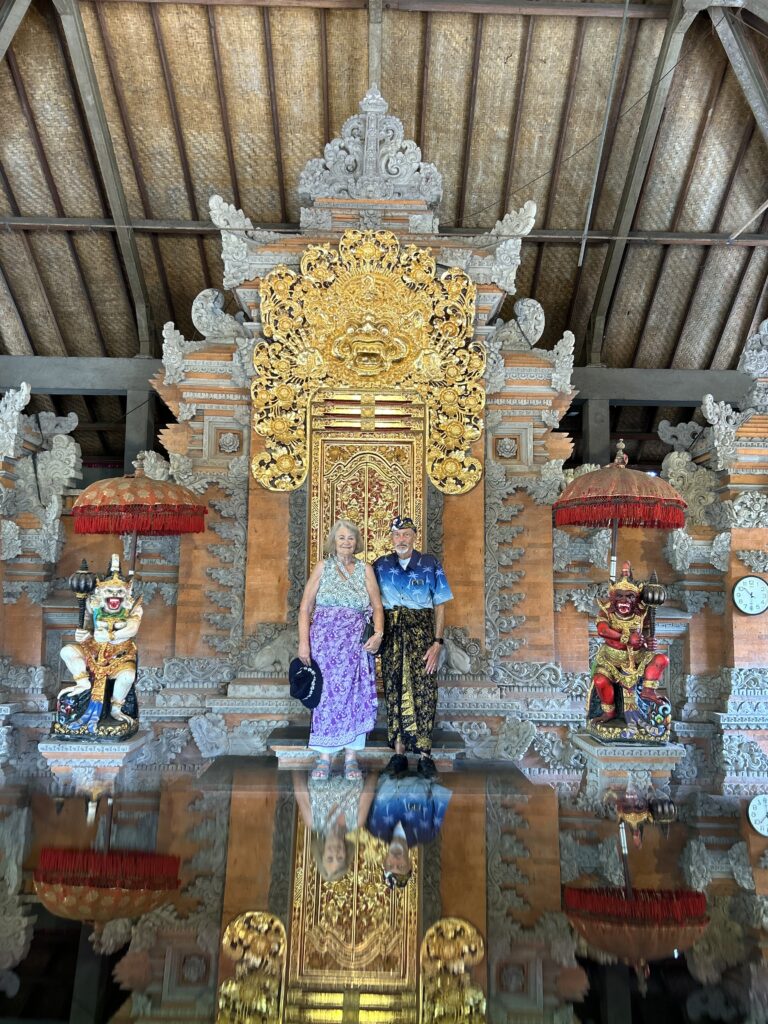
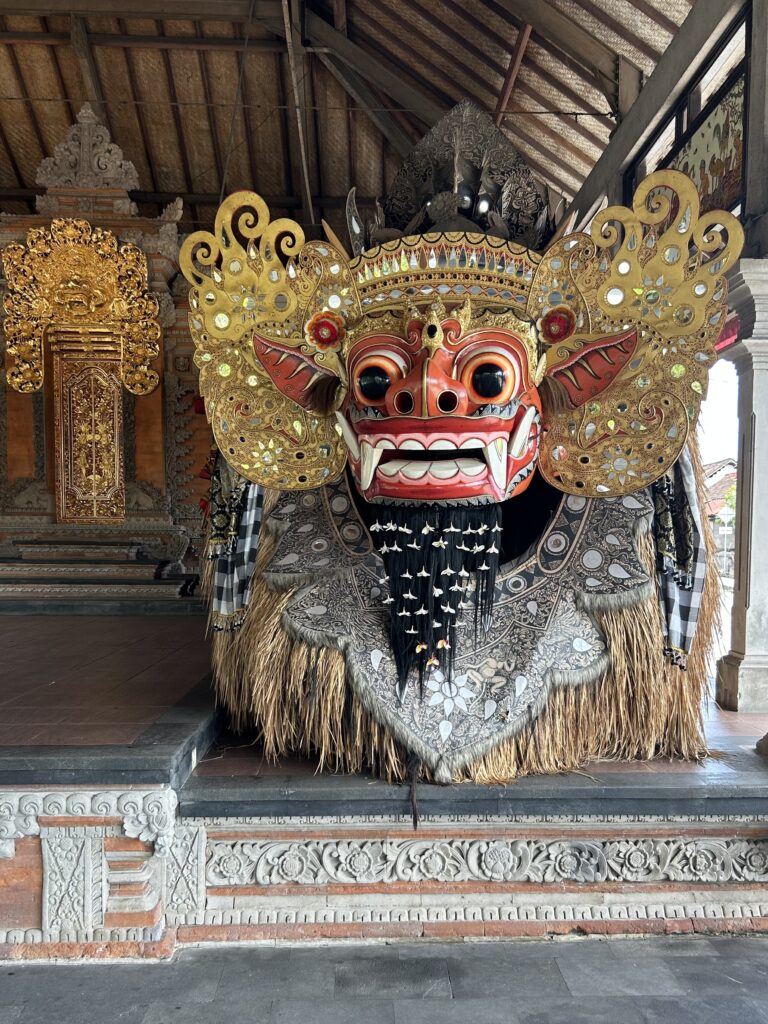
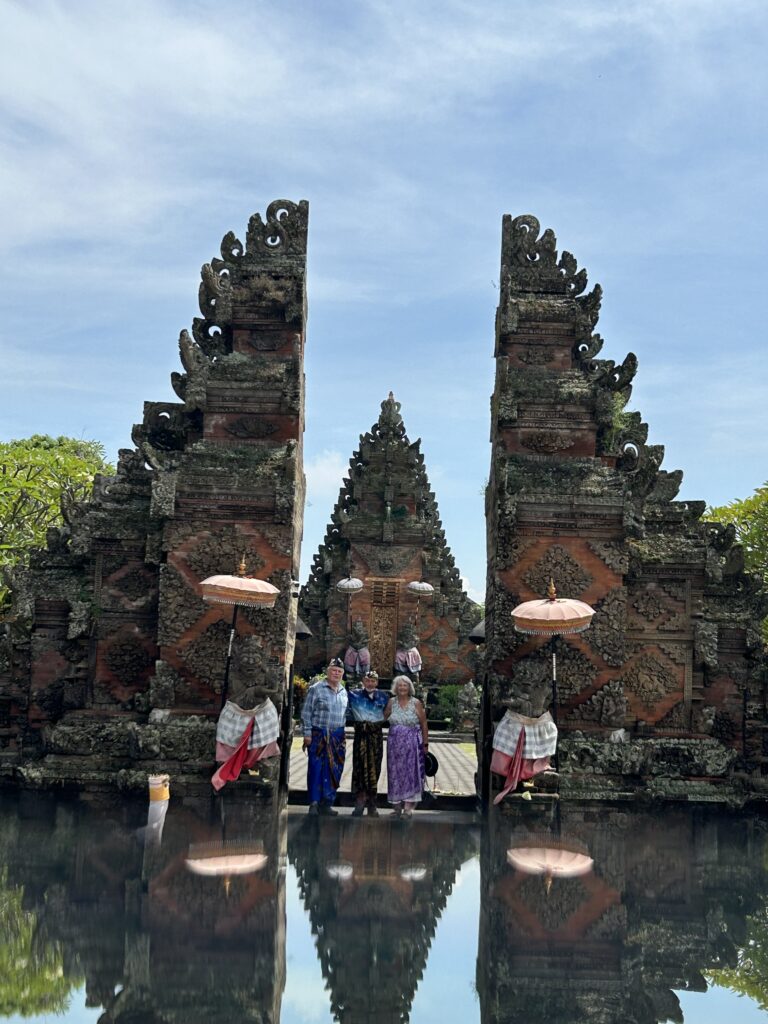
The temple complex consists of three expansive courtyards. As you move inward, the courtyards become progressively more sacred. The innermost courtyard features the towering meru structures, which are multi-tiered pagodas representing Mount Meru, the mythical center of the universe in Hinduism. These towers are cover with their intricate carvings. Our guide explained that it is structured like a body. The first building across the street are the feet, where you enter and become cleansed. Then you enter the trunk or main part of the body. Finally the head is where the priest is.
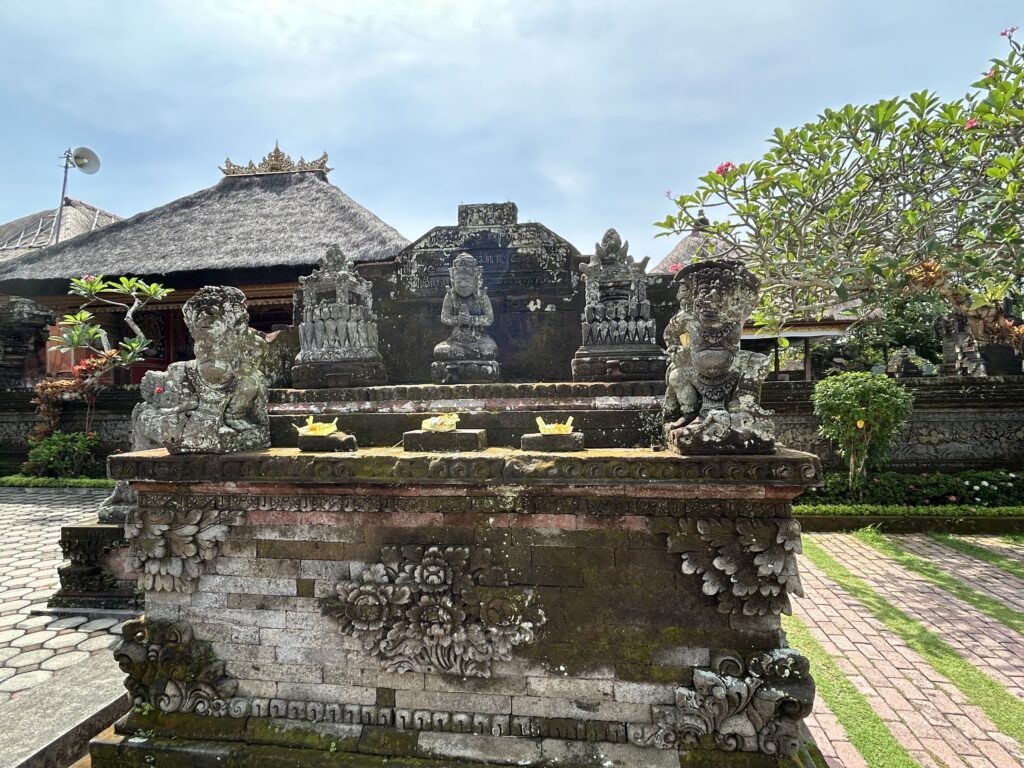
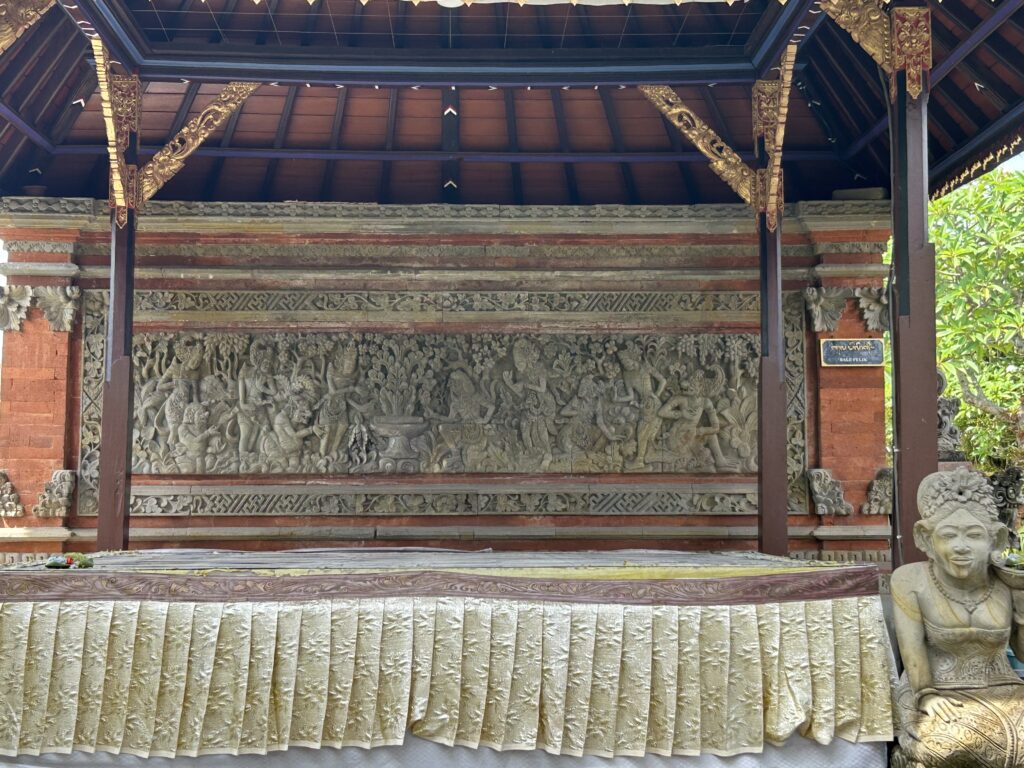
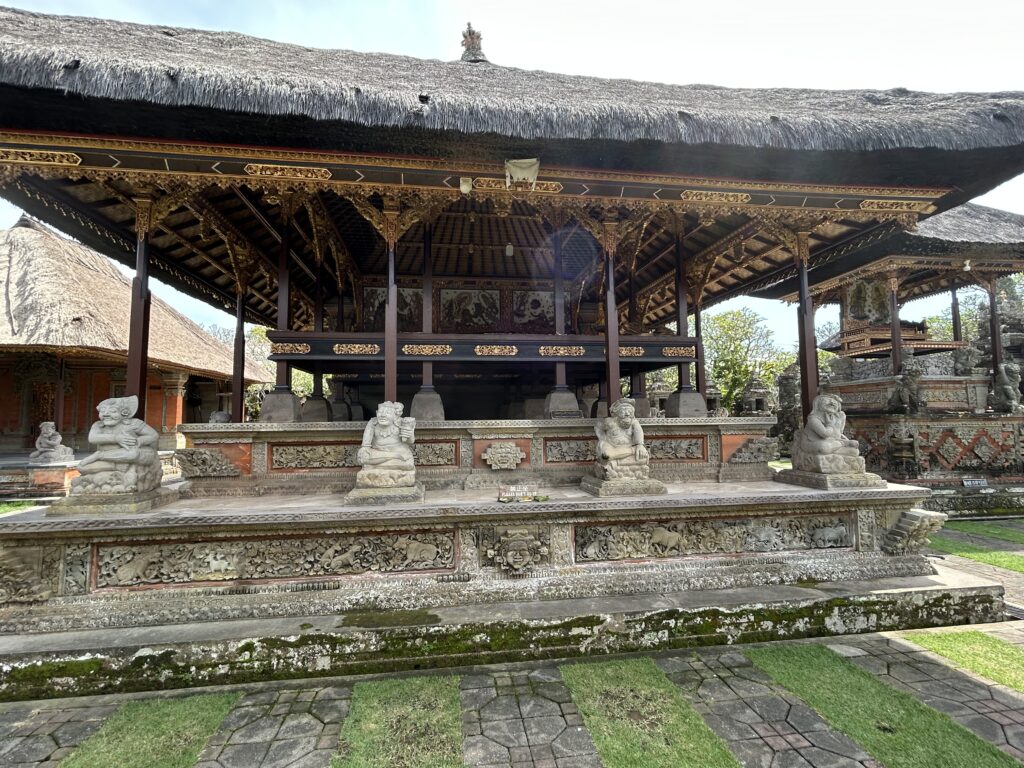
The temple’s design blends Balinese and Javanese architectural styles, with ornate stone carvings, intricate wooden pavilions, and thatched roofs. The carvings depict various scenes from Hindu mythology, offering valuable insight in Bali’s religious beliefs and artistic heritage.
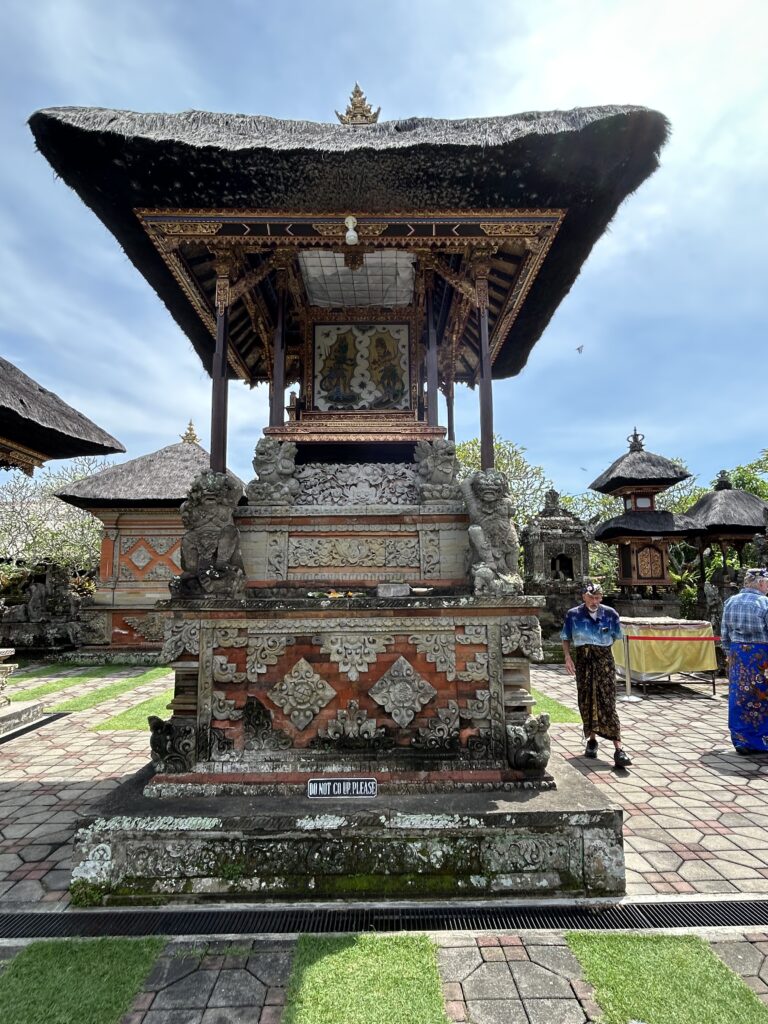
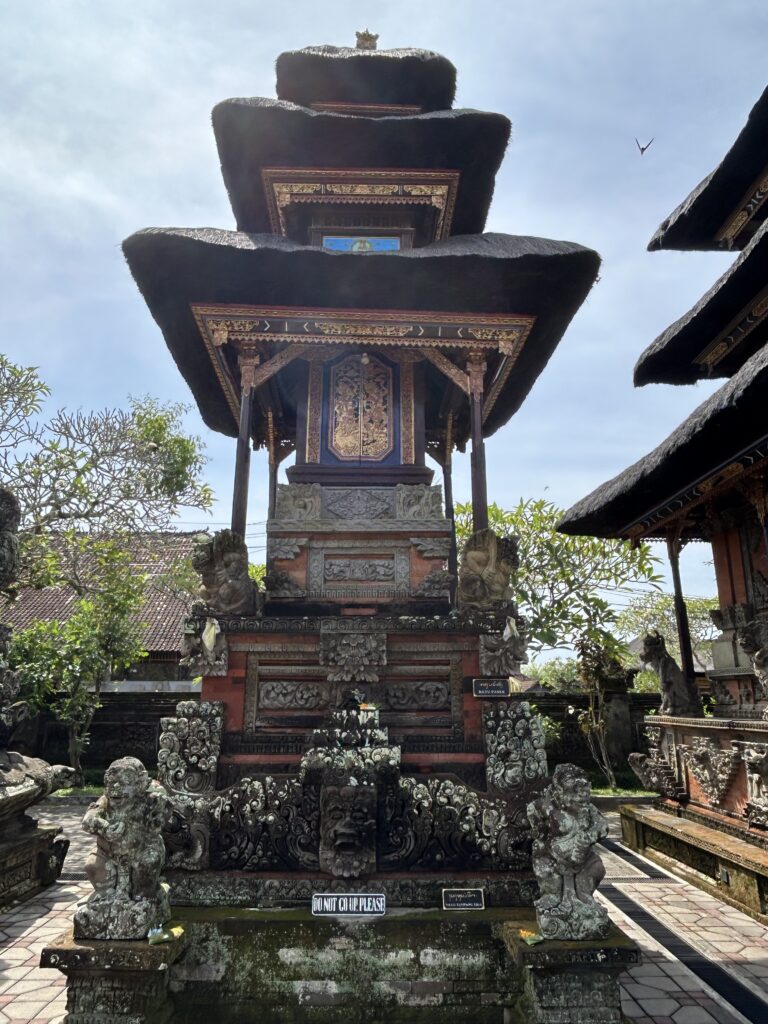
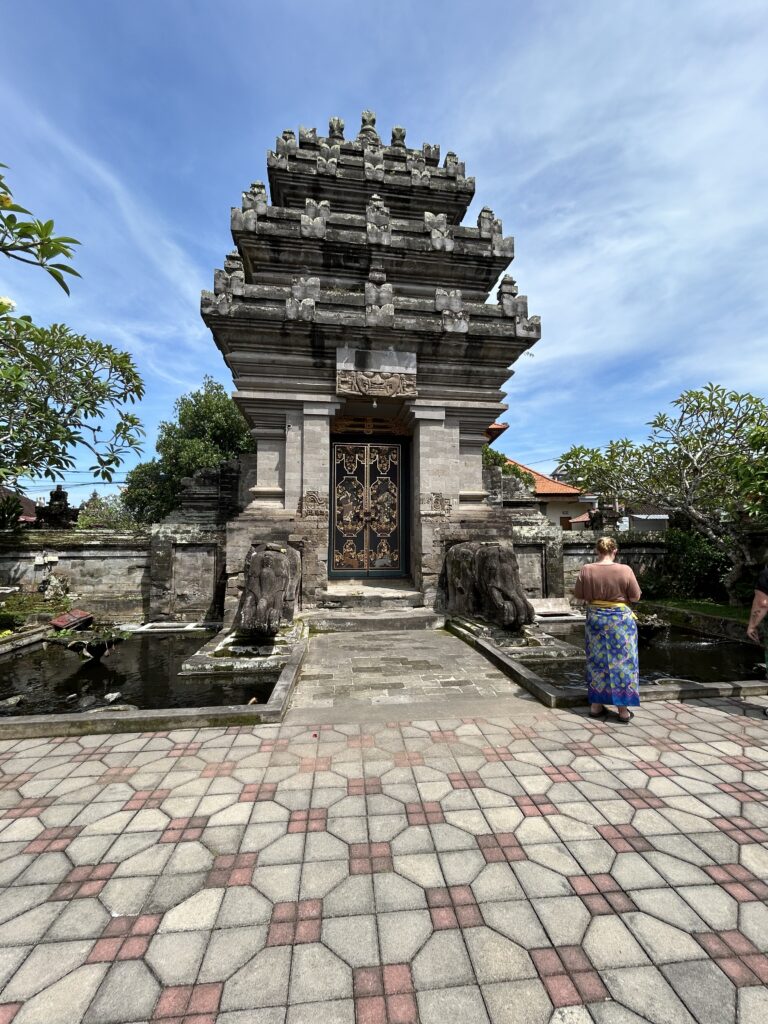
After the temple, we went to a Balinese house which was also a painting studio. The studio was a wonderful art gallery as well, featuring several rooms of Balinese art. We learned that Balinese homes have North, East, and West sections. The north section is where the elders live. The east and west sections house the children and their families. Central is a family temple. All Balinese homes have a family chapel.
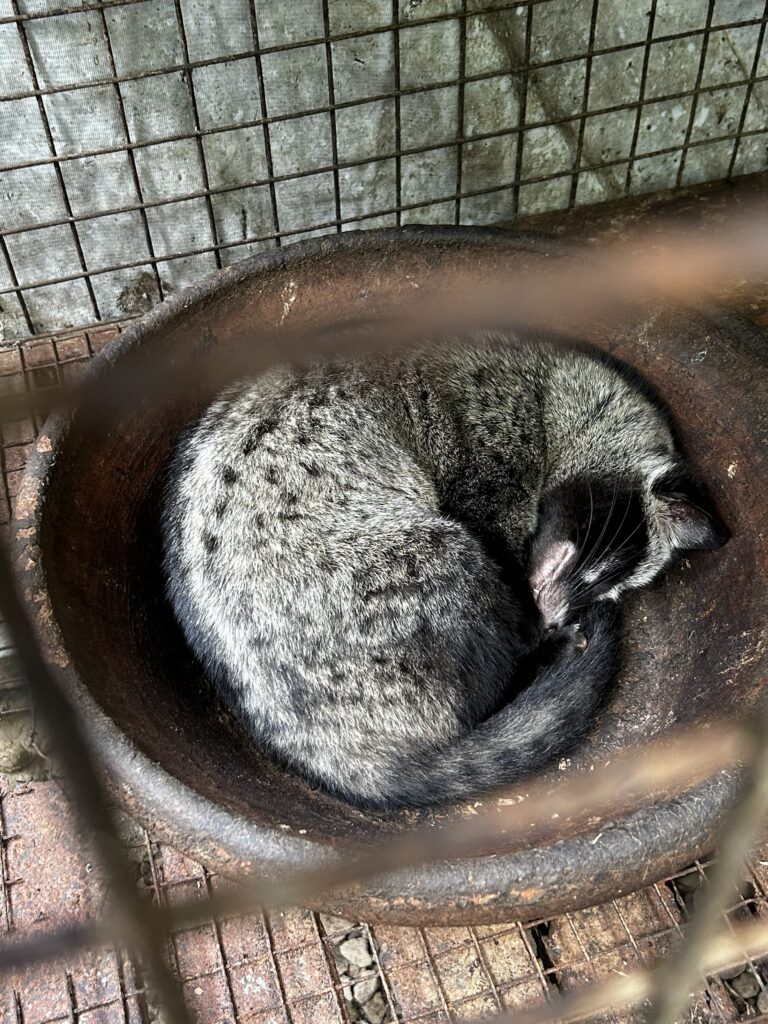
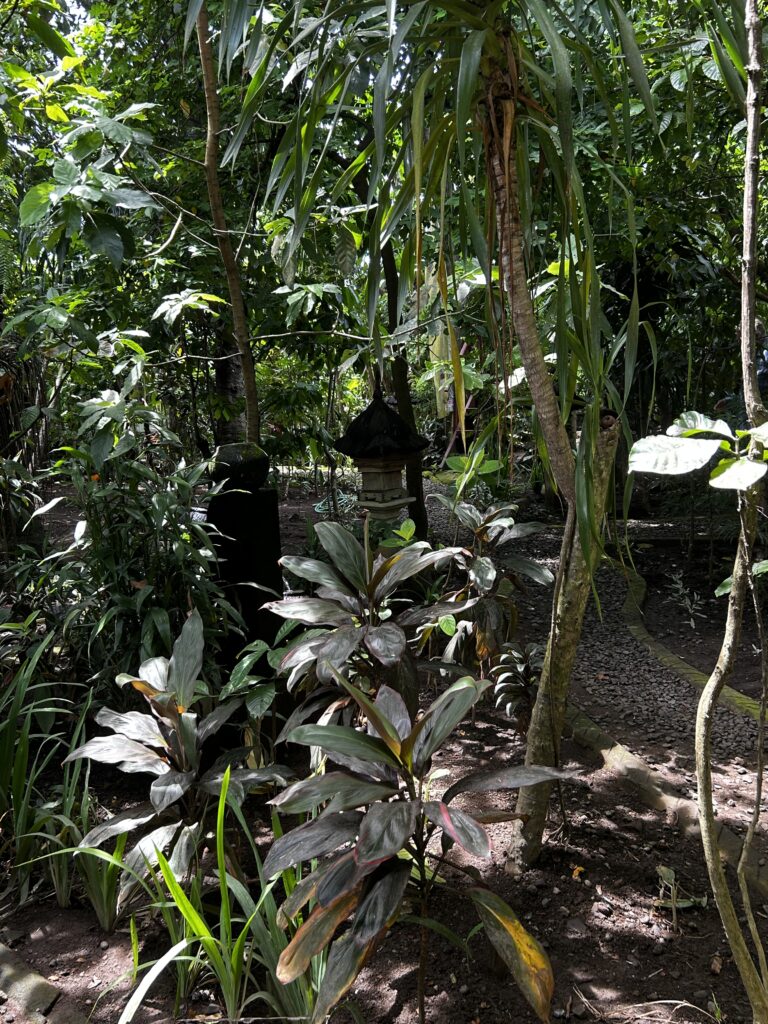
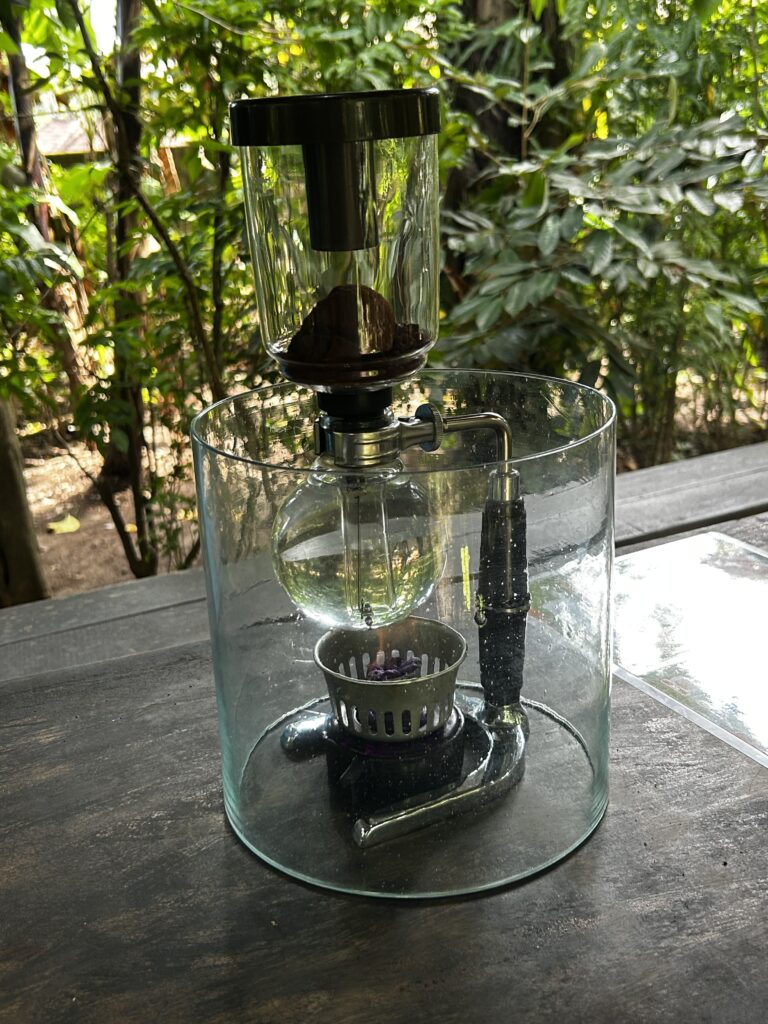
From the home we went to a coffee plantation which specializes in the Bali Luwak coffee. The Luwak lives in the coffee tree and consumes the ripest coffee cherries, which they only digest the outer part of the cherry. When they excrete the beans, they are collected, cleaned, roasted and ground into coffee
From there we headed back to the ship. It was a wonderful tour.
Java
Java is an island in Indonesia, southeast of Malasia and Sumatra, south of Bornio, and west of Bali. Its capital and largest city is Jakarta. Over half of Indonesia’s population lives on Java. We visited the city of Surabaya.
Surabaya
Surabaya is one of Indonesia’s four major central cities, and the second largest after Jakarta. It is the capital city of the province of East Java.
According to urban legend, Surabaya got its name by combining the Javanese words for “shark” (Suro) and “crocodile” (Baya). The two creatures fought courageously and became symbols of the city. The name means “bravely facing danger.” The people of Surabaya are very kind and welcoming. They respect the Javanese and Islamic cultural traditions.
The city was settled in the 10th century by the Kingdom of Janggala, one of two Javanese kingdoms formed with 1045. Surabaya has been the chief trading center of eastern Java since the 14th century. It was controlled by the Dutch from the mid-18th through the mid-20th century, except for a brief period under the British in the early 19th century. Japan occupied it during WWII.
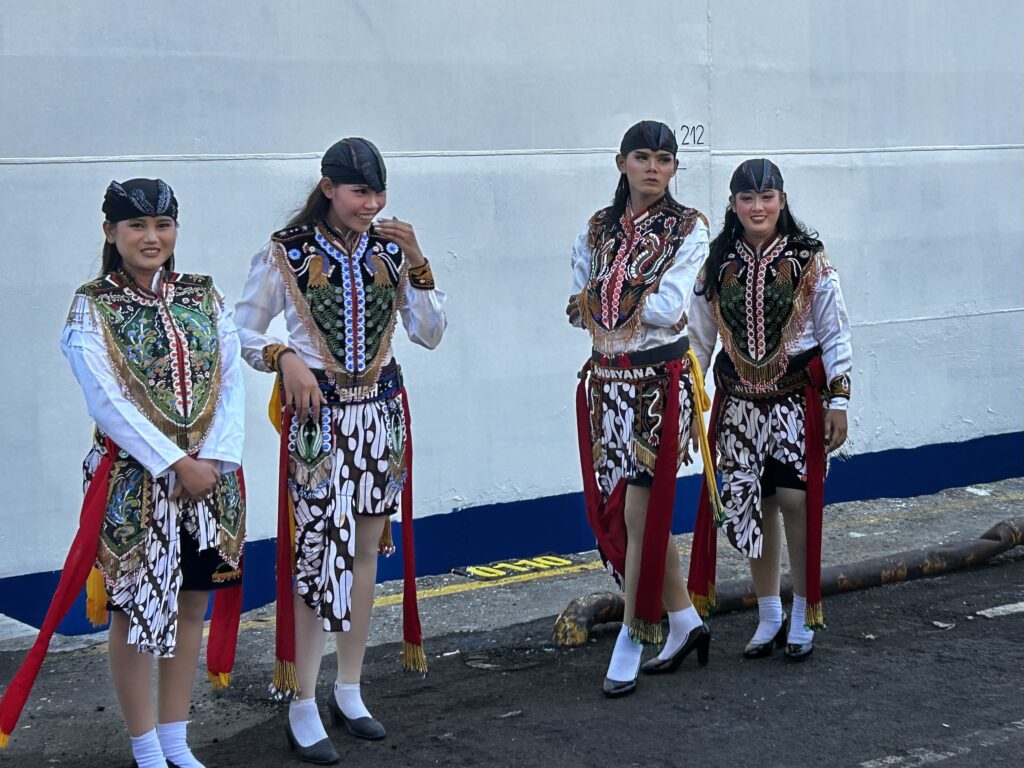
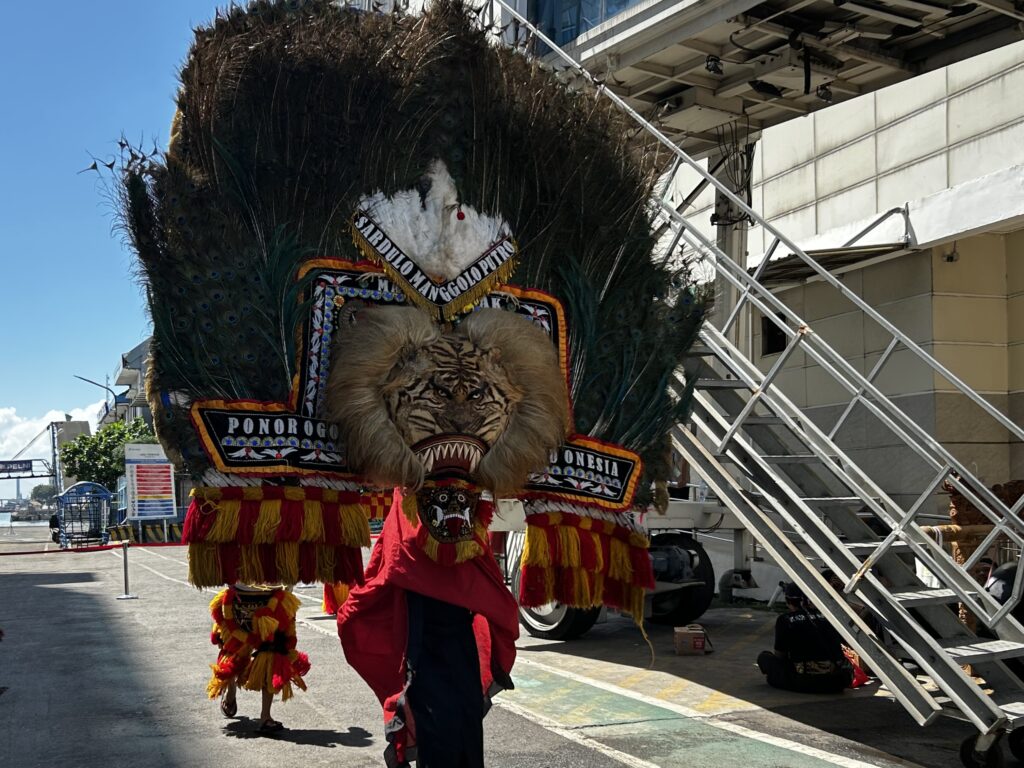
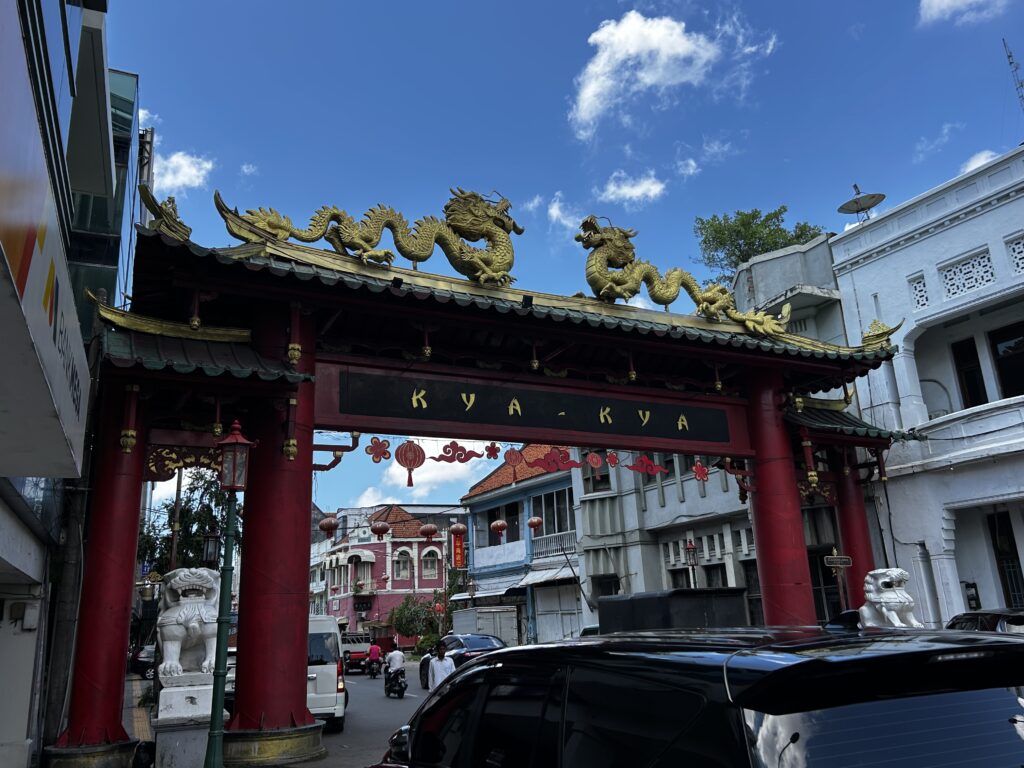
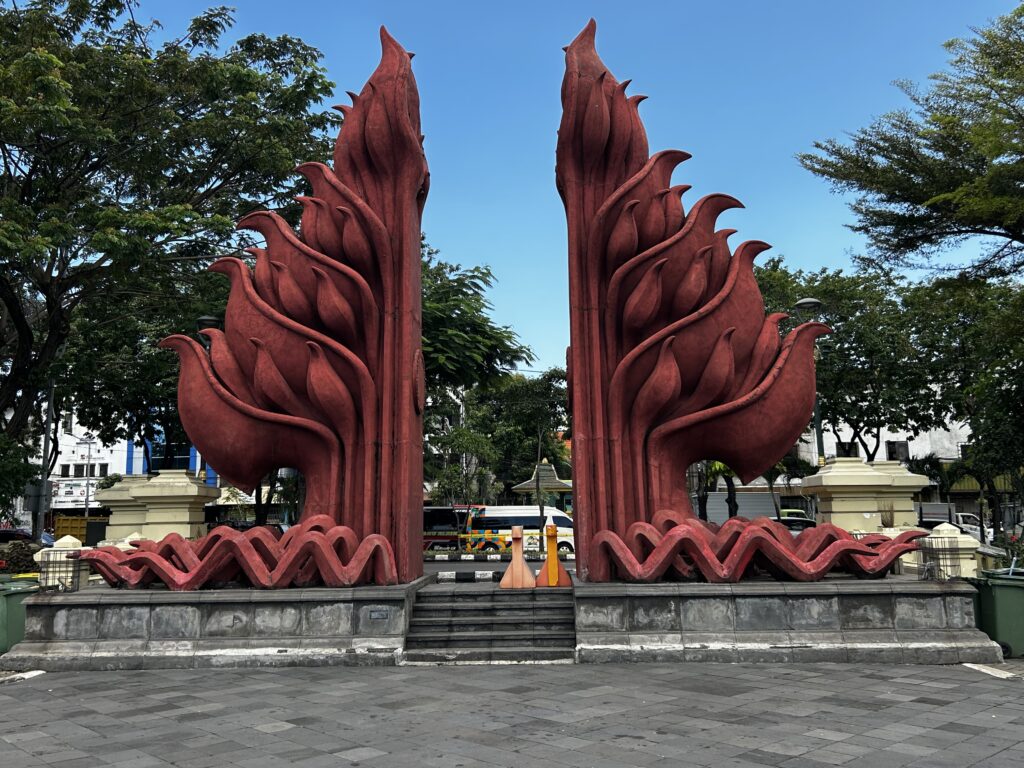
As we left the ship, we were greeted with performers to welcome us. My tour started with the central district where there are many examples of Dutch colonial architecture. Then we went to China town where the cultural influence of Buddhism is evident in the buildings. The entrance to China Town is marked by a wide red Chinese gateway with two dragon figures at the top. The Chinese were the first to settle in this part of Surabaya during the Dutch Colonial Era. This Chinatown is the oldest, biggest, and architecturally richest part of Surabaya
.
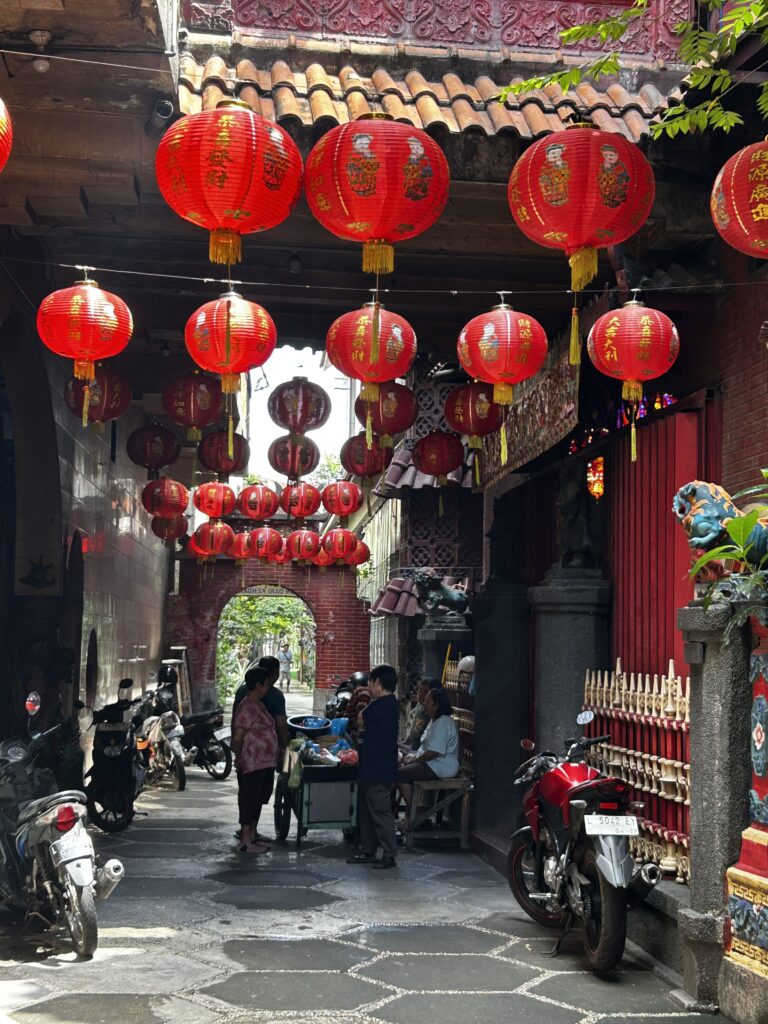
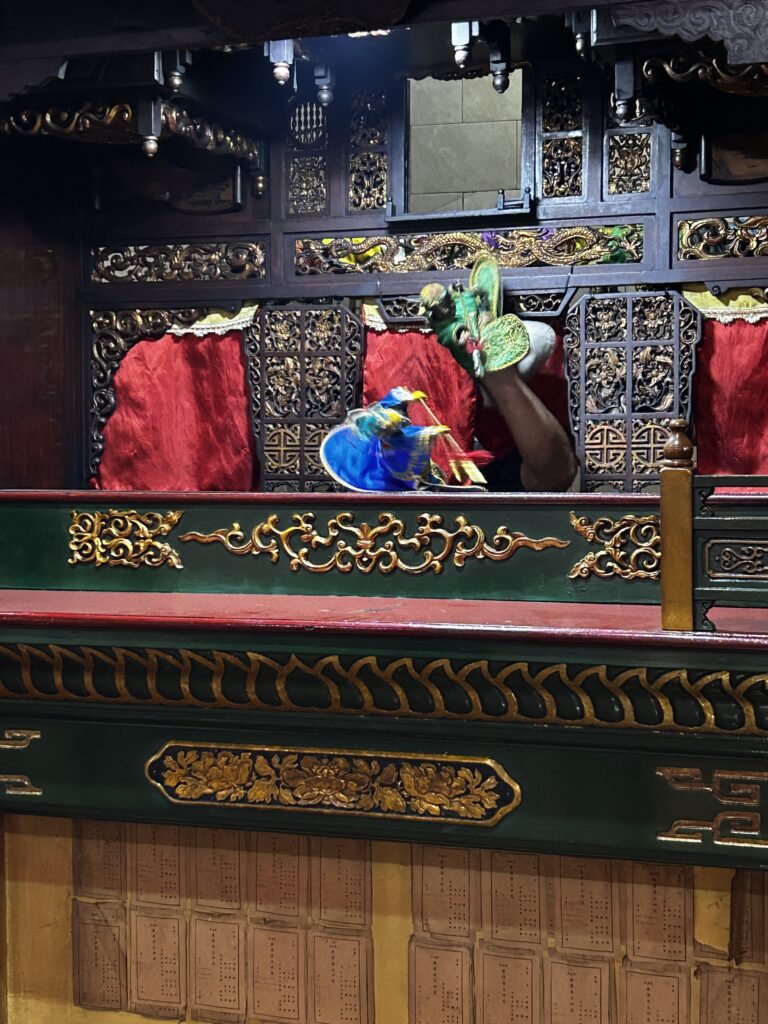
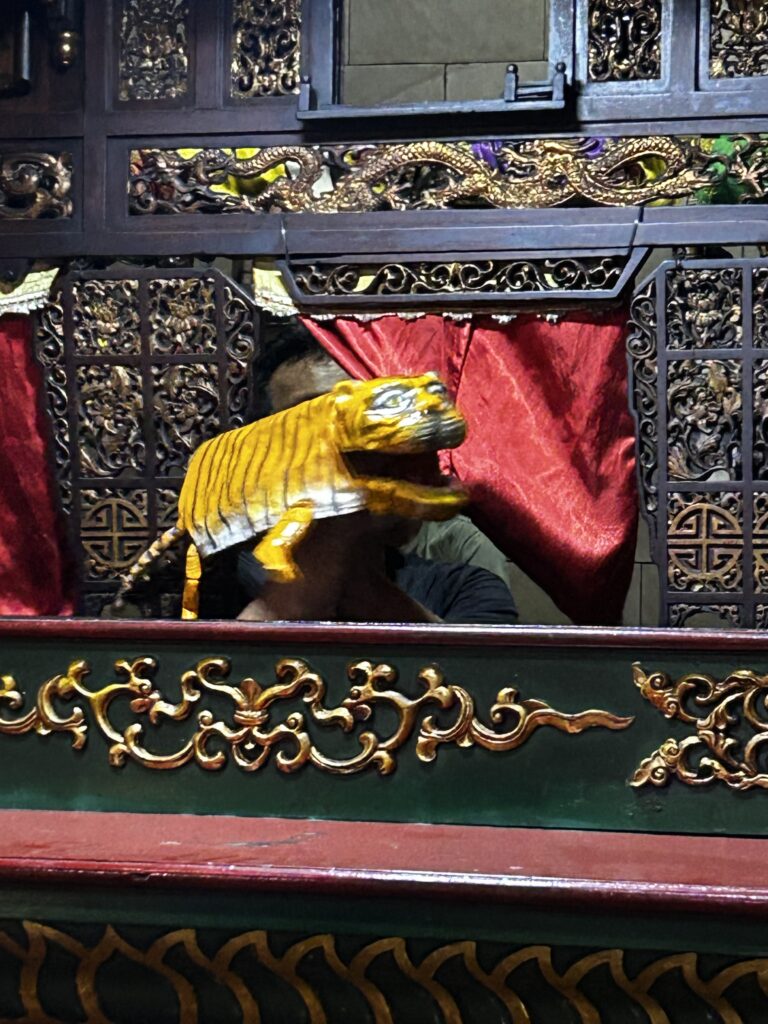
Here we visited the Hong Tiek Hian temple, the oldest in Surabaya. It is split by a small alley. Established during the Majapahit era, this temple dates to the 15th century. It is dedicated to various gods. The temple’s dragon motifs symbolize strength and protection. We started with a puppet show of a local legend on one side where we were surrounded by various altars. Then we crossed the alley to the other side to view the rest of the temple.
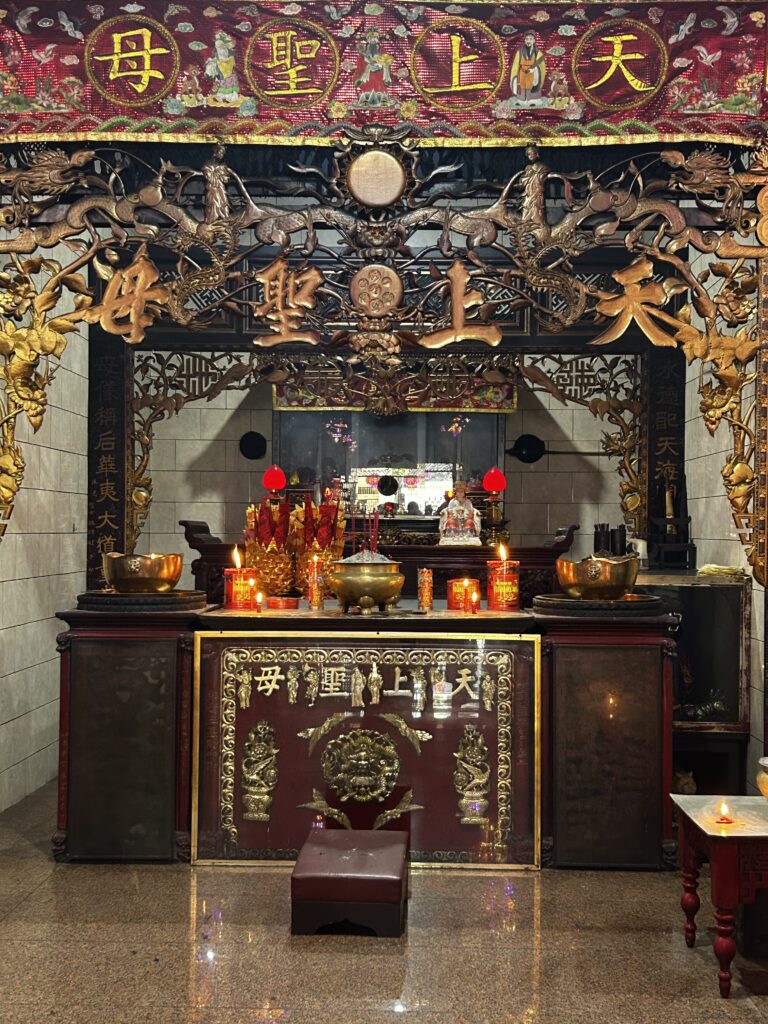
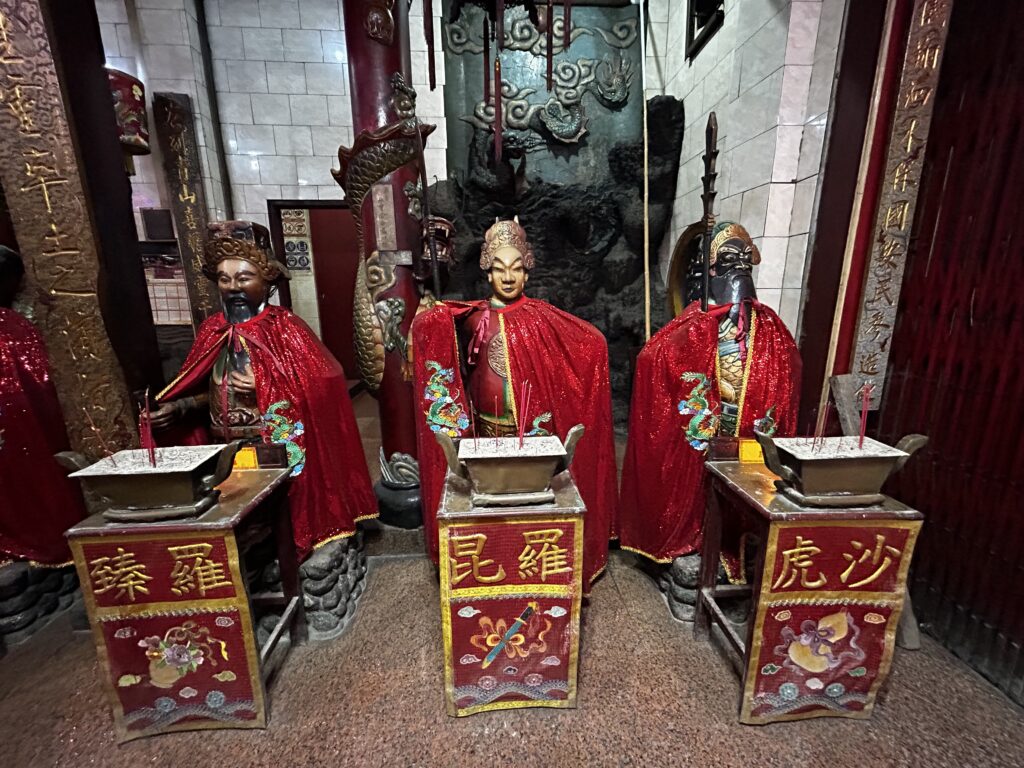
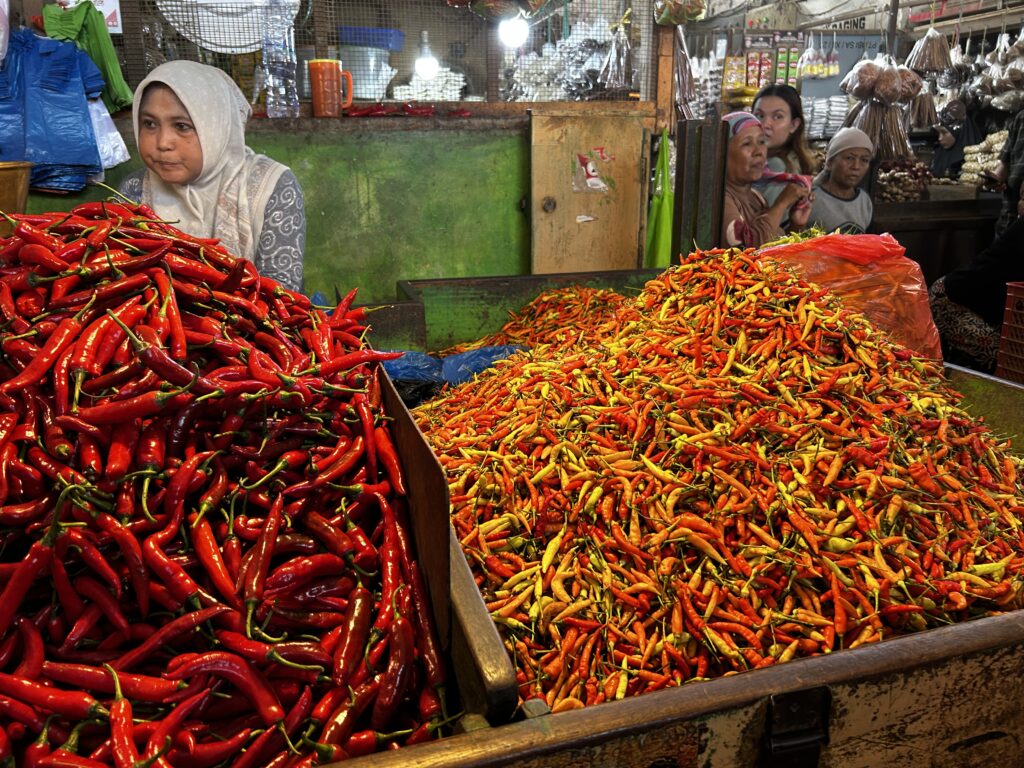
From the temple we went to the marketplace, Pasar Pabean. This market is open 24 hours. We walked the long corridors looking at spices, vegetables, fruits, meat, and fish. Every food item you would want was there. Many vendors were sleeping since they spend day and night there. Most of the venders come from the neighboring island of Madura.
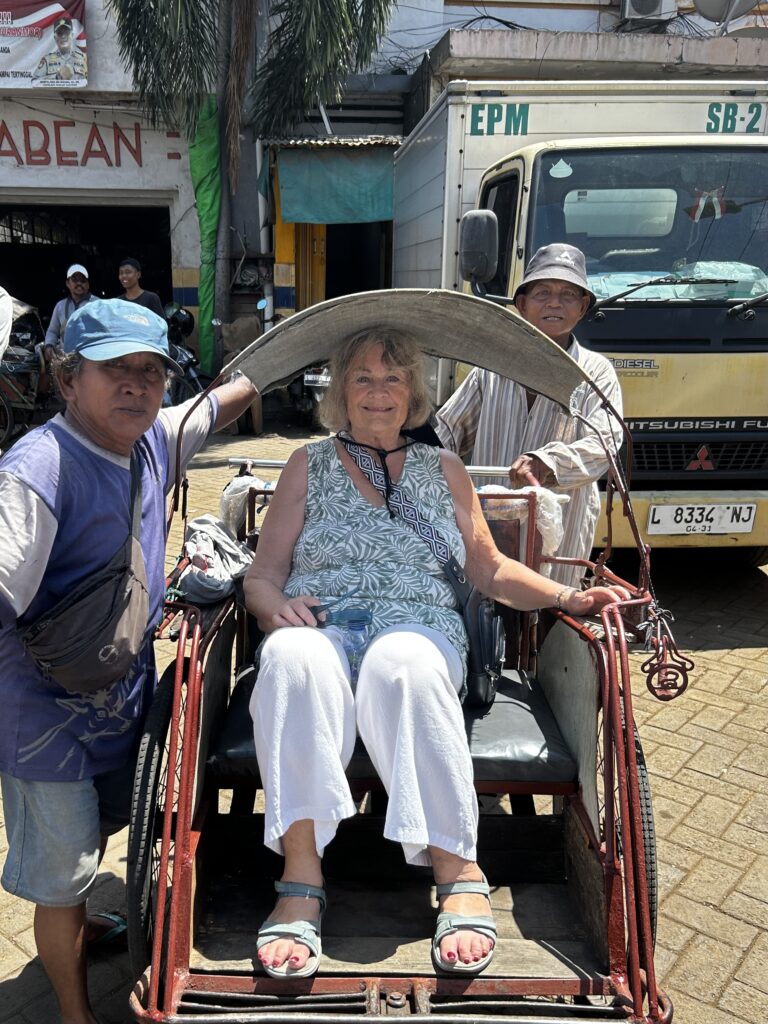
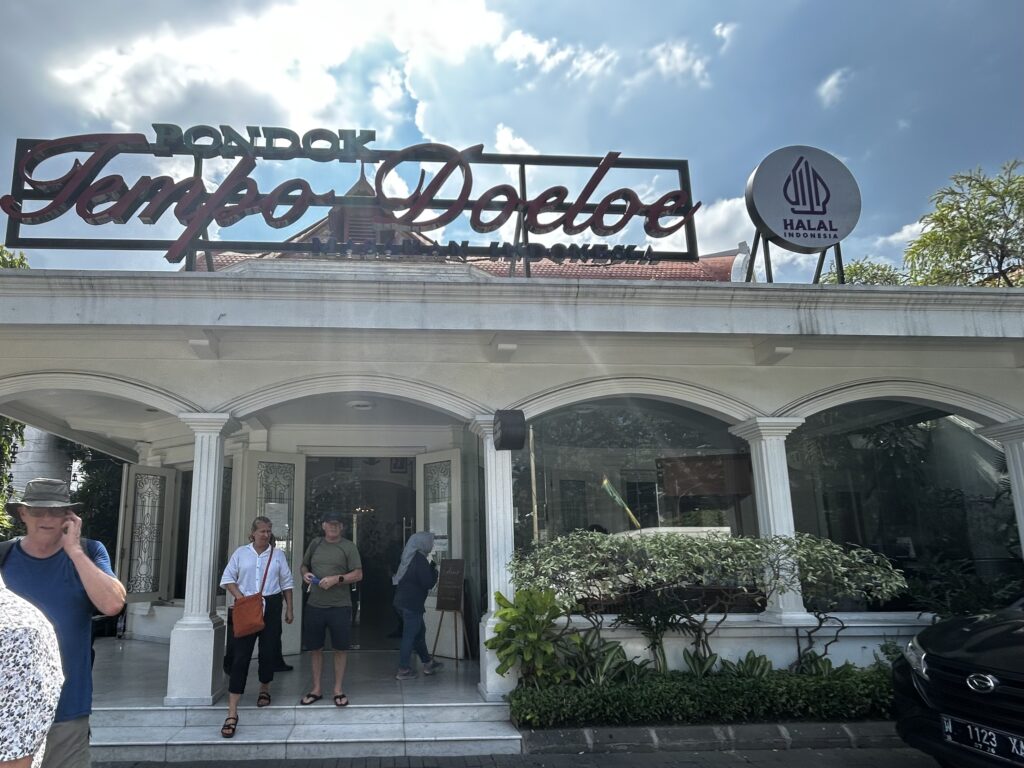
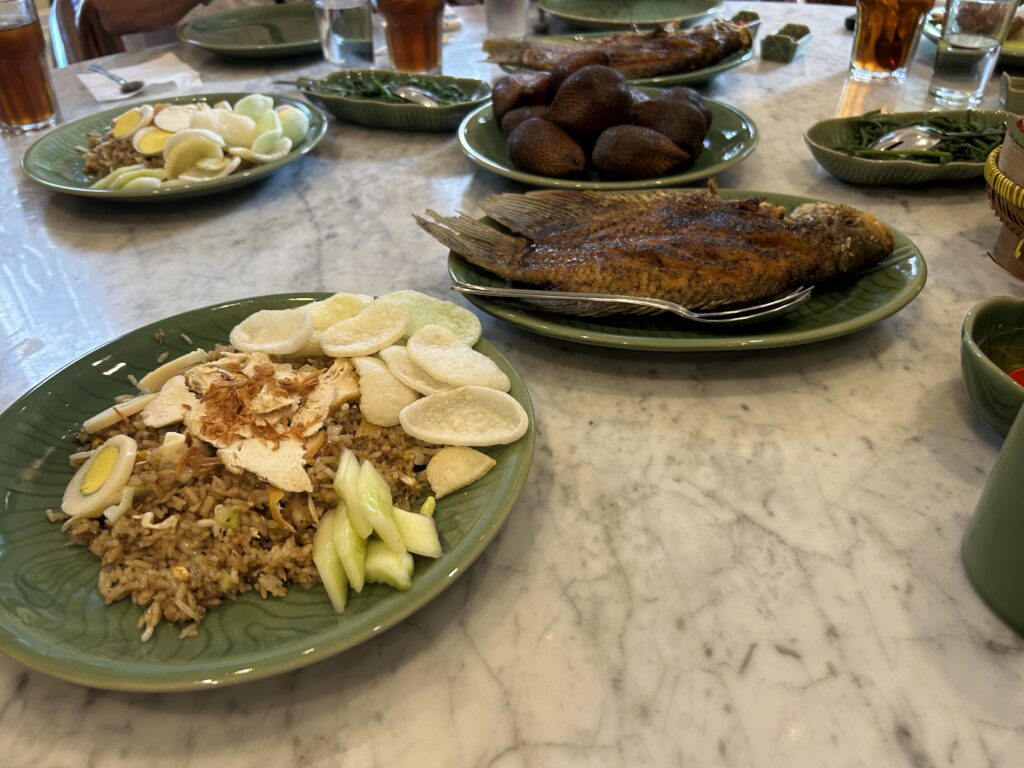
From the market we rode in becaks, bicycle powered rickshaws, to a restaurant for a wonderful family-style Indonesian lunch.
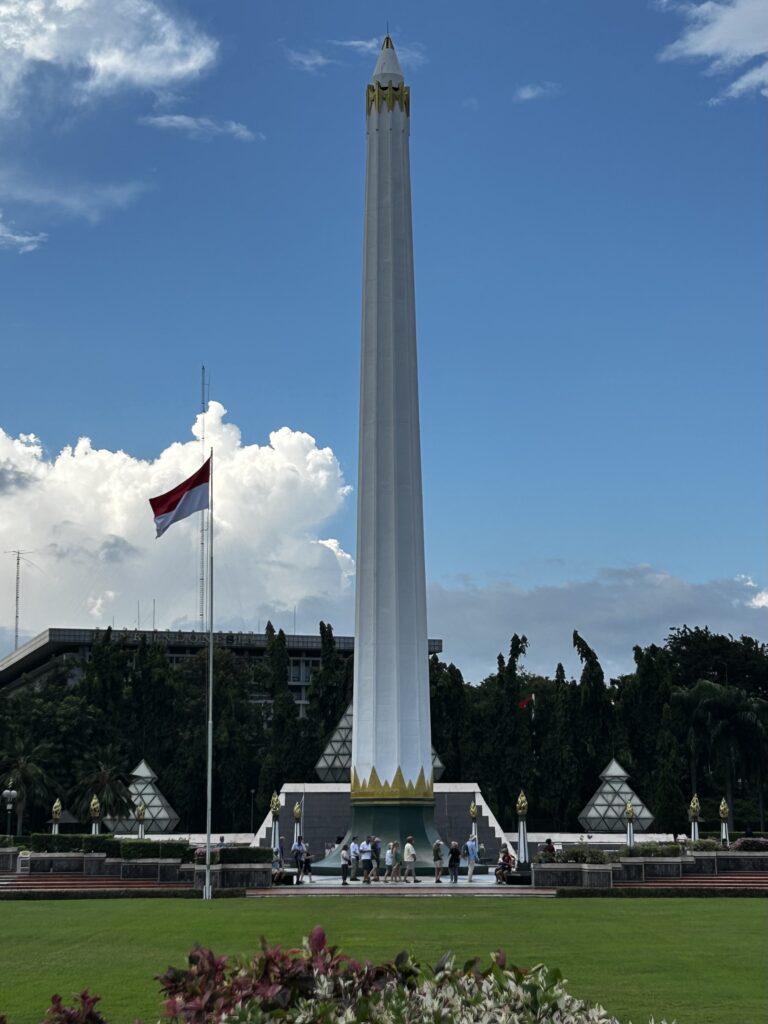
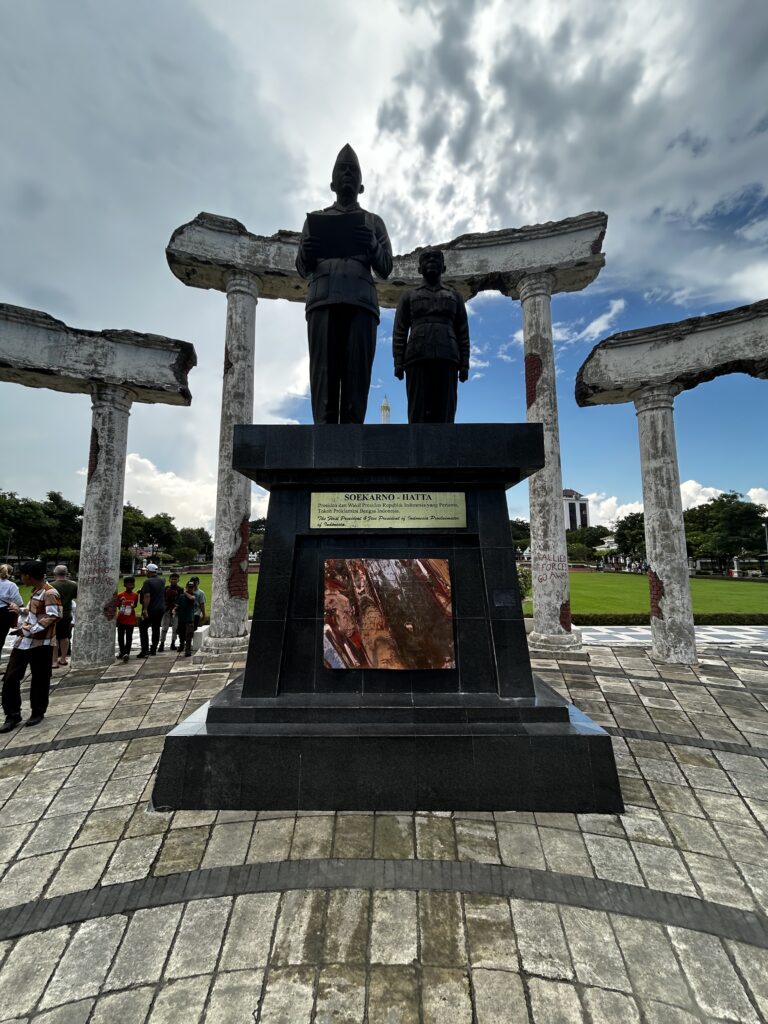
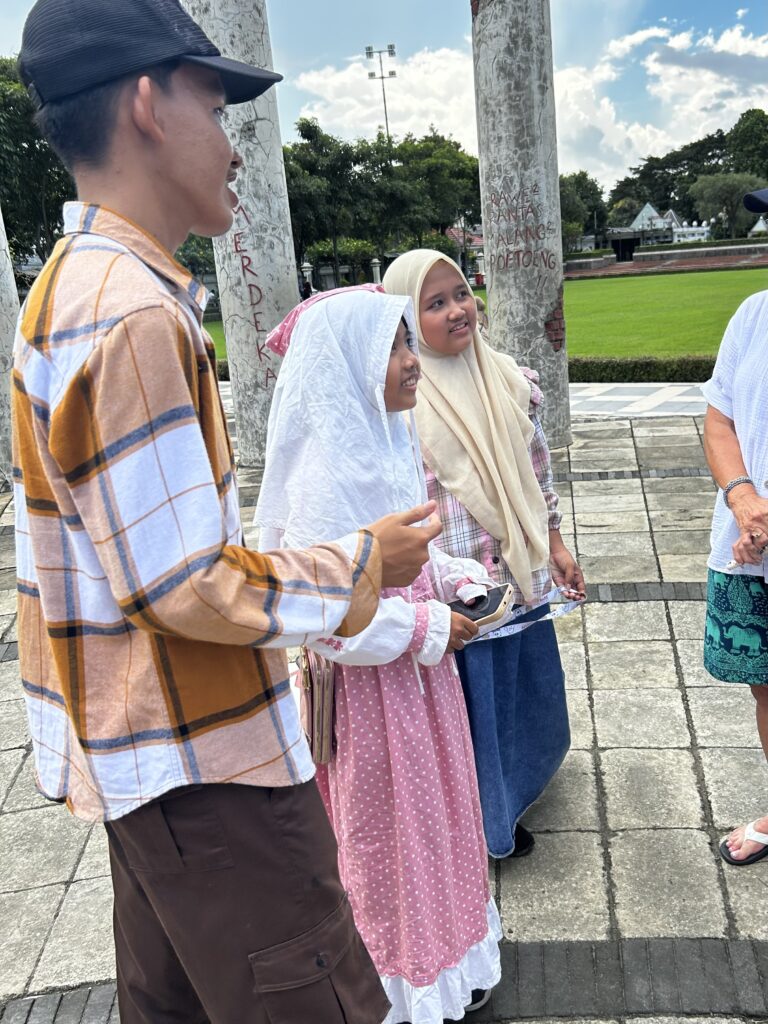
After lunch we went to the Heroes Monument where there is a statue of Indonesia’s first President Sukarno and his Vice President Hatta. The monument behind the statues represents the spirit of the people of Surabaya, known as “arek-arek Suroboyo,” who fought against the colonial forces during the Battle of Surabaya on 10 Nov. 1945. There is a museum in the base of the monument. At the monument we met some children on their way home from school. They all came prepared with questions to ask us to show their fluency in English.
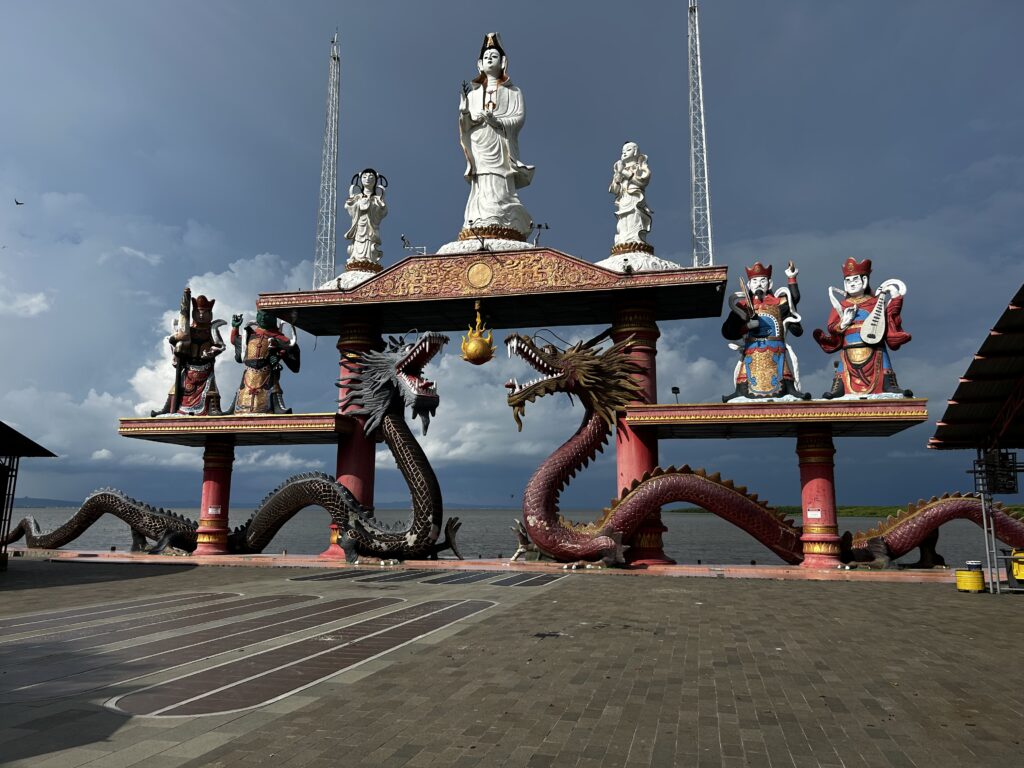
Then, our last stop was the Hong San Tan Temple, or Sanggar Agung Temple, a place of worship for Buddhist, Tao, and Kong Hu Cu followers. The temple is separated into two parts. The first part is the Sanggar Agung Chinese Temple with the 65-foot statue of the Goddess of Mercy built on the seafront. It is framed by an archway with two dragons twisting below the statue. Here we let small birds (purchased for us by our guide) go, making a wish as we set them free.
The second part of the temple has the famous Four Faced Buddha Statue, known as Patung Brahma 4 Rupa, complete with a dome. The statue is encircled
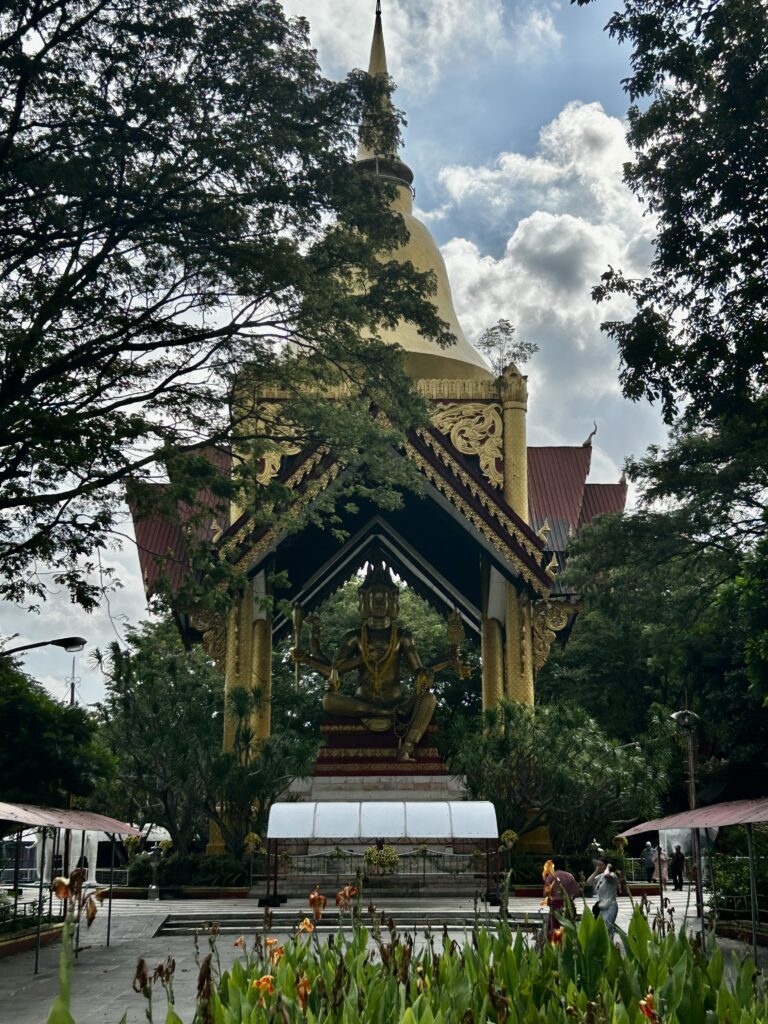
The second part of the temple has the famous Four Faced Buddha Statue, known as Patung Brahma 4 Rupa, complete with a dome. The statue is encircled by 4 pillars. The 4 faces represent patience, tolerance, fairness, and meditation. The Buddha’s eight hands hold holy books, holy water, weapons for defense and to fight evil, prayer beads, Cupu (offering container) and Dada, representing compassion.
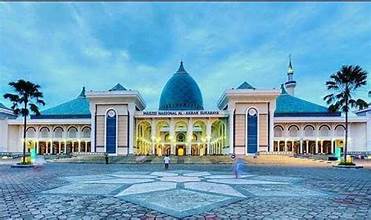
From the temple we returned to the ship passing by the Al Akbar Mosque, the largest in Surabaya. We were unable to visit because it was Friday and services were being held there. It has a unique turquoise dome with geometric patterns The towering 325-foot minaret is inspired by the 99 names of Allah. Built in 2000, it represents both the city’s spiritual devotion and its modern identity.
This was an inclusive and informative day.
Leave a Reply