Catherine’s Palace
Our first stop was Catherine’s Palace, located about 30 minutes away in the town of Pushkin. Peter the Great won back the region between the Gulf of Finland and the Neva River from the Swedes and presented it to his wife Catherine I, who commissioned gardens and a palace to be built in 1717. Originally a modest two-story building, the Catherine Palace owes its grandeur to the daughter of Peter and Catherine, Empress Elizabeth, who chose it as her chief summer residence. Starting in 1743, the building was reconstructed by four different architects, before Bartholomeo Rastrelli, Chief Architect of the Imperial Court, was instructed to completely redesign the building in 1752 on a scale to rival Versailles. (It did remind me of Versailles.)
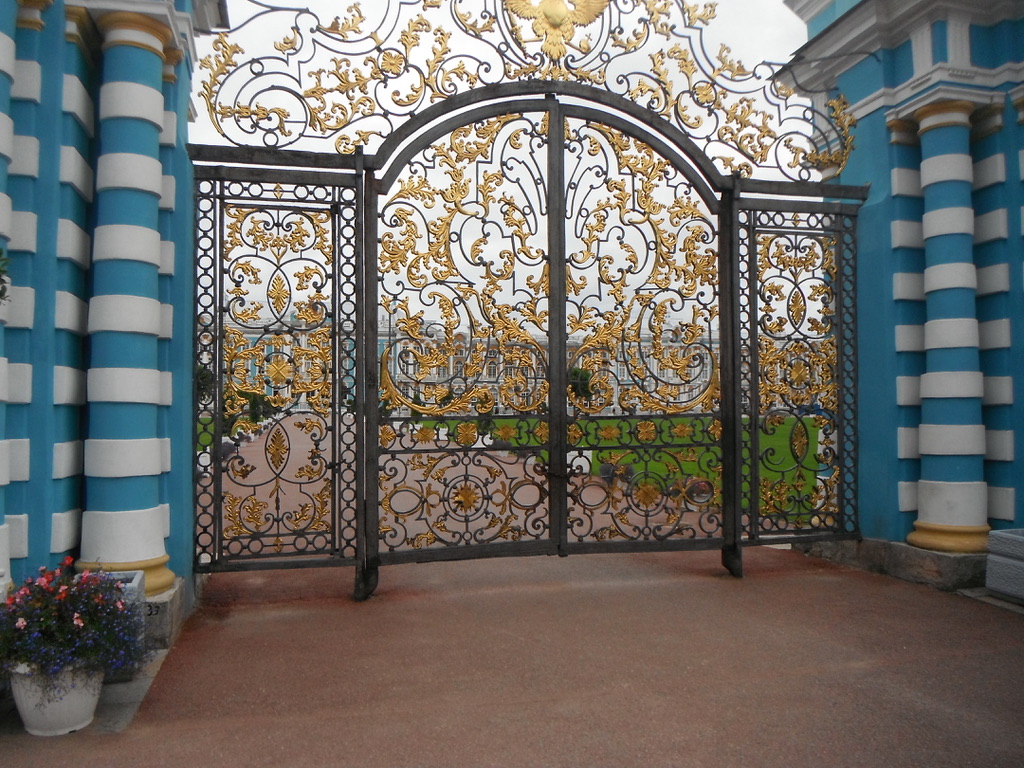
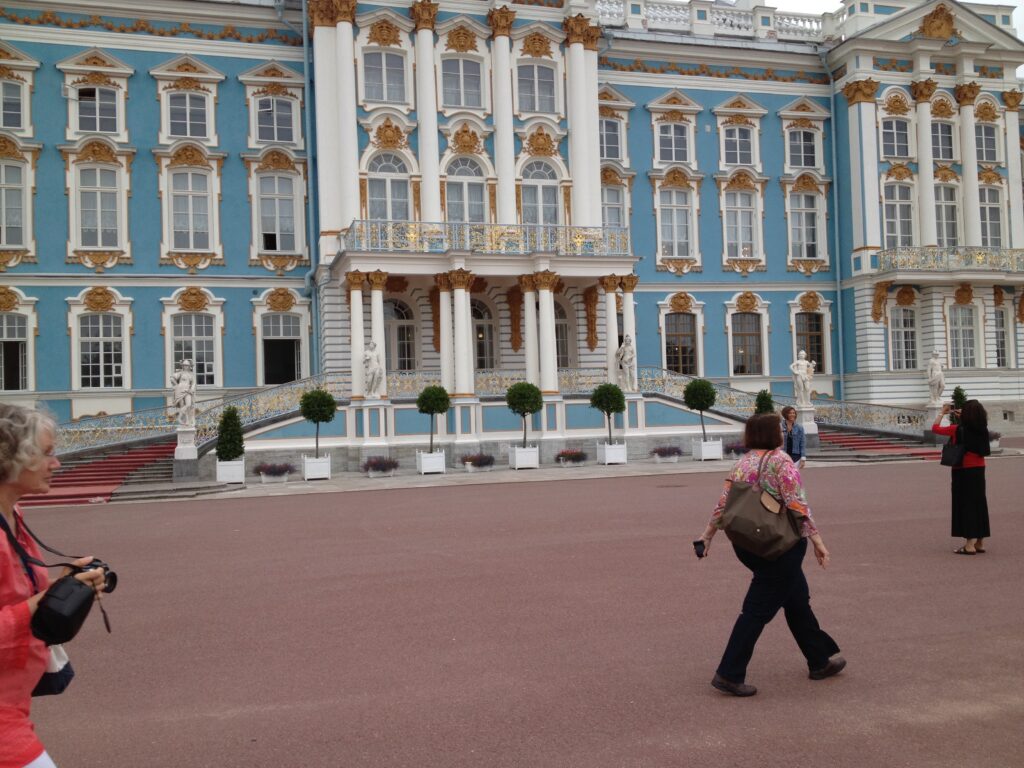
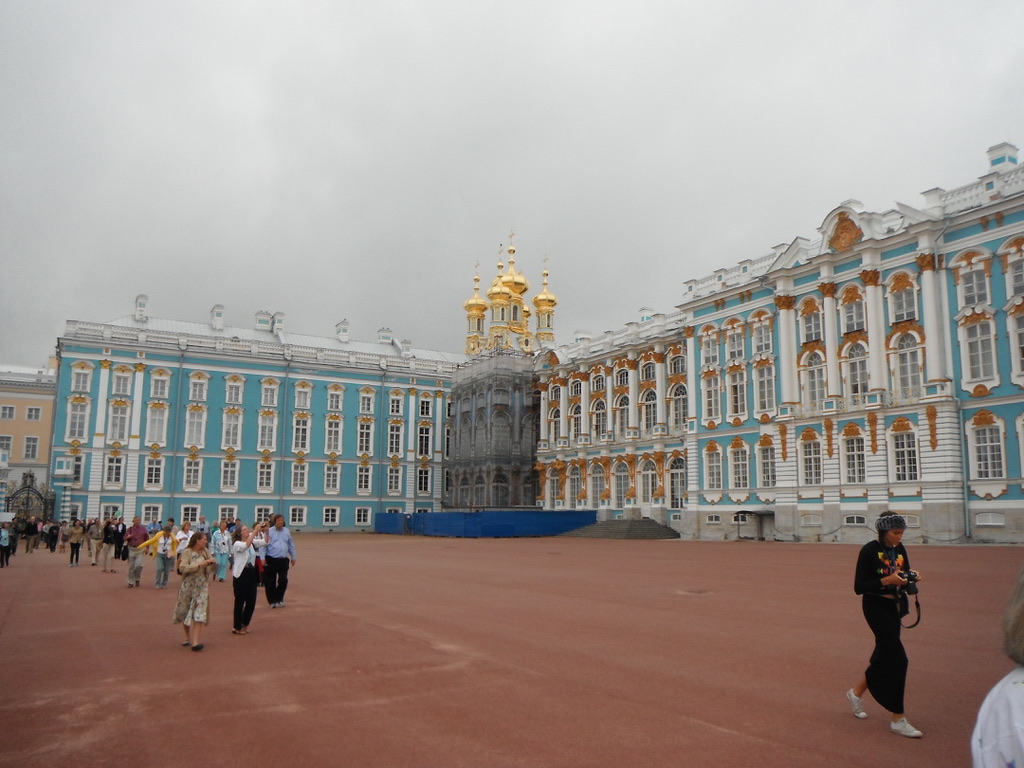
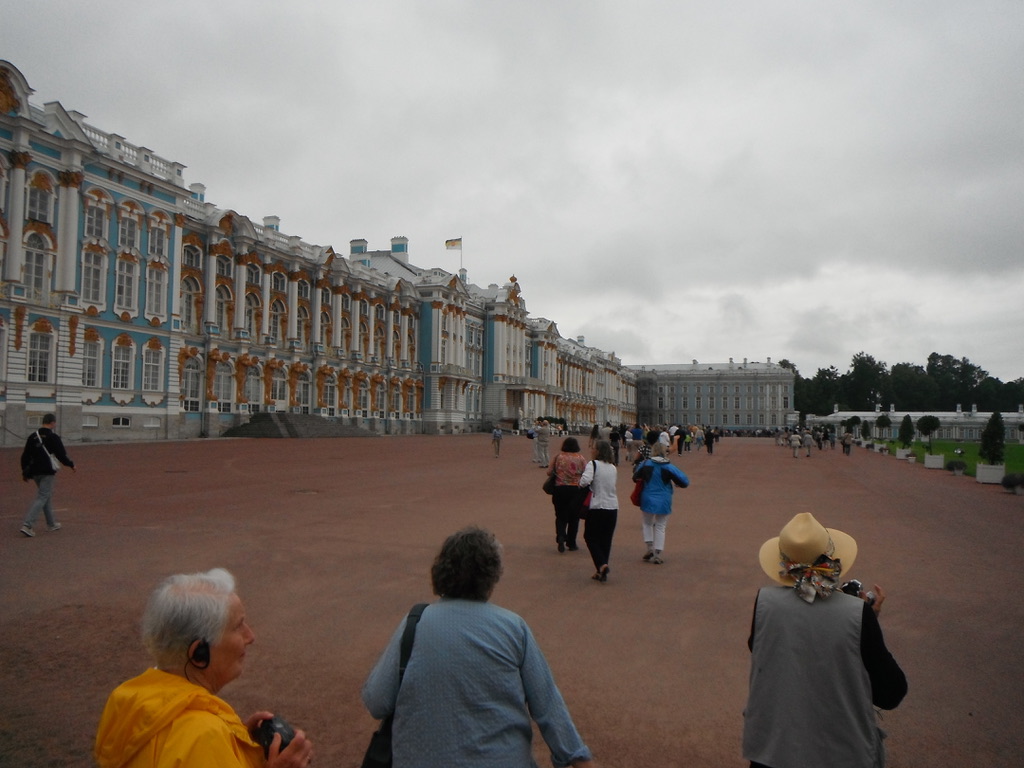
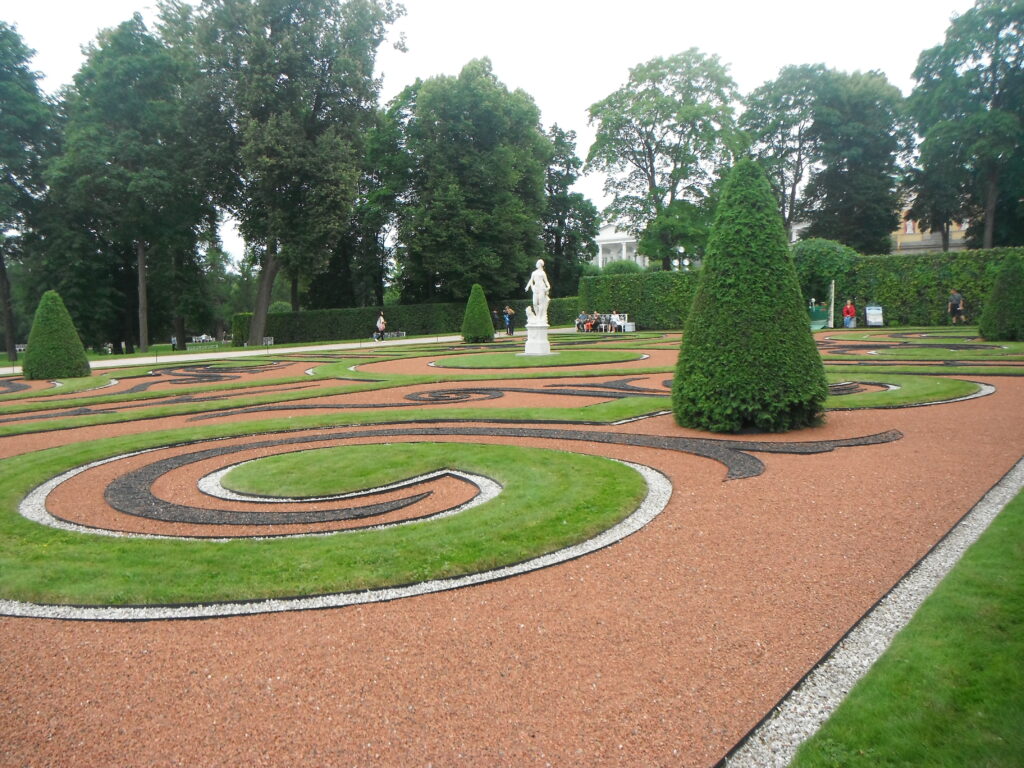
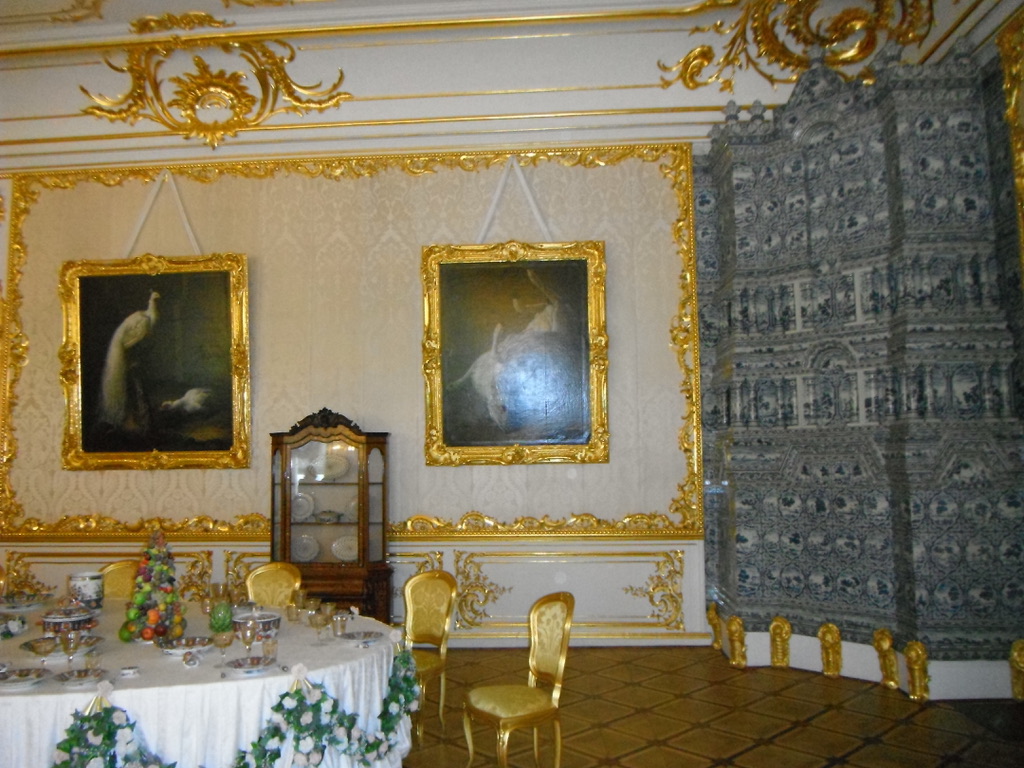
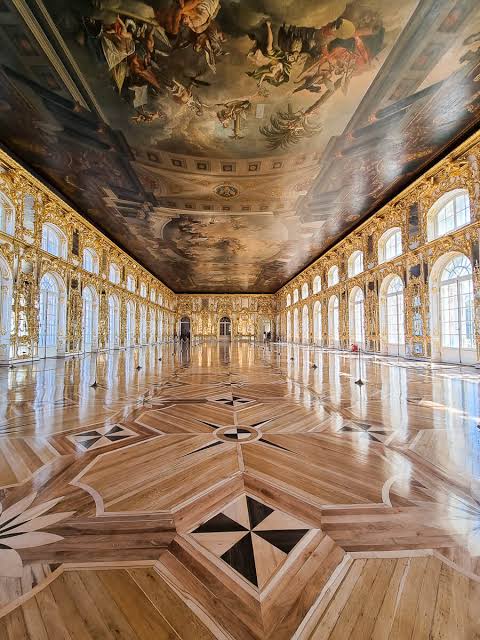
Catherine’s Palace is a beautiful Baroque masterpiece 980 feet long, the longest palace in the world. It took over 100kg of gold to decorate the palace exteriors. The interiors are no less spectacular. The so-called Golden Enfilade, designed by Rastrelli, is particularly renowned and forms the focus of the palace tour. Guests enter via the State Staircase, which dates from the 1860s. With its ornate banisters and reclining marble cupids, it gives a taste of what is to come. The Great Hall, also known as the Hall of Light, measures nearly 1,000 square meters, and occupies the full width of the palace so that there are superb views on either side through large windows. The entire ceiling is covered by a monumental fresco entitled The “Triumph of Russia.” Using similar techniques on a smaller scale, the White Dining Room is equally luxurious. Other highlights of the Grand Enfilade include the Portrait Hall, which contains portraits of both Catherine and Elizabeth, the Picture Gallery, in which almost every inch of wall space is covered with 17th and 18th century canvases and, of course, the legendary Amber Room.
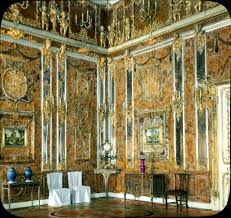
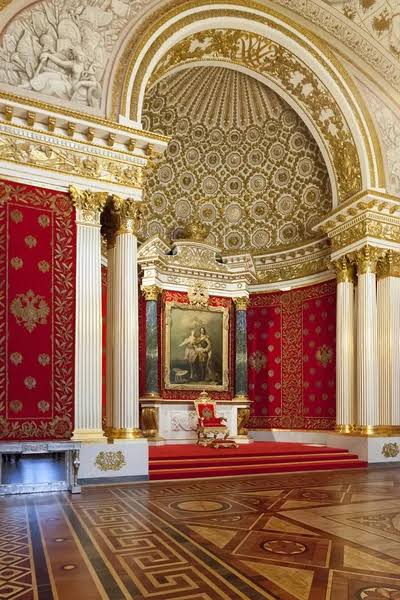
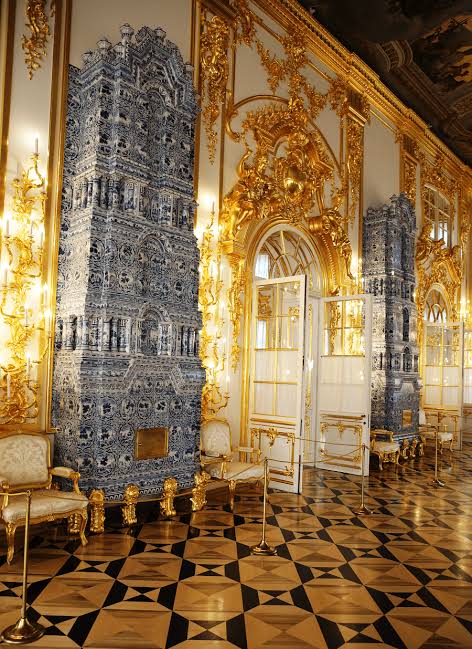
Construction of the Amber Room began in 1701 It was originally installed at Charlottenburg Palace, home of Friedrich I, the first King of Prussia. In 1716 the King of Prussia—then Frederick William I—presented it to the Peter the Great as a gift, cementing a Prussian-Russian alliance against Sweden. The Amber Room was shipped to Russia in 18 large boxes and installed in the Winter House in St. Petersburg as a part of a European art collection. In 1755, Czarina Elizabeth ordered the room to be moved to the Catherine Palace. The room covered about 180 square feet and glowed with six tons of amber and other semi-precious stones. The amber panels were backed with gold leaf.
In 1942, the Nazis destroyed the Palace, including the Amber Room, and plundered its treasures, so everything here is a reconstruction. In 1982, reconstruction of the Amber Room began. It took over 20 years and cost over $12 million. It was opened in 2003 by President Putin and German Chancellor Schroeder.
We had lunch at a restaurant on the palace grounds and then proceeded to the buses for our afternoon tour of St. Petersburg
The City
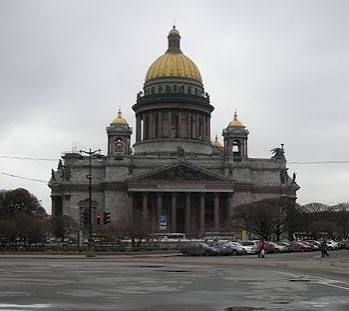
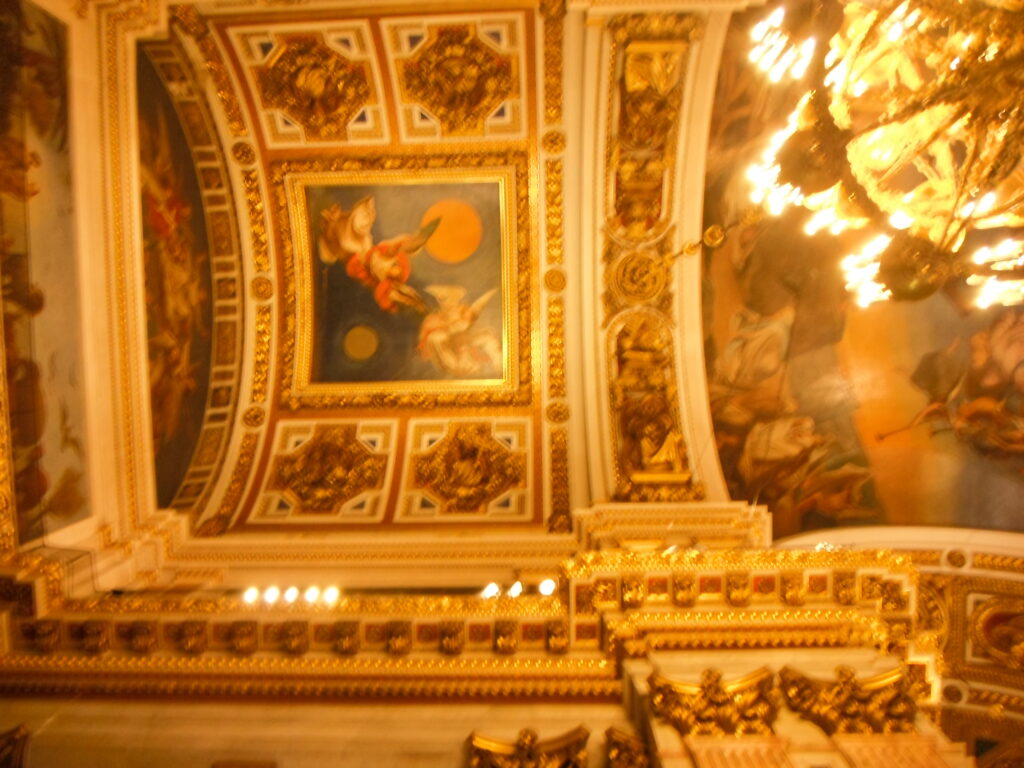
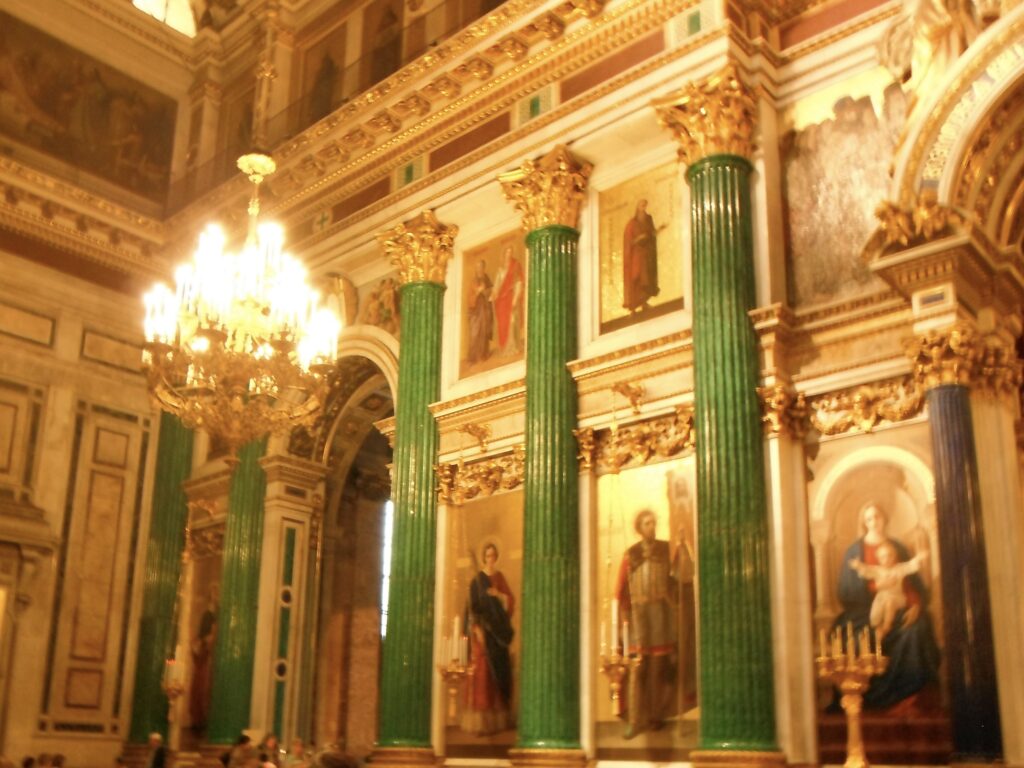
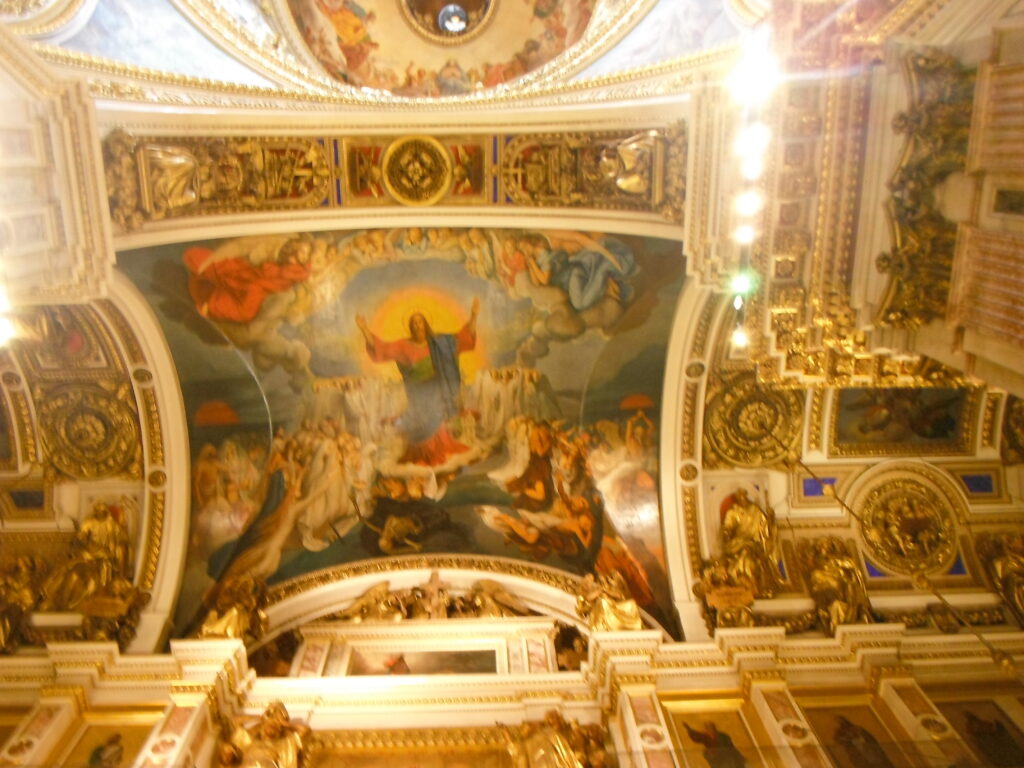
The tour showed us around the city of St. Petersburg. The first stop was St. Isaac’s Cathedral, one of the world’s largest. In 1710, the first wooden church of St. Isaac was built by Peter, who was born on the saint’s day of Isaac of Dalmatia, hence the cathedral’s name. A stone church replaced it in 1729. It started to sink and crack. After the War of 1812, Czar Alexander I held a contest to select an architect for a new cathedral. This cathedral took 40 years to build. It can hold 14,000 people and has over 400 sculptures, paintings, and mosaics. Again the beautiful iconography was breathtaking. The cathedral opened in 1858 but was designated as a museum by the Soviets in 1939 and remains so today.
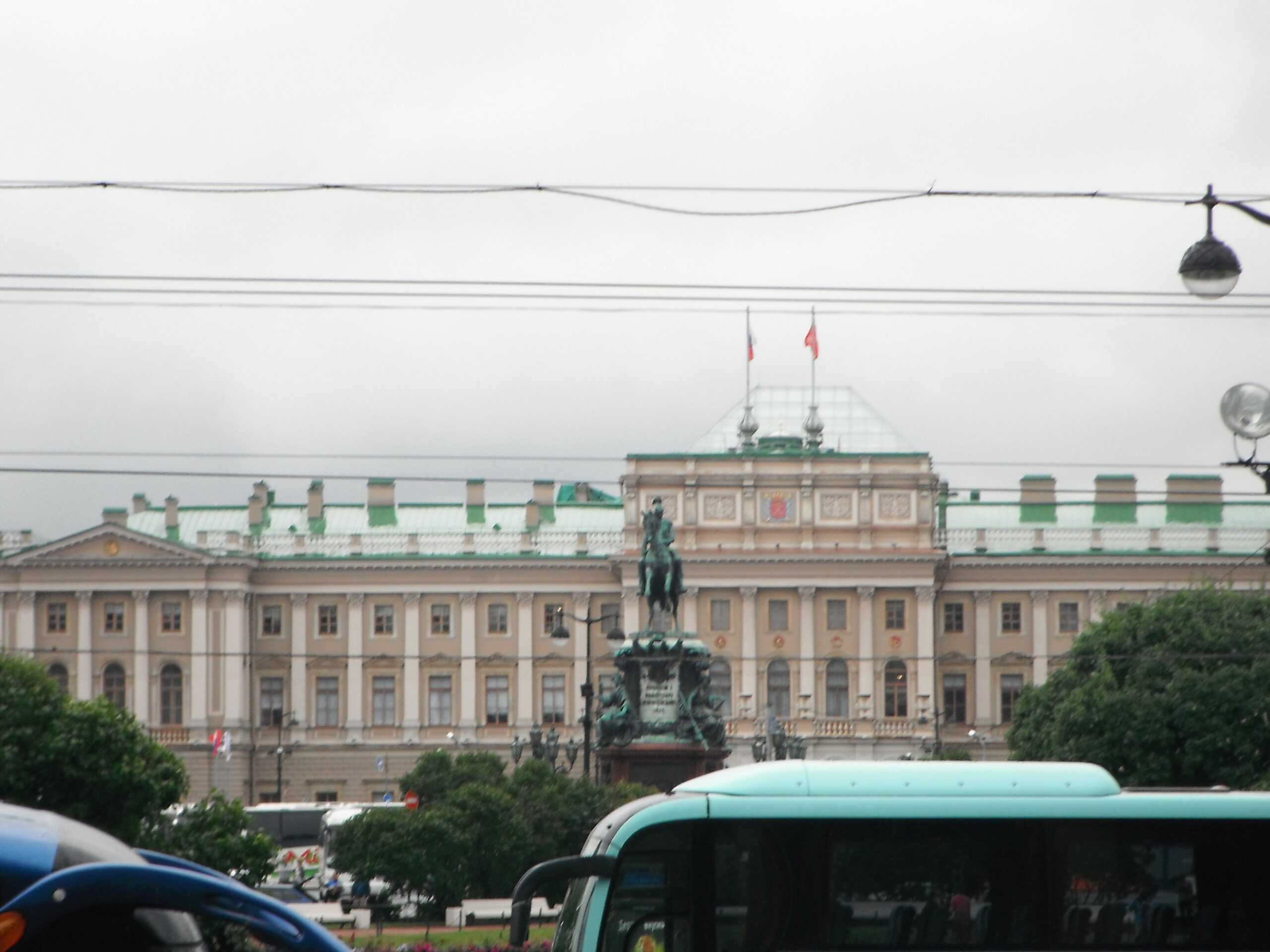
Isaac’s Square
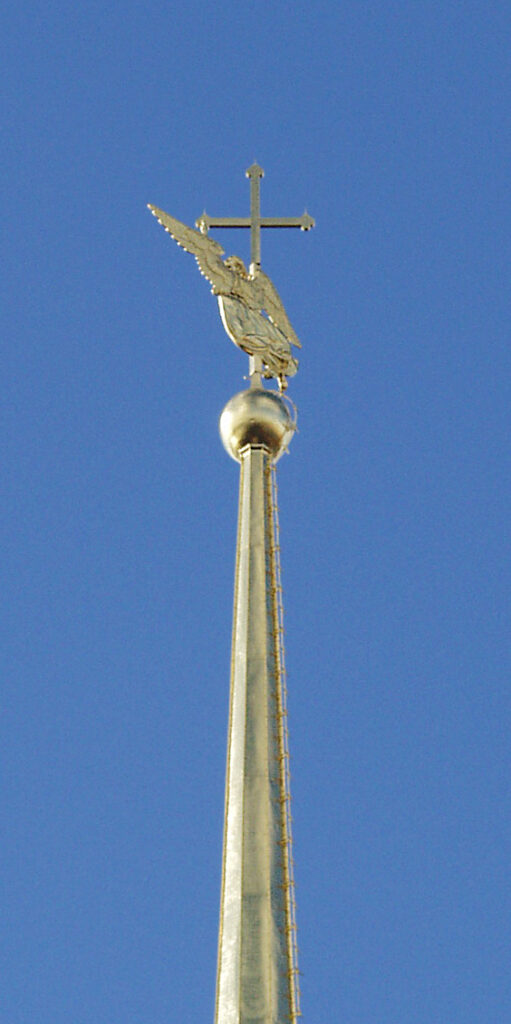
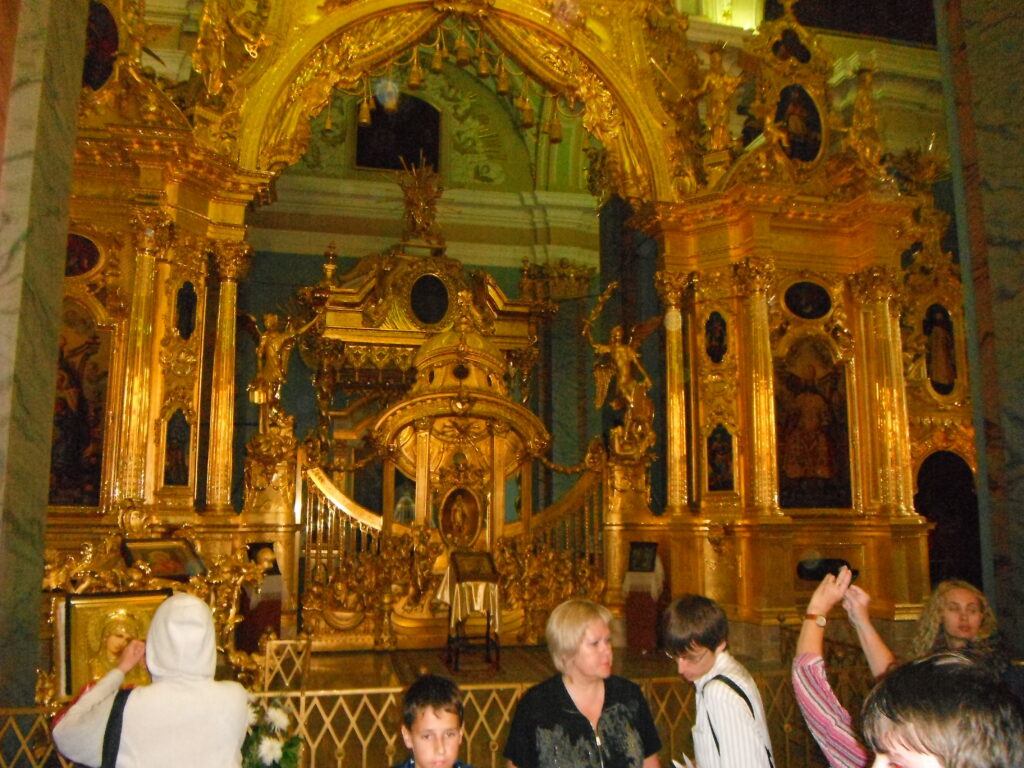
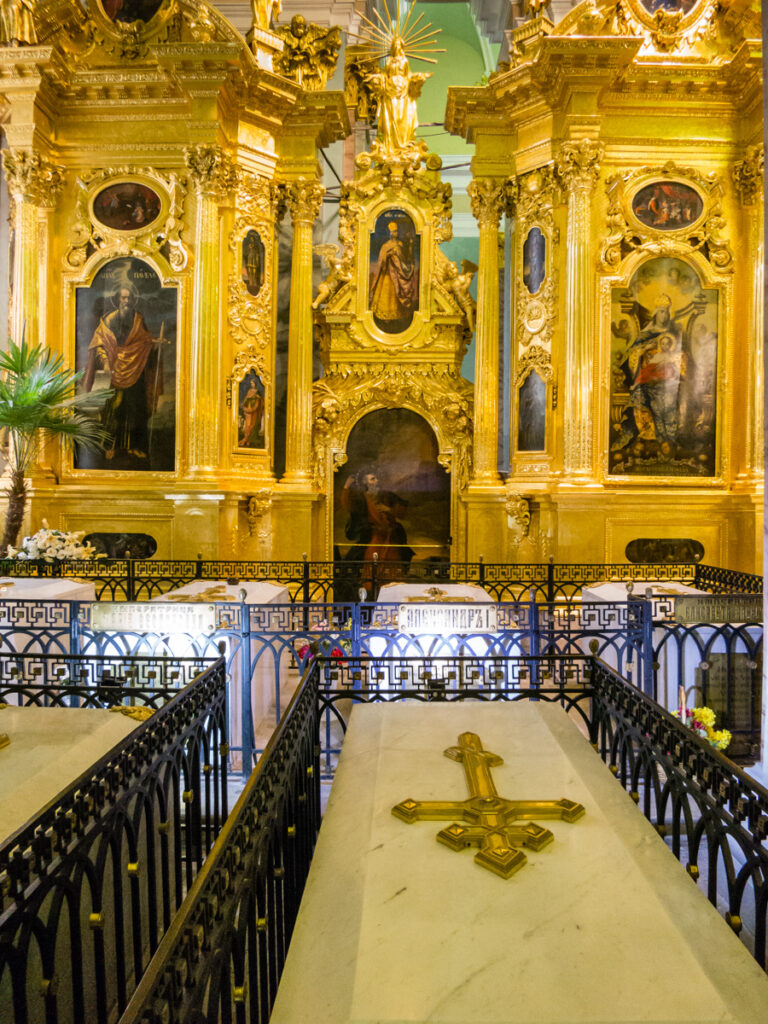
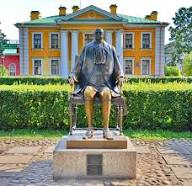
The next visit was to Peter and Paul Fortress, which was the first structure to be built in the new city of St. Petersburg, when Peter the Great reclaimed the lands along the Neva River in 1703. Standing on an island in the Neva River, the fortress was designed to protect the city from the invading Swedes. In its center stands the impressive Peter and Paul Cathedral, the burial place of all Russian Emperors and Empresses from Peter the Great to Alexander III. On top of the cathedral’s slender, gilded spire stands a magnificent golden angel holding a cross. This weather vane is one of the most prominent symbols of St. Petersburg. The belfry was 402 feet tall, once the highest structure in the whole country. The wooden iconostasis in the cathedral was carved between 1722 and 1726 and holds 43 icons. Outside the cathedral is a life-sized statue of Peter the Great seated in an armchair, unveiled in 1991 before the city regained its historical name.
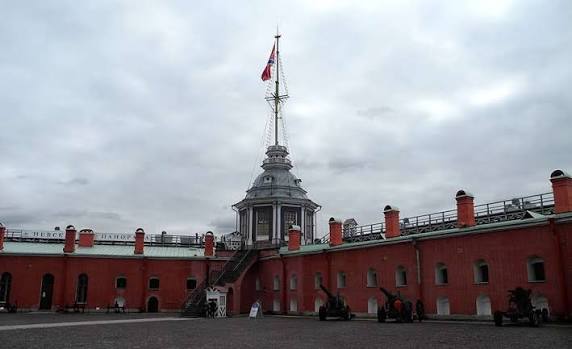
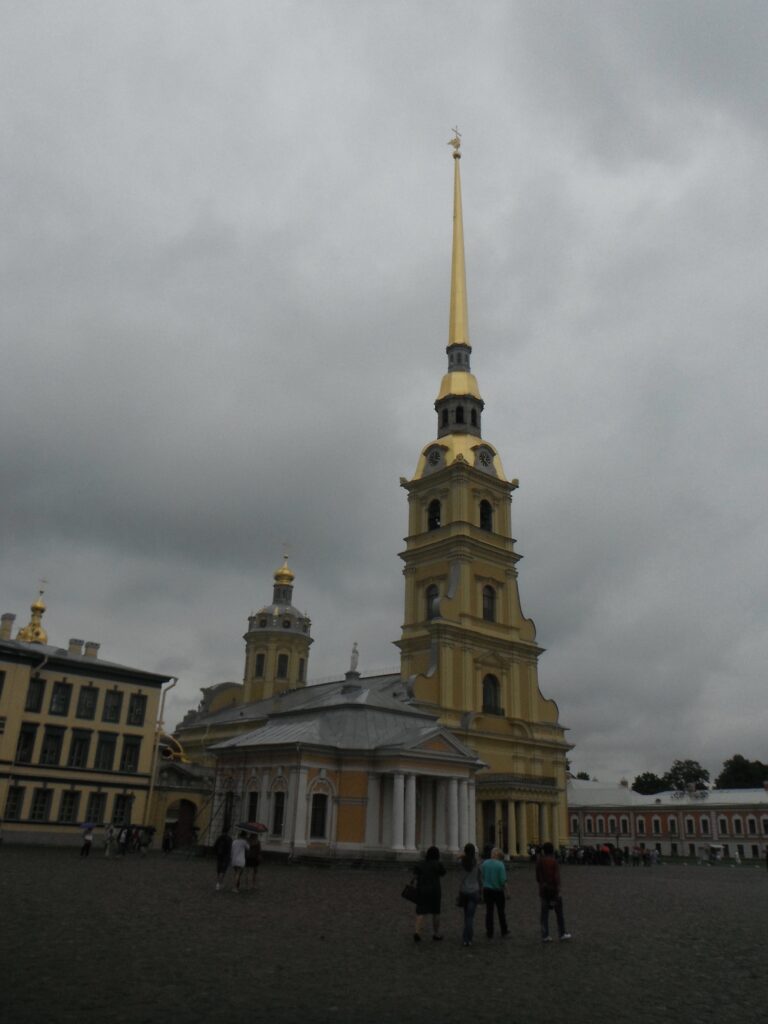
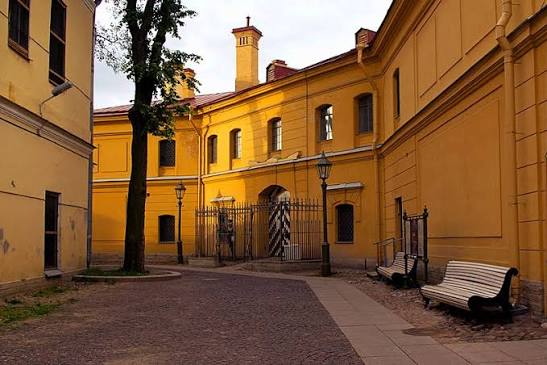
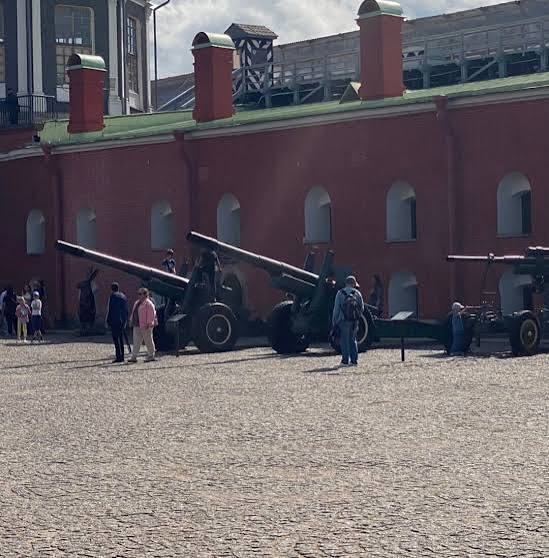
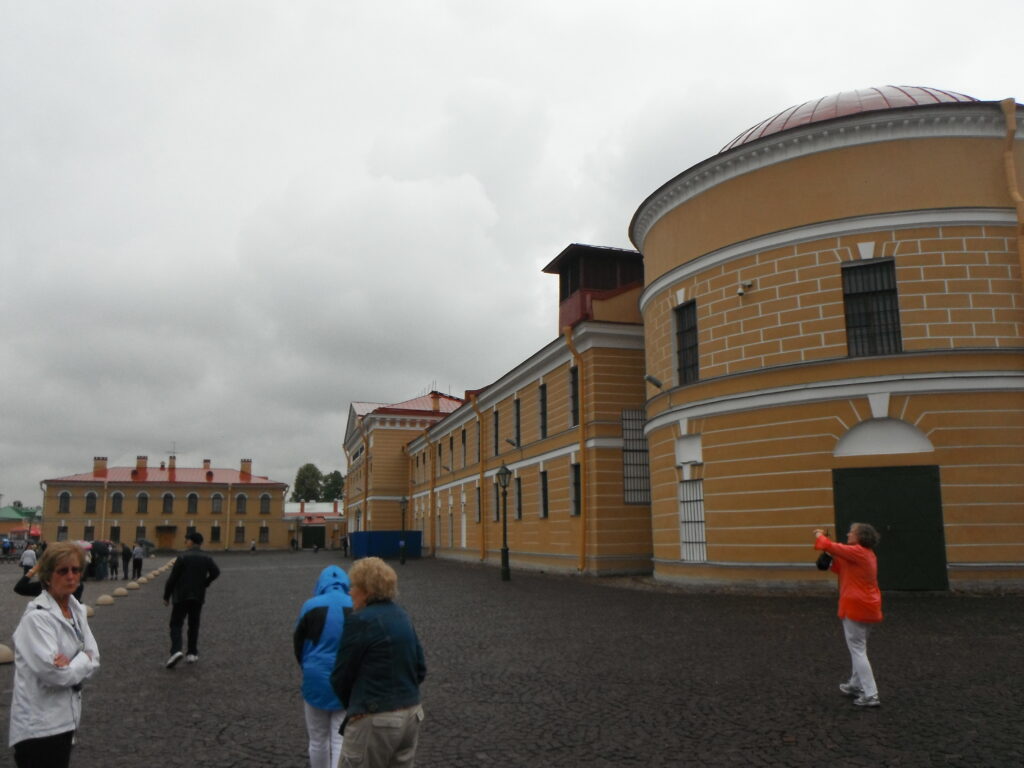
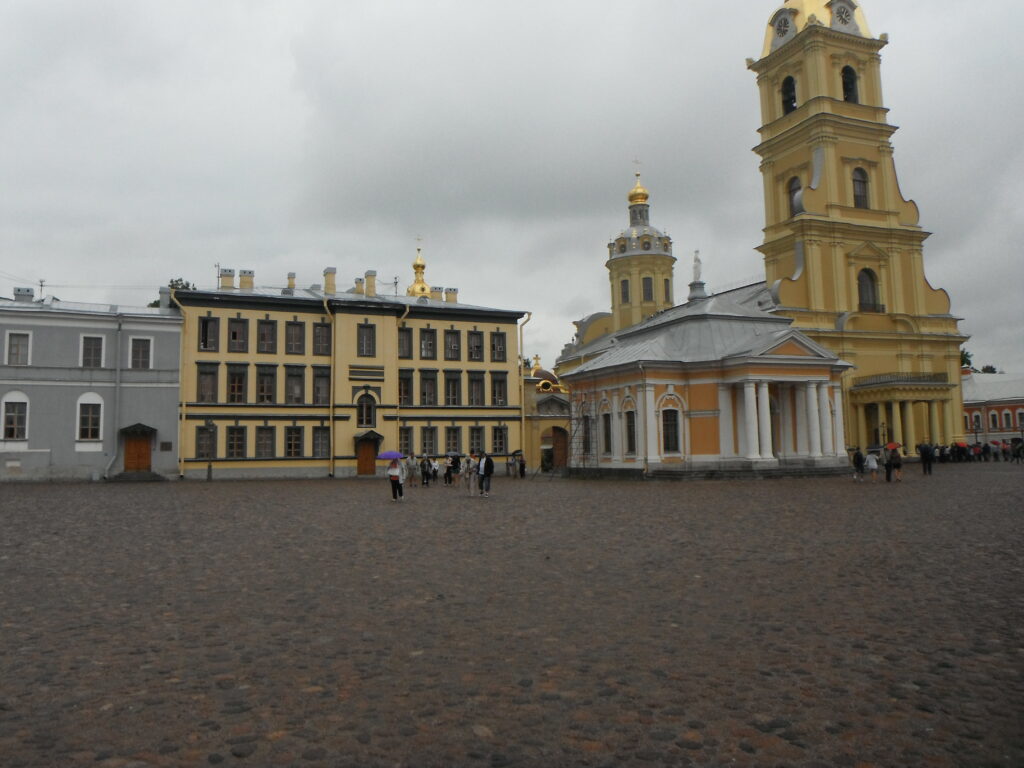
Other structures inside the fortress include the still functioning Mint building, the Trubetskoy Bastion with its grim prison cells, and the city museum. According to a centuries-old tradition, a cannon is fired daily from the Naryshkin Bastion at noon.
In the evening we had tickets for the Russian Folkloric dance performance held at Nicolas Palace. It had classical as well as folk music and dance, beautiful costumes, and some audience participation (could have done without that).
Winter Palace
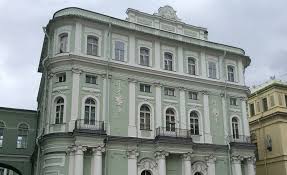
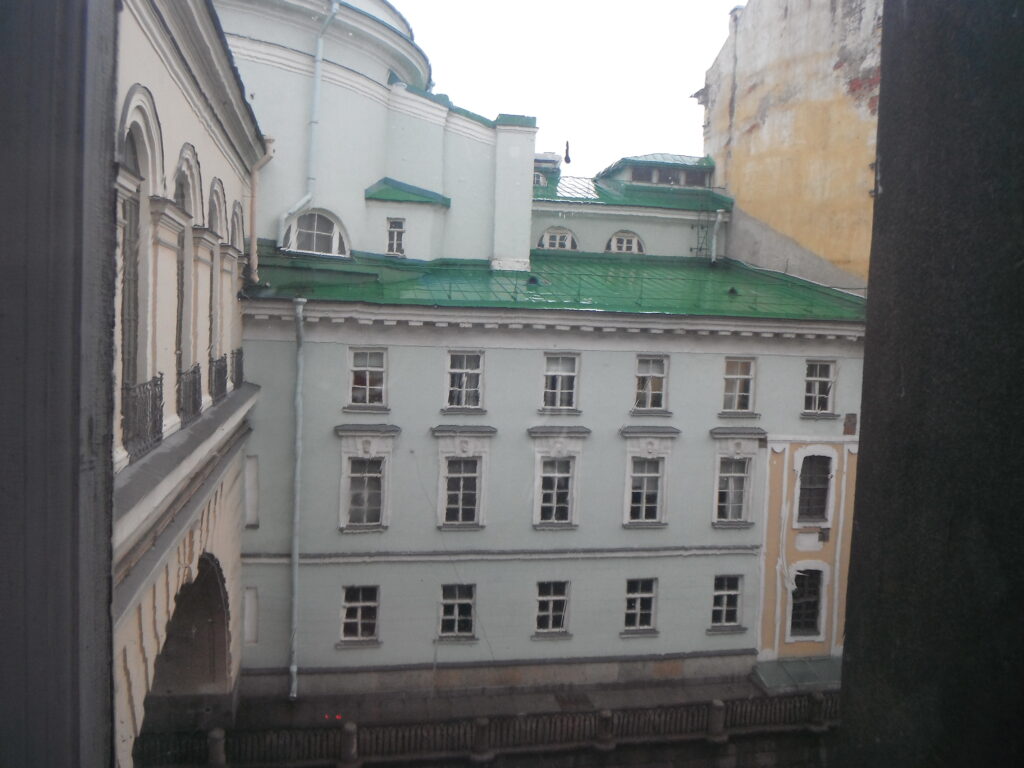
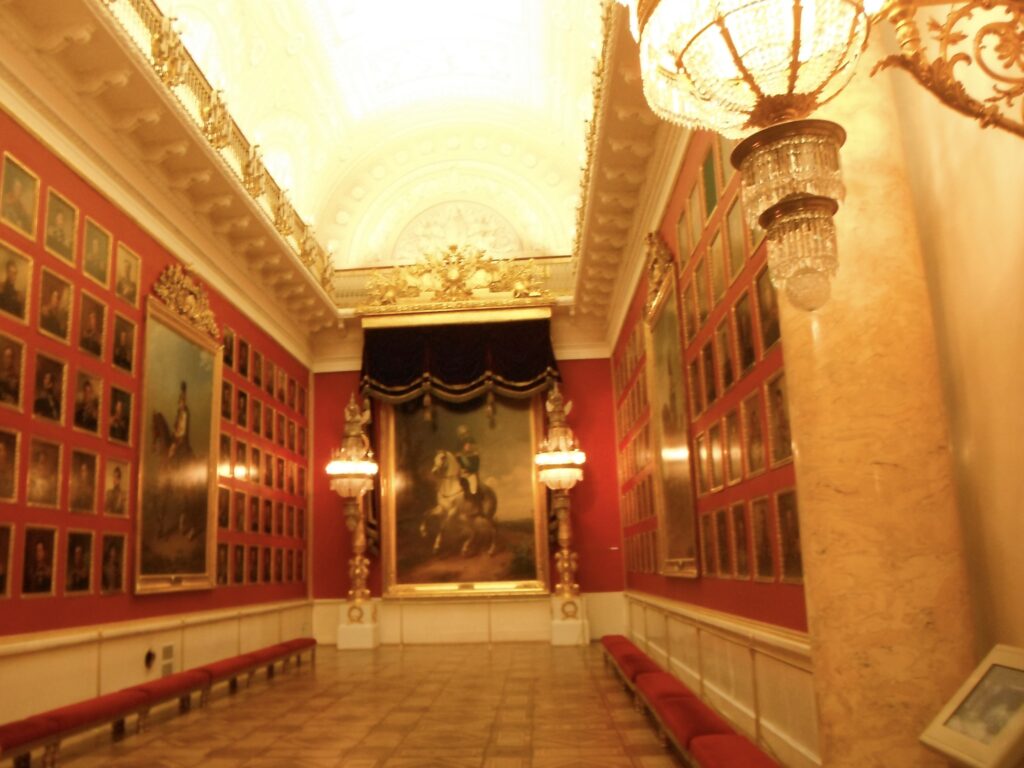
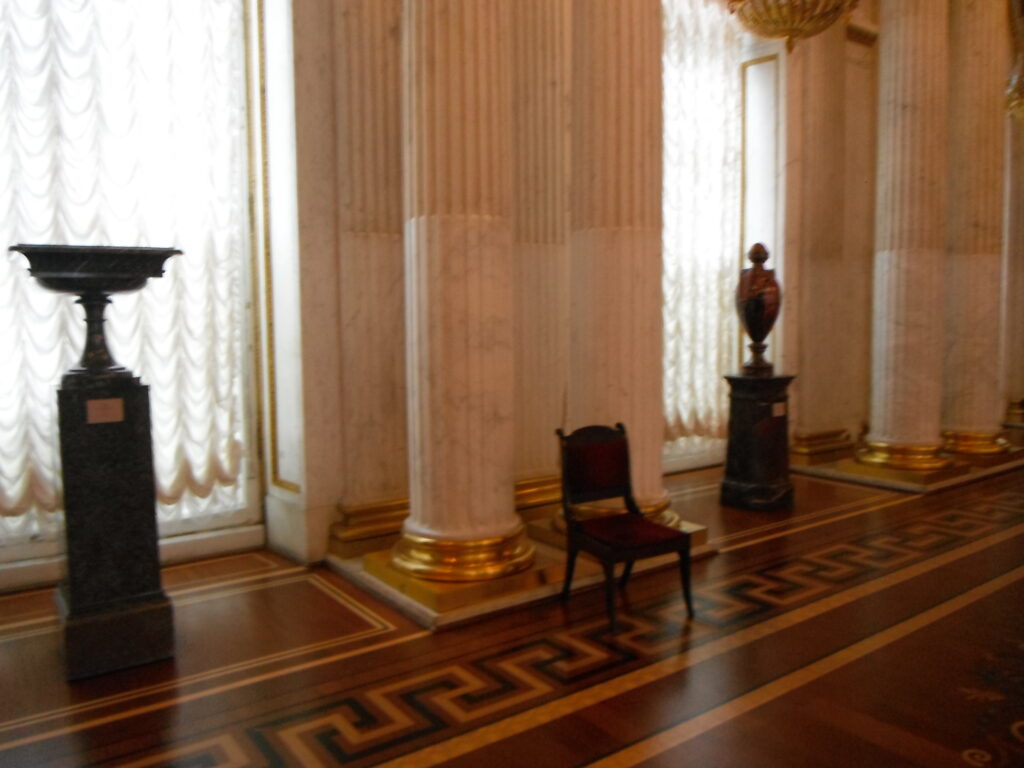
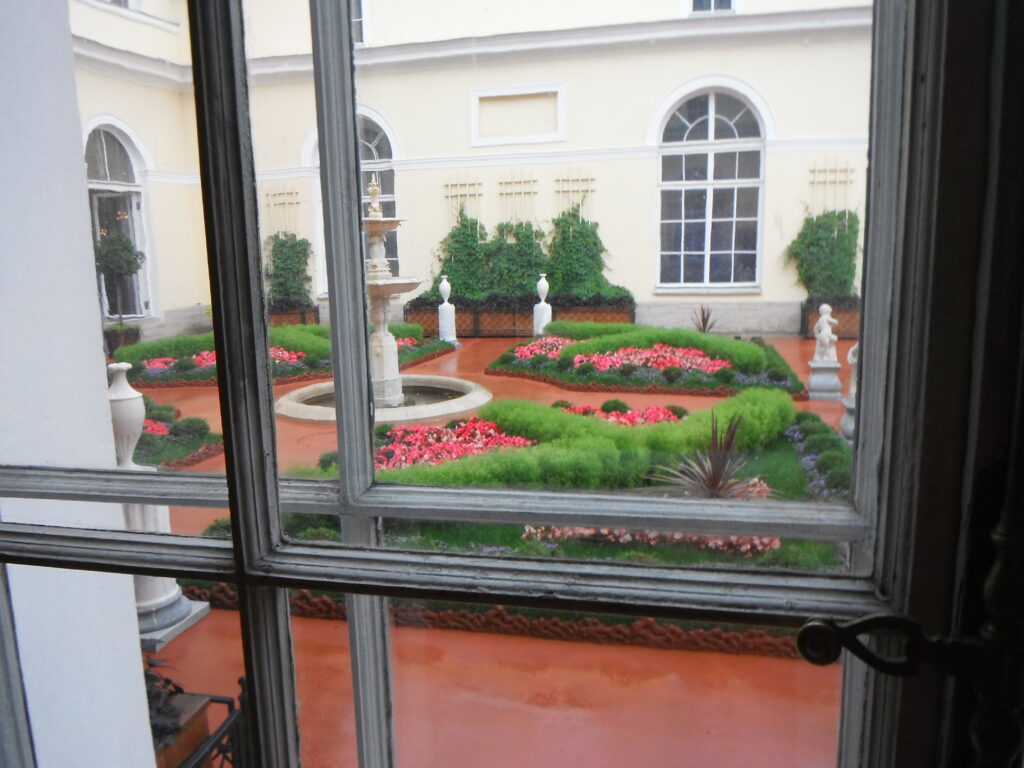
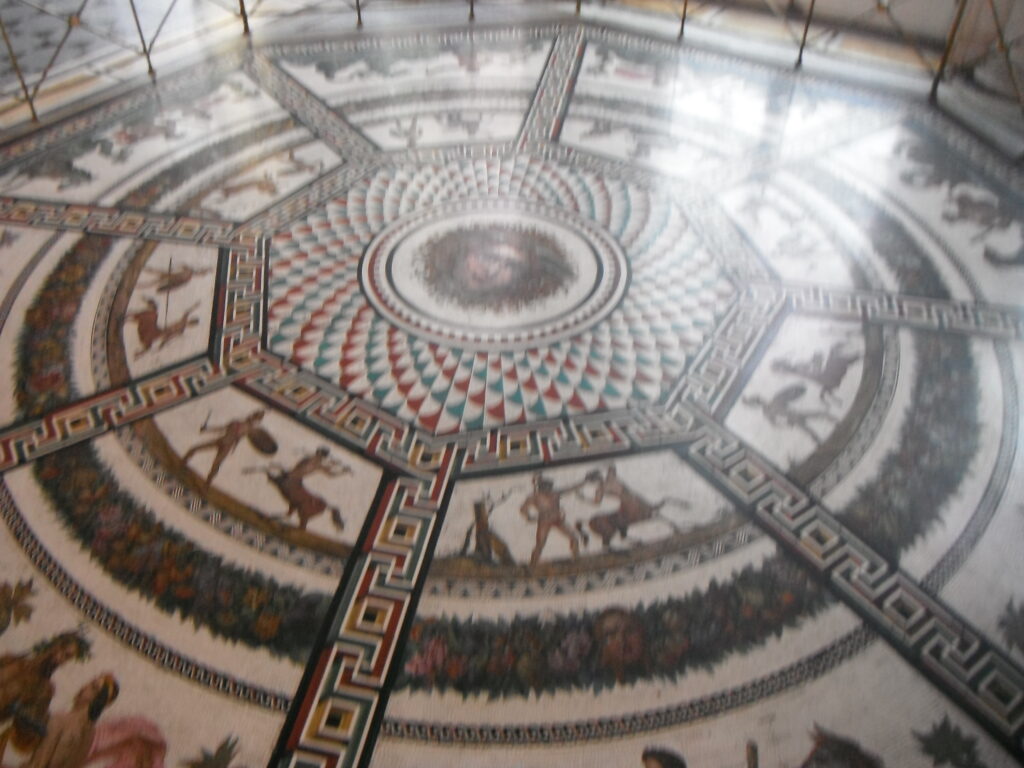
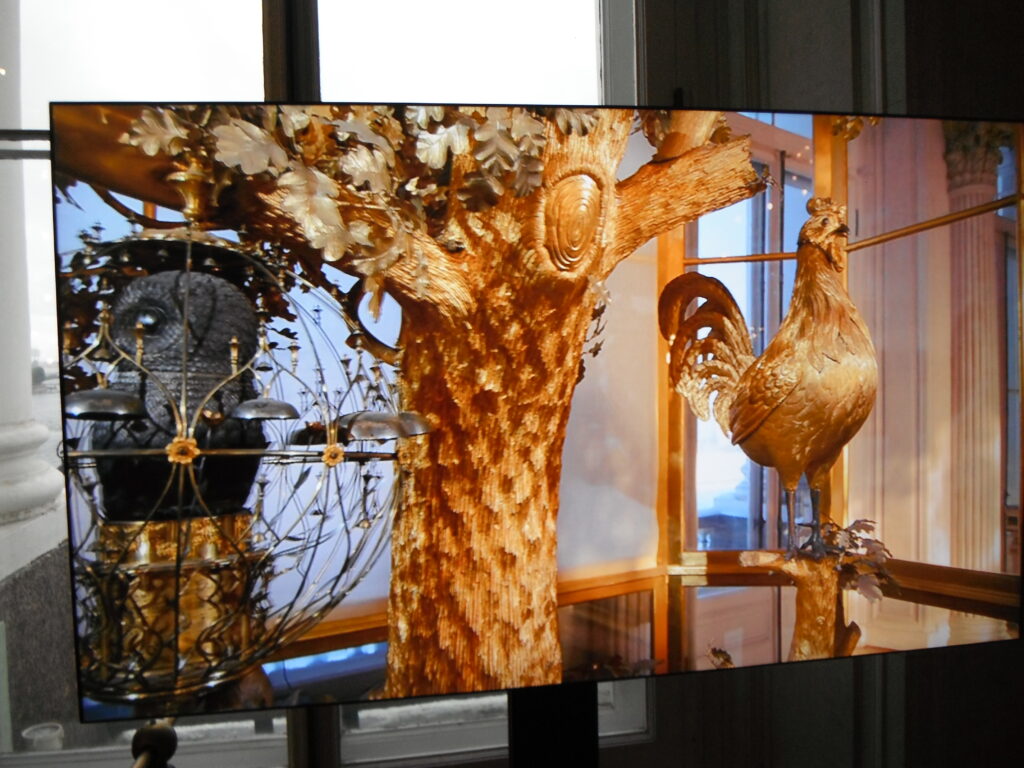
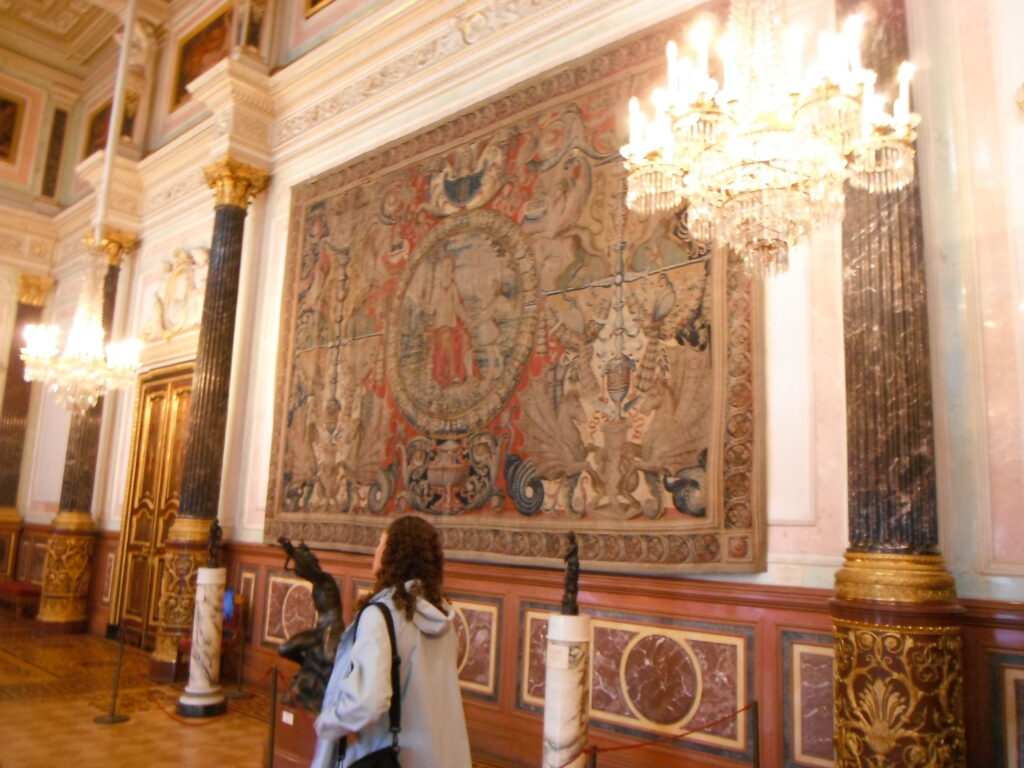
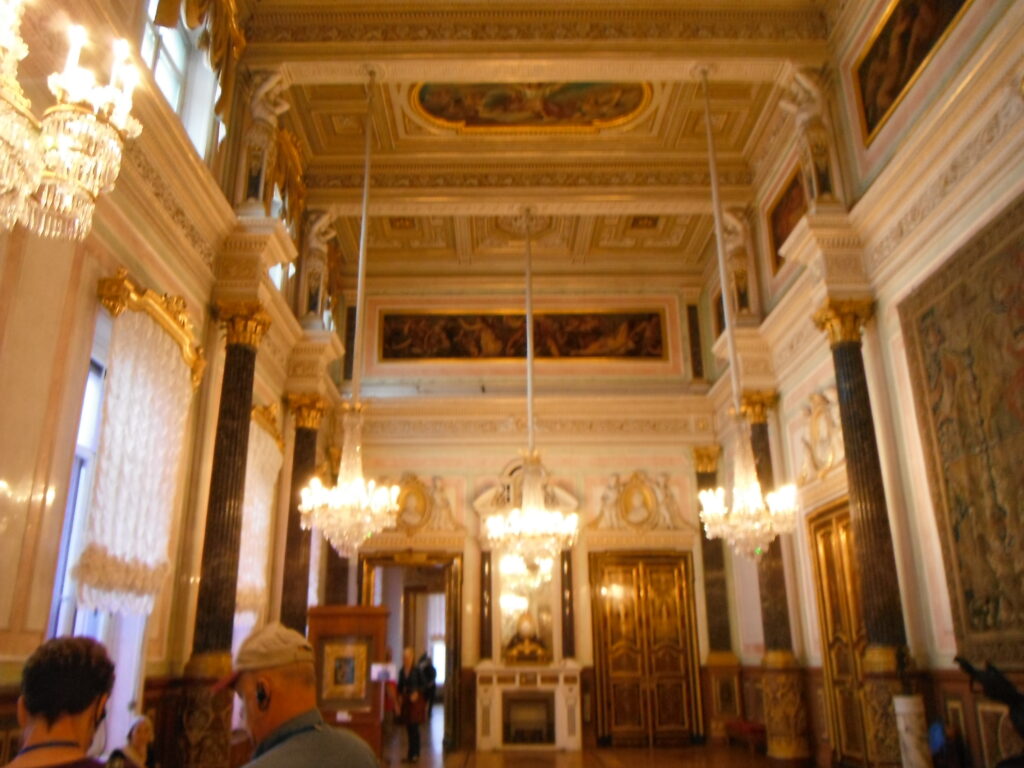
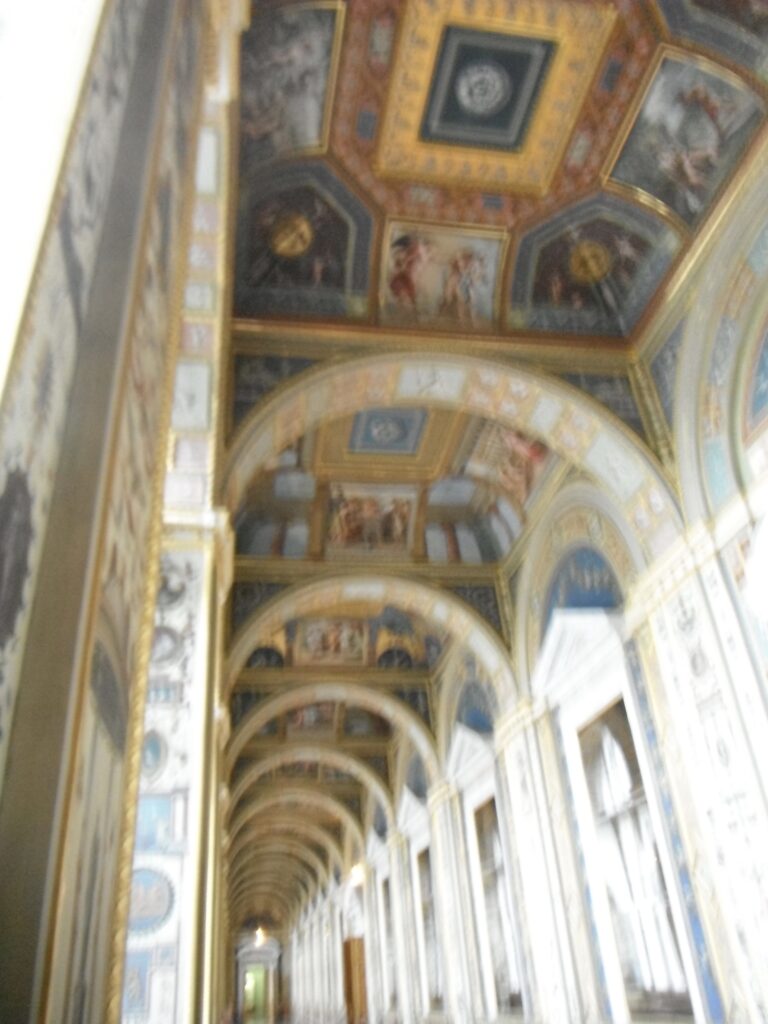
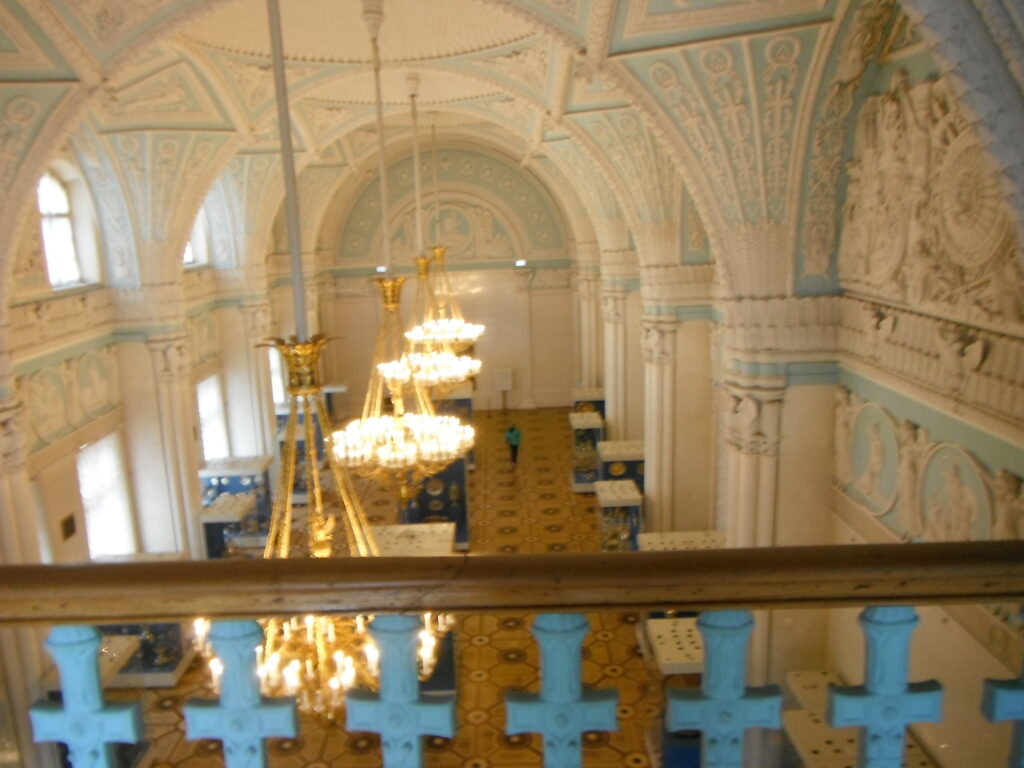
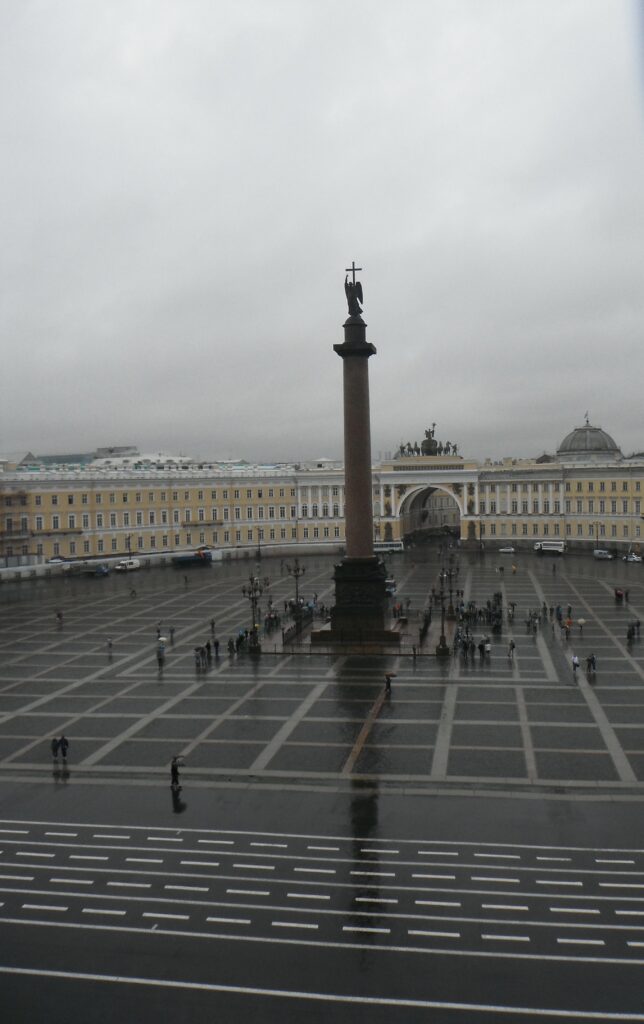
Today was another full day in St. Petersburg. We started at The Winter Palace and Hermitage Museum. The Winter Palace stands on the banks of the Neva River. It was commissioned by Peter’s daughter Elizabeth and built between 1754 and 1762. Catherine the Great added the Small Hermitage in 1771, then the large Hermitage in the 1780s. Then the theater was built and finally the New Hermitage (1839-51). It is a marvel of Baroque architecture. These buildings housed her increasing art collection of over 2500 European paintings, 10,000 carved gems, 10,000 drawings, and silver and porcelain. The Palace remained the Czars’ official residence until the Revolution on 1917. It covers 20 acres. There are 1,057 rooms, not one identical, and 117 staircases. Today it houses The Hermitage Museum, with close to three million items. The experts say that if you were to spend a minute looking at each exhibit on display in the Hermitage, you would need 11 years before you’d see them all. This is one of the great museums of the world.
Peterhof
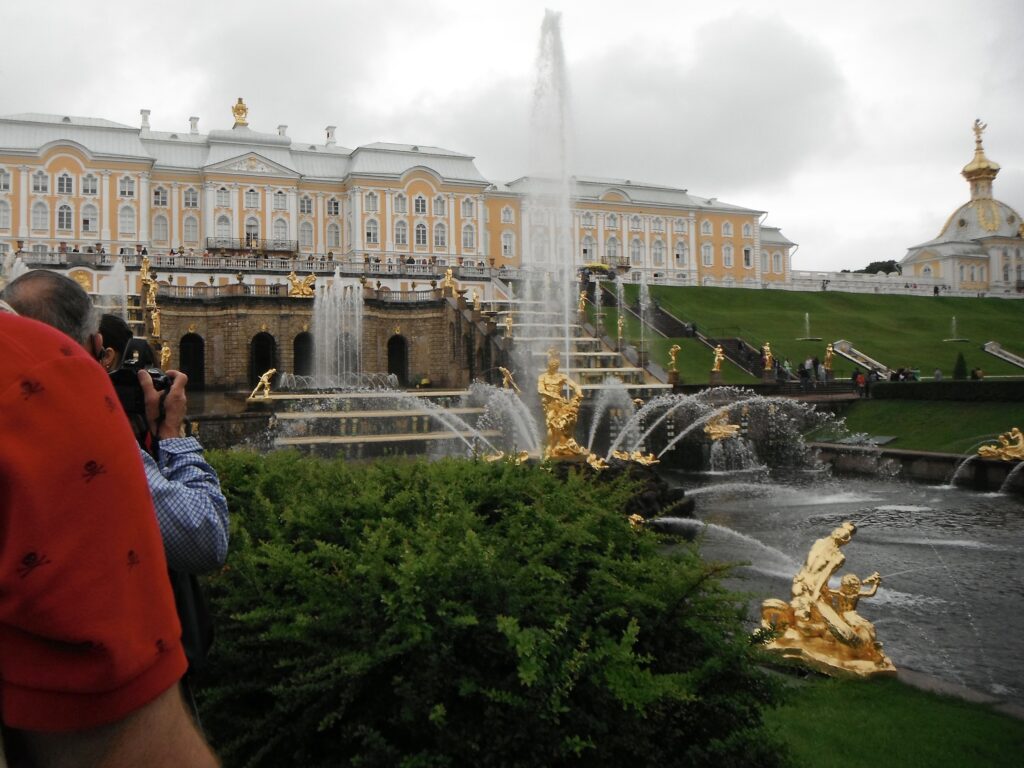
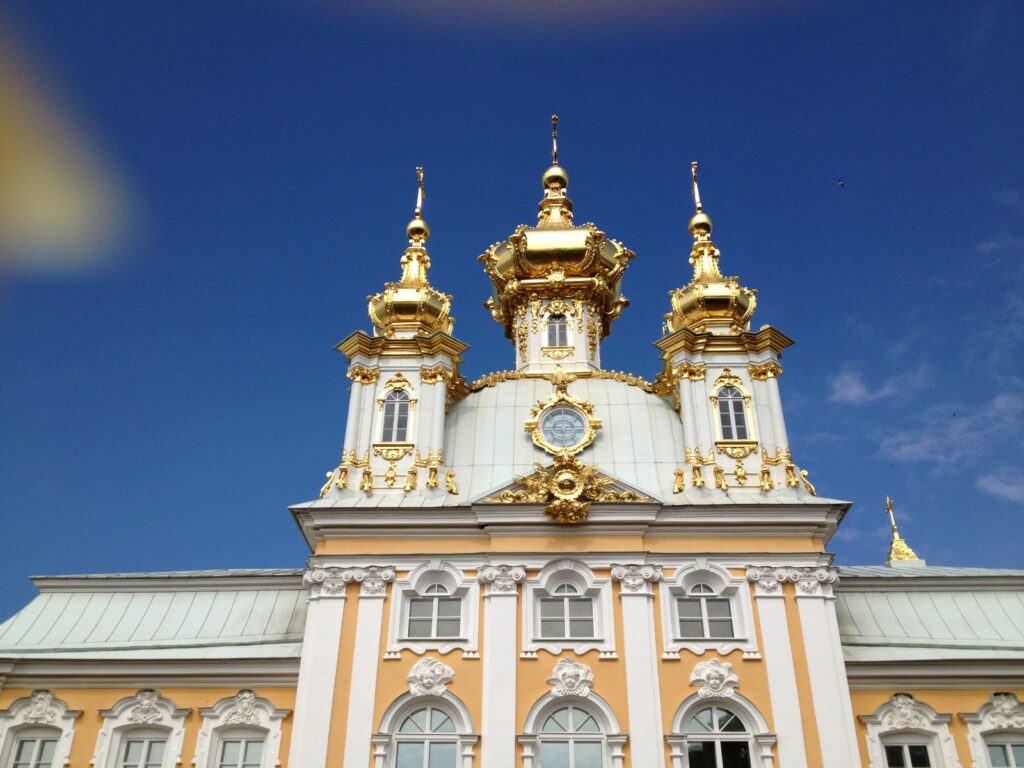
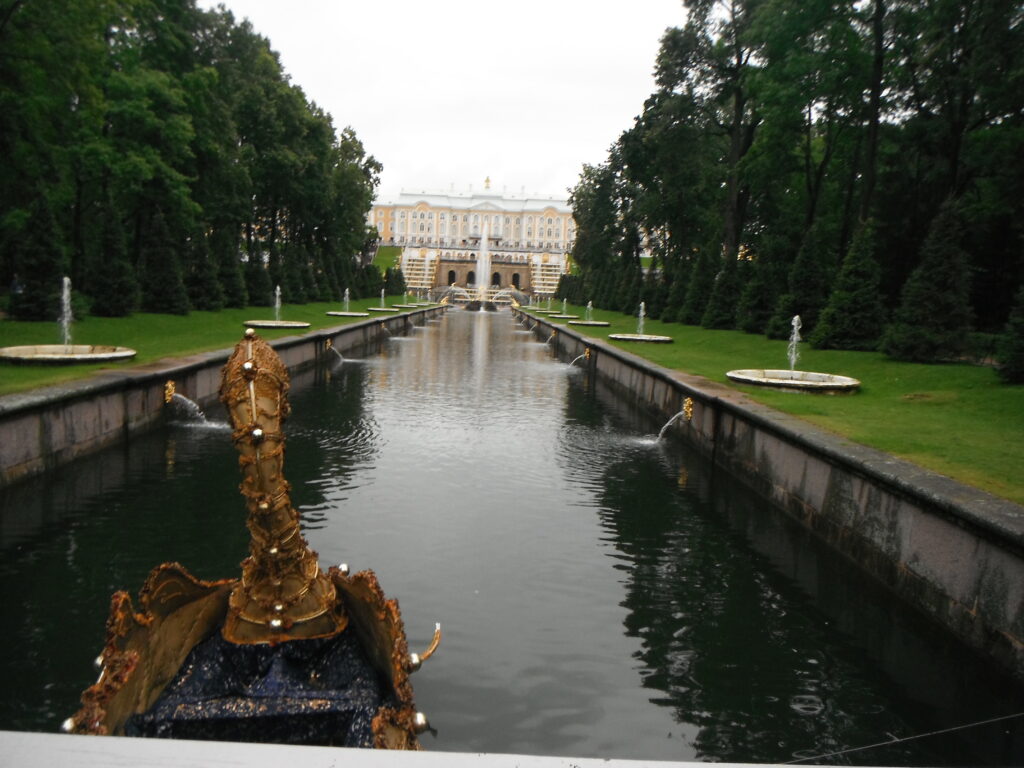
After the visit to the Hermitage, we boarded a hydrofoil for the trip across the Gulf of Finland to Peterhof (Petrodvorets). This is Peter the Great’s summer palace. When we landed it reminded me of Versailles. It was built after Peter visited Versailles. We started with lunch, a walk through the gardens and then had a guided tour of the Grand Palace. The palace was built after Peter’s victory over the Swedes at Poltava in 1709. It is an example of Baroque and Classical styles. The palace is filled with art objects, furniture, portraits, etc. of the periods. The grounds are filled with famous fountains. It is a World Heritage Site.
Marble Palace
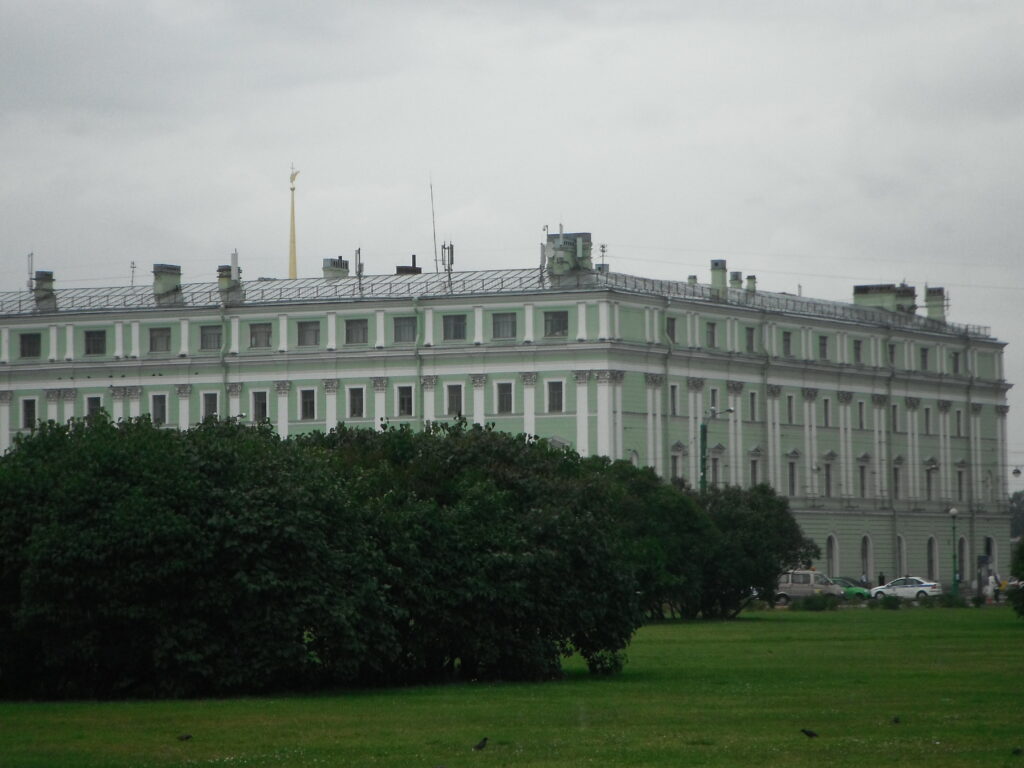
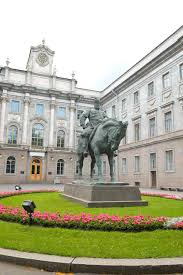
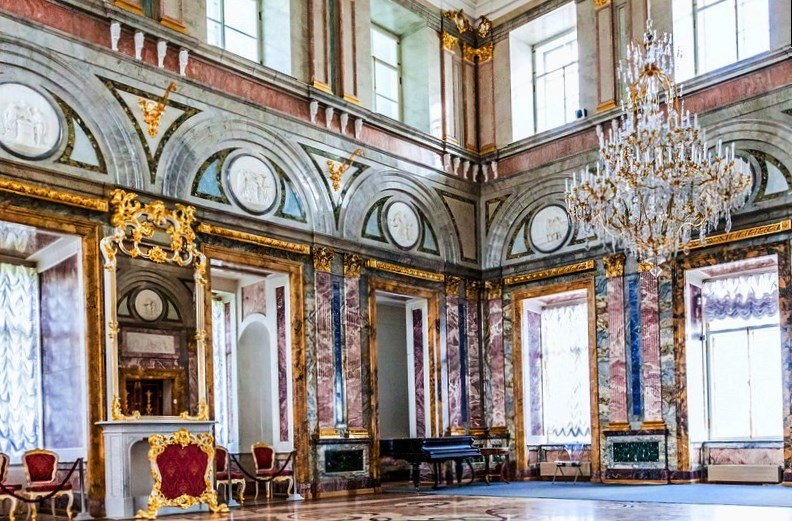
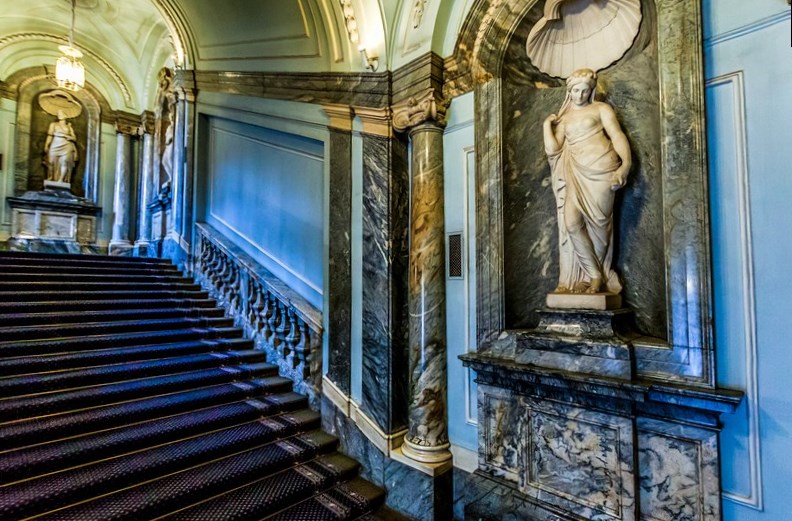
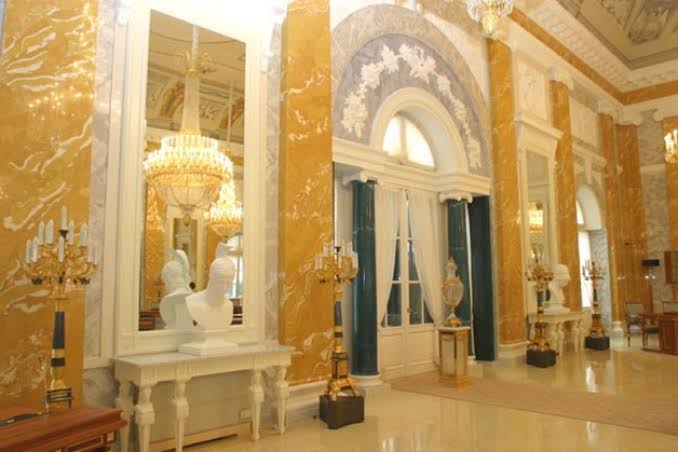
Heading “home” we saw the Marble Palace. The Marble Palace is among the most impressive of St. Petersburg’s former Imperial residences. It got its name because 32 different types of marble were used to create the exterior and interior ornamentation of the Palace. Today it is part of the Russian Museum. It front of the palace is a bronze statue of Alexander III.
Evening—last dinner and packing for departure. Our airport transfer leaves at 3:30 AM!!! (Lesson learned, book later flights next trip).
Leave a Reply