The Great Wall
Today was the Great Wall Day. The Great Wall of China is the largest man-made architectural project in the world, stretching over 13,171 miles across 15 northern Chinese provinces, municipalities, and autonomous regions. Designated as a UNESCO World Heritage Site in 1987, this immense system of fortifications winding over mountains and deserts stands as an ultimate masterpiece of human engineering and a primary symbol of Chinese civilization–its strength and perseverance. The first sections of the wall were built in the 7th century BCE, and the more famous sections were built by the first Emperor of China, Qin Shi Huang, in the 3rd century BCE to protect his country from northern invasions.
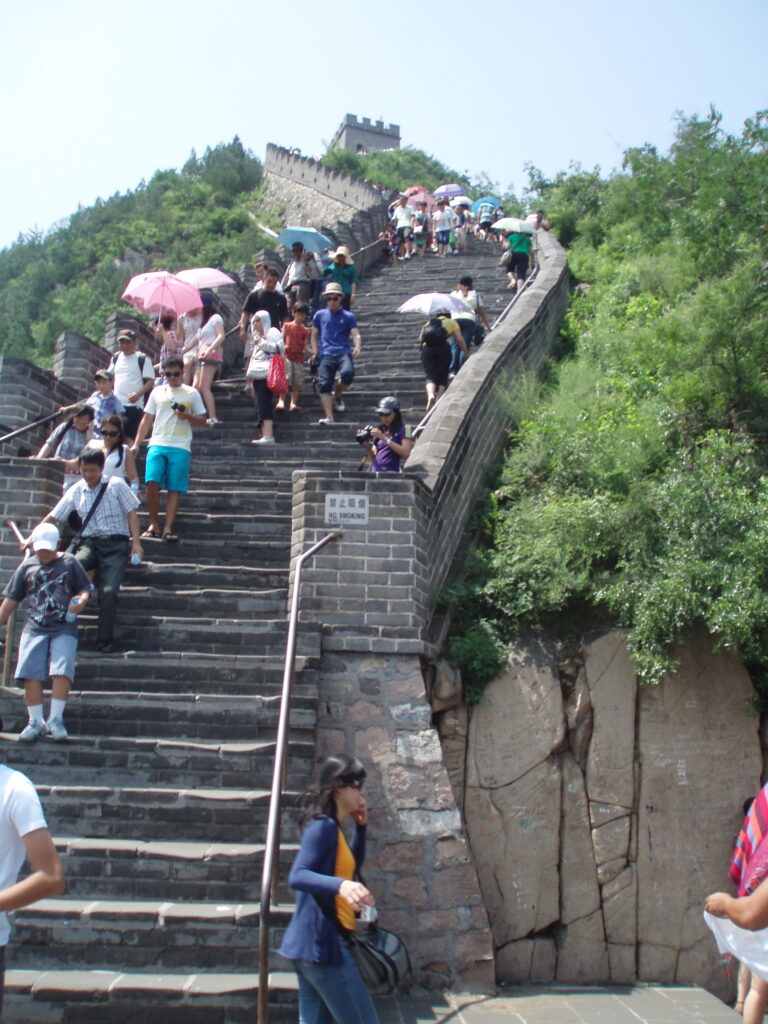
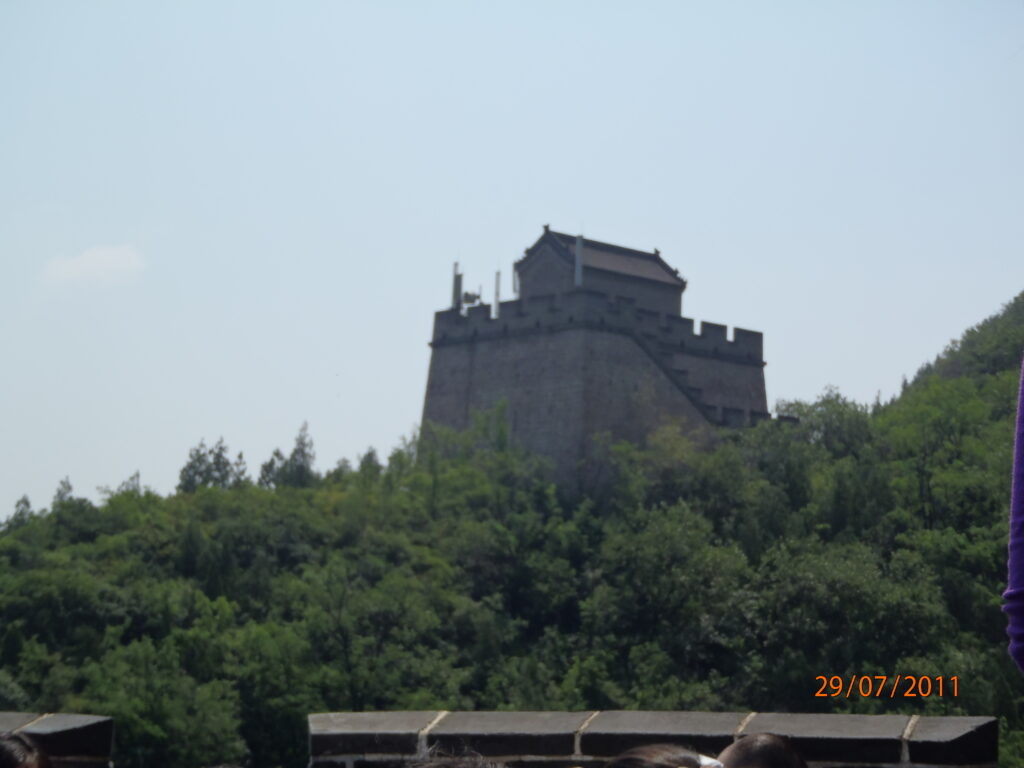
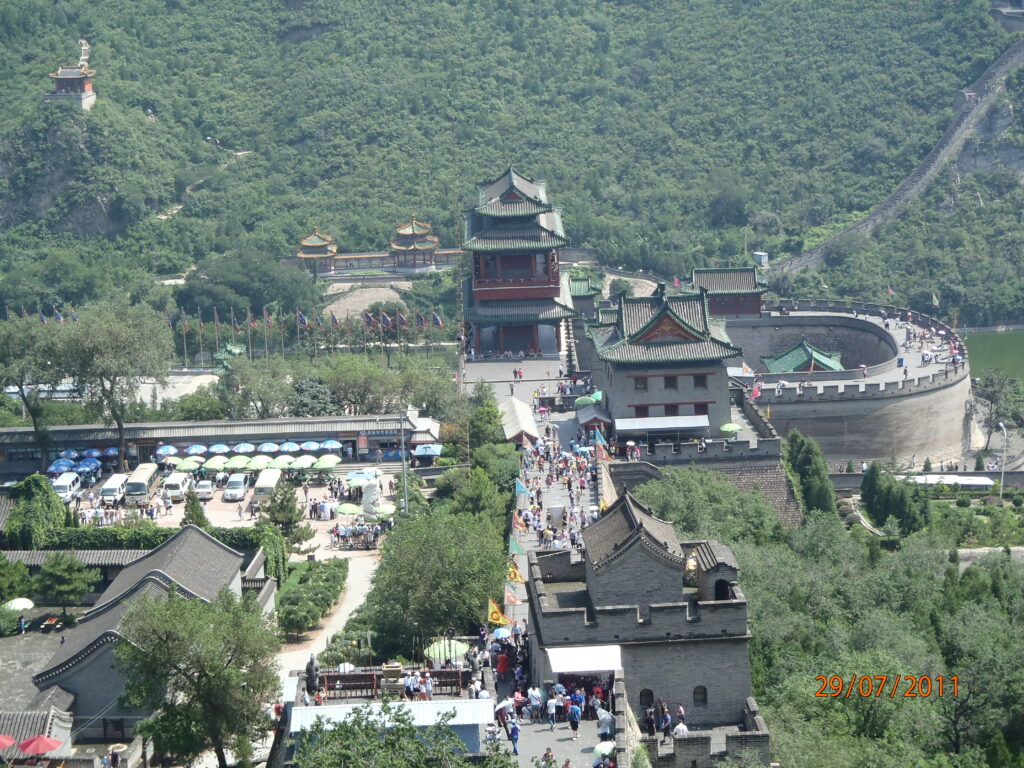
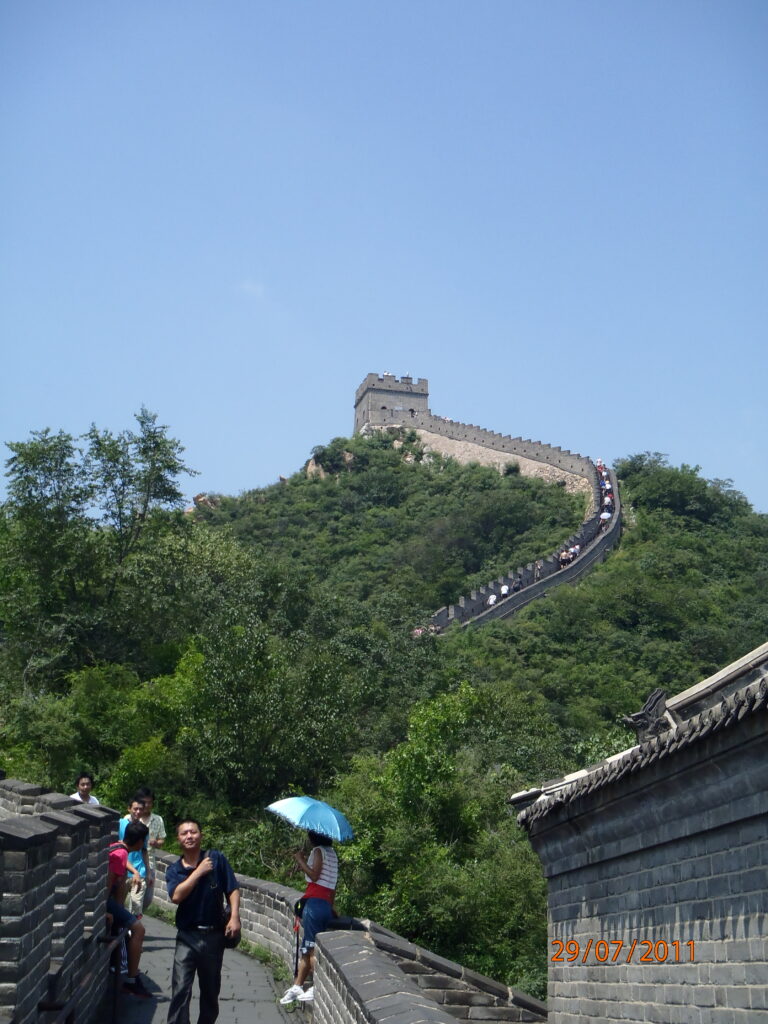
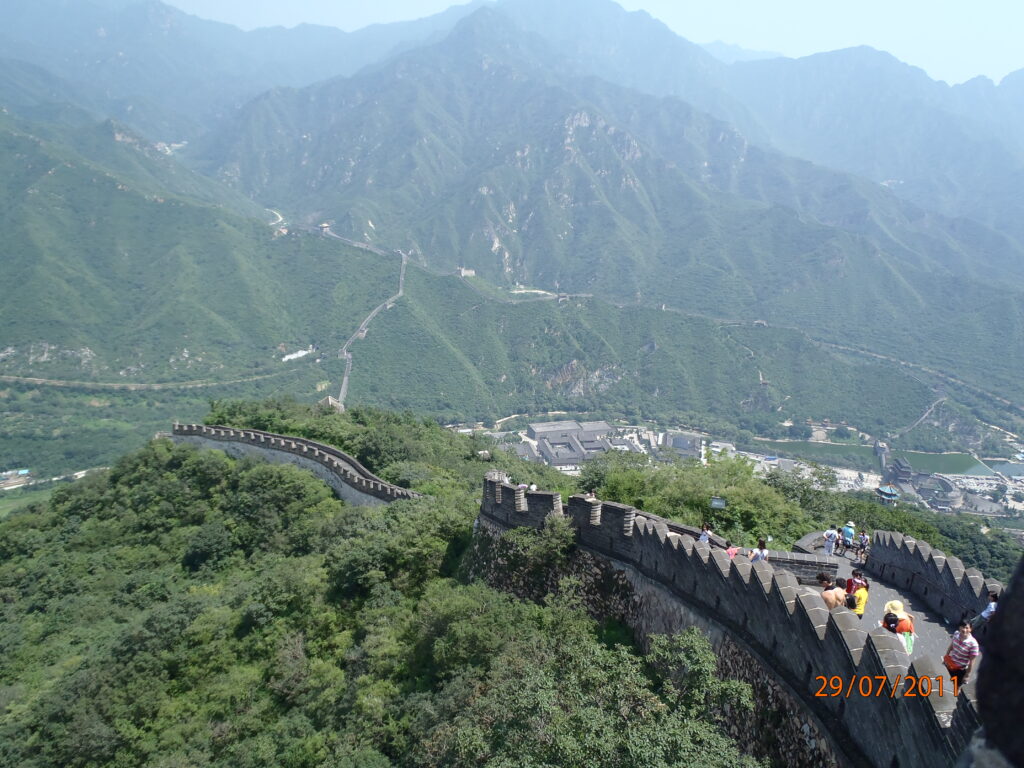
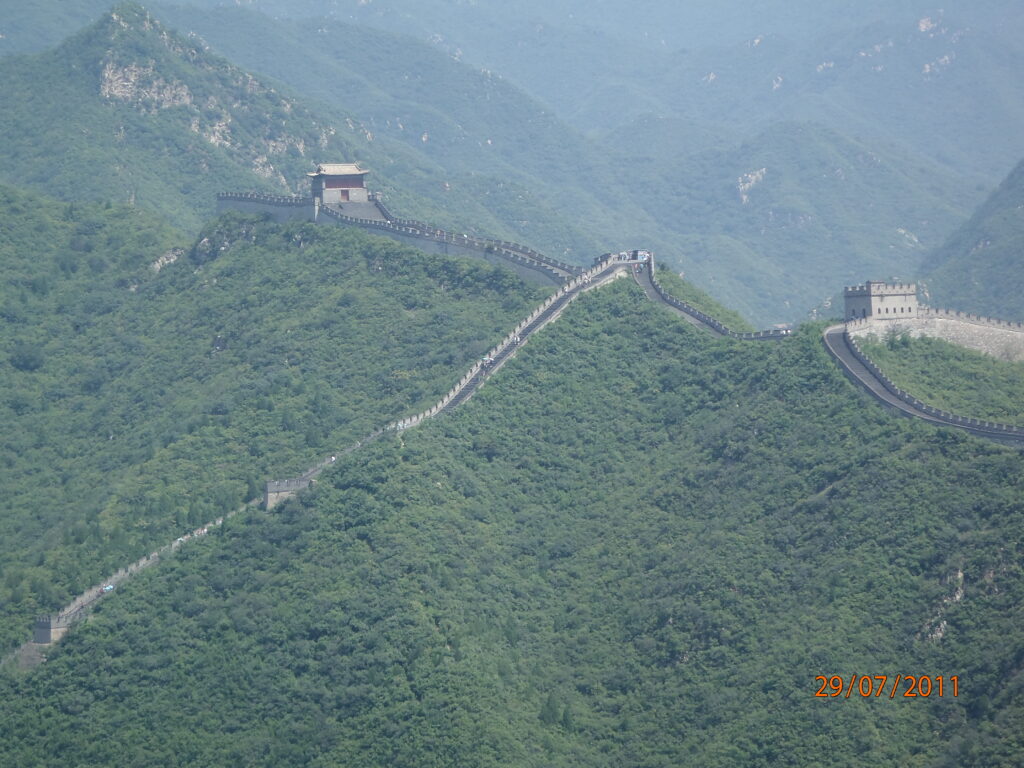
At 67 I climbed the Great Wall! We drove for an hour and a half to get to the section of Great Wall to climb, the Mutianyu section. This section is the longest, fully restored, and best-preserved part of the Great Wall. It is about 3 ½ miles long and has over 1,000 steps up. David, our guide, chose this section because there were supposed to be fewer people. That may have been true, but there were still so many people. We were shoved and pushed along the way. It was a mass of people going up the wall. David said it is worse in some other places. I lost count of the stairs, but climbed for about an hour and made it to the second guard house on the top of the wall., Then I went back. I had to buy a T Shirt saying I climbed the Great Wall. David said that the Chinese people are heroes if they even touch a part of the Great Wall.
The Spirit Way
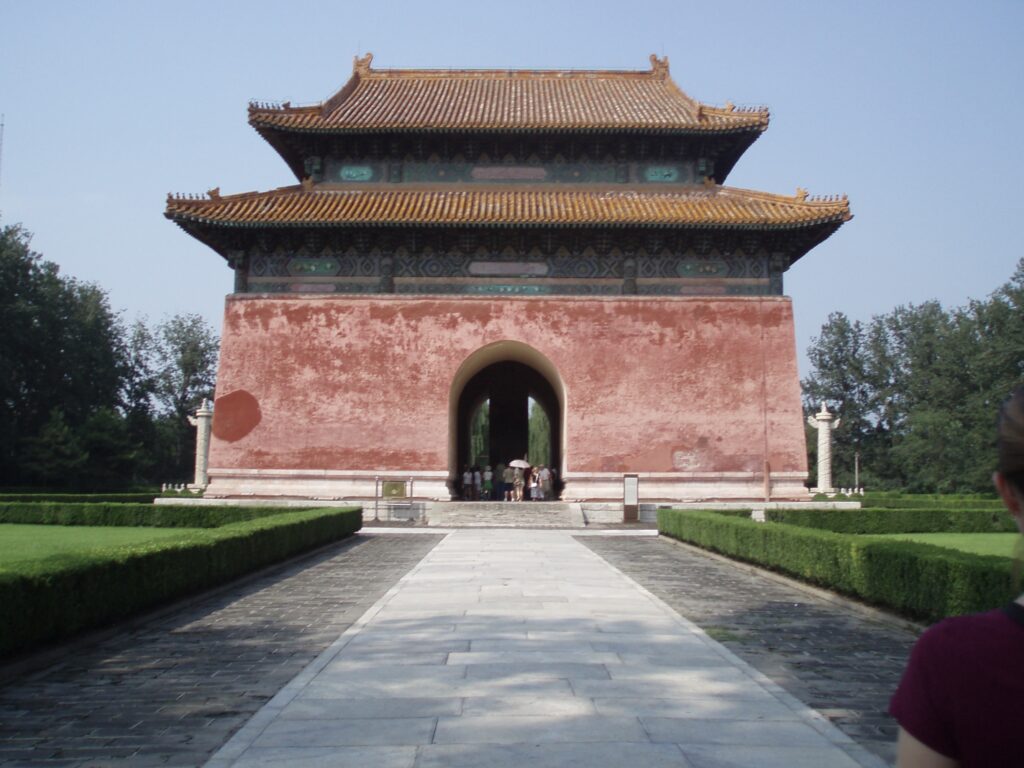
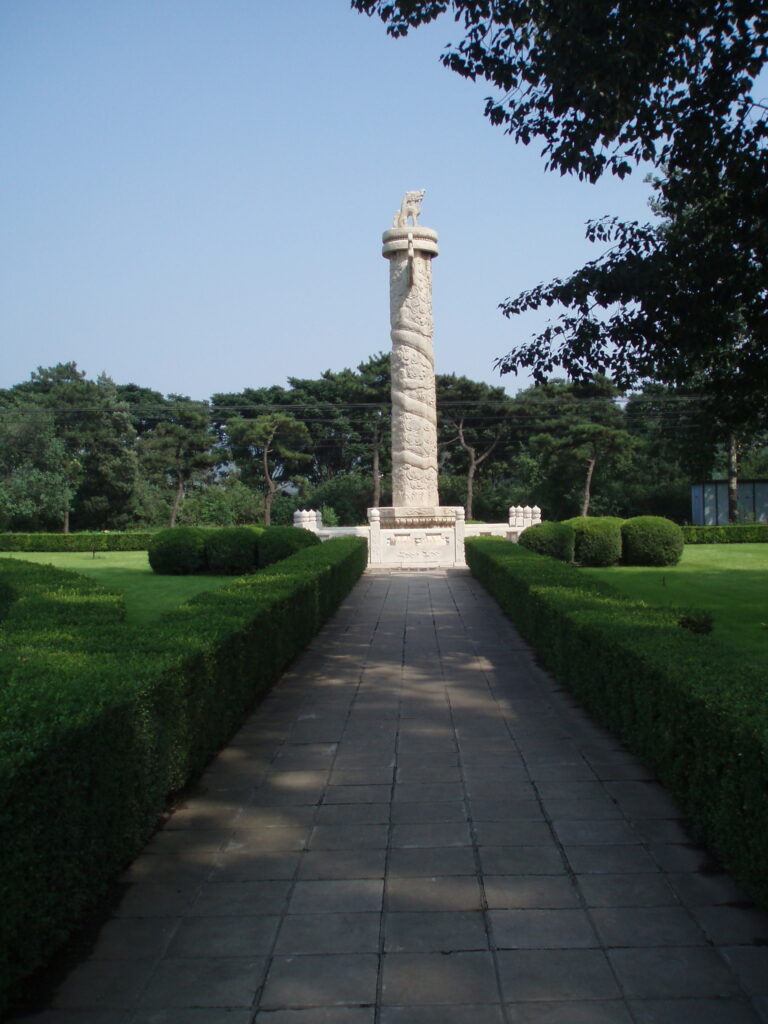
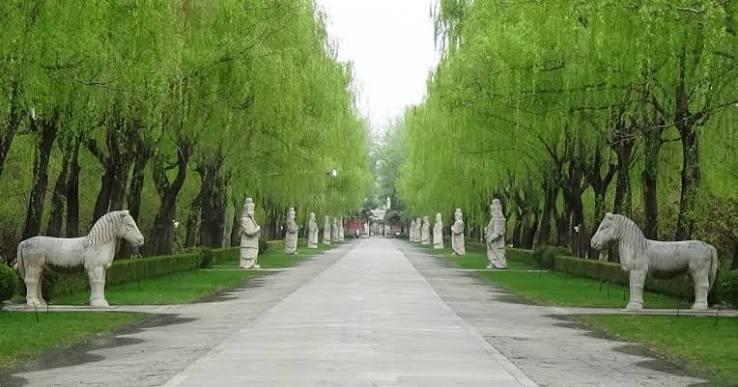
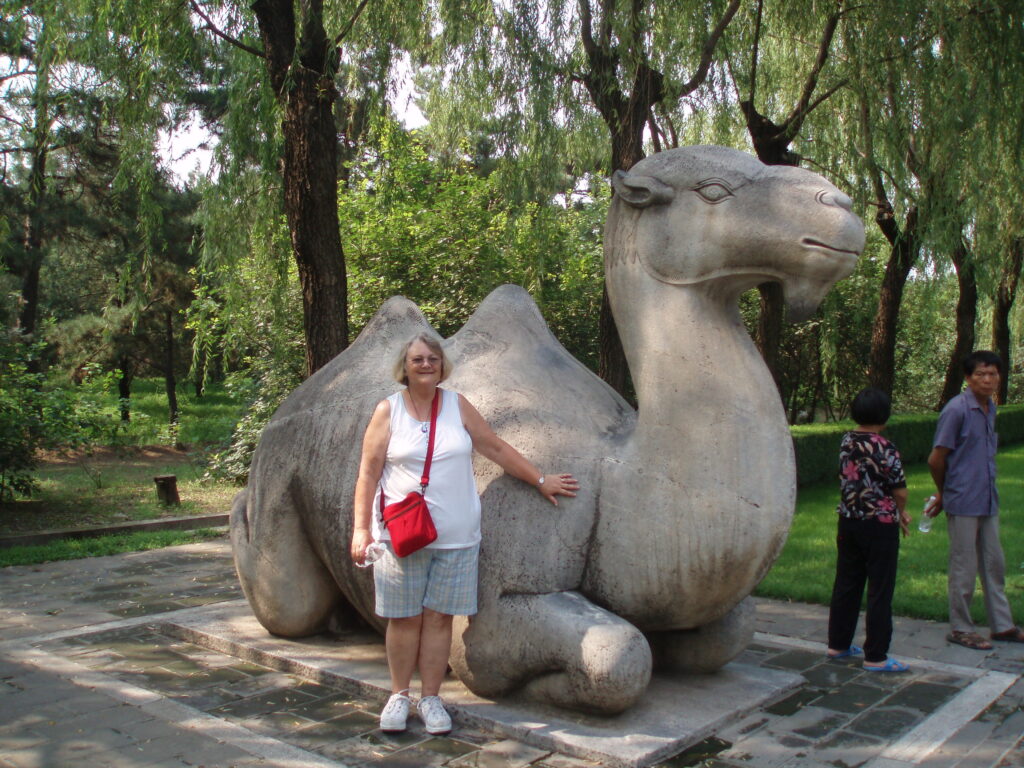
After we all returned from the wall, we went to the Spirit Way the four-mile approach to the Ming Tombs. The Way starts at a stone archway leading to a large red gate. Thirty-six stone statues of various animals, officials, soldiers, and mythical beasts line the way. This is a ceremonial passageway from the land of the living to the land of the dead.
The Stone Archway dates to 1540 CE. Next, the Great Red Gate marks the entrance to the sacred burial area. Then come the Stele Pavilion commemorating the emperor and imperial rule. Here the visitor is introduced to the personage before reaching the actual tomb. Then comes the Way lined with 24 stone animals and 12 human figures. These represent the guards and attendants of the emperor in the afterlife.
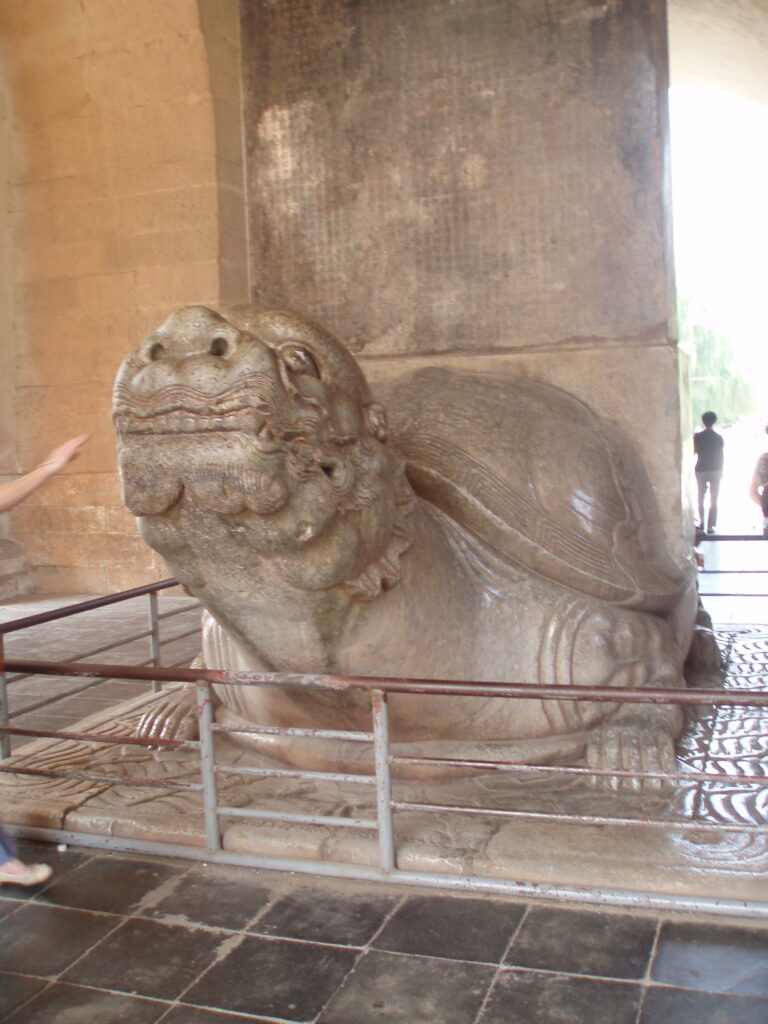
The giant stone tortoise statue inside the Stele Pavilion stands guard over the Spirit Way. In Chinese tradition, the tortoise represents longevity and endurance.
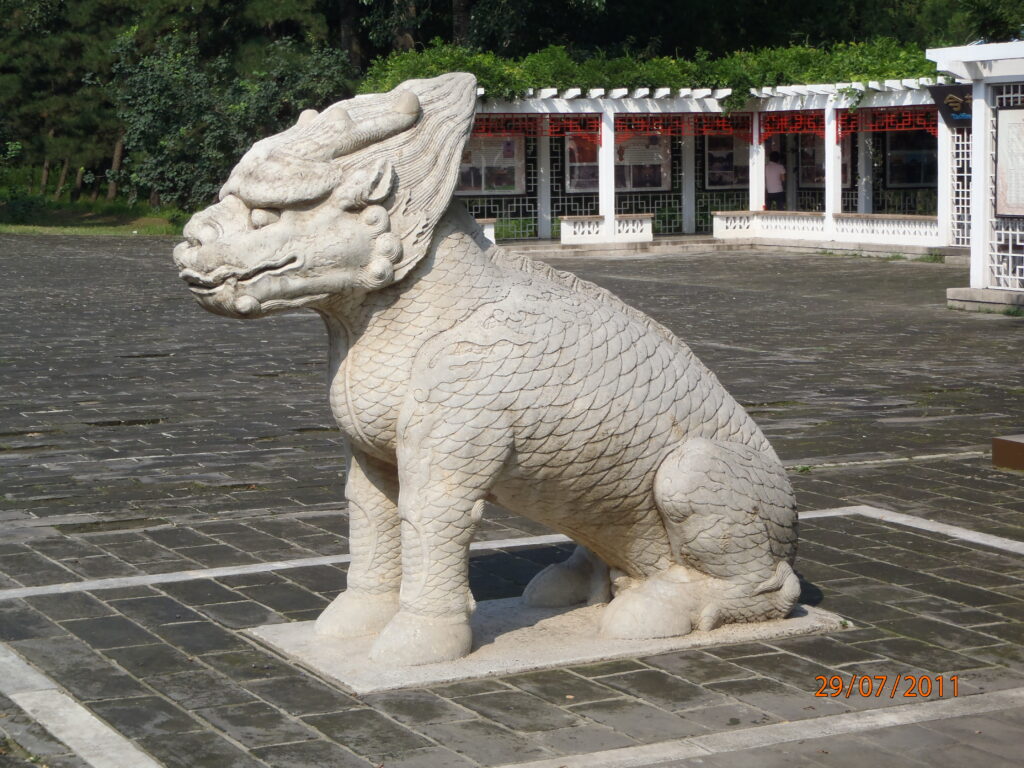
A Mythical Creature
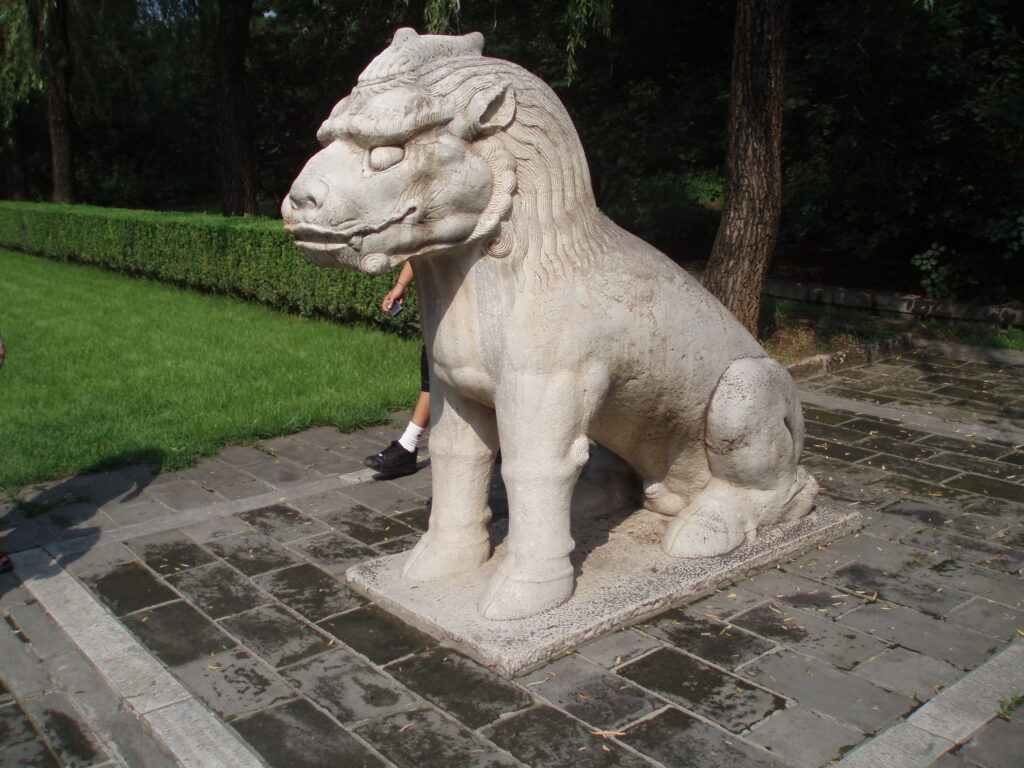
The Ming Tombs
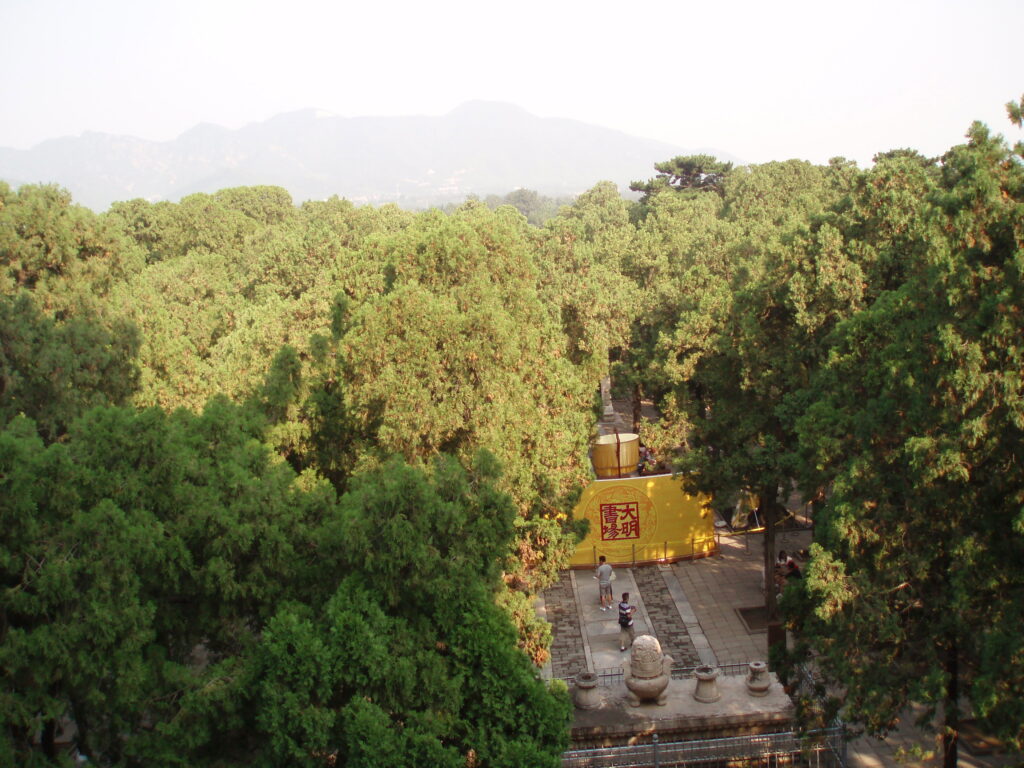
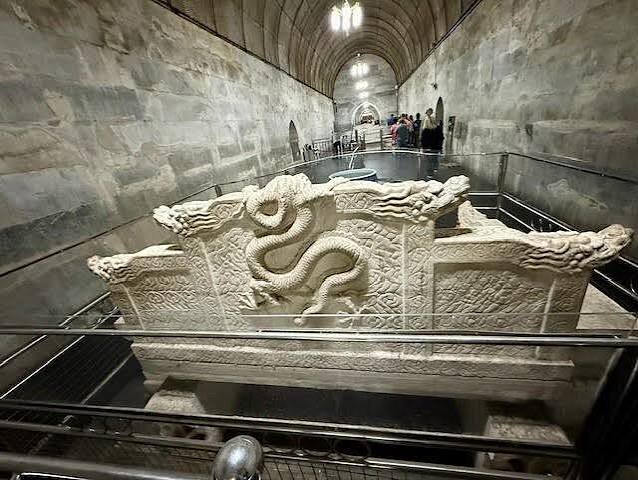
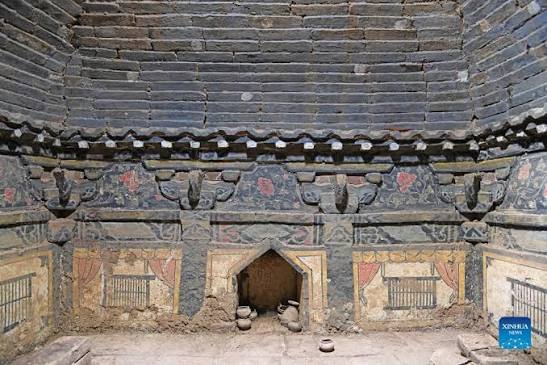
We walked the Way to the Ming Tombs, then descended about four stories into the ground to see where thirteen Ming Emperors were buried with their treasures. Now the treasures have been moved to a museum, but some replicas are there. The first emperor buried there was the Yongle emperor Zhu Di. He moved the Ming capital to Beijing. His tomb, Chang Ling, is the largest and most impressive. The Hall of eminent Favor has huge wooden columns. The Ding Ling Tomb, discovered in 1956, is the only fully excavated imperial burial site among the Ming Tombs. This tomb of the Wanli Emperor includes an underground palace. The tombs set forth the tradition that the dead are treated with the same respect and provision as the living.
from the Spirit Way
On the way to dinner we drove by the Opera House and the Birds Nest, the swimming venue for the Olympics. We ate at a dumpling restaurant adjacent to the Olympic Village. Dumplings are Won Tons.
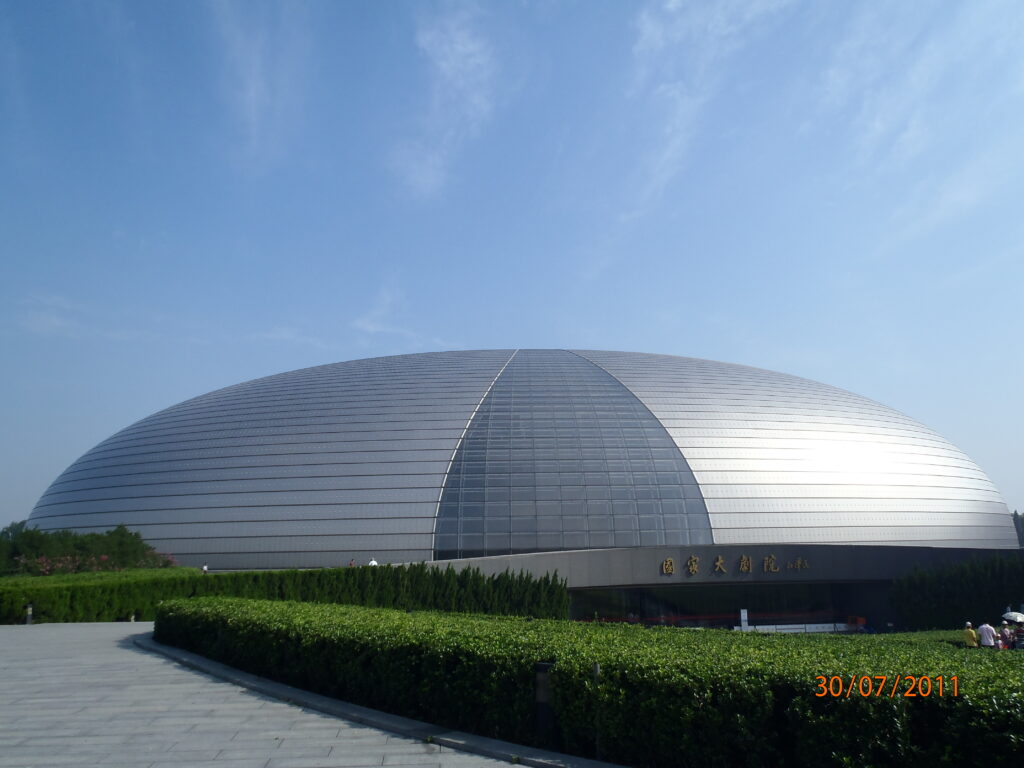
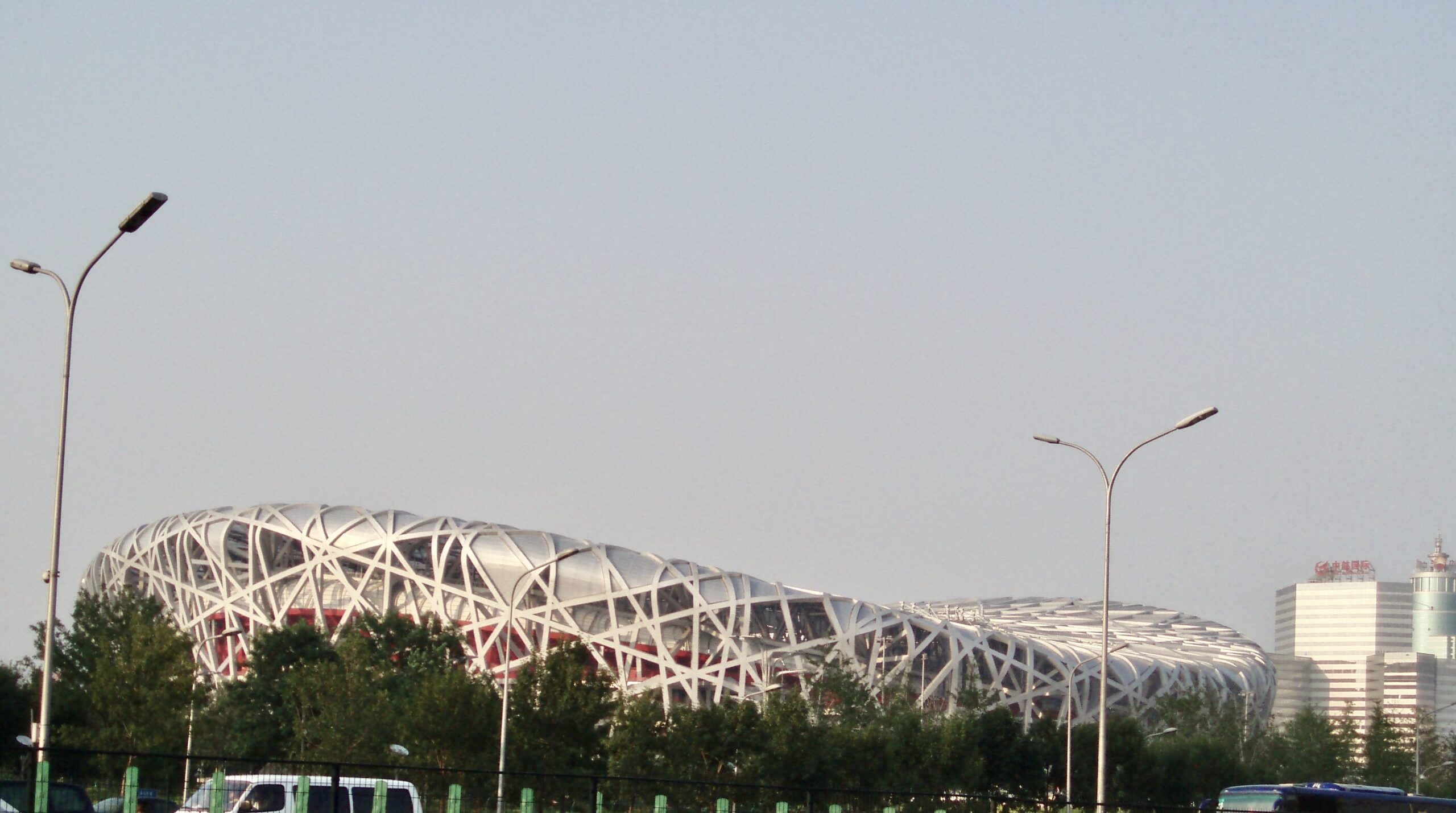

This was another full and enlightening day.
Leave a Reply