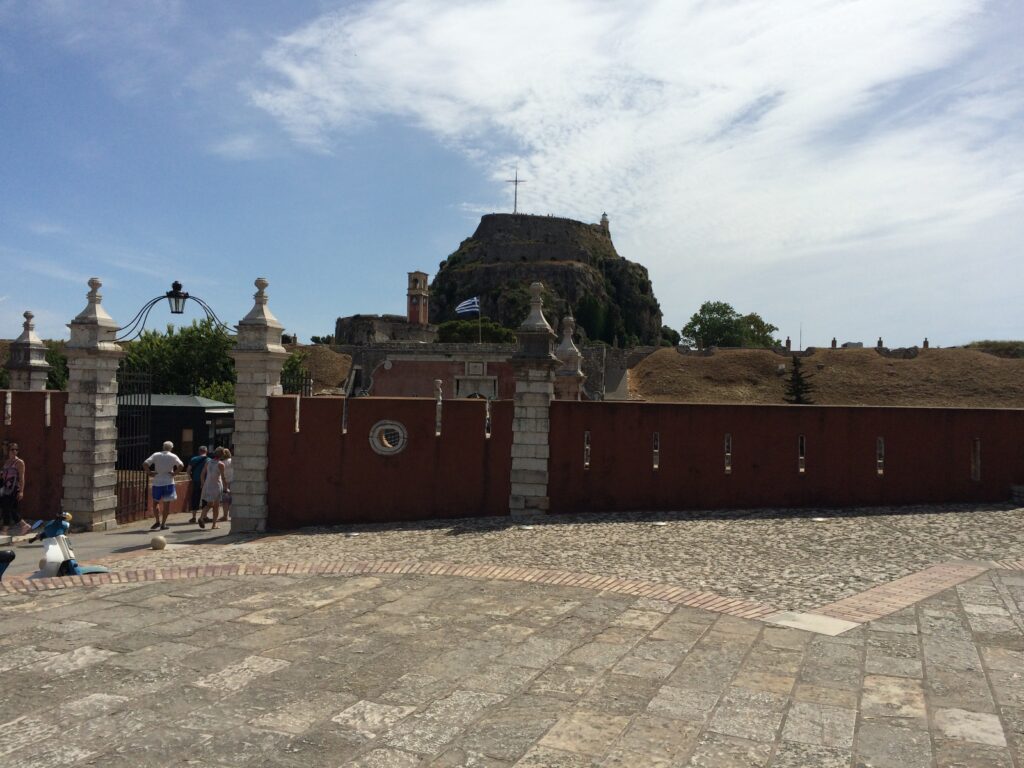
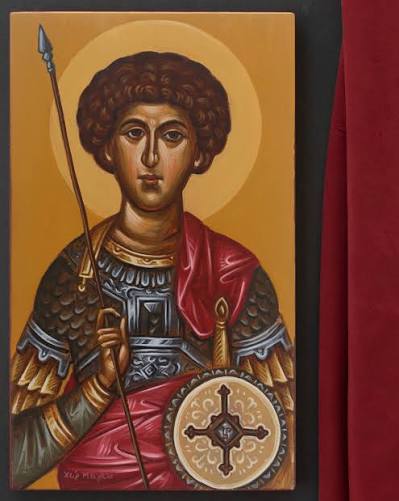
Today in Corfu, we began at the 15th Century Old Venetian Fortress, (Palaio Frourio), a Corfu landmark with amazing views from its towering headland, back over the town, and along the island’s east coast. Built initially during Byzantine times, Corfu’s entire population once lived within the walls of the Old Fortress, which is now a museum that features sound-and-light shows telling the fortress’s history.The Old Fortress of Corfu is a Venetian architecture fortress built on a rocky peninsula during the 16th century. It is one of the most picturesque and important landmarks and sites on the island offering panoramic views. The fortress holds rich historical and cultural significance and is listed among the UNESCO World Heritage sites. Inside the Fortress is the church of St. George with lovely Byzantine icons.
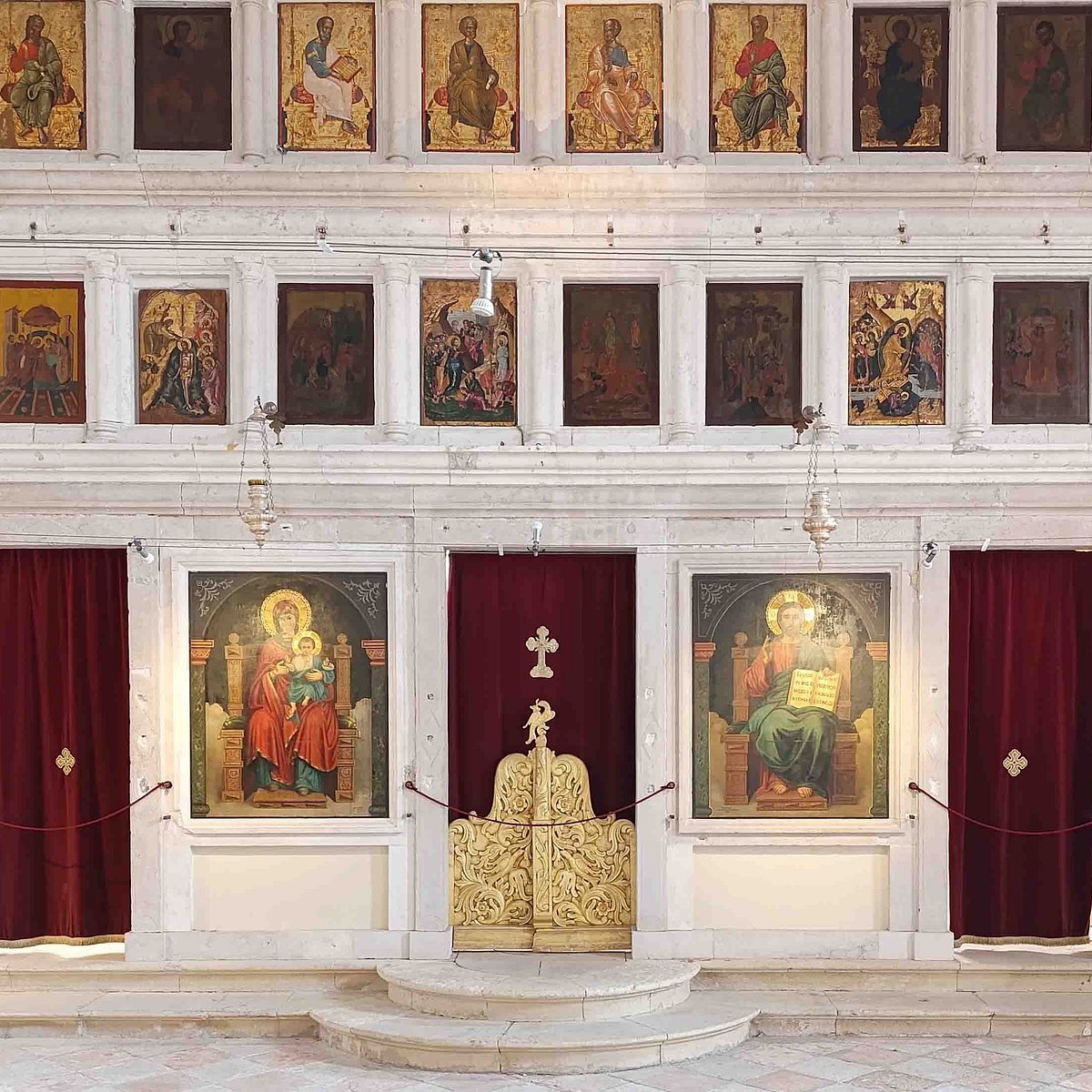
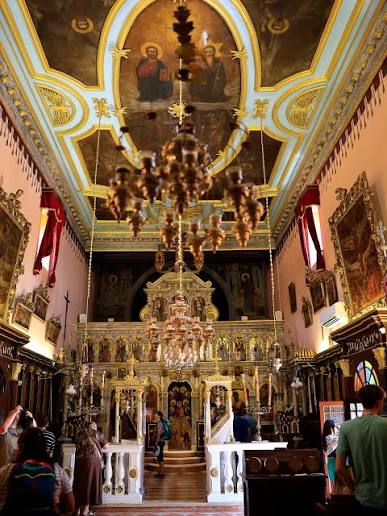
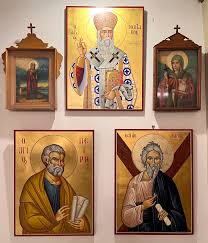
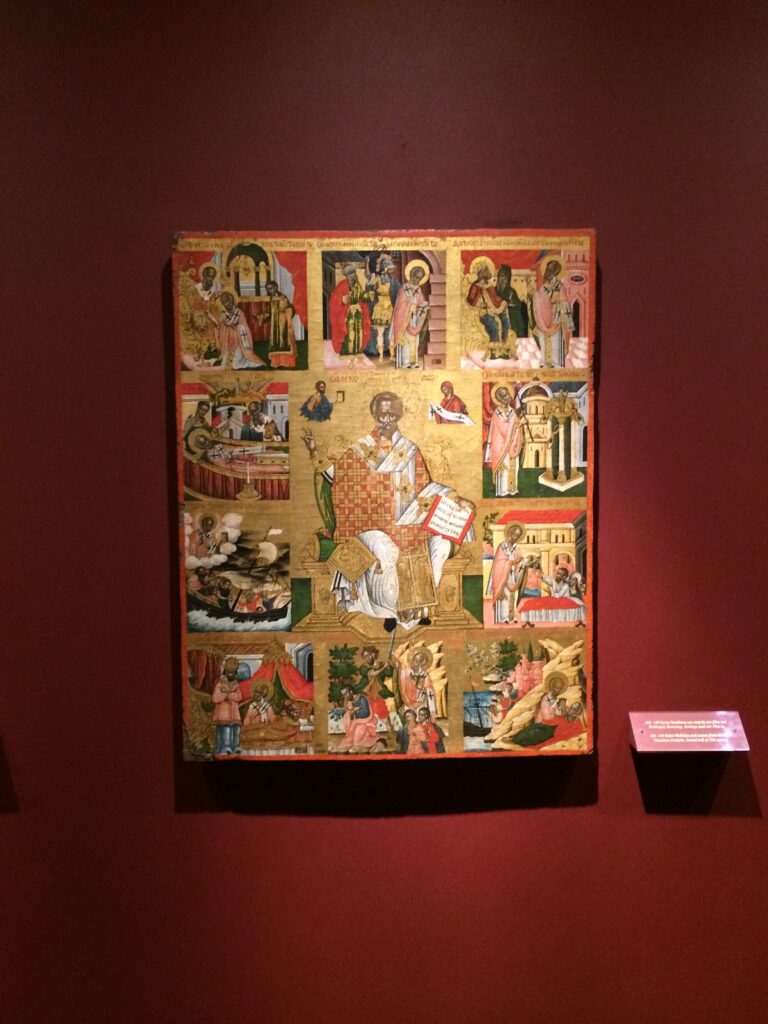
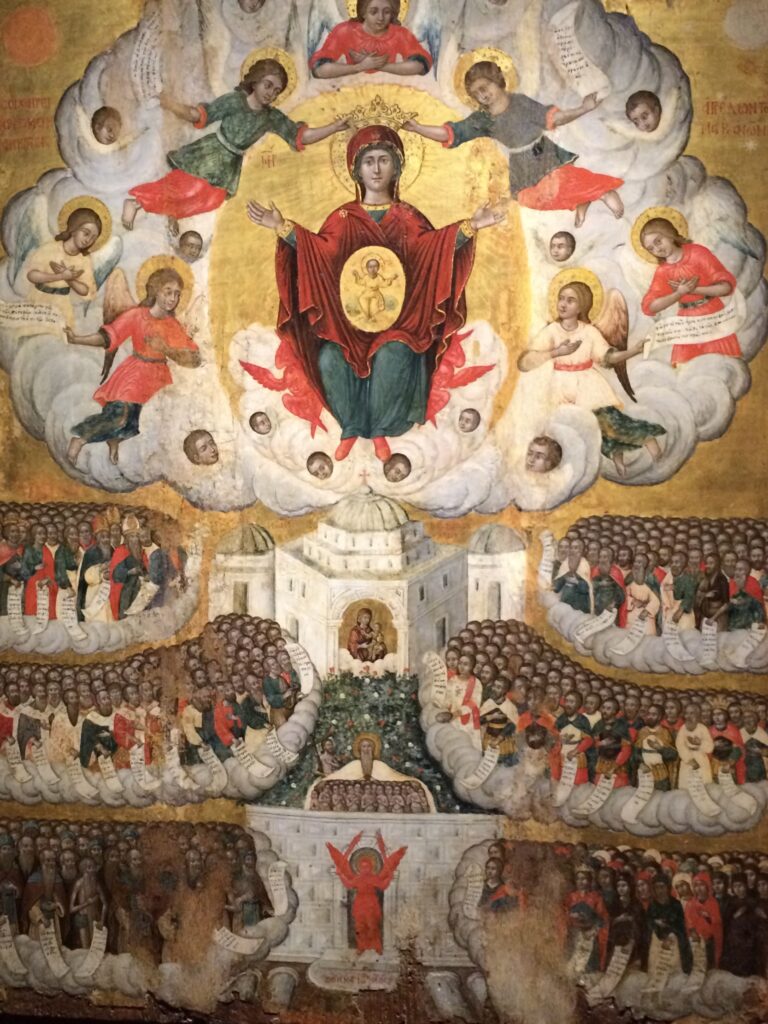
We continued on to the beautiful church dedicated to the Holy Virgin “Our Lady of Antivouniotissa (Our Lady opposite the Mountain). It is also the oldest, most complete, and best-preserved example of the “Heptanesia Basilica” style church. The Heptanesia style includes elements like high pews, the painted “wall-paper” on the walls, and the decorated ceiling which has elegant gilded wood-carvings. The museum collection includes Byzantine icons and represents six centuries of artistic religious expression and creation in Corfu and the Ionian Islands.
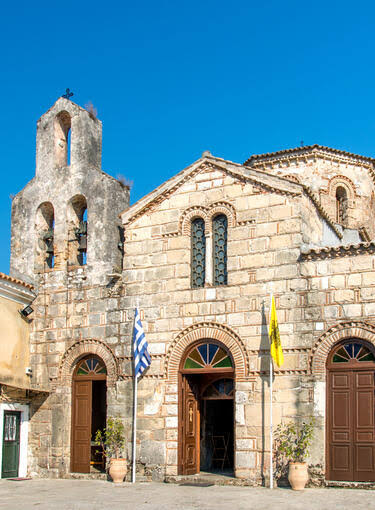
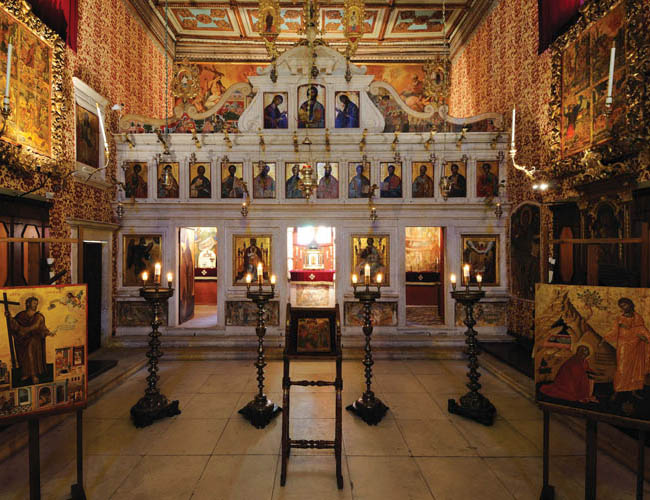
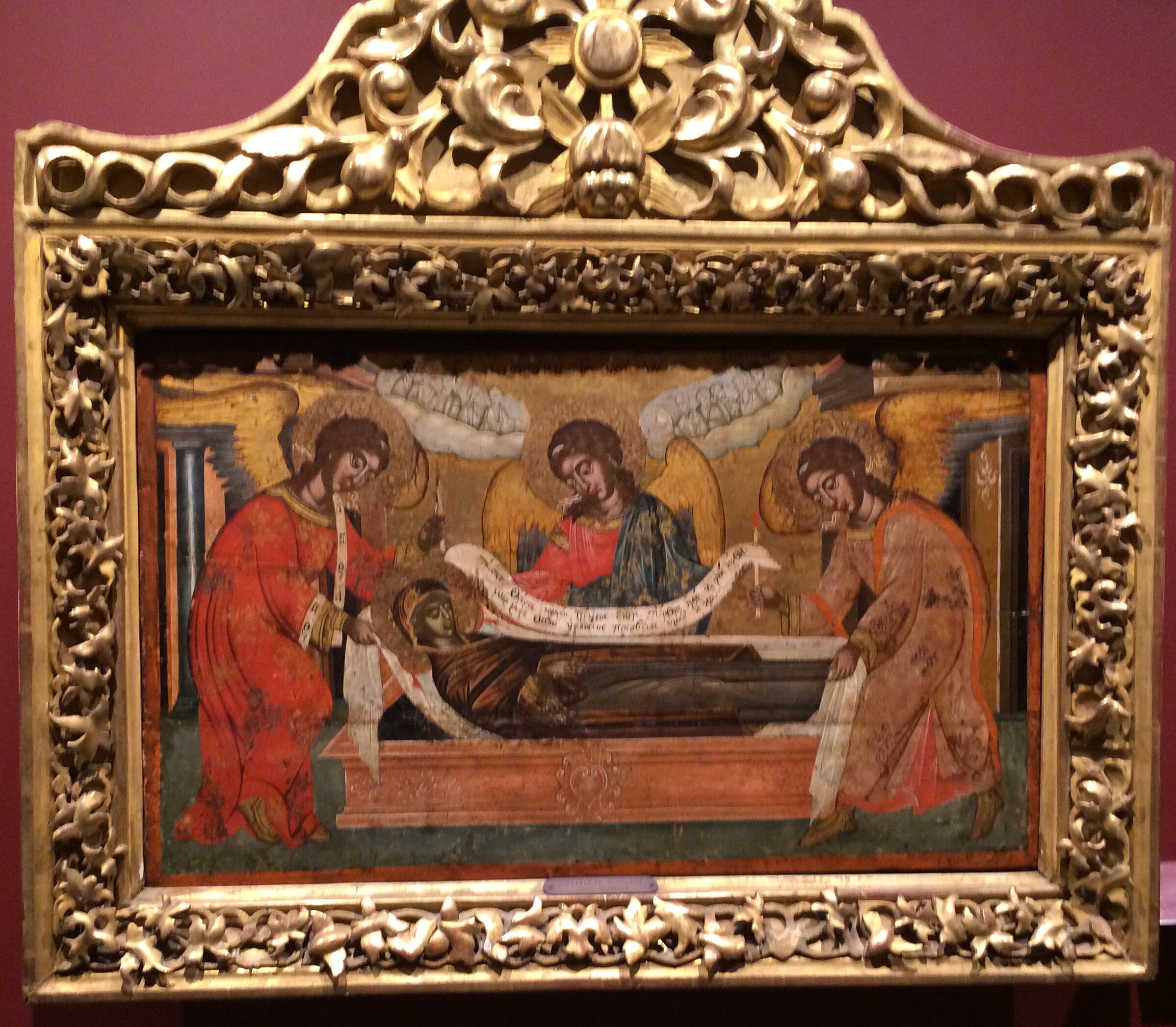
Then we walked to Corfu town to visit St. Spyiridon, a 16th century Rococo church, dedicated to Corfu’s patron saint, whose bones are preserved there. It is a single-nave basilica, and its bell tower, filled with silver treasures, is the highest in the Ionian Islands.
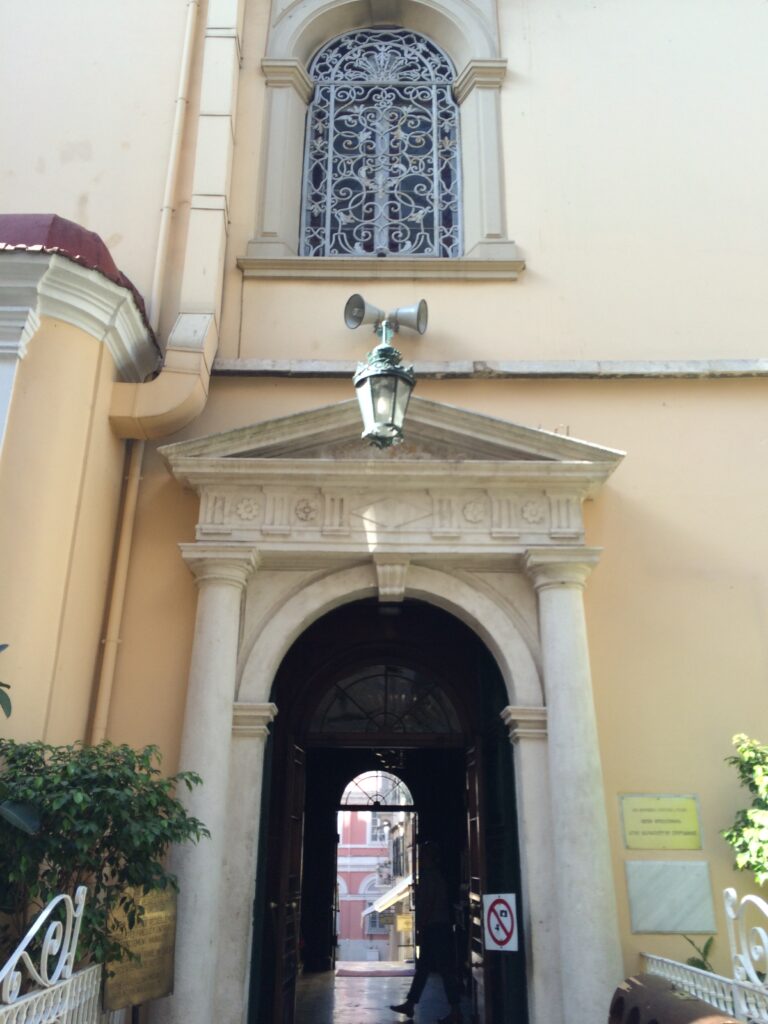
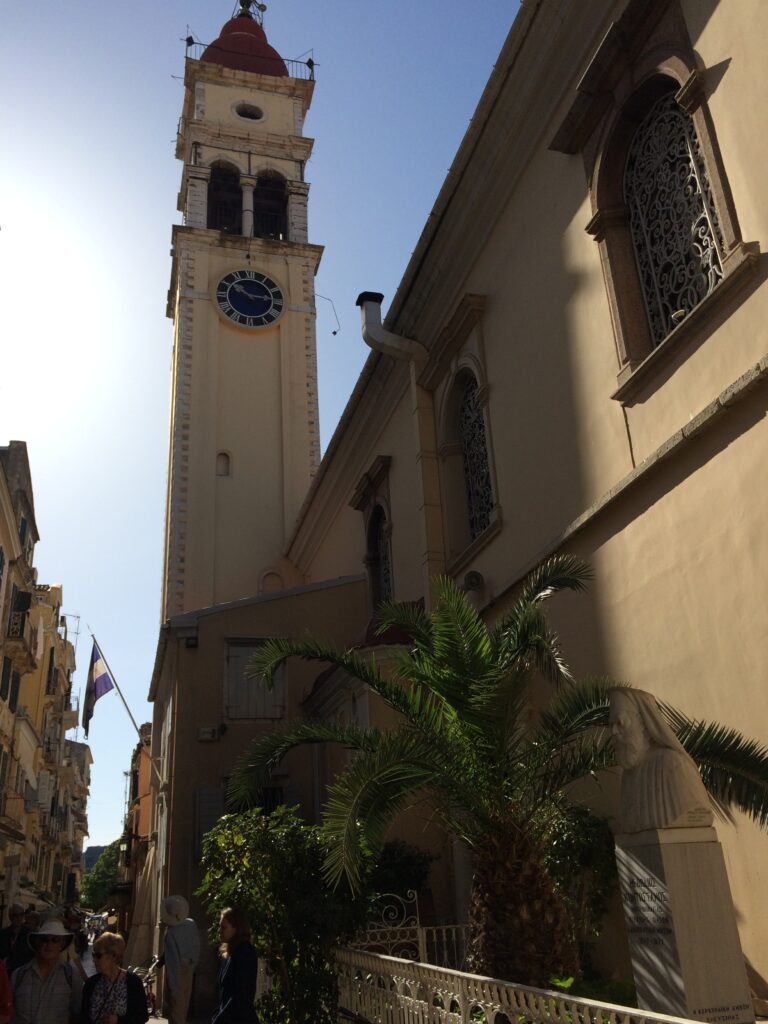
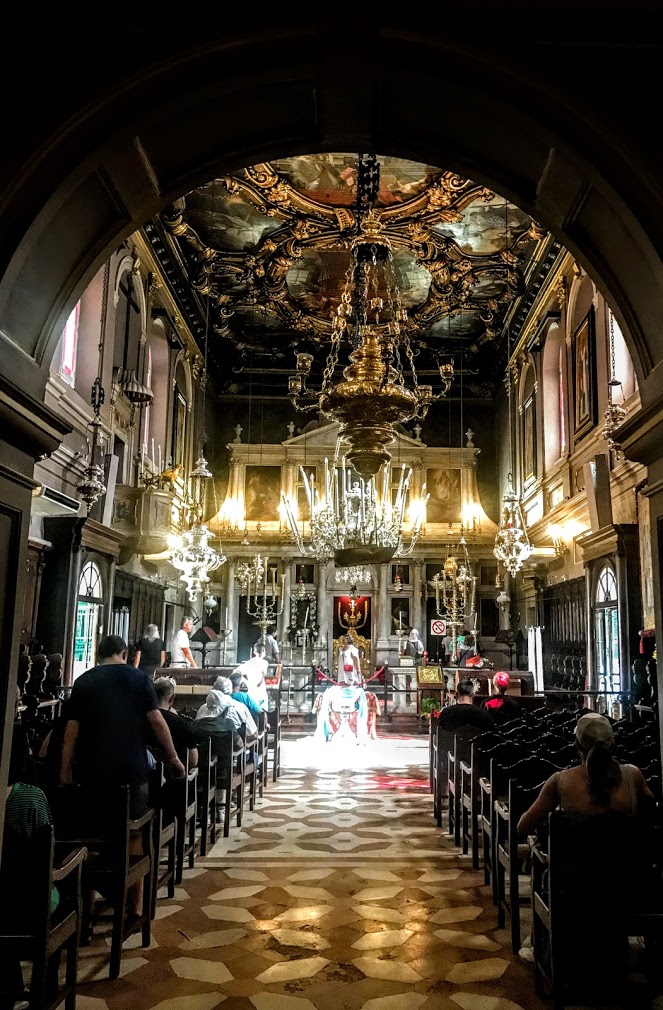
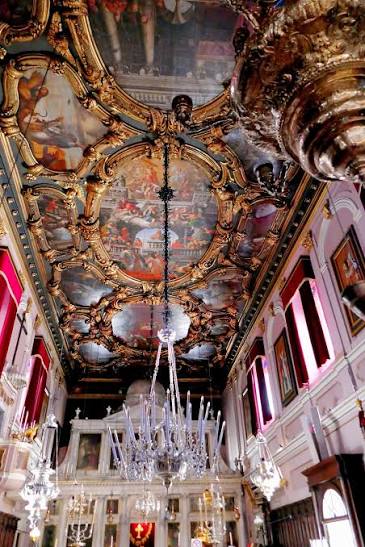
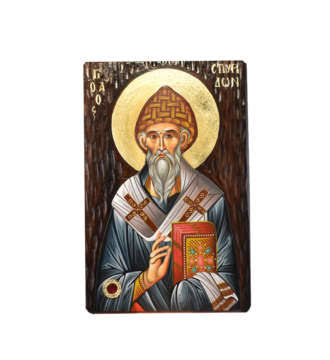
The front of the marble iconostasis resembles the exterior of the entrance of a baroque-style church. The ceiling of the church is divided into segments depicting scenes from St. Spyiridon’s life and miracles. Above the western door of the narthex the imperial coat of arms of the House of Romanov stands as a reminder that the church was under the nominal protection of Russia from 1807-1917. Near the same area a painting depicts the saint touching the head of Constantius II, curing the emperor from illness. St. Spyiridon is said to have saved Corfu more than once.
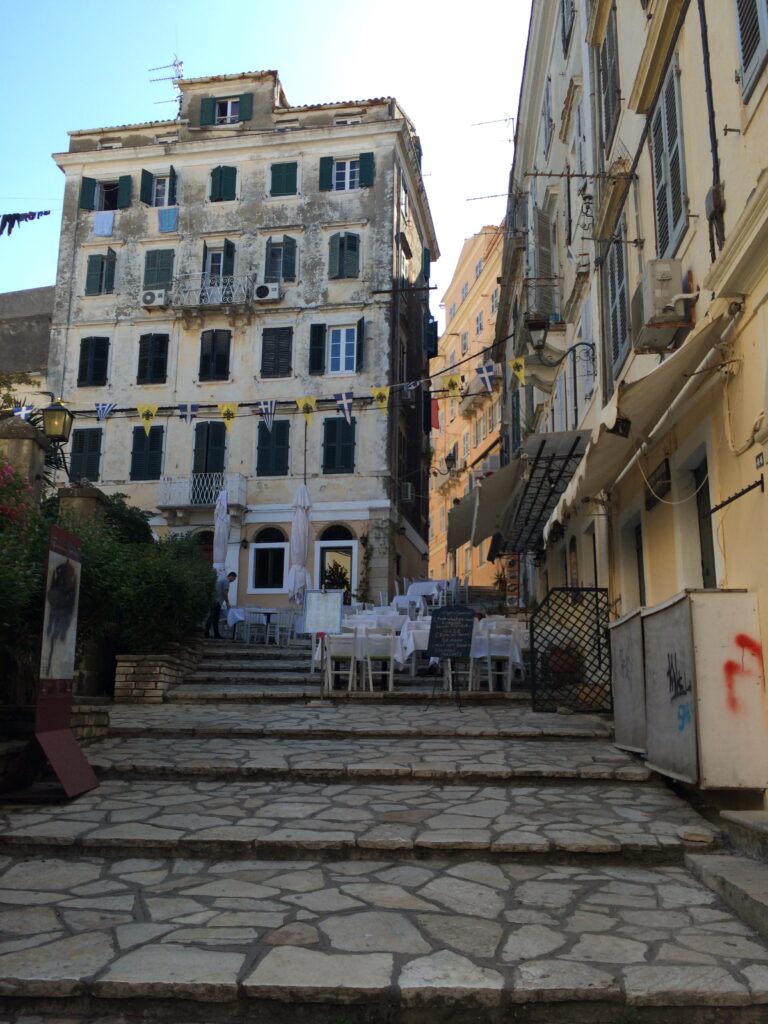
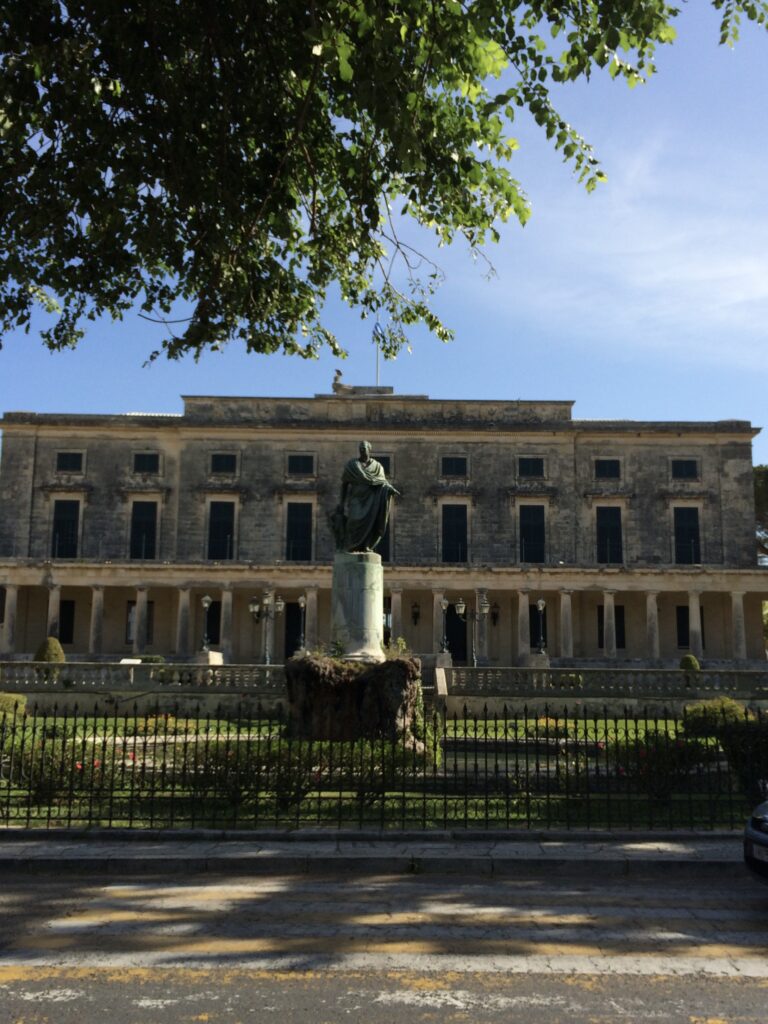
in front of Museum
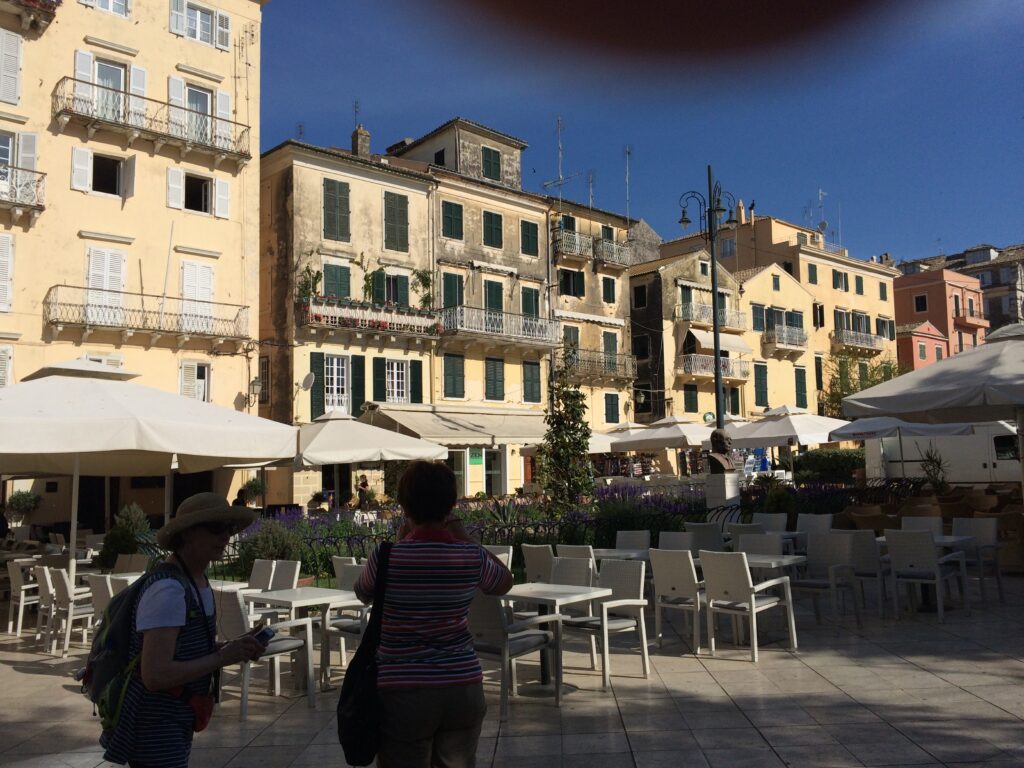
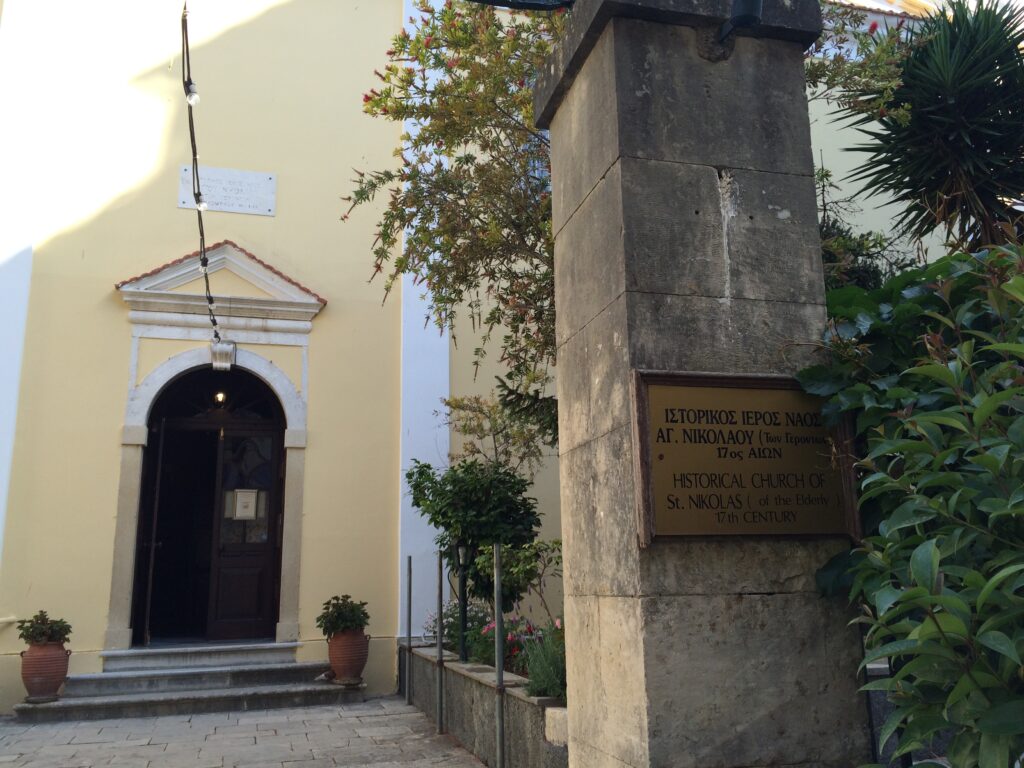
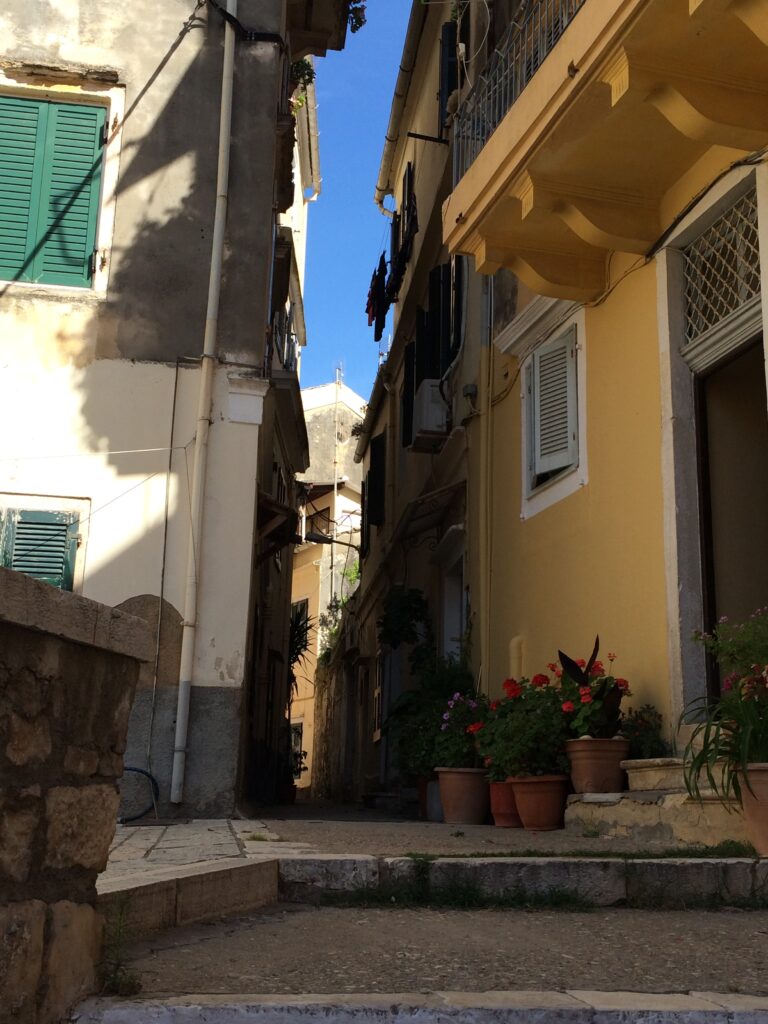
in Historic Old Town
The Temple of Artemis Gorgon is an archaic Greek temple built around 580 B.C. Gorgon. It is located near the present monastery of Saint Theodore. It was discovered in 1822, but only a few parts of it were saved. Near the sanctuary of the temple, evidence has been found of other smaller buildings.
Other places we saw were the 15t Century Museum with the Statue of Sir Frederick Adam. He was a Scottish-born British Major General and Lord High Commissioner of the Ionian Islands. He left a lasting mark on Corfu by developing public infrastructure and constructing an aqueduct as well as other land marks. Confinetta Square is a historic landmark located at the northern end of the famous Liston promenade, It is named after its central flowerbed shaped like a small basket. The Campiello district is characterized by narrow cobblestone streets lined with old Venetian-style buildings.
The Church of St. Nicholas of the Elders is one of the oldest and most historically significant religious sites in Corfu’s Old Town.. Originally built in the 14th century, it took 300 years to complete.
Leave a Reply