Tonga
Tonga is the South Pacific’s only monarchy, and Nuku’alofa is its capital. It is the administrative center of the country and home to the Royal Palace and graves located on the waterfront.
Tonga was first inhabited about 3,000 years ago by Austronesian-speaking people of the Lapita culture from Southeast Asia. From the 10th century CE Tonga was ruled by a line of sacred kings and queens, the Tu’i Tonga.
European contact began in 1616 when the Dutch visited. James Cook’s visits in the late 1700s made a huge impact on the island. He named Tonga the “Friendly Islands” because the natives welcomed him and provided supplies to him. Methodist and Roman Catholic missionaries followed, eventually converting most of the population to Christianity. In 1970 Tonga gained full sovereignty from Britain and became an independent Commonwealth nation.
Vava’u is in northern Tonga. As we came into port we passed numerous islands, many uninhabited. I took a tour of the island. The first stop was Pouono Park. It is here that in 1839 King George Tupou I enacted the first code of law known as the “Vava’u Code.” He committed the country of Tonga to God after his conversion to Christianity. This is known as the Tuku Fonua.
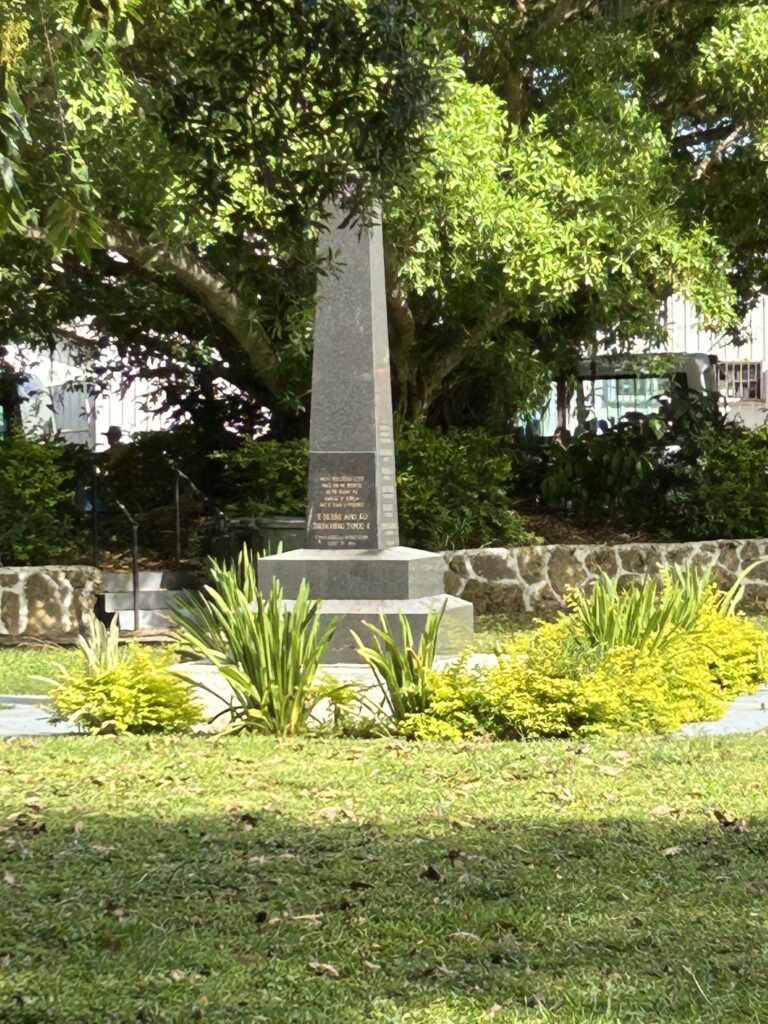
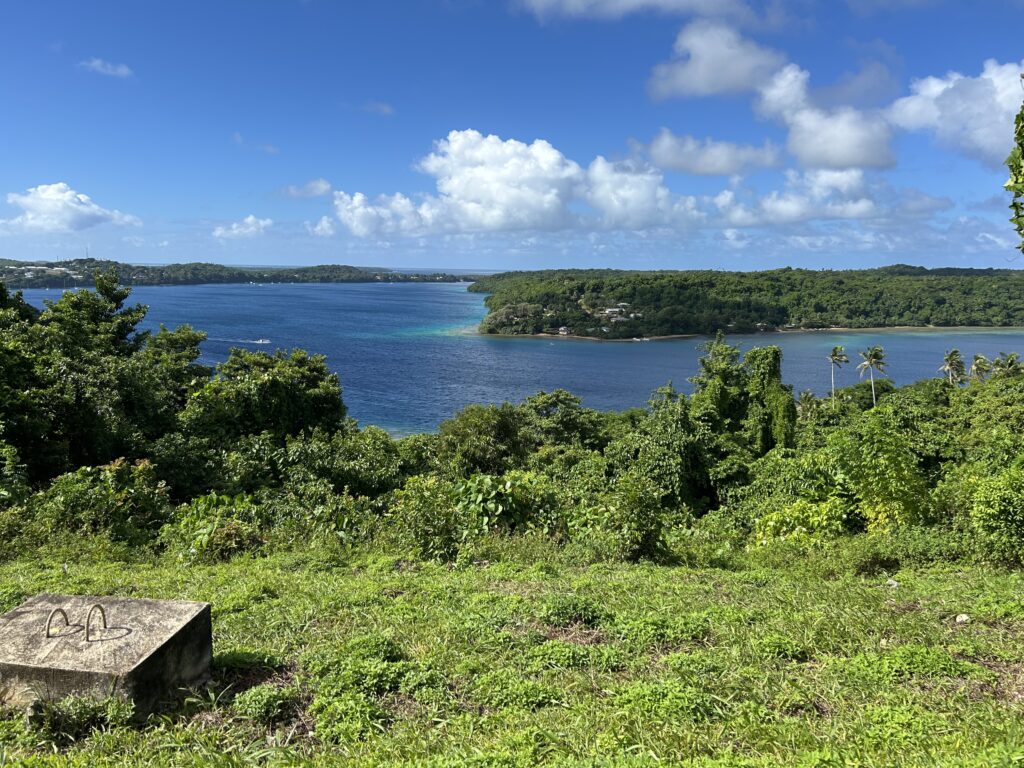
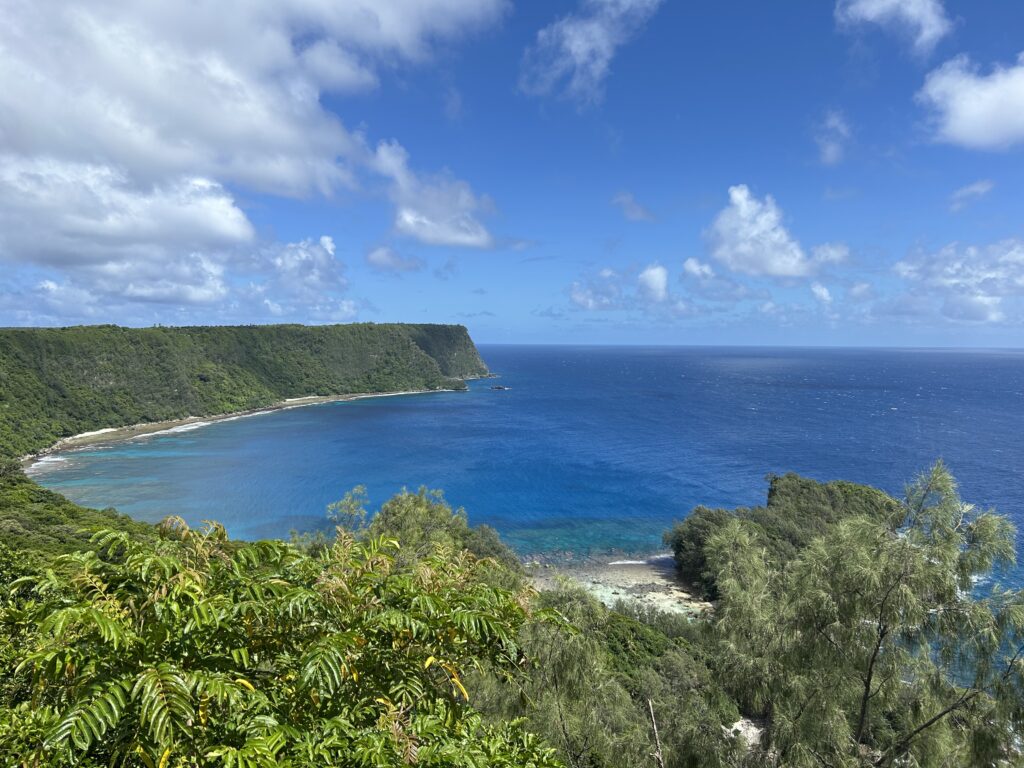
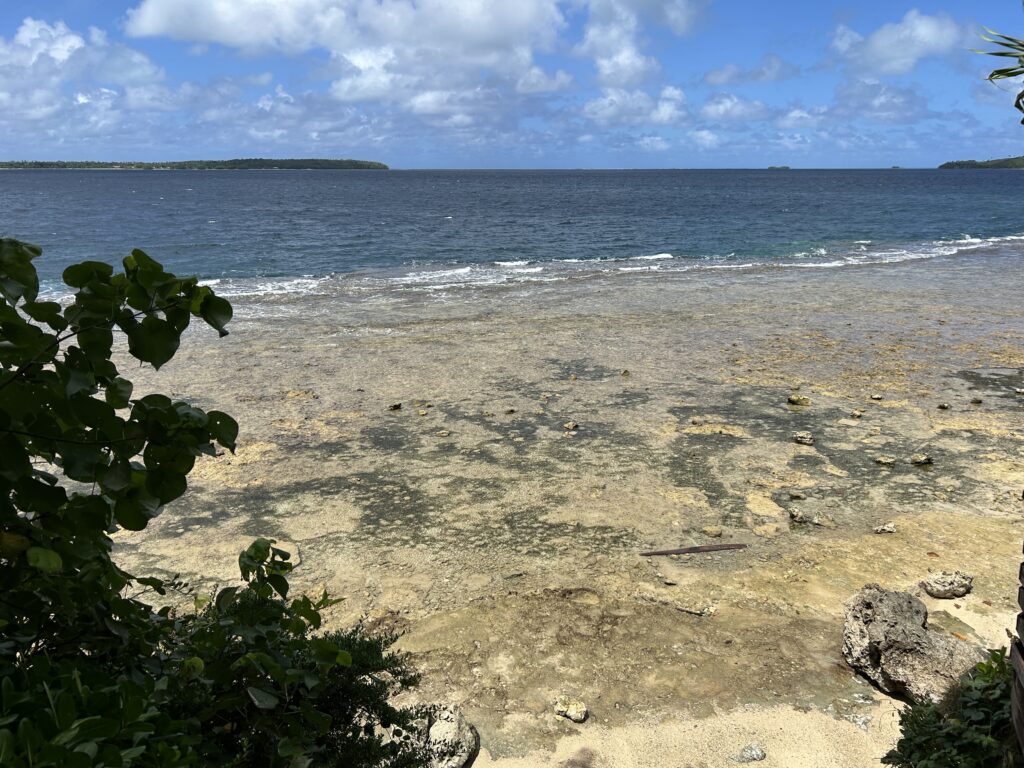
Our next stop was Mt. Talau, the tallest point on the island. It is in the middle of a National Park. There are 181 stairs to climb to the top for an amazing view of the islands. From Mt. Talau we traveled to the Utula’aina Lookout in Holonga. This lies on the eastern side of Tonga and from this point you can see both the sunrise and sunset. In Tongan the name means “from sunrise to sunset the sun has no hiding place.”
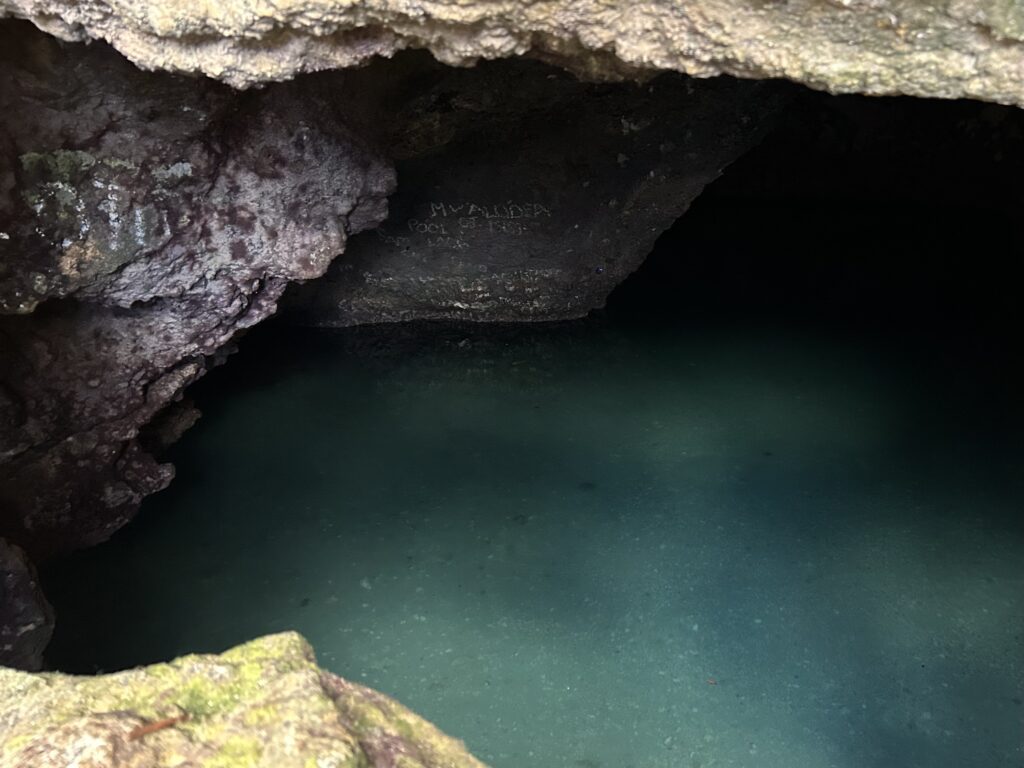
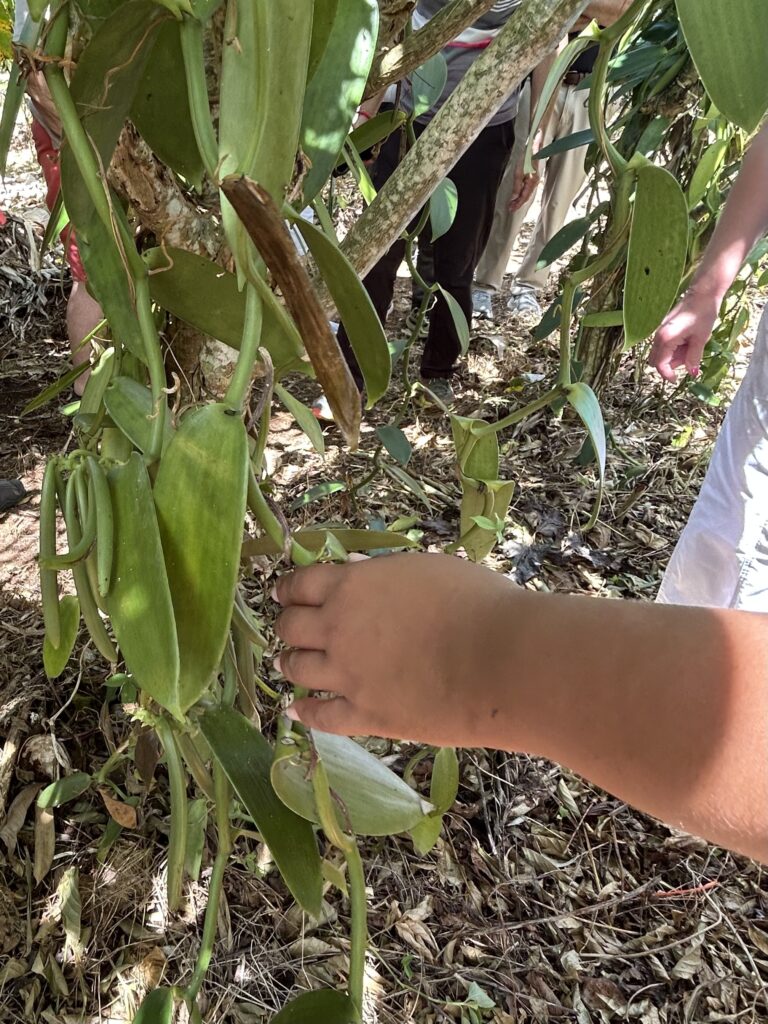
Our next stop was the Veimumuni cave. Here there is a freshwater pool. Legend has it that the goddess Vei would bathe here. She is revered as a maiden goddess who embodies purity and fertility. She represents the connection between the physical and spiritual realm in Tongan culture. We ended with a visit to a vanilla plantation. Vanilla is one of their important crops and exports. We realm in Tongan culture. We ended with a visit to a vanilla plantation. Vanilla is one of their important crops and exports. We observed the plants and long, green vanilla beans.
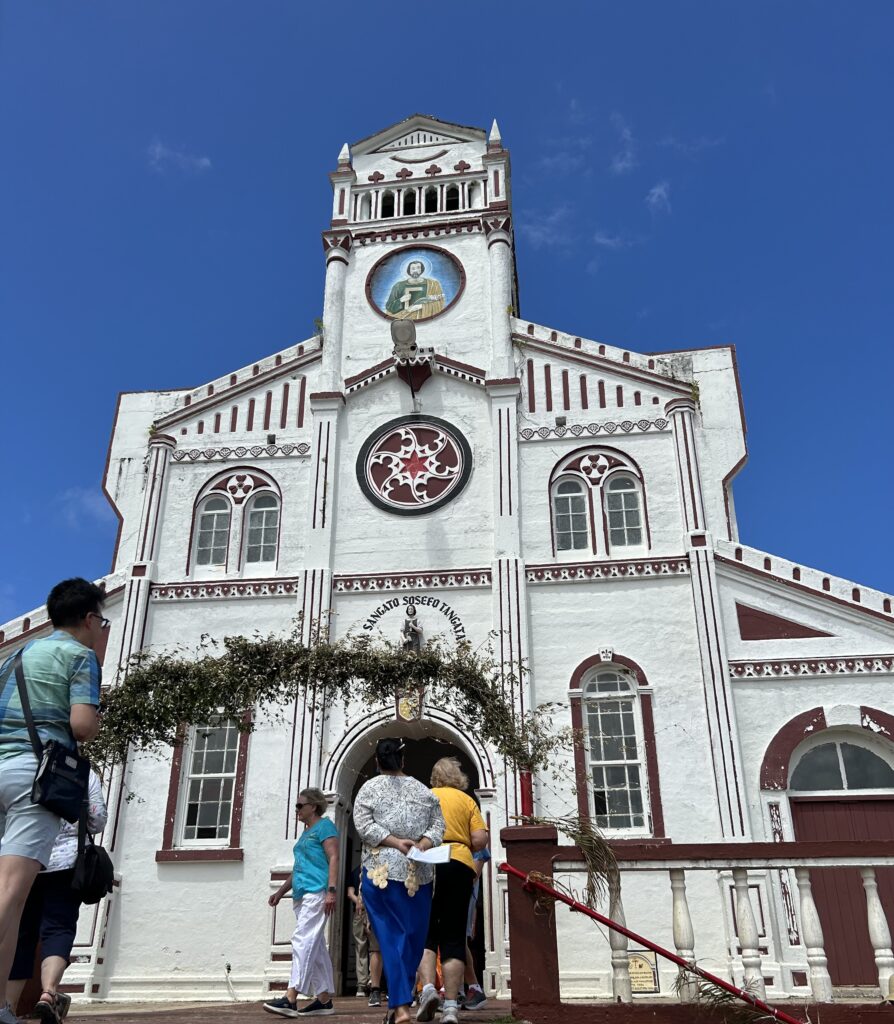
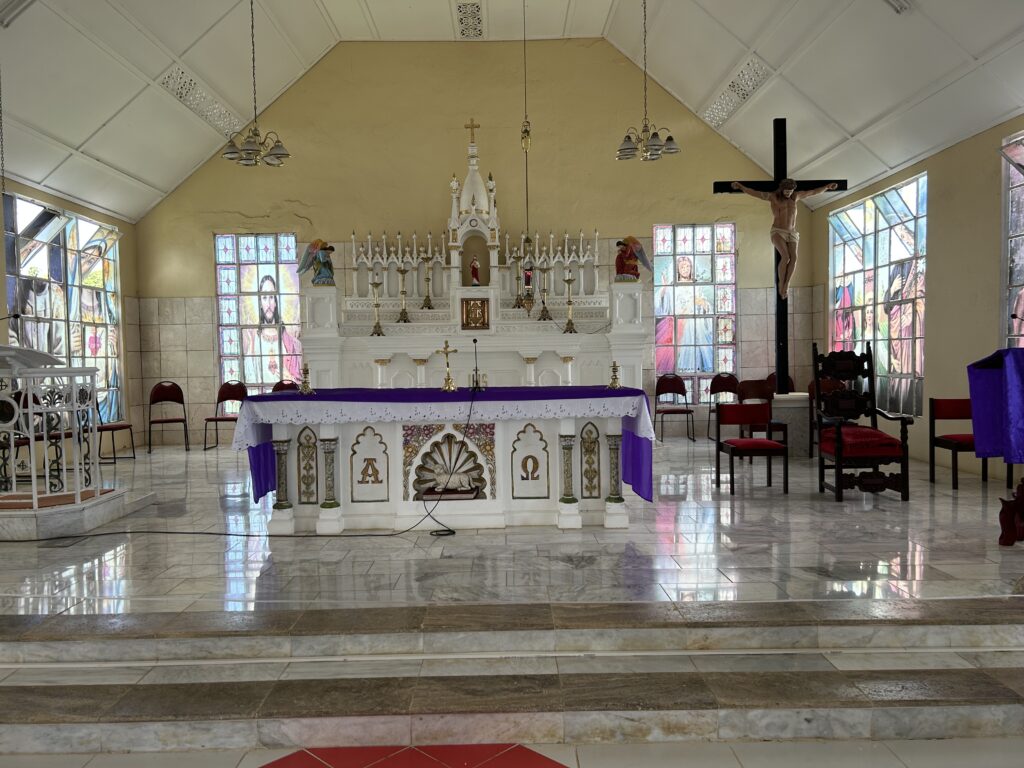
Finally on our way back to the port, we visited the Cathedral of St. Joseph. It is perched on a hilltop overlooking the city and port. Whitewashed with red accents and adorned with statuary and stained glass, it is a peaceful place to stop and reflect.
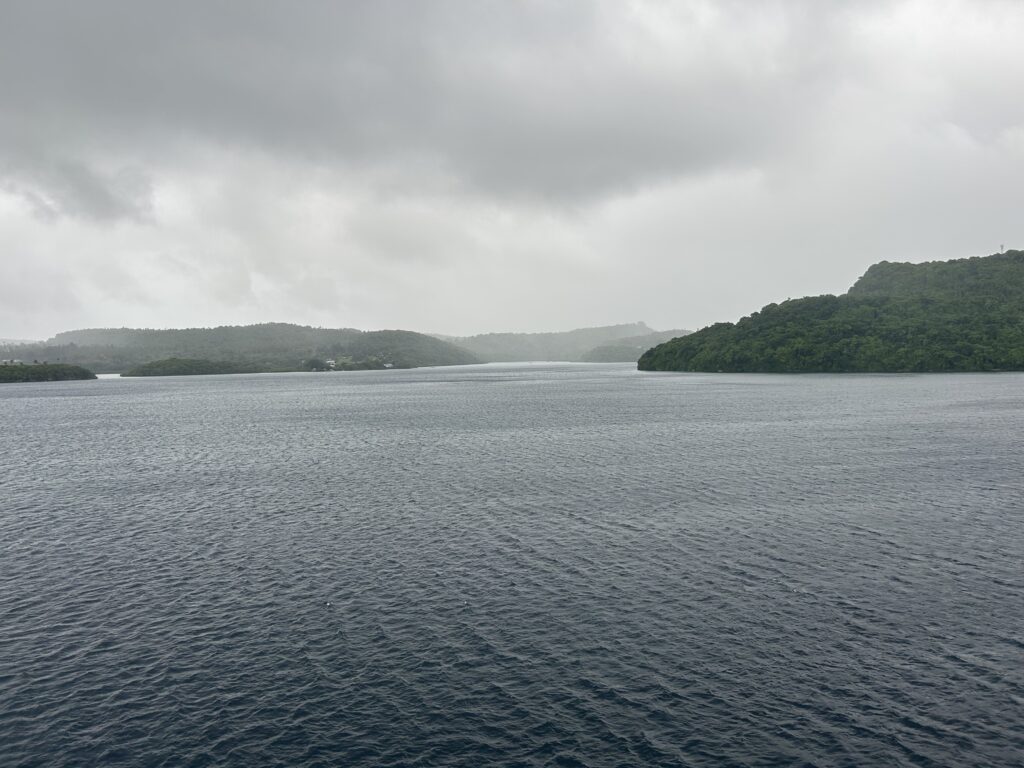
As we drove around and through the island, the only paved road was in the town. As soon as we left the town we were on one-laned dirt, bumpy roads. This was quite different from the previous islands we had visited. Tonga seemed more remote and much less developed.
Suva, Fiji
Suva is the capital and largest city of Fiji. It is located on the southeast coast of the island of Viti Levu (“Great Fiji”). It is Fiji’s political and administrative capital. It is also the largest and most sophisticated city in the South Pacific excluding New Zealand.
The archipelago consists of 300 islands and 540 islets; only about 100 are inhabited. Indigenous Fijians make up more than half the population; about two-fifths of the rest are of Indian descent. The population is roughly 900,900.
English, Fijian, and Fijian Hindi are the official languages decreed in the 1997 constitution.
At the core of Fiji’s identity is the iTaukei culture, of the indigenous Fijian people. This culture is built on the foundation of strong community ties, deep respect for elders and the land, and a profound connection to the sea. It’s a way of life that values relationships above all else. The Meke dance and kava ceremonies are central to their community life.
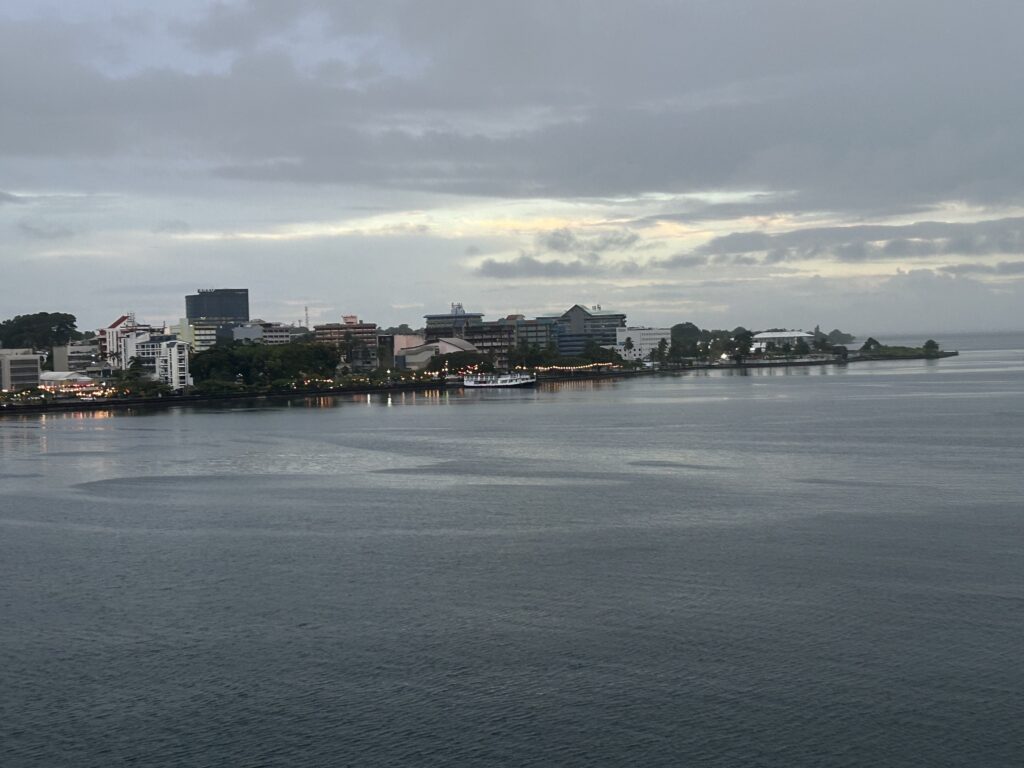
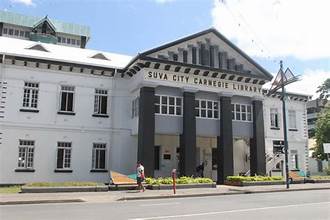
One of the most famous landmarks in Suva is the Carnegie Library built in 1909. The city also has several parks.
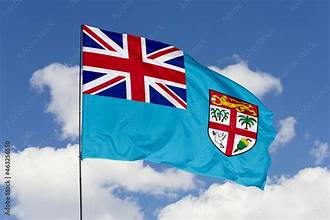
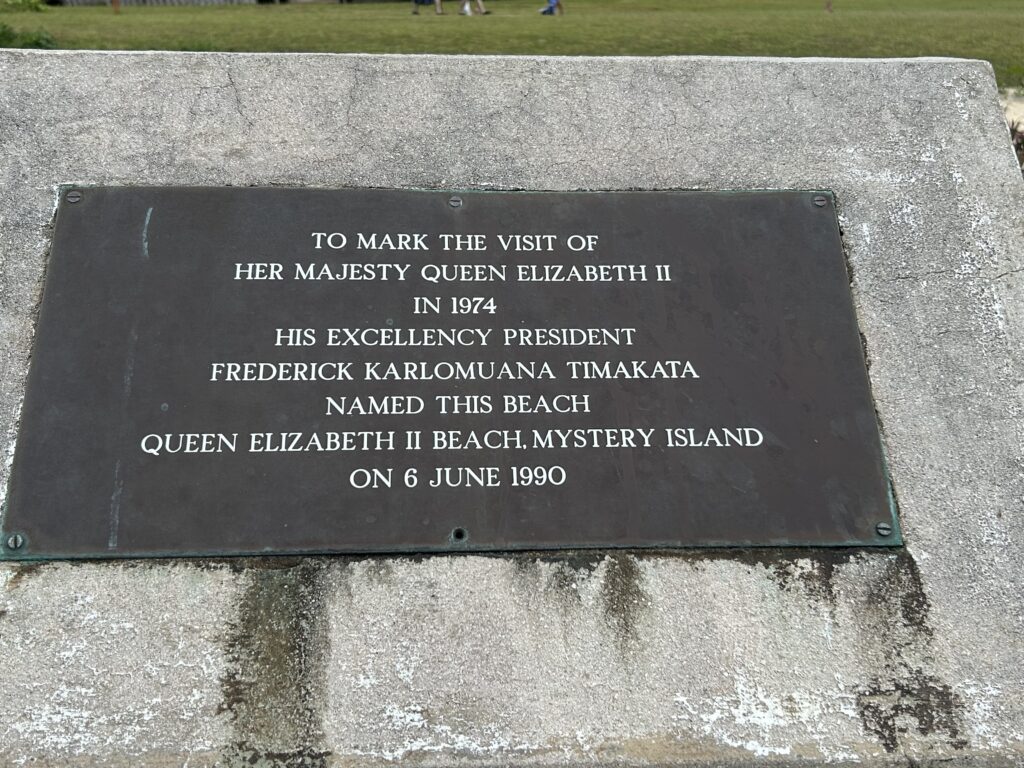
Colo-i-Suva Forest Park is a lush rainforest park with walking trails, streams, and waterfalls. Waisila Falls is an important site in the park. Albert Park is a historical park in the city center, named after Prince Albert of Great Britain. Fiji was ceded to Britain 1874. The park was the site of a landing by the Australian aviator Sir Charles Kingsford Smith during the first trans-Pacific flight from the United States to Australia in 1928. It was also the site of the first hoisting of the new national flag of Fiji on 9 October 1970. It is the location used to welcome dignitaries coming to visit including Queen Elizabeth in 1954 and Pope John Paul II in 1986.
The lecture on the “Pearl Harbor of Australia” was very interesting. I had never heard of that attack and Australia’s involvement in WWII in the Pacific. I am learning so much.
Vanuatu—The Mystery Island
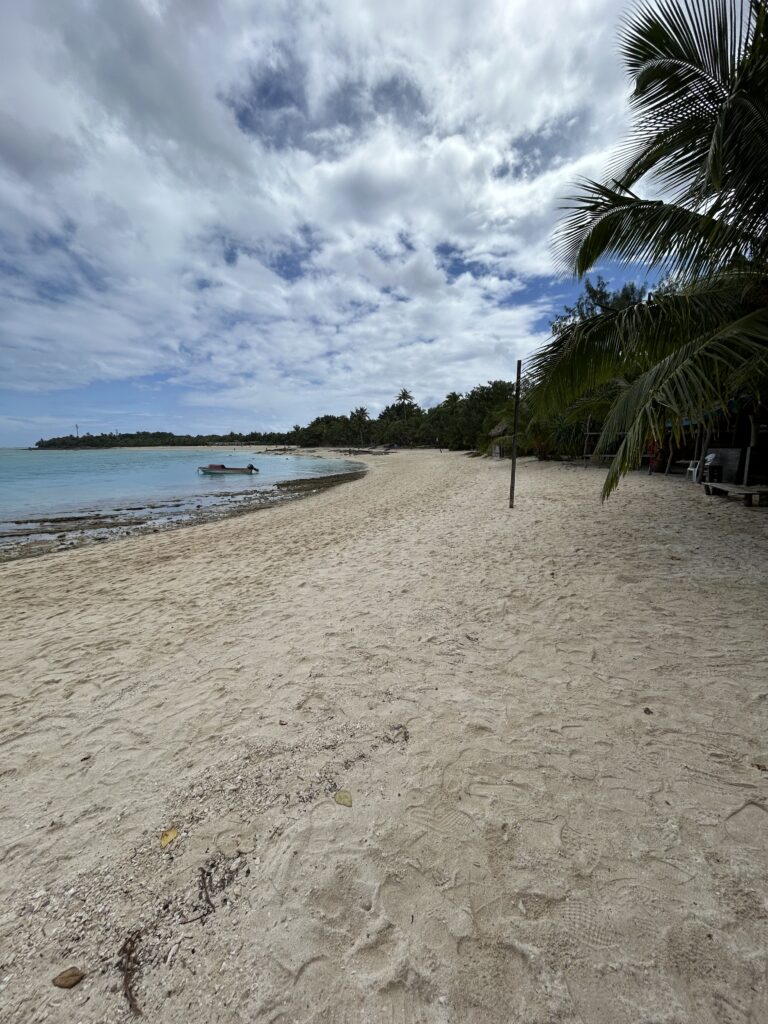
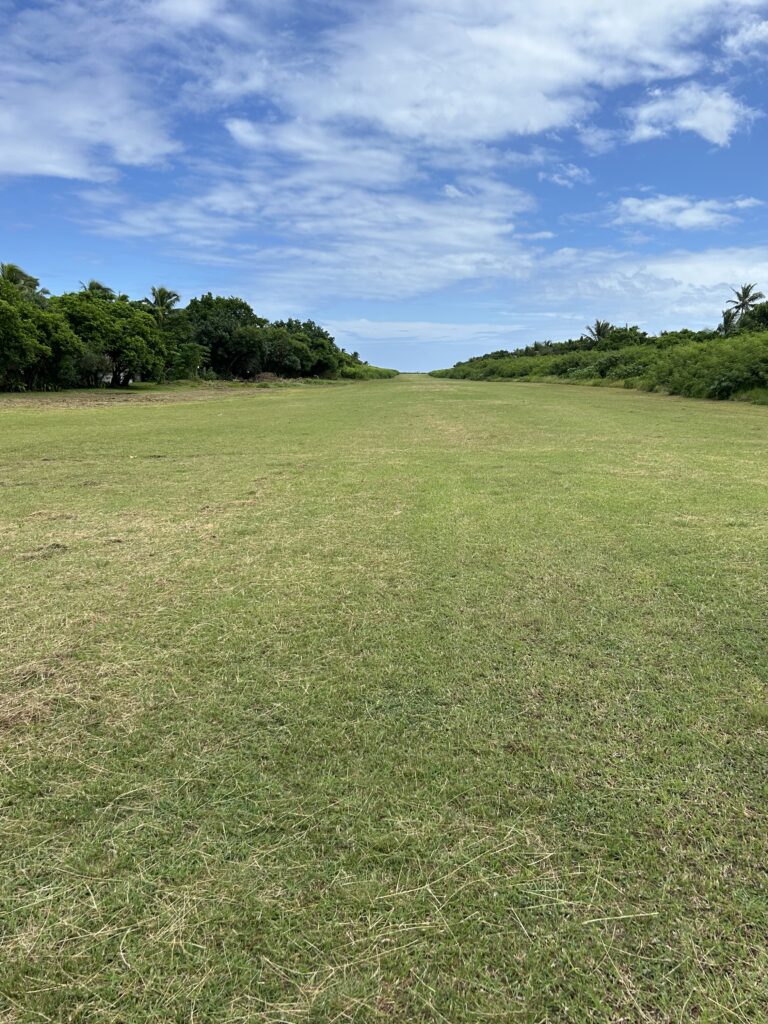
Today we are anchored off this small island that was an airstrip in WWII. It played an important role in the Pacific theater. It got its name “Mystery Island” because the landing strip is impossible to see from the air. The island is 2/3 of a mile long and 200 yards wide, so you can walk around it in an hour or so.
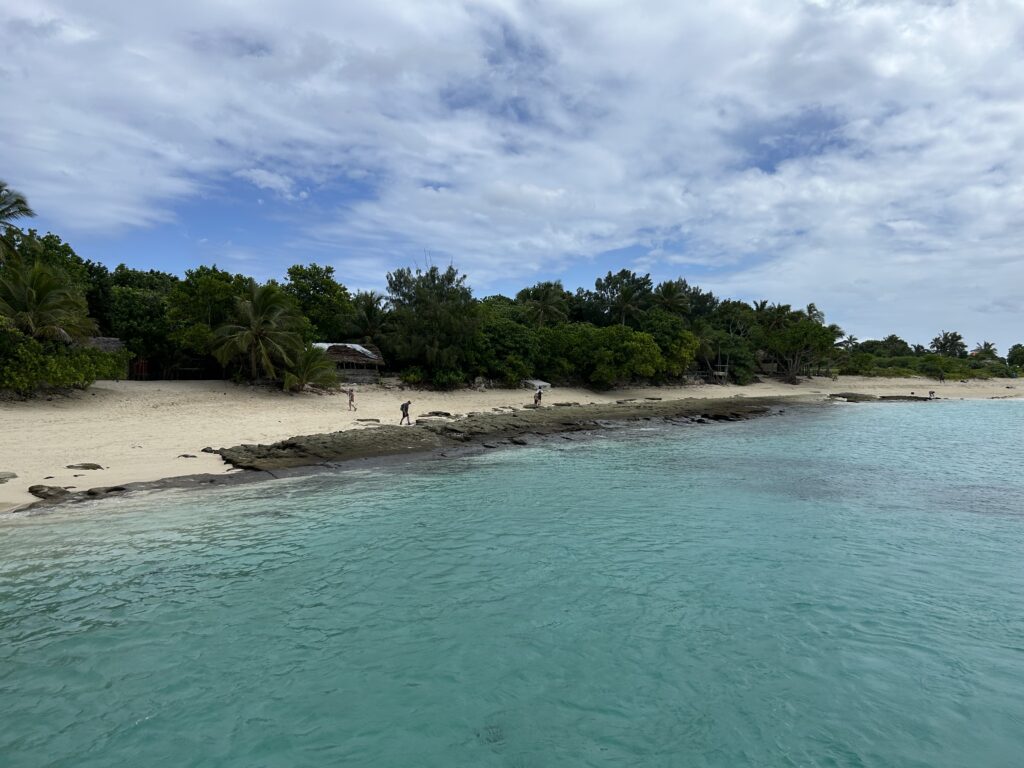
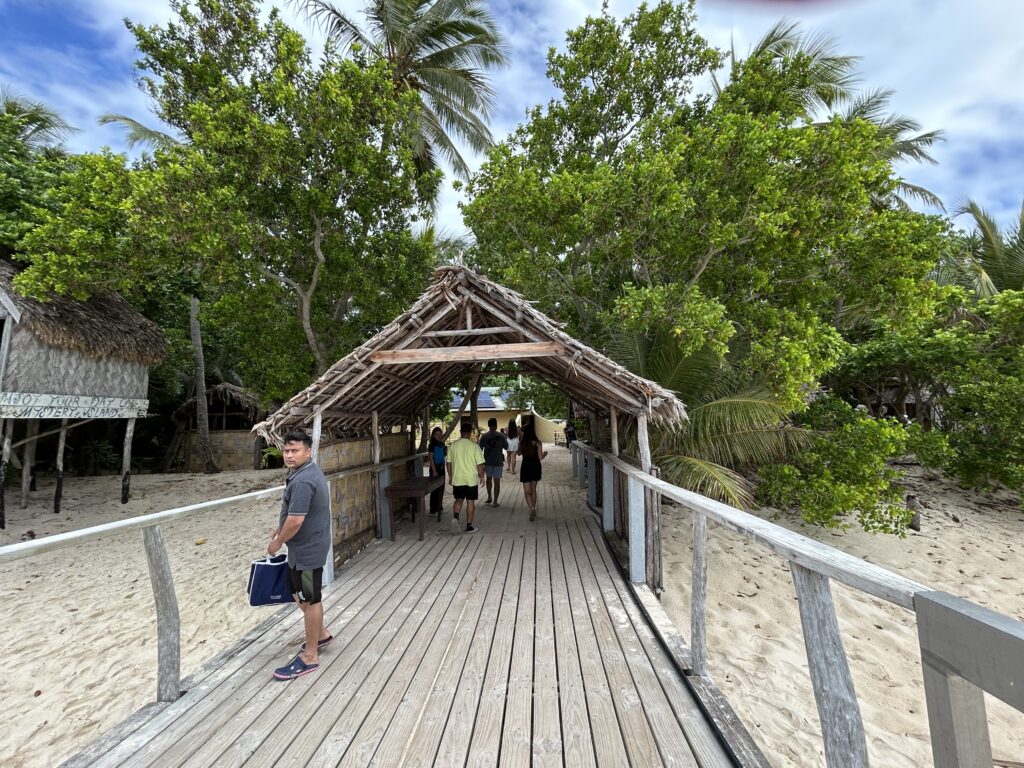
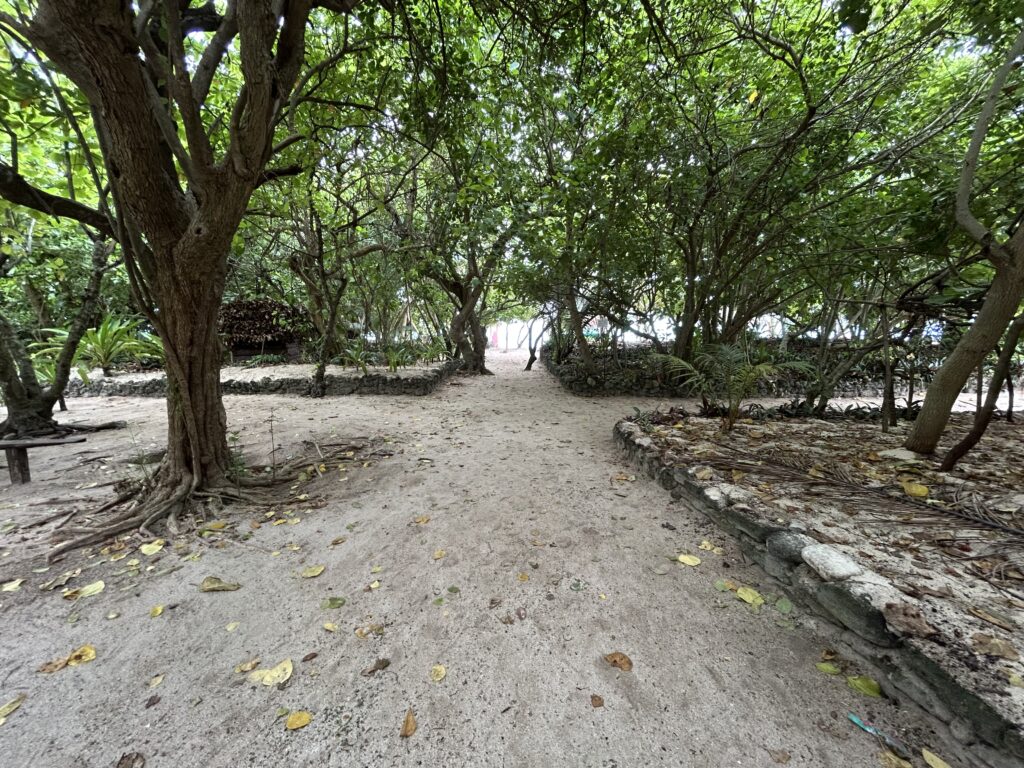
No one lives permanently on the island as there is no electricity, running water, roads, or telephones. However, there are some bungalows available for those who want to “rough it.”
Noumea, New Caledonia
Noumea is a city, port, and capital of the French overseas country of New Caledonia. It was founded in 1854 as Port-de-France. The city is a modern, large port with the University of New Caledonia, a coral aquarium, and nickel-refining plant. The historic heart of the city includes the Place des Cocotiers, historic statues, a large public market, and the St. Joseph Cathedral. The country is about 900 miles east of Australia. In addition to the main island, it is composed of numerous island groups and several uninhabited islands. The island is surrounded by reefs that are designated as a world heritage site.
Melanesians make up more than two-fifths of the population and Europeans about one-third, mostly French. Their differing cultures make up two distinct ways of life: the kanak and the caldoche. The kanak culture is based on clan membership, a network of family alliances and specific land rights. The Caldoche way of life is basically a cash economy. While there is no official language, French and Kanak have legal recognition. Some 30 Melanesian languages are spoken as well.
Melanesians settled the islands about 3,000 BCE. In 1774, Captain Cook landed at Balade on the east coast and named the island New Caledonia for his father’s native Scotland. Cook was followed by the French navigator Antoine de Bruni in 1793. Regular contact with Europeans began in 1841. France took position of New Caledonia in 1853 as an island for prisoners. In 1998, the Nouméa Accord was signed with Fance which gave New Caledonia limited autonomy within the French legal system. In March 1999 its status was changed from an overseas territory to an overseas country.
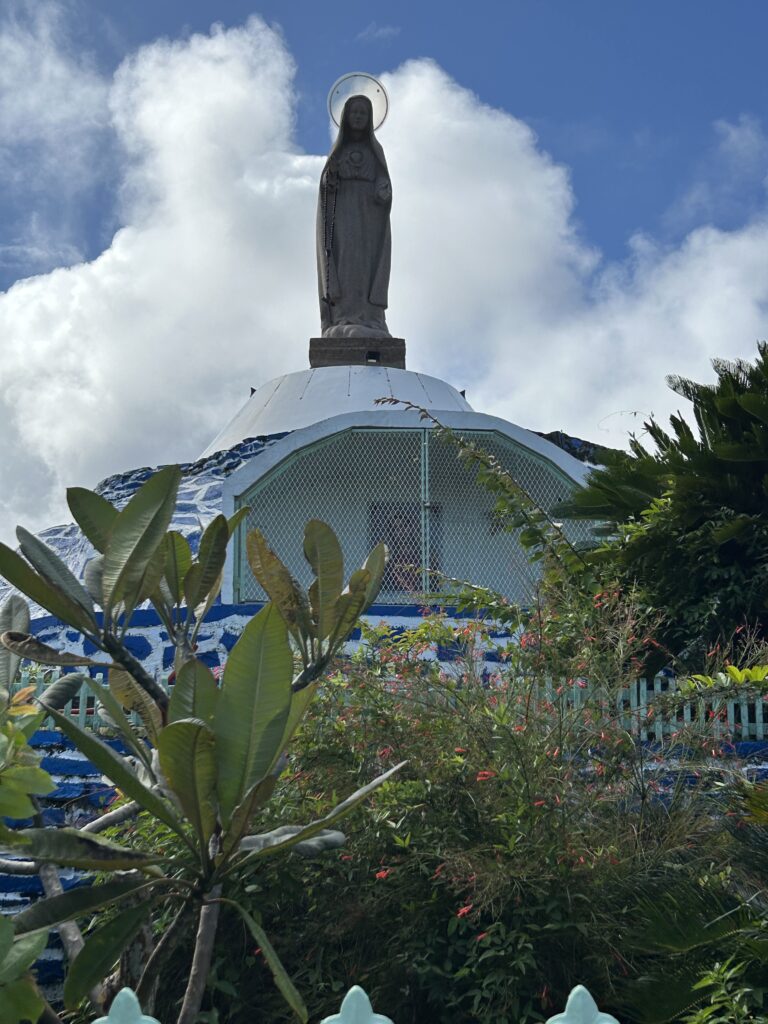
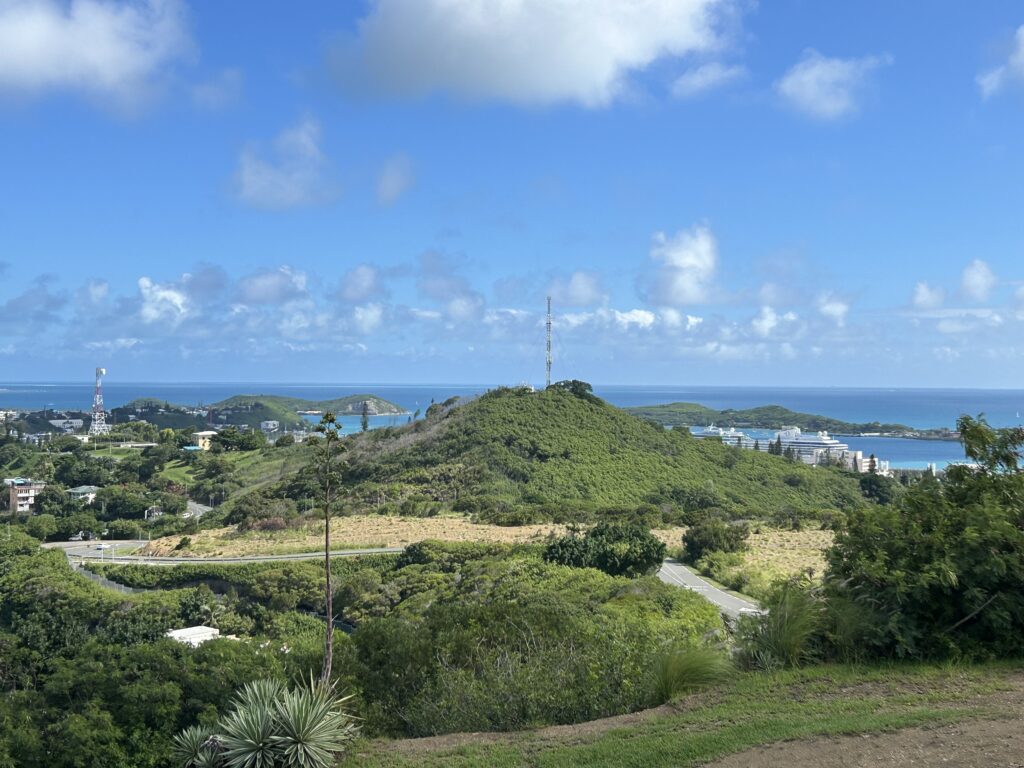
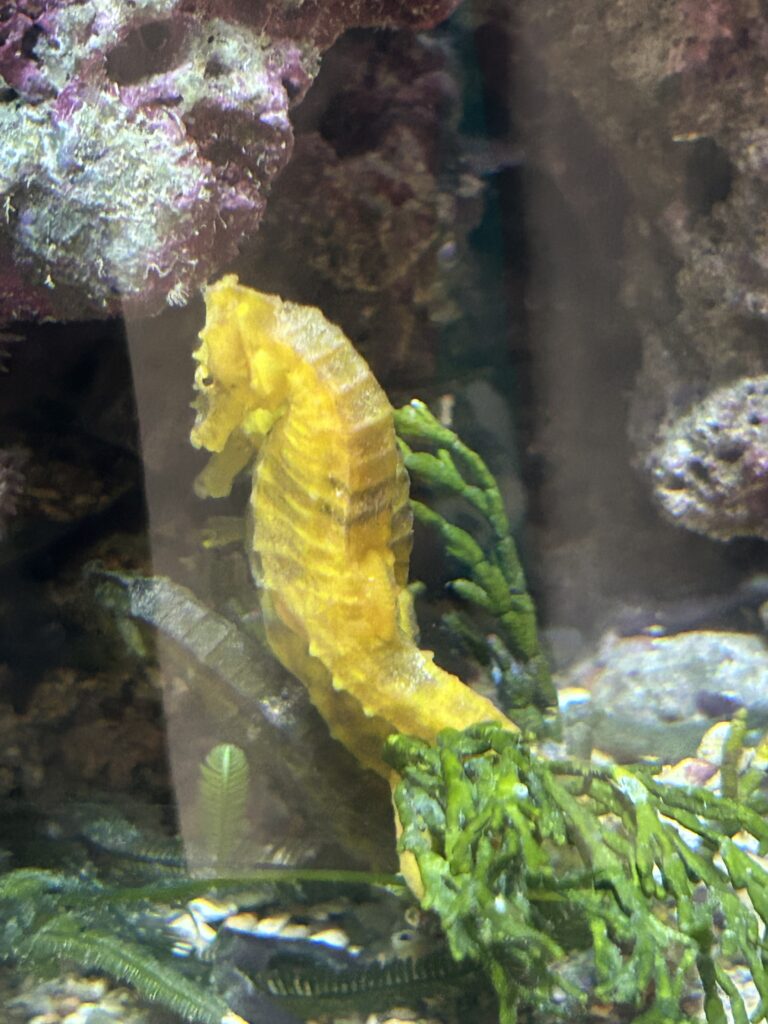
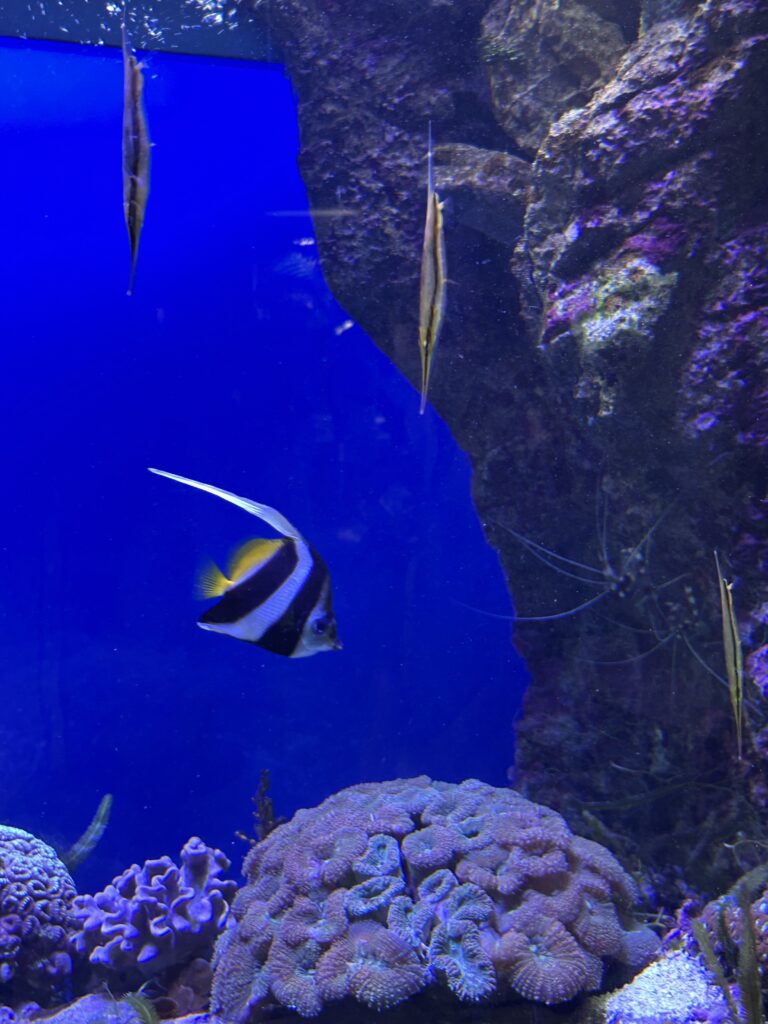
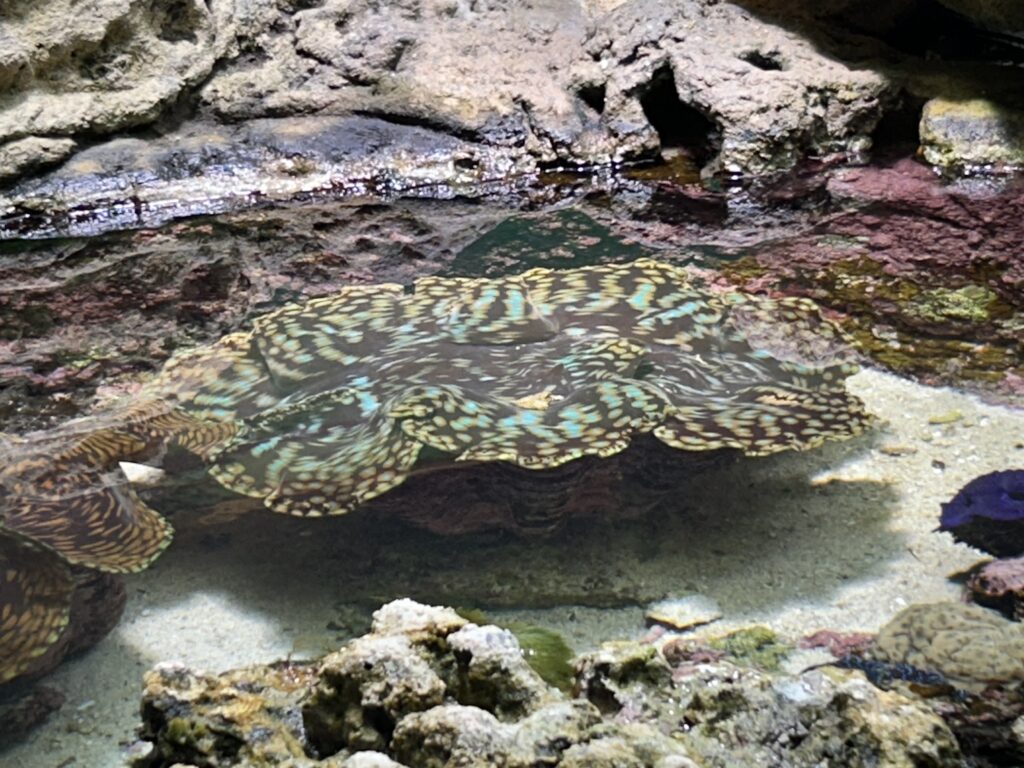
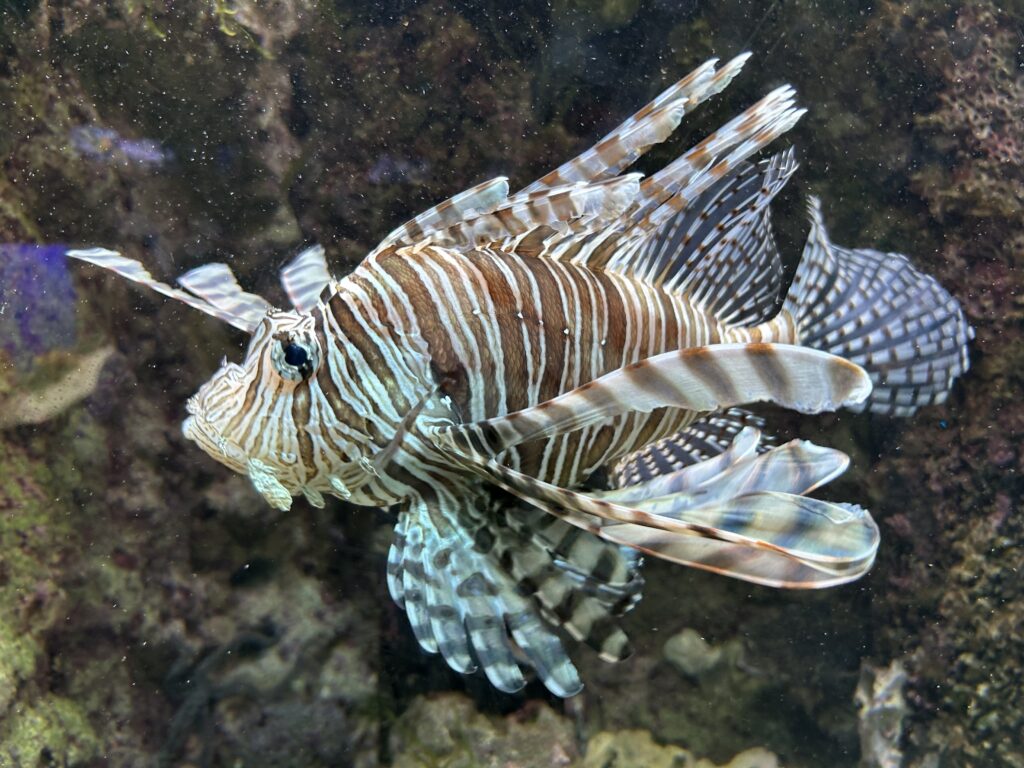
The first place we visited was the Notre Dame Du Pacifique on top of a hill. It is a breathtaking statue of the Virgin Mary. Surrounding it are stations of the cross. The views of the town are amazing from here. Then we went to the acquarium which we saw sea horses and various corals and fish that are native to the area. After the acquarium we visited Fort Téréka with its canons that were never used. They reflect New Caledonia’s history.
Next we saw the site of the penal colony that existed from 1864 to 1924. This penal colony primarily housed French prisoners, with around 21,000 convicts deported from mainland France during its operation. Today, the area includes the University of New Caledonia and a state mental hospital, reflecting its historical significance. Across is a cross signifying where prisoners were executed.
Leave a Reply