Oropesa
Today, we explored the valley south of Cuzco, beginning in Oropesa, The “Town of Bakeries. “This small town is known for special bread called pan chuta, made in loaves as big as a wheel and traditionally brought as a gift to the host when visiting a home in the Cuzco area. The town’s wood-fired ovens produce some of the most flavorful brad in Peru. We visited a bakery and sampled the famous bread.
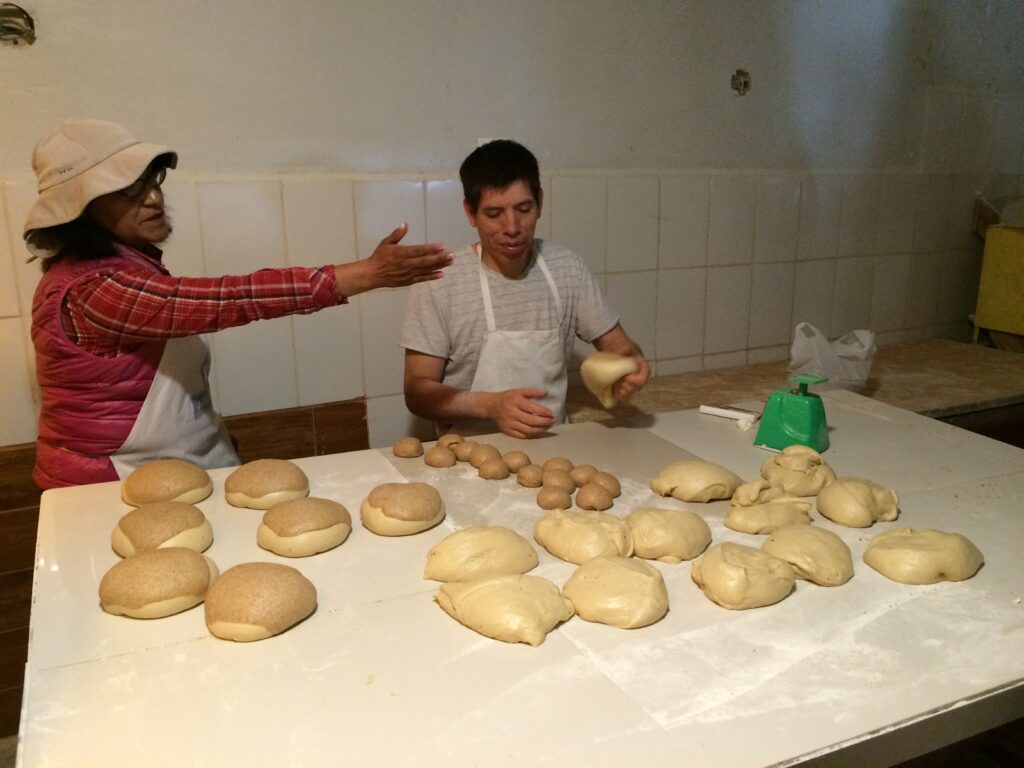
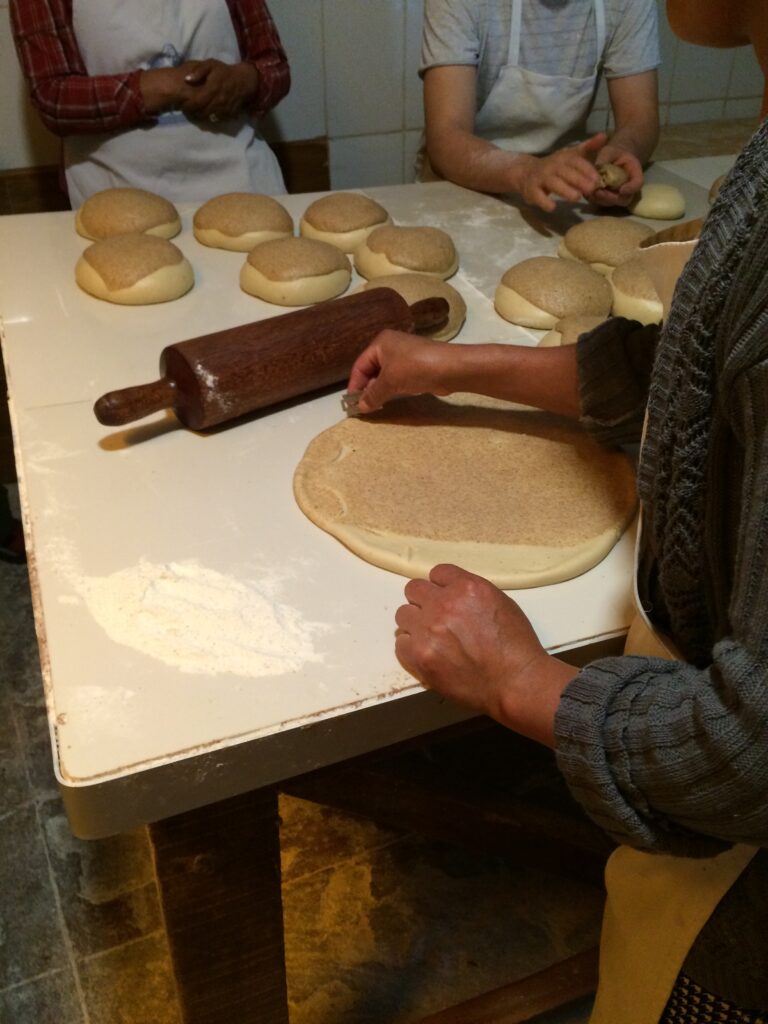
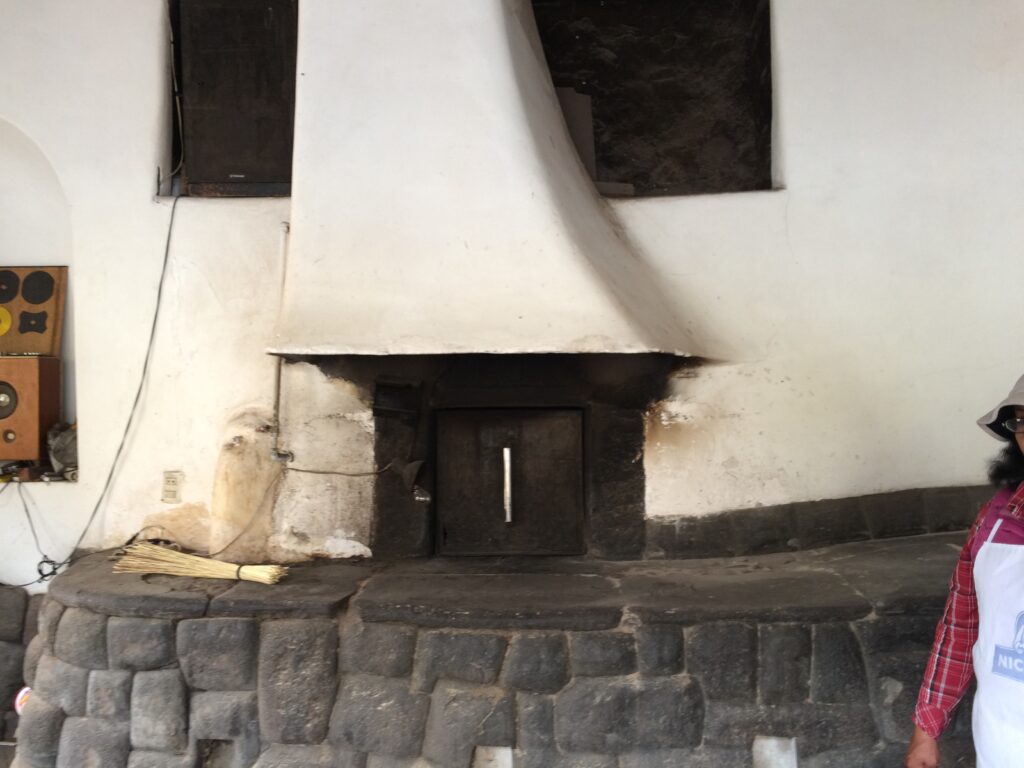
In addition to being the “Bread Capital of the World”, Oropesa has a small town square, narrow cobbled streets, and a few colonial -ear churches. It is a quiet place surrounded by the mountains.
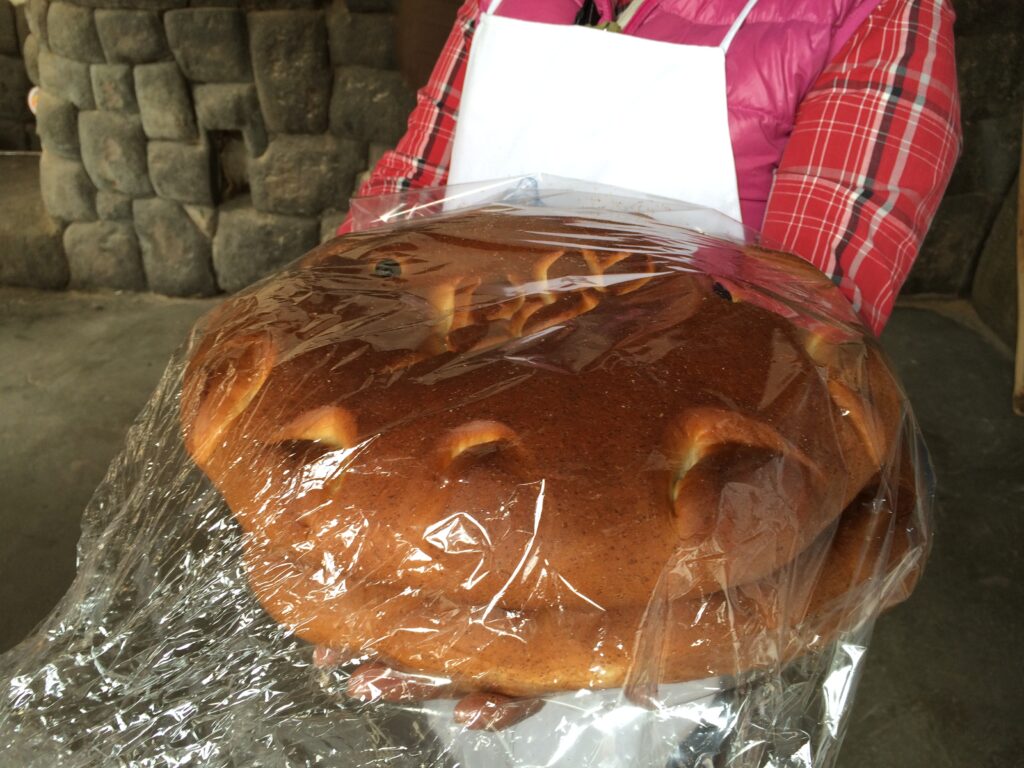
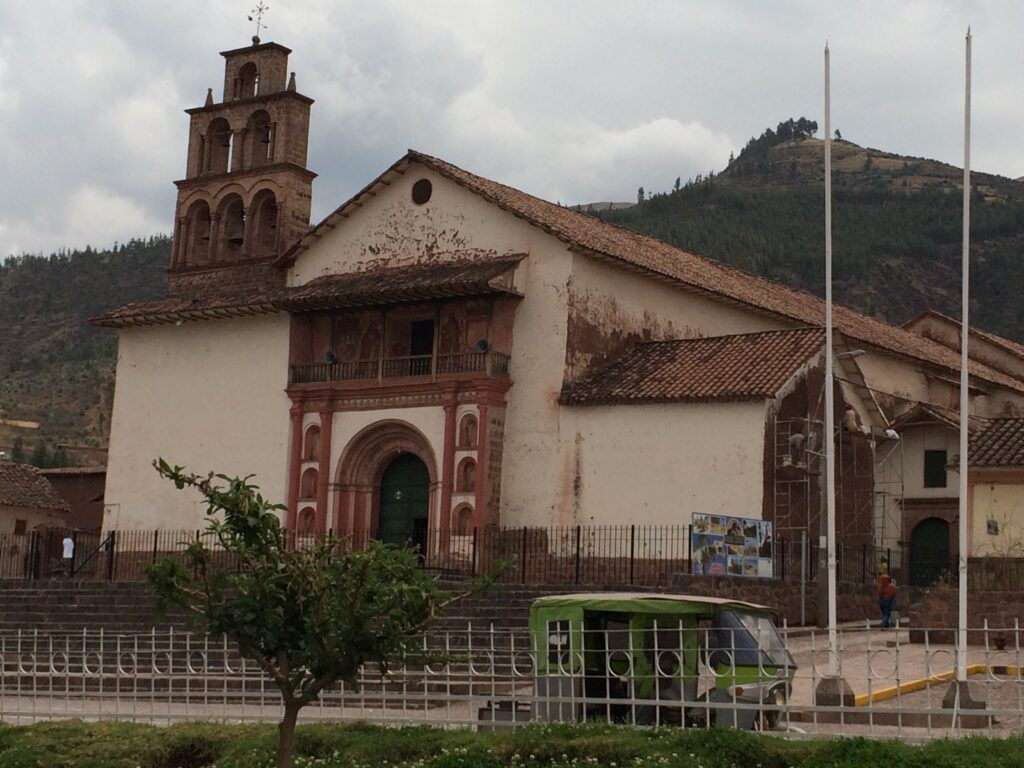
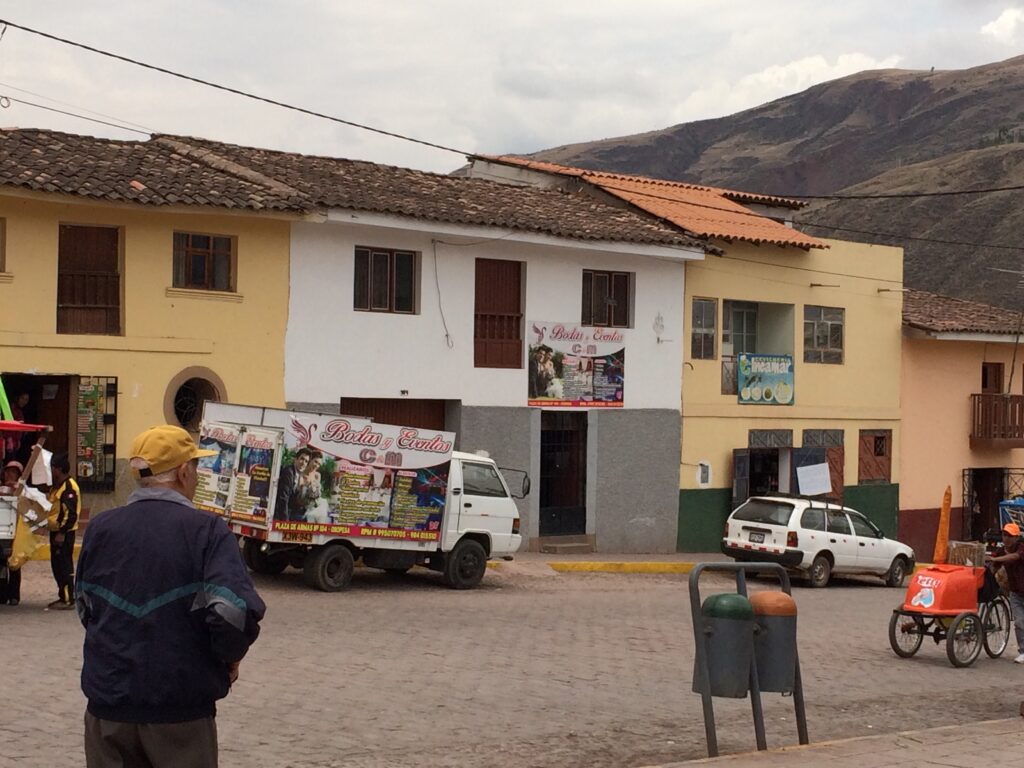
Beyond the bread, Oropesa is full of local life and Andean culture. Markets and festivals bring the community together, while the stunning views of the surrounding hills offer a peaceful backdrop. Oropesa offers a refreshing and authentic experience that is truly memorable.
Tipon
We continued on to Tipon, the site of ancient Inca waterworks. The maze of irrigation channels and ritual baths here is a marvel of ancient engineering—water continues to flow in them, 500 years after their construction. This was a site for Agricultural Experimentation.
Ranging in elevation from 10,700 to 13,000 feet, its highest point, Cruzmoqo, once served as a military observance post and place of religious significance, and mysterious ancient petroglyphs from 2000 BCE still decorate the volcanic rock there. While the Inca constructed the sophisticated settlement in Tipón in around 1400 CE, the site’s prehistoric importance is well established and can be traced back to between 6,000 and 4000 BCE.
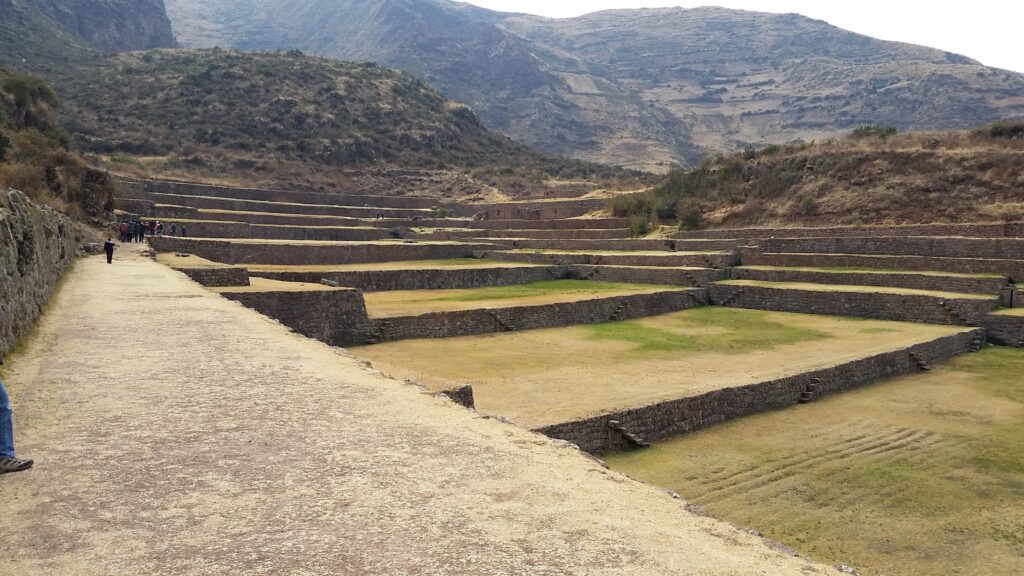
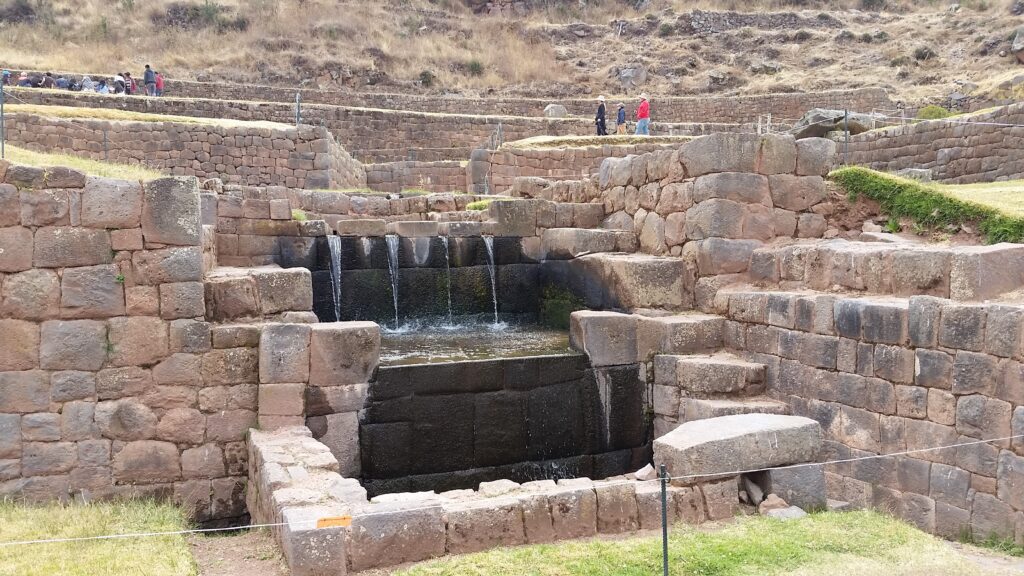
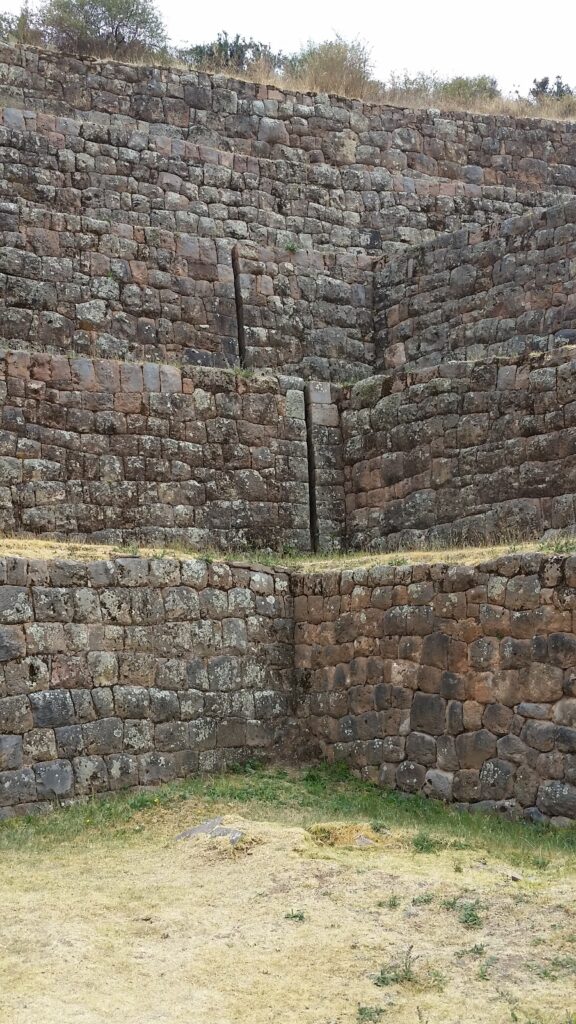
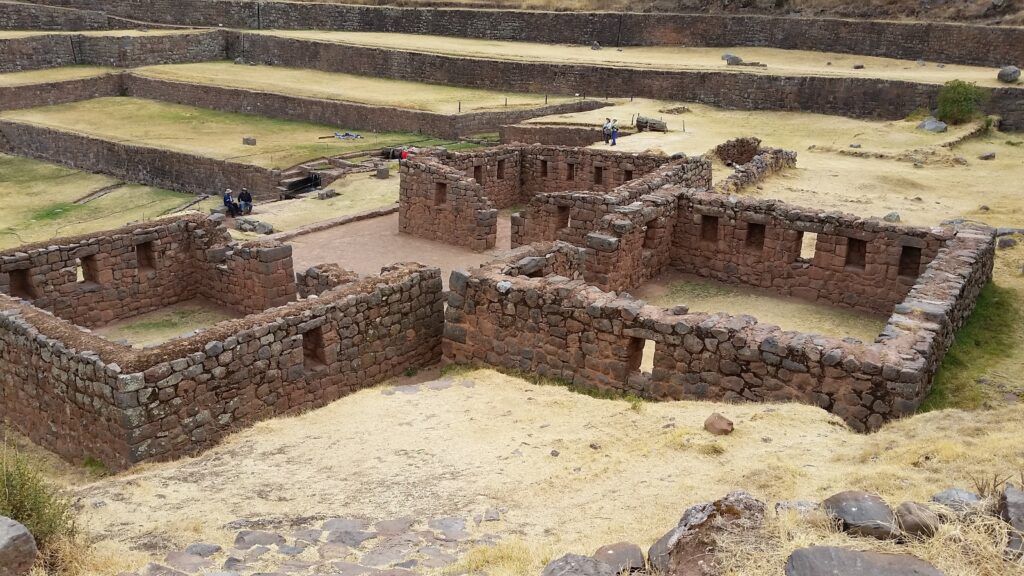
The site of Tipón is made up of thirteen terraces flanked by polished stone walls, enormous agricultural terraces, canals, and decorative waterfalls. Every archaeological complex features well-built canals which channeled and distributed water throughout the settlement. There are various baths and irrigation channels that still function today, providing the archaeological site with an endless stream of running water
The lower sector of the Tipón ruins is comprised of a series of agricultural terraces, watered by stone-lined channels, all of which are preserved today. At the back of the lower ruins, water flows from a stone-faced “mouth” around a spring which is probably an aqueduct diverted underground from above. Another sector of the ruins contains a reservoir and temple block centered on a large, exploded volcanic rock which is thought to be some kind of huaca (temple) or burial place. Off the back of the reservoir, a large stone aqueduct crosses a small crevasse before continuing uphill to an area of unexcavated terraces and dwellings. Beyond these, exist another level of the upper valley covered in Inca terracing, dwellings and stone storehouses.
Sacsayhuaman
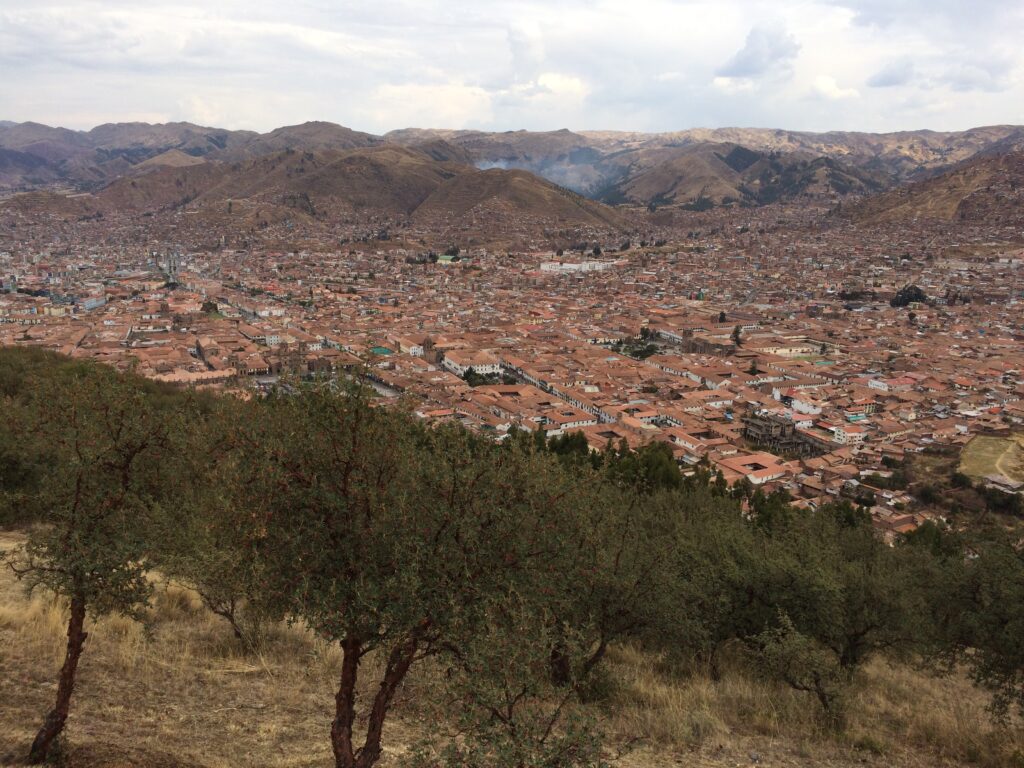
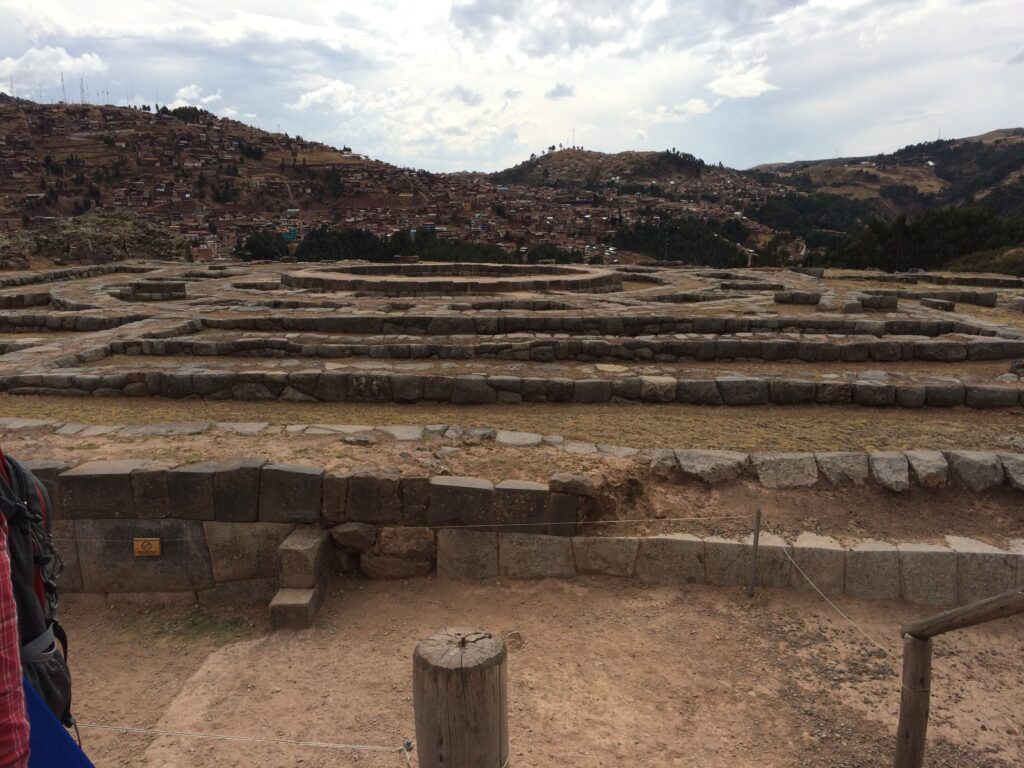
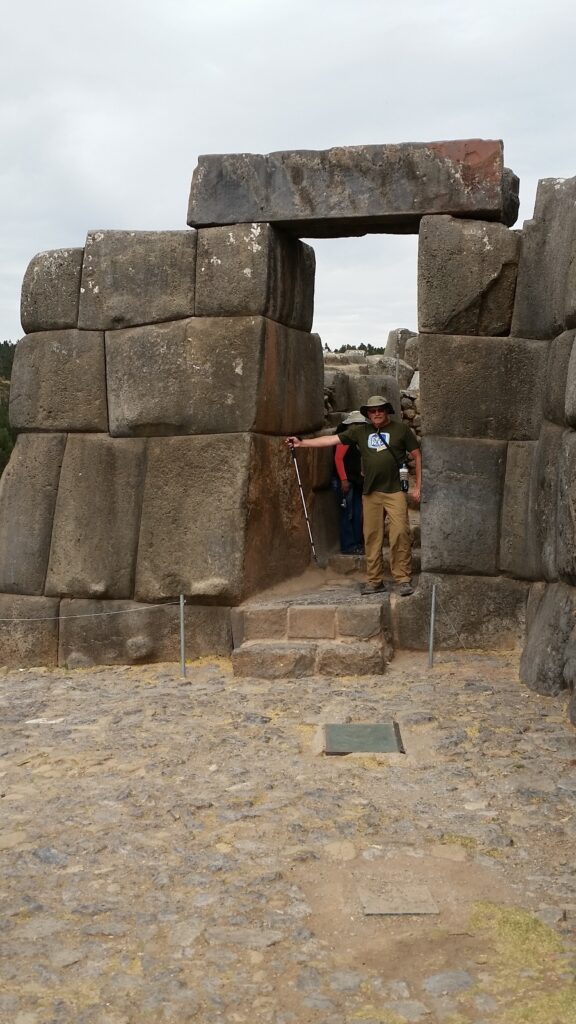
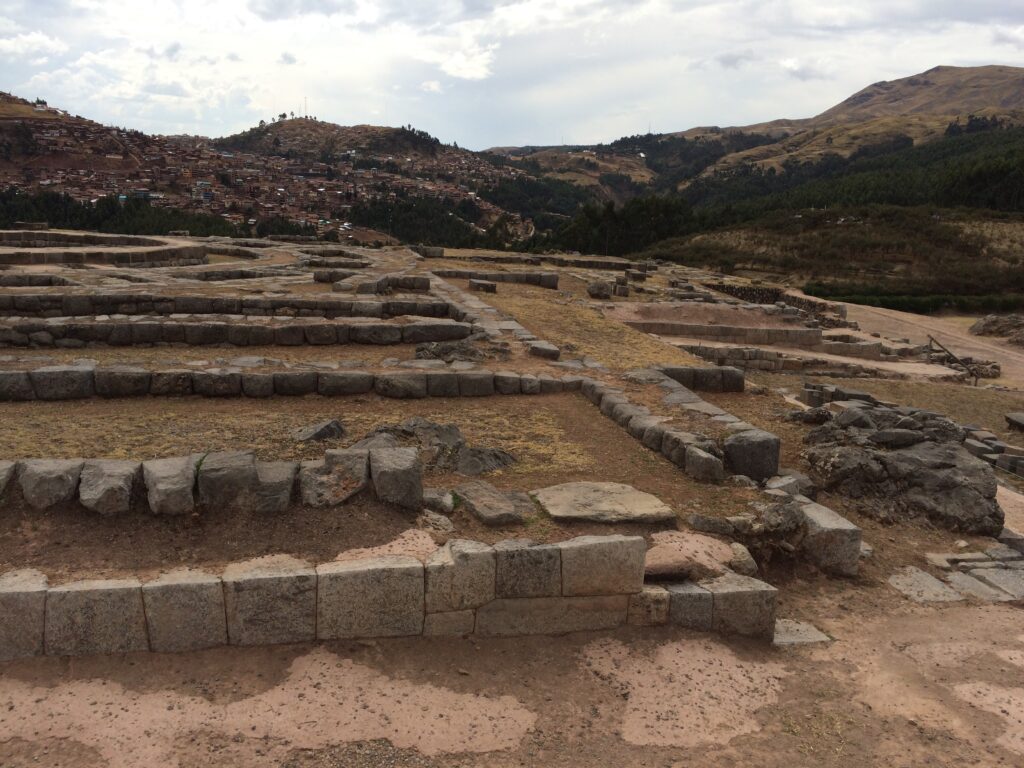
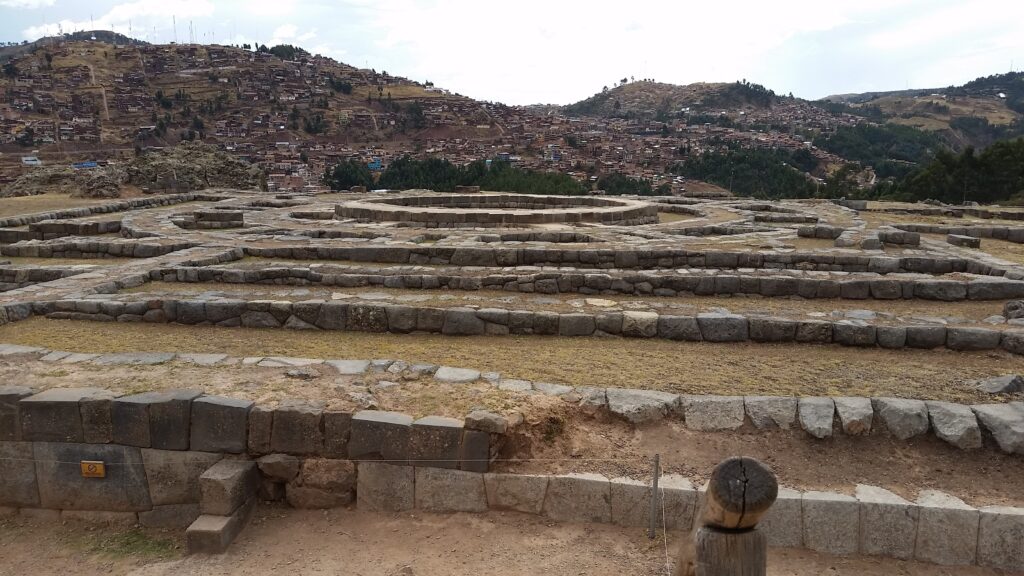
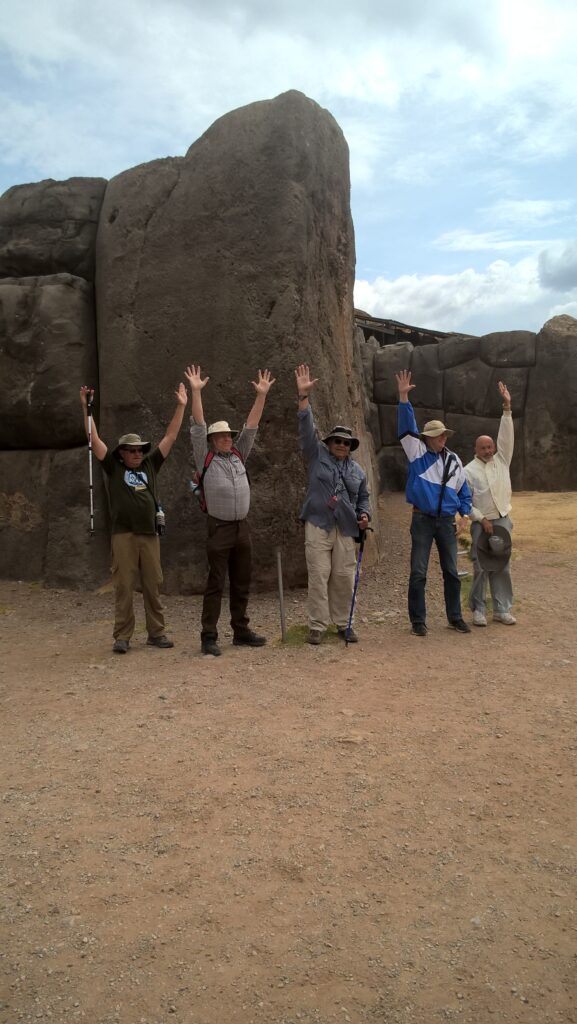
Next we went to Sacsayhuaman, an important example of Inca architecture. It sits at an altitude of 12,142 ft. Dry stone walls constructed of huge stones were fit together so tightly without mortar that you cannot get a piece of paper between them. Some stones are estimated to weigh over 120 tons and were moved from quarries miles away. They were placed in zigzagging walls. Today, it is the primary site of Peru’s most spectacular celebration: the Inti Raymi of Festival of the Sun on June 22.
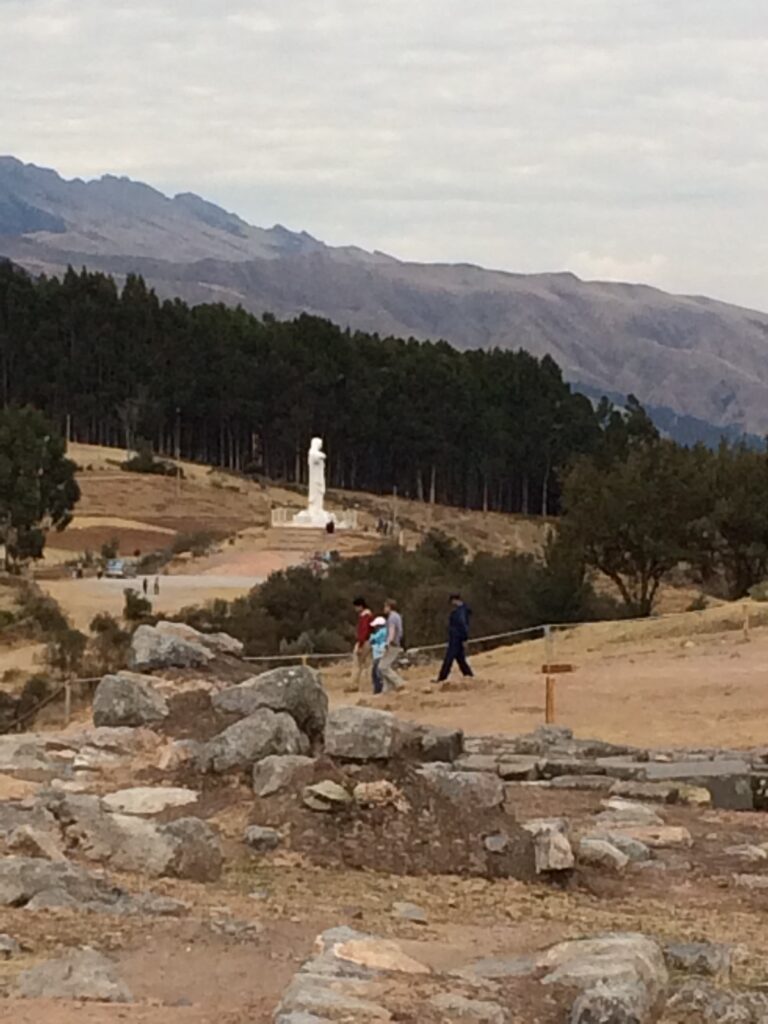
I
nterestingly on a hill near the ruins is a statue of Christ which is one of Cuzco’s prominent sites. After exploring these ruins we went to our last stop, Kenko, our final archeological site in the Sacred Valley.
Kenko
Kenko means labyrinth. The archeological site consists of a complex of subterranean galleries, canals, and a semi-circular amphitheater-type structure. The area of the ruins that we could visit was Big Qenqo (or Hatun Q’enqo).
It appears that the Incas used it as an important ceremonial site. In the lower, underground portion of Big Qenqo, Inca death rituals likely took place on a slab cut into the stone. Ritualistic sacrifices, probably of llamas, were not uncommon. The zigzagging canal carved into the rock above may have transported ceremonial chicha (a fermented corn beverage) or sacrificial llama blood. Some also believe that the Incas used the underground tunnels to mummify important members of Inca society..
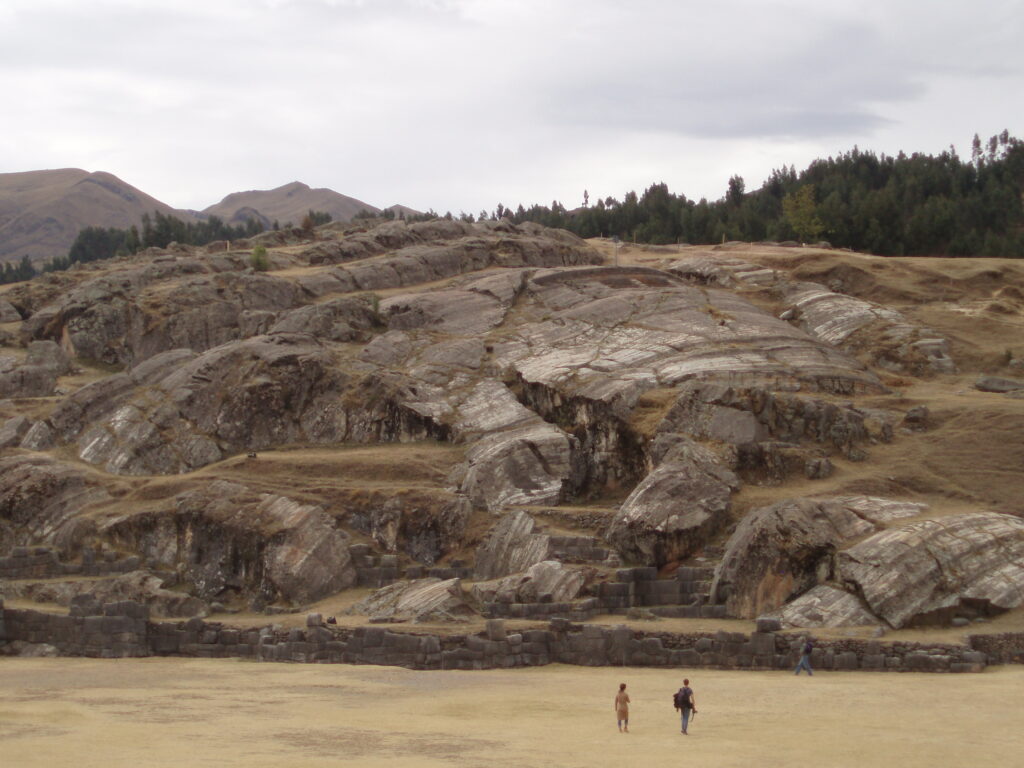

Above ground, we see clear indications of structures dedicated to astrological purposes. Like many other Incan stoneworks, the carved shapes reflect stars and constellations. There is even an Intihuatana structure, or a “sun post,” which had great spiritual purpose for the Incas.
After a long day we returned to Cuzco for our final dinner.
Leave a Reply