RED SQUARE
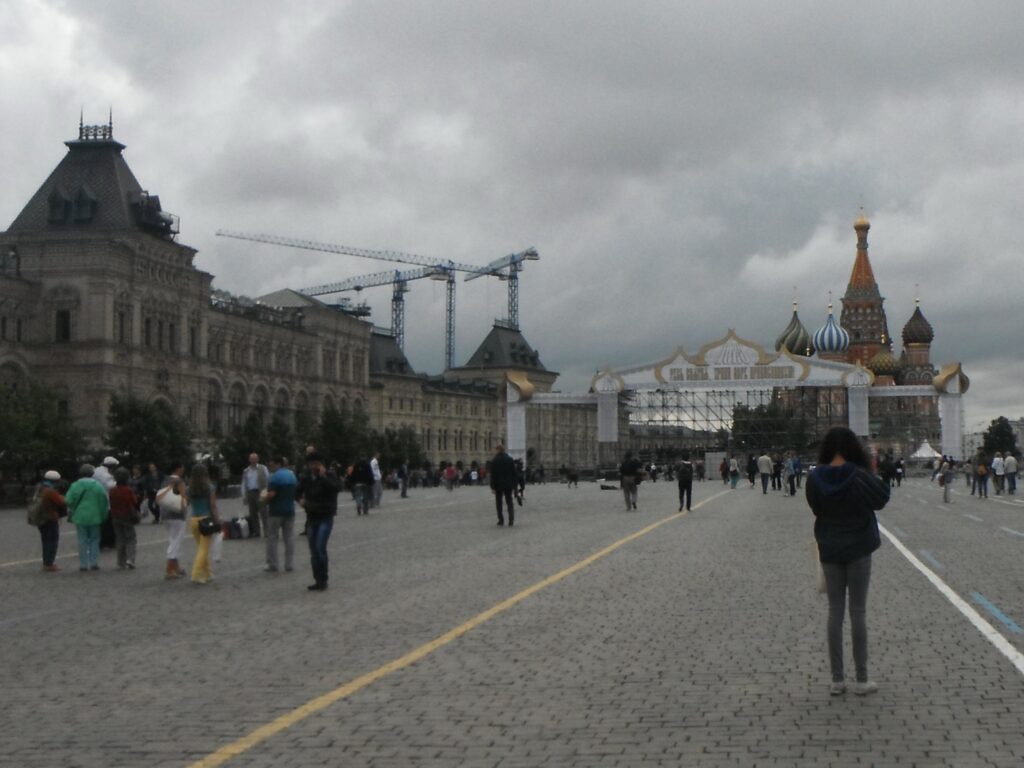
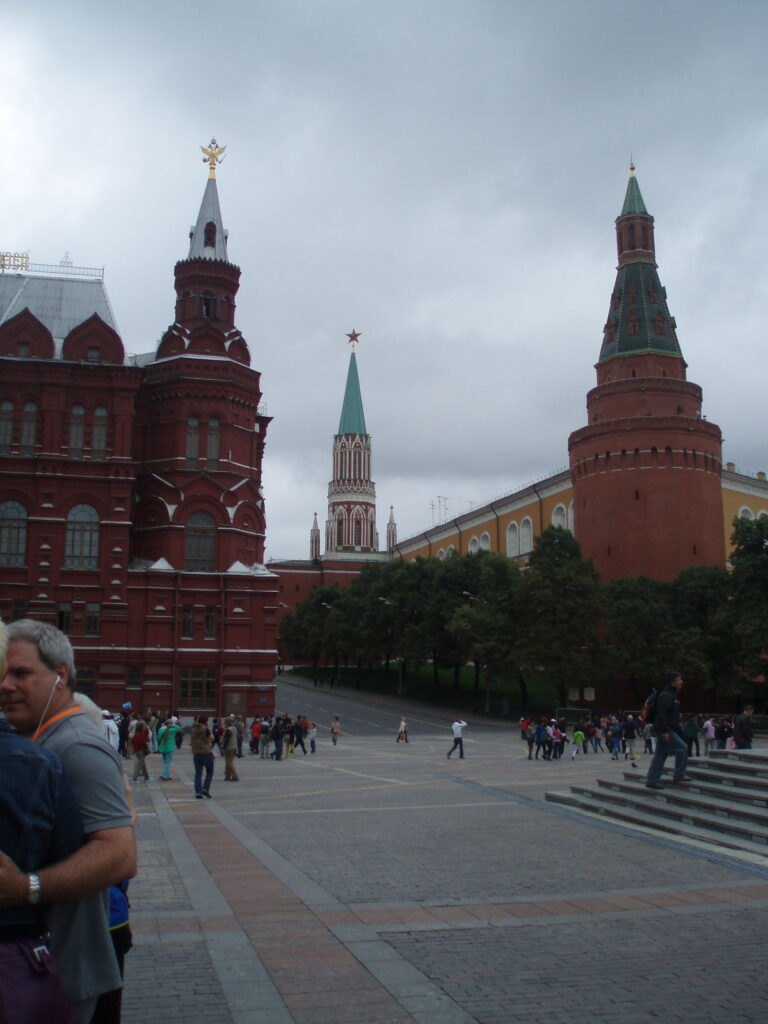
At 9 we left for our Moscow marathon. We started at Red Square, and discovered that what we thought was Red Square was not. Red means beautiful and stands for fire. So “red” has nothing to do with Communism. Red Square used to be a market square, but after one of many fires had burned everything there down it was cleared to be a sort of firebreak in front of the Kremlin. It is 1600 feet long. Red Square has always been a meeting place for the city’s occupants and used for executions, public announcements, military parades, processions, and cultural events. The Kremlin wall, the GUM department store, and St. Basil’s Cathedral border it. St. Basil’s Cathedral was commissioned by Ivan the Terrible to celebrate the capture of the Mongul stronghold of Kazan in 1552. It was completed in 1561 and designed by architect Postnik Yakolev. Its design is the culmination of a wholly Russian style that had been developed building wooden churches.
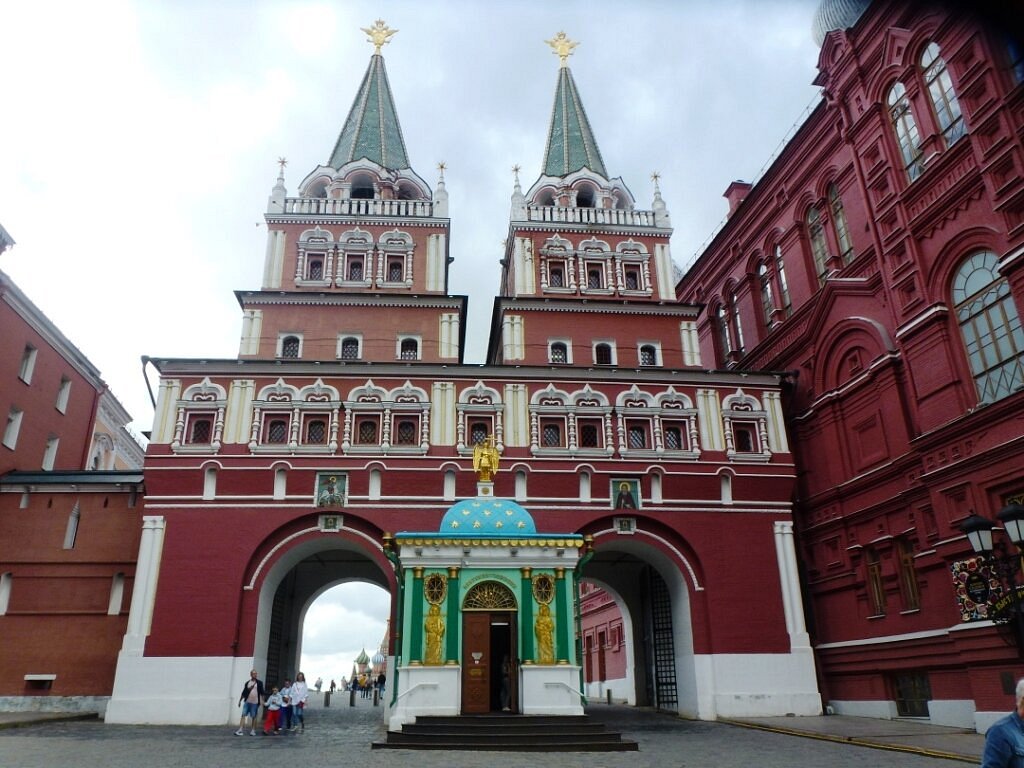
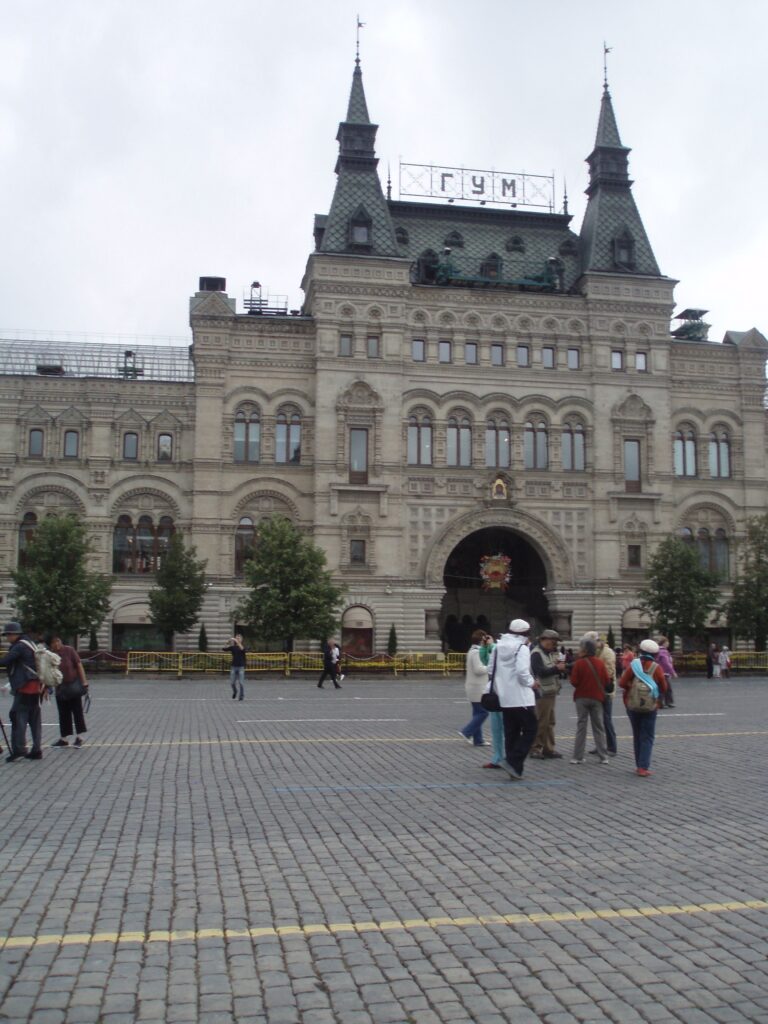
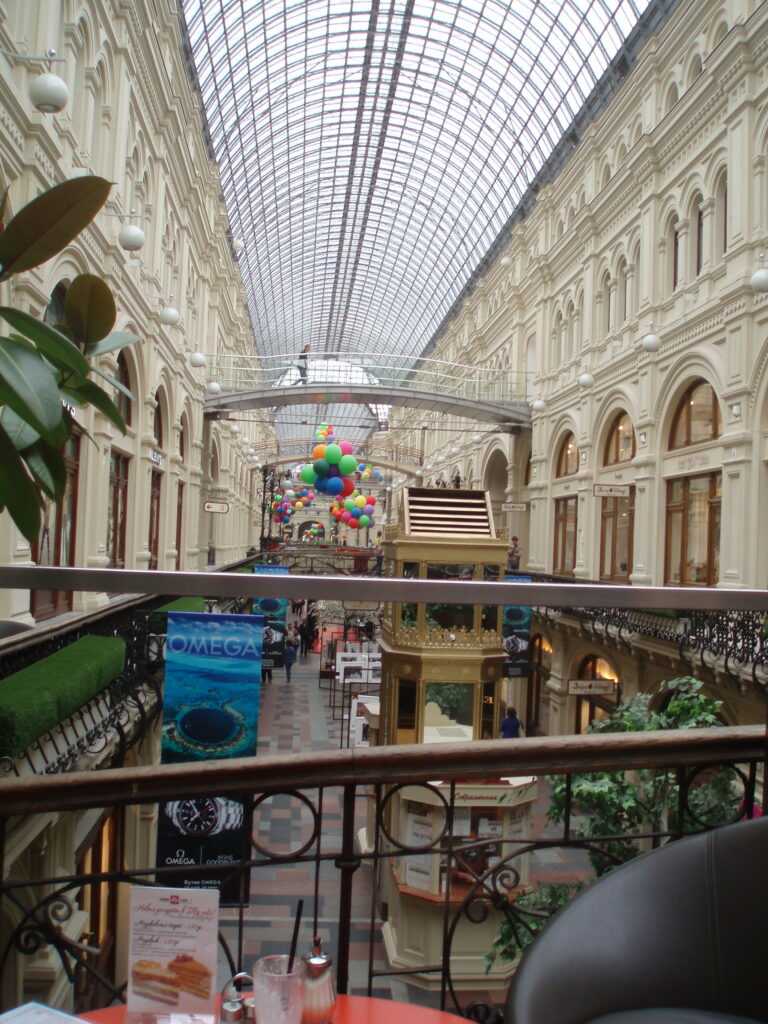
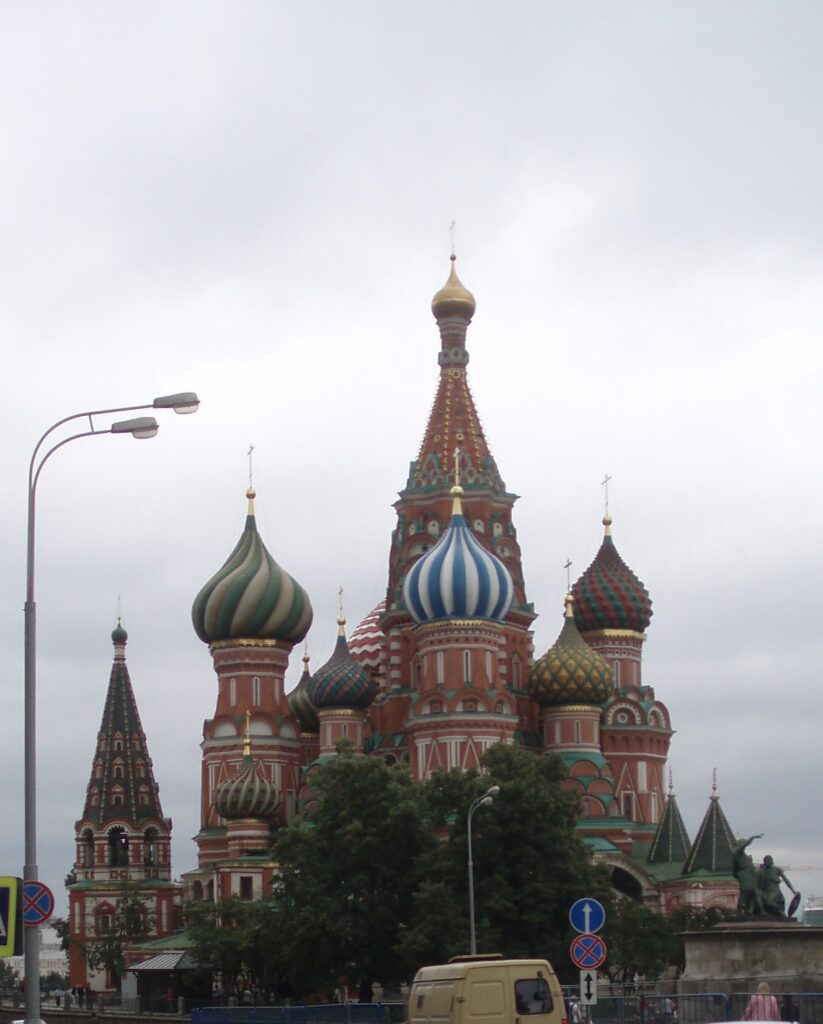
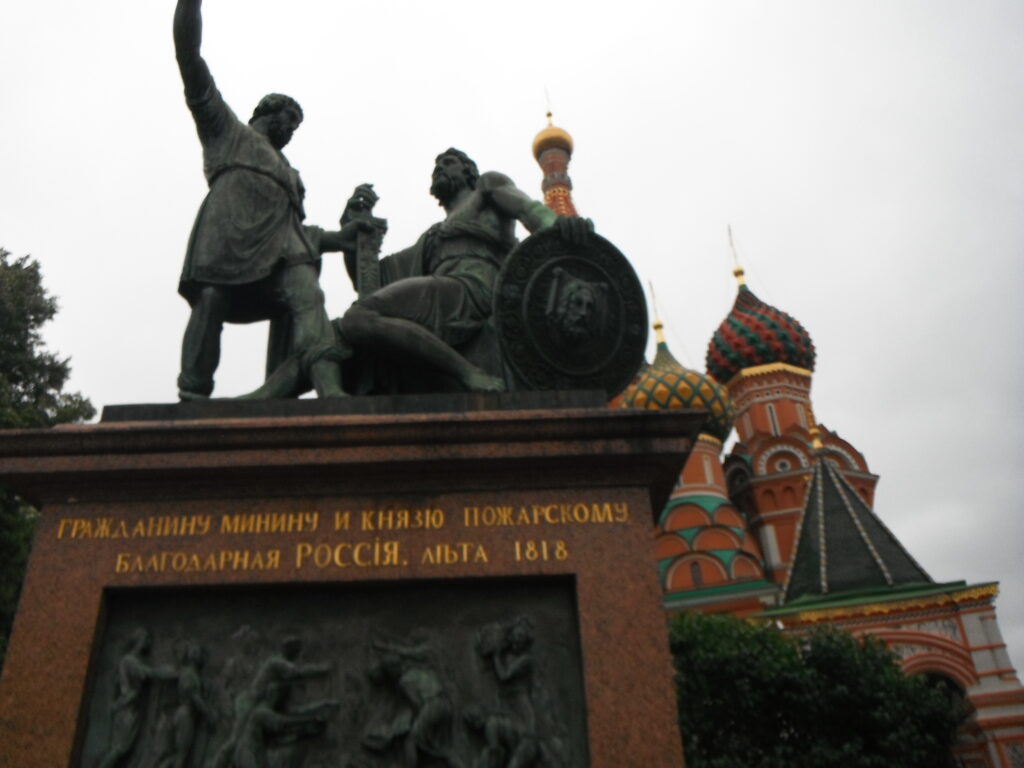
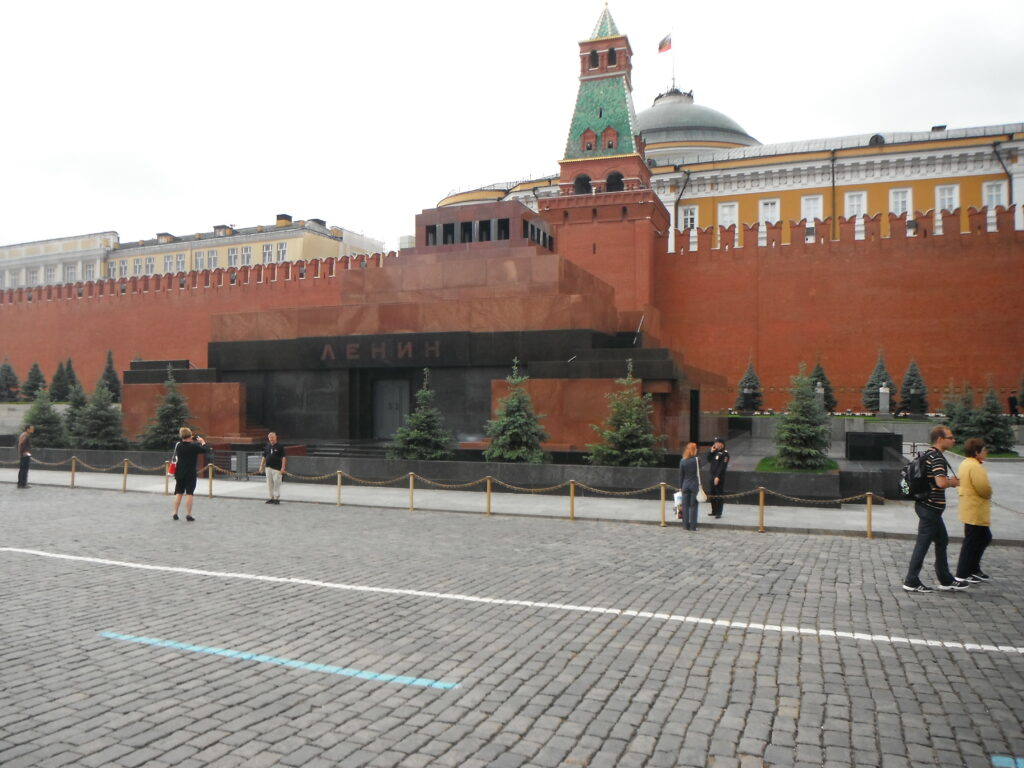
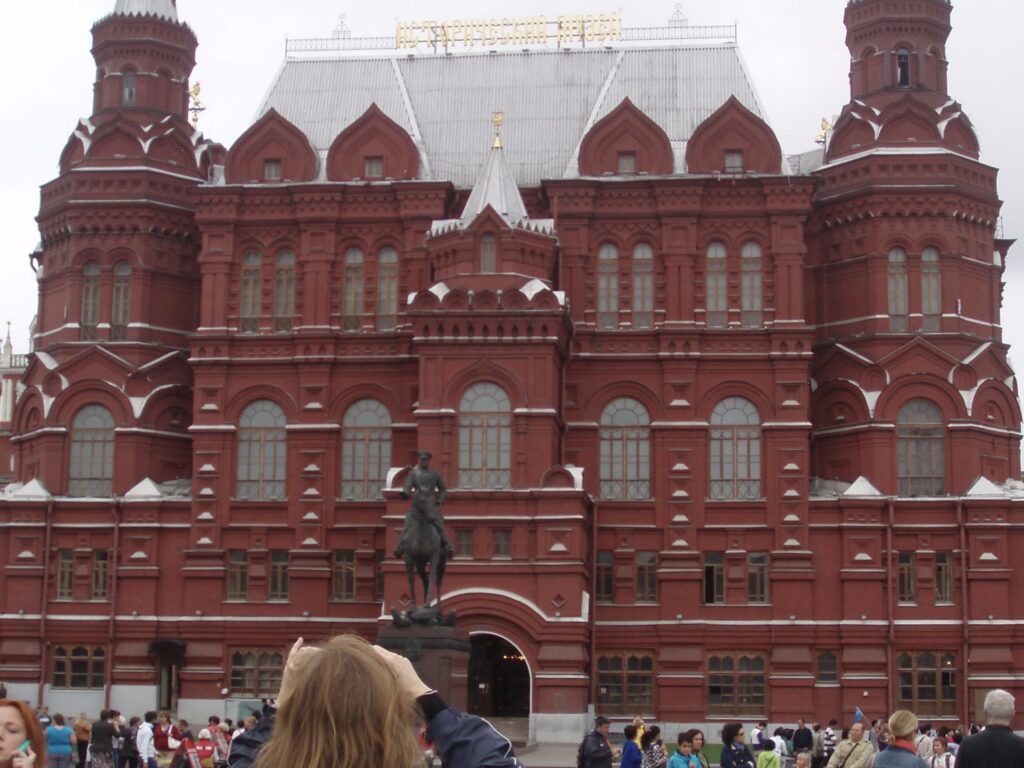
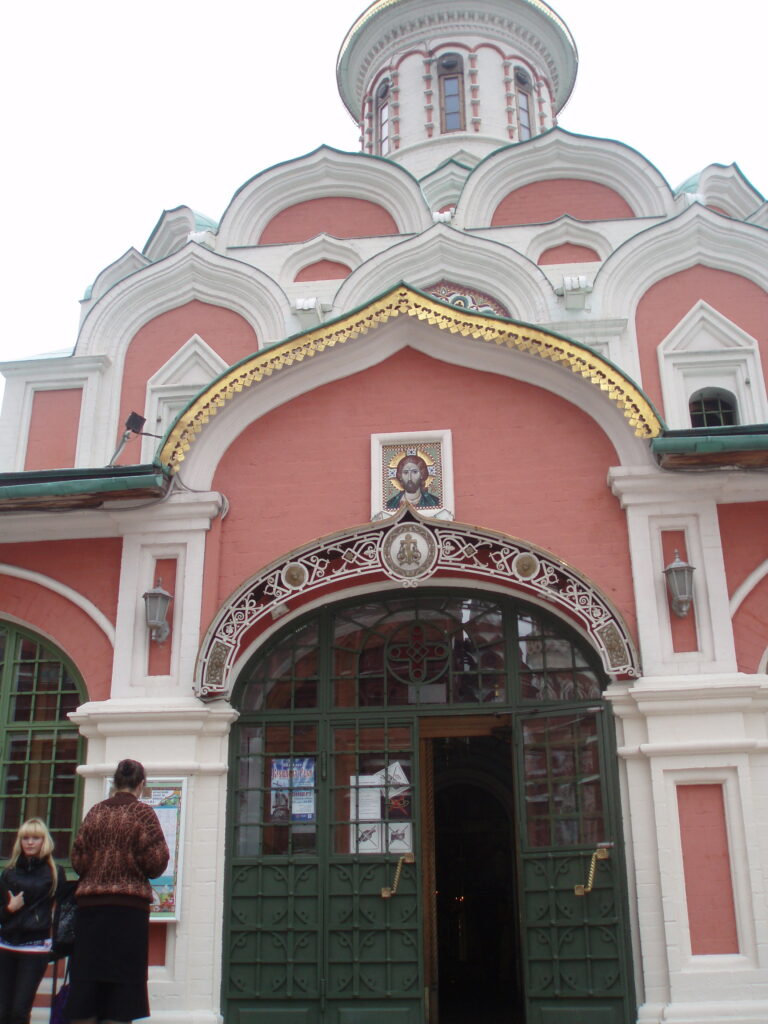
Our guide told us about all the history of Moscow as we strolled through, and she pointed out the architecture of the surrounding buildings. GUM is the state universal store. It is the largest shopping center in Russia. Mostly there are designer shops and cafes. Across from it is Lenin’s Mausoleum. Then, we went through St Basil’s, looking at the beautiful iconography. There were so many steep stairs, but I persevered. In one room of the cathedral a male quartet sang a short song to demonstrate the acoustics. It was amazing. After St. Basil’s it was time for lunch, so we found a small café in the GUM and ate. Then we had time to go to the small church called The Gate Church of the Iberian Virgin. It is another beautiful example of iconography. It was customary for the Czar to pray here before entering the Kremlin. This was a church in use, with many people coming in to pray and light candles, etc. The mystery of it was awe-inspiring.
The Kremlin
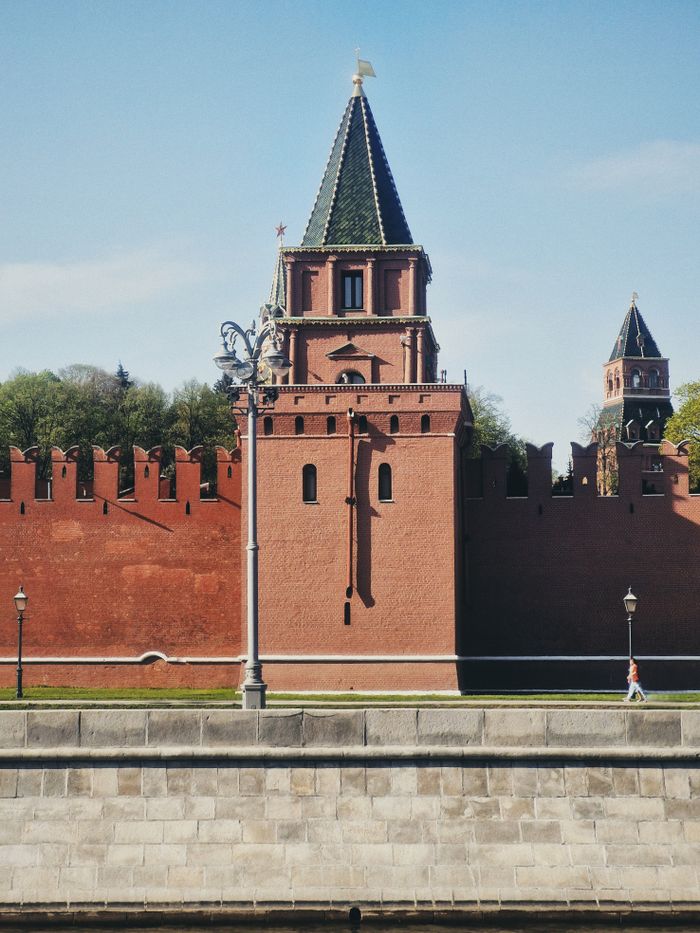
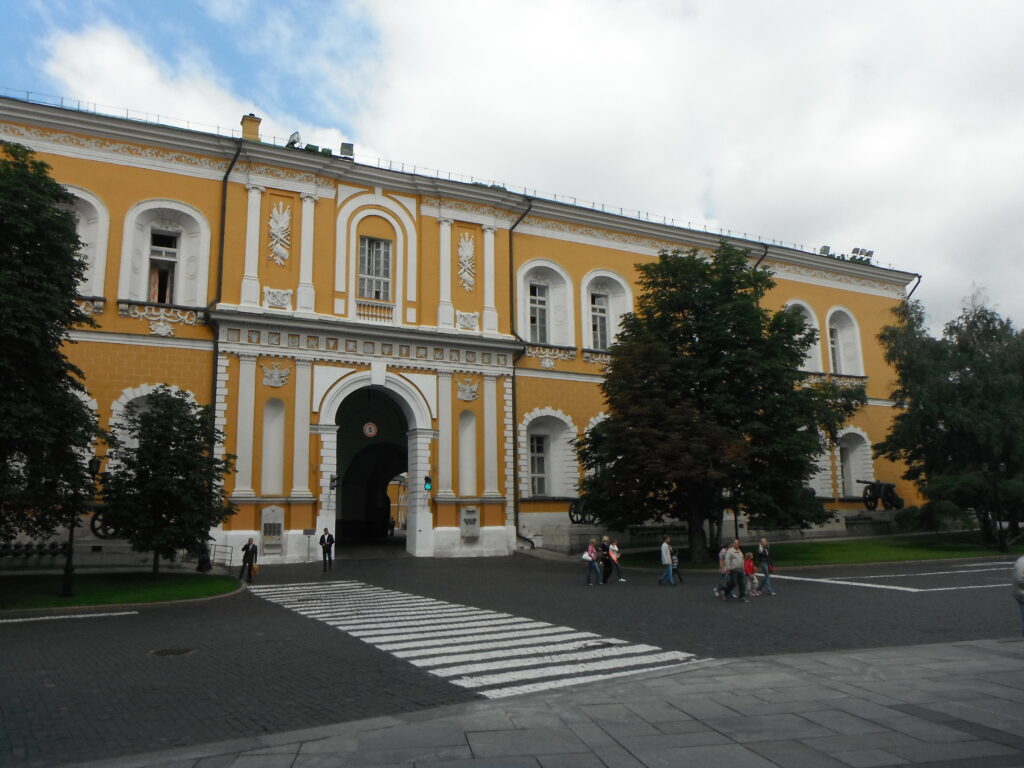
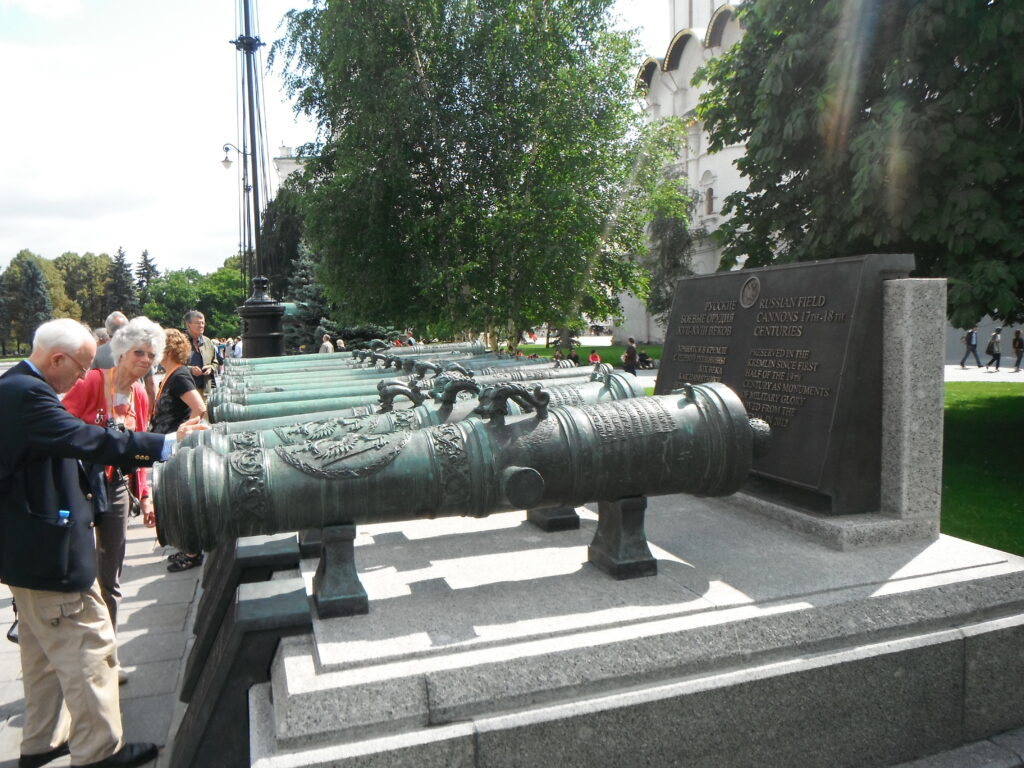
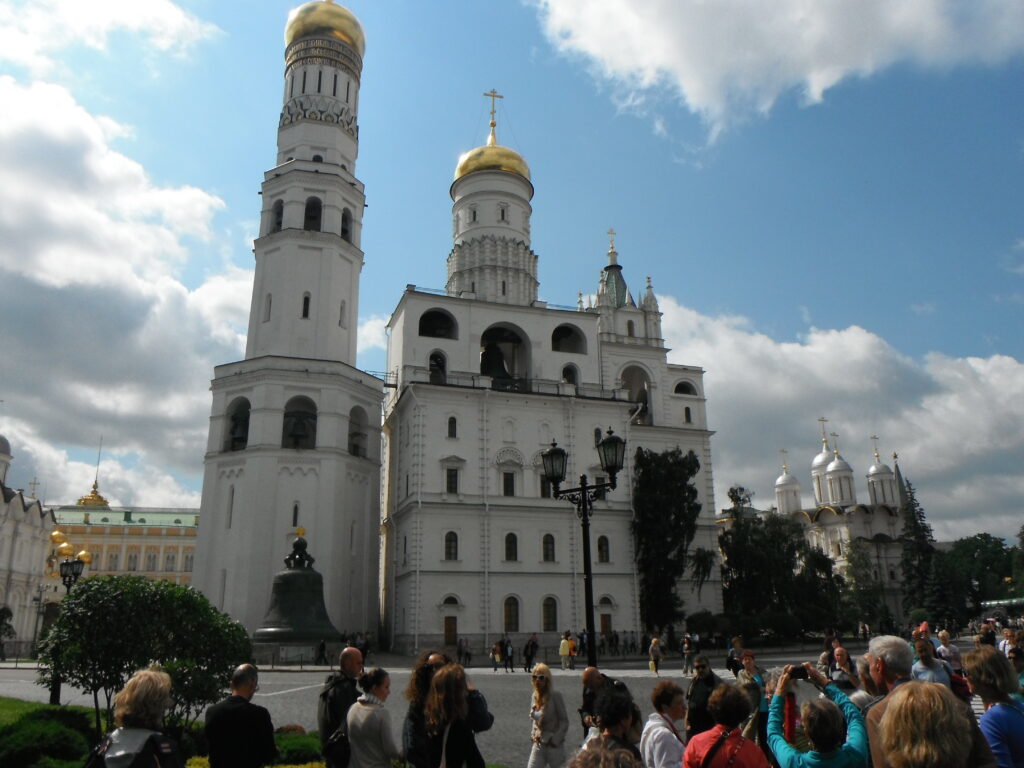
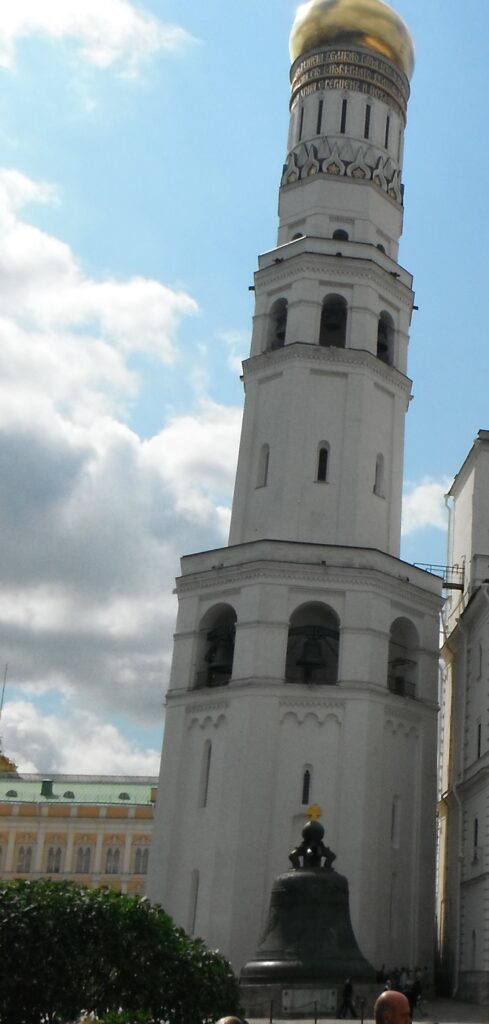
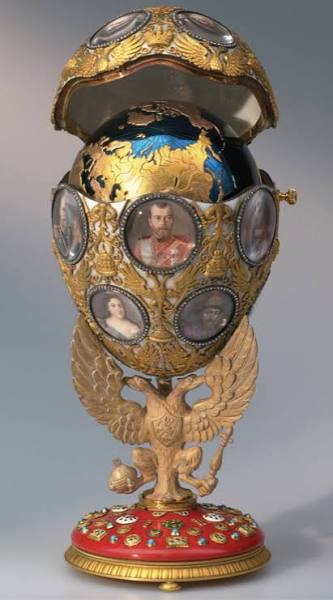
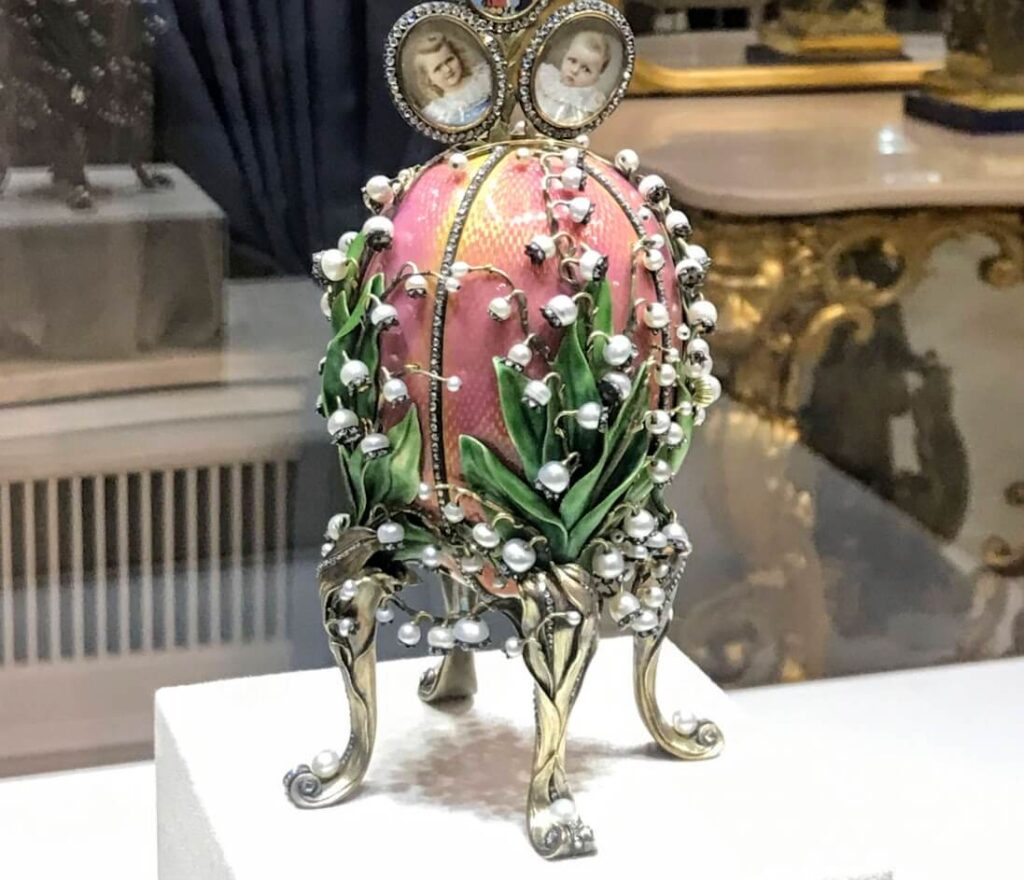
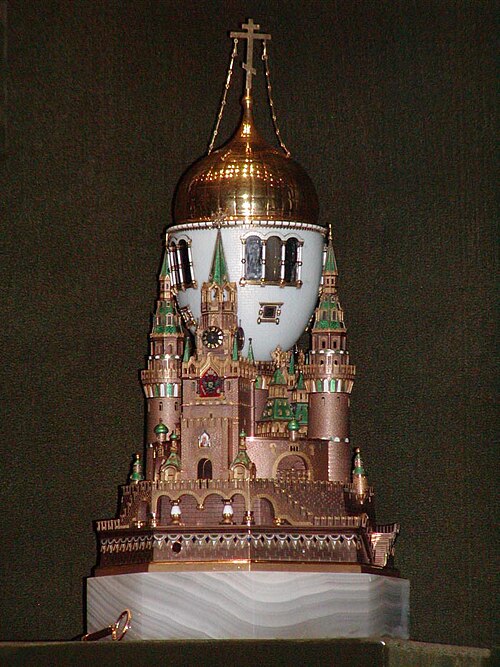
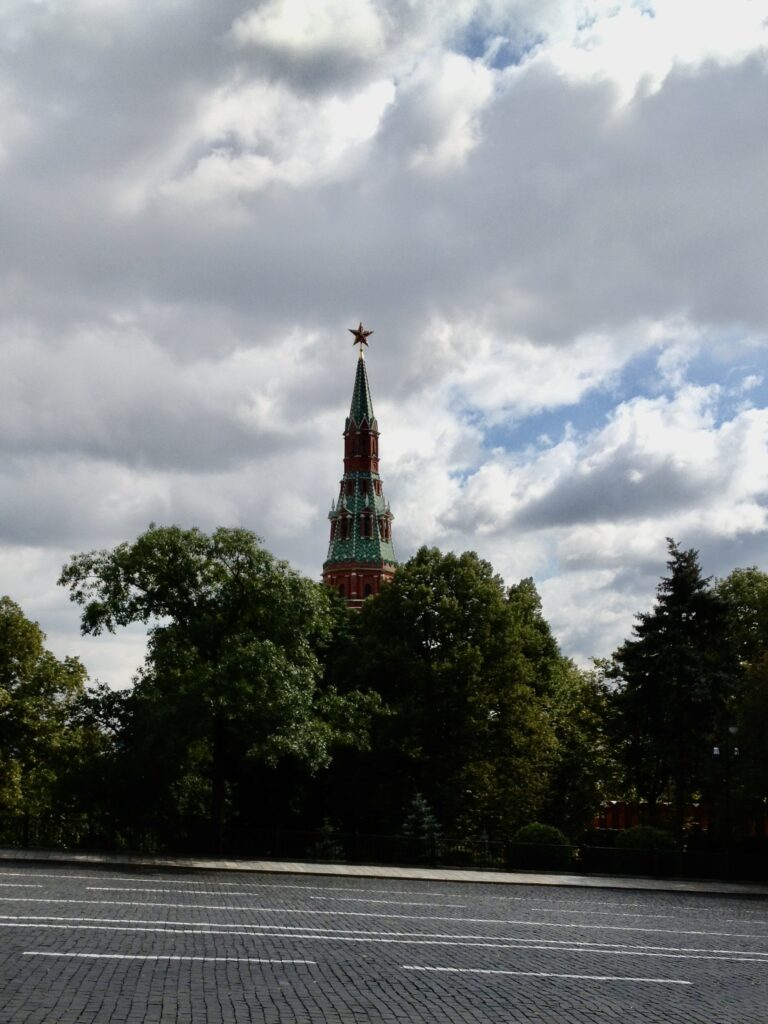
At 2 we met up with our group and headed to the bus to go to the Kremlin. Kremlin means fortress. Every city has one. We had to pass through security to get in. We walked around the Kremlin Territory, looking at the walls, the buildings and learning its history. It is on a slope above the Moskva River and covers 70 acres. Over ten churches and palaces lie inside the walls. The first building we saw was the State Arsenal which has house weaponry but it now a barracks. Along the front are canons captured from Napoleon’s armies in 1812. The museum has a large collection of Fabregé Eggs. In front of the arsenal is a triangular shaped building for the Senate. It was used by the Communist Party and Bolsheviks when they were in power. Beside the Church of the Twelve Apostles was the 40-ton Emperor Canon. It is the world’s largest canon still in existence and was cast in 1586 and never fired. Next was the Emperor Bell—the largest Bell in the world. It is 20 feet high and weights 210 tons. Designed in1733, it’s surface has portraits of czars and icons. The bell broke before it could ever be used. Behind the Emperor Bell is the three-tiered bell tower of Ivan the Great, containing 21 bells.
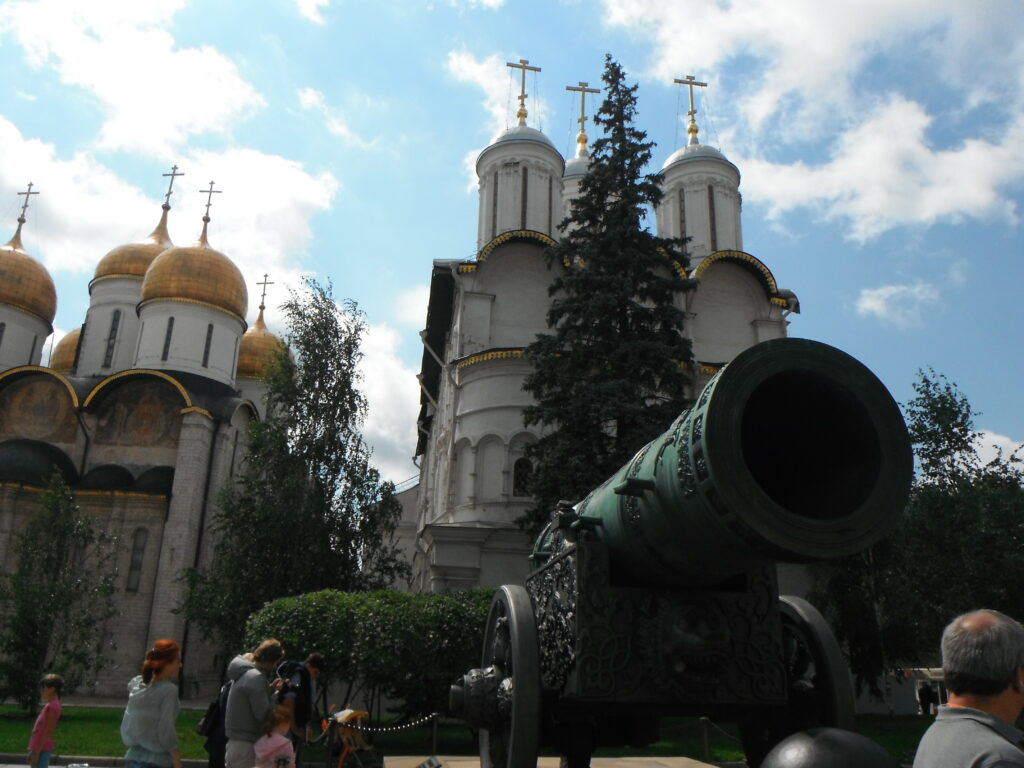
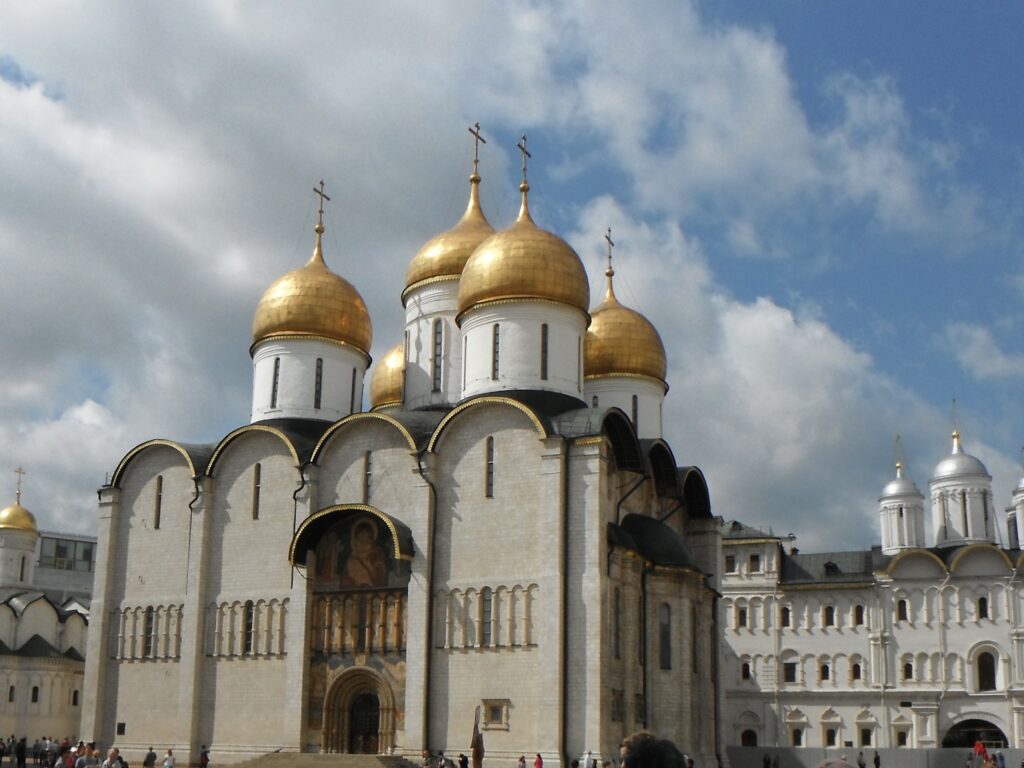
Our next stop in the Kremlin was Cathedral Square. The Kremlin’s main church, The Cathedral of the Assumption (or The Cathedral of the Dormition of the Virgin), stands in front of the bell tower. It faces the center of Cathedral Square, the oldest square in Moscow. It was commissioned by Ivan the Great in the early 14th century and built by the Italian Architect Fiorvanti. The cathedral combines Italian Renaissance and Byzantine traditions. Its icons and frescos date back to 1481. The iconostasis dates from 1652. The cathedral represented the highest expression of religious architecture in Russia with perfect proportion and five gilded domes. For 400 years it was the main cathedral of Russia where czars were crowned and buried.
The five-domed Cathedral of Archangel Michael was commissioned in 1505 by Ivan III. The archangel Michael was considered the guardian of Moscow princes. It combines Early Russian and Italian Renaissance architecture and is the burial site of Russia’s princes and tsars from 1340. Its frescos were painted from 1652 to 1566 and depict aspects of Russian life. The iconostasis is filled with 15th to 17th century icons. Nearly 50 sarcophagi line its walls.
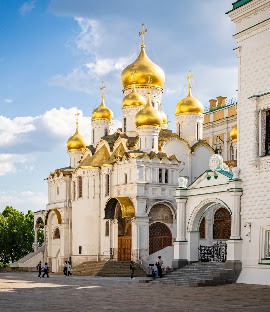
The Cathedral of the Annunciation was built from 1484 to 1489 on the spot of an older cathedral of the same name, which had been rebuilt in 1416 replacing a wooden church from the 13th century destroyed by one of the Moscow fires. It is built of white stone with jasper floors and has nine domes. Destroyed by fire in 1547, Ivan the Terrible rebuilt it in 1564 with four additional chapels. Frescos date back to 1508 and include themes from the Book of Revelation as well as pictures of Greek philosophers.
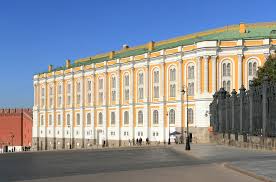
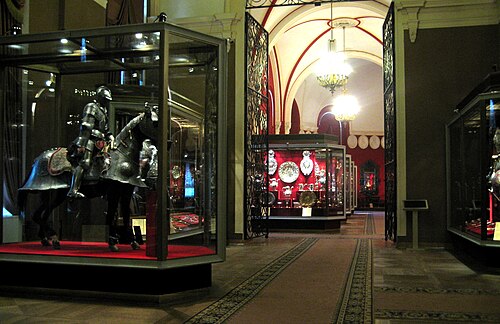
After the churches, we went to the Armory Museum to view the treasures of the Russian Princes and Tsars over the centuries. It is the oldest museum in Russia. This building was commissioned by Nicolas I, designed in 1844 and completed in 1851. It represents the wealth accumulated by Russian princes and tsars over many. Among the treasures are ten Fabergé eggs.
Moscow Sights
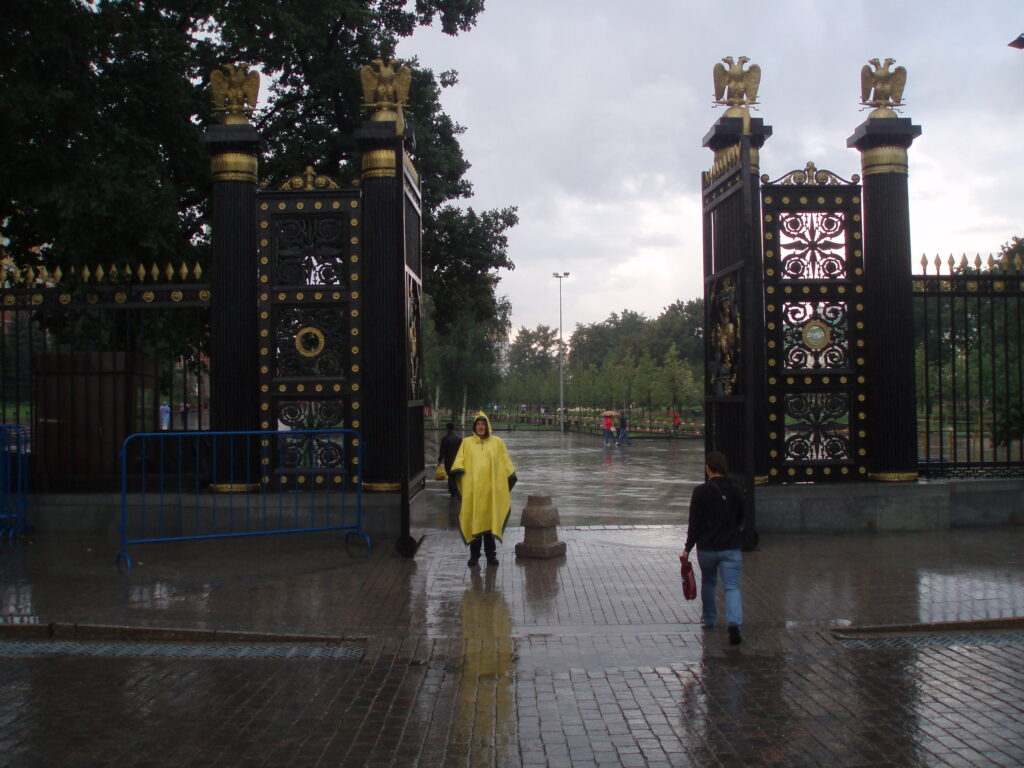
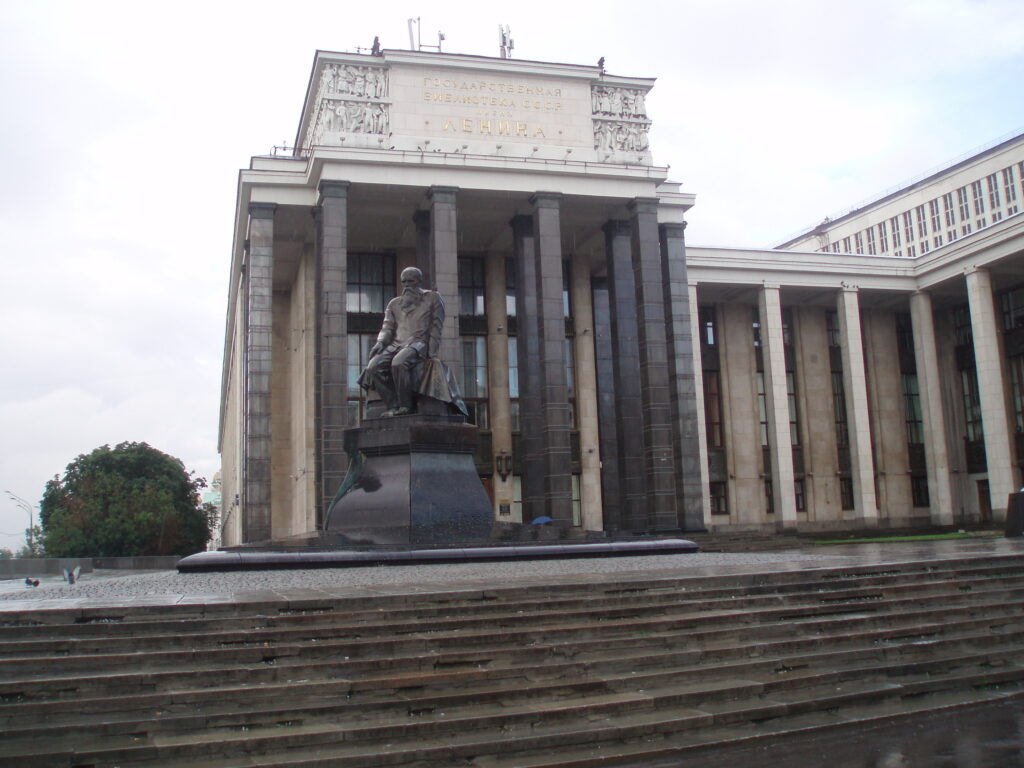
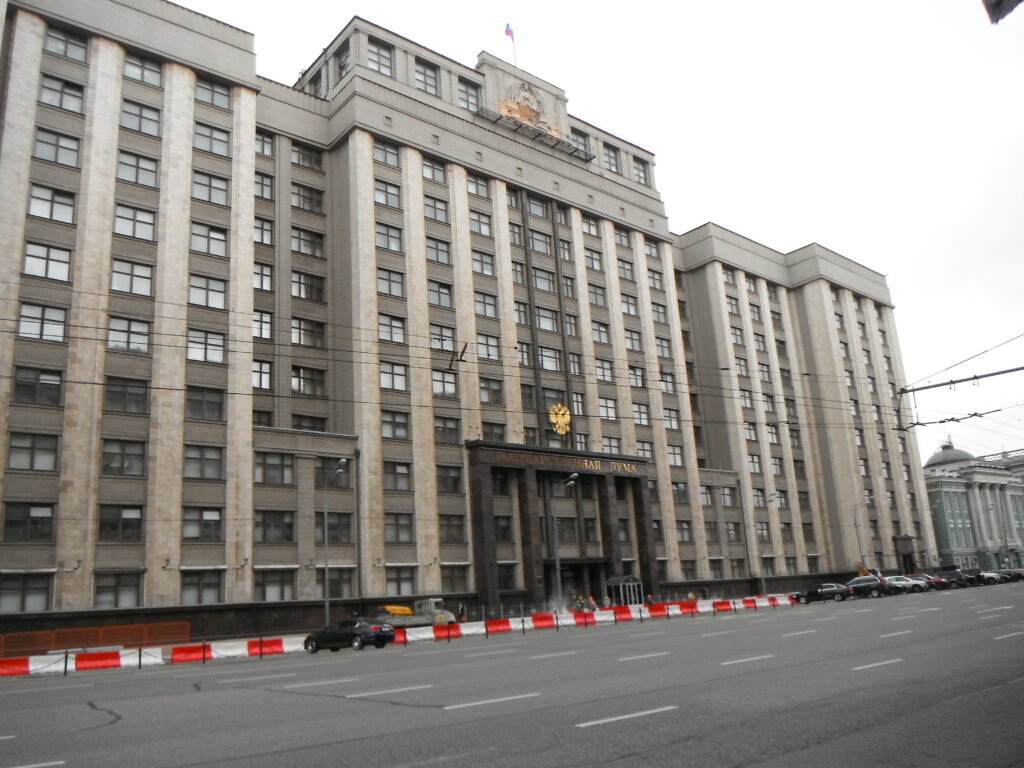
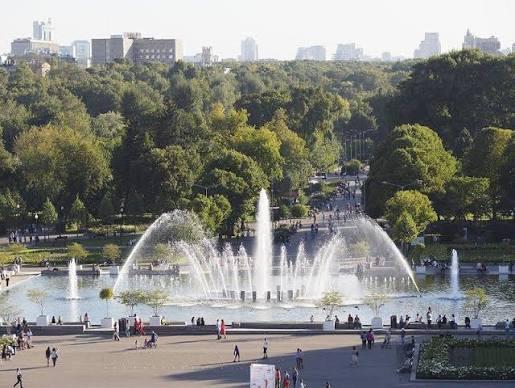
Our bus ride took us through the streets of Old Moscow, including Gorky Park. Then we returned to the boat to have the Captain’s Welcome Cocktail Party and Dinner.
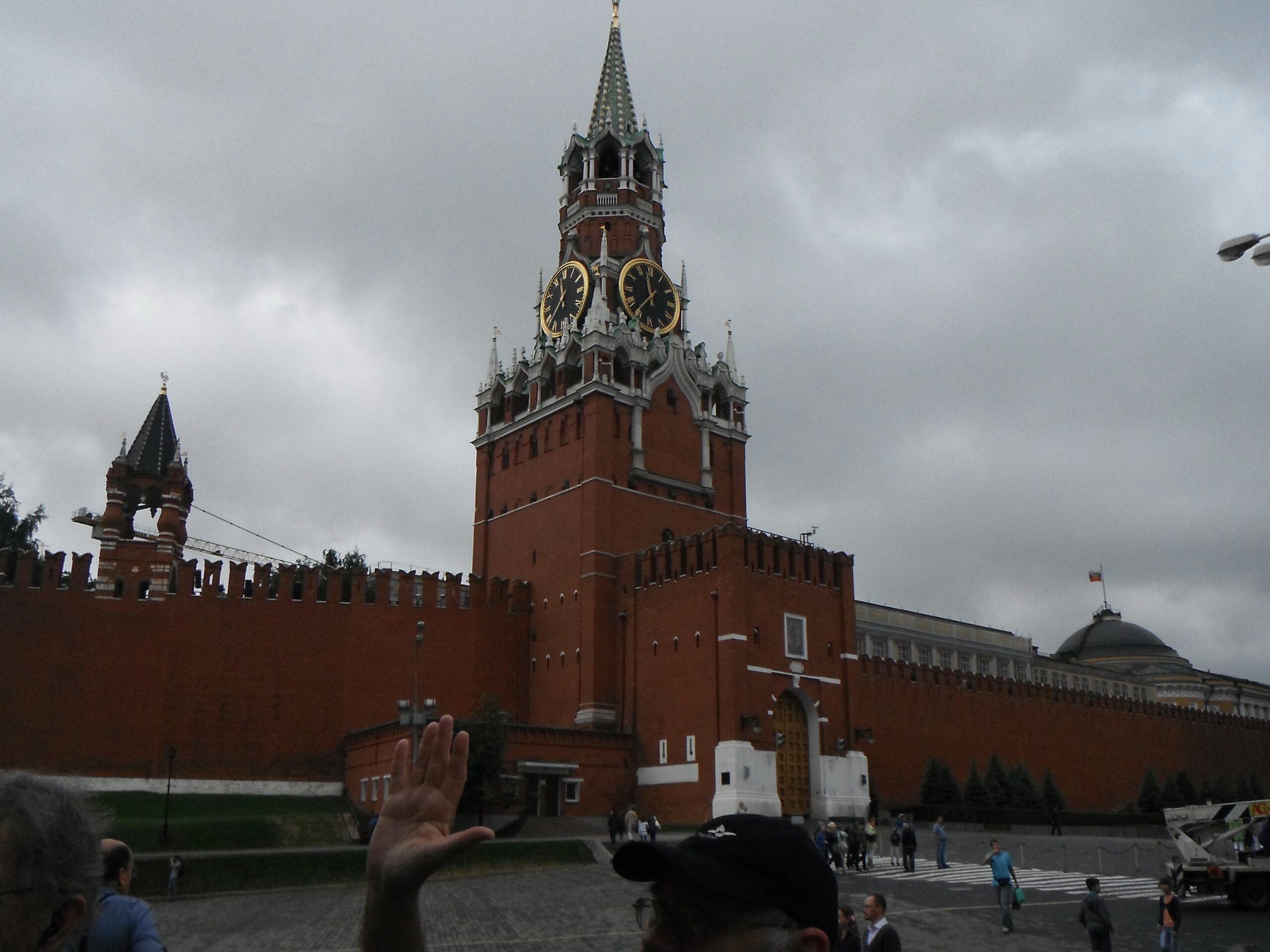
Clock Tower
The ship set sail for Uglich at 7:30 p.m. We moved through the Moscow Canal, which was dug by prisoners in 1937 during the Bolsheviks regime to connect Moscow to the Volga River.
Leave a Reply