Our ship arrived in Civitavecchia at 7 am. From there we were bused to Rome, the capital of Italy and home to over 2.8 million residents. Rome was hot and crowded.
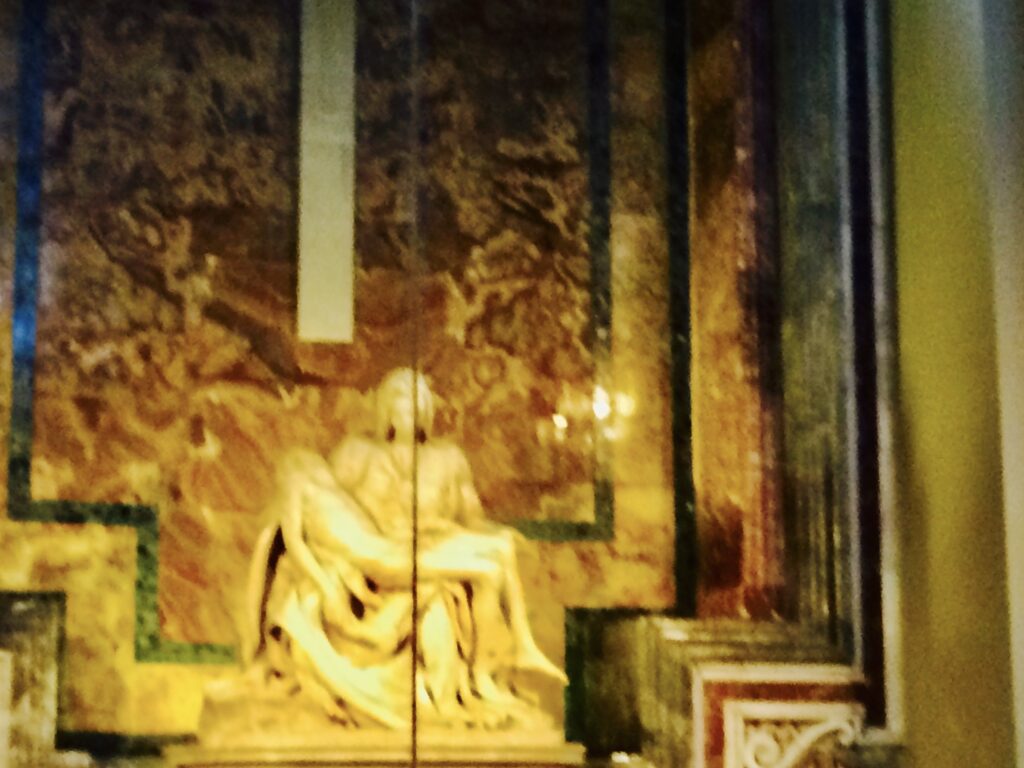
Because of heavy traffic our tour was changed. First we went to Vatican City where we had to wait in line in St. Peter’s Square (in the hot sun) for an hour and a half to see St. Peter’s Basilica. In the square are two stunning fountains, either side of the square. There is also a 40-meter high Egyptian obelisk (including the base and the cross on top), which was bought to Rome in 37 B.C.E. It was made from a single piece of red granite. It was worth the wait. The basilica is built on the tomb of St. Peter. Filled with so much art and historic masterpieces, I felt we had to rush through to be able to meet deadlines. Michelangelo’s famous carving of the Pieta is housed in St Peter’s, protected by bulletproof glass. It was carved from a single slab of marble and was the only work he ever signed.
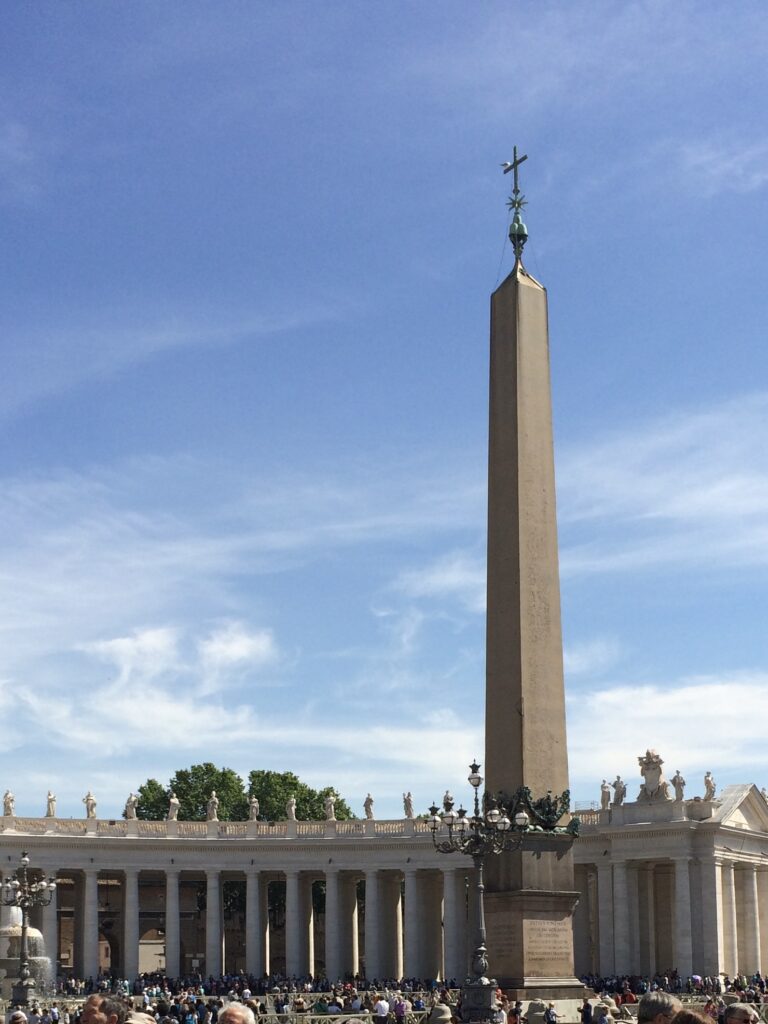
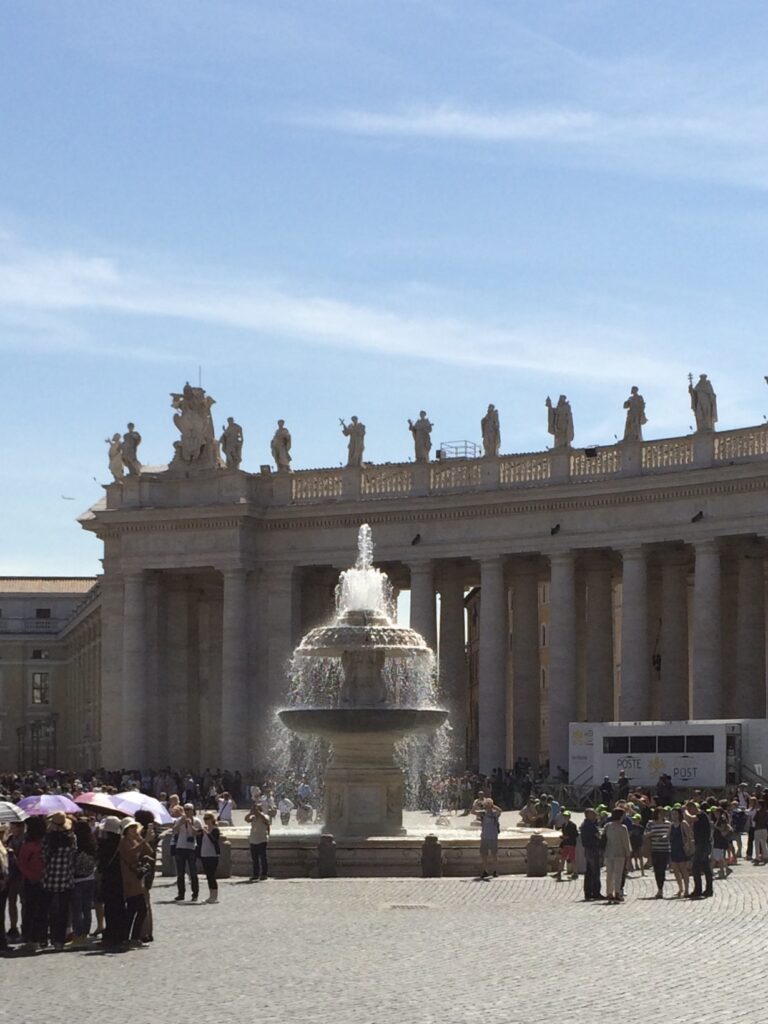
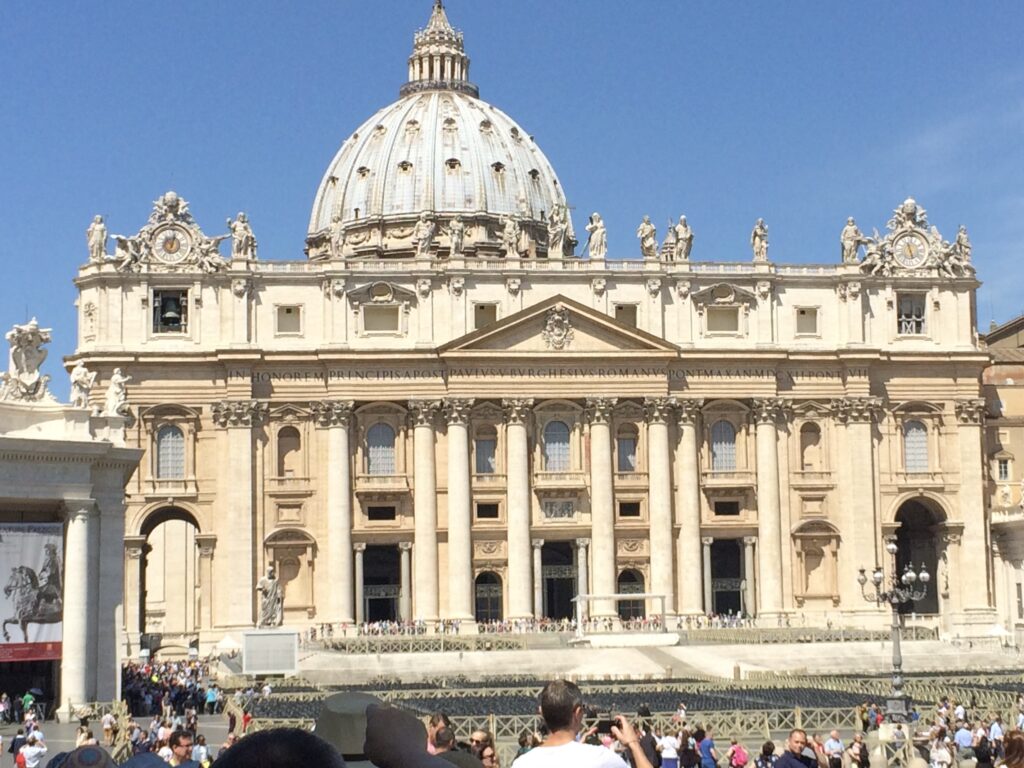
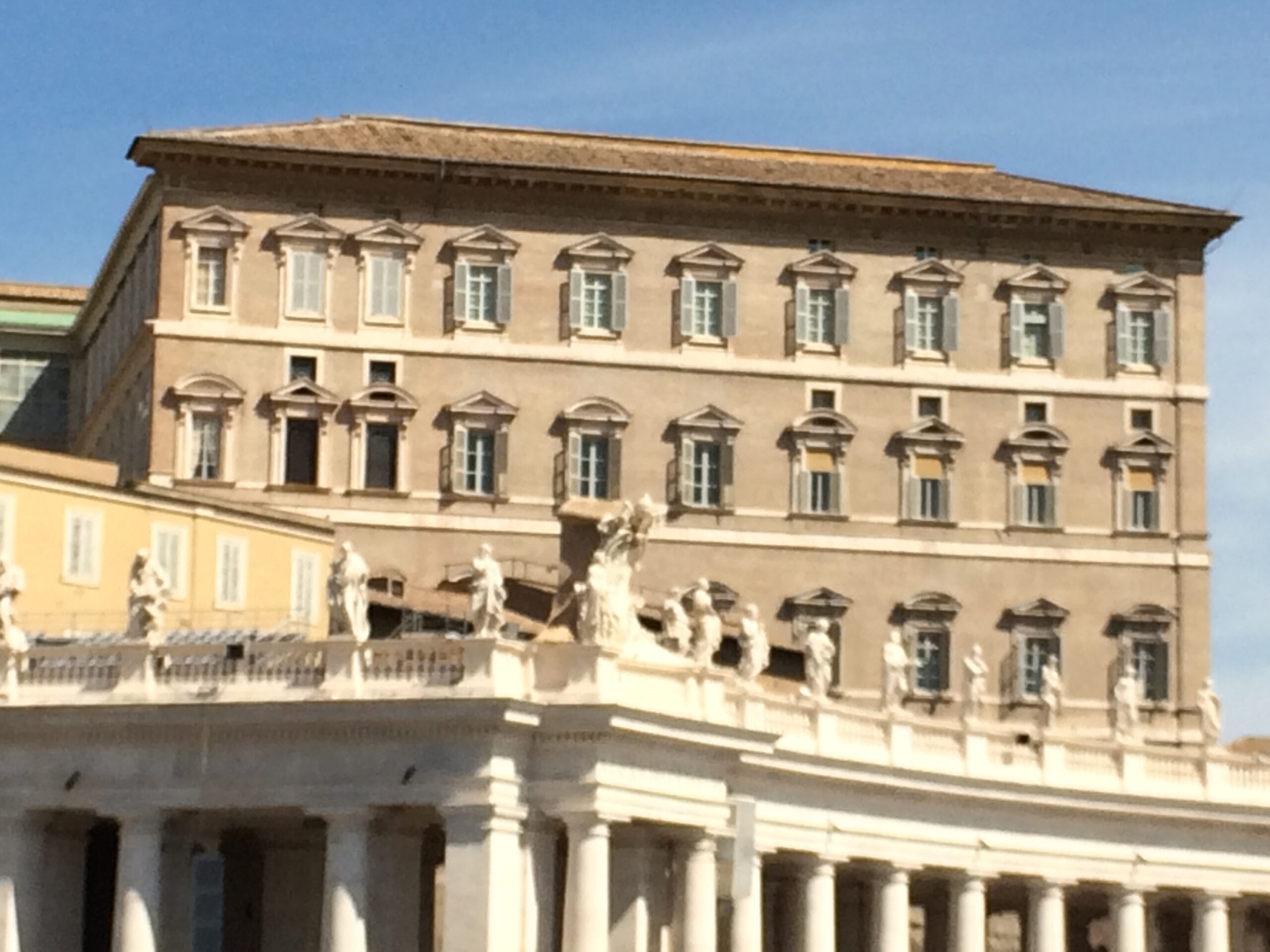
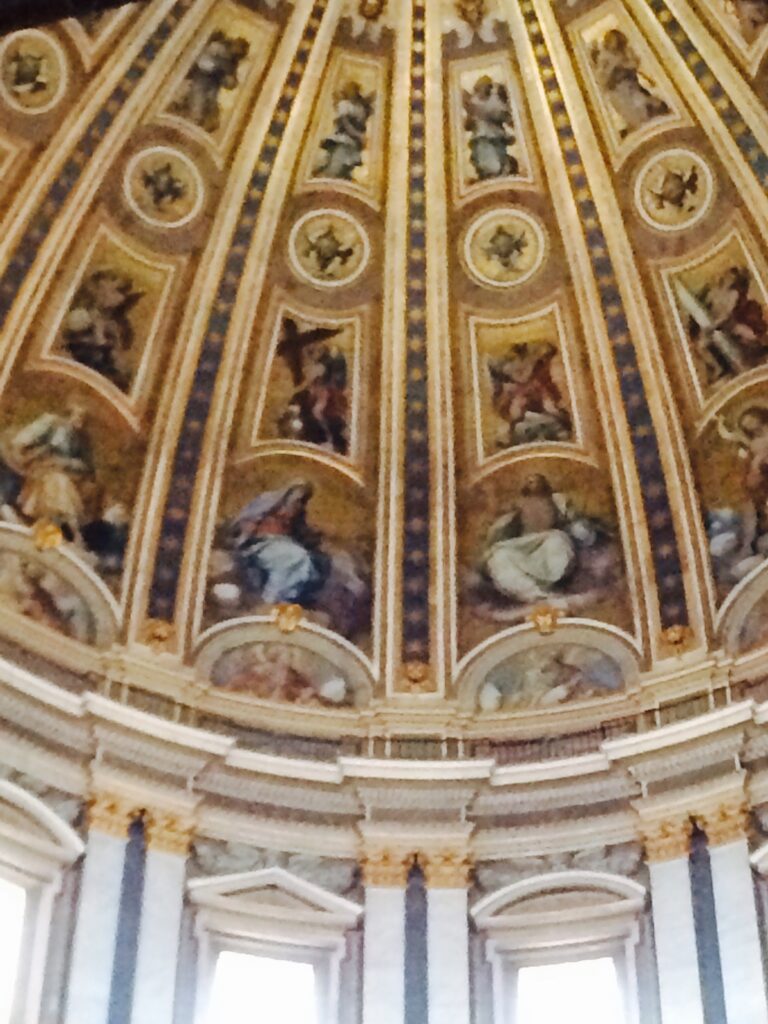
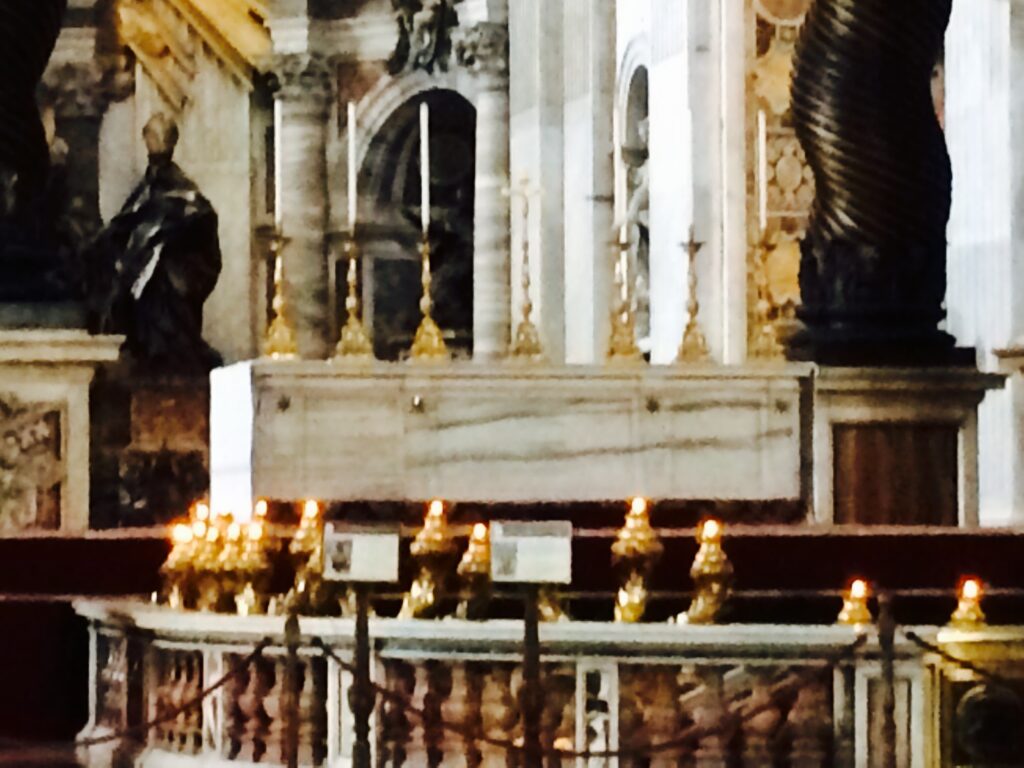
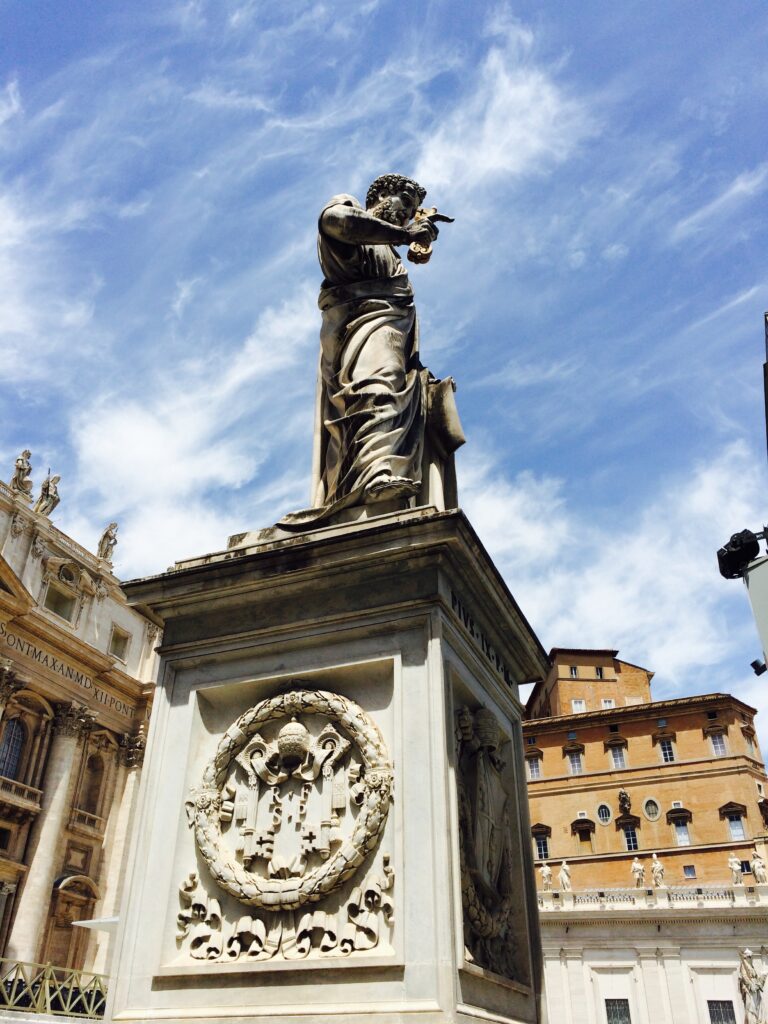
In the courtyard outside St Peter’s, there are 140 statues of saints, which stand upon the colonnades. Each statue is 3.10 meters tall and they have been standing since 1670. The Swiss Guard, the world’s smallest army, was formed in 1506 and still exists to protect the Pope, the Vatican, and St Peter’s Basilica. Situated directly under the dome in the Basilica stands a 29-meter high bronze canopy, St. Peter’s Baldachin. Lorenzo Bernini started work on the Baldachin in 1623, and it was completed 11 years later in 1634. The Baldachin stands over the papal altar, which is directly above St Peter’s tomb. Only the Pope may serve at the altar. A bronze Statue of St Peter seated on a throne, created in 1300 by Arnolfo di Cambio, has been situated in the Basilica since 1605. The tradition of pilgrims either touching or kissing the statue’s feet has caused the right foot to wear down.
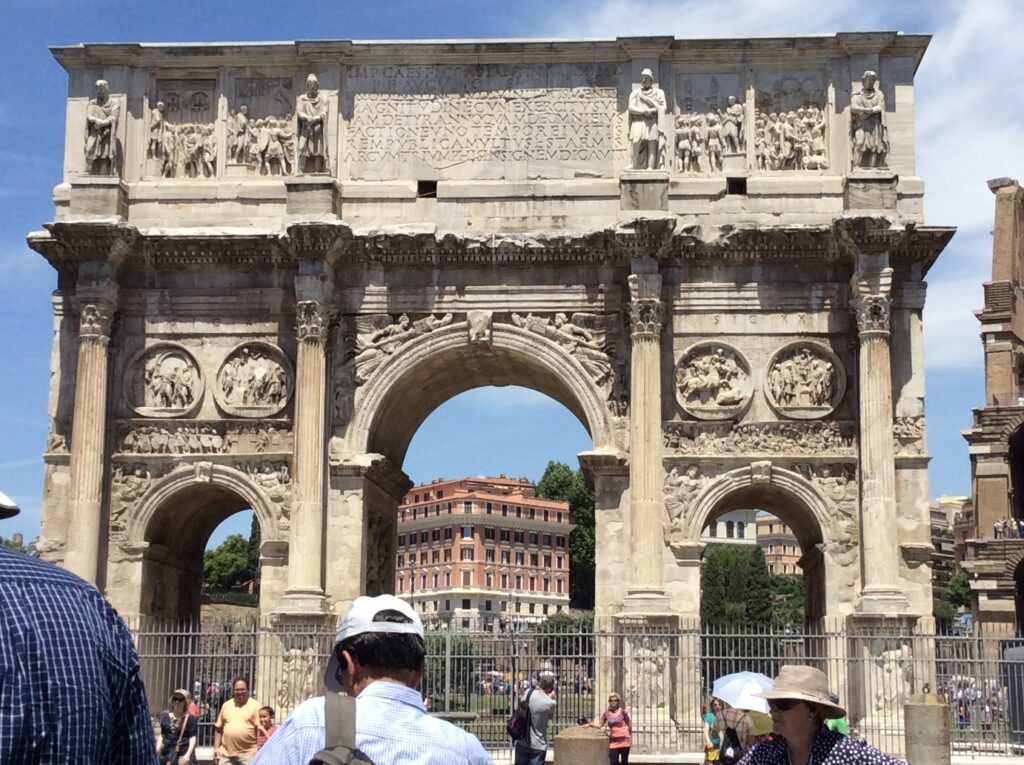
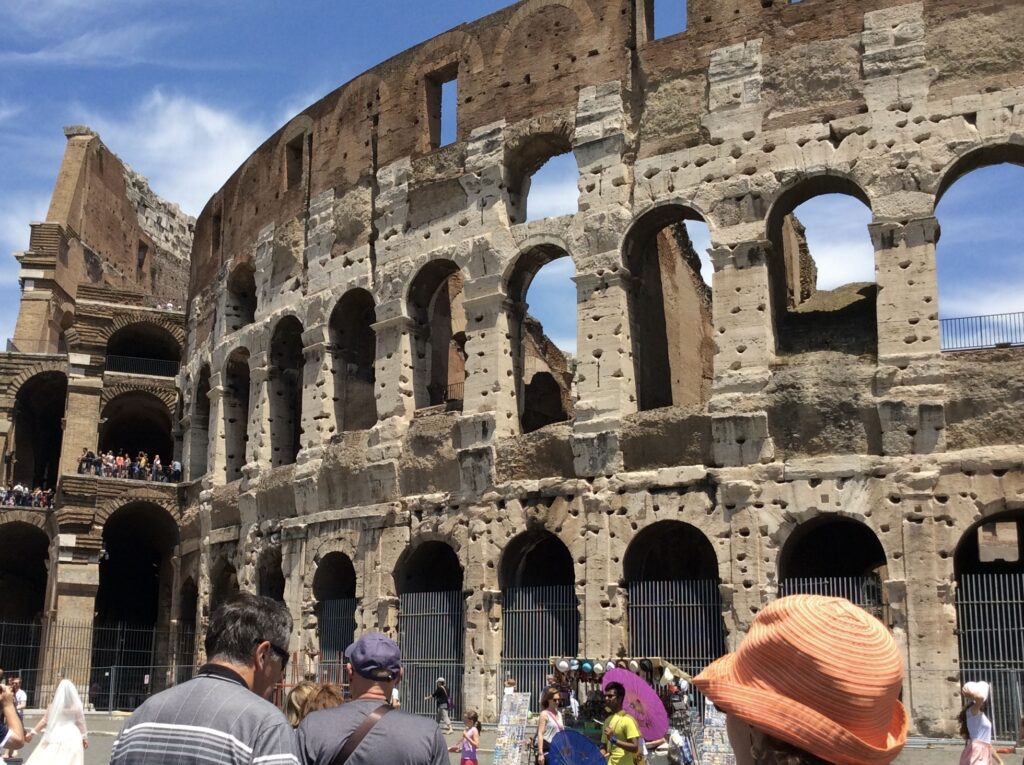
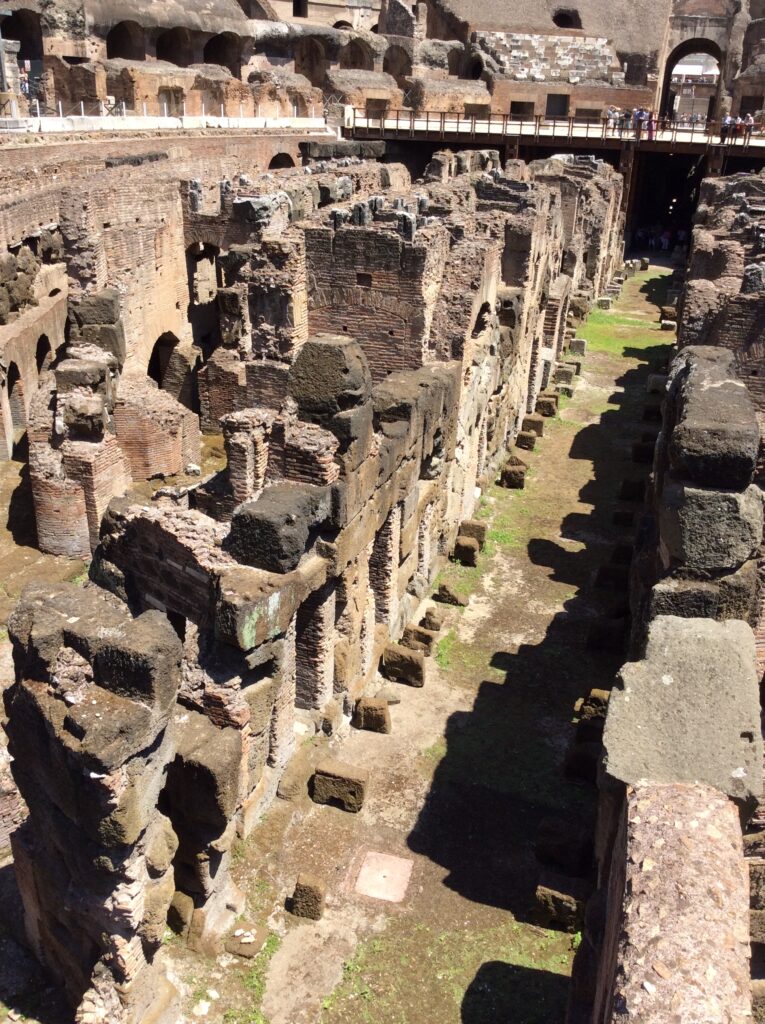
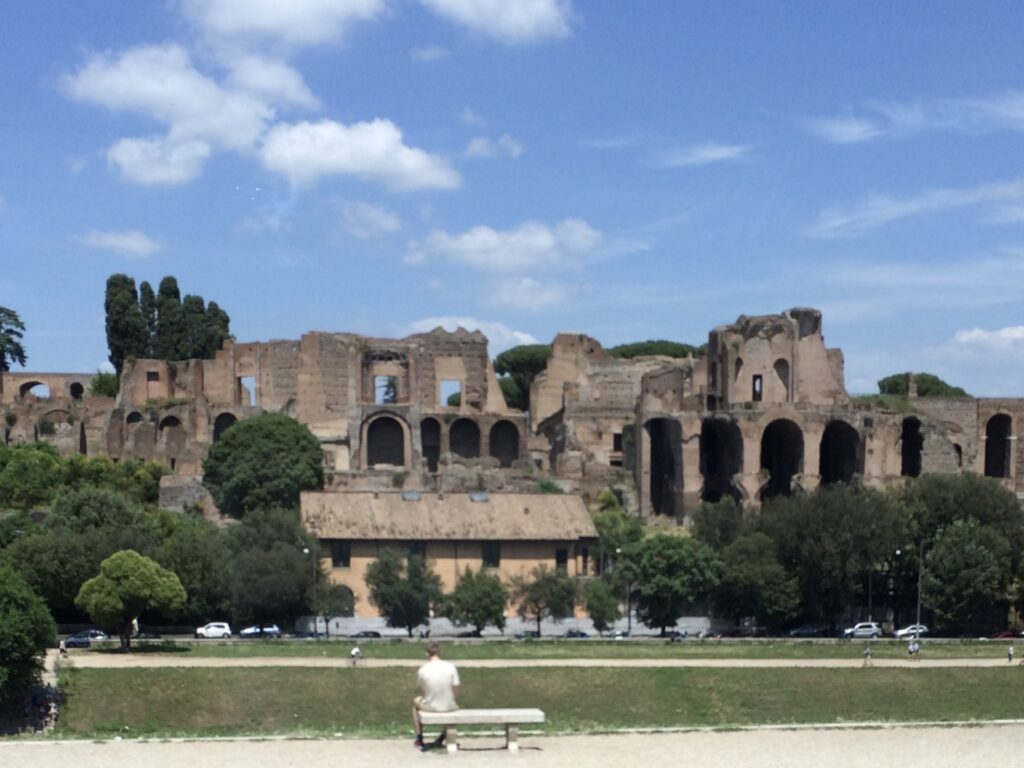
Next we went to the Coliseum and toured it. Unlike when I was here in 1965, the ruins were cordoned off, so we had to walk around the perimeter rather than wander though.
Built of travertine, tuff, and brick-faced concrete, it is the largest amphitheater ever built. Just outside the Coliseum is the Arch of Constantine, a 25m high monument built in CE 315 to mark the victory of Constantine over Maxentius at Pons Milvius.
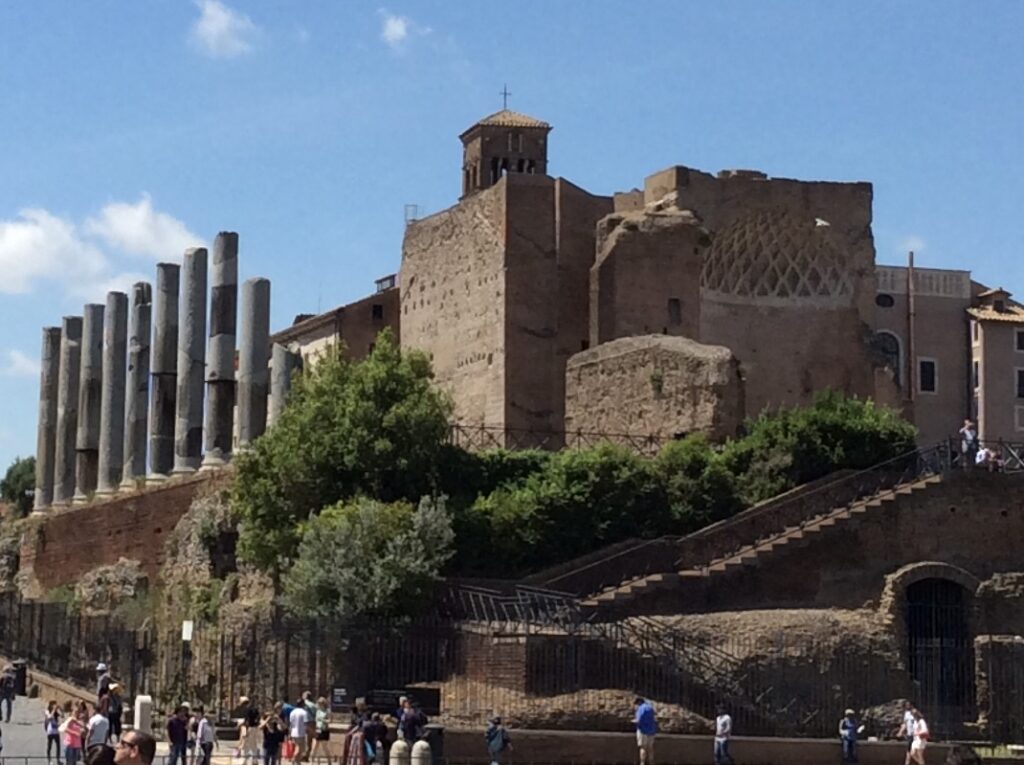
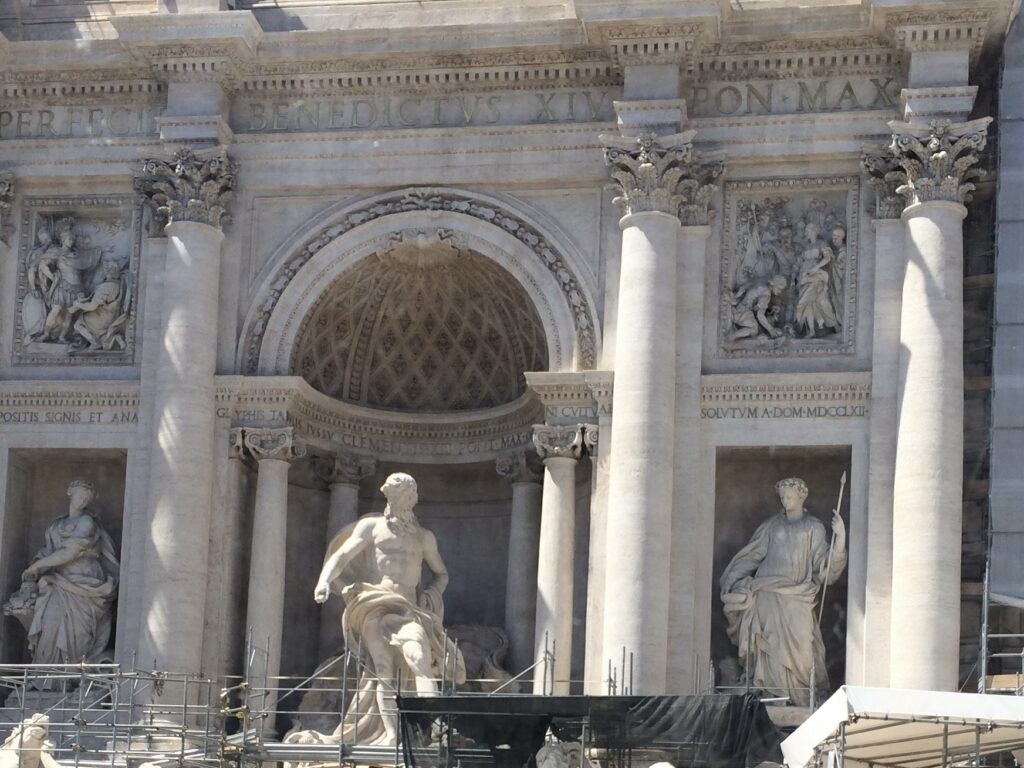
Under Restoration
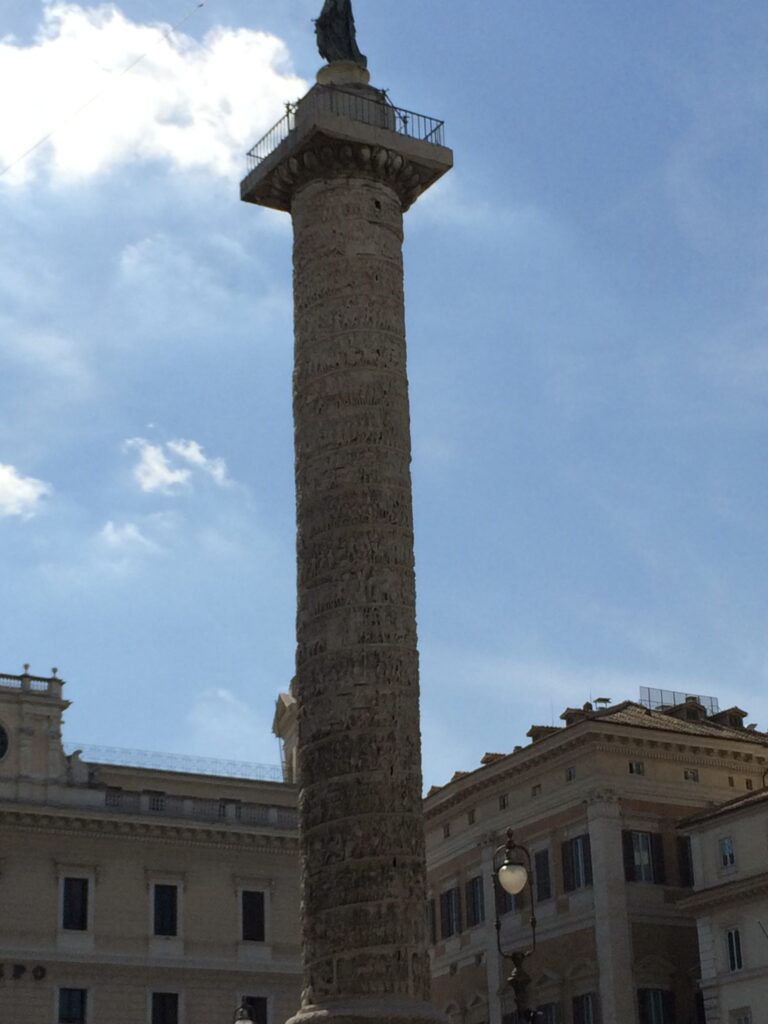
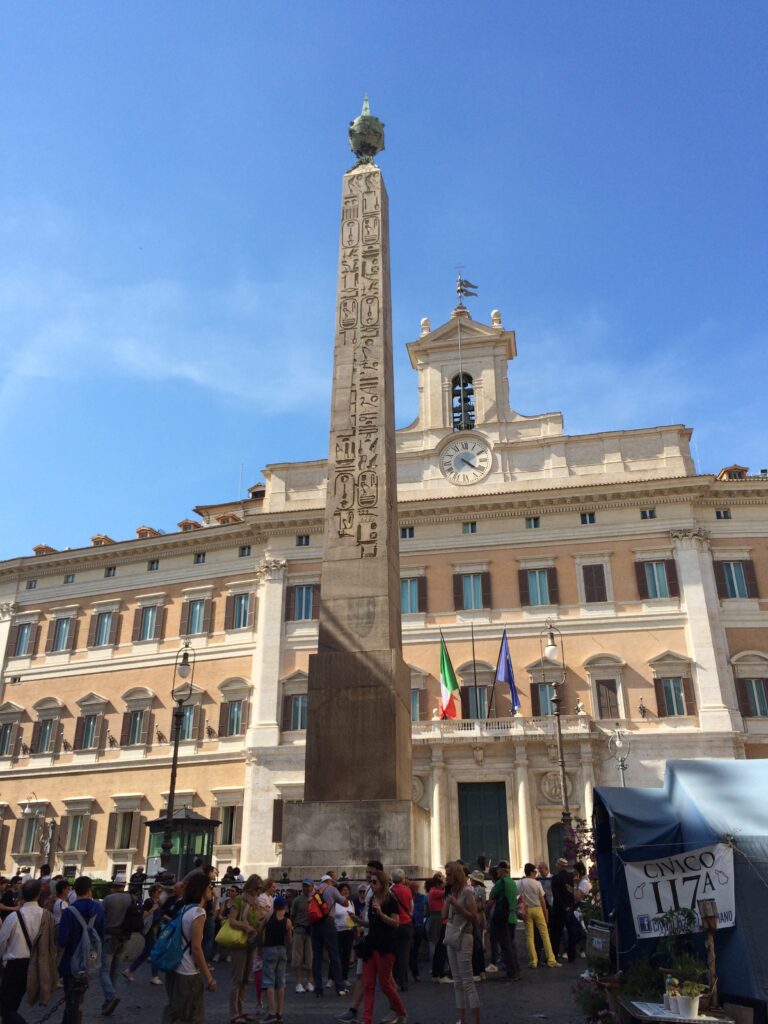
Then it was on to Trevi Fountain, which was mobbed with people. The fountain was under restoration, so there was really nothing to see. Diane and I found a small café on a side street near the fountain for lunch. Then we walked to Colonna Square where a second-century marble column celebrates Rome’s victory over the Germans. We passed the Palazzo Montecitorio en route to the Pantheon.
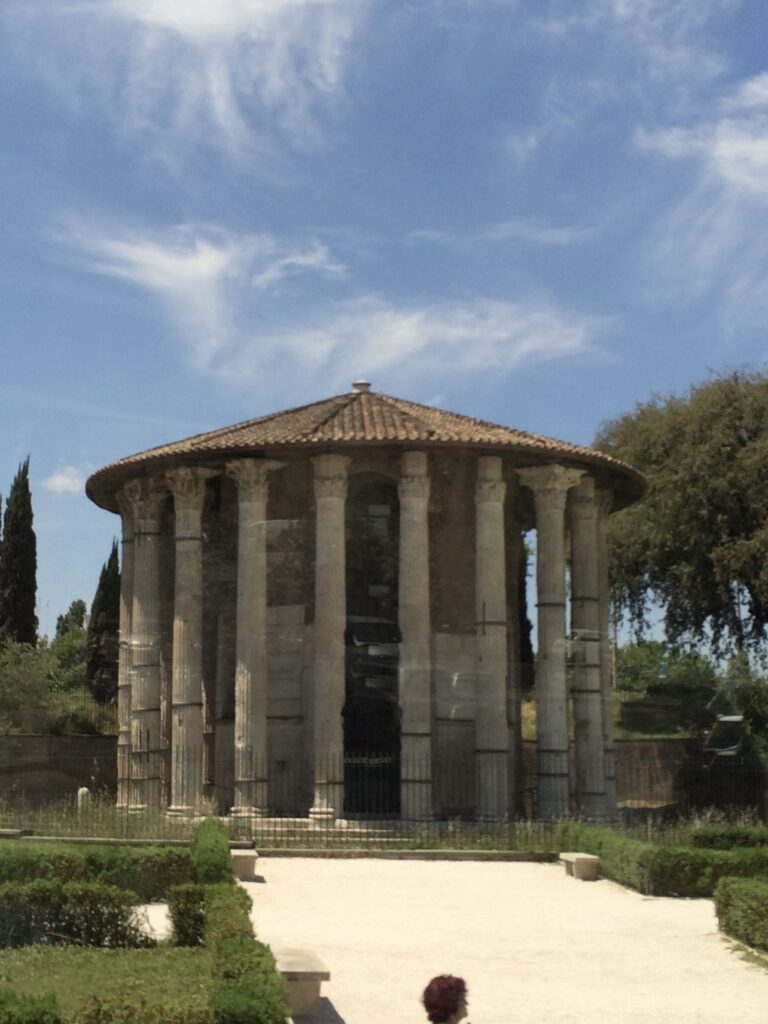
In front of the Pantheon is the beautiful “Fountain of the Pantheon,” designed by the famous architect Giacomo Della Porta in 1575 and sculpted out of marble by Leonardo Sormani.
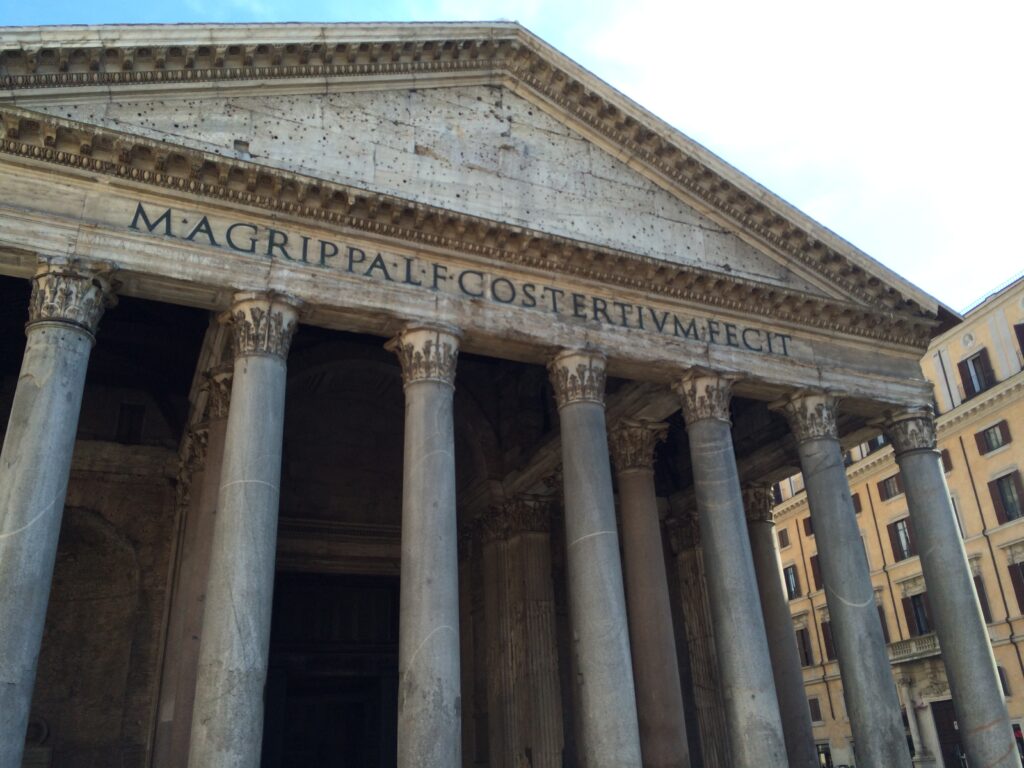
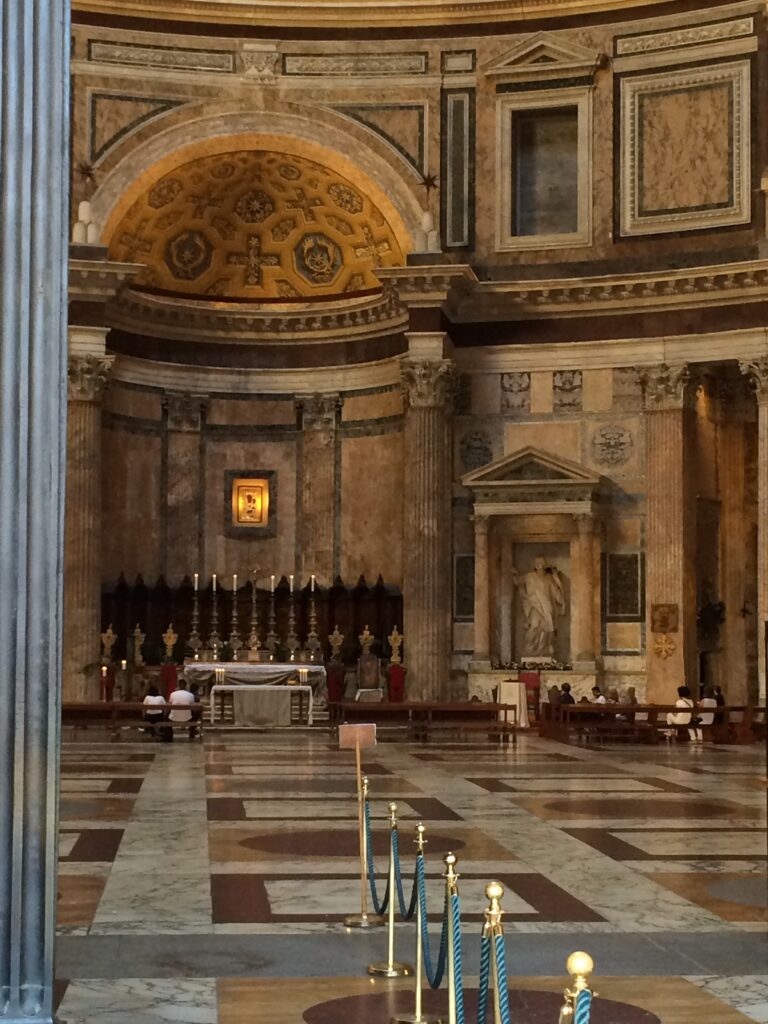
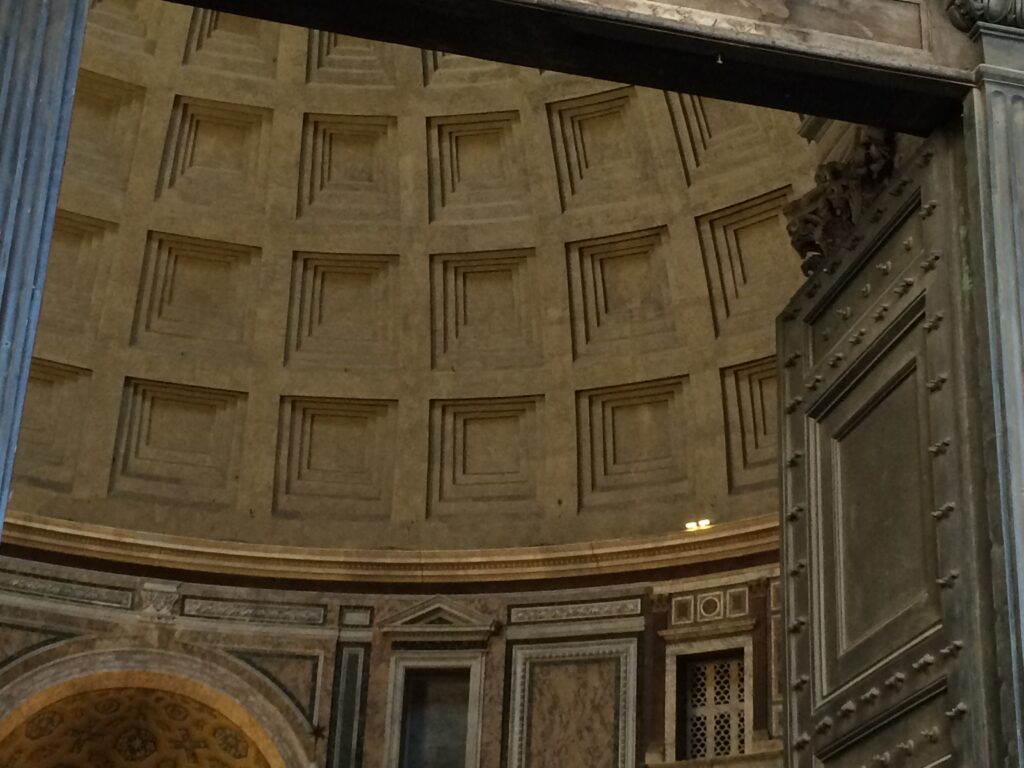
Even today, almost 2000 years after its construction, the breathtaking pantheon is a remarkable building to see. The spectacular design, proportions, elegance, and harmony are a striking reminder of the architecture of the great Roman Empire. When Michelangelo saw this wonder for the first time he said that it looks more like the work of angels, not humans. The most fascinating part of the Pantheon is its giant dome, with its famous hole in the top (The eye of the Pantheon, or oculus). The dome was the largest in the world for 1,300 years, and until today it remains the largest unsupported dome in the world. The 16 massive Corinthian columns supporting the portico weigh 60 tons each.
In the year 609, the Pantheon was the first pagan temple to be transformed into a church; therefore it was saved from being destroyed during the middle Ages. Today it is a church dedicated to St. Mary of the Martyrs.
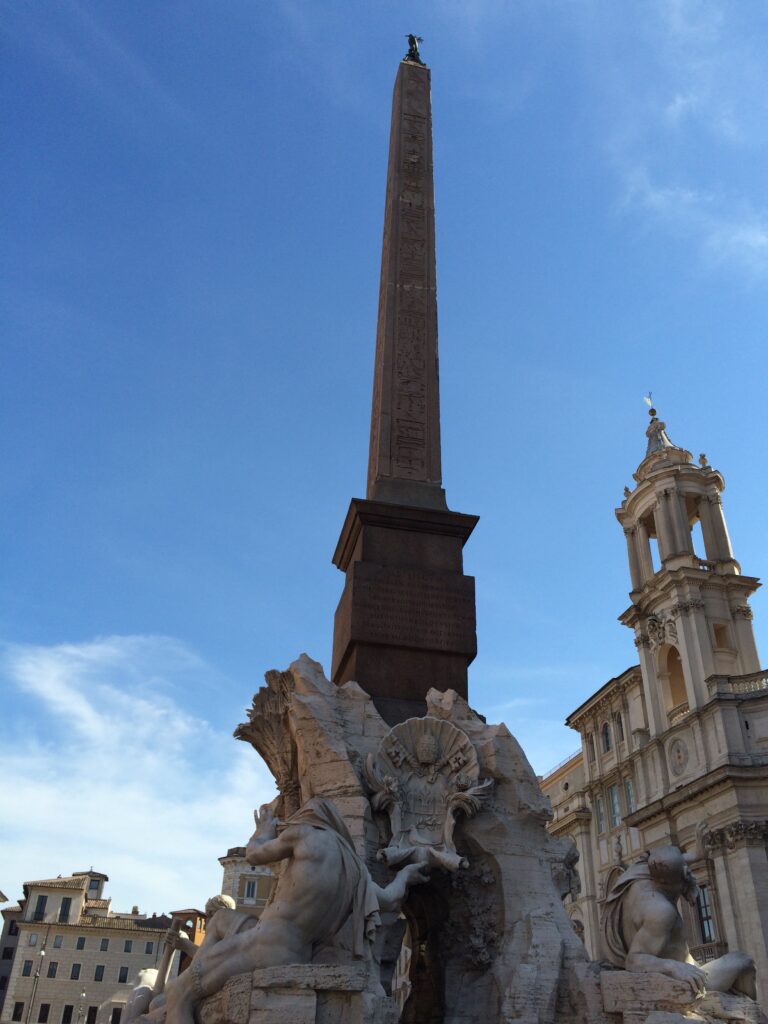
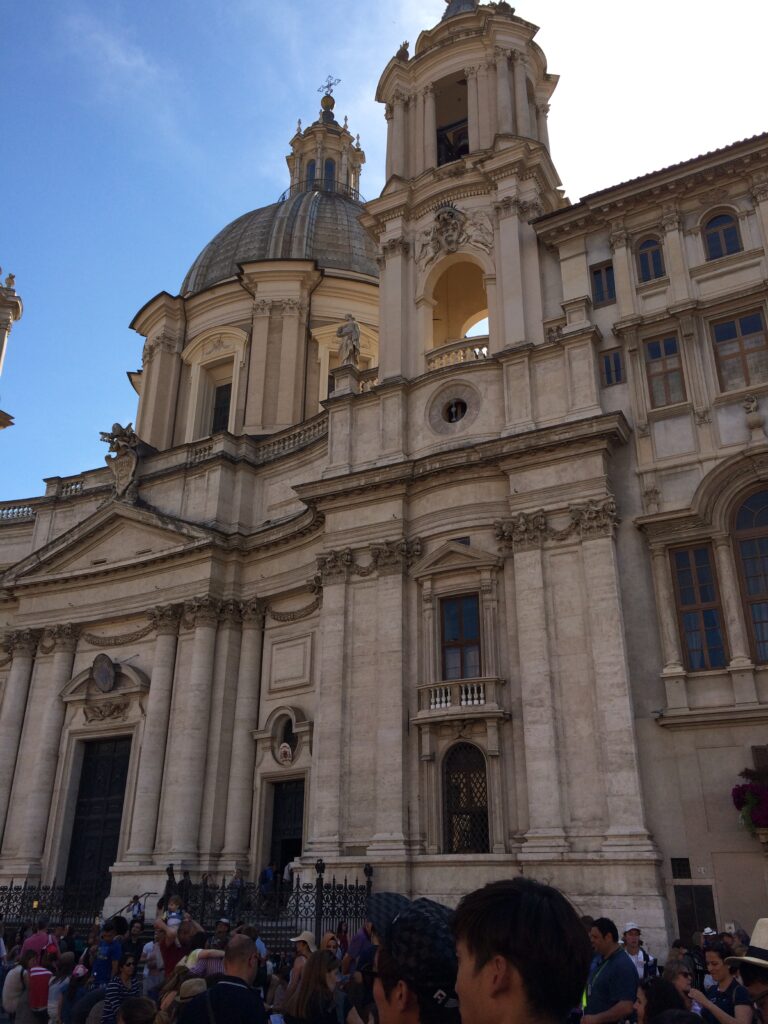
After our tour of the Pantheon, we stopped at Piazza Navona, the pride of Baroque Rome. The public square was built on the site where the Stadium of Domitian (Circus Agonalis), founded in 86 CE, once stood. It could hold approximately 20,000 spectators, which came here to see different athletic competitions. Erected in the center of Piazza Navona, the Fontana dei Quattro Fiumi (Fountain of the Four Rivers) was designed by Bernini in 1651. The four statues represent the most important rivers of the continents where Christianity had spread: the Nile, Danube, the Ganges, and Rio de la Plata. The Fountain of the Moor, sculpted by Giacomo Della Porta and later perfected by Bernini, who added the figure of the Moor, is on the southern side of the square. The third fountain, the Fountain of Neptune, was also created by Antonio Della Bitta and Gregoria Zappala. The square is surrounded by restaurants and shops, giving Piazza Navona a lively and delightful atmosphere. Clearly, it was an exhausting day.
Leave a Reply