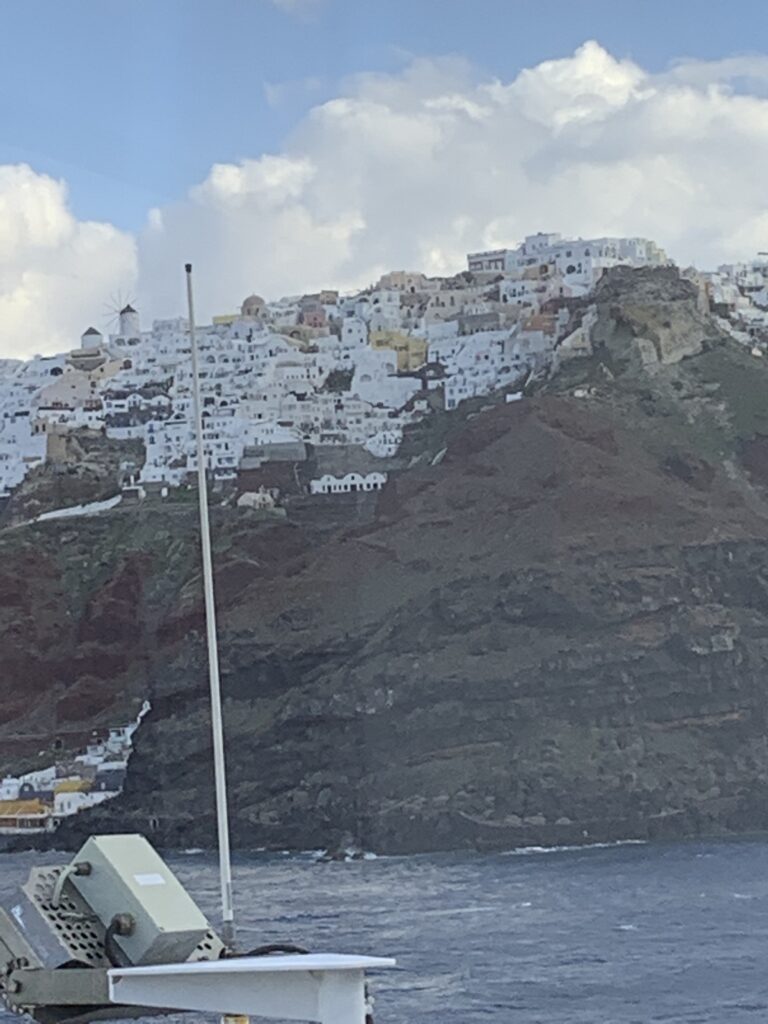
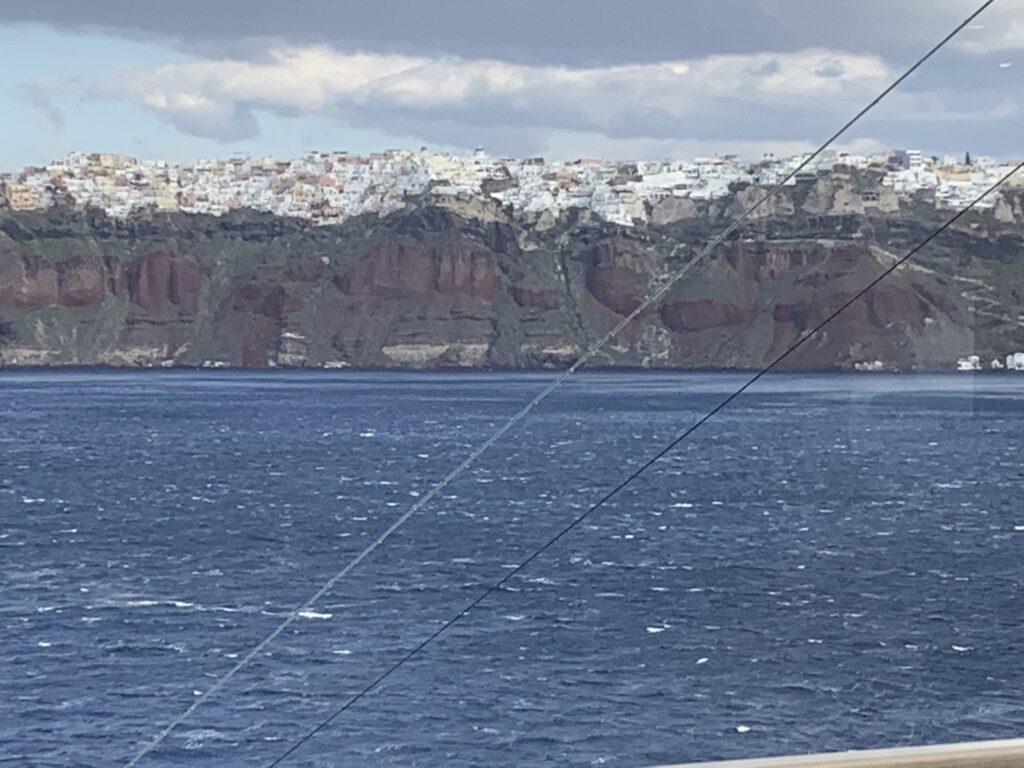
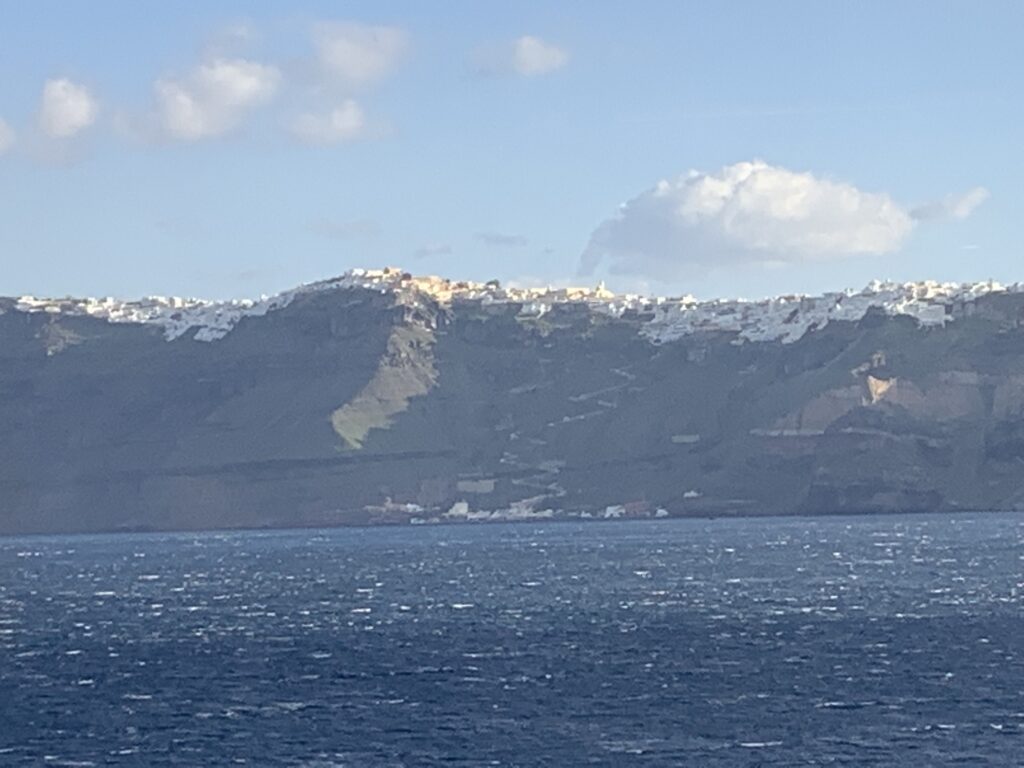
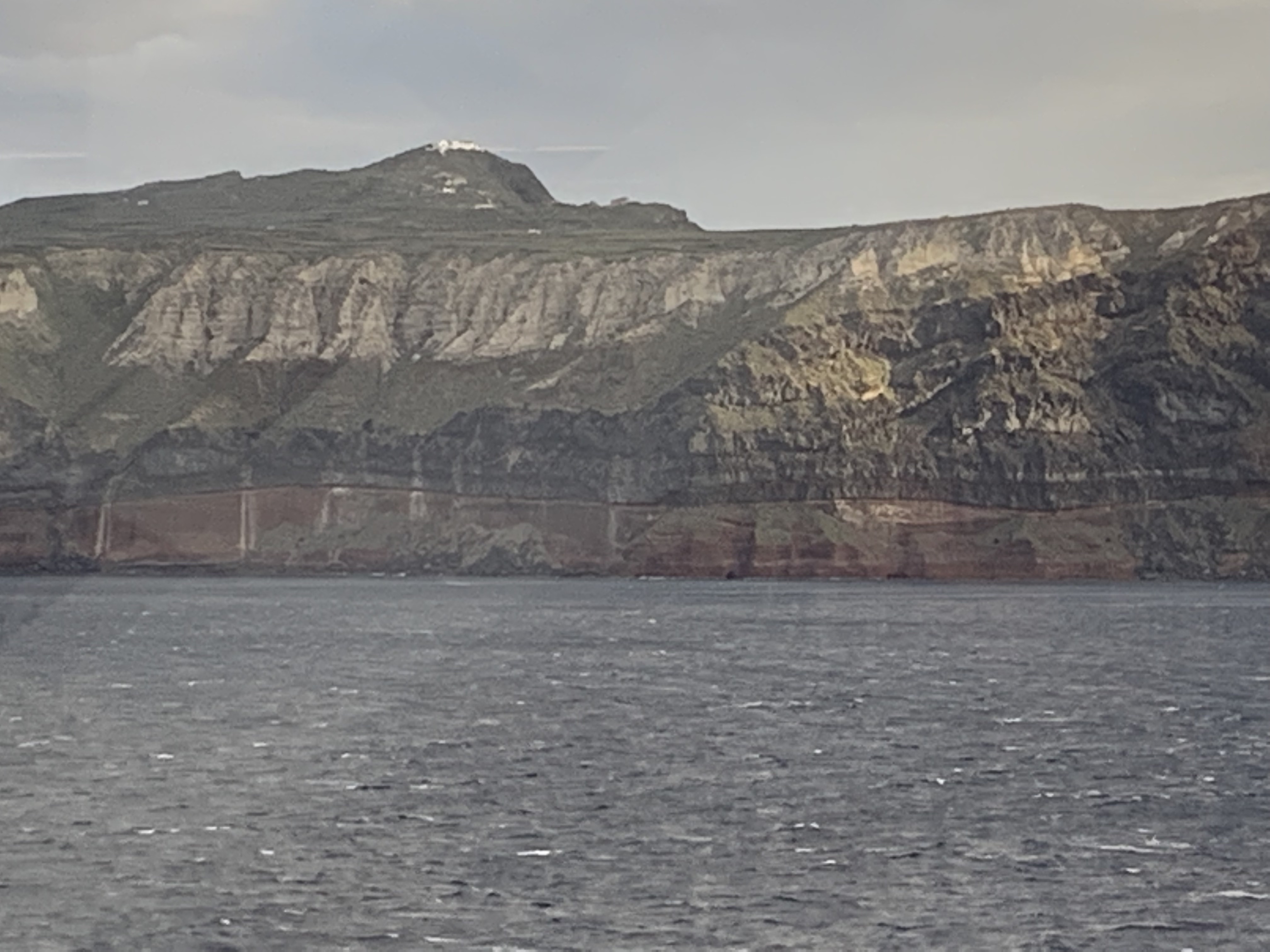
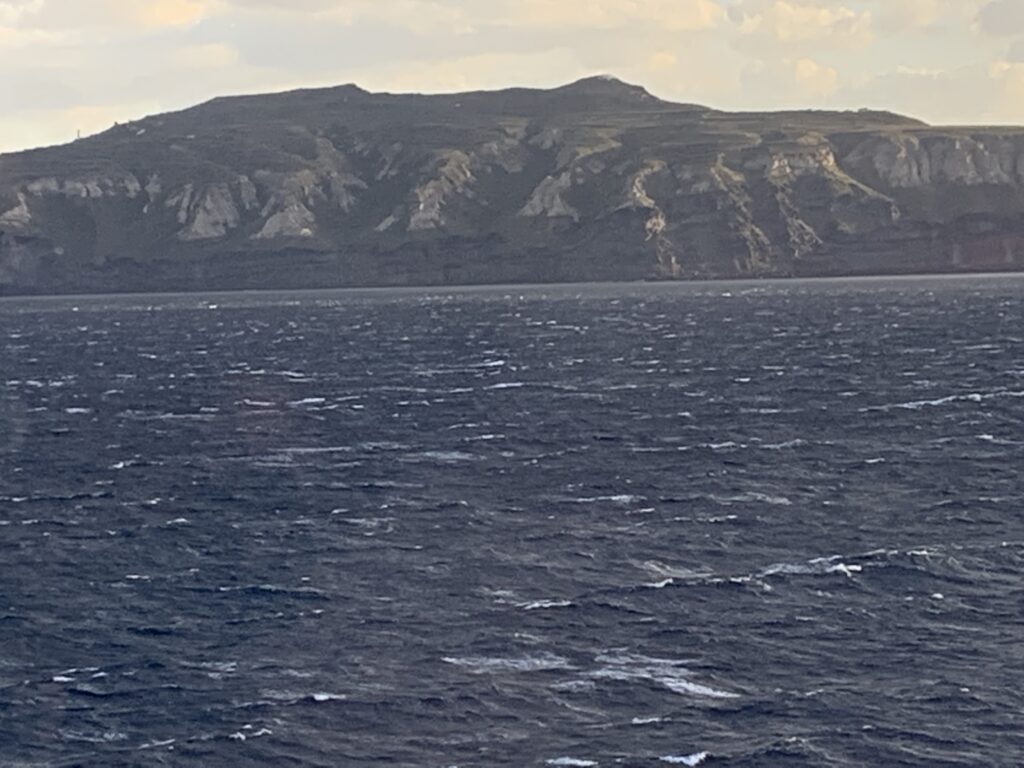
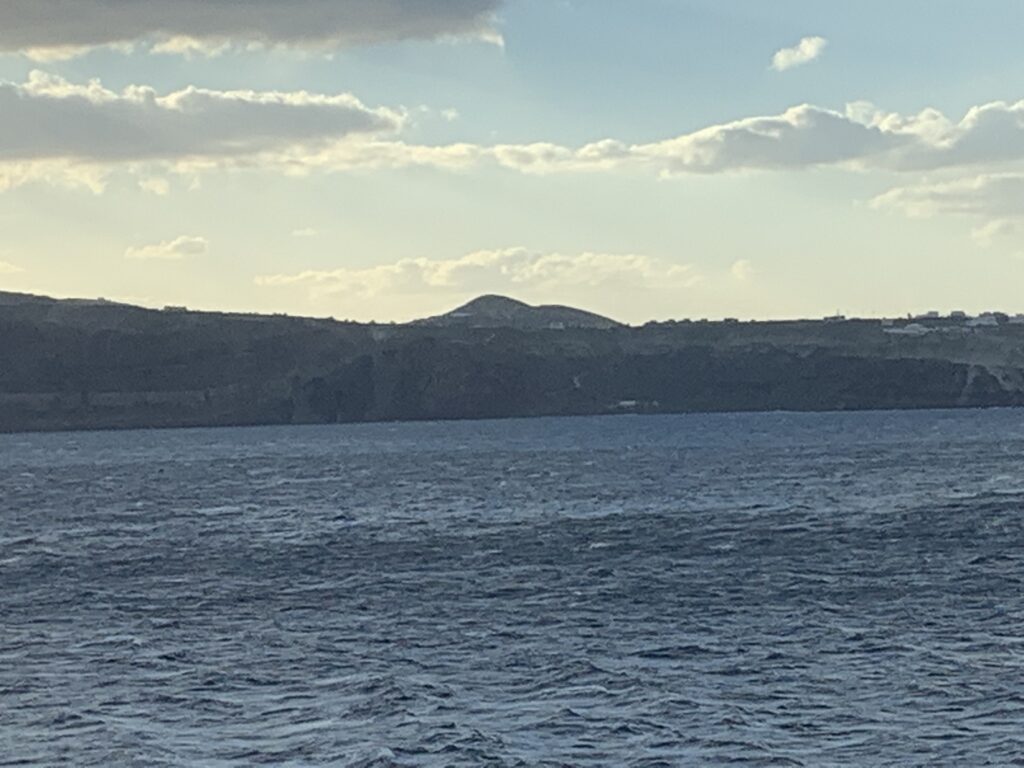
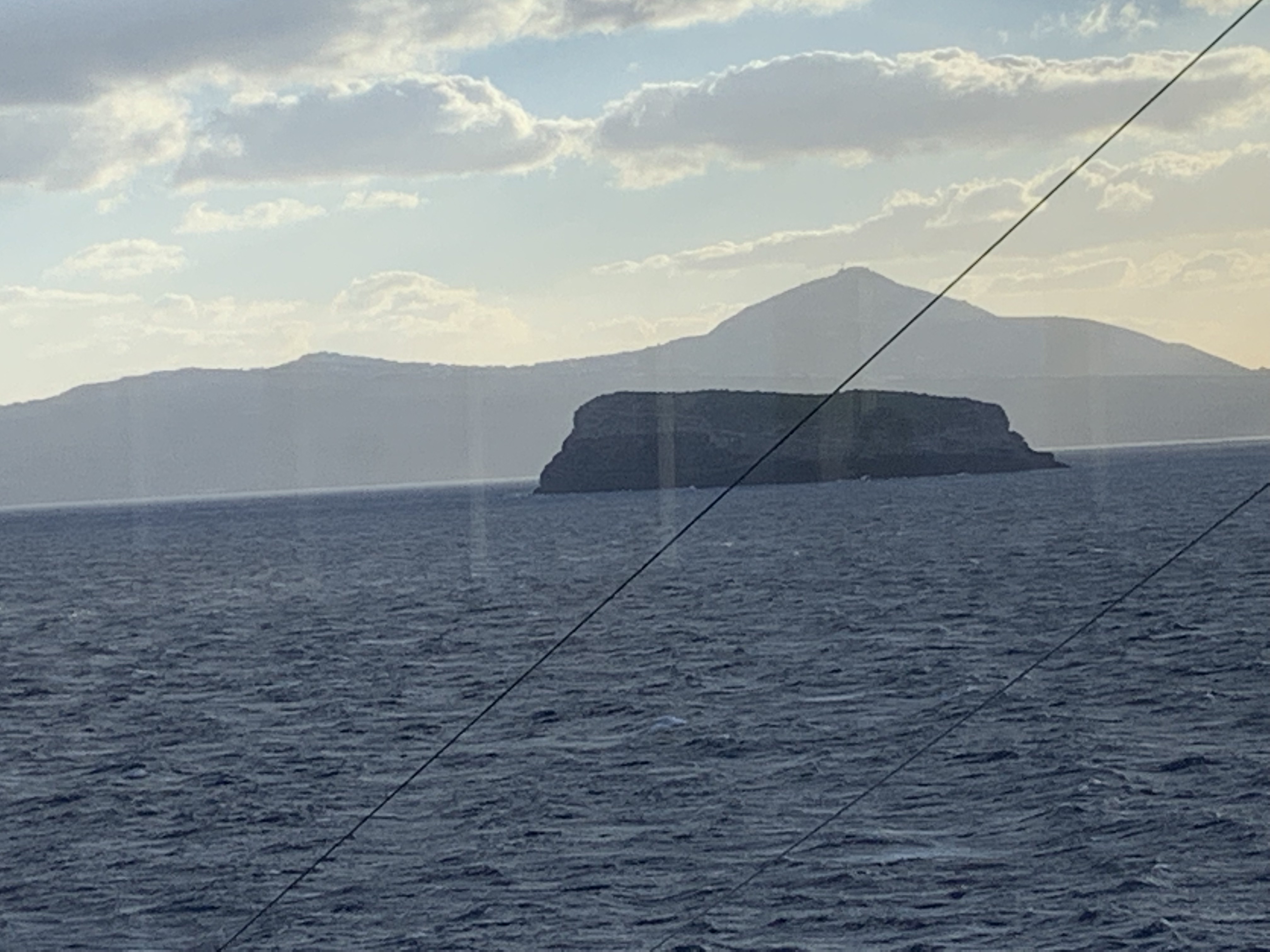
We arrived in the harbor of Santorini and learned that we could not land because the water was too rough for the tenders to come and take us in. The captain told us he would take us in as close as possible and circle the island, so we could see as much as possible. I really wanted to go to Santorini. We went straight to the Navigators’ Lounge to get front row seats to view the island.
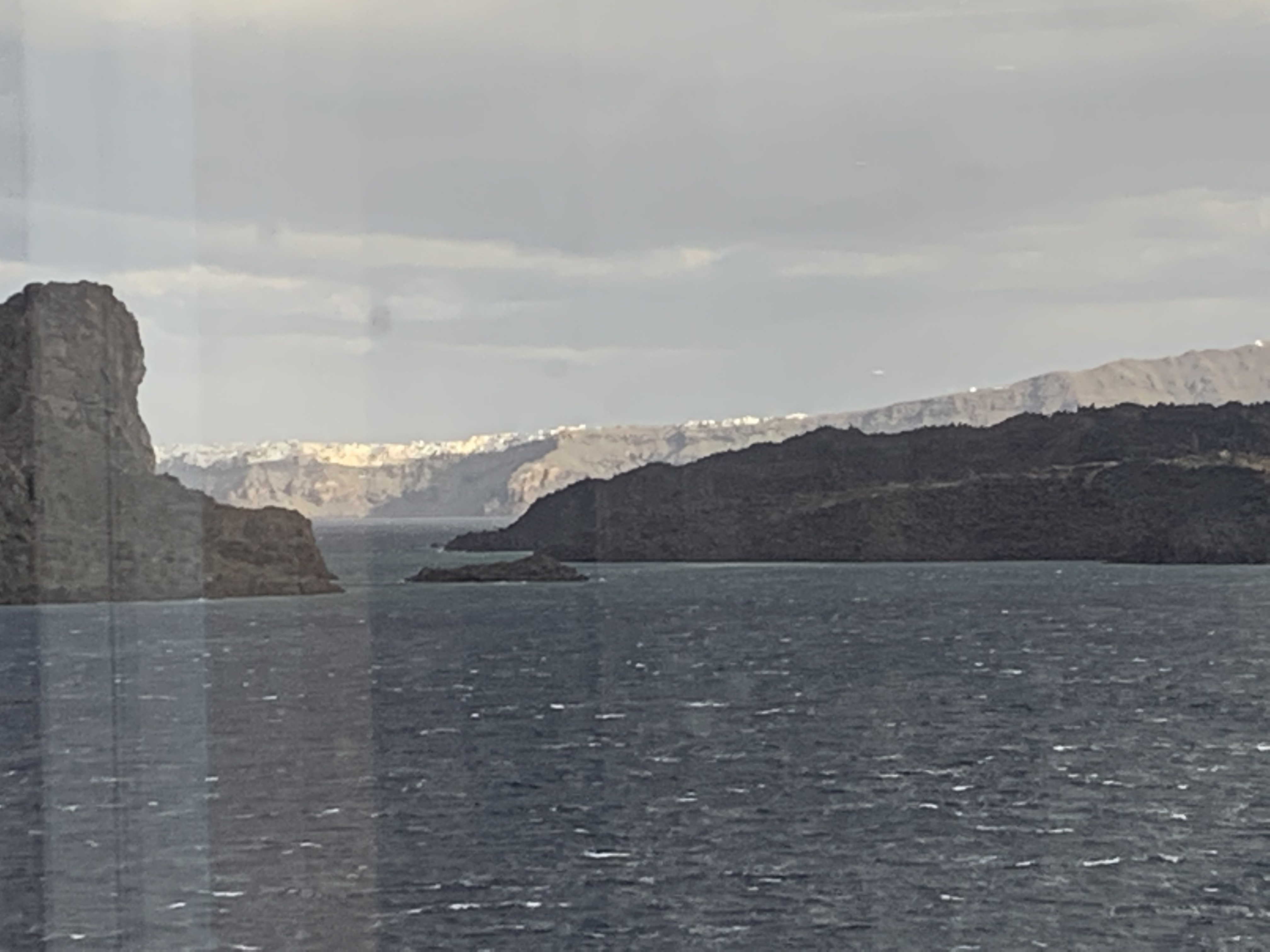
Santorini consists of five islands that surround the vast caldera. The caldera collapsed after a volcanic eruption during the Minoan civilization. The main island emerged then, and the others followed subsequent eruptions. Even though the caldera is under water, it is a live volcano, the last eruption occurring in 1950. The caldera is the only inhabited caldera in the world. The caldera is about 7.5 by 4.4 miles. It is surrounded by steep cliffs on three sides and there are two islands in the middle of it.
I am amazed at the different types of volcanoes and caldera. At home, you have to climb 14,000 ft. to reach the crater of Mt. Rainier. In Hawai’i, you drive to the edge of Mt. Kilauea’s caldera and can walk around it. Here we sailed inside the circumference of the underwater caldera.
Some believe that the lost city of Atlantis is located here. Though we didn’t get to go to shore, it was an interesting day sailing through and around the caldera.
Nafplio
Today is our last port, Nafplio. It is one of the most picturesque towns on the Peloponnese Peninsula, on the Bay of Argos. The Mycenaean civilization ruled over much of the Mediterranean from here between 1500 and 1100 BCE. It is said to be the home of the mythological conqueror of Troy, King Agamemnon.
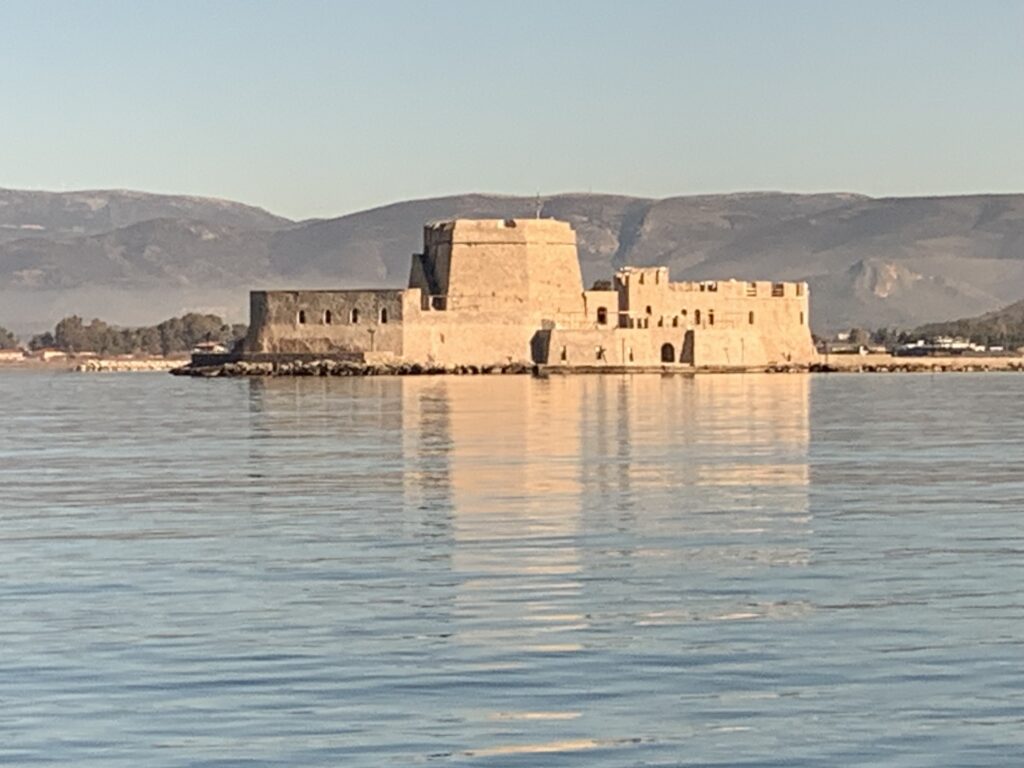
As we came into the port, we were greeted with the Castle of Bourtzi overlooking the harbor, built in 1473. It is a fortified island that protected Napflion from invaders. The castle has had a mixed past from a prison to a hotel. Today it is used to host concerts.
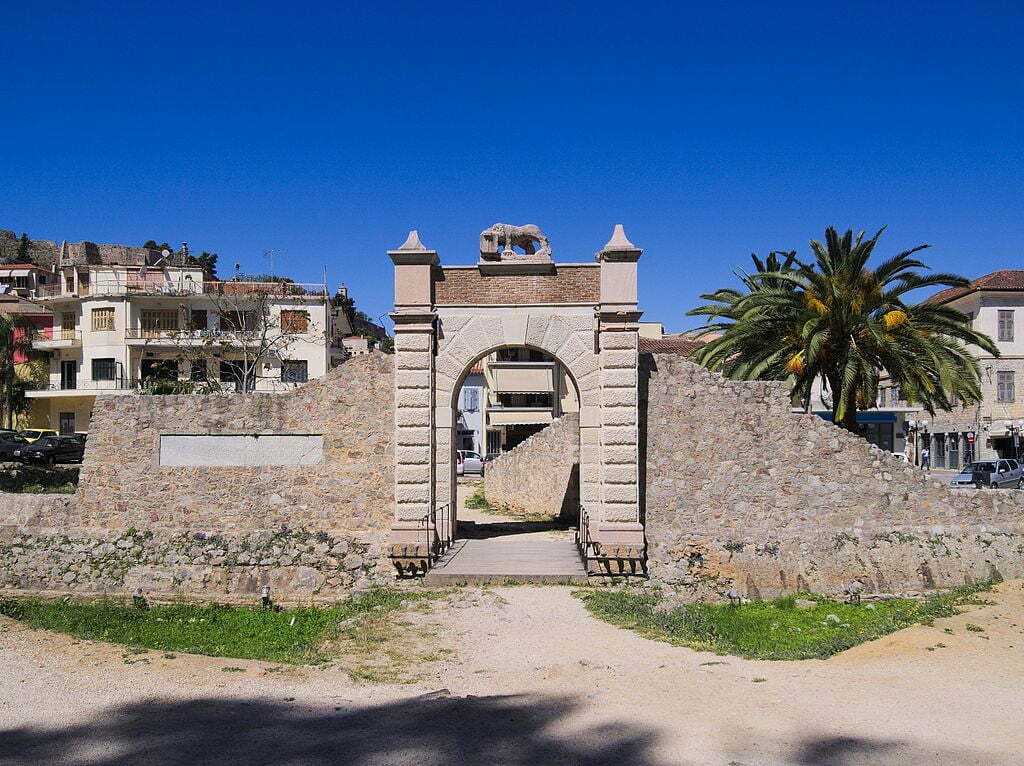
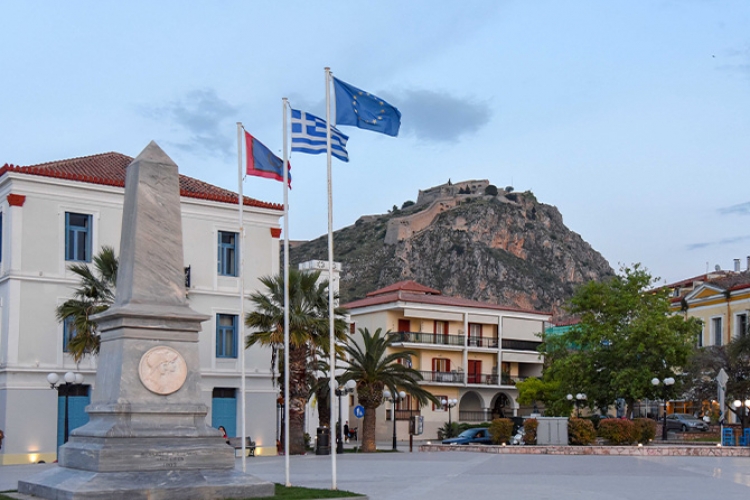
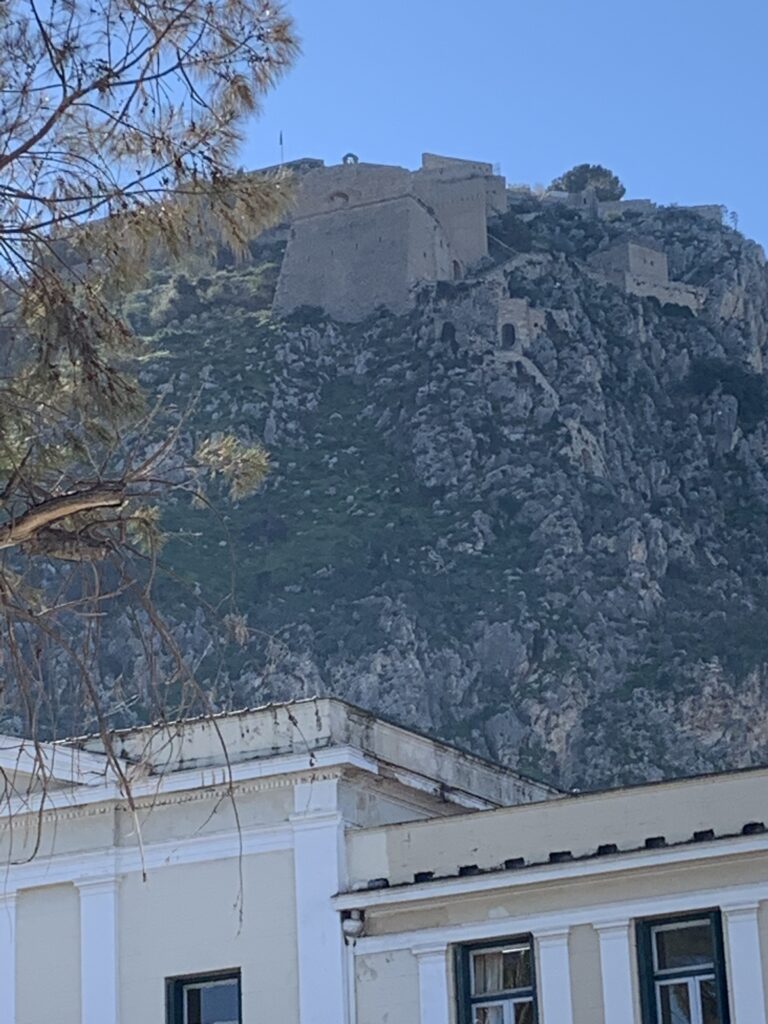
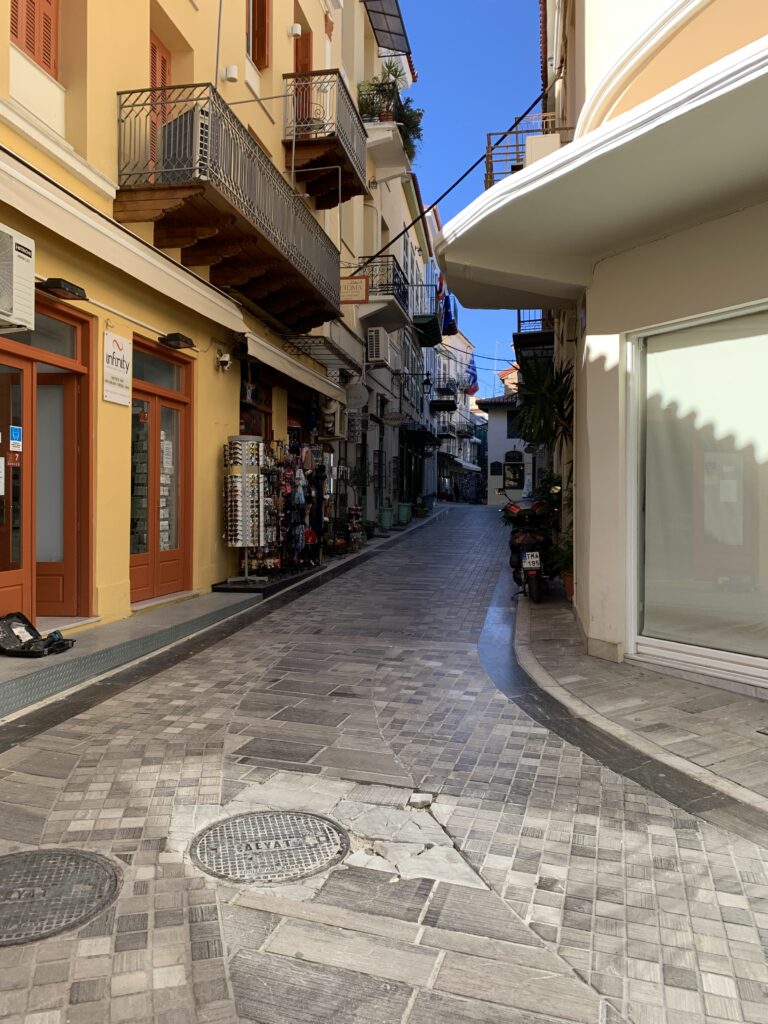
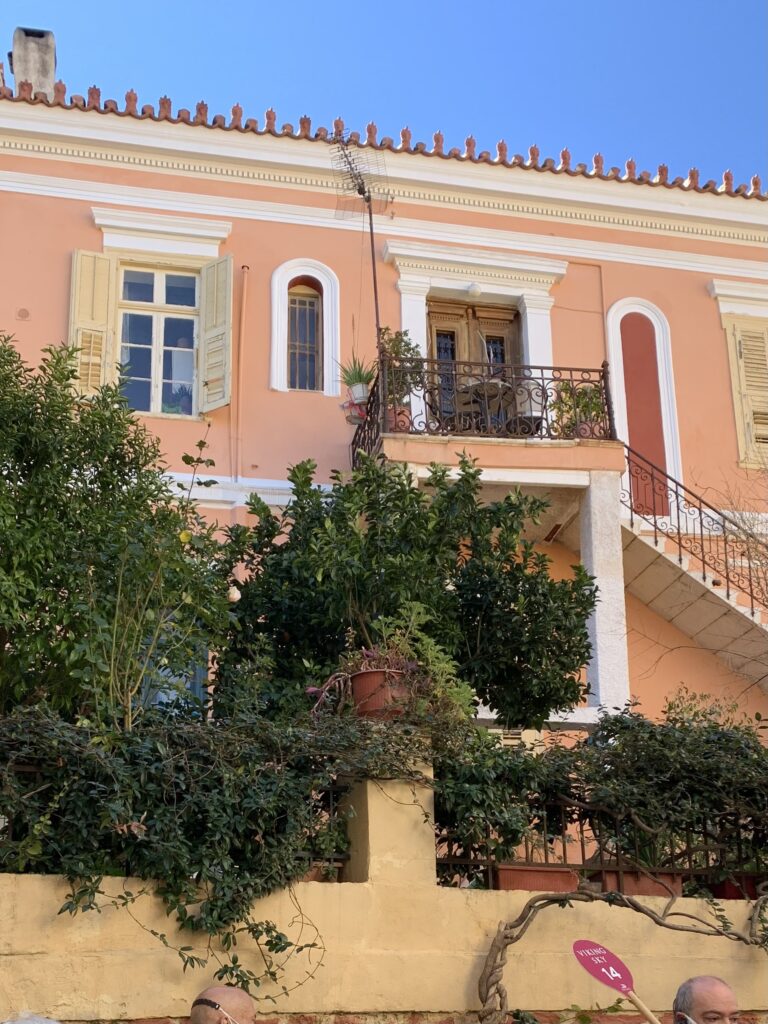
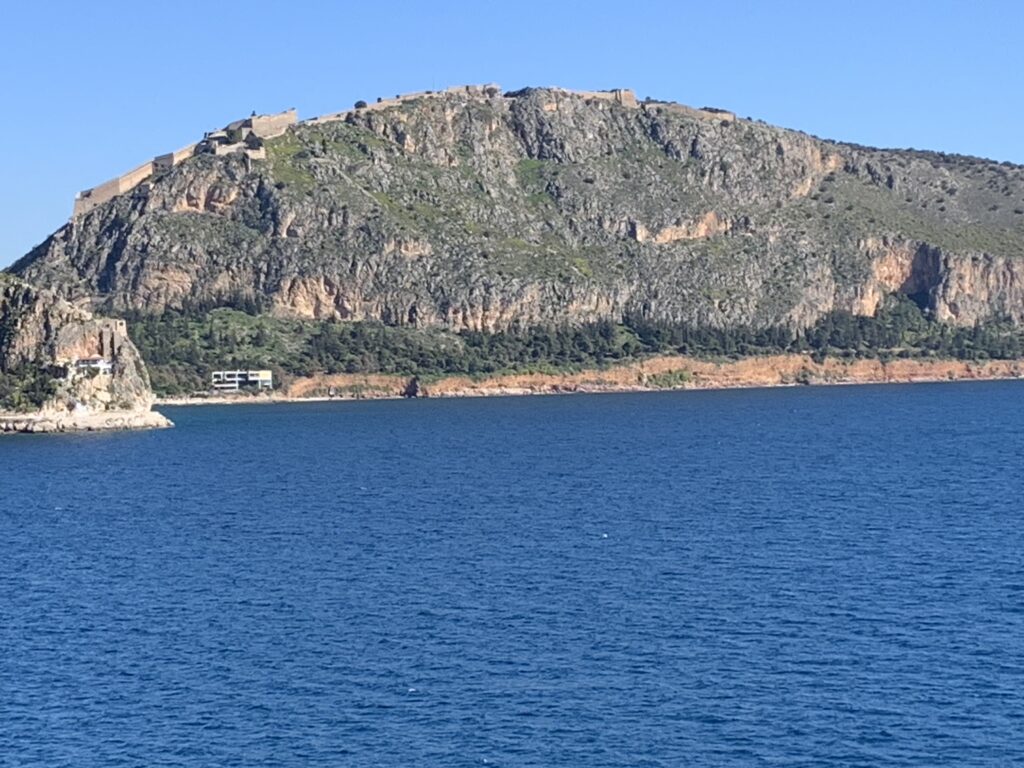
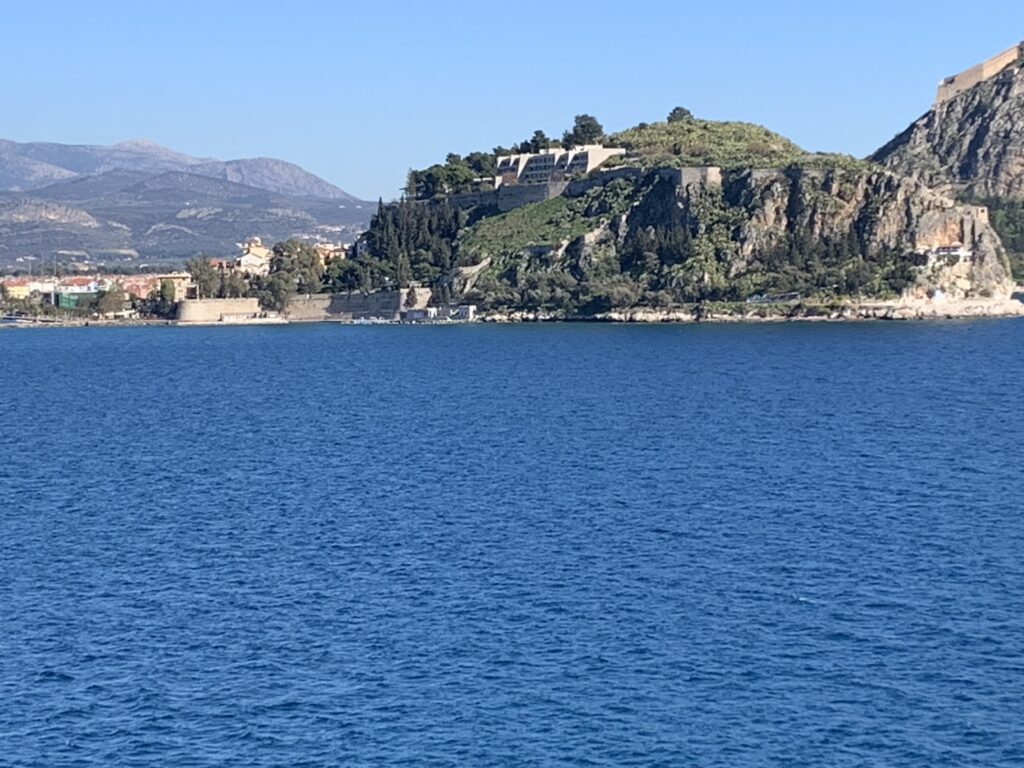
We began our walking tour of the town in the Medieval Old Town with marvelous mansions and large squares. We started our tour at the Land Gate, one of the most iconic landmarks of Nafplio. This was once the only land entrance to the city. From here you can see the Palimidi Fortress which sits high, overlooking the town. It was built by the Venetians in 1714. There are 999 steps leading up to it. Inside the fortress is the Church of Agios Andreas, the best preserved Byzantine church in Napflio. Inside the gate, the Old Town, is a labyrinth of narrow streets, neoclassic buildings, and squares.
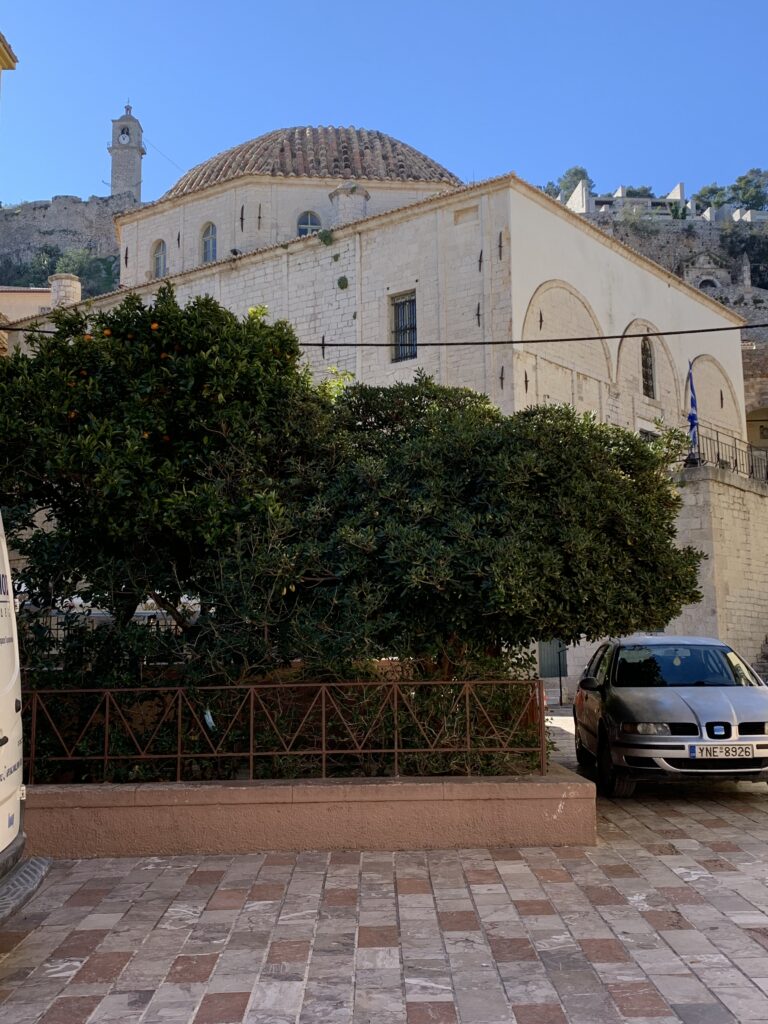
The first church we came to was St. George church, one of Nafplio’s oldest churches. It has stunning frescos and includes a copy of Leonardo’s Last Supper. It was built in the 19th century, during the Ottoman occupation, as a mosque. When Greece gained its independence, it was converted into a Christian church. Consequently, it is a blend between Ottoman and neoclassical design. It was a large dome and two tall minarets.
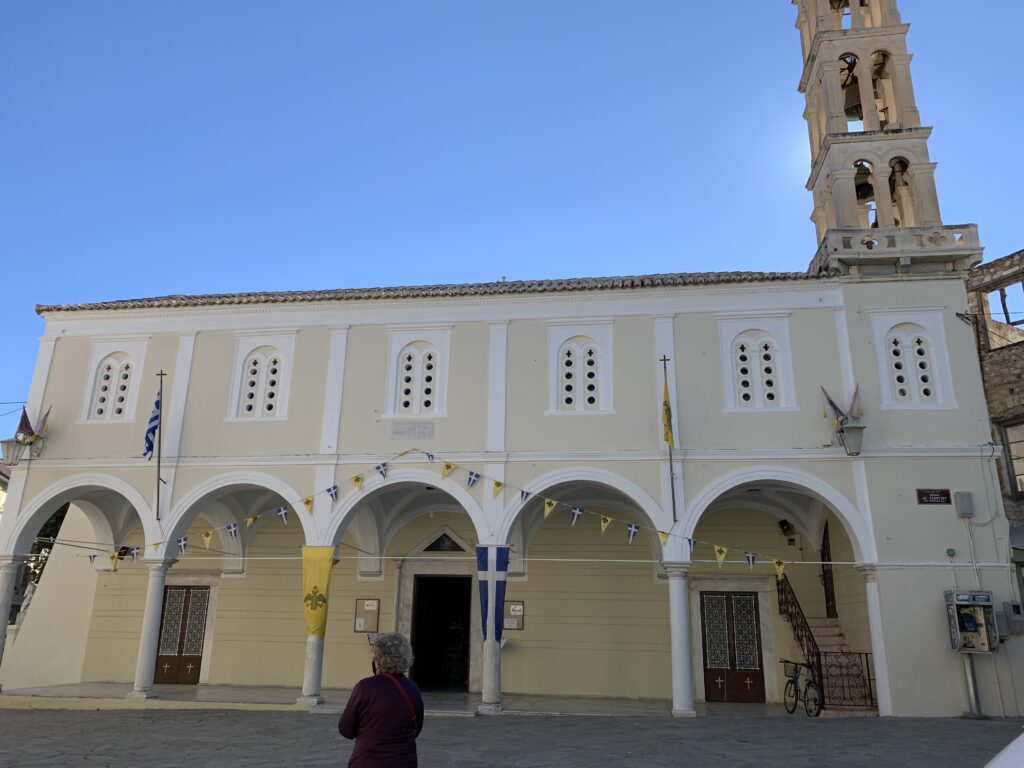
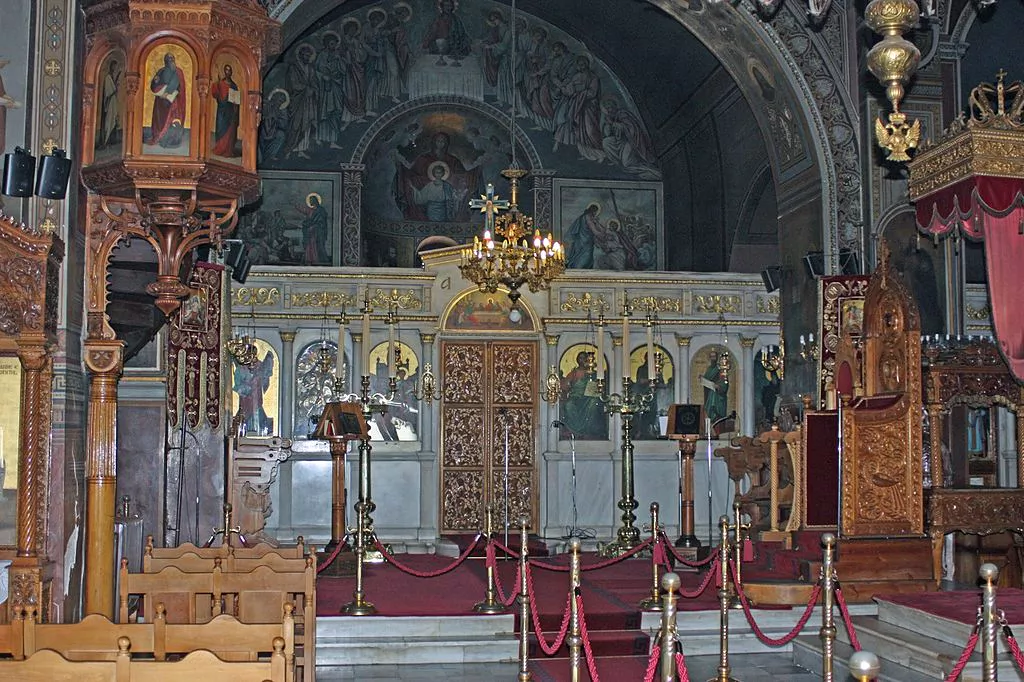
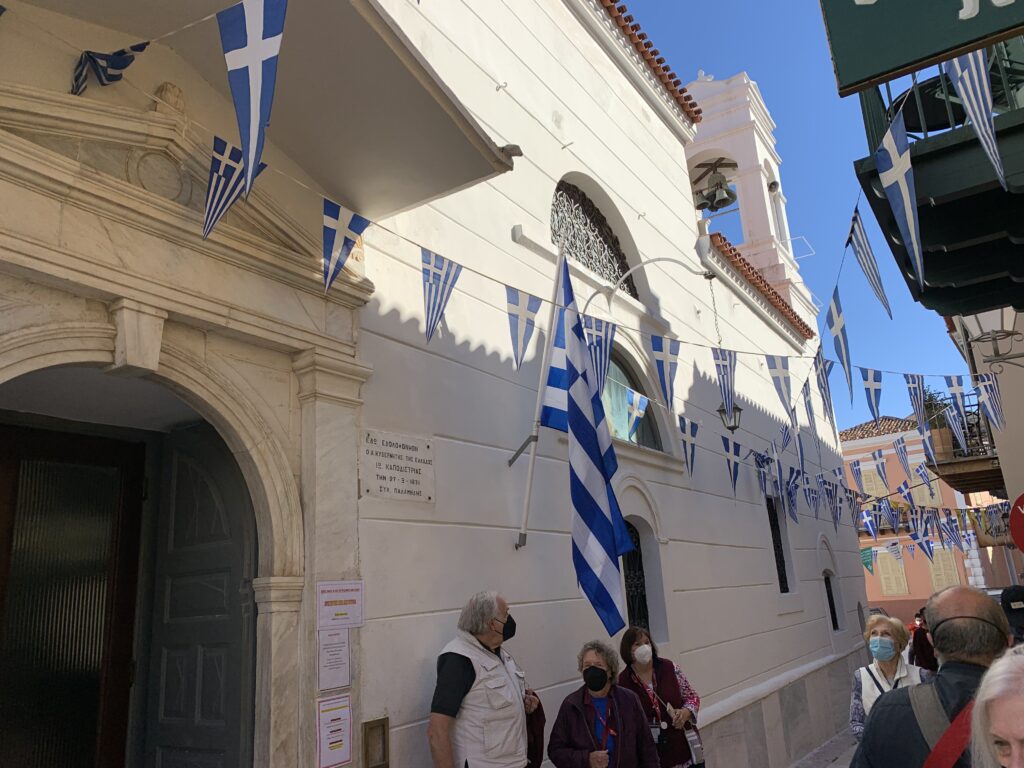
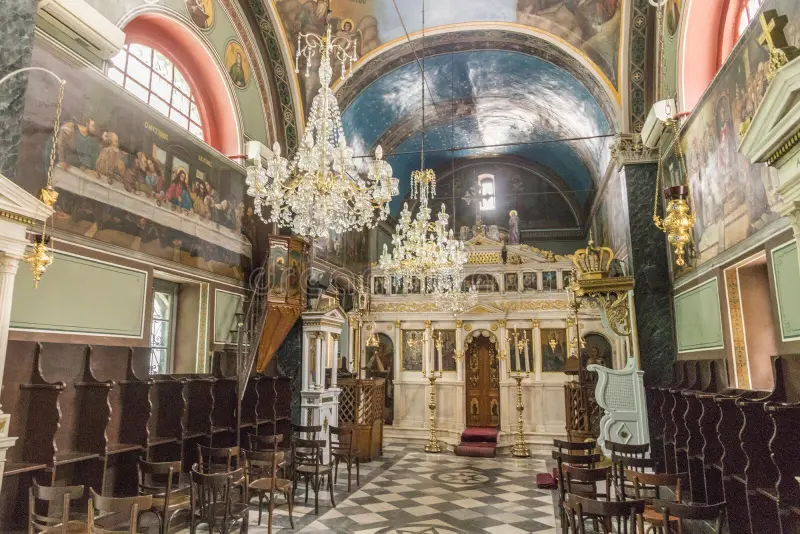
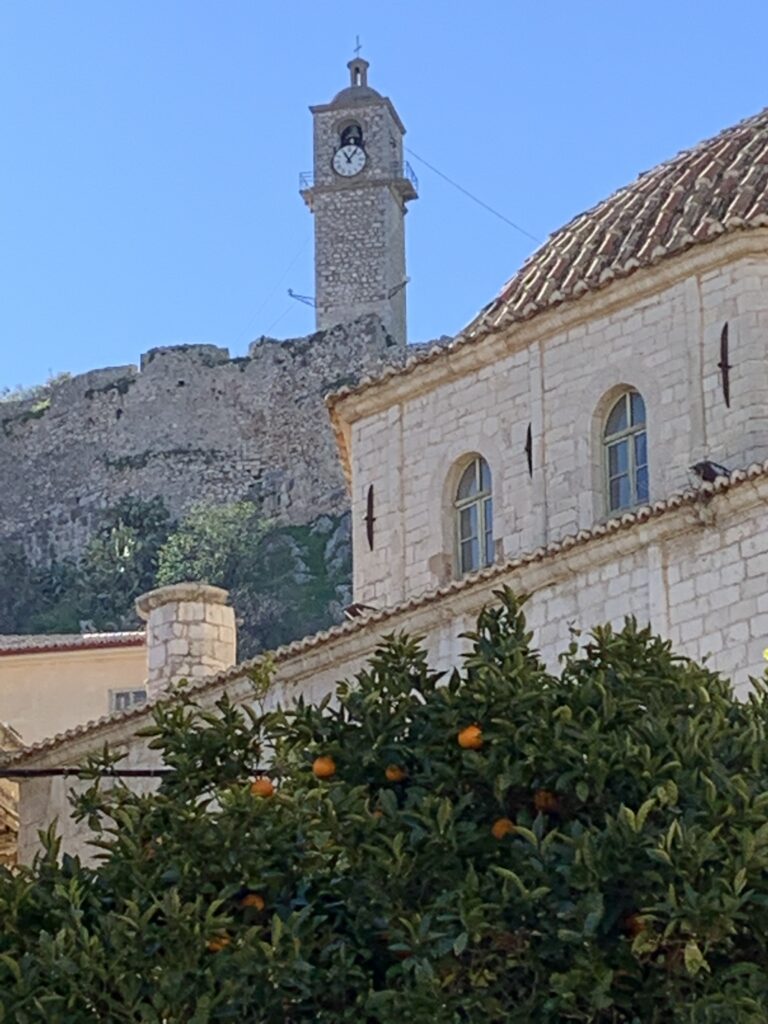
Close by, St. Spyridon Square is located next to the Church of Agios Spyridon, the patron saint of the city. Built during the first Venetian occupation in Nafplio, it was destroyed during the wars and rebuilt in 1702. its main significance is that this is where Governor Kapodistrias was assassinated in 1831. However the church as a religious site contains beautiful frescoes and artifacts, especially the iconostasis. The painting of the dome dates from 1902. On the western wall there is a depiction of the 1st Ecumenical Council in Nicaea (325), that Saint Spyridon attended. You can also see an icon of St Barbara, which is credited with saving the city from the 1928 plague. Outside of the church, you can see where the bullet that hit Kapodistrias ended up on the wall. It also has an impressive bell tower.

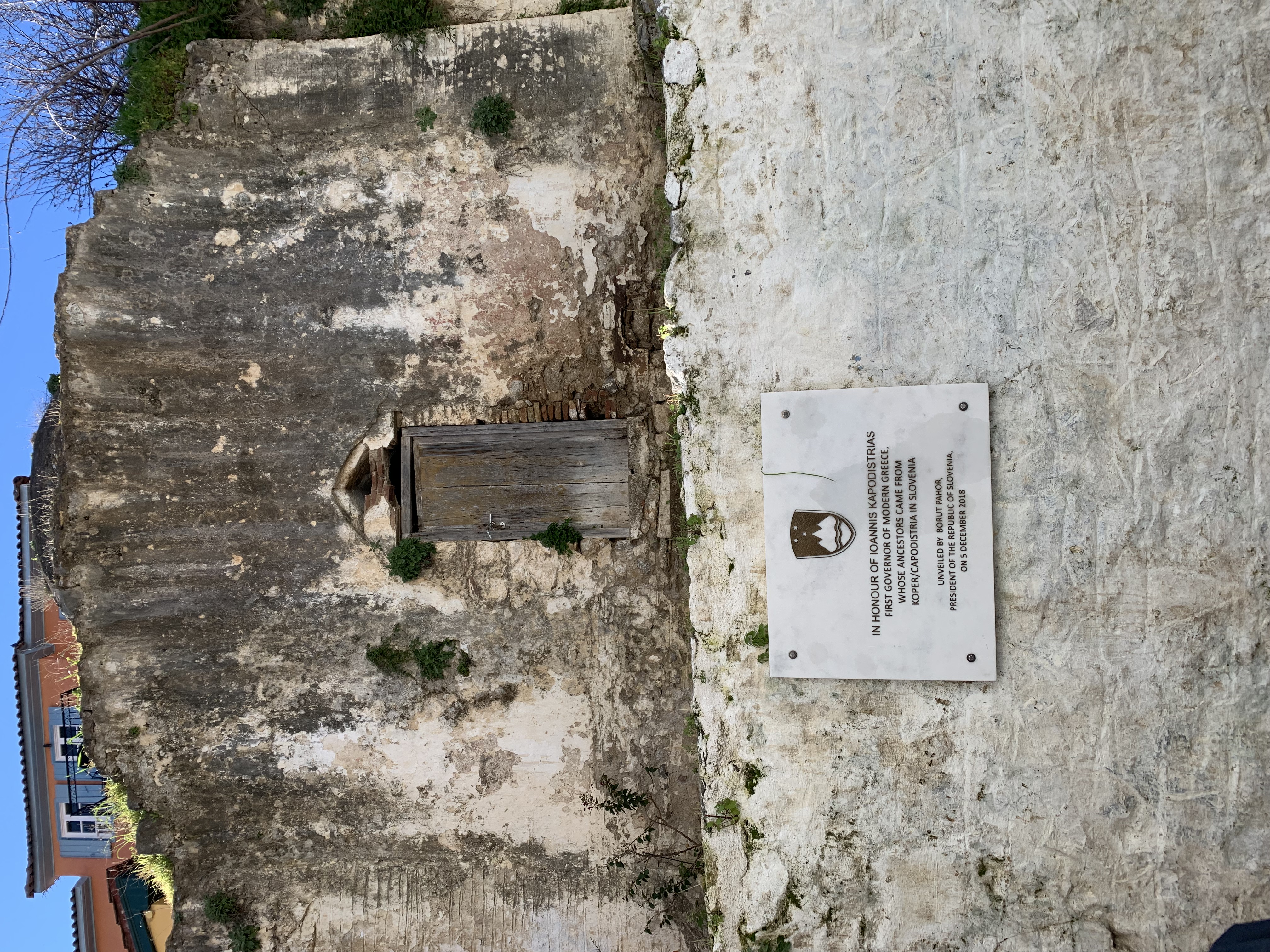
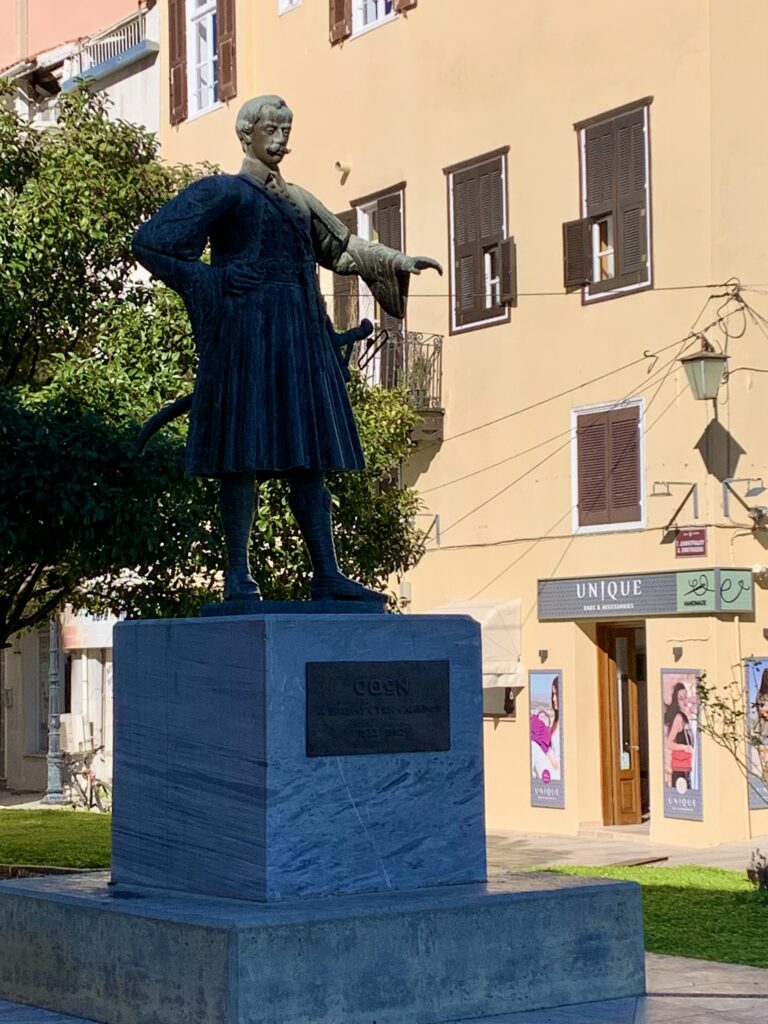
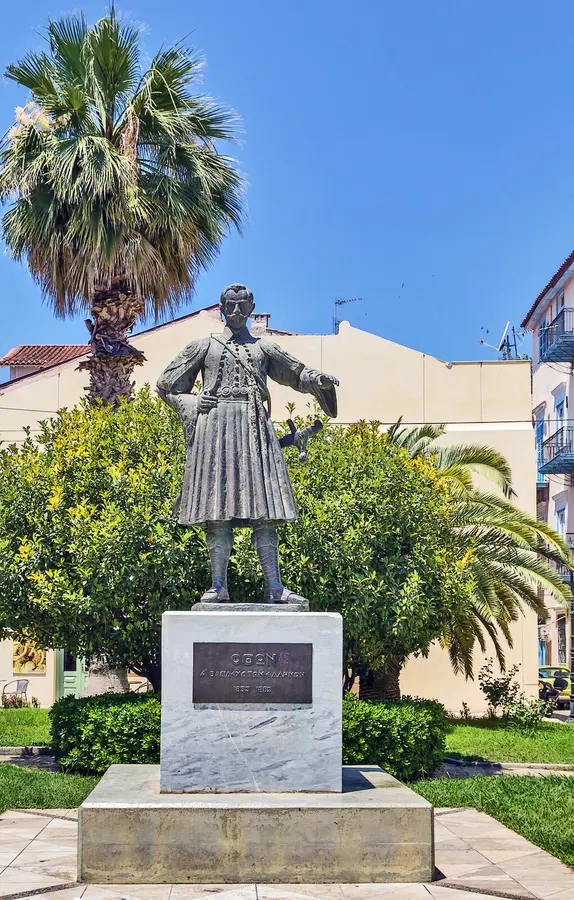
Close to St. Spyridon is Kapodistrias square named after the first governor of the modern Greek State. It contains a statue of the governor and several shops and cafes. Next, we came to the Trion Navarchon Square (Three Admirals Square),which contains the tomb of Dimitrious Ypsilandis, one of the leaders of the modern Greek Revolution. It is dedicated to the English, French, and Russian admirals who defeated the ‘Turkish-Egyptian fleet in the Battle of 1827. Opposite the tomb is the statue of King Otto, first King of Greece.
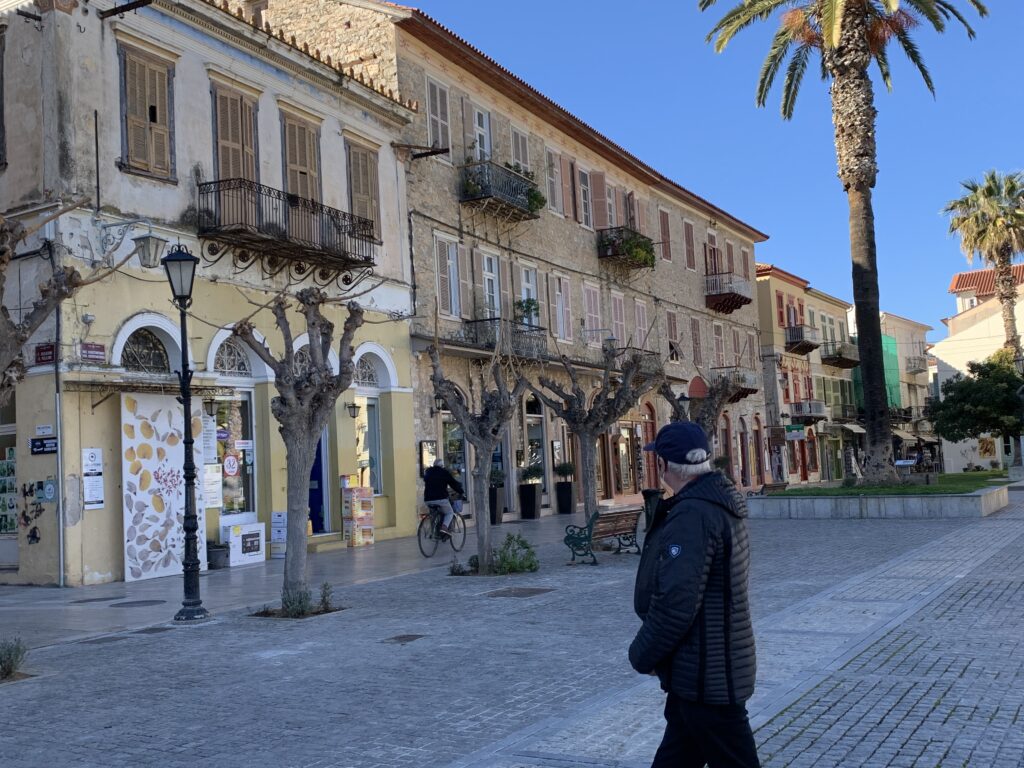
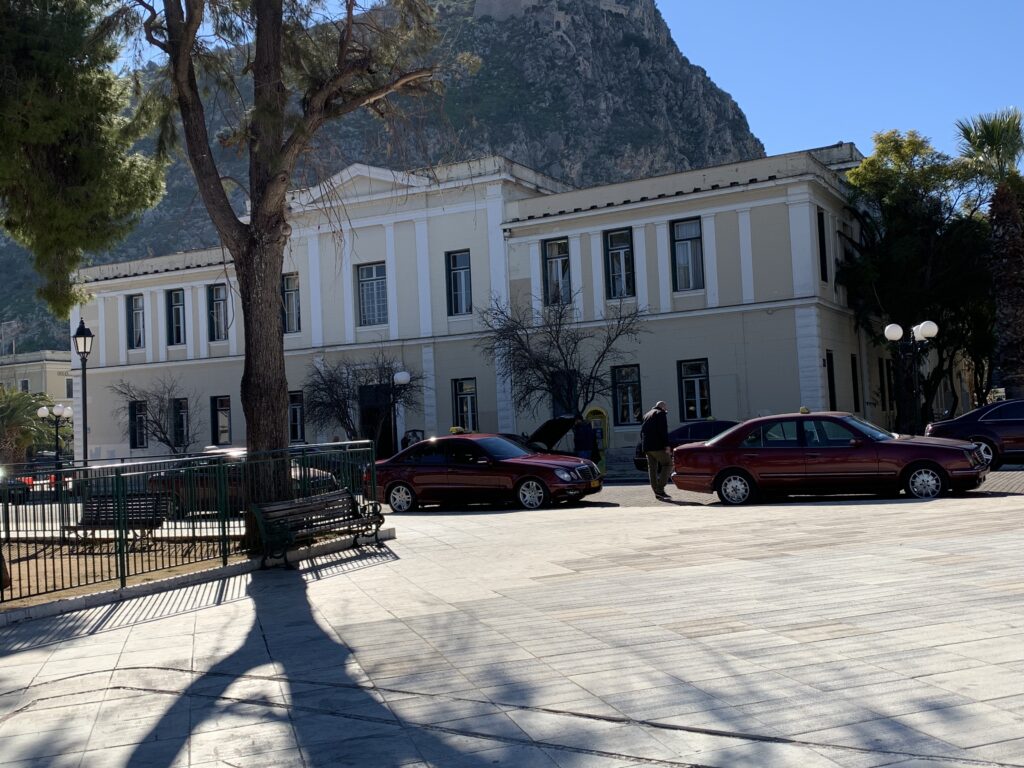
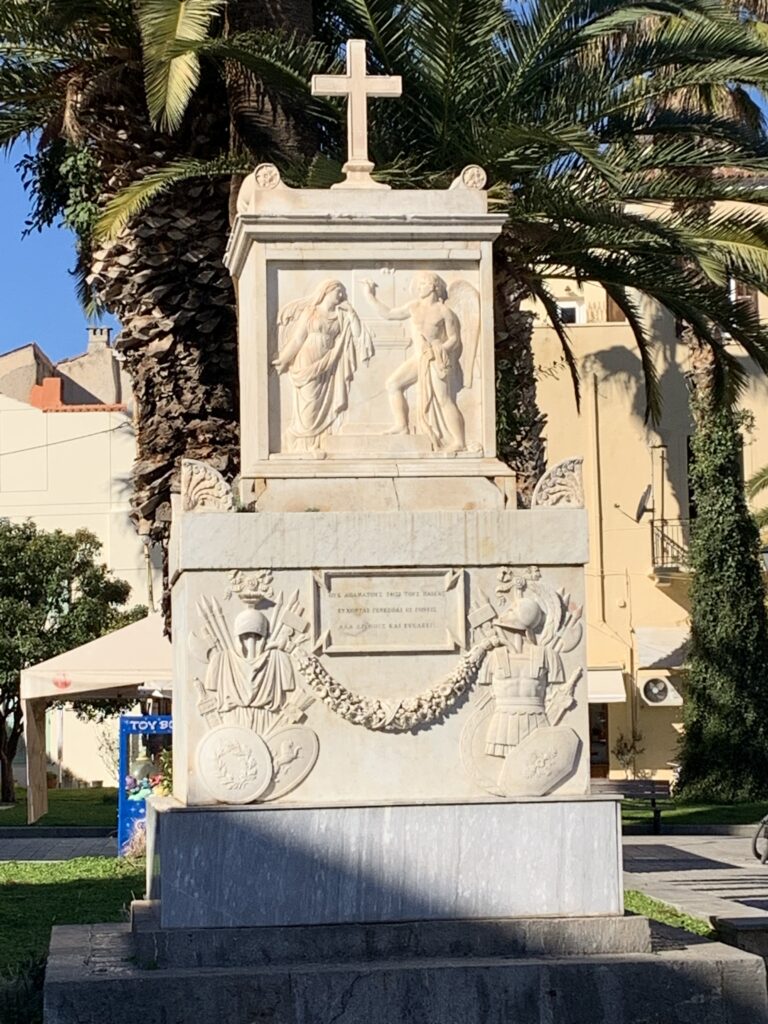
Next, we came to the Trion Navarchon Square which contains the tomb of Dimitrious Ypsilandis, one of the leaders of the modern Greek Revolution and then on to Syntagma Square (Constitution Square) in the center of the Old Town. It is the most historically important square in Nafplio. It is paved in marble and surrounded by several neoclassical historic buildings and palaces (homes). The Vouleftiko, the first Greek Parliament building, is there as is the Trianon, a Turkish Mosque. The Mosque is the oldest surviving example of Ottoman architecture in the city. Also on the square is the house of Theodoros Kolokotronis, the first governor.
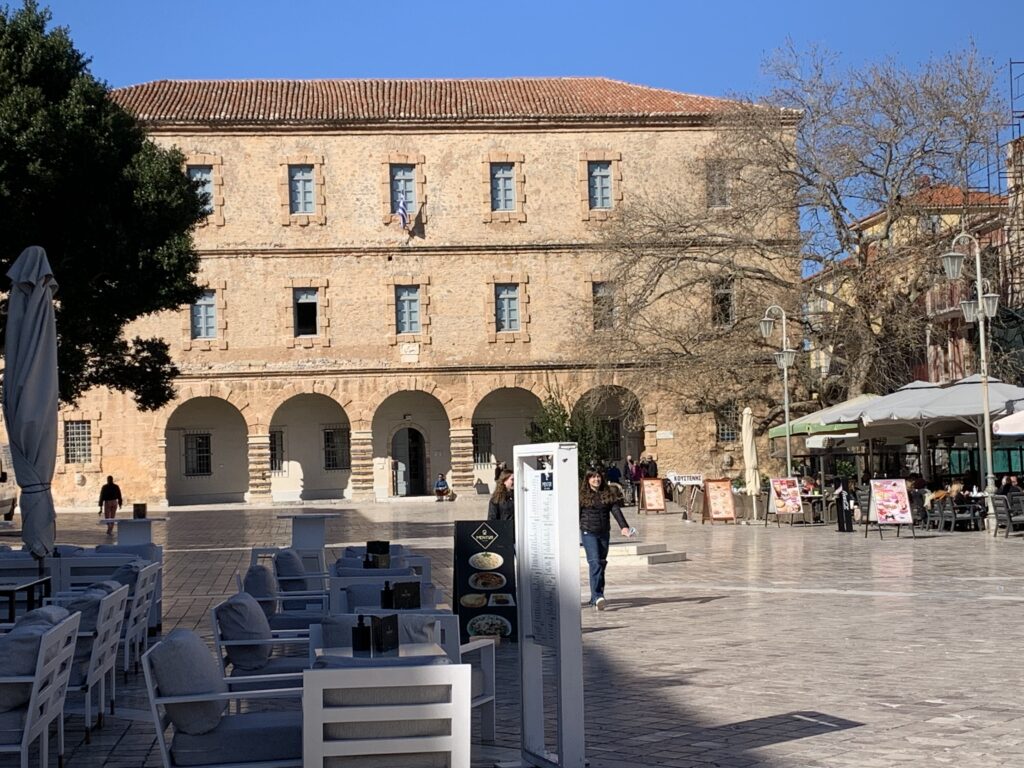
The Archeological Museum is located here and holds a large collection of artifacts. (We have visited an historical museum in every port.) This building dates from 1713 during Venetian Rule and was turned into a museum in 1026. The most important exhibits detail the daily life and customs of the Mycenaean inhabitants of the area.
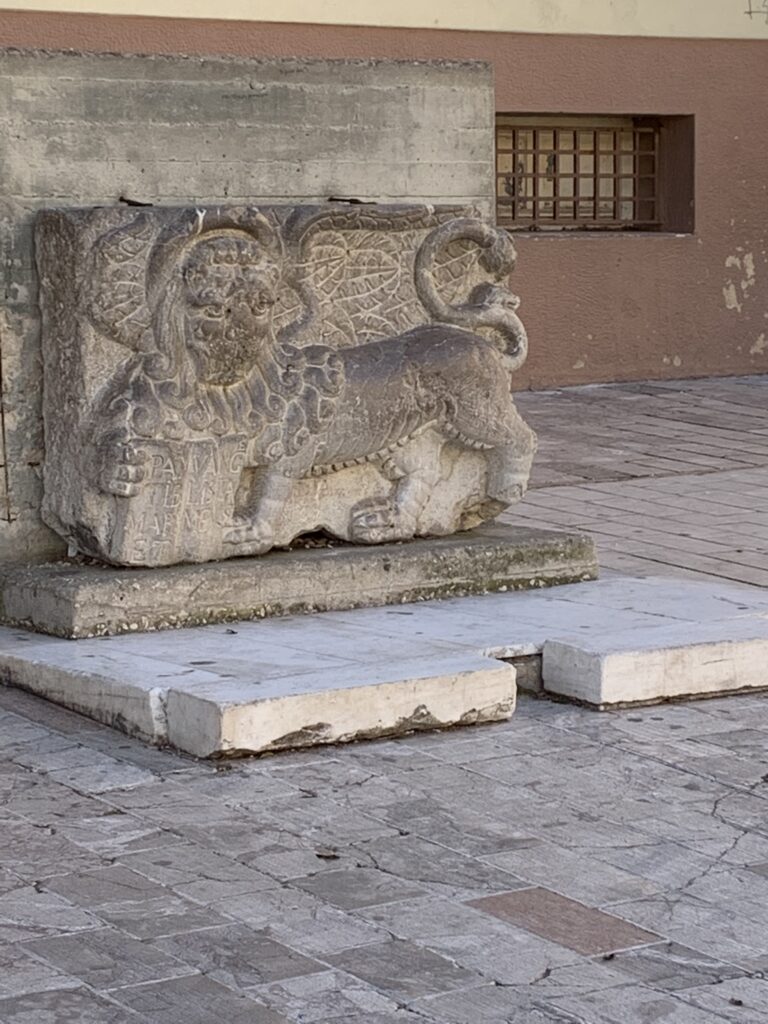
In the center of the square is a large Plane tree. It is said that in 1862 a Greek teacher gave a powerful speech under this tree to raise funds for the revolution. It was so successful that even the poorest woman gave up her possessions for the cause. The tree is over 200 years old and recognized as Protected Monument of Nature. It is a symbol of the town’s resilience. Also there is a Marble Sculpture of a lion.
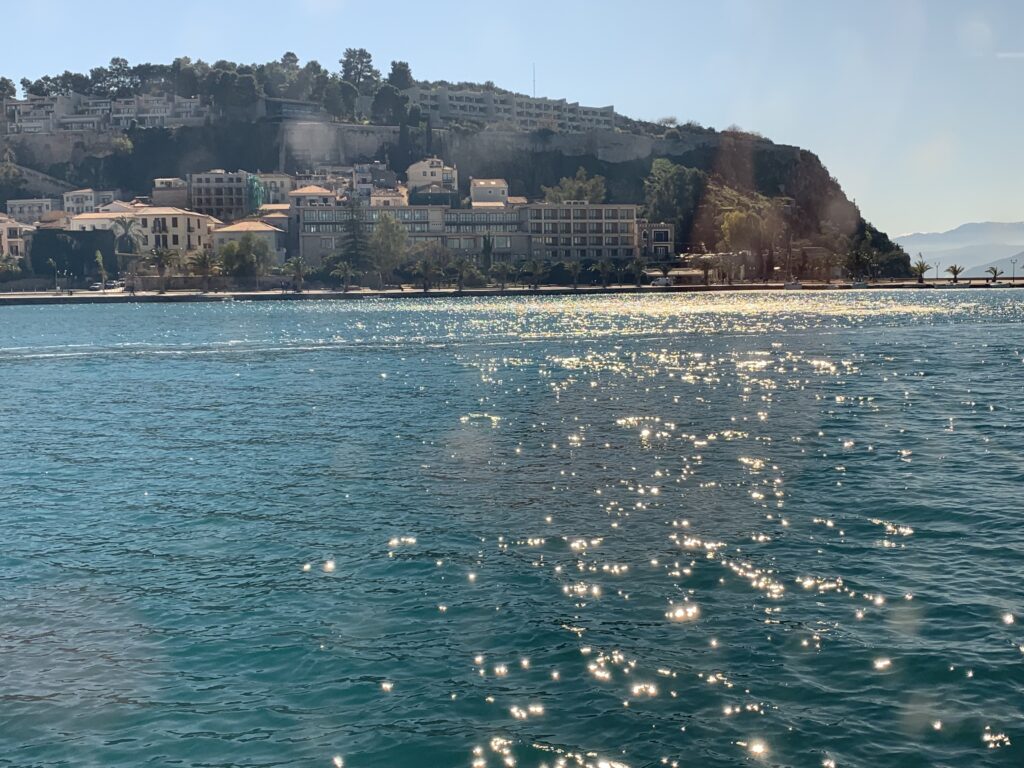
Finally we ended up at the waterfront with its boardwalk ending in Philhellinon Square where people gather and walk along the waterfront. From here is an excellent view of the Bourtzi Castle. It was here that the Venetian bastion of St. Teresa, which was demolished in 1866, stood. The middle of the square is dominated by a statue of Philellenes, built in 1903 to remember the French philhellenes who fought for Greece in the revolution.
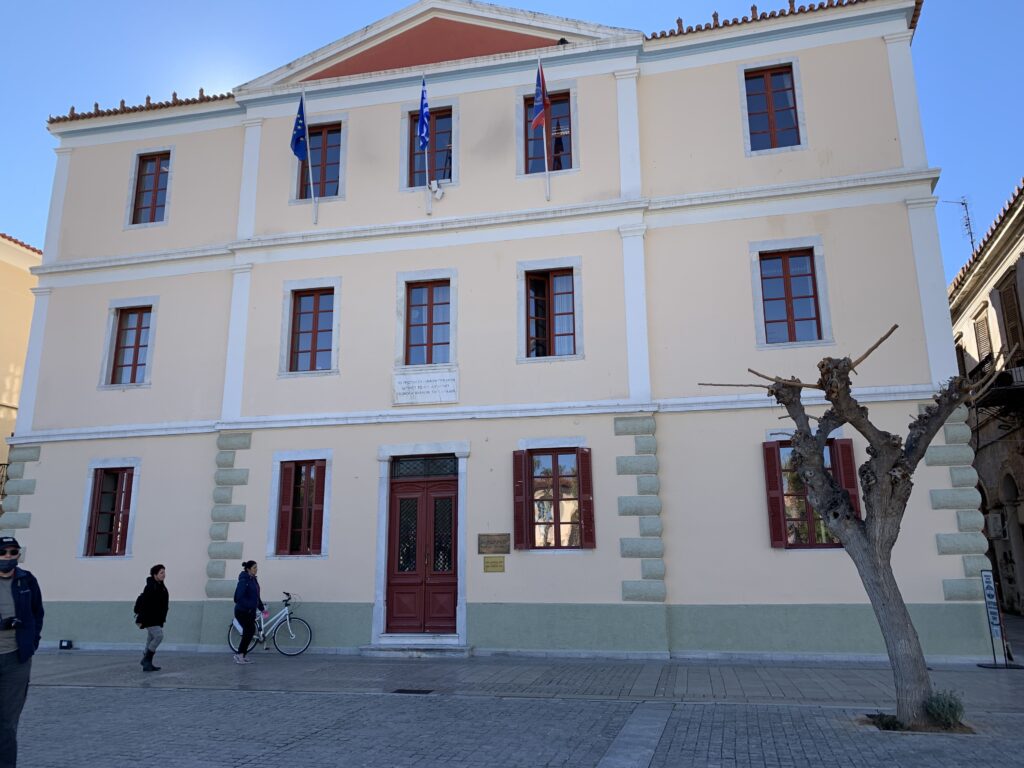
(Former Palace of Otto)
A lovely day to end our tour of Greece.
Leave a Reply