When we arrived at Cambridge we started with a walking tour. The first thing we saw was the famous Mathematical Bridge, leading to Queens College. It is a wooden footbridge over the River Cam designed by William Etheridge and built by James Essex in 1749. It was originally built without the use of bolts and nuts or nails. We proceeded on to Kings College, then to St. Mary’s Church. We had lunch in a small tea shoppe and then toured art galleries.
Past the bridge we saw St Botolphs Church, historic, 14th-century Anglican parish church located in the heart of Cambridge’s city center. People call it a “Prayer Book Church” because it is liturgically centered.
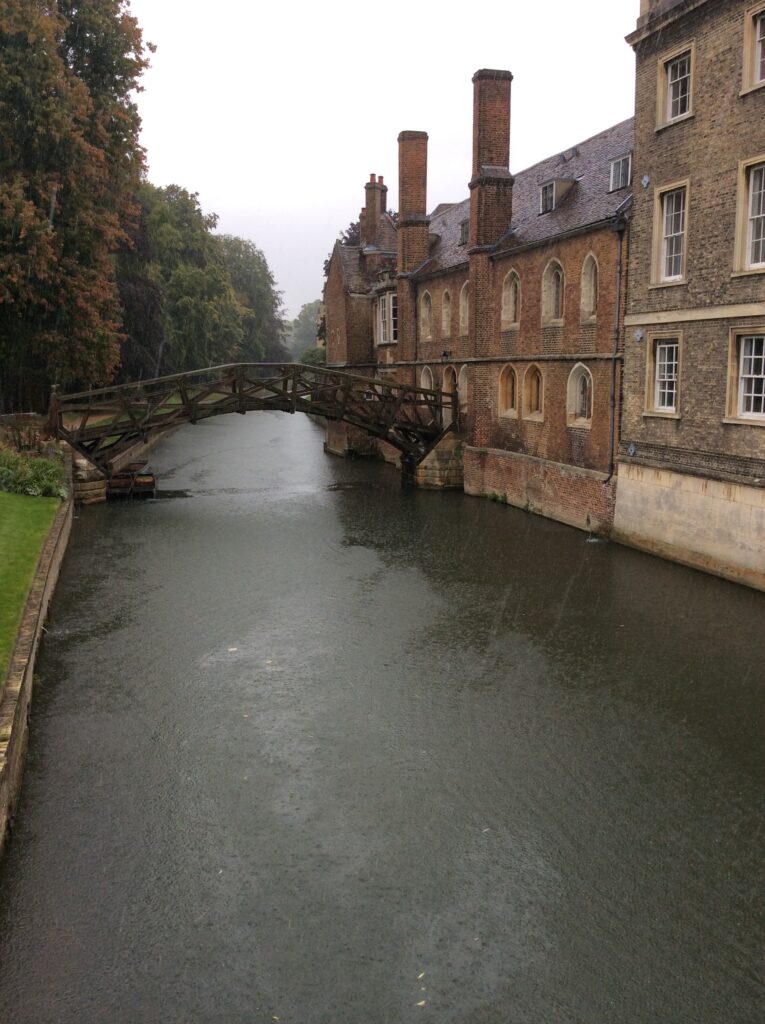
over River Cam
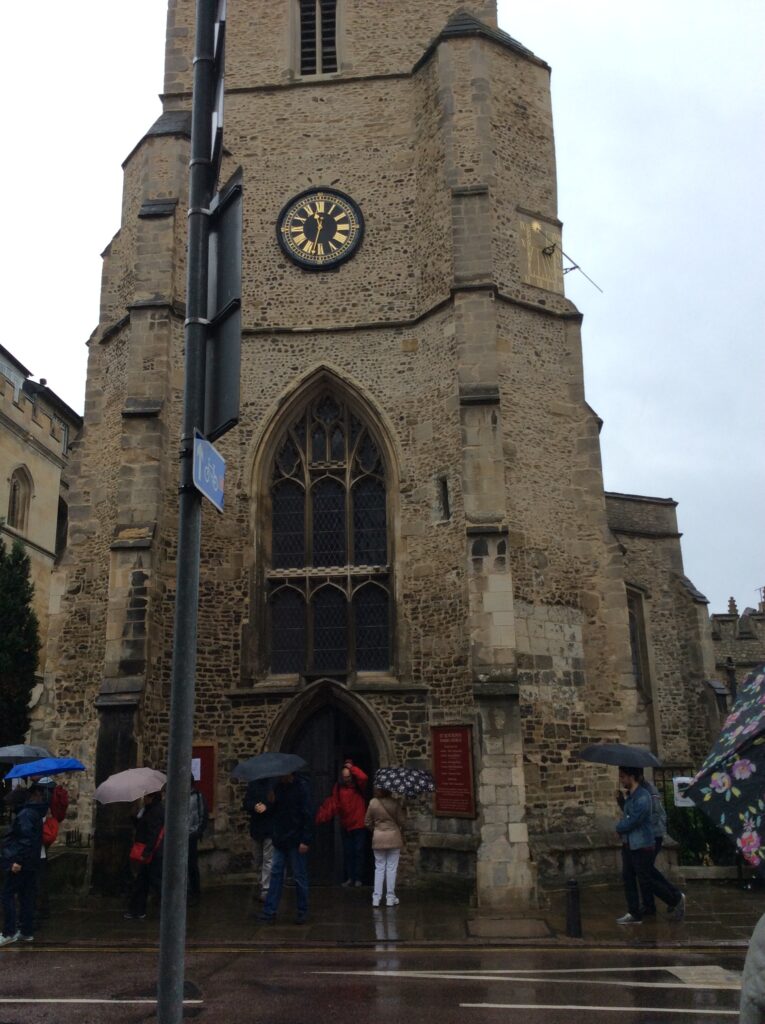
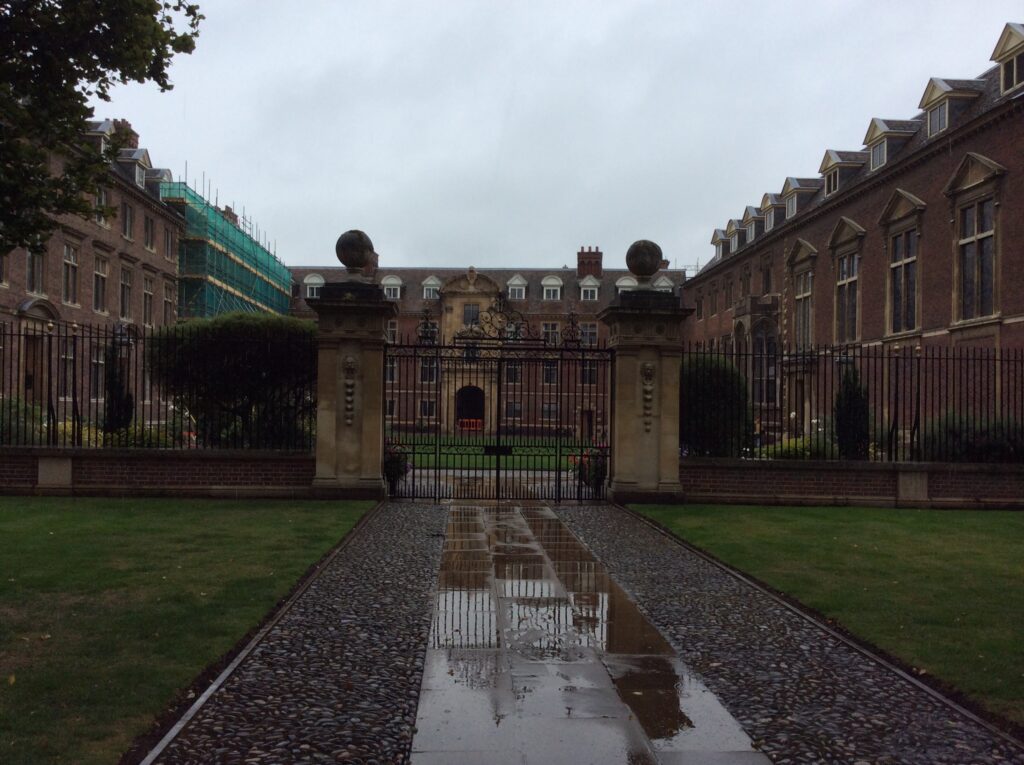
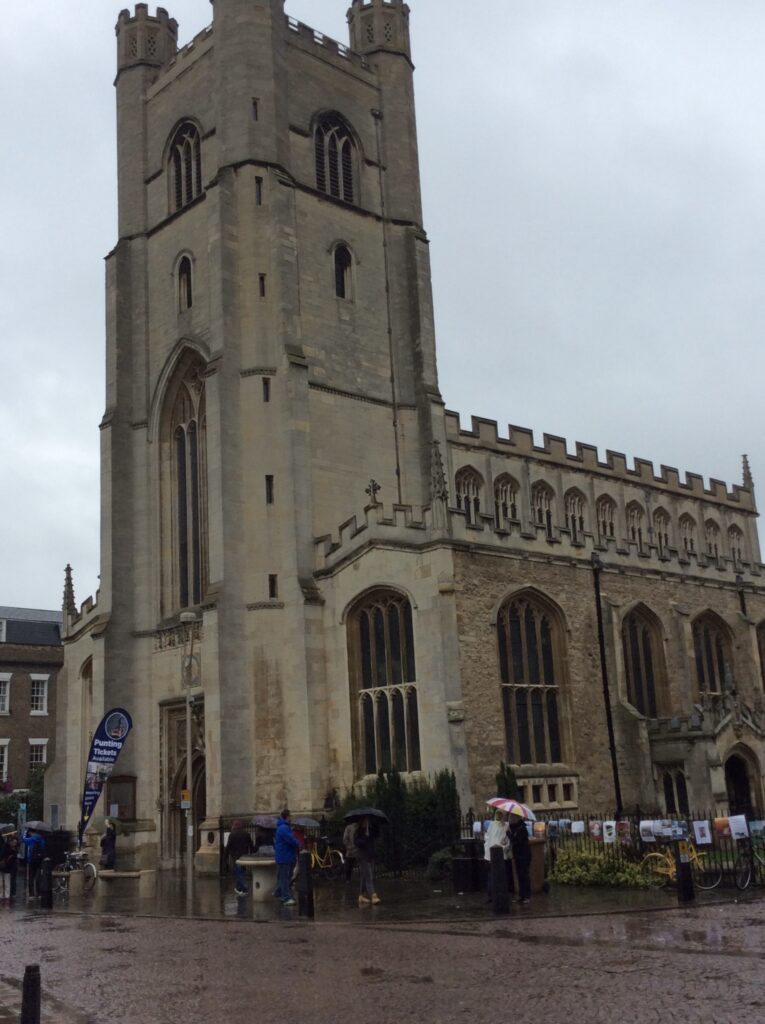
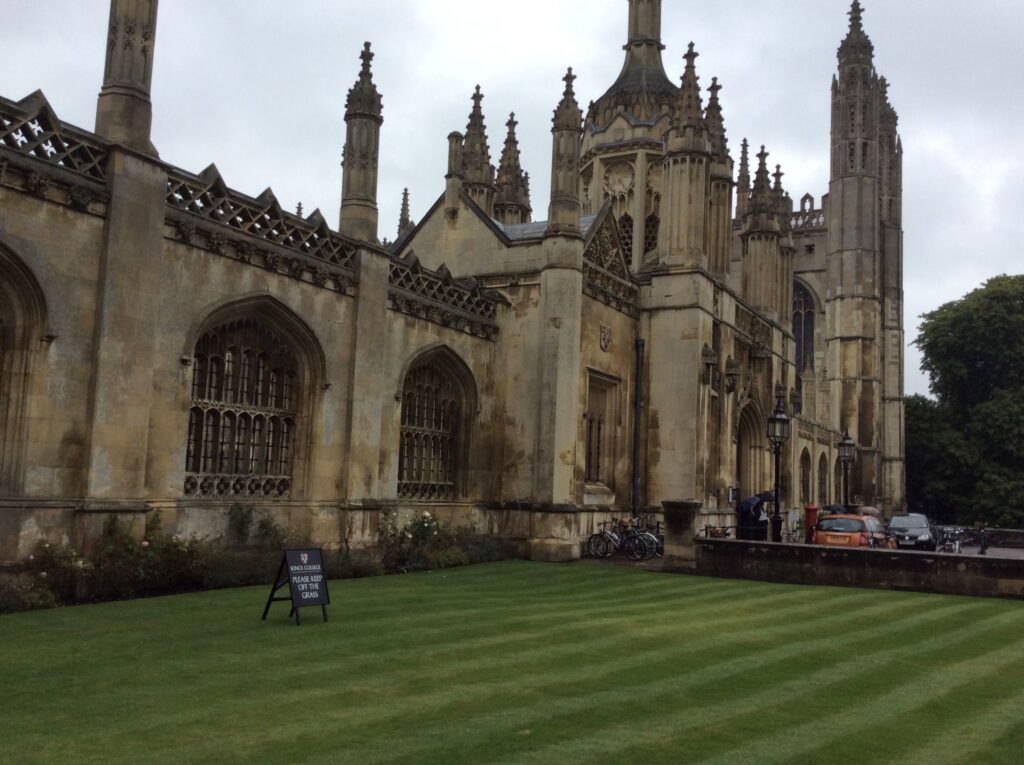
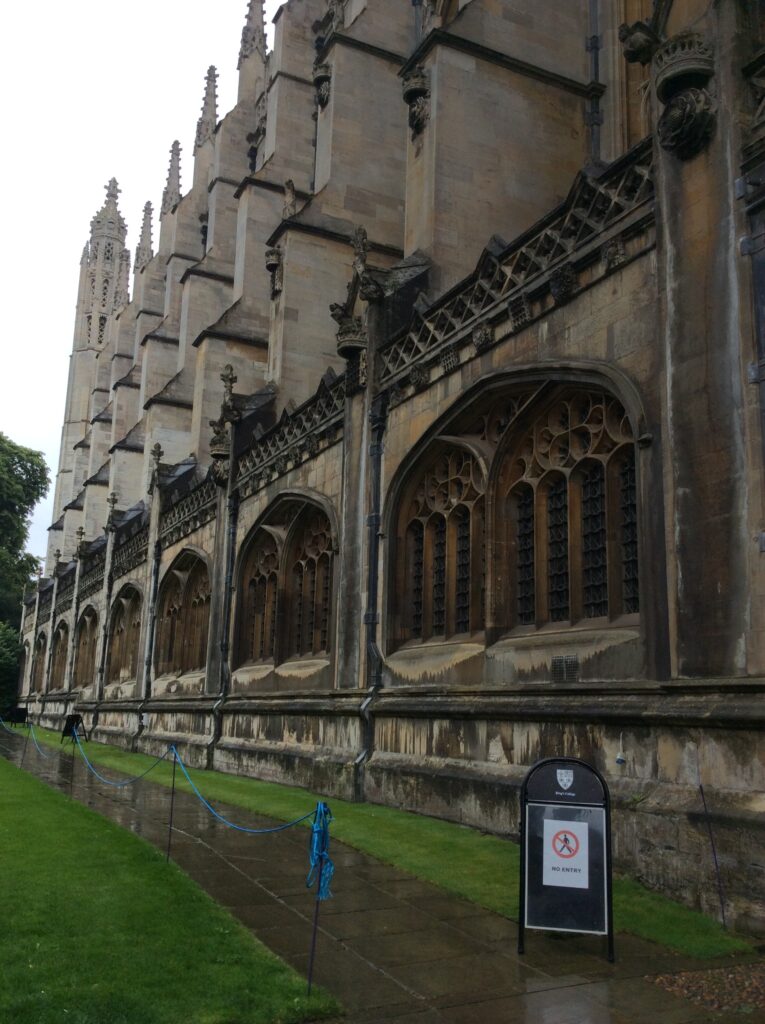
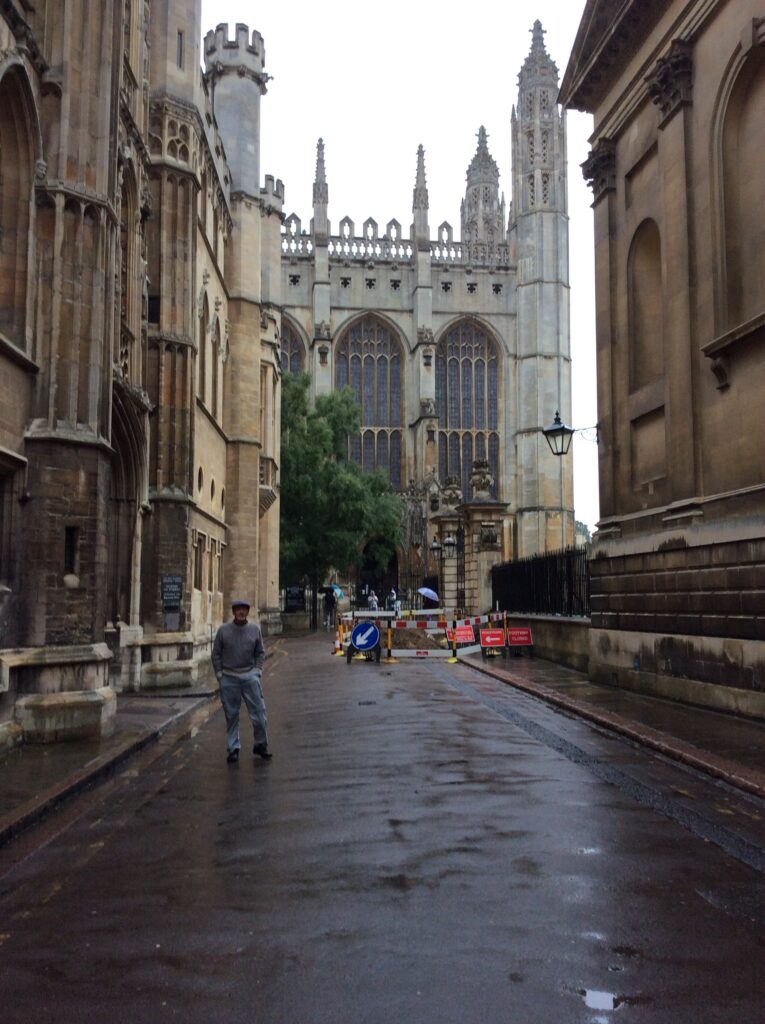
from Trinity Lane
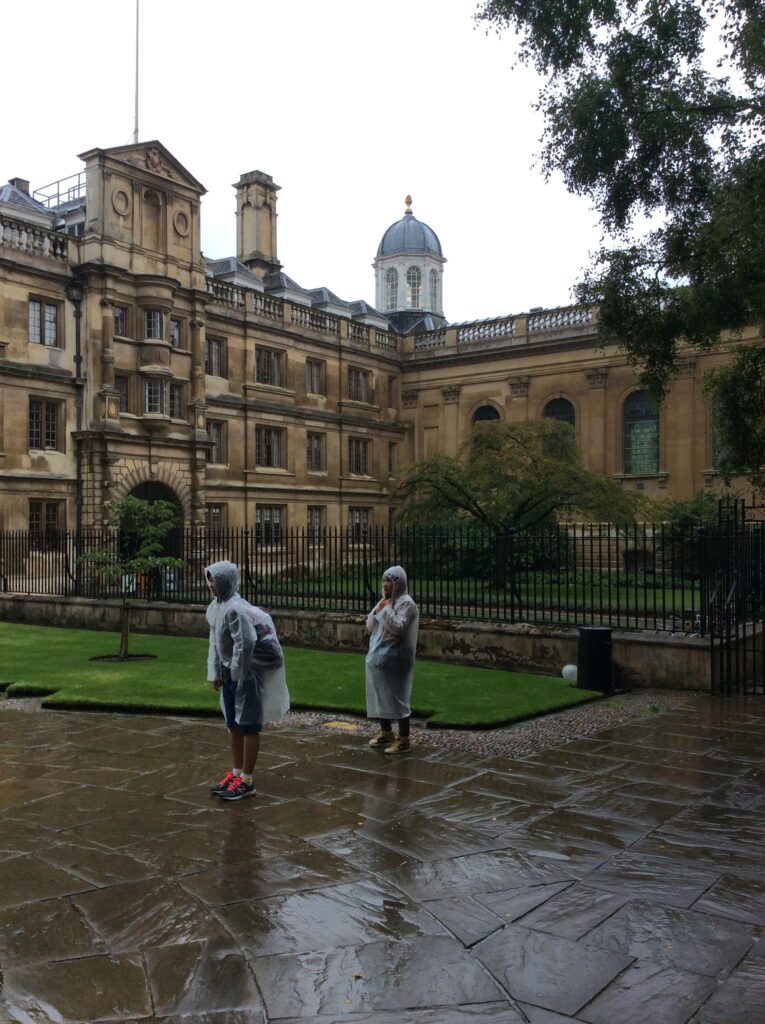
Cambridge University, founded in 1209, is the second-oldest university in the English-speaking world. It is composed of several famous colleges. We did not see tham all, but tried to get to the more famous ones. The chapel of King’s College is a Gothic masterpiece. Construction began in 1441 and features fan vaulting. Great St. Mary’s Church is the University church. Built in the 15th century, it features a famous tower with a 123-step spiral staircase that offers sweeping panoramic views of the city’s colleges.Clare college is famous for its stone architecture. Founded in 1326, Clare College is the second oldest of the Cambridge colleges.
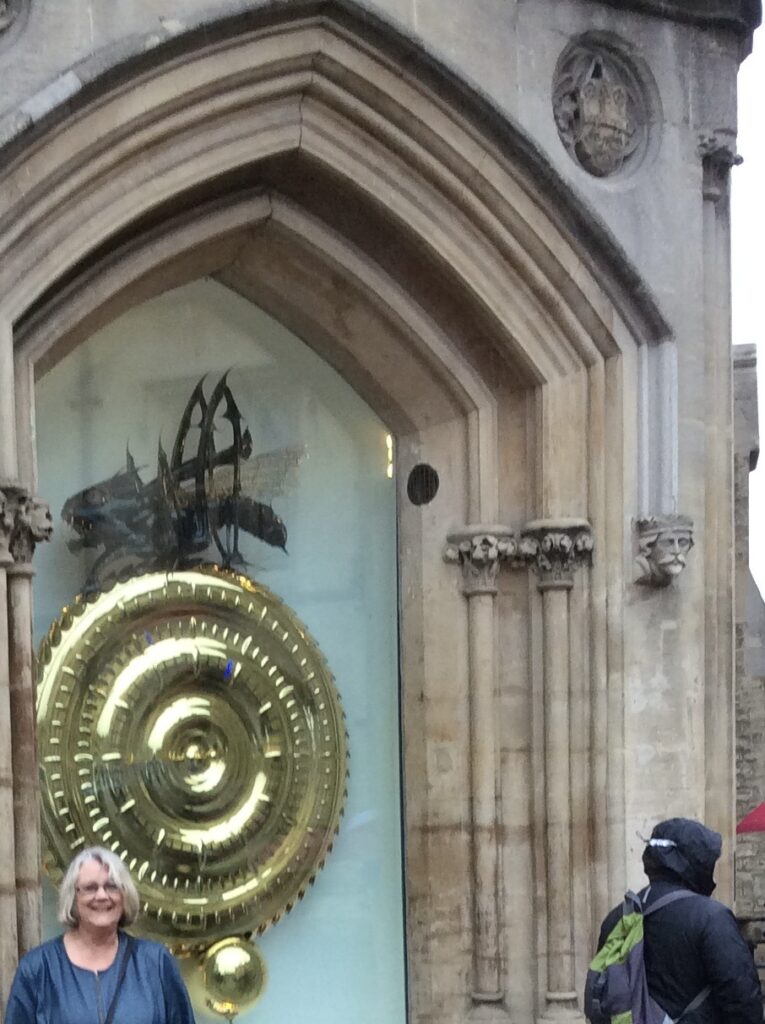
As we were leaving we passed by the famous Corpus clock. It was unveiled in 2008 by Stephen Hawking. The large, rippling gold-plated disc has no hands or numerals; instead, it displays time using blue LEDs that illuminate through slits. At the top of the clock is a terrifying grasshopper-like creature known as the Chronophage (Time Eater), which symbolizes the relentless passage of time. Conceived, designed, and funded by inventor and horologist Dr. John C. Taylor, the clock is known as one of the world’s strangest and most fascinating public artworks.
From Cambridge we returned to London.
Leave a Reply