Our final stop before Miami was Aruba, another island I had never visited before.
I started by hopping on the Oranjestad trolley that goes from the Cruise port to the downtown. It makes six stops along the way. The stops include the House of Parliament, National Archaeological Museum, Fort Zoutman, the Protestant Church, and the pedestrian mall at the end. This gave me an overview of some of the important sites close to the port.
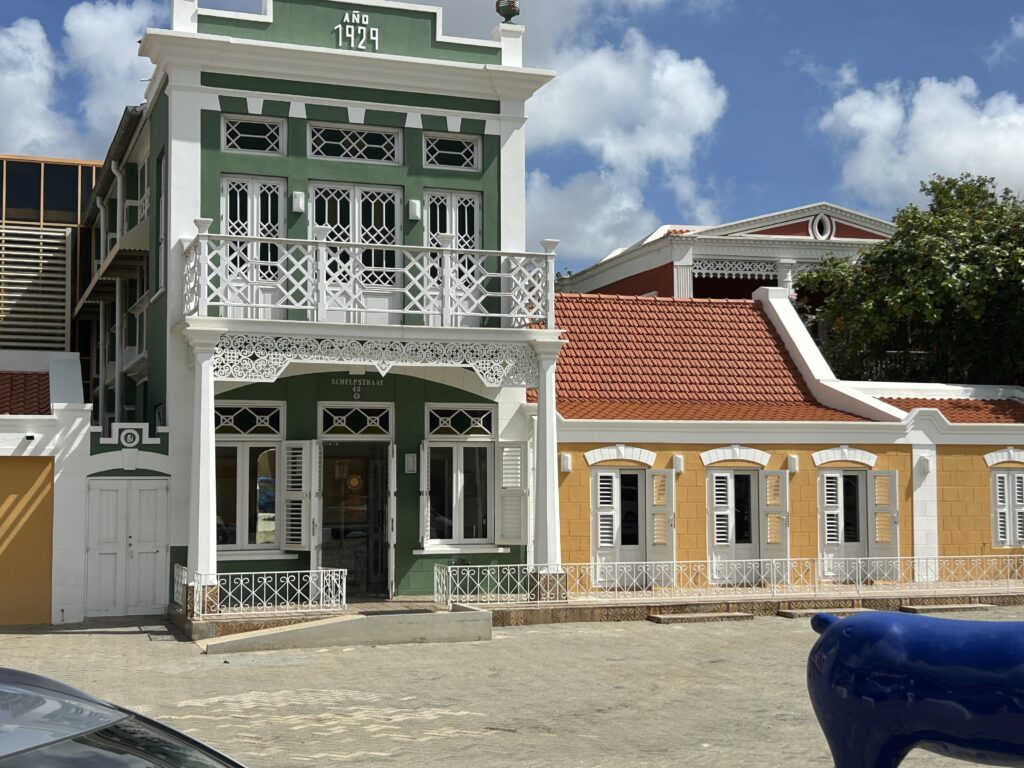
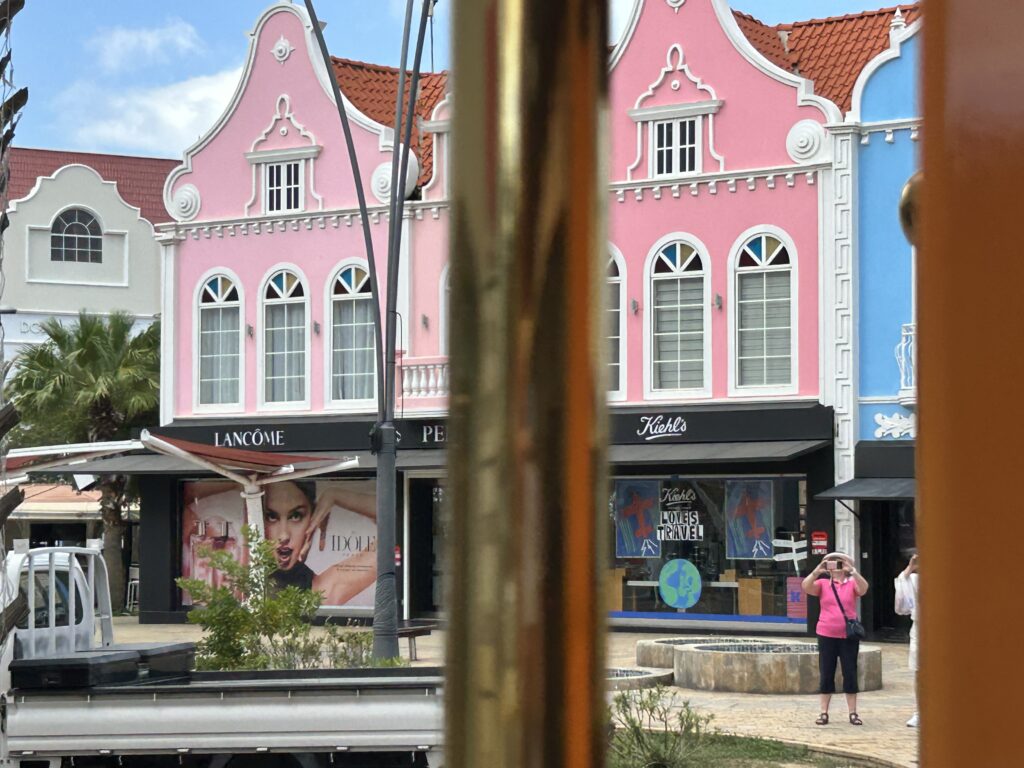
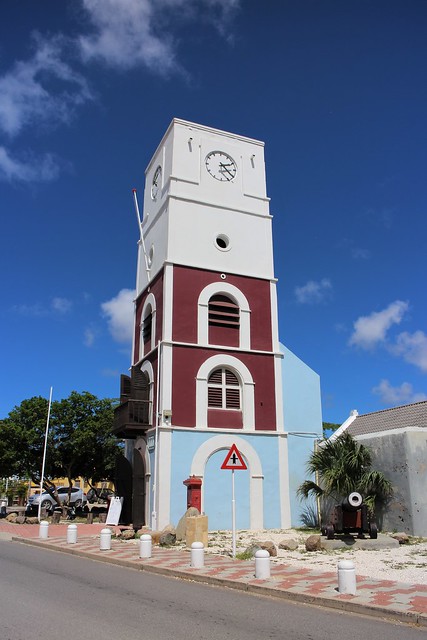
Fort Zoutman houses a history museum. Built in 1796 to protect the coast, it is the oldest remaining building in Oranjestad. It is named after Dutch Rear Admiral Johan Arnold Zoutman, who never set foot on Aruba but defeated the English in the North Sea. Standing next to the fort is the Willem III Tower, marking the fort’s original entrance. This was gift in 1868 and served as both a lighthouse and public clock tower. The light was extinguished in 1963 after 95 years.
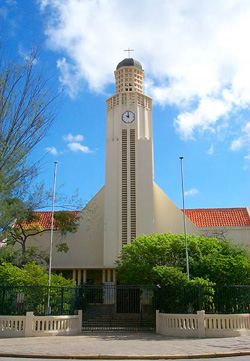
The one Protestant church in Oranjestad has congregations from the Dutch Reformed and Lutheran traditions. The old church dates from 1846. Before that the members met in the house of the Arends family. In 1867 a tower was added to the church. In 1950, a new church was built next to the old church which has been restored and is currently used as an exhibition and concert hall. It also houses the A. van den Doel Bible Museum.
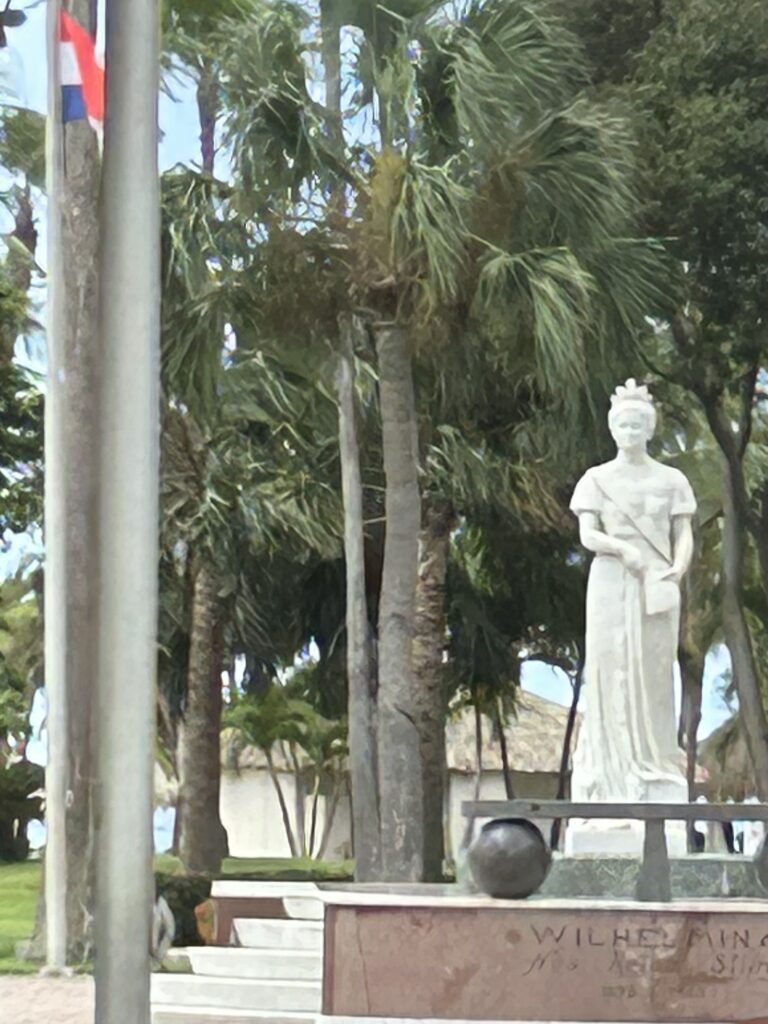
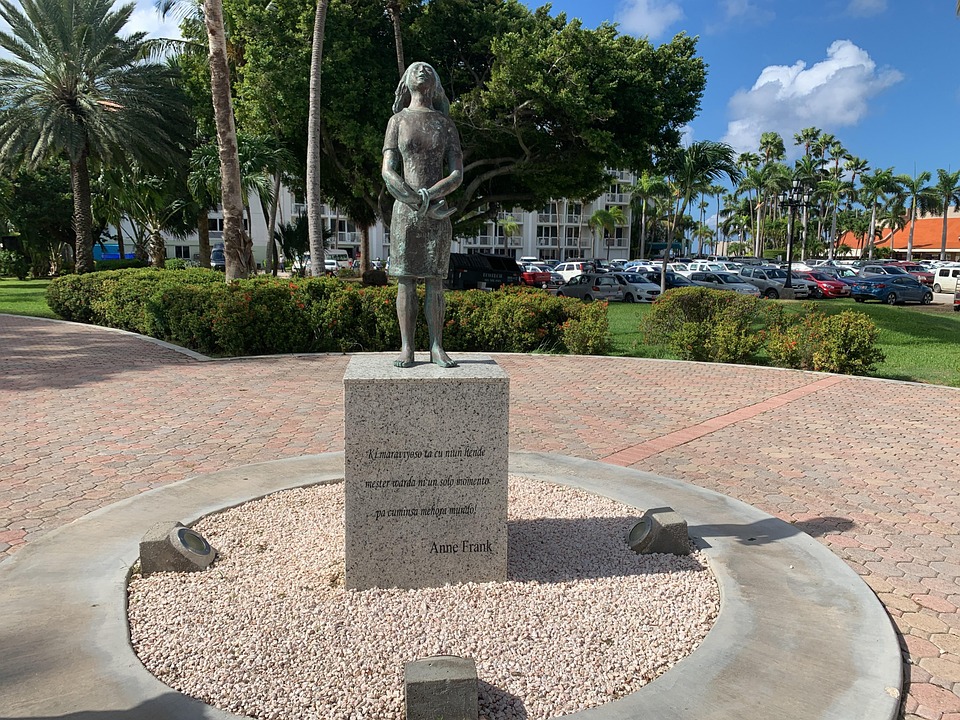
When I returned to the port, I decided to take a two-hour bus tour of the rest of the island. Our first stop was Queen Wilhelmina Park where there is a statue to her as well as a statue to Anne Frank. Queen Wilhelmina ruled Aruba for the first half of the twentieth century. Then we traveled into the interior of the island. (The island is only six miles wide at its widest point.)
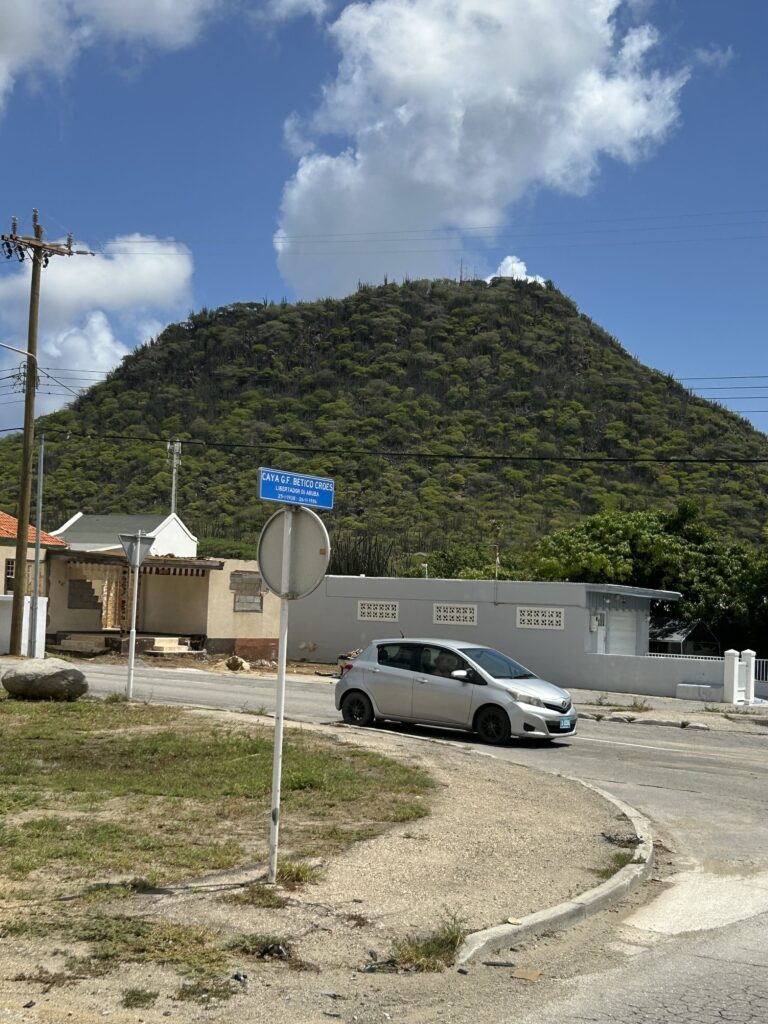
There we saw Hooiberg, a conically shaped 541 ft. volcanic hill. You can climb 600 steps to its summit. It is the second highest point on the island. The name Hooiberg” means “haystack” in Dutch.
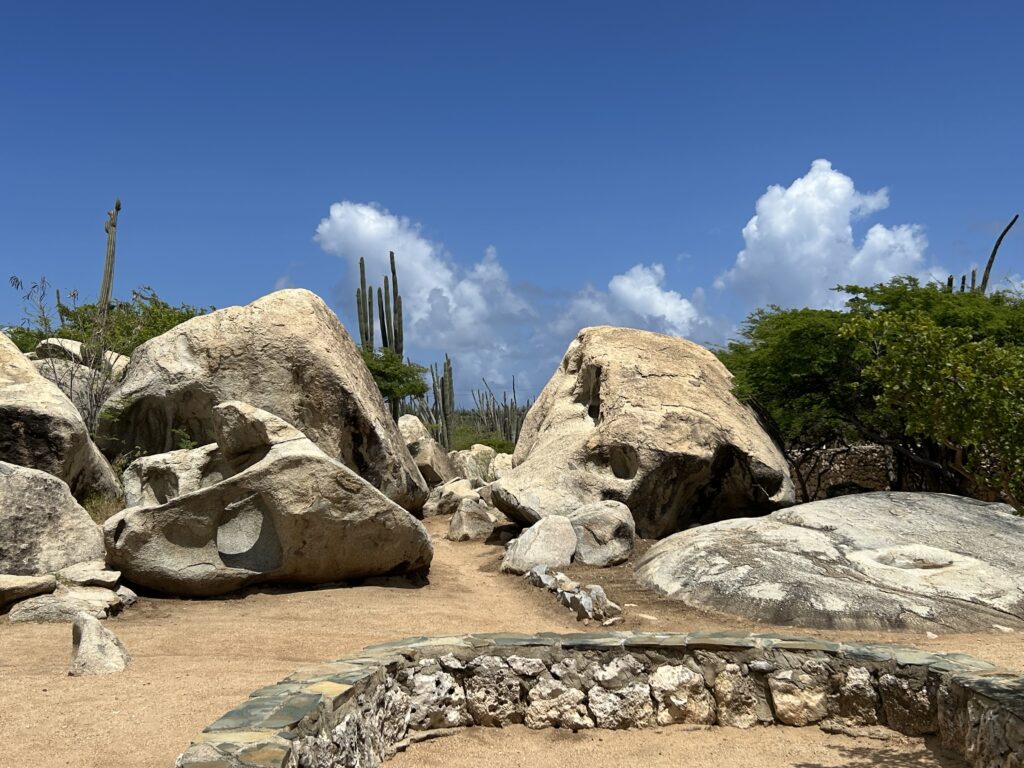
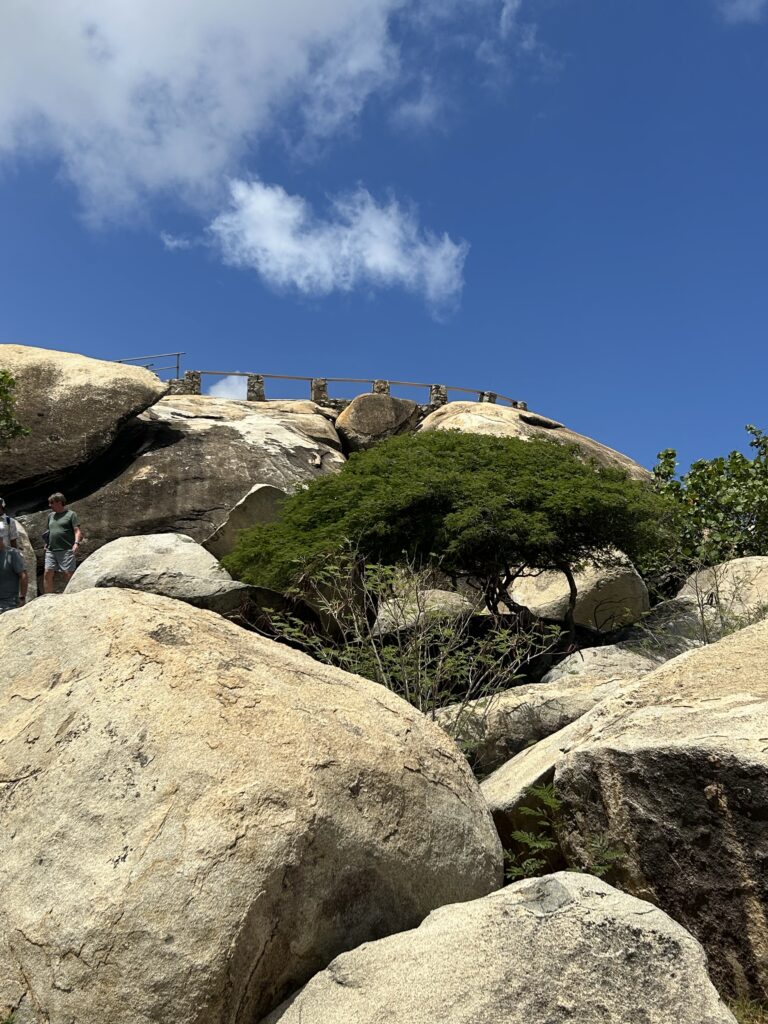
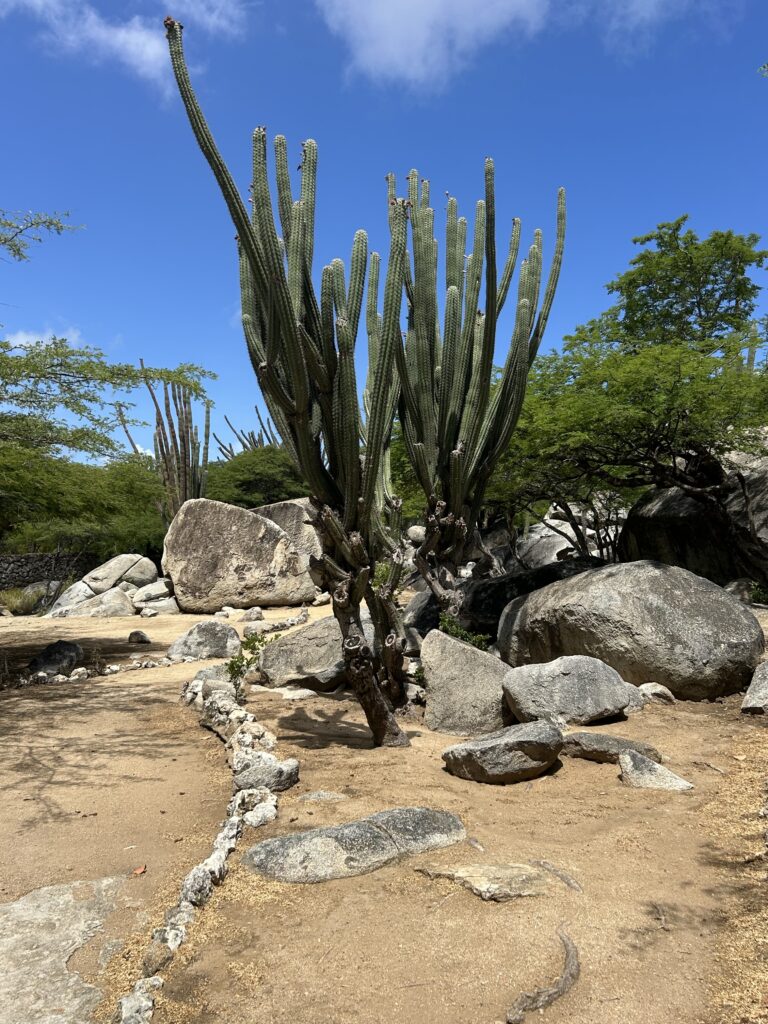
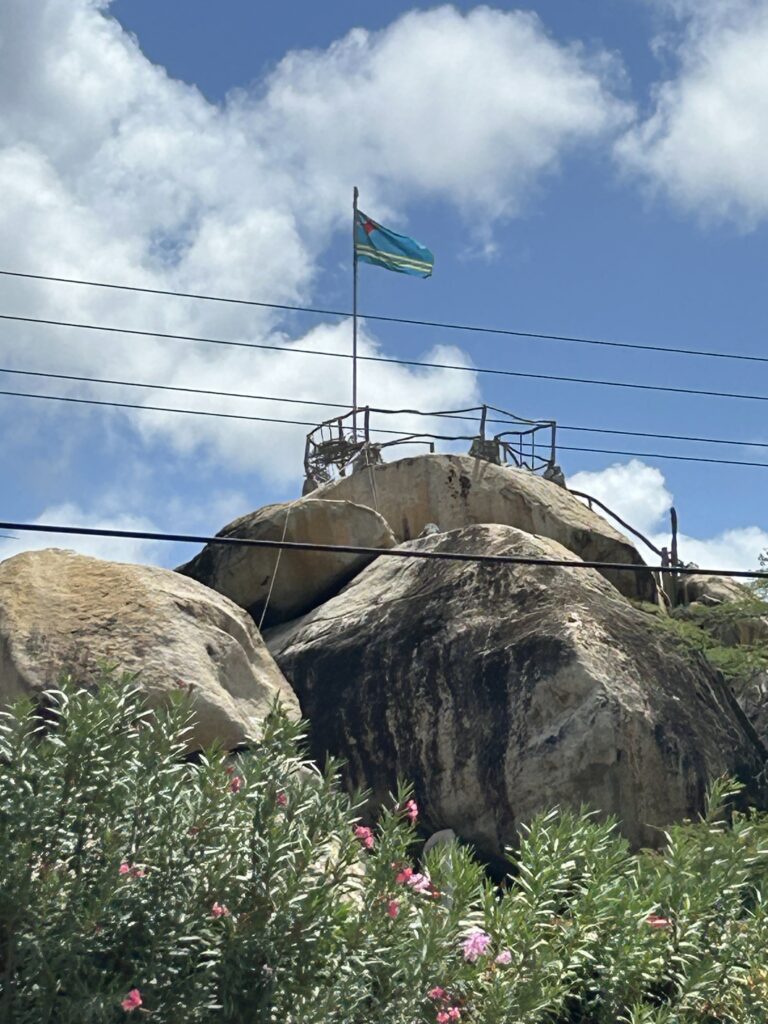
From Hooiberg, we traveled to the Casibari Rock Formations, also called the Cribari Boulders. The massive tonalite boulders create a unique landscape in Aruba’s generally flat terrain. We stopped to explore the boulders and climb up them for a great view of the island. The boulders are formed from large diorite and tonalite boulders, weighing several tons.
The next stop was the Alta Vista Chapel. This is a small Roman Catholic chapel on the hills above the north shore of the island. The road up to the chapel is lined with stations of the cross. The original chapel was built by Caquetio Indians and Spanish and was the result of the work of Domingo Antionio Silvestre, a Venezuelan missionary. It had stone walls and a straw roof and was dedicated to Mother Mary. It is the first church in Aruba.
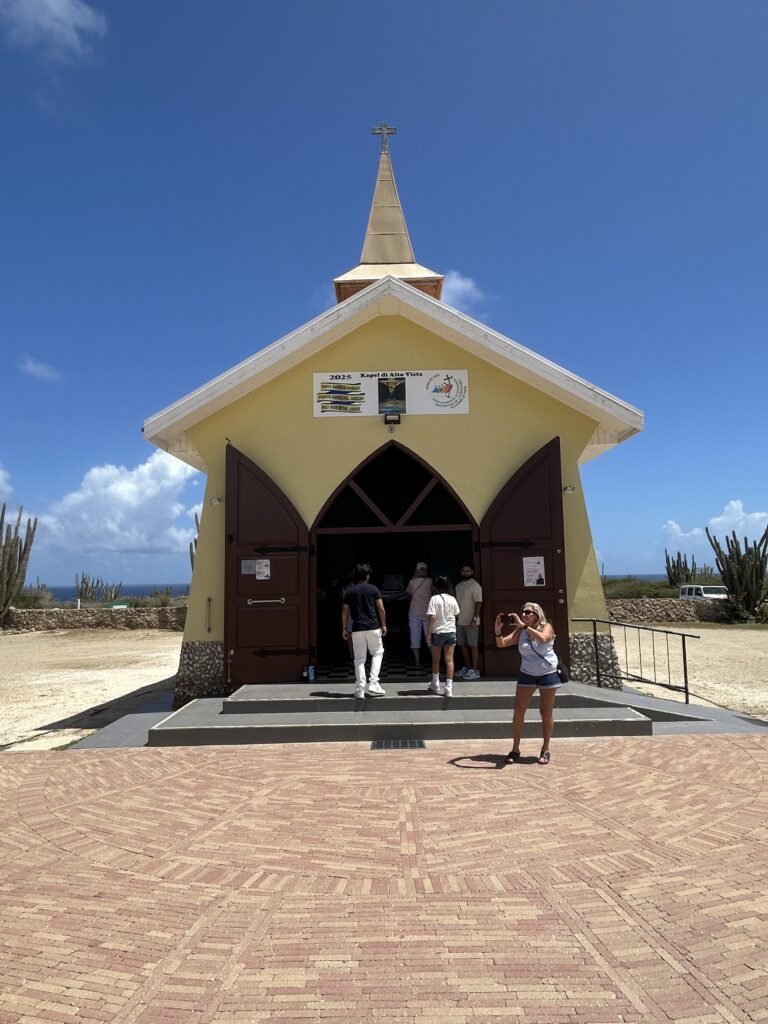
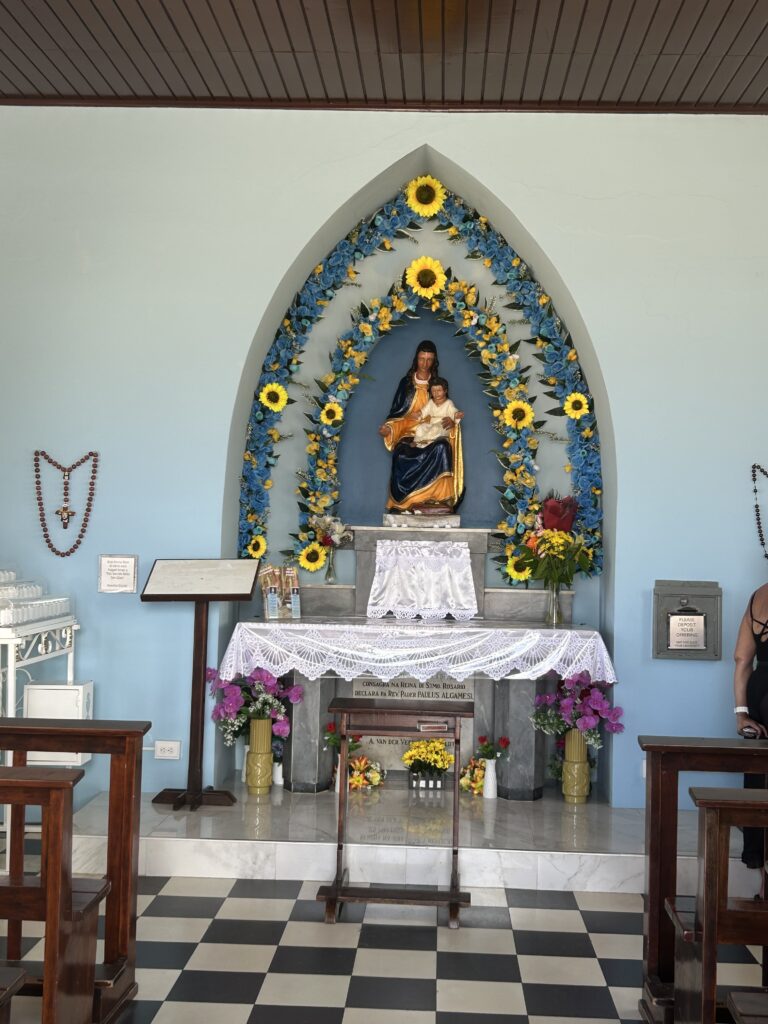
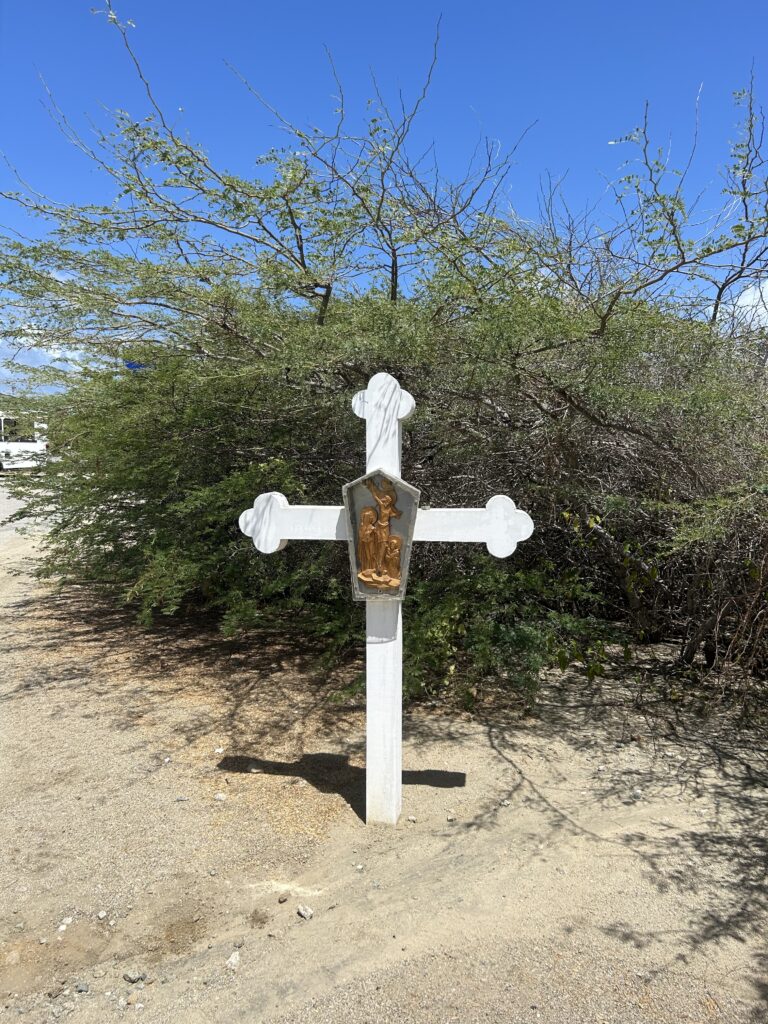
The current chapel was completed in 1952, and services are held weekly. Its location marks the place where conversion of Aruban Indians to Christianity started.
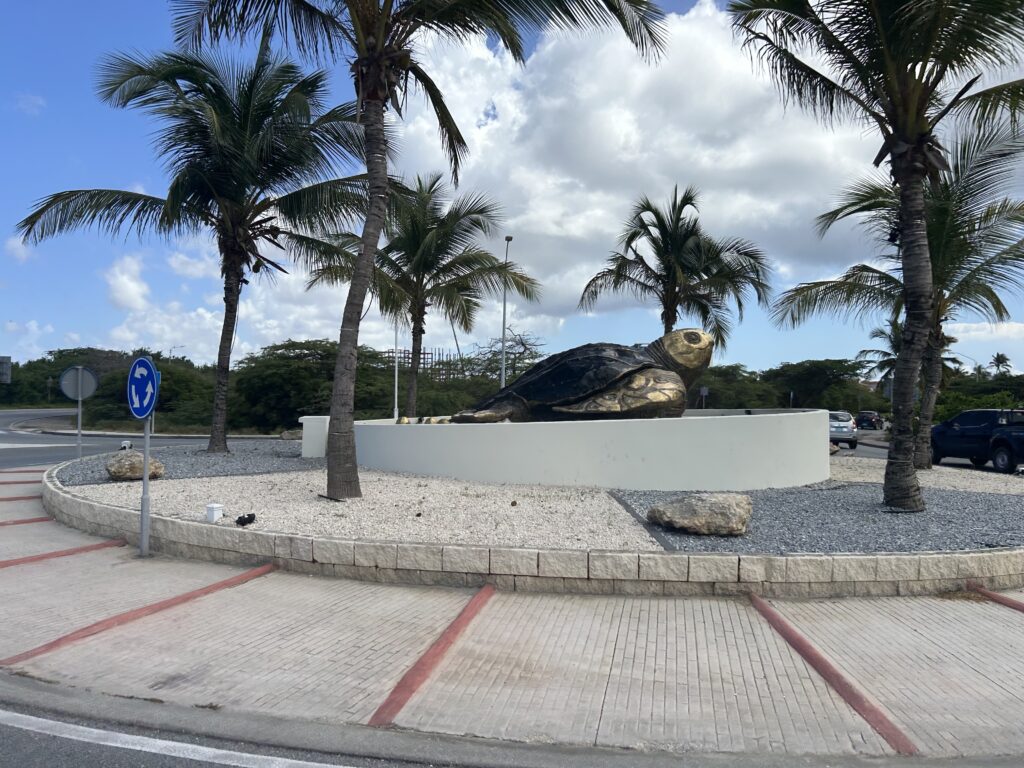
From here we went to Palm Beach, which boasts a two-mile stretch of white sand and clear turquoise water. It is lined with palm trees giving it its name. There is a wonderful turtle statue here.
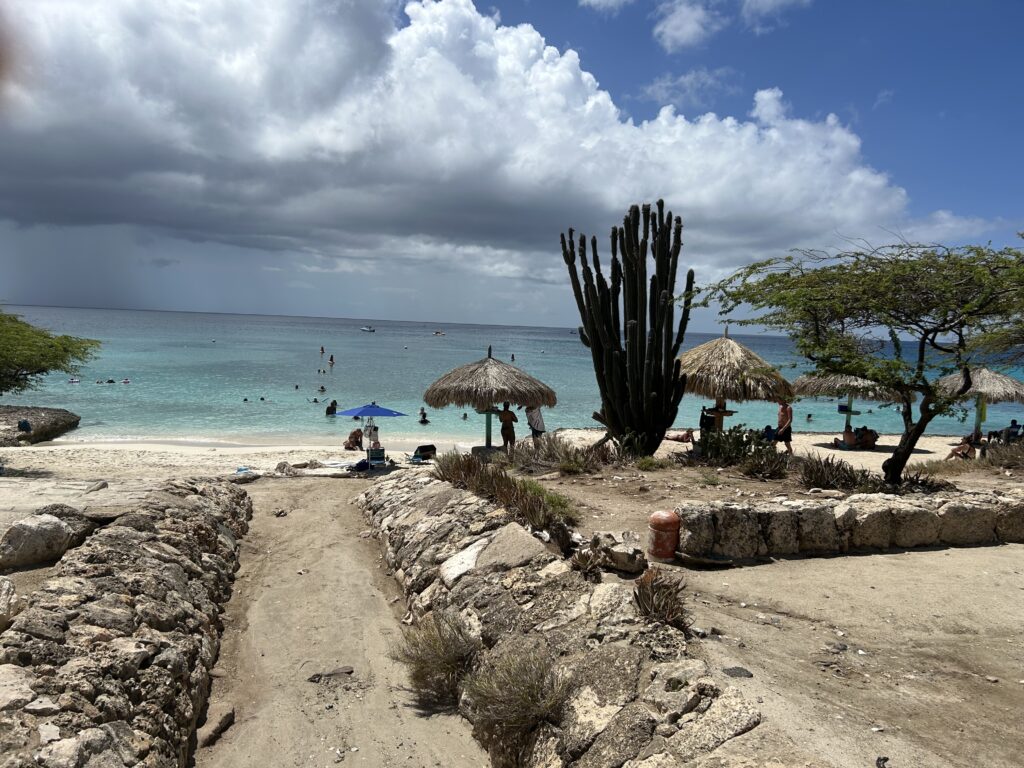
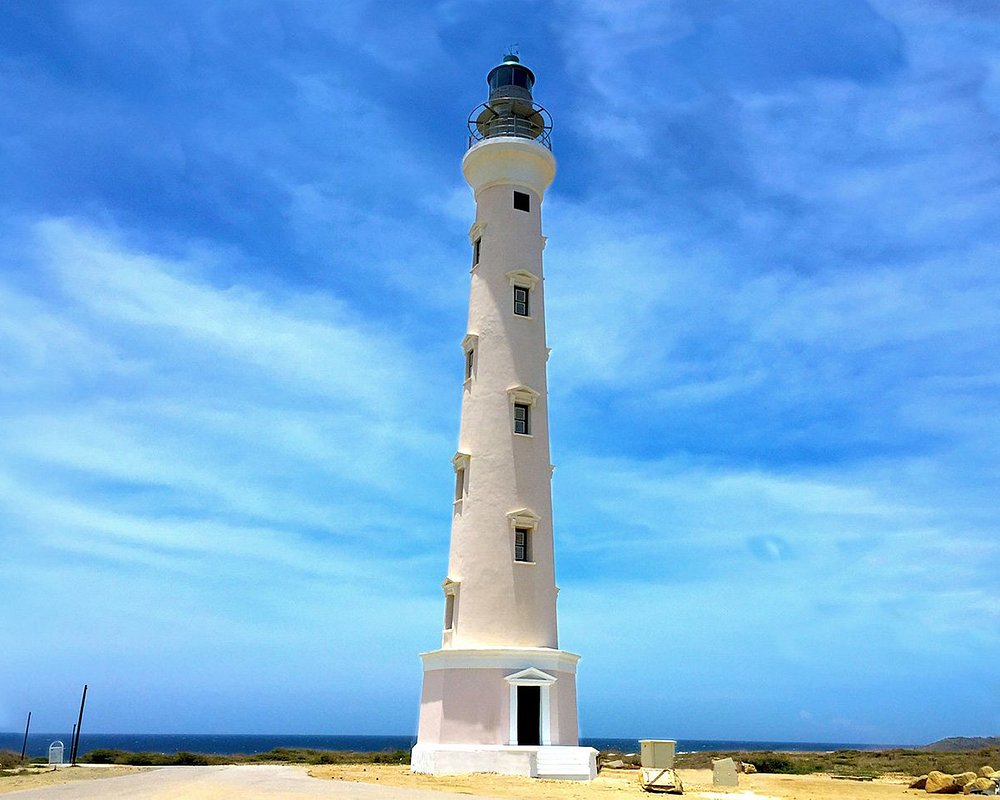
At the tip if the island is the town of Noord, where the California Lighthouse towers over the beach. Built in 1910, it was named after the steamship S.S. California, which wrecked nearby in 1891. The tallest building in Aruba, it is a striking, white-washed structure which stands on a limestone plateau. It offers breathtaking views of the Caribbean Sea and the island’s rugged coastline. It is a symbol of Aruba’s maritime heritage.
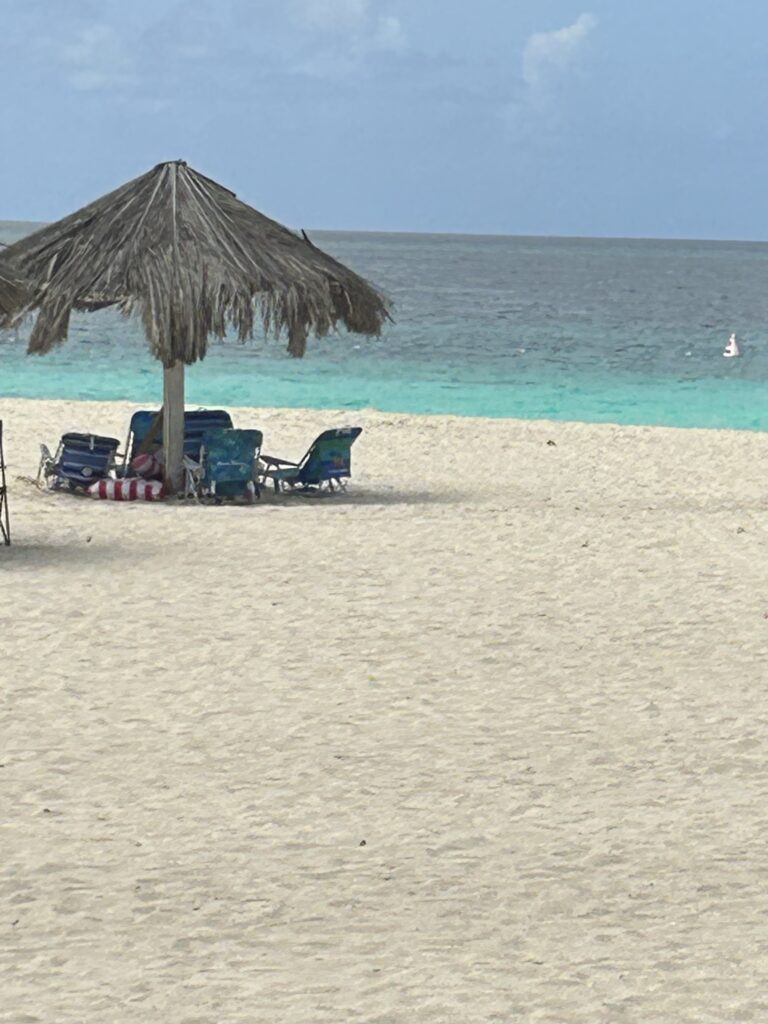
Our last stop was Eagle Beach which is a popular destination because of the white sand and clear turquoise water. Afterall, Aruba is famous for its beaches. We wandered around on the soft sand and waded in the water before we headed back to the ship.
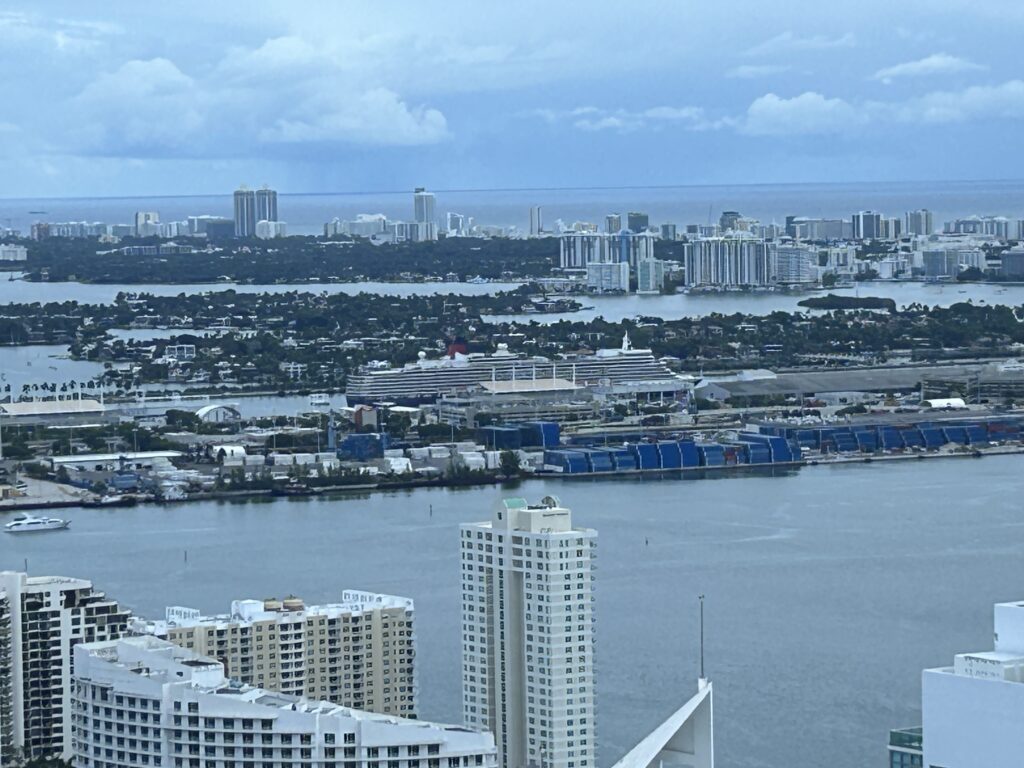
The next day we reached our destination: Miami. A wonder three-week journey.
Leave a Reply