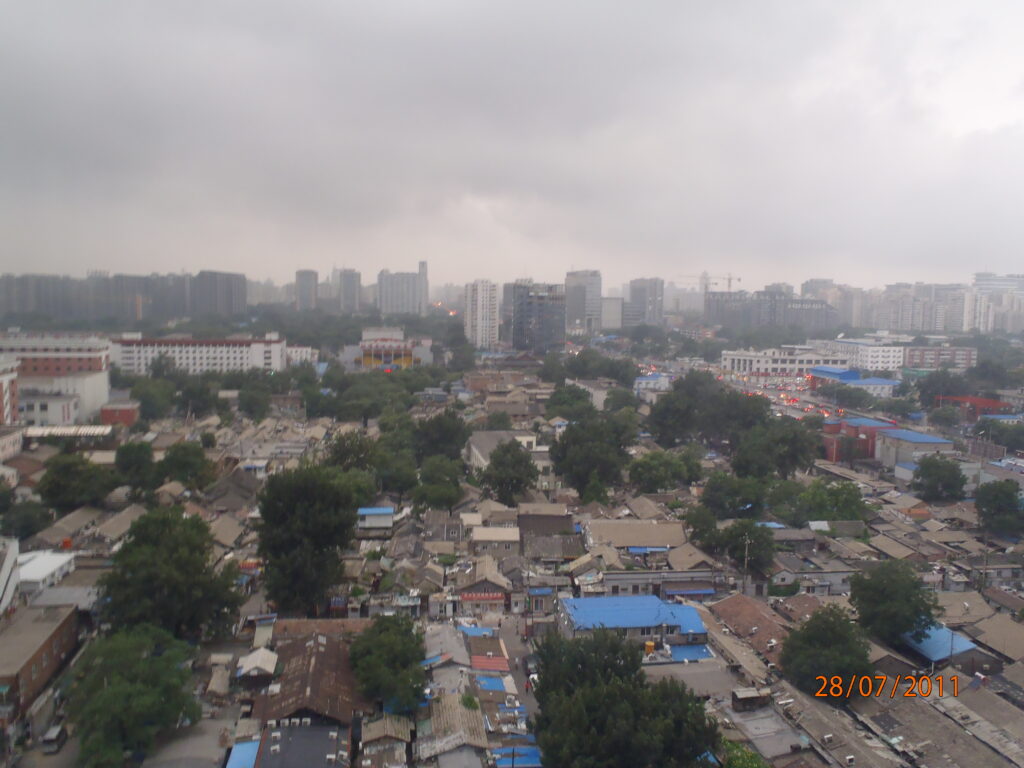
While I had traveled some to this point, it was the trip to China that awakened my desire to see the world. Over spring break, I went with some students and other faculty to Beijing and Shanghai. We arrived after a long 14-hour overnight flight to hot, humid, smoggy Beijing. We were met by our guide, a young man, college educated, who spoke perfect English and taken to our hotel in central Beijing.
Arrival
Our rooms were comfortable; however, the first thing we noticed was a large pot to boil water. The accompanying sign informed us that we could not use the water for anything, including brushing our teeth, without boiling. Hence the pot. We each get one bottle of water a day from the tour guide. We found a shop across the street where we could buy more; it only cost 2 Yuen for a 16 oz bottle—about 13 cents. The 1-½ liter bottles were 5 Yuen, about 33 cents.
After settling in, we began our exploration of this huge city. Beijing is about 250 square miles. It takes four hours to cross the city without traffic, which is unbelievable. Traffic is another issue. Any time of the day, cars go everywhere, in and out; bicycles, motor scooters, and pedestrians are scrambled in the mix. Then there are the rickshaws. It is a mad house. I am glad I am not driving.
David (his English name), our guide, is very fluent. He is a college graduate and is 33. He says the one child to a family rule is presenting problems because there are now not enough children to care for the elderly. Also, there are three men for each woman because of the preference for boys, so it is hard to find a mate. He, however, is married.
It was pouring down rain, but we are Pacific Northwesterners, so we donned our ponchos and set out.
Silk Factory
China is the world’s largest producer of silk. Learning about silkworms and different types of silk thread was interesting. Chinese silk production dates back at least 5,500 years to the Neolithic period. Legend credits Empress Leizu with discovering the continuous fiber when a cocoon fell into her tea. Revealing silk production secrets outside of China was punishable by death for centuries.
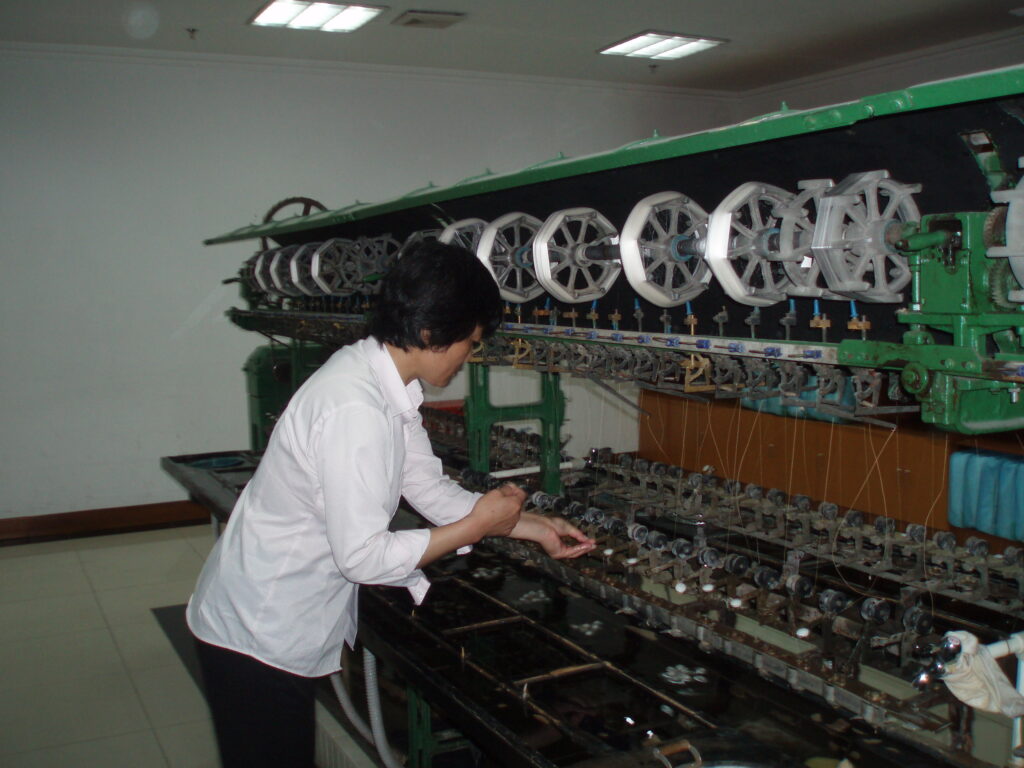
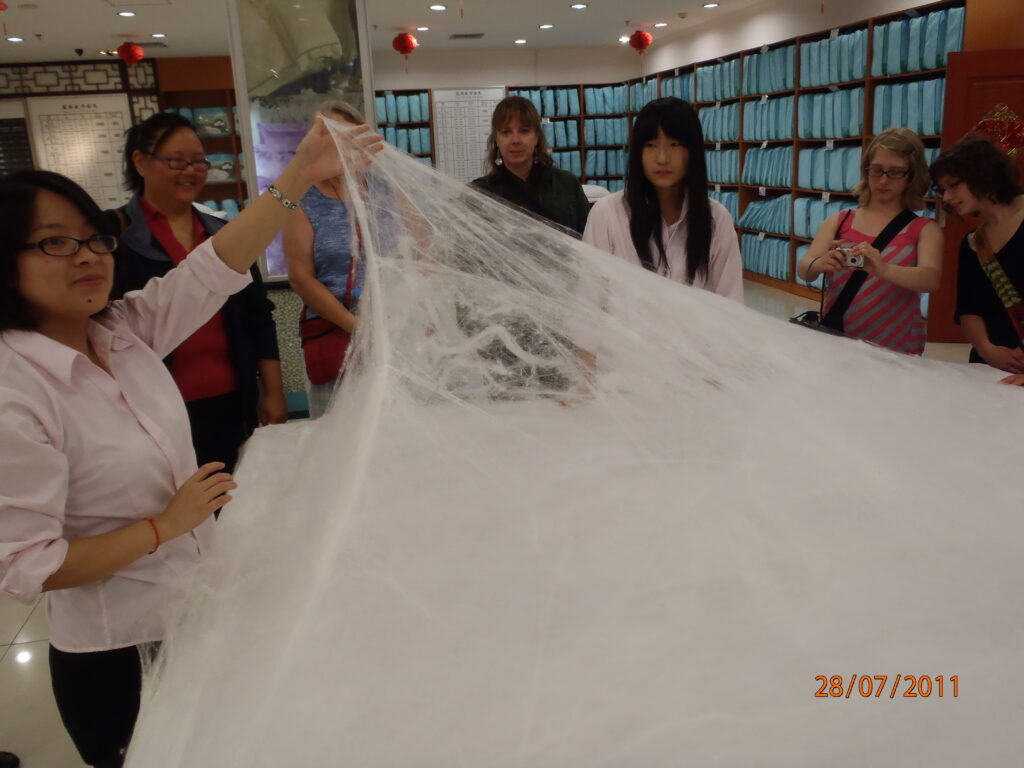
The process involves raising silkworms, which feed on mulberry leaves, harvesting their cocoons, and extracting the silk threads. Then the threads are woven into fabrics. We got to try stretching the silk filaments across a frame for a quilt. Several layers of silk filaments create the filling for the quilt. The quilts were tempting,
Pearl Factory
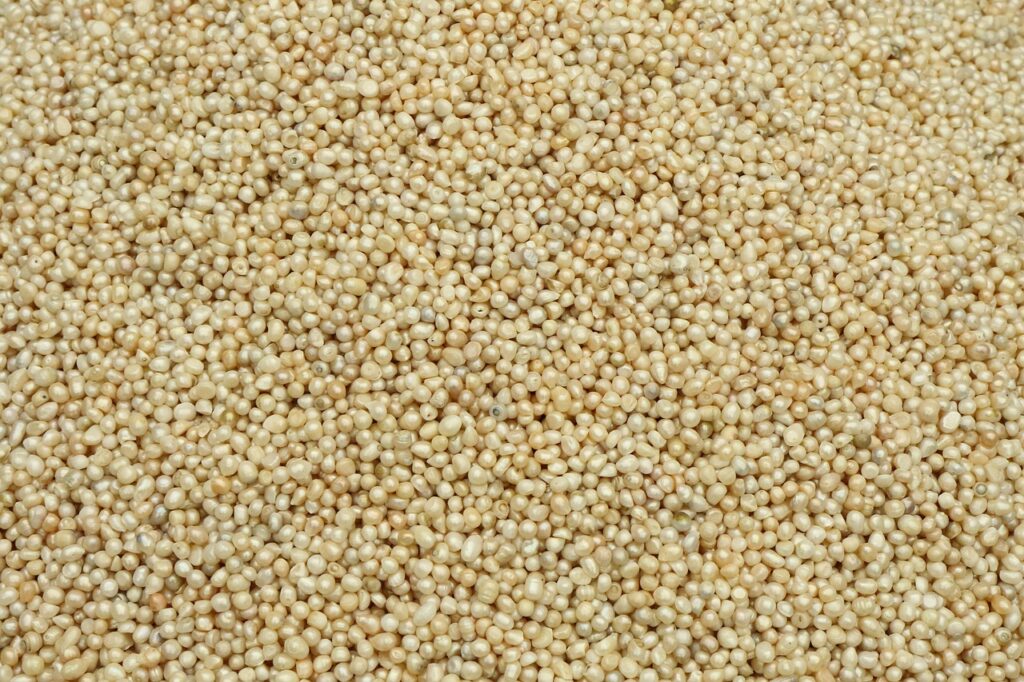
After the silk factory, we went to the pearl factory. Pearls have always been significant in Chinese culture. They represent wealth, status, purity, and good fortune. China produces over 70% of the world’s freshwater pearls. The freshwater pearls are cultured using mussels, not saltwater oysters. Mussels are raised; then a technician places a small tissue in the mussel shell. The mussel then coats the tissue with nacre. Over a few years, the nacre accumulates and pearls develop. The mussel can produce dozens of pearls at a time while the oysters only produce one.
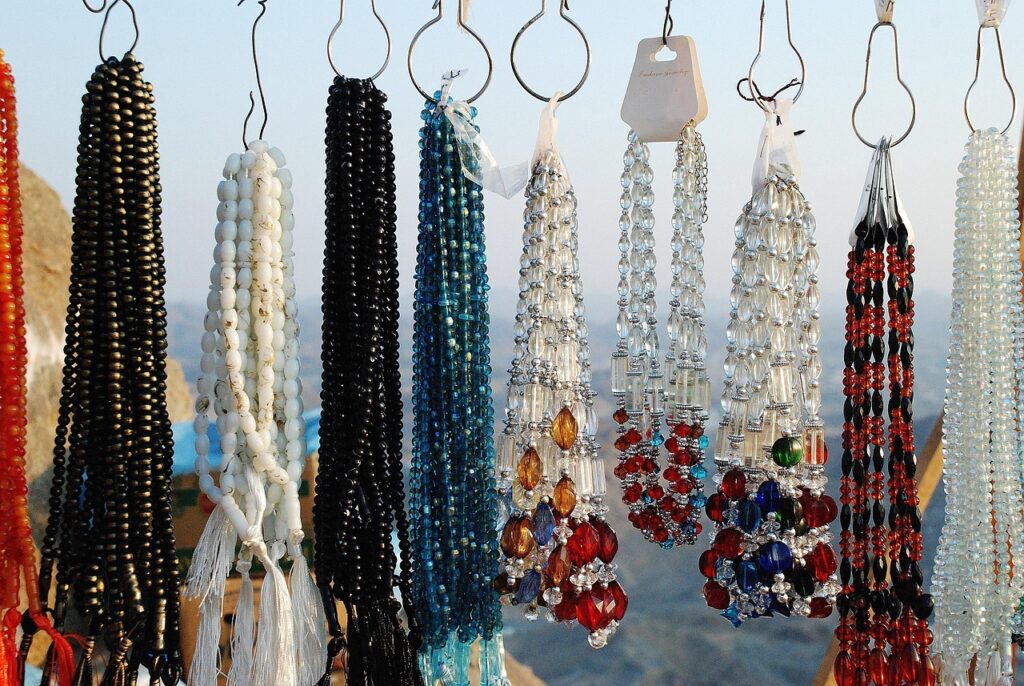
The freshwater pearls come in a variety colors, shapes, and textures. The colors include white, pink/peach, lavender/lilac, cream, Champagne, and metallic silver. The colors occur naturally depending on the mussel type, mineral content, and water. Their shapes vary from round, button, drop, oval, potato, baroque, and coin. The process of matching pearls for necklaces can take weeks because of the variety of tone, size, and shape. We were able to see the work rooms where women selected and matched pearls for jewelry. It seemed to be a very tedious task. However, the resulting necklaces and bracelets were beautiful. The Chinese still value pearls as a symbol of status and wealth. They are common gifts for weddings and other important occasions.
Temple of Heaven
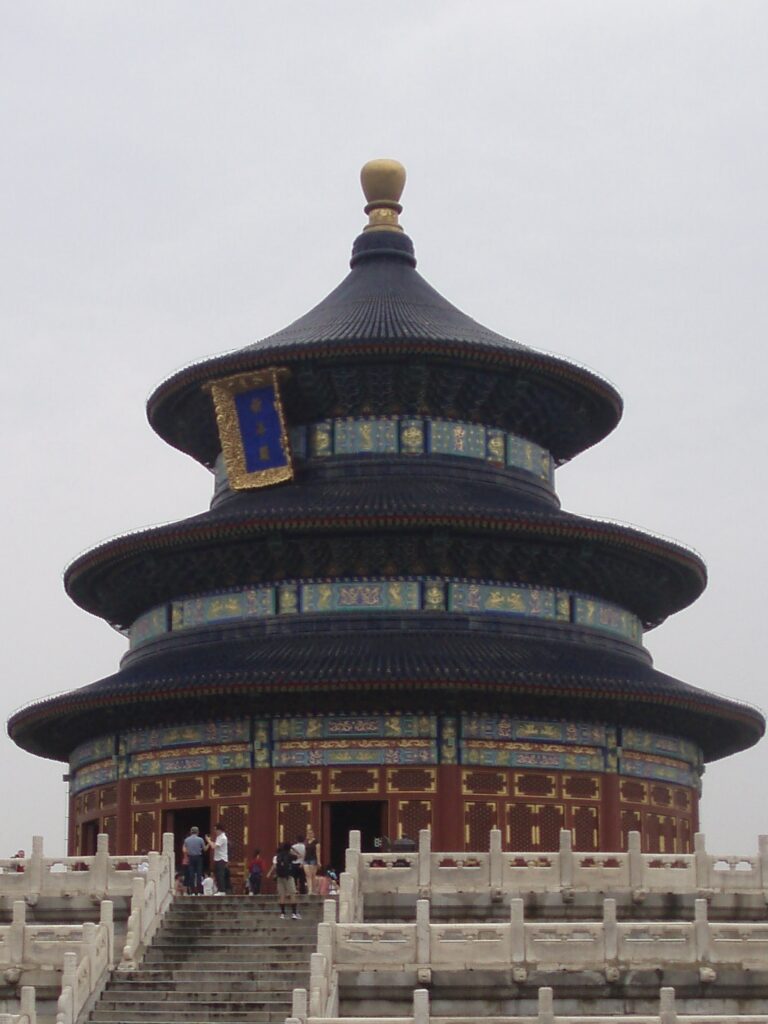
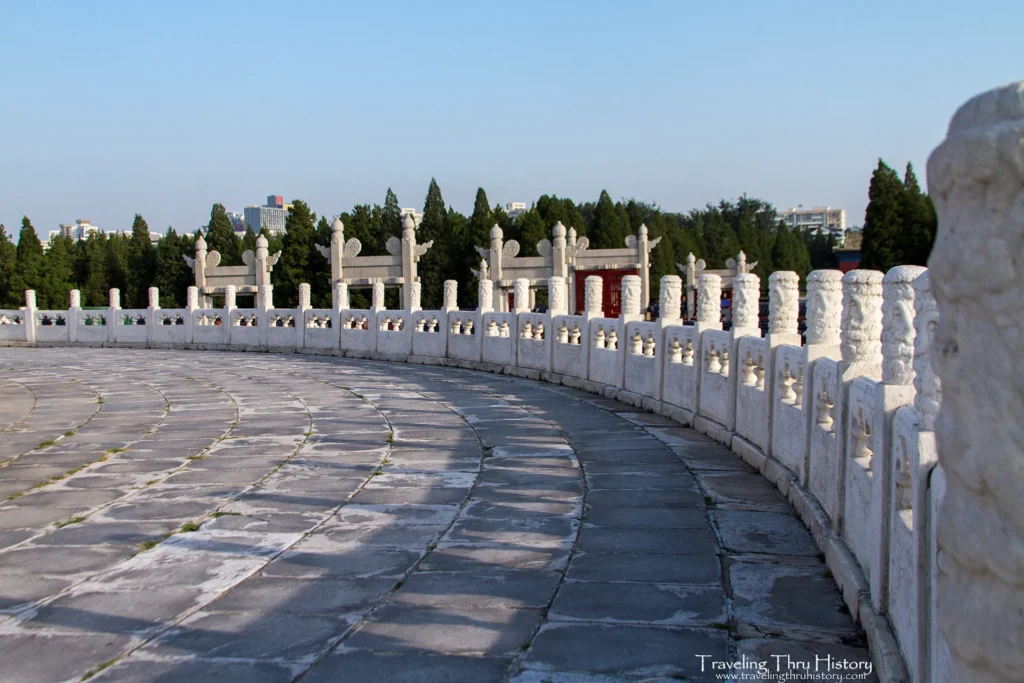
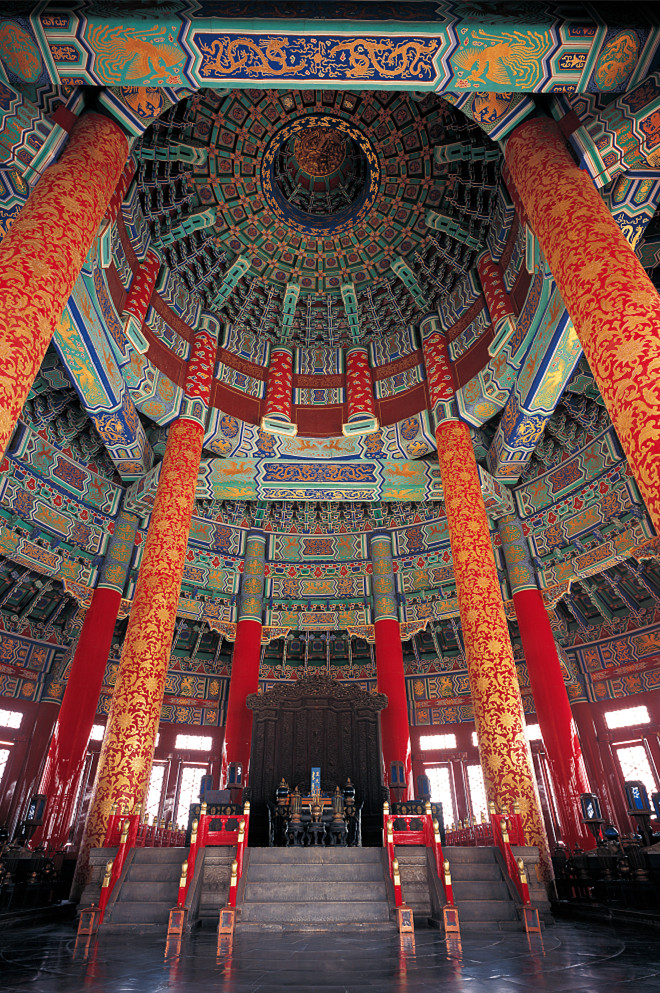
After our commercial ventures, we went to the Temple of Heaven where the emperor came at the winter solstice to pray for divine inspiration. It is a UNESCO World Heritage Site and the world’s largest surviving imperial sacrificial altar complex. The original Altar to Heaven and Earth was constructed in 1420 under the Ming Dynasty’s Yongle Emperor. In 1530, Emperor Jiajing built a separate altar, The Circular Mound Altar, to worship heaven. This altar is a triple-tiered, open-air white marble stone platform, meant to symbolize heaven. At this time the Imperial Vault of Heaven was also added. It is a wooden building inside the Temple of Heaven, and the sacred spiritual tablets used during rituals are stored there. The emperors of the Ming and Qing dynasties performed solemn rituals, such as praying to the heavens for favorable weather and bountiful harvests, in the temple. The entire complex is explicitly designed around the ancient Chinese cosmological concept of “round heaven, square earth,” featuring circular structures built upon square foundations. The temple is a 125-foot wooden structure built without nails. It uses an interlocking wood architecture and stands on a three-tiered marble base.
Temple of Heaven Park
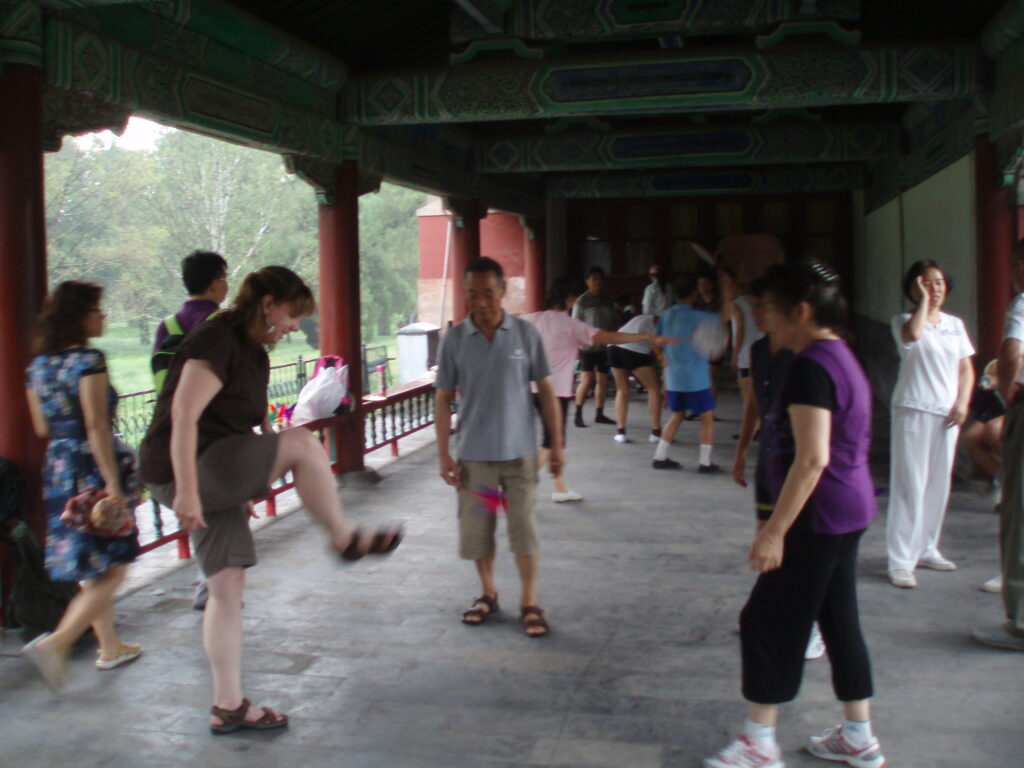
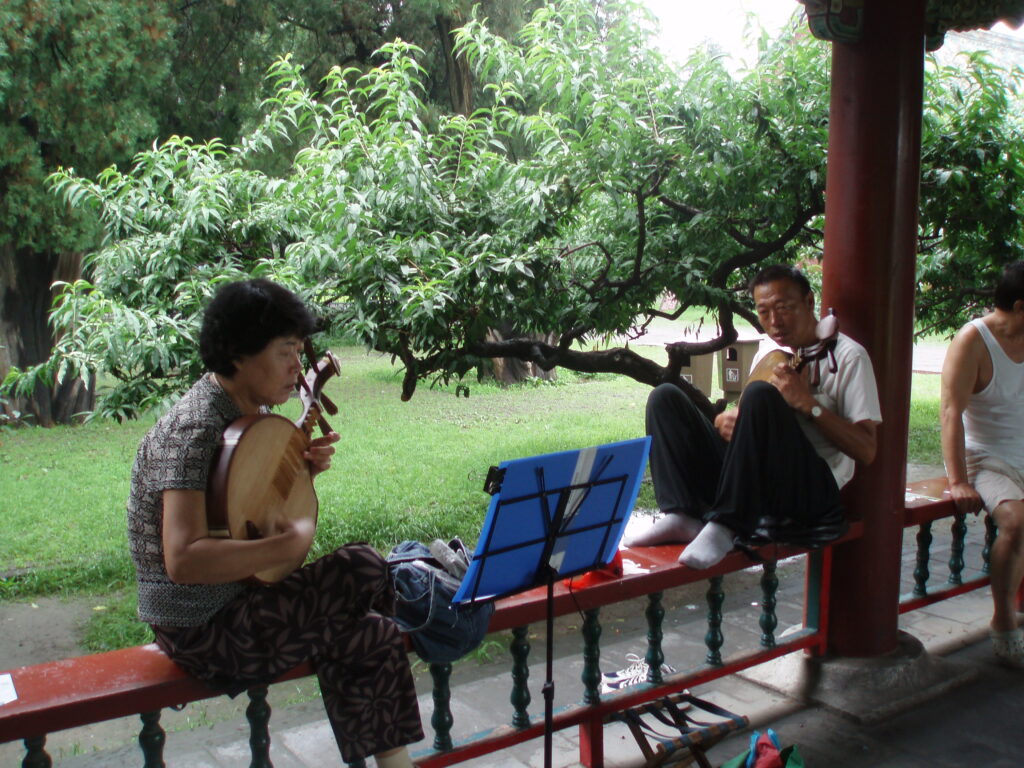
On the eastern side of the temple lies the tourist entrance in a huge park where lots of people gather to sit, play hacky-sack and Mah jong, practice tai chi, sell things, and just relax. There were lots of older people. As you continue along the path, you will reach the Long Corridor, a passage connecting the Animal Killing Pavilion, Divine Kitchen and Divine Warehouse. Along here you will continue to find people playing card, chess, Mah jong, or even knitting. The corridor leads one to the Hall of Prayer for Good Harvest. This is the highlight of the park. Inside you will find the Imperial Vault of Heaven and the Circular Mound Altar. All the pillars and rings have numerical significance to the Chinese.
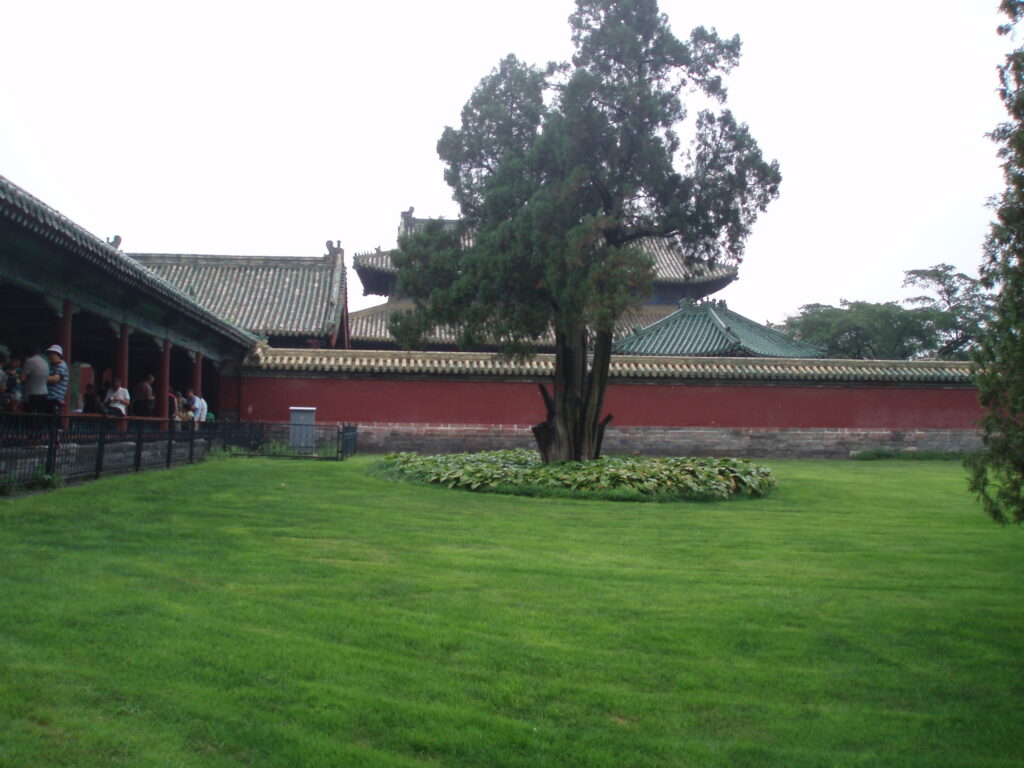
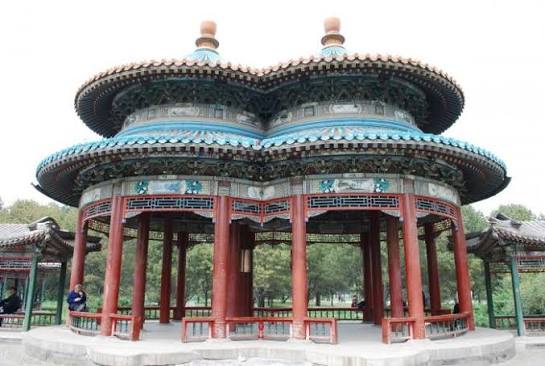
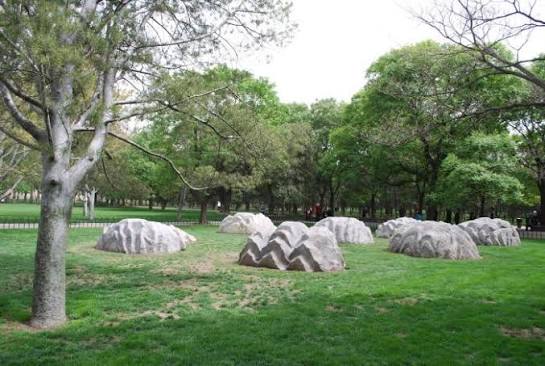
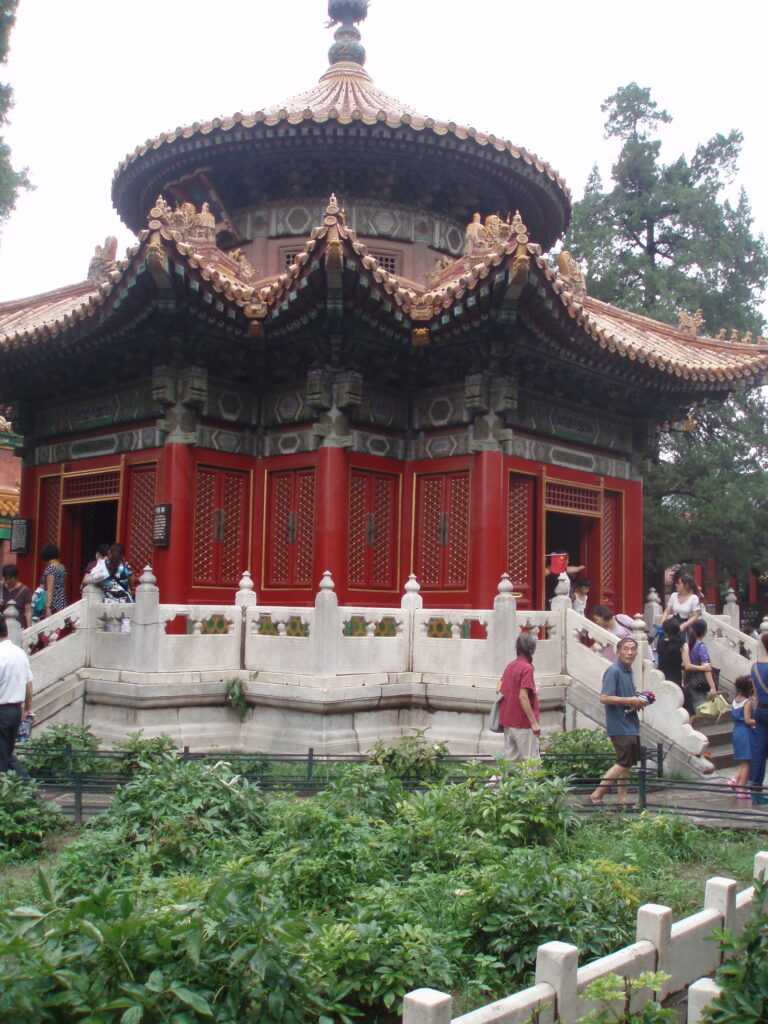
The Double-Ring Wanshou (Longevity) Pavilion in the Temple of Heaven Park. It is the only surviving double ring pavilion in China. Originally constructed during the Qing dynasty, it was relocated to the park in 1977. The Seven Star Stones were placed in the park in 1530 during the reign of Emperor Jiajing. Officially they represent the seven peaks of Mt. Tai, the most sacred peak in Chinese classical astrology. However, many see their placement as representative of the Big Dipper. An eighth stone was added during the Qing Dynasty to represent the Changbai Mountains and symbolize national unity.
Tian’anmen Square
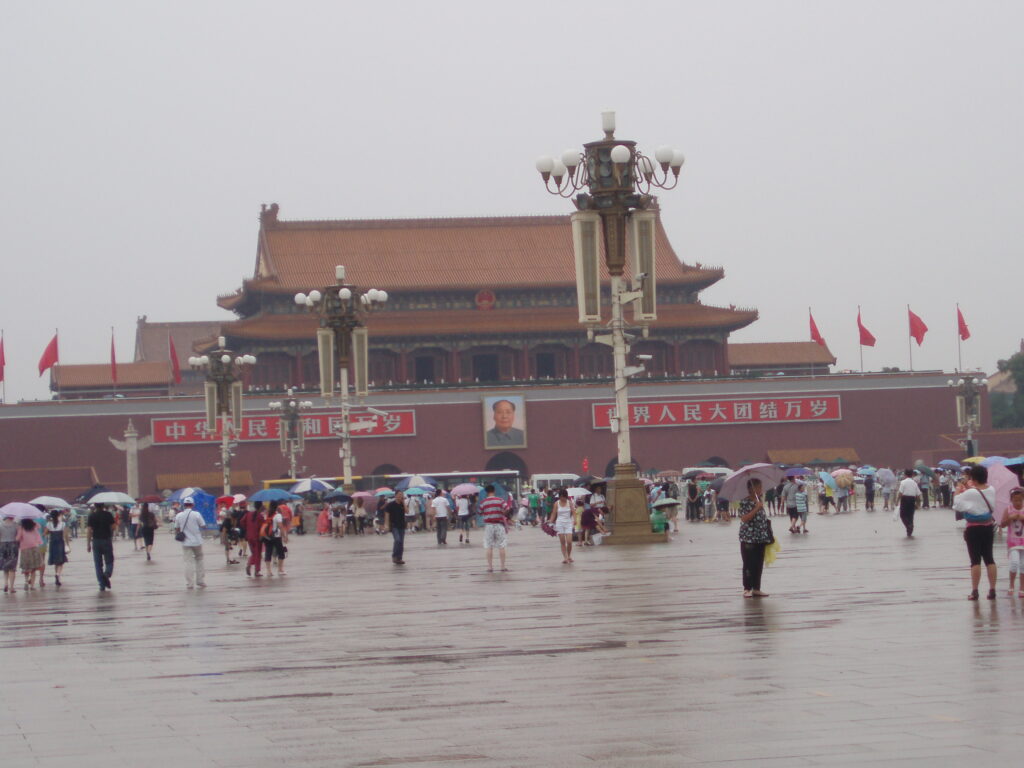
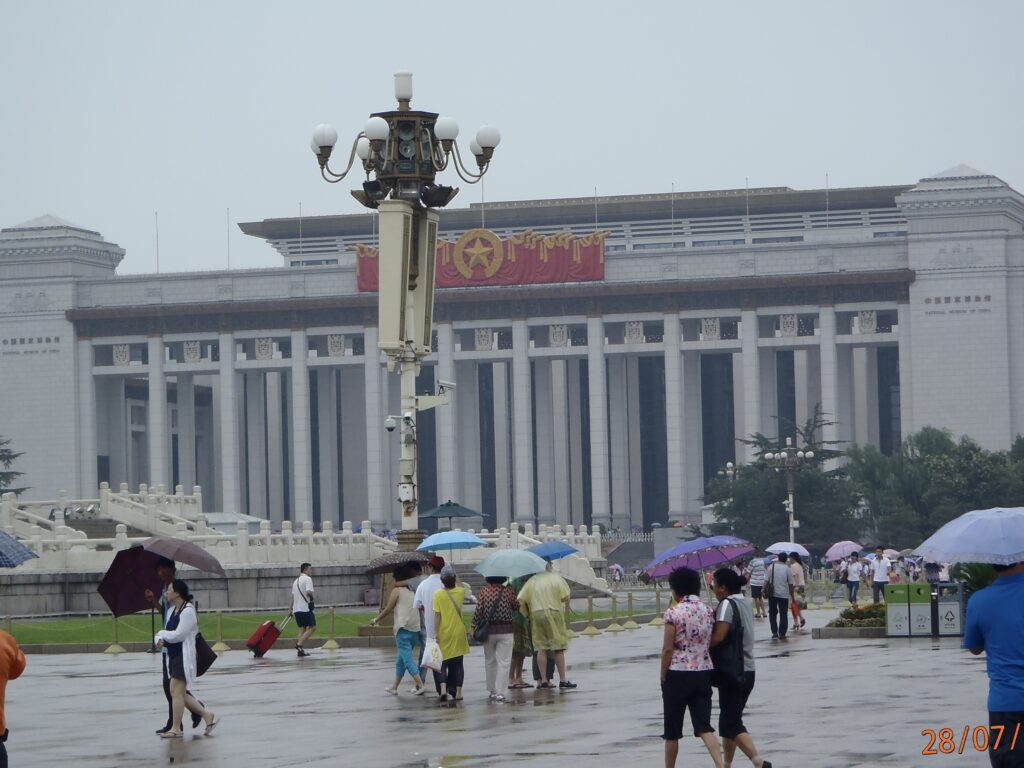
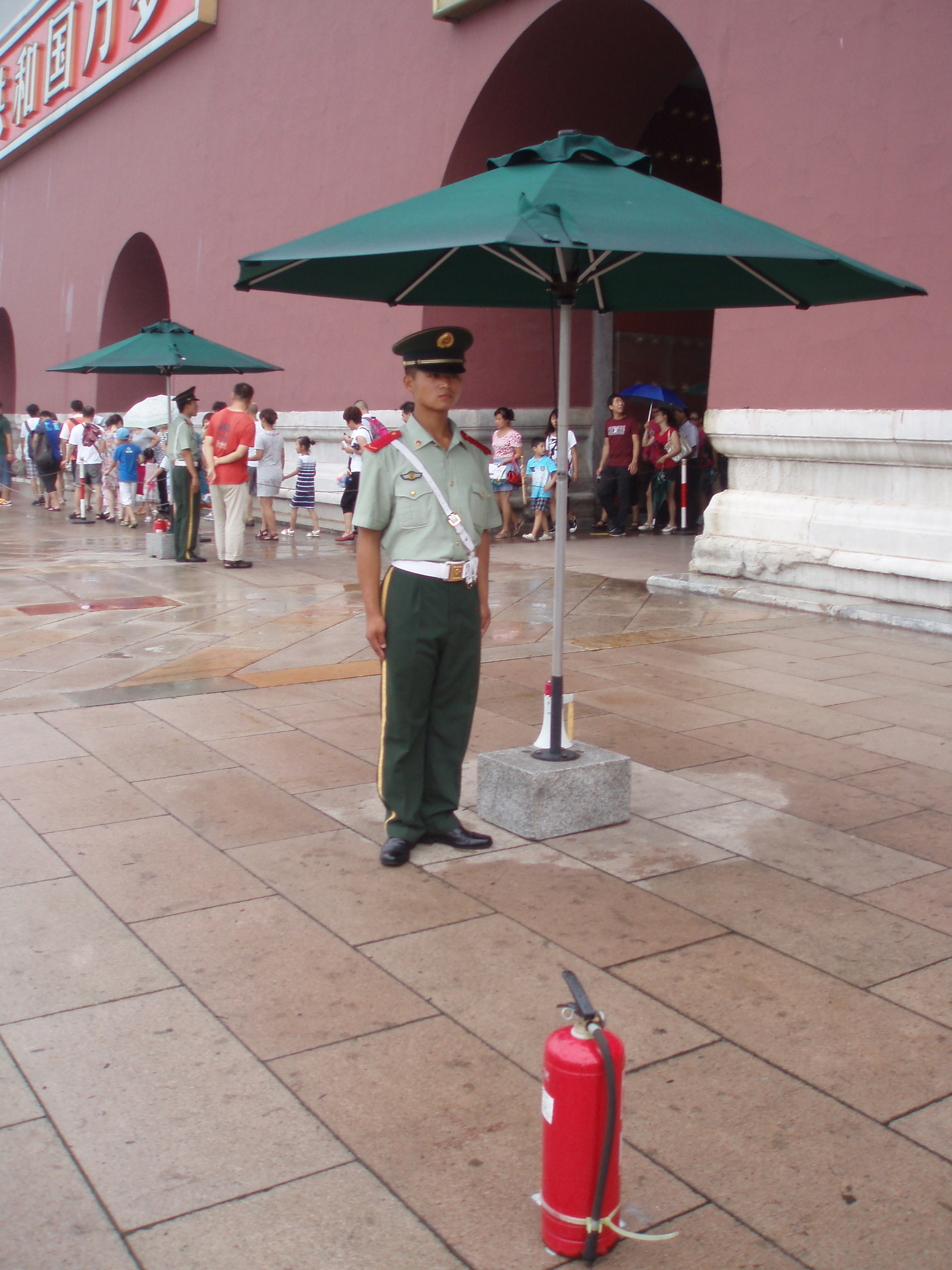
From the Temple of Heaven, we went to Tian’anmen Square, the symbolic center of China. Perhaps you remember the uprising in 1989 for democracy. Many people were slaughtered. The estimates range from 400 to several thousand because the Chinese government covered up much of the violence. The massacre occurred because of several weeks of student-led pro-democracy protests throughout Beijing. The huge square has government buildings surrounding it, including the National Museum, Great Hall of the People, and Mao Zedong Memorial Hall. A big Hammer and Sickle sit in the Square as well as Mao’s tomb. People filled the square, Chinese nationals as well as tourists. It seemed important that the Chinese nationals come to show their children historical places.
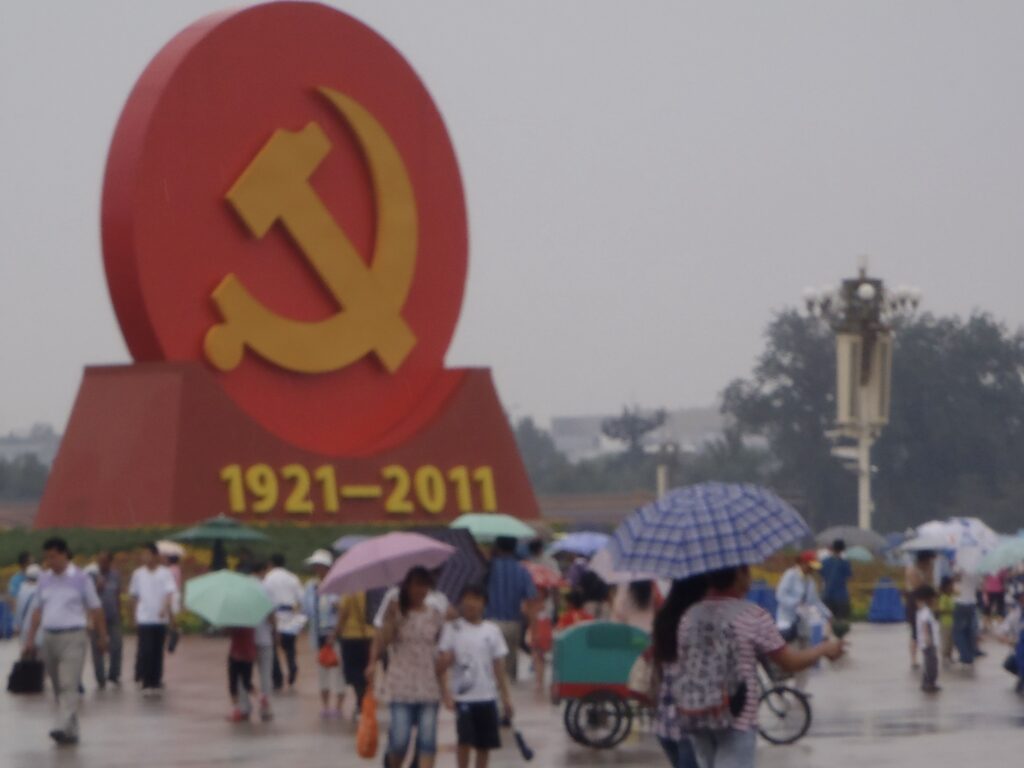
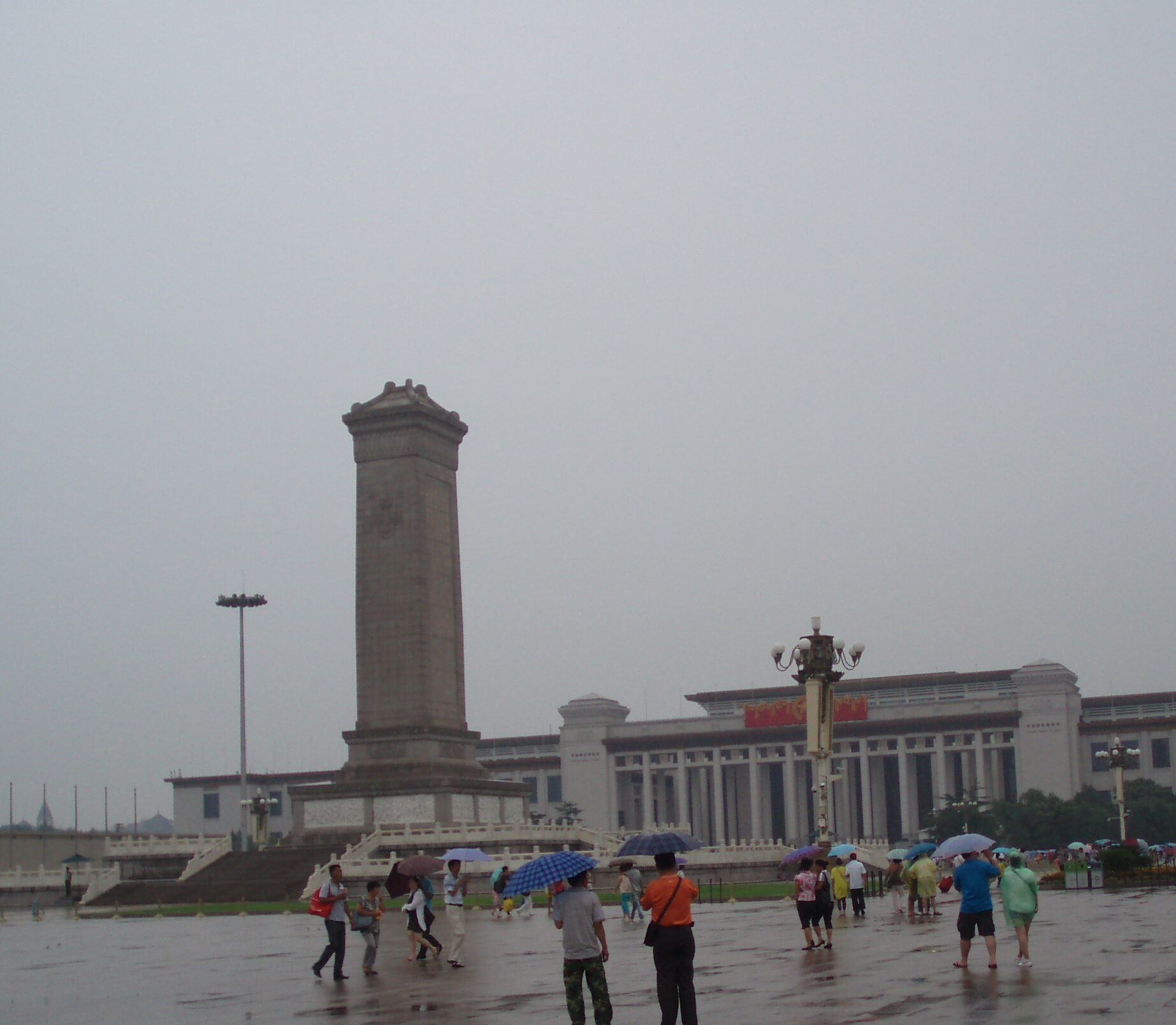
and Monument to the
Heroes of the People
Forbidden City
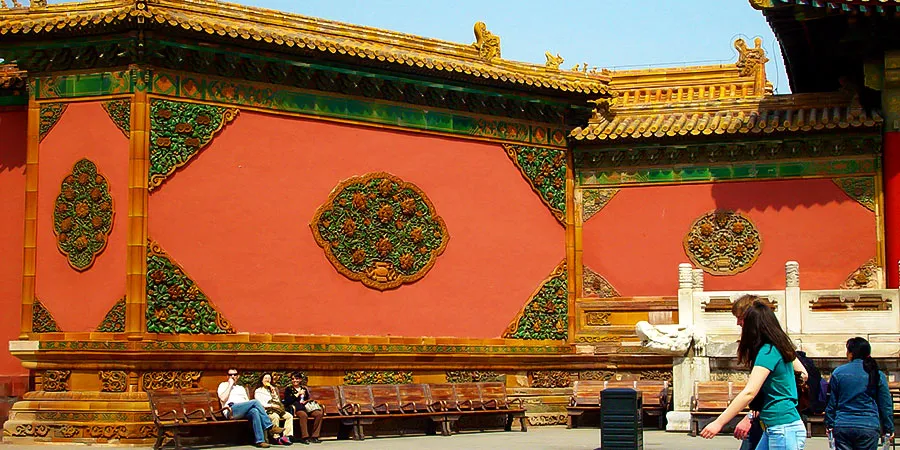
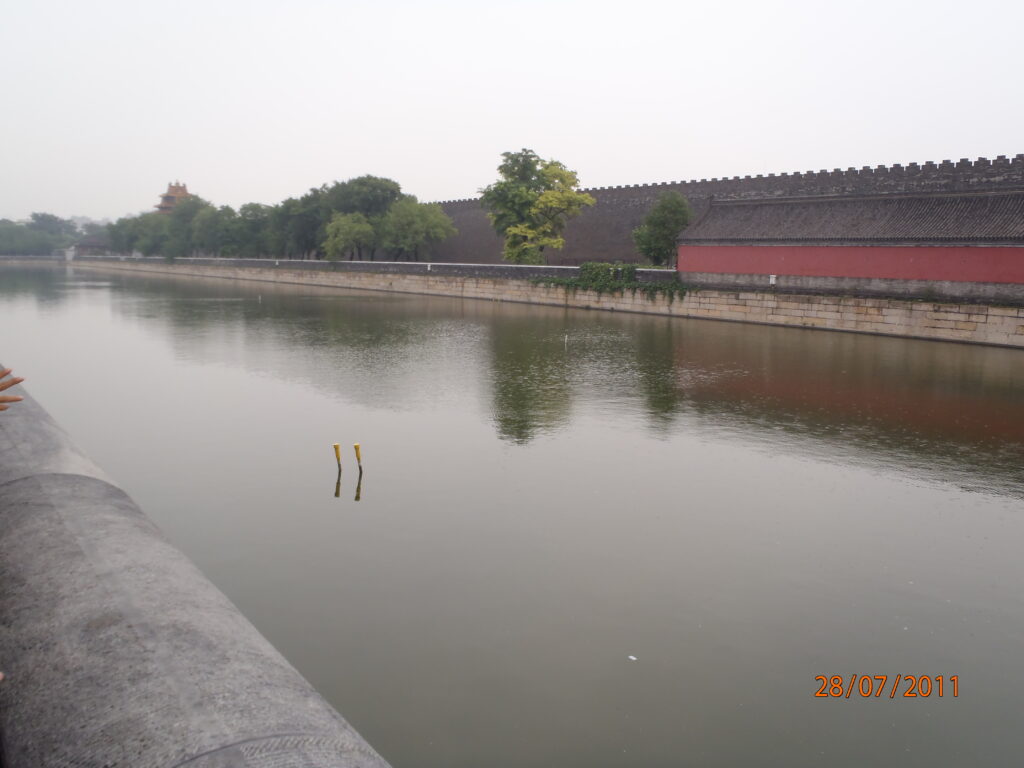
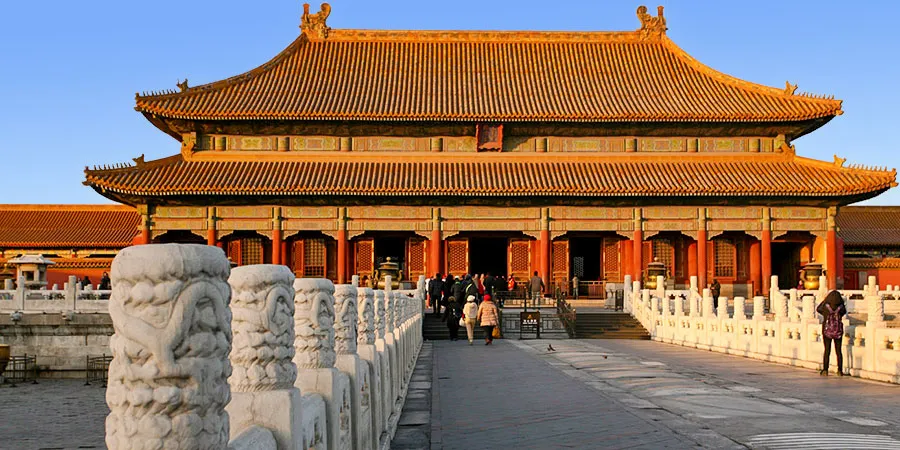
Tian’anmen Square leads into the Forbidden City. This is the spiritual heart of Beijing, completed in 1420 under the Yongle emperor who relocated the capital to Beijing. It took 14 years to build and employed over 1 million workers. It is the world’s largest Imperial Palace. It covers 72 Hectares (about 178 acres) and consists of 980 buildings. It is divided into an Outer Court for international affairs and an Inner Court for living quarters of the emperor. It is surrounded a 33-foot-high wall and a 57-yard-wide moat. It houses 1.8 million pieces of art.
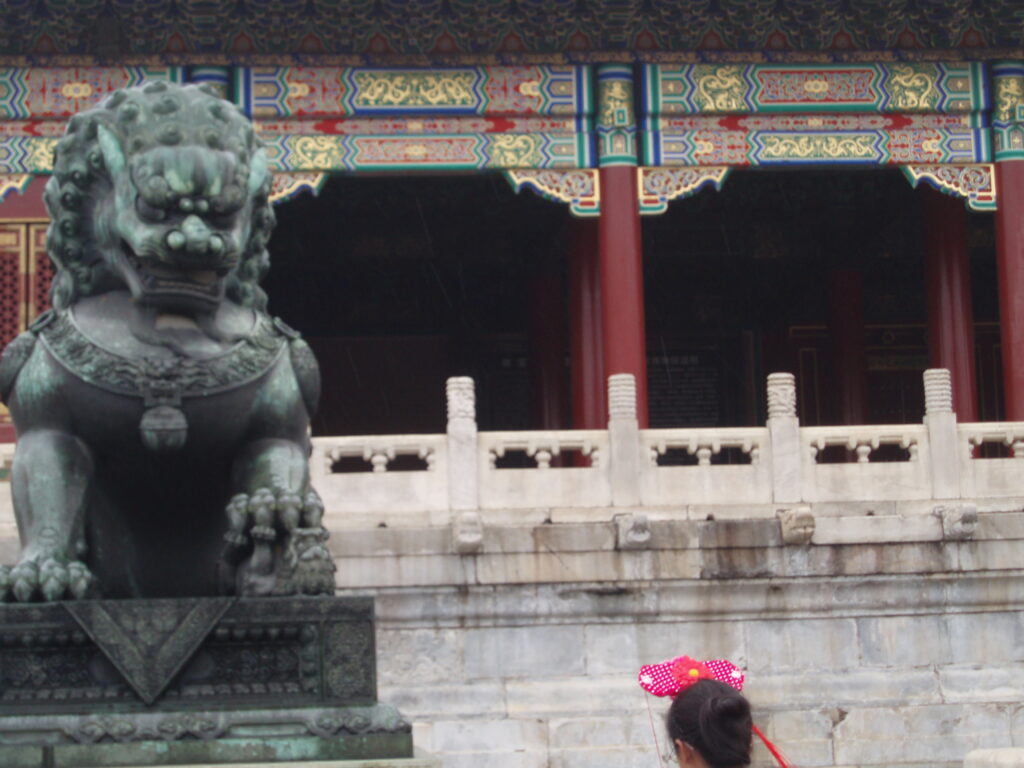
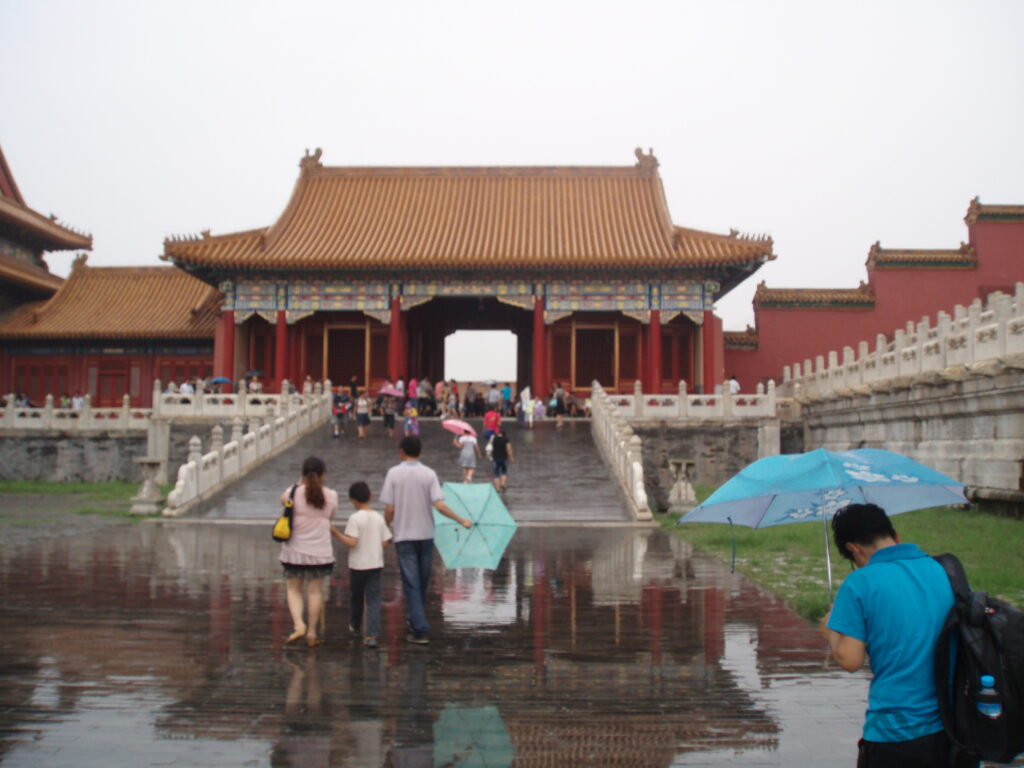
The Forbidden City has the largest and best-preserved buildings in ancient China. We went through gate after gate; courtyard after courtyard; palace after palace. Interestingly, the number of animals on the roof corner of a building indicates the level of the prince residing in the palace. It was very much as depicted in the film The Last Emperor. When the emperor was overthrown, it became a museum open to the public and no longer “forbidden.” It was made a UNESCO World Heritage site in 1987.
The dominant colors are red for the walls and doors and yellow for the roofs. Red is an auspicious color and implies happiness and festivities. Yellow symbolizes earth elements at the center, and the emperor believed that the imperial palace was at the world’s center. During its use, there were no trees allowed in the outer courtyard because the emperor believed they would overshadow the buildings. Any trees now, have been planted since the overthrow of the last emperor.
The Hall of Supreme Harmony is the most important and largest building in the Forbidden City. It houses the emperor’s Dragon Throne. Behind this hall is the Hall of Central Harmony, the resting place of the emperor before presiding over grad events. The last hall is the Hall of Preserving Harmony used for banquets.
After spending the afternoon here, we returned to our hotel for dinner and reflection of all we had seen and learned.
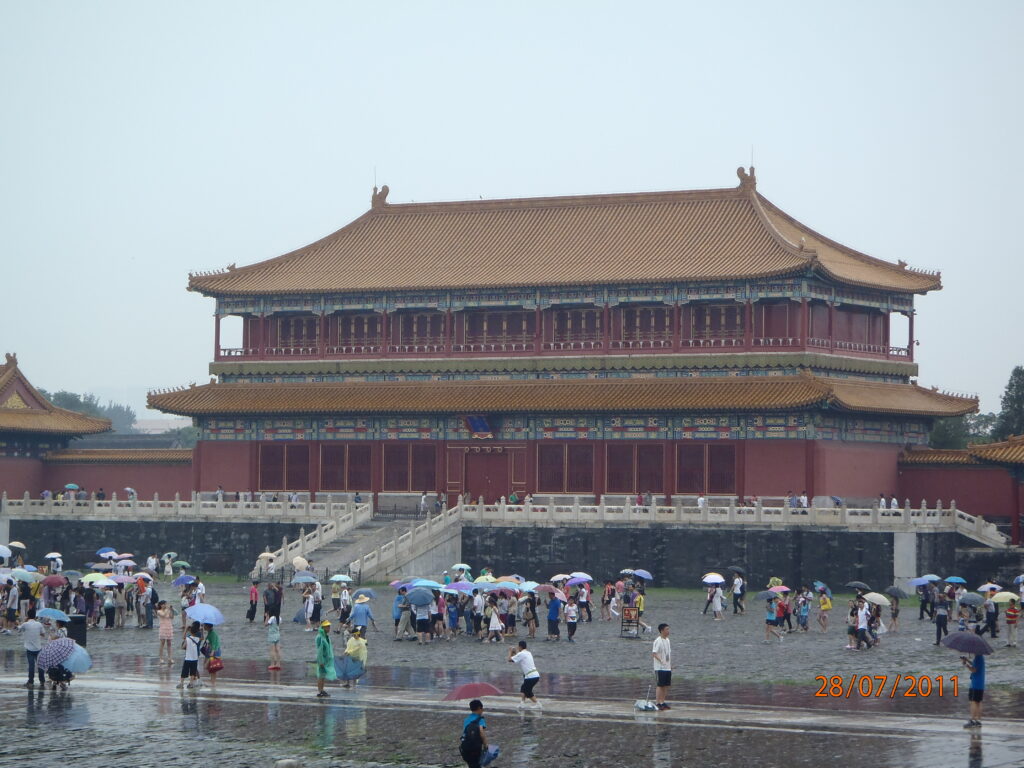
Forbidden City
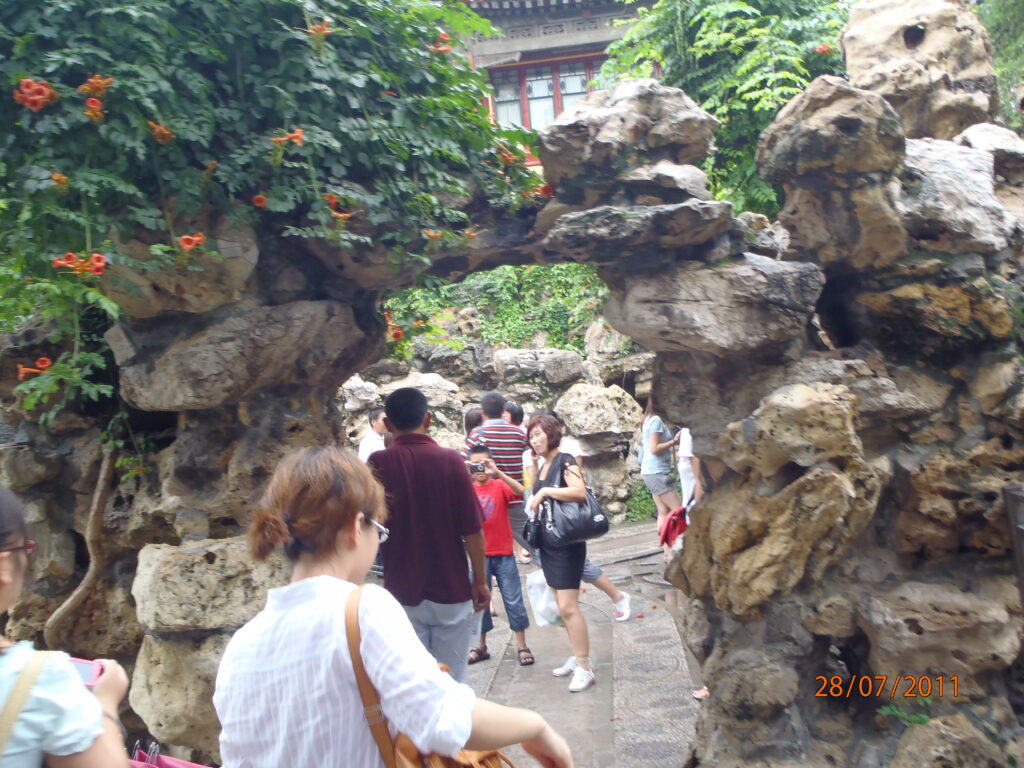
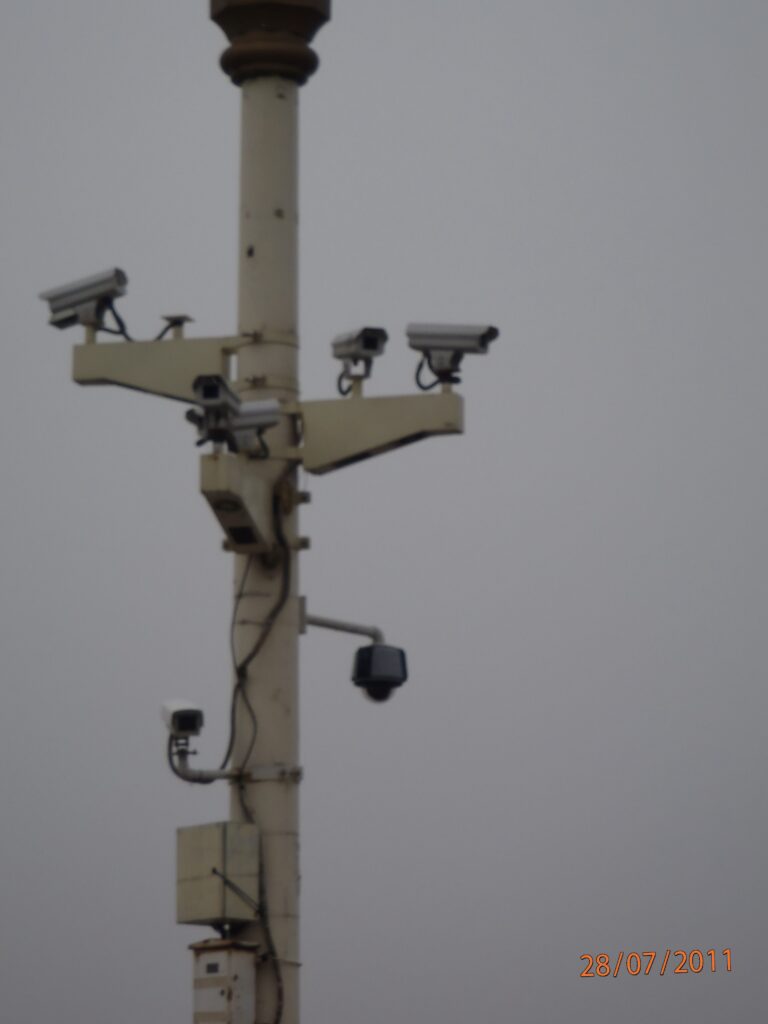
An example of the tight control–Mr. Wang was picking us up after our tour and stopped in a crosswalk. A policeman gave him a ticket. David tried to get out of it, but no success. .
Leave a Reply