Bucharest to Brasov
We arrived in Bucharest, Romania, about 3 pm. We got to the hotel, unpacked, and ventured out to find dinner. Walking a long block along a busy street, we crossed and saw a small Bistro. We entered and were ushered into a booth. It was family run, and the older parents were there with the son and his wife, working on their business plan. It turns out they were closed, but willingly served us anyway. We ordered from an extensive menu and chatted with the young son, who was fluent in English, about their life in Bucharest. The food was good and conversation pleasant. Then we returned to the hotel and crashed.
The name “Transylvania” means “the land beyond the forest” because it is surrounded by the Carpathian and the Apusani Mountains. Historically, the region has been ruled by many kingdoms starting with the Dacian, about 170 BCE. In the ninth century it became part of the Bulgarian Empire, later the Hungarian Empire. After WW I, it became part of Romania which it still is today. Due to its varied history, the population of Transylvania is ethnically, linguistically, culturally and religiously diverse.
Our interest in Transylvania comes from our friendship with artist Geza St. Galy, whom we met in Carmel, CA back in the late 60’s. We are fortunate to own a few of his works. He was from Transylvania and told us a lot about his life there before he came to America.
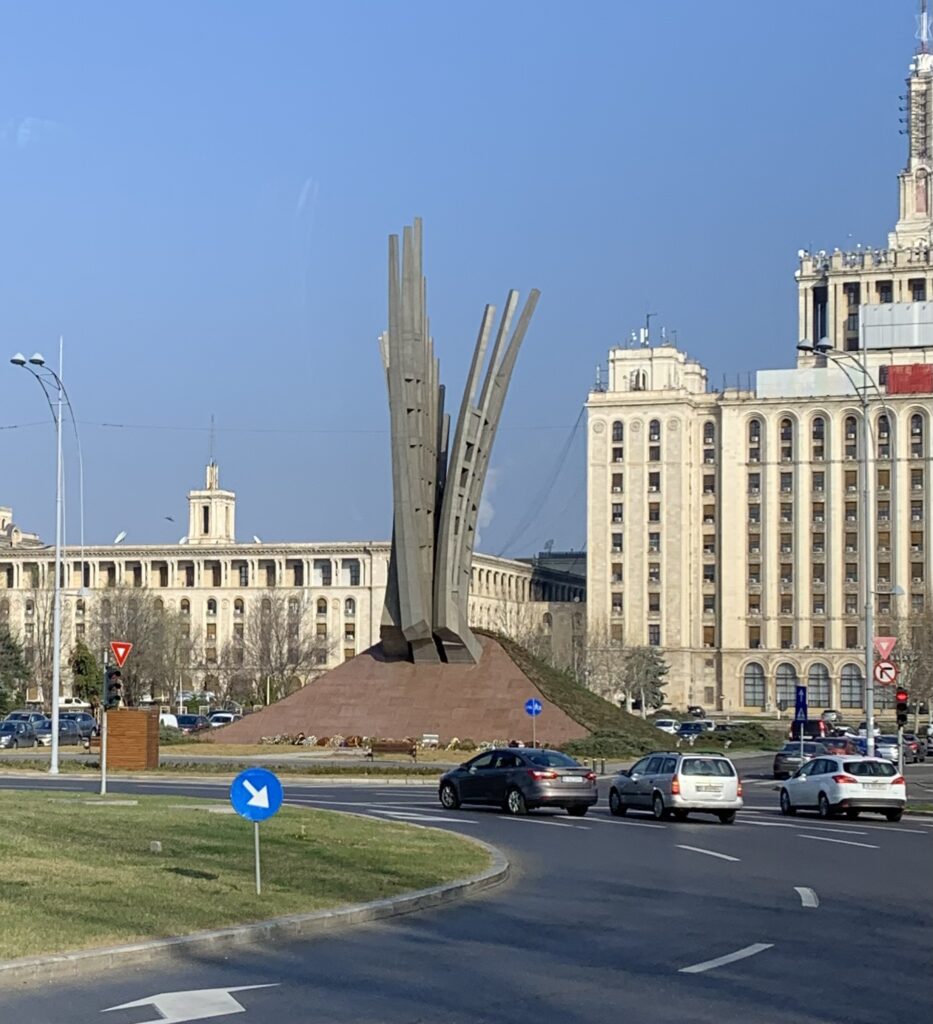
In the morning we headed to Brasov and Peles Castle. On the way to Sinaia and Peles Castle we passed the Art Museum and the Aripi Monument dedicated to those who fought Communism to gain Romamia’s freedom. Sinaia is a town in Romania’s Bucegi Mountains. The Sinaia Monastery, a historic 17th-century Eastern Orthodox complex, is located there. It is the founding landmark that gave the mountain resort town of Sinaia, Romania, its name. It was founded in 1695 by Romanian Prince Mihail Cantacuzino after a pilgrimage to Saint Catherine’s Monastery on Mount Sinai. Then we passed St. Elijah Orthodox Church with its distinctive stone façade and The Church of St. Andrew. Legend has it that St. Andrew Christianized Romania in the first century.
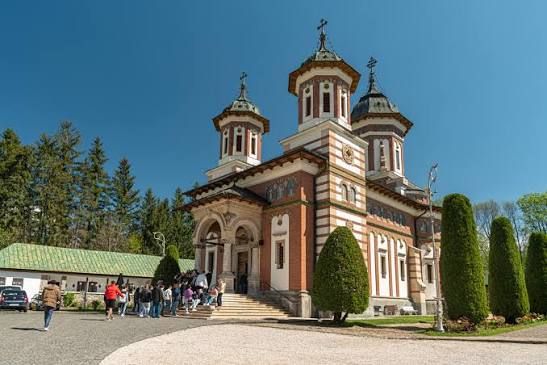
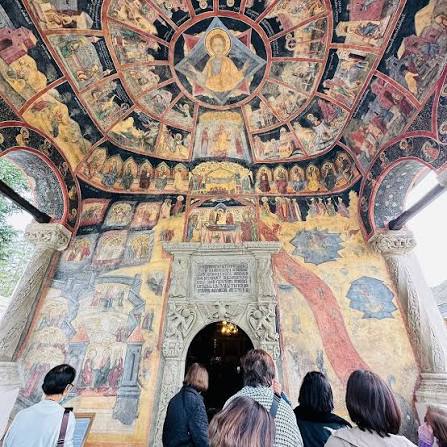
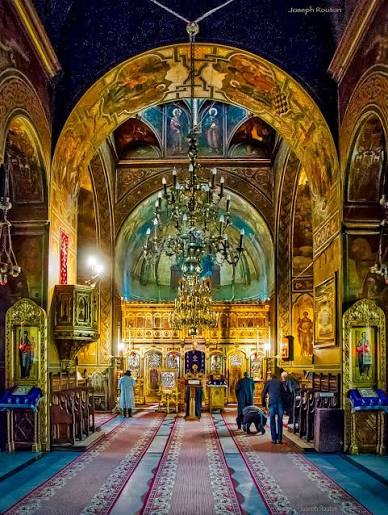
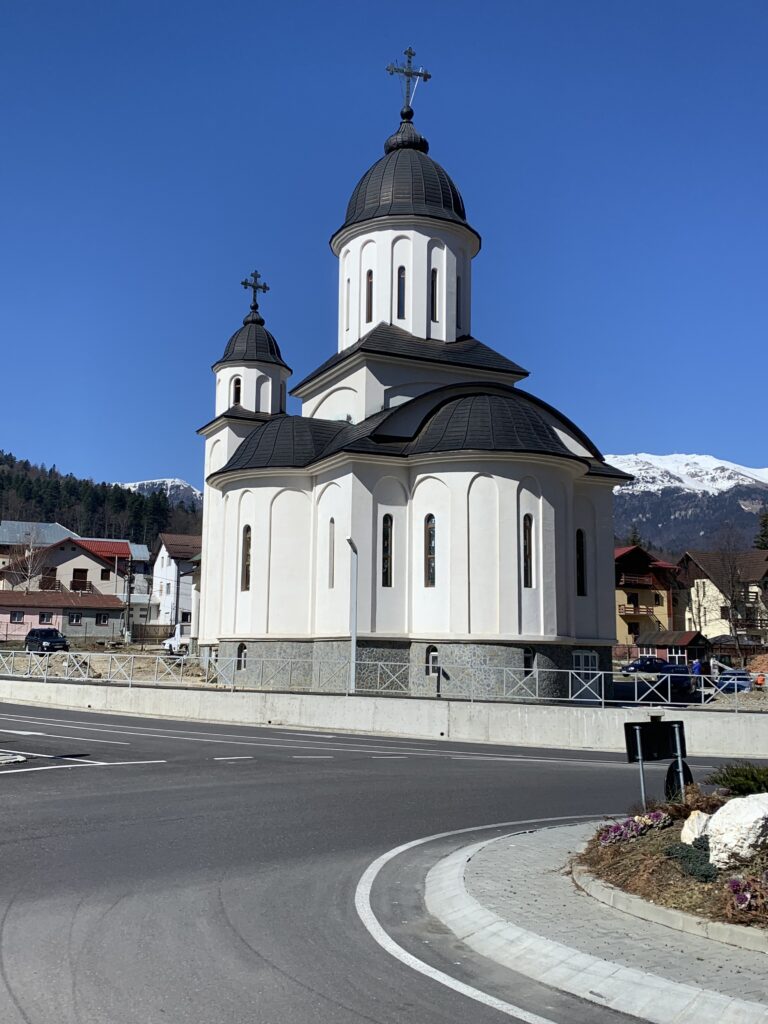
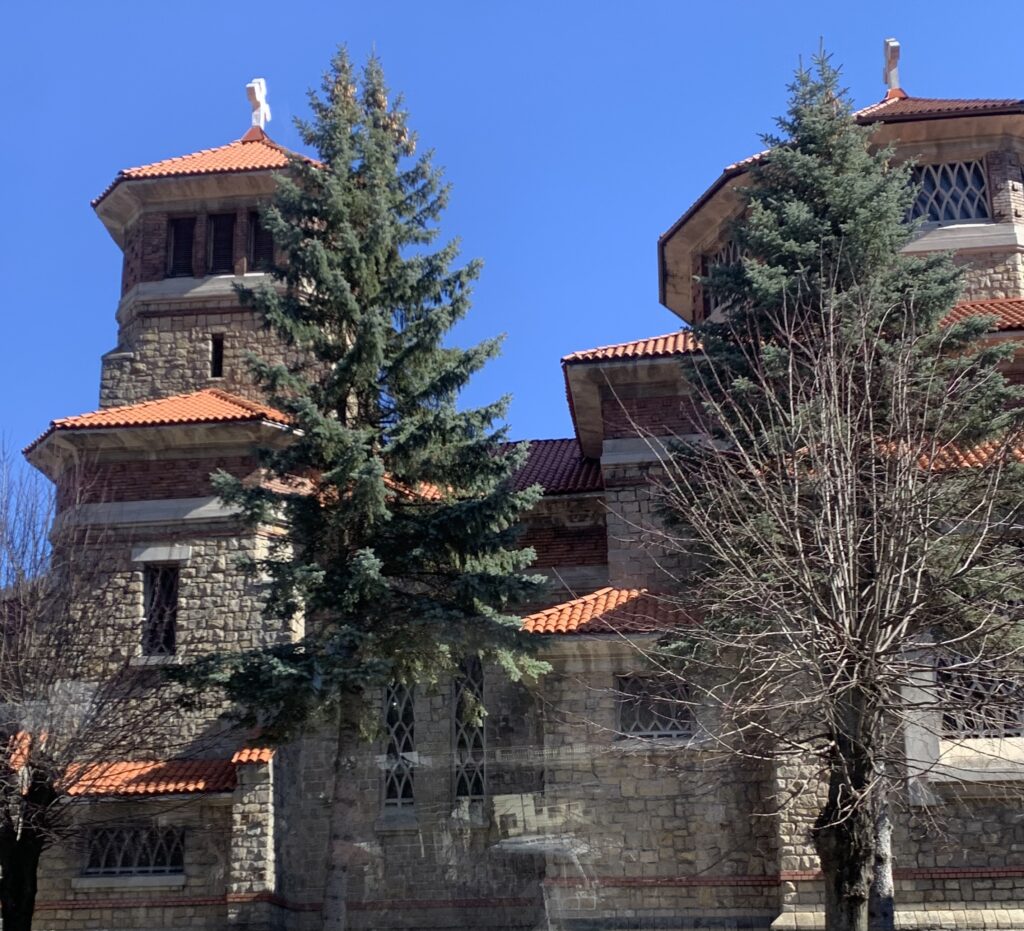
“Catedrada Bucegilar”
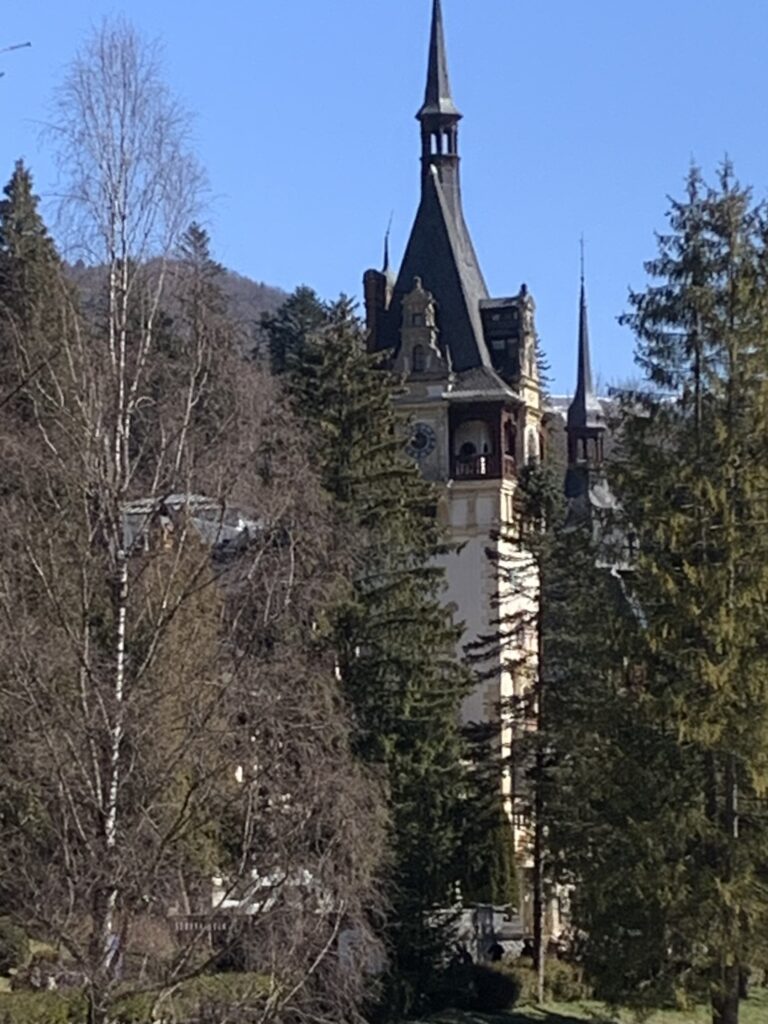
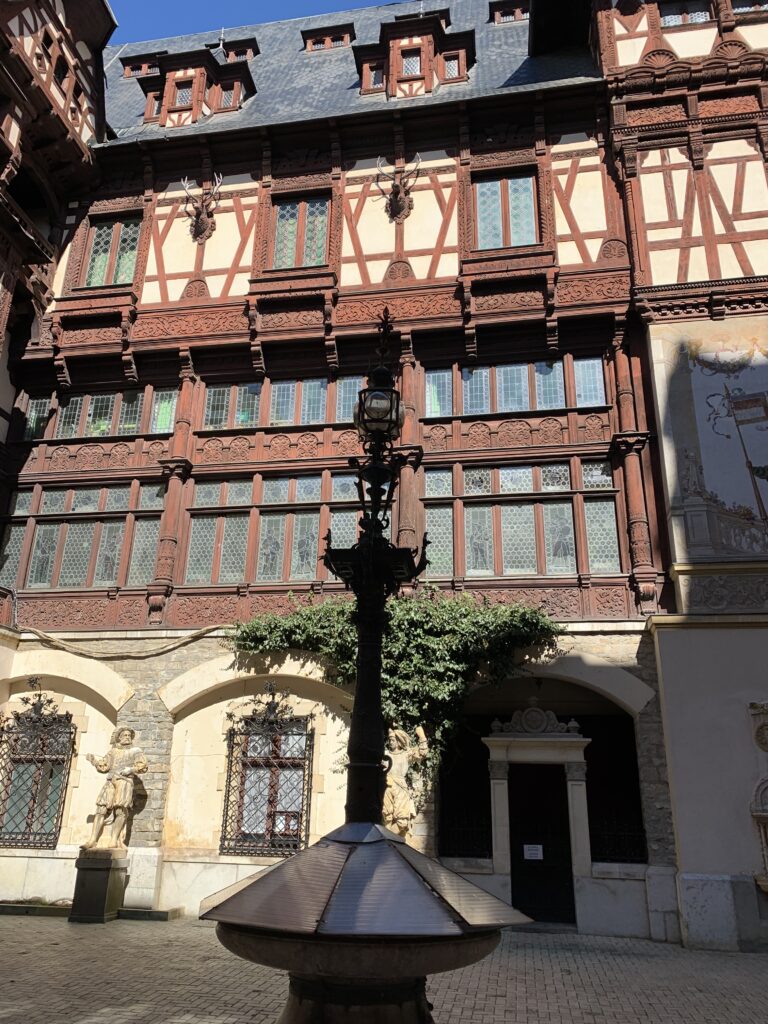
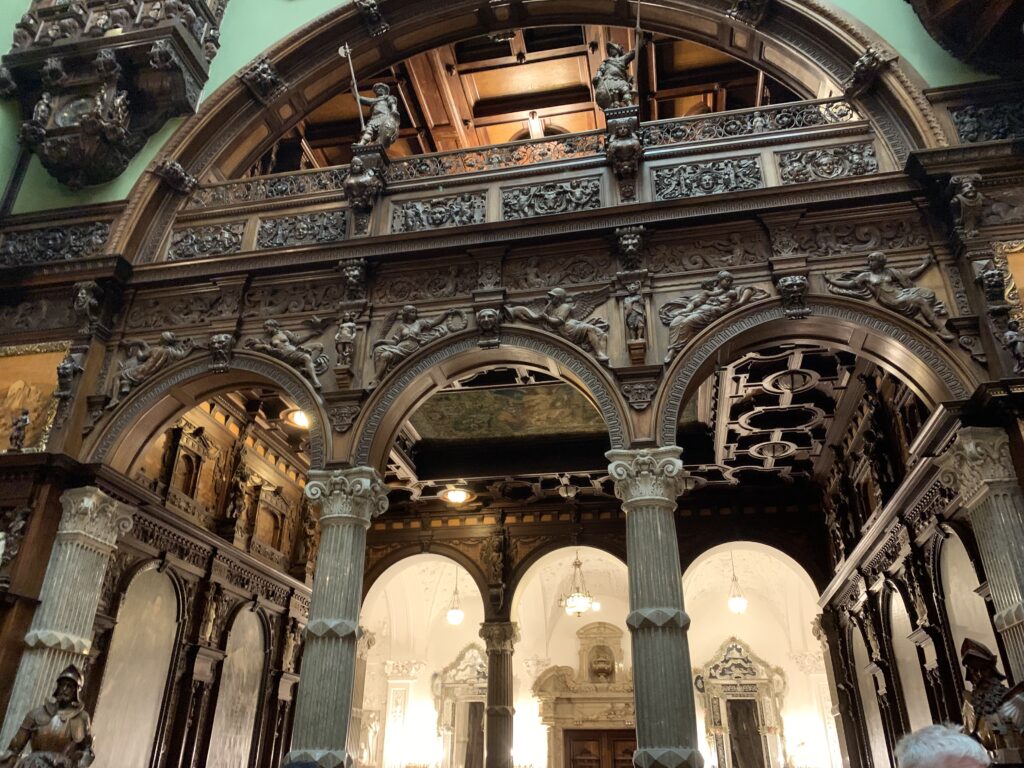
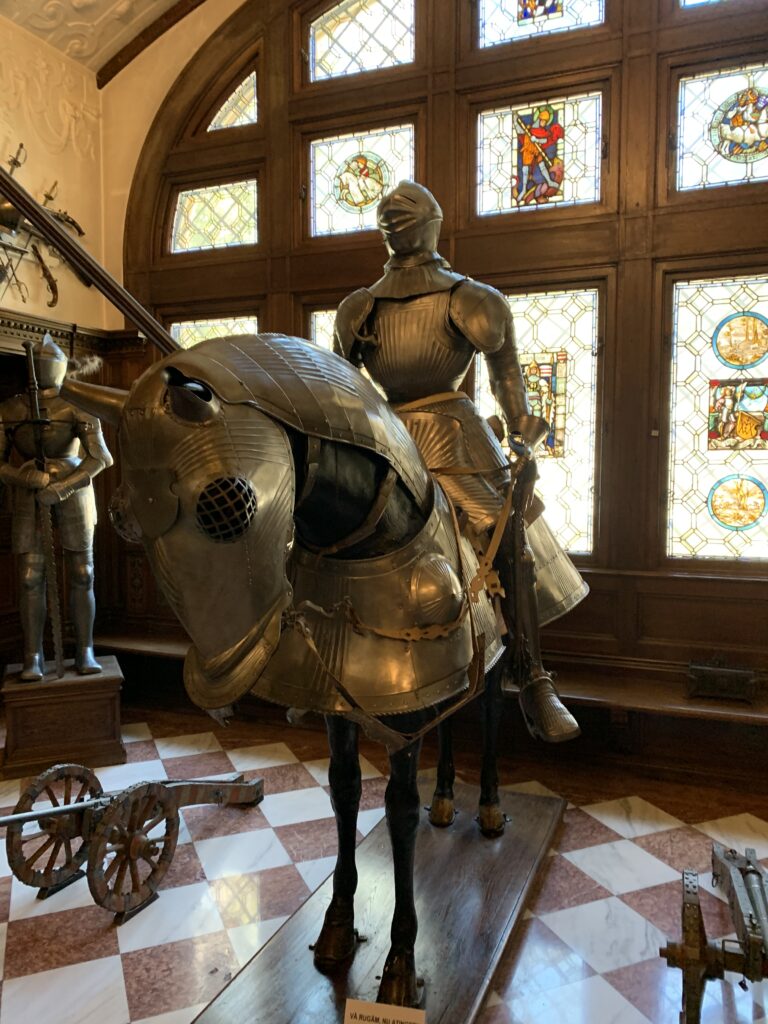
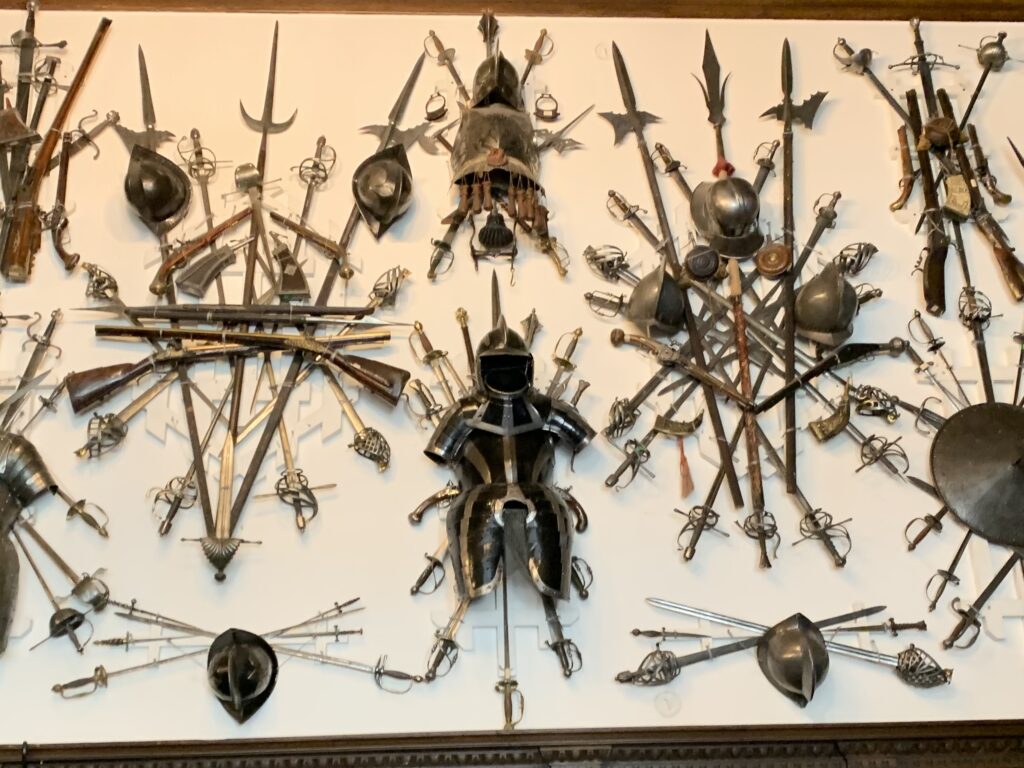
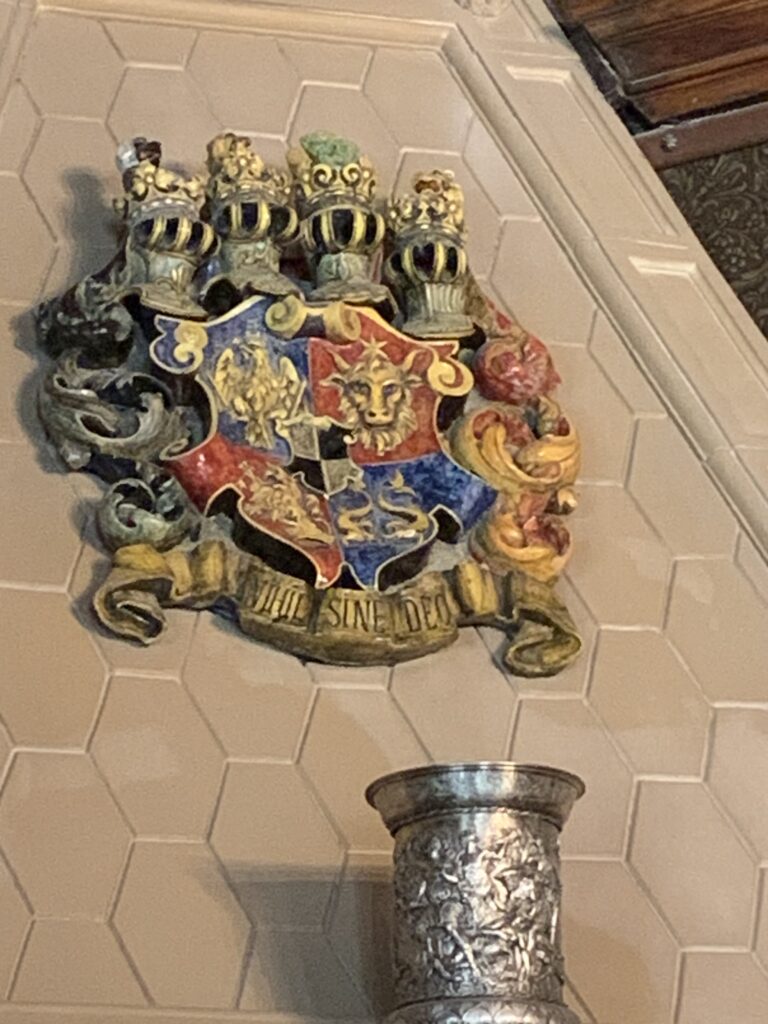
Next we arrived at Peles Castle. It has 170 rooms, adorned with lavish furnishings and intricate details. Its collection of art and artifacts is astounding and includes armor, paintings, period furniture, gold, silver and tapestries. In addition, the gardens are glorious. It is the only castle spared by the Communists. As the story goes, the prince told the Soviet official that the castle was full of termites, so he boarded it up and nothing was disturbed. It is a neo-Renaissance structure built in 1873 under King Carol I. It served as a summer retreat for the Romanian royal family. On the grounds another castle was built, Pelisor Castle, to house the royal heirs to the throne.
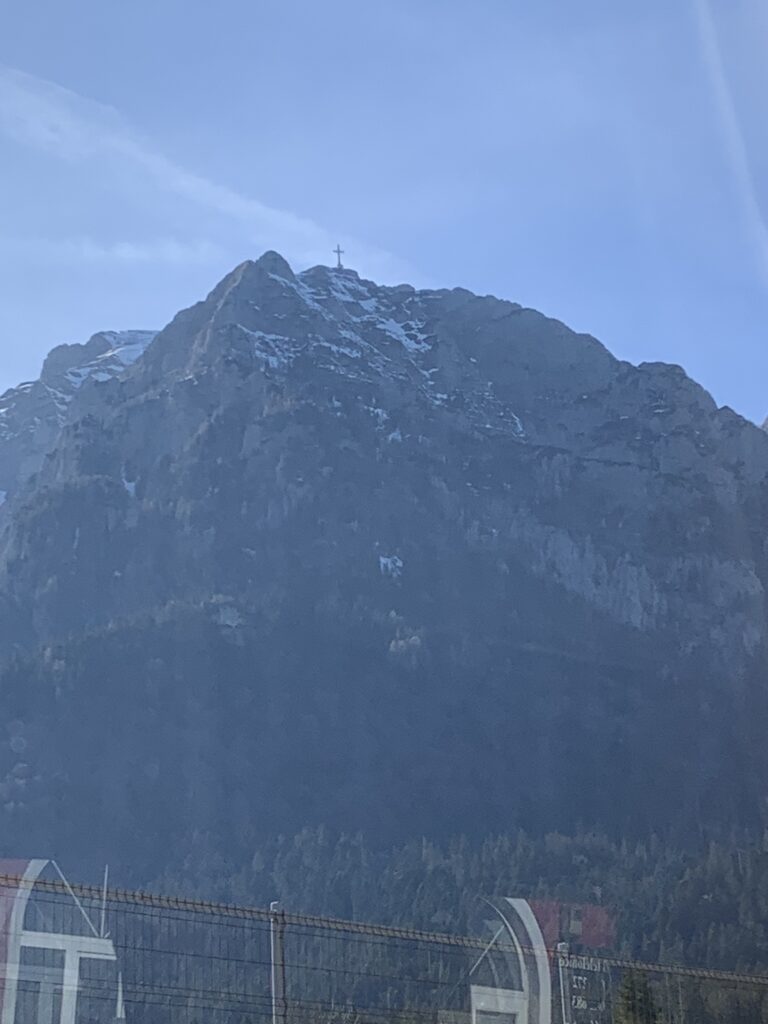
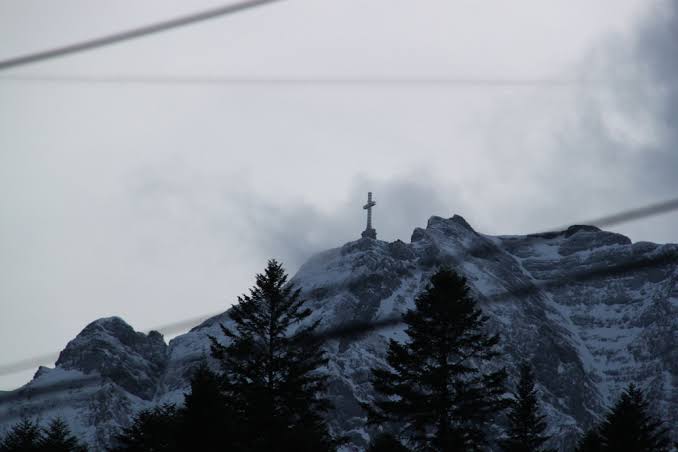
We ate at a local restaurant and had a “typical” Romanian meal: we shared a bowl of Ciorba de vacuta (vegetable beef soup) and Sarmale (cabbage rolls). After lunch we headed for Brasov where we spent the night. On our way we passed through Busteni, a mountain town, where there is a cross on top of Mt. Caraiman 7,410 ft. high to commerate the Romanian Heroes of World War I. It is lighted at night and very impressive. Busteni lies at the bottom of the Bucegi Mountains.
Brasov
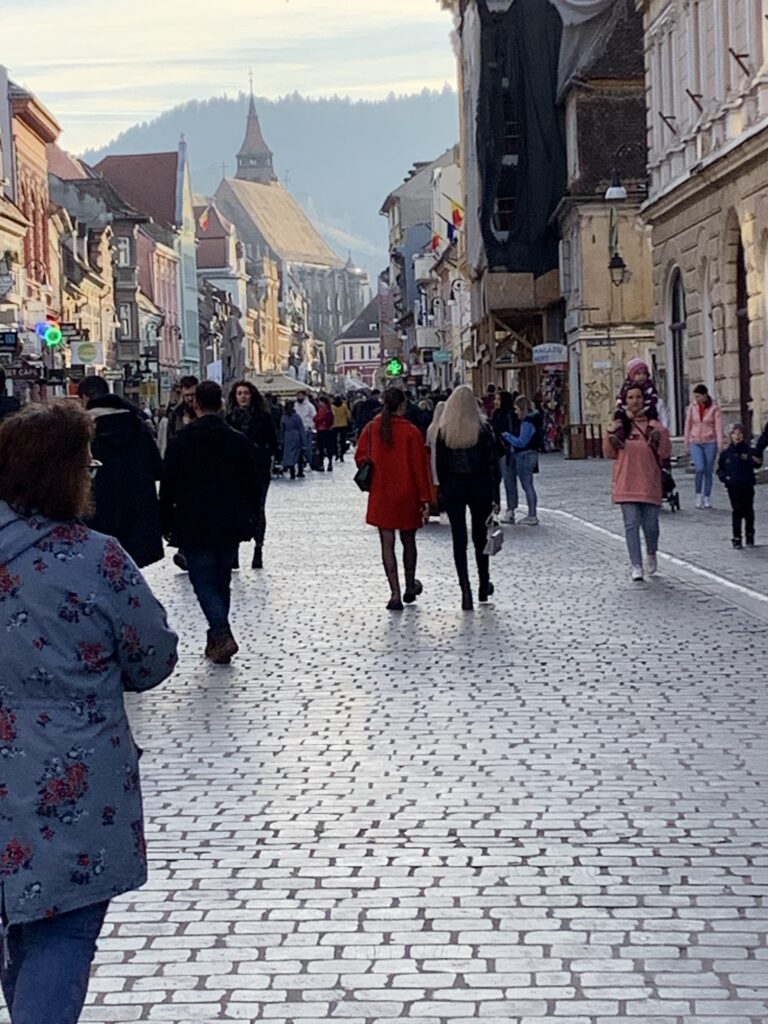
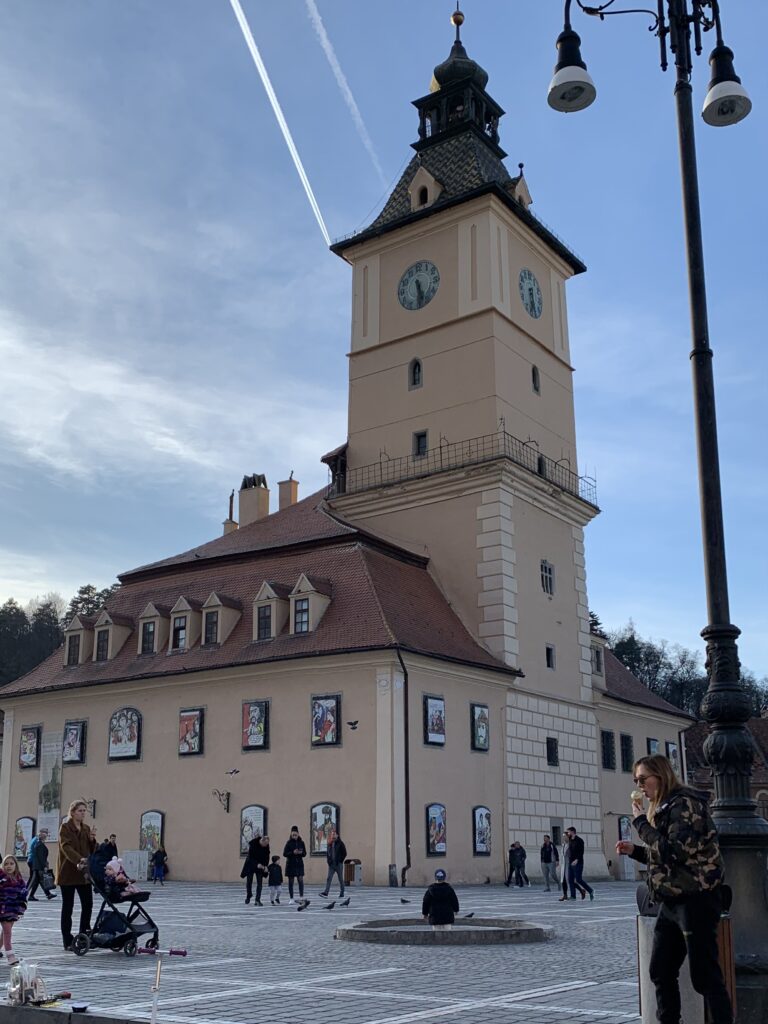
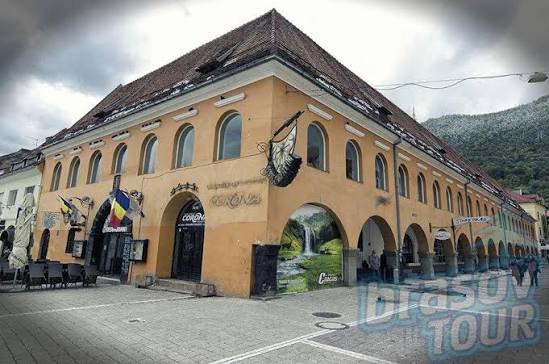
Arriving in Brasov, we went for a walk down the main street which is closed to cars. It was like a promenade, and lots of people were out walking. Brasov is a walled Saxon town ringed by the Carpathian Mountains. Piaţa Sfatului (Council Square) in the cobbled old town is surrounded by colorful baroque buildings and is home to the Casa Sfatului, a former town hall turned local history a museum. The Biserica Neagra (Black Church), built by the local Transylvanian Saxon community between 1383 and 1477, is also there. It serves as the region’s primary Lutheran house of worship. Its famous nickname stems from the Great Fire of 1689, which swept through the city and left the church’s massive exterior stone walls scorched and blackened with soot.
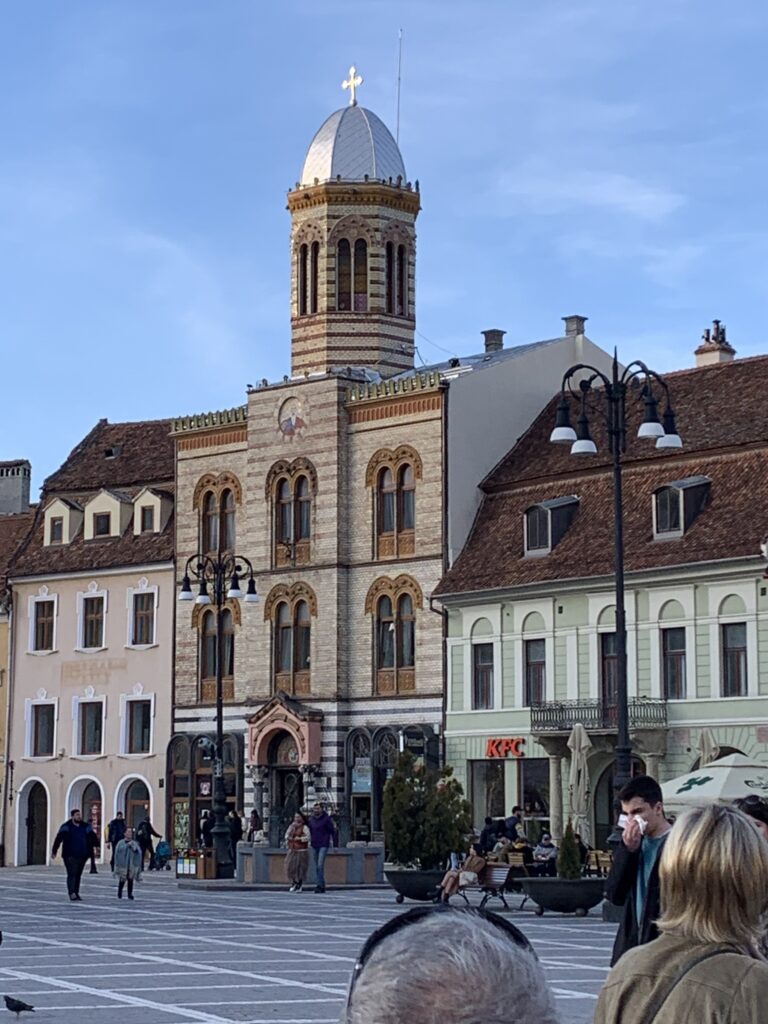
Safrano Palace is a 19th century historic building. Behind it is the White Tower, a medieval defense structure built between 1460 and 1494 as part of the city’s historic fortifications. We also saw the Casa Sfatului, originally built in 1420, with its gabled arches and clock tower. It is know as the Trumpeter Tower. The Orthodox Church of the Dormition of the Virgin Mary was built between 1884 and 1896. It is designed after the Greek church in Vienna. Nearby, the Hirscher Haus is one of the city’s oldest buildings.
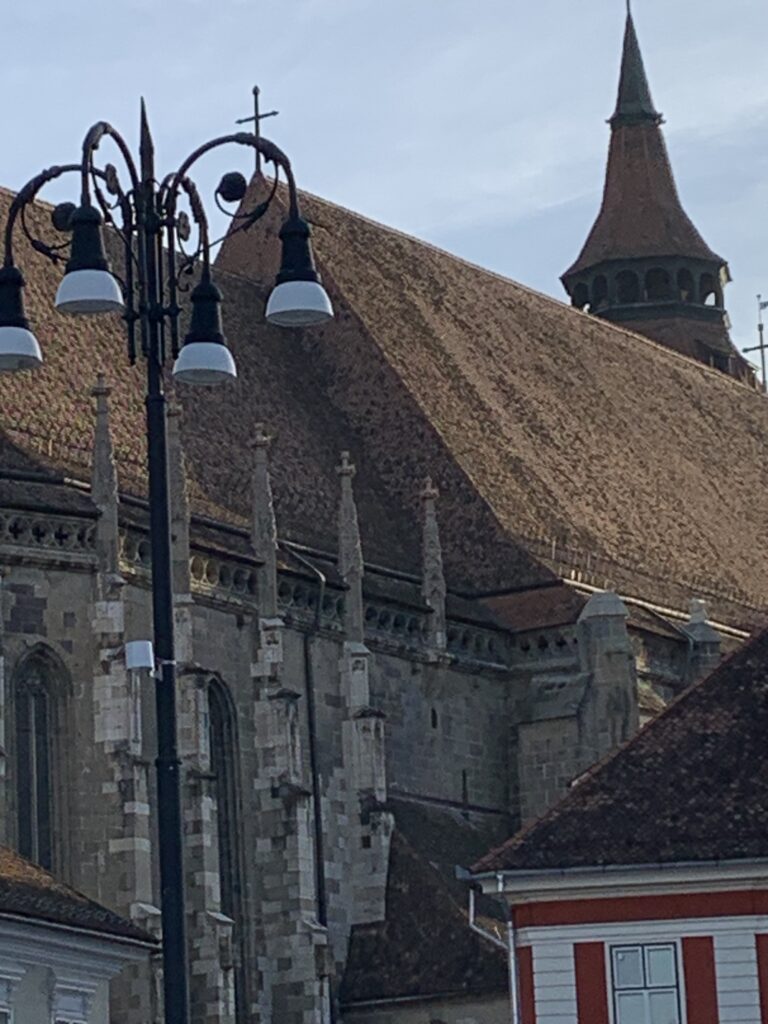
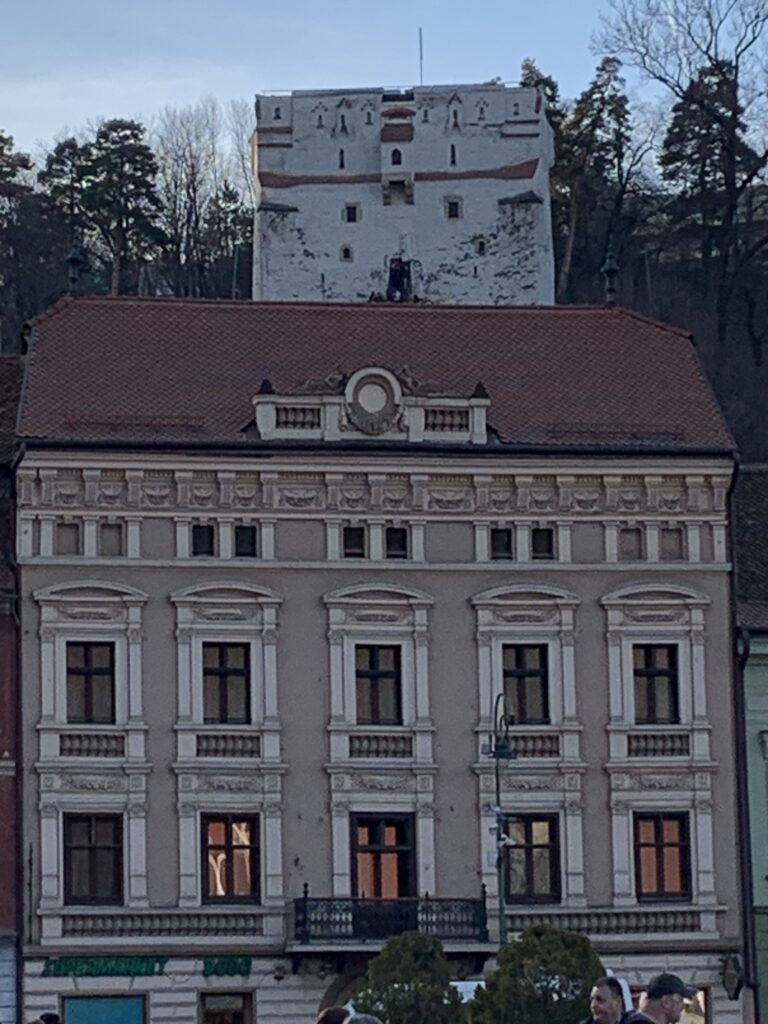
with White Tower Behind
At the end our guide suggested a few restaurants for dinner. We decided on Le Ceaun, down a side street. The Romanians have gluten free pasta in their Italian restaurants, so Bob was happy. I ordered a pizza and had to leave half of it. But it was very good. The restaurant was full of people speaking mixtures of English, Romanian, Italian, French. It seemed very international.
Leave a Reply