Marseilles
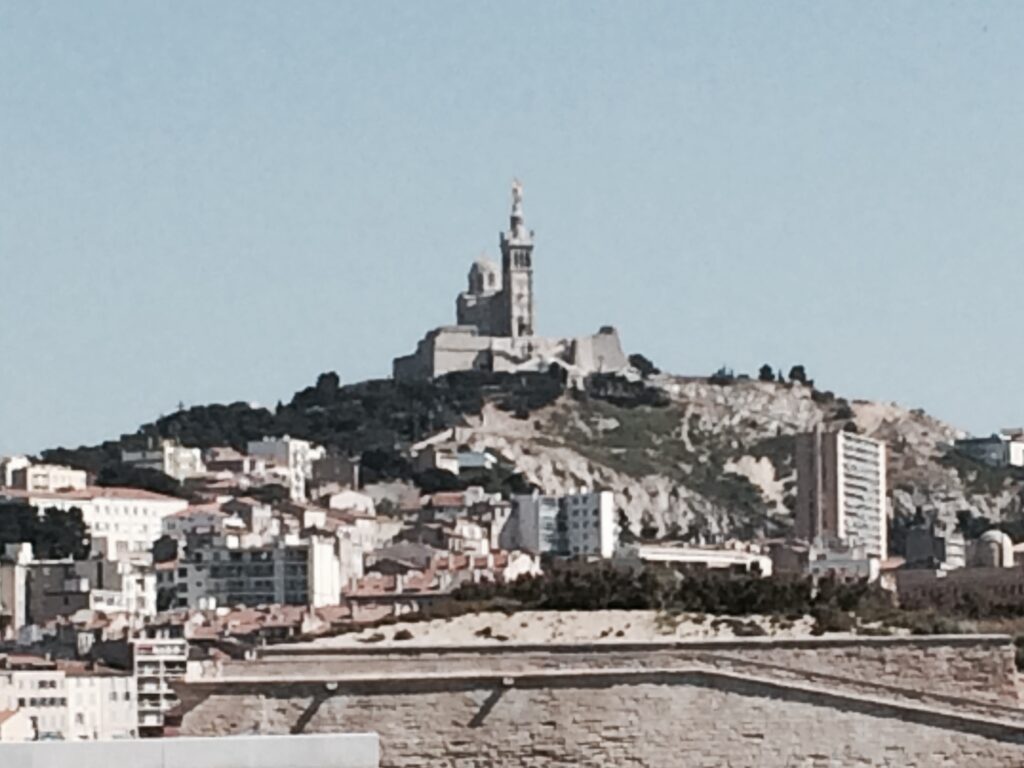
Marseilles is the second largest city in France and was the main port of the French Empire. The bay, flanked by Fort Saint-Nicolas and Fort Saint-Jean, shelters the Castle of If, from Count of Monte Cristo fame. It is a fortress located on the island of If, the smallest island in the Frioul archipelago situated in the Mediterranean Sea. The basilica of Notre-Dame-de-la-Garde watches over the city from its hill top location. After docking in Marseilles, we took the tour to Avignon and Arles.
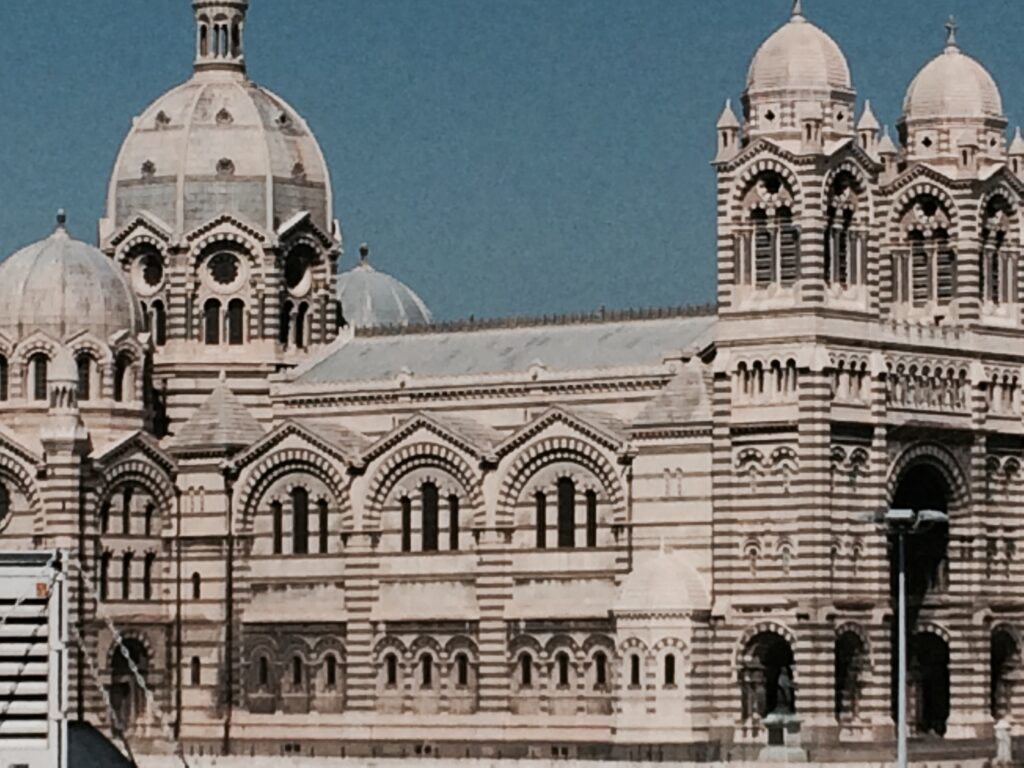
Sainte-Marie-Majeure
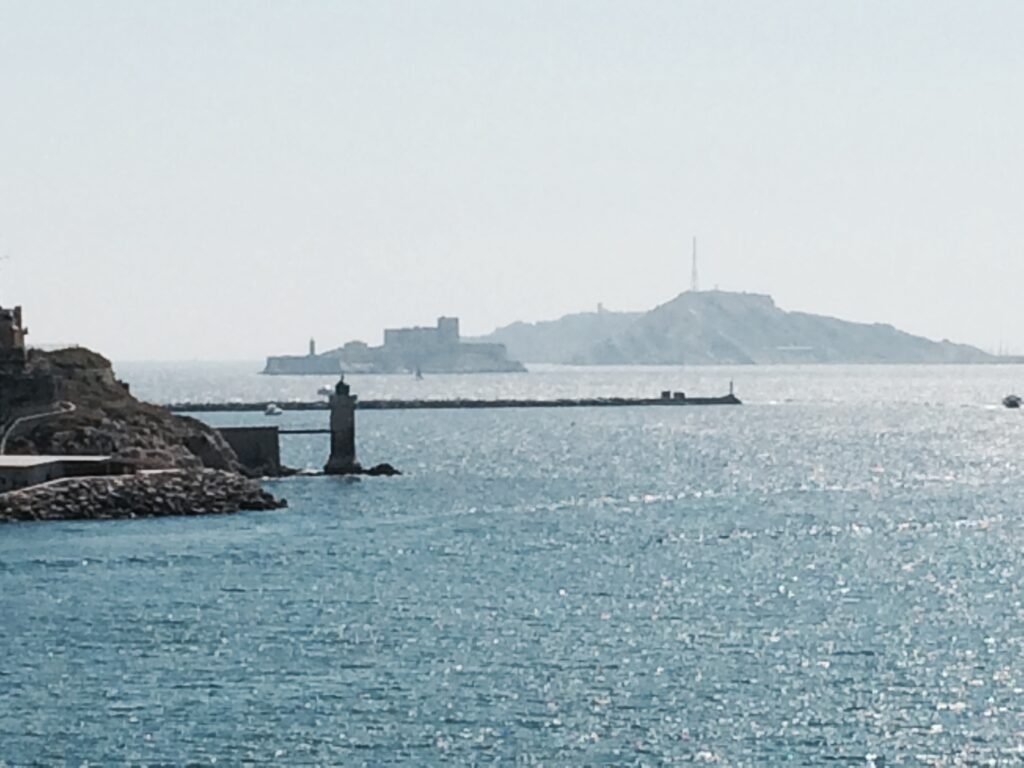
Fortress-Prison
Avignon
Avignon rose to glory in the Middle Ages, when a series of French-born Popes fled Rome and made the town a base from which they ruled Christendom until 1407. In all, seven popes ruled from here, making Avignon the center of Christianity for nearly 100 years. The last pope left in 1403, but the Church owned Avignon until the French Revolution in 1791.
The city center of Avignon is entirely enclosed by 4.3 kilometers of walls, which illustrates the importance of fortifications in 14th century France.
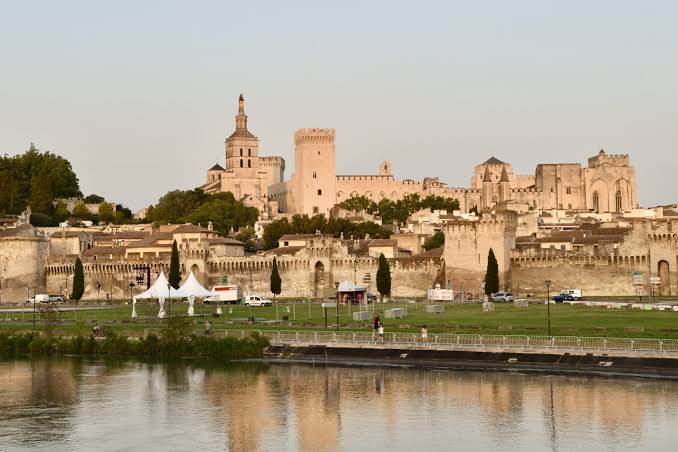
We viewed the Rhone River and the famous bridge, the Pont St. Benezet. The bridge of Avignon was started in 1177. It was 920 meters long, had 22 arches, and measured 4 meters wide. This imposing edifice was built in only 8 years, completed in 1185. Of the bridge itself, there only remains the four famous arches and the Philippe le Bel tower on the Villeneuve-lès-Avignon side. In the Middle Ages, the Saint Bénézet bridge was part of one of the most important pilgrimage routes between Italy and Spain.
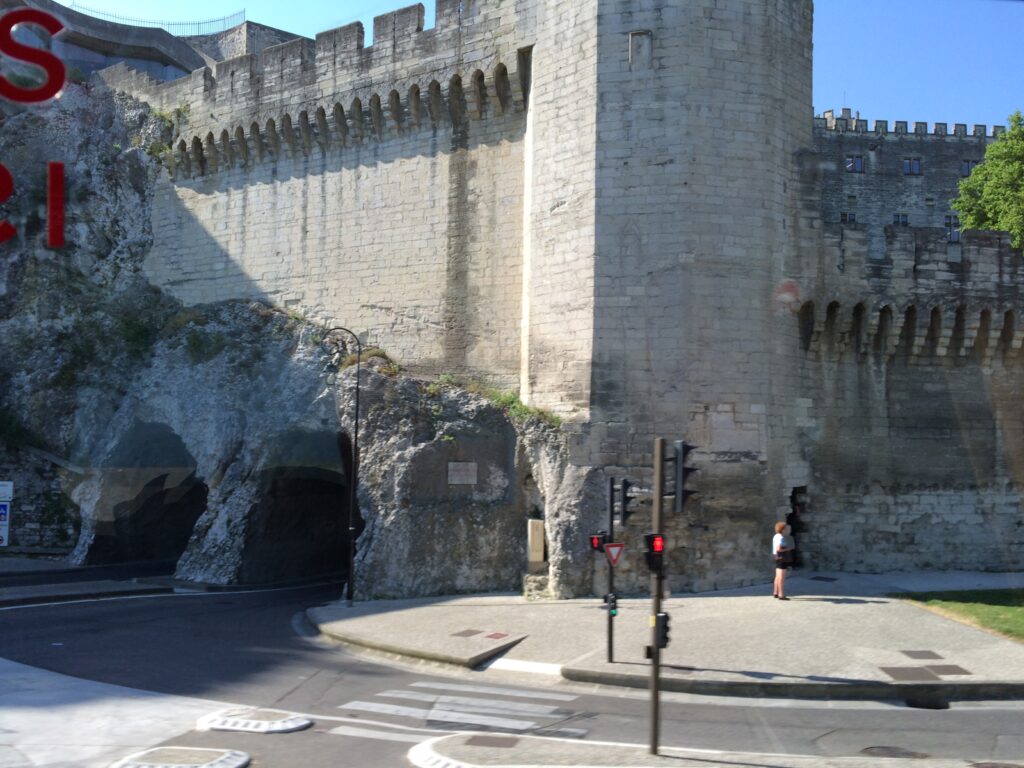
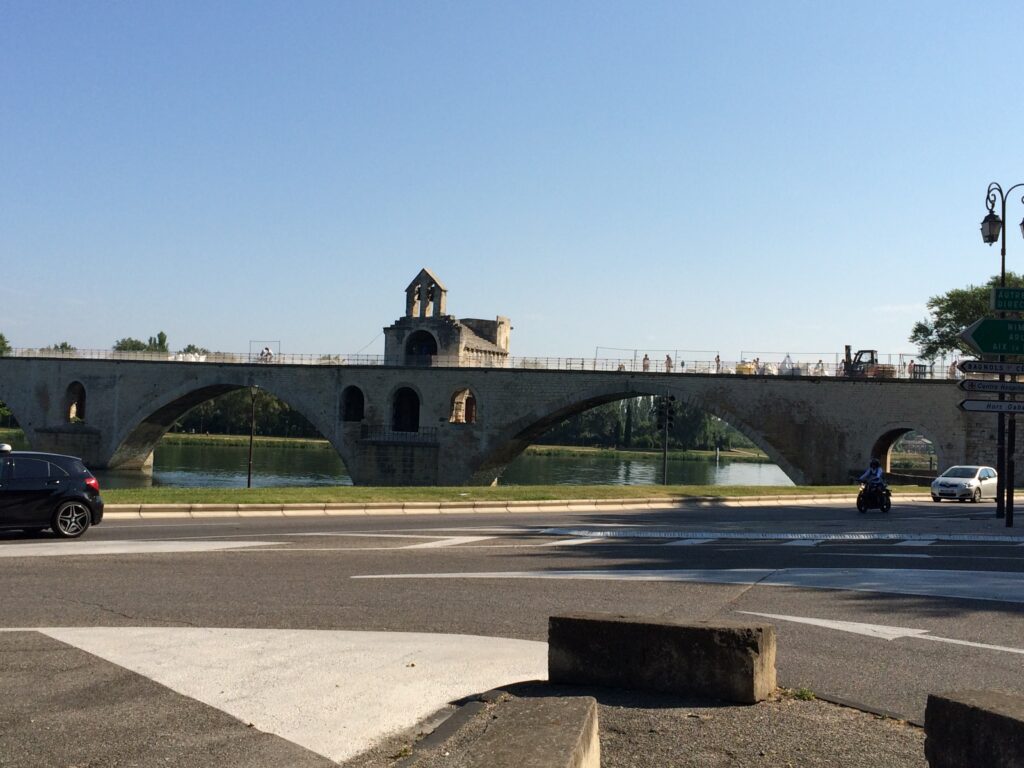
Pont d’Avignon.
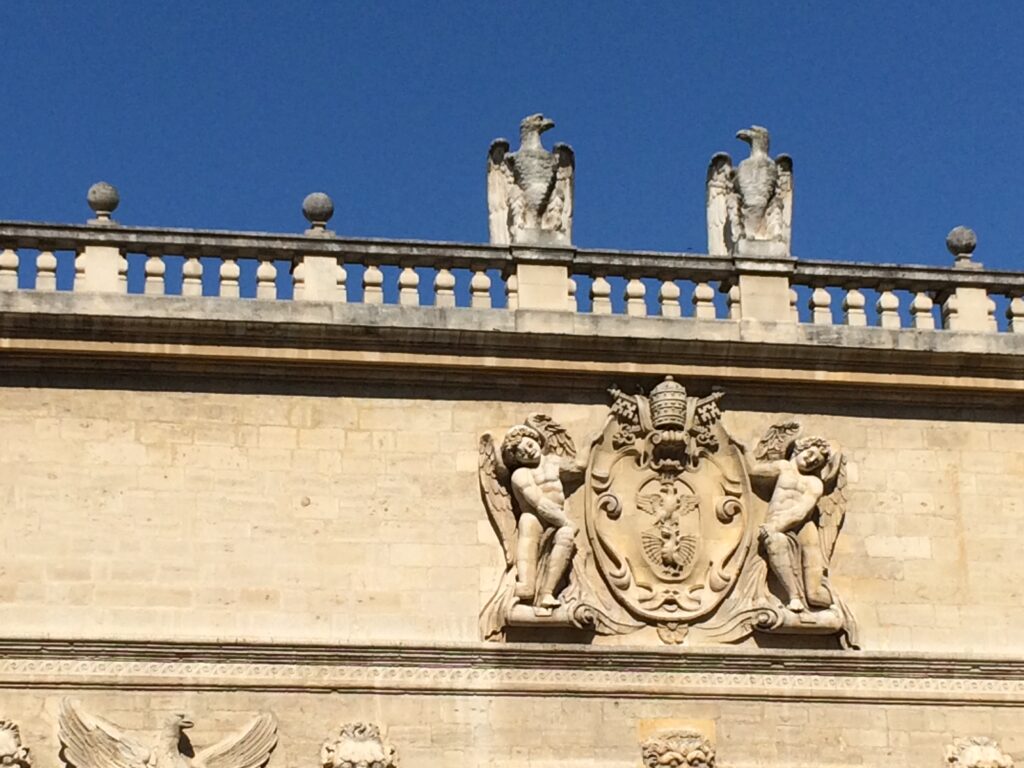
1619
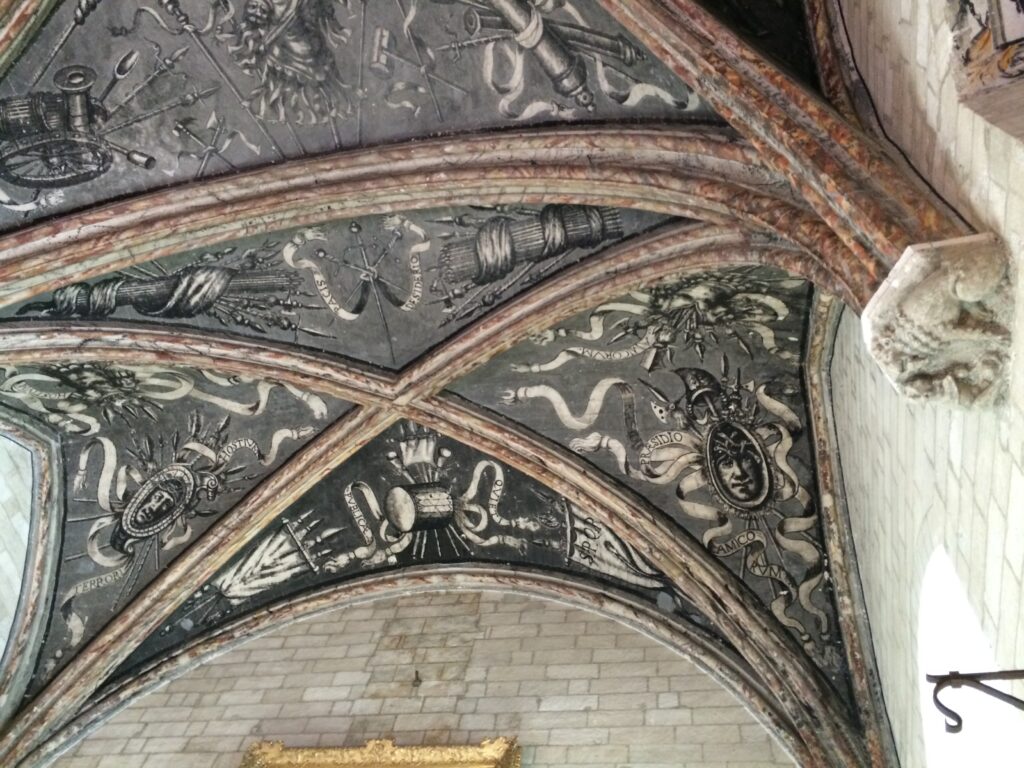
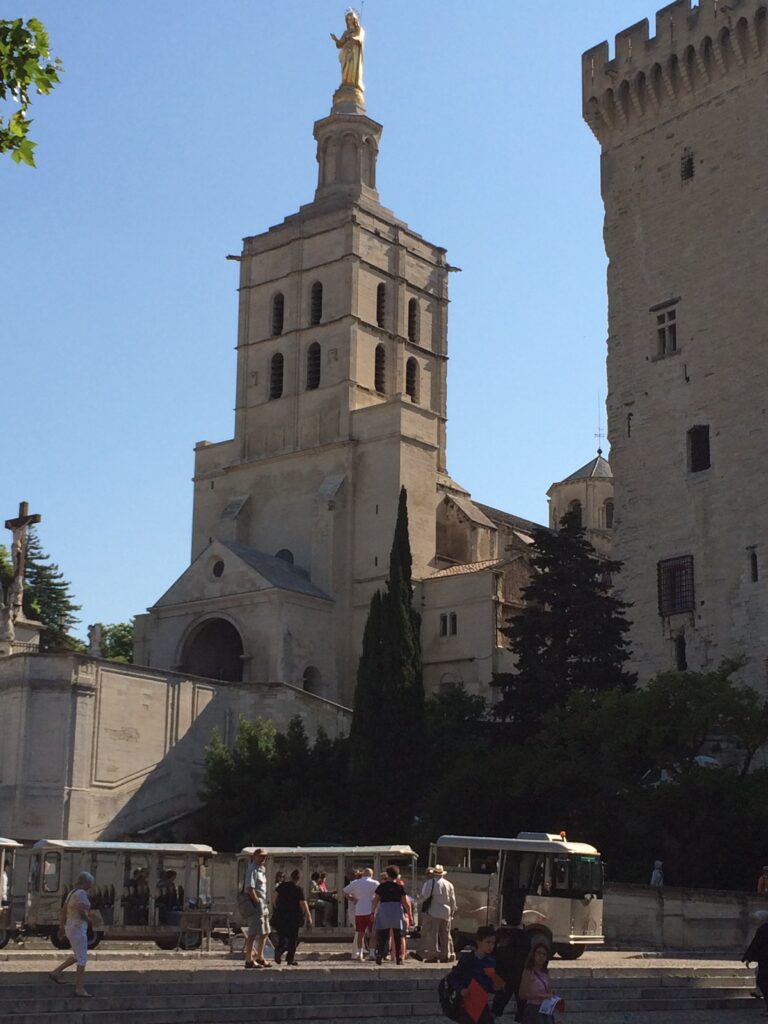
The highlight of Avignon was the guided tour of the Pope’s Palace and its long, echoing Great Audience Hall, 14thcentury wall paintings, and Great Chapel. The Palace of the Popes was built stark and strong before the popes knew how long they’d be staying. Because of political turmoil, Pope Clement V relocated the Papacy to Avignon in 1309. There were seven “French Popes” who ruled until 1377. Avignon was chosen for its relative safety and its location, as it was technically part of the Kingdom of Arles and surrounded by lands controlled by papal allies, rather than being under direct French royal control. As the papal court expanded, Popes Benedict XII and Clement VI transformed a former bishop’s palace into the sprawling, heavily fortified Gothic fortress that stands today. This was the most fortified palace of the time, and with 10-foot-thick walls; it was a symbol of power. Besides housing the pope himself, it was also built to accommodate 500 people as the administrative center of the Holy See. Today it’s the largest surviving Gothic palace in Europe and is a UNESCO World Heritage site.
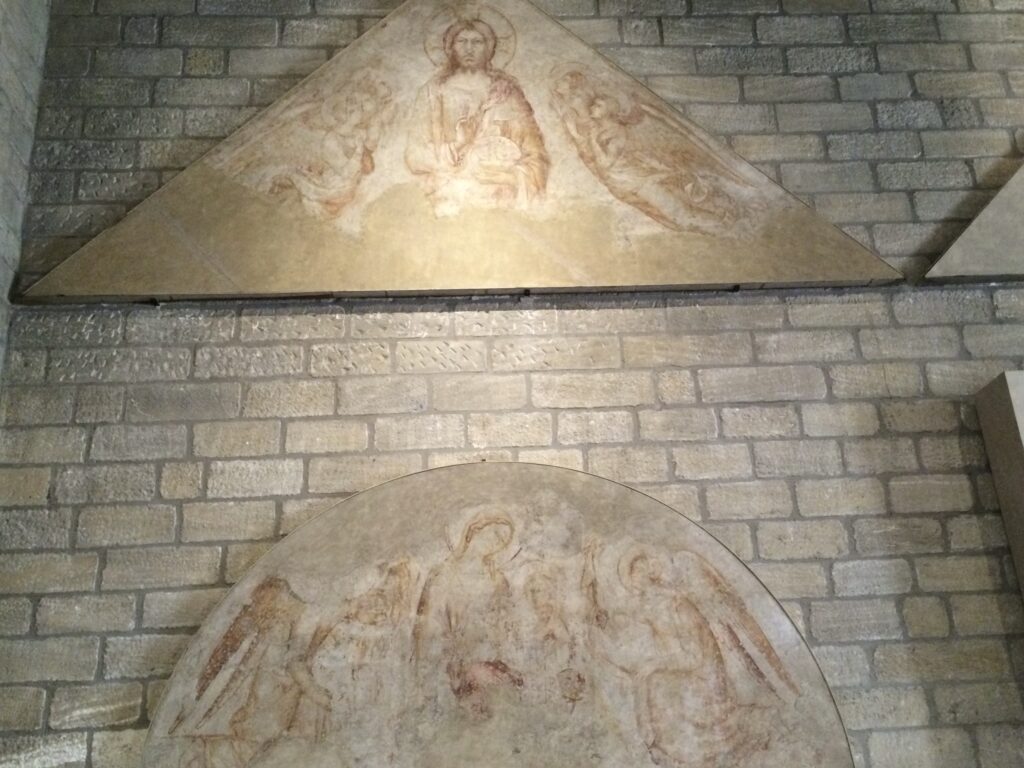
Simone Martini.
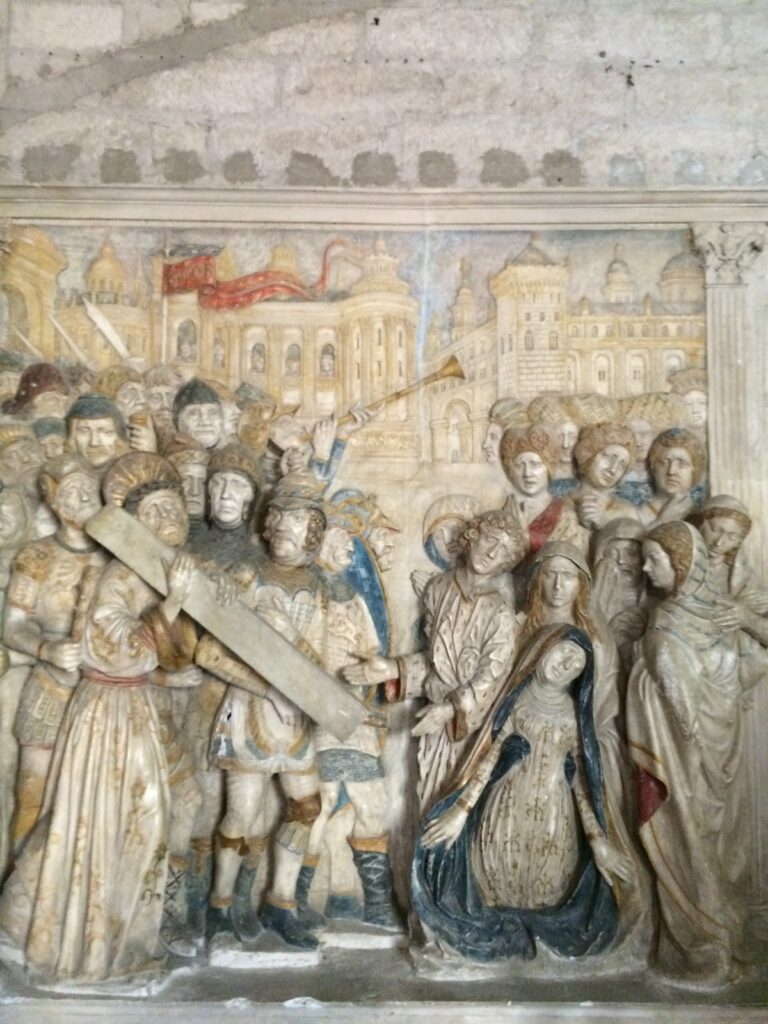
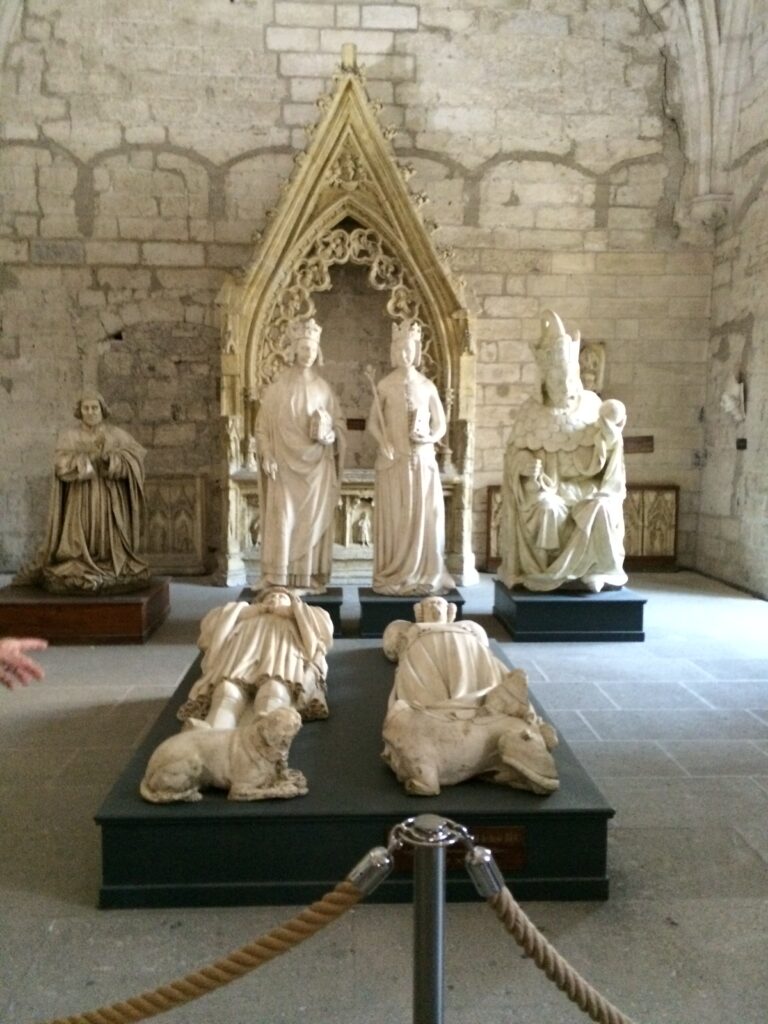
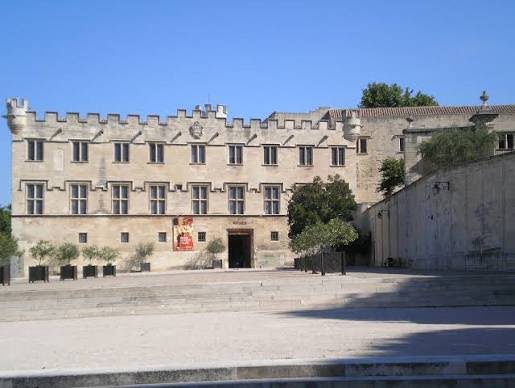
Nearby, the Petit Palais Museum, located in what had been a cardinal’s palace, displays the Church’s collection of medieval Italian painting and sculpture. It was the palace of the archbishops of Avignon, built in the 14th century. The south and west façades, in a Renaissance style, date from the end of the 15th century and are the work of the archbishop of Avignon, Julien de la Rovère, the future pope Julius II, known as the “Warrior Pope” and a patron of the arts, as well as being one of the greatest figures of the Renaissance.
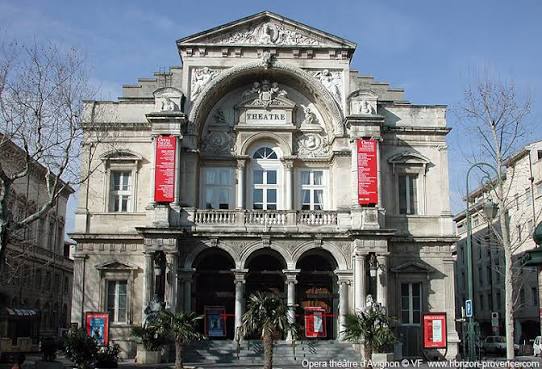
Then we strolled through the Palace Square and on to Horloge Square. The Place de l’Horloge (Clock Tower Square) is the main square and heart of Avignon. Buildings located on the square include Avignon’s 19th century city hall and opera. Ironically, the famous clock, after which the square is named, is barely visible from Place de l’Horloge.
Arles
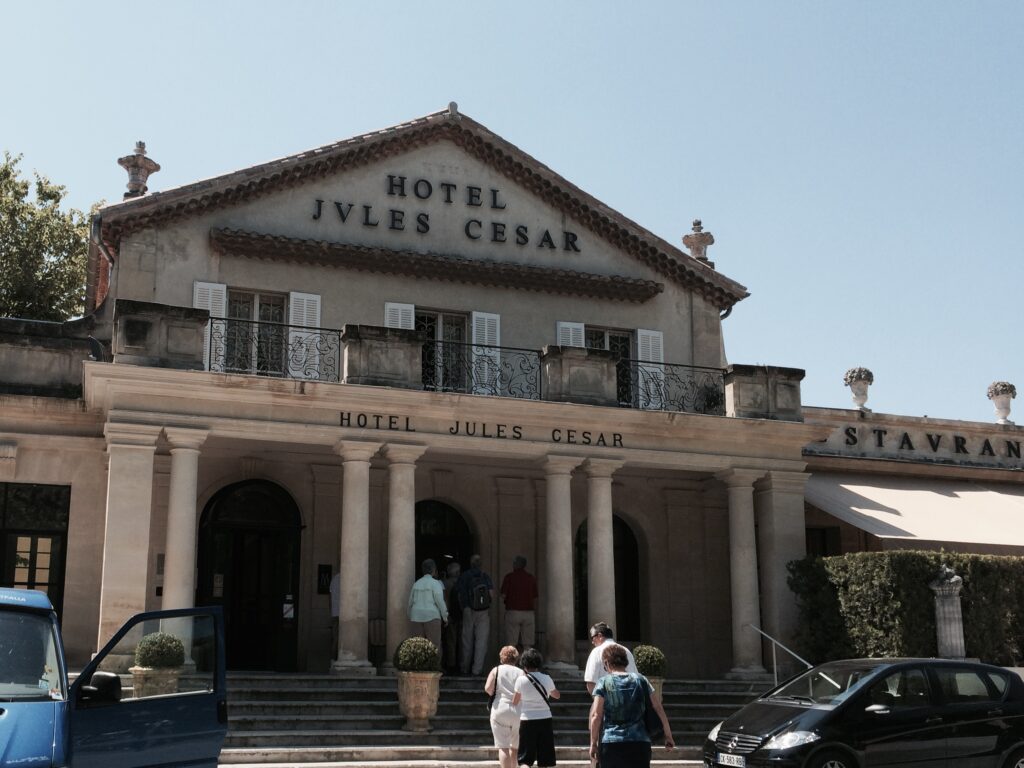
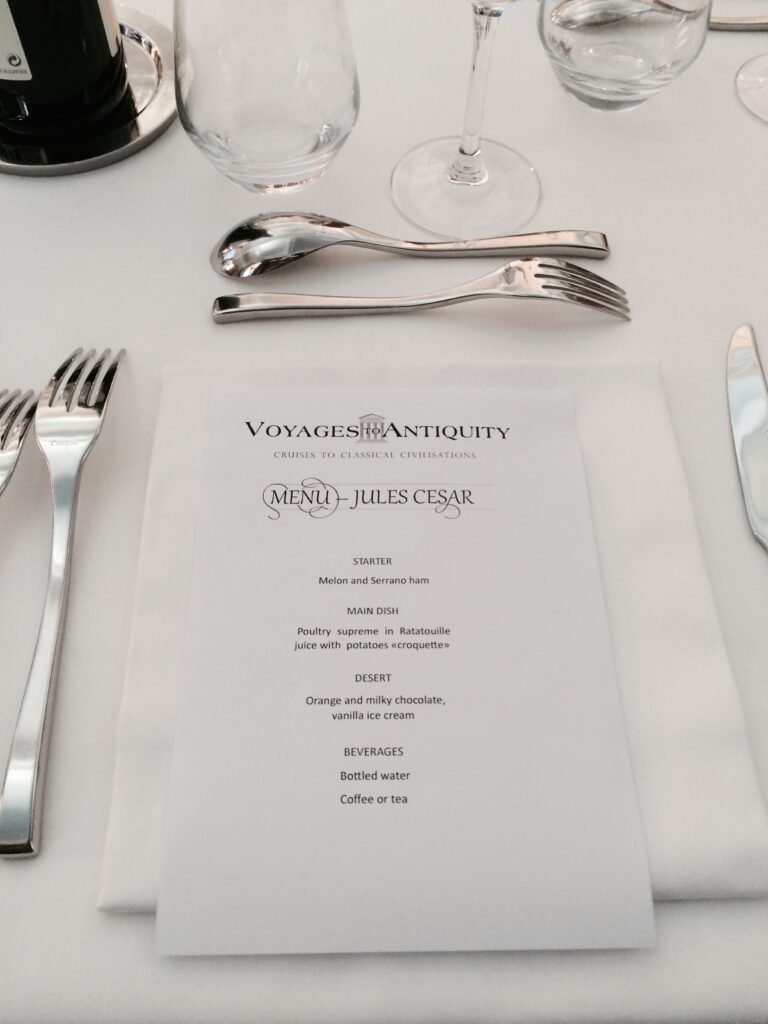
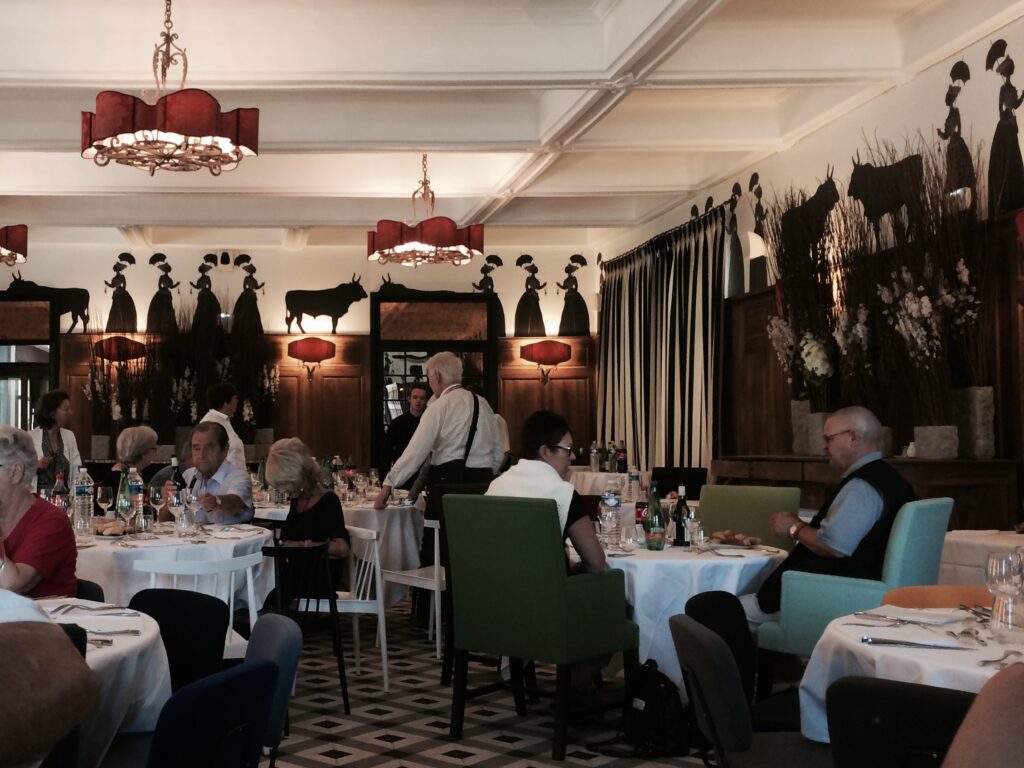
Then we continued on to Arles. In Roman times Arles was one of Gaul’s most venerated cities. We had a delightful lunch at the Julius Caesar Restaurant and Inn in the heart of the historical district. It is a renovated 17th Century Carmelite Convent. The luncheon, complete with linen and silver, was a gastronomic delight.
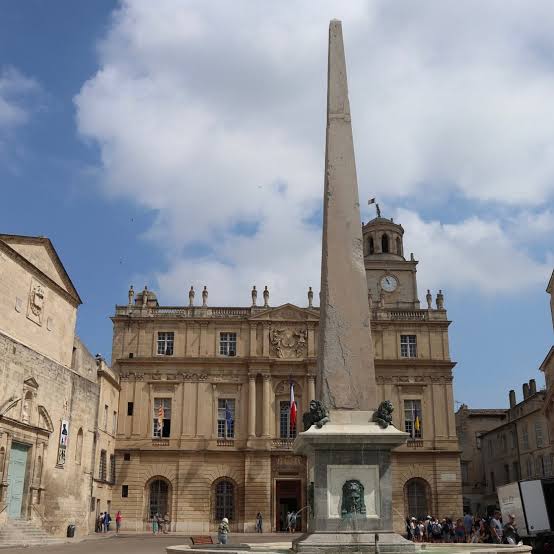
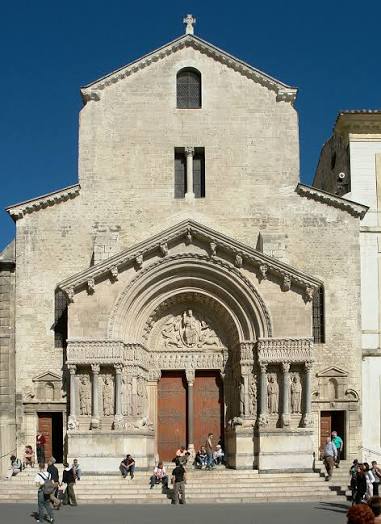
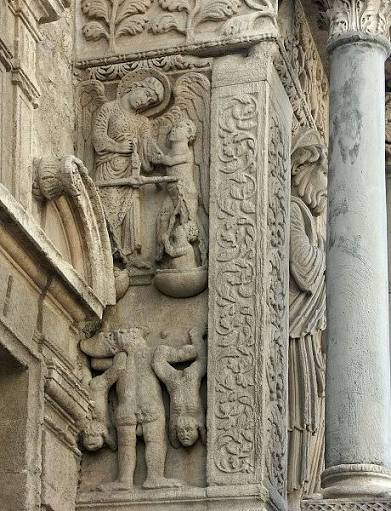
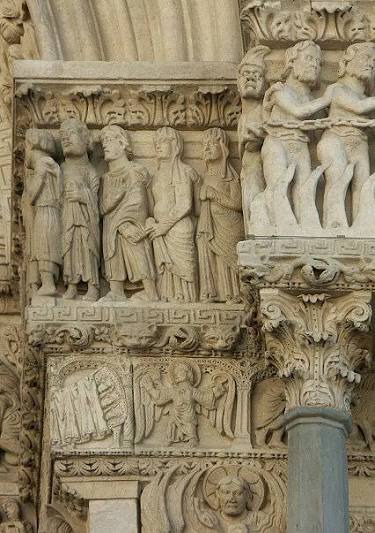
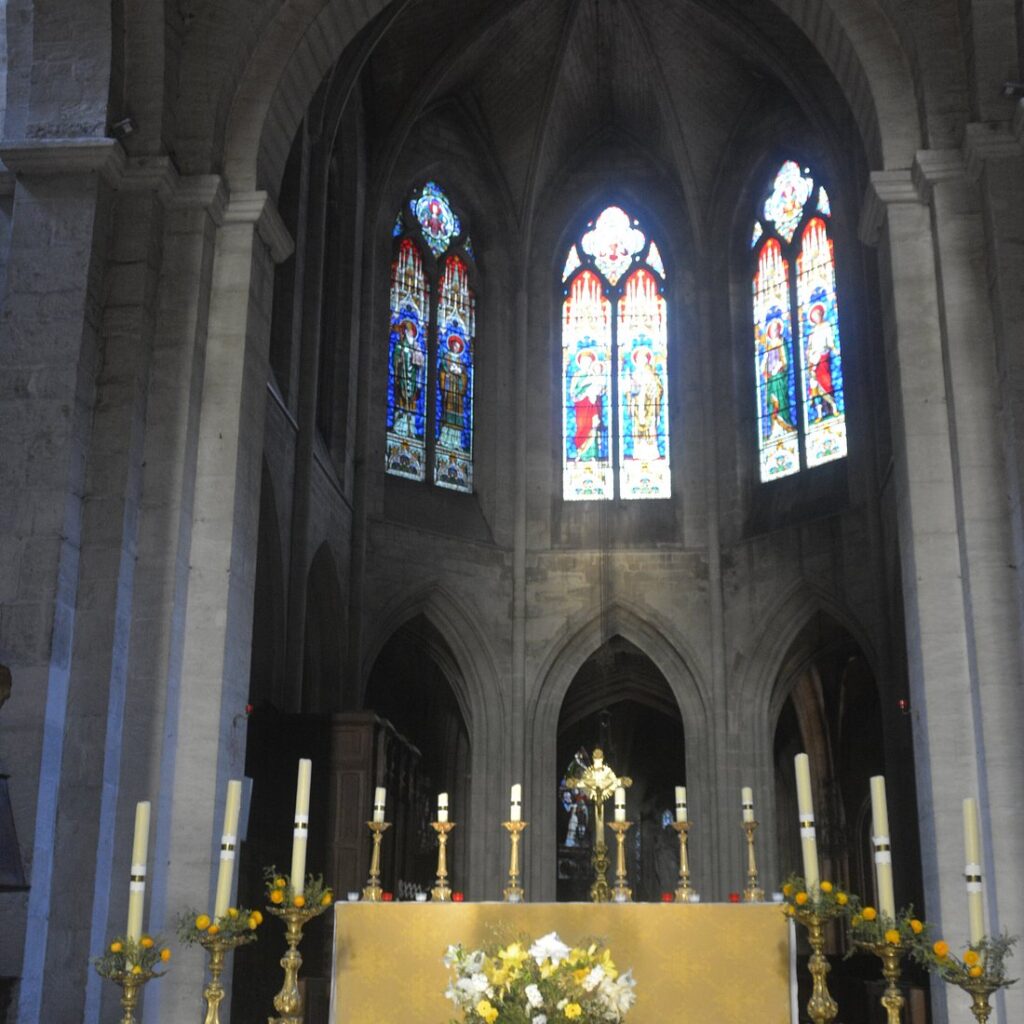
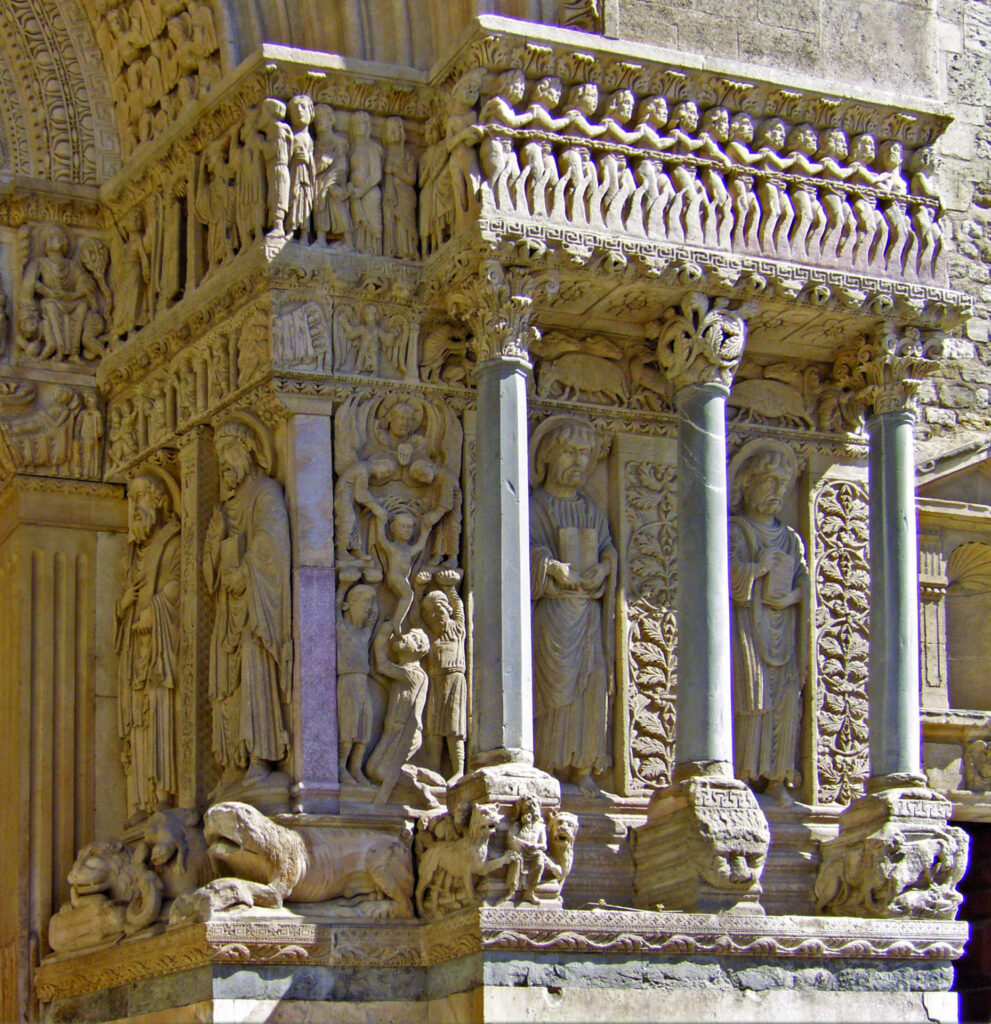
After lunch we walked through this Roman town, passed the Café de Forum, Republic Square with its 4th century obelisk, and the 17th century Town Hall with its clock tower. We stopped at the Church of St. Trophime with its magnificent doors. The church is an important example of Romanesque architecture, and the sculptures over the portal, particularly the Last Judgement, and the columns in the adjacent cloister, are considered some of the finest examples of Romanesque sculpture. The Cathedral of St. Trophime was built on the site of the 5th century basilica of Arles, named for St. Stephen. In the 15th century a gothic choir was added to the Romanesque nave. At the time the Cathedral was built, in the late 11th century or early 12th century, Arles was the second-largest city in Provence
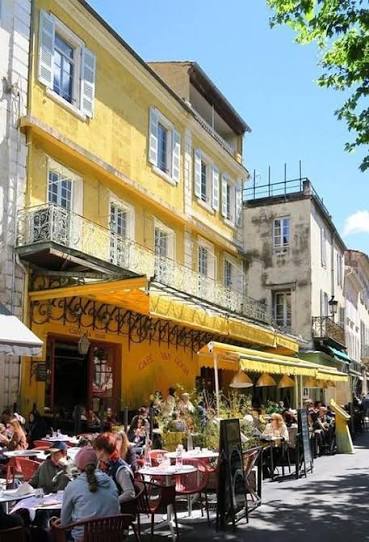
Van Gogh Paintings
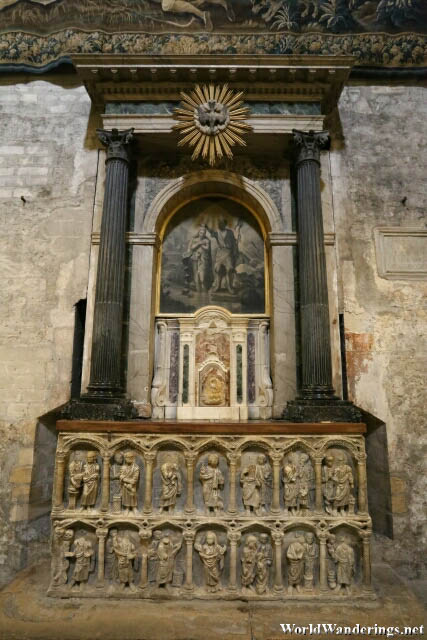
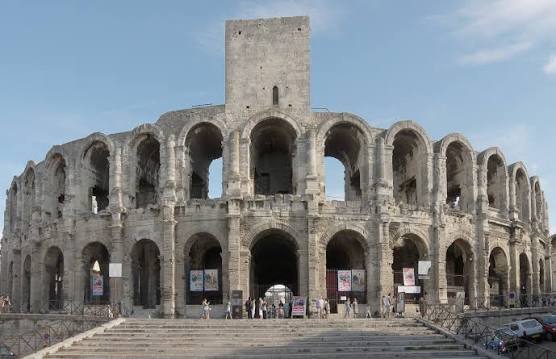
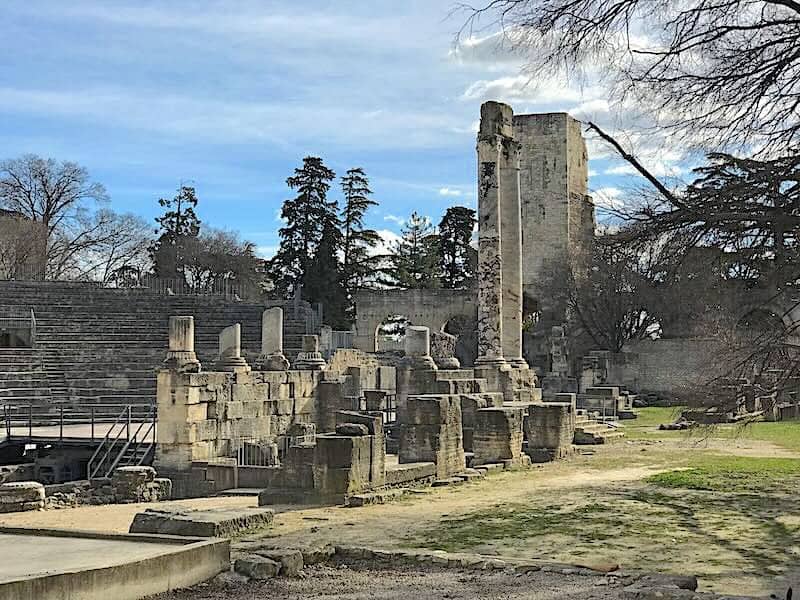
Then we went on to the amphitheater, the largest in Roman Gaul, a UNESCO World Heritage Site. It is a two-tiered Roman amphitheater built in 90 CE and sat over 20,000 spectators. It was built for chariot races and gladiator battles. Today it is used for bullfighting, plays, and concerts.
Arles was a favorite of Vincent Van Gogh. He spent a year here and produced 300 drawings and paintings. His “Starry Night” was painted overlooking the Rhone.
From here we returned to the ship.
Leave a Reply