Cape Town is South Africa’s second-largest city after Johannesburg and the legislative capital of the country. Located on the shore of Table Bay in the Atlantic Ocean at the northern end of Cape Peninsula, the central business district is the oldest urban area in the Western Cape. Because it was the site of the first European settlement in South Africa, Cape Town is known as the country’s “mother city.”
The city had its origin in 1652, when the Dutch East India Company established a station for its ships on the shores of Table Bay. The Dutch influence grew over the years involving the French who helped the Dutch defend the city against British attack. British occupation occurred during the 19th century.
In 1925 and through Aparteid, English and Afrikaans were the official languages of South Africa. Today there are 12 official languages: Afrikaans, English, Ndebele, Sepedi, Sesotho, South African Sign Language, Swazi, Tsonga, Tswana, Venda, Xhosa, and Zulu. Zulu is the lost widely spoken home language, followed by Xhosa, and Afrikaans.
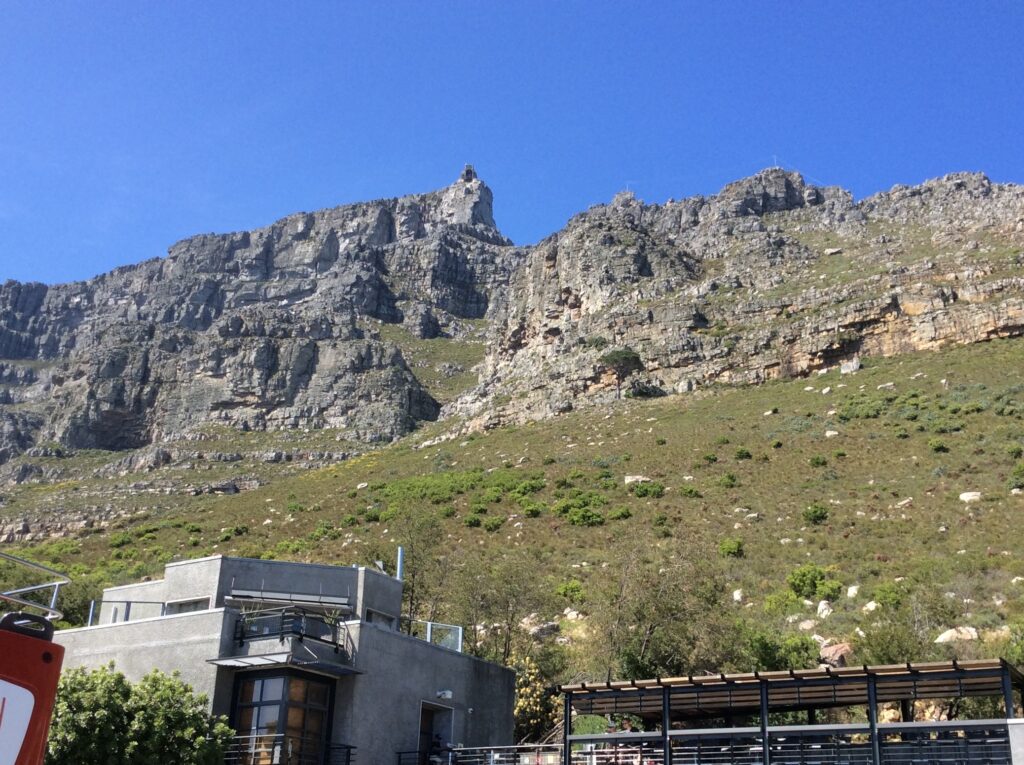
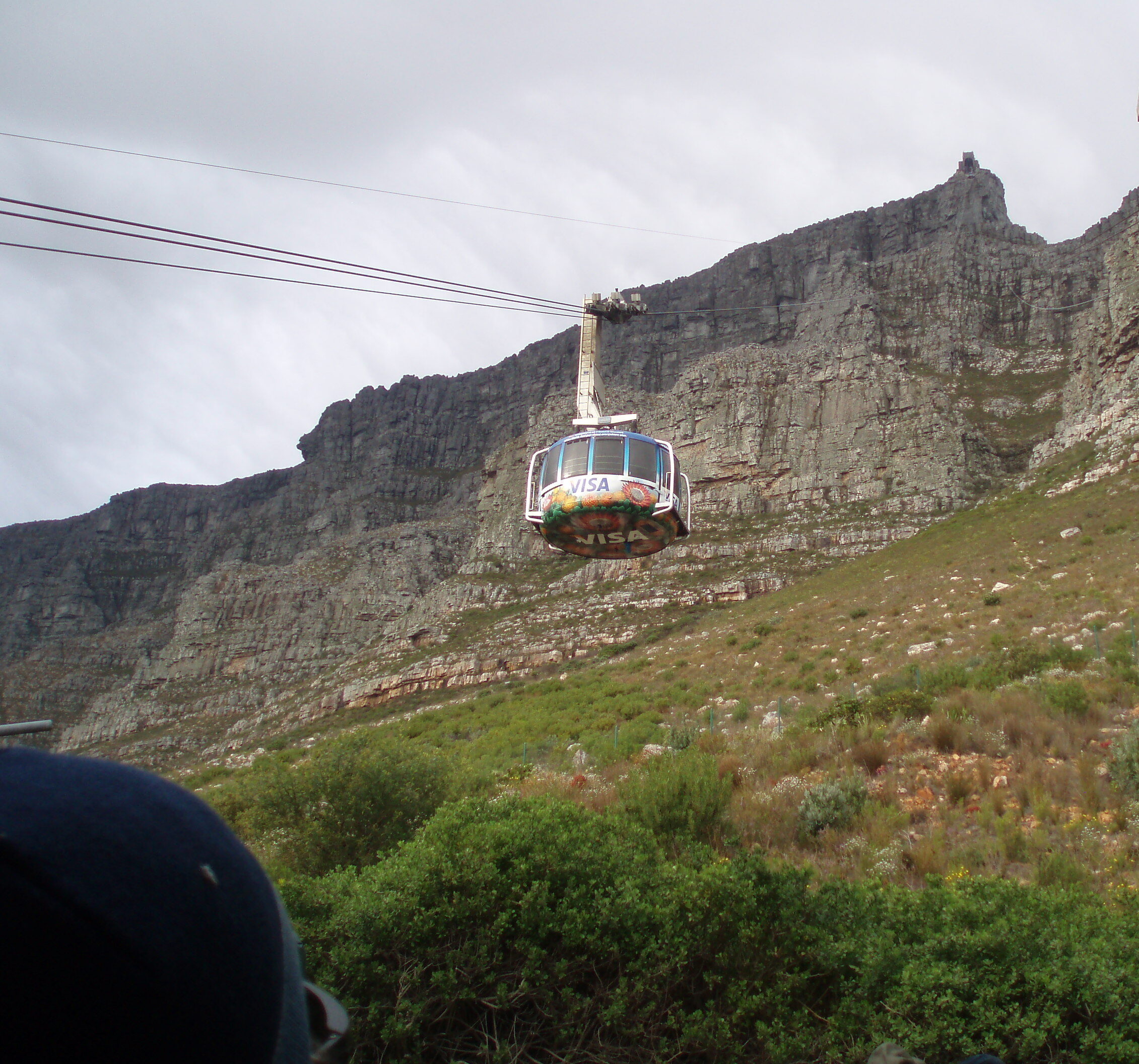
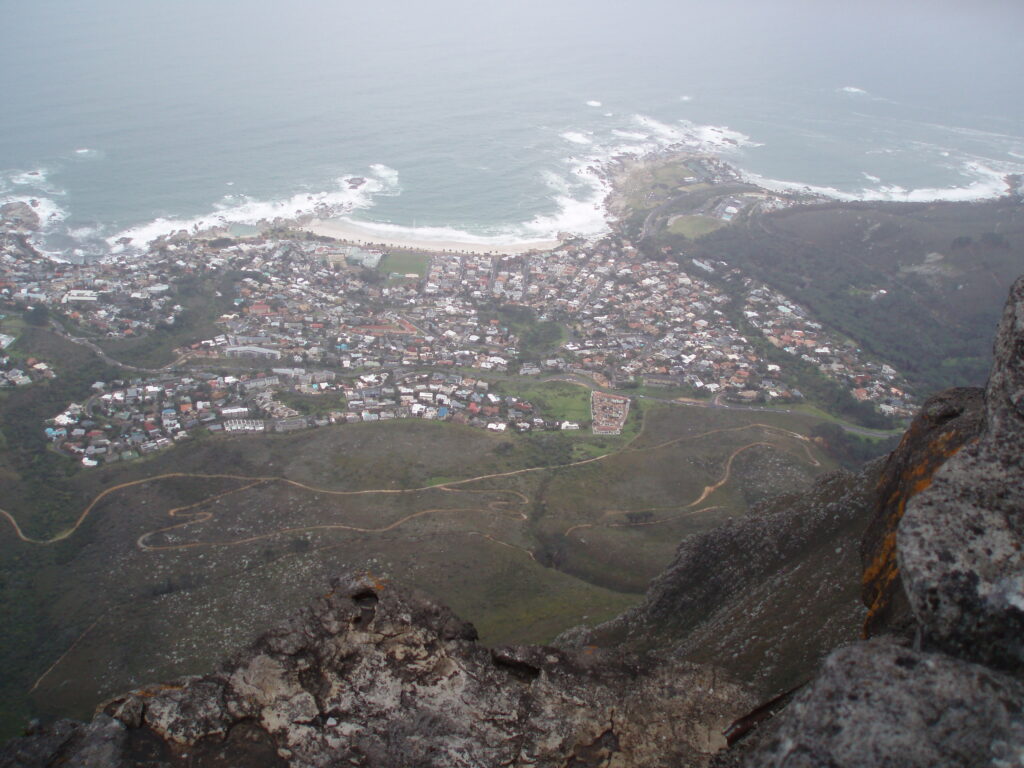
Our visit started out with Table Mountain, a flat-topped mountain forming a prominent landmark overlooking the city of Cape Town. We took a cable car to the top, and it was snowing (a little) in August! However, August is the end of their Winter. The mountain is 3,500 ft. high. The views from the mountain are spectacular.
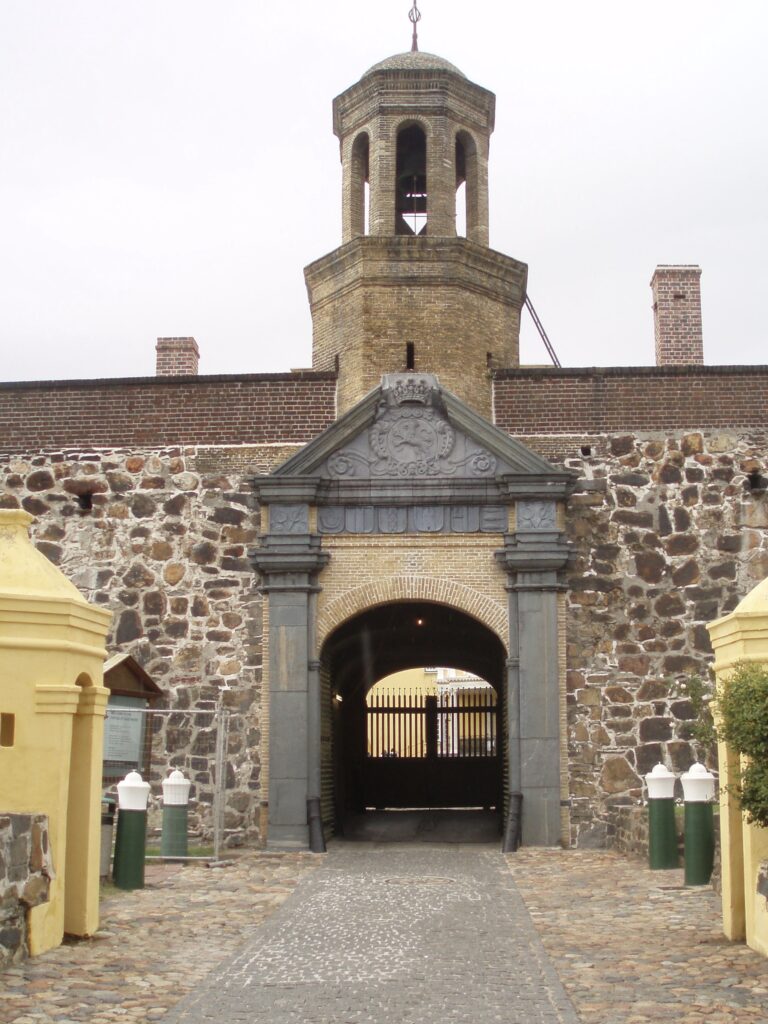
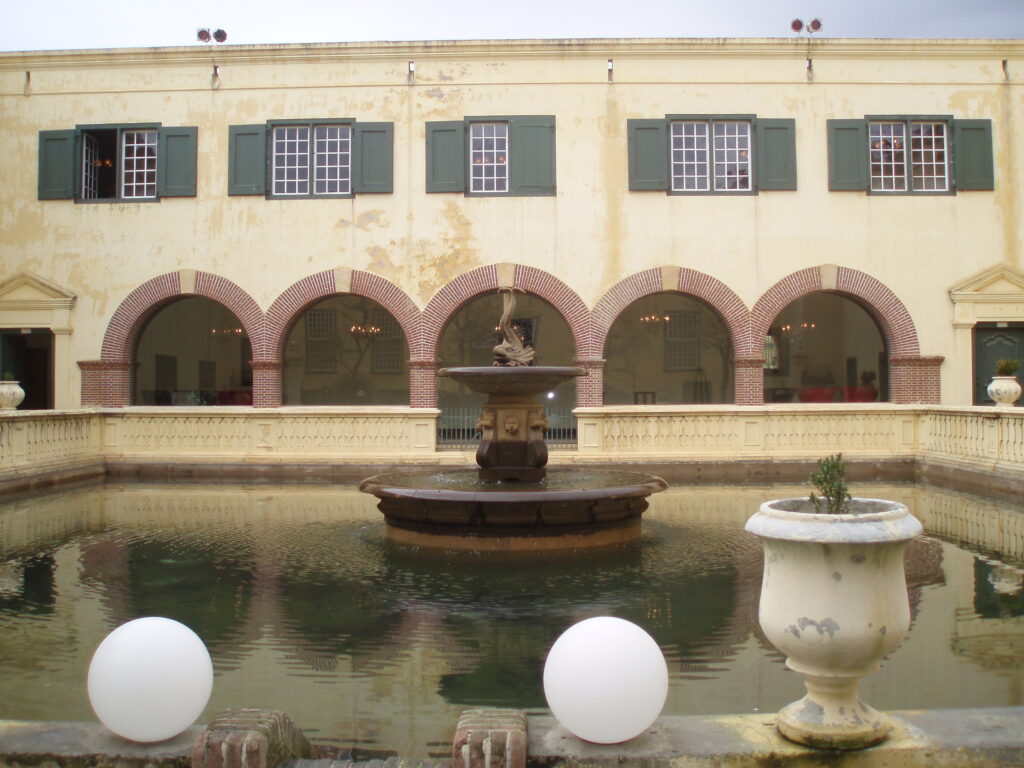
After Table Mountain, we toured the city. We started at the oldest building, the Castle of Good Hope (Kasteel de Goede Hoop). Constructed by the Dutch East India Company between 1666 and 1679, this fort served as a maritime replenishment station as well as the center of life in the Cape. Today it is a museum and cultural site with a Military Museum, the William Fehr Collection of historic art, and a traditional blacksmith’s forge.
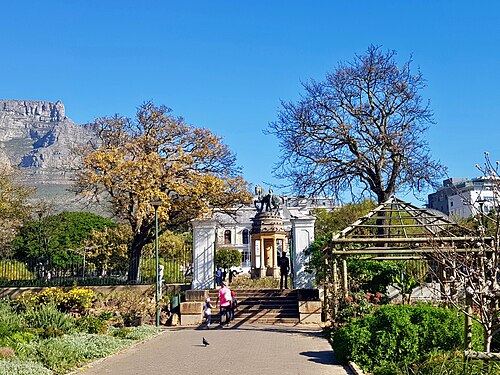
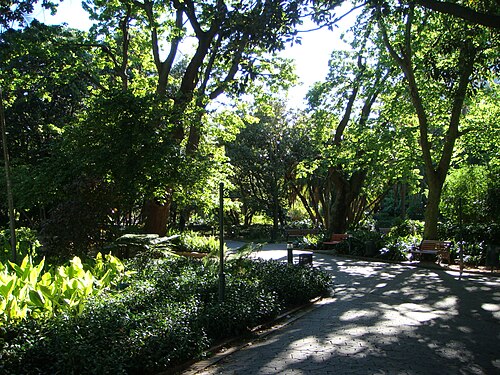
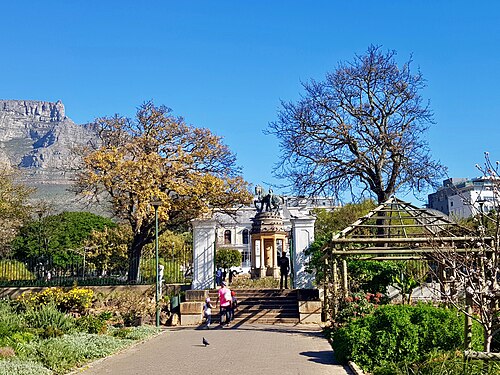
Our next stop was the Company’s Garden, a large park and national heritage site in the heart of the city. It is the oldest garden in South Africa, originally established in the 1650s. Home to a roe garden, Japanese Garden, fish pond, and aviary, it has its origins in Jan van Riebeeck’s vegetable garden, which he grew to feed the original colony as early as 1652.
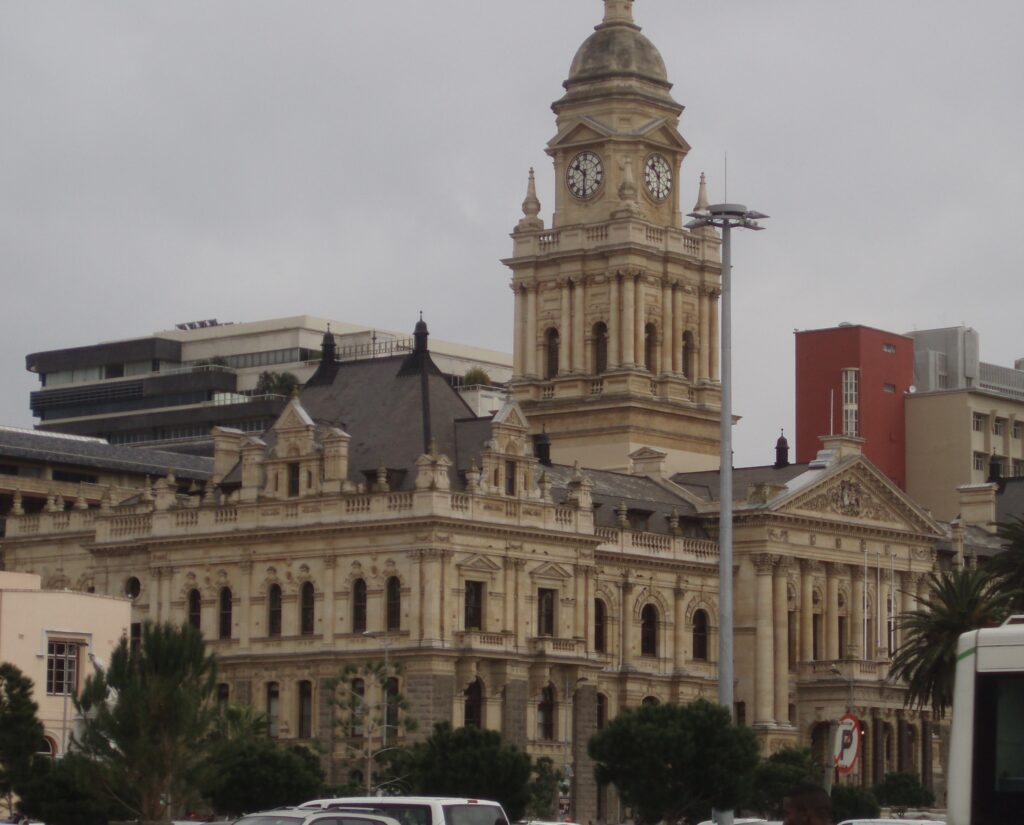
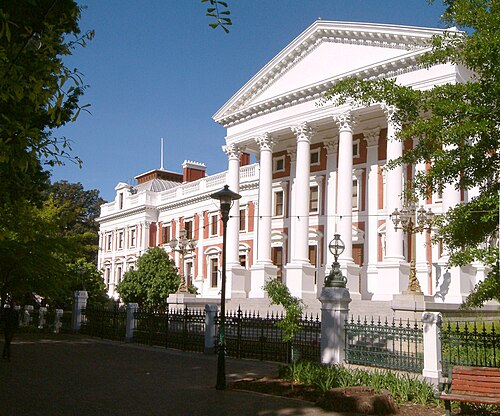
From there we drove past the Parliament Buildings. The original building dates from 1884 and served as the home for the Cape Parliament until 1910. Now it houses the National Council of Provinces. The Old Assembly building was constructed in 1910. And the National Assembly Building was completed between 1983 and 1985. Next was the City Hall, a historic landmark built in 1905. The limestone used in its construction was imported from Bath, England. The building features a grand clock tower.
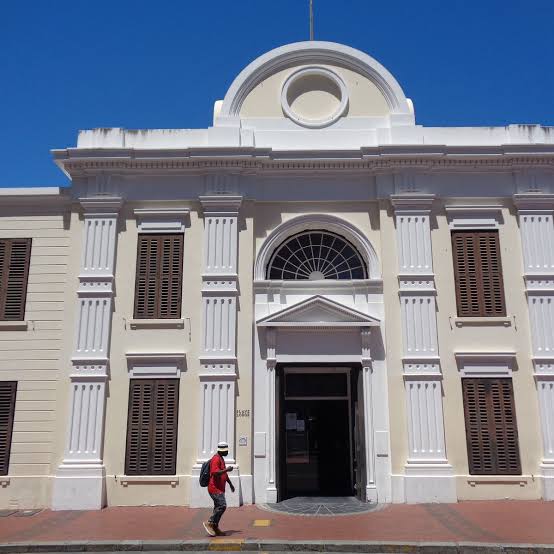
Finally we went to the Slave Lodge. The Slave Lodge is one of the oldest buildings in Cape Town, with a history spanning more than three centuries. Built in 1679 by the Dutch East India Company, it housed enslaved people brought to the Cape Colony to work for the company. In 1811 under the British, the building ceased to function as a slave lodgem and became a government building. In 1911 it was repurposed as the Old Supreme Court, and in 1966 became the South African Cultural History Museum, later renamed the Slave Lodge Museum. Here you come face to face with the slave trade history in South Africa. The first slaves were brought from Southeast Asia in 1652. This accounts for the Asian influence you see around the city.
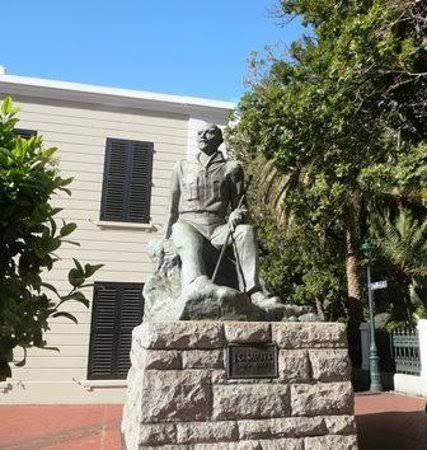
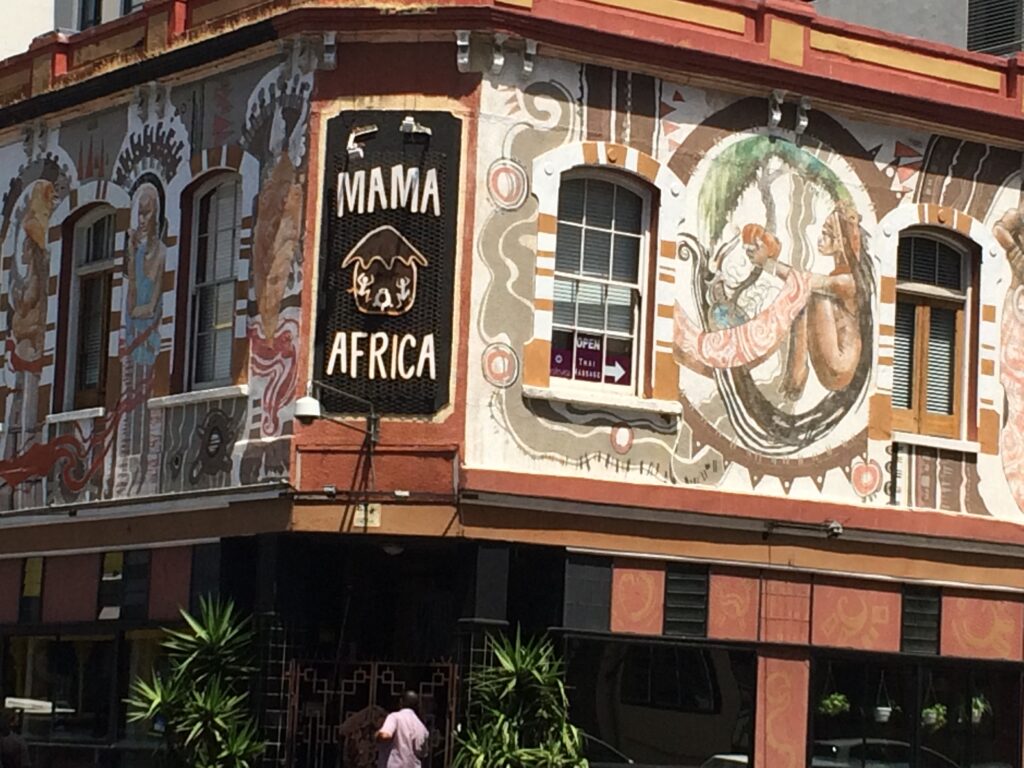
Dinner this night was at Mama Africa’s on historic Long Street. This was walking distance from our hotel. Mama Africa is an authentic Pan-African Restaurant. We had Potjieos: a slow-cooked stew prepared in a traditional cast-iron pot over a fire with meat and vegetables, and aromatic spices. Ours had three different meats including Springbok. They bring the pot to the table and serve you from it. Meanwhile traditional African music is played. Their slogan is “If you haven’t been to Mama Africa, you haven’t been to Cape. Town.” After dinner we walked along Long Street looking in the various shops and then returned to our hotel. Long Street was the longest street at 3.8 km. It has a number of Victorian buildings with cast iron railings. It is a lively, colorful street, inviting for a stroll past antiquity shops, book and curio shops, galleries, music, photo and travel shops, backpacker hotels, clubs and discos as well as many pubs, nice cafés and cozy restaurants with African, Indian and international food.
Leave a Reply