Cook Islands
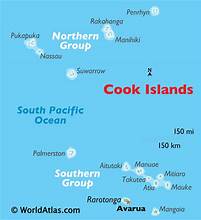
Rarotonga is a kidney-shaped, volcanic island and the largest and most populous island in the Cook Islands, known for its stunning natural beauty and vibrant culture. The island features volcanic landscapes, lush foliage, and beautiful beaches. Its capital, Avarua, is on the north coast and where our ship anchored. The island is the summit of an extinct volcano which rises 16,000 ft. from the seafloor.
Rarotonga was inhabited by Polynesian people around 800 CE, marked by archaeological sites such as marae. The island’s ancient pathways, like the Ara Metua, reflect its cultural significance. The first European to arrive was Captain John Dibbs in 1823. As with the other Polynesian islands, the arrival of Europeans marked the beginning of significant changes in the island’s social and cultural landscape due to missionary influence and colonial interests. In 1888 it was made a British Overseas Protectorate. In 1901 New Zealand annexed the Cook Islands; and in 1965 they became a self-governing state in free association with New Zealand.
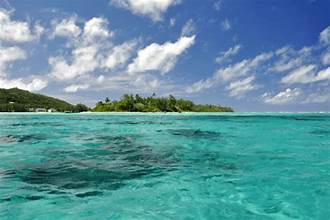
Unfortunately, when we arrived in the Cook Islands, the sea was too rough and the winds too strong for the tenders to go ashore, so we had to view the islands from sea.
American Samoa
Pago Pago is the capital of American Samoa and is on Tutuila Island. It has one of the deepest and best protected natural harbors in the South Pacific. It is often described as the “Pearl of the Pacific” because of its natural beauty and cultural significance. Here American and Samoan traditions have blended into a unique culture. Pago Pago is the southernmost US capital and the only one located in the Southern Hemisphere.
The first residents, Polynesian navigators, settled in Pago Pago about 4,000 years ago. They produced clay pottery known as Samoan Plainware. Sites with ceramics date from 350 BCE to about 10 CE. From 950 CE it was invaded by the Tongans and became part of the Tu’I Tong Empire which lasted until 1,250 CE when they were expelled by a Samoan warrior from Pago Pago. In 1791 British captain Edward Edwareds arrived in Pago Pago. He was followed by the English who settled in 1836. In 1899 the Treaty of Berlin divided the Samoan islands into American and German territories. In 1900 the High Chiefs signed the Instrument of Cessation of Tutuila and swore allegiance to the US, and in 1929 the US Congress recognized American Samoa as a Territory.
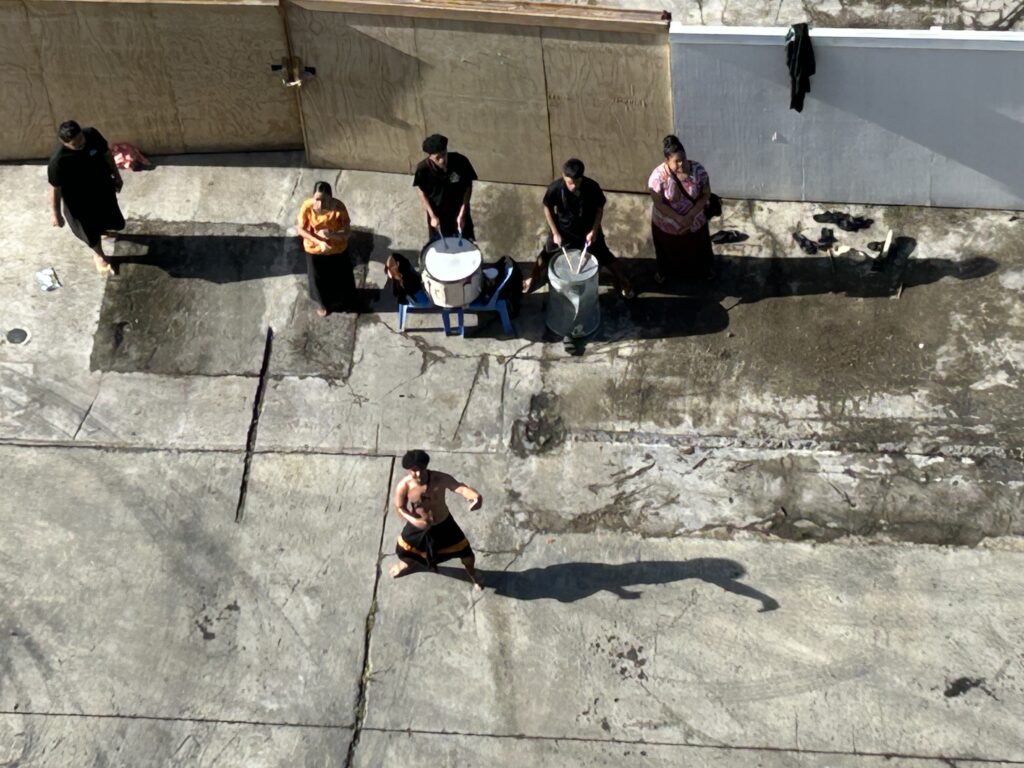
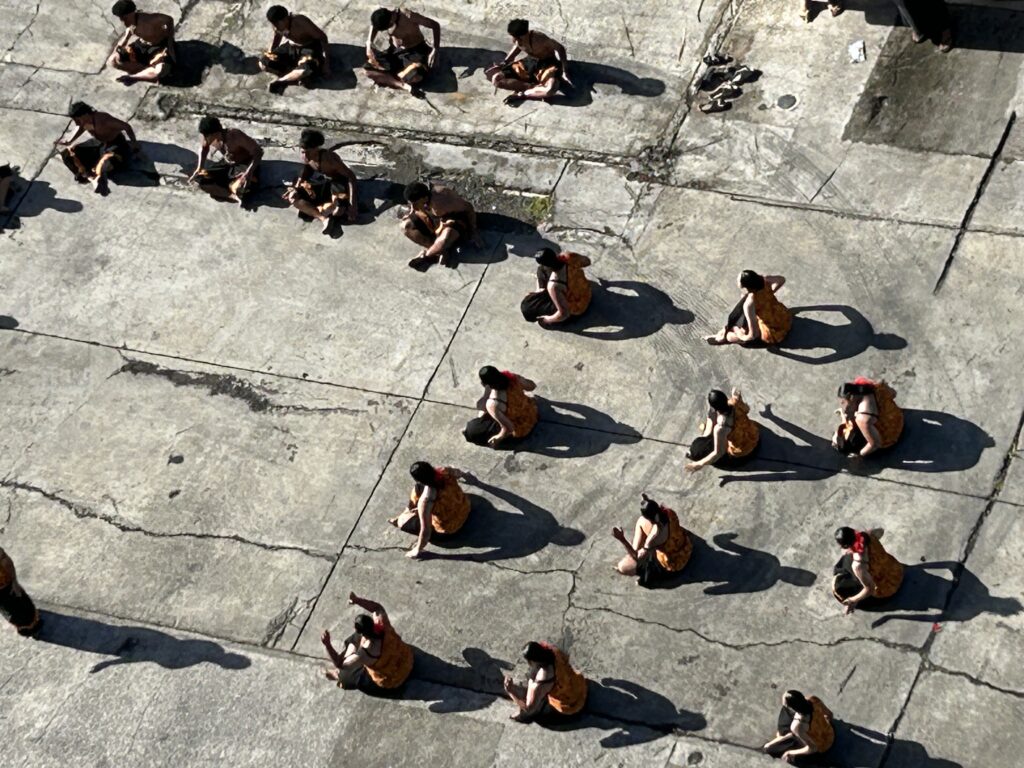
As we were having breakfast, I looked out the window to see a turtle swimming beside the ship. The waters here are home to many sea turtles. The tropical forests have the unique fruit bat as well. As with the other islands, we were welcomed with dancing and music.
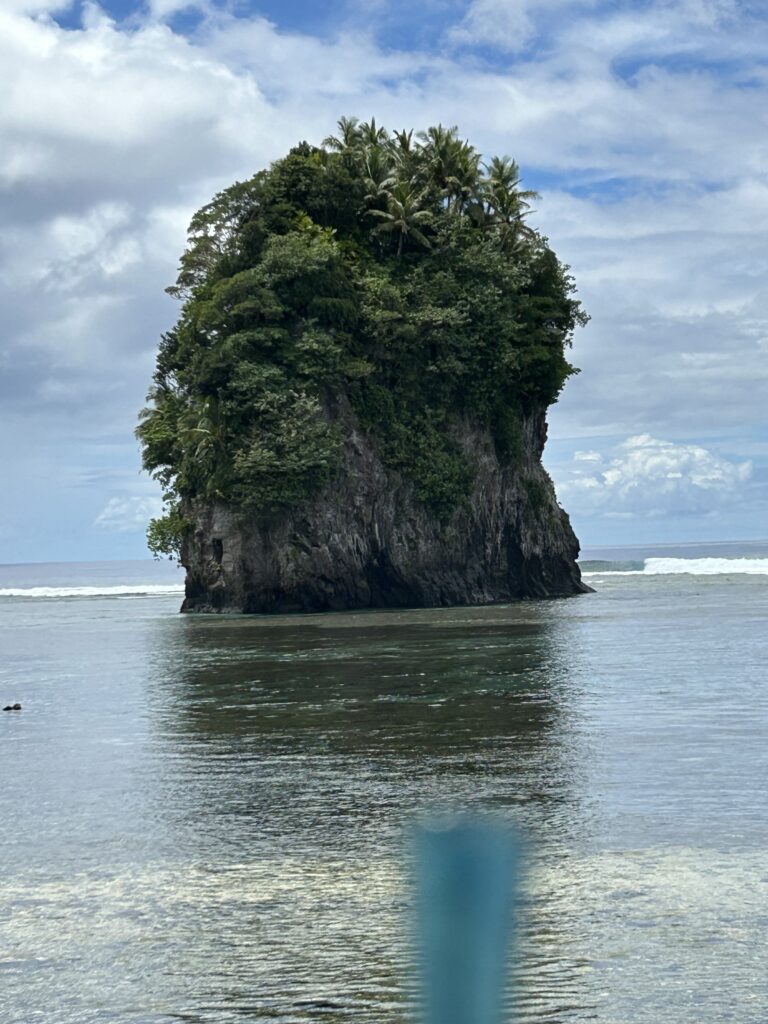
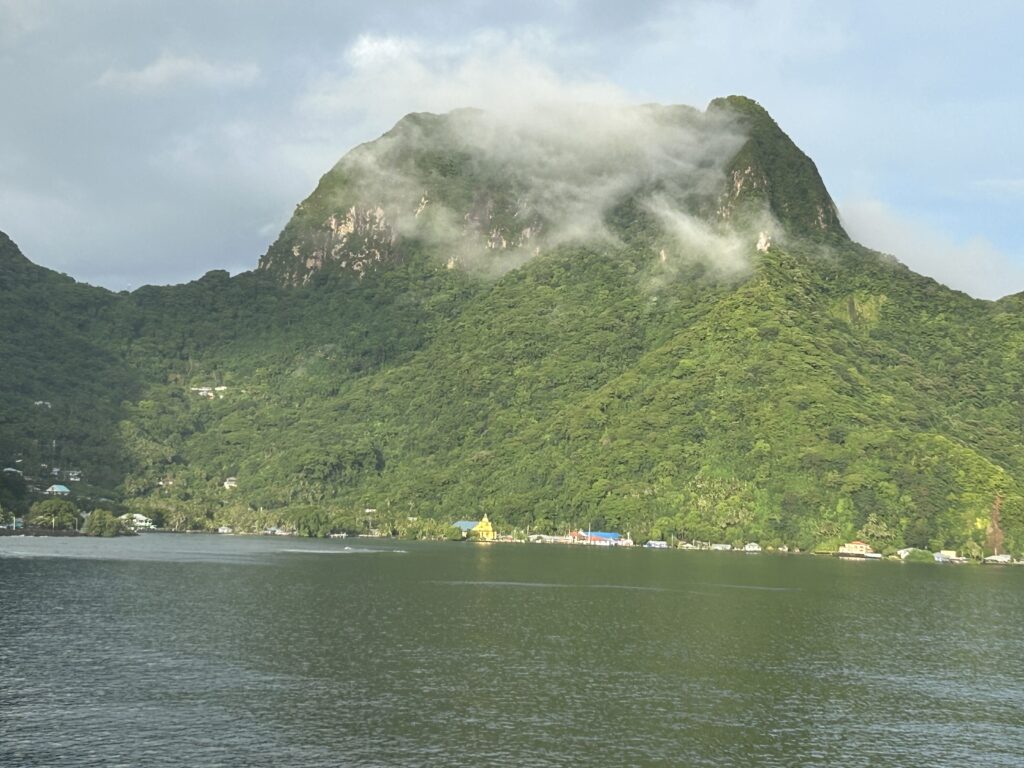
We took a tour that went along the idyllic western side of Tutuila to visit a faithfully recreated communal Samoan village. Along the way, we stopped at the Tsunami Monument for all those lost in the 2009 Tsunami. Then we stopped at the Monolithic Fatu-ma-Futi Rock or the Flower Pot Rock, which I had seen from the ship. We went through several villages, past fruit stands and tuna canneries. We ended up at Villa’s Village, a recreated communal Samoan Village.
On the way we learned that families lived in compounds close to one another, and they buried their dead in front of their homes. We saw sever graves like that. Also, they met in open air meeting places
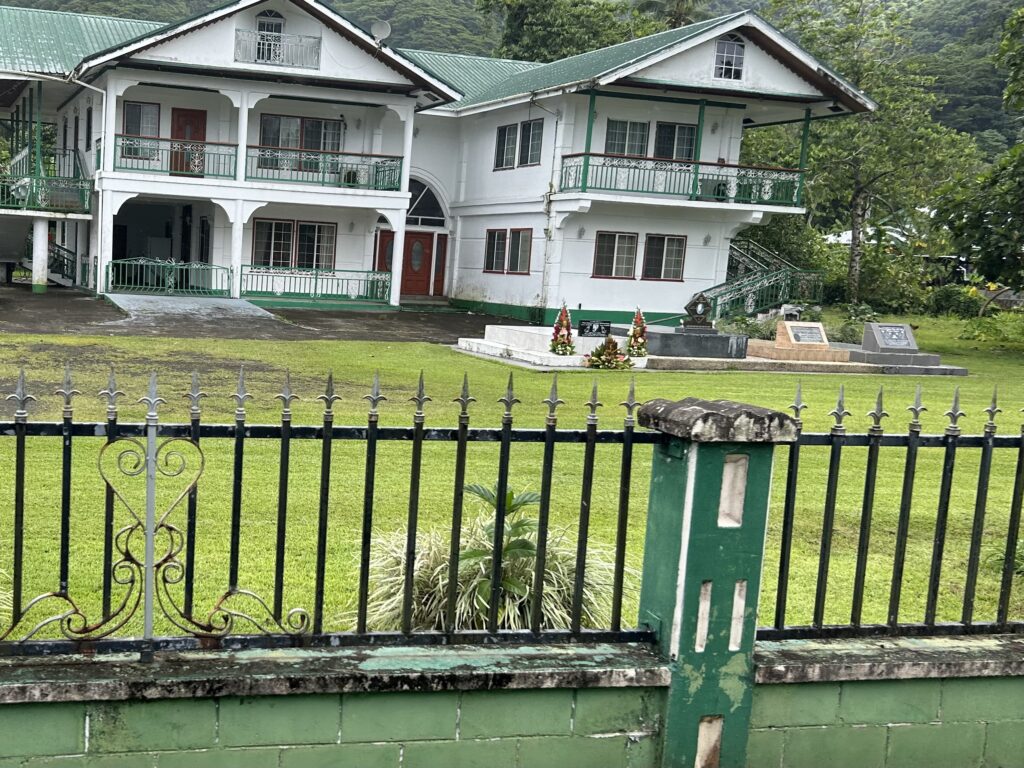
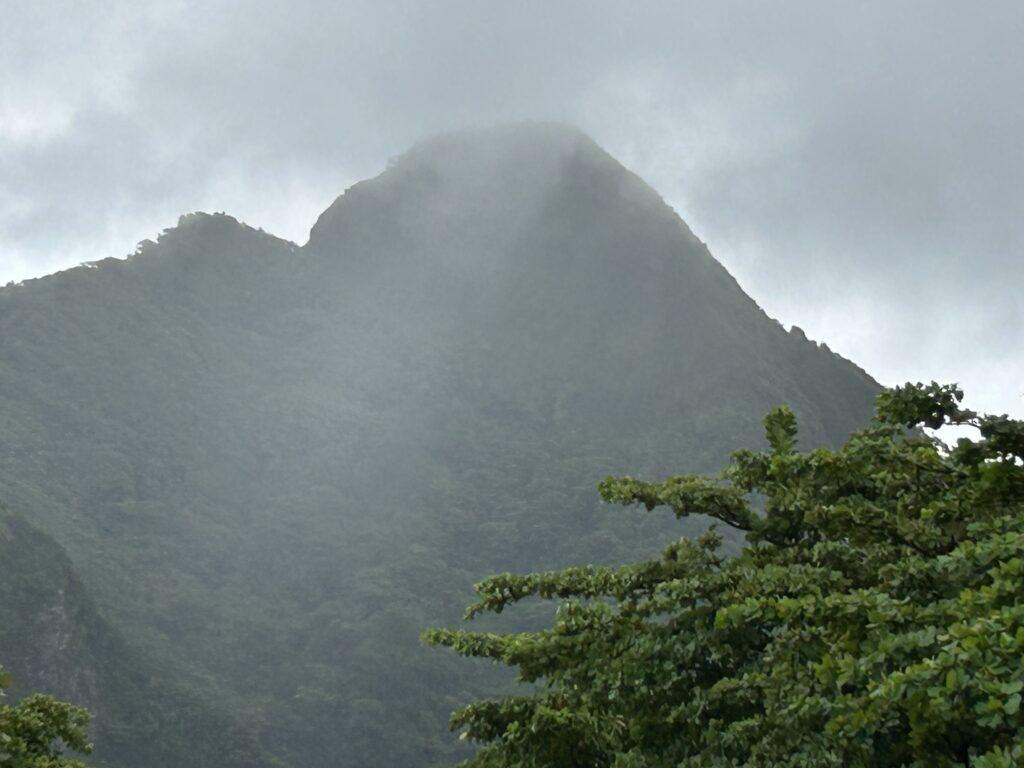
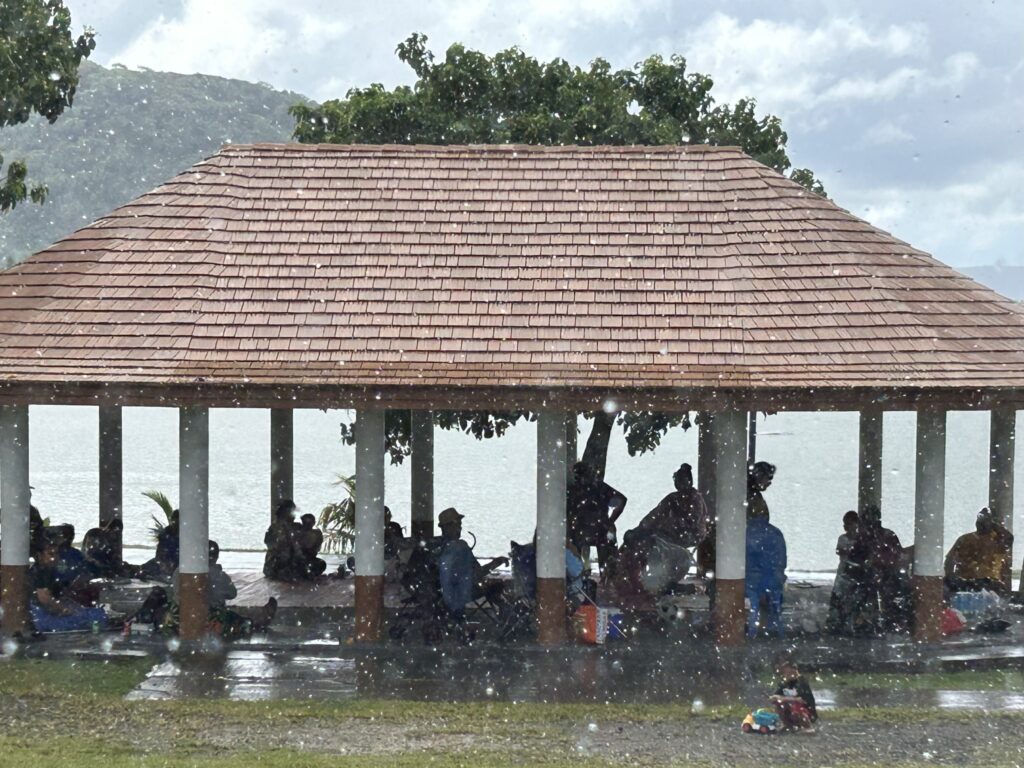
Here we learned a little about the Samoan way of life. The men do all the cooking, and property is passed down through the women of the family. The “Fa’a Samoa,” or the “Samoan Way,” is a guiding principle that shapes social and community life. It reflects the importance of familial ties and communal responsibilities.
Chiefs play a vital role in American Samoan society, serving as leaders and custodians of cultural traditions. “Matai” in Samoan means chief. Each Samoan clan has one. Chiefs are selected through a process of voting by all adult members of the clan. The elder chief may name a choice, but it must be approved by all the members of the clan. Women can be chiefs too. A requirement to be a chief is “tautua” or “service to the family.” The chiefs participate in the “fomo” or council of chiefs, providing the family a voice in village matters. They also are the trustees of the land. Most land in American Samoa either belongs to extended families or the village. Only native Samoans can own land. Non-American Samoans can lease land but not own it.
Each village has two main chiefs: Aliʻi (high chief) and Tulafale (talking chief). These are responsible for navigating between U.S. culture and laws and those of American Samoa.
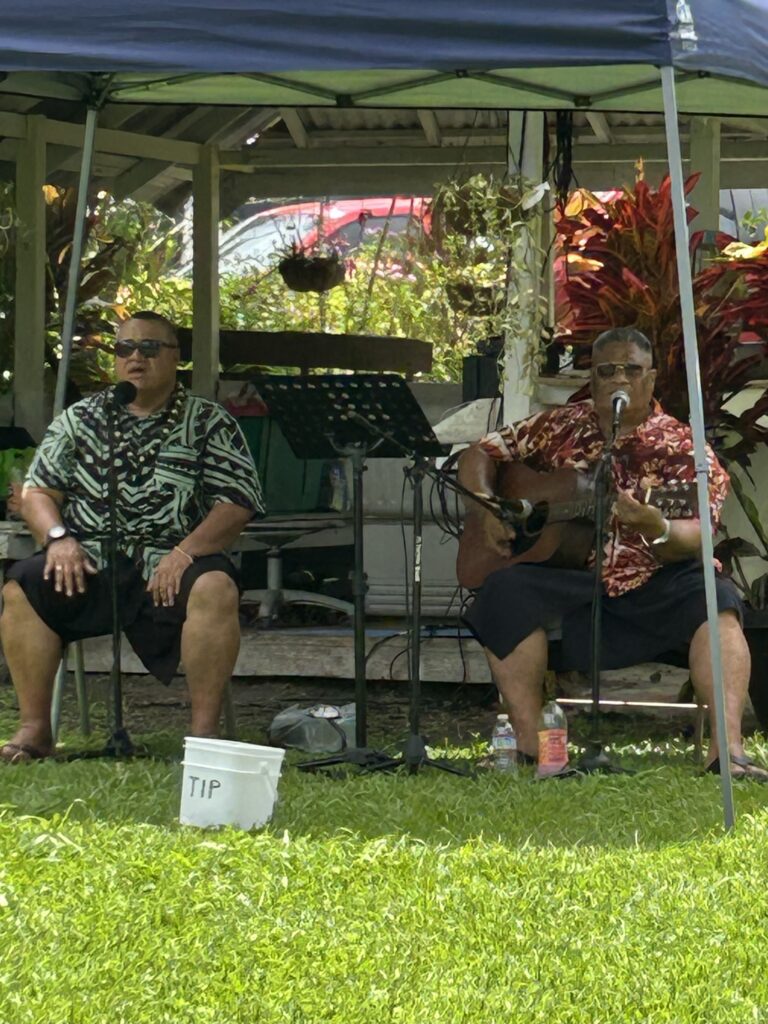
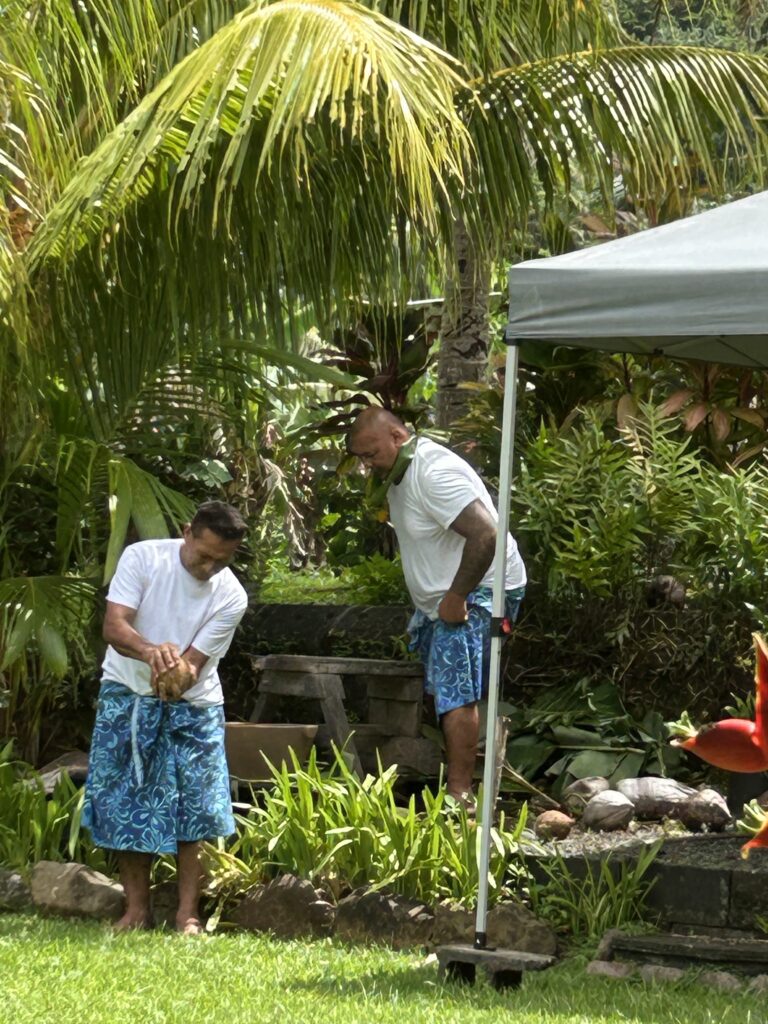
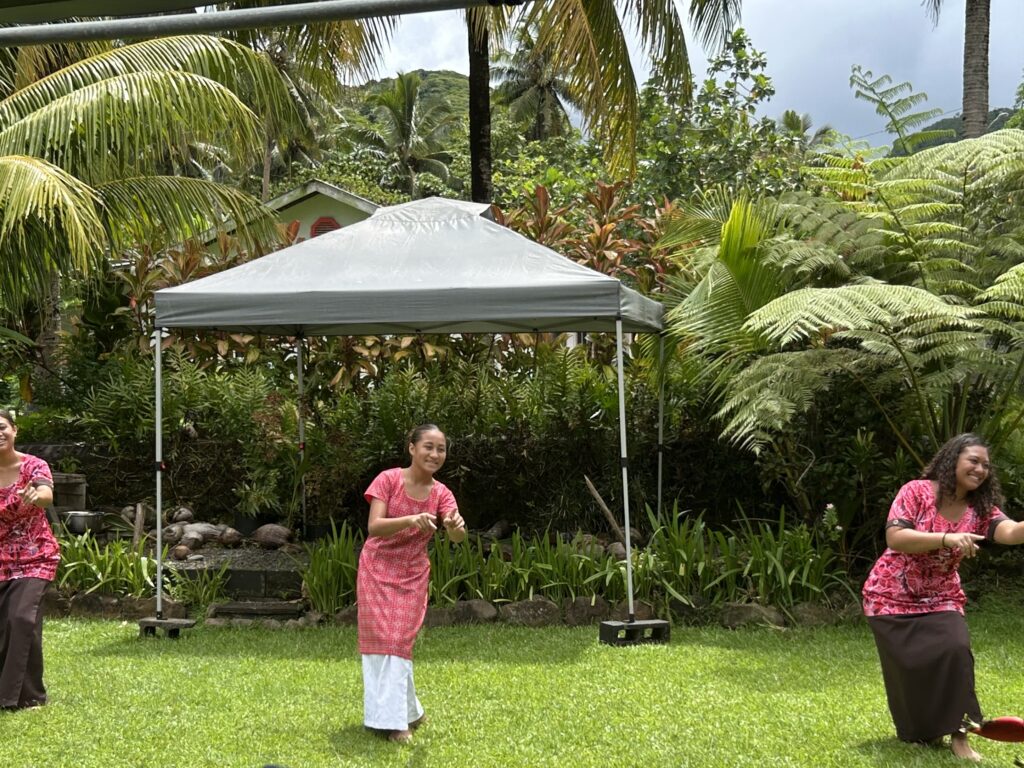
.
We were greeted at Villa’s Village by two musicians playing traditional music on a guitar and drums. Then we toured the traditional Umu hut where the roasting of the food occurs, then went to taste the local cocoa, both beans and drink. Next was a fruit booth with coconut, papaya, and bananas. Finally, was the food cooked in the umu: Breadfruit, coconut, taro, Palusami—taro leaves cooked in coconut milk—and tuna. Then we were entertained by Samoan dancers. After this we returned to the ship.
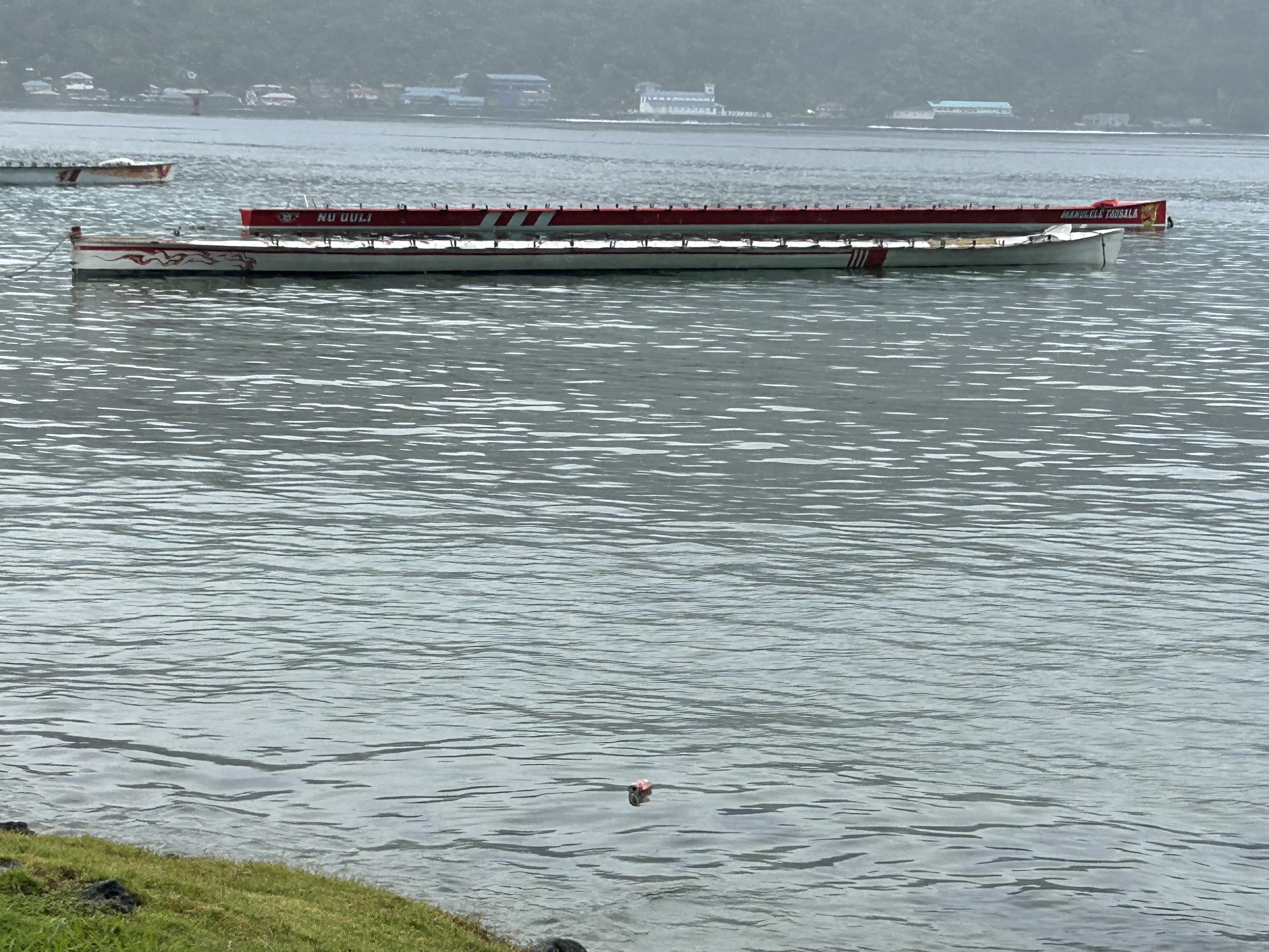
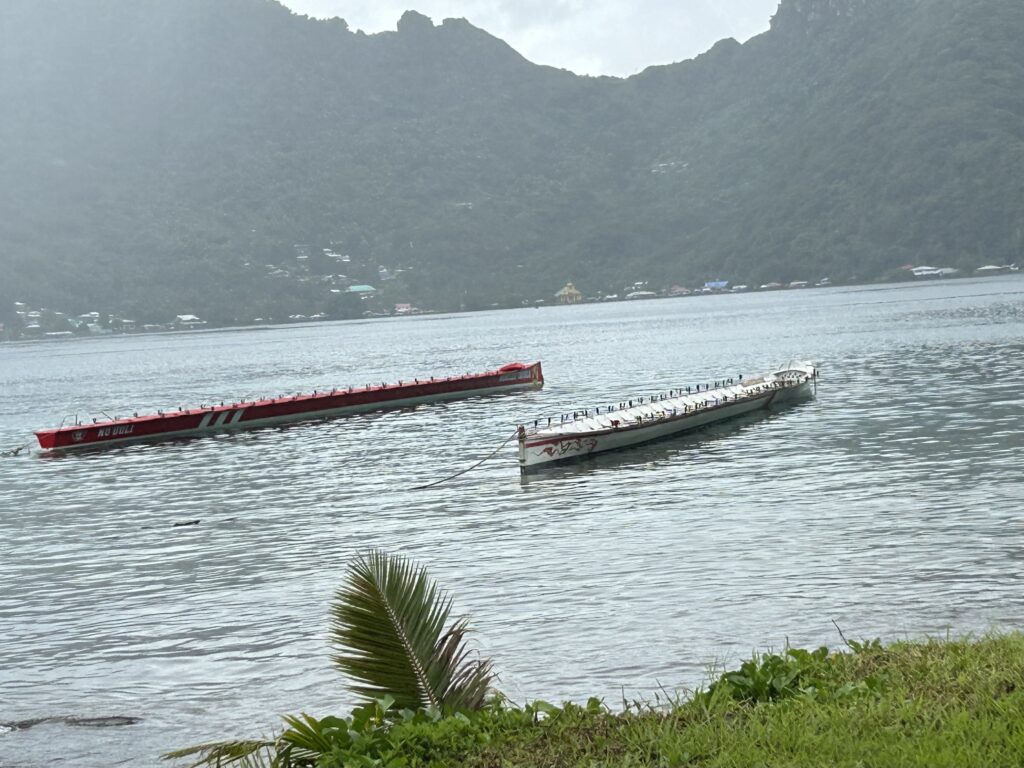
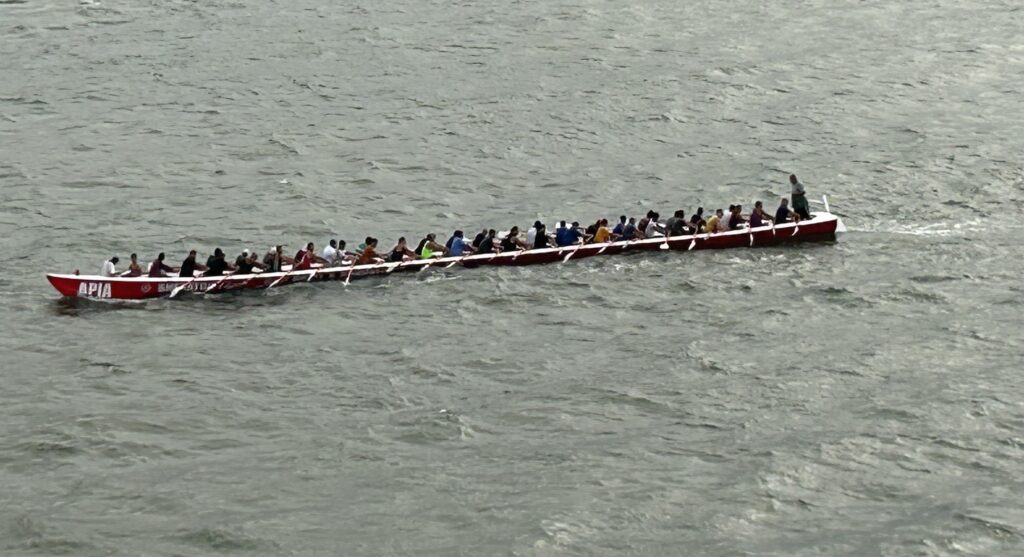
As we were enjoying the veranda before sailing away, we watched rowers in the water by the ship.
Independent Samoa
Independent Samoa is situated on nine islands, the two main ones being Upolu and Savai’i. The capital, Apia, is located on Upolu, the smaller.
Apia is situated on a natural harbor at the mouth of the Vaisigano River. It is on a narrow coastal plain with Mount Vaea (1549 ft) which is the burial place of Robert Louis Stevenson. Apia was founded in the 1850s, and it has been the official capital of Samoa since 1959.
Seumanutafa Pogai was high chief until his death in 1898. Western Samoa was ruled by Germany from 1900 to 1914, with Apia as its capital. In August 1914, New Zealand governed the islands as the Western Samoa Trust Territory until its independence in 1962.
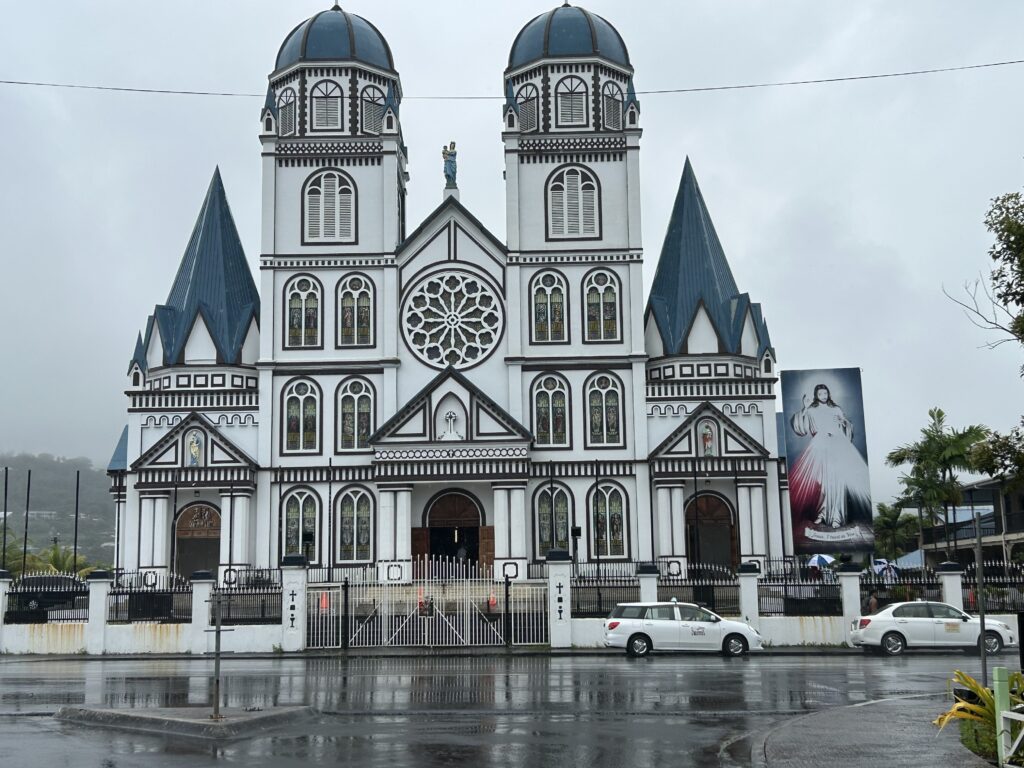
I took the shuttle into town from the ship and then hired a taxi to take me around for an hour. Across from the Tourist Center where I was dropped off is the magnificent Immaculate Conception Cathedral with its twin spires and intricate stained-glass windows. Inside it has ornate wooden ceilings. It is the largest church in Samoa. In contrast, a block down you see the traditional open-air fales.
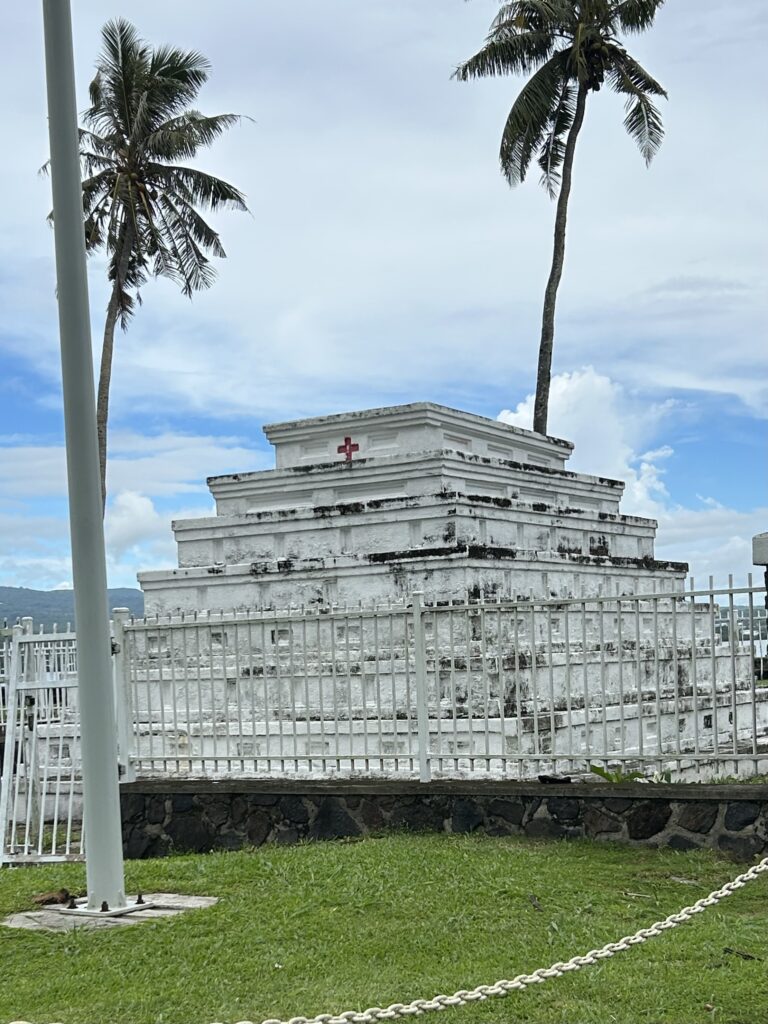
We drove down the Mulinu’u Peninsula on the north coast of Apia. On the way we passed the burial grounds of Samoan chiefs. The grounds are marked by large stone structure called “tia’itau,” which are decorated with intricate carvings and symbols. These grounds remind people of the importance of chiefs in Samoan culture. Their role was the same as in American Samoa.
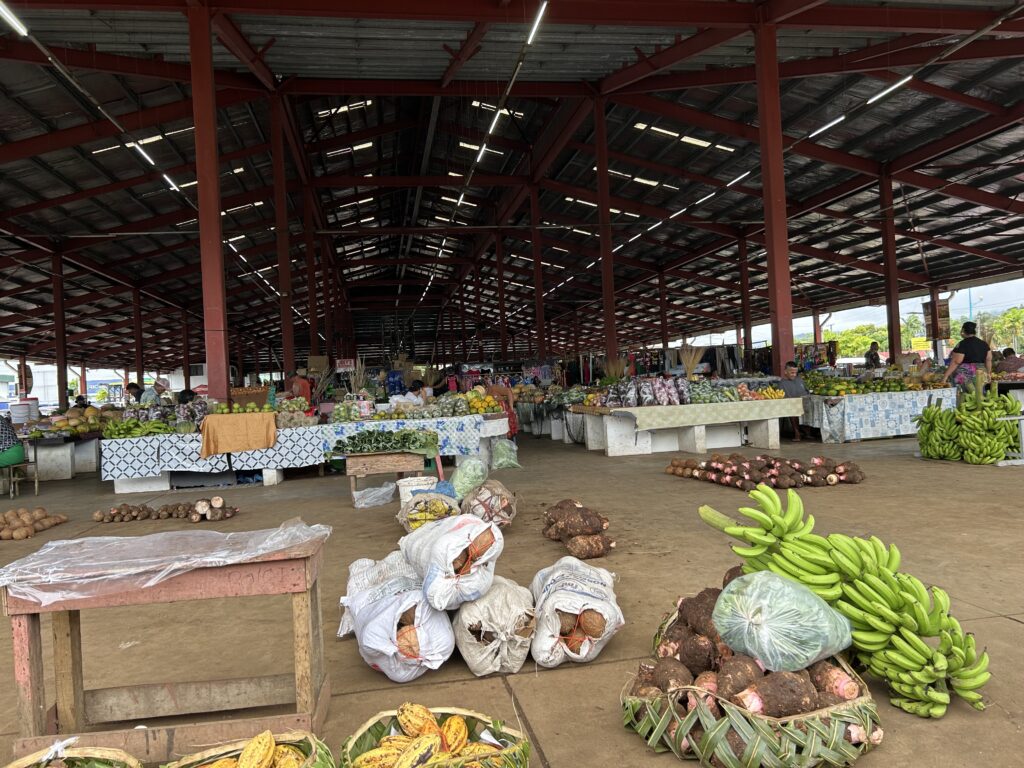
Another site we visited was the German cemetery and the observatory built in 1891 by German astronomers who were studying the southern skies. Other notable sites are the Parliament House, built in the early 1900s and still being used. Next, we drove to the huge Market Fou, where the locals do most of their shopping.
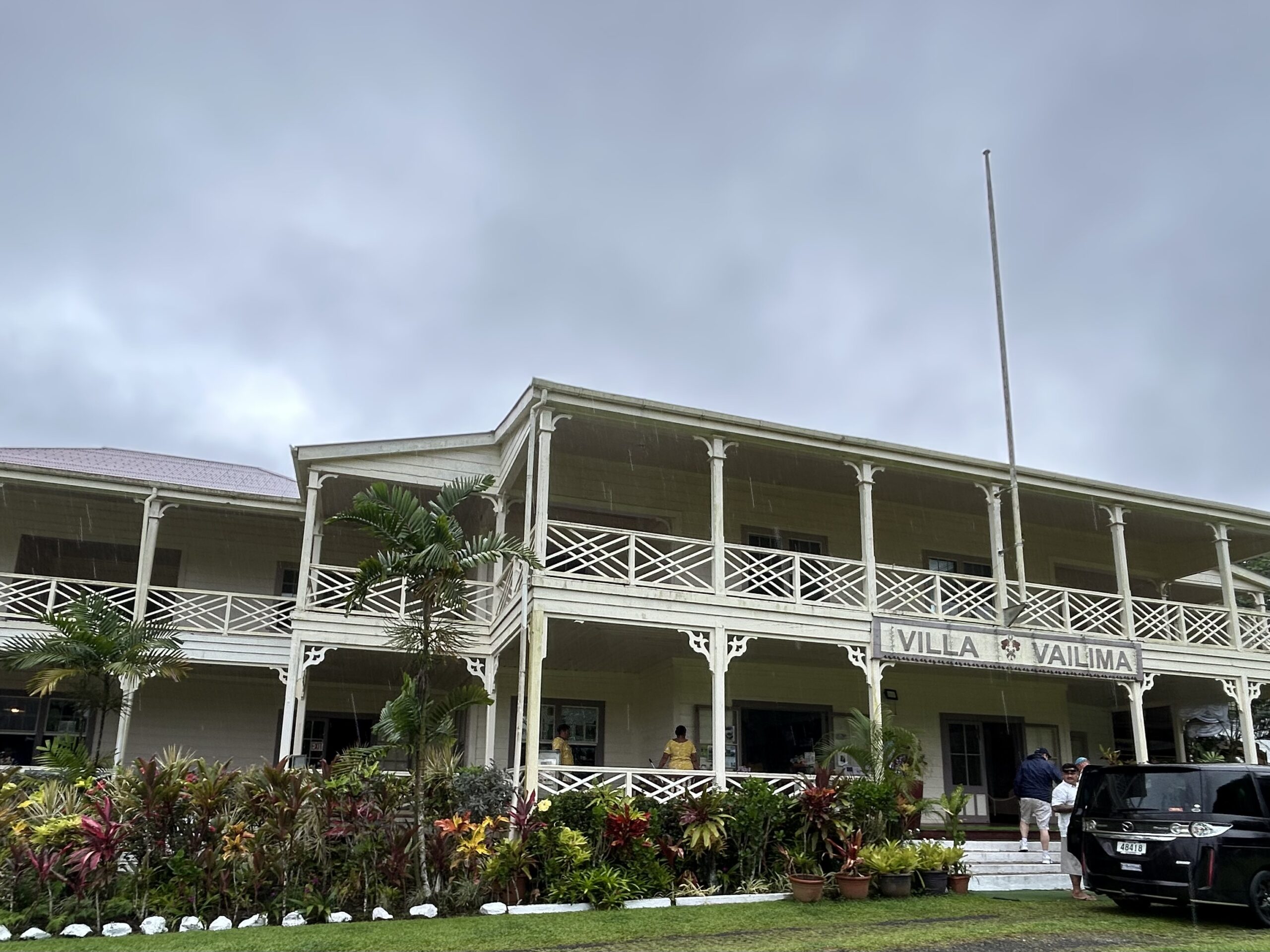
From here we drove up the hill to Robert Lewis Stevenson’s House named Vailima and the Museum, perched on the slopes of Mount Vaea. He was so beloved by the Samoan people that they called him Tuisitala, the teller of tales. He lived in Samoa for about five years, and this was one of his most prolific writing periods. From the house you can hike to the mountaintop tomb where he is he is buried.
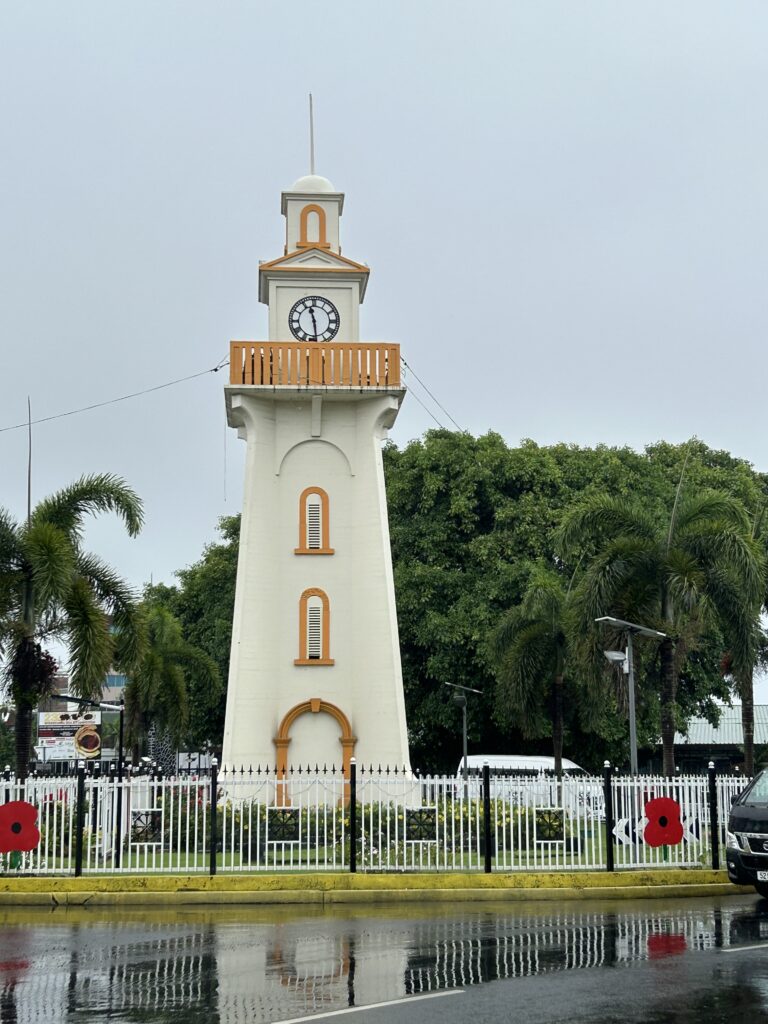
On the way back to the ship, we passed a monument to John Williams, the first Christian missionary to Samoa. Overall, Apia is a fascinating place, offering a unique glimpse into the country’s rich history and culture.
Leave a Reply