Thessaloniki: Paul’s letter to the Thessalonians comes to mind. While this is a secular trip, I cannot help reflecting on the early church in these areas.
Thessaloniki is Greece’s second largest city and capital of Greek Macedonia (to be distinguished from Northern Macedonia, one of the countries of the former Yugoslavia). It was founded around 315 BCE by King Cassander of Macedon. Since then, it has been under Roman, Byzantine, and Ottoman Rule. Most of the impressive buildings date from the Byzantine Age. It contains 15 UNESCO World Heritage Sites, including the imposing city walls. Thessaloniki is the cultural center of Greece and home to the largest university in Greece.
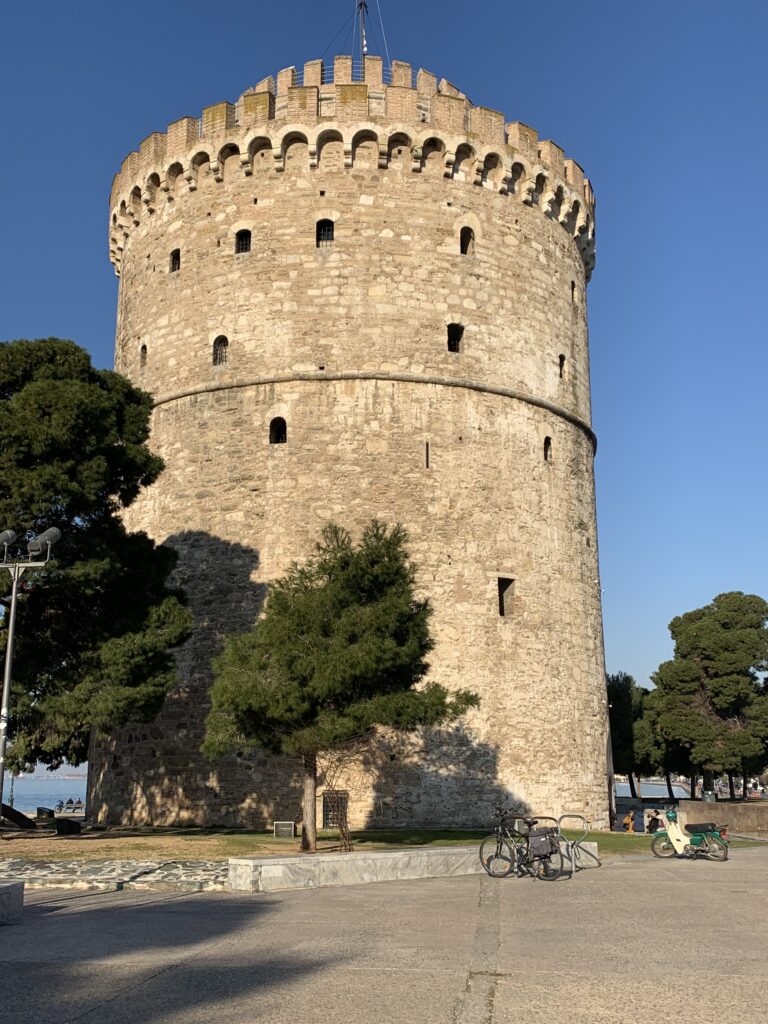
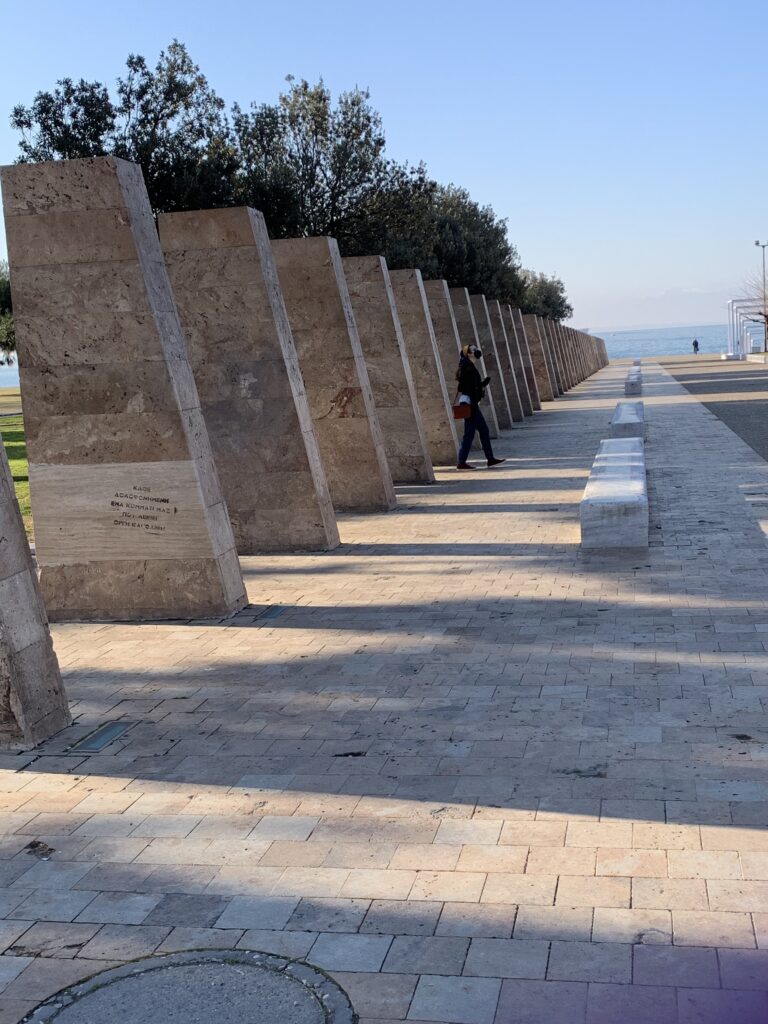
We started in the city’s historic center at the White Tower, the city’s most famous landmark and monument. It dates from the 15th century BCE and sits where the eastern and seaside city walls meet. It has served as a jail for death row prisoners and now as a museum. It is surrounded by a park-like area for people to congregate including a playground for children. From here we walked down the lovely, wide promenade along the waterfront, bordering the park, to the Archeological Museum. Along the way we passed the Royal Theater built in 1940.
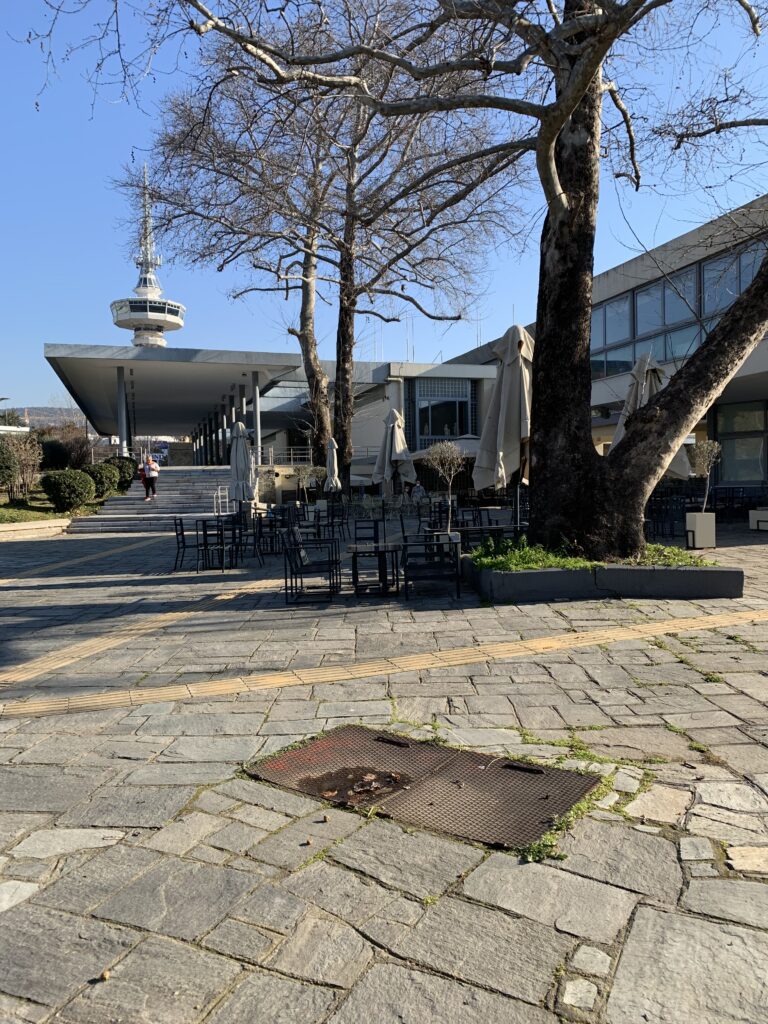
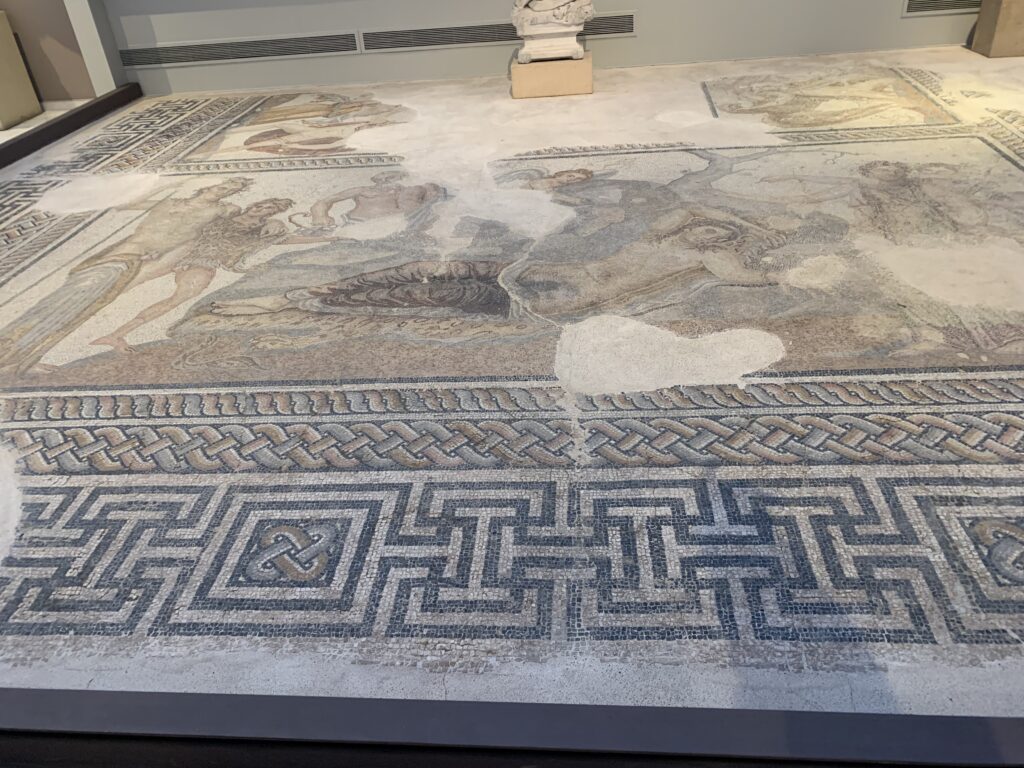
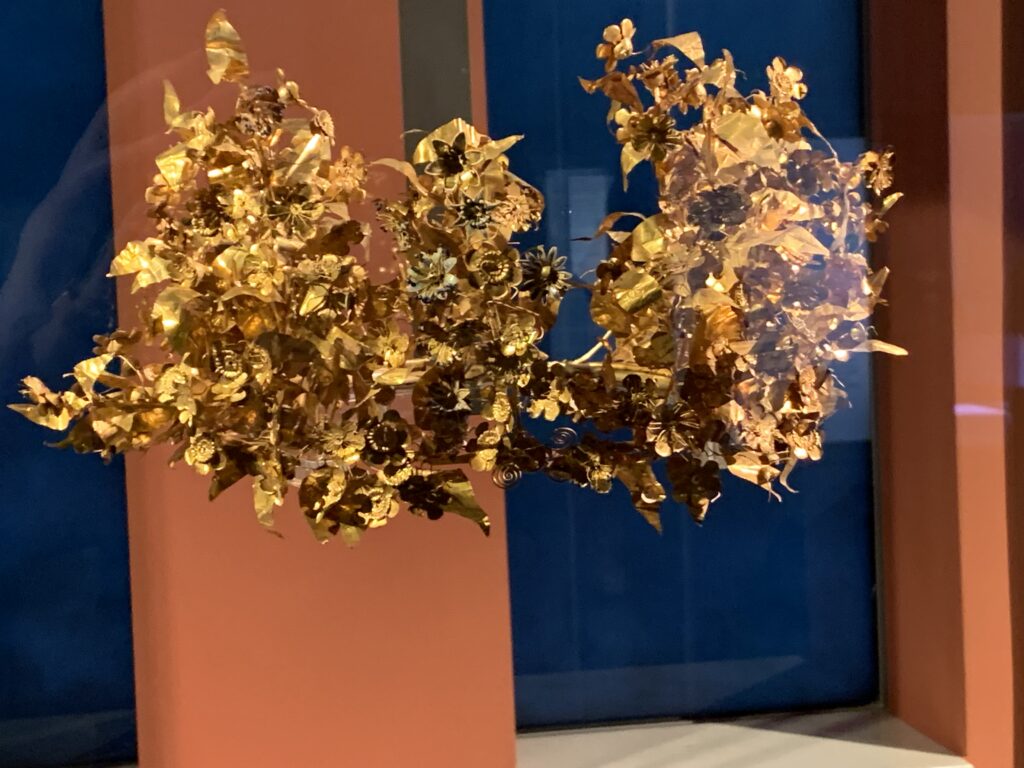
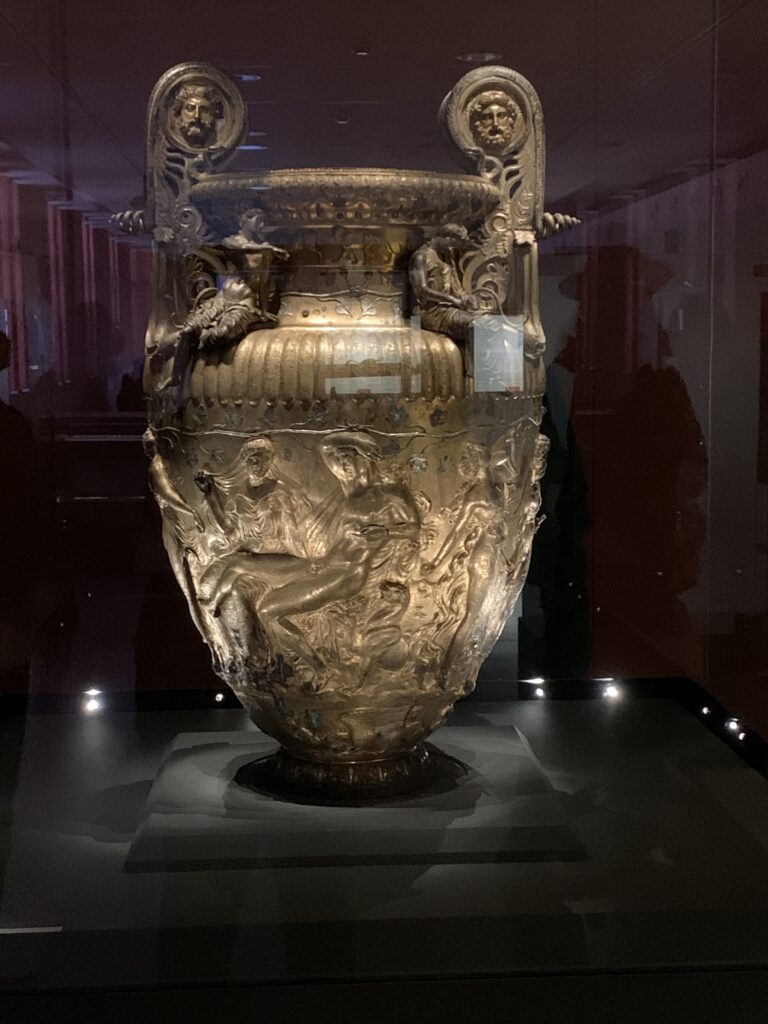
The Archeological Museum was built in 1962 in the Greek Revival Architectural Style. It contains a superb collection of artifacts found in Thessaloniki, spanning from prehistory to late antiquity. There are many sculptures from Archaic to Late Roman era. There are several columns from an Ionic Temple from 6th century BCE. One artifact is the Gold Leaf Crown of Ancient Macedonia attributed to Cleopatra. One impressive part is the mosaic on the floor of the entrance to the museum. It is so well preserved.
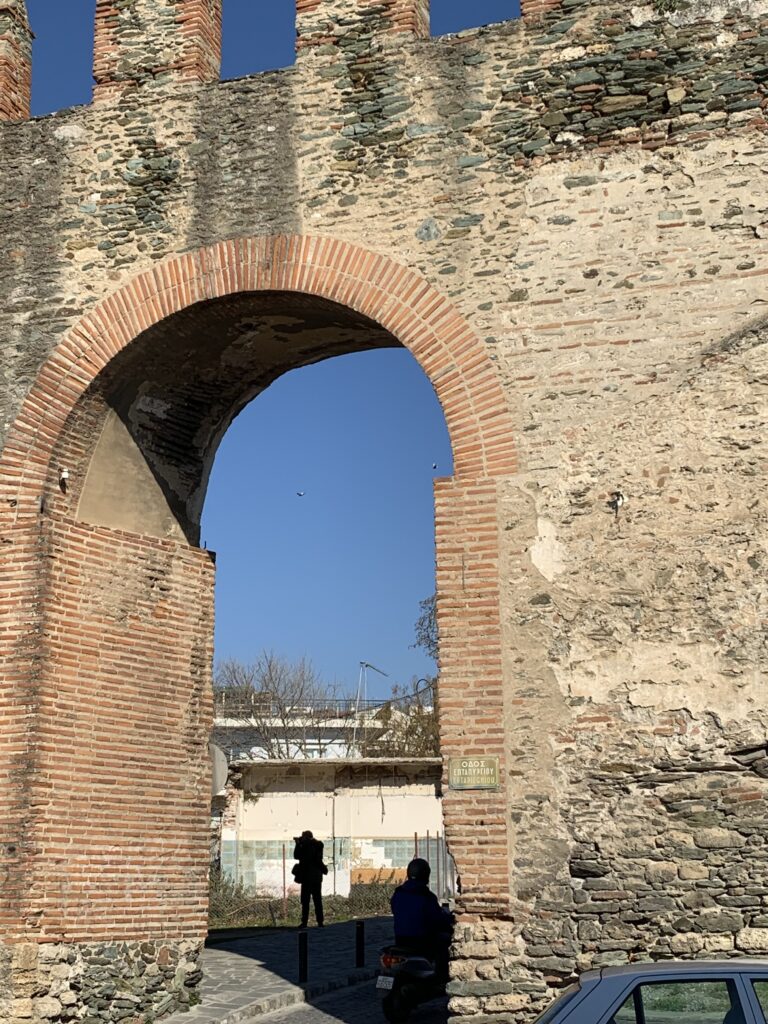
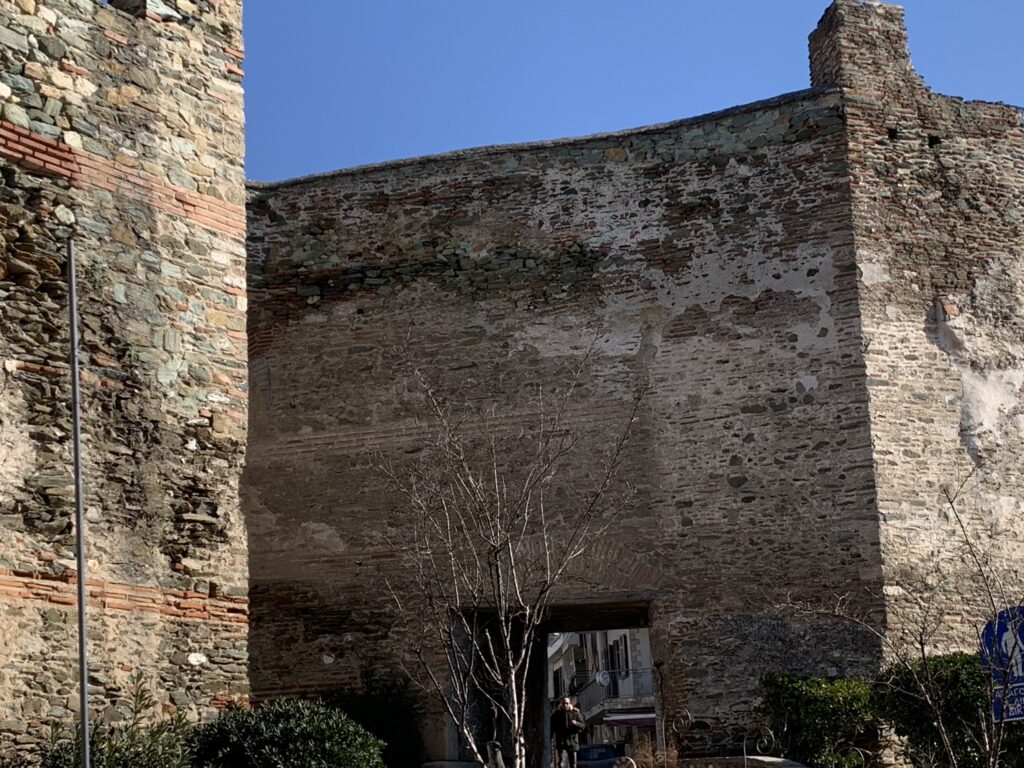
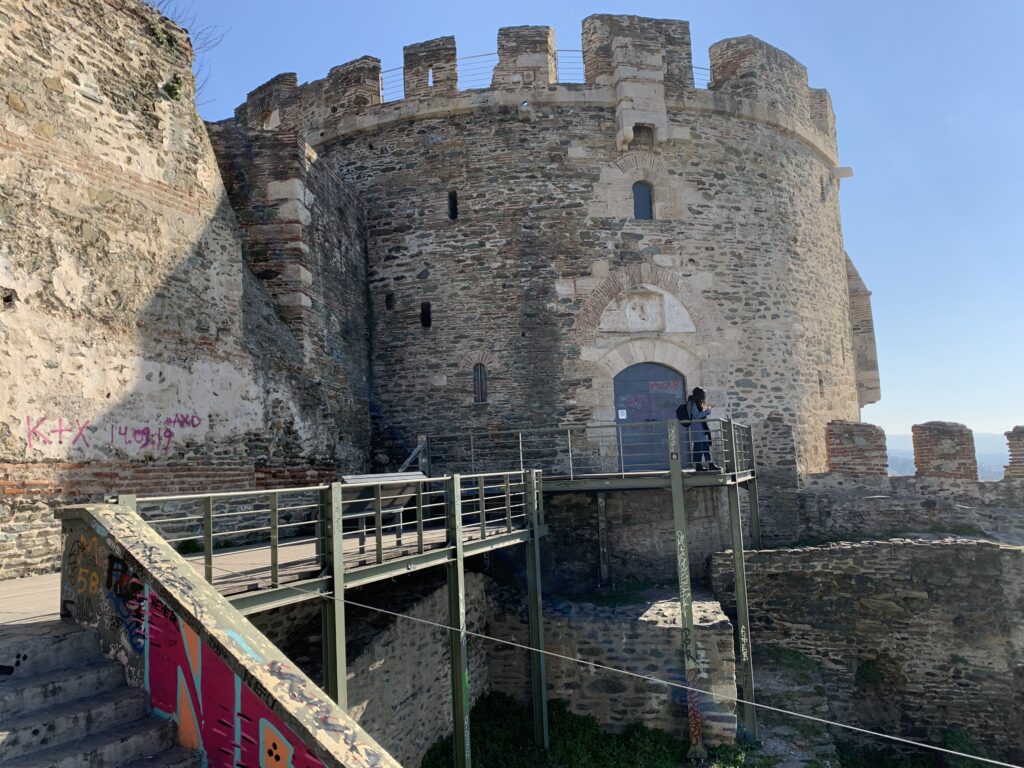
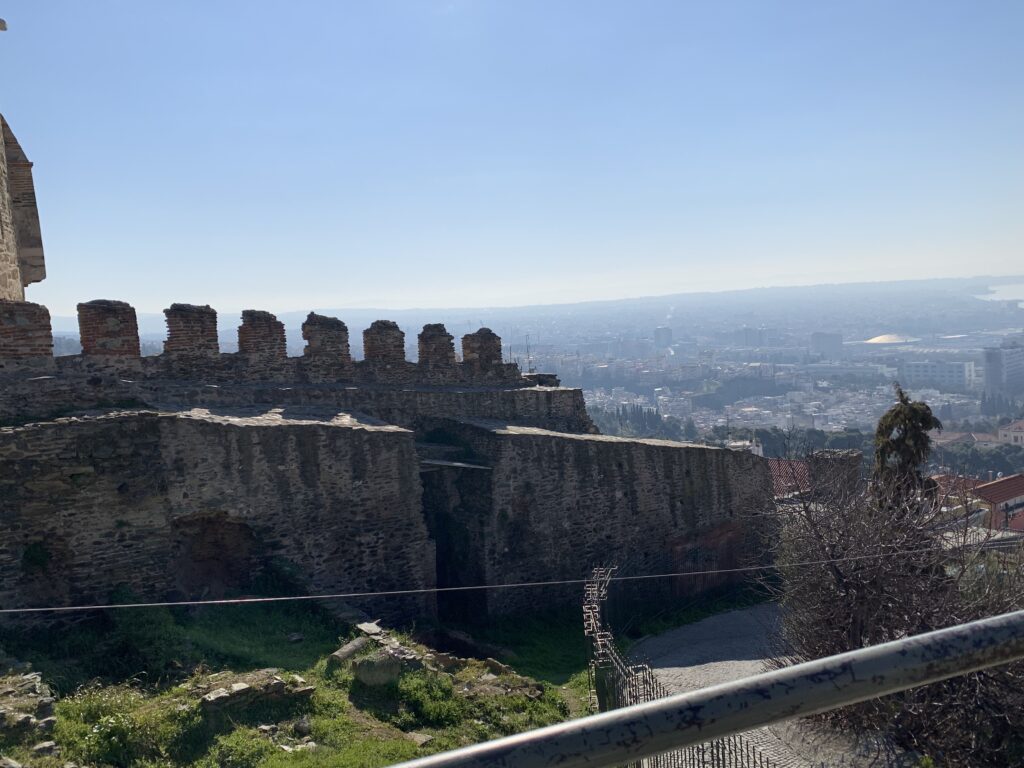
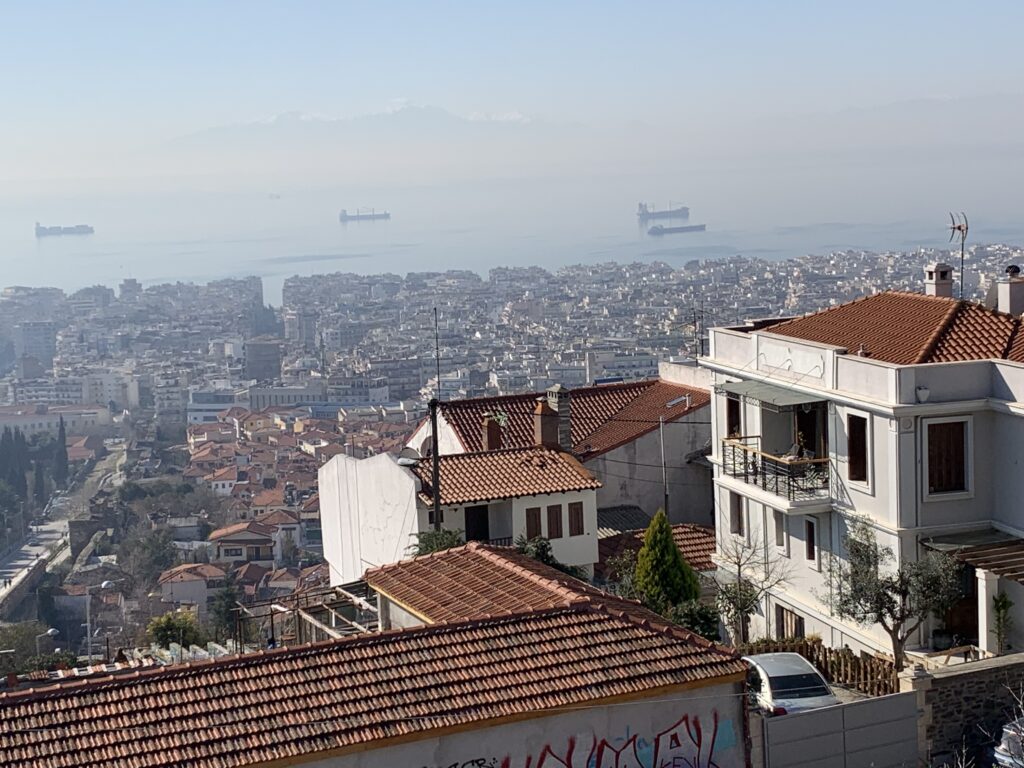
After thoroughly exploring the museum, we were picked up and taken around the city up to the acropolis to see the old walls and the view. Thessaloniki was walled soon after its founding in 390 CE. When completed the walls extended from the White Tower in the East to the Vardariou Tower in the West and to the top of the Acropolis. Today there are only about 3 km of walls remaining, but they are very visible throughout the city. They also separate the ancient part of the city from the more modern sections beyond the walls. From the top we could see the Heptapyrgion Fortress or Yedi Kule with ten towers. It dates from the Ottoman era and is currently being restored.
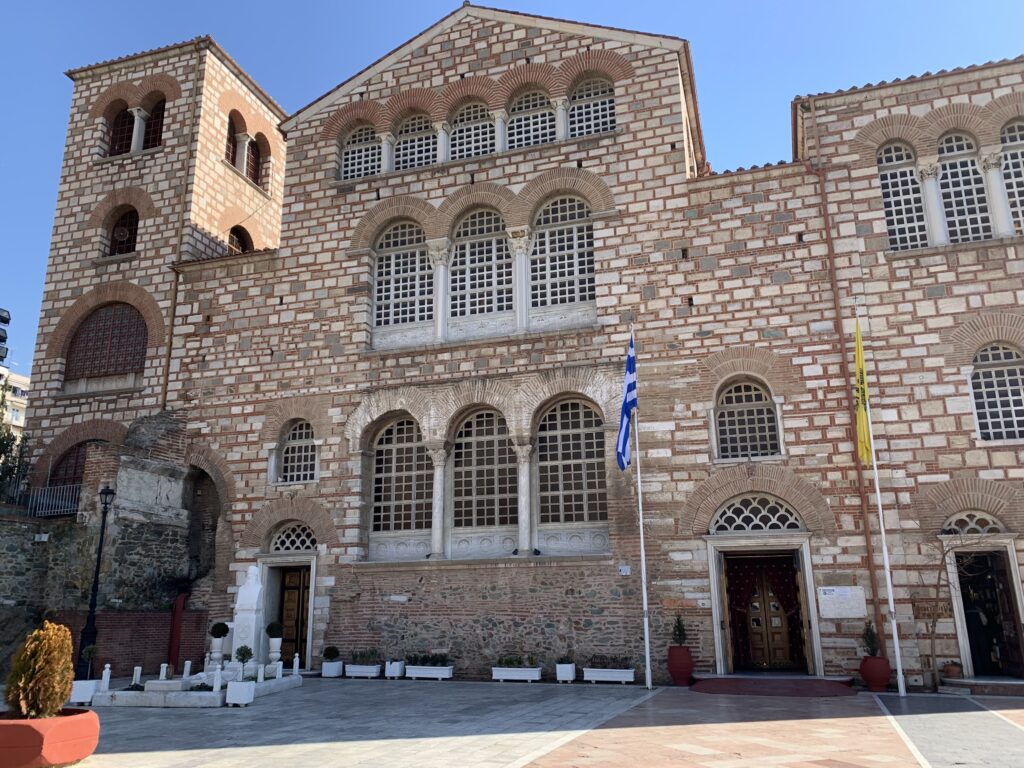
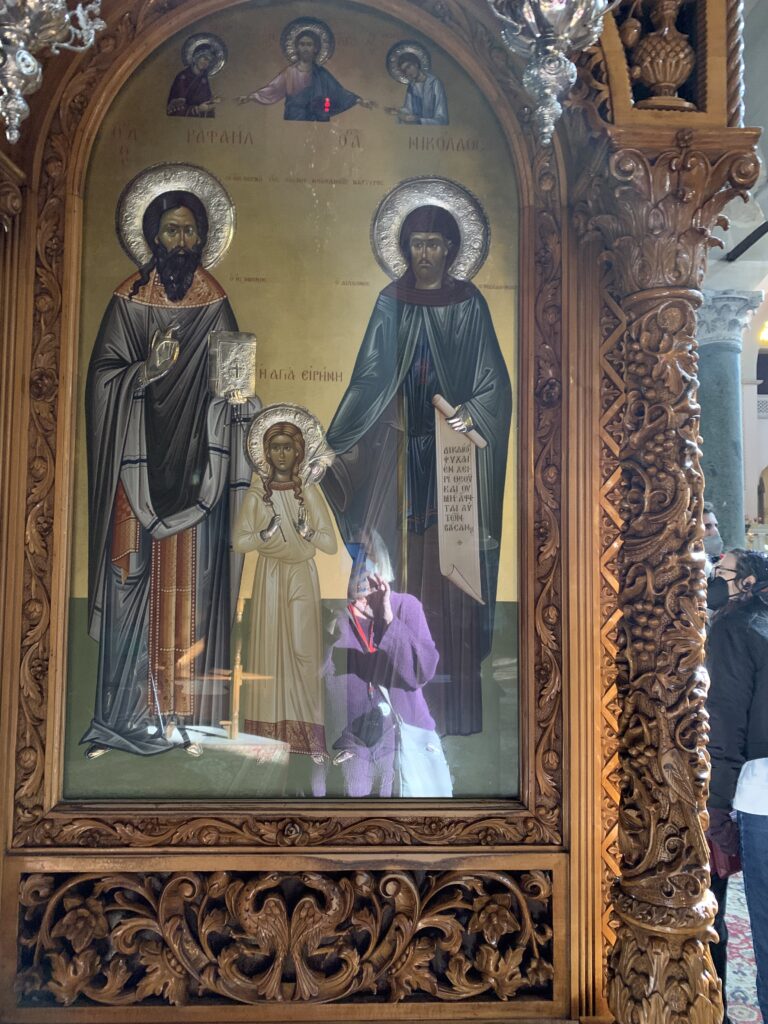
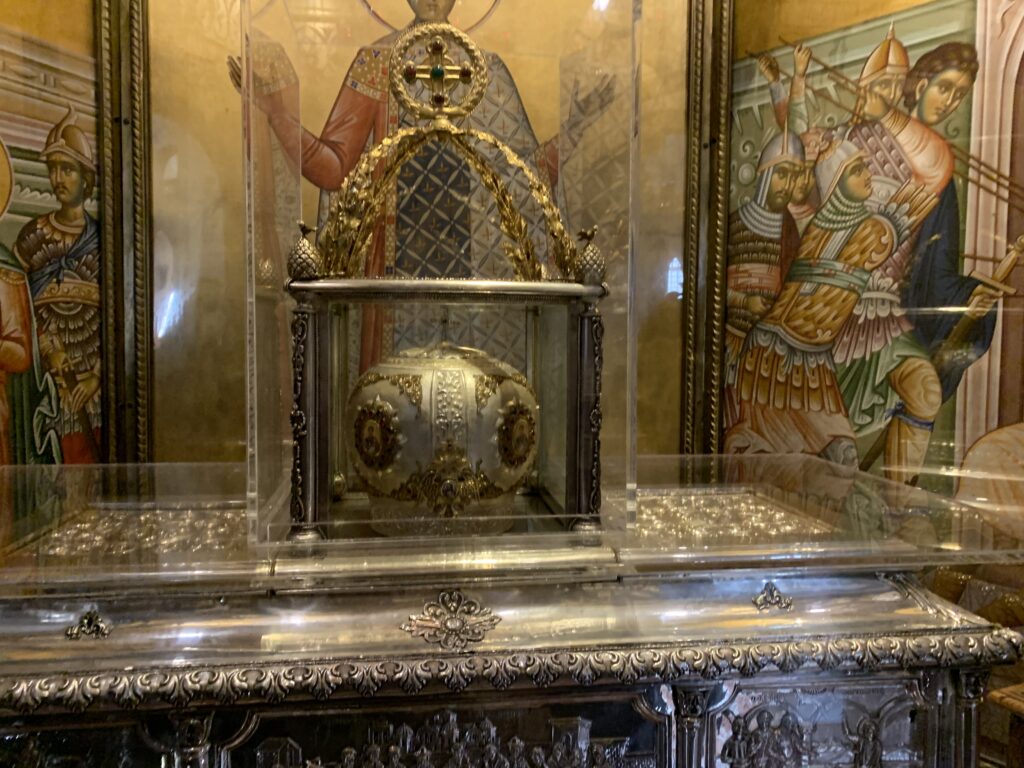
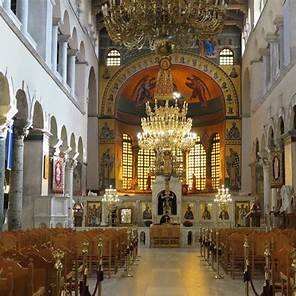
In the heart of the city, we stopped at St. Demetrius Church, the Patron Saint of Thessaloniki. Another UNESCO site, it dates from the 7thcentury CE, but was built on the ruins of a 5th century Basilica. It is in the Byzantine style with a large dome and many mosaics. The site of St. Demetrius’ martyrdom, it houses relics of him.
Then the Ottomans converted it into a Mosque in the 15th century. It was destroyed by fire in 1917 and then restored with sculpted decorated motifs dating from the 5th century. The Krypt houses the site where the Roman public baths used to be and where Demetrius was imprisoned and killed. It contains sculptures, slabs, and vessels from the church. One room has sculptures from the original 5th century church, and another has inscriptions documenting the history of the church. Another room has the original ciborium and his sarcophagus.
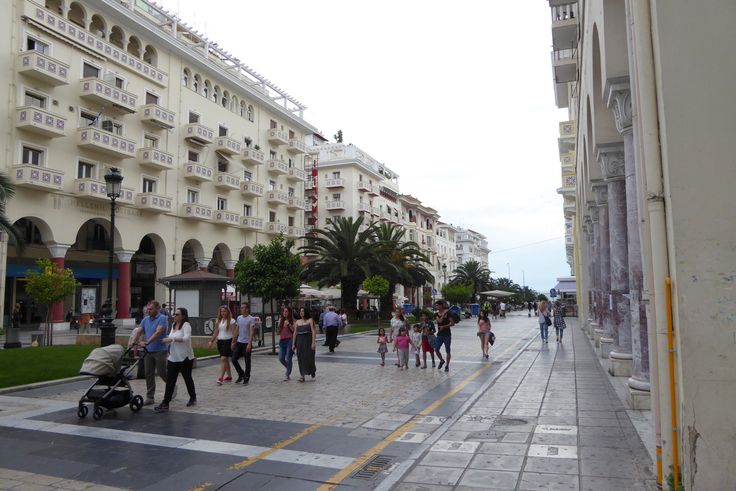
Pedestrians-only
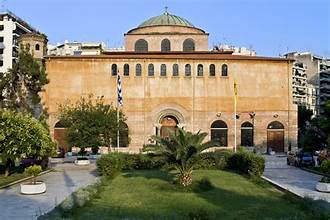
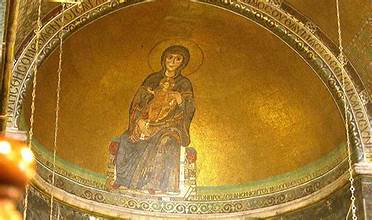
As we toured the city, we saw several important sites on the way to the ship. Agia Sofia Church built in the 7th century, on the site of an earlier church, is an exact copy of Hagia Sophia in Constantinople. One of the oldest churches in Thessaloniki, it is another UNESCO site. During the Ottoman’s rule, it became a mosque and once again became an Orthodox Christian Church in 1912. It was heavily damaged in a fire and earthquake. However, it has been largely restored. The church has many sculptures and frescos that survived the disasters. Apse mosaic of Mary and the Christ Child dates from the 12th century.
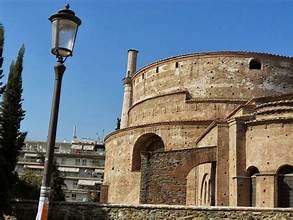
The oldest monument in Thessaloniki is the Rotunda of Agios Georgios (Saint George), built around 306 CE. Galerius ordered its construction to be his mausoleum. In the fourth century, it was converted into a church. It became a mosque under the Ottomans and returned to being a church after the Ottoman rule. Its interior is decorated with early Christian mosaics. It has a diameter of 24.5 meters and its walls are over 80 ft. thick, making it resilient to earthquakes Outside is the city’s only surviving minaret.
We saw many more important sites on our way back to the ship.