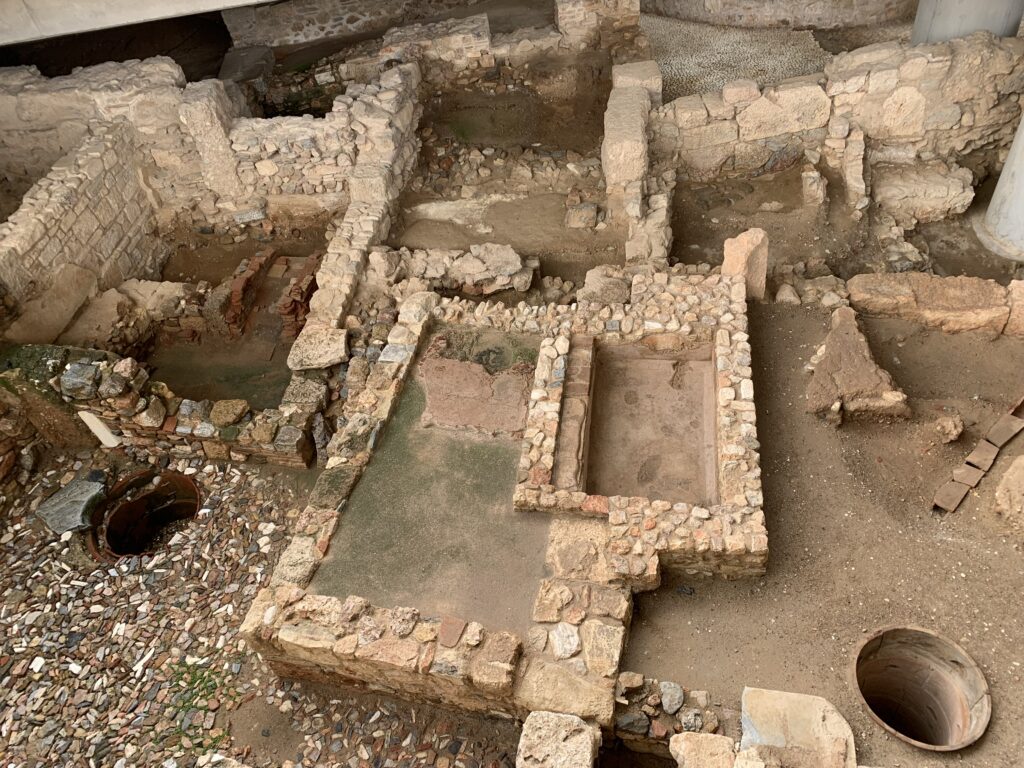
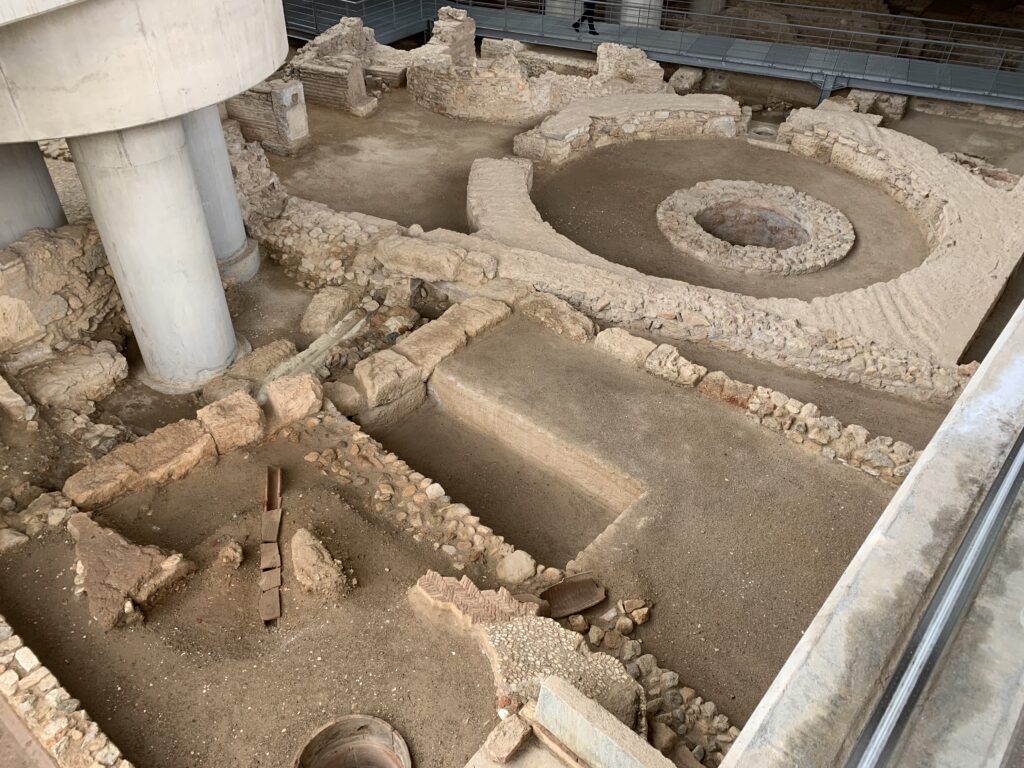
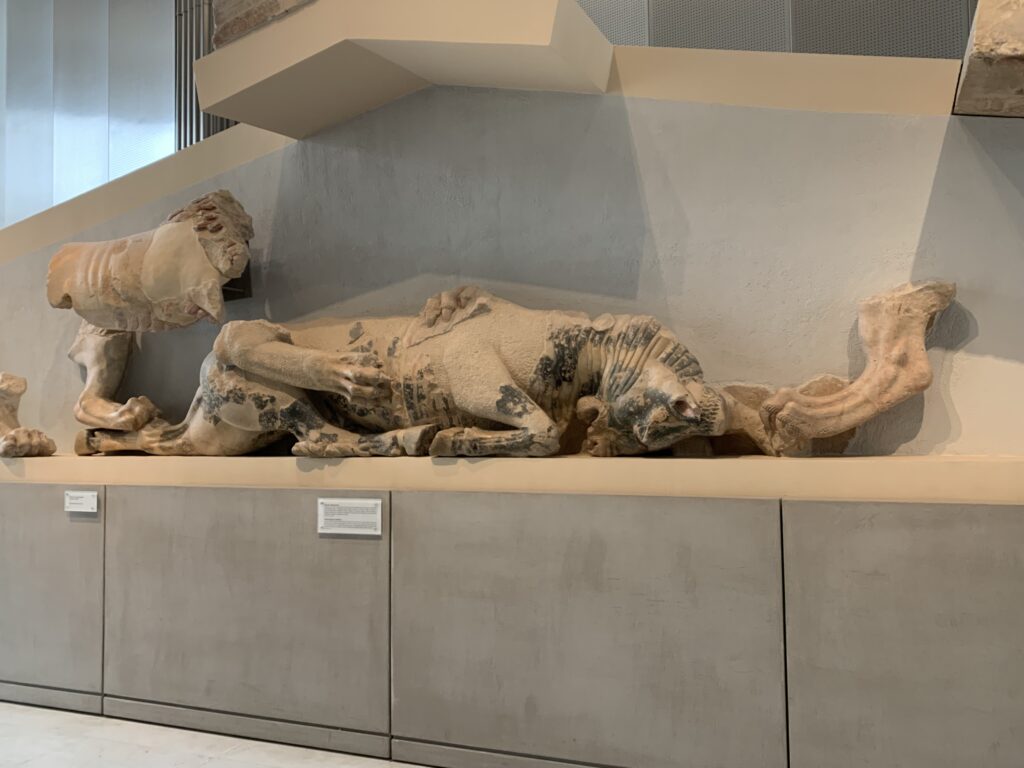
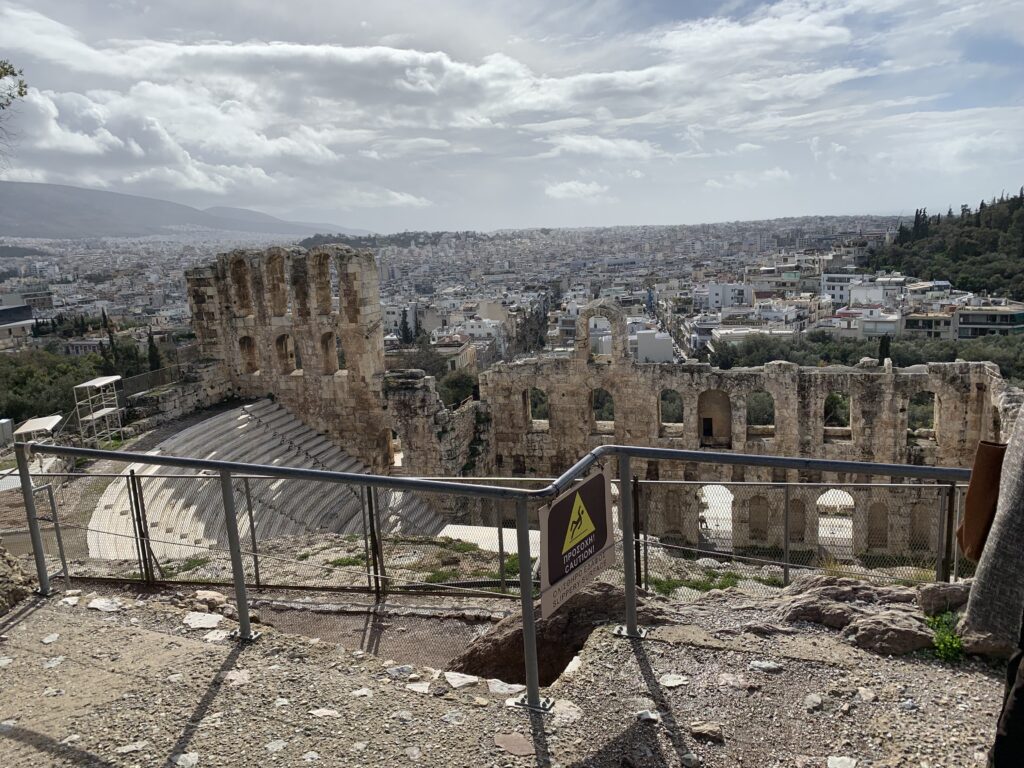
This was our day to spend at the Acropolis and Parthenon. It was the highlight of this part of the tour. After breakfast, we went to the Acropolis Museum. It was fascinating. On the entrance and in the foyer, the floor was see-through, so we could look at some completed excavation as well as continuing work. There are four levels to the museum. The entry level has the area to observe archeological work. The first floor contains findings from the slopes of the Acropolis. The second is the Parthenon Gallery, modelled after the Parthenon with spectacular views of the city. The exterior was intended to resemble the Parthenon. The columns mirror those of the Parthenon. The third floor has the Archaic Gallery with sculptures from the Archaic period. After thoroughly exploring the artifacts here, we headed to the Acropolis and the Parthenon itself.
The Acropolis dates from the second half of the fifth century B.C.E. when Athens became a leading democratic city-state. Pericles conceived it, and the sculptor Pheidias created the fortress out of the rocky hill overlooking the city. Every major city had an acropolis—an upper fortified part of a city. We had already seen the Acropolis of Mycenae.
Inside the Athenian Acropolis are the Parthenon, built by Ictinus, the Erechtheon, the Propylaea, which is the monumental entrance to the Acropolis, designed by Mnesicles, and the temple to Athena Nike. The Parthenon is the great Temple to Athena. The climb up the “hill” was strenuous, but we had done lots of climbing already to prepare us. This is the most striking and complete ancient Greek monumental complex still existing today and is a UNESCO World Heritage Site. It is amazing to see the remains that are very much intact over 2,600 years. Also, the views of Athens from the site are spectacular. Having heard and read so much about this site over the years, it was breathtaking to be able to stand among the monuments.
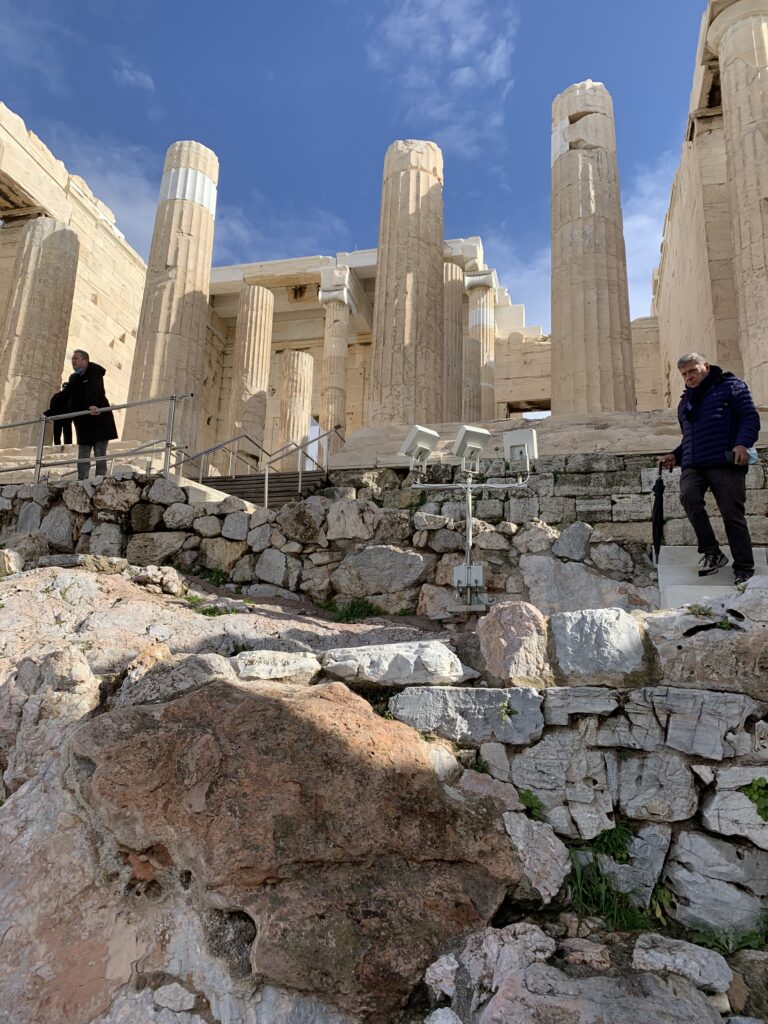
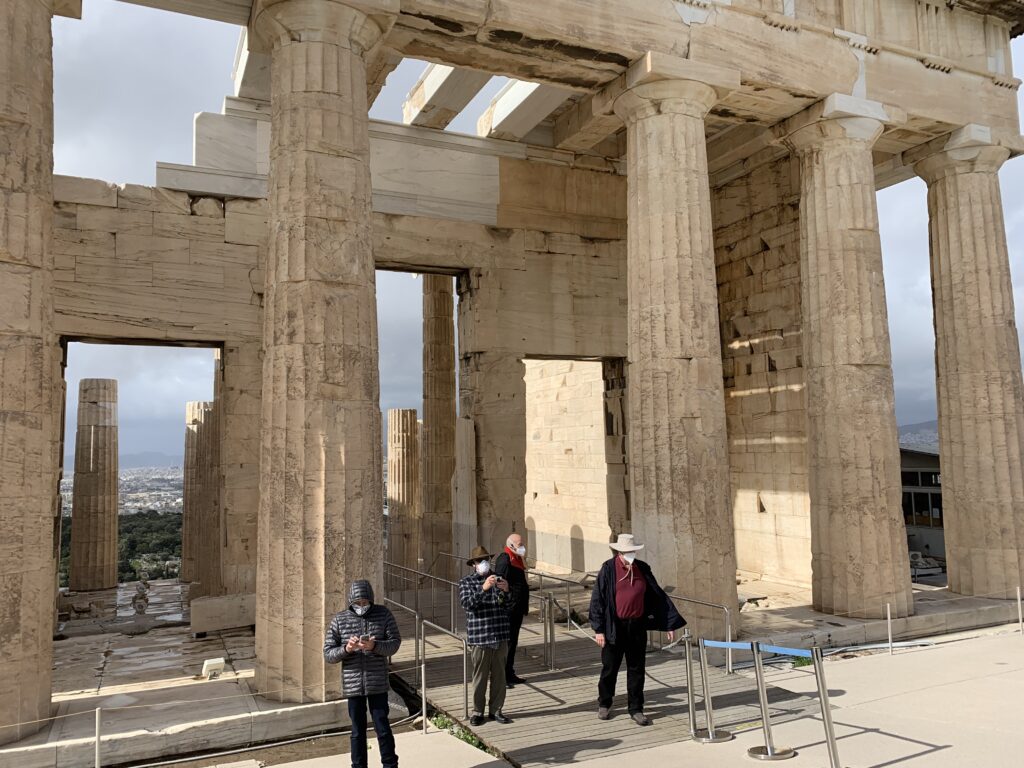
After climbing the hill of the Acropolis, we passed through the Propylaea, which was the classical Greek Doric entryway. It was built between 437 and 431 B.C.E.; however, it was never finished because of the Peloponnesian Wars. The entryway was a building with a central entrance and two lateral wings. The central opening was flanked by three paires of Ionic columns. Five doors provided access, the middle one was wider to allow for the Panathenaic procession including sacrificial animals. Today the pillars remain and the footprint of the building.
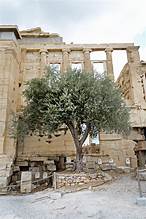
Next we saw the Erechtheon, most unusual temple, since it is dedicated to several gods, including Athena, Poseidon, Hephaestus, as well as the legendary king of Athens, Erechtheus. It is also tied to the legend of the contest between Poseidon and Athena for control of the city. Supposedly, Poseidon struck a rock with his trident, creating a saltwater spring. Athena planted the world’s first olive tree. The people chose her gift as more useful, so named the city Athens. An olive tree stands nearby today that is said to be related to that first olive tree.
Also, Erechtheus is said to have sacrificed himself so Athens could win a war against Eleusis. His tomb lies beneath the Erechtheon, making the temple a memorial, as well.
The temple of Athena Nike, designed by the architect Kallikrates, was built between 426 and 421 BC on the southwestern edge of the Acropolis. It replaced older temples whose remains are preserved inside. The small Ionic temple had a relief-carved frieze with different thematic representations on each side. It is in the Ionic style, made from Pentelic marble. Its unique layout, with columns gracing only the front and back, but not the sides, enhances its charm.
The Parthenon
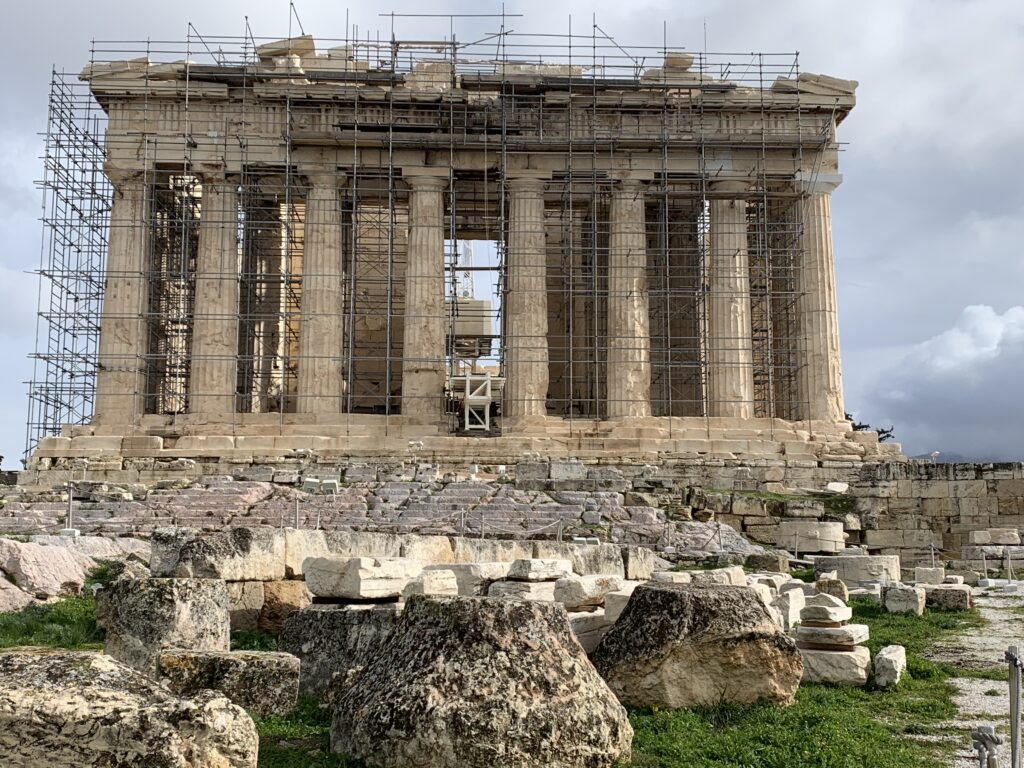
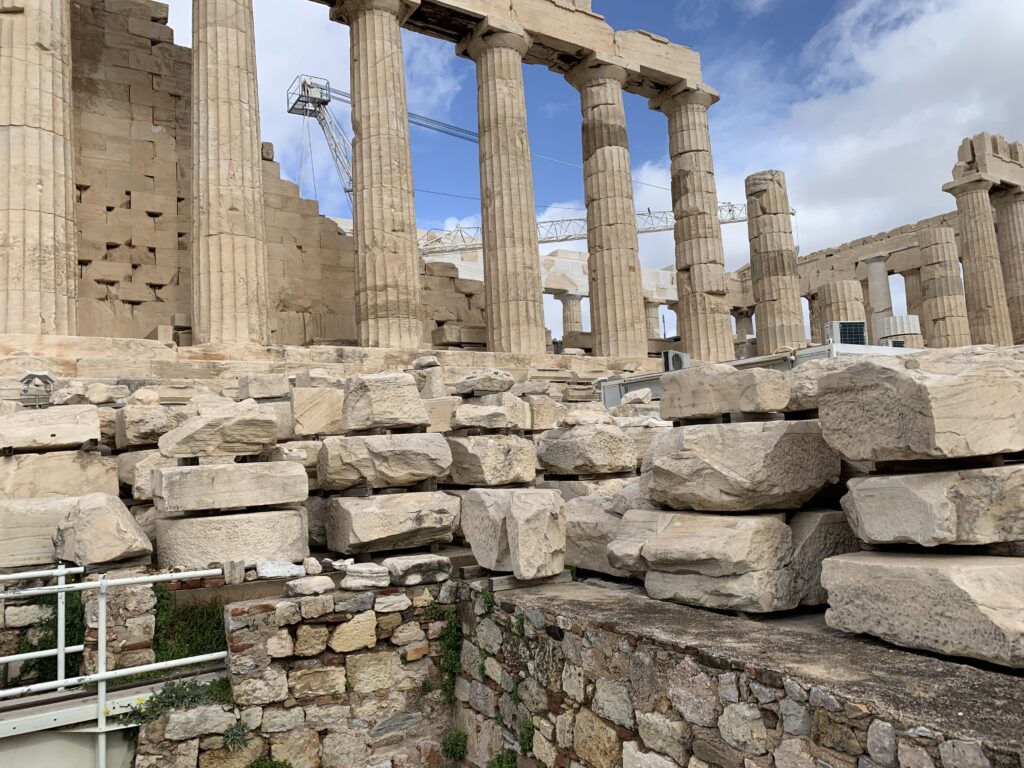
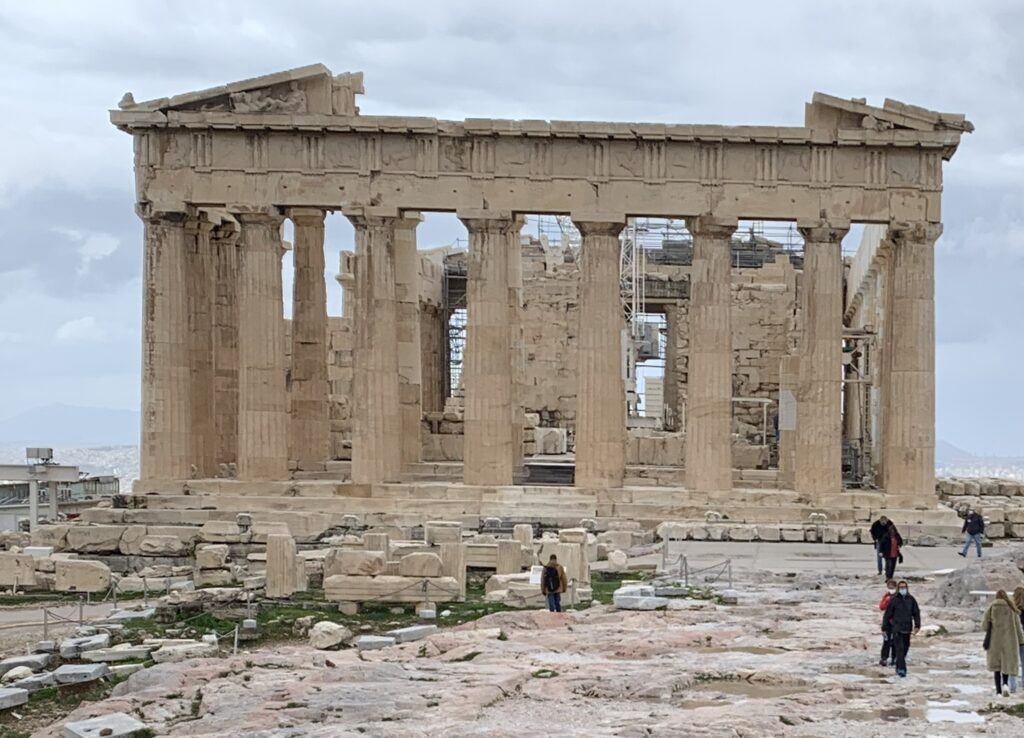
Central to the Acropolis and the most famous structure is the Parthenon. The Parthenon was built between 447 and 438 B.C.E. It is a masterpiece of the Doric style combined with Ionic elements. It was a place of worship, but also housed the city’s treasury and served as a symbol of Athenian power. Its magnificent doorway, the Propylaea, created a dramatic transition into the sacred space. The Parthenon once held a giant statue of Athena, made by Phidias out of gold and ivory and inlaid with precious stones that shown in the sunlight from miles away. It was 39 ft. tall. The fate of the statue is unknown, but it disappeared in the 5th century CE. Some say it was destroyed by fire, others that it was taken to Constantinople, but no one knows for sure.
The Parthenon is not only a temple, but a testament to the golden age of Athenian democracy and a masterpiece of human vision and artistry. It is a icon of Western Civilization.
The building was designed with optical refinements to create a balanced appearance. For example, the platform the columns stand on is slightly curved upwards at the center. Also, the columns themselves are slightly thicker in the middle, tapering and leaning inward at the top. The design was based on precise mathematical ratios to give it a sense of harmony and balance.
In the 6th century CE, it was converted into a Christian church dedicated to the Virgin Mary. When Greece was under Ottoman rule, it became a Mosque.
After a wonderful day of exploration, we returned to our hotel for the evening.