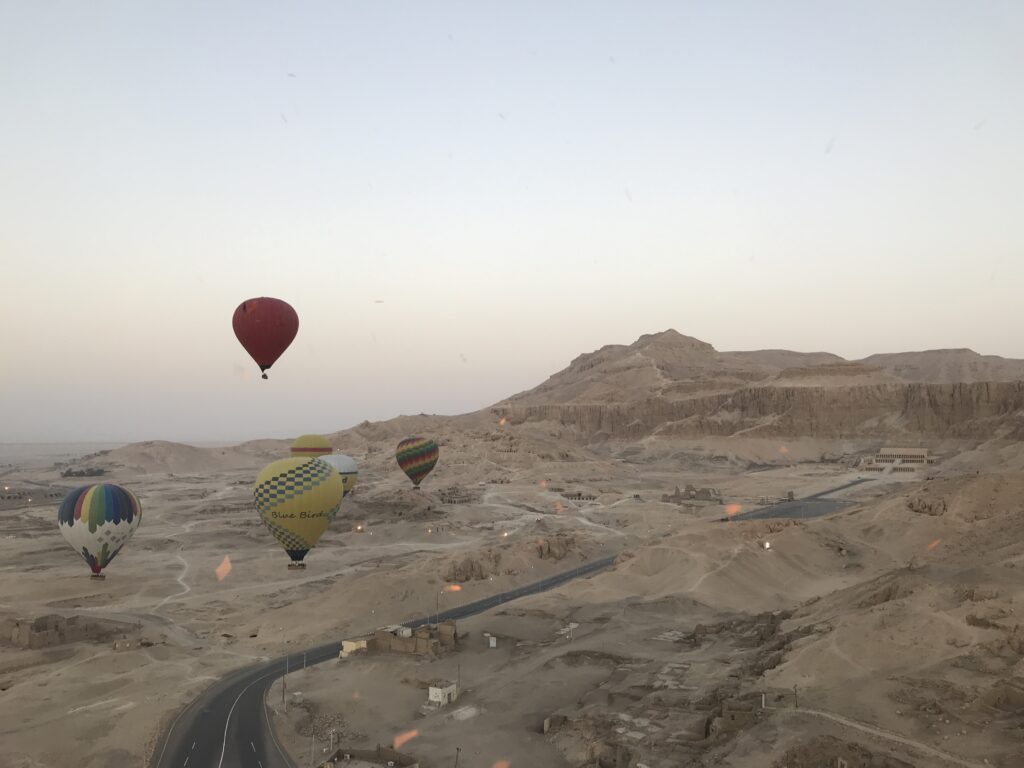
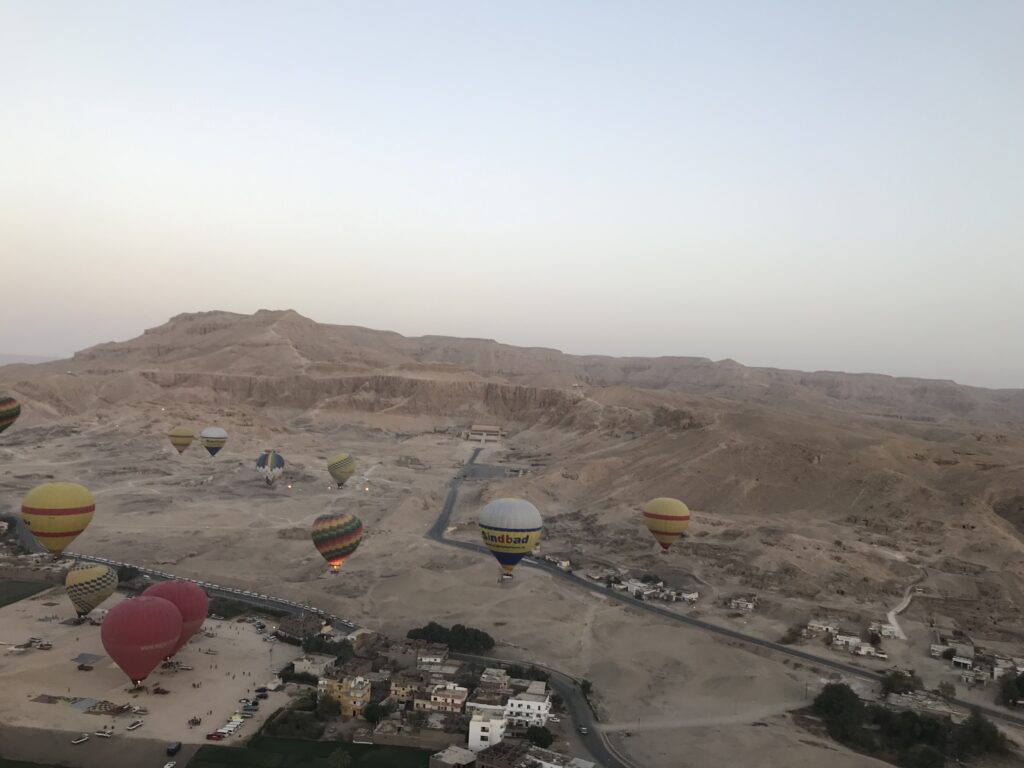
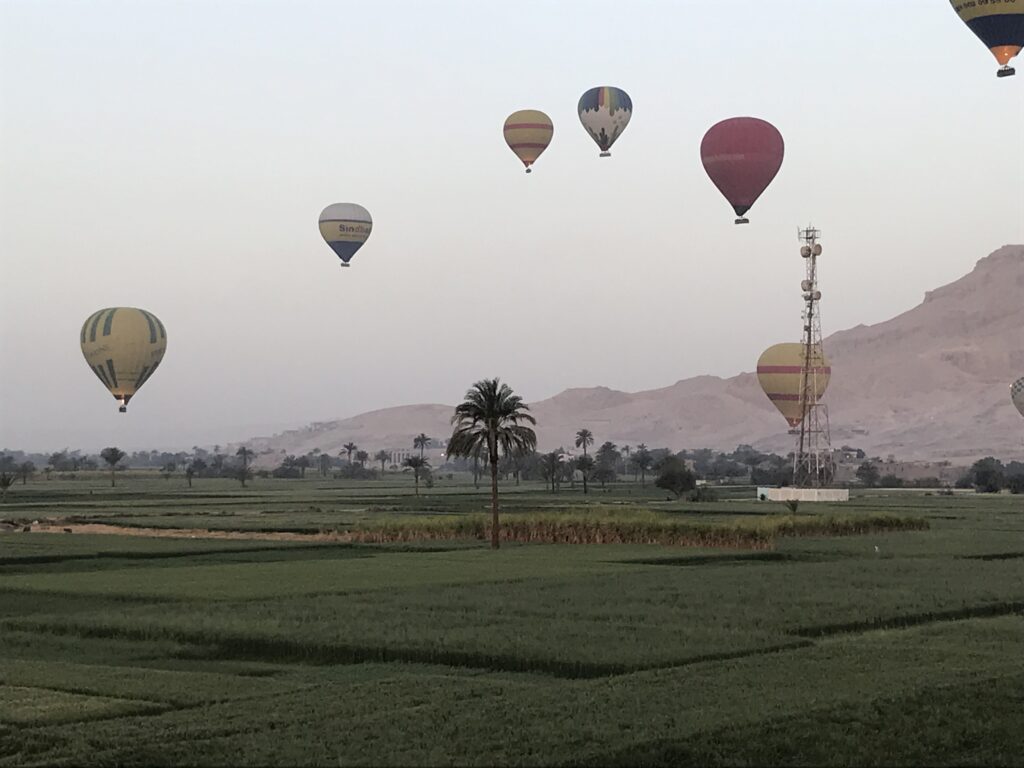
Many of us started the day (at 3:45 a.m.) with a hot air balloon trip over the Valley of the Kings. It was a nice way to end the visit to these historic sites because we could see them all from above. It was also amazing to be one of many balloons navigating over the area. When we returned, we had breakfast and flew back to Cairo.
Nasr-City
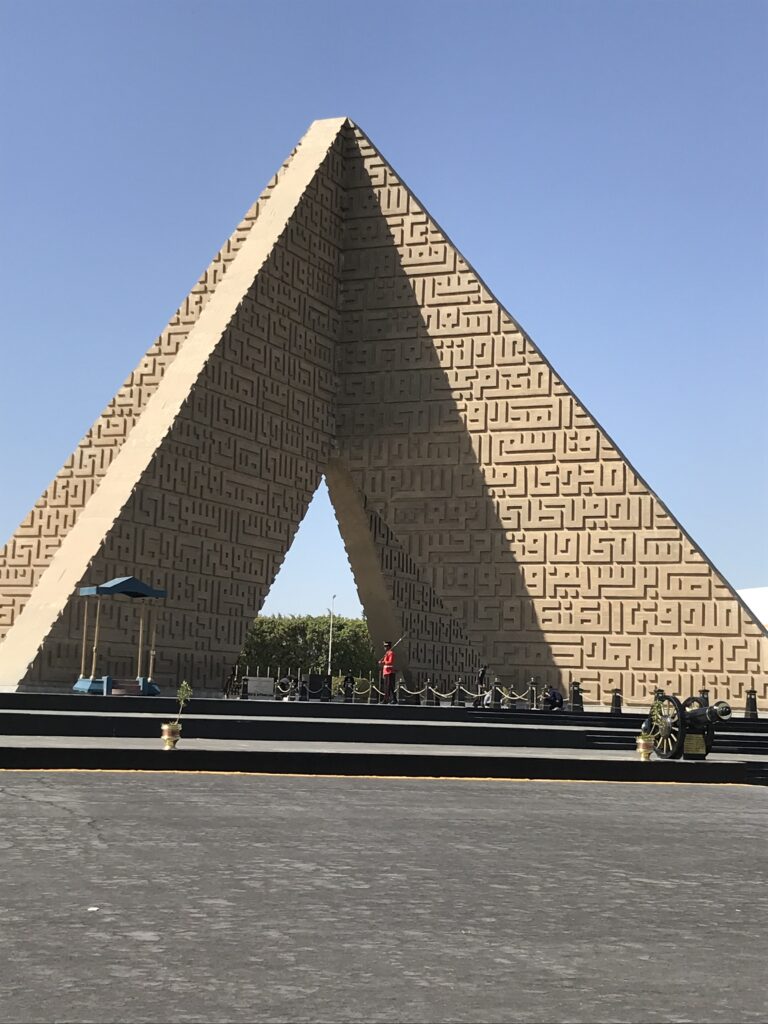
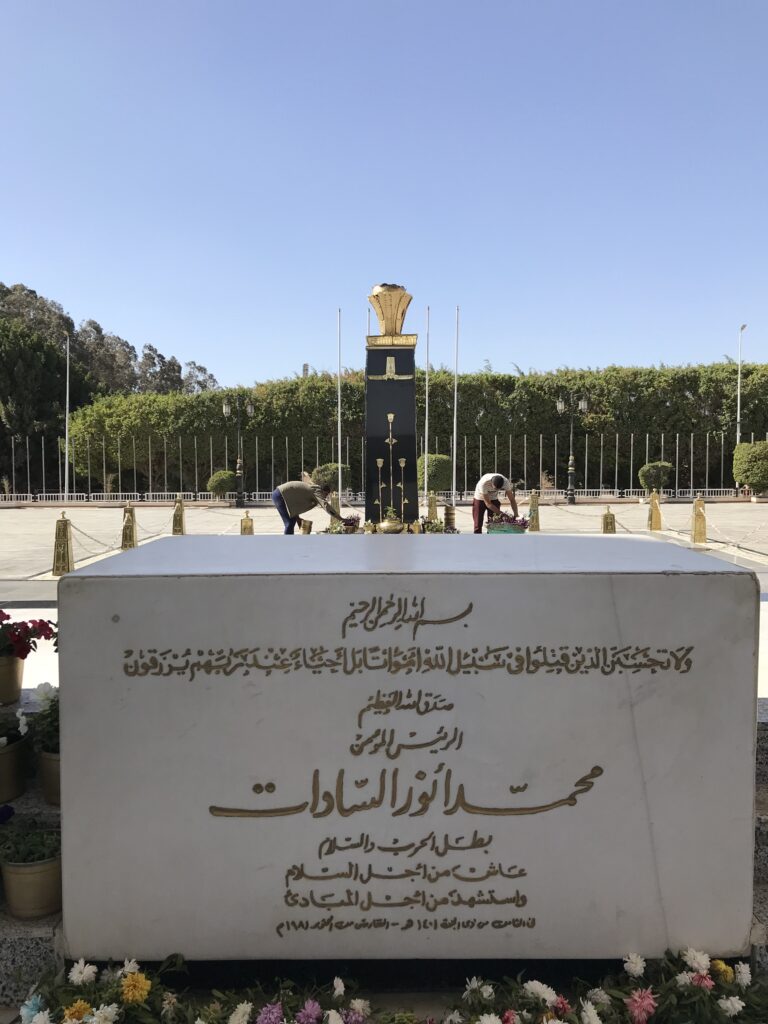
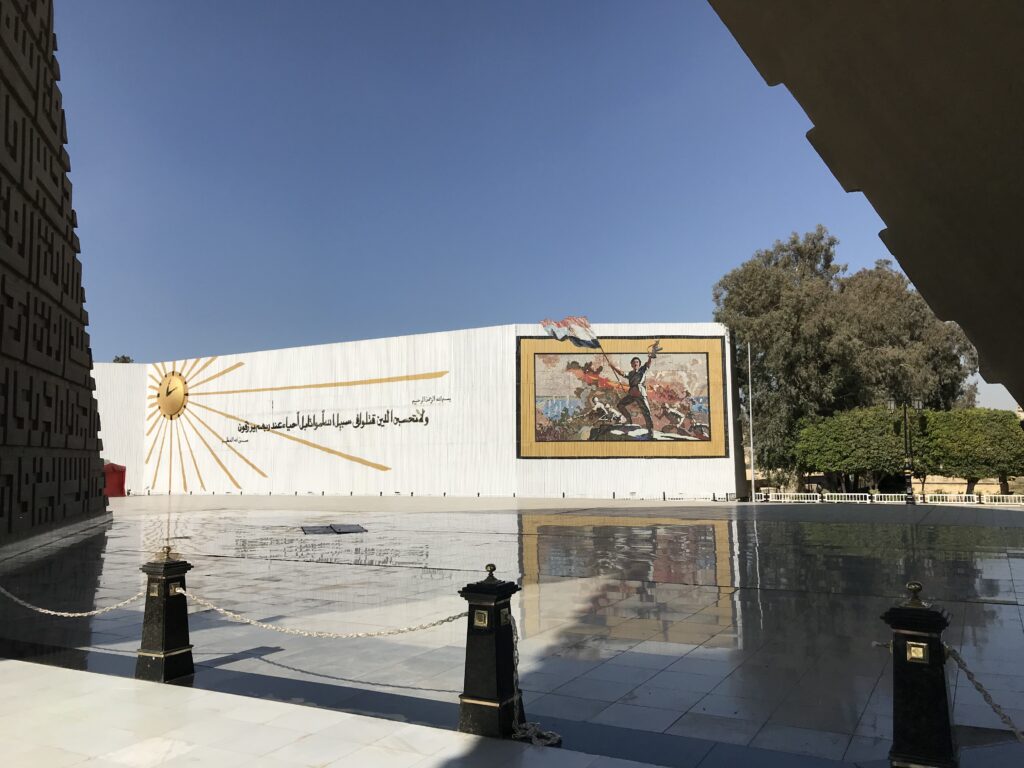
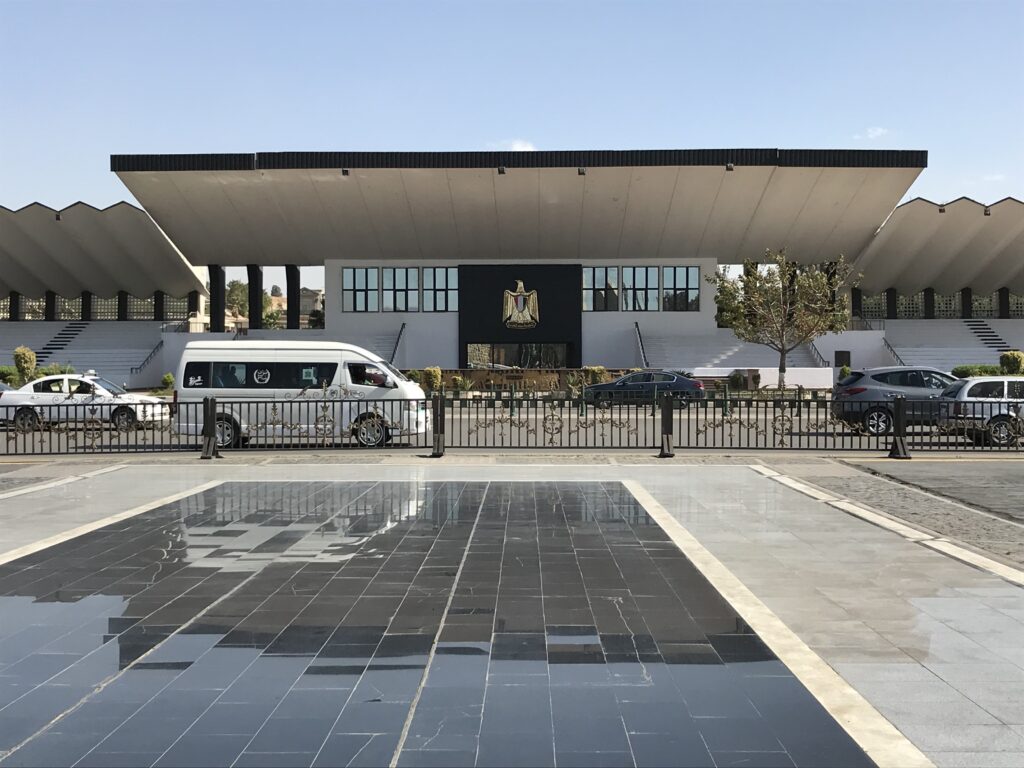
Our first stop was the tomb of President Anwar Sadat and the Memorial tomb of the Unknown Soldier. This is an important symbol commemorating the victims of the October War and President Sadat, who, many believe, saved Egypt. Tarek explained about many things Sadat accomplished. The memorial was established in 1975 in the shape of a hollow pyramid. The pillars are inscribed with 71 symbolic Egyptian names.
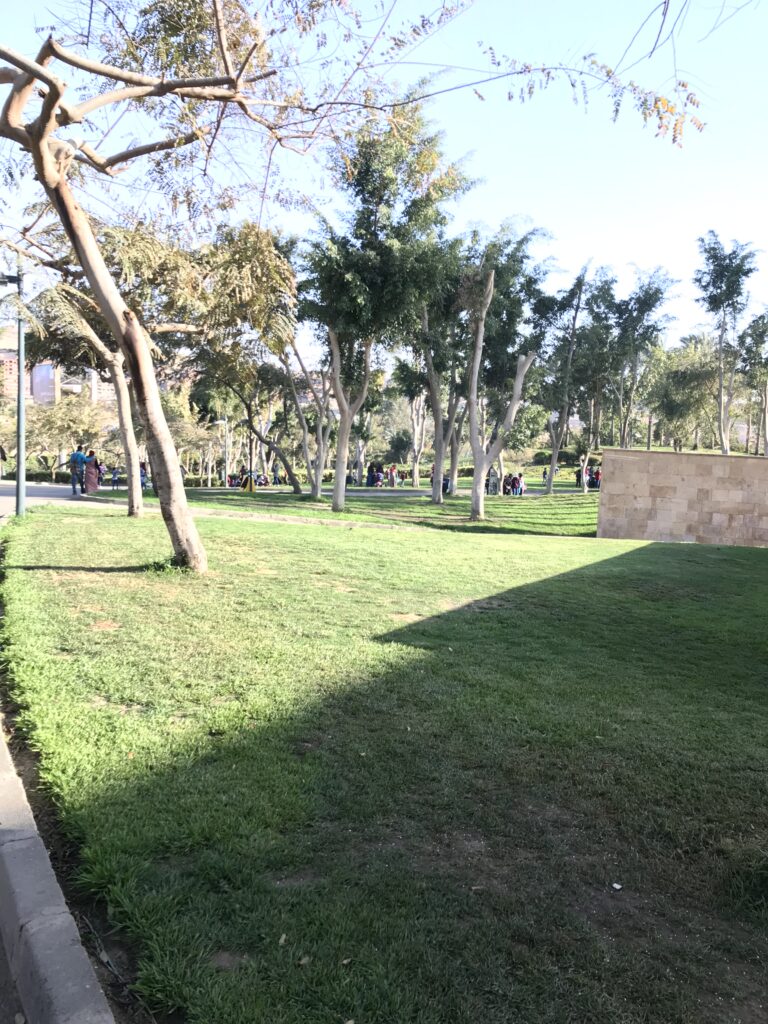
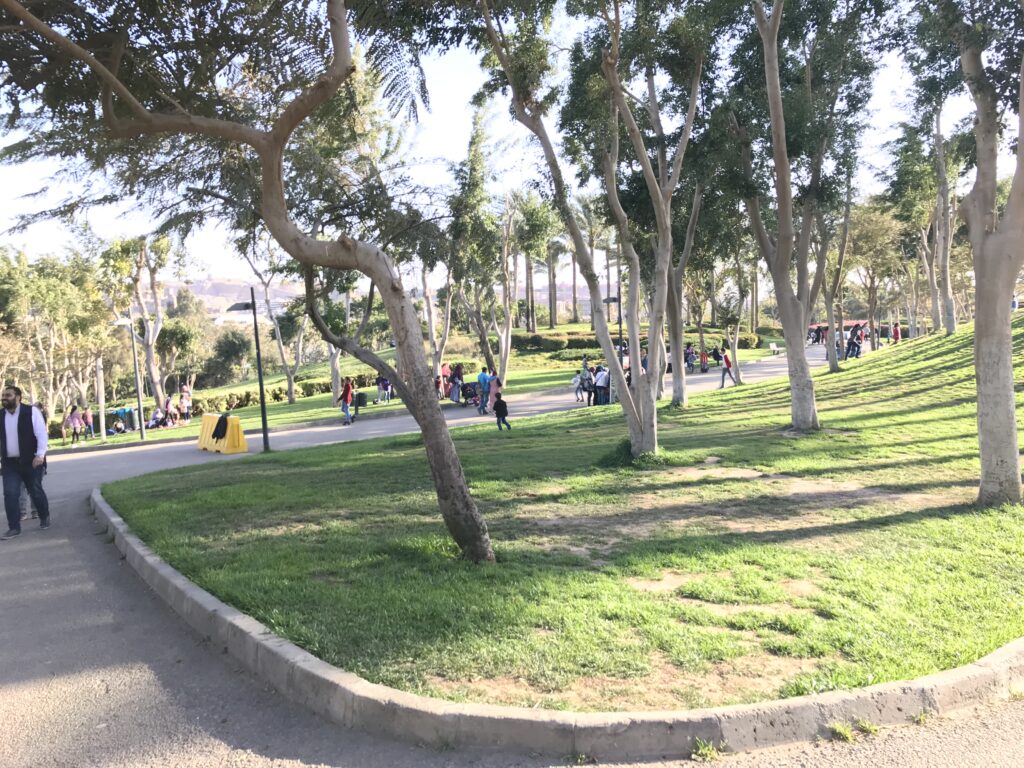
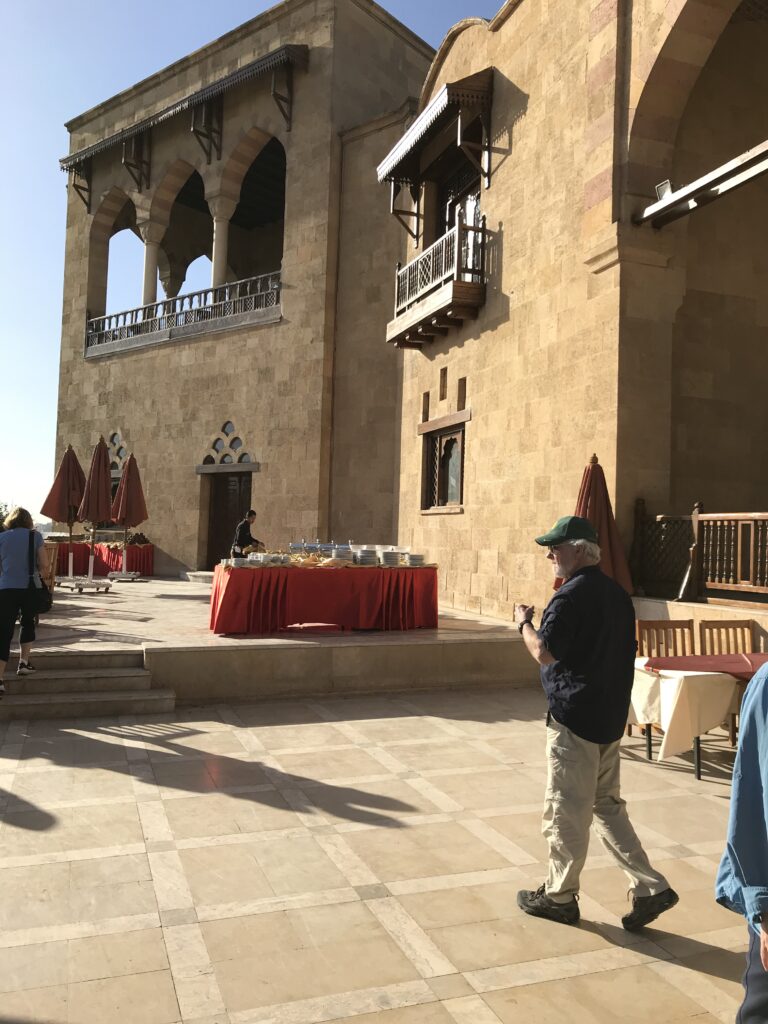
We then went to Al-Azhar Park where we had a bountiful lunch at the Citadel Restaurant. We had a little time to wander around the park that had many families enjoying it.
Memphis
Memphis was Egypt’s first capital. It is located south of the Nile River Delta and Cairo. The Memphis Archeological Zone is a UNESCO World Heritage site. The city was founded about 2925 B.C.E. by Menes who reportedly united the prehistoric kingdoms of Upper and Lower Egypt. It is one of the most important religious and worship places dedicated to the god Ptah. We started at the open-air museum. The museum exhibits a limestone colossus of king Ramses II (1305-1237 BC ) and a giant alabaster sphinx weighting more than 80 tons, that once stood out side the massive temple of god Ptah. There are also remains of granite coffins and commemorative tablets from later periods.
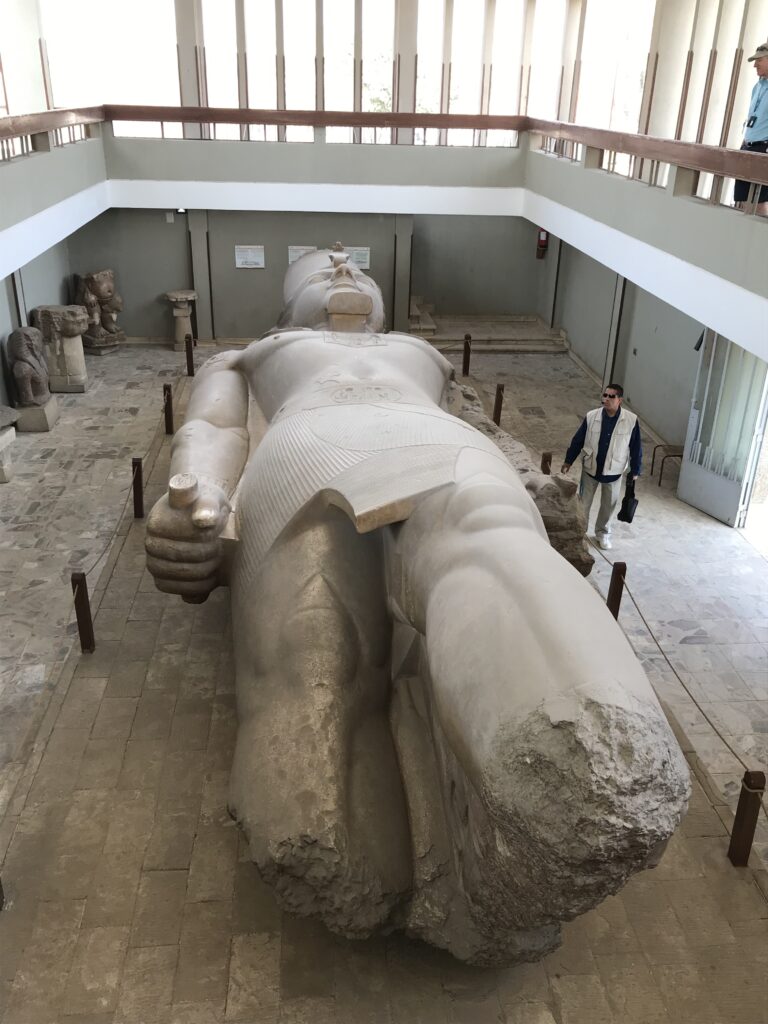
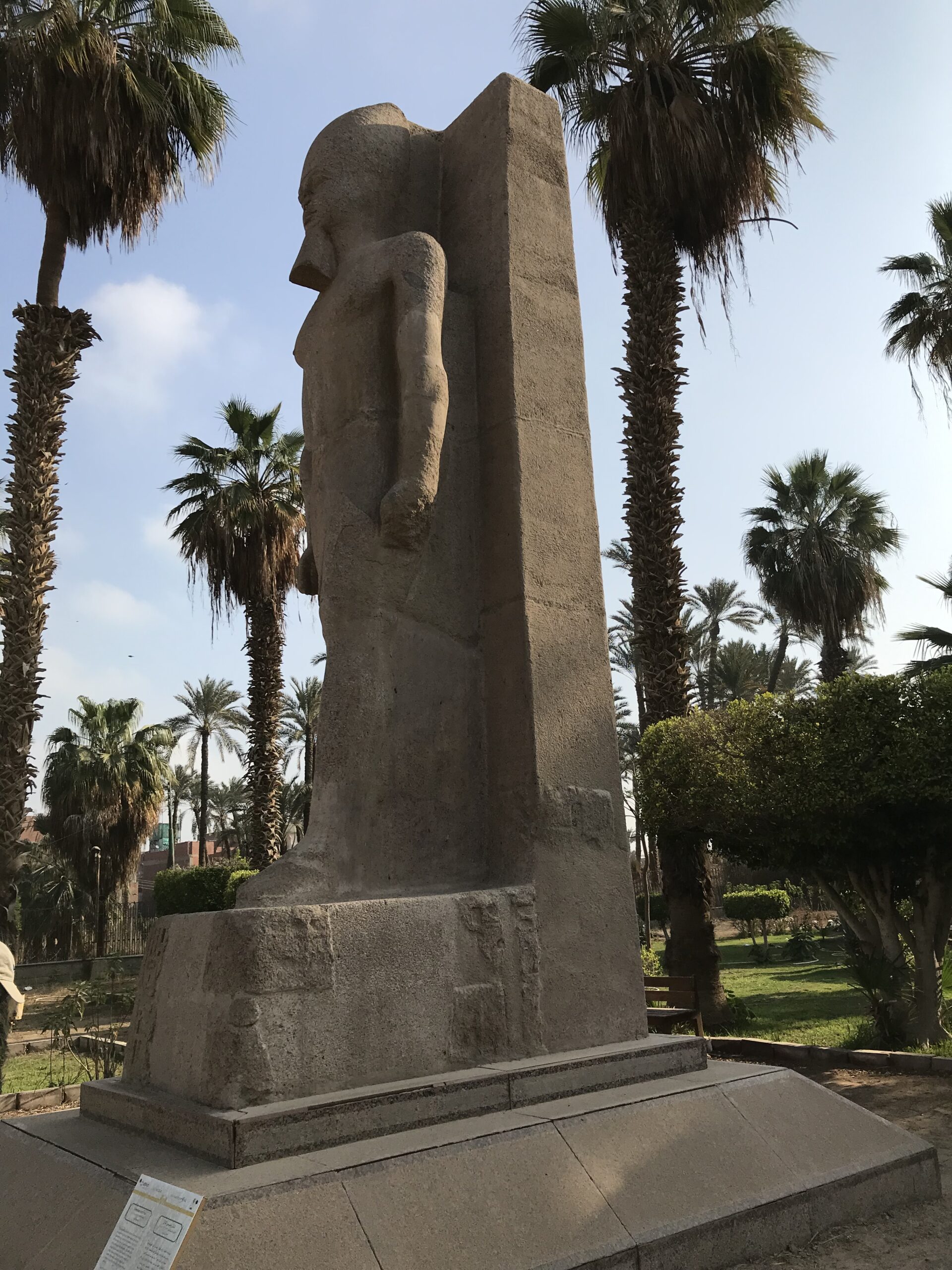
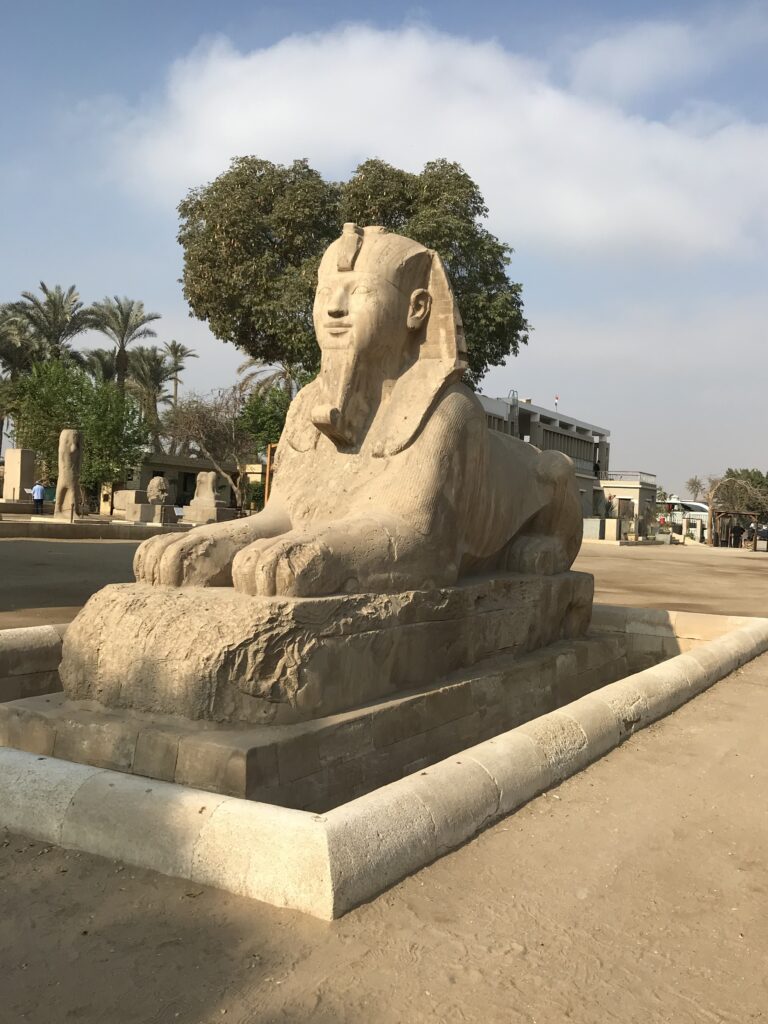
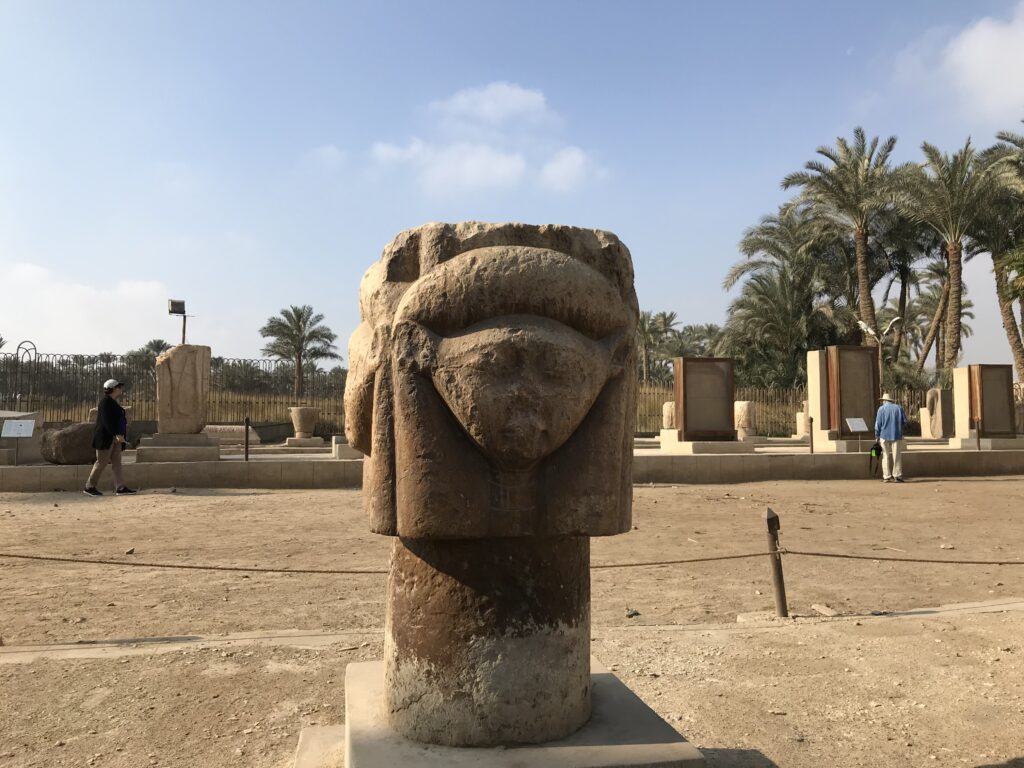
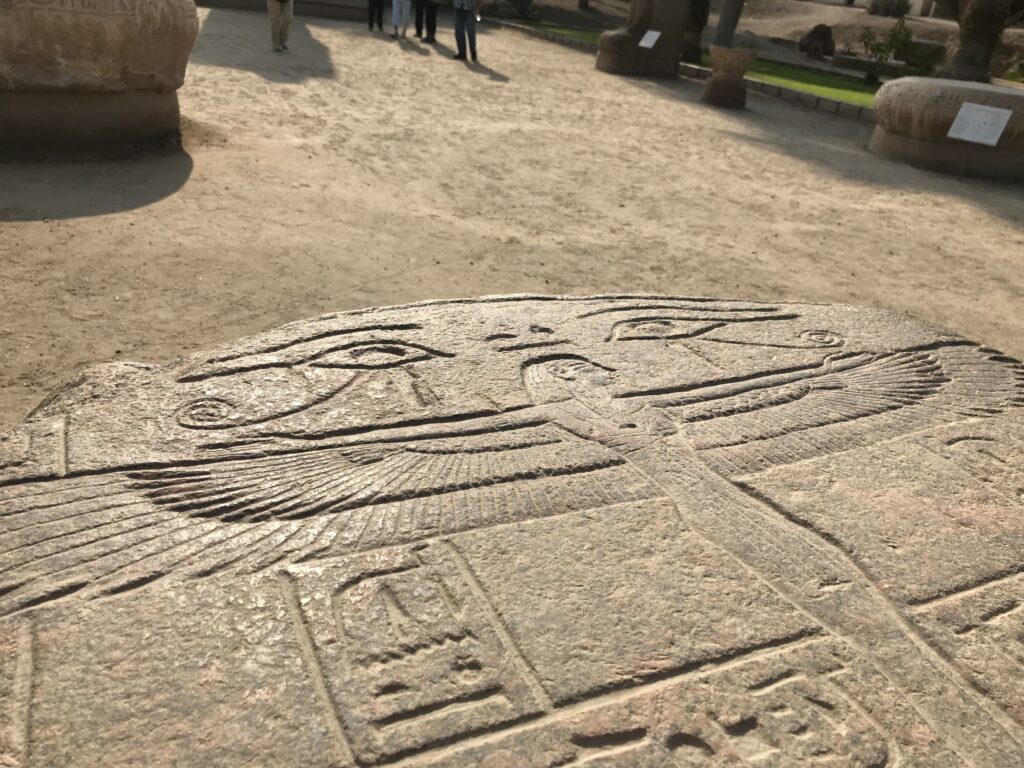
You can see other monuments behind the major statues. The museum also has an indoor section which houses another colossal statue of Ramses among other artifacts.
Saqqara
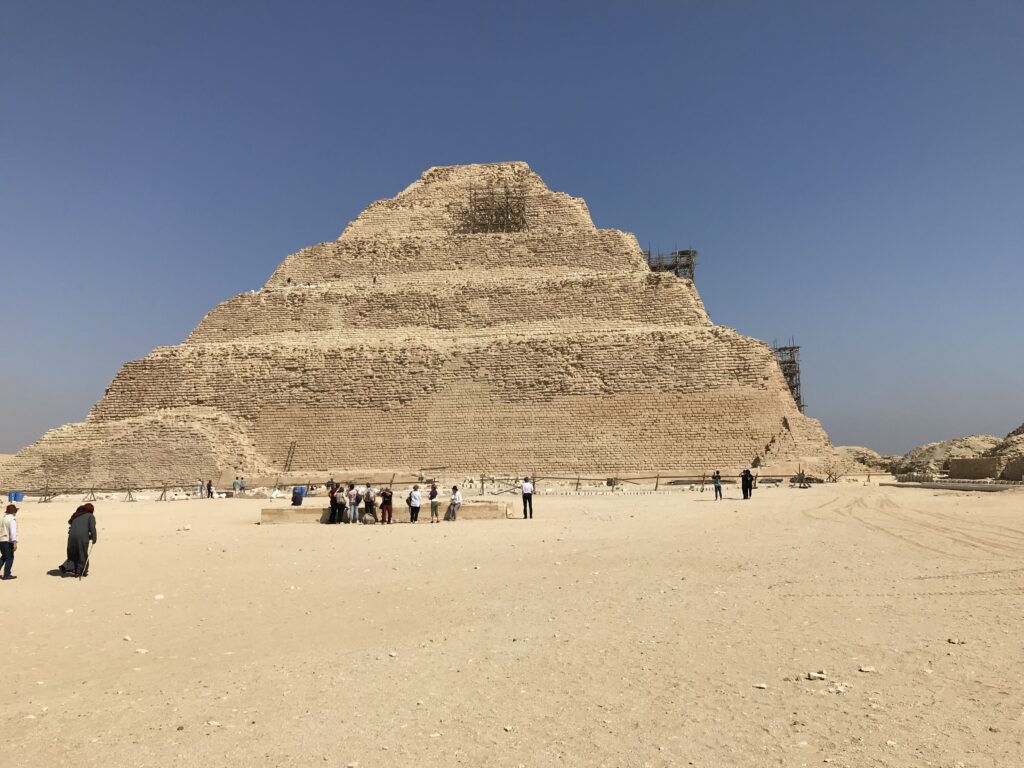
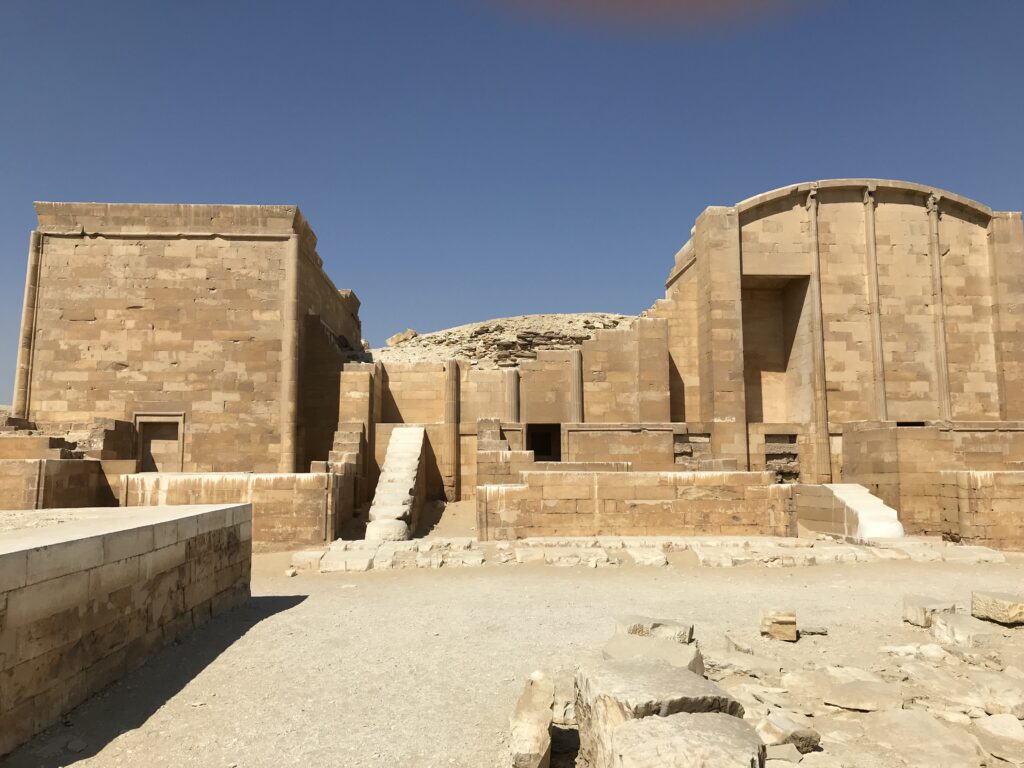
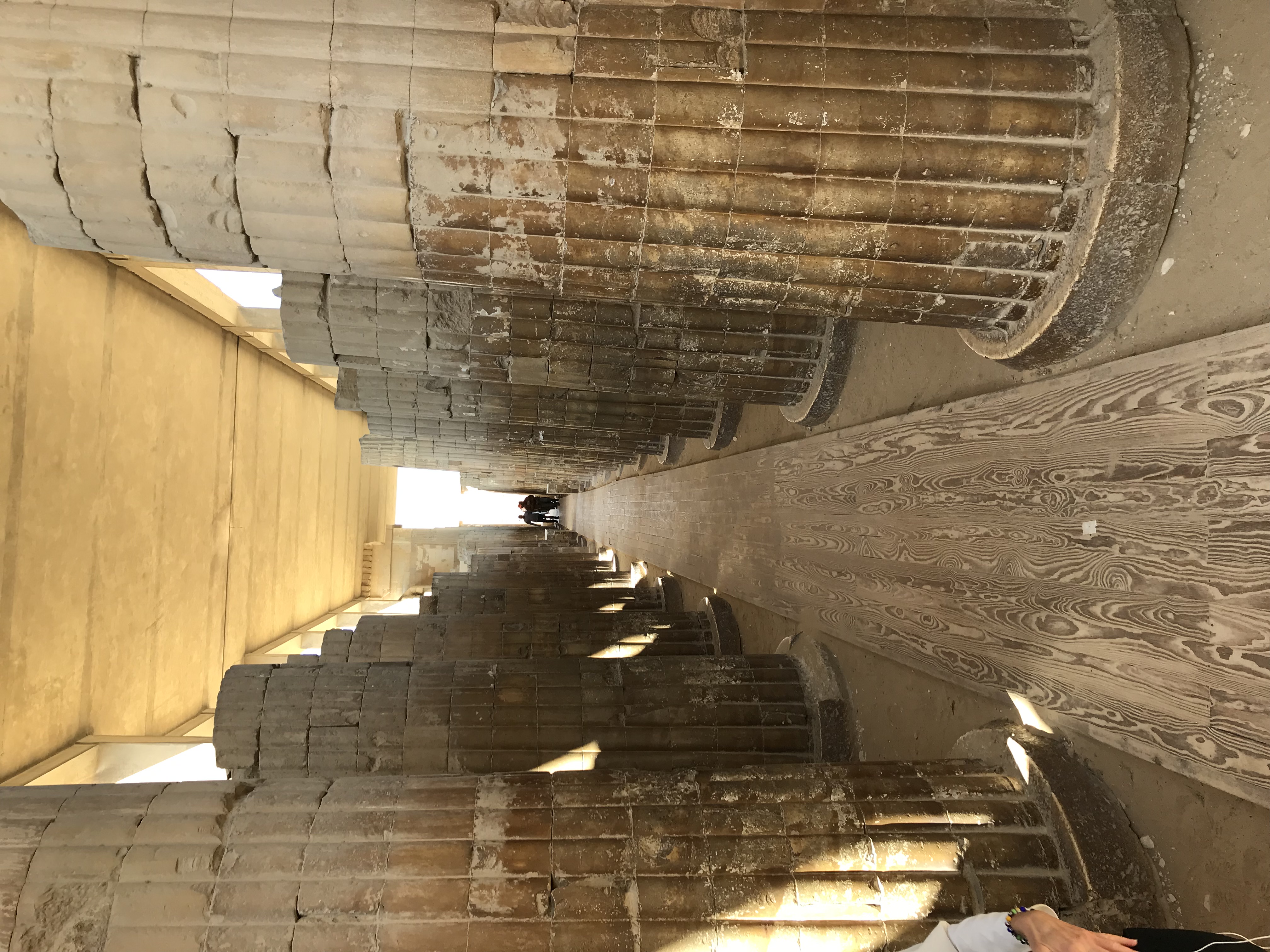
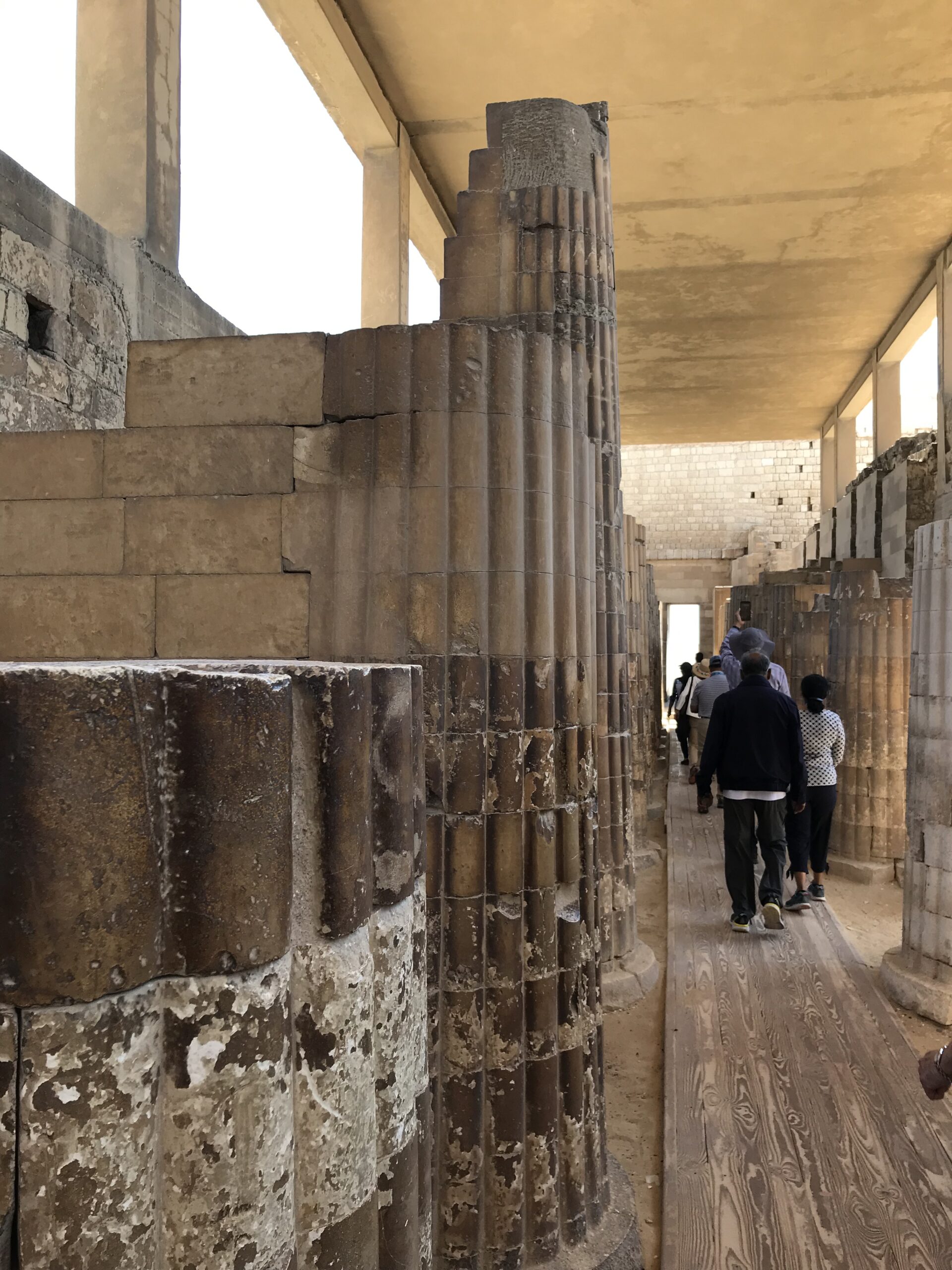
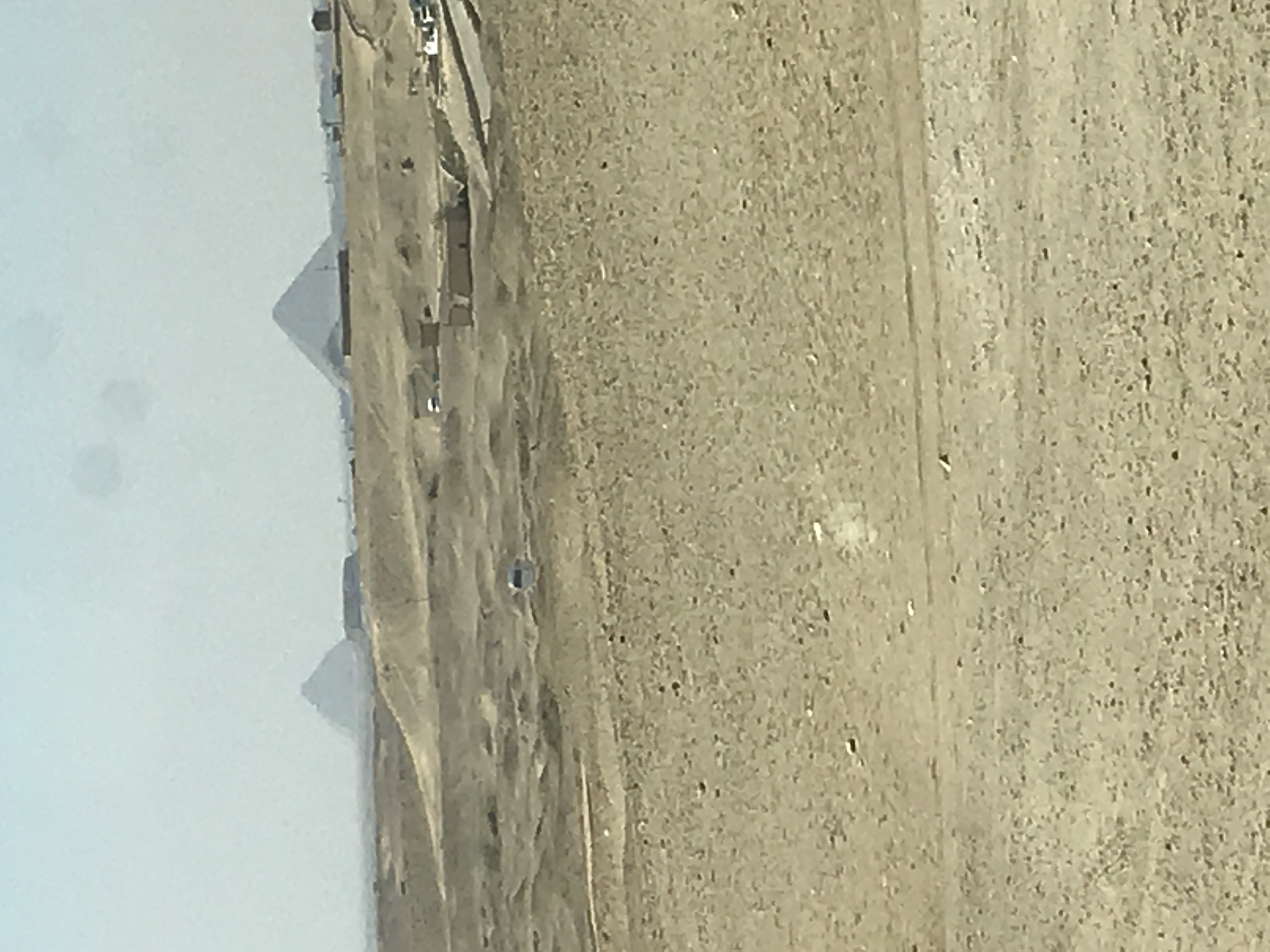
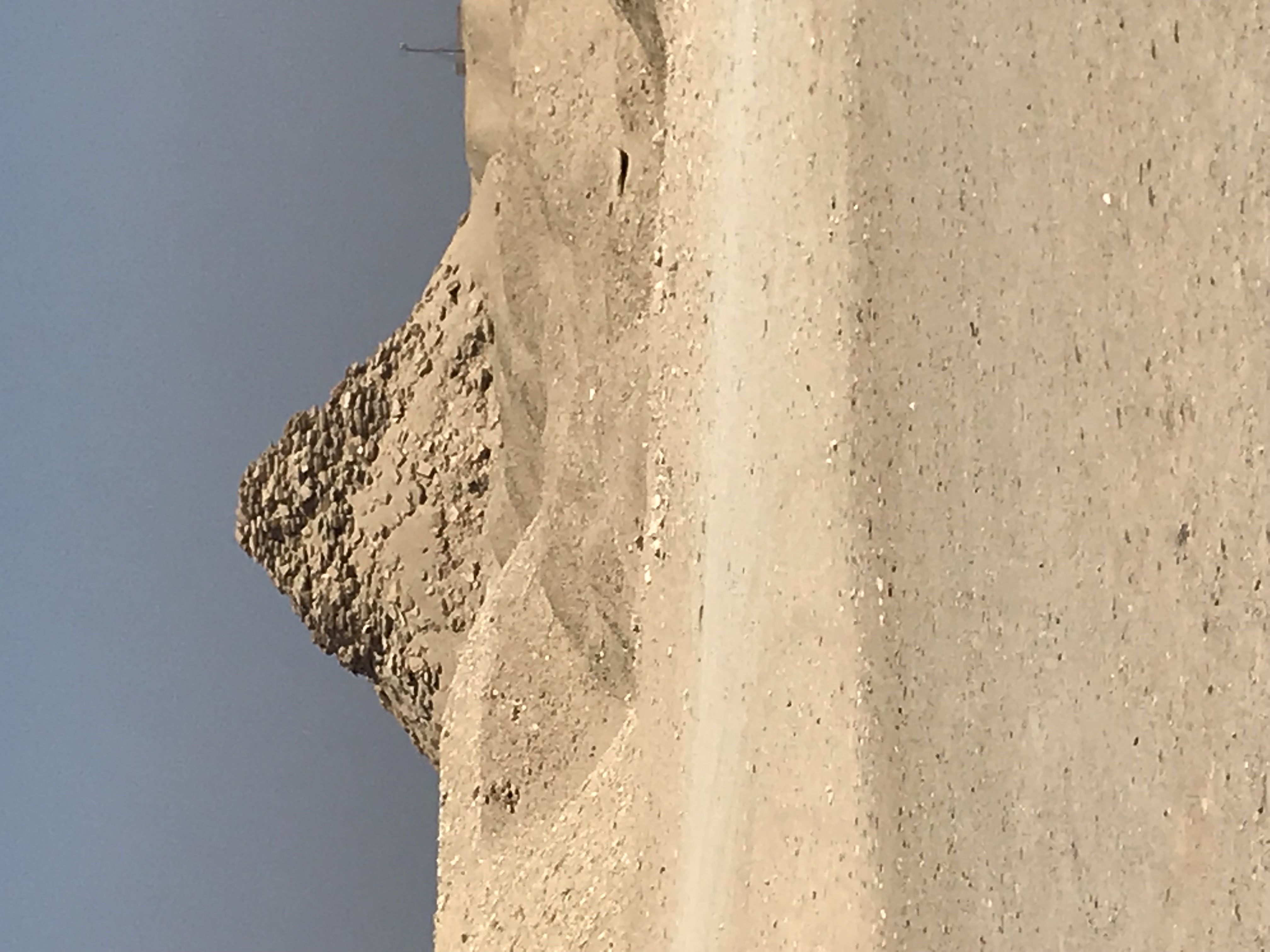
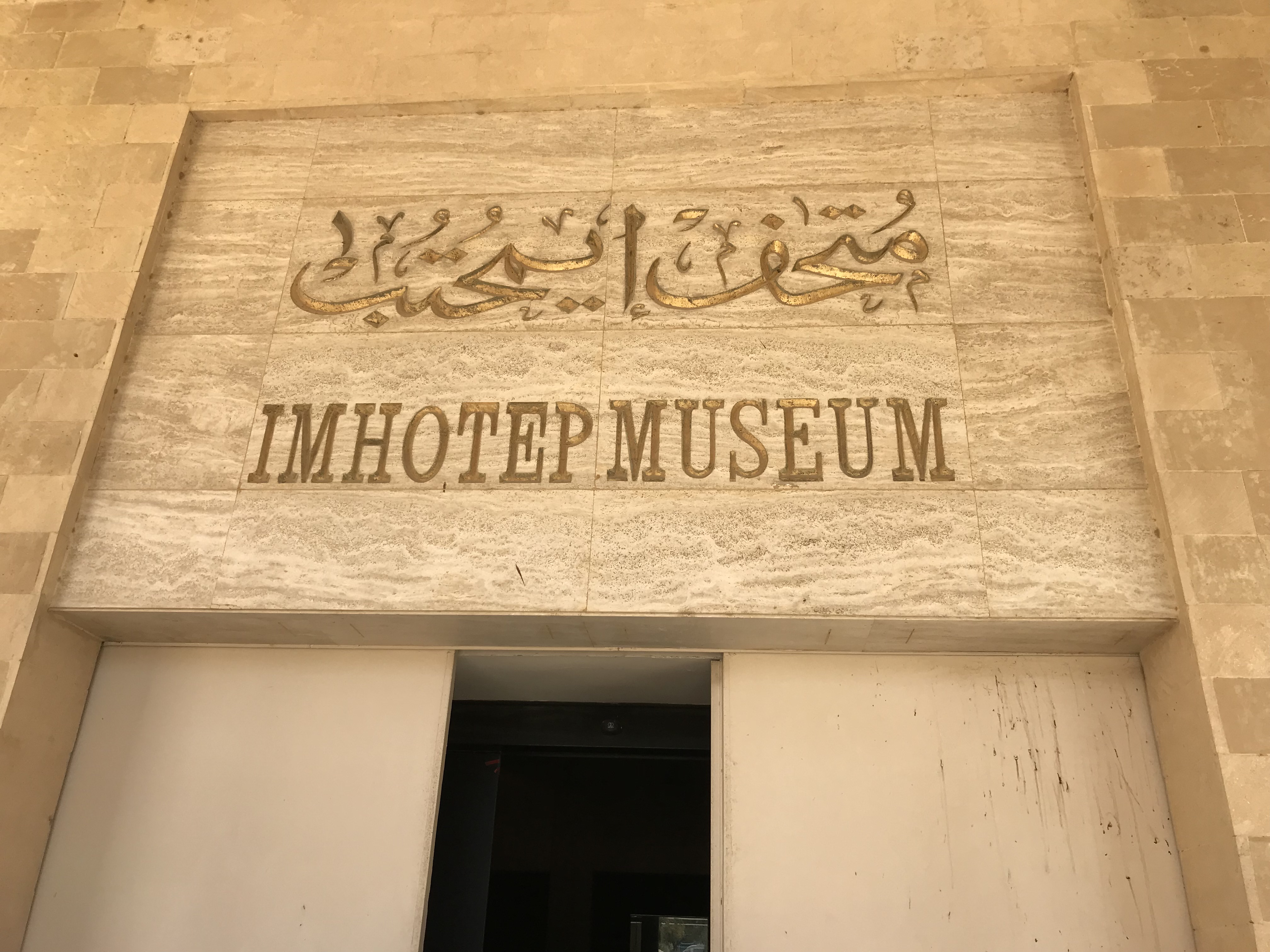
Next we moved to Saqqara, part to the Memphis complex. Saqqara contains the ancient burial grounds of Egyptian royalty. It has several pyramids including the Step Pyramid (Pyramid of Djoser) designed by Imhotep and several tombs. The Pyramid of Djoser is the oldest complete stone building complex known in history. Surrounding the Step Pyramid complex are the pyramids of Sokhemkhet, Titi, Userkaf, and Onnus.
The Step Pyramid has six flat-roofed tombs, stacked one on top of the other, and four sides. It dates to the 27th century B.C.E. when it was built for Pharaoh Djoser. Its complex contains passageways and tombs.
Next we went to the Pyramid of Teti, a complex which includes pyramids for two queens and a burial complex. It is the second known pyramid containing pyramid texts. After that we went to the Tomb of Ka-Gem-Ny, a high official under Teti. These are all about 4,600 years old.
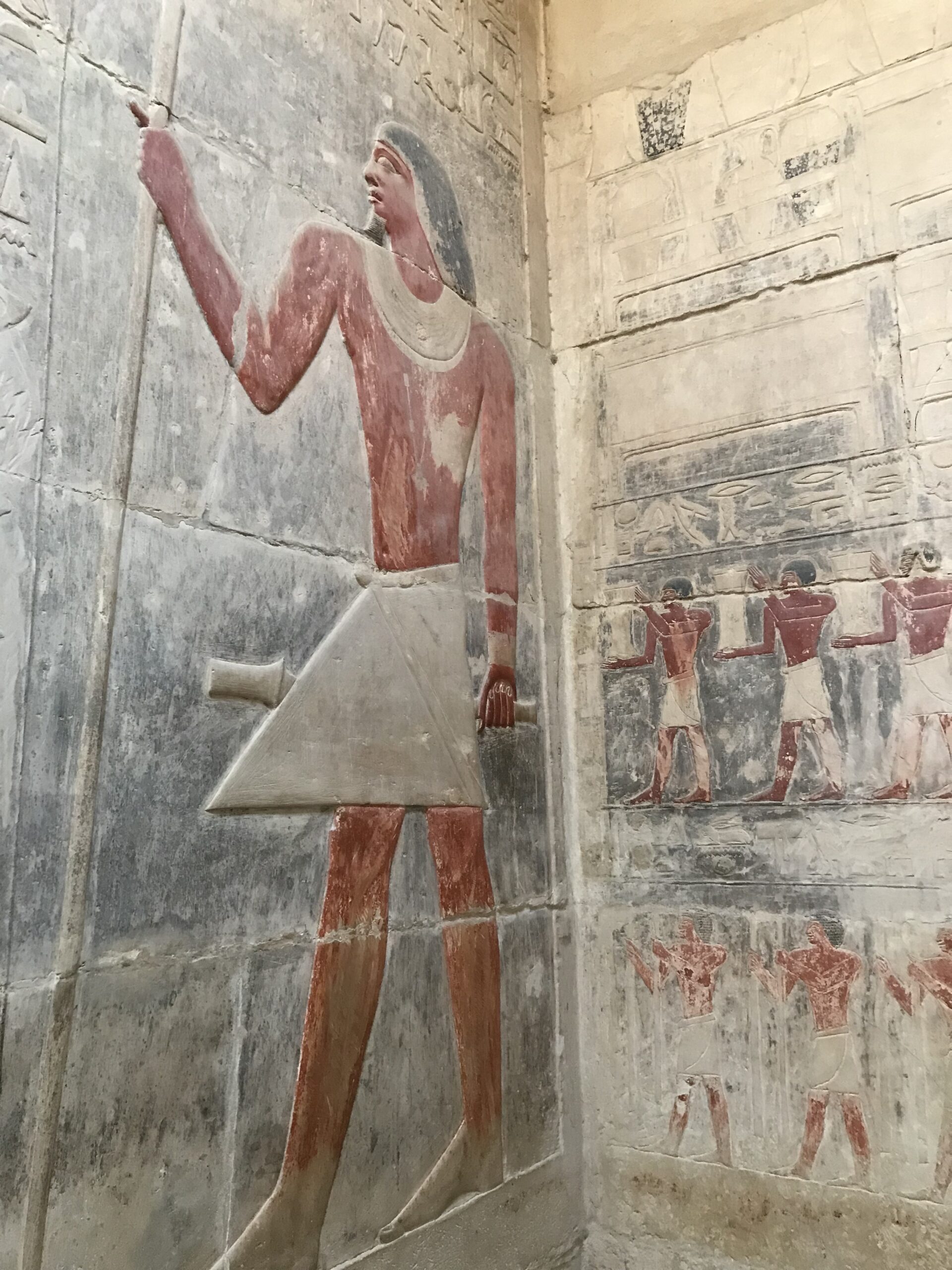
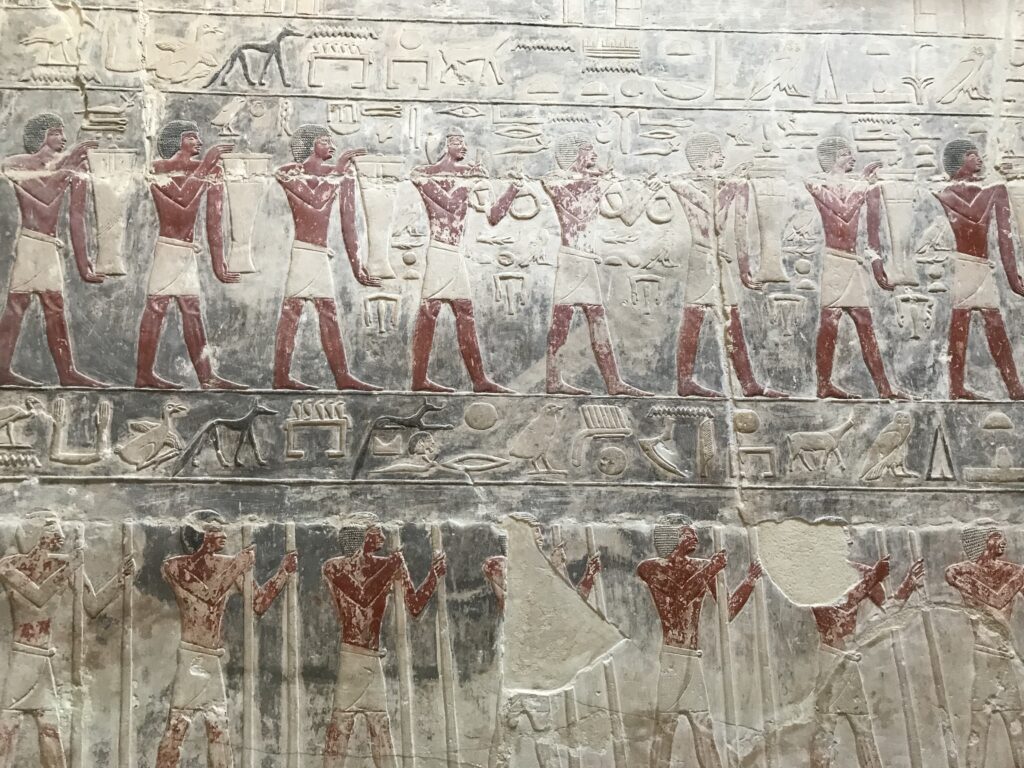
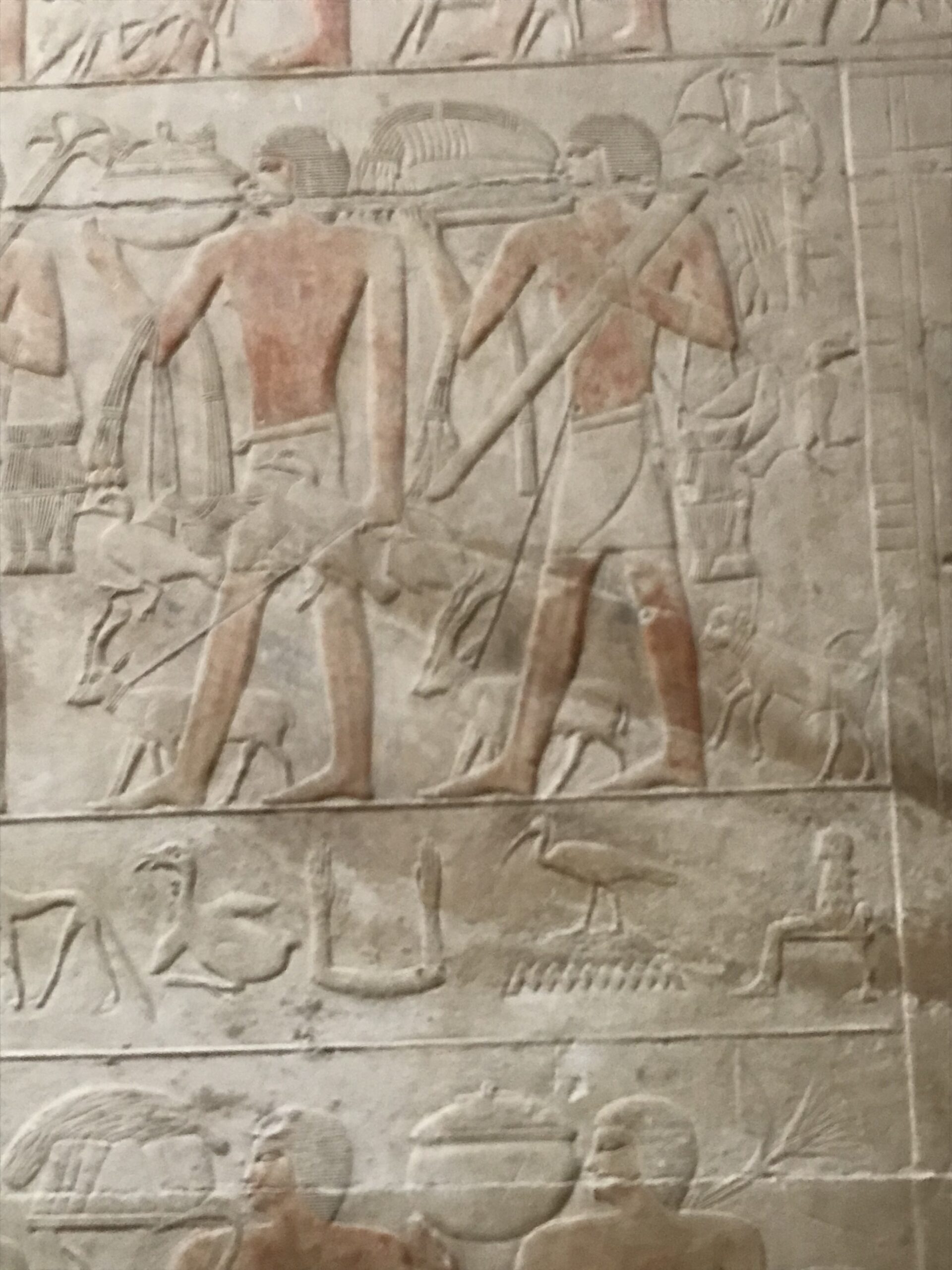
After another long day, we returned to the hotel. Tomorrow I go to Alexandria.