Valley of the Kings
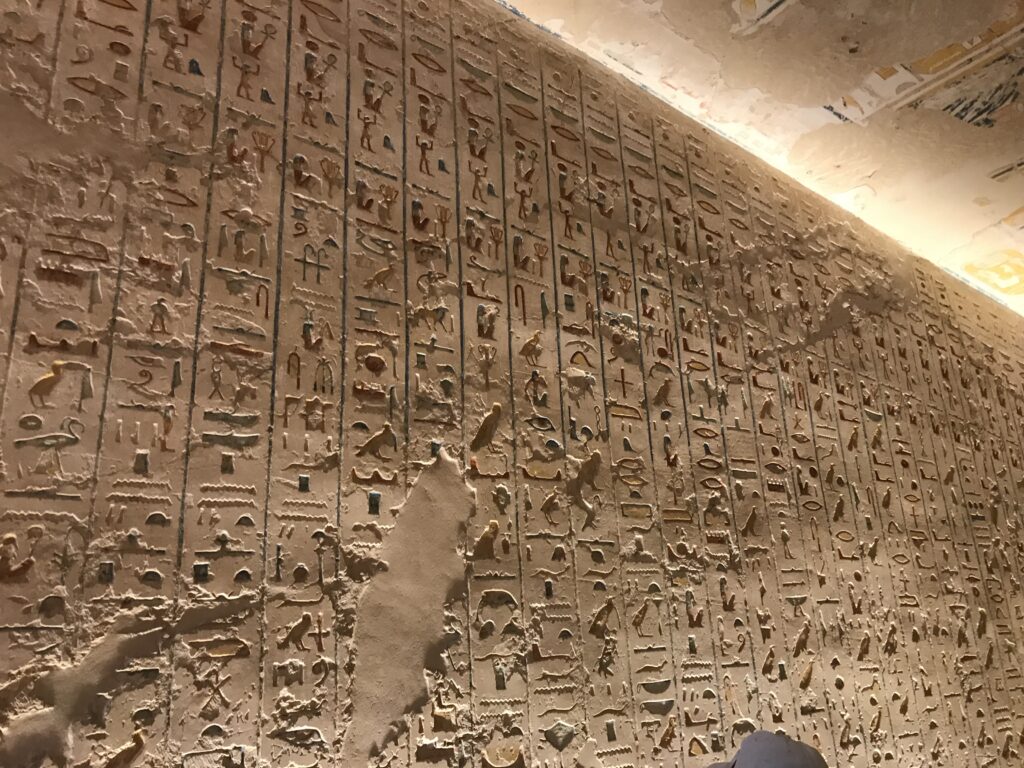
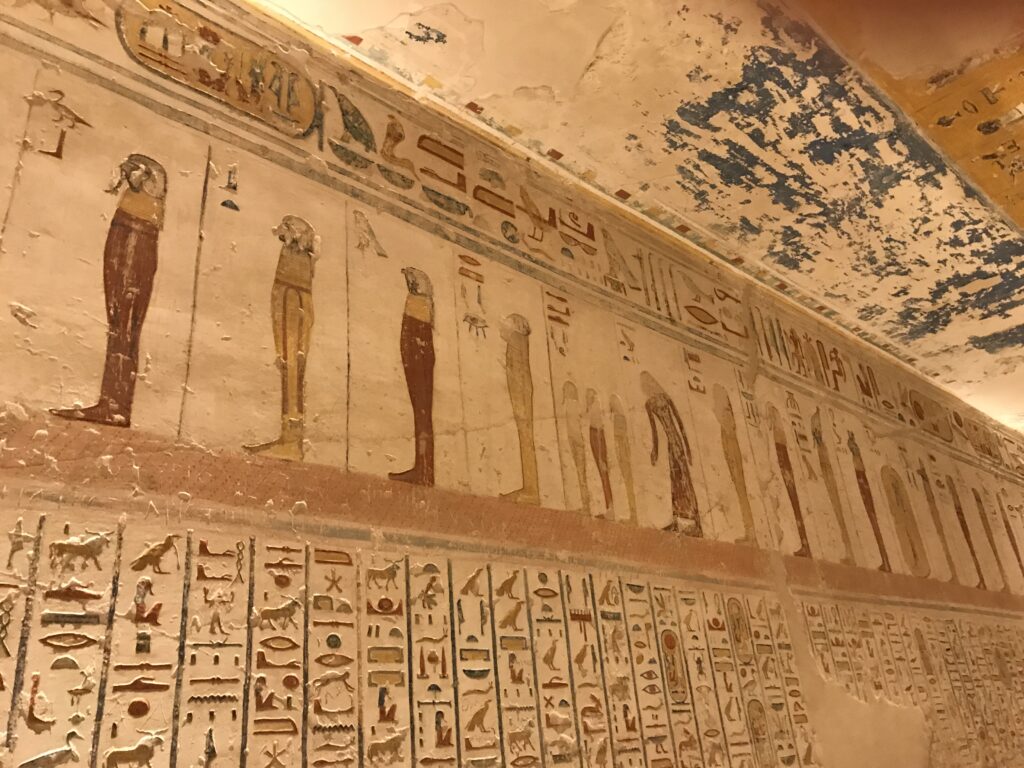
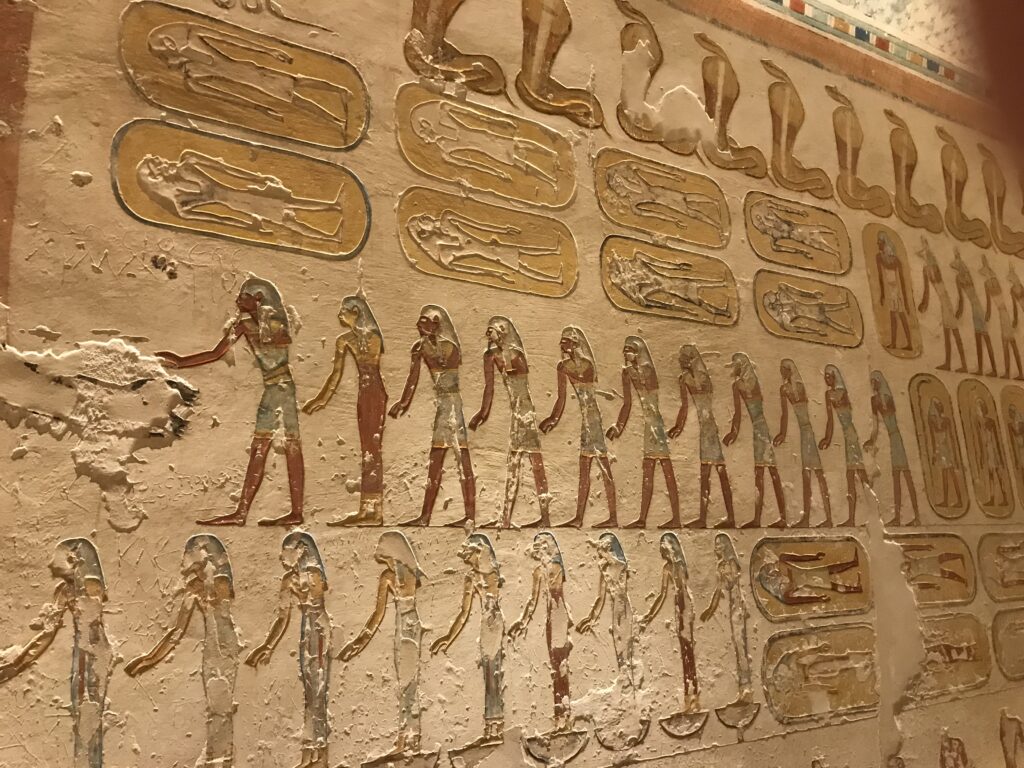
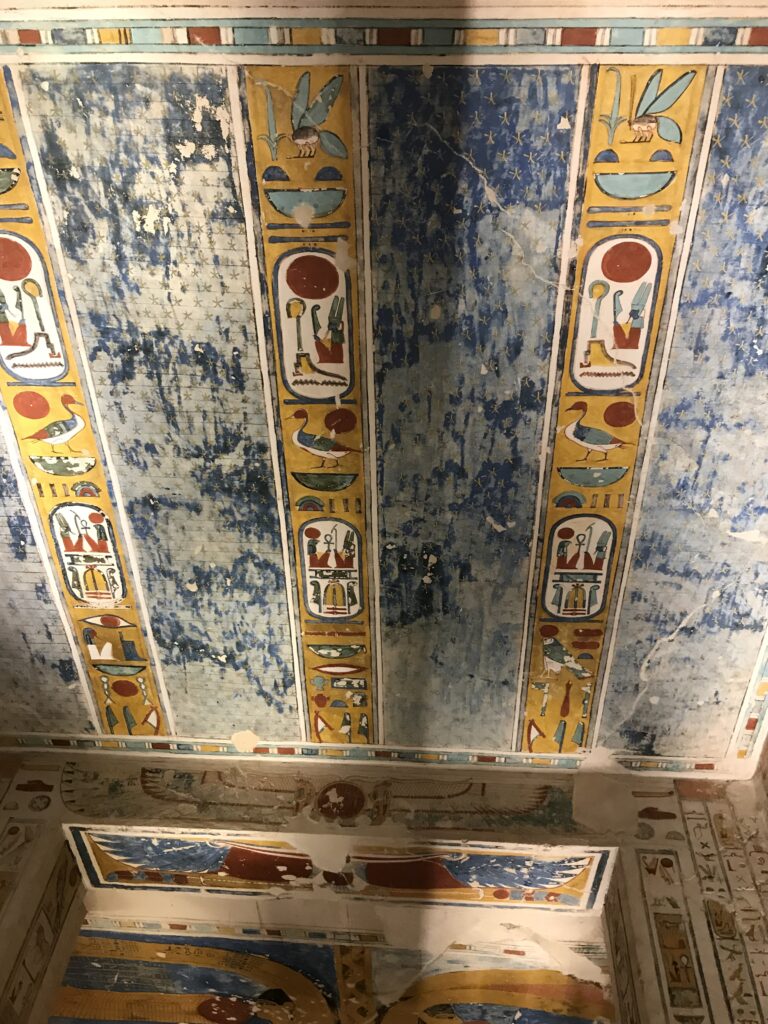
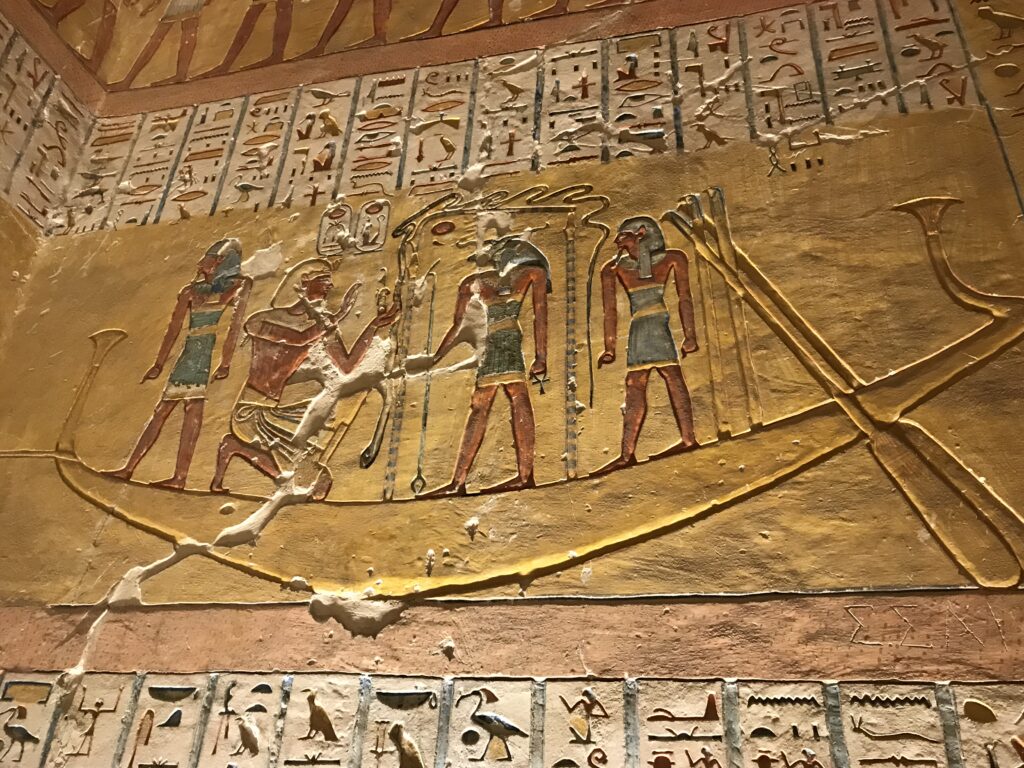
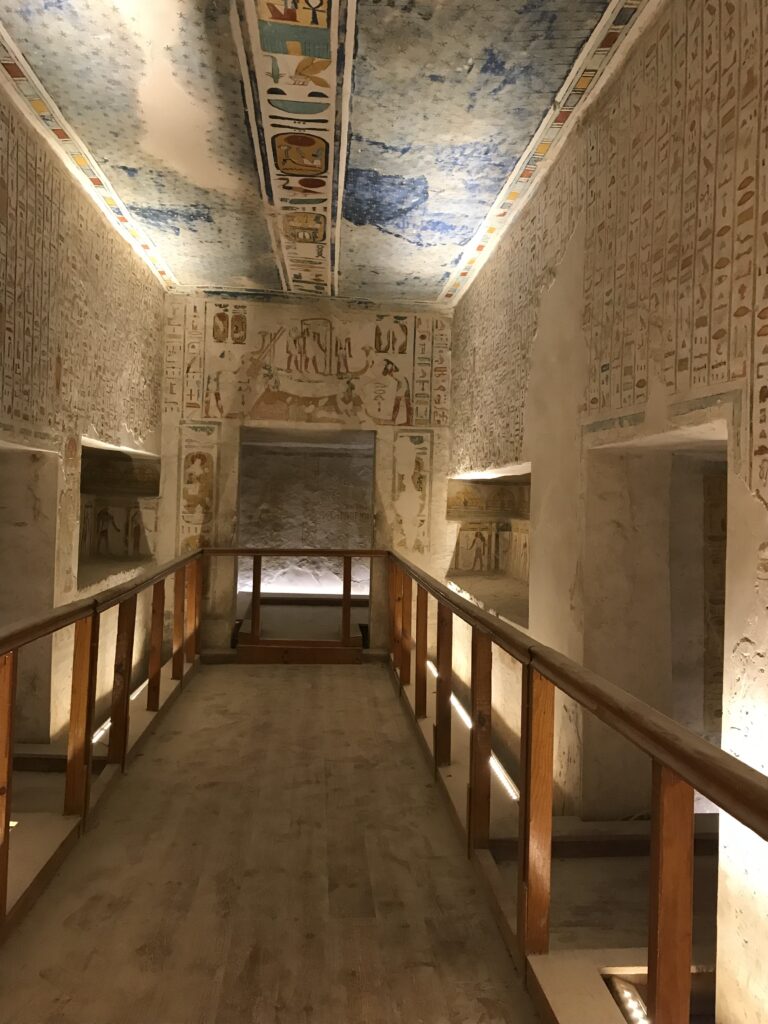
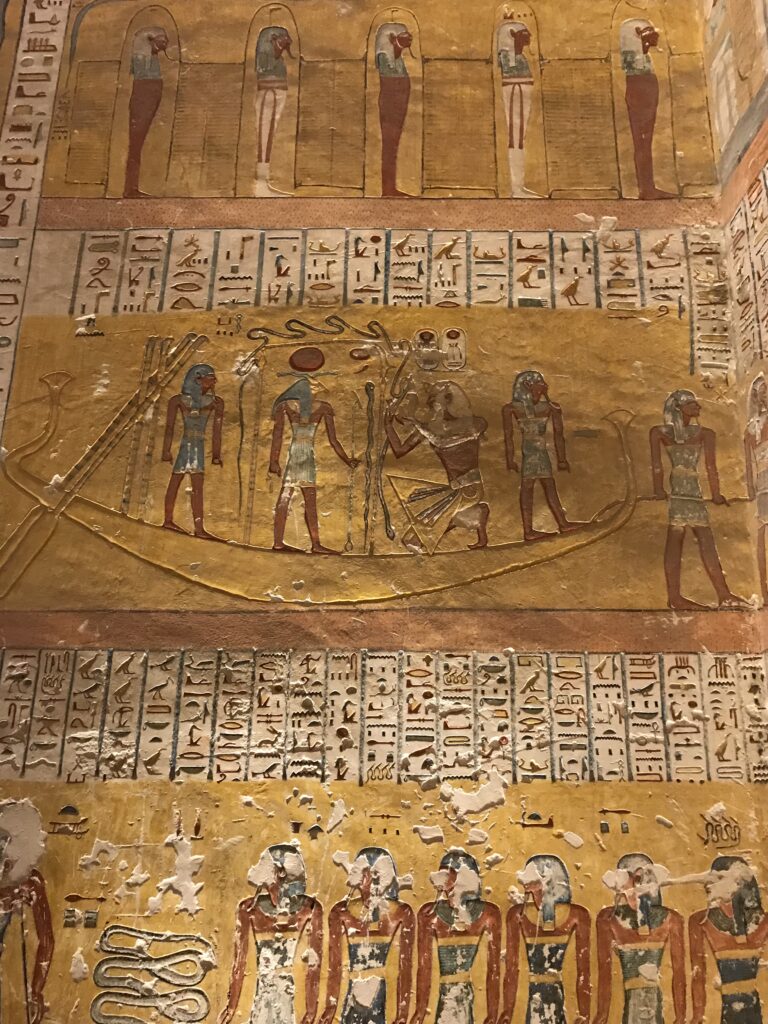
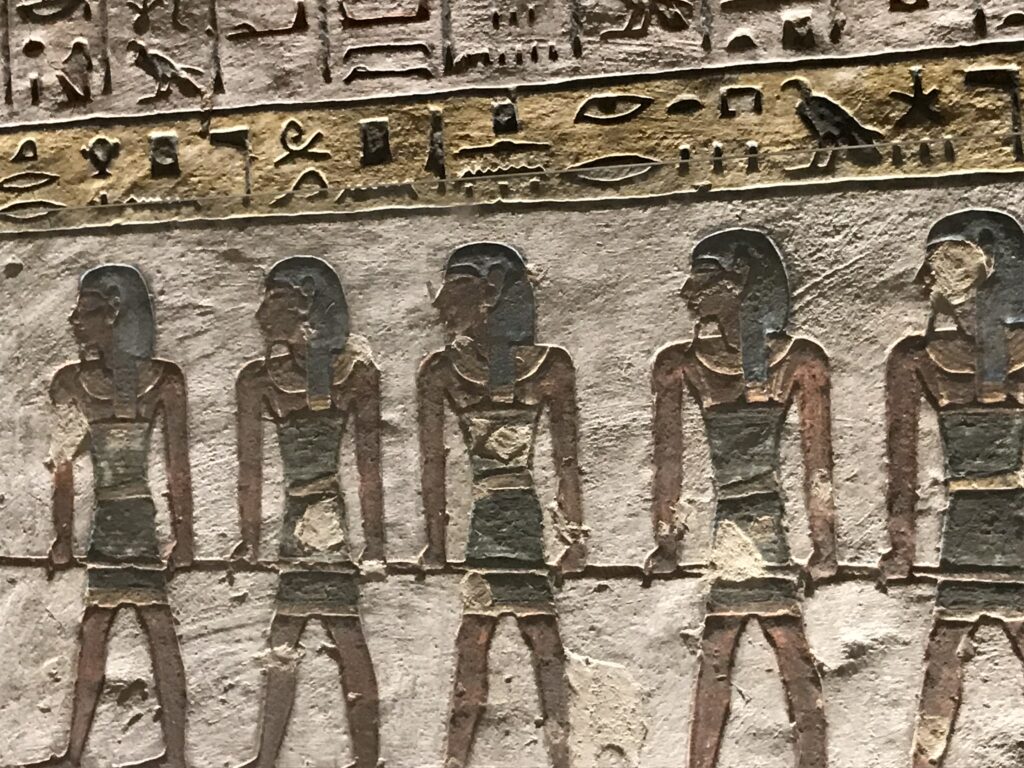
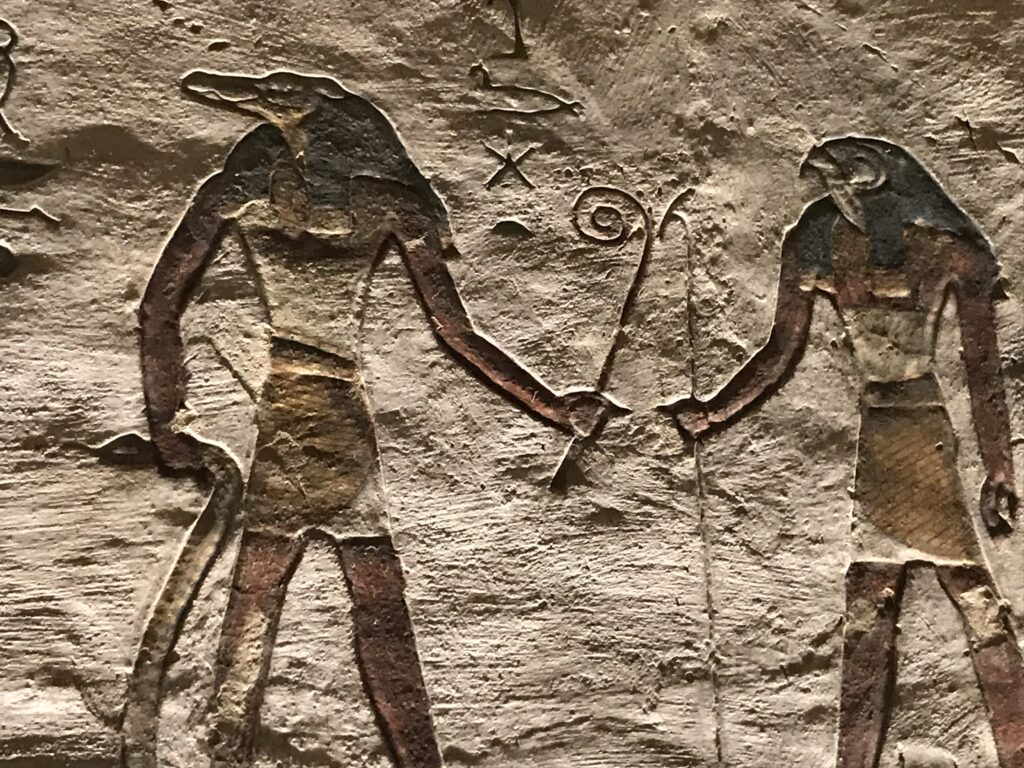
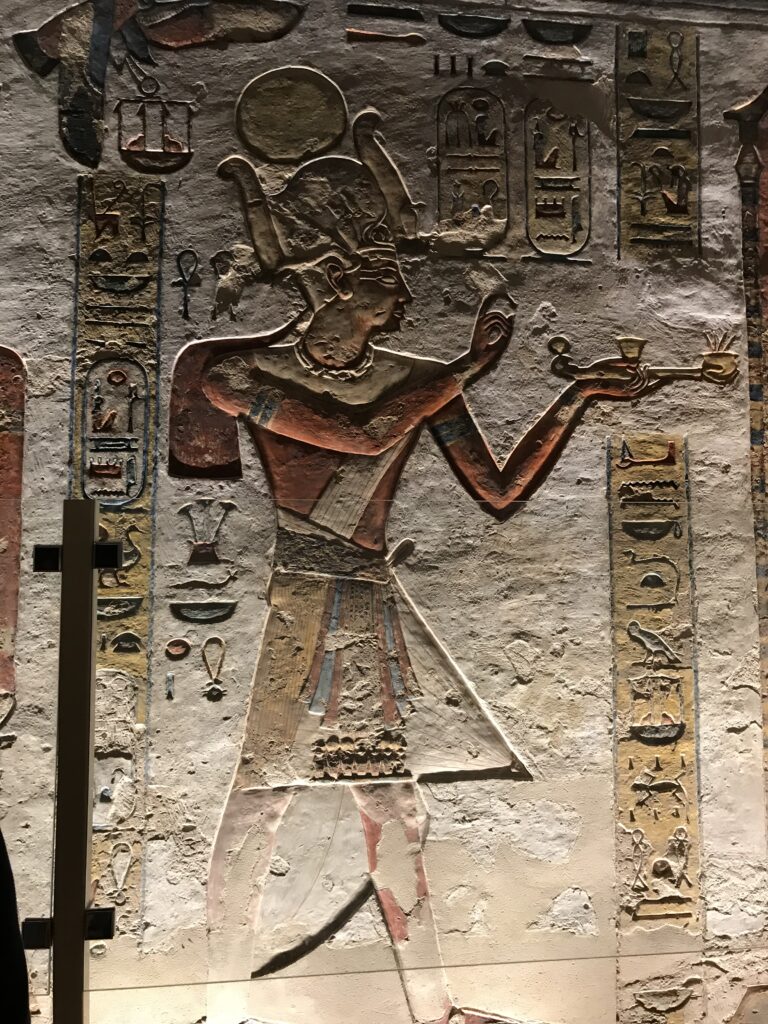
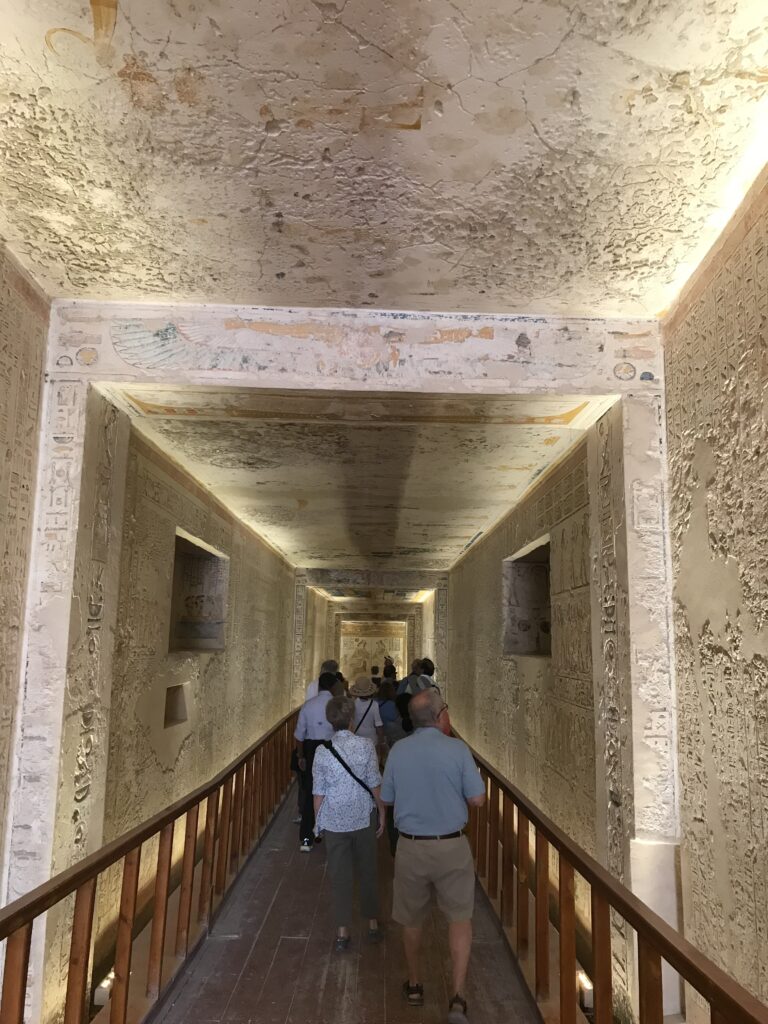
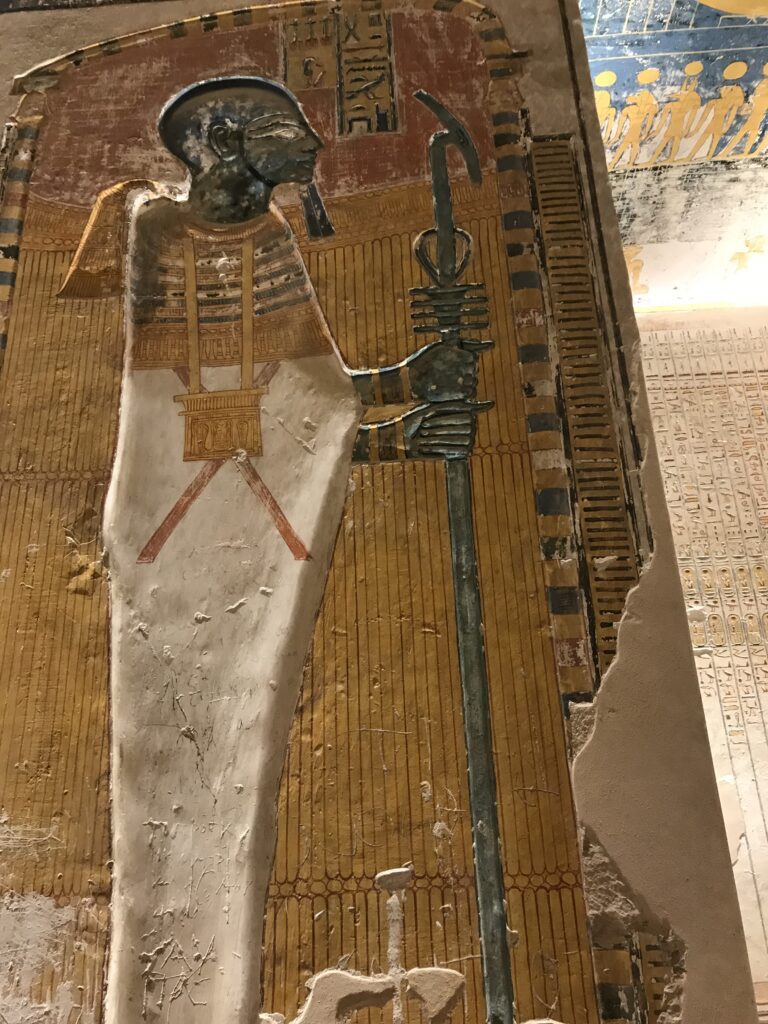
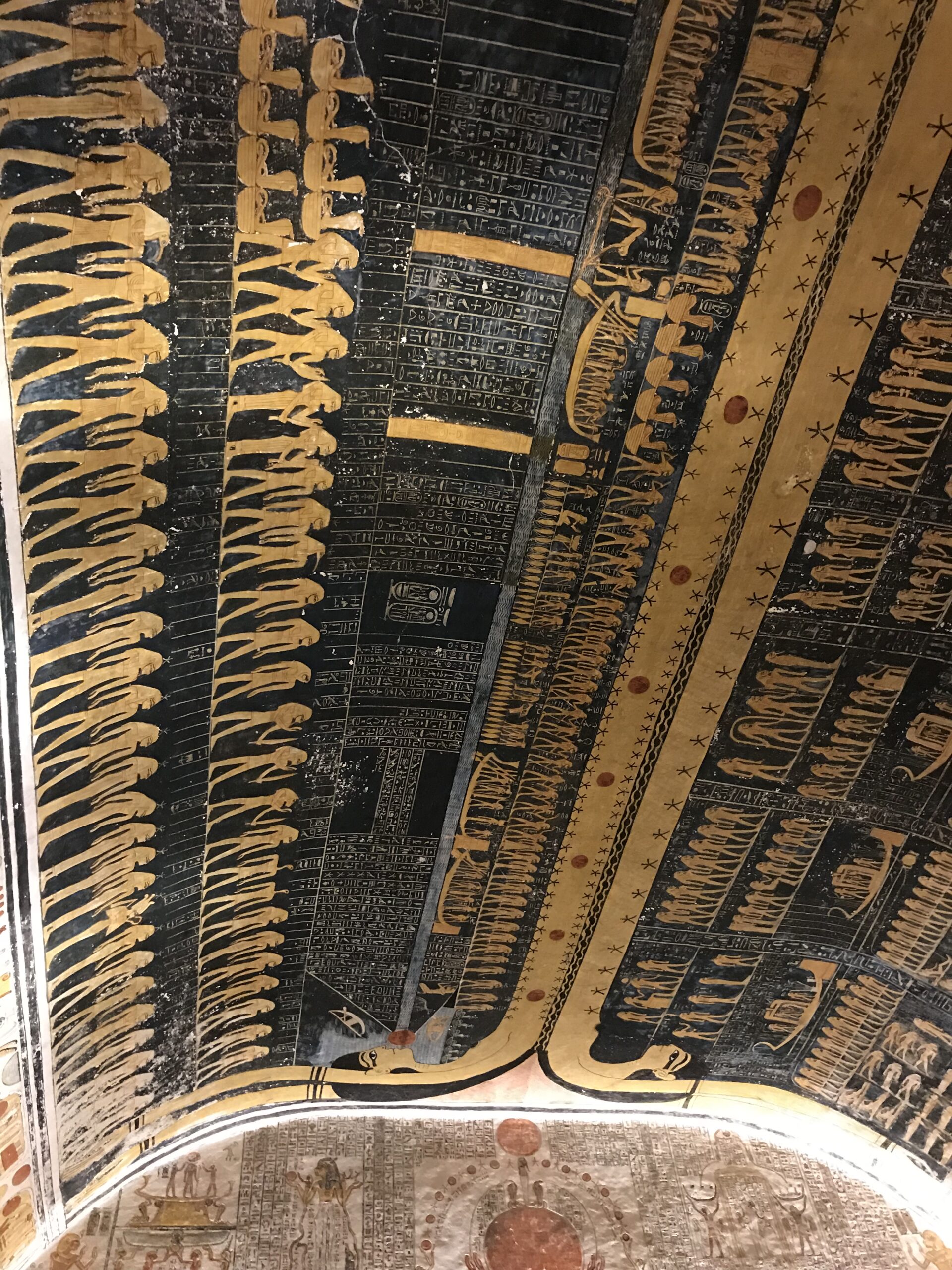
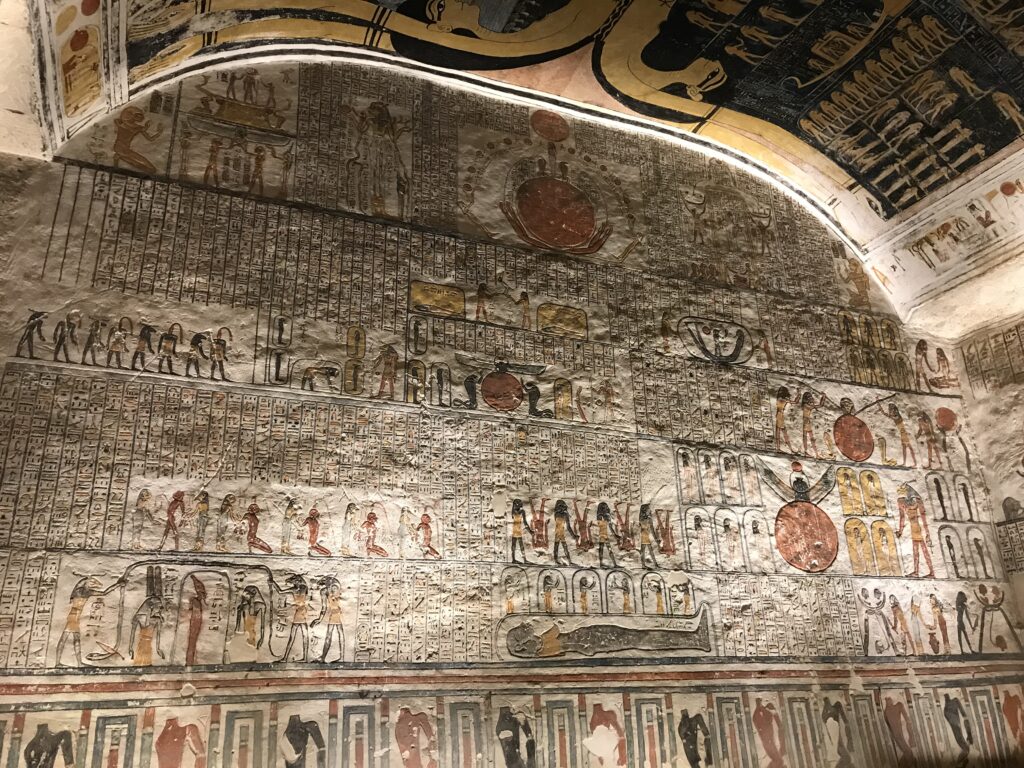
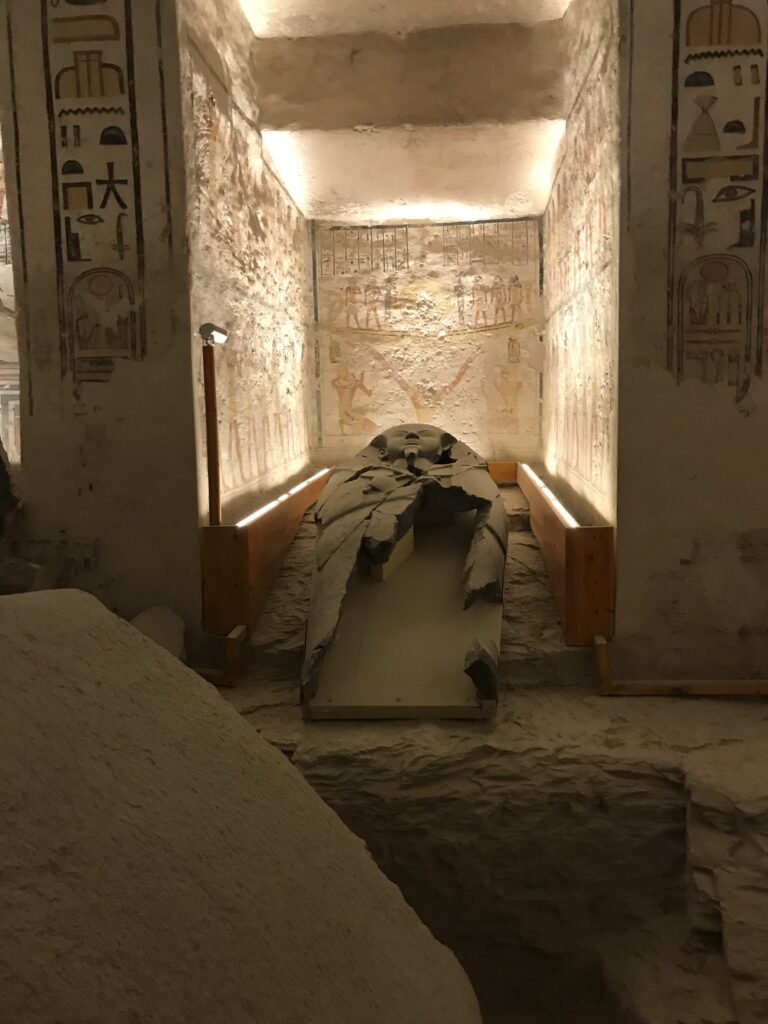
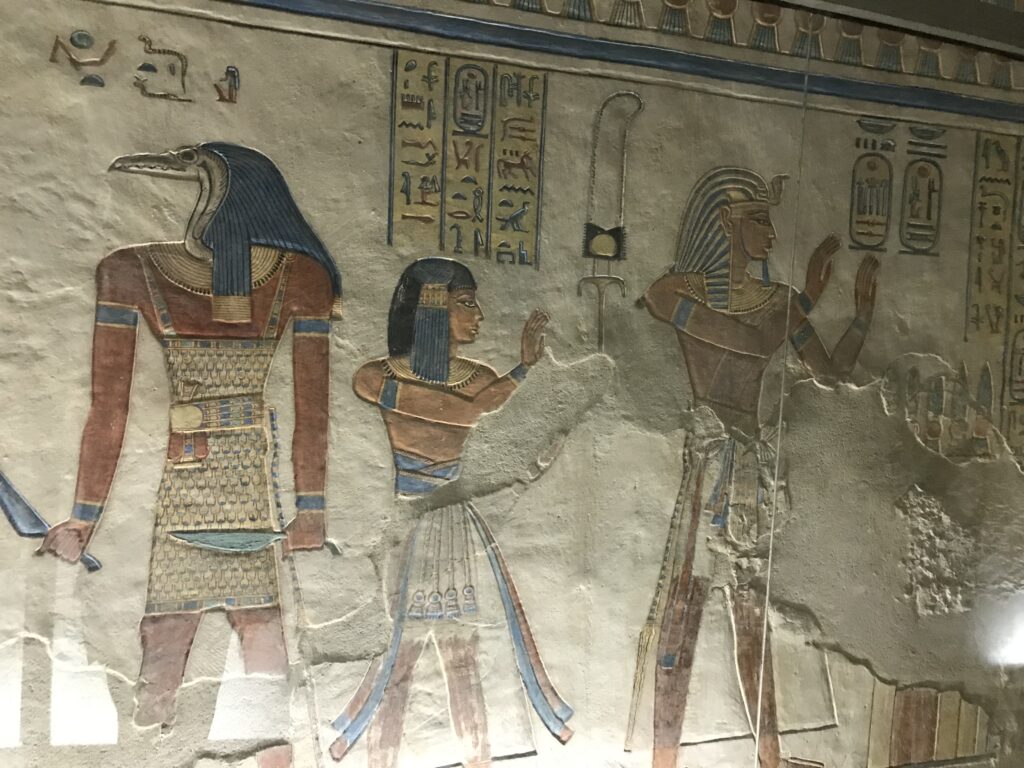
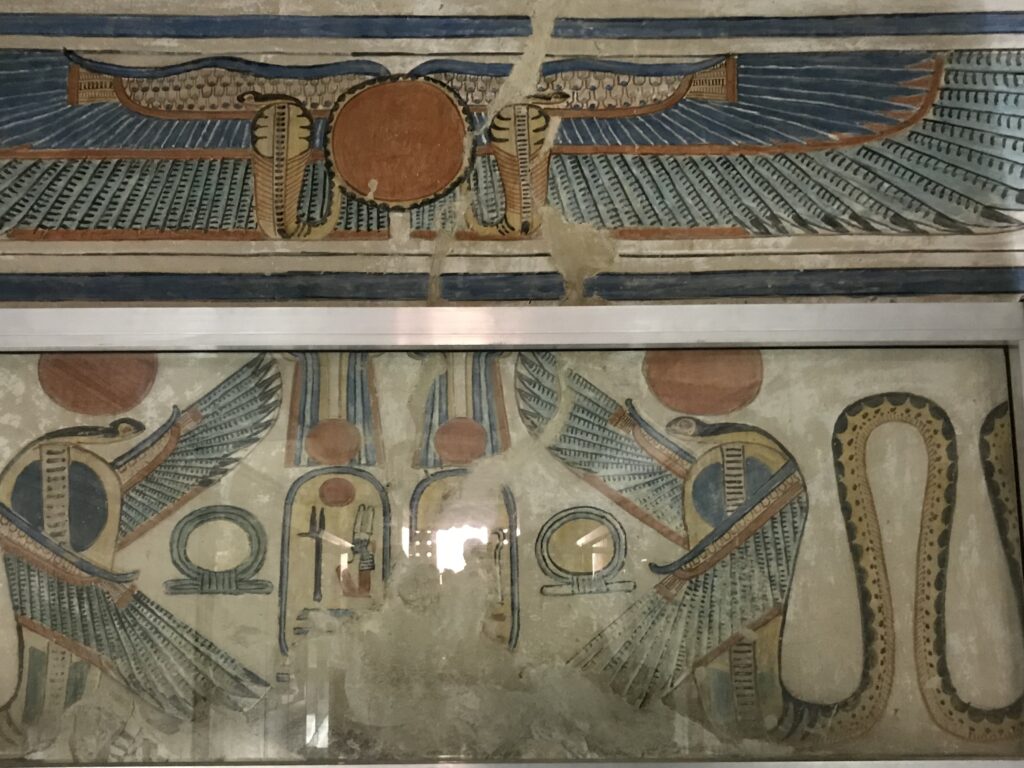
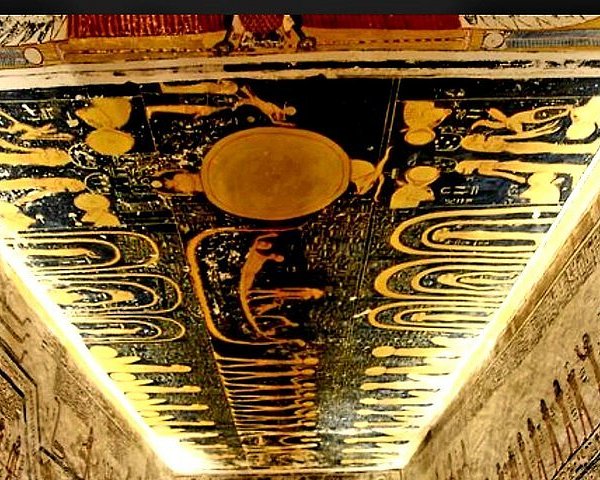
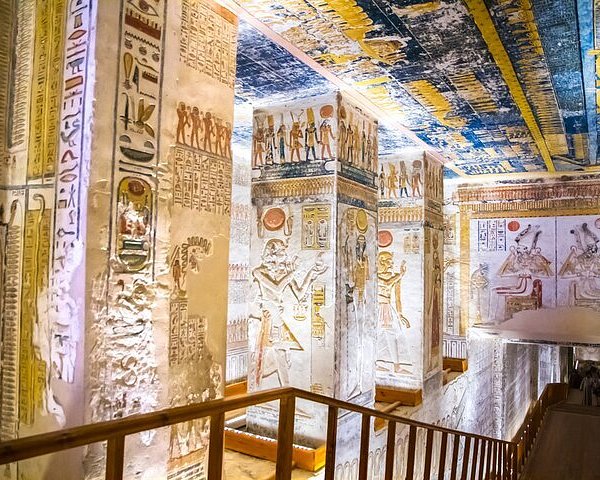
We have arrived to Luxor and the Valley of the Kings, “the world’s greatest open air museum” and a World Heritage site. This area is called the Theban Necropolis. The Valley is on the west bank of the Nile. It was the burial place of royal figures and noblemen of the New Kingdom. So far, 63 tombs have been discovered, but archeologists expect to find many more. Here we visited the tombs of Ramses IV, Ramses III, Ramses, VI, and Ramses IX and King Tut. The tombs are decorated with scenes from Egyptian Mythology. Unfortunately most of the tombs have been ransacked by robbers, but the reliefs and hieroglyphics are in tact. Tarek was able to explain the hieroglyphics and pictures to us. It is amazing how the colors have remained over the years. Tarek attributes this to their use of natural pigments. The tombs evidence elaborate preparations for the next world, in which humans were promised continuing life and pharaohs were expected to become one with the gods. Mummification was used to preserve the body so that the deceased’s eternal soul would be able to reanimate it in the afterlife. Pets of the royalty were also buried in the area. Ancient Egyptians believed that the paintings could come to life, so they didn’t need to bury the servants, just paint them on the tomb walls.
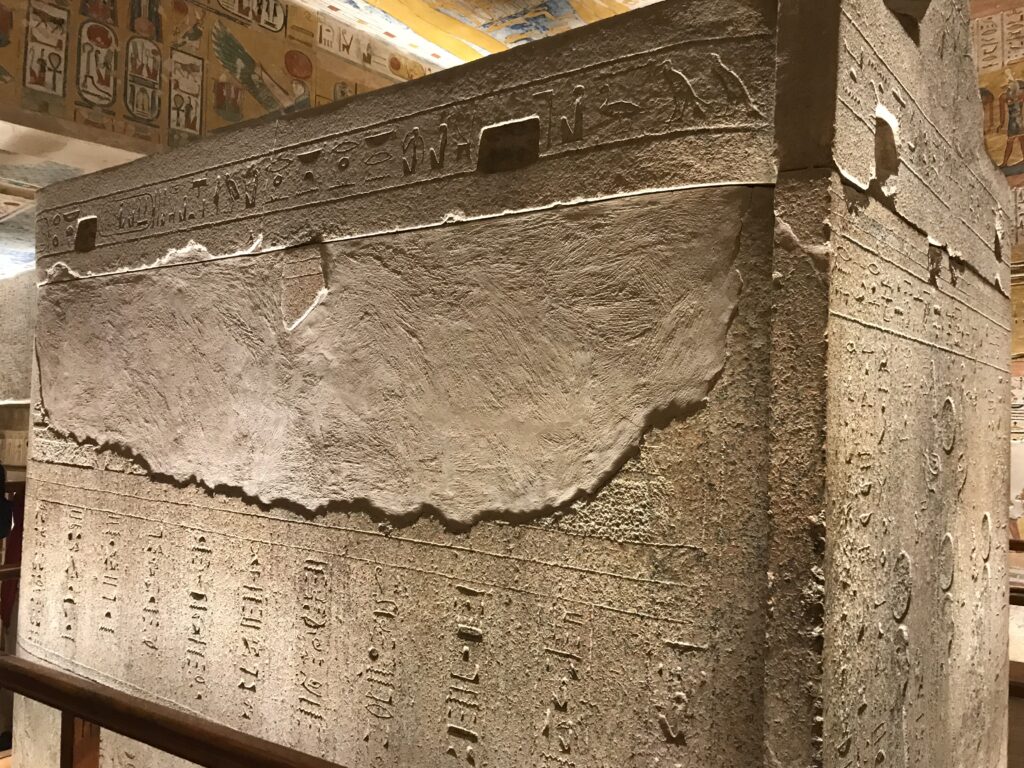
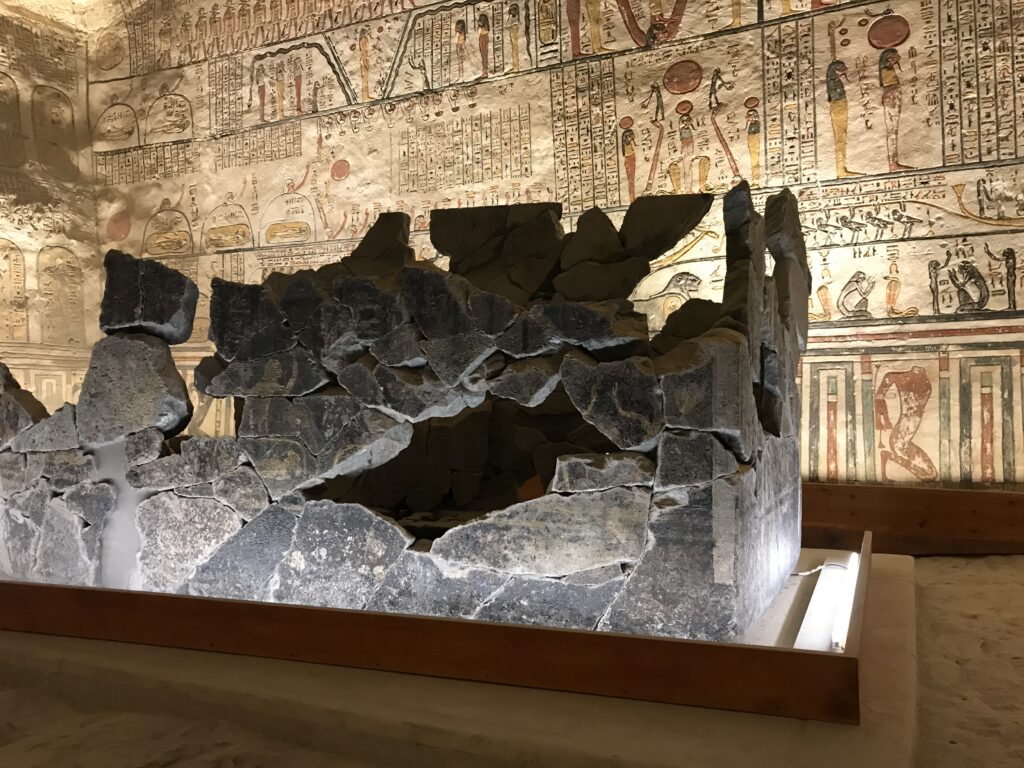
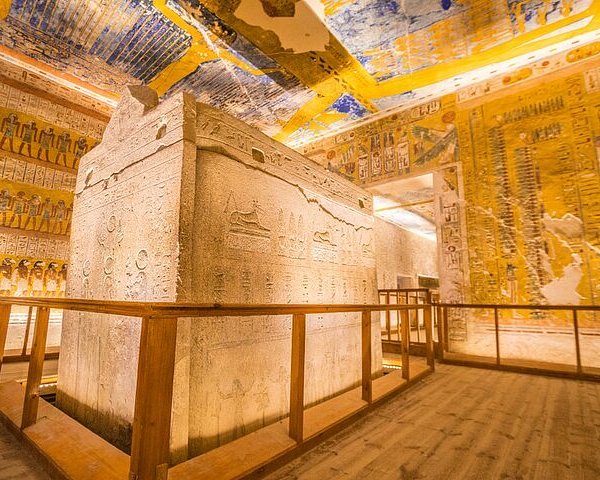
Unfortunately, I didn’t identify which tomb my pictures came from, so a selection of the tomb interiors follows. A few I have matched with printed pictures, so that will give some idea. The first eight are from the Tomb of Ramses IV.
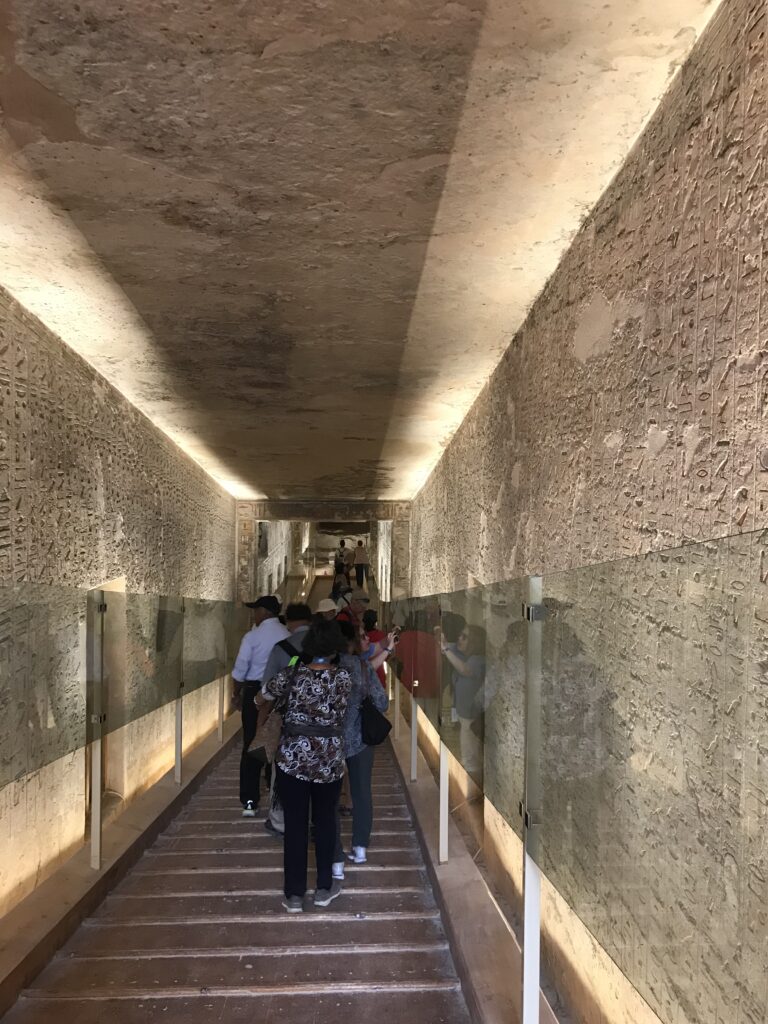
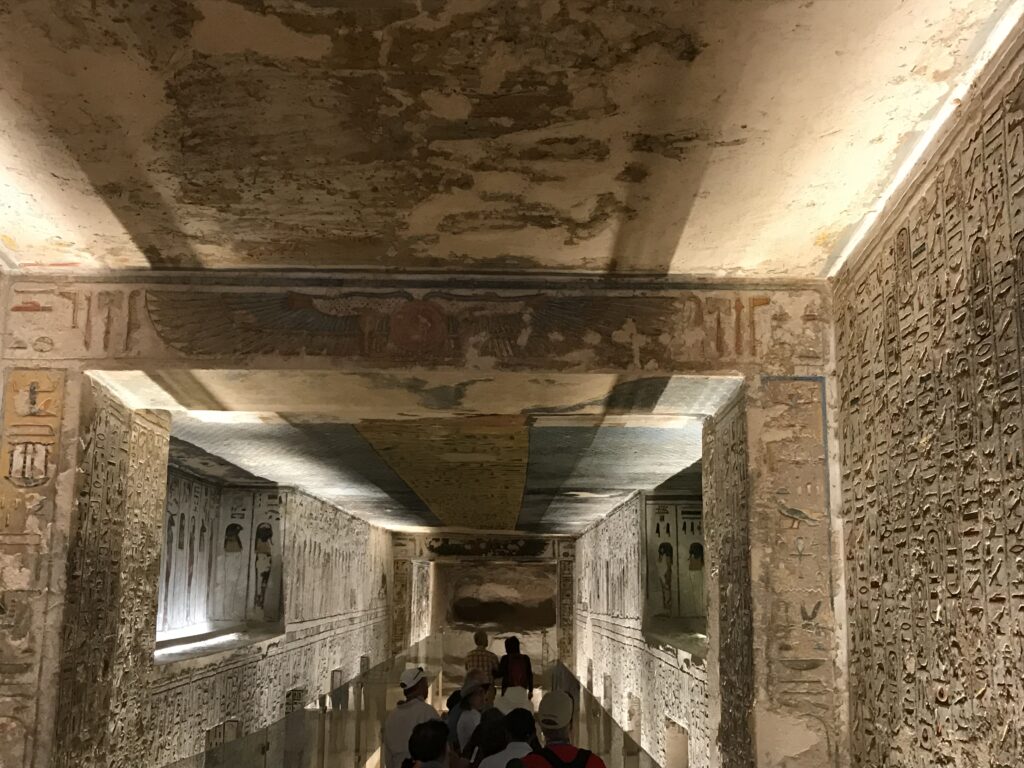
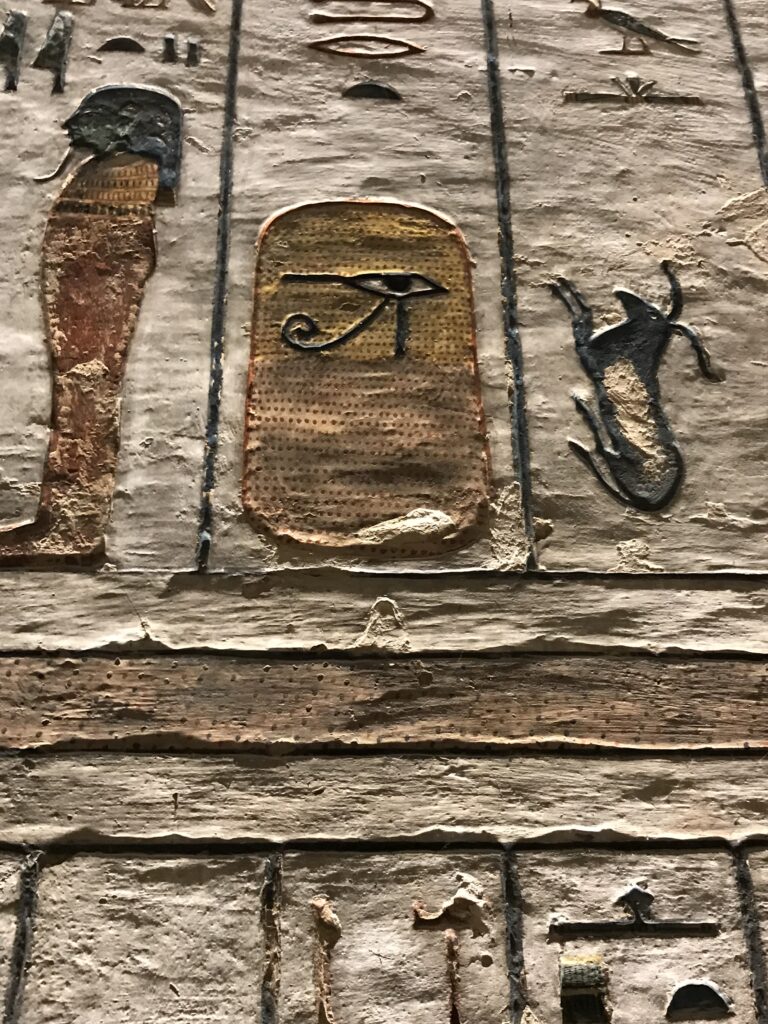
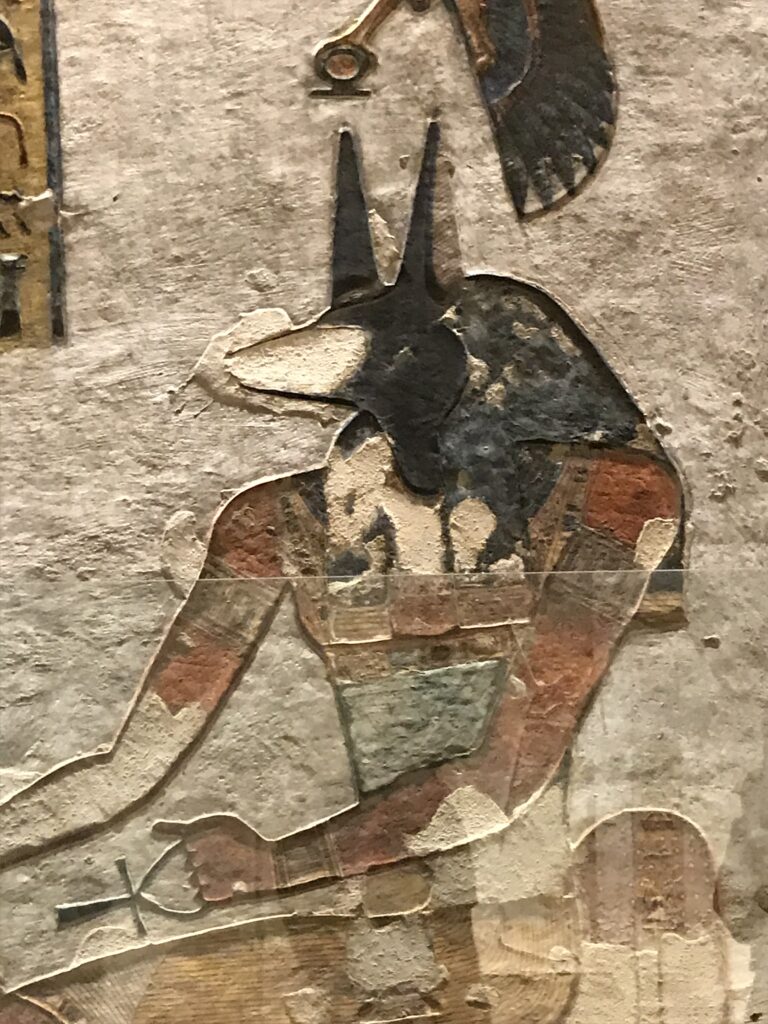
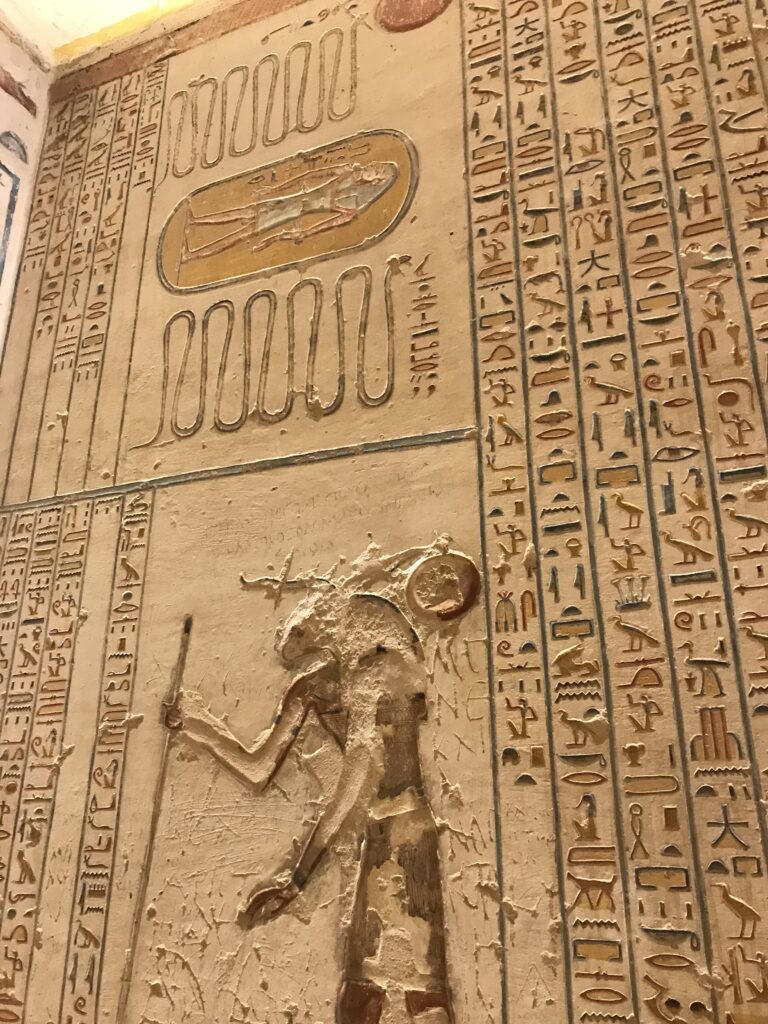
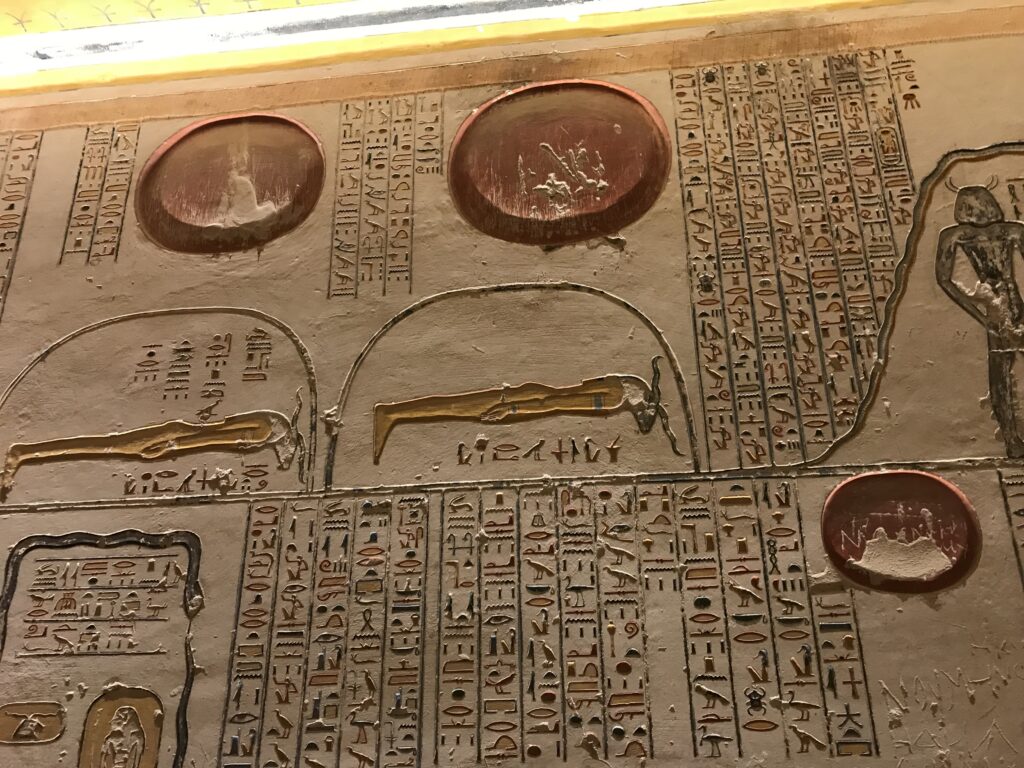
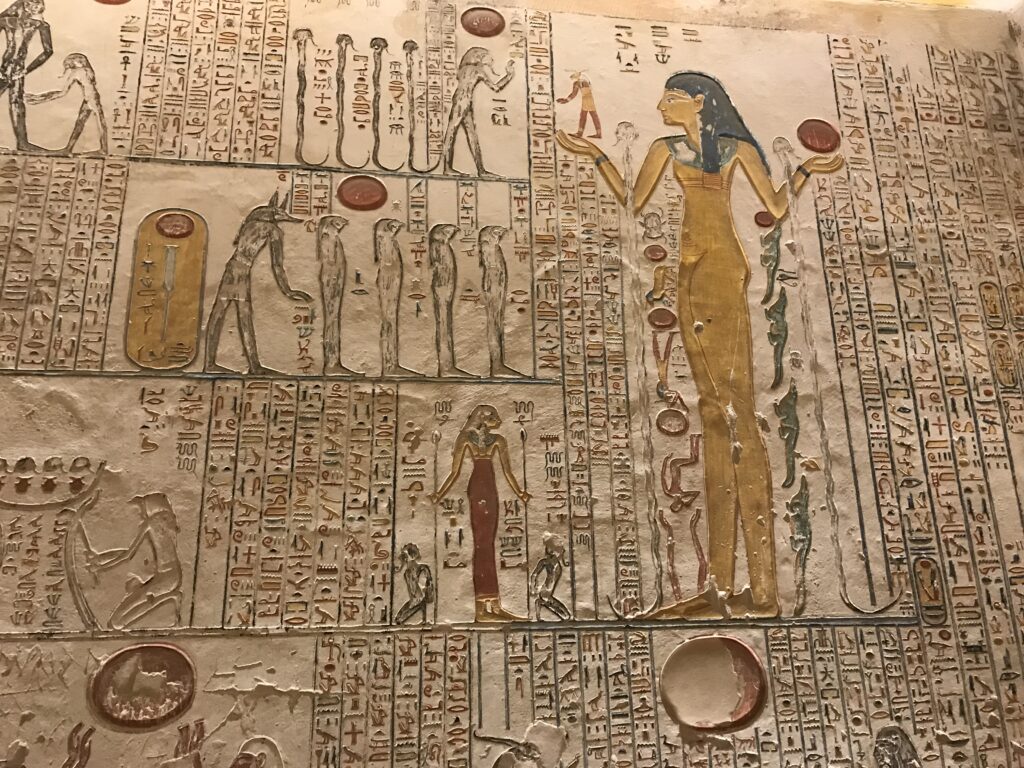
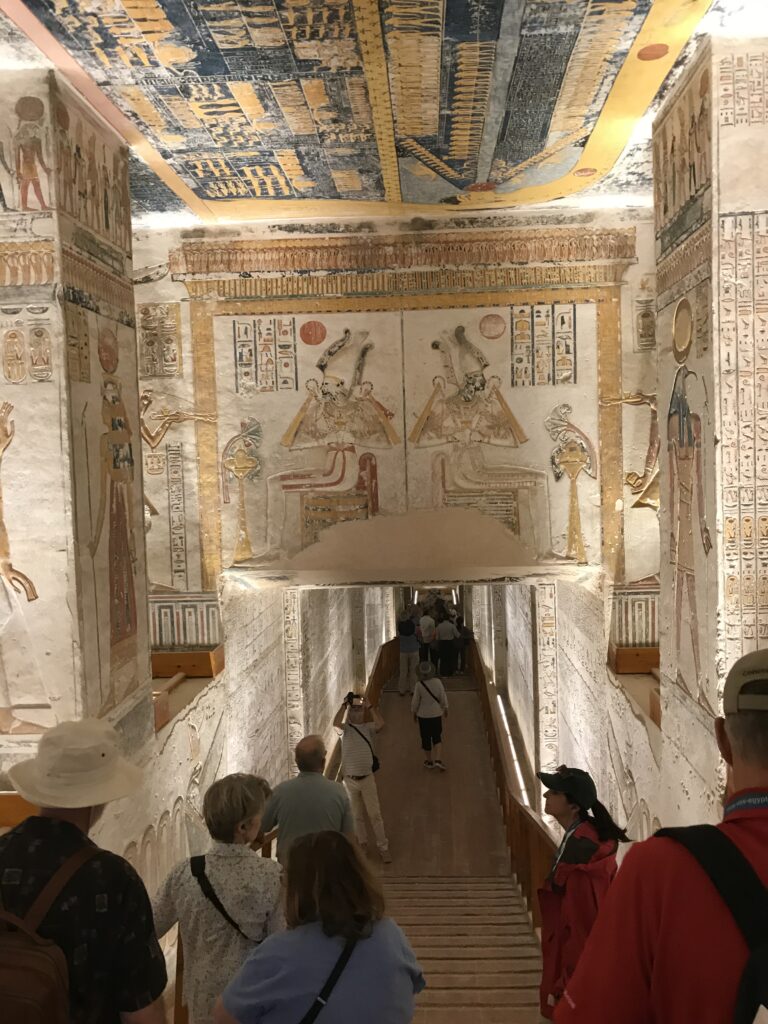
After the Valley of the Kings we went to the Valley of the Queens. Valley of the Queens
Valley of the Queens
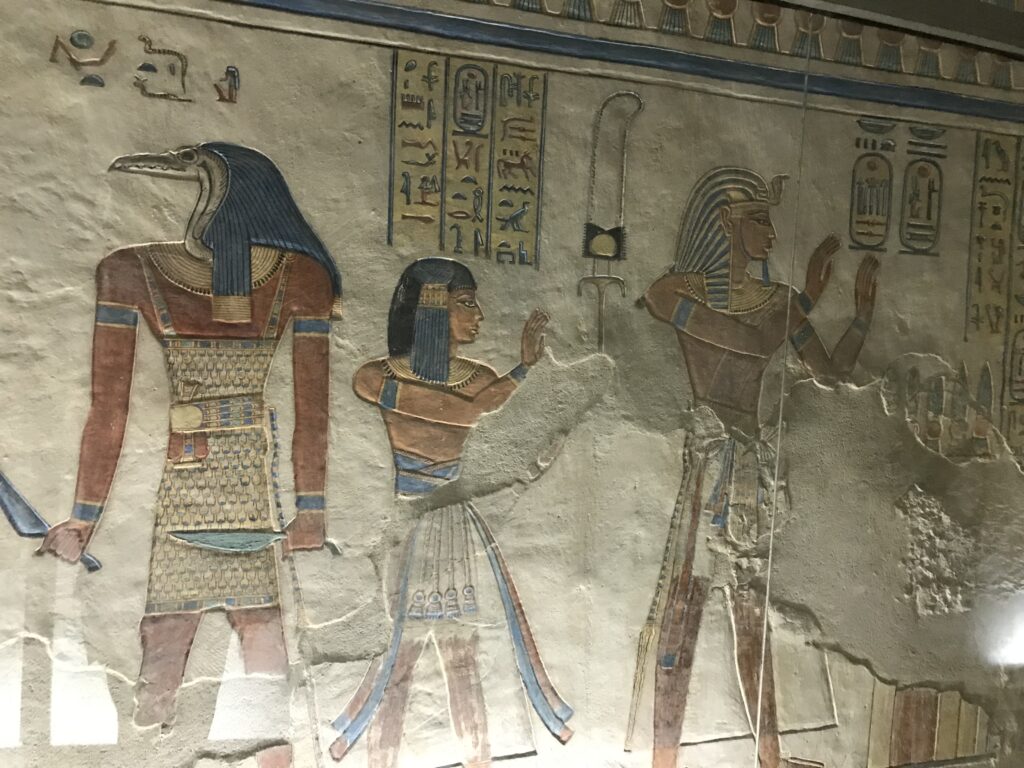
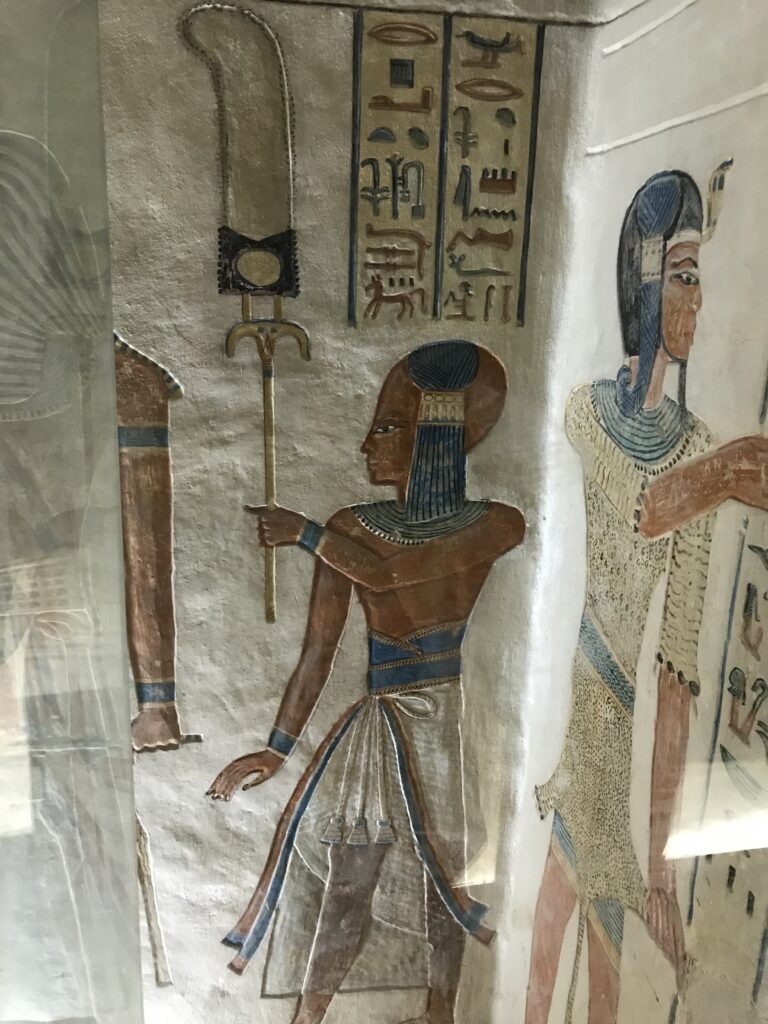
The Valley of the Queens is also known as Ta-Set-Neferu or the place of beauty. Here we saw the tombs of Queen Titi and her son, Amun-Her-Khebesh. Then we went on to see the Temple of Hatshepsut. On our way back to the ship, we stopped at the Colossi of Memnon, two 64-foot high statues that depict Amenhotep III. They once guarded the gates of a mortuary temple, Al-Deir Al-Bahari Temple.
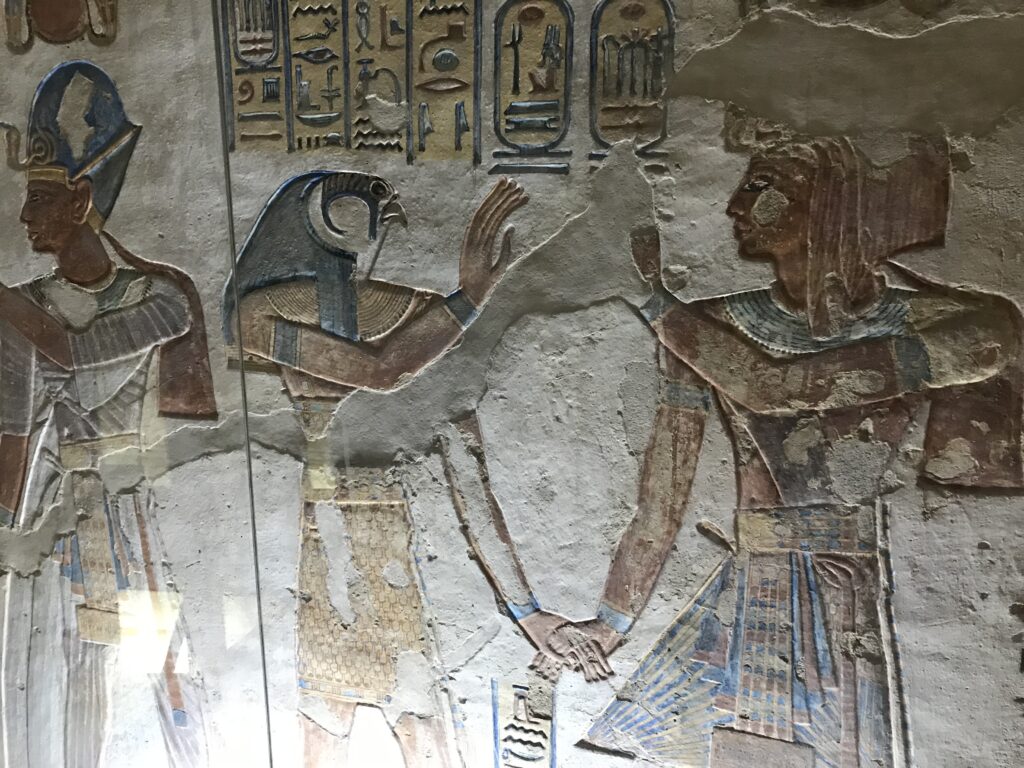
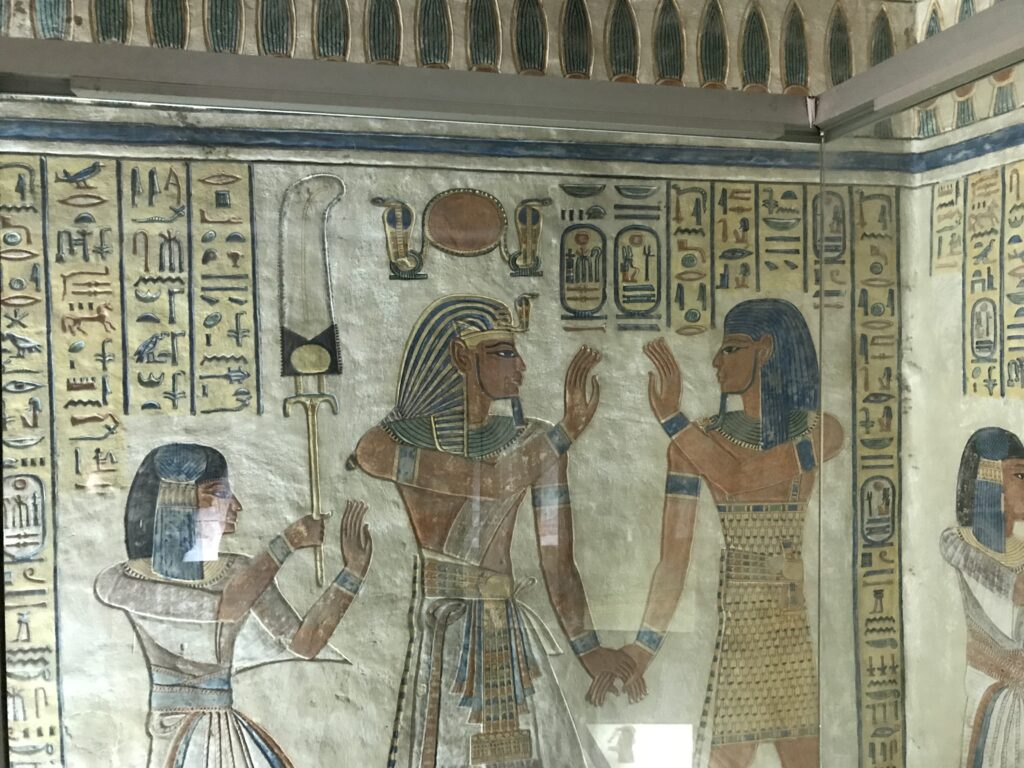
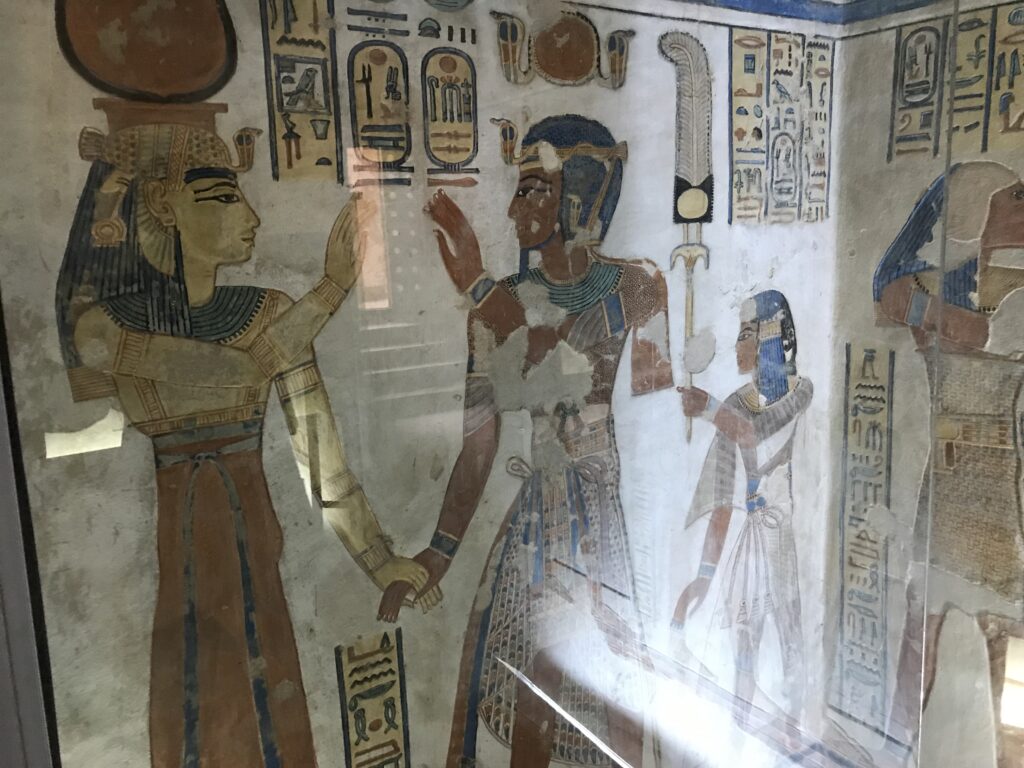
The Valley of the Queens is located on the western bank of the Nile River in Upper Egypt. Over 90 tombs have been found here of various royal women. We visited the two that have been connected due to erosion in the area. Queen Titi lived in the 20th Dynasty and was the wife of Ramses III. The beauty of the tomb shows her wealth and status. This is an interesting tomb because she is portrayed in some places as a young girl with braided hair and bright clothing and in others as a more mature woman, dressed conservatively. Her tomb is in a traditional design: corridor, burial chamber, and ante chambers. Note the vivid colors that remain.
Temple of Hatshepsut
Queen Hatshepsut was daughter of Thutmose I. During her marriage to Thutmose II, she was elevated to position of God’s Wife of Amum, the highest honor a woman could attain after Queen. In 1479 B.C.E. after the death of Thutmose II, she proclaimed herself Pharaoh of Egypt and reigned for 20 years until 1458. Her reign was one of the most prosperous and peaceful in Egypt’s history.
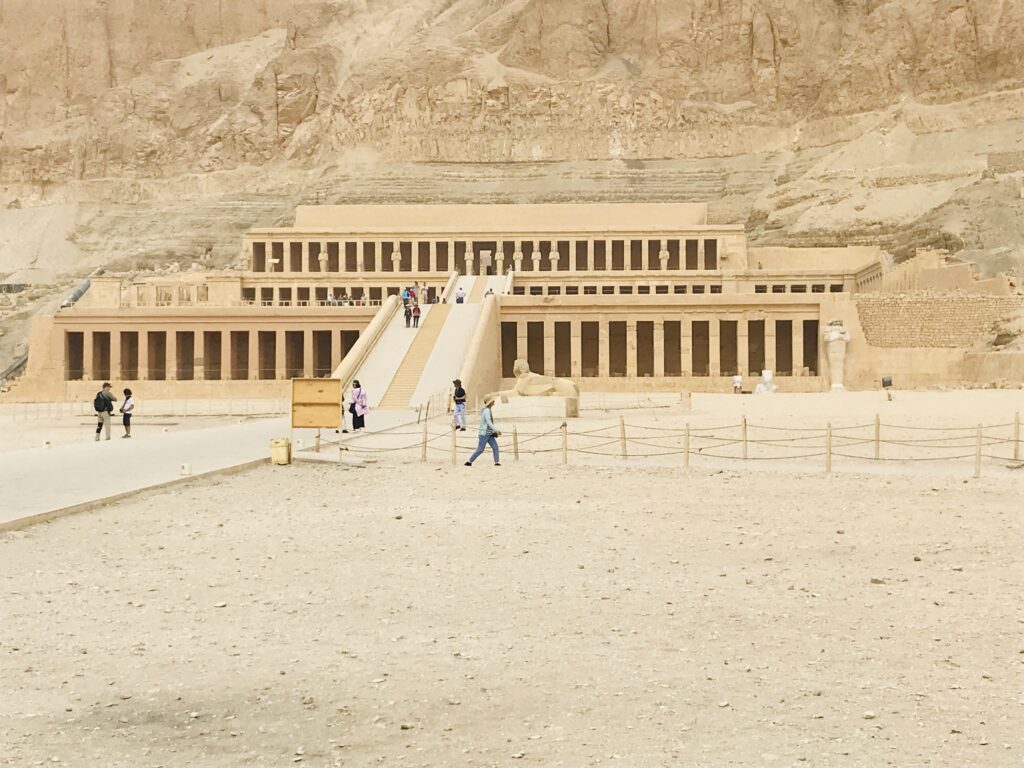
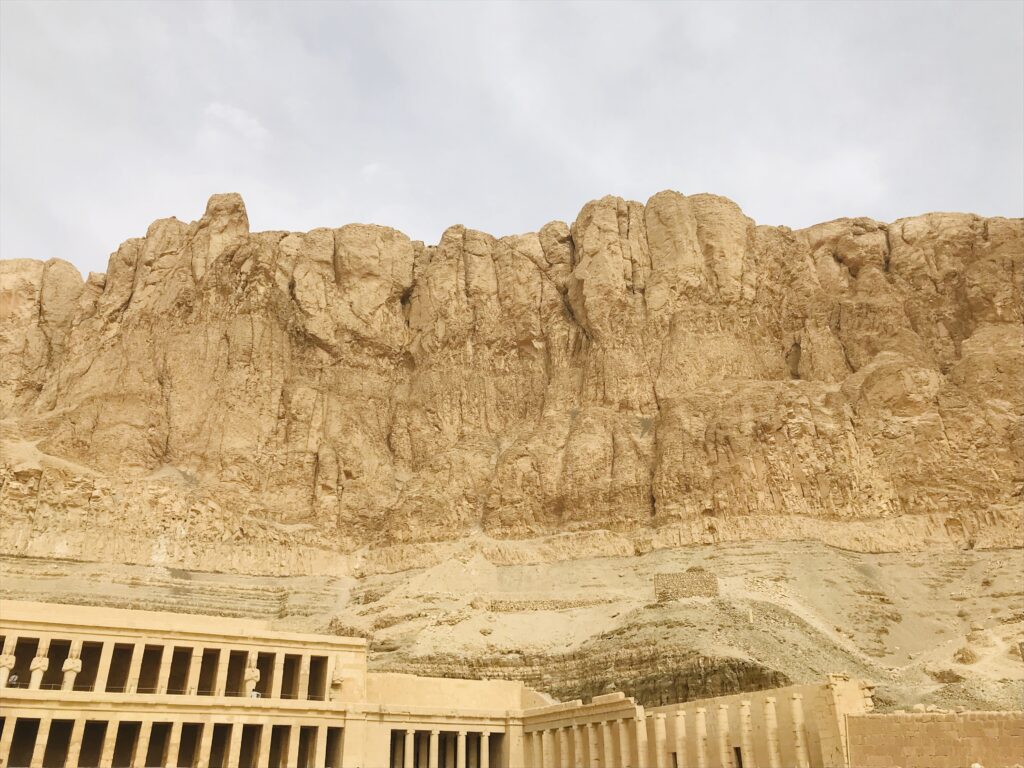
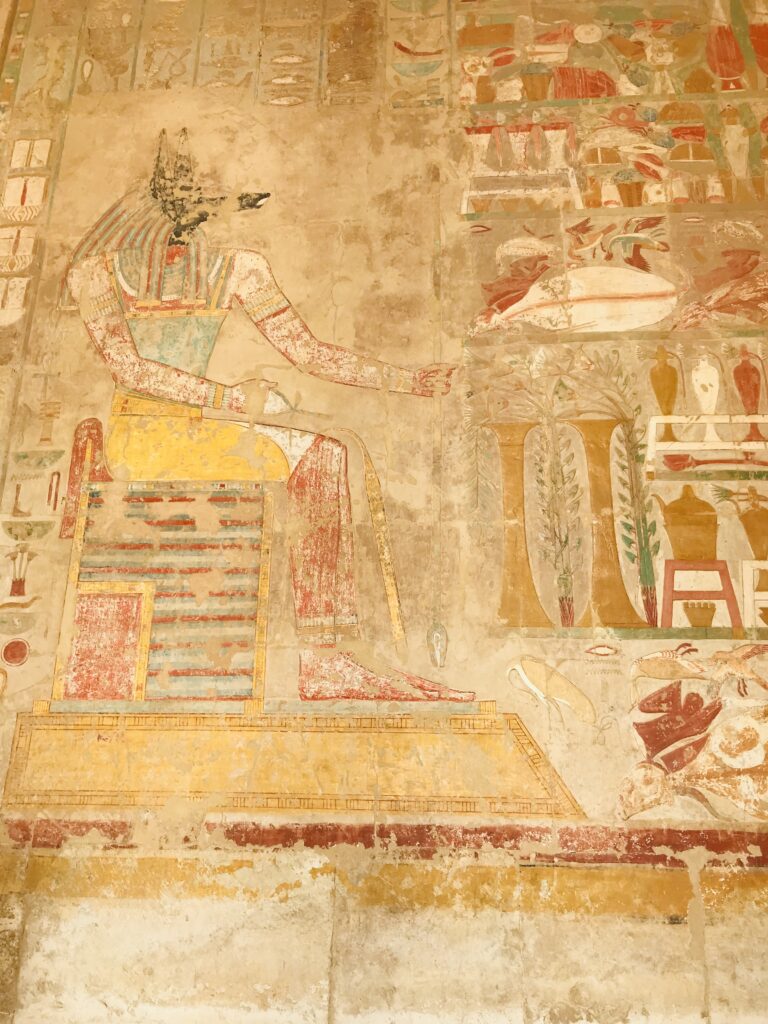
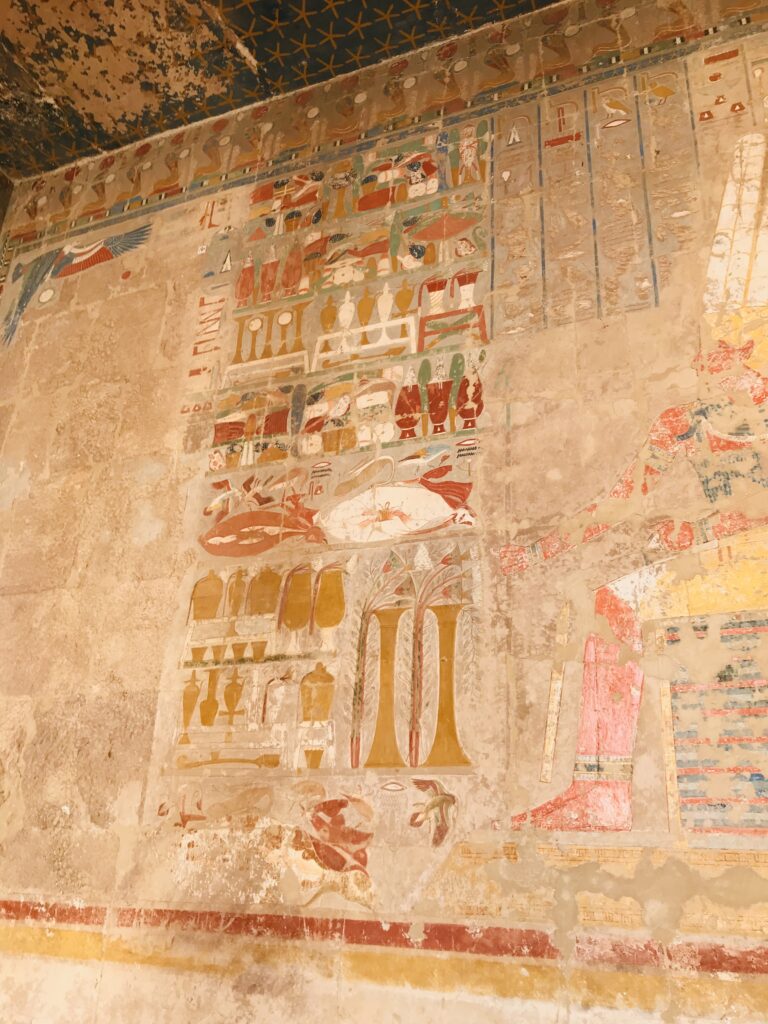
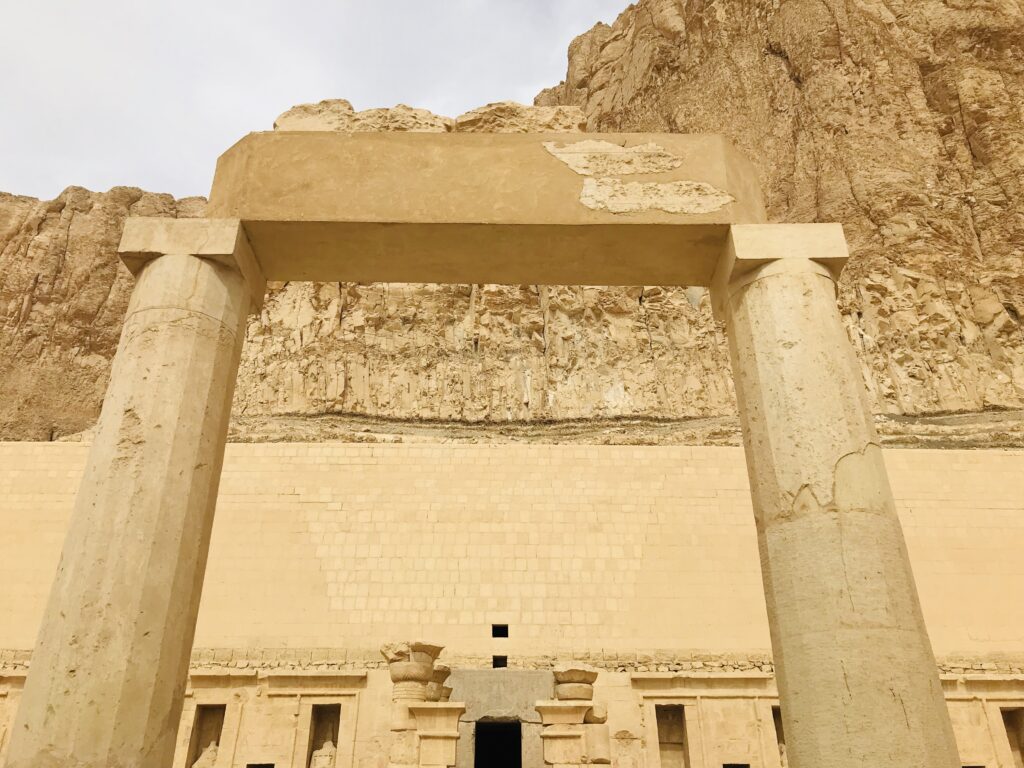
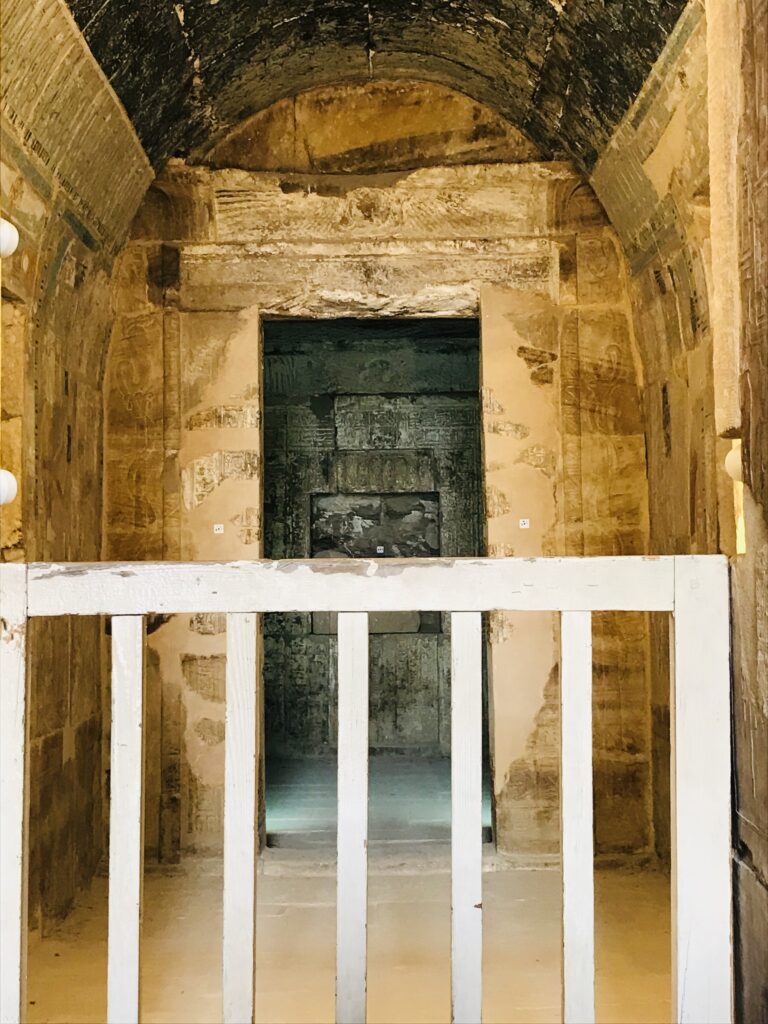
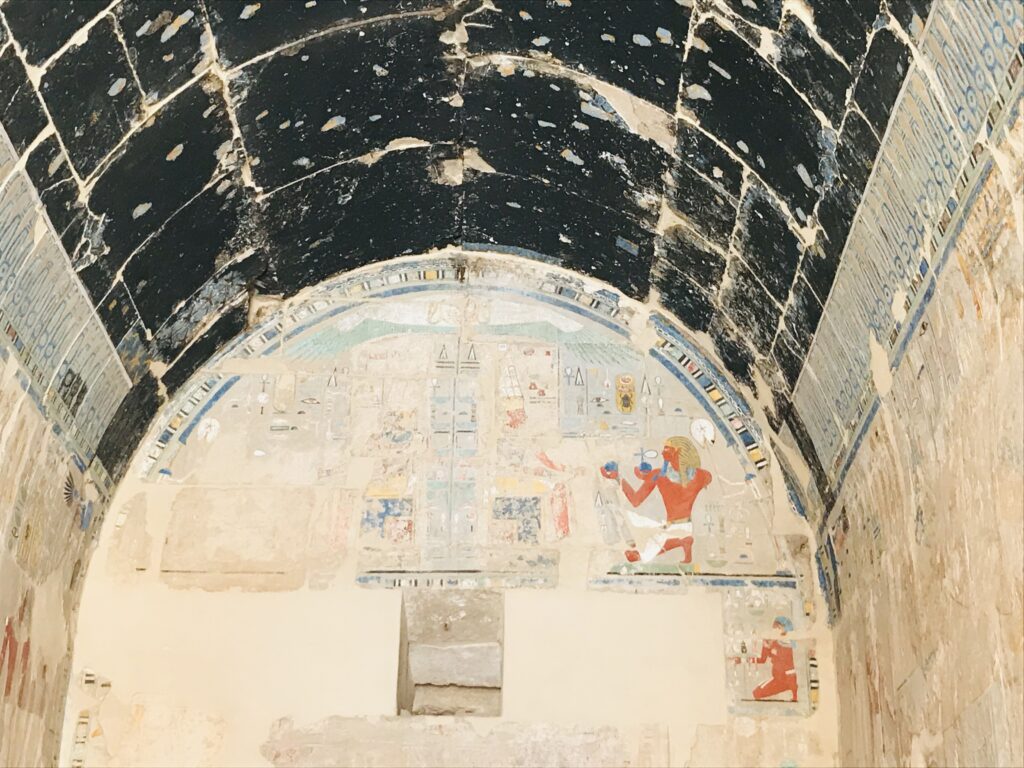
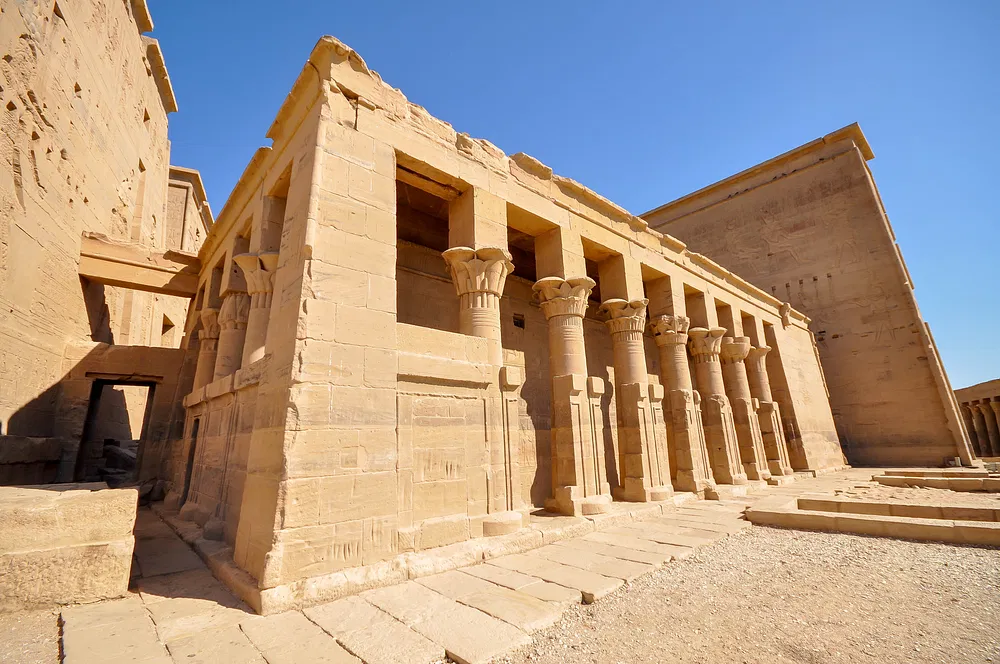
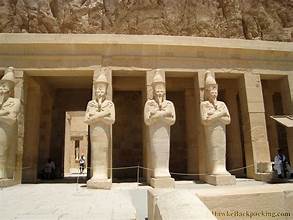
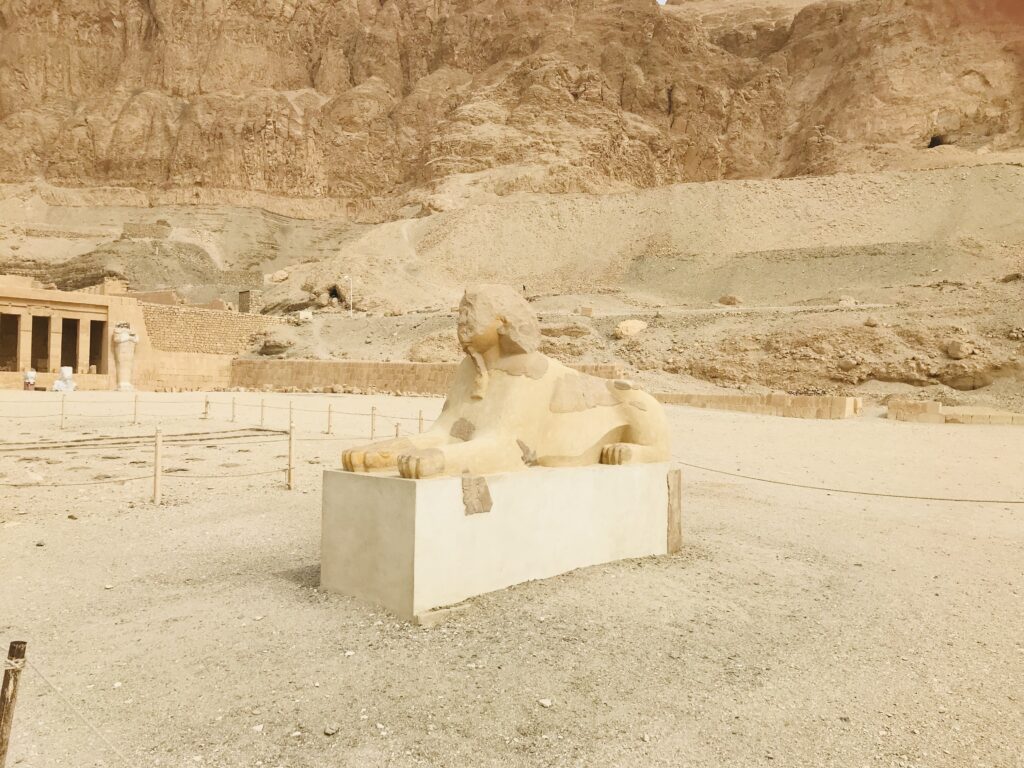
A magnificent site to see.
Colossus of Memnon
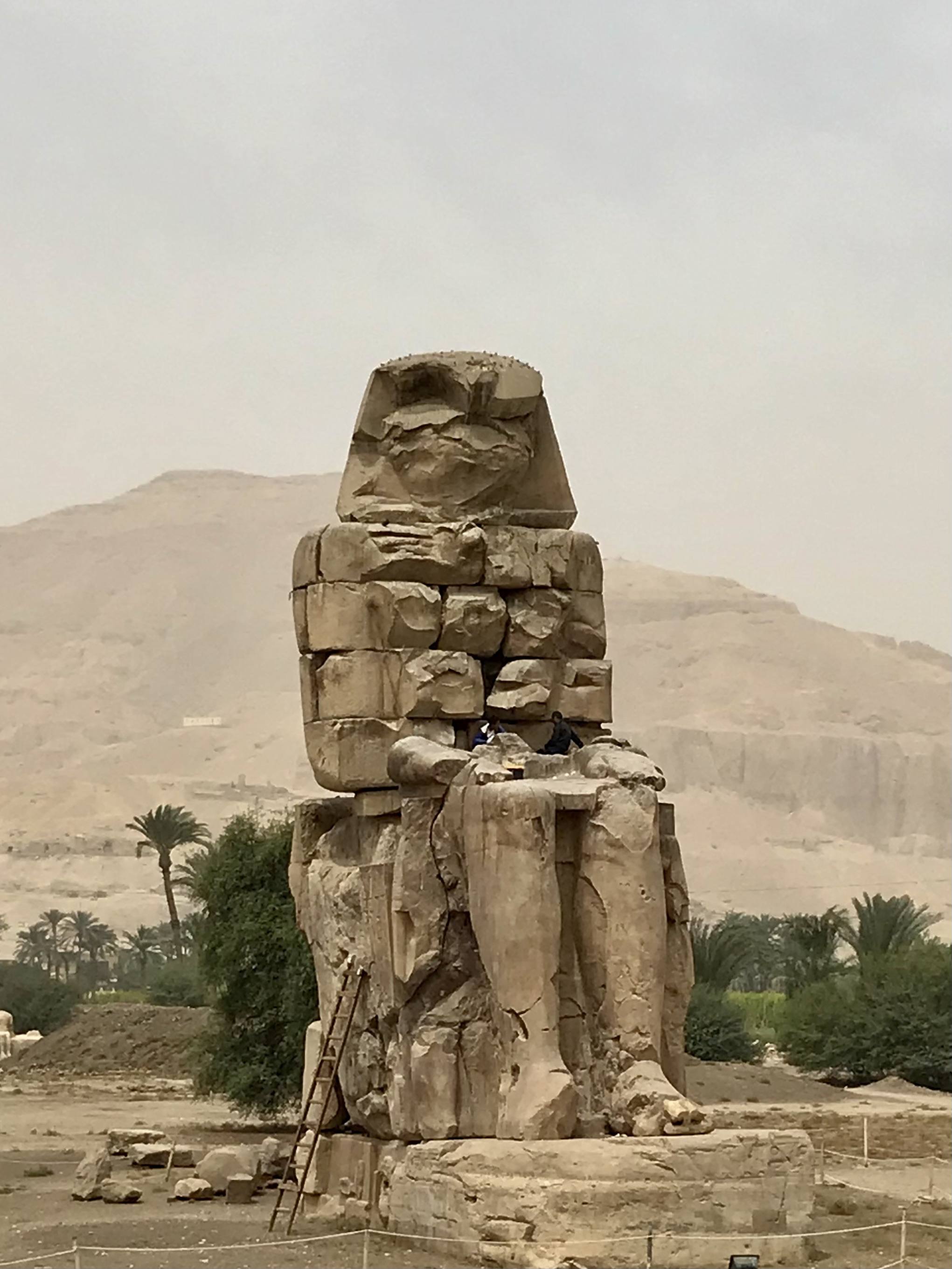
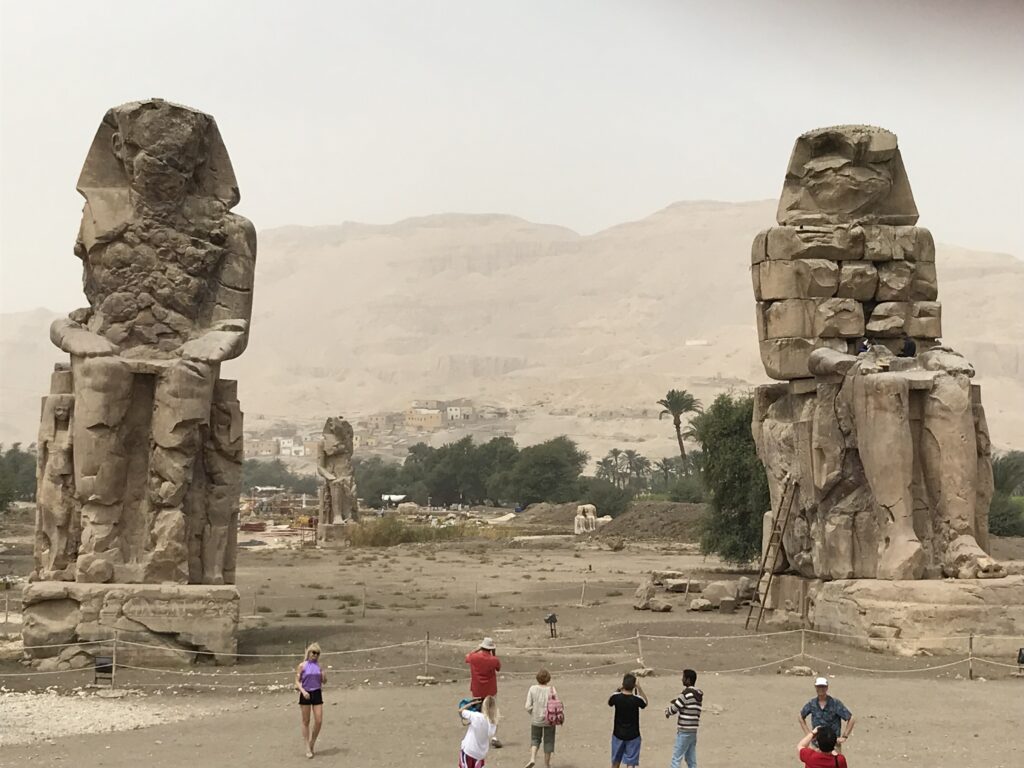
Next, we stopped at the Colossi of Memnon, two 64-foot high statues that depict Amenhotep III. They once guarded the gates of the now ruined mortuary temple, Al-Deir Al-Bahari Temple. They were constructed in 1350 B.C.E. each out of a single block of sandstone. They face East looking toward the Nile.
Memnon was an Ethiopian who joined the Trojan War in Greece and was killed by Achilles. He has become a Greek hero.
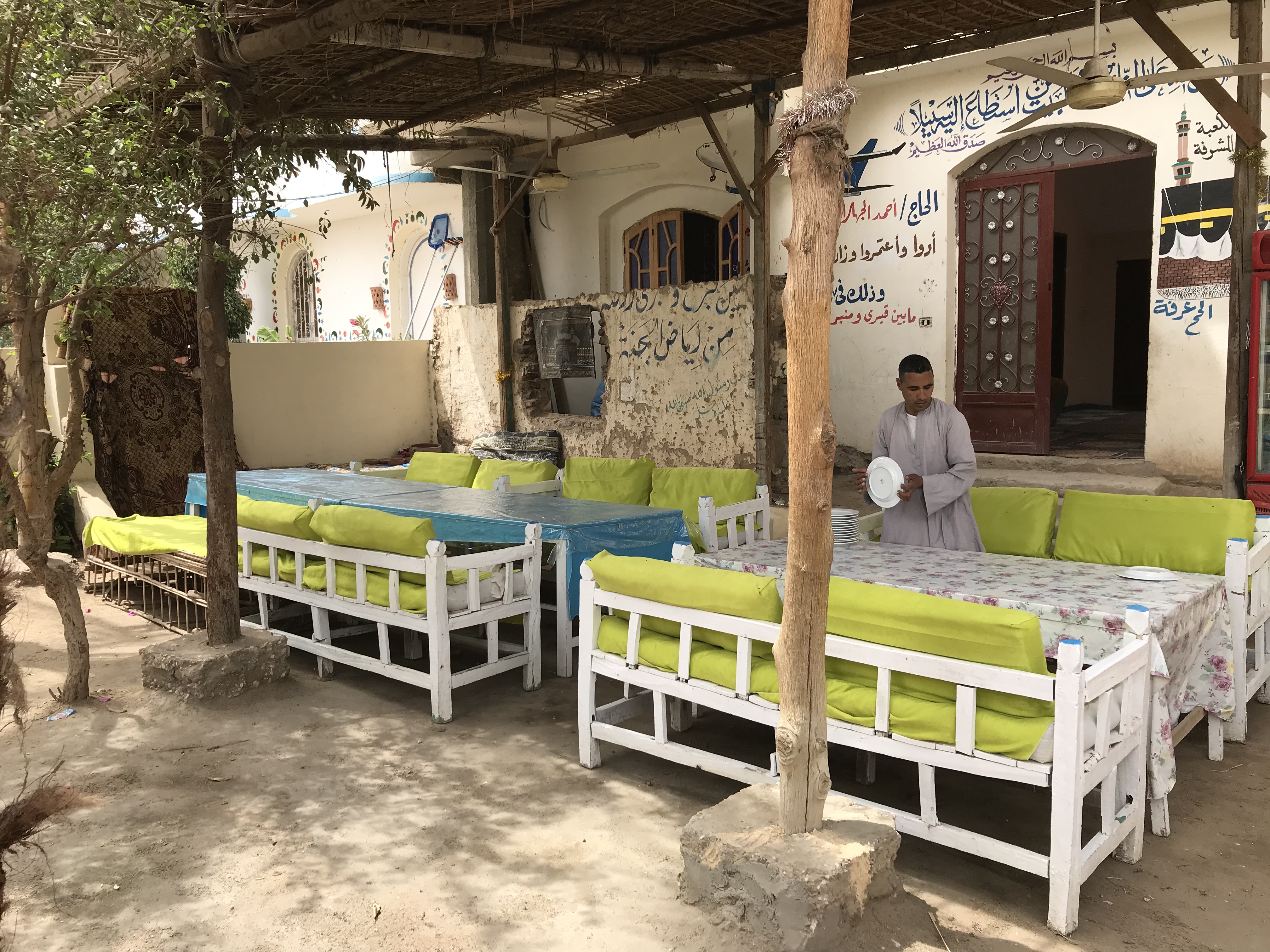
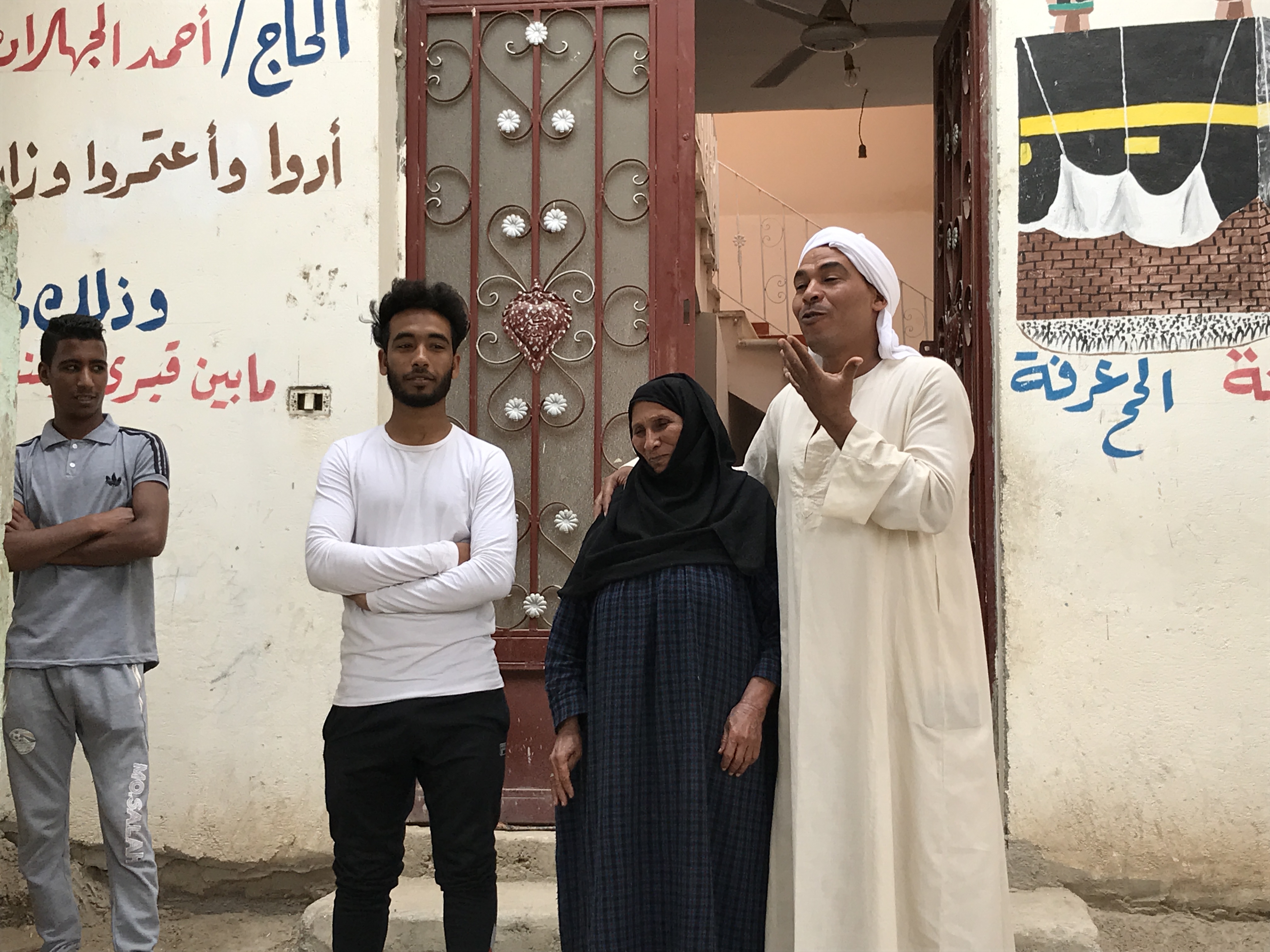
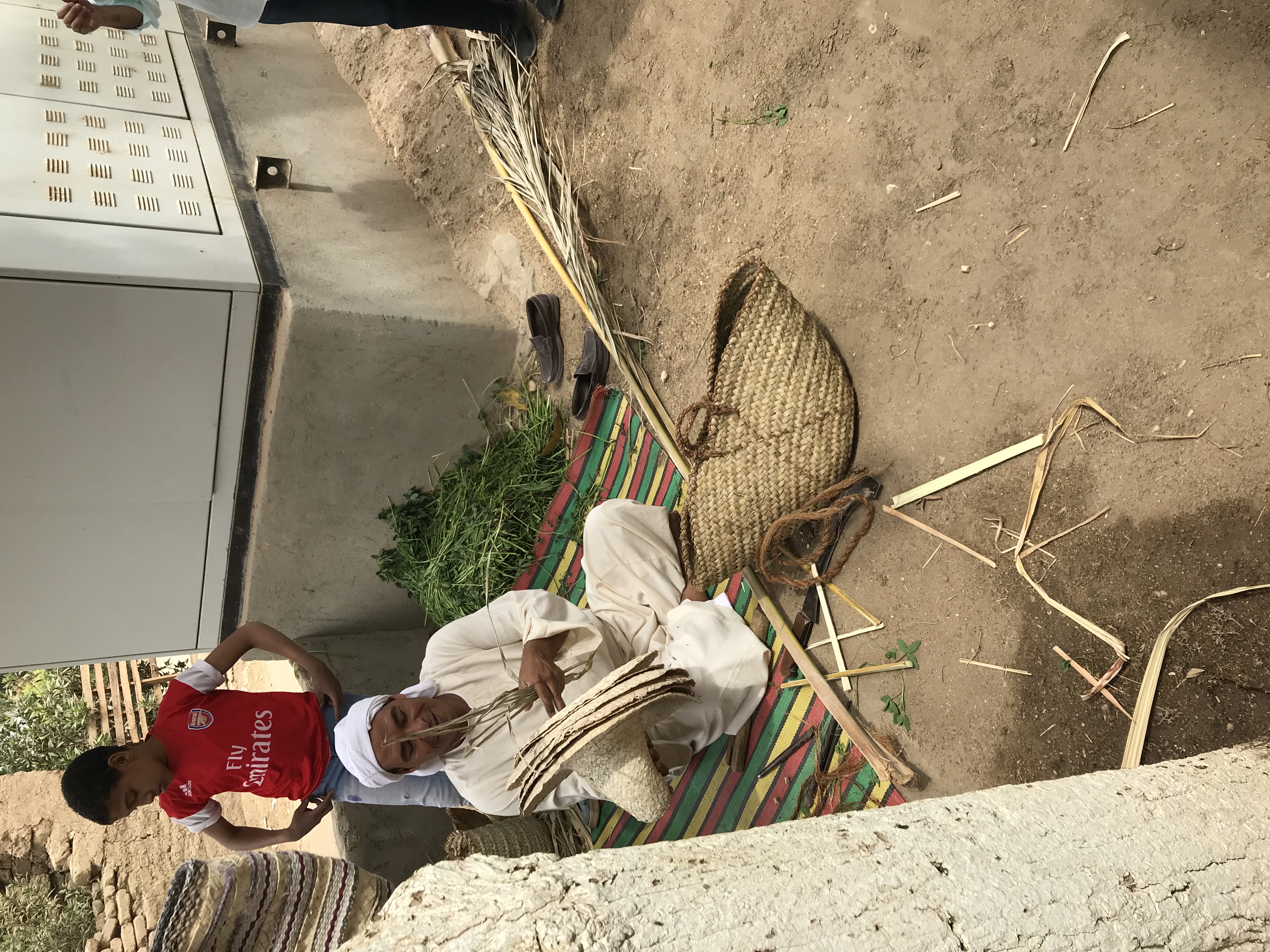
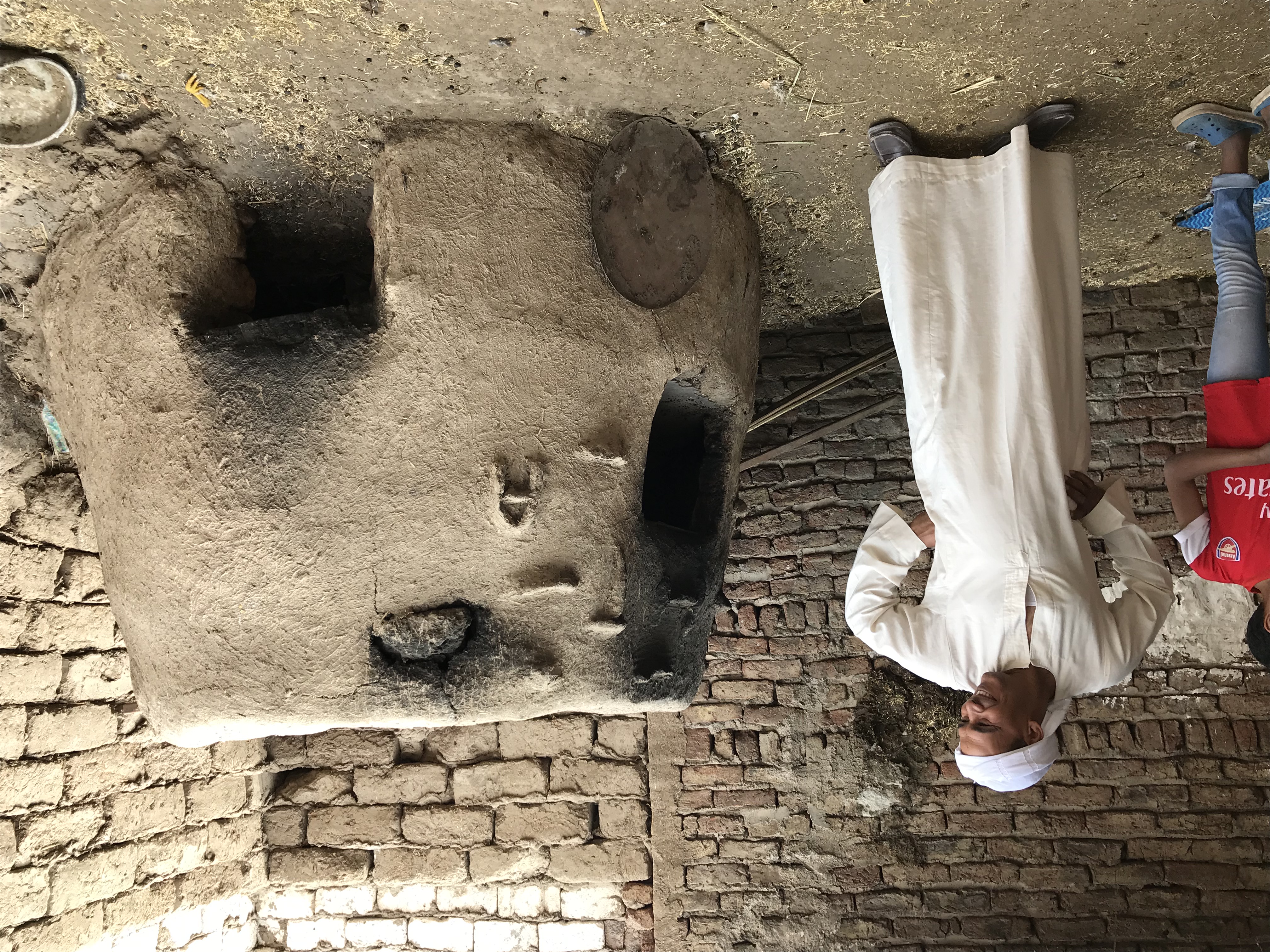
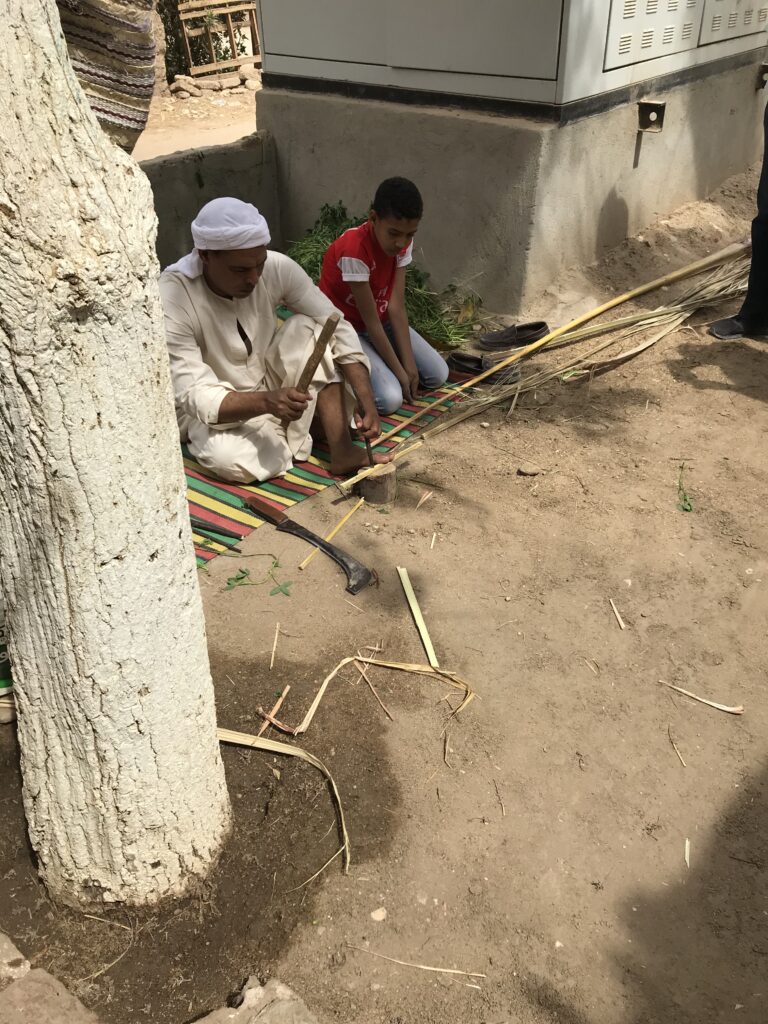
After a full morning, we had a farm-hosted lunch with a family who had a small “farm” along the Nile. They served a traditional meal for us and showed us their animals and oven for baking bread. The father also is a weaver and he showed us how he wove his hats and baskets. Four generations of the family were present
Luxor Temple
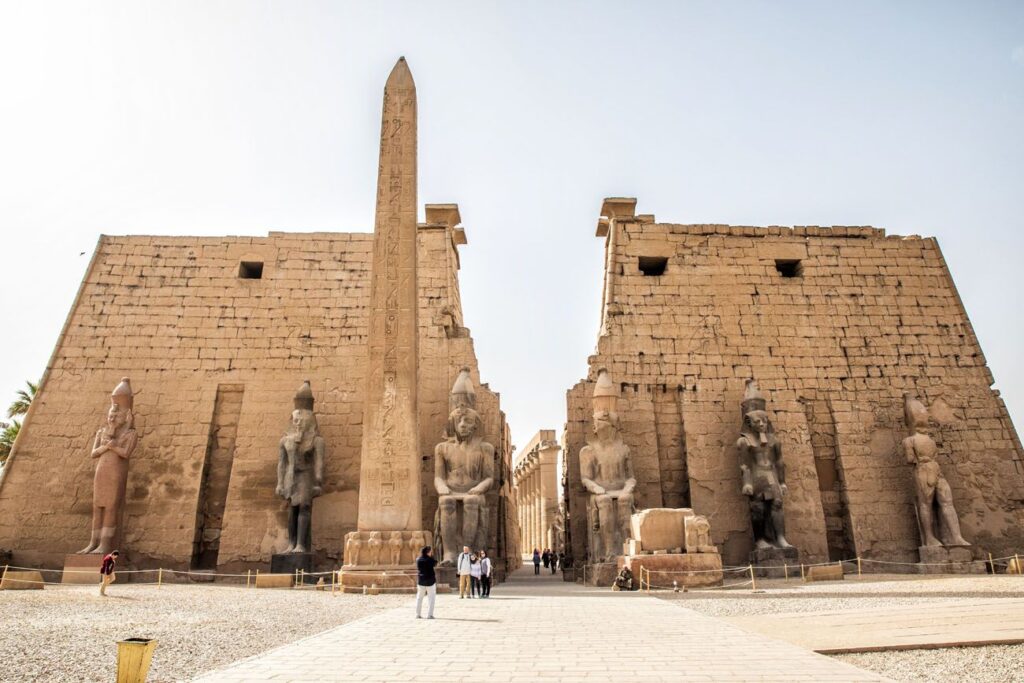
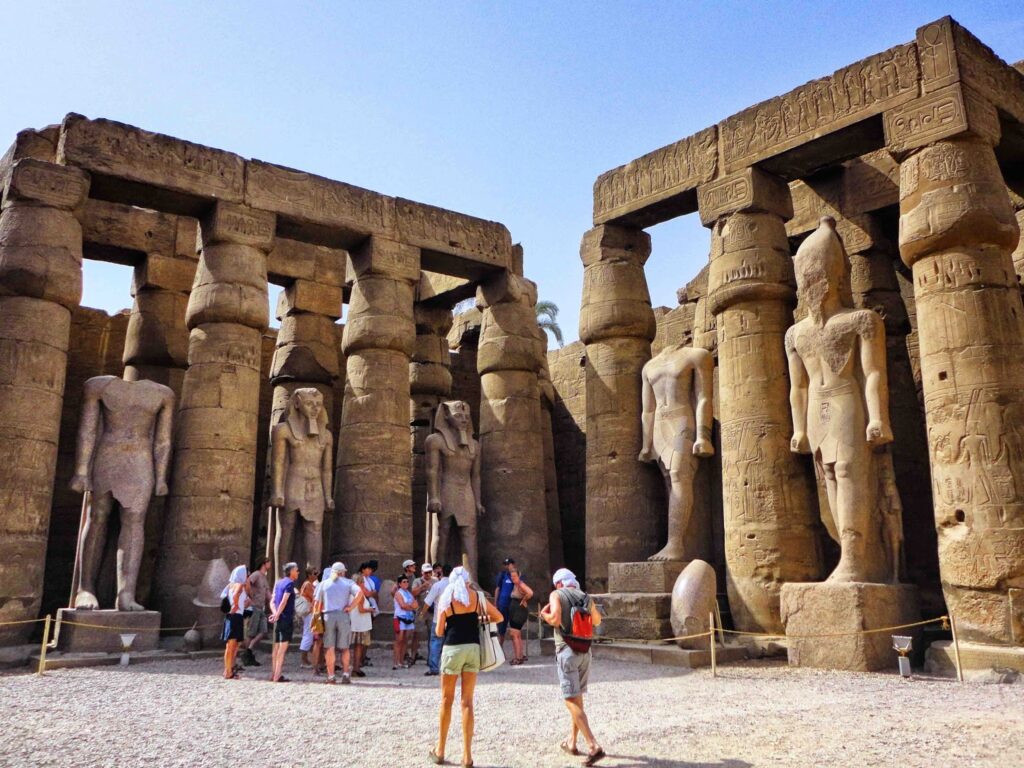
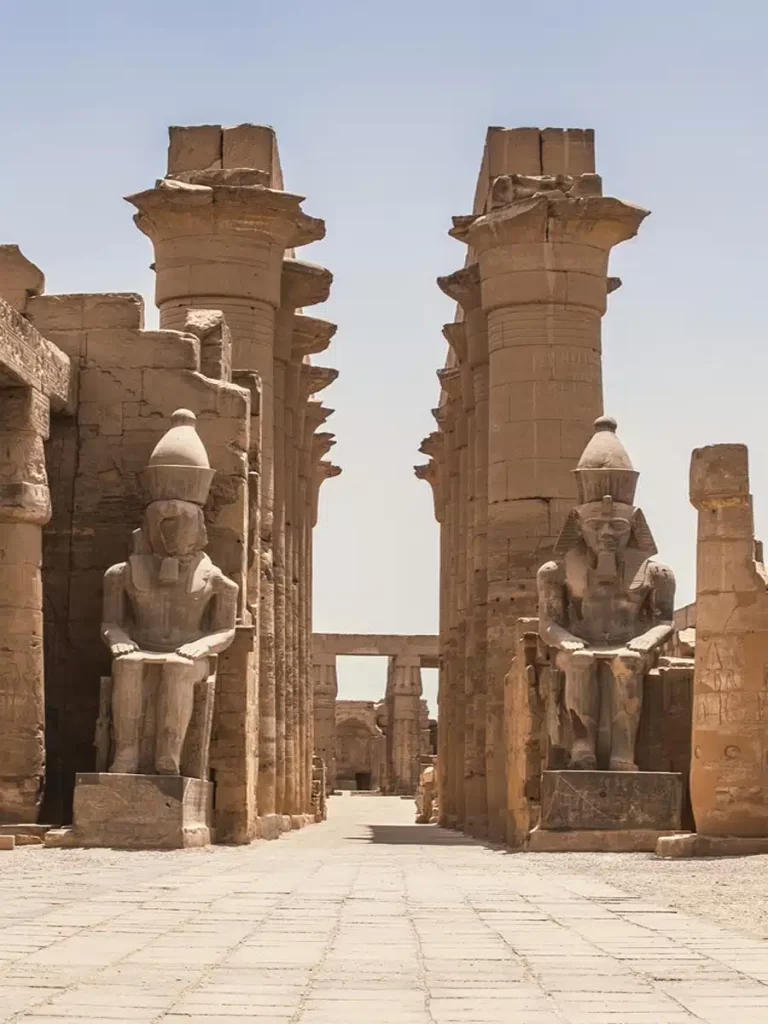
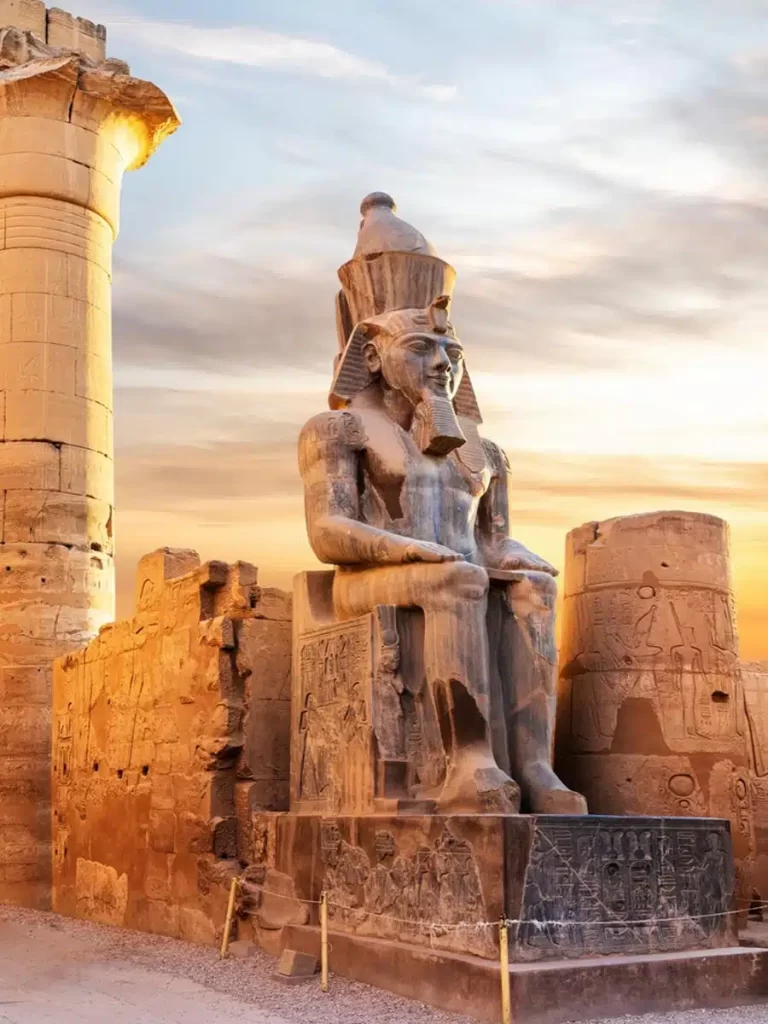
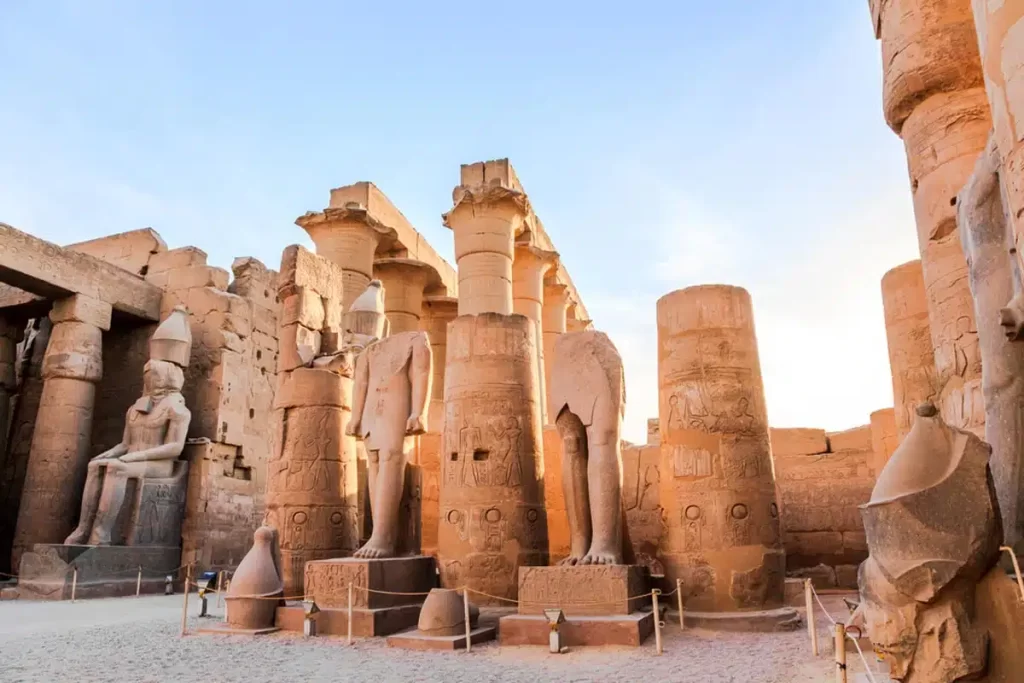
After lunch we went to the Luxor Temple, which was 3,400 years old. It is constructed of sandstone blocks from Nubia and is one of the best preserved of all the ancient monuments. Unlike other temples, it is dedicated to the rejuvenation of kingship. To the rear of the temple are chapels built by Amenhotep III from the 18th dynasty and Alexander the Great. Other parts of the temple were built by King Tut and Ramses II. During Roman times, the temple and its surroundings became a fortress and the home of the Roman government in the area. A chapel inside the temple, originally dedicated to the goddess Mut was transformed into a church. It contains a red granite obelisk with extensive carvings. Six colossal statures of Ramses II standing in front of the temple began of the Avenue of Sphinxes that ran all the way to the temples at Karnak 3 km. to the north. Leading up to the temple is the huge Luxor Bazaar.
After this long day we returned to our ship for dinner and entertainment.
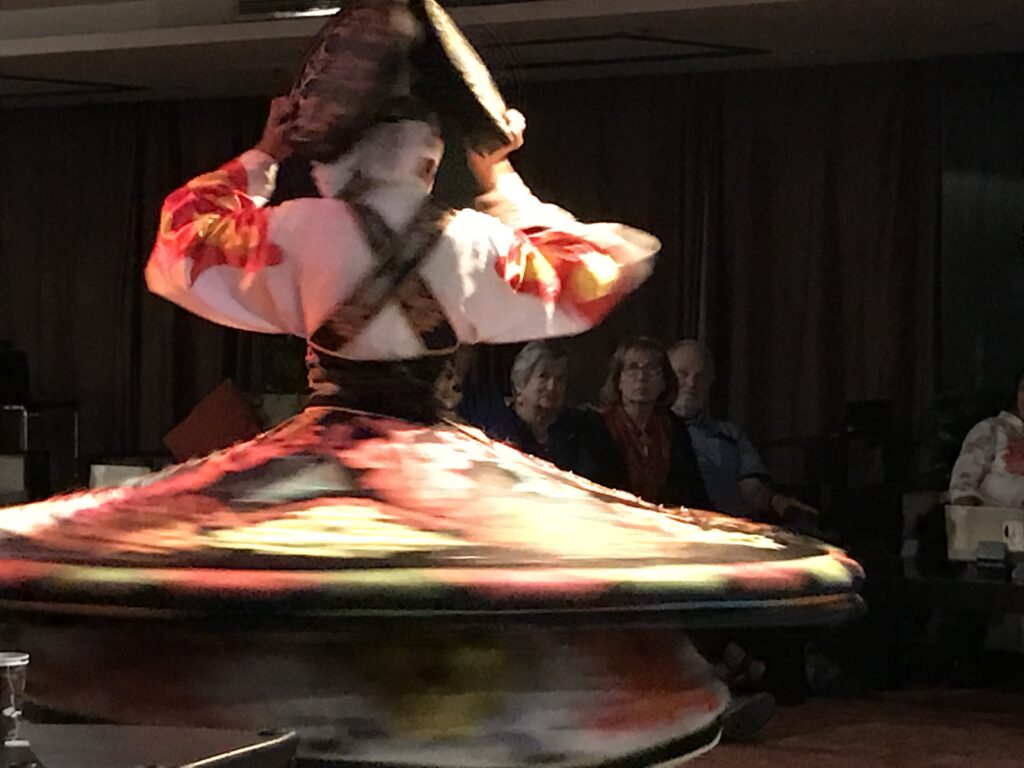
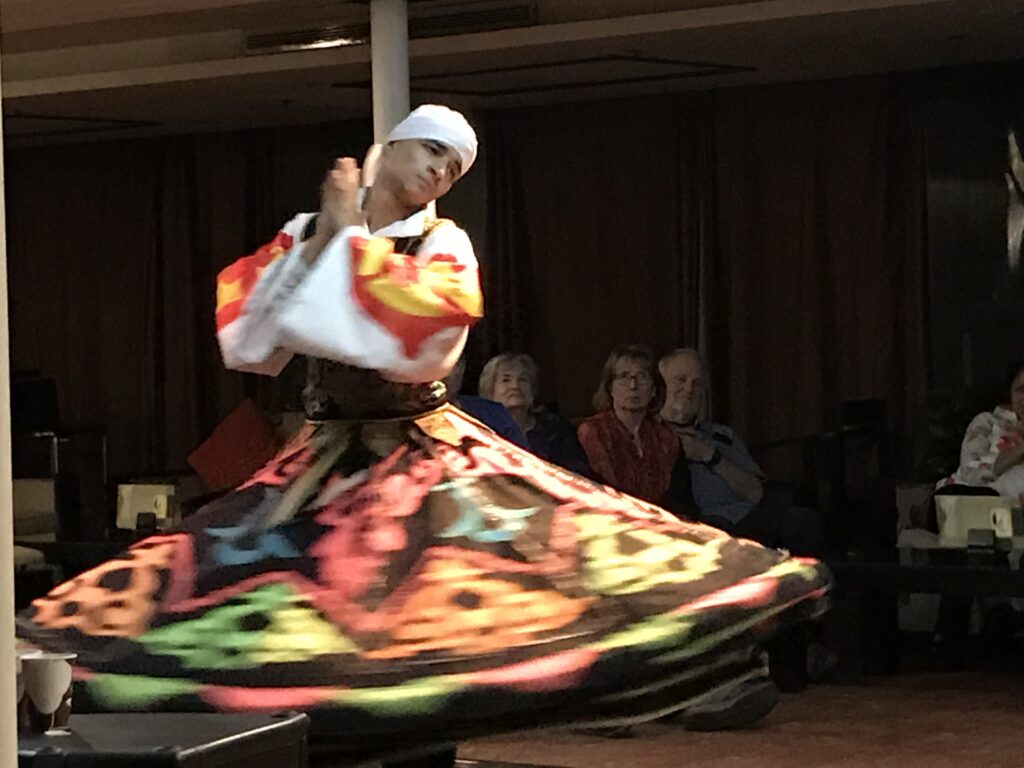
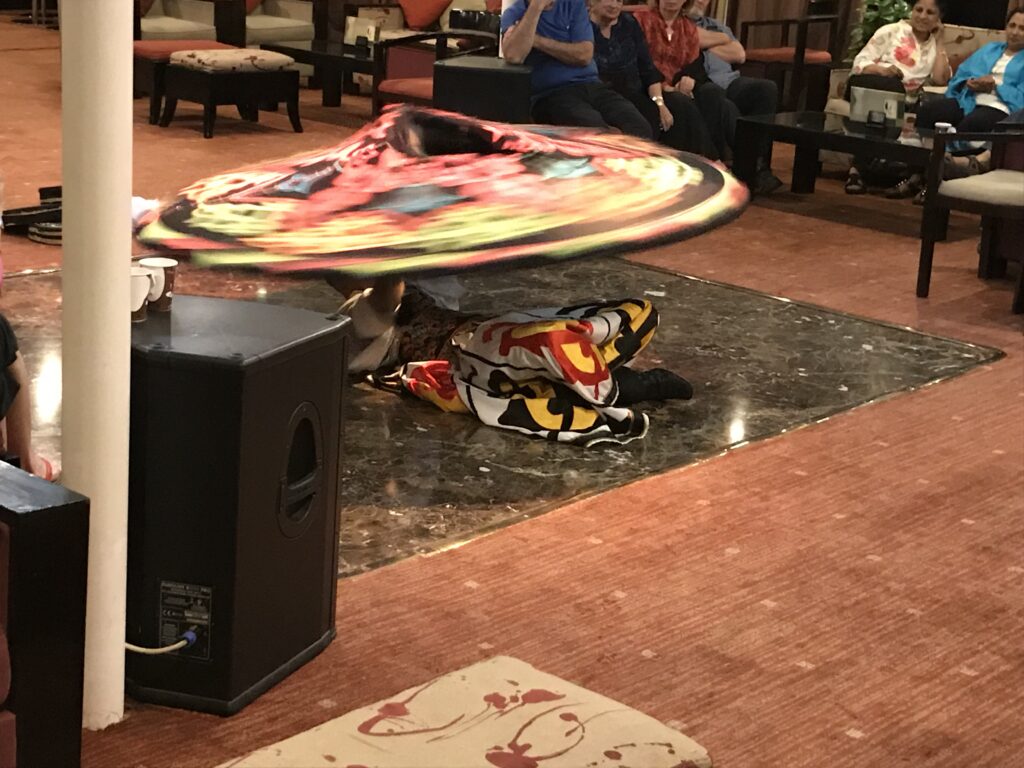
One of my hopes was to see a whirling dervish. After dinner the ship’s crew provided us with a group that came to show us. The whirling dervishes are more than entertainers. They are custodians of Sufi spirituality and perform a sacred ritual. Sufism delves deep into the spiritual dimensions of Islam, seeking to attain closeness to the divine through meditation, introspection, and devotion. In Egypt, Sufism has played a pivotal role in shaping the country’s spiritual landscape and fostering a connection with the divine that transcends religious boundaries. The act of spinning is a metaphor for the cosmic dance of creation, symbolizing the soul’s journey towards unity with the divine. The repetitive motion reflects the cyclical nature of existence and the eternal nature of the divine. It was mesmerizing to watch them.
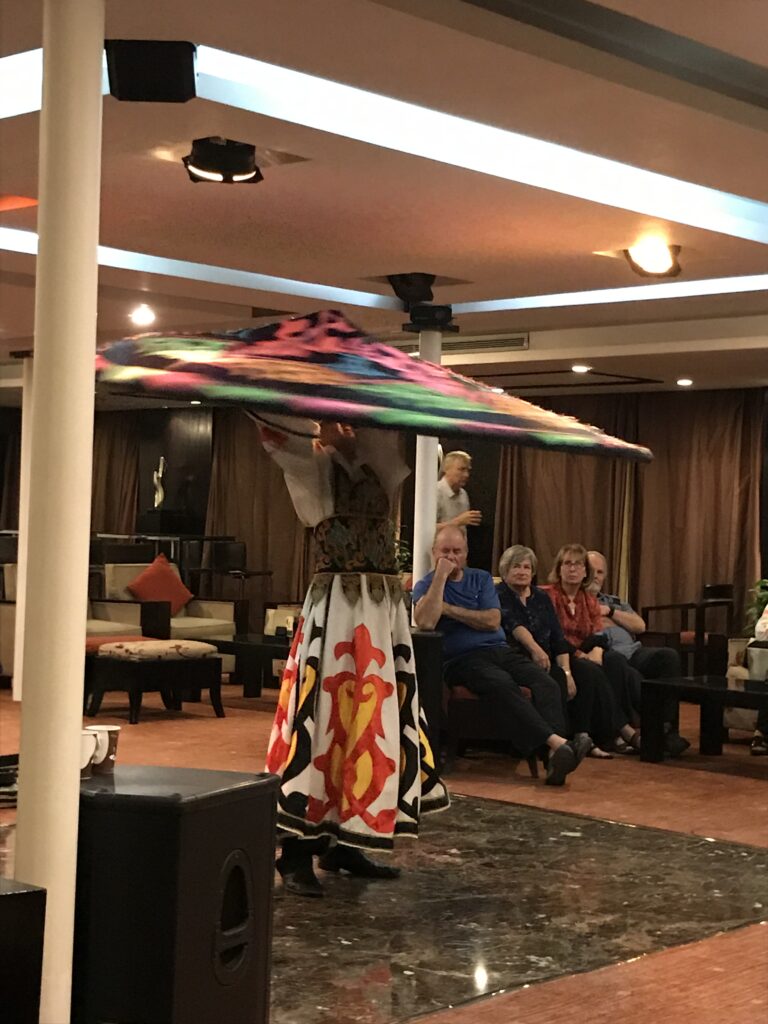
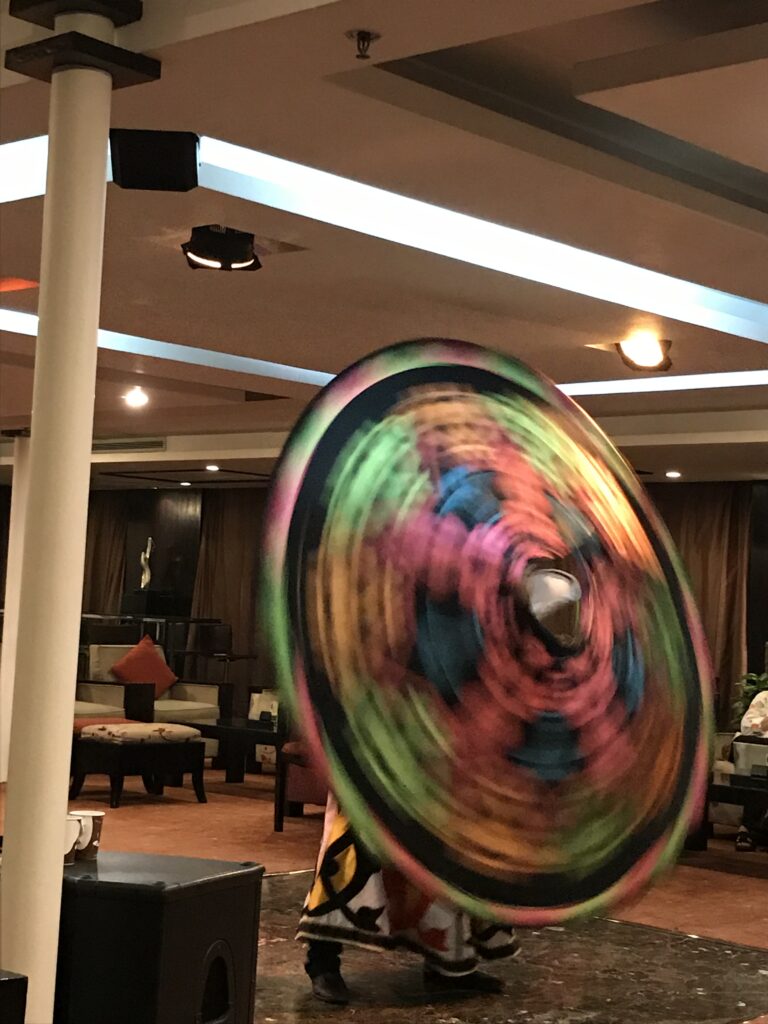
This is our last night on the ship.