Originally the indigenous Stoney or Nakota people named the lake “Ho-Run-Num-Nay” which means “Lake of Little Fishes”. In 1882 a native guide took Tom Wilson to see the lake; he was the first European there. Wilson called it “Emerald Lake” because of its color. Two years later in1884, the Canadian Geographic Board renamed it “Lake Louise” after Queen Victoria’s daughter who was married to the Governor General of Canada. Surrounding the lake and visible from the Chalet is Mount Victoria Glacier with an elevation of 11,365 ft. Today there are six glaciers that feed into Lake Louise. The largest is Victoria Glacier.
After Van Horne, the president of the Canadian Pacific Railway, finished building the rail, he decided to promote tourism by building first-class hotels along the route. These hotels have become icons of Canadian history and architecture.
In 1890, the first chalet at Lake Louise was built on the eastern shore of the lake —a single floor cabin that could accommodate people. This chalet burned down in 1894. It was replaced by a clapboard building of similar size, and soon a second story was added. In 1912, a new addition was added, the Painter Wing, in an Italian Villa Style. Now the chalet could house 320 guests plus a Victorian Dining Room. In 1924 all but the Painter Wing burned and was replaced in a year by the Barrett Wing. The Chalet was now the Chateau Lake Louise with 400 rooms and a summer staff of 425. It was not until 1982 that the hotel was opened year-round. With the Olympics coming to Calgary in 1988, the hotel underwent a huge renovation and expansion with the Glacier Wing. Today it has 550 guest rooms.
In 1984 Banff, Jasper, Yoho, and Kootenay National Parks were listed as part of the Canadian Rocky Mountain Parks World Heritage Site. In 1999, the Canadian Pacific bought the Fairmont Hotels and Resorts (a U.S. company) and subsequently changed the name of the Railway hotels to Fairmont Hotels and Resorts.
We had one night at the beautiful Chateau Lake Louise. Our spacious room on the third floor overlooked the lake and the Mount Victoria Glacier. The beautiful emerald-green of the lake results from the Glacial ice-melt that feeds it. We followed a path that goes around the lake and simply soaked up the beauty of the place in the midst of the mountains.
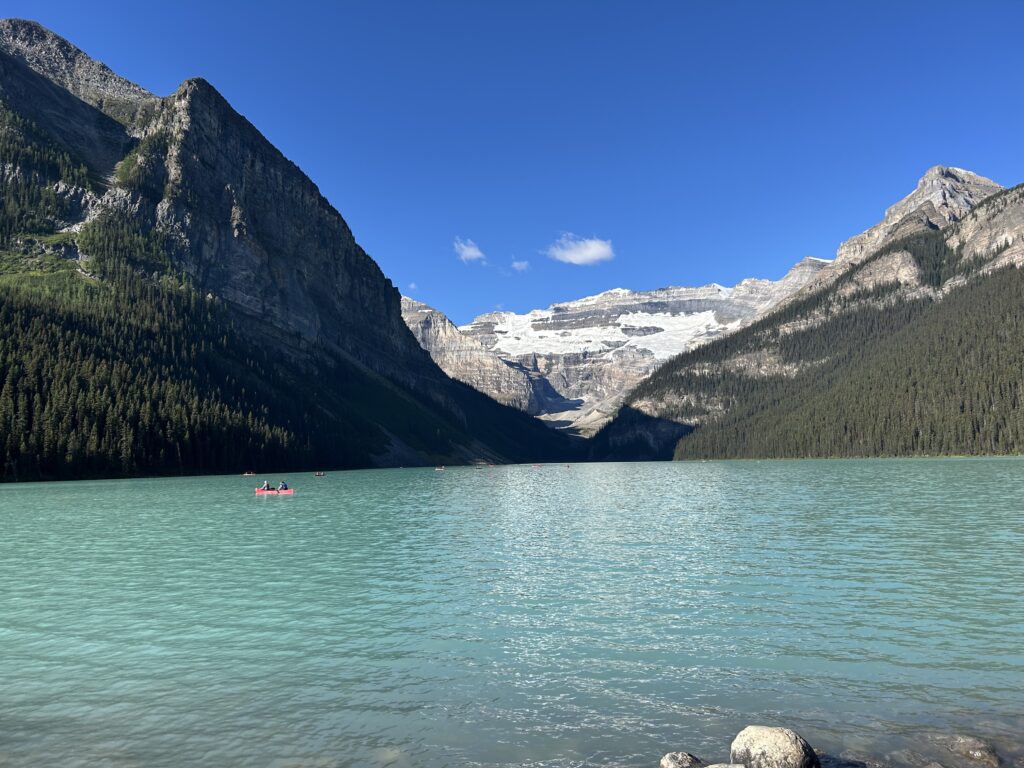
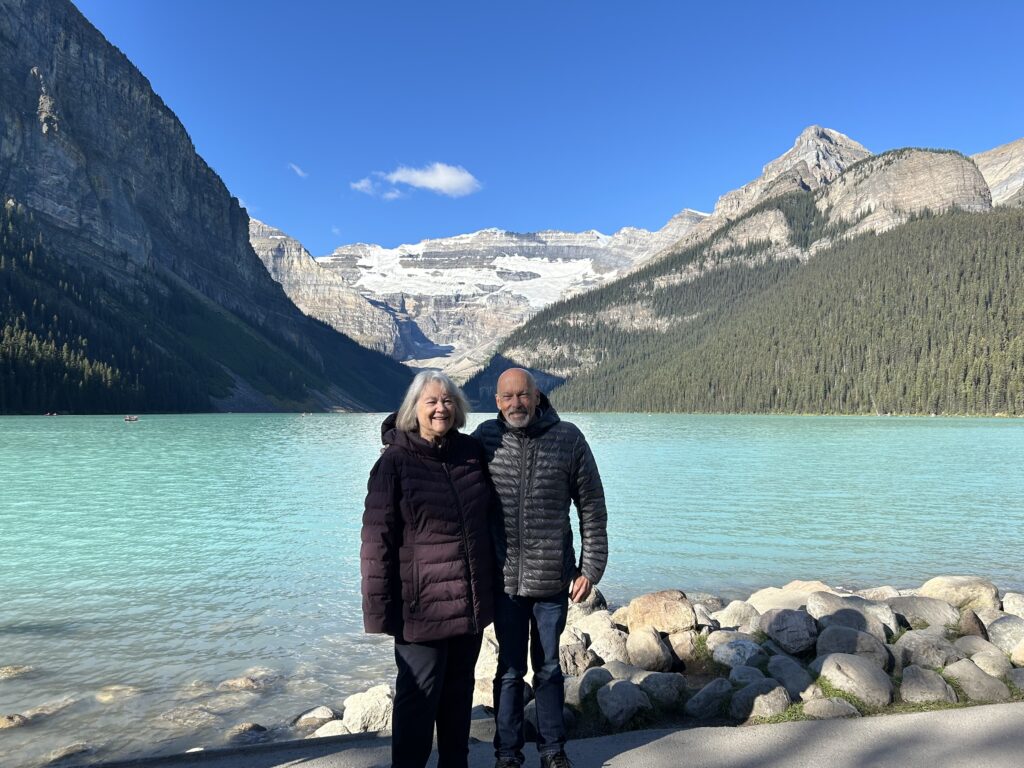
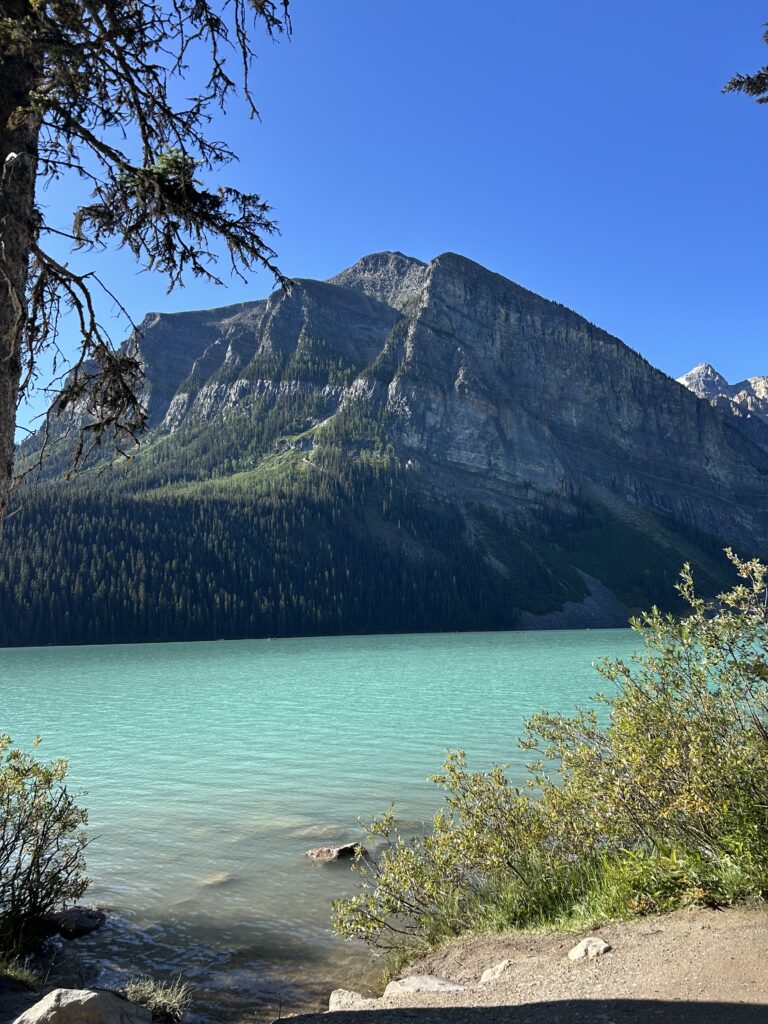
We were fortunate to have the evening and most of the next day to enjoy the hotel and its surroundings. In the mid-afternoon we met a van which transported us to Banff via Lake Moraine.
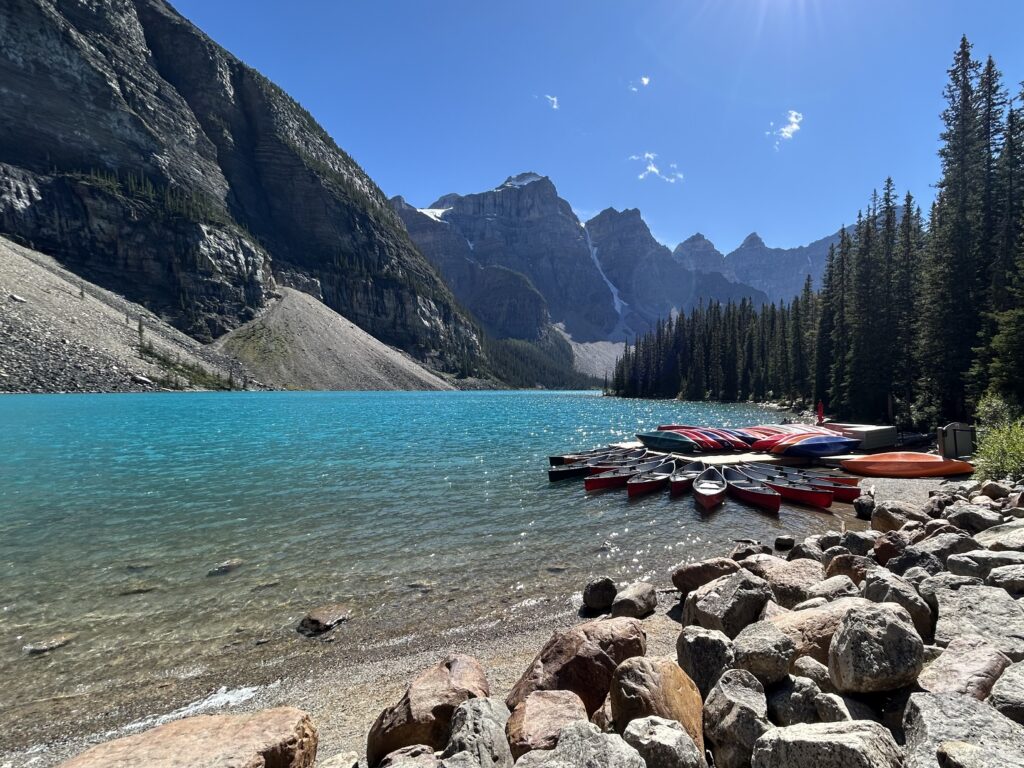
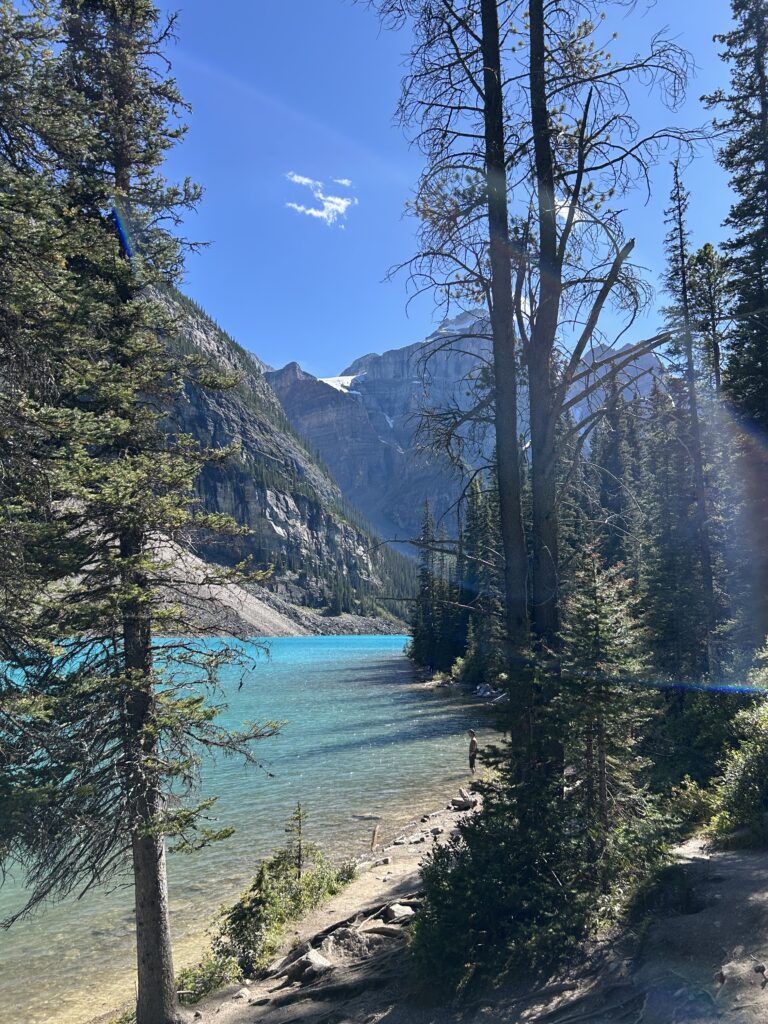
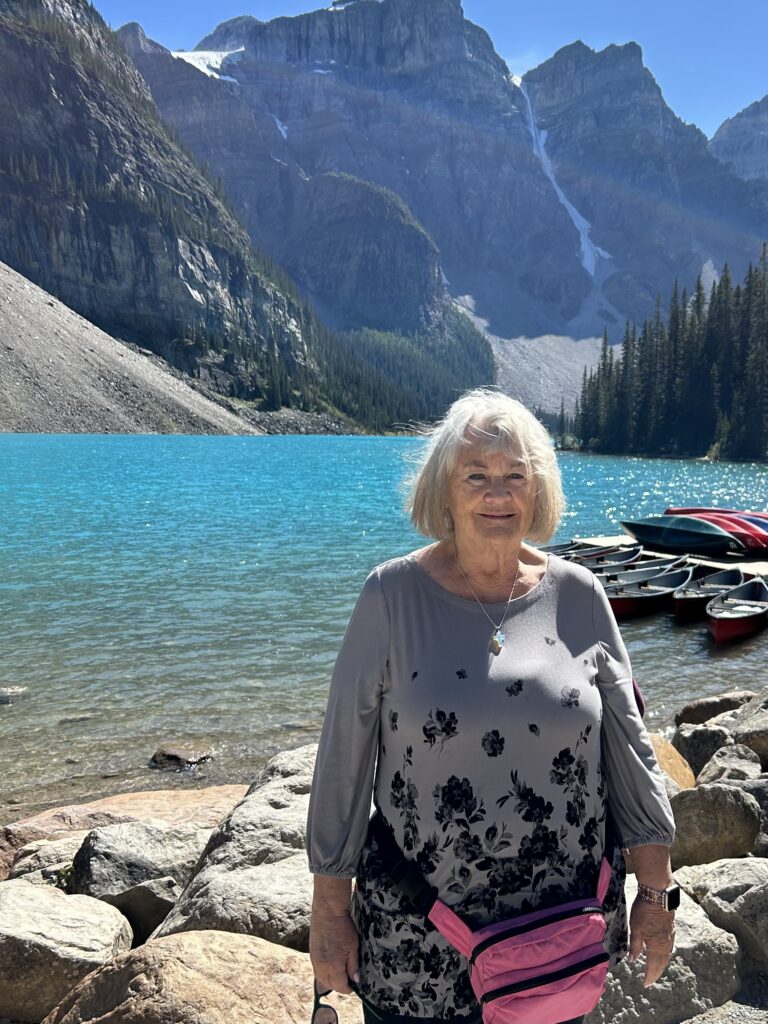
Lake Moraine is a stunning turquoise lake in the Valley of the Ten Peaks. Like Lake Louise, it is glacier fed and sits about 6,200 feet above sea level. The deep blue color is the result of the refraction of sunlight off the rock sediment in the lake from the glacier melt. We spent about an hour walking around the lake and enjoying the vistas.
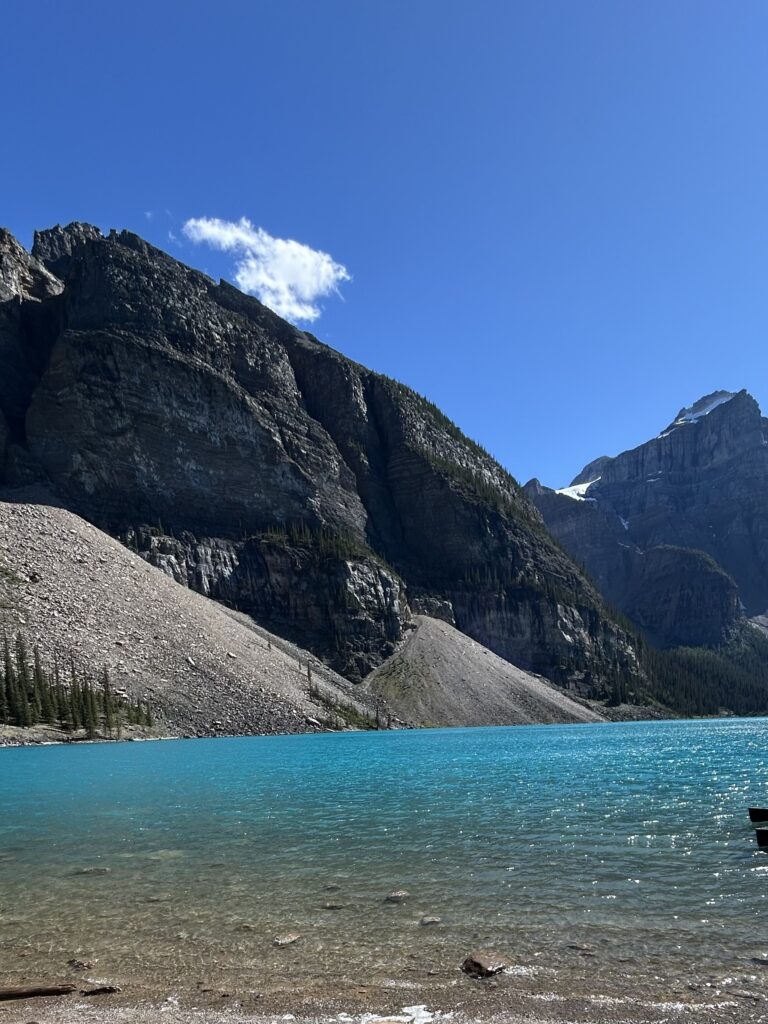
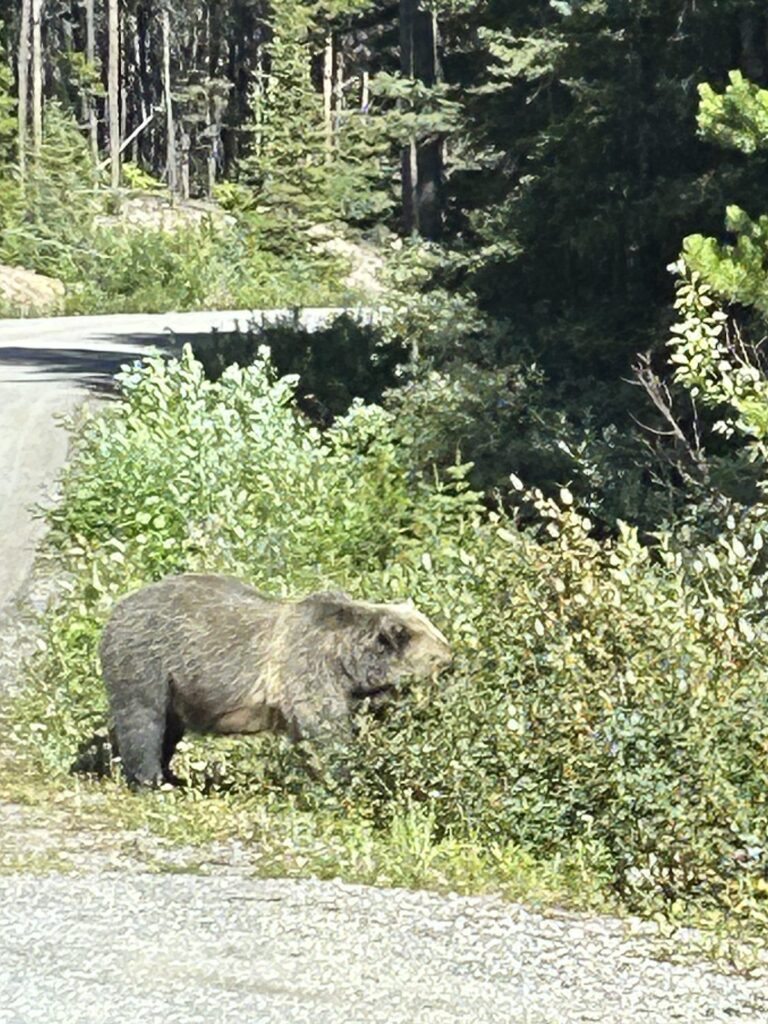
After leaving the lake, we encountered a mama grizzly bear and two cubs munching on berries by the side of the road. She will eat 30,000 berries a day.
We arrived at our hotel in Banff, checked in, and decided to try the restaurant our guide recommended: the Grizzly House. He said it served different wild meats. When we got there, it was mostly a fondue restaurant, and since there were only two of us, we didn’t want the four-course fondue dinner. We settled for Buffalo sausages. The servings were so large we could have easily shared a plate. Unfortunately, we had to leave half the meal behind.