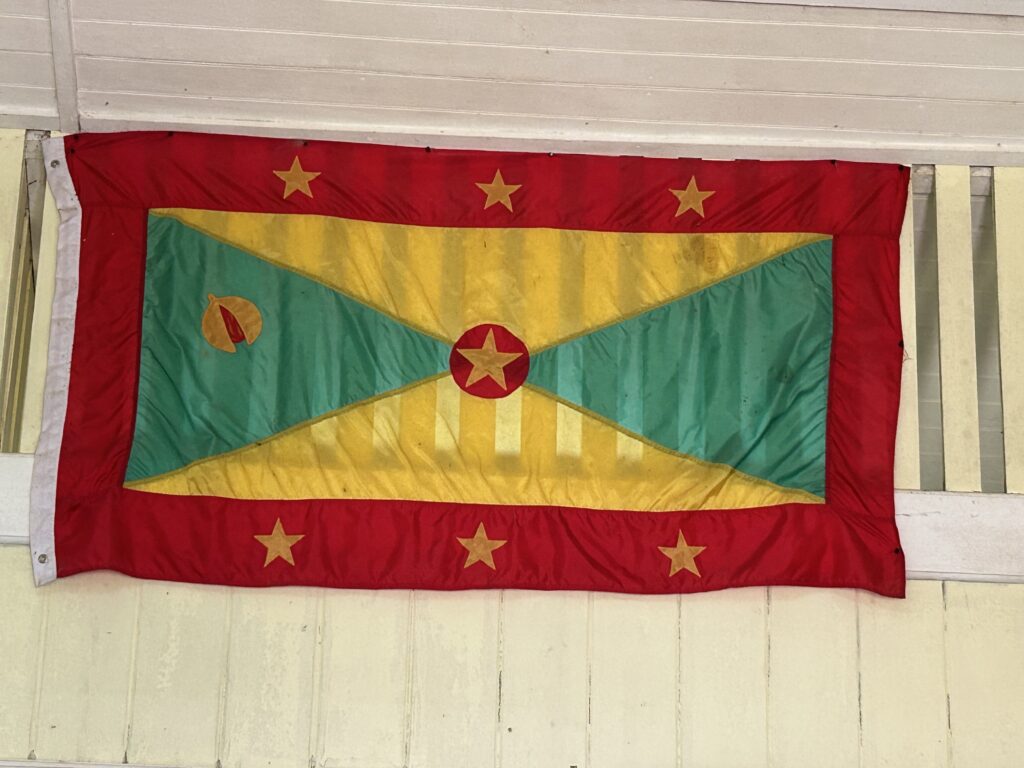
Grenada, nestled in the heart of the Caribbean, holds something for everyone. Grenada was named by the British when then took control from the French in 1763. Columbus first came to Grenada in 1498 when it was inhabited by Carib Indians. The French came in the 17th century and developed sugar estates. They imported African slaves as laborers. Then Britain took is over in 1762. During George III reign, they shifted from sugar production to spices, first nutmeg, then mace, then cloves, and cinnamon. At one point, Grenada produced 40% of the nutmeg used in the world. In 1974, it gained its independence and is still a Commonwealth nation. The people are a mix British, French, Carib, and African heritage.
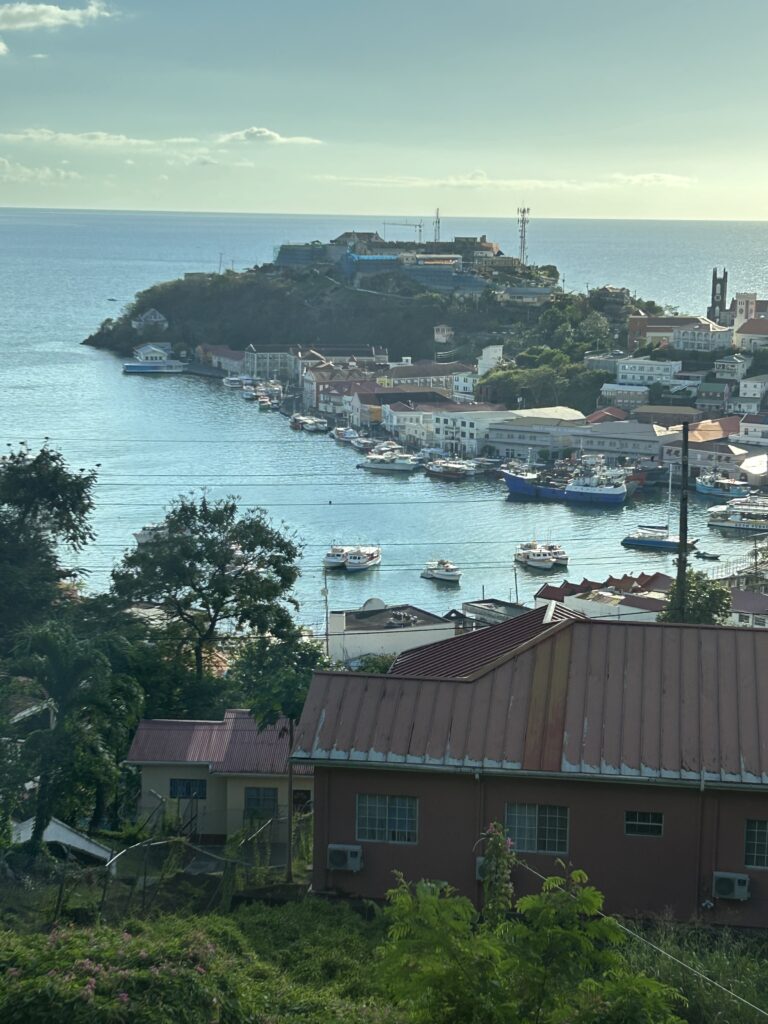
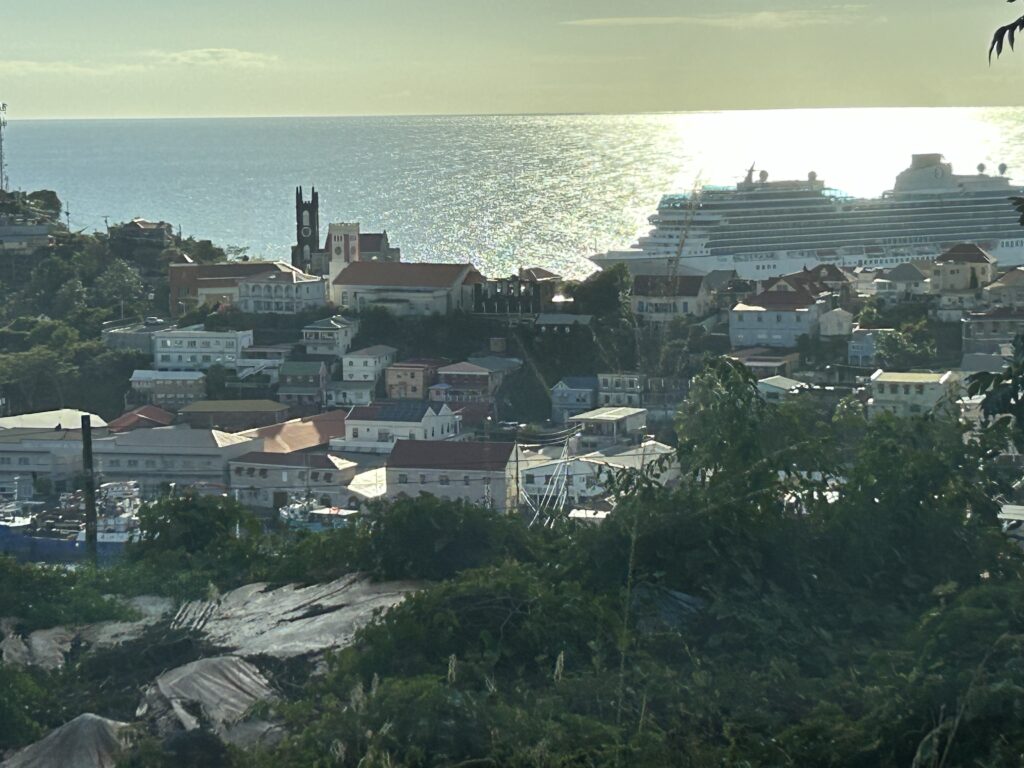
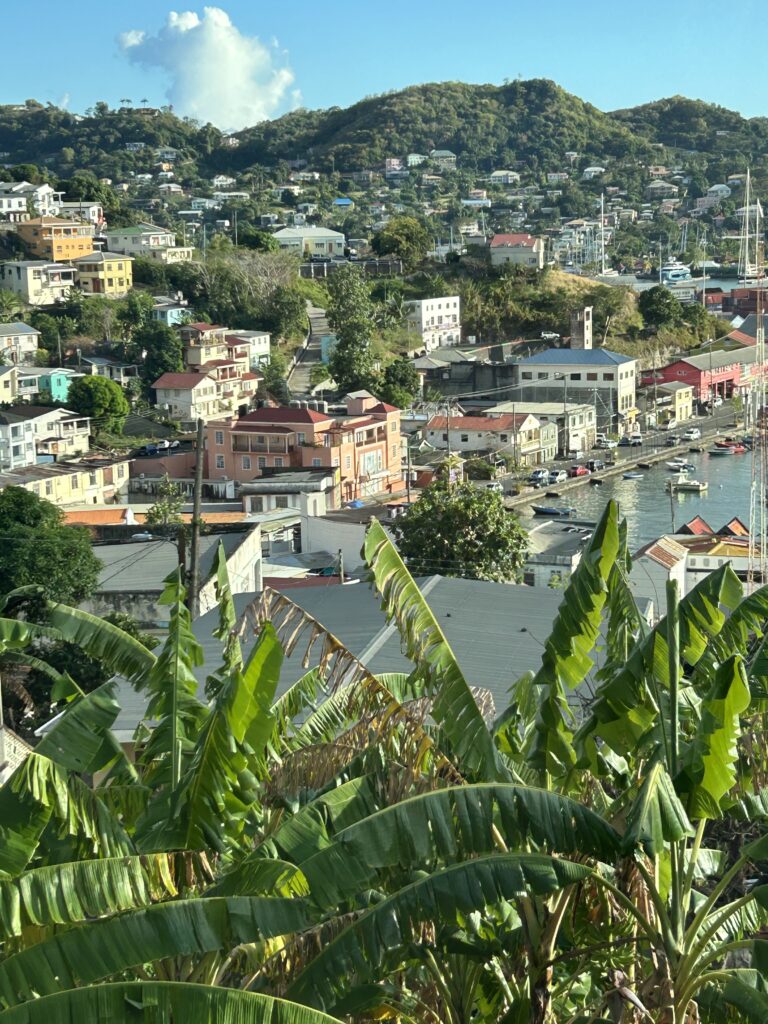
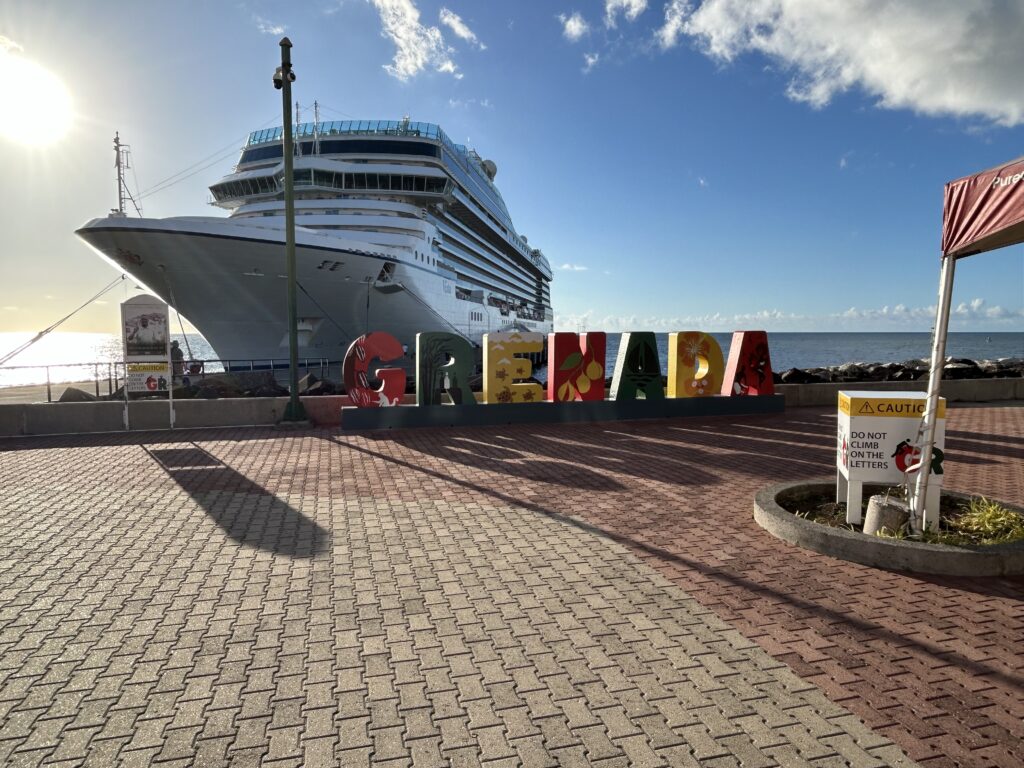
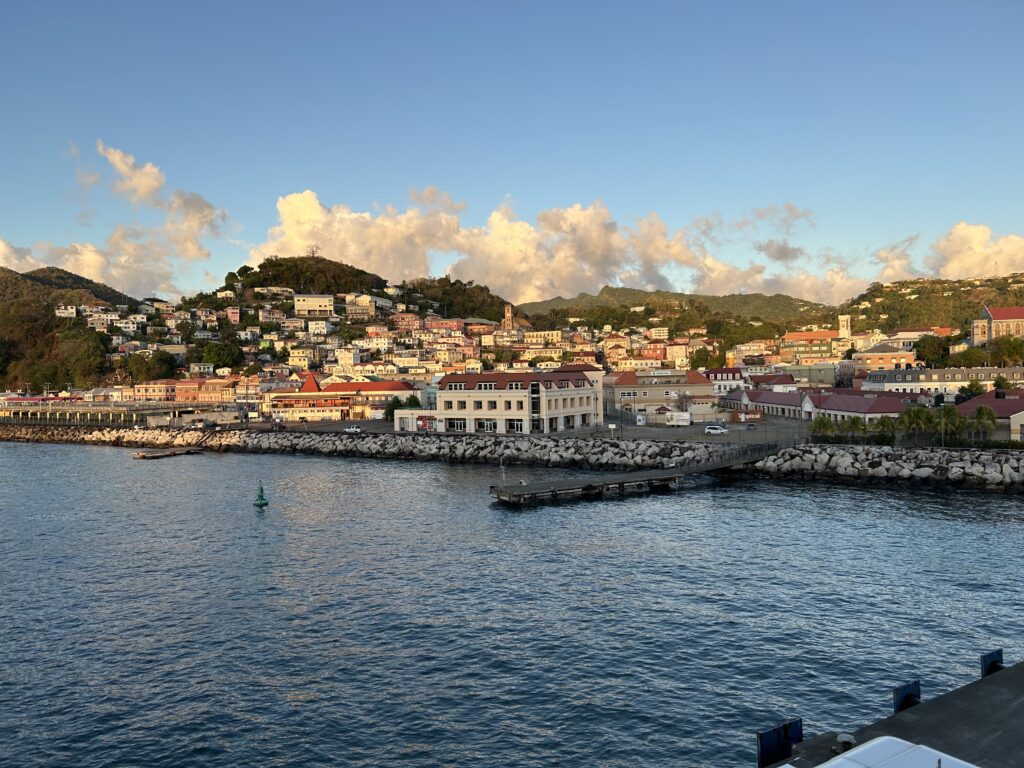
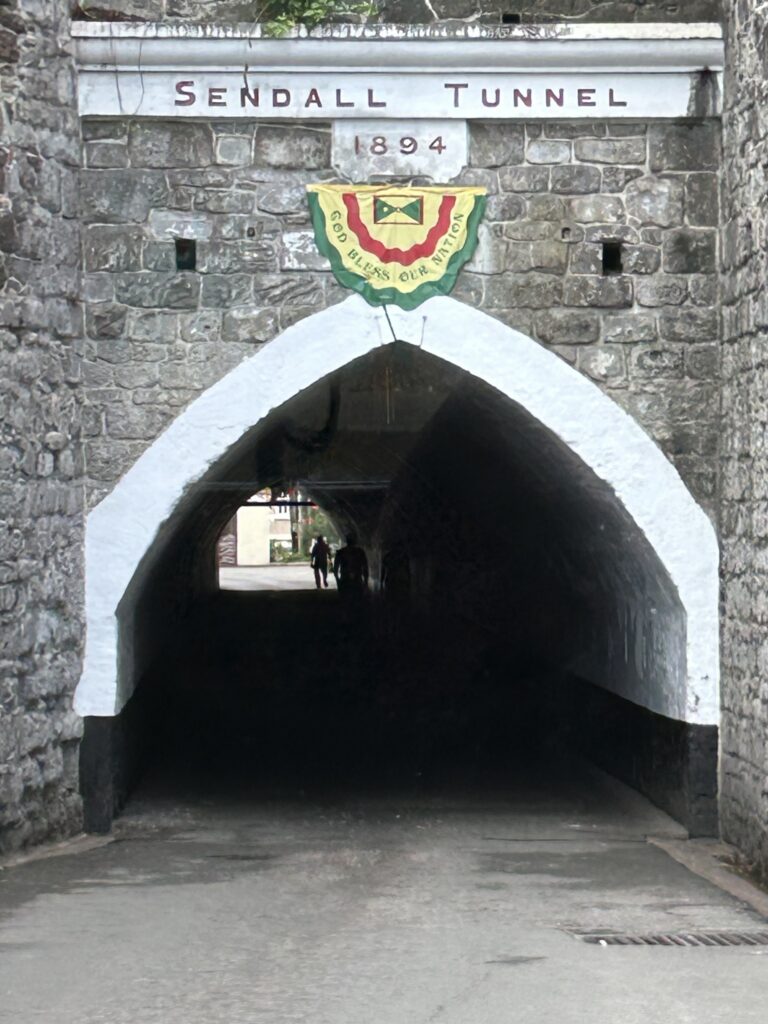
St. George is the capital of the three-island nation. It is said to be the prettiest city in the Caribbean. It’s harbor Carenage is where our ship docked. We exited the ship outside the Sendall Tunnel. It connects the northern and southern parts of the city. Walking through the tunnel, you see a blend of history and nature typical of the island. The tunnel puts you onto Melville Street that ends with the Anglican Cathedral of St. George, a beautiful and historic landmark.
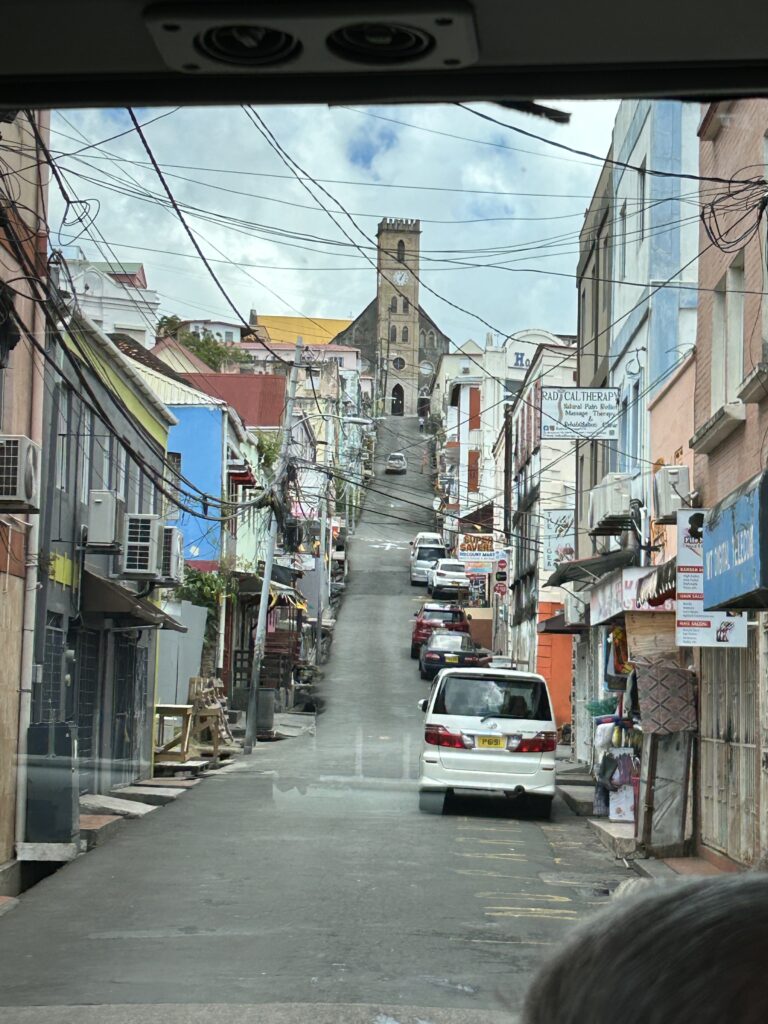
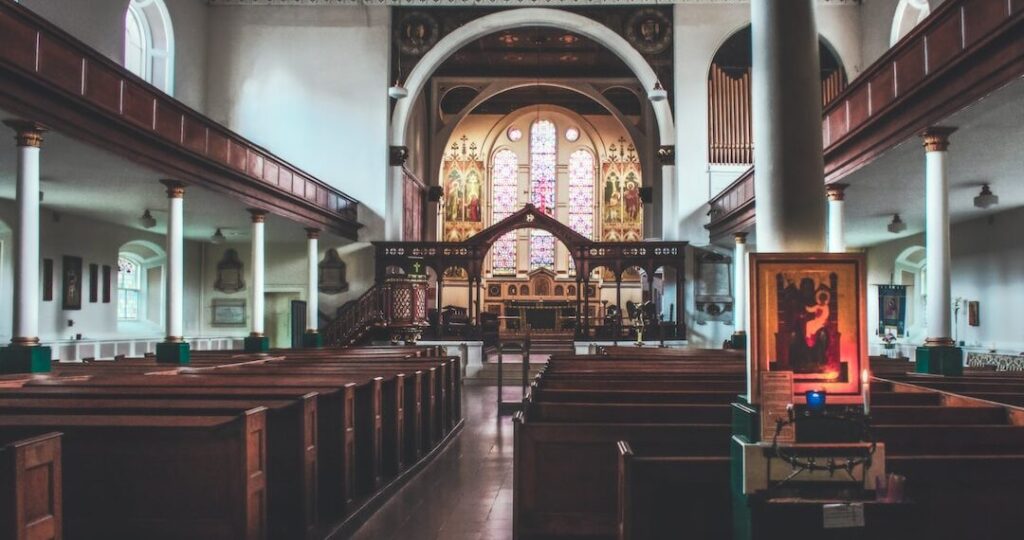
St. George’s Church was built in 1825, but was destroyed in the 1902 Earthquake. It was rebuilt in Gothic Revival Style with beautiful Stained Glass in 1910.
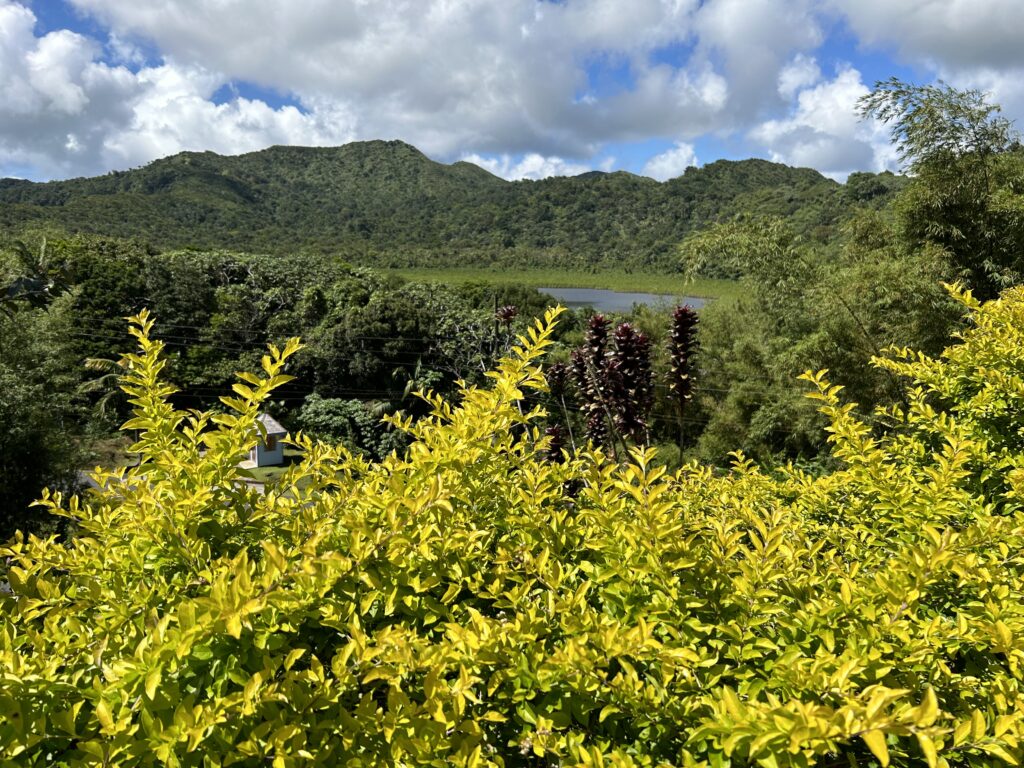
We embarked on a naturalist tour of the beautiful natural landmarks of the island. First we went through a Rainforest to Grand Etang Preserve, an ecological treasure. We saw all sorts of vegetation from towering mahogany trees, rainbow trees to vibrant tropical flowers. At the center of the Preserve is Grand Etang Lake, a naturally occurring body of water set in the crater of an extinct volcano. This fresh water lake is about 1,740 ft. above sea level and is approximately 36 acres in area. Behind the lake, you can see Mt. Qua Qua.
We saw a playful Mona Monkey at the lake. The Mona Monkey came to Grenada on slave ships from Africa in the 18th century. There were lots of beautiful birds as well. The broad winged hawk (known here as the gree-gree), Lesser Antillean swift, Antillean euphonia, purple throated carib, Antillean crested hummingbird and the Lesser Antillean tanager (known as the soursop) are all common sights. Ospreys, herons., spotted sandpipers, and Caribbean coots are commonly seen.
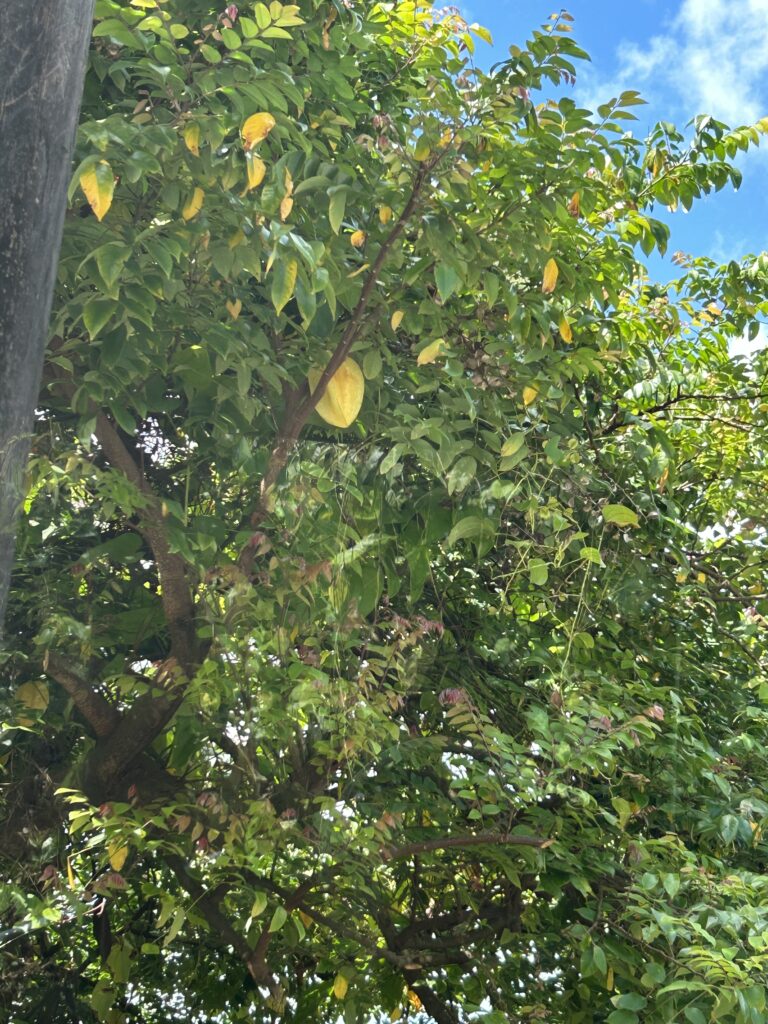
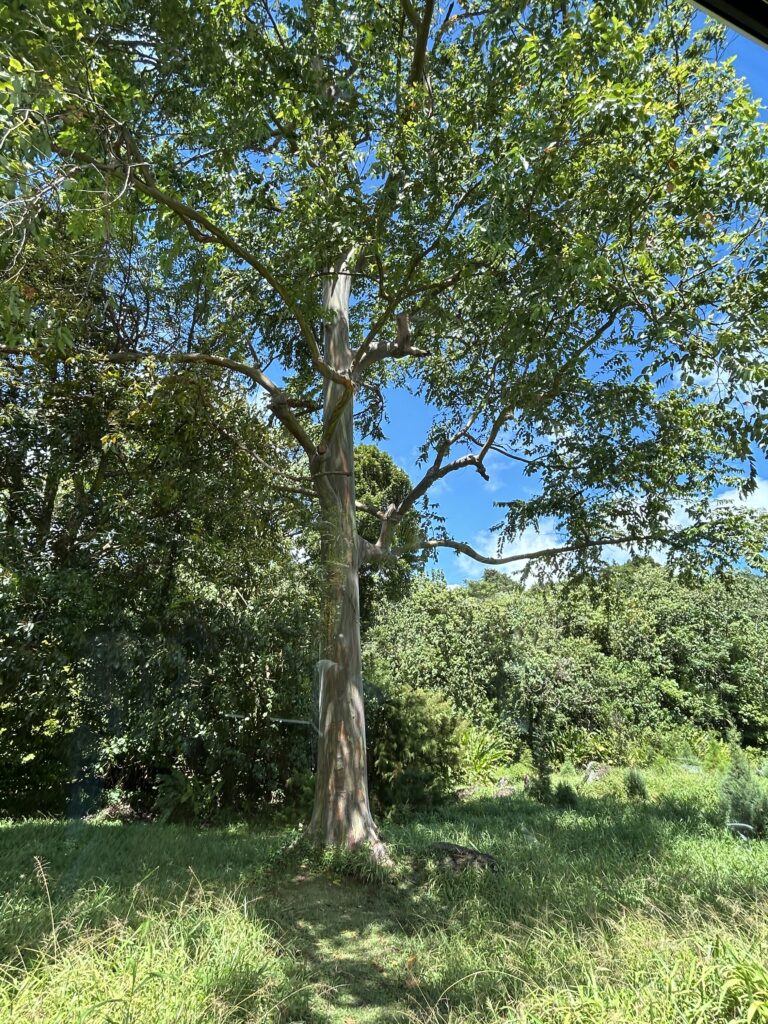
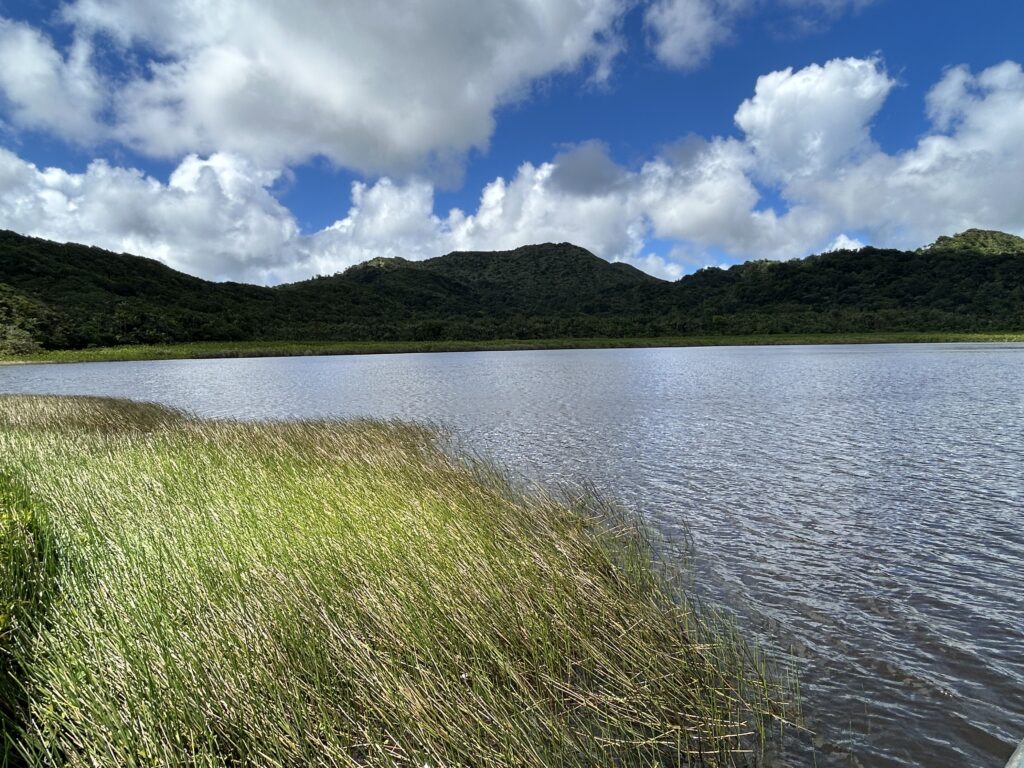
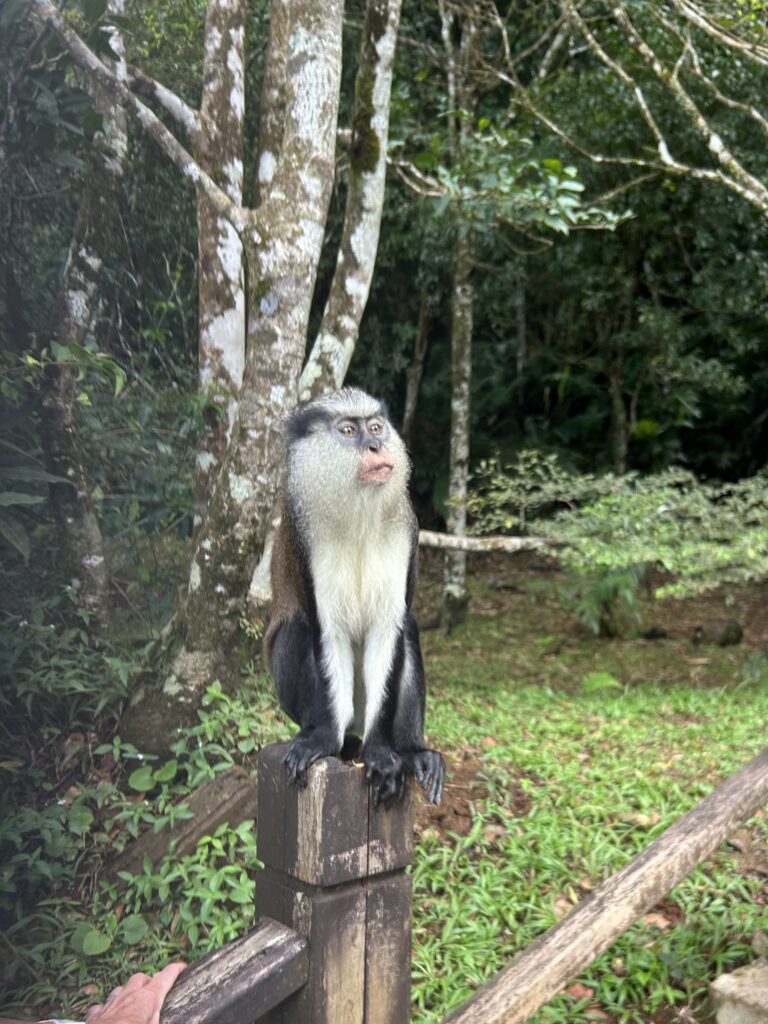
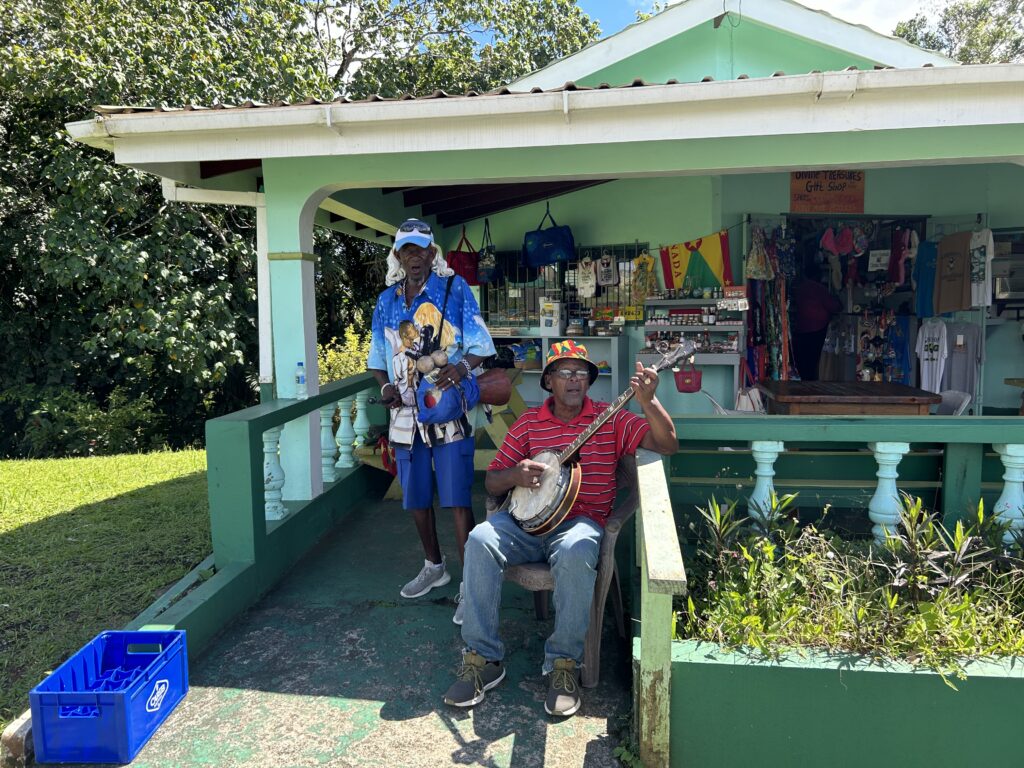
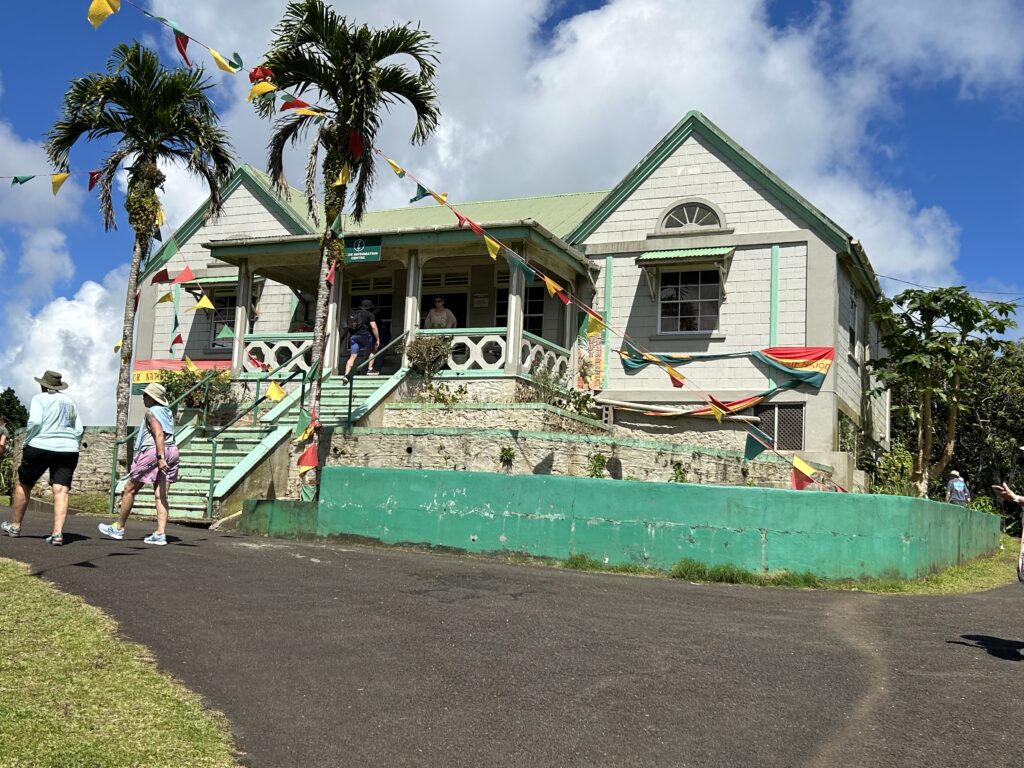
After we enjoyed the vegetation, lake, and monkey, we went to the museum and coffee shop where we were welcomed by some local musicians.
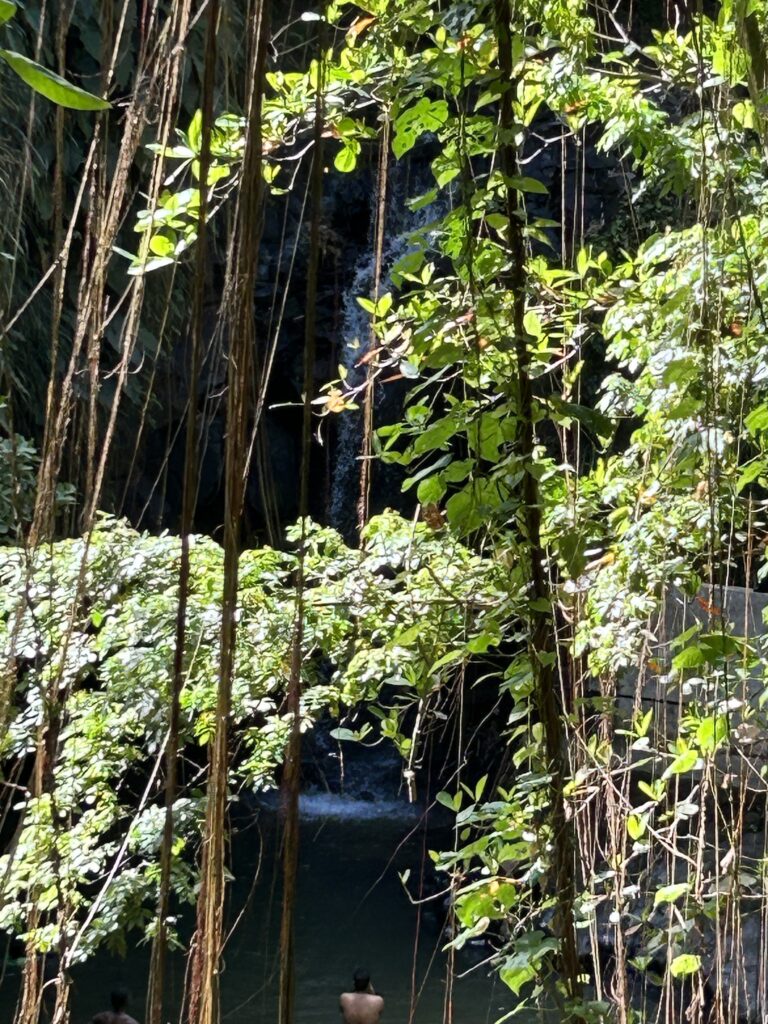
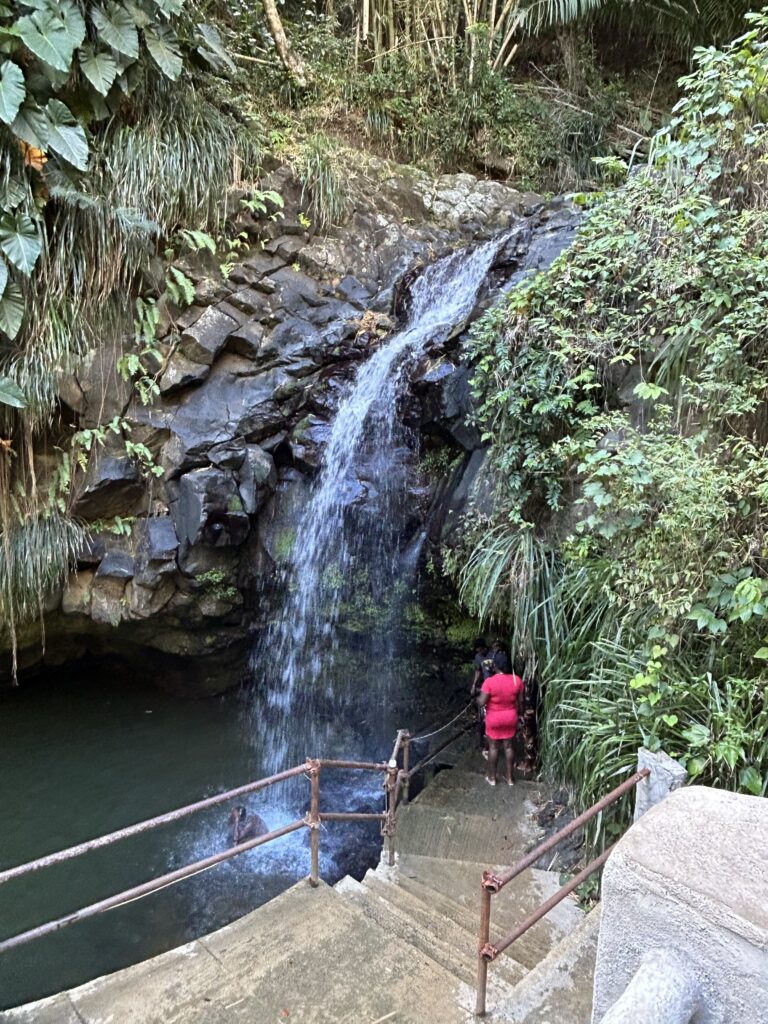
From the Etang Preserve, we went to the Annandale Waterfall. This waterfall cascades about 30 ft. into a natural pool that is ideal for swimming, but ice-cold. Some people like to jump from the top of the waterfall into the pool. It is surrounded by lush, tropical vegetation. A paved path leads to the viewing spot to see the waterfall, swimmers, and jumpers.
Next we went to a local spice farm, The Laura Herb and Spice Garden.
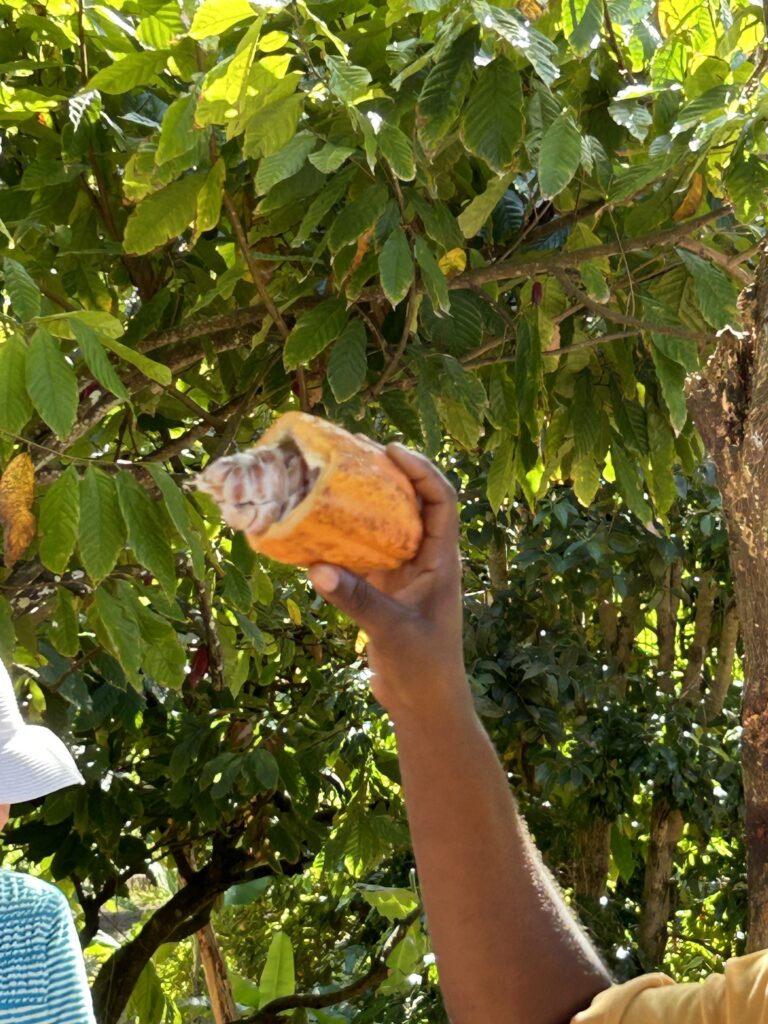
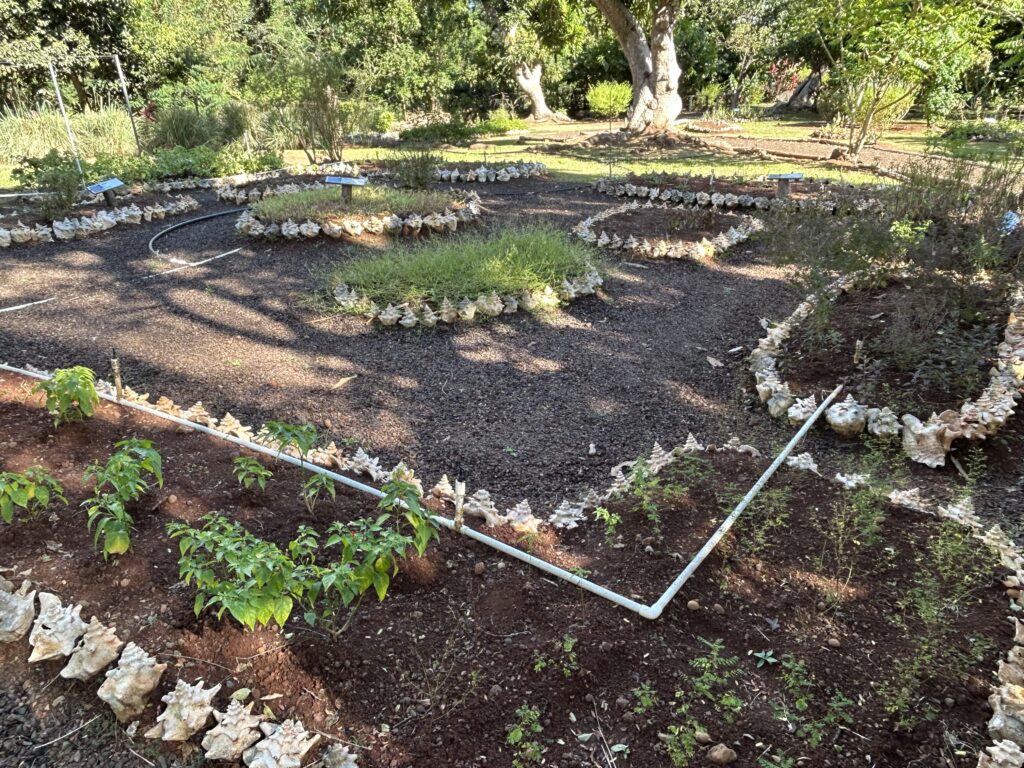
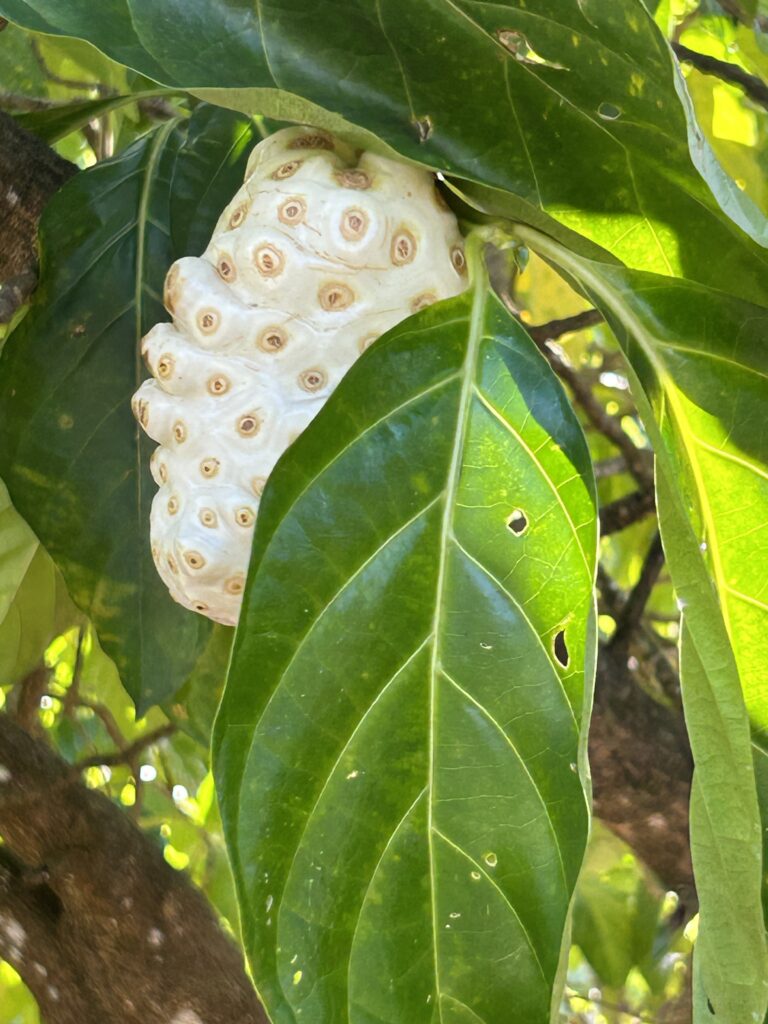
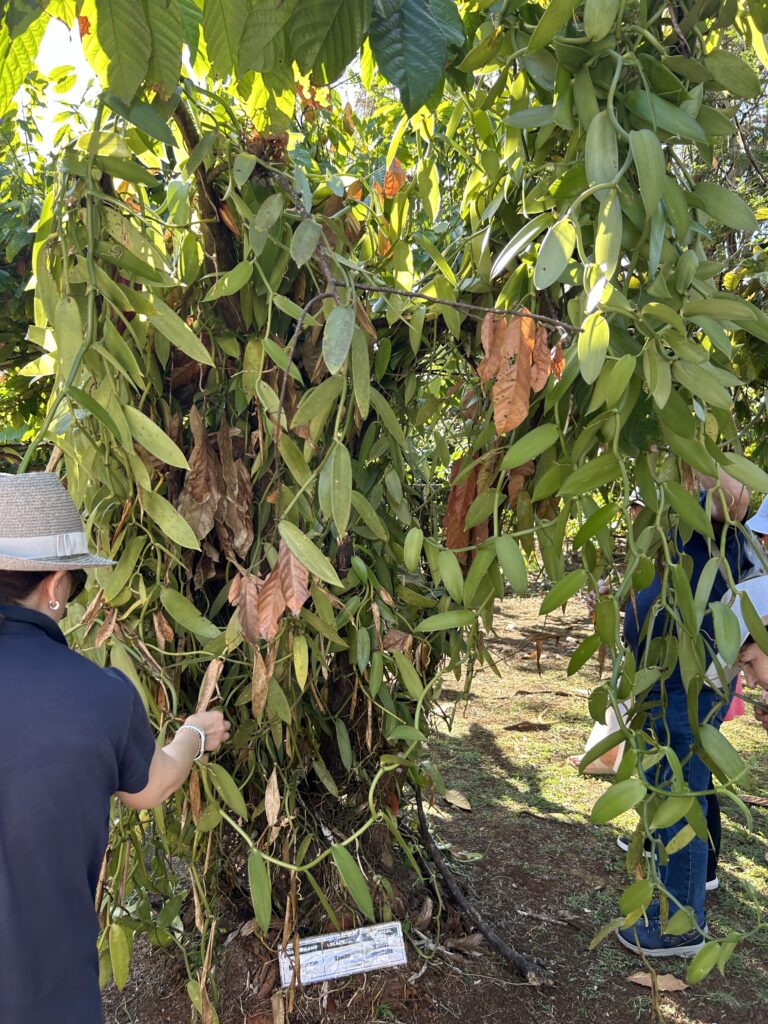
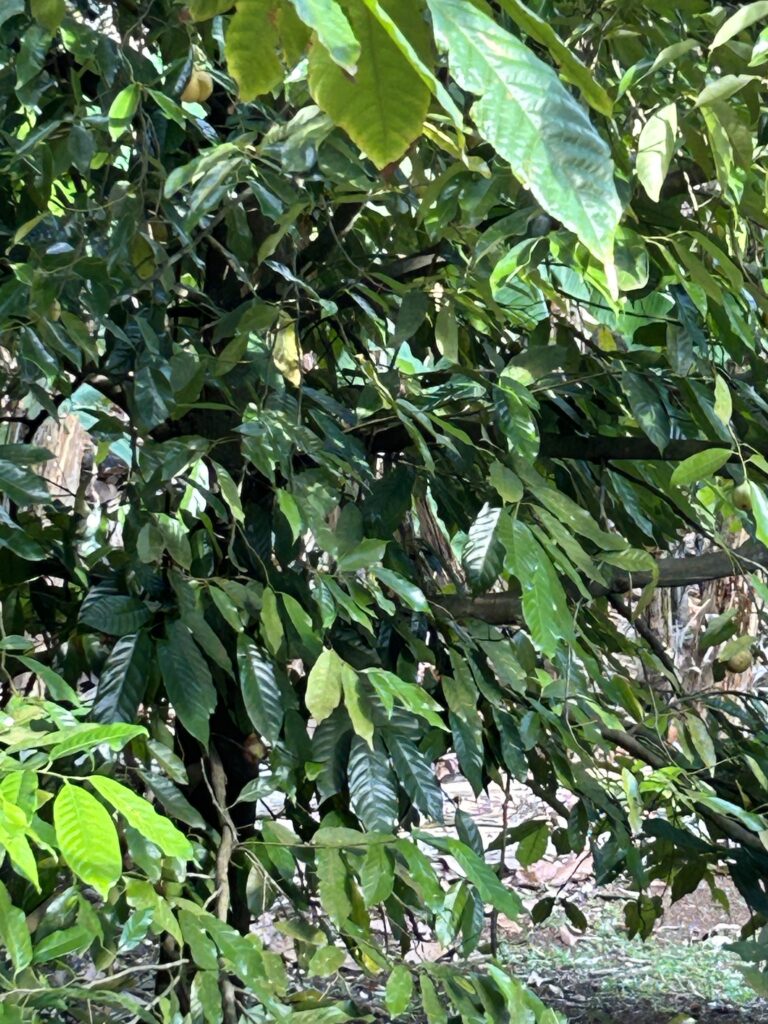
From the Waterfall we went to the Laura Herb and Spice Garden, located in the picturesque Epping Forest of Grenada, for a wonderful tour. Our guide took us along a trail paved with nutmeg shells and introduced each spice in its most natural form. We were encouraged to touch and enjoy the wonderful smells of the spices including cinnamon, ginger, pimento, chadon beni, nutmeg and many more. The tour is also very educational as along the trail path, you can see the botanical, family and scientific names for all the plants grown in the garden.
Other places we passes as we traversed the island were Fort George, Fort Frederick, and the Richmond Hill Prison. Fort George was built in 1705 by the French and later expanded by the British. It is the oldest fort in Grenada. It has a museum with artifacts from Grenada’s military history. The ruins contain canons and stone walls. The French built Fort Frederick in 1779, but the British took it over in 1791. It is the best preserved fort on top of Richmond Hill. Close to Fort Frederick on Richmond Hill is a maximum-security prison. The Richmond Hill Prison dates to the 18th century when it was a military hospital. It was converted to a prison in 1880. It seems ironic that a prison has such a beautiful view.
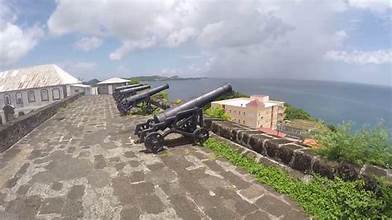
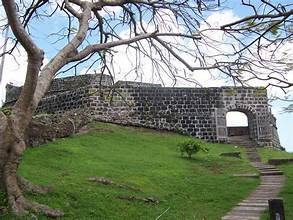
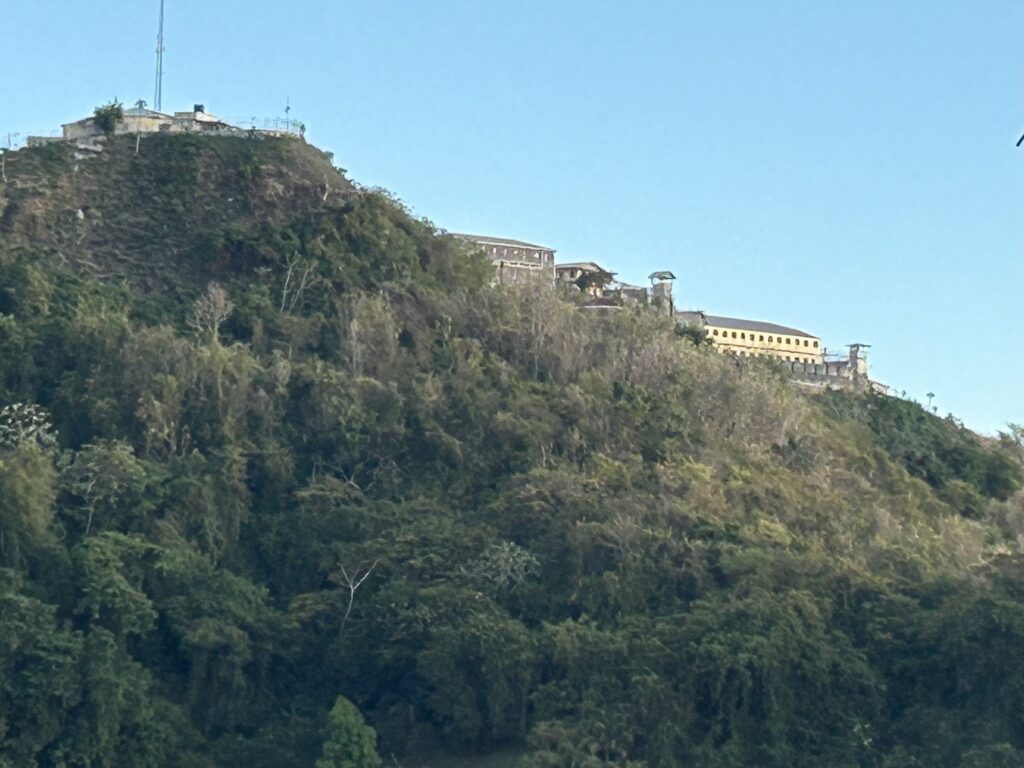
Richmond Hill Prison on the Side
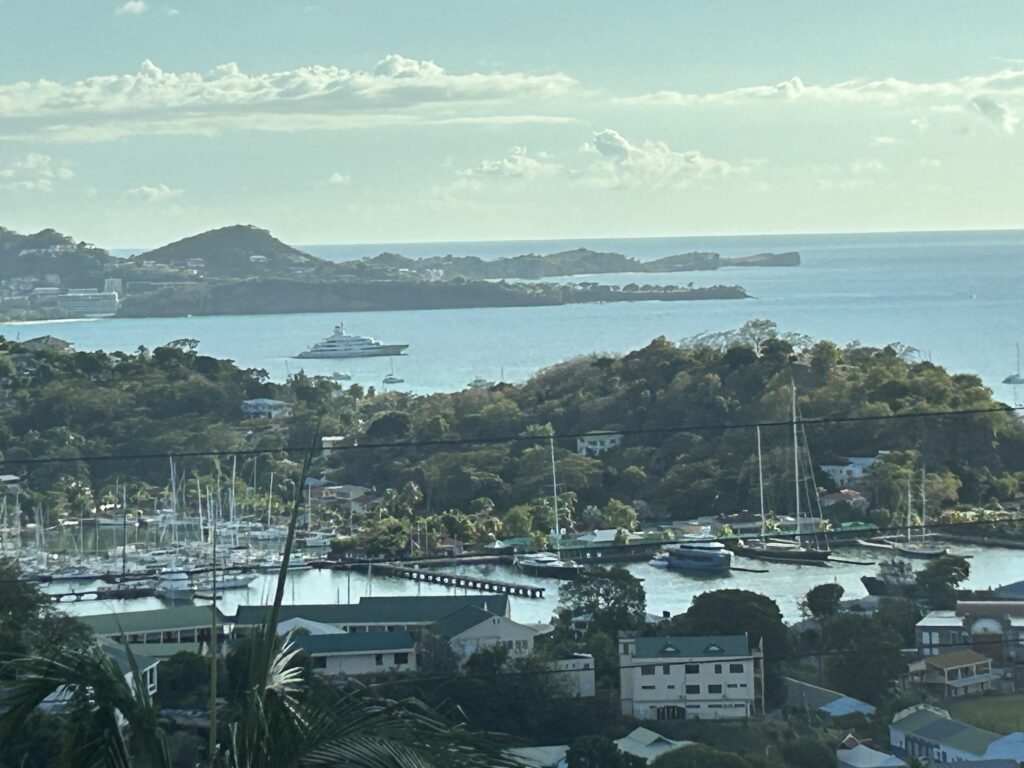
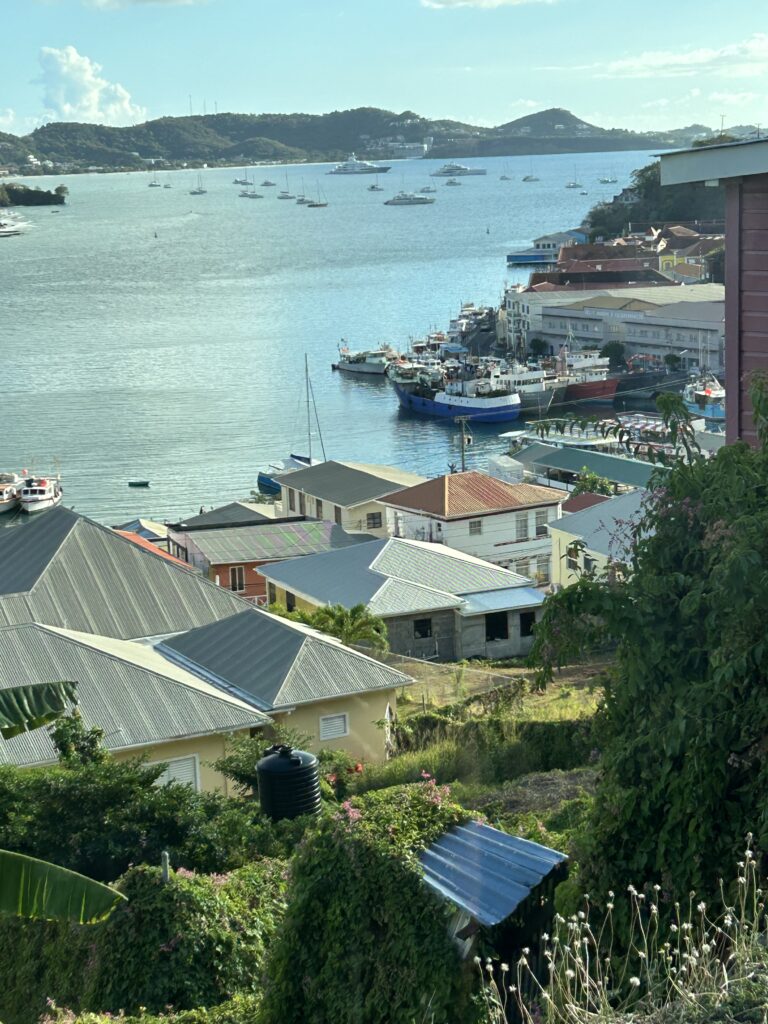
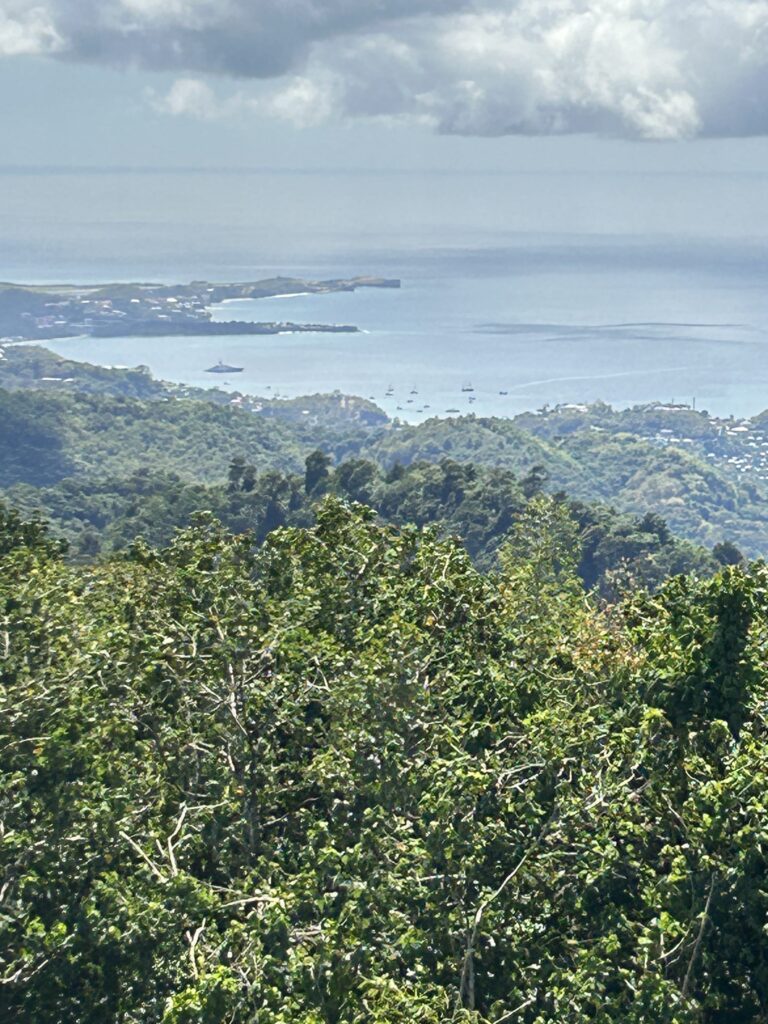
On our way back to the ship, we stopped for some panoramic views of the bay and St. George.