Charleston was established in 1670 as Charles Town, named after King Charles II or England. Settled by English colonists, it soon became a key port and trade center. In the colonial era, plantations grew rice and indigo for trade. It soon became a cultural hub known for its antebellum architecture and arts.
Charleston is noted as the place where the American Civil War began on April 12, 1861, when Confederate forces fired on For Sumter. During Reconstruction, it rebuilt into the vibrant city it is today. Charleston is full of historic sites. We could see only a few on our stay in port.
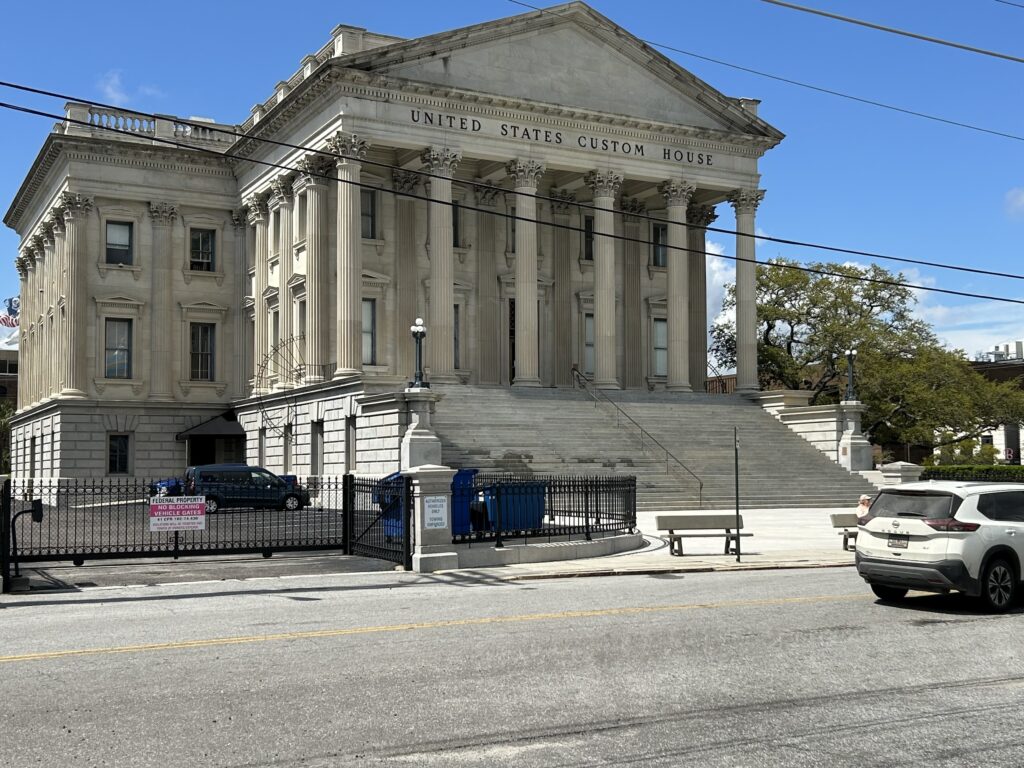
Just across the street from the port is the Old Exchange and Provost Dungeon, one of Charleston’s most significant colonial-era buildings. Completed in 1771, this Georgian-style structure has been a custom house, public market, and military prison. In 1788, it hosted South Carolina leaders as they debated and approved the U.S. Constitution. Later in 1791, it hosted George Washington during his Southern tour.
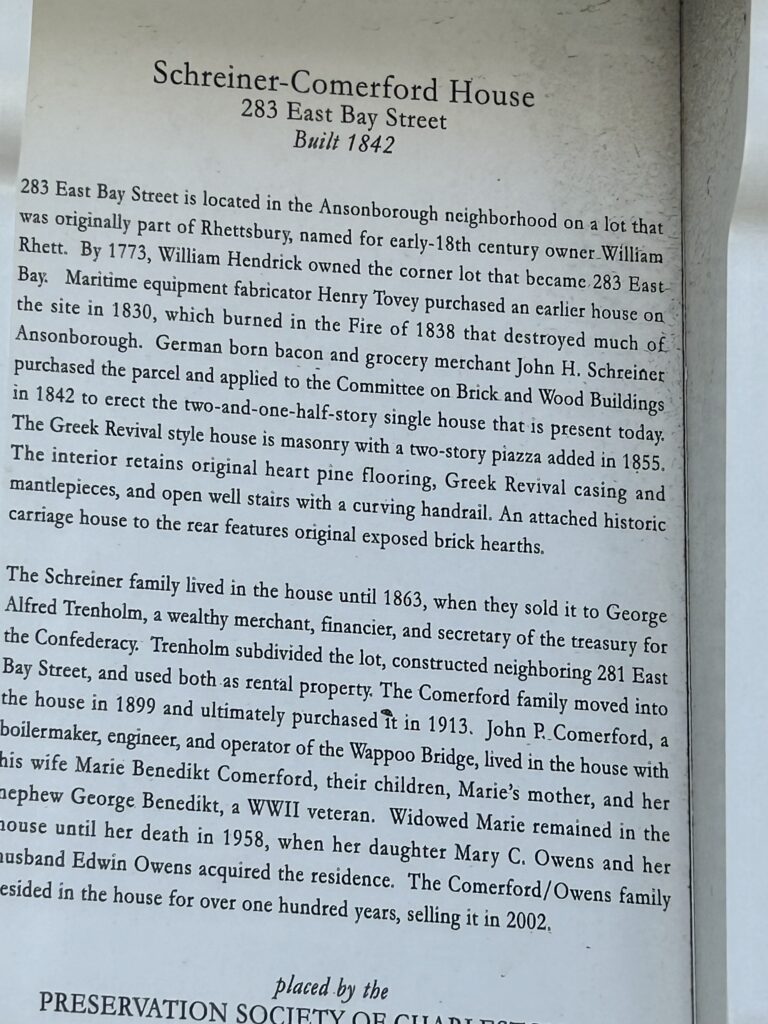
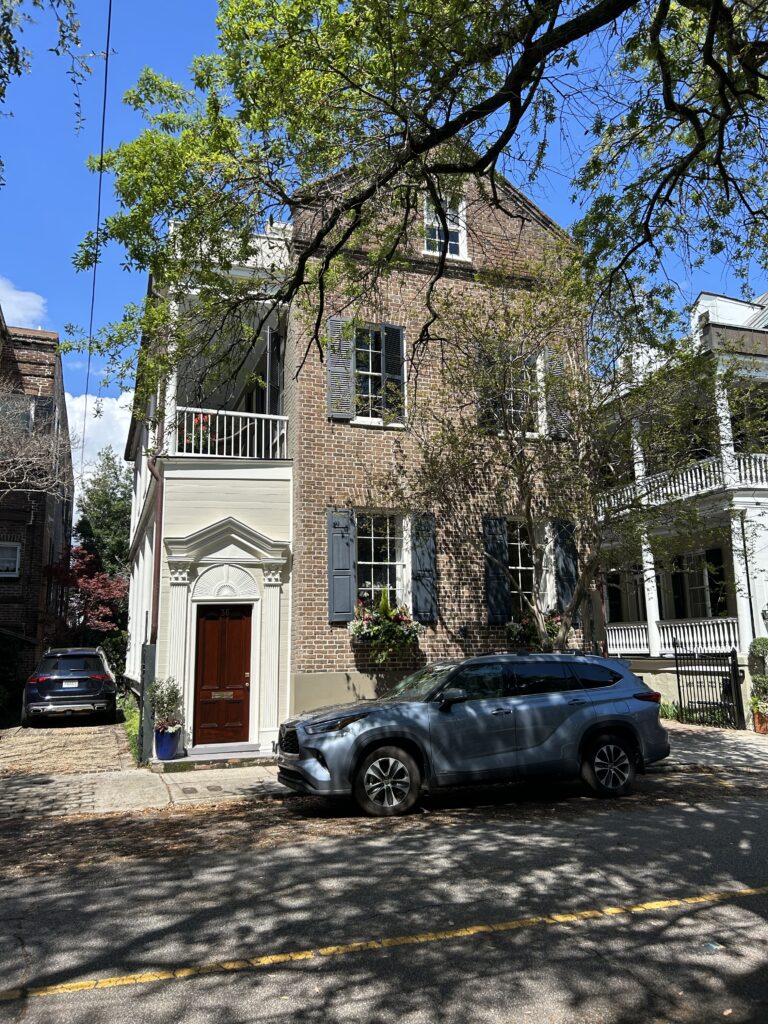
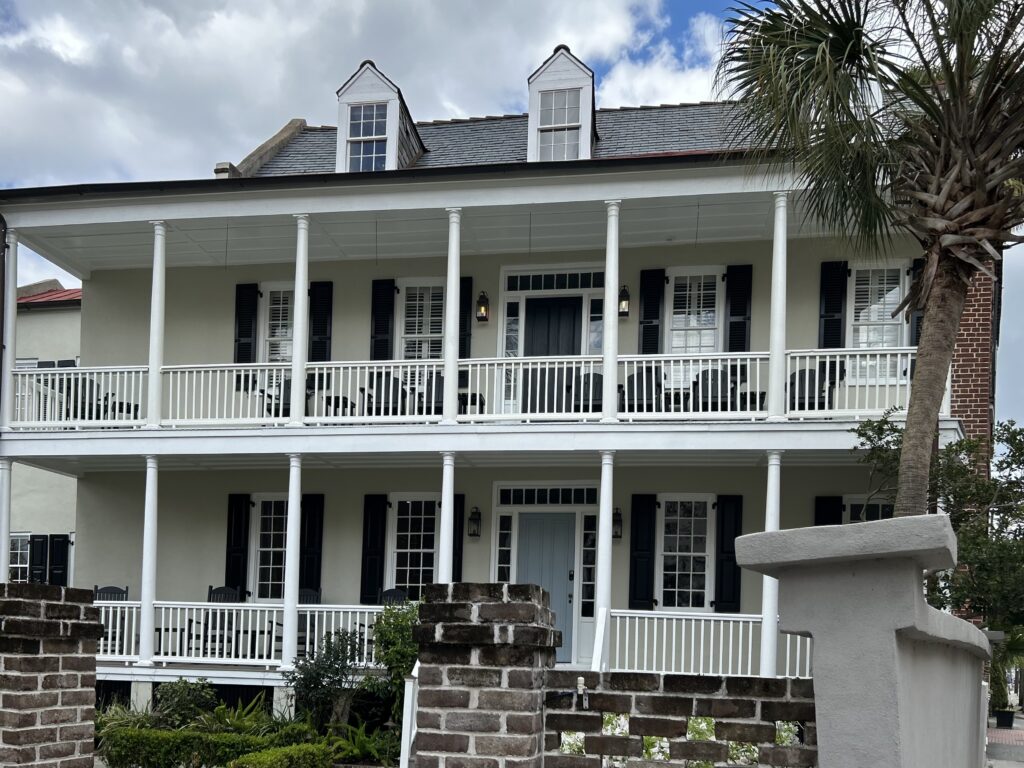
Close to the Old Exchange are several historic houses. One marker for the Scchreiner-Comerford House built in 1842 and another the Gadston House built in 1798.Finally the Jacob Rabb house dates from 1852,
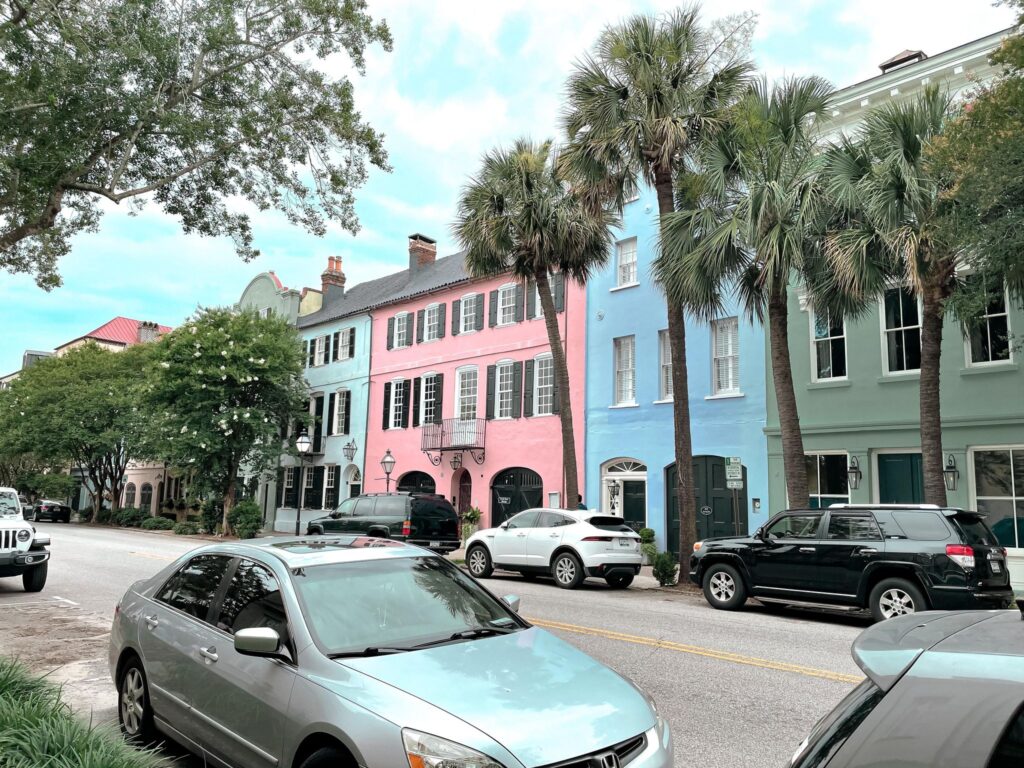
Farther down the Waterfront is Rainbow Row, a series of 13 colorful historic houses. This is one of Charleston’s most iconic landmarks. These Georgian row houses date to the 1740s when they served as homes and shops for merchants who relied on Charleston’s bustling waterfront trade. They were revived as part of Charleston’s historic preservation efforts.
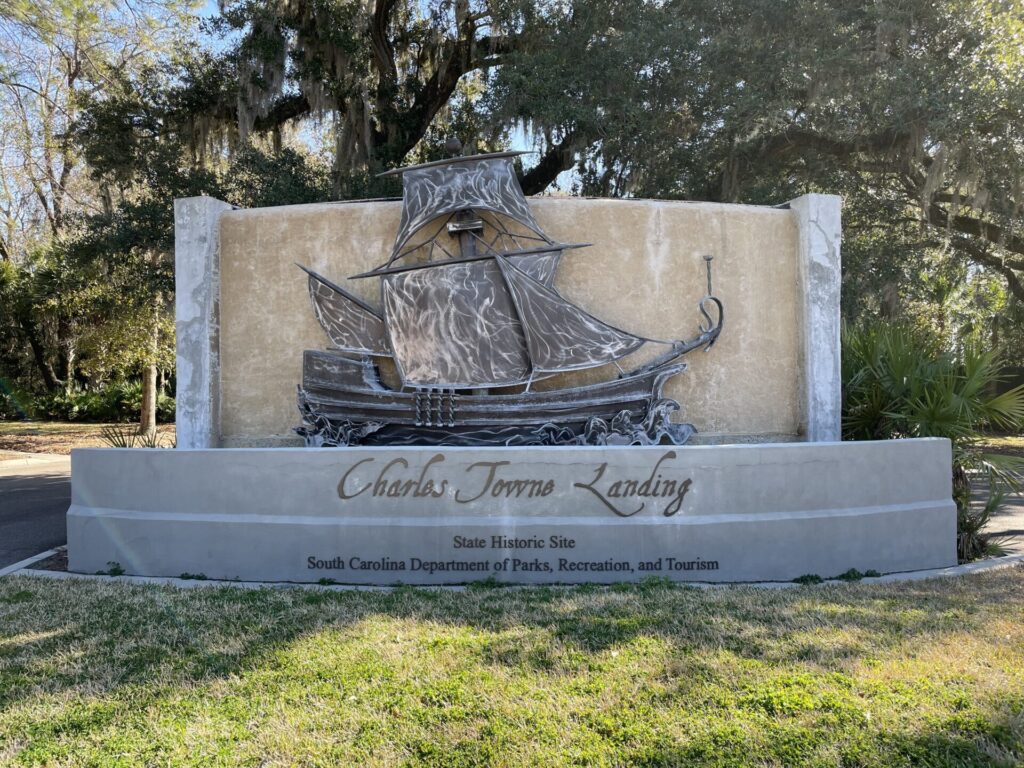
Charles Town Landing, the birthplace of the Carolina Colony, is the spot where the English settlers fist landed in 1670. It has become a park on the banks of the Ashley River.
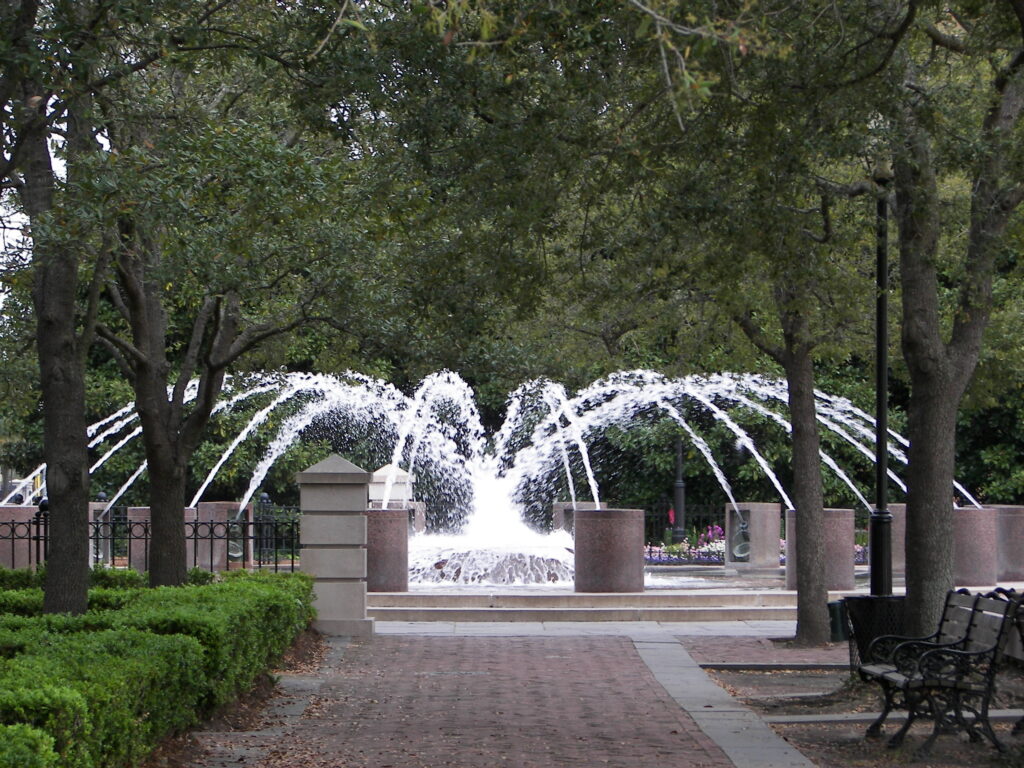
Also on the waterfront is Vendue Range, a site with a long history that has now become a park with a lovely fountain..
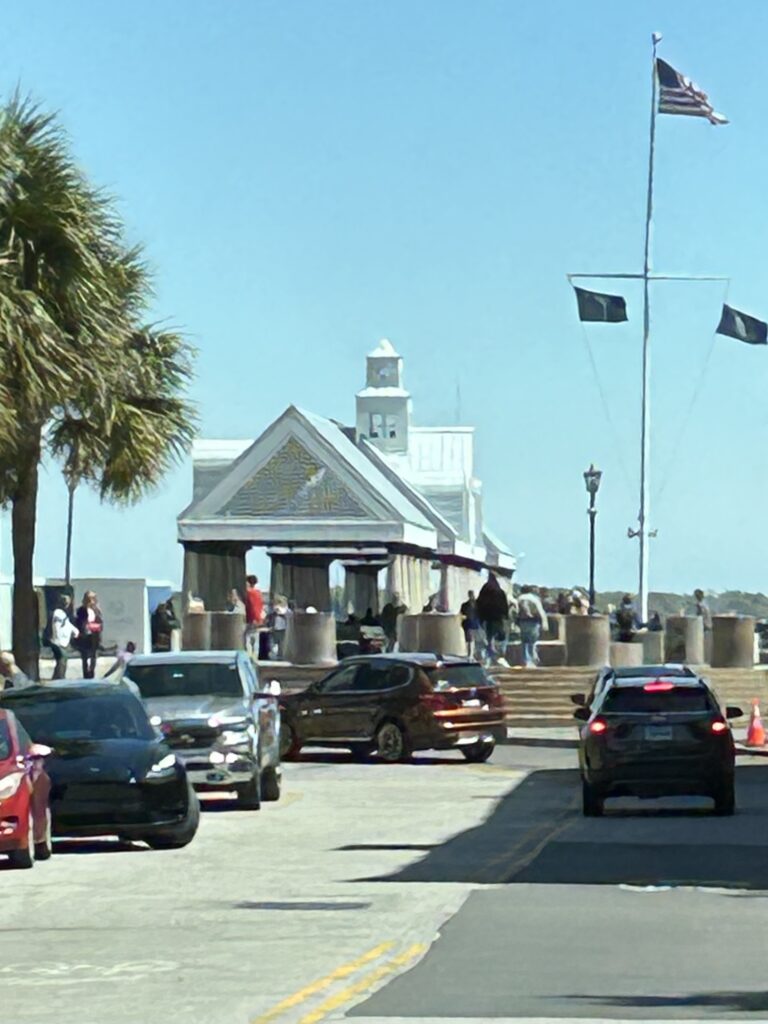
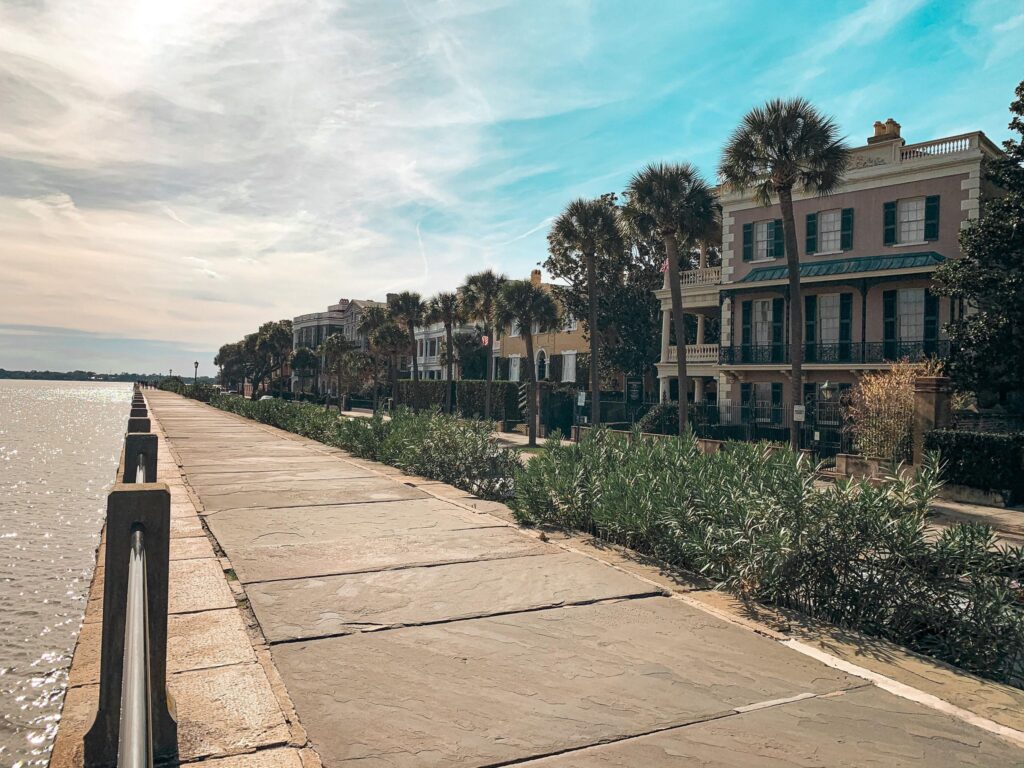
At the end of the Charleston peninsula sit White Point Gardens and the Battery. This is where the Ashley and Cooper Rivers meet in the Atlantic Ocean. This is a picturesque promenade lined with historic mansions. Along the water, you can see cannons and monuments from the Civil War era. It is a testament to Charleston’s strategic importance in American history.
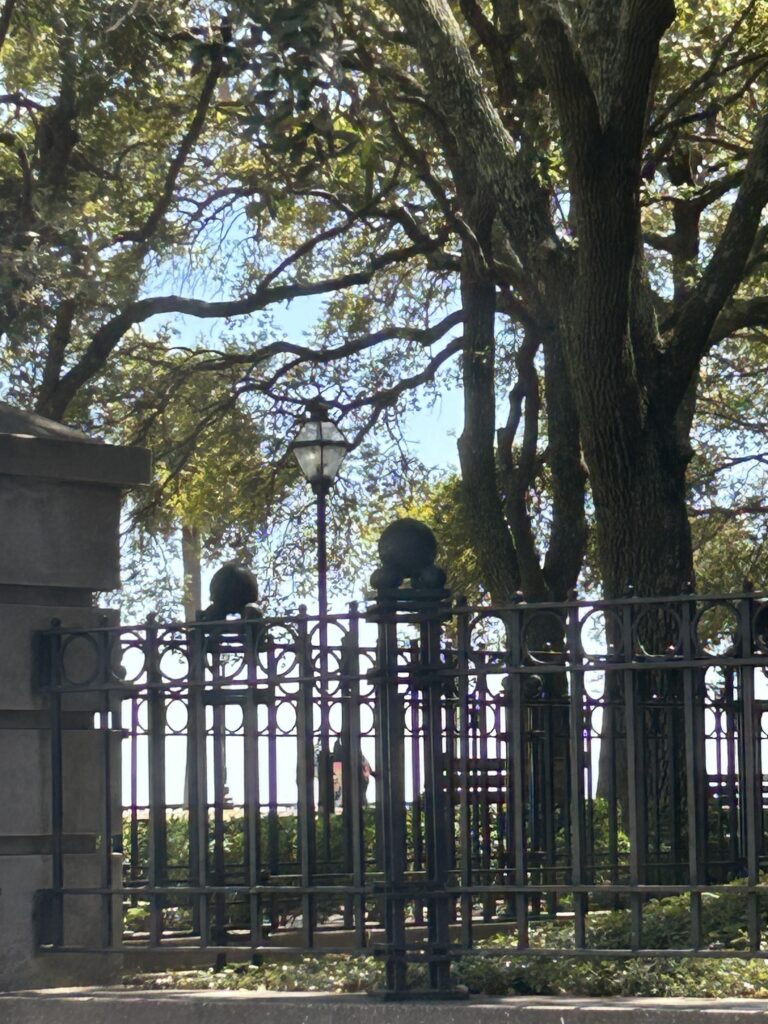
A short distance from the waterfront is the Historic Charleston City Market. Founded it the 1890s, it was originally established to sell meat, seafood, and produce to the lower and middle classes. It stretches four city blocks.
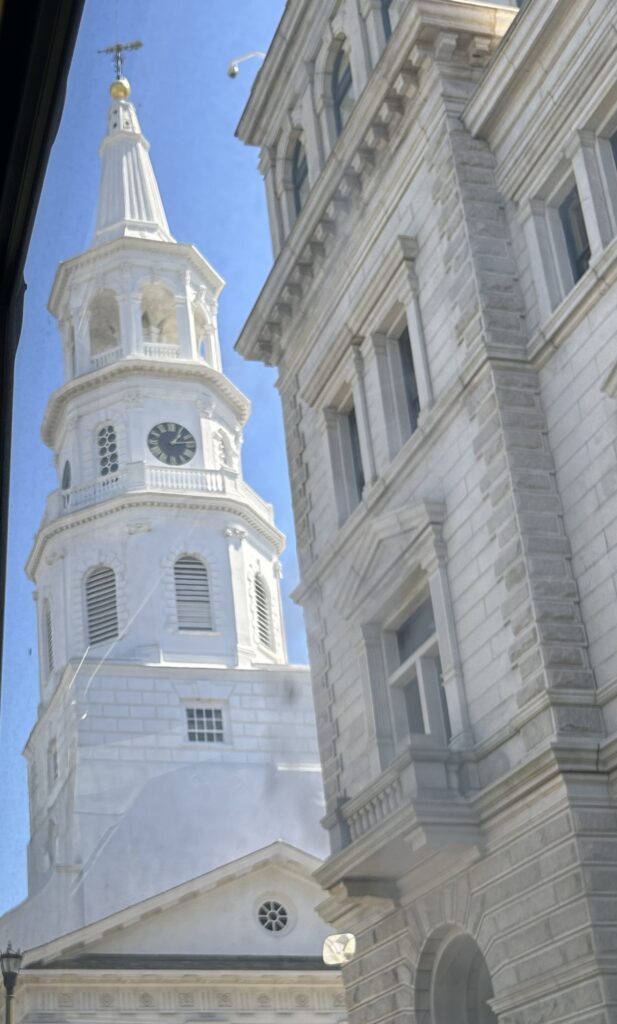
Inland is St. Michael’s Anglican Church, Charleston’s oldest surviving religious structure, completed in 1761. This magnificent Georgian-style church has witnessed the city’s most defining moments, from the colonial era to the Civil War and beyond. Its iconic steeple, visible for miles, served as a landmark for sailors navigating Charleston Harbor. The church’s interior showcases intricate woodwork, historic stained-glass windows, and an organ played by George Washington during his visit in 1791.
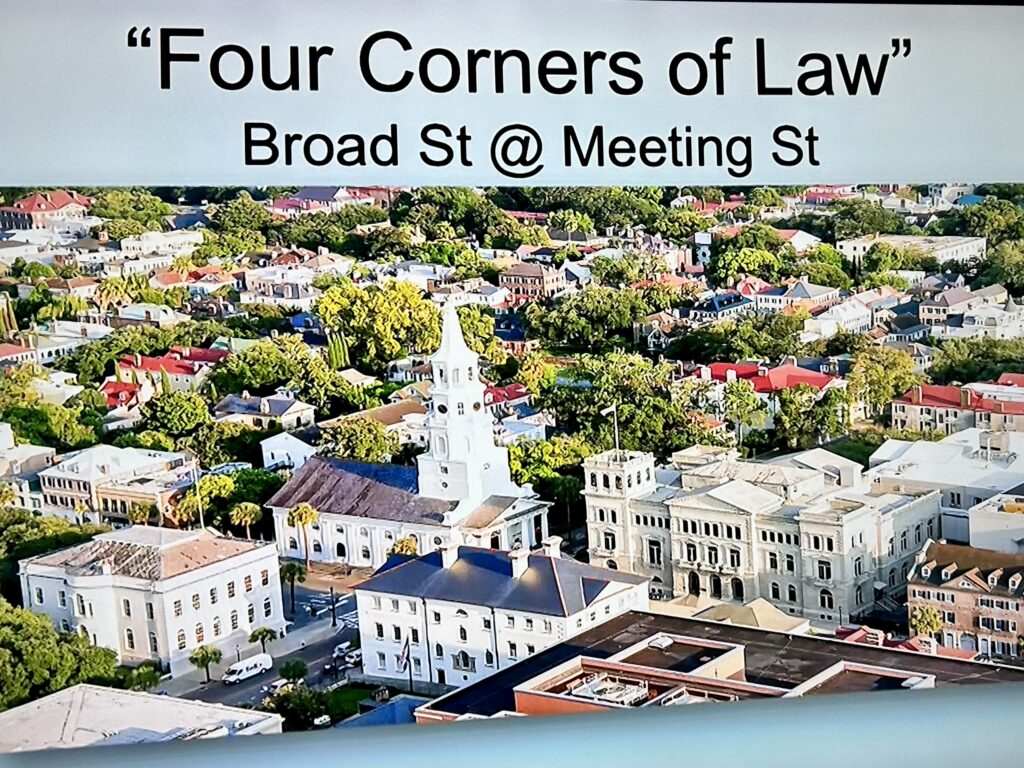
St Michael’s is one of the Four Corners of Law, the intersection of Meeting and Broads streets. On this intersection is the County Courthouse, representing State Law; Charleston City Hall, representing City Law; the Federal Courthouse, representing Federal Law; and St. Michaels, representing God’s Law.
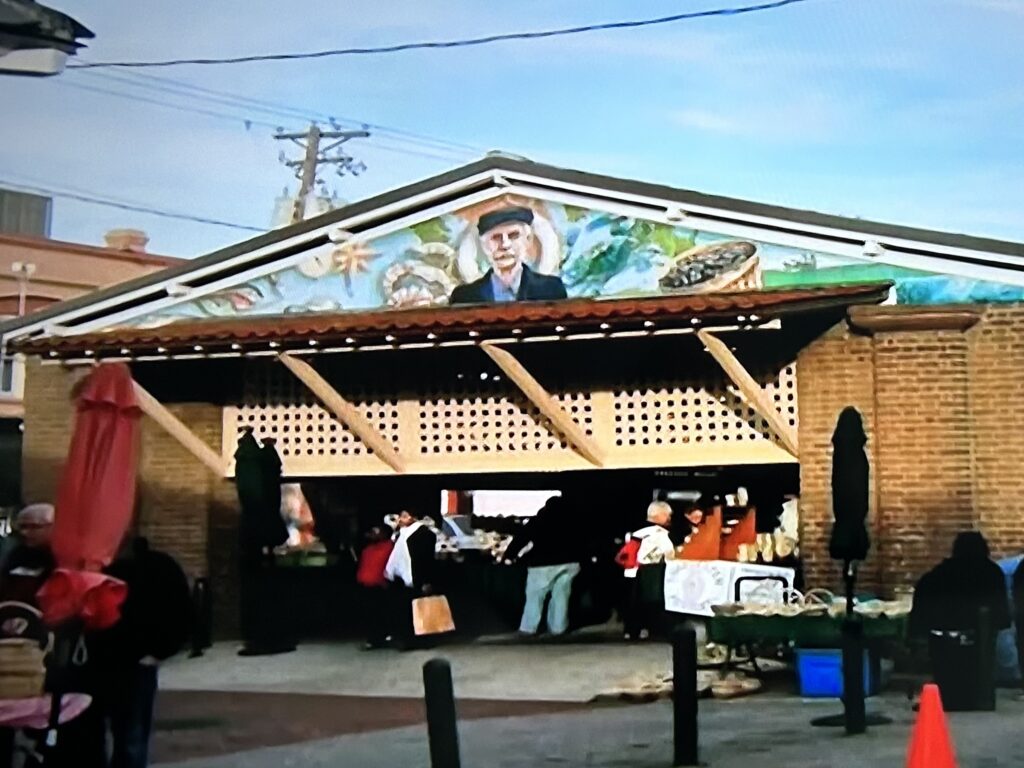
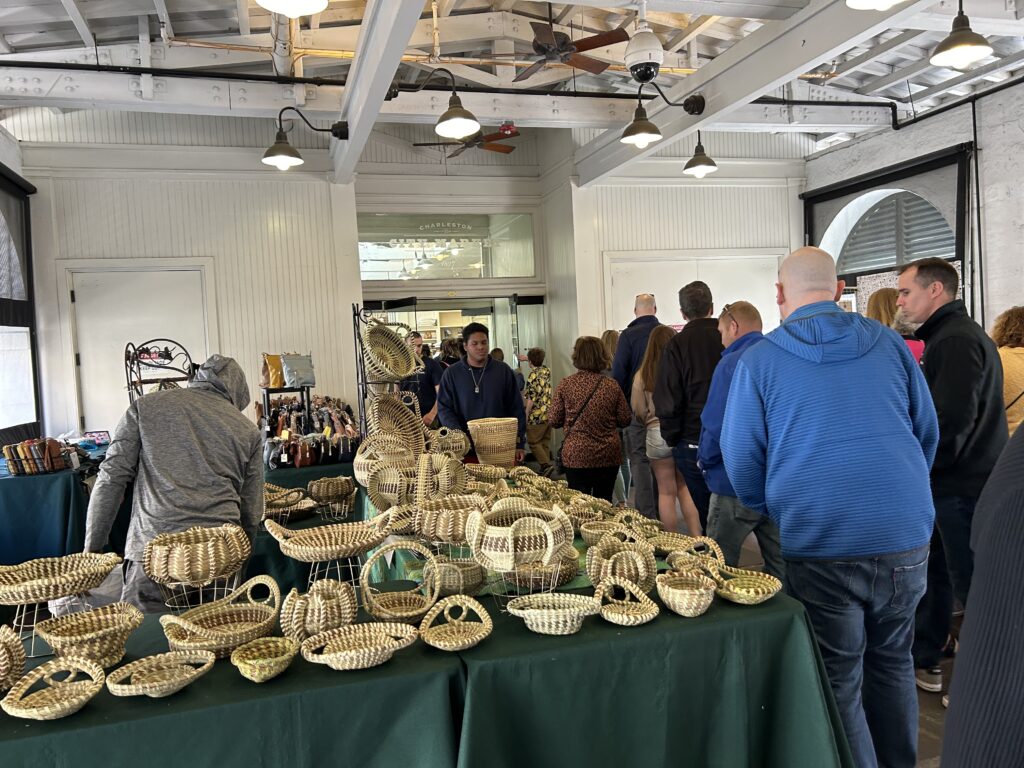
Sweet Grass Baskets at the Market
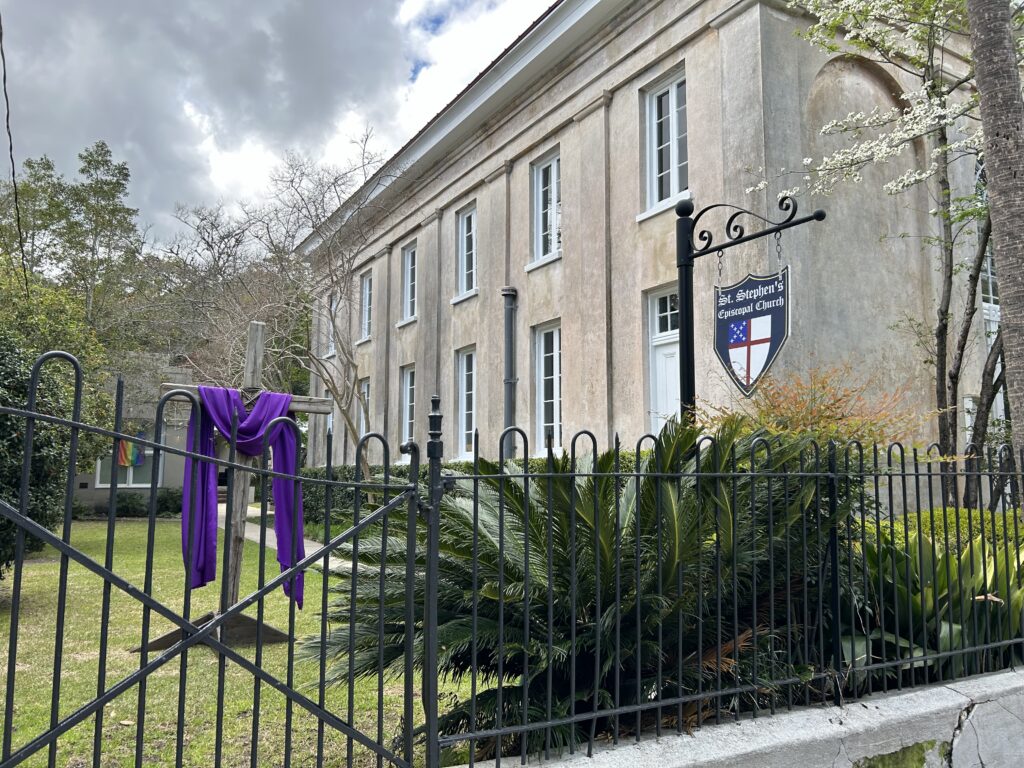
Another Episcopal Church walking distance from the ship was St. Stephen’s. We worshipped there on Palm Sunday, one of our days in port. St. Stephen’s was the first church in Charleston where pews were not rented or sold. The congregation first gathered in 1822 in a rented room. In 1824, a small church was erected. It was destroyed in the Great Fire of 1835. A year later, the present church was completed. Its benefactors insisted that no one would ever be turned away regardless of race, condition, or social standing.
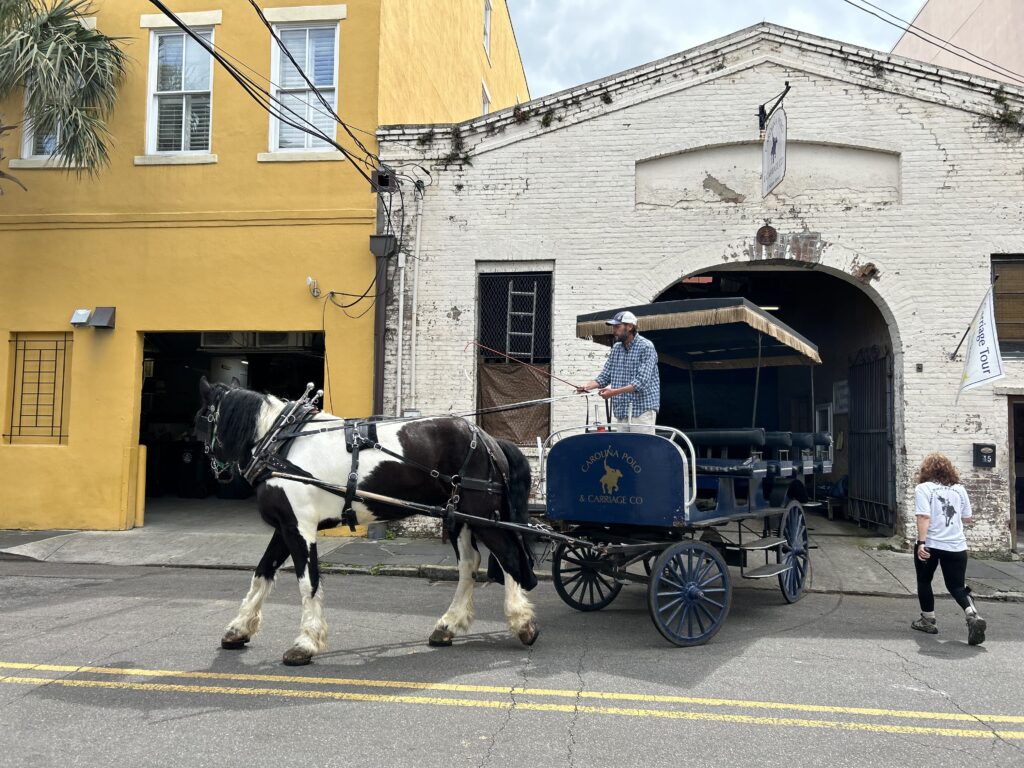
Of course the most fun way to see Charleston is in a horse-drawn carriage. They were ubiquitous.
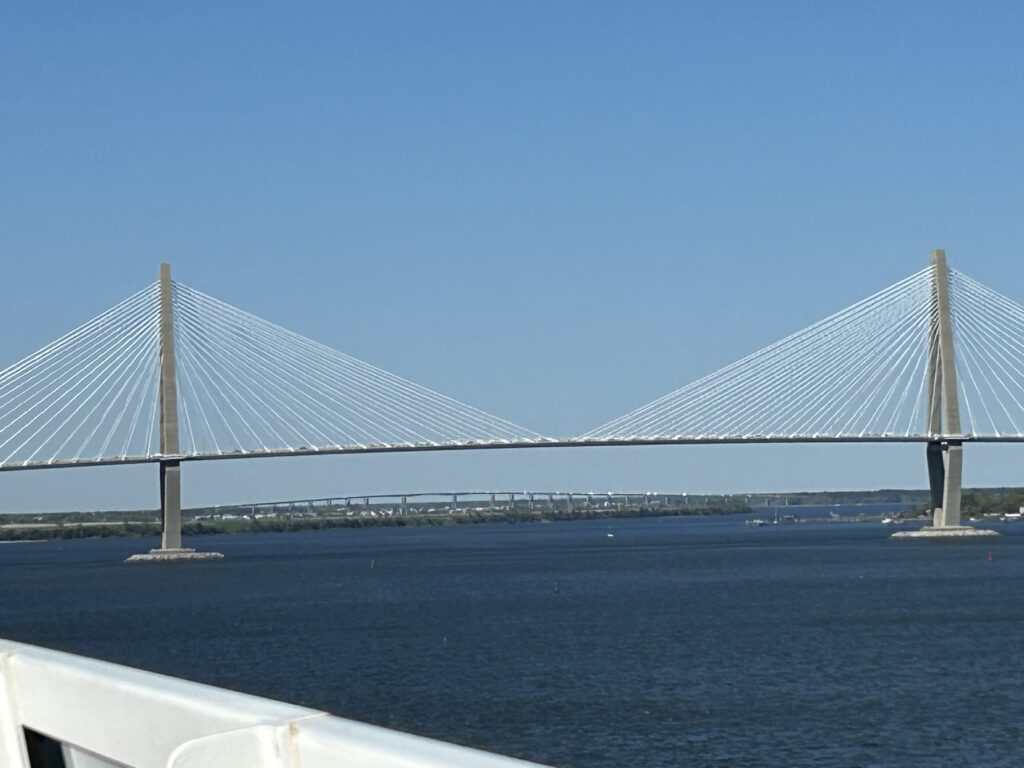
As we left port, we had a wonderful view of the Arthur Ravenel Bridge which spans the Cooper River between downtown Charleston and Mount Pleasant. It is 2.7 miles long. It is a cable-stayed bridge which gives it its iconic shape. It is tall enough to have a 186 ft clearance for ships to pass underneath.
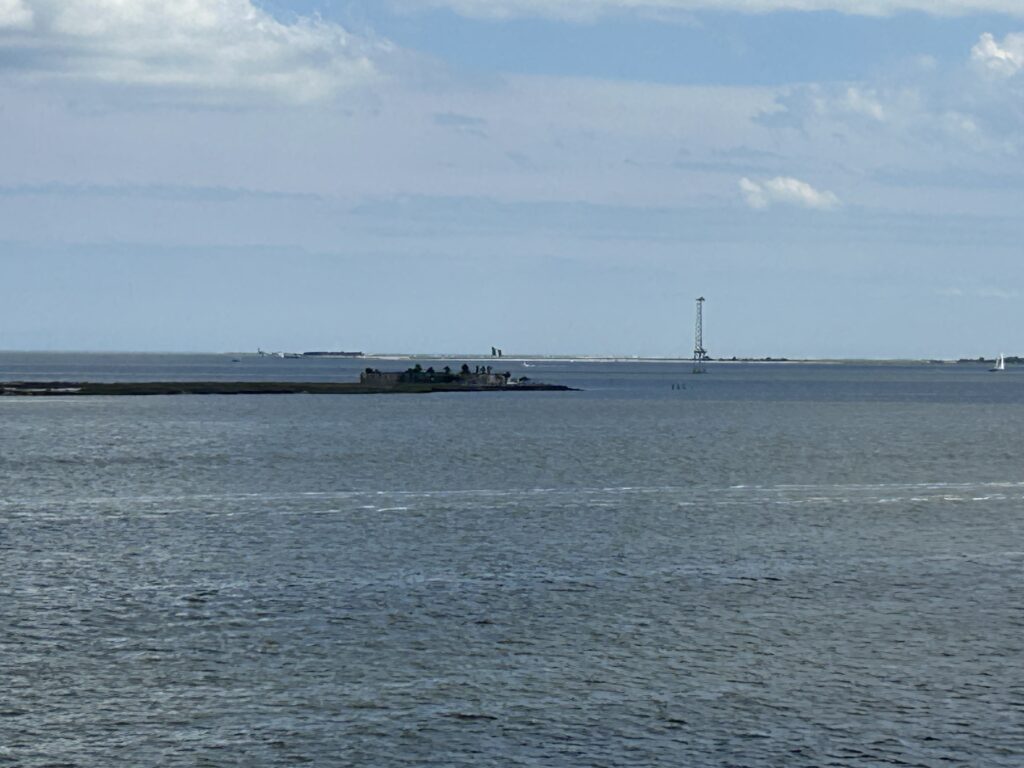
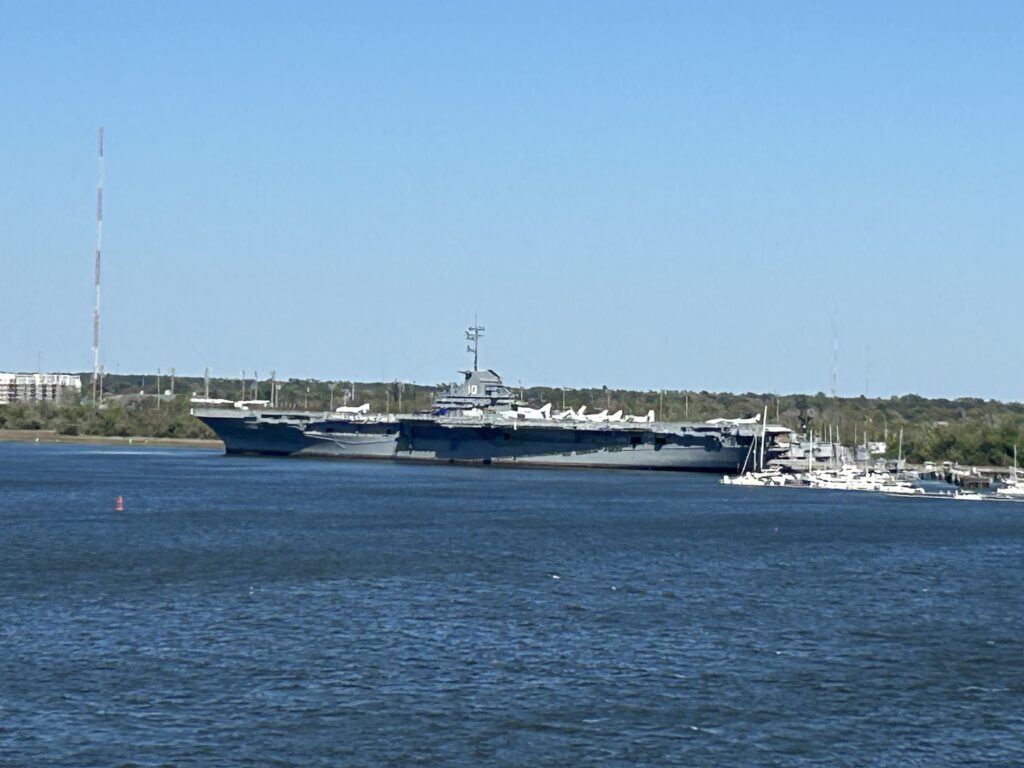
Leaving port, we could also see an aircraft carrier at Patriot’s Point Maritime Museum. There you can see the USS Yorktown and explore the Naval and Maritime history of the area.
Cape Canaveral
Cape Canaveral is known the world over for its decades-long ties to space exploration and the space industry. The city itself is a short way south of space force station and the Kennedy Space Center.
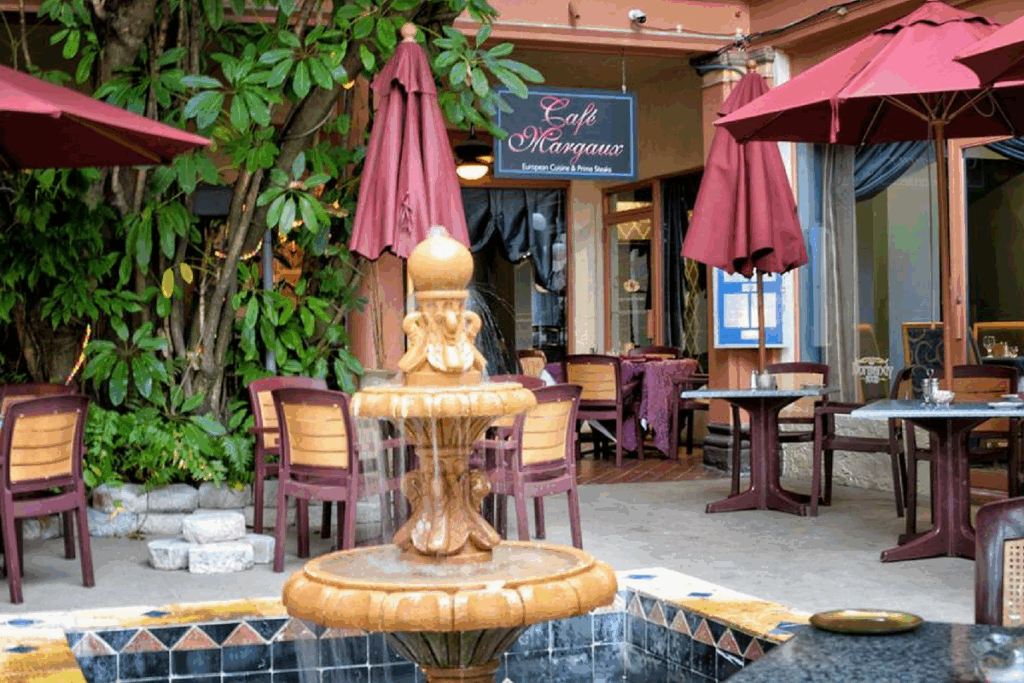
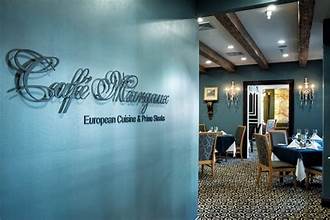
While there is a lot to see here, I opted to spend the few hours we had with a long-time friend who lives in nearby Titusville. She and her husband drove to the port to pick us up and take us to lunch. Our memorable lunch was a Café Margaux in Cocoa Village.
Cocoa Village is about half an hour from the cruise port is surrounded by hundred-year-old majestic oak trees on the Indian River. It is an enchanting spot with beautiful restored historical buildings dating back to the 1880s. Legend has it that a woman who lived on the banks of the Indian River would welcome sailors with a nice, warm cup of hot cocoa. This hospitable gesture led to the name Cocoa Village and the town’s reputation for “good ol’ Southern hospitality.”
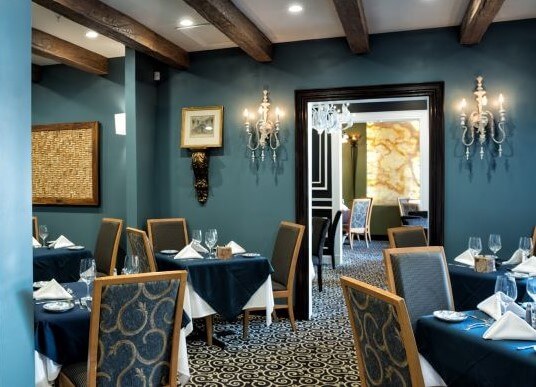
After strolling through the streets of the village, we went to Café Margaux for a gourmet meal. I later learned that Café Margaux is the only Florida restaurant and one of 18 nationwide to receive a coveted DiRōNA award. Its atmosphere exudes elegance and charm. The experience was delightful, made more so by time spent with good friends. What a wonderful day!
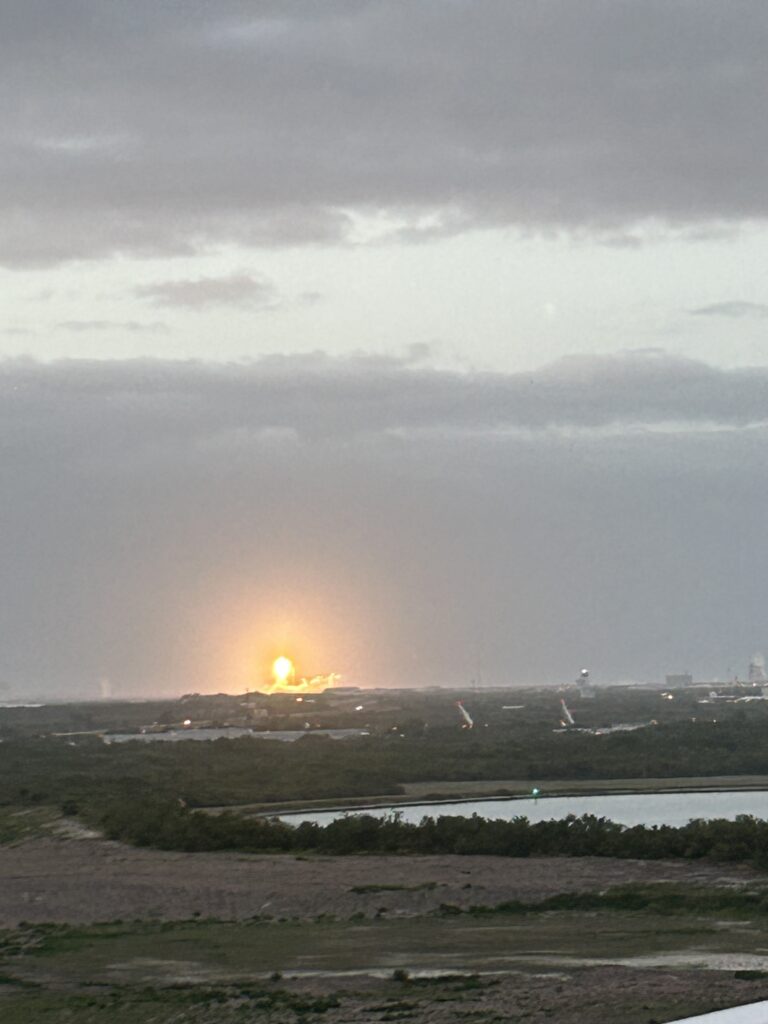
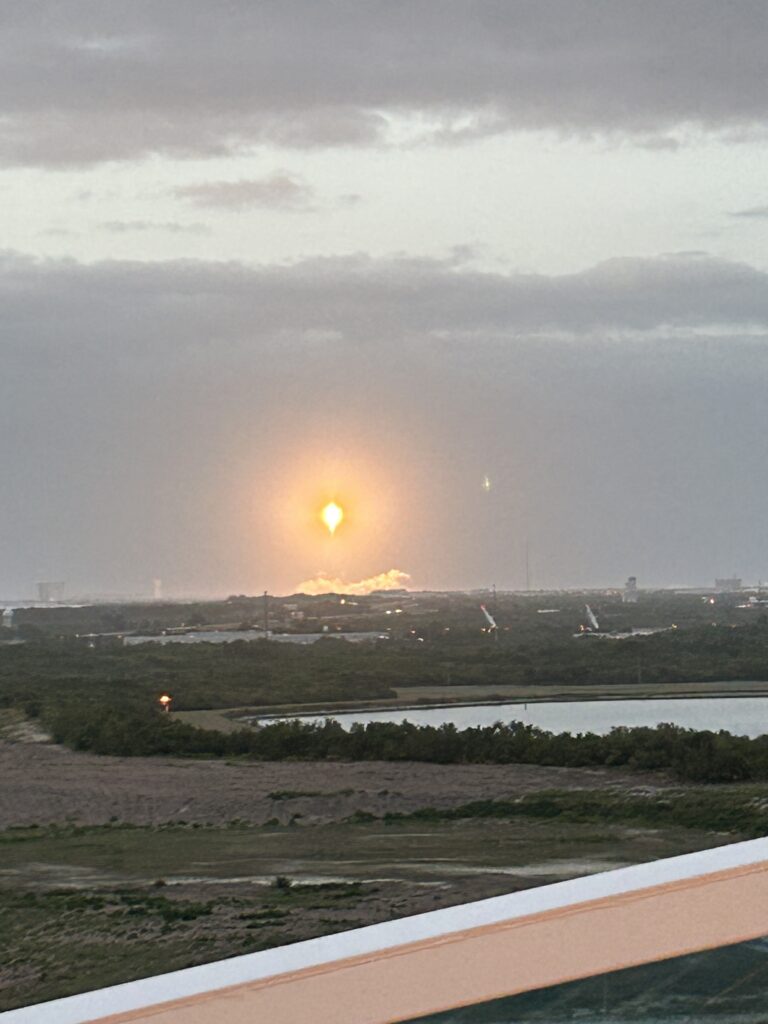
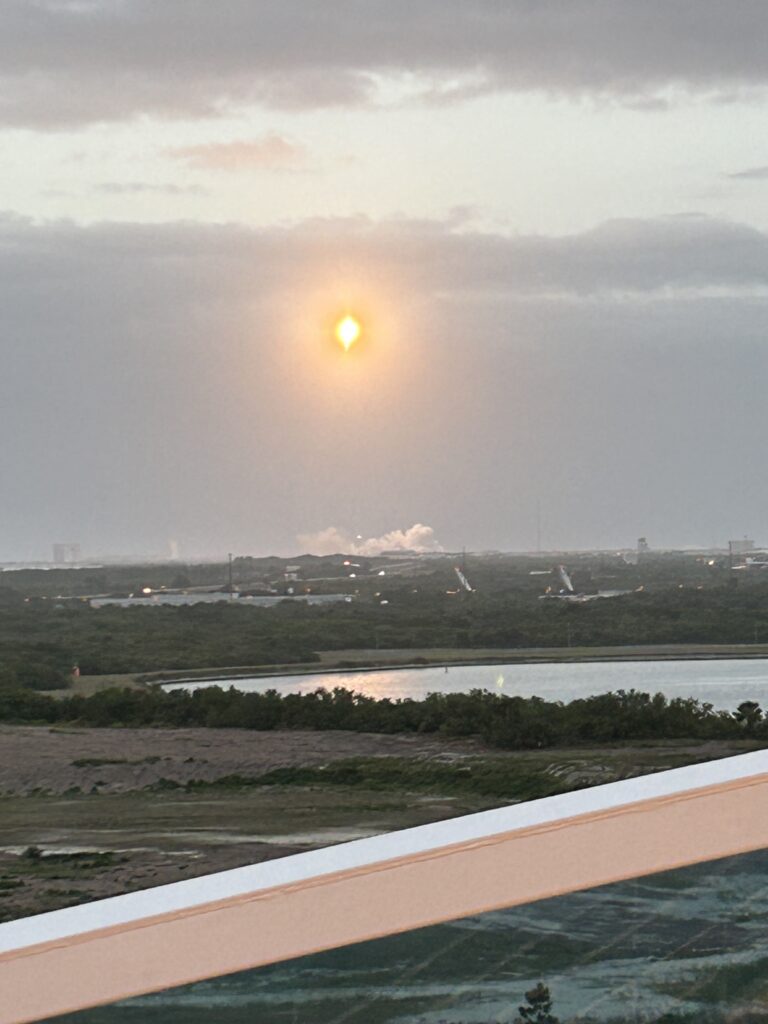
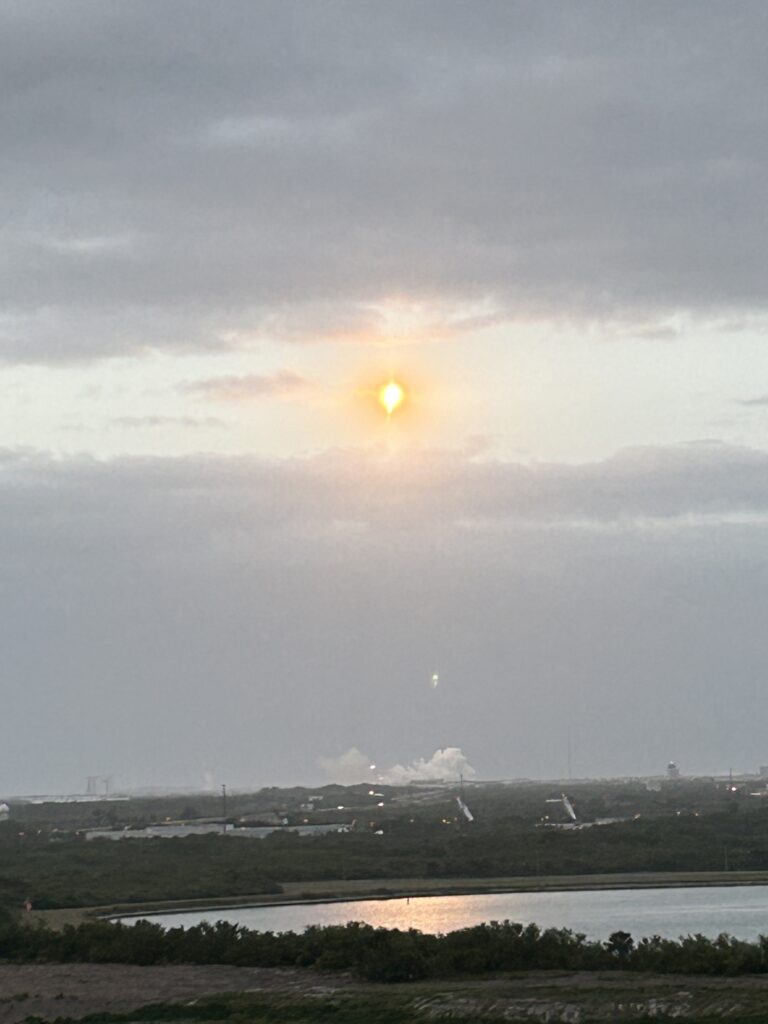
Two exciting things happened when we returned to the ship. First, another cruise ship in port caught fire, cancelling that cruise. The fire broke out in the exhaust funnel of the Carnival Freedom. We could see smoke and some flames coming from the exhaust funnel. No one was hurt but the damage required extensive repairs. The second was the launch of the SpaceX Falcon 9 rocket, with 23 Starlink satellites on board, that night. This was the 175th Flacon 9 flight, and we had perfect seats for the spectacle. Liftoff occurred at 7:42 p.m. and eight and one-half minutes later, the booster landed on the SpaceX droneship. It was so exciting to experience this space event on board at Cape Canaveral.
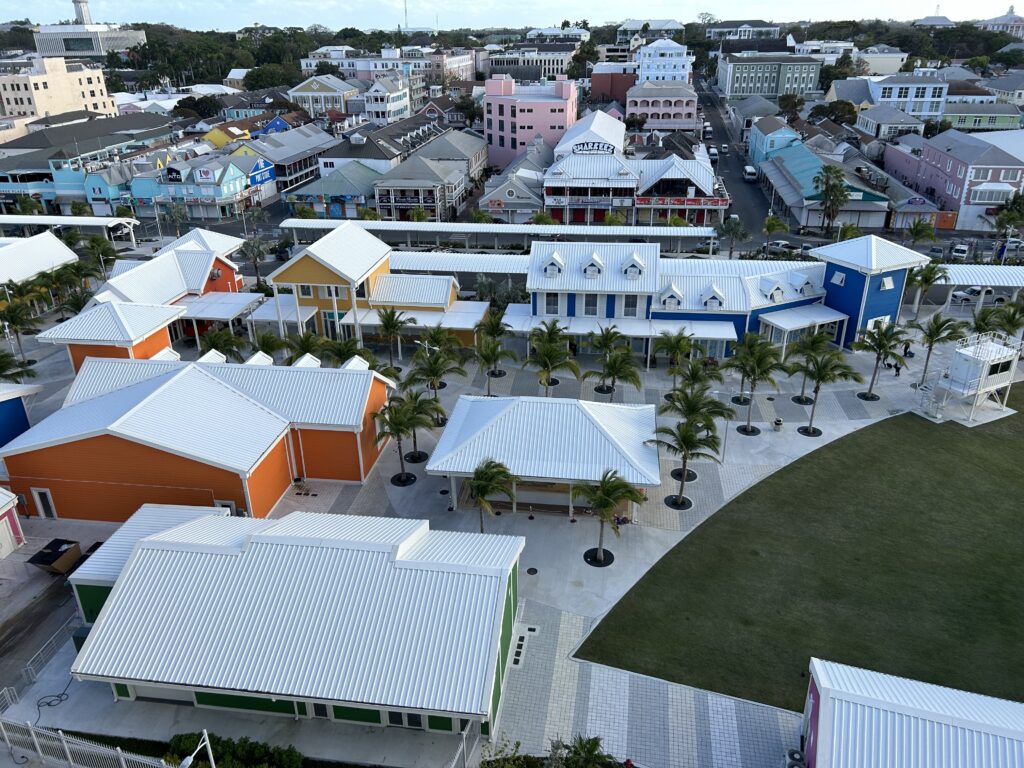
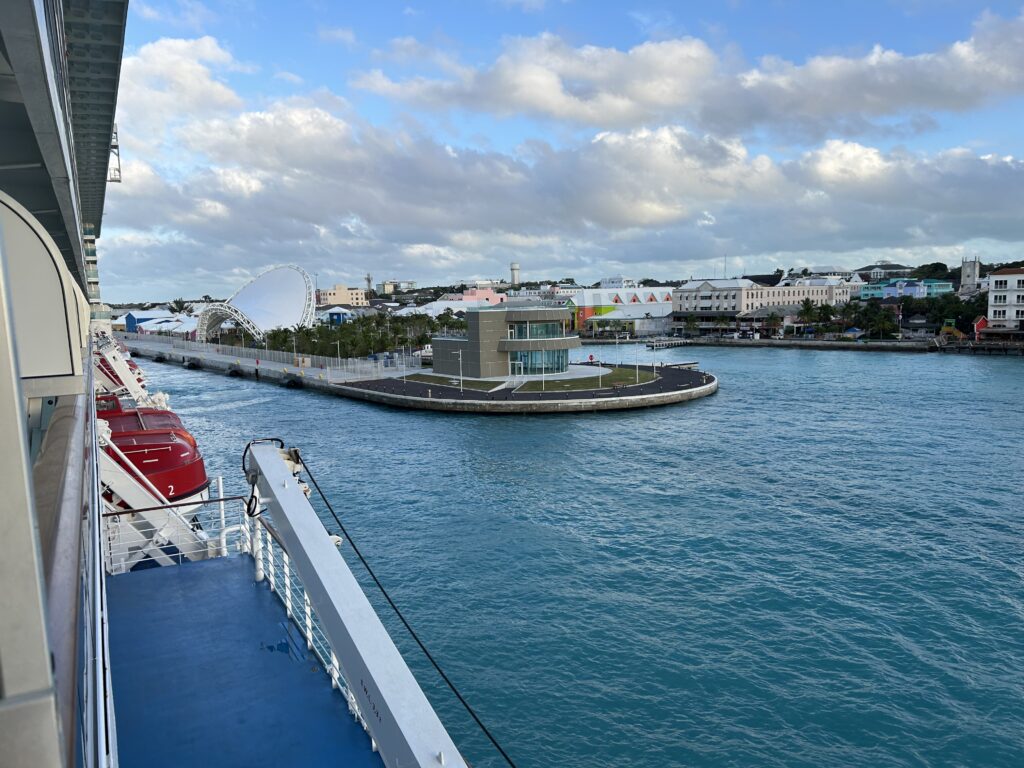
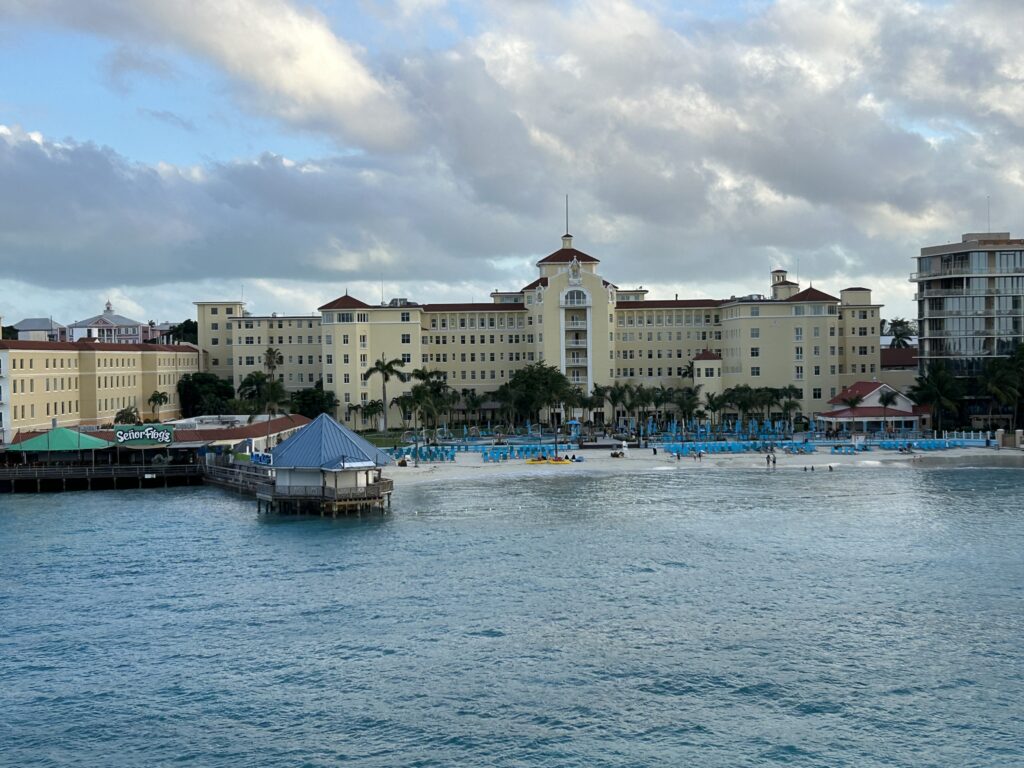
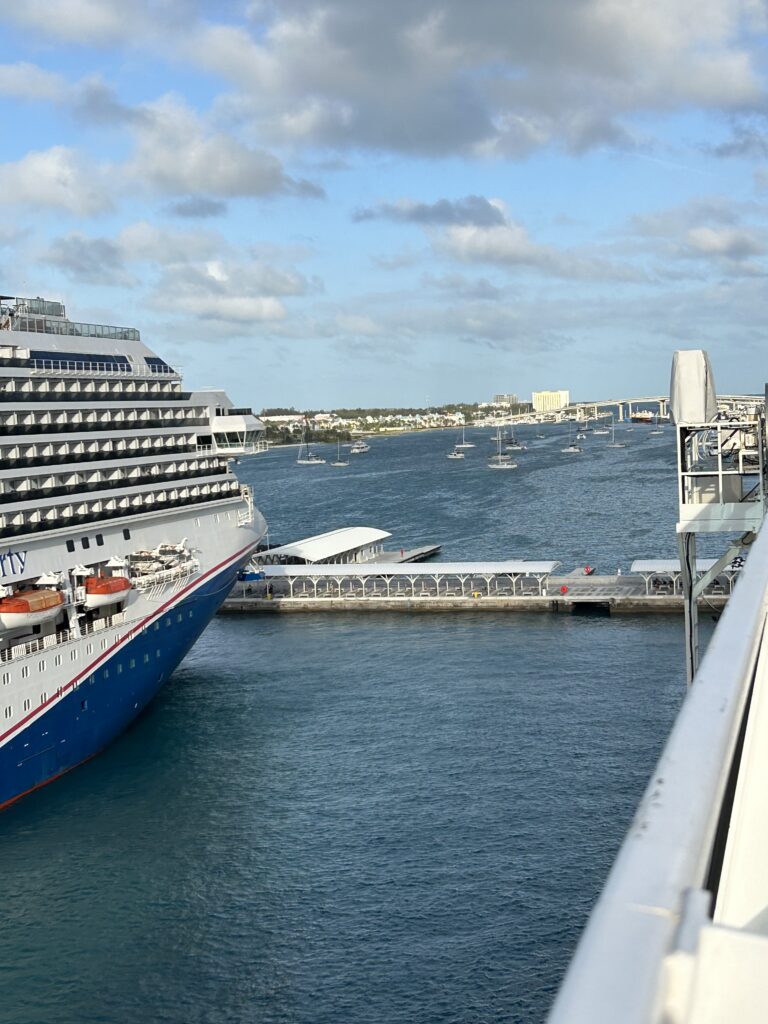
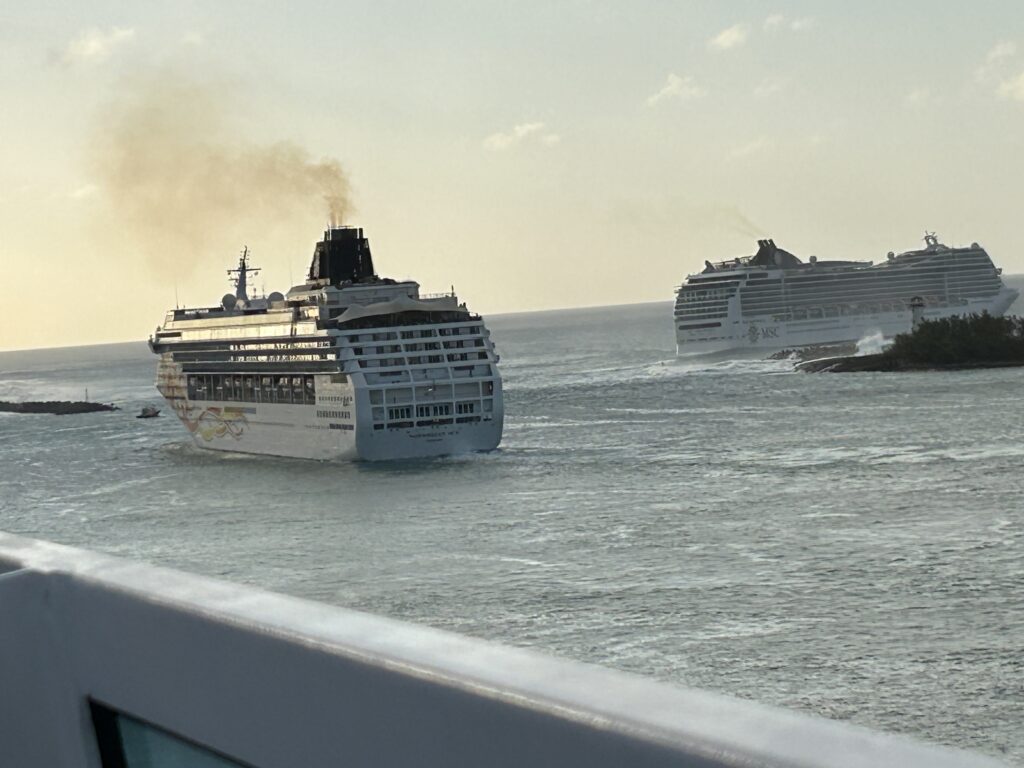
From here, we stopped at Nassau before returning to Miami for the last time this trip. We have been to Nassau several times, so we decided to stay on the ship and enjoy its amenities with fewer people on board. I will close this post with a few pictures from Nassau taken from the ship.