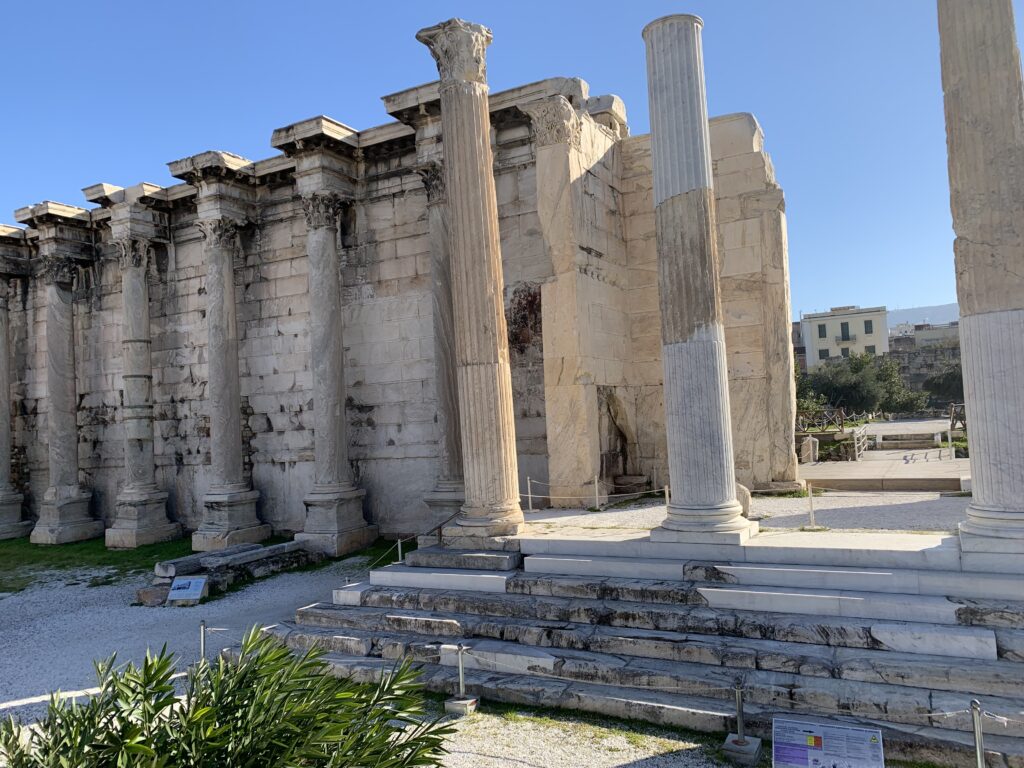
Today we set out for Ancient Agora and Temple of Hephaestus. There was a strike today, so our taxi driver tried to take a back way to the Ancient Agora. He got stuck in some road work and had to back up a long way in rush hour traffic. It was some trip. He let us off close and told us how to find it. We took a long detour through the old part of Athens but eventually got there. On the way we saw the remains of the Library of Hadrian. Hadrian’s Library was built in 132 C.E. as part of the Roman Emperor’s plans to make Athens a major cultural center. Its 100 columns and high walls were designed to make a big impression
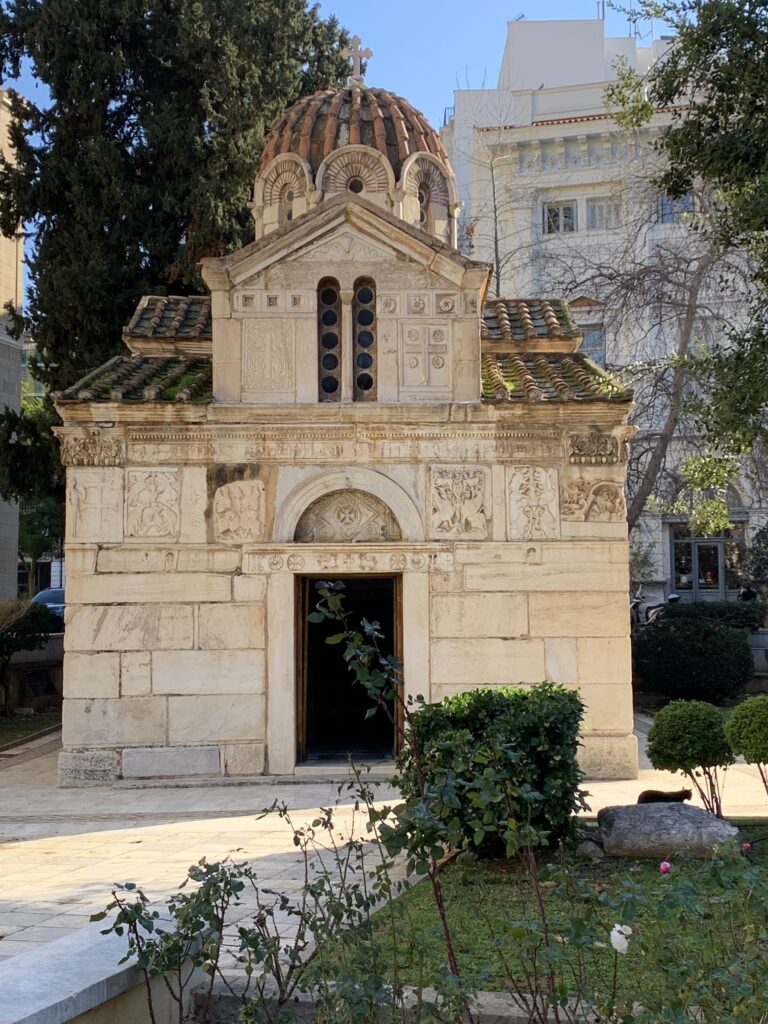
Then we took a wrong turn and walked to a small Greek Orthodox church, Church of Virgin Mary Gorgoepekoos and Saint Eleutherius. This is a 12th century church built on the ruins of an ancient temple dedicated to Eileithyia. Its well-preserved dome is considered the best example of Athenian dome structure.
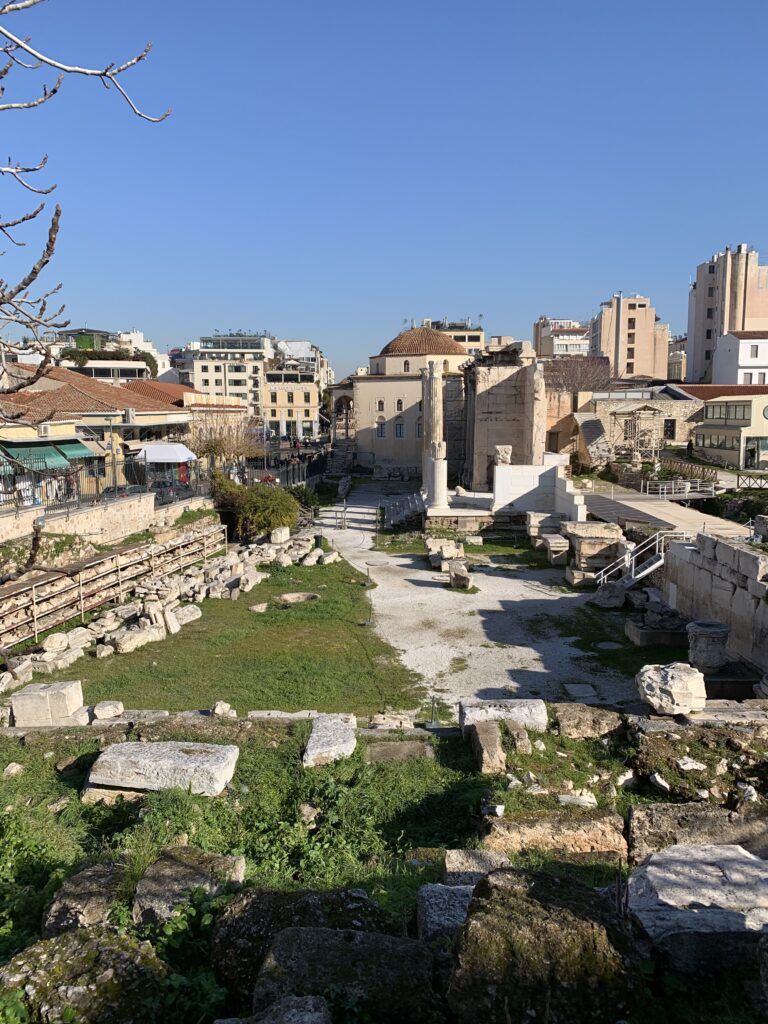
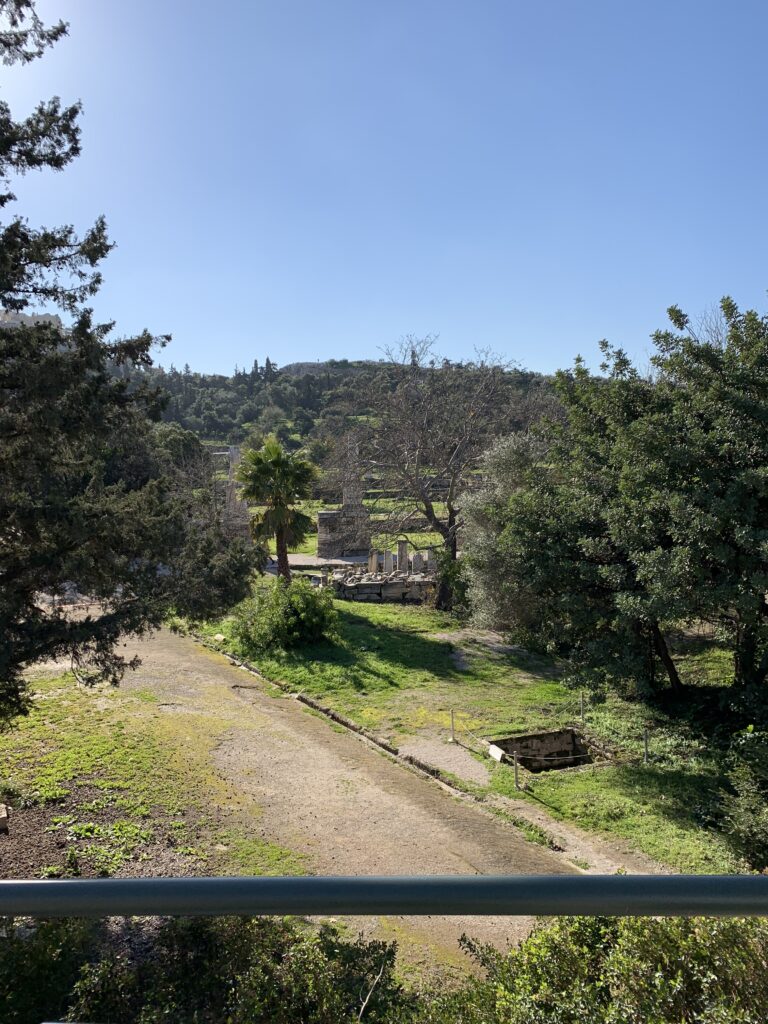
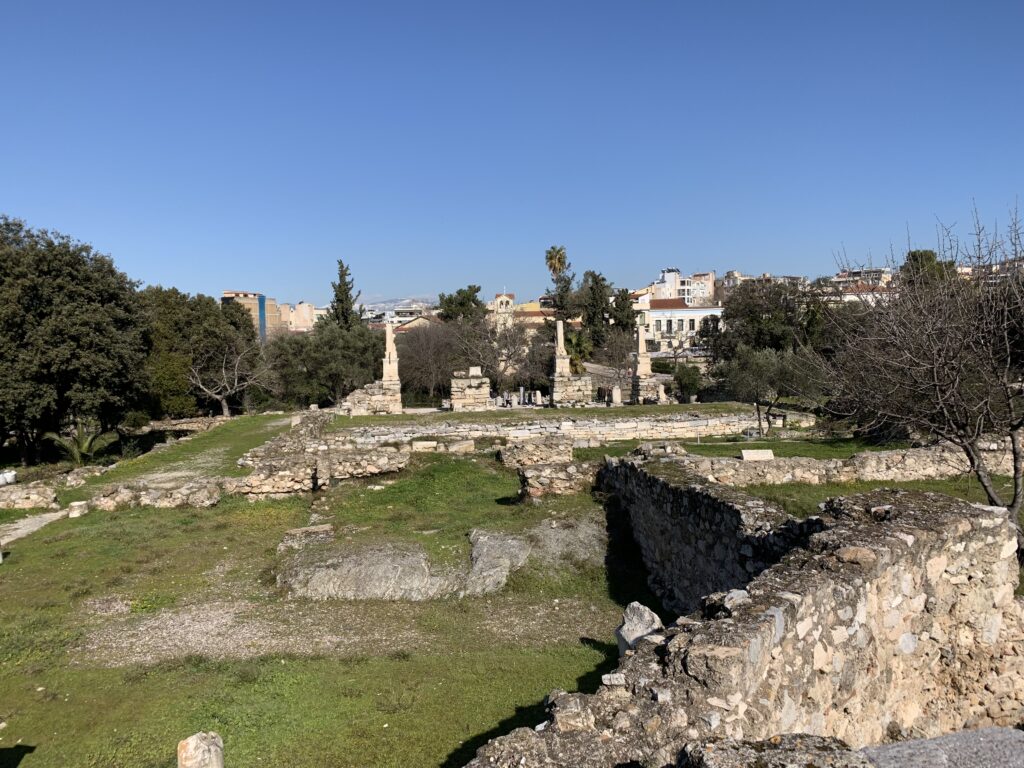
The Ancient Agora is as old as Athens itself. It started as a residential area but by the 6th century B. C. E. it became a public space. During the period of Classical Athens is housed civic ofices as well as temples and other public buildings. It was also the marketplace where all commercial activity was held. We wandered among the ruins seeing the remains of this civilization.
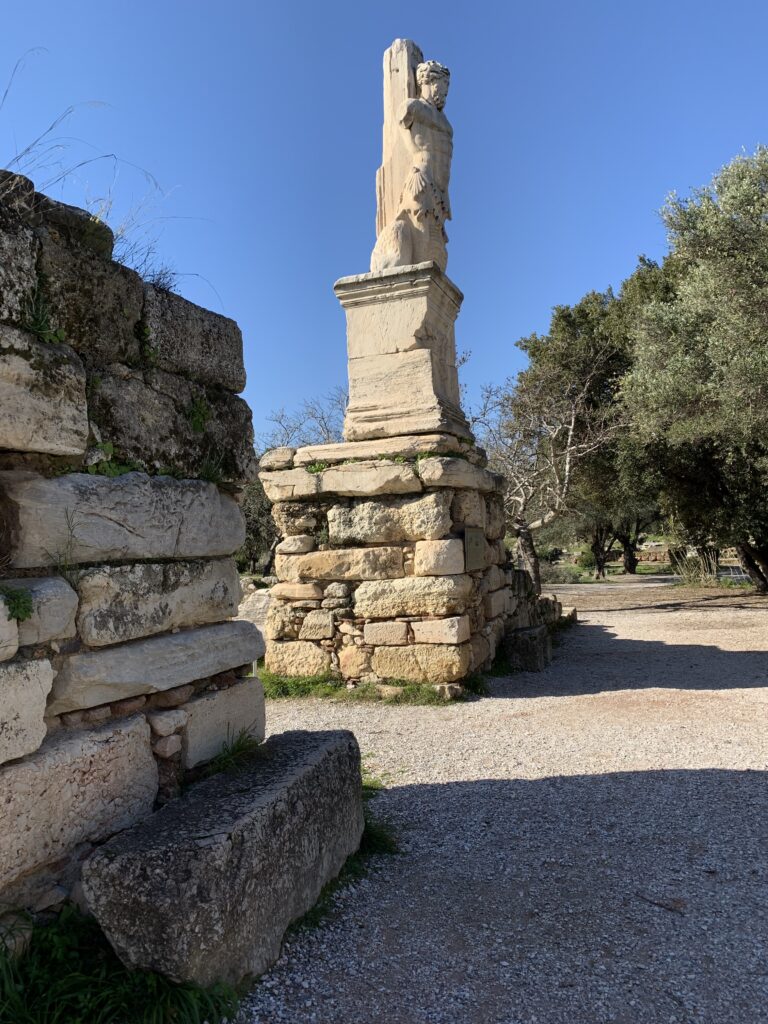
This Triton is one of four pedestals marking the entry of the Odeon (concert hall) of Agrippa along the Panathenaic Way. It dates from 150-175 CE. The ruins of this hall are in the center of the historic Agora.
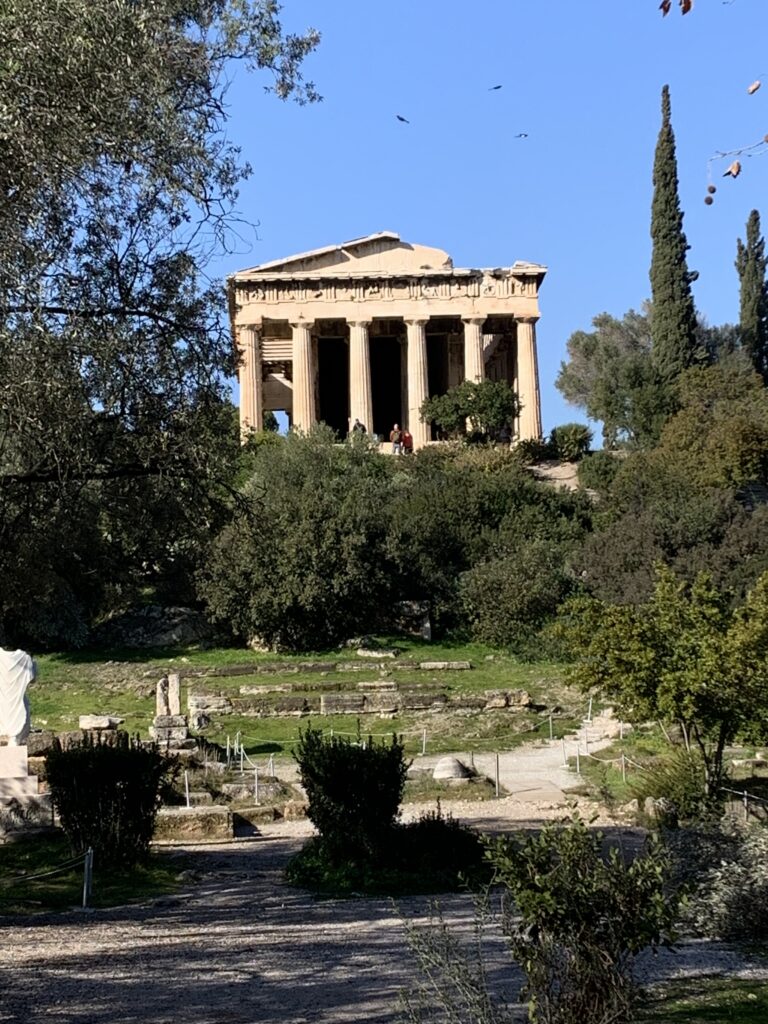
The Temple of Hephaistos was built around 450 BCE; this is one of the best preserved ancient Greek temples. Hephaistos was the god of metal working craftsmanship, and fire. The goddess Athena was also worshipped here. The temple is made of Pentelic marble from the region. It is of Doric style with a portico and columns surrounding it. Around 700 CE, it was converted into a Byzantine church dedicated to St. George. Some people believed that the bones of the legendary Athenian king Theseus were buried there, so it also is referred to as Theseom.
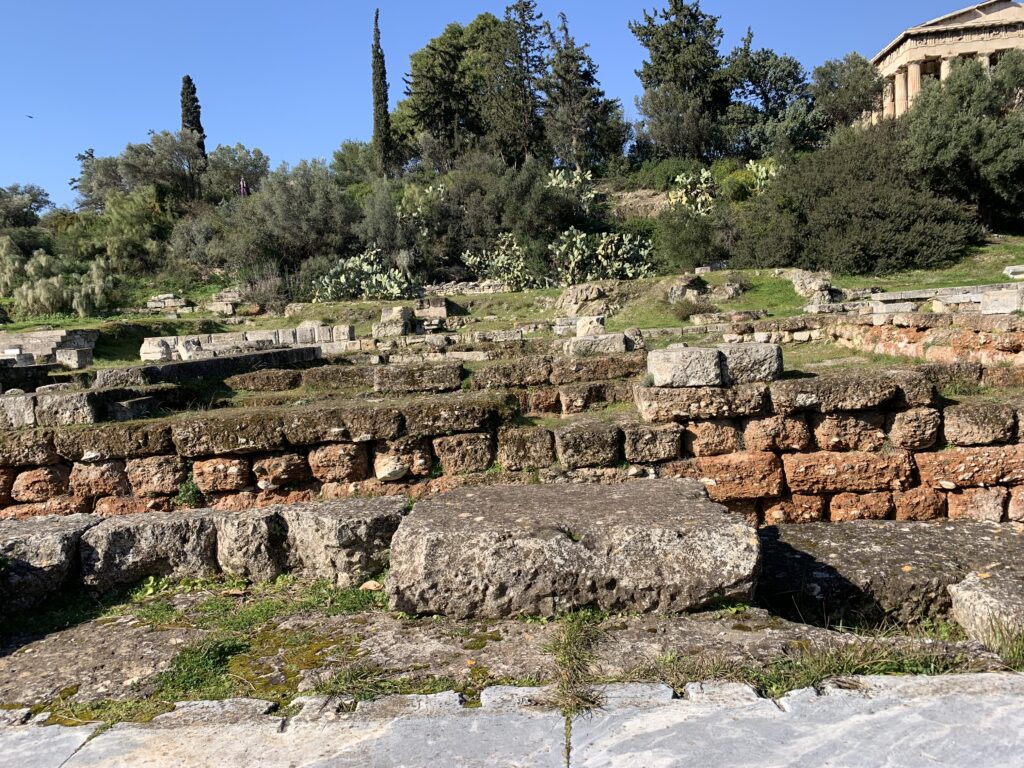
In front of the Temple we encountered the Ruins of a Metroon, an ancient sanctuary to the Mother of the Gods, Cybele. It dates back to the 4th century BCE. The temple served as both a place of worship and a state archive. The Athenians believed that law and civic duty were under divine protection, showing the connection between law and religion. The temple was made of limestone and marble.
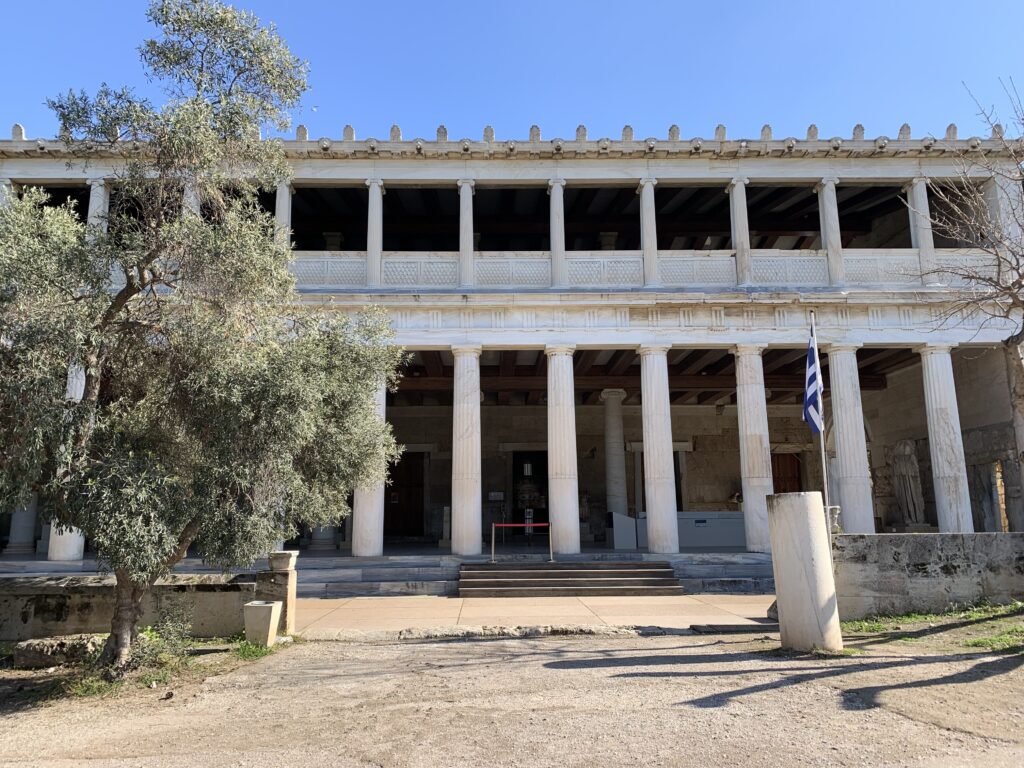
The sanctuary of Aphrodite abutted the Stoa of Attalus, which was a significant site of worship and rituals, dating from the 4th century BCE.
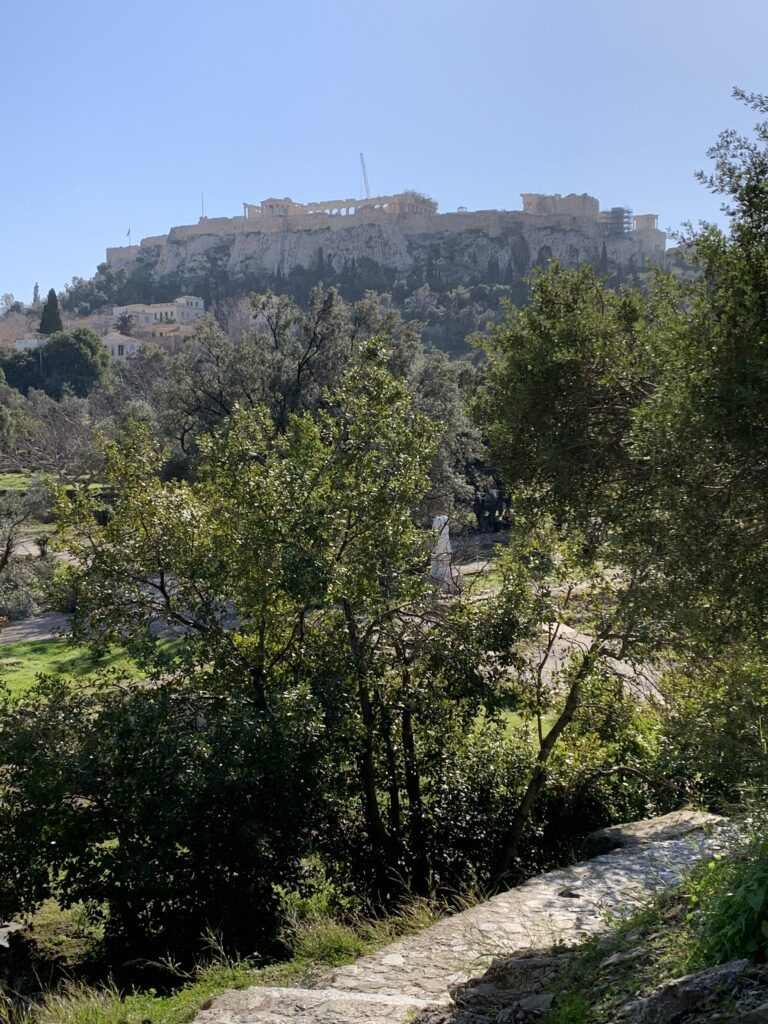
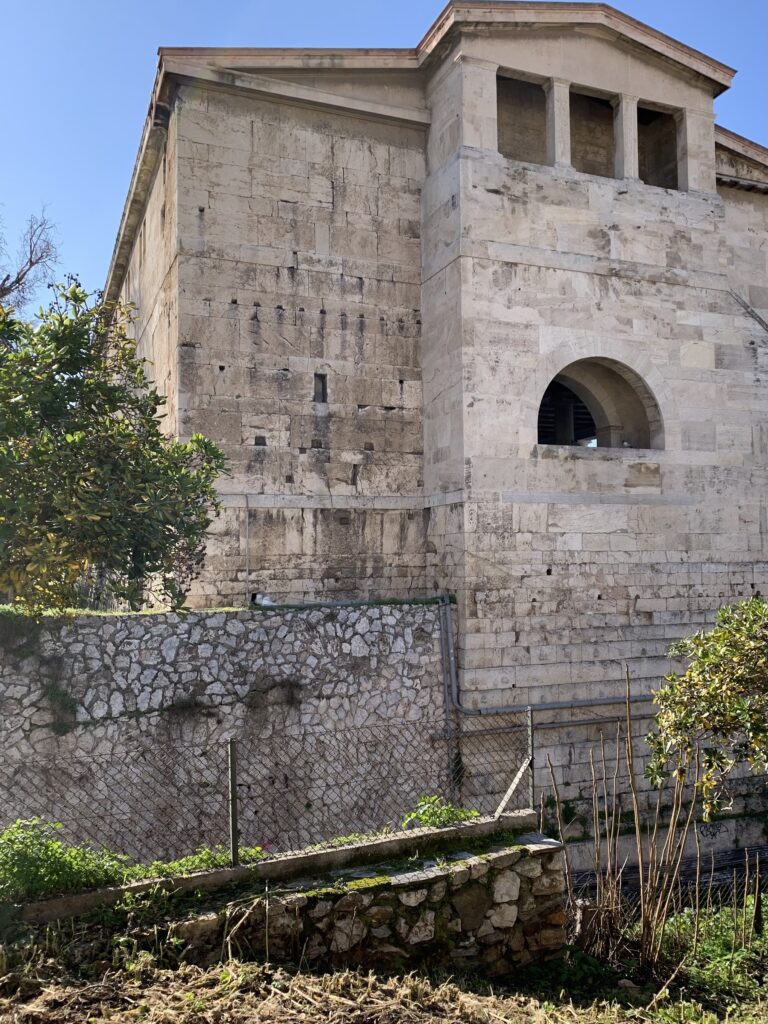
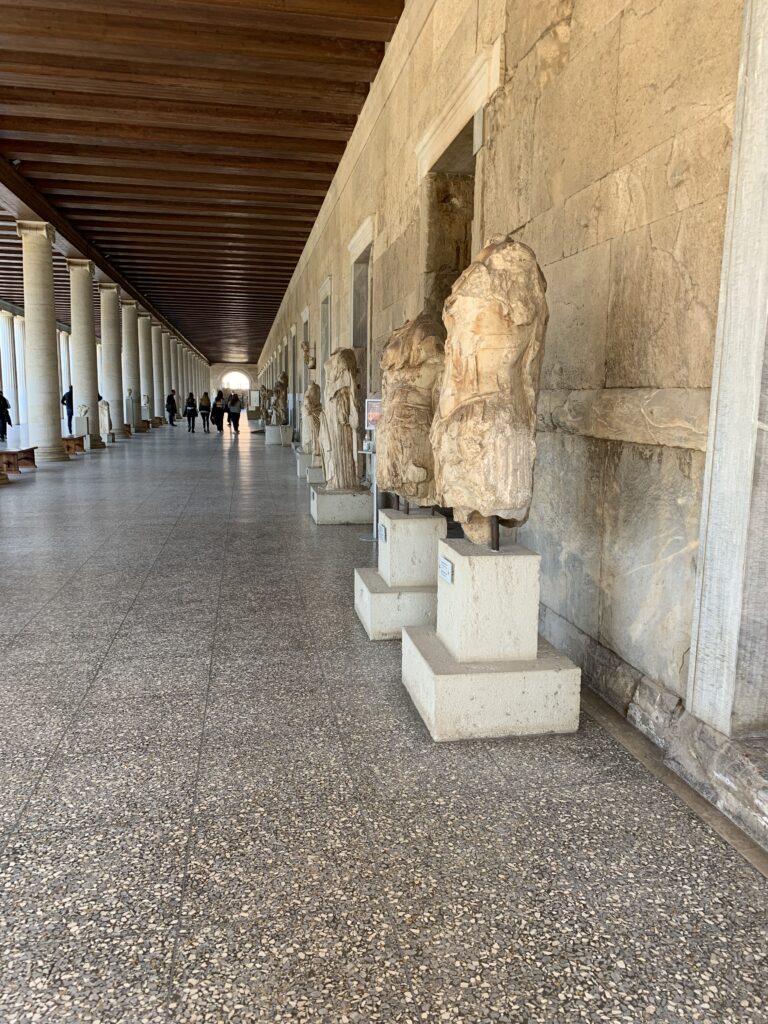
Our next stop was at the Agora Museum. It houses artifacts from the Agora, such as pottery, coins, and tools, showcasing daily life in ancient Athens. It is situated in the Stoa of Attalos, a reconstructed ancient building on the site. The Agora was an important gathering place for Athenians to debate the various laws and future of the city, to worship the various gods, and to shop in the open-air market.
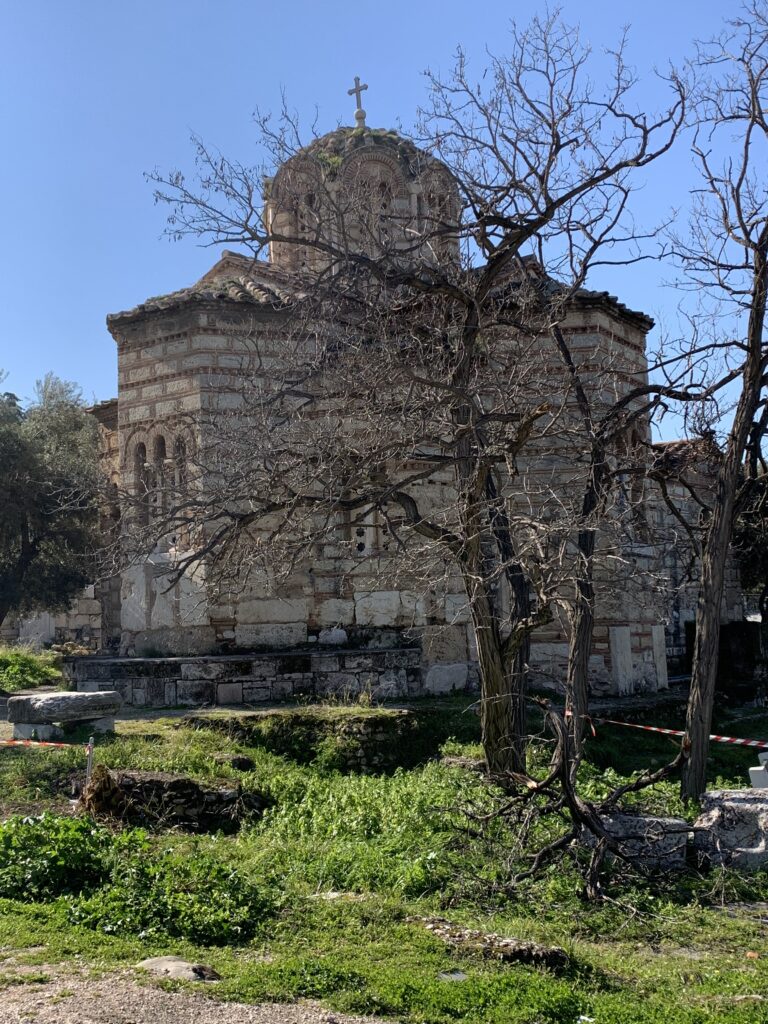
Close to the Museum is the Church of the Holy Apostles of Solakis. It is the first signigicant mid- Byzantine church in Athens with the traditional cross inside square design. Thought to have been built in the 10th century CE, it is one of the oldest churches in Athens. It houses several significant Byzantine frescos and icons.
After a long day at the Ancient Agora we walked part way home along busy streets with various historic markers and then got a taxi to take us back to the hotel.