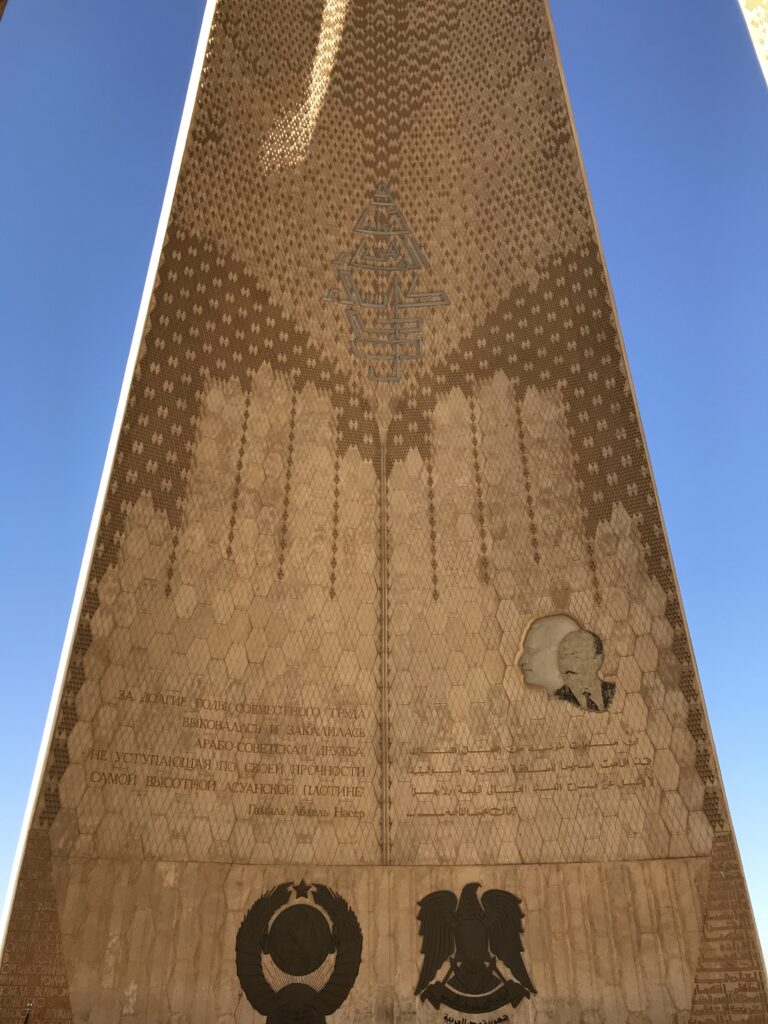
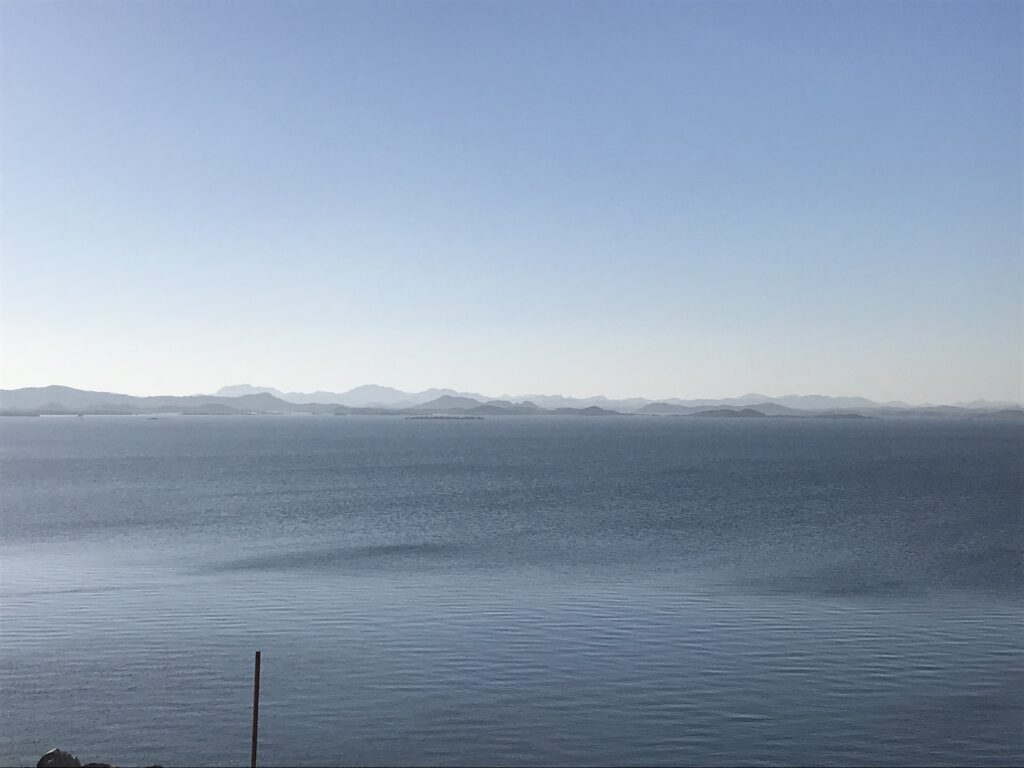
Today began at 1:15 a.m. when we headed for the airport and our flight to Aswan. When we arrived, we stopped at the Soviet Friendship Monument, the Lotus Flower. It was built to celebrate the money the Soviet Union gave to Egypt to complete the High Dam. Then we visited the High Dam, walking along it. The original Aswan Dam was built in 1898, and the High Dam was completed in 1965. The High Dam stands 11,811 feet long, 365 feet tall, and at its base, 3,215 feet thick. The completion of the High Dam doubled Egypt’s electrical supply, but the resulting creation of Lake Nasser caused the relocation of 90,000 Nubians from their homeland which was flooded as well as the relocation of many temples. Lake Nasser is one of the world’s largest man-made lakes.
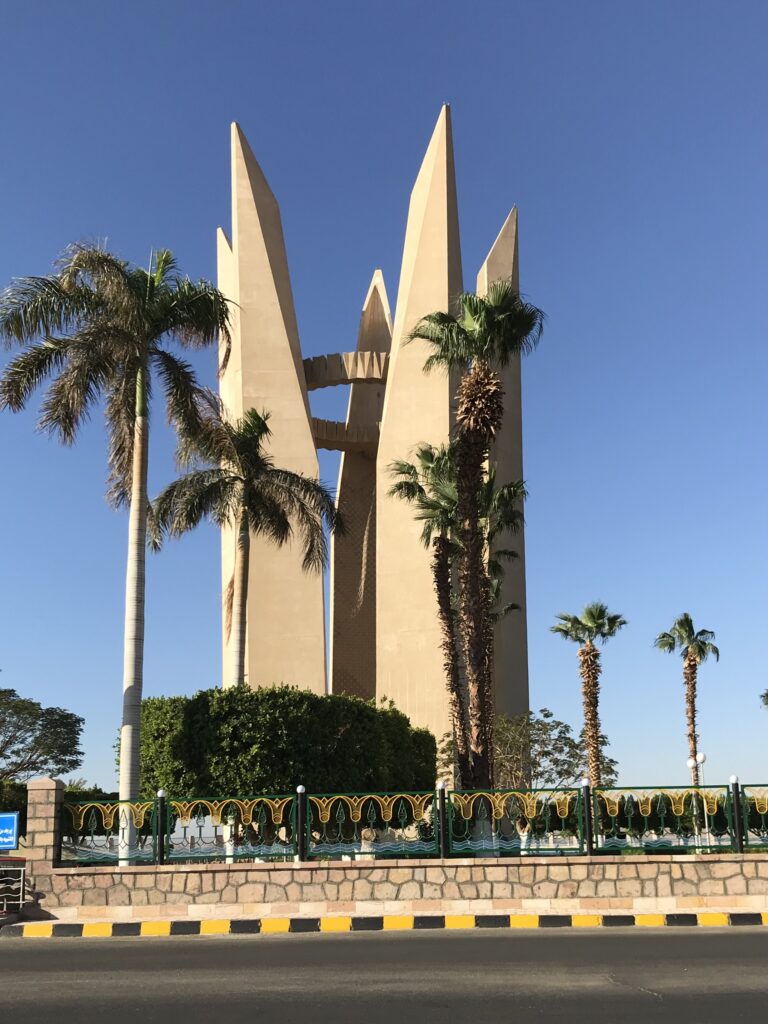
Lotus Flower
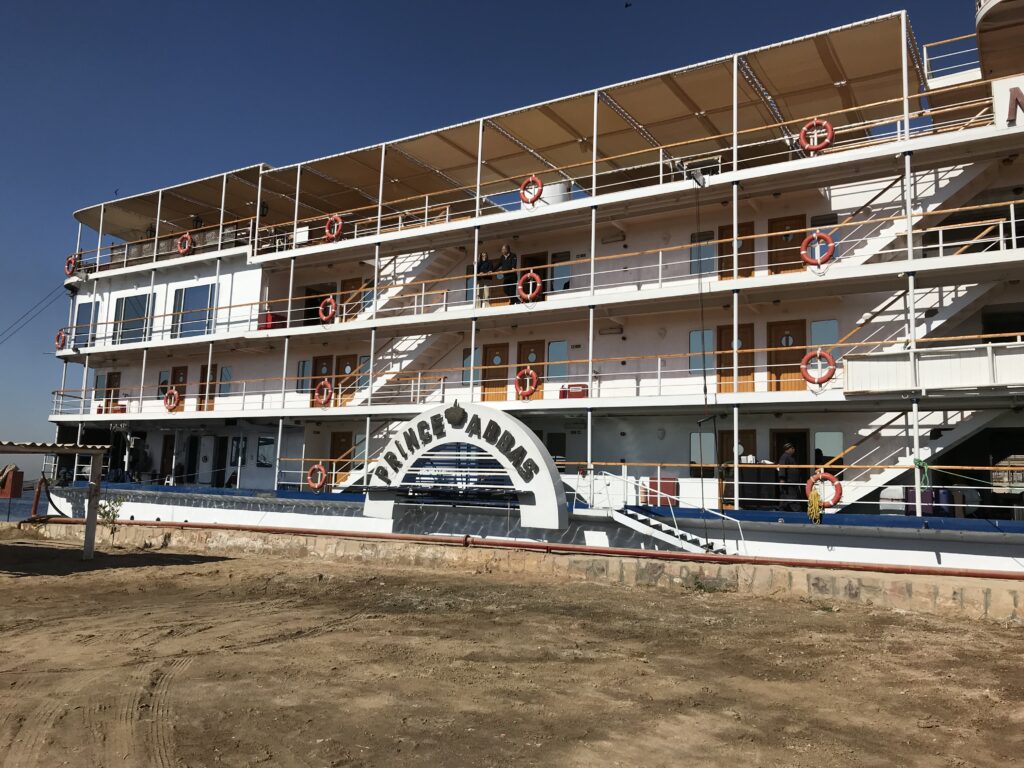
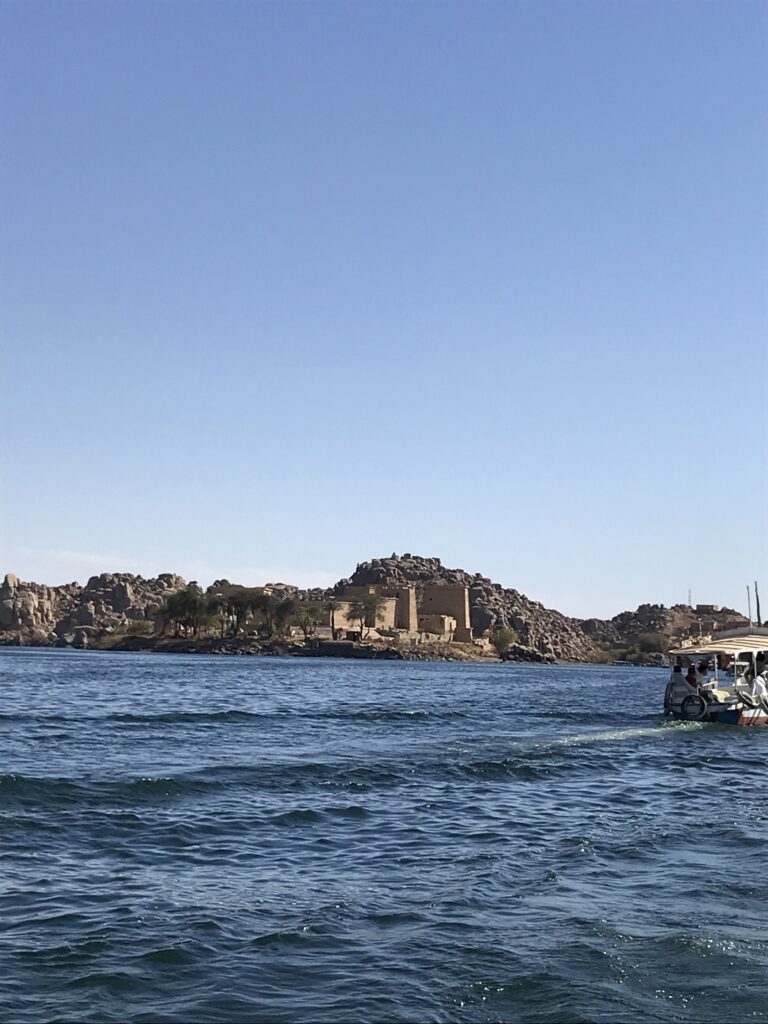
Here we began our four-night cruise around Lake Nasser on the MS Prince Abbas. The ship was built in 1998 and was modeled on an old river boat. Interestingly, Egyptian President Sisi was in Aswan for a gathering of African youth. So we went to the ship to settle in and unpack until lunch. After lunch we were able to view the huge Temple of Philae, the “Temple of Love” or “Isis Temple,” about 2,200 years old. It was one of the reclaimed temples after the New Dam flooded upper Egypt. We had to take a motorboat to get to the temple on the Island of Agilika about 12 kilometers soutof Aswan. The temple was transferred block by block from its original island of Philae, which was flooded by the dam. The pictures below show us approaching the Island of Agilkia and the Temple.
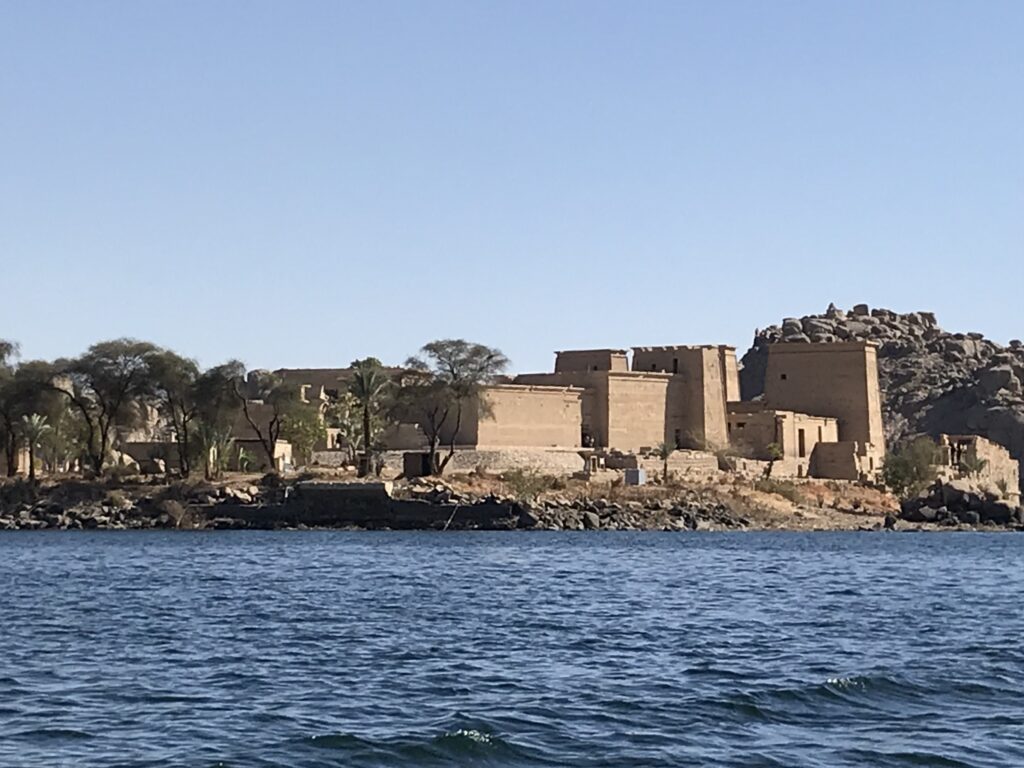
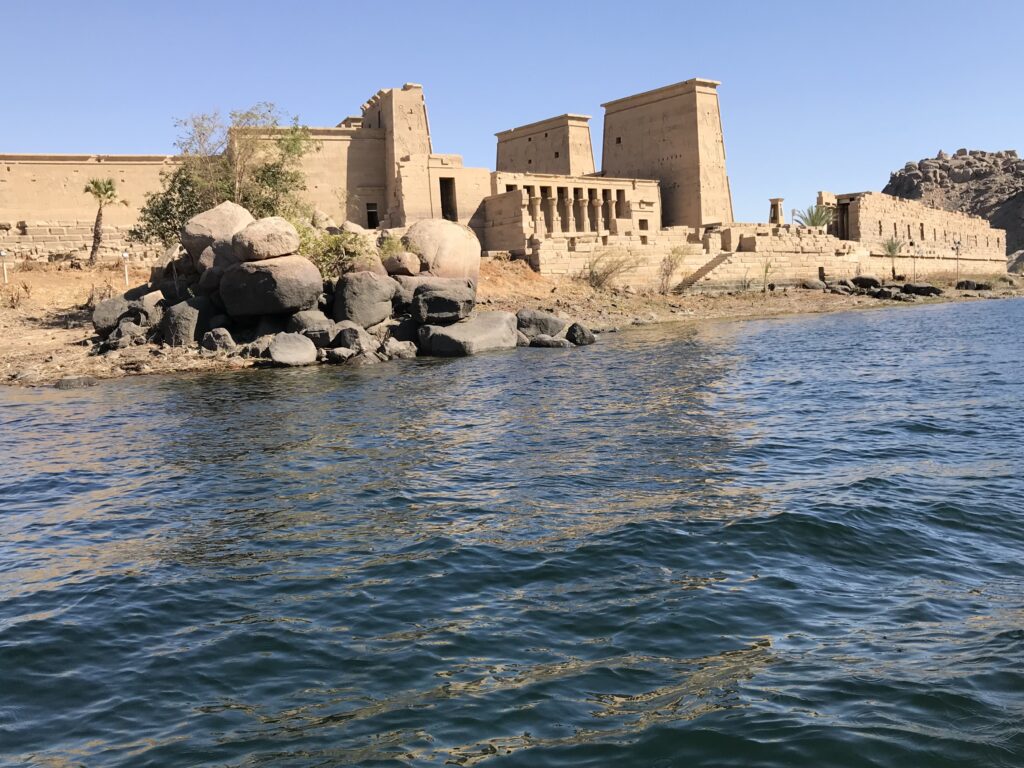
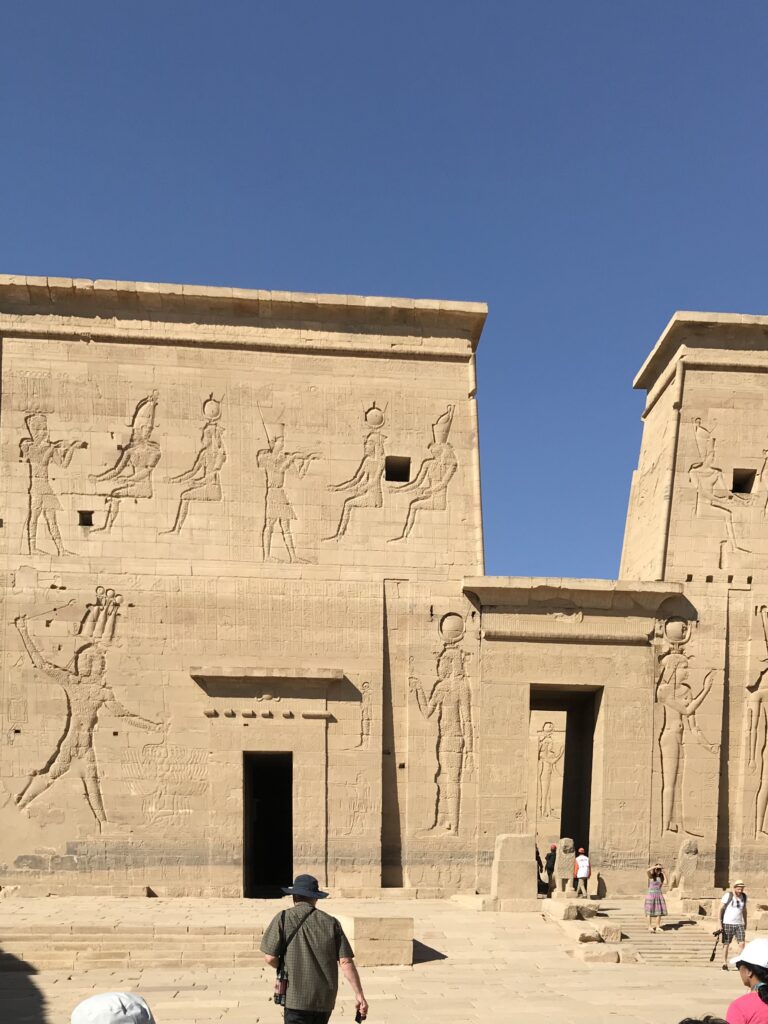
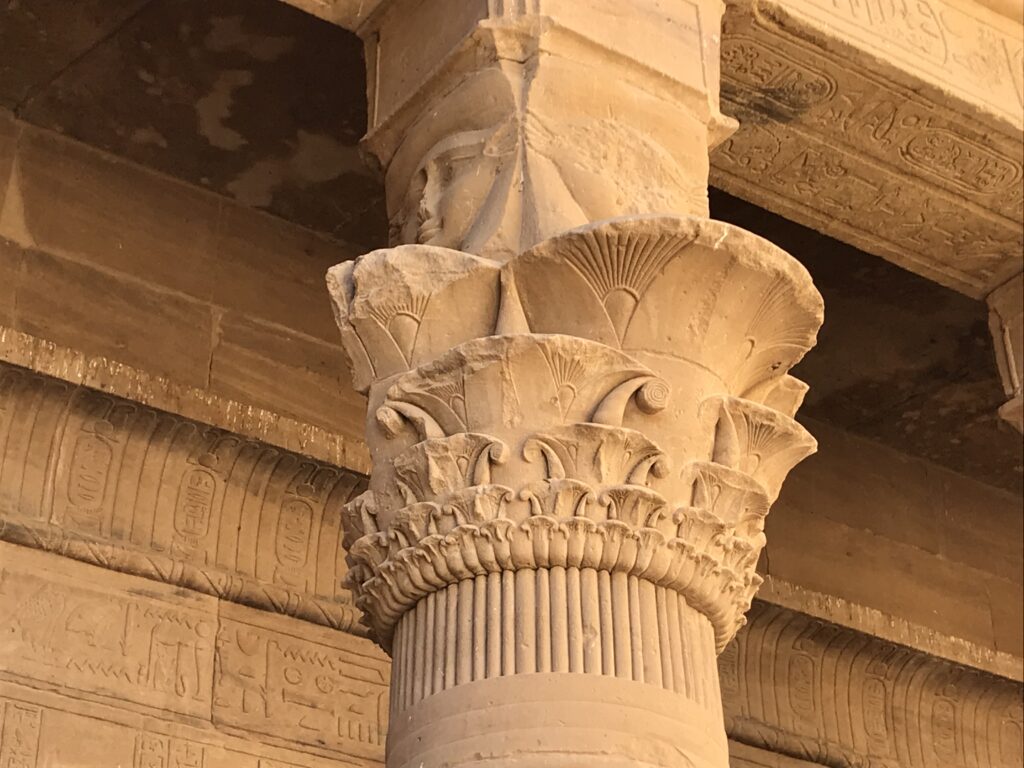
Egypt’s ancient center for the cult of Isis, the Temples of Philae were venerated from the Pharaonic era through the Greek, Roman, and Byzantine periods with each ruler making their own additions to the stones here. It has also been used as a Christian church. The first thing we saw when we got off the boat was the 18 meter high entry way to the main temple, flanked by two huge lions. All of the stone is covered by reliefs telling the stories of Isis and of various rulers. On the front of the east tower, a huge relief depicts Ptolemy XII Neos Dionysos grasping a band of enemies by the hair and raising his club to smite them, with Isis, the falcon-headed Horus of Edfu, and Hathor on the left. Above are two reliefs of Neos Dionysos presenting the crowns of Upper and Lower Egypt to Horus and Nephthys (right) and offering incense to Isis and Harpocrates (left). In the Birth House are the reliefs, which depict scenes from the childhood of Horus, including Horus as a falcon in the swamps of the Delta and Isis suckling Horus in the swamps. The Second Pylon provides a fittingly regal entry to the inner sanctum of the temple with a magnificent doorway 32 meters wide and 12 meters high. The reliefs on the central doorway are by Euergetes II. In front of the doorway are the foundations of a small chapel. Within the central doorway (on the right, above) are some much faded early Christian paintings. Unfortunately, during the Christian times, many of the etchings were destroyed or changed because the chapels were used for Christian worship. The Sanctuary of House of Isis was most impressive. From this is a doorway leading out to the Gateway of Hadrian. We went from portal to portal. The vastness of the temple, the carvings and frescos that remained were overwhelming. We spent the whole afternoon exploring the ruins. When you think that its construction began about 690 BC and that it was relocated stone by stone is amazing. This was the first of many such temples we were to see. The pictures below show a sampling of the structures and engravings we saw.
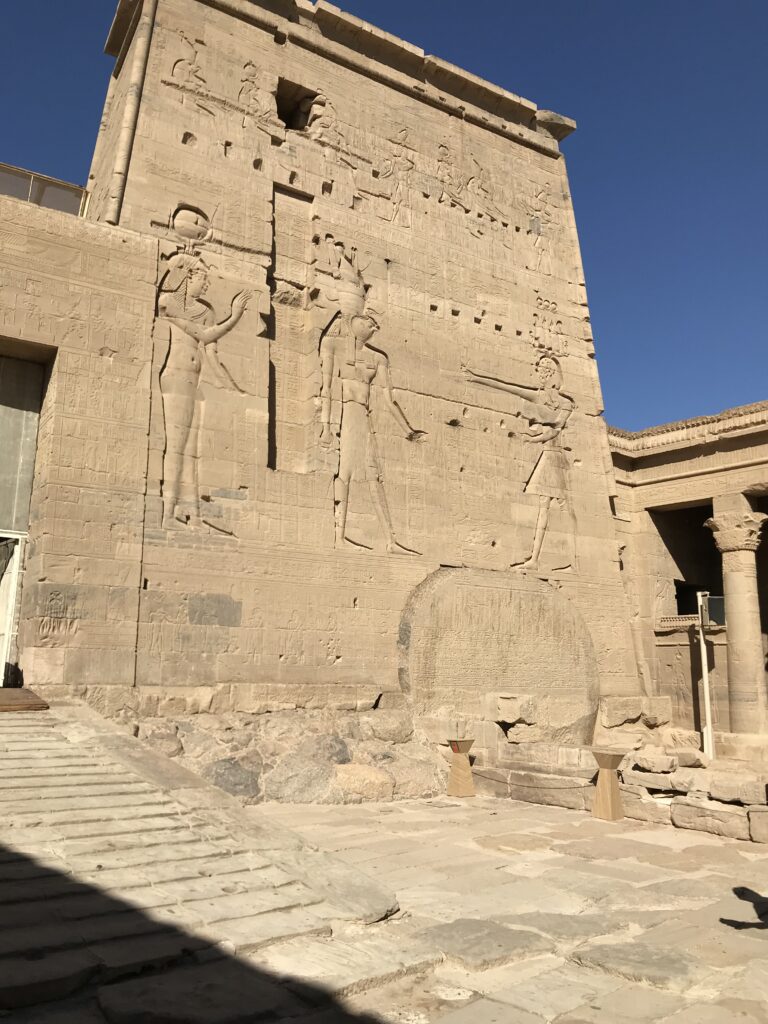
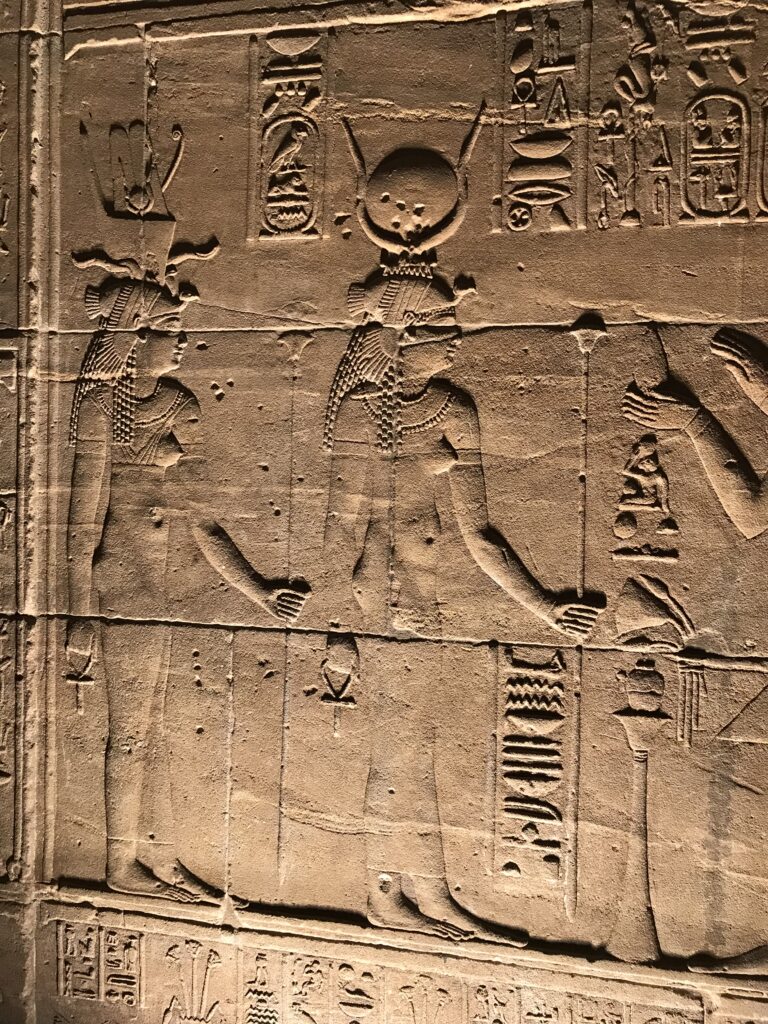
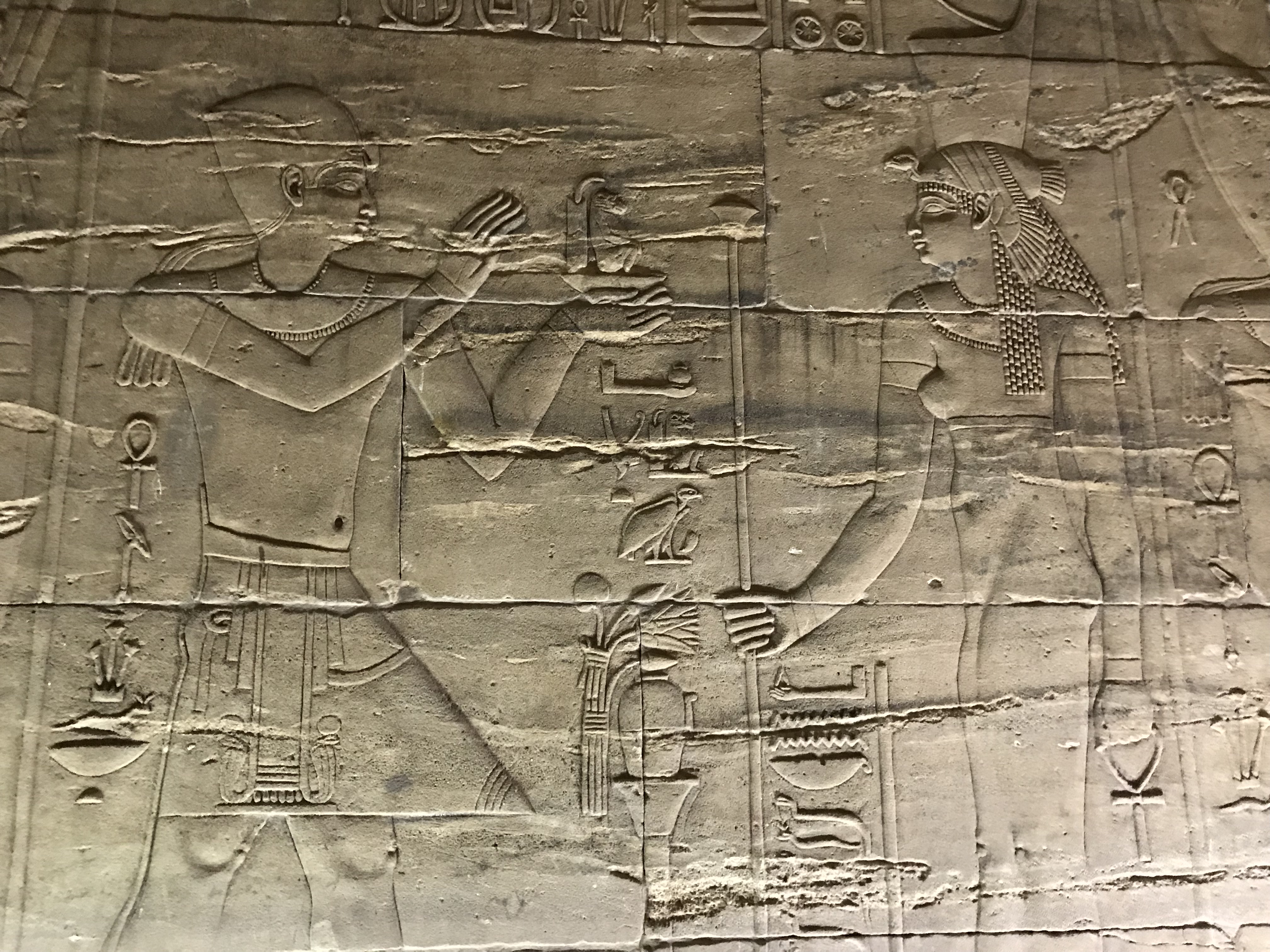
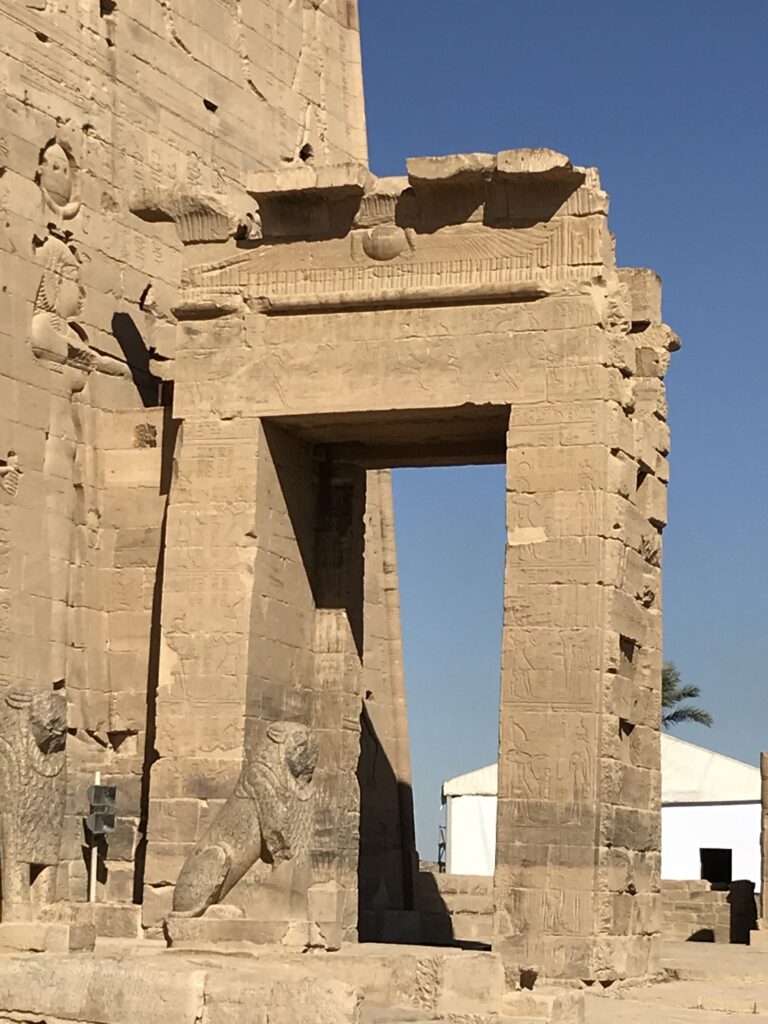
President Sisi had been at the temple the previous day with the youth at the conference, so there were chairs and decorations that were being removed while we were there.
Next we will post about Ancient Nubia.