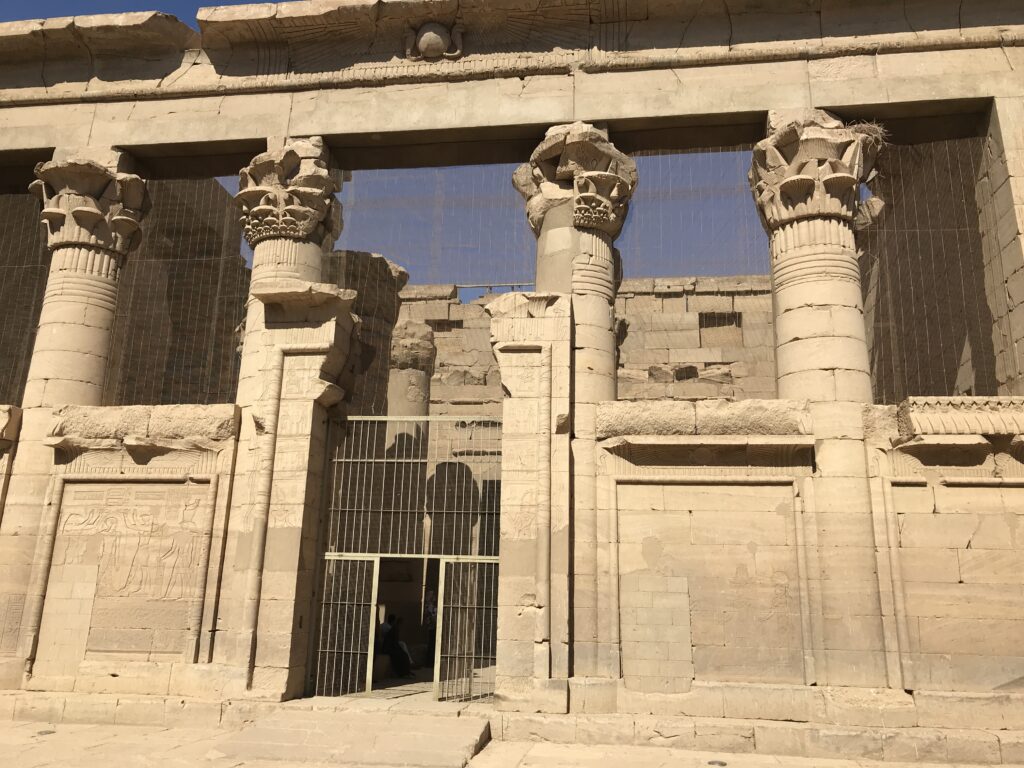
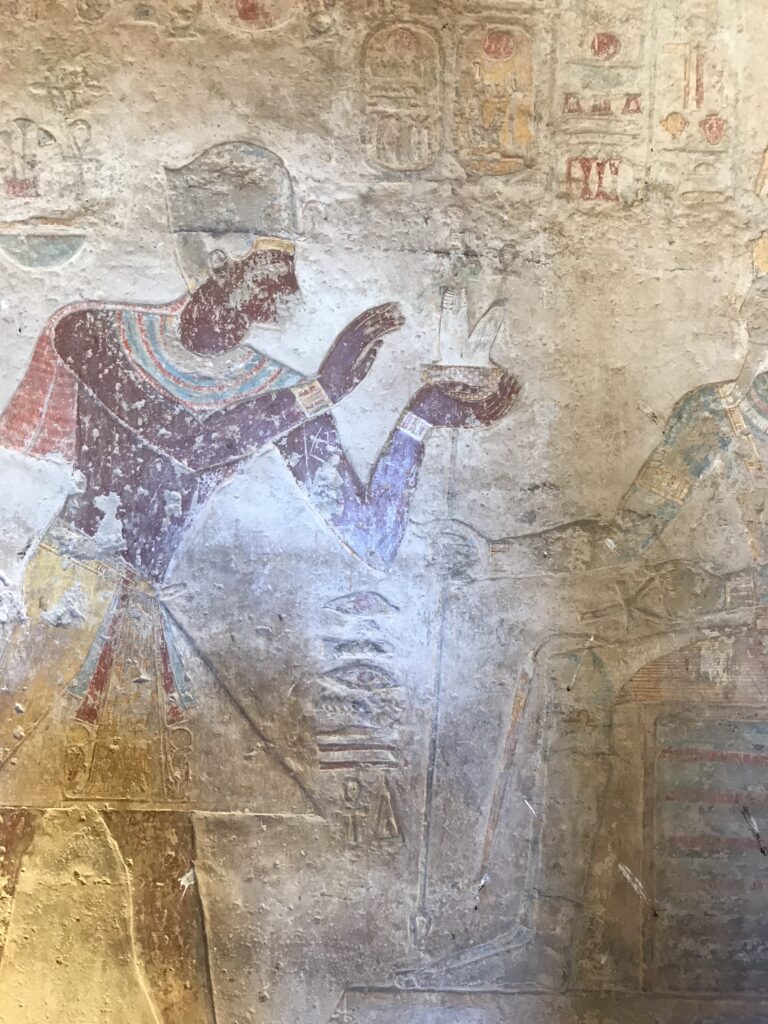
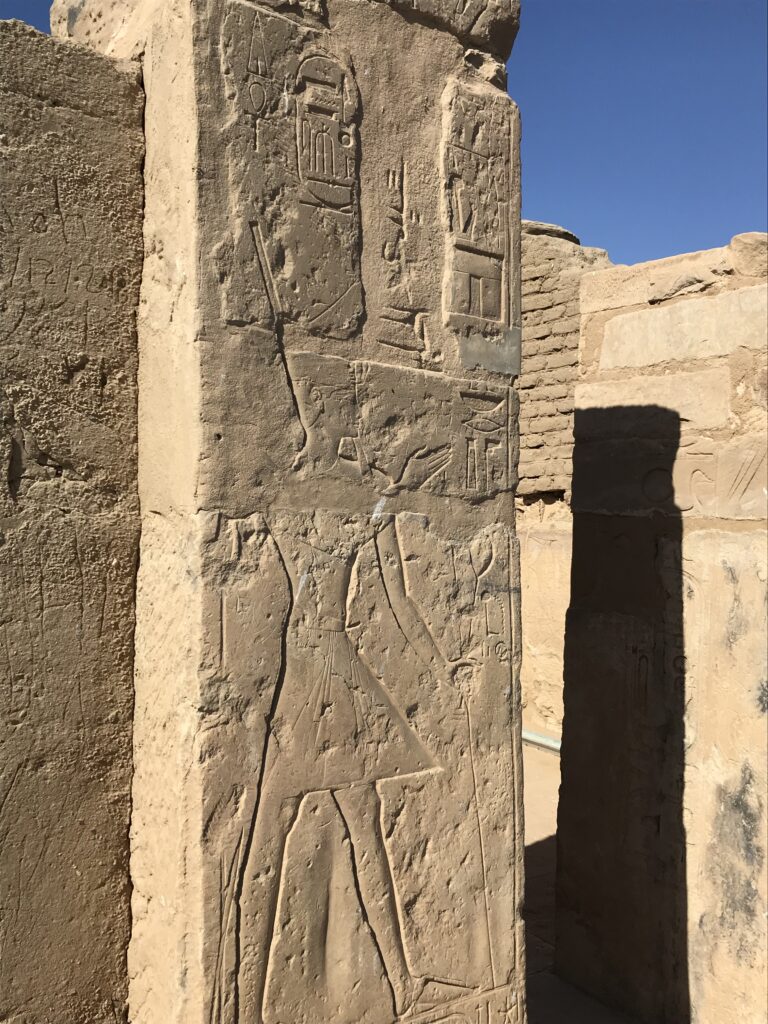
This morning, we are in the heart of ancient Nubia, Egypt’s gateway to Africa. We began with a tour of New Kalabasha, site of the Kalabasha Temple, the largest freestanding Nubian temple. This sandstone temple dedicated to Mandulis, the Nubian god of religion, preserves Egyptian and Greek history, both languages are carved into the temple walls. It is the “Temple of Unification between the Nubians and the Egyptians”—the God Horus and the God Mandulis and is about 2,000 years old. It was originally located at Bab al-Kalabsha (Gate of Kalabsha), approximately 50 km south of Aswan and built around 30 BC. It has an eight column hall with inscriptions and motifs indicating the life of kings and their encounters with the gods. From Kalabsha’s sanctuary chambers, a staircase leads up to the roof of the temple where one can see a splendid view of the temple itself and the sacred lake. Several historical records were inscribed on the temple walls. When Christianity came to Egypt the temple was used as a church. The temple was moved to a site just south of the Aswan High Dam when the area was flooded. The pictures below are a sampling of he many I took of this temple.
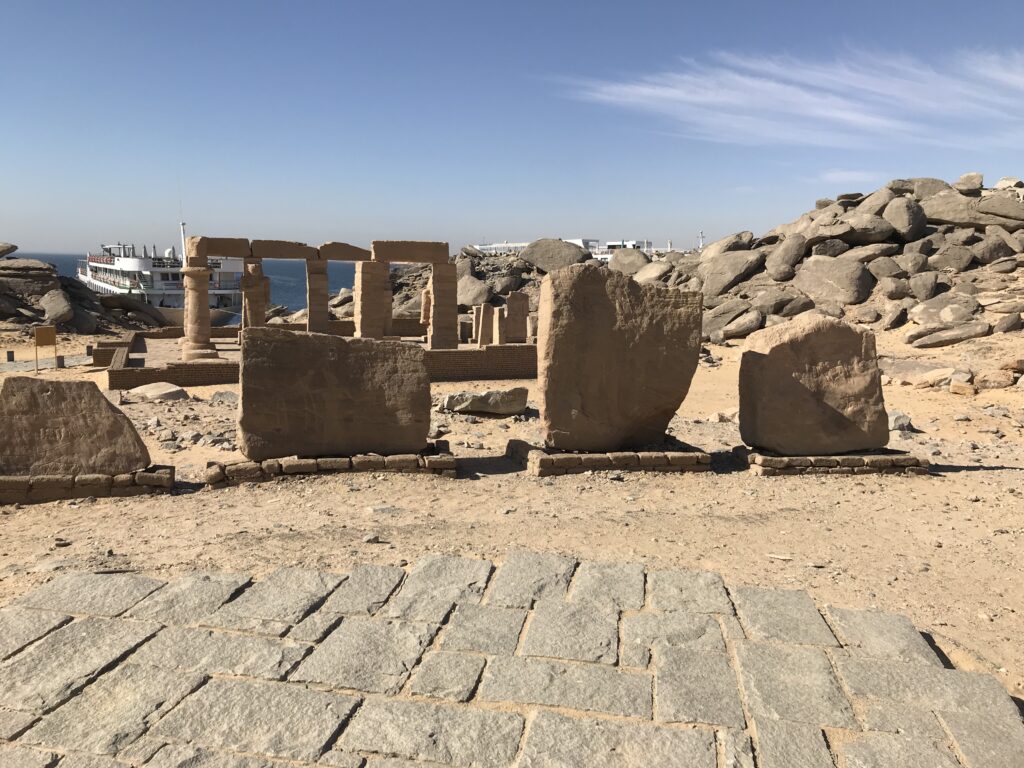
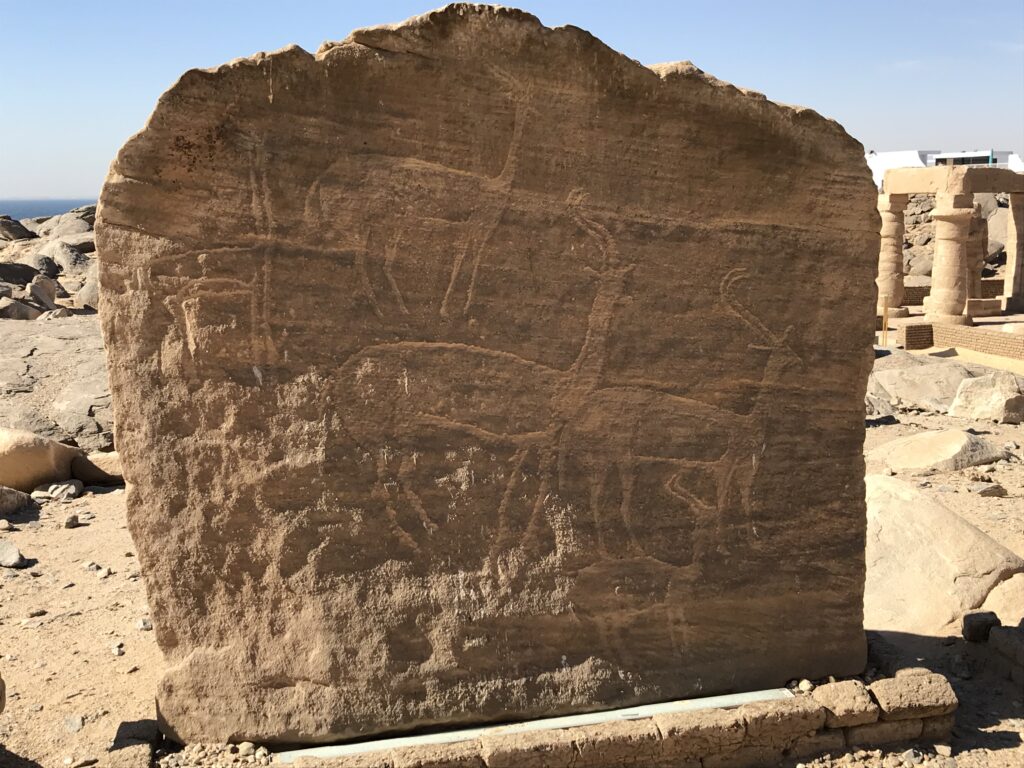
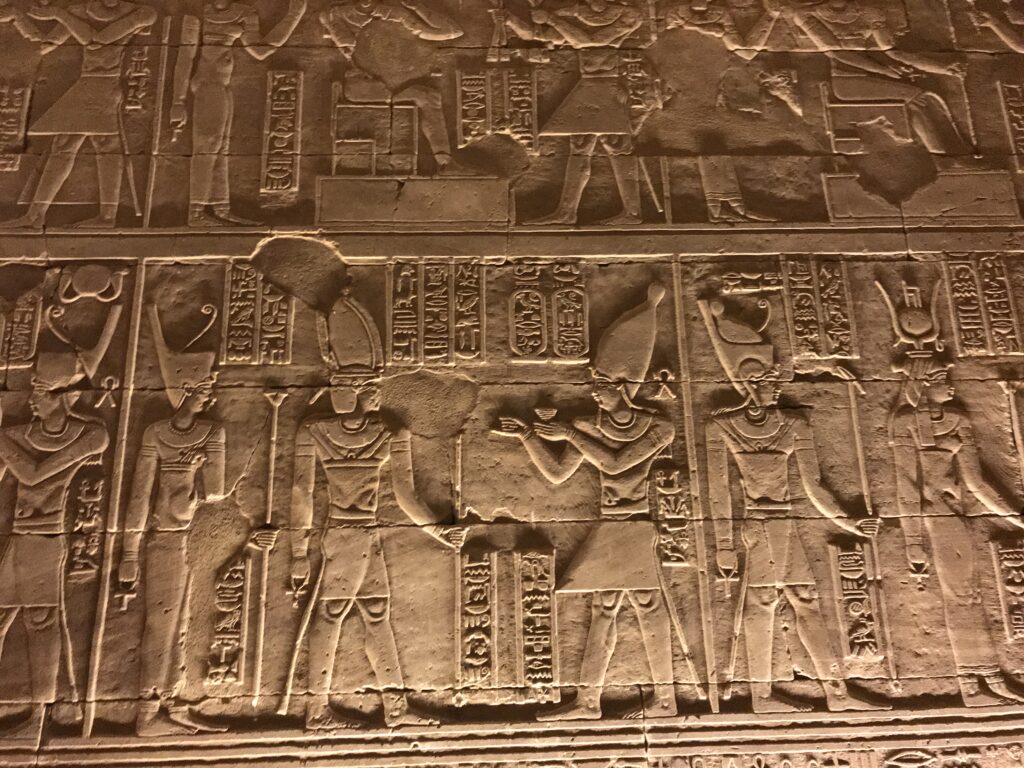
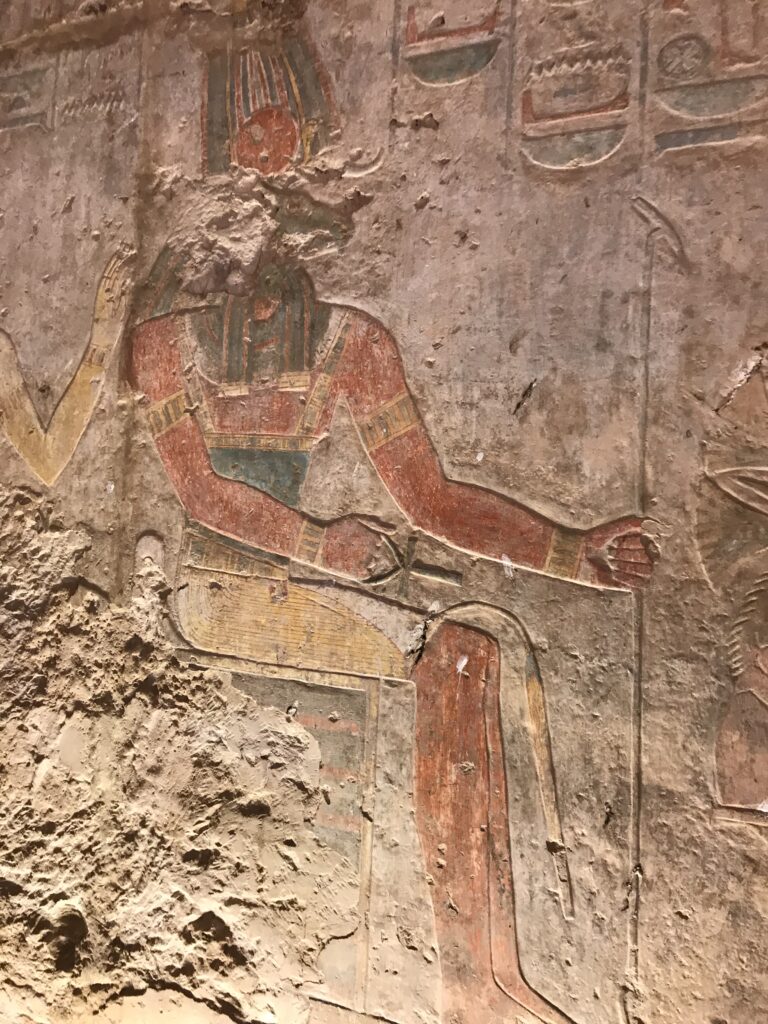
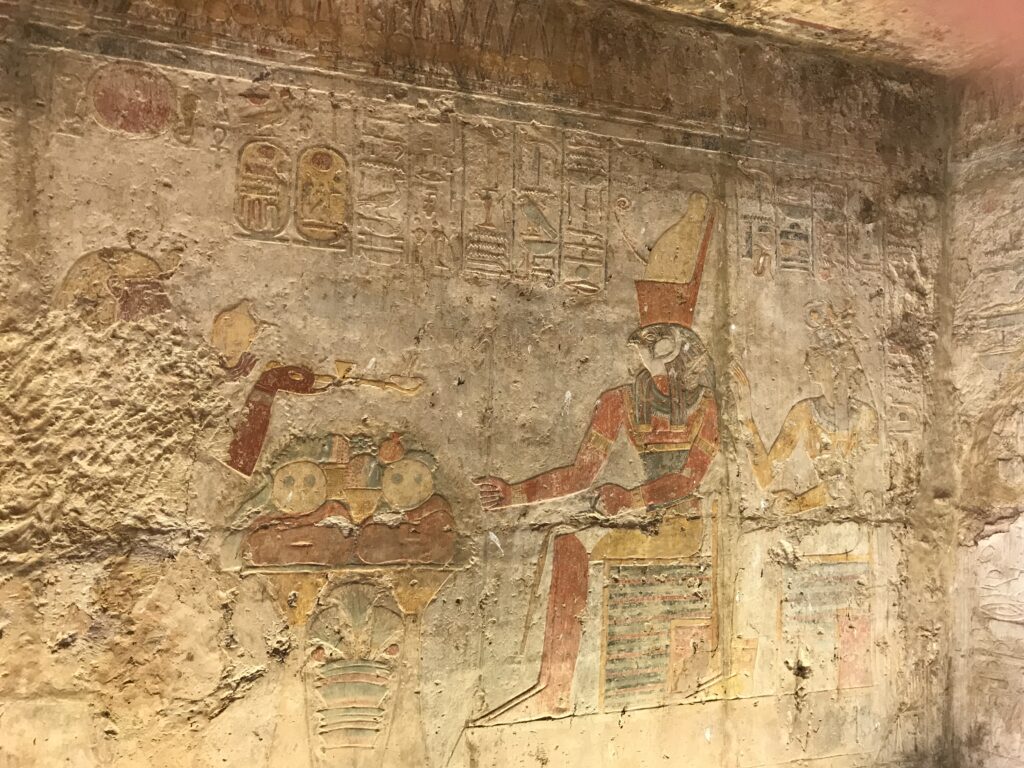
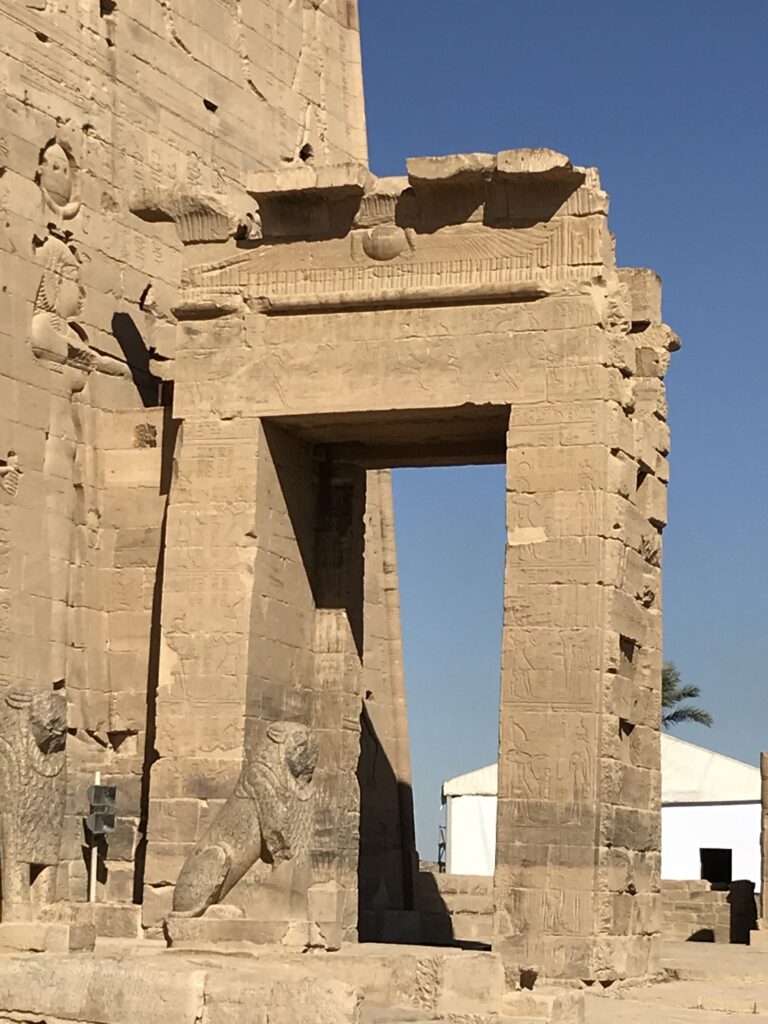
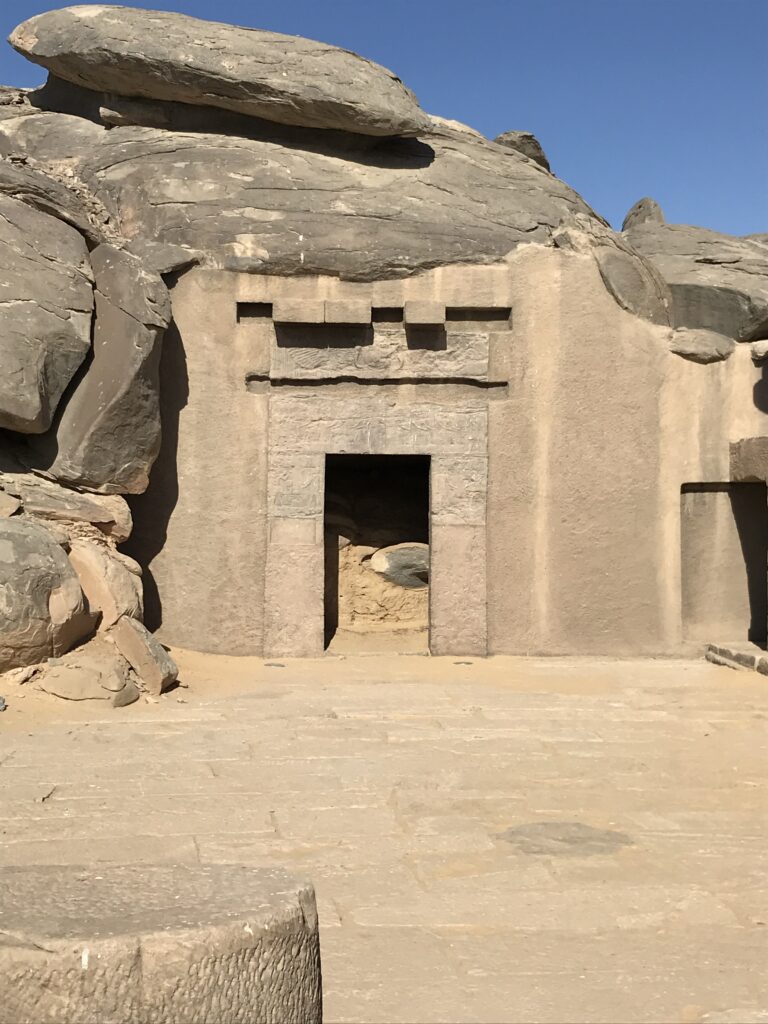
After exploring the Kalabasha Temple, we also explored several smaller ruins around it. They included the Qertasy Chapel of Hathour (the cow goddess)—1,900 years old; the Gerf Hussain Temple (Ramses II also called the House of Ptah)—3,150 years old; stones of the pre-dynastic periods are about 7,000 years old; The Chapel of Dodwan about 3,000 years old; Beit El-Wali Temple “Ramses 2” (3,250 years old). Below are more pictures from these sites surrounding the New Kalabasha Temple.
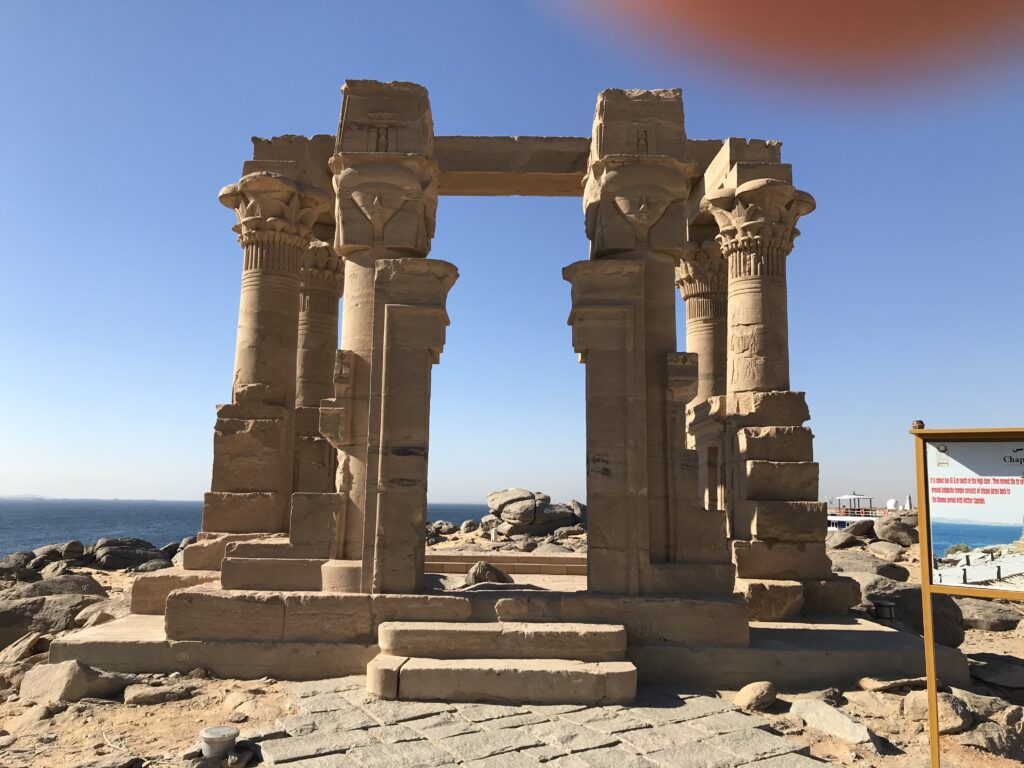
The Chapel of Qartasa dates from the Roman period. This is all that is left, but the columns have capitals with the head of the goddess Hathor and plants.
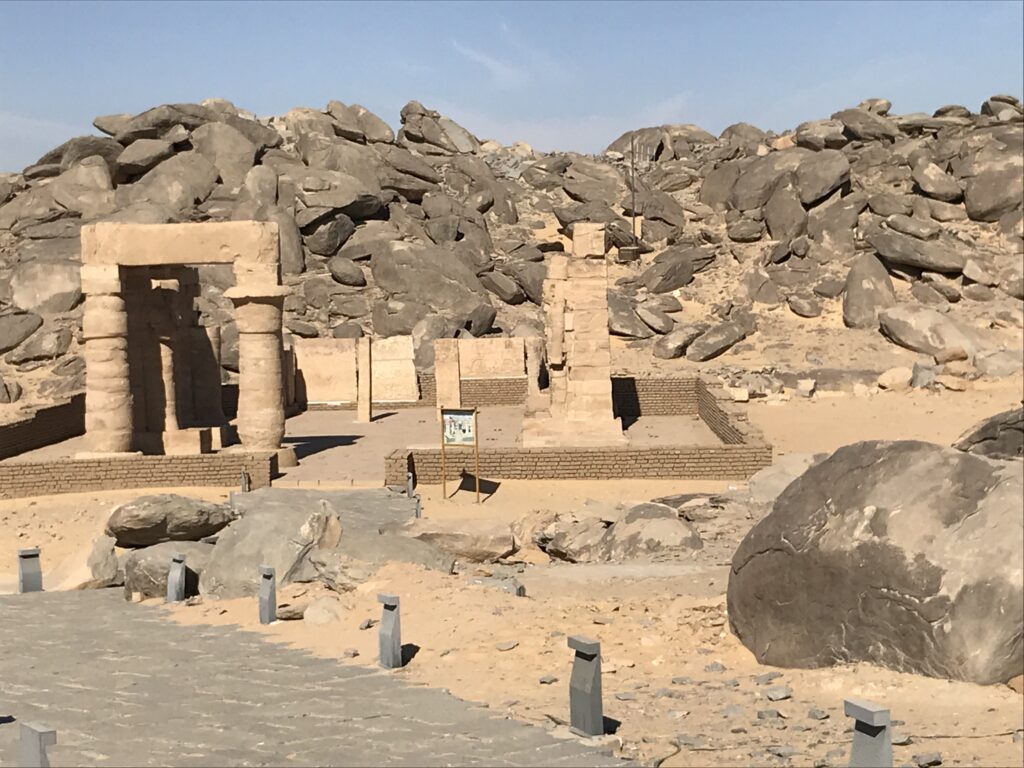
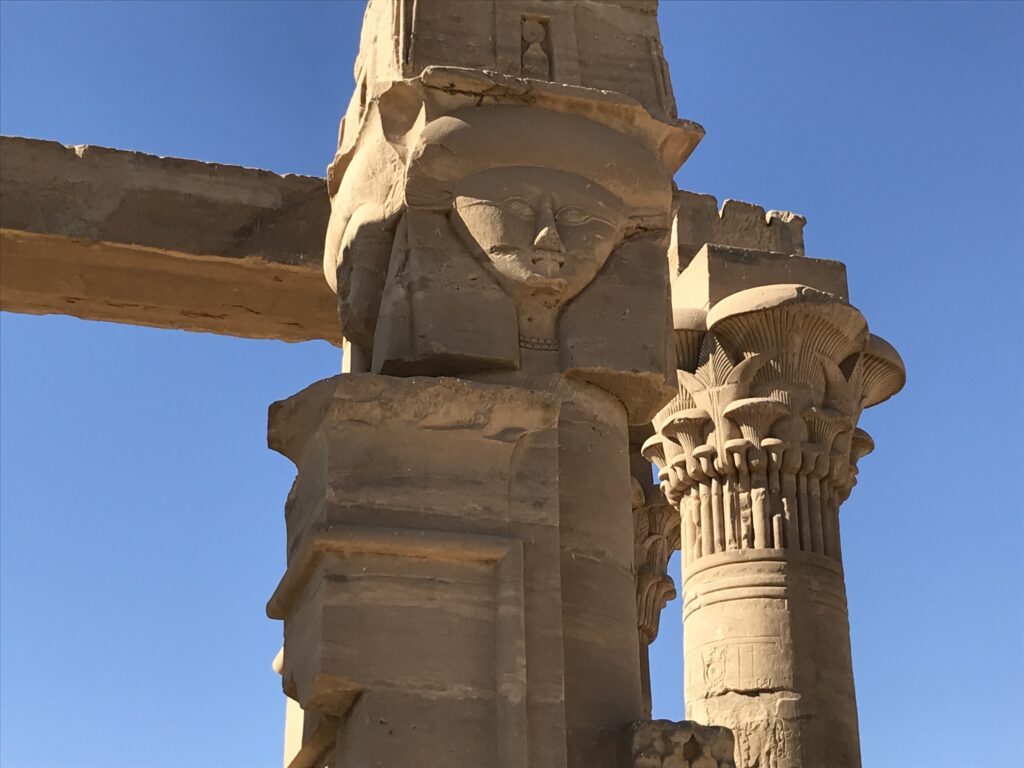
The House of Ptah dates from the first century C.E. and is dedicated to Ptah, the Egyptian creator god.
The Garf Hussein Temple was dedicated to the pharoah Ramesses II, as well as to Ptah and Hathar, and bullt by the Setau, Viceroy of Nubia. Eight pillars with statues and six columns remain. It was built about 1250 B.C.E.
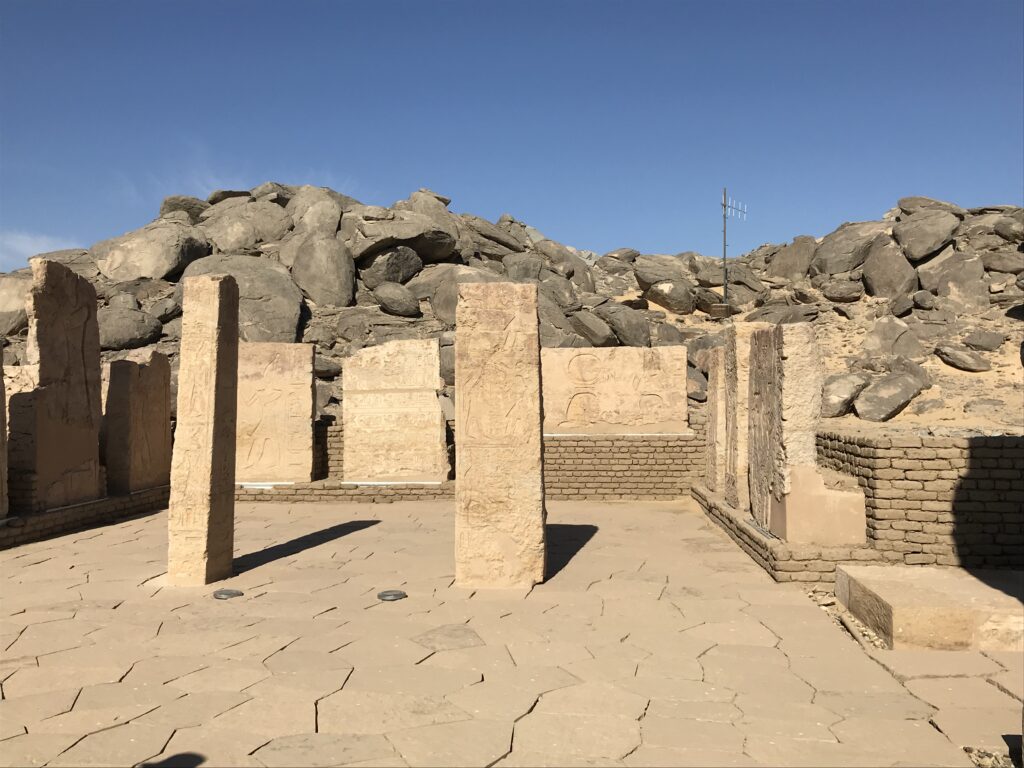
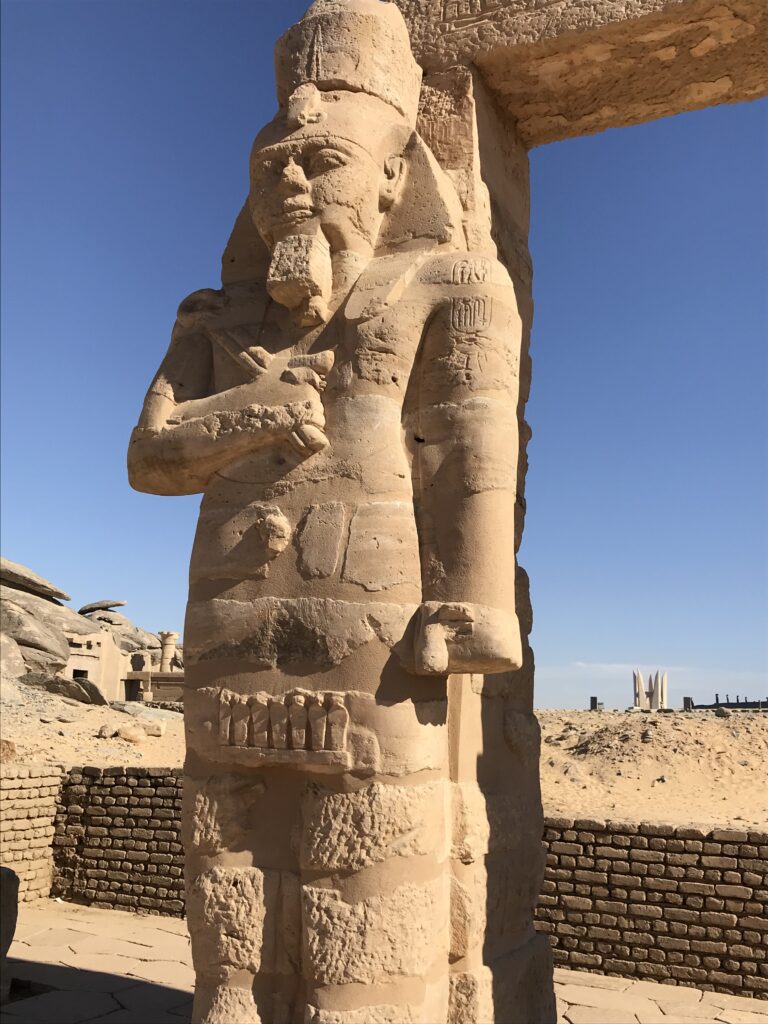
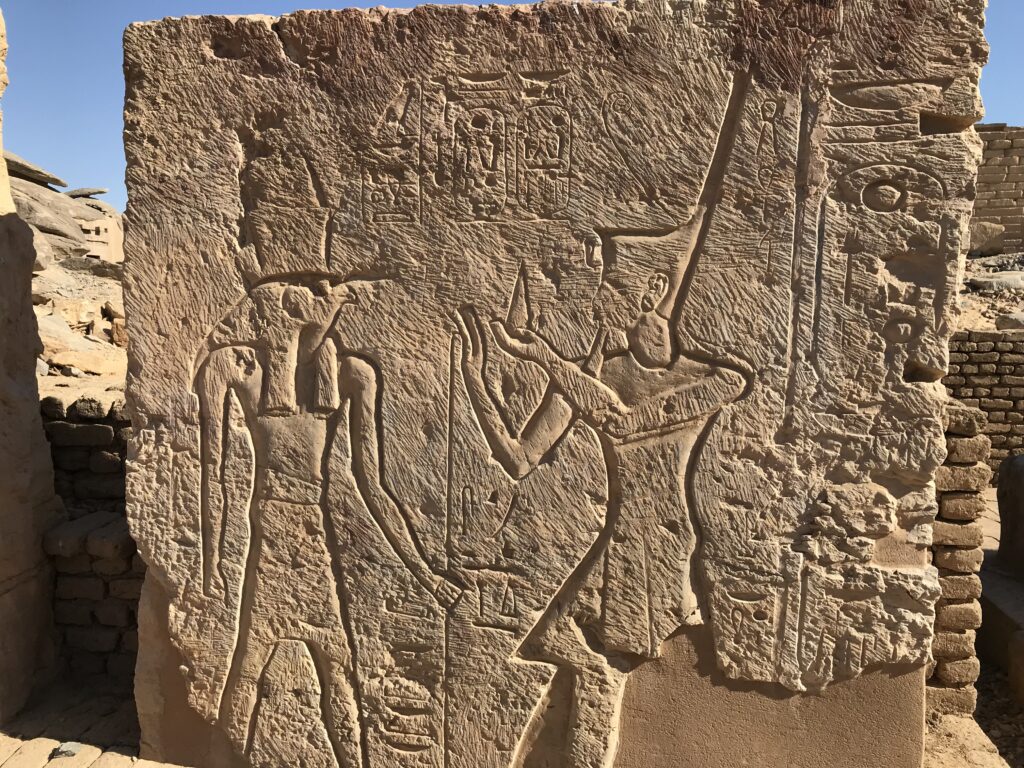
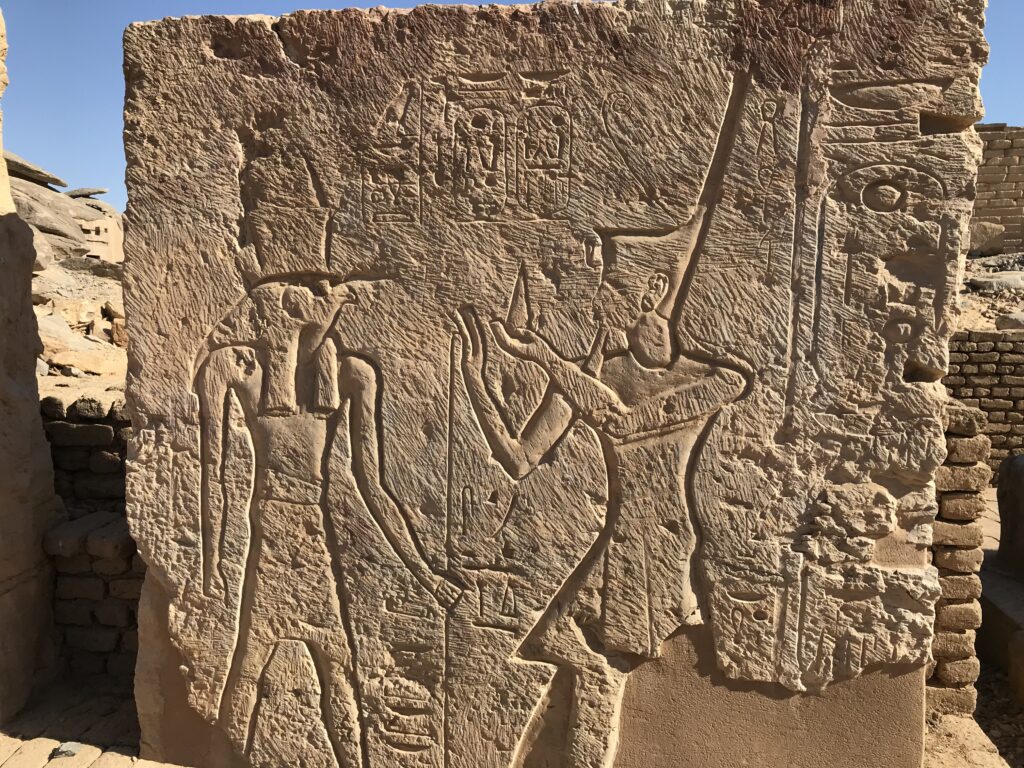
The last of the complex of temples we saw was the Beit-el Wali Temple also built by Ramses II and dedicated to the god Amun. It was originally carved into a rockface. It is considered one of the most beautiful of the Nubian temples.
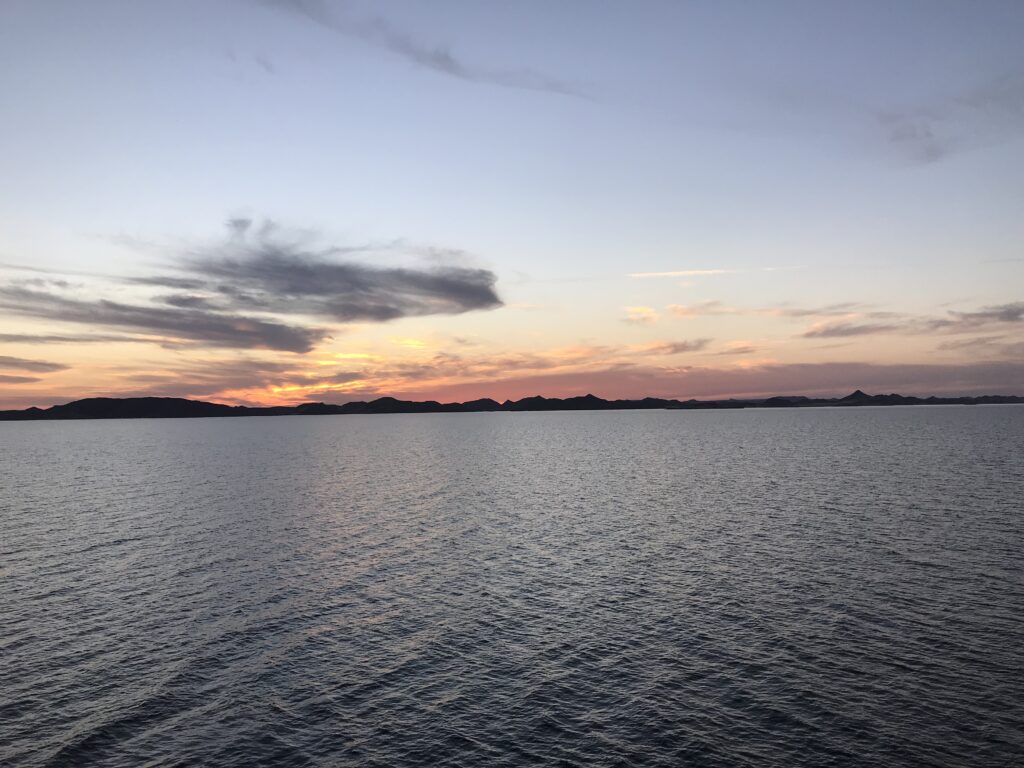
After spending the day exploring this fabulous site, we boarded our boat and sailed to Wadi el-Sebouna, enjoying the sunset across Lake Nasser as we sailed.
Next we visit Wadi-el-Sebouna and Amada.