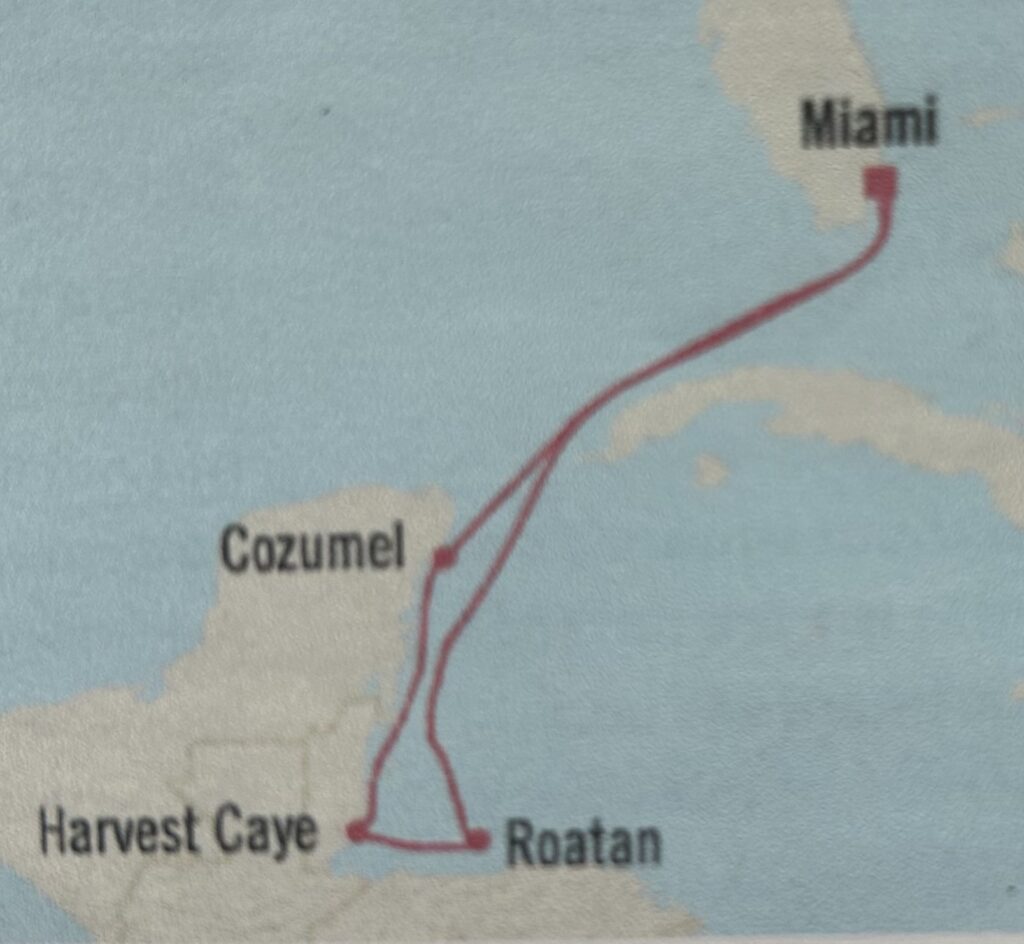
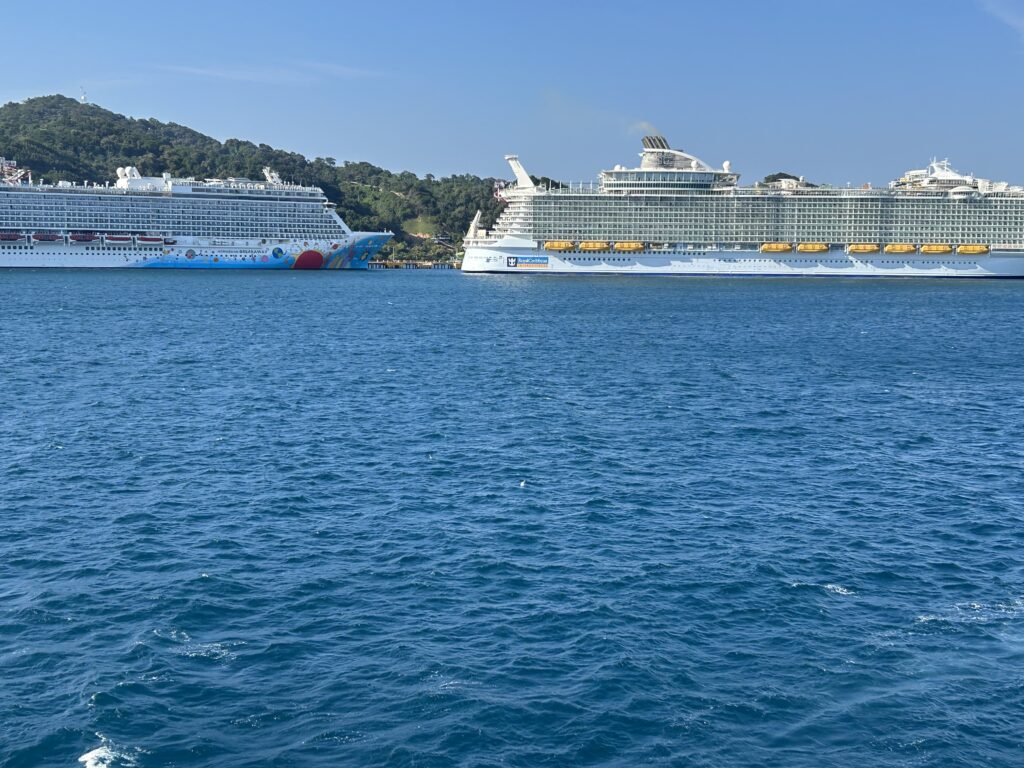
This leg of the trip is a week long and will go to Cozumel, Mexico; Belize; Roatán, Honduras; Costa Maya, Mexico; and Miami. We traveled 1,815 Nautical miles.
Since we had been to Cozumel and the Belize stop was a Cruise island, not a native island, we planned to disembark on only two stops. So this will be one post.
Cozumel
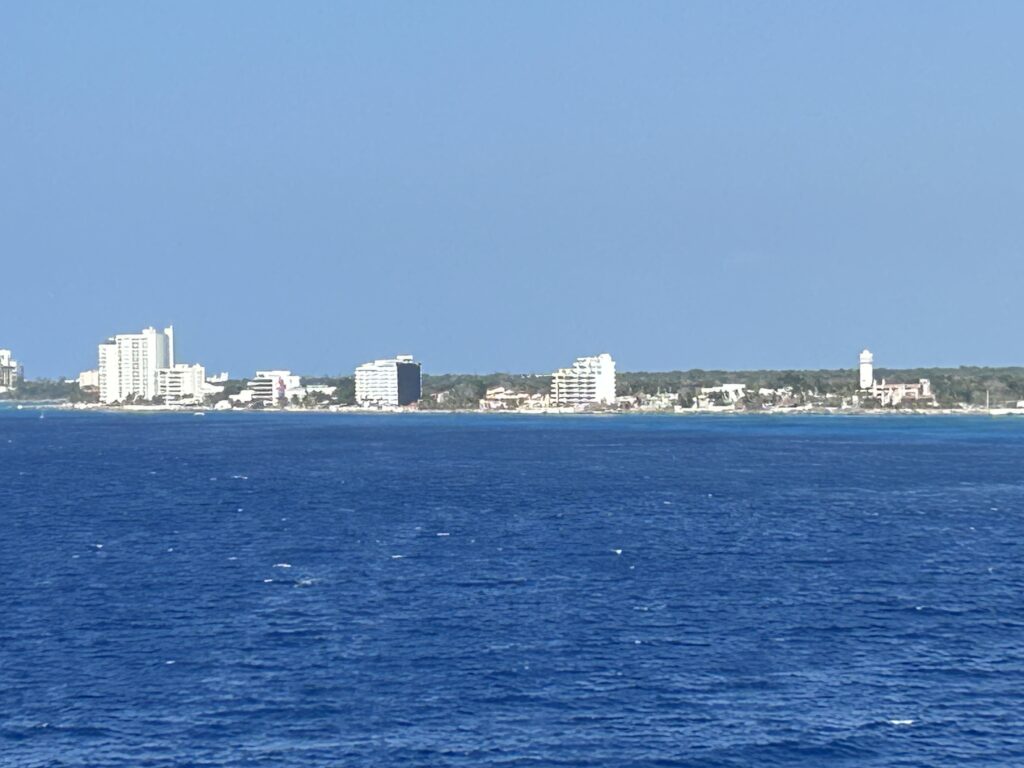
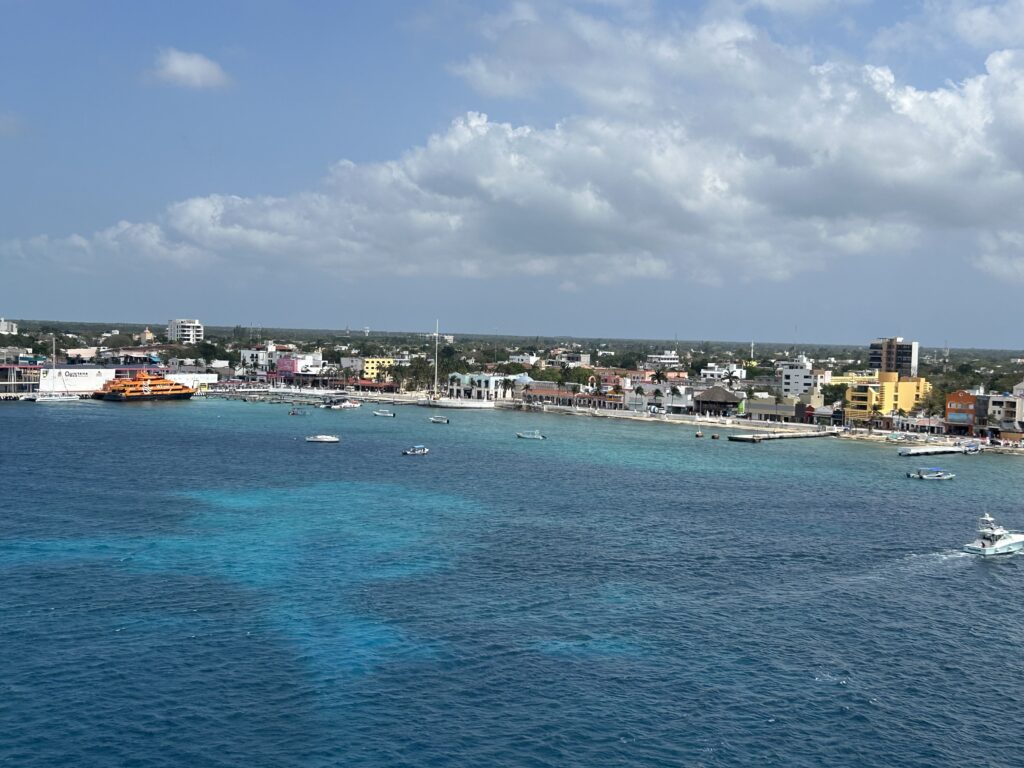
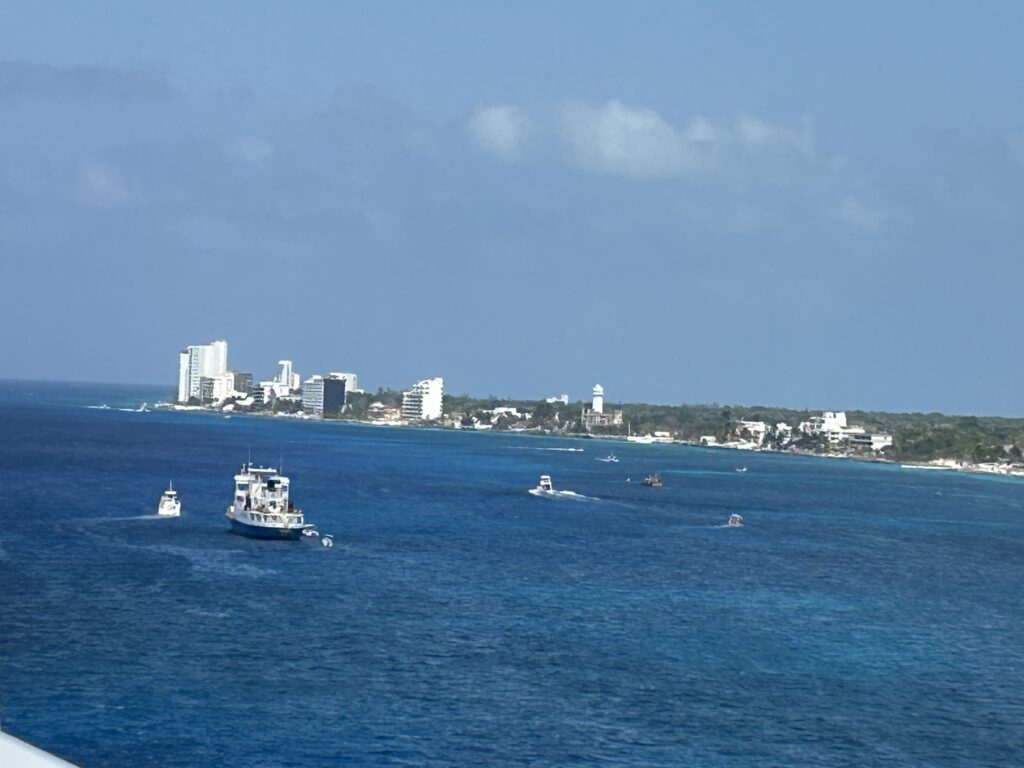
Cozumel, the largest of Mexico’s Atlantic islands, is about 30 miles long and 10 miles wide. People come here to dive the beautiful reef surrounding the island. So many have come that the area has been designated the Cozumel Reefs National Marine Park to save the reef.
Archaeologists have uncovered evidence dating the arrival of the Mayans to Cozumel to the first millennium CE. Some believe the Olmec tribe may have been on the island hundreds of years before the arrival of the Mayans. Cozumel was an important center of coastal trade and pilgrimage for the worship of IX Chel, their goddess of the moon and fertility. Many temples were built on the island. Women come to the island to worship IX Chel and pray for a child.
When we were here before, yes, we enjoyed the beaches, but the main attraction was Chichen Itzá, one of the “7 Wonders of the New World.” The area contains 26 Mayan Ruins including the large pyramid, El Castillo. When we were here before, we were able to climb to the top of the pyramid.
Harvest Caye, Belize
We came into port at Harvest Caye which is owned and operated by the cruise lines. Because of that, I only got off the ship and wandered around some to see what they offered. I had been to Belize before and stayed on Ambergris Caye.
Hundreds of ruins and ceremonial centers show that for thousands of years Belize was populated by the Maya Civilization that reached its peak known as the Classic Period between 250 and 900 CE. At its height, the Maya of Belize and Central America formed one of the most densely populated and culturally dynamic societies in the world.
The first reported Europeans were the Spanish in the 16th century CE. They were followed by British settlers. The British and Spanish battled over the territory until 1798 in the Battle of St. George’s Caye when the British drove the Spanish out.
From the mid nineteenth century it was called British Honduras by the English invaders, until 1973 when it was officially named Belize by the British colonial office. It was the last British colony on the American mainland. Belize gained independence in 1981 and is a Commonwealth Nation.

Belize is known for its stunning white powder beaches and crystal waters. Its Barrier Reef is the second largest in the world after the Great Barrier Reef in Australia. The area is protected by the Bacalar Chico National Park and Marine Reserve, Blue Hole National Monument, Half Moon Caye Natural Monument, Glover’s Reef Marine Reserve, South Water Caye Marine Reserves, Laughing Bird Caye National Park, and Sapodilla Marine reserve. It is a diver’s paradise.
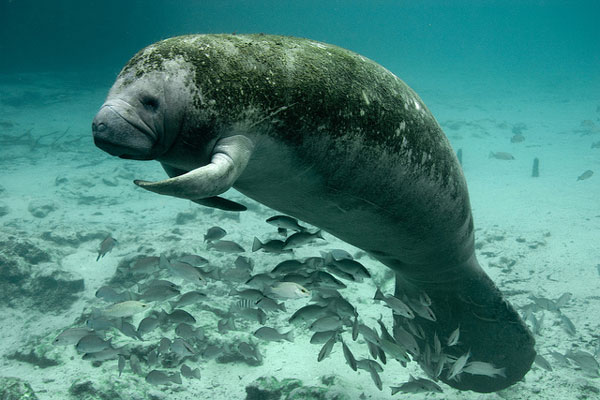
The world’s largest population of West Indian manatees is there as well as the American crocodile, turtles, red-footed boobies, and other seabirds. There are more that 500 species of fist, 65 species of stony corals, and 350 varieties of mollusks.
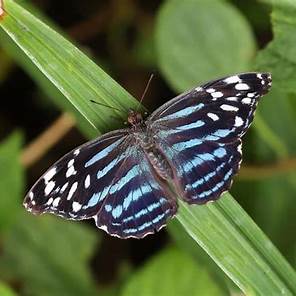
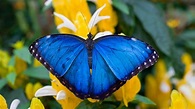
Another wonderful place to visit in Belize is a butterfly farm; there are five in Belize: Green Hills Butterfly Ranch, The Blue Morpho Butterfly Farm at Chaa Creek, Tropical Wings Ecocenter Butterfly Farm, Fallen Stones Butterfly Farm, and The Butterfly Garden at the Shipstern Nature Reserve.
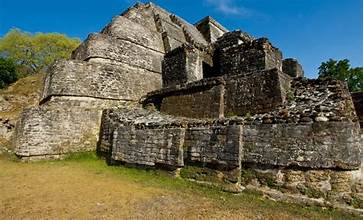
Finally, are the Mayan ruins. There are several sites around Belize. One closest to Belize city is Altun Ha. It is famous for its Temple of the Sun God and the discovery a large Maya Jade Head, which represents the Mayan Sun God, Kinch Ahua; it is the largest object carved of jade in the Maya civilization and one of the “crown jewels” of Belize. In addition to these there is a Temple of the Masonry Altars and eleven other structures.
Roatán
Roatán is a coral island situated atop an exposed ancient coral reef. It is the largest of three Bay Islands off the coast of Honduras, called “Las Islas de la Bahia.” Its capital is Coxen Hole.
The island was originally settled by the Paya and later by the Garifuna, who are descendants of Carib, Arawak, and West African peoples. Archaeological findings indicate that Roatán was inhabited for thousands of years before European contact. Artifacts such as pottery and tools suggest a well-established society with trade networks among neighboring areas.
On 1502 Columbus, on his fourth and last journey, arrived in the Gulf of Honduras. A few years later the Spanish were mining gold, silver, and gems in the Americas and enslaving the native peoples. Then the pirates came. The area became a continual battleground for between the Spanish and British.
Reportedly, in 1638 the first British settlement was established by William Claiborne. The British briefly claimed the Bay Islands as their own in 1850 when the Spanish left but ultimately ceded the territory to Honduras in the 1860s.
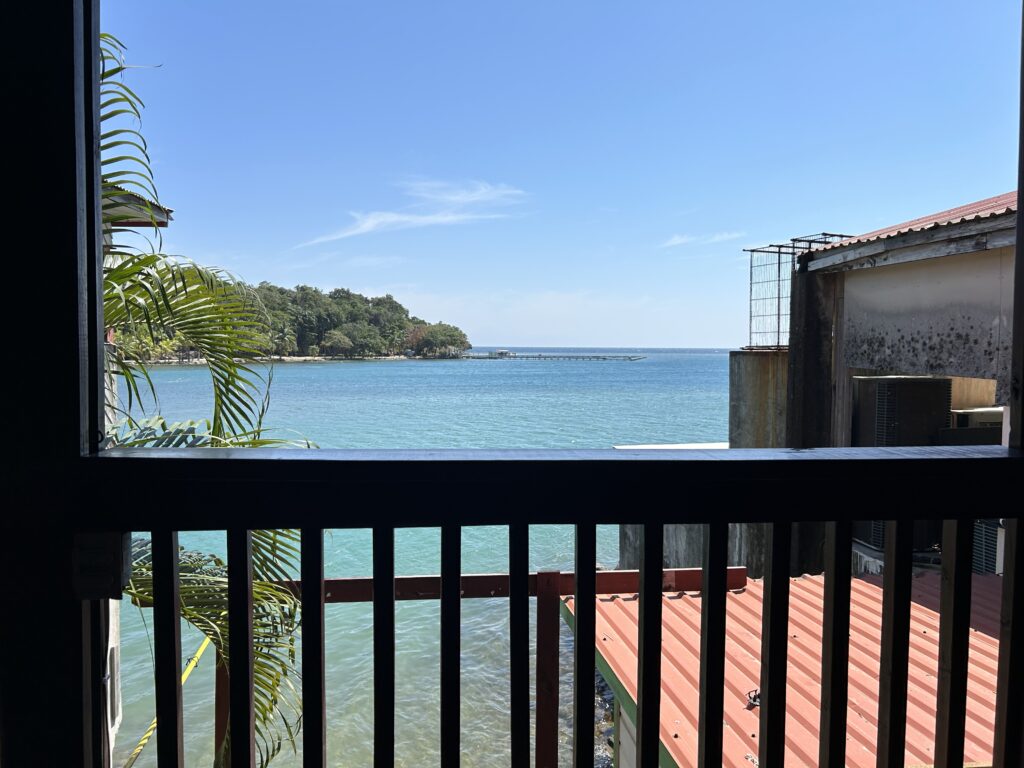
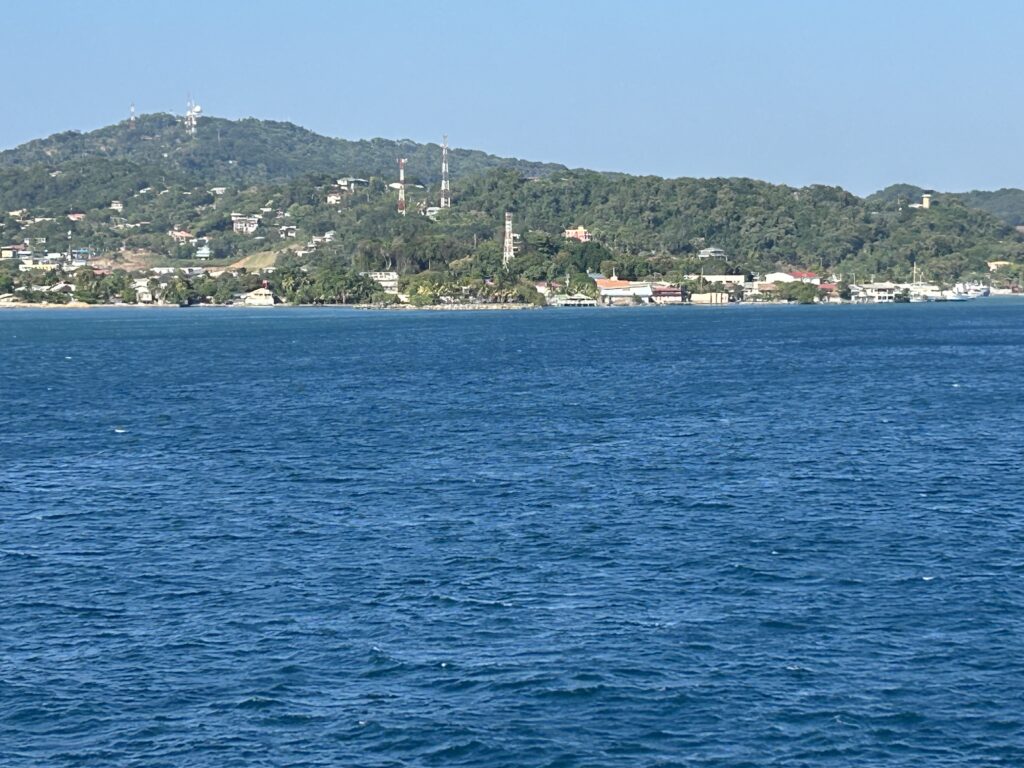
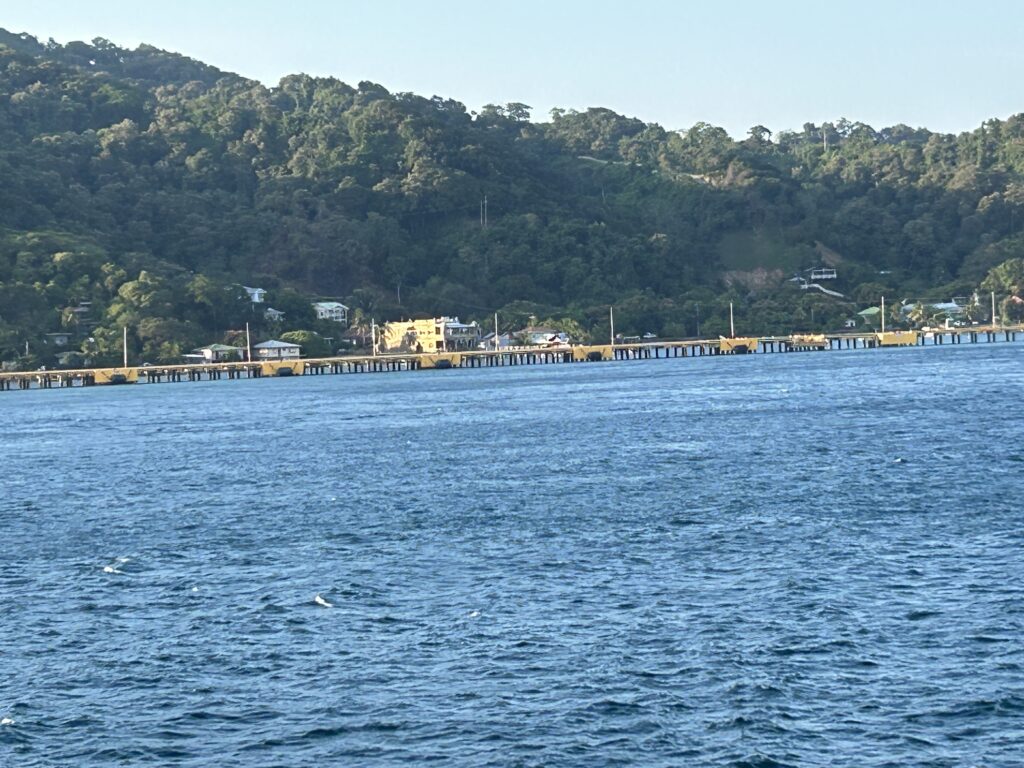
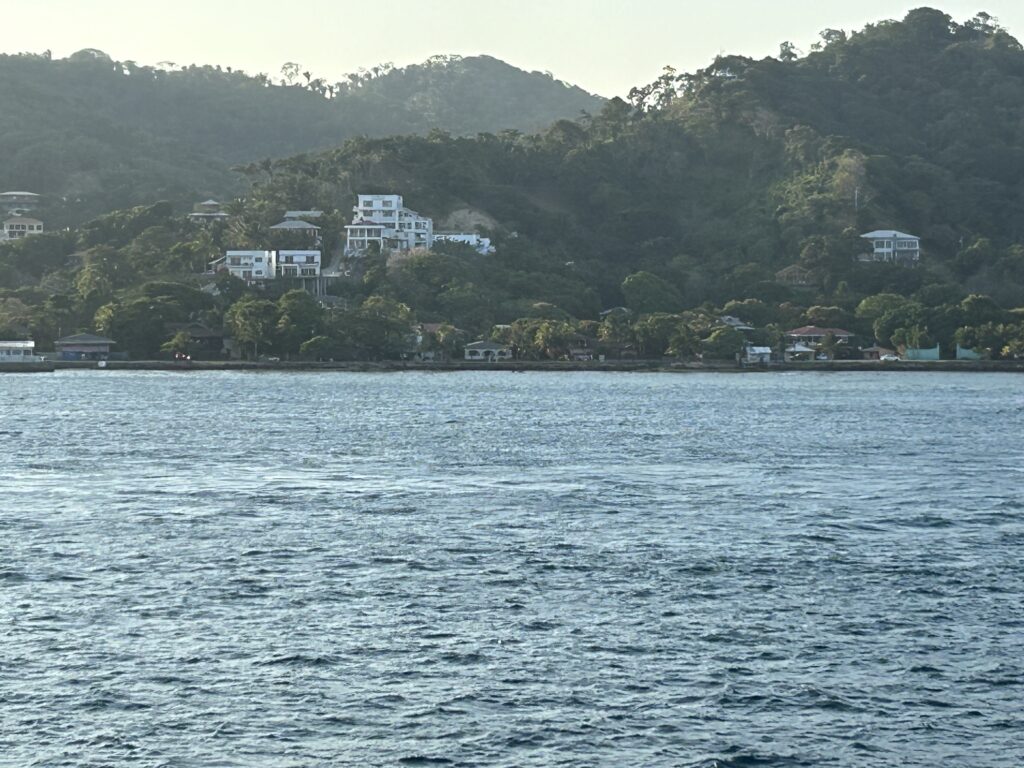
Roatán is a big diving center as it is the site of the Mesoamerican Barrier Reef which extends past Belize. In 2005, the Roatán Marine Park was established to protect the reef.
The island is an Important Bird Area because it supports significant populations of White-crowned pigeons, chimney swifts, and yellow-naped Amazons.
The Roatán Institute for Marine Sciences was established in 1989 to preserve the island’s natural resources.
We got off the ship to wander the streets for nostalgia’s sake and have a Monkey La La, the island’s famous drink.

Here’s a simple recipe to make the Monkey La La:
Ingredients:
- 1 oz. coconut rum
- 1 oz. coffee liqueur
- 1 oz. banana liqueur
- 1 oz. cream of coconut
- 1 scoop ice cream
- Optional: chocolate syrup for garnish
Instructions:
- Combine all the ingredients in a blender.
- Add a handful of ice.
- Blend until smooth.
- Pour into a glass.
- Optionally, drizzle chocolate syrup inside the glass before pouring the drink.