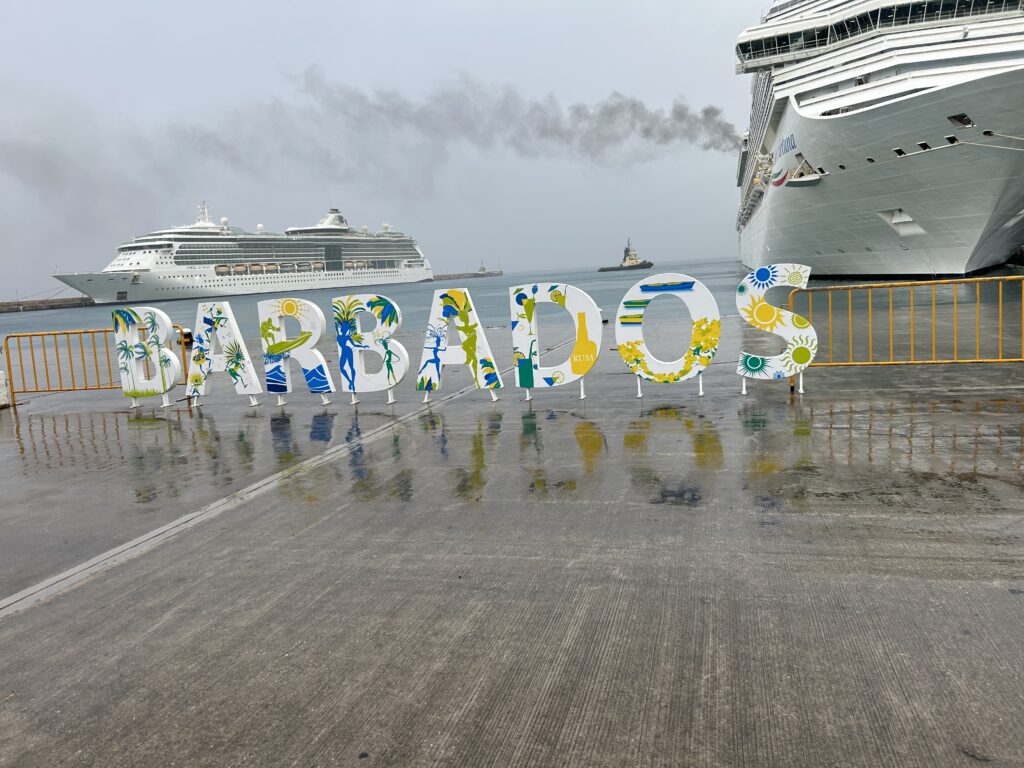
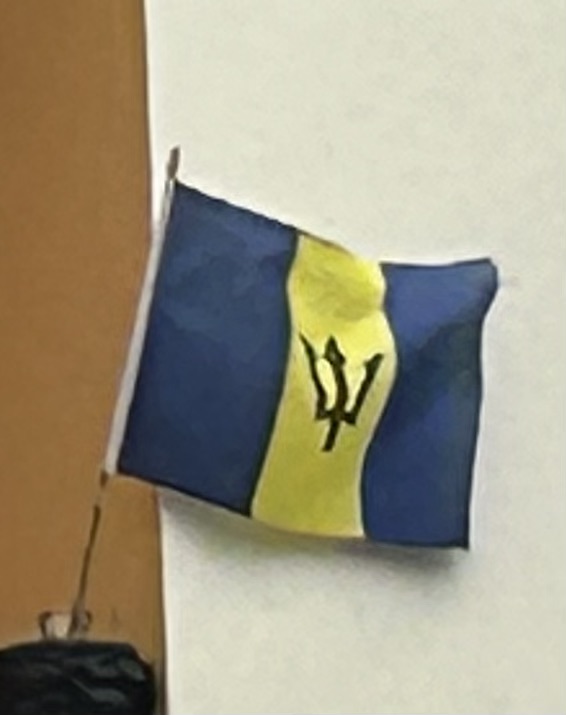
Barbados is an island country in the southeastern Caribbean Sea. It was a British possession from the 17th century until 1966 when it gained its independence. It is a commonwealth nation. Because itsparliament has met continuously since 1639, it is considered the third oldest country in the world.
Pottery artifacts found in Bridgetown indicate that Amerindian communities existed in the 16th century BCE, but nothing is known about them. English ships first landed in 1624 and claimed the island for the crown. The settlers established cotton and tobacco plantations that quickly became sugar cane. British troops remained in Barbados until 1905. In 2011, Historic Bridgetown and its Garrison became a UNESCO World Heritage site.
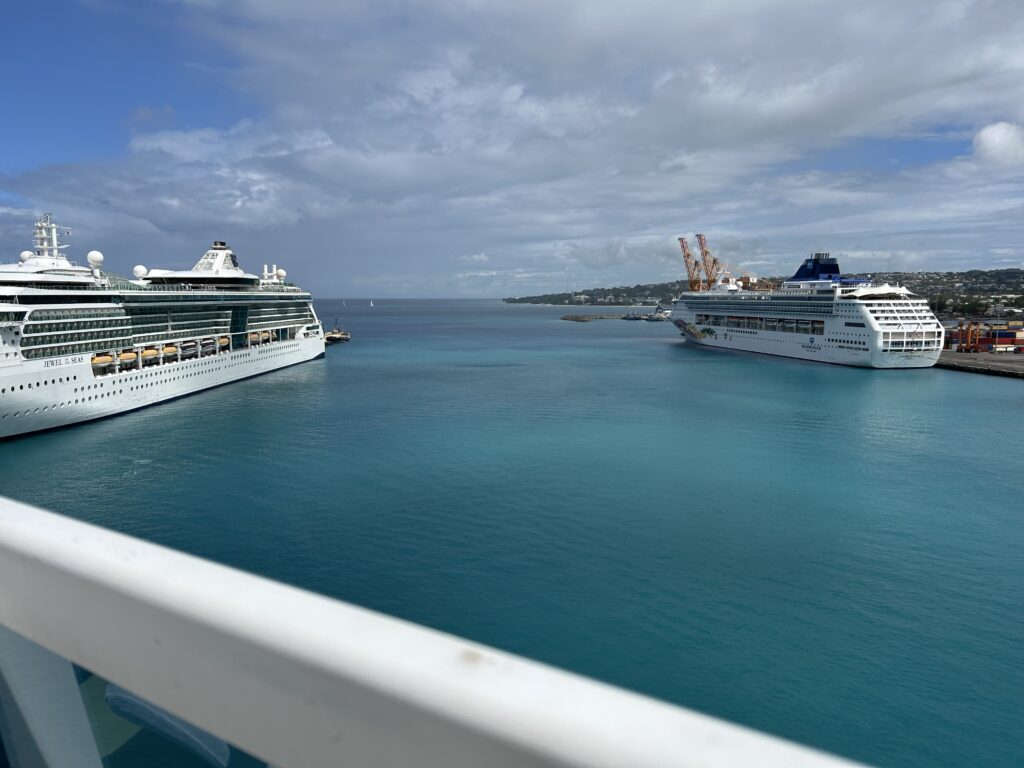
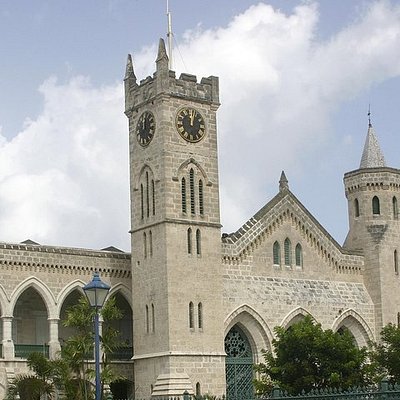
Our ship docked in Bridgetown’s Deep Water Harbor in Carlisle Bay. From there we embarked on our tour of the island. Bridgetown, the capital, was originally named “Indian Bridge” after a wooden bridge over the Constitution River. This bridge that was thought to have been built by the Arawaks, was demolished and rebuilt in 1654. In 1666 a fire destroyed the whole town. As a result the Assembly ordered that all buildings be built of stone.
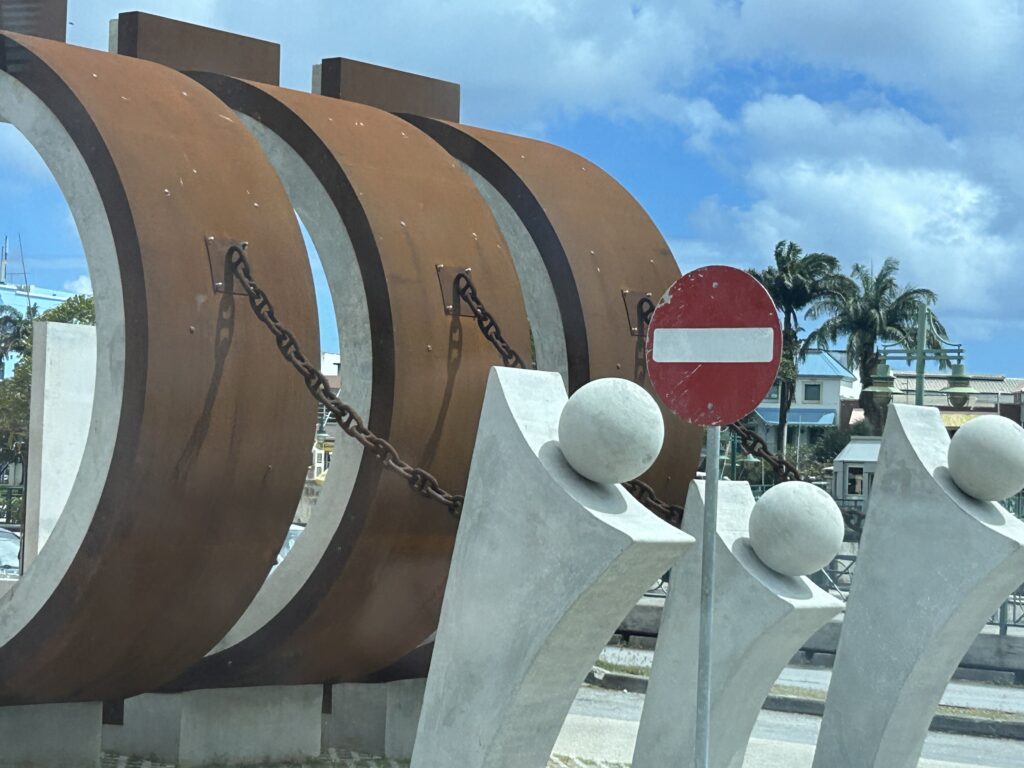
Close to the port is the National Heroes Square with various statues of the national heroes and a Monument to the Barbadian Family. This inspiring monument celebrates the importance of the family unit in building and maintaining a successful nation.
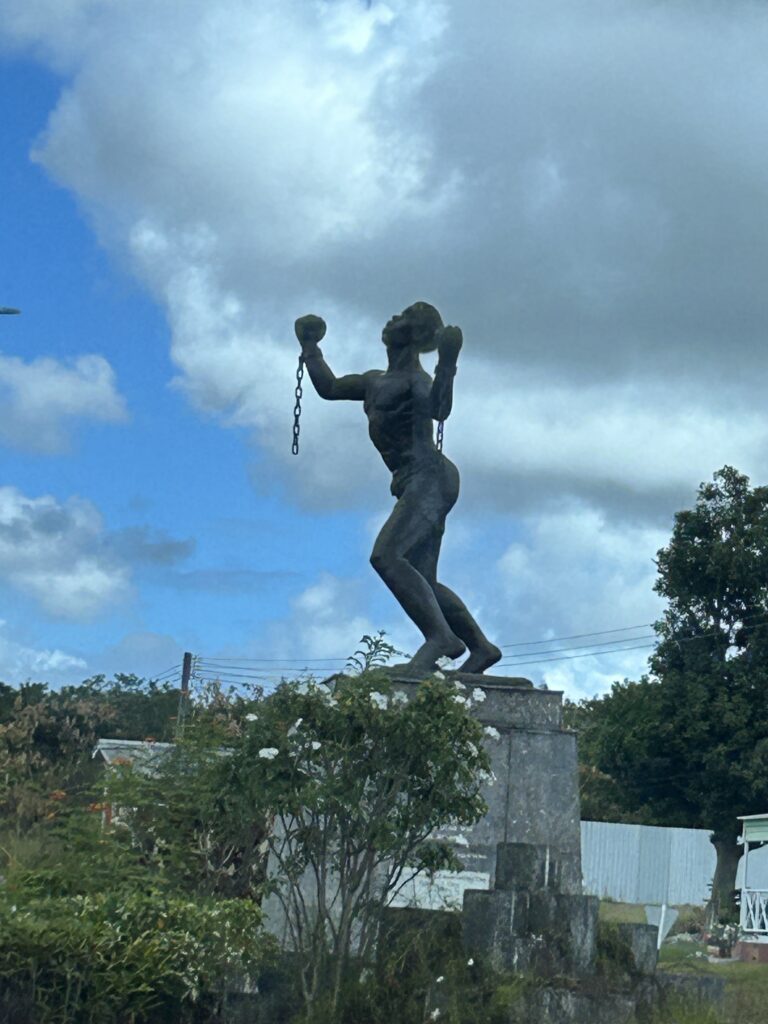
Also, in the square in the Bussa Emancipation Statue. This statue commemorates the 1816 Bussa Rebellion that led to the abolition of slavery in Barbados.
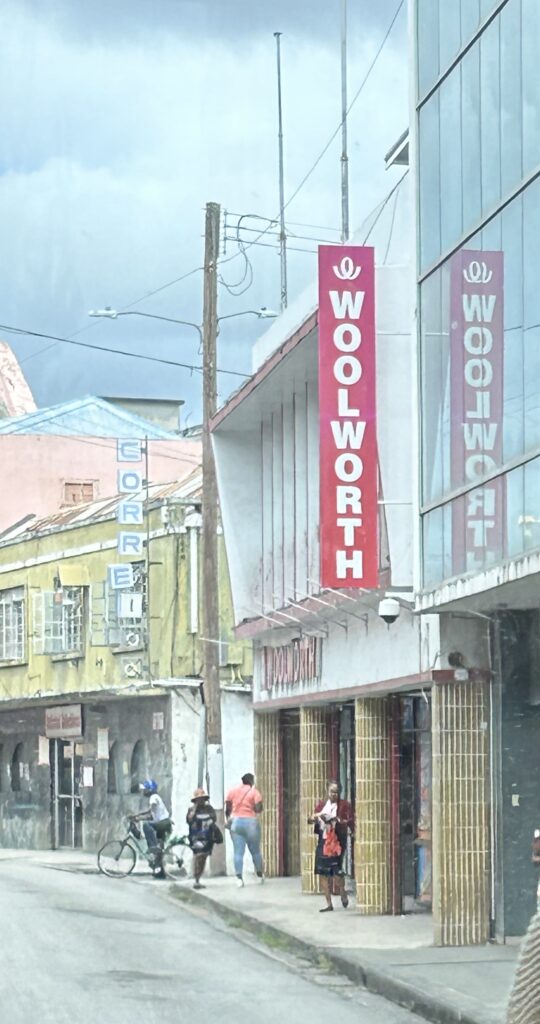
Broadstreet is the big shopping street in Bridgetown, and yes, there is an open Woolworth store there. I haven’t seen one since my childhood.
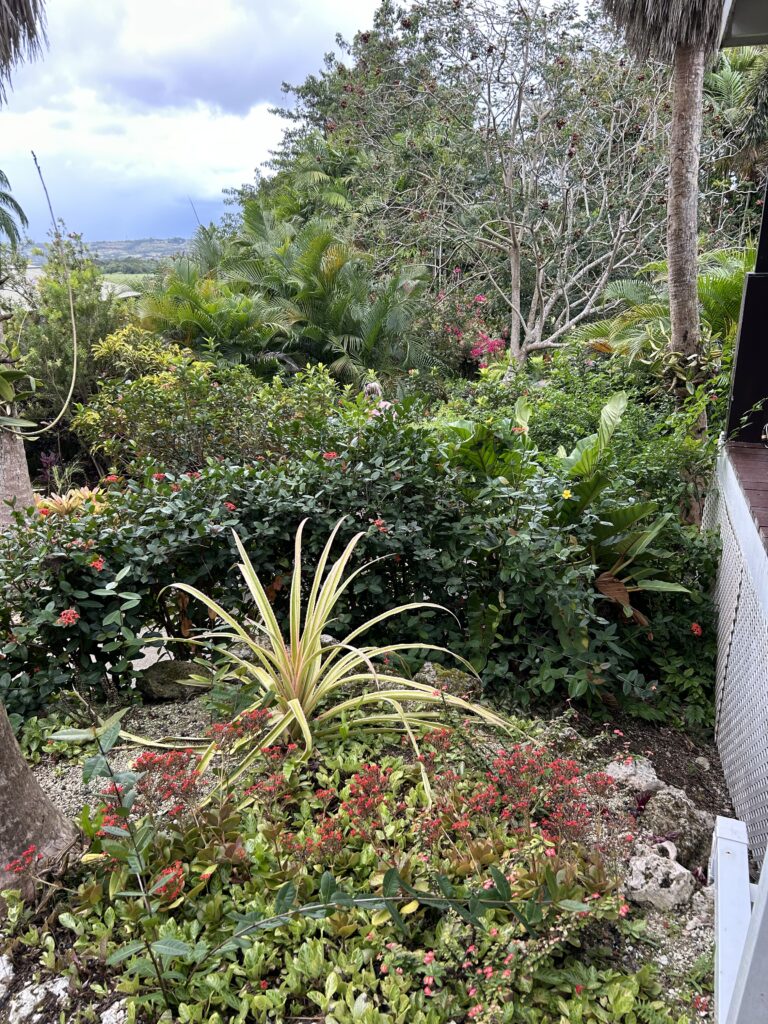
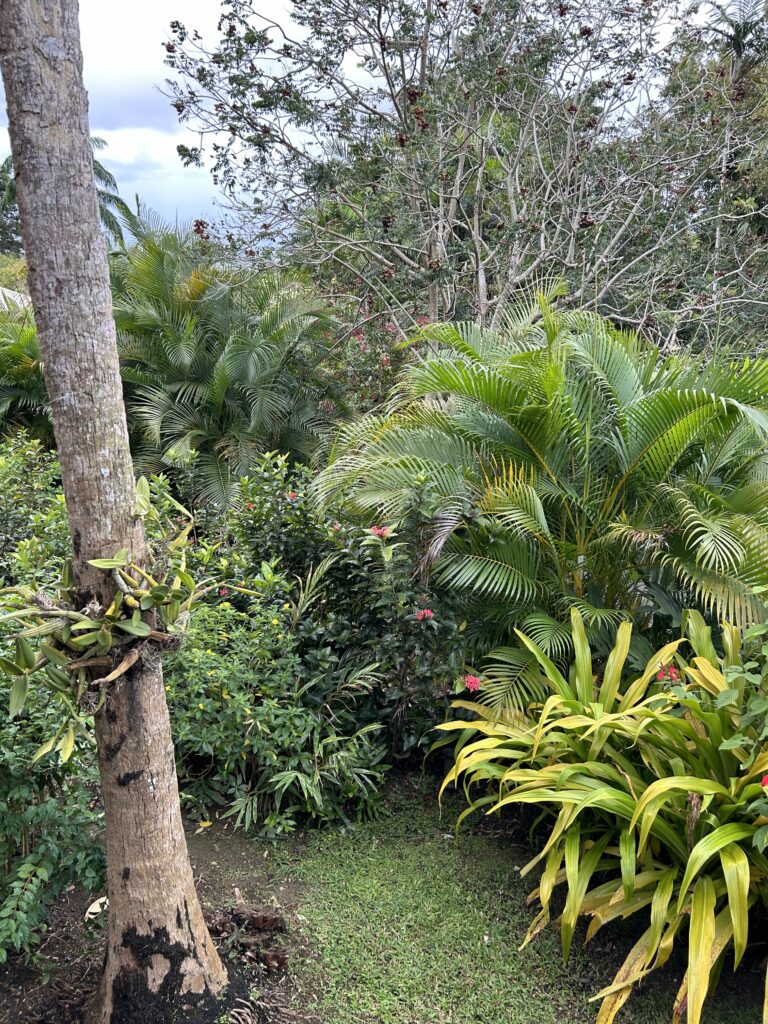
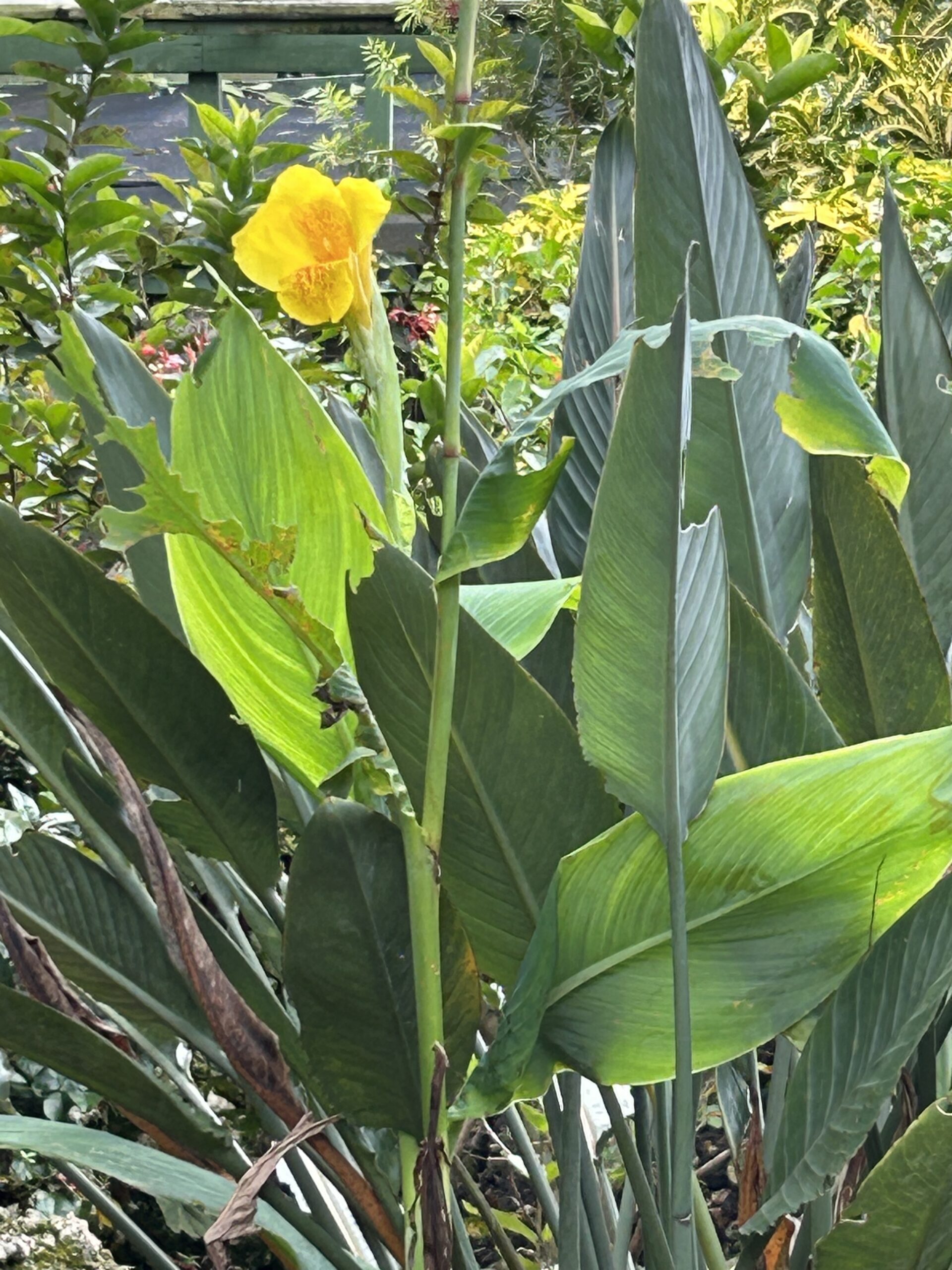
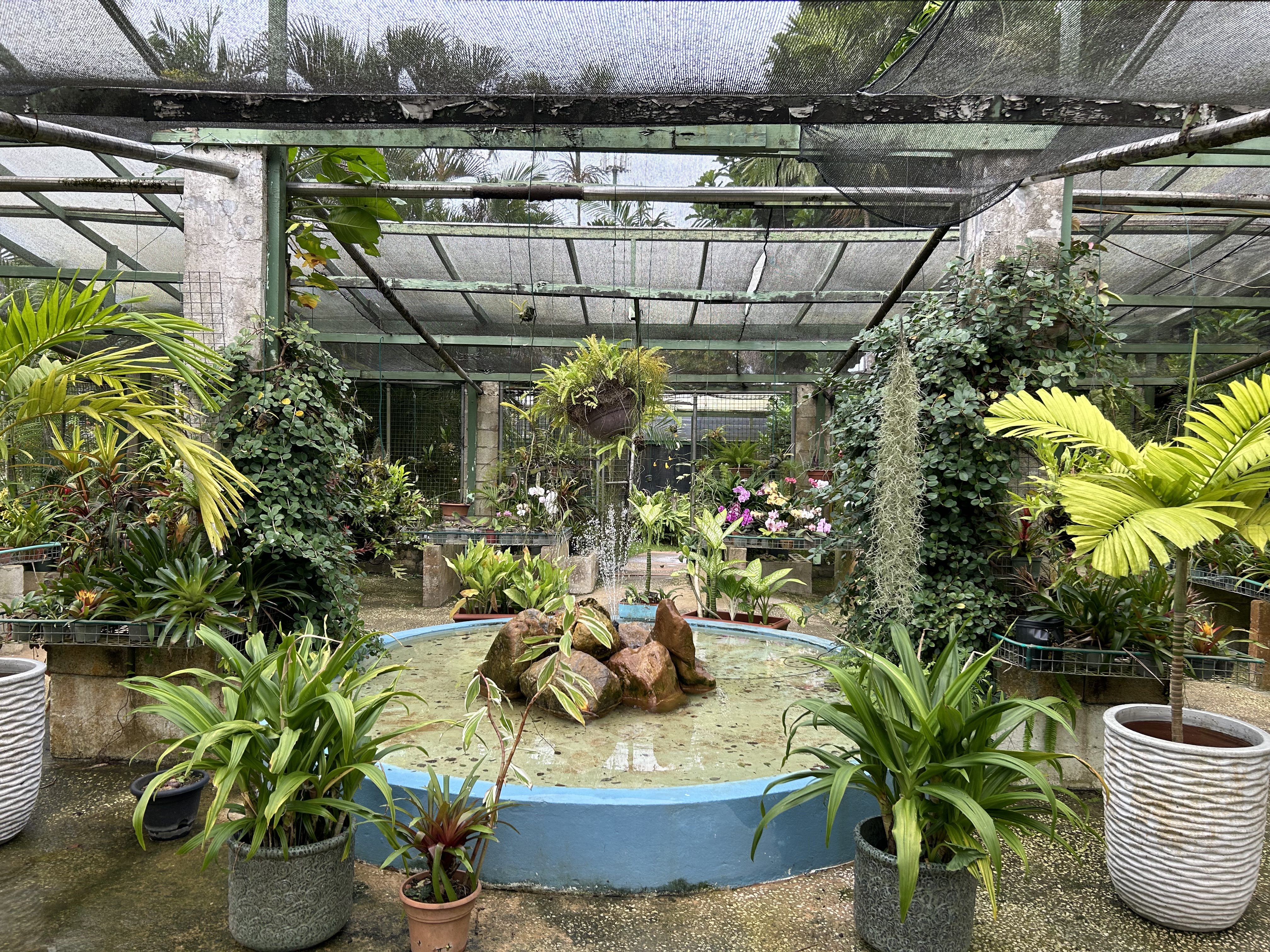
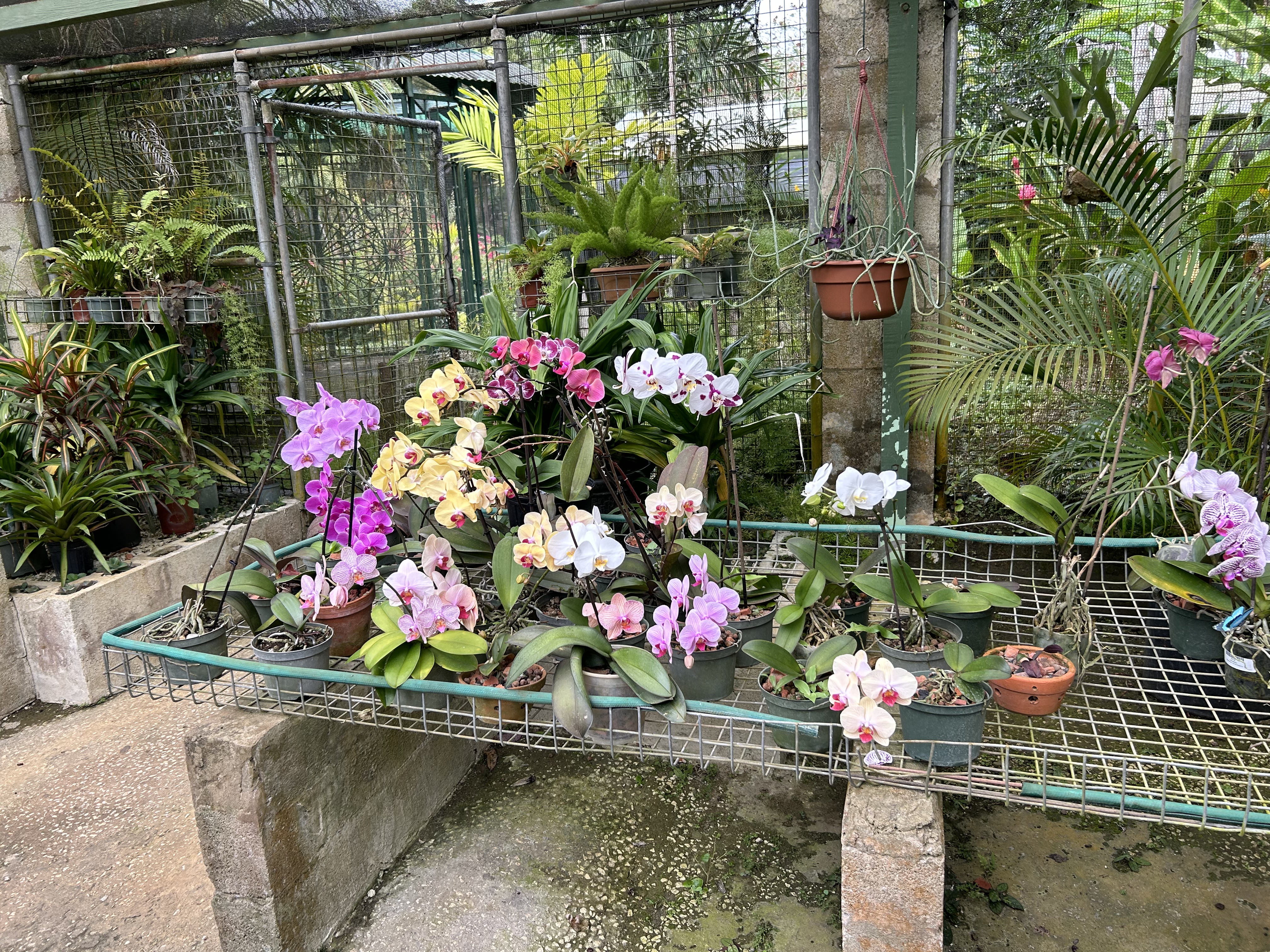
Our first stop after leaving Bridgetown was St. George where we visited the Hunte’s Gardens. Once a sugar plantation, the grounds have been transformed by horticulturist Anthony Hunte into beautiful gardens. The gardens and surrounding forest are filled with a variety of flowers, trees, and foliage along with local birds and green monkeys. The estate claims over 84 species and varieties of birds, flowers, and plants.
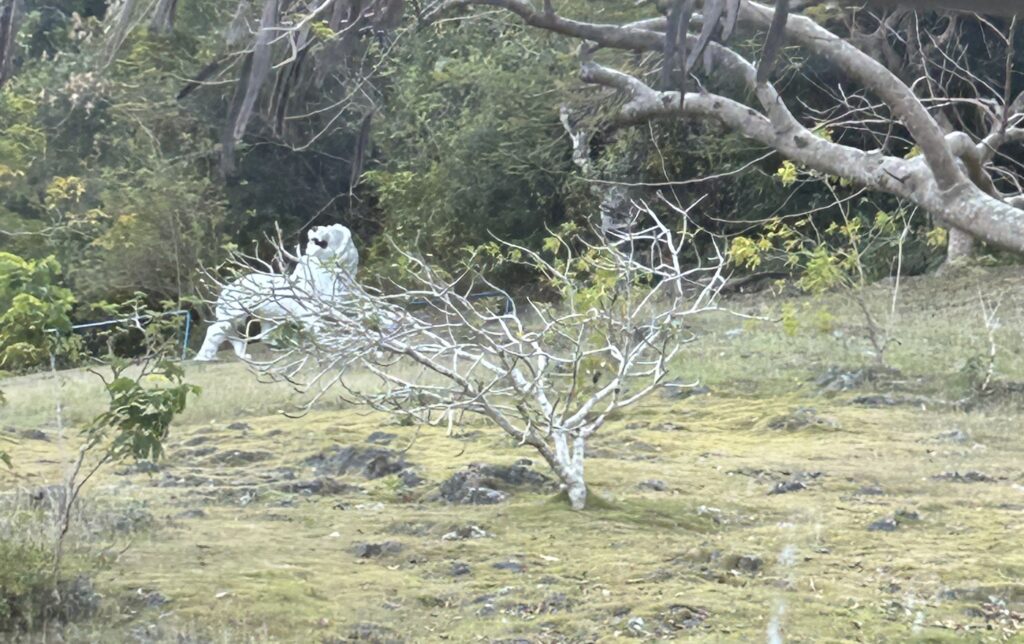
Atop Gun Hill sits a Signal Station, built in 1818. It was one of a chain used to signal the approach of enemy ships and the safe arrival of cargo ships to the island. Part way up the hill, sits a statue of a lion. The Lion of Gun Hill was carved in 1868 by personnel at the station from a single piece of coral limestone. It was meant to resemble the British Imperial Lion and symbolize the control and power held by Britain over the world.

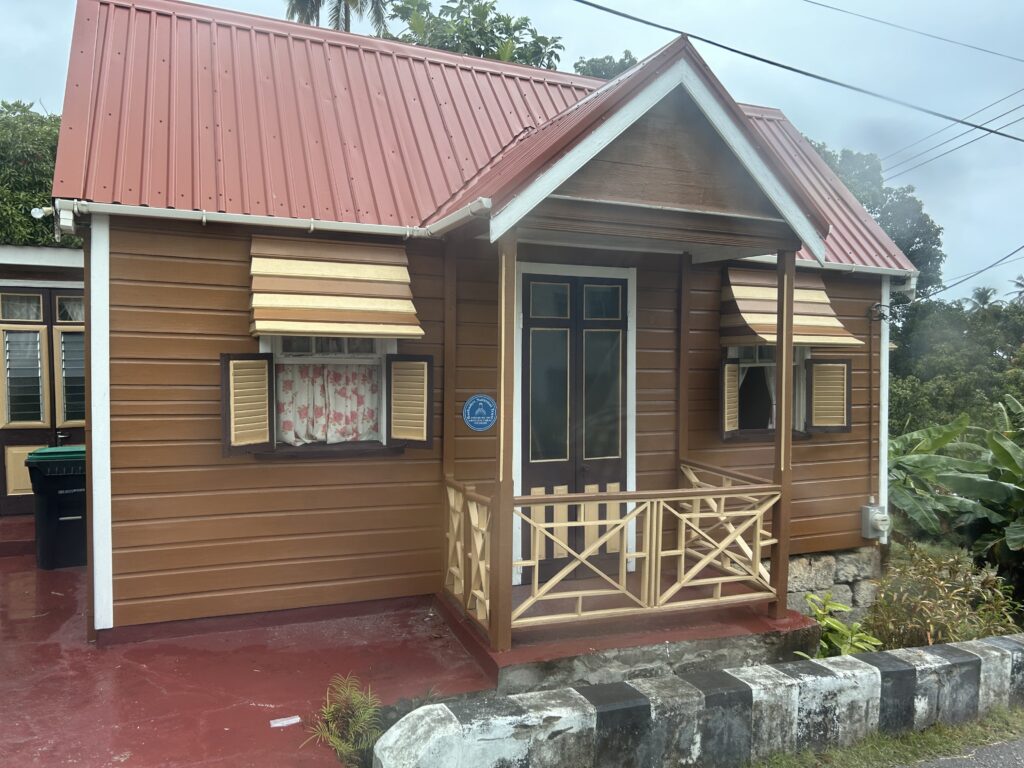
Next we went into Holetown where we saw several Chattel Houses, the first homes of freedom for slaves. Often it took several years to gain enough money to buy a house, so several people could buy one together after a few years. They were an enduring symbol of freedom.
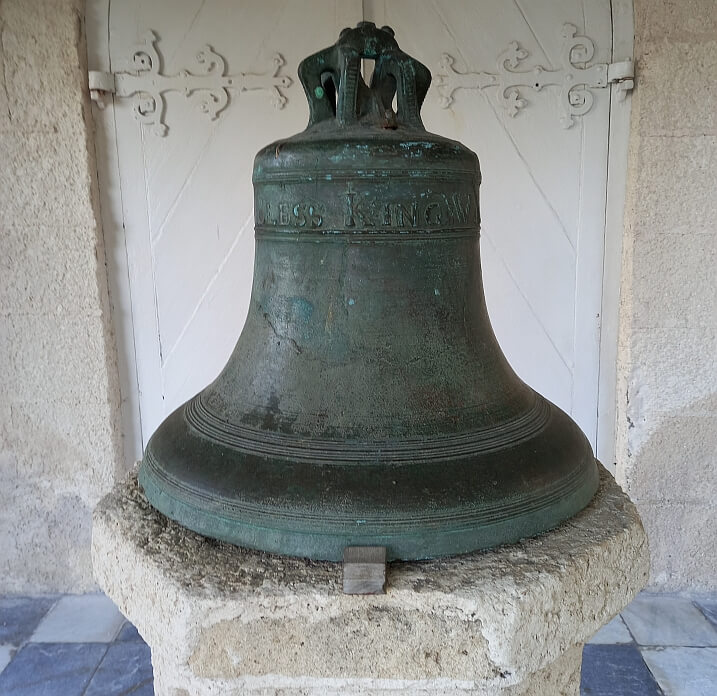
Also in Holetown is St. James’ Church. This is the oldest church on the island. It was built near the site where the first English settlers landed on the island in 1627. The original church was destroyed in 1675 by a hurricane and again in 1780 by another hurricane. The current building was constructed of stone to withstand future hurricanes and was completed in 1874. Legend says that a gate located in the western wall of the church’s perimeter is opened just about an hour before services begin. Later when the bell tolls, the Devil is said to leave the vicinity through the gate. Therefore, the gate is called the “Devil’s Gate.” The church bell also has a story. The original bell fell from the belfry in 1881 and was severely cracked. It was sent to England for repairs. A donor paid for a replacement before it was returned. The original bell is now on display at the church with the inscription “God bless King William, 1696.”
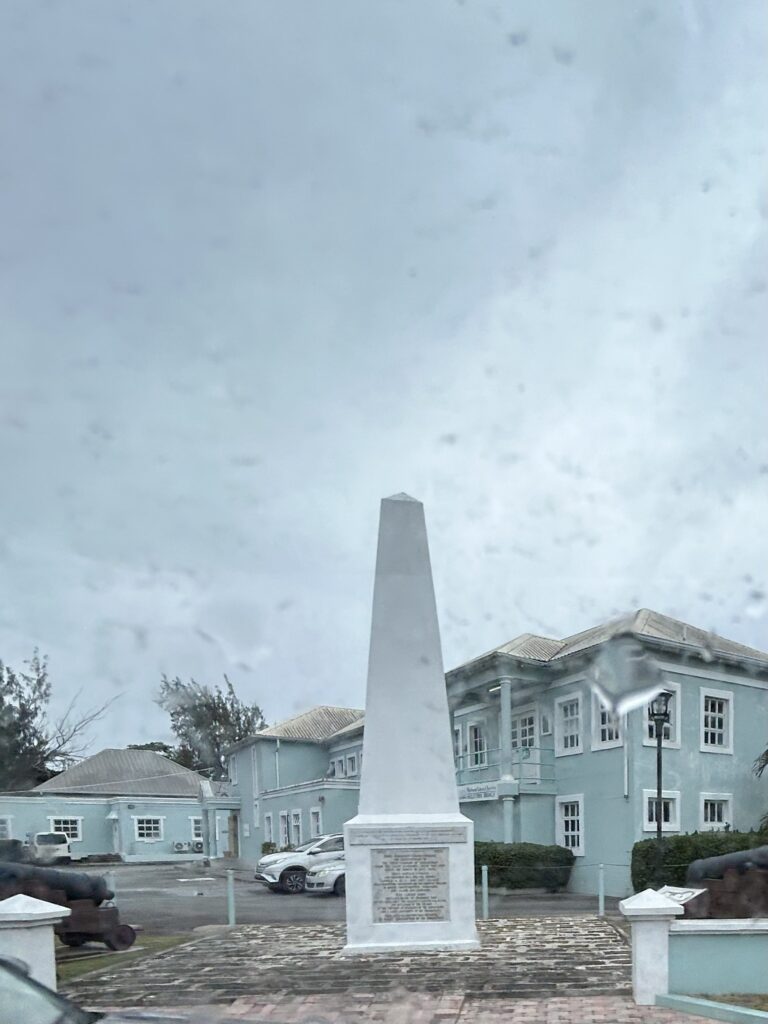
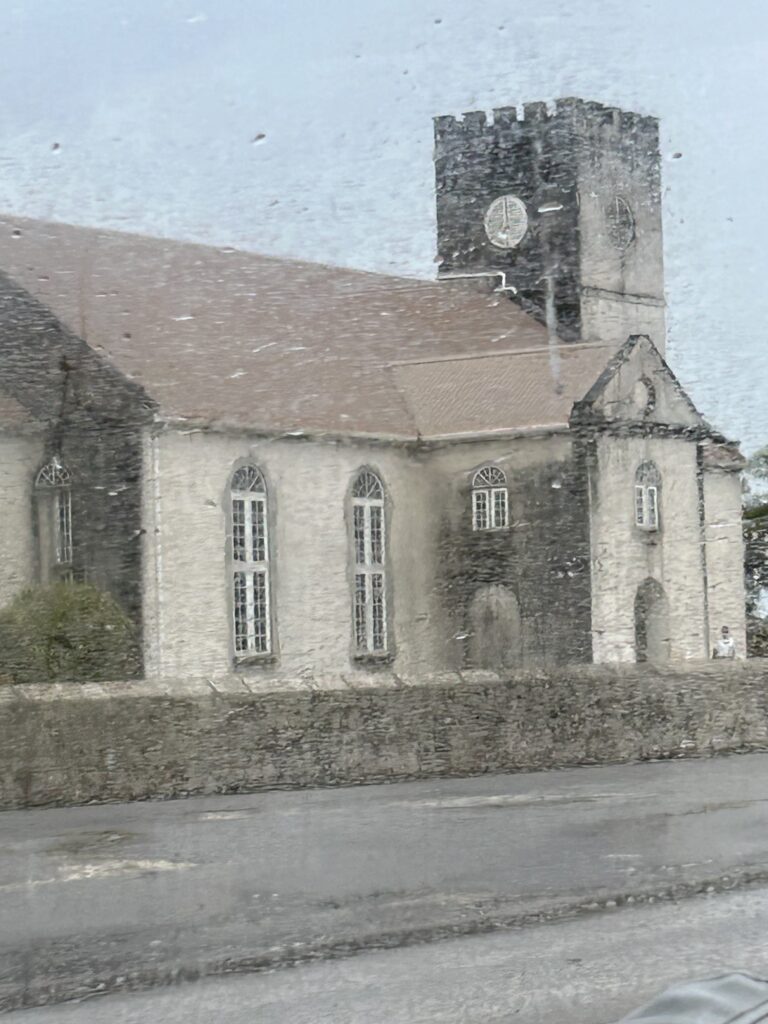
Close to St. James Church is the obelisk on the site of the first settlement in Barbados. The obelisk was erected in the 19th century to commemorate the 250th anniversary of the settlement.
Another old Anglican church is ijust outside of Holetown in Arch Hill: St. Thomas. St. Thomas dates back to 1629., but was destroyed by the hurricanes of 1675 and 1780 as well. The current church is less Gothic in design than St. James or St John.
Now we crossed the island to the breathtaking Bathsheba waterfront. Here is a famous surfing spot called the Soup Bowl. The beach is lined with huge mushroom-shaped boulders.
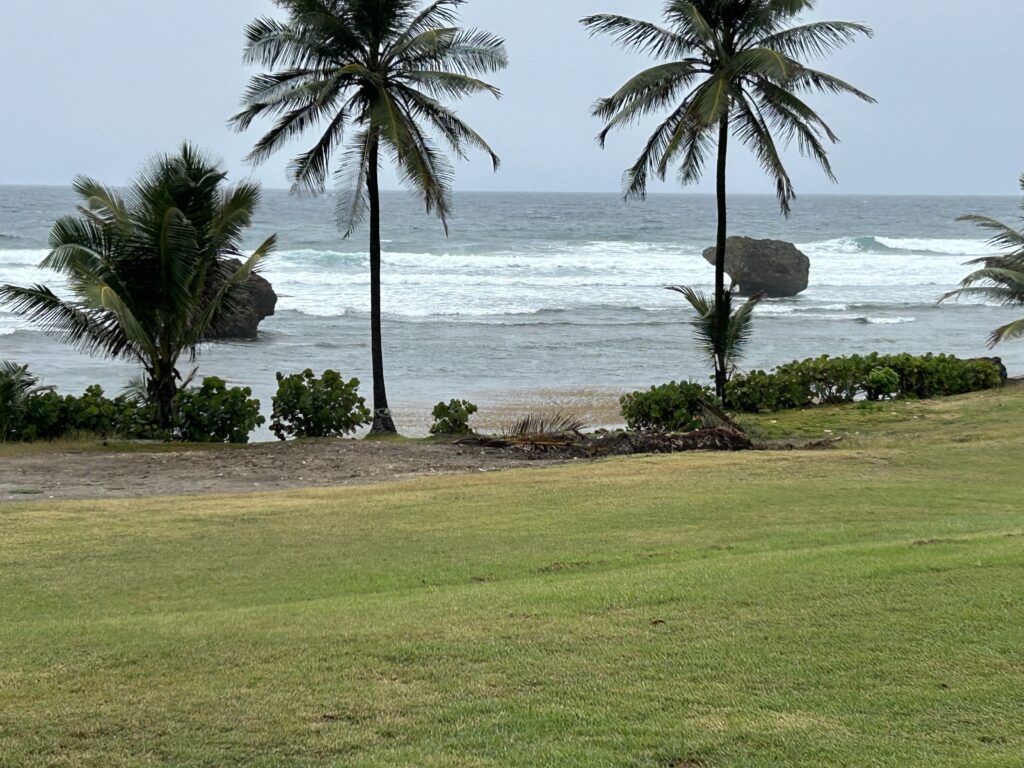
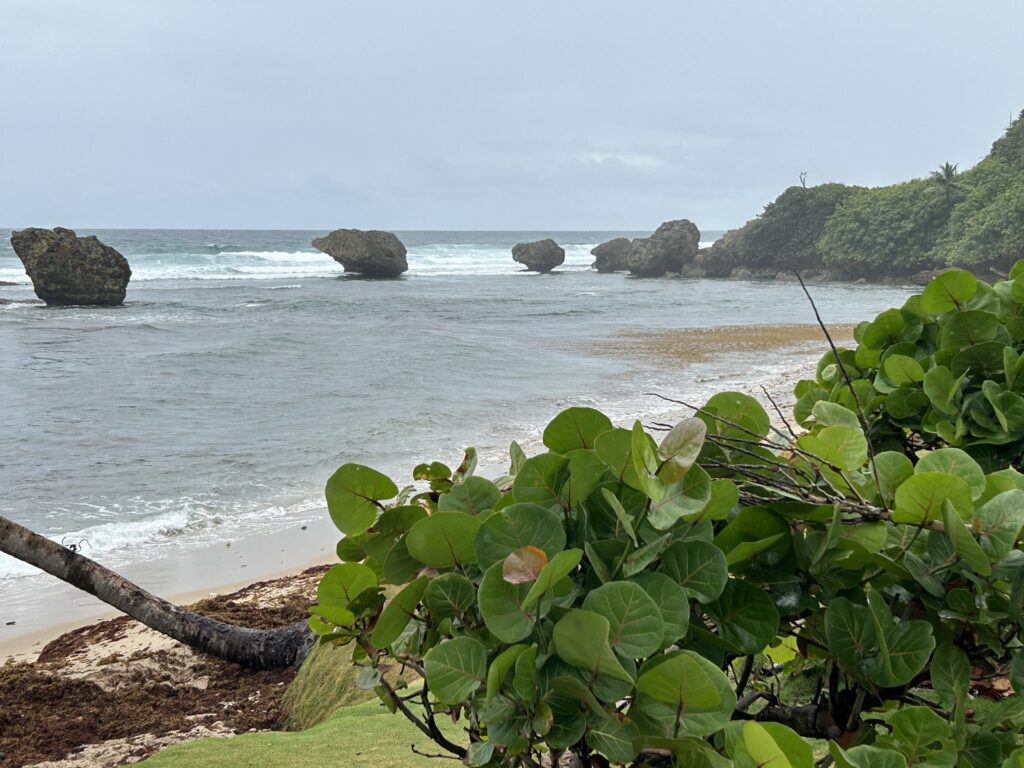
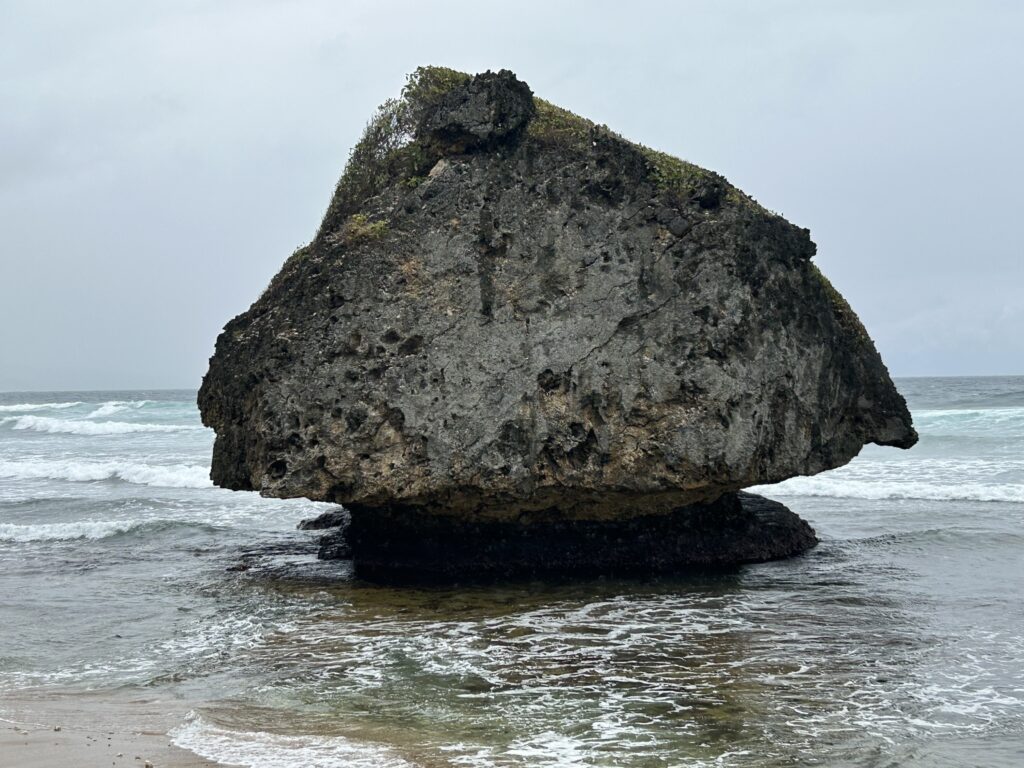
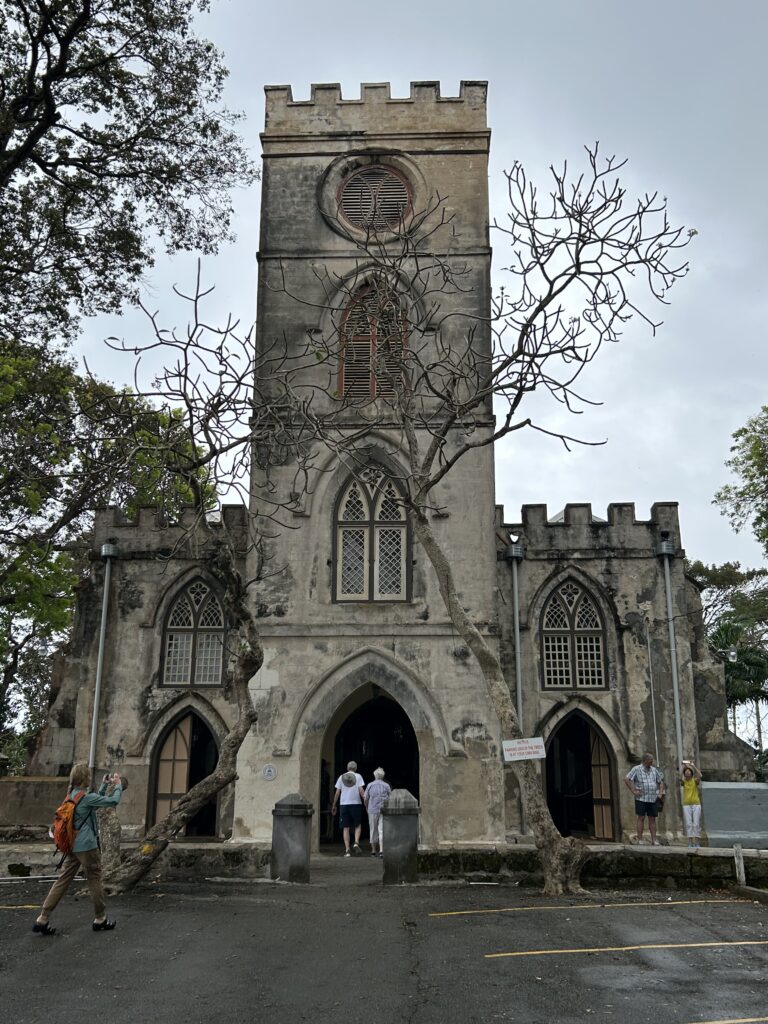
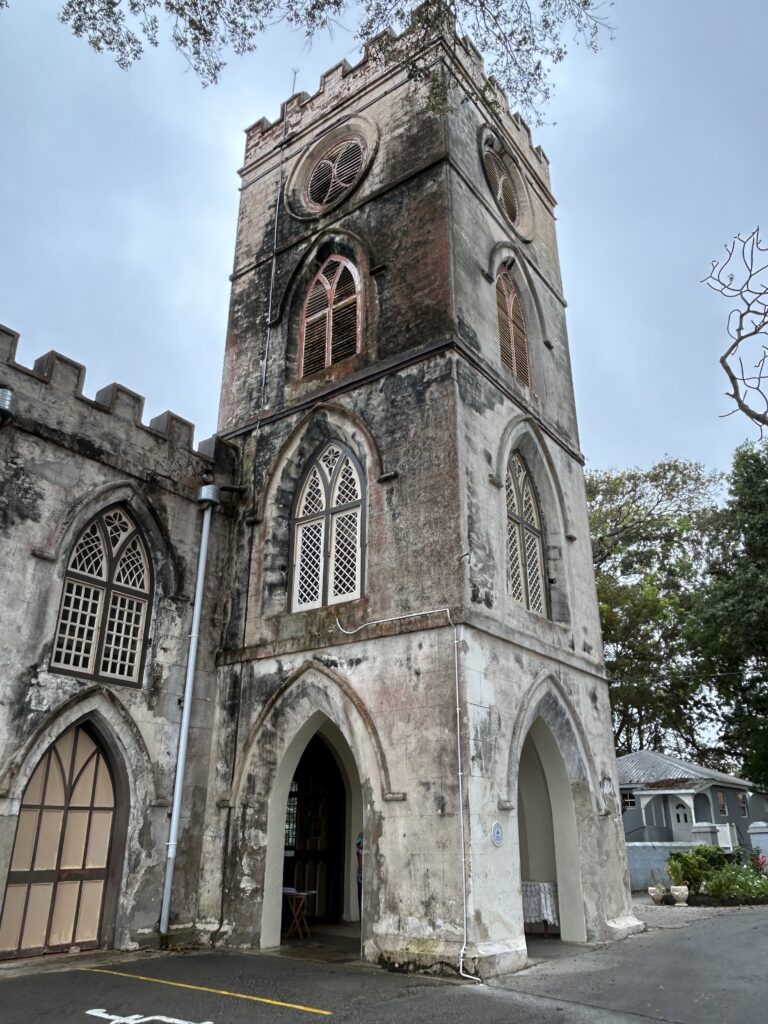
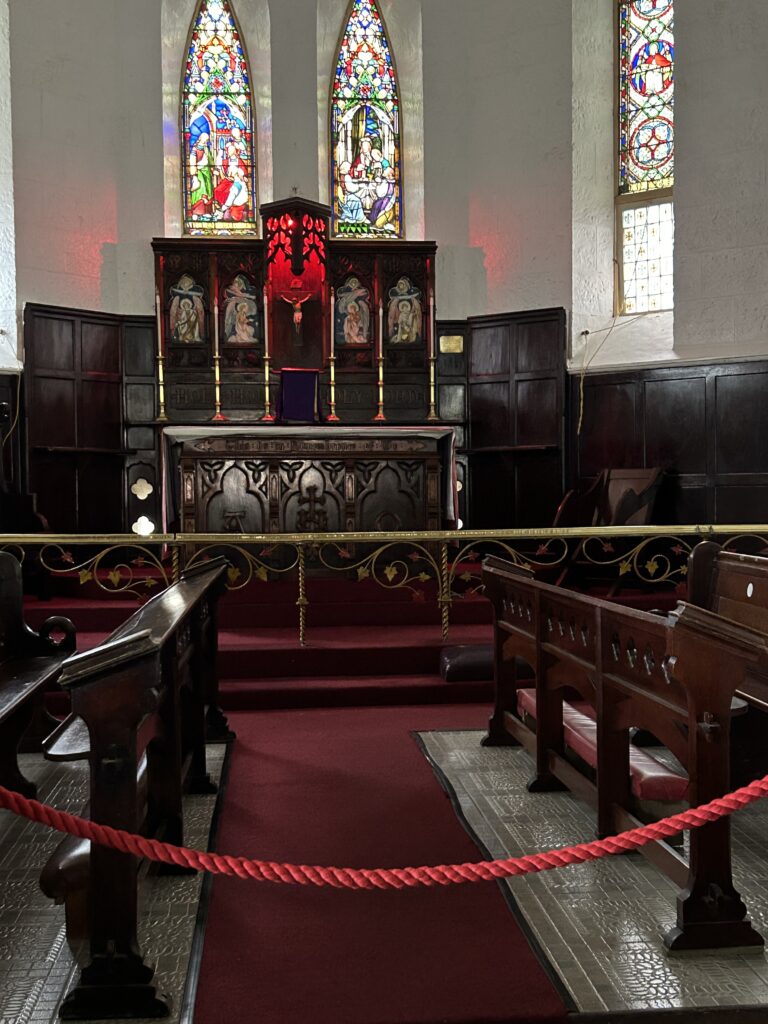
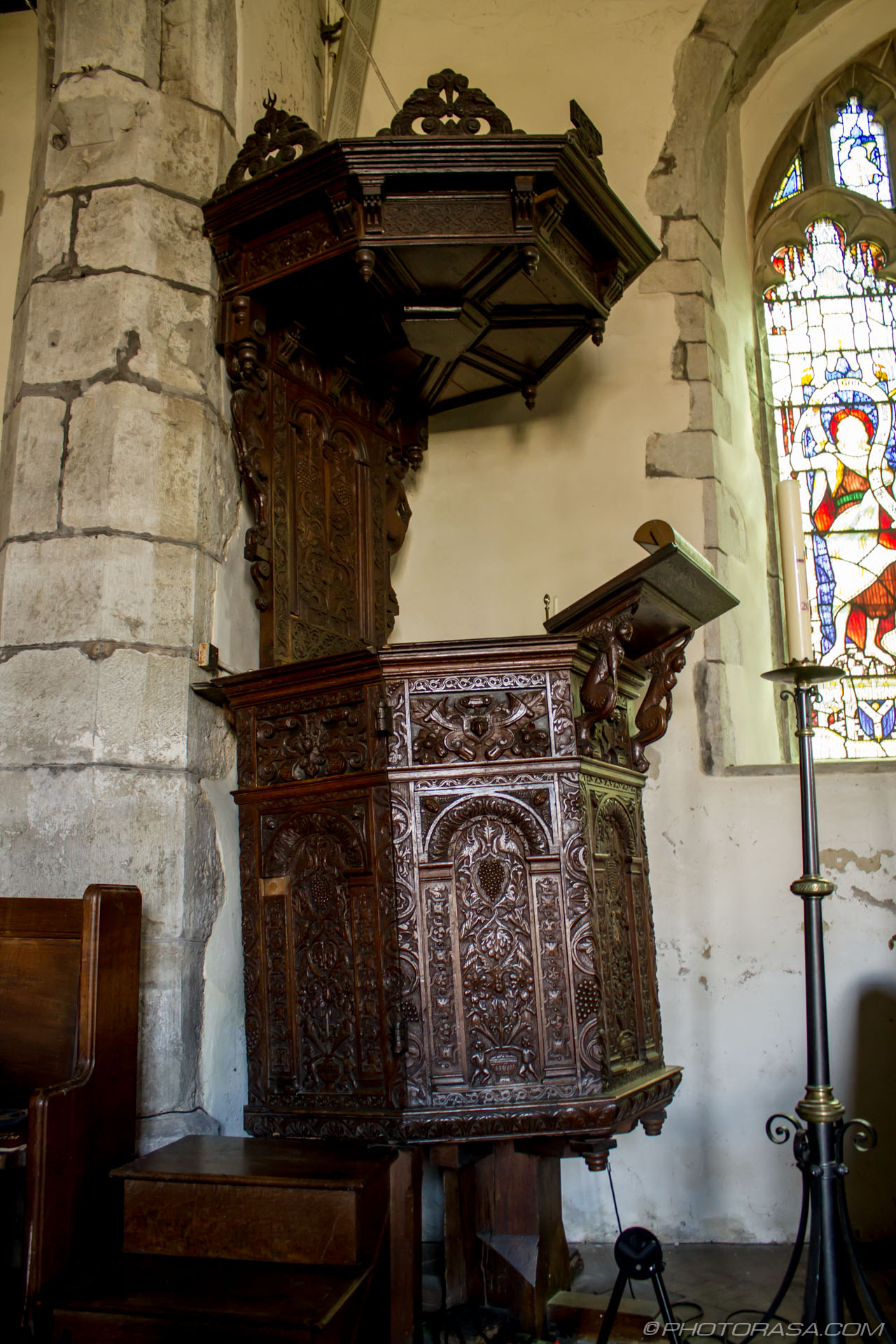
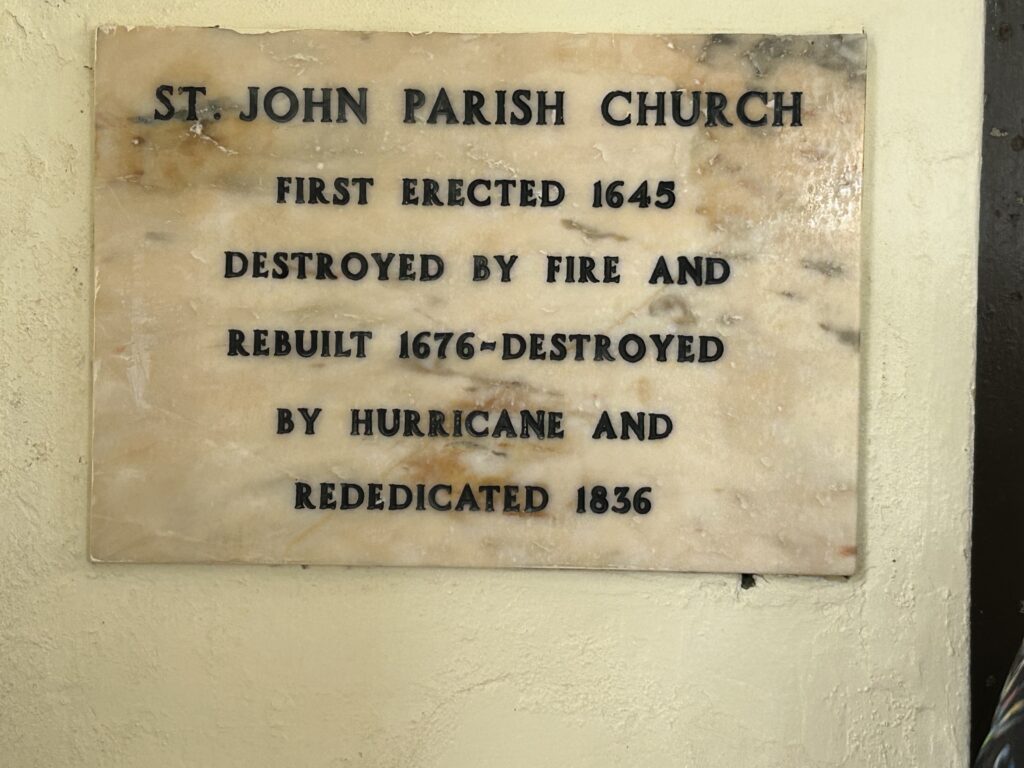
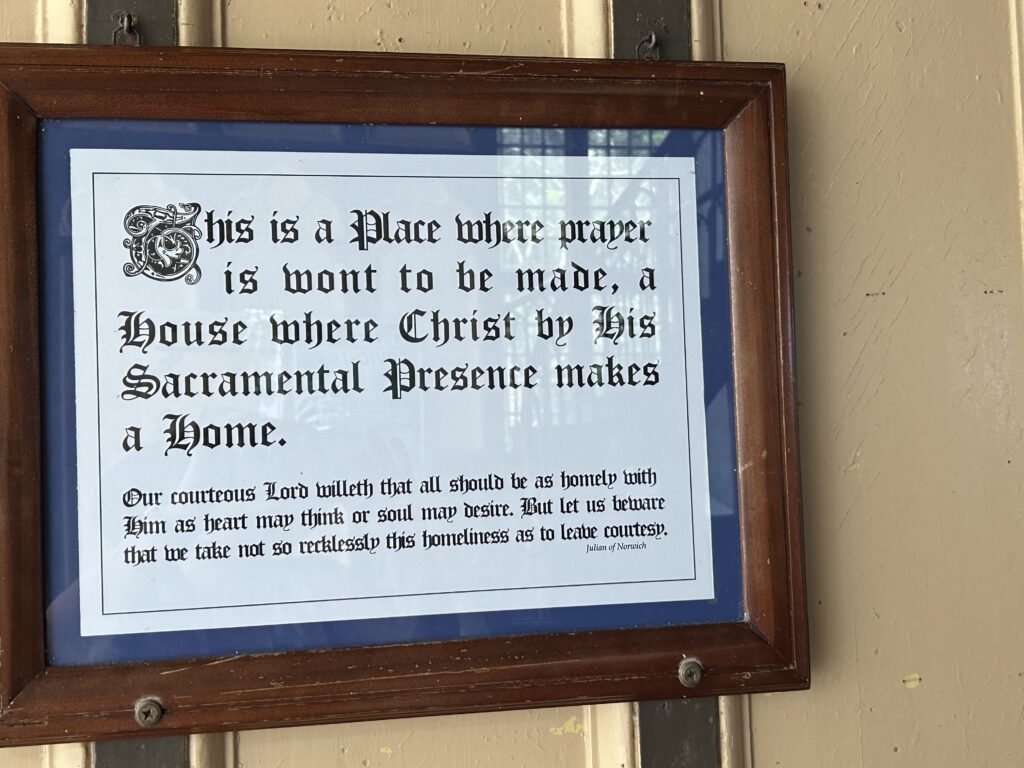
After enjoying some time on the beach, we went on to neighboring St. John where we visited the historic St. John’s Anglican Church. The church is situated on a hill with a panoramic view of the ocean. Originally constructed in 1628, it has undergone several reconstructions, with the current structure dating back to 1836. It is built from Coral stone. Built in the Gothic style, it has a lovely interior. The altar is made of brass rails and mahogany wood. The stained glass windows scatter brilliant light over the chancel. The elaborately carved pulpit is made from six different woods: ebony, locust, Barbados mahogany, manchineel, oak, and pine – the first four of which are indigenous to Barbados. It has an interesting connection to Constantinople. The church is the final resting place of Ferdinando Paleologus, who was the last descendant of the second brother of Constantine, the last Christian Emperor of Constantinople. At the rear of the church’s cemetery, you can find Paleologus’s tomb which is marked by a granite tombstone. He was buried in a standing position at his request since he rarely sat in the job he held.
After our time on the east coast, we headed back to Bridgetown and our ship.