Today we went to Crete, arriving at 7 a.m. at Souda Bay. It is one of the deepest natural harbors in the Mediterranean. The first thing you see are historic fortifications dating from the Venetian Empire along the mouth of the bay. We took a 3-hour walking tour of scenic Chania. I loved our guide; he had been an Orthodox seminarian among many other things. He was so interesting and stressed the occupation of the city by many groups.
Chania is the site of the Minoan settlement called Kydonia. We saw some ruins of the old Minoan city as we toured within the walls. This area has been inhabited since the Neolithic Era. It became an important City-State in the Minoan period. The first wave of Greeks—Dorian Greeks—came around 1100 BCE. In 59 BCE they were conquered by the Romans. After the Romans, came the Byzantines, and then the Arabs. In 961 CE the Byzantines retook the area. They were the ones to fortify the city against another Arab attack. After the fourth crusade, Byzantium fell, and Chania was sold to the Venetians. Shortly after the city was taken over by Malta, but the Venetians reconquered it. After the fall of Constantinople many Byzantine priests, monks, and artists fled to Crete. Chania became a mix of Byzantine, Venetian, and Classical Greek cultures. During the Cretan War (1645-1669) the Ottomans conquered and retained control through several rebellions. Until modern times, it has been a mix of Muslims and Christians. Ethnic violence led to the migration of Arabs to other islands, and in 1922 there was a population exchange between Greece and Turkey that led to the deportation of the island’s last Muslim. After various rulers claimed Crete, it was united with Greece in 1913.
So, Crete has been home to several different cultures since the Neolithic era.
Our tour began at the Municipal Market of Chania, one of the city’s key landmarks. This is the heart of the city. Construction started in 1908 and was completed the year Crete was united with Greece. It has become a symbol of the city’s heritage and a popular destination for both locals and tourists alike, showcasing traditional Cretan culture and goods. Then we walked a few blocks to the walls and the Old Town inside them.
On our way, we passed the Cathedral of the Presentation of the Virgin Mary, built on the site of an older temple to Mary dating back to the 14th Century. It is considered the protector of the city. The center aisle is dedicated to the Virgin Mary; the northern aisle to St. Nicholas; and the southern aisle to the three Cappadocian Fathers. When the city was occupied by the Turks the church was converted to a soap factory. It was restored to the Orthodox church when the factory went.
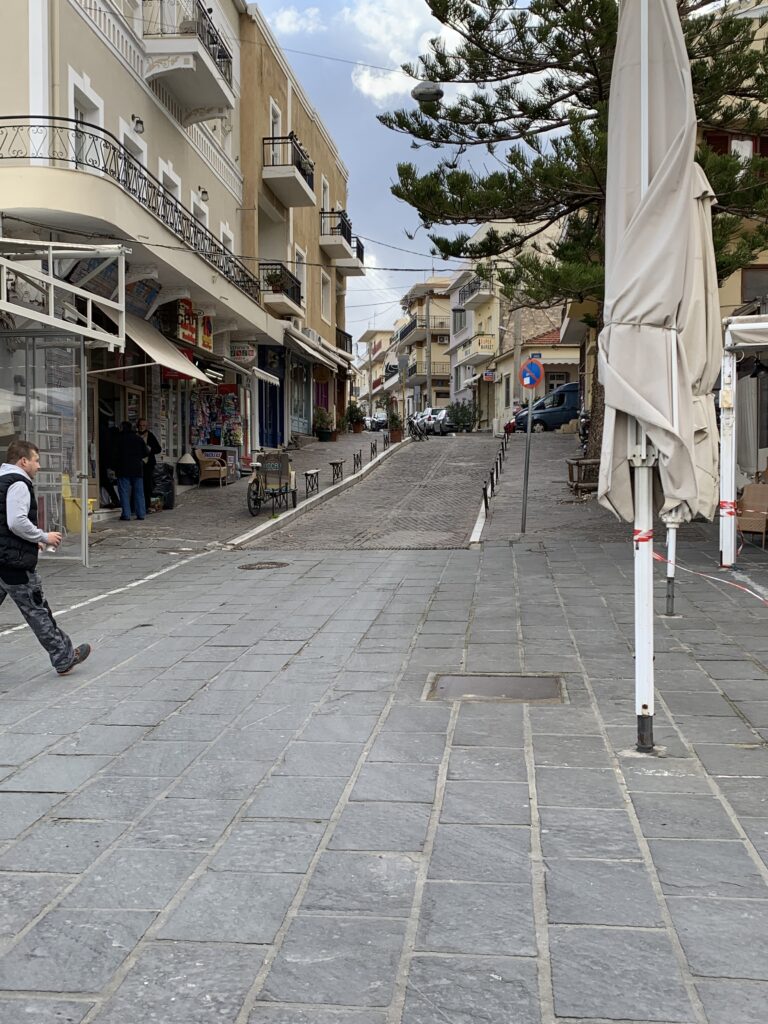
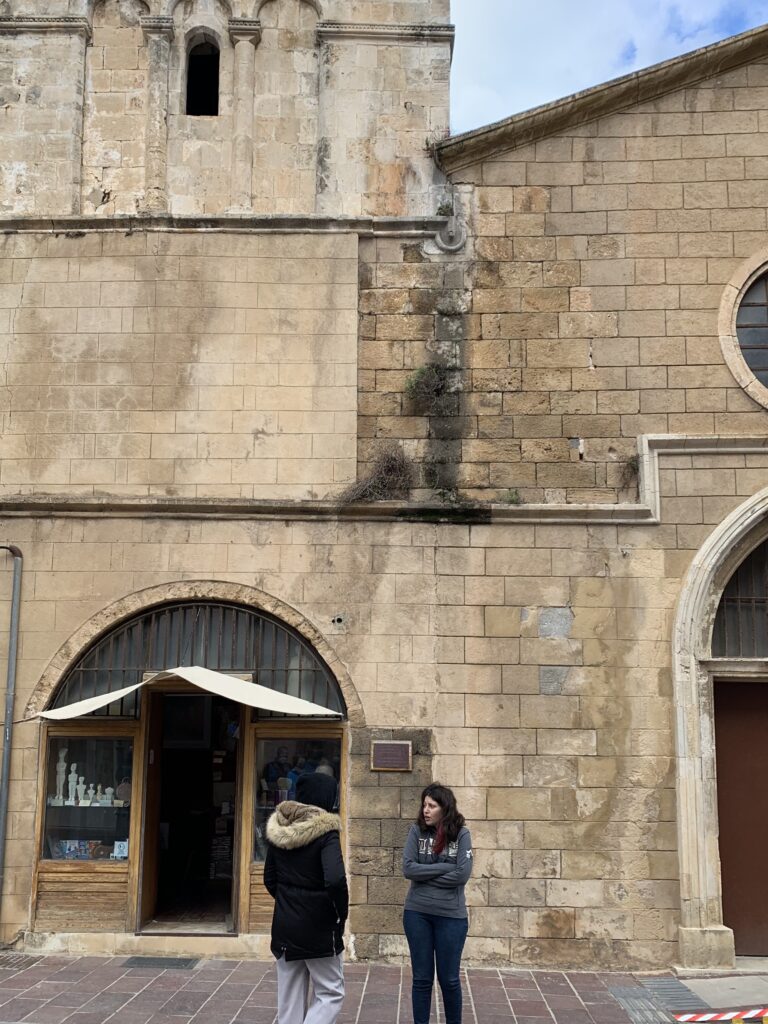
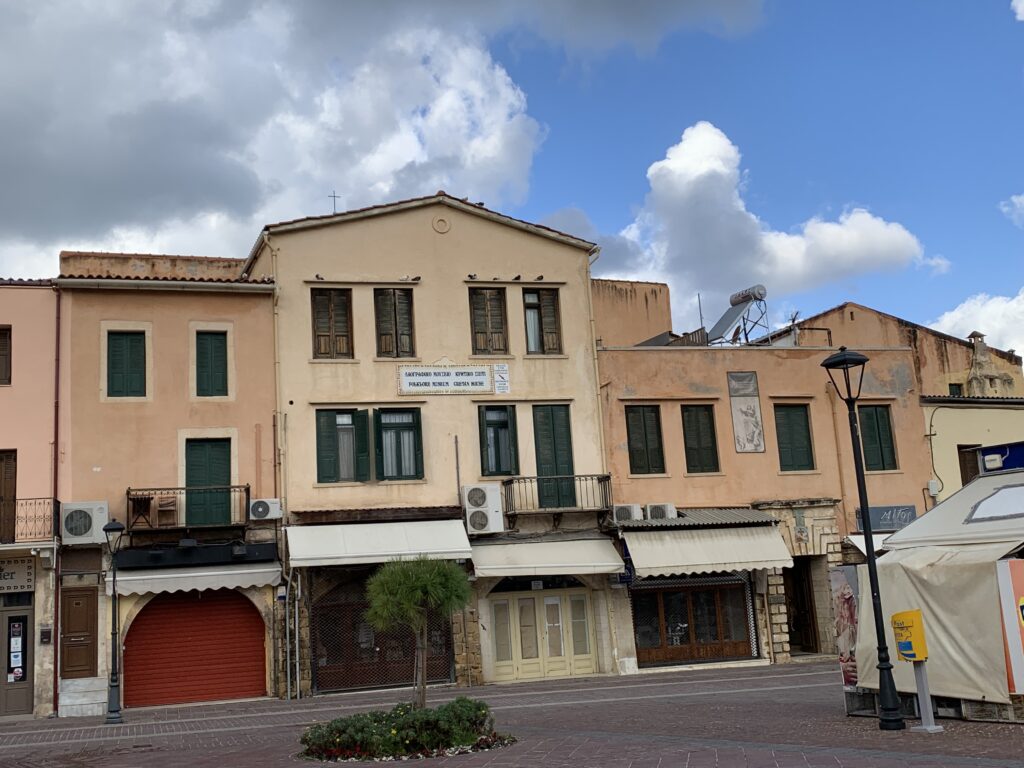
The Presentation of the Virgin Mary Metropolitan Church, also known as Trimartiri, is a stunning Greek Orthodox church located in the heart of Chania town. Its impressive interior features ornate decorations such as frescoes, chandeliers, and paintings. The church’s bright interior and glittering icons make it a must-see for visitors with an eye for detail
Next we saw the Catholic Cathedral, the Cathedral of the Assumption of the Virgin Mary a few blocks away. It was built in the 19th century, during the period of Ottoman rule. It too is a prominent landmark of the city.
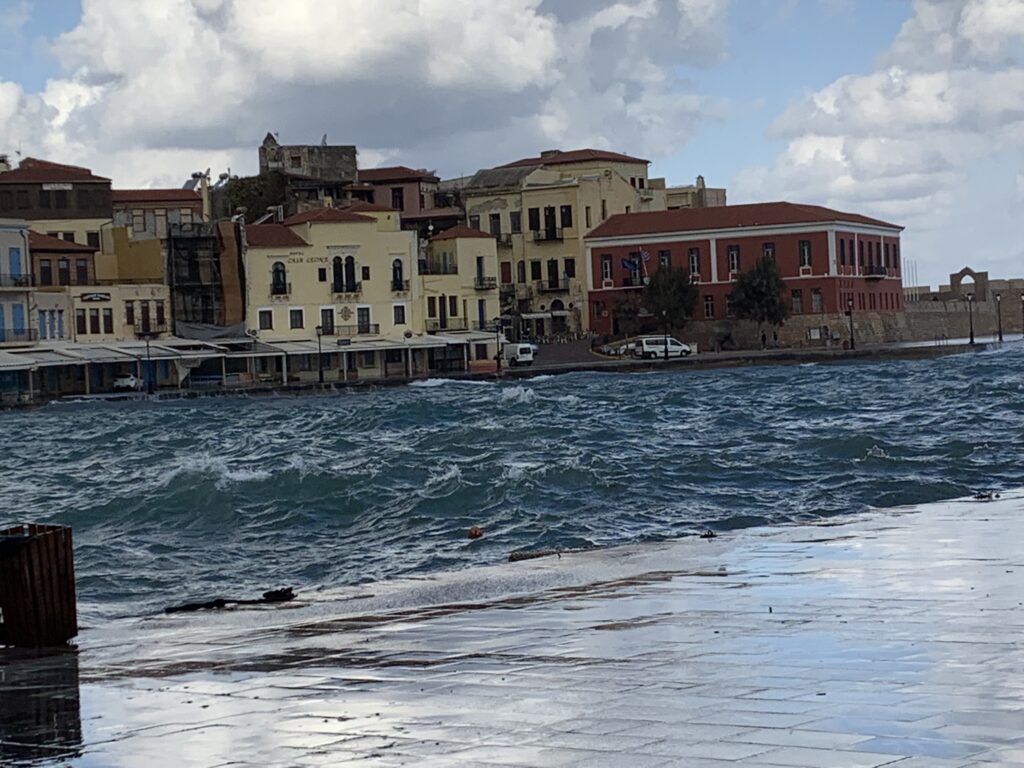
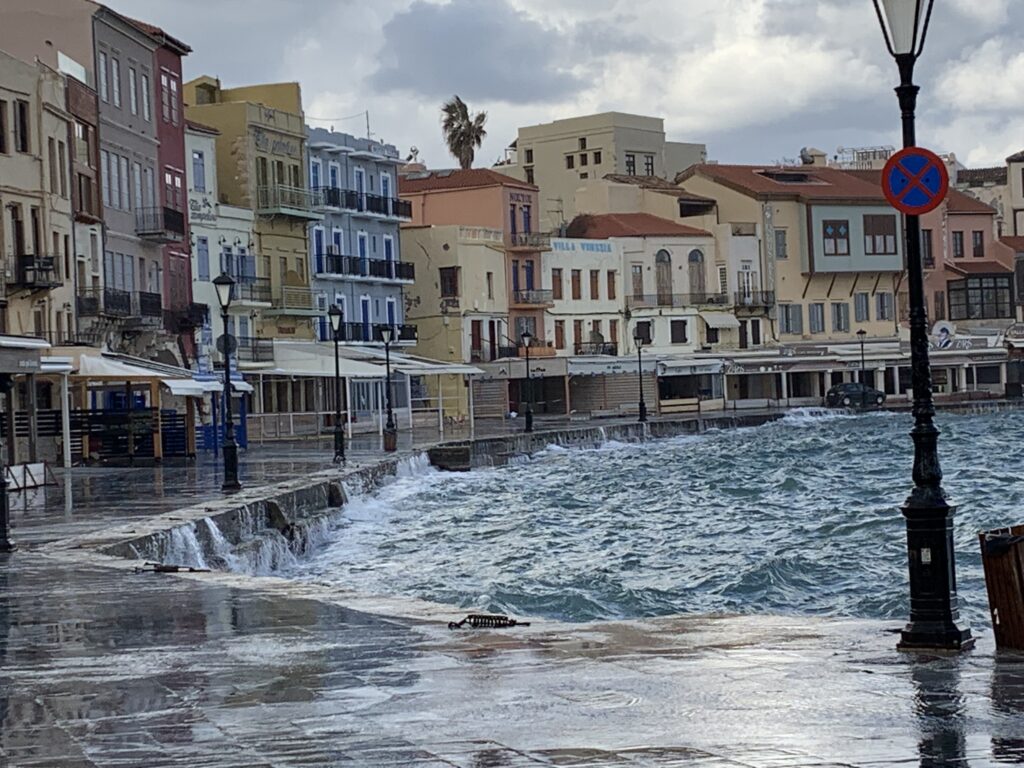
We walked up to the 5th Merarchias square located on top of Kastelli hill. Here you can se panoramic for views of the Harbor. It was a cold, windy day and the water was breaking over the walls and into the streets.
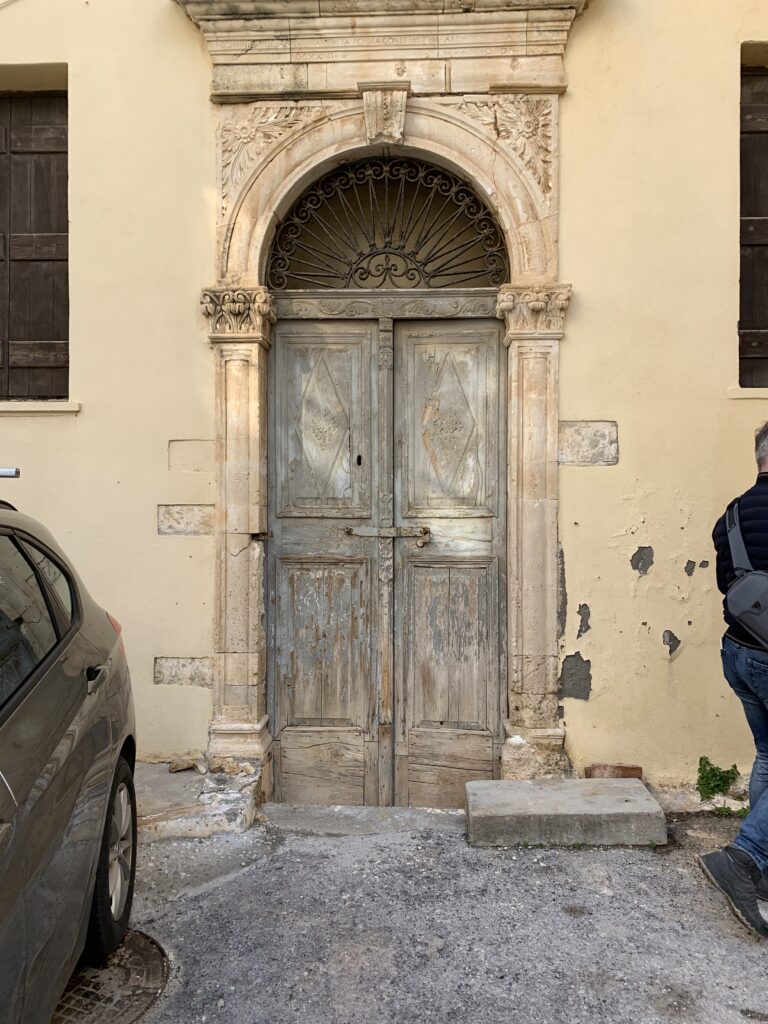
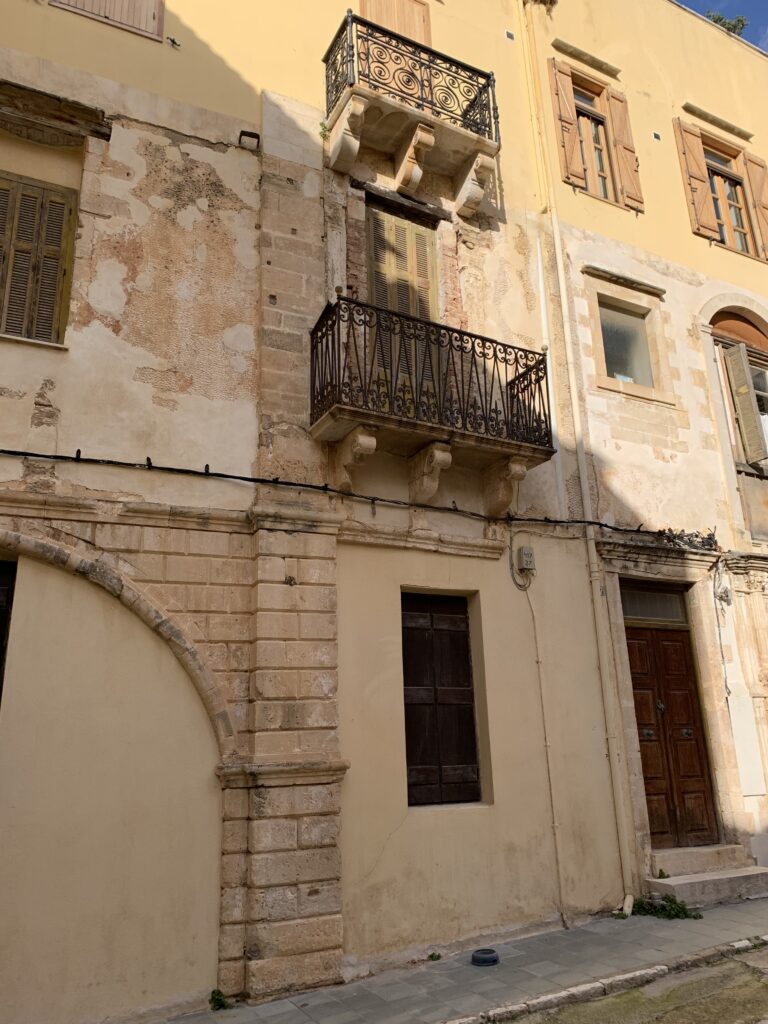
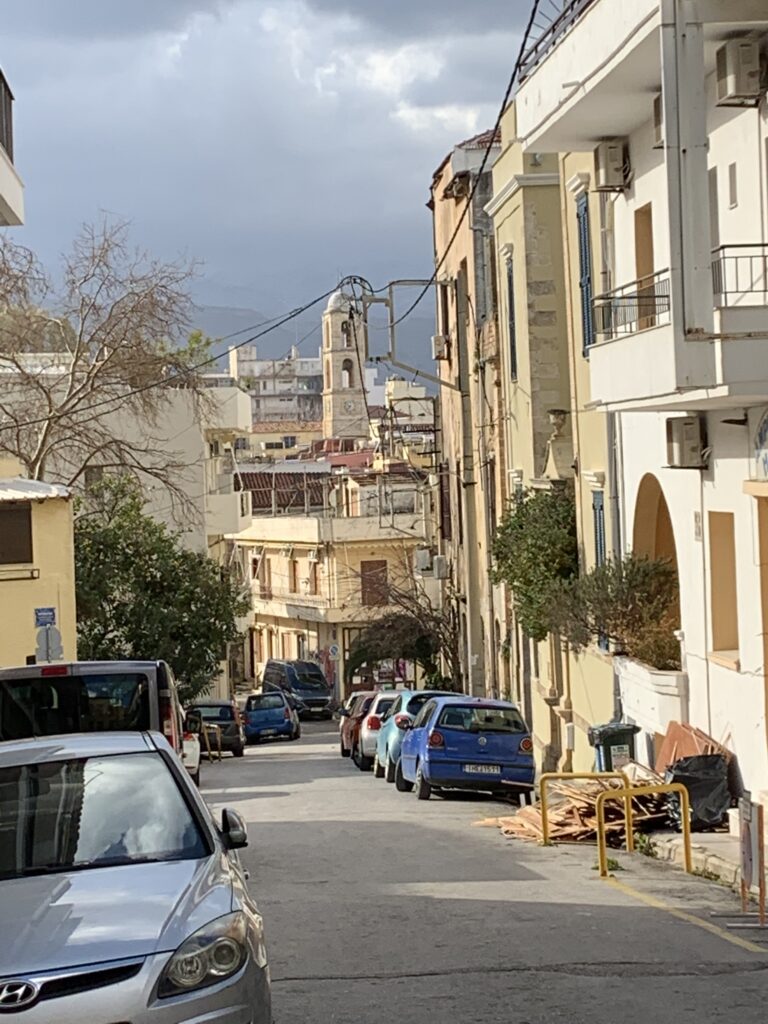
Then it was on to the Gate of the Reneur Villa and a look at some of the surroundings. This villa of a Venetian-Cretan family is preserved for people to see. Over the arched Gate of the entrance, an inscription is preserved: translated it says, Many things he brought, done, and studied, the sweet father, who worked hard. May he rest in peace 1608.” Below are pictures of Venetian doorways along the street as we walked to the archaeological site.
The next stop was the Greek-Swedish excavation site of Agia Aikatrini square also located on the Kastelli hill. Relics from 5,000 years of Chania’s history have been found, documenting continuous human habitation from the Neolithic period until today. A significant finding was of an ancient palace center of Kydonia on Kastelli Hill, along with a large quantity of coins. Our guide has worked at this site.
We went on the site of the Palace where just recently remains of a girl showed signs of ritual human sacrifice dating to the early Mycenean world. We saw Minoan-era palace ruins. Important artifacts found here are located at the Archeological Museum which we visited next. Artifacts include ceramic pieces, Linear B inscriptions, mosaics, important frescos and much more.
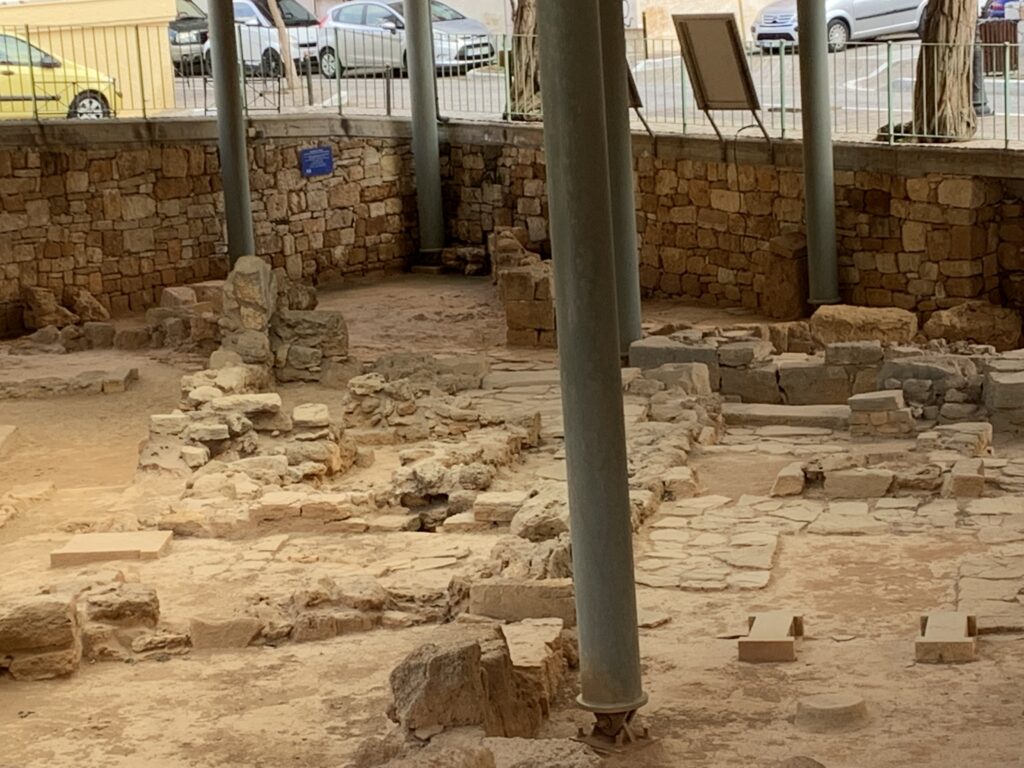
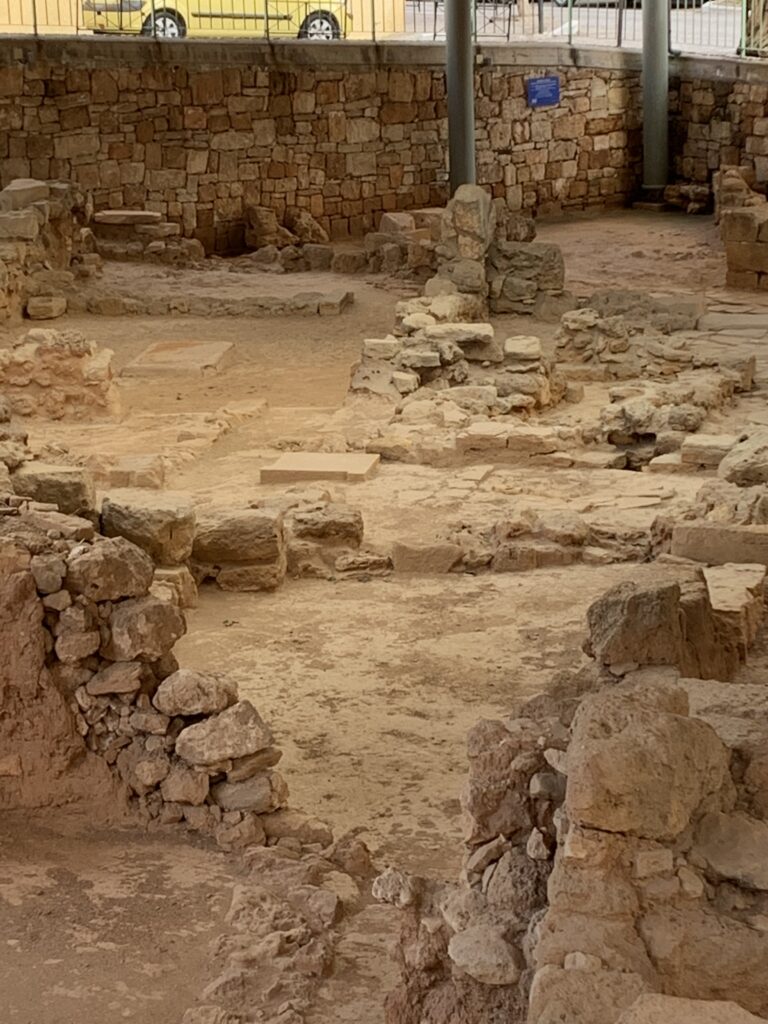
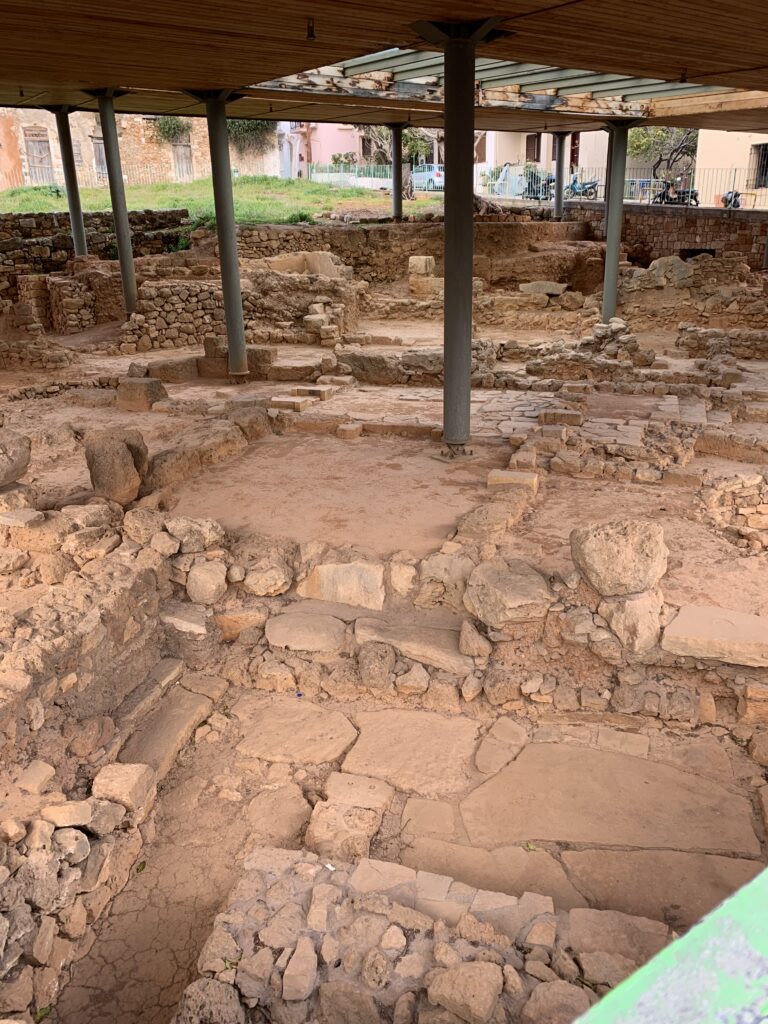
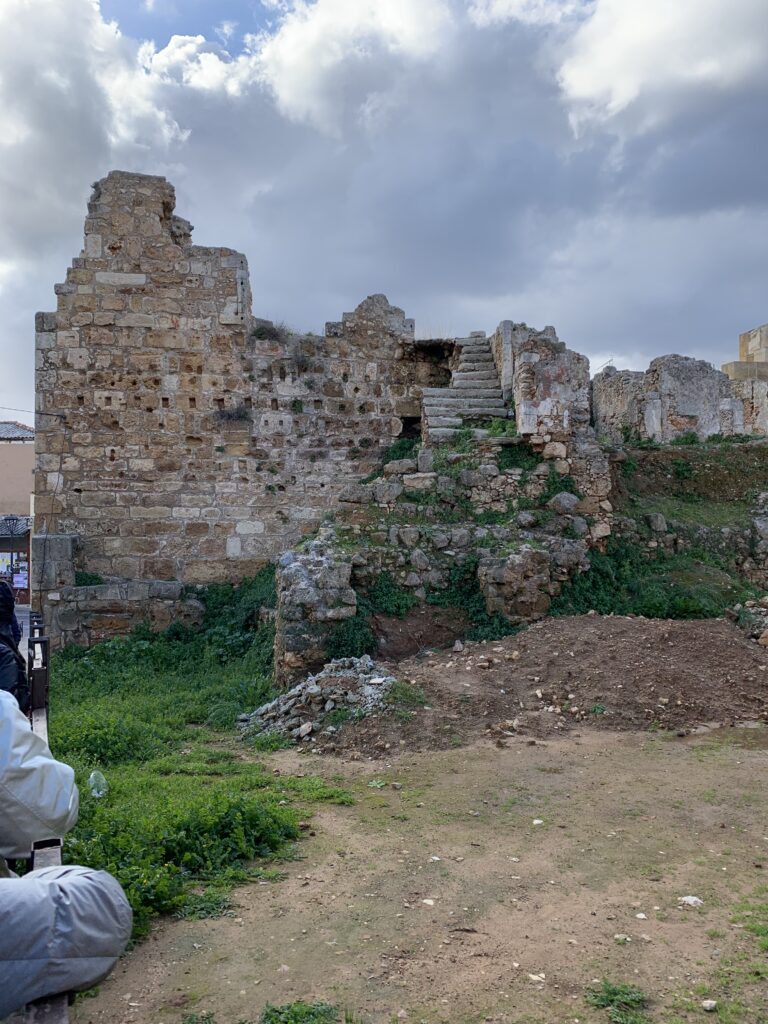
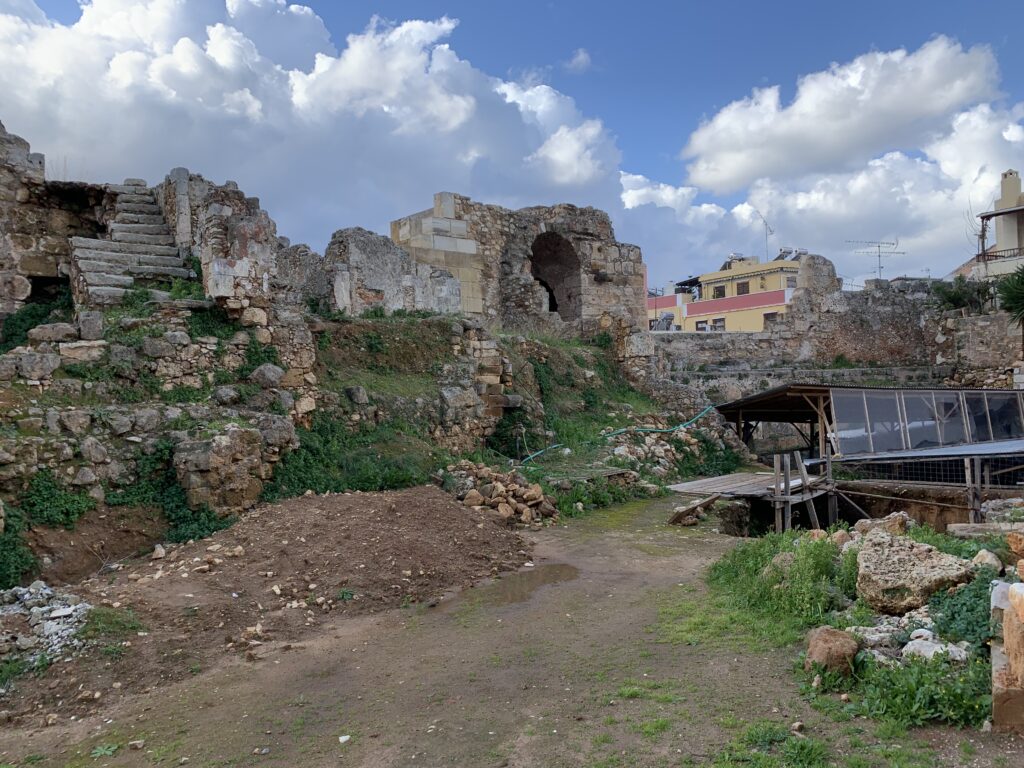
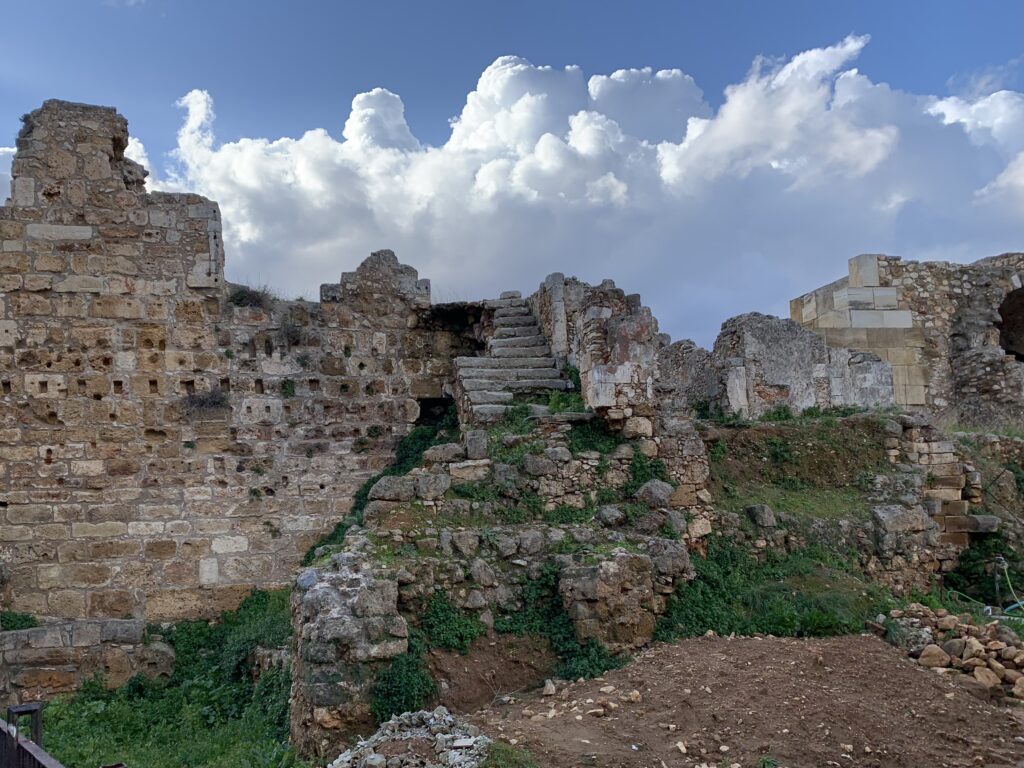
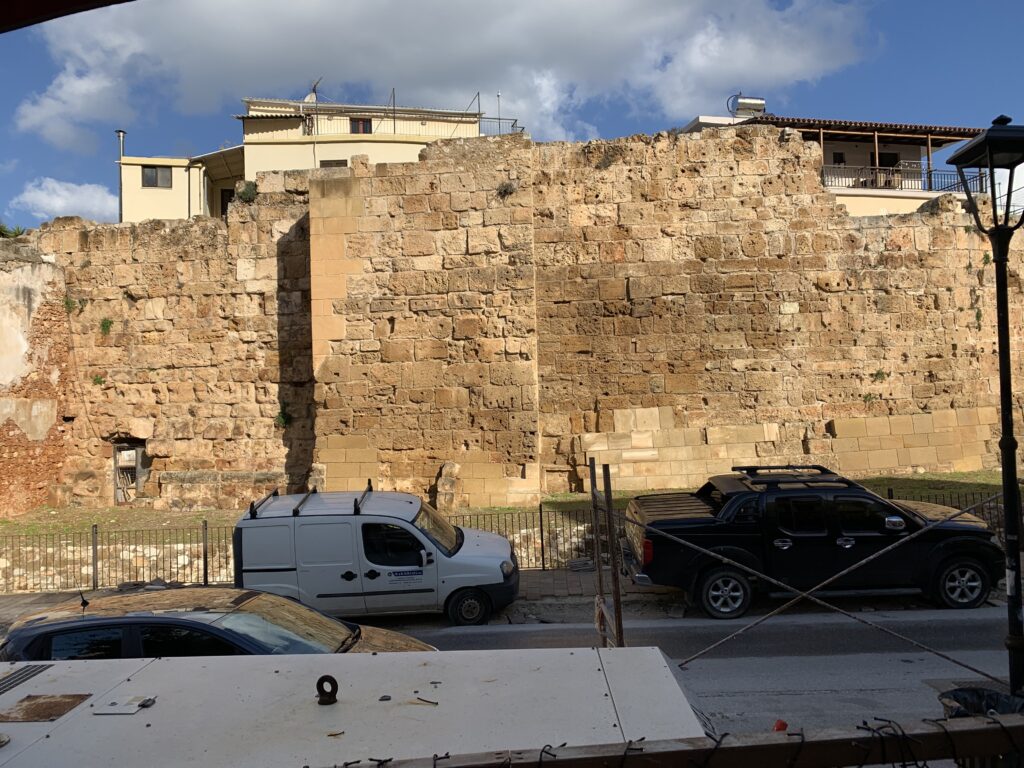
We walked along the old Byzantine Wall, the initial fortification of the city. It surrounds the Kasteli hill and was built over the remains of an older fortification from the Hellenistic period.
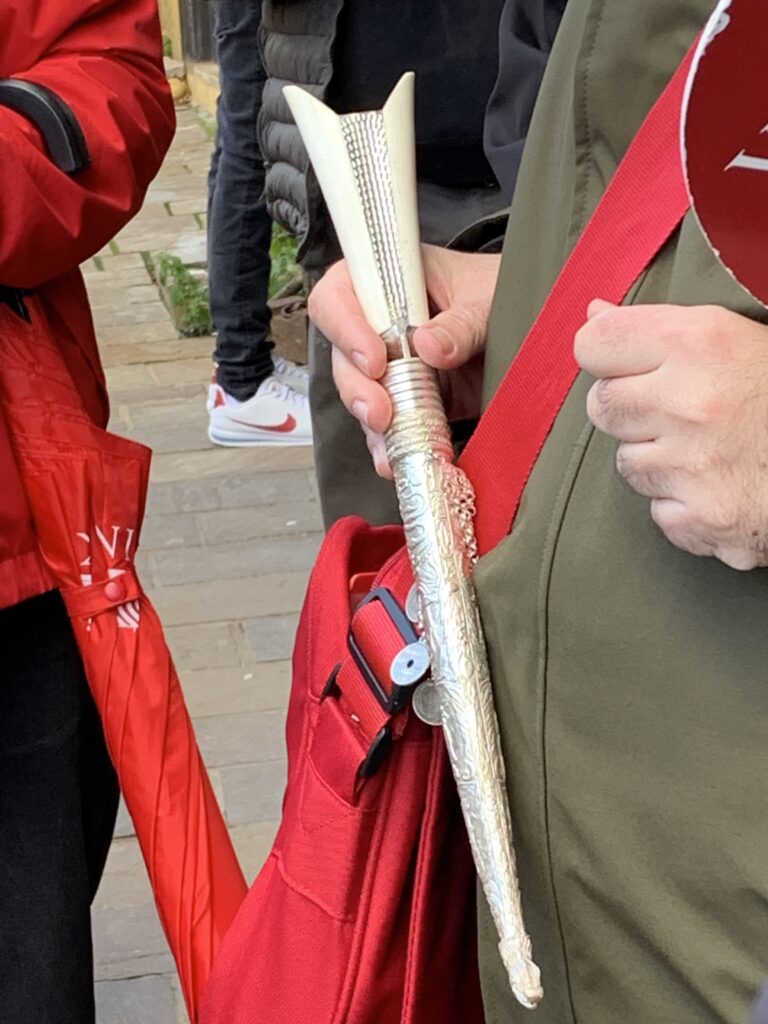
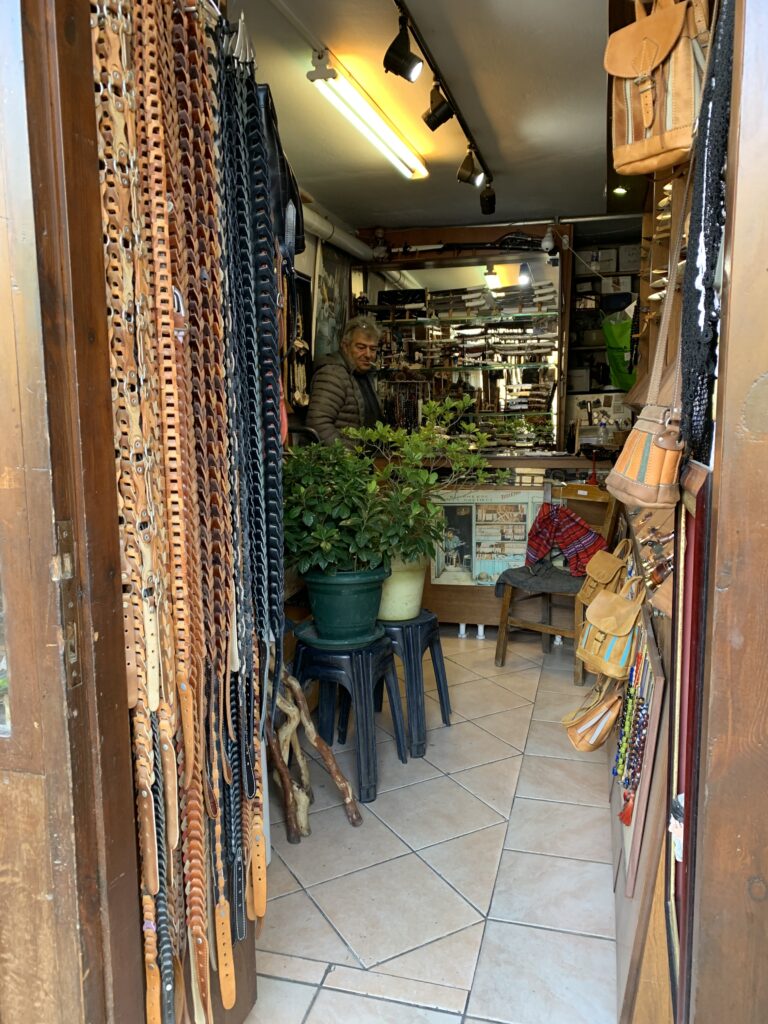
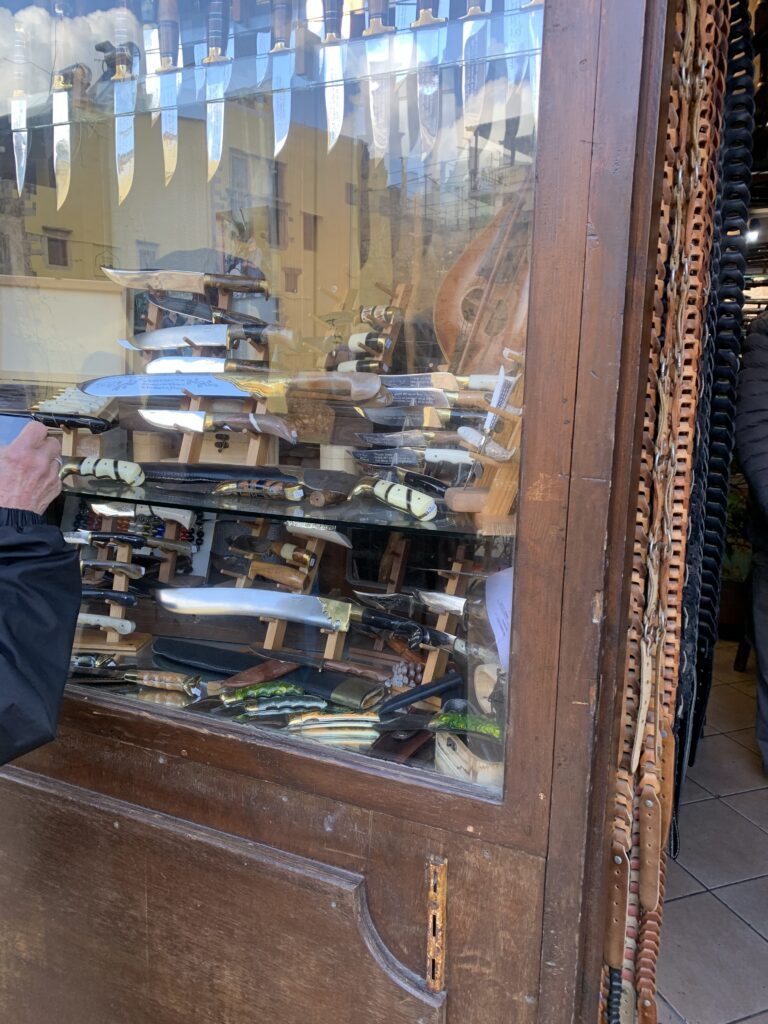
Next we stopped at the Knife District of Chania. The knife has been a key element in the clothing and culture of Crete. A characteristic of Cretan knives is their forked handle with an opening for the finger, to use it more steadily. Another characteristic is the V-shaped blade. The handles are made from goat’s horns and the sheaths are very elaborate. There are very few knife makers that use the traditional methods. We were taken to one on Sifaka Street–the knife makers’ street. The merchant explained the technique for making the knives and showed us how to use them.
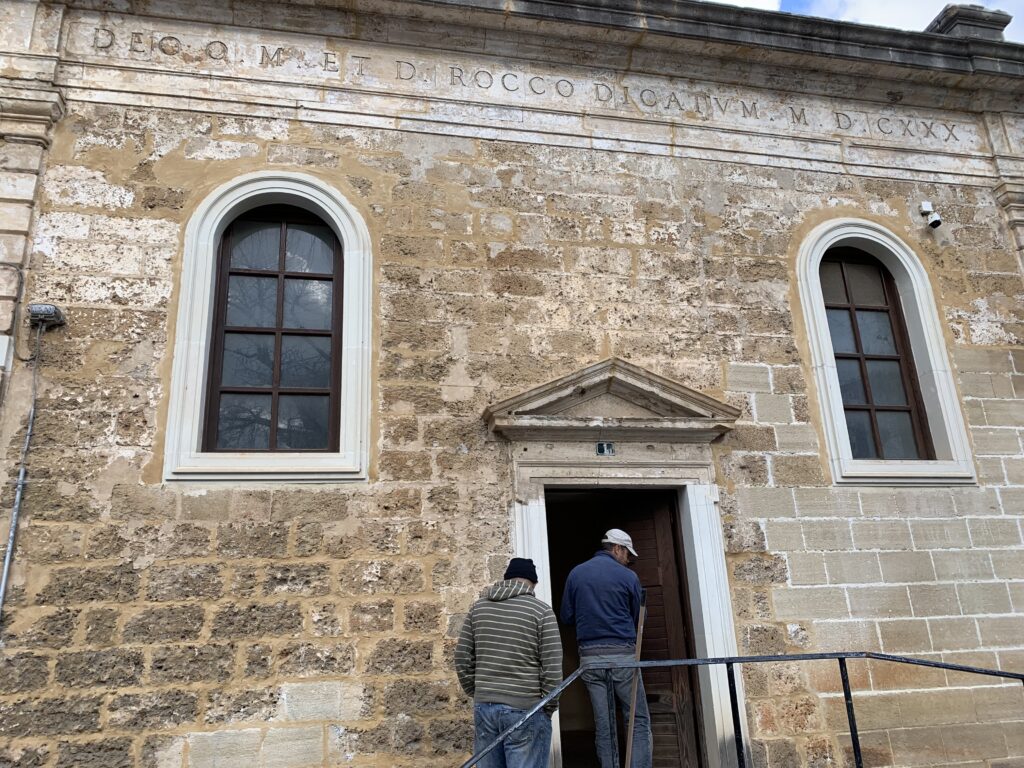
From here we went to Splantzia Square to see the church of St. Rocco and the Dominican Temple of St. Nicholas. The Church to St. Rocco. was built in 1630, possibly after a plague since St Rocco is supposed to protect against plagues. It has a simple facade but is filled with beautiful frescos and icons.
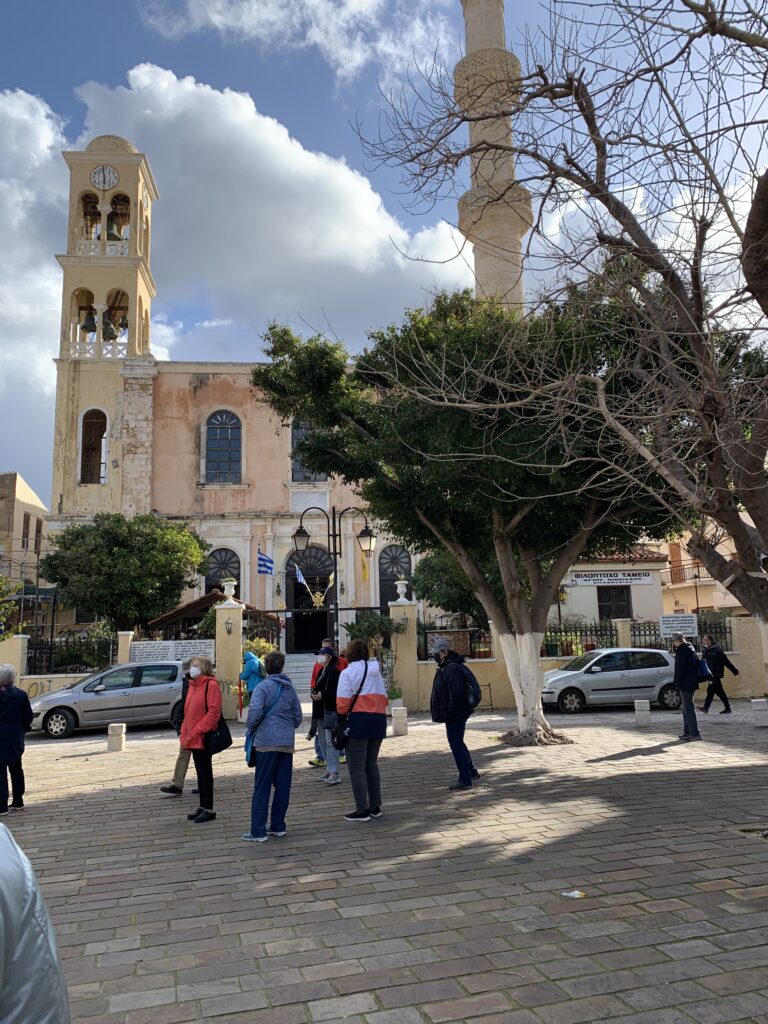
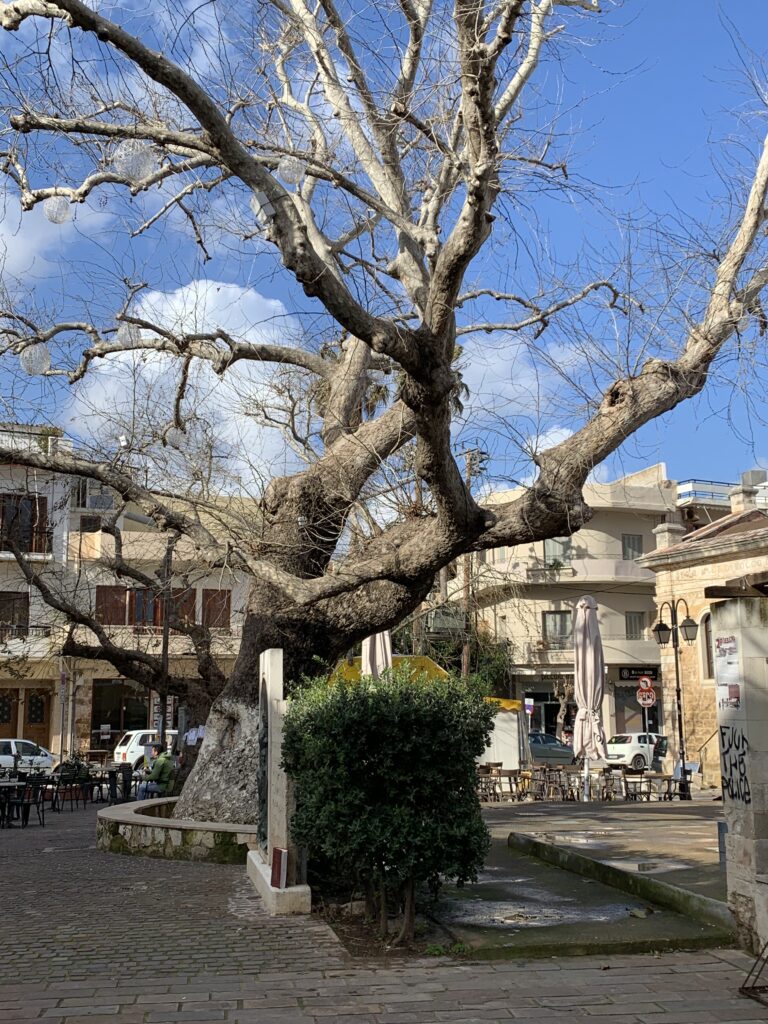
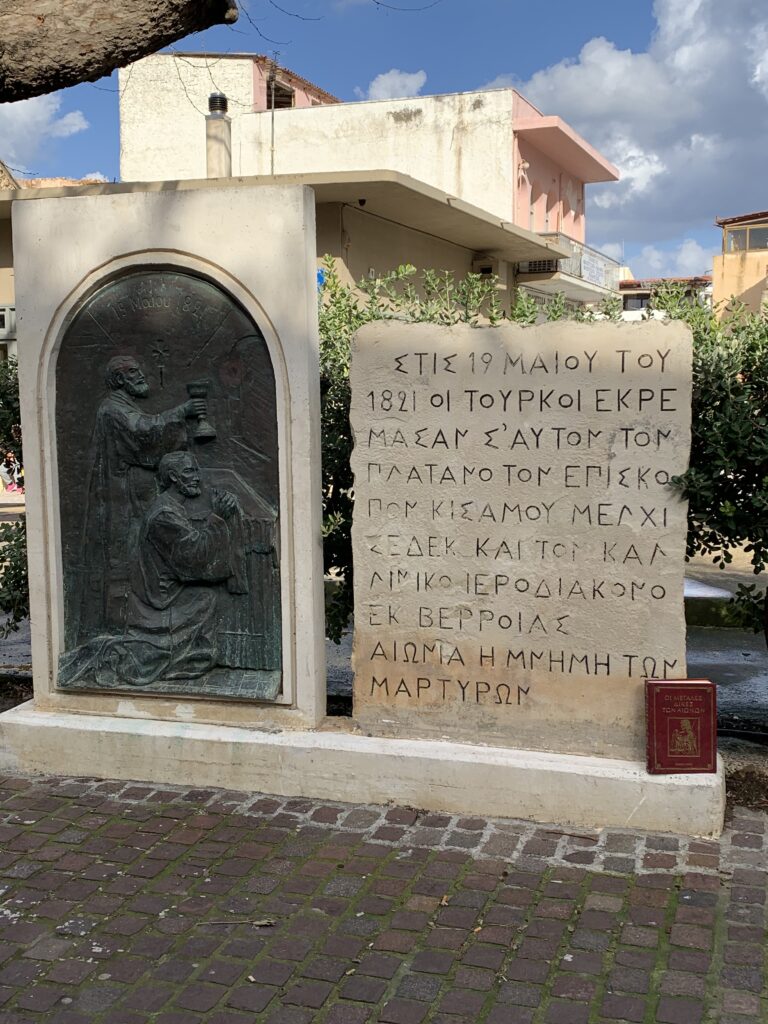
The Temple of St. Nikolas, in contrast, is much larger. It was built before 1320, during the Venetian Period, as a monastery of the Dominican Order. It resembles the central temple of St. Peter in Rome. The church blends Venetian and Byzantine architectural styles with beautiful frescos inside. During the Turkish occupation, it was turned into a Mosque and a minaret was added. During the 18th century an underground fountain was built in the middle of the square in front of the Mosque for the ritual washing of the believers. In 1918 It was converted to an orthodox church again and a bell tower was added. It is the only church in Greece that has a minaret and a bell tower. In the center of the square is a large Plane Tree with a catacomb between the church and the tree. Also there is a monument in honor of the Greek Christians killed during the revolution.
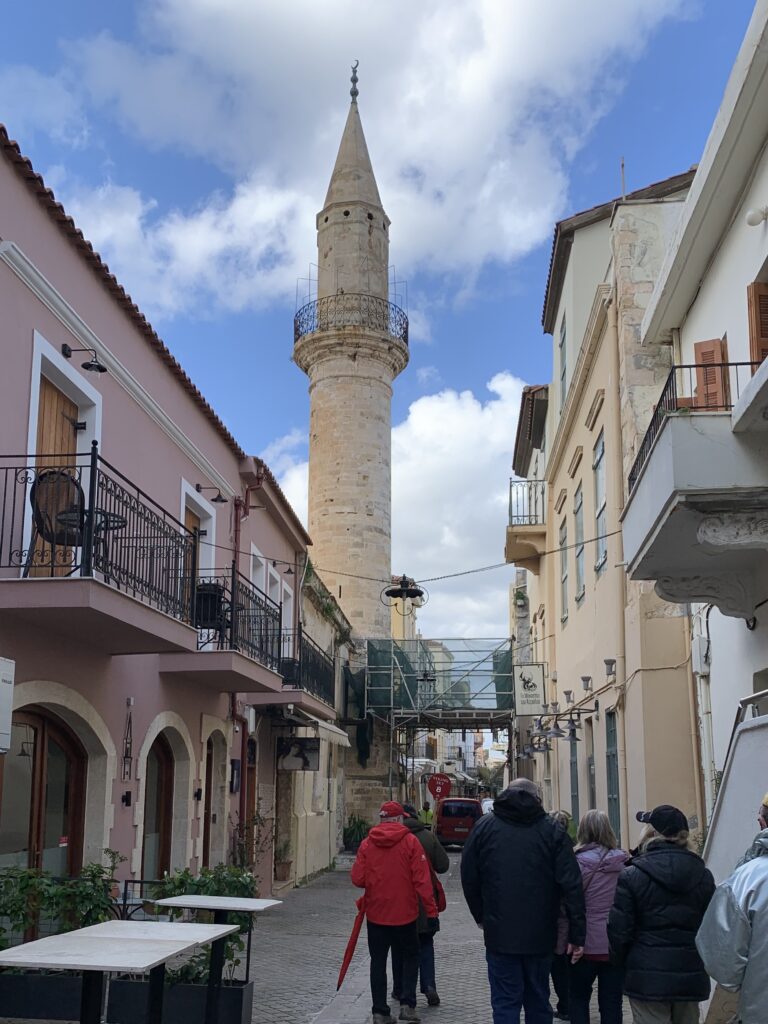
We ended the tour walking down Kondilaki Street past the Etz Hayyim synagogue built in the 17th century. In the distance, you can see a minaret of the Acknet Aga mosque.
Next is Santorini.