From Ephesus, we sailed to the Island of Rhodes. This was another interesting site. We arrived at 7:30 a.m., while we were at breakfast. Our tour today was a Rhodes Town Walk & Palace of the Grand Masters. The Palace is a remarkable and sprawling fortification in Europe’s largest active medieval town. The Knights of Saint John of Jerusalem conquered the island in the 14th century, bringing great wealth from the Holy Land. Under their rule, the city was reconstructed to mirror the medieval ideal. They ruled until 1522. Because of its history, it is called the Island of the Knights, the Pearl Island, and the Island of the Sun after its patron, the sun god Helios.
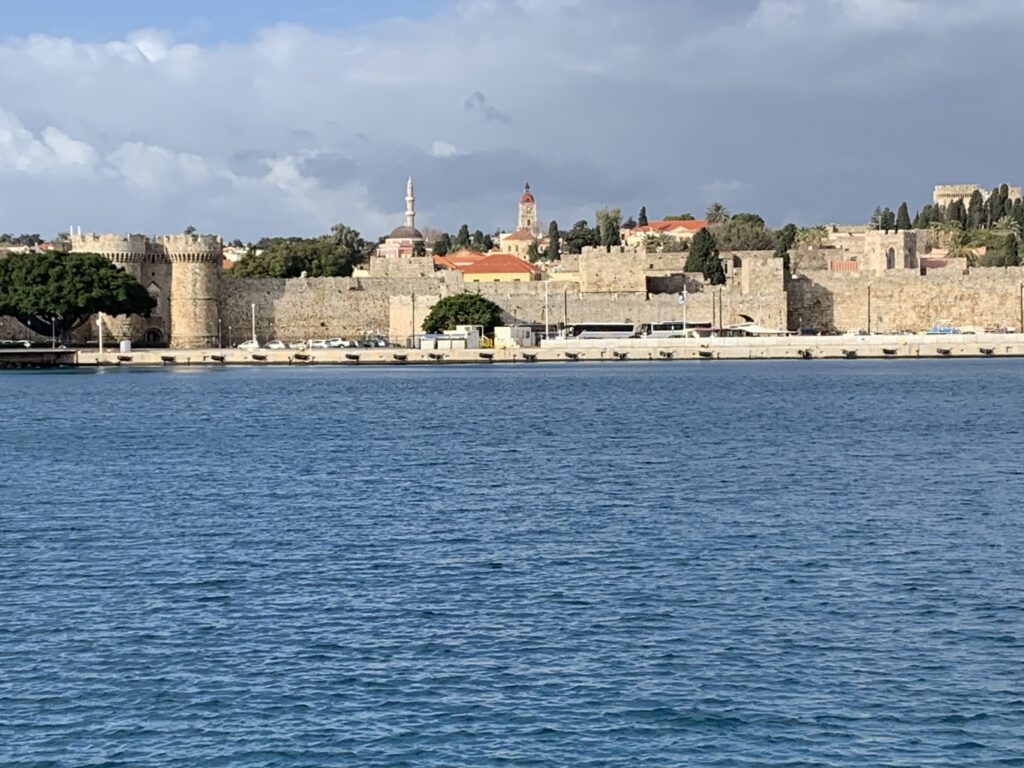
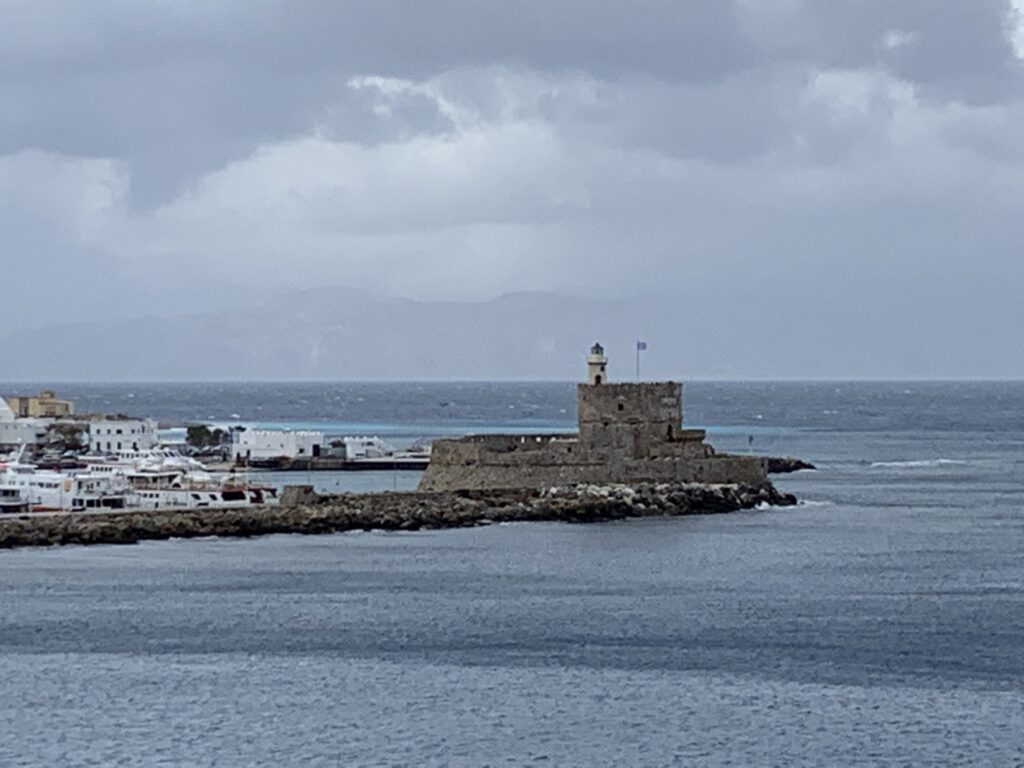
Rhodes became famous because of the Colossus of Rhodes, one of the Seven Wonders of the Ancient World. The Colossus, a giant bronze statue, was reported to have stood at the harbor. It was completed in 280 BCE and destroyed in a giant earthquake in 224 BCE. No sign of it has been found. The medieval part of the city, inside the walls, is a UNESCO World Heritage site.
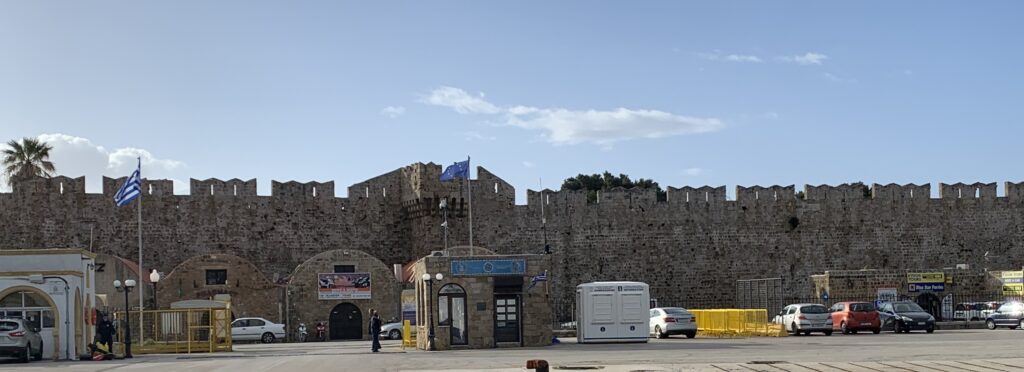
As we left the ship, we walked down a long pier and could see the walls of the medieval town in front of us. We made our way to one of the gates and entered a living, inhabited, medieval city. As we walked around the walls outside the city, we could see a massive dry moat that once protected it. Today’s residents occupy the same building the Knights of St. John did six centuries ago.
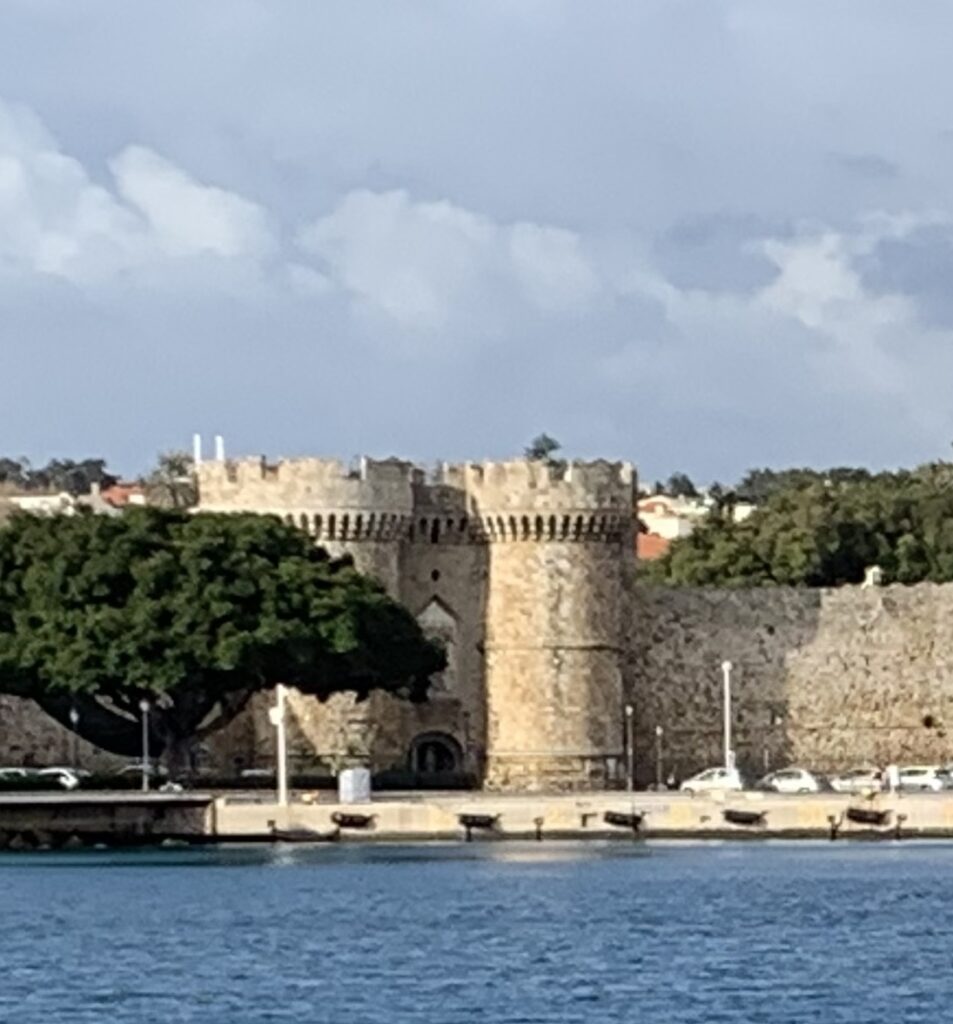
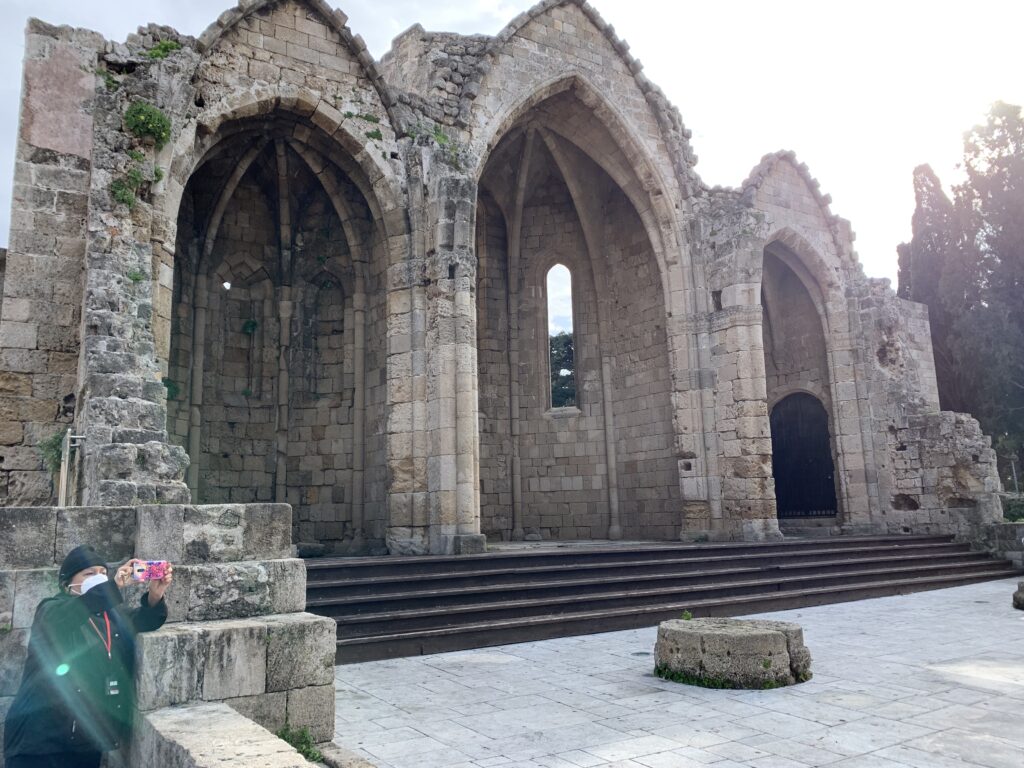
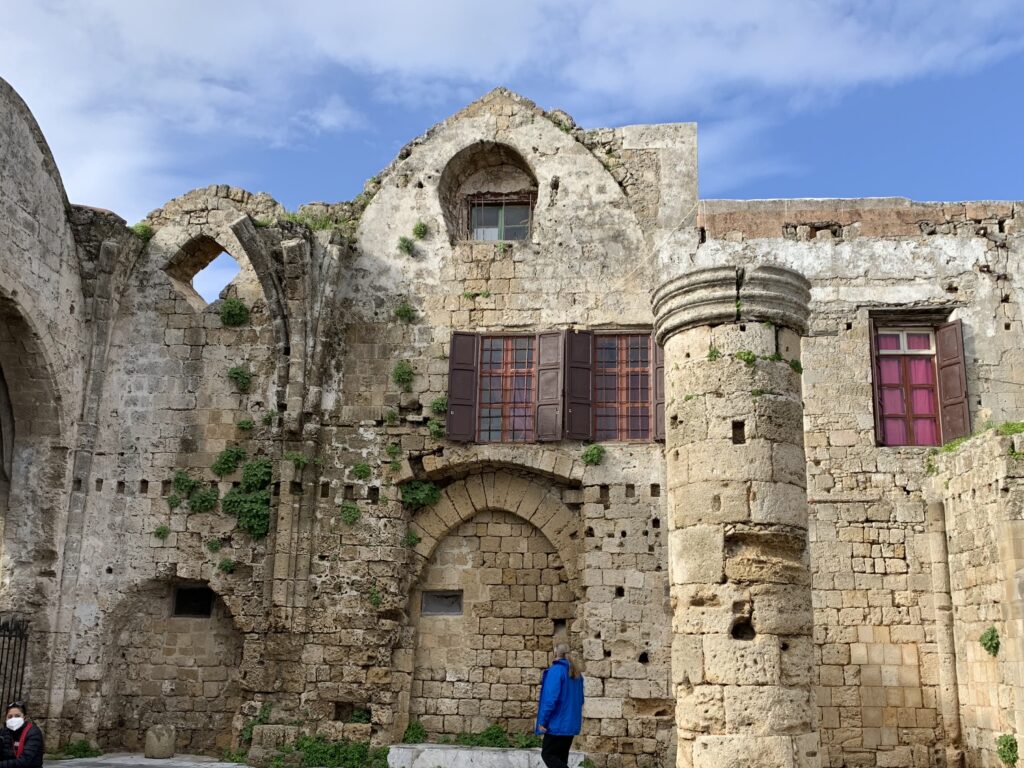
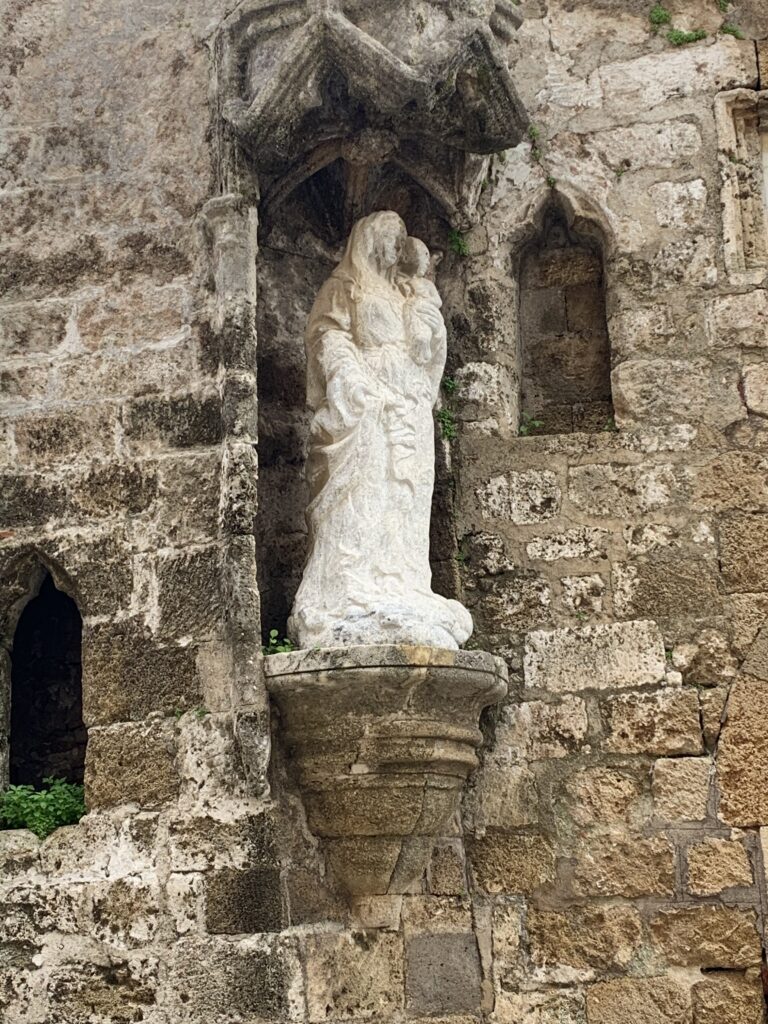
We entered through St. Catherine’s Gate, which is also known as the Gate of Agia Aikaterini. It is a small gate on the corner near the Port. It was built in 1357 by Grand Master Dieudone De Gozon. It was like entering the Middle Ages. No cars are allowed in the Old City. The walkways are filled with people. Our first stop was at the Church of the Virgin of the Burgh. The ruins of this church date back to the 14th century. Most likely it was one of the first buildings constructed by the Knights. During the Turkish occupation of Rhodes, the Ottomans converted the Church into a mosque. Not much remains today due to WWII bombings. Only the three apses are standing together with parts of the small chapel. Still, it’s an important monument because there are few other Roman Catholic churches from that time period remaining in the islands.
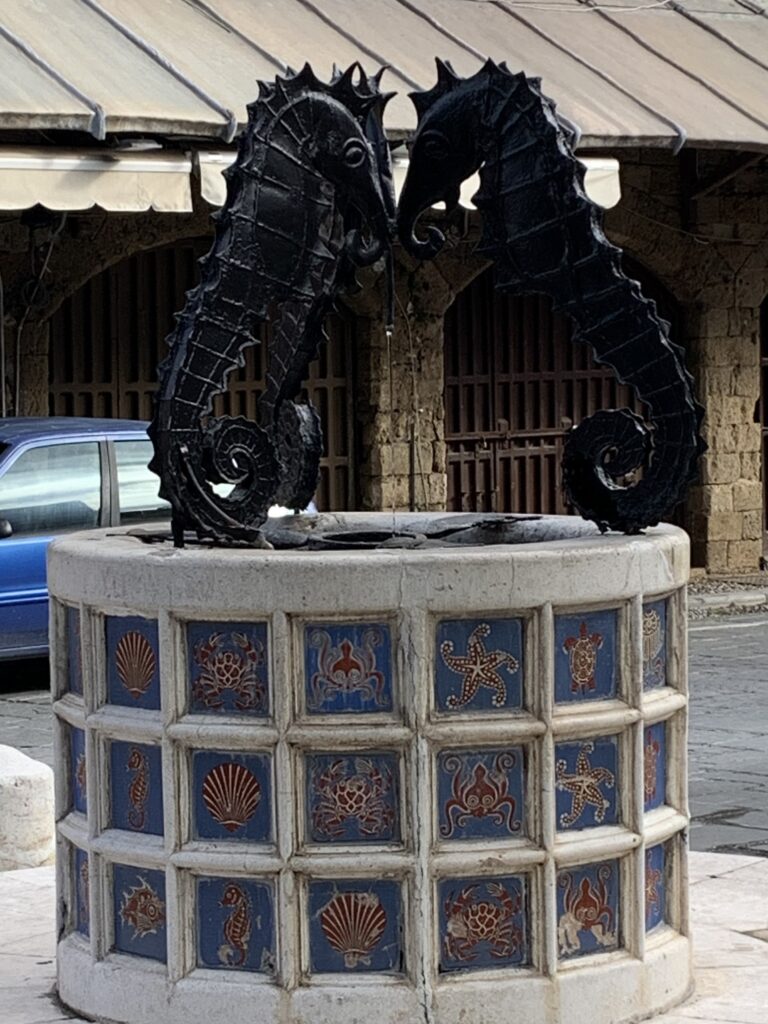
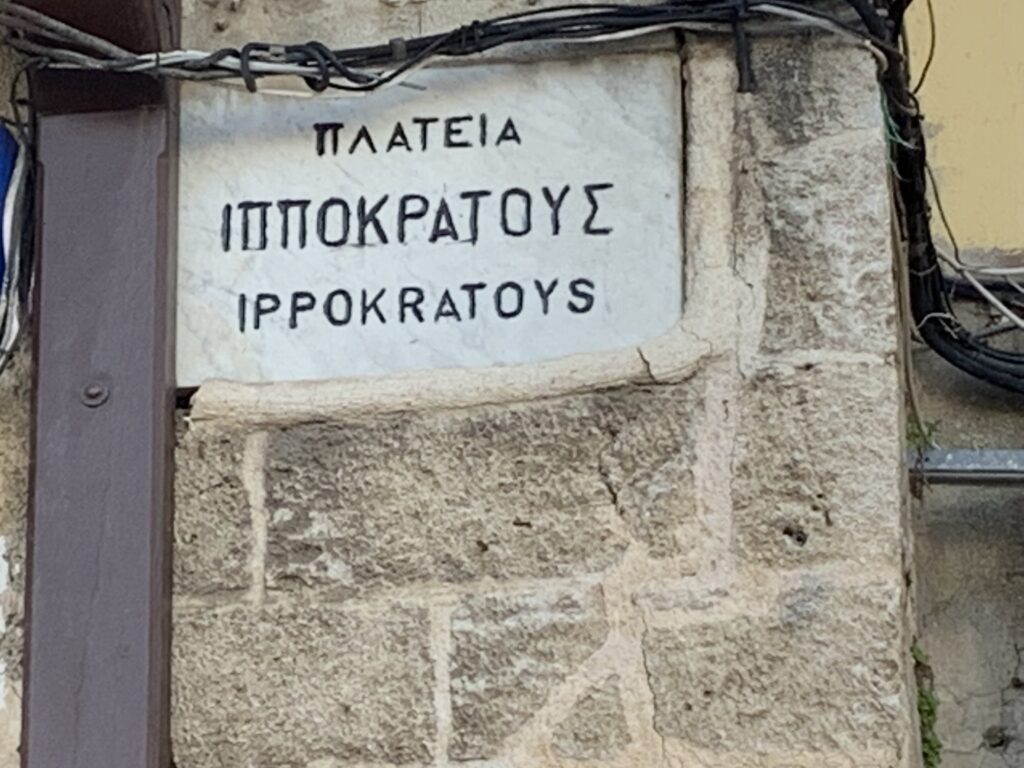
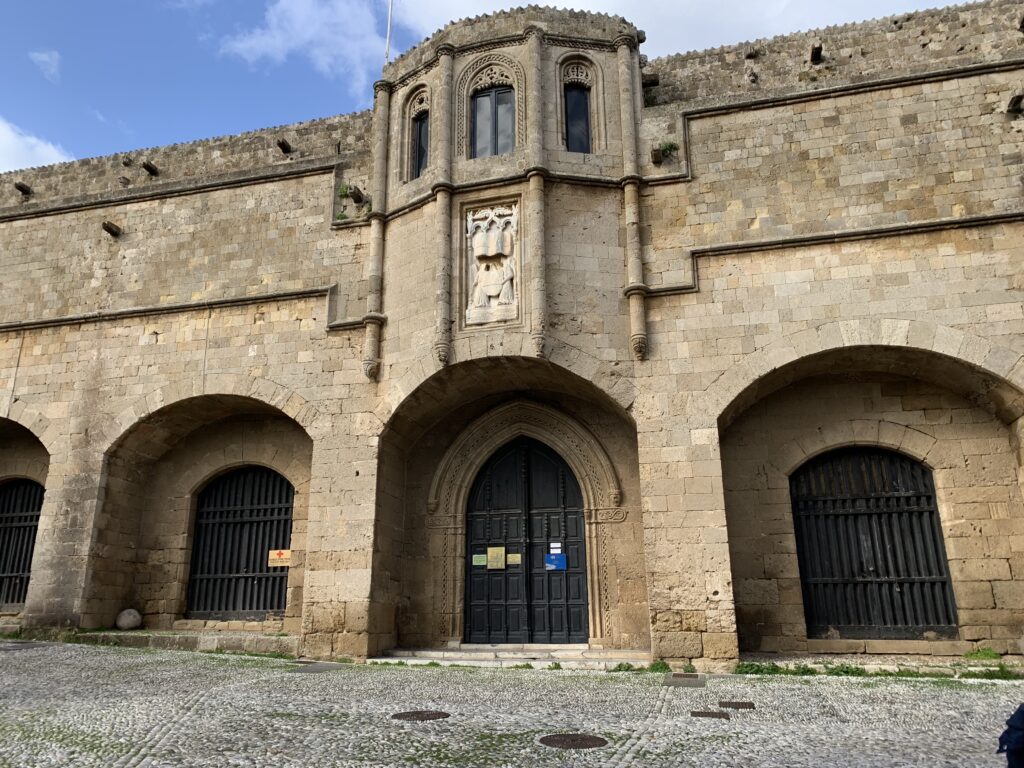
We continued on to the Square of the Ancient Martyrs with a fountain in the middle. Jews from Rhodes were gathered here for deportation to concentration camps during World War II. From there we went to Hippocrates Square where the Archaeological Museum of Rhodes is housed within the medieval Hospital of the Knights. The museum’s collections span from the prehistoric to the Hellenistic periods, presenting artifacts that capture the island’s long and varied history.
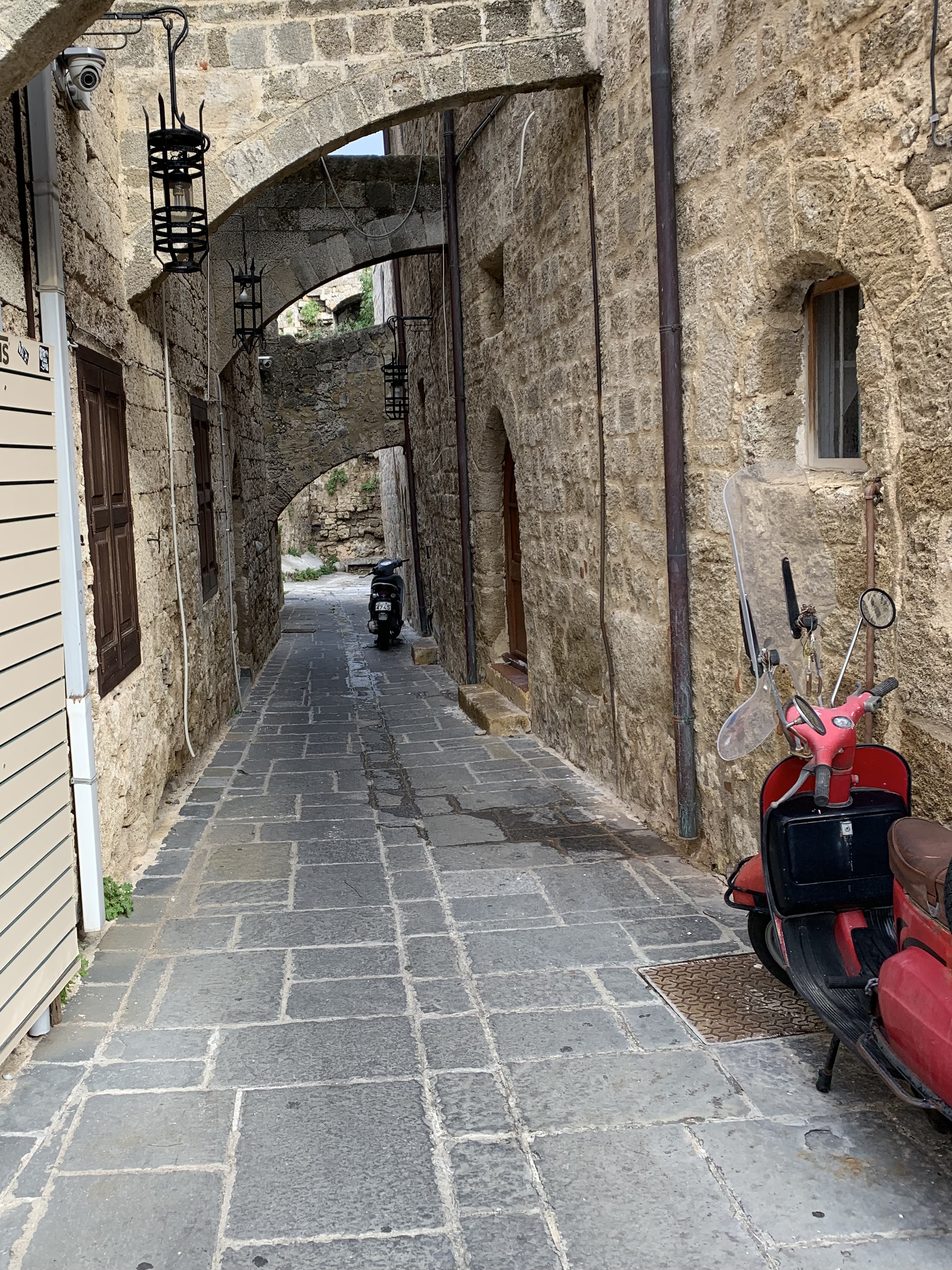
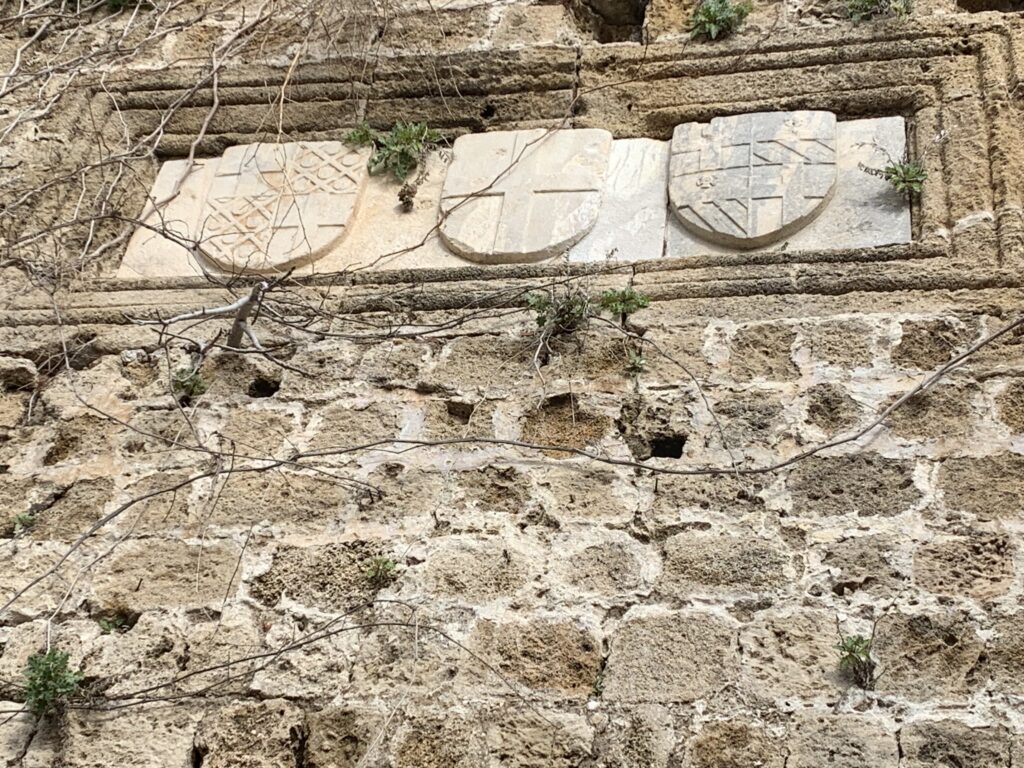
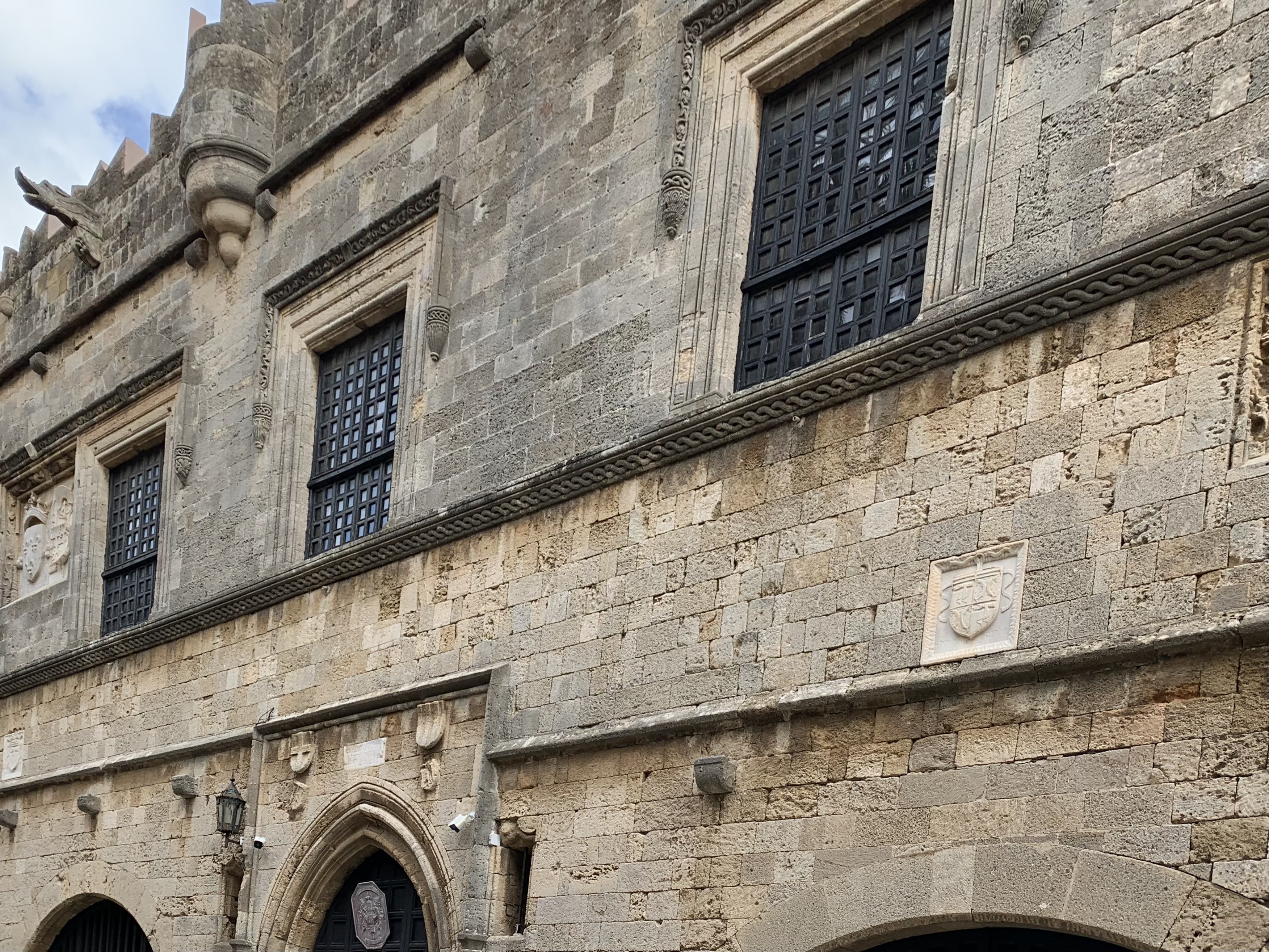
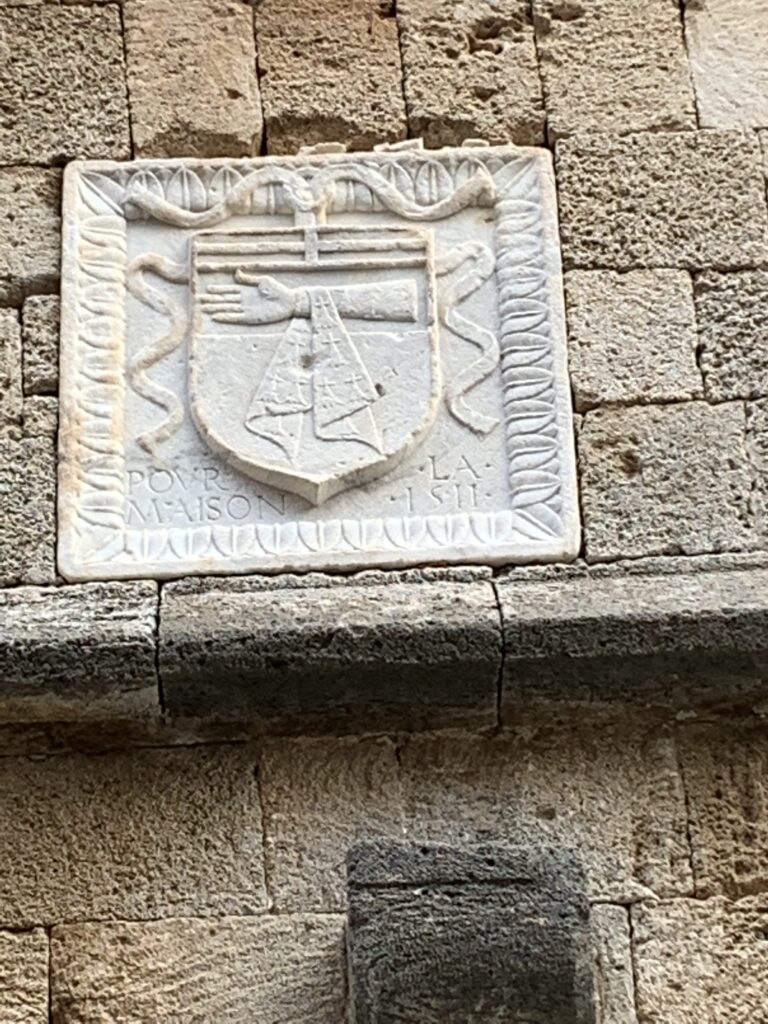
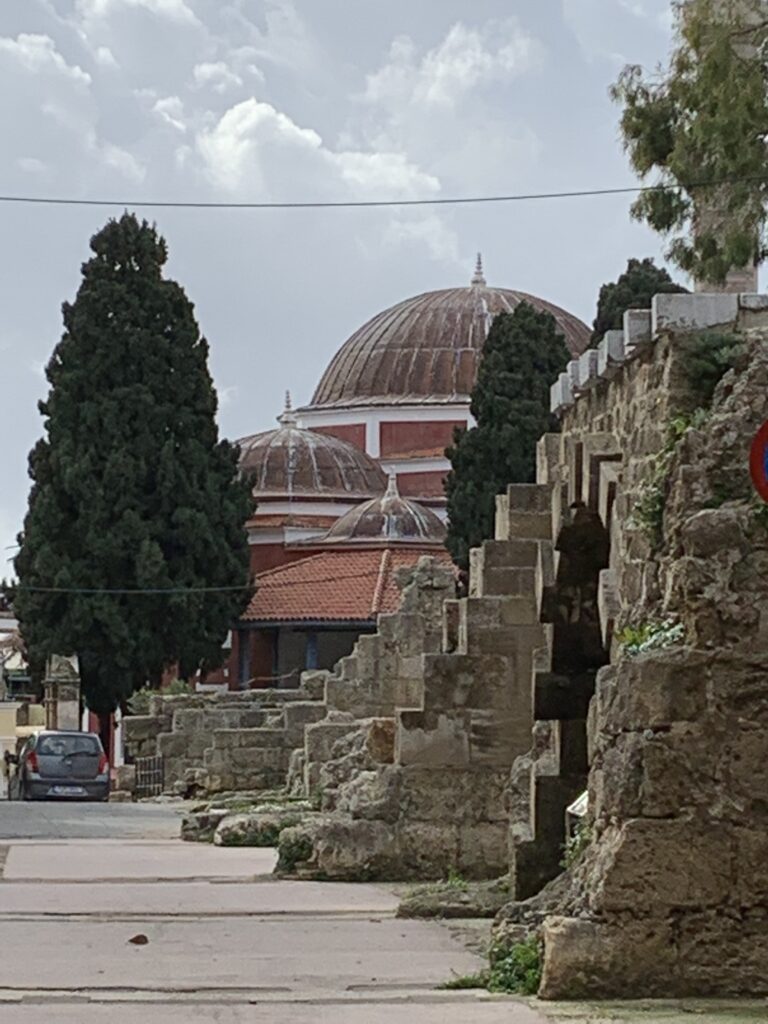
Then we walked along the famous Street of the Knights up to the Palace of the Grand Master of the Knights. Above doorways along the street were many coats of arms. From the palace we could see the Mosque of Suleman. Walking around a living medieval city peaked my imagination, being a medievalist at the core.
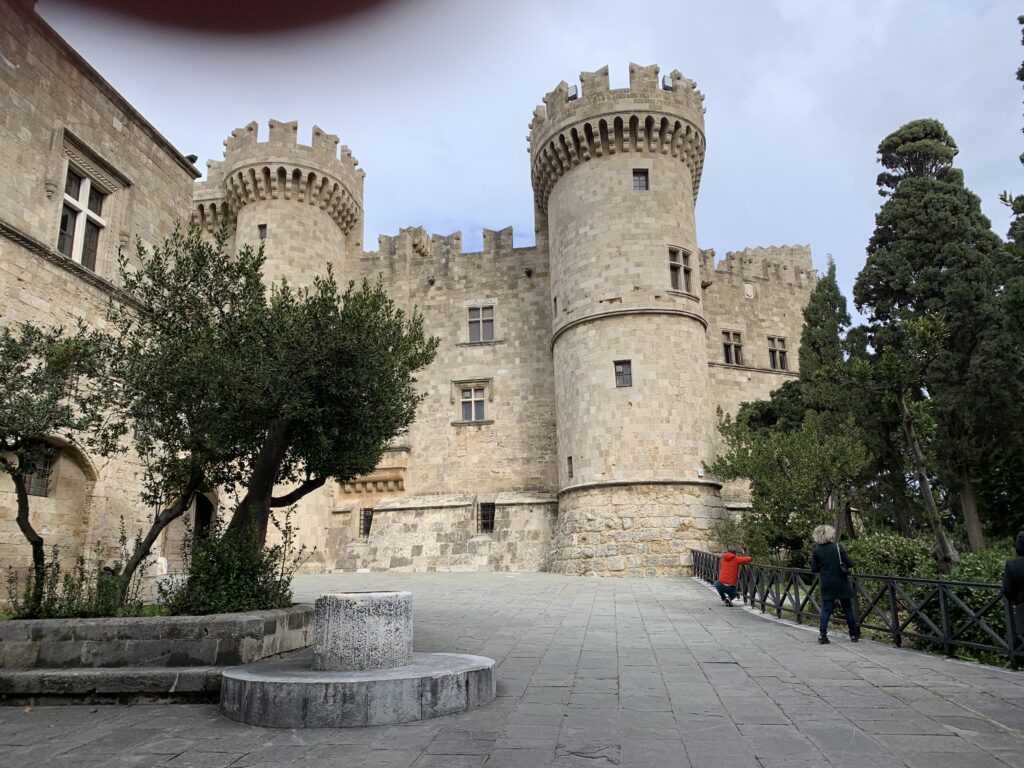
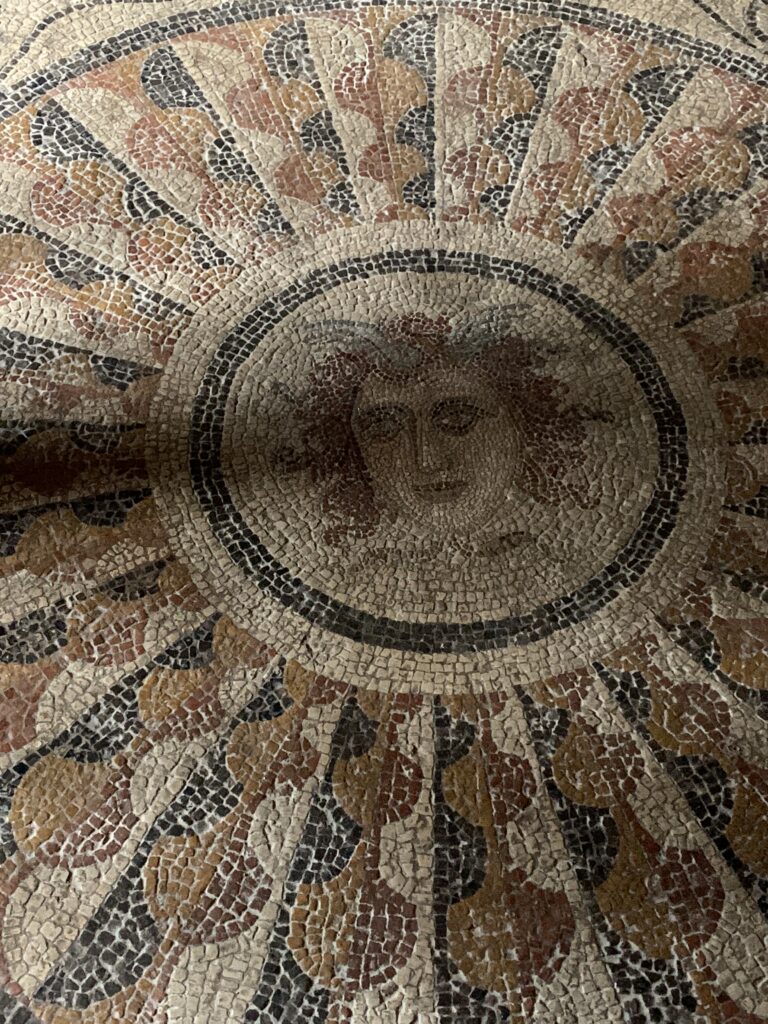
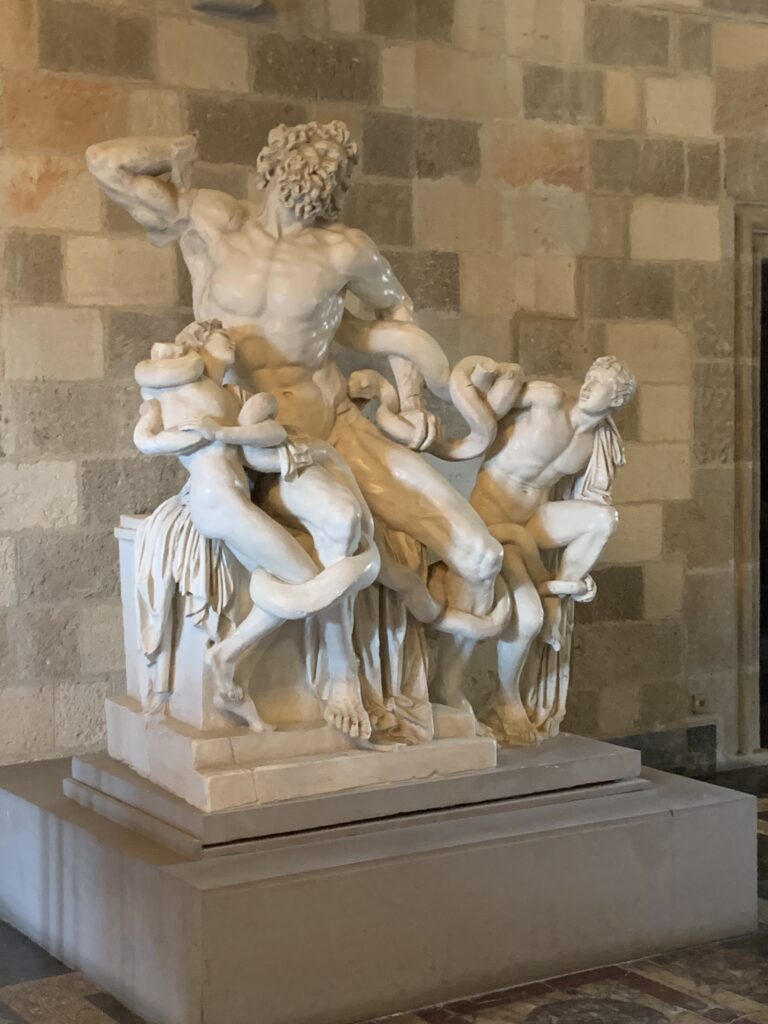
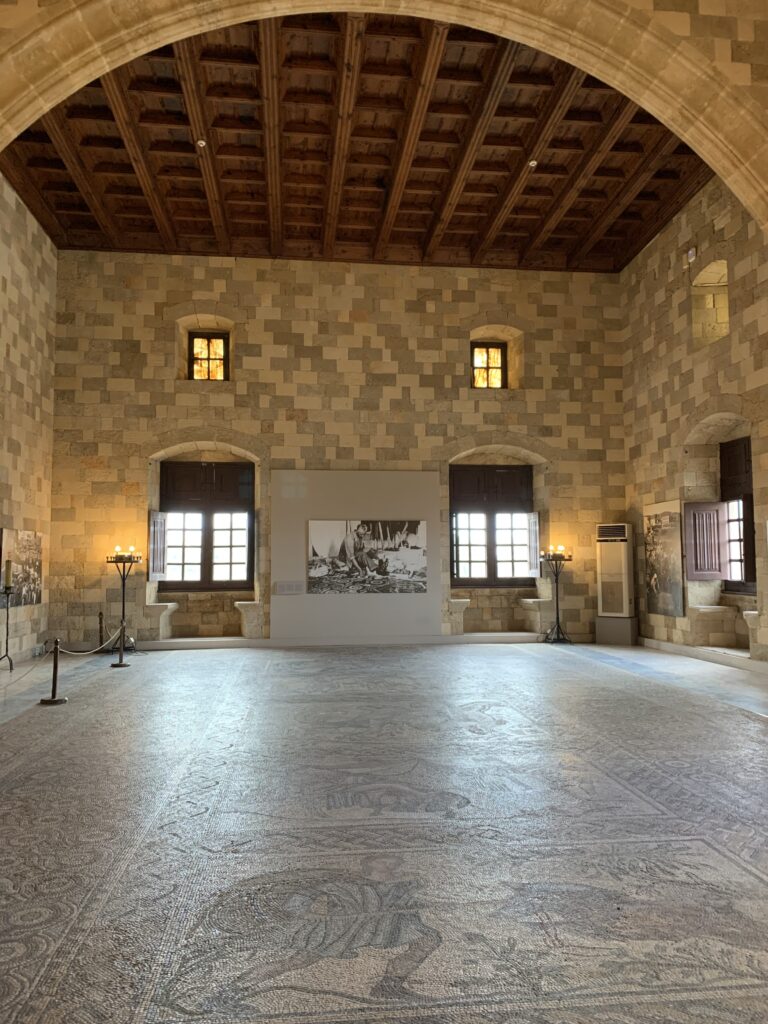
The Palace of the Grand Master of the Knights sits at the end of the Street of the Knights at the highest point in the city. The courtyard is covered in decorative stone with Greek and Roman statues excavated from the Odeon of Kos. Staircases take you up to impressive rooms that house many artifacts. The Chamber of the Nine Muses, Chamber of the Colonnades, the Grand Reception Room, and the Music Room all are magnificently preserved. From the Palace you get the best view of the city. Across from the Palace is the Mosque of Suleman.
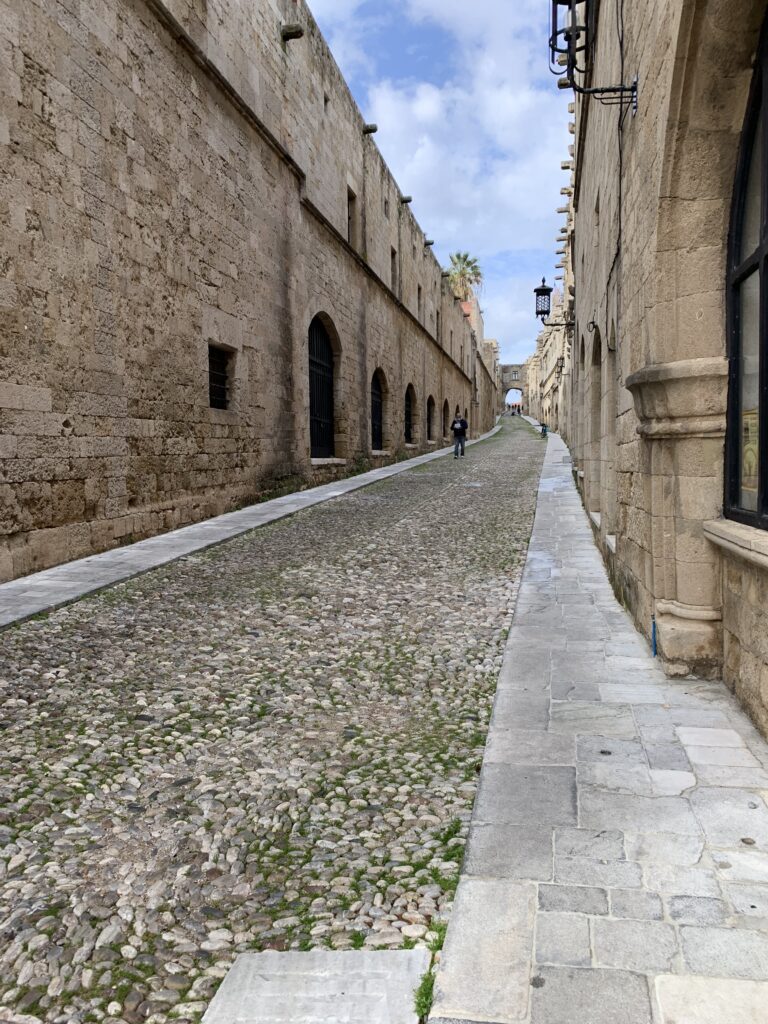
We strolled back to the city wall, down the Street of the Knights to a different, very small gate. Then we followed the road outside the wall around the port back to the ship.
Next we go to Crete.
Leave a Reply