Kom Ombo
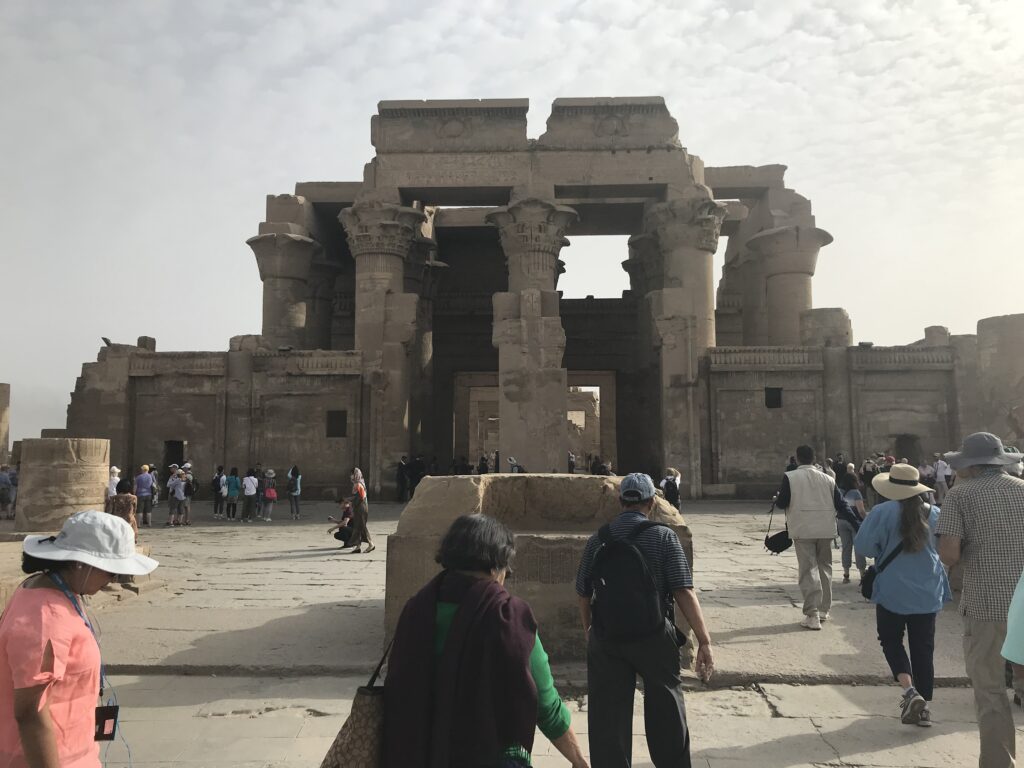
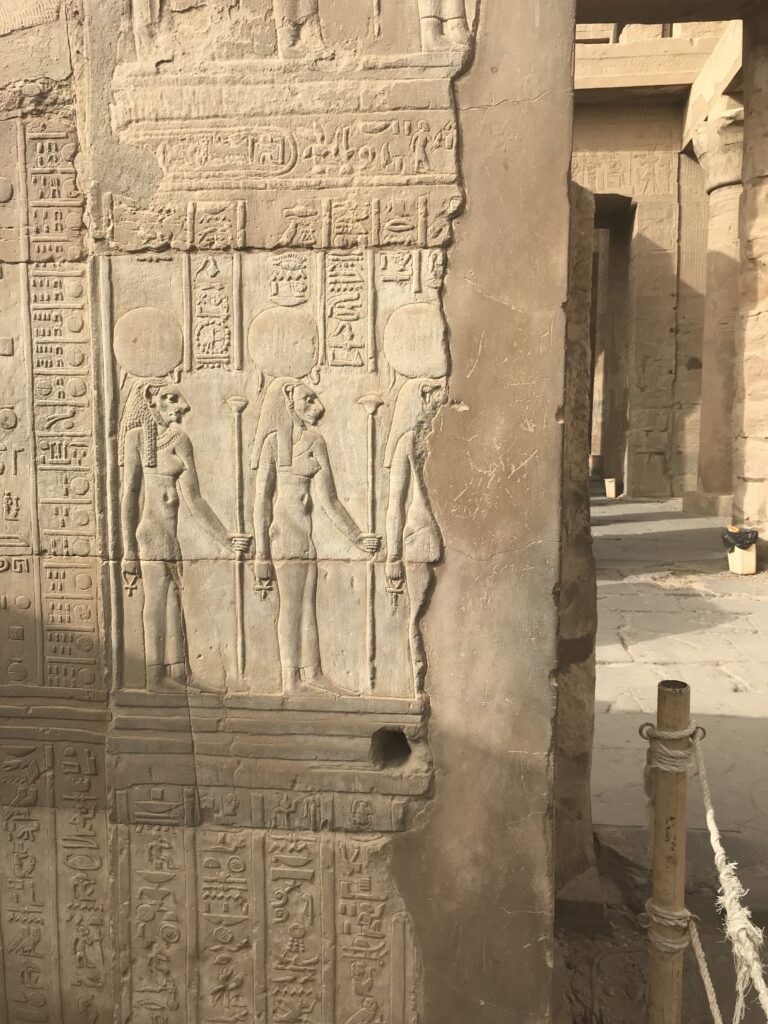
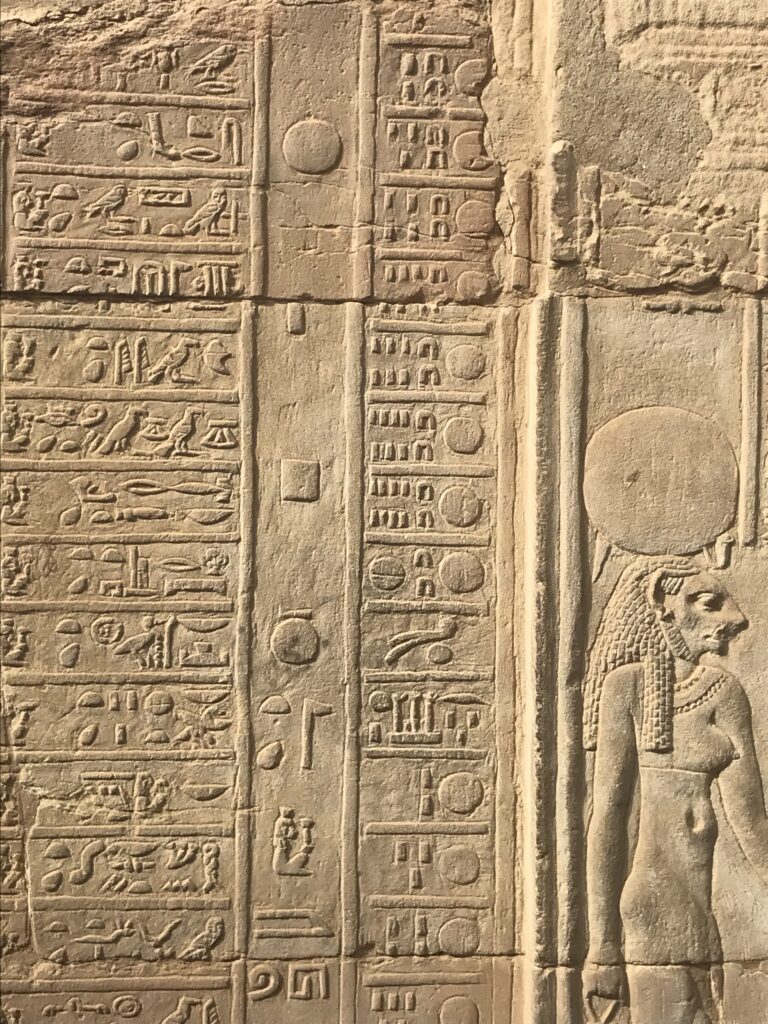
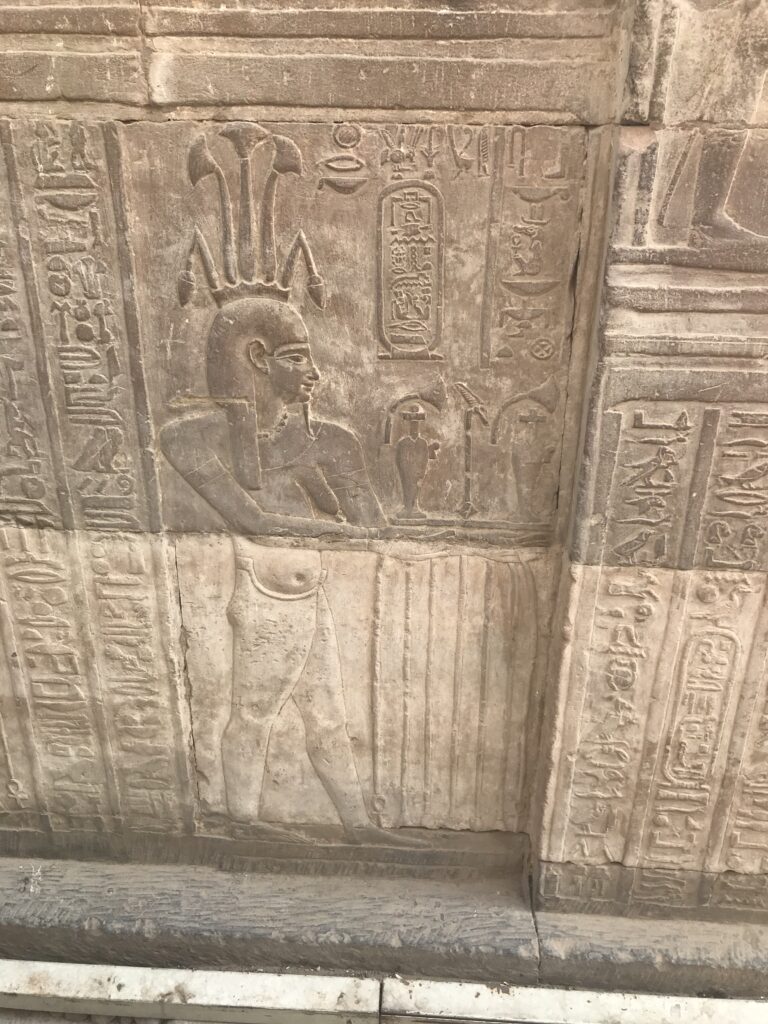
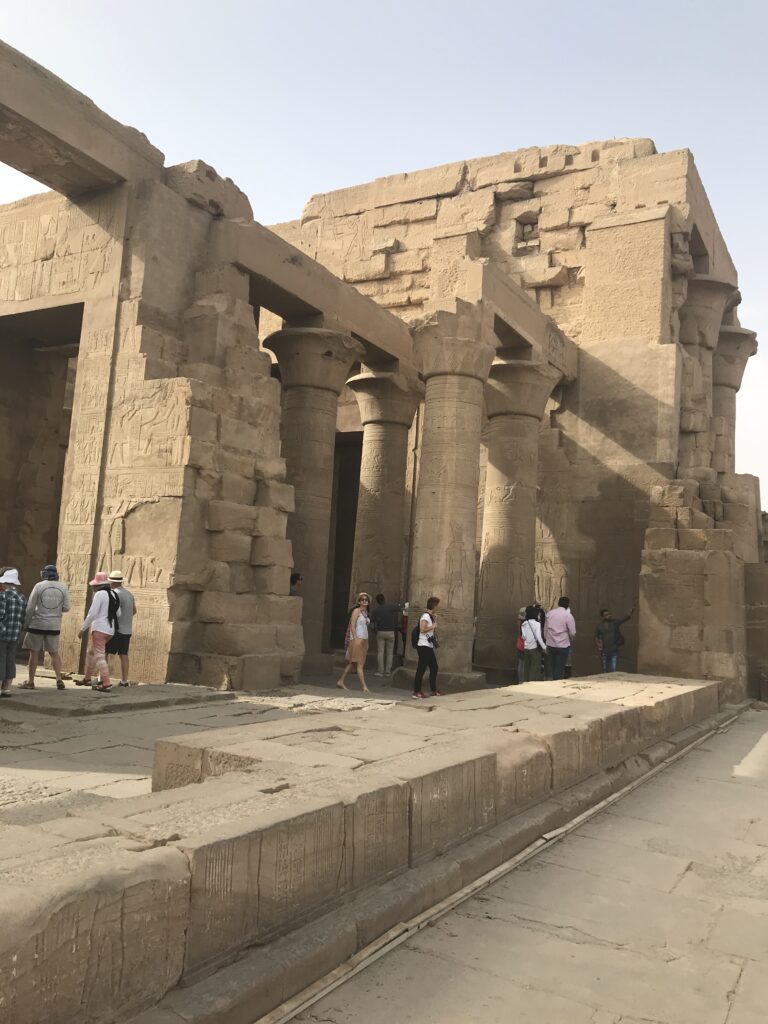
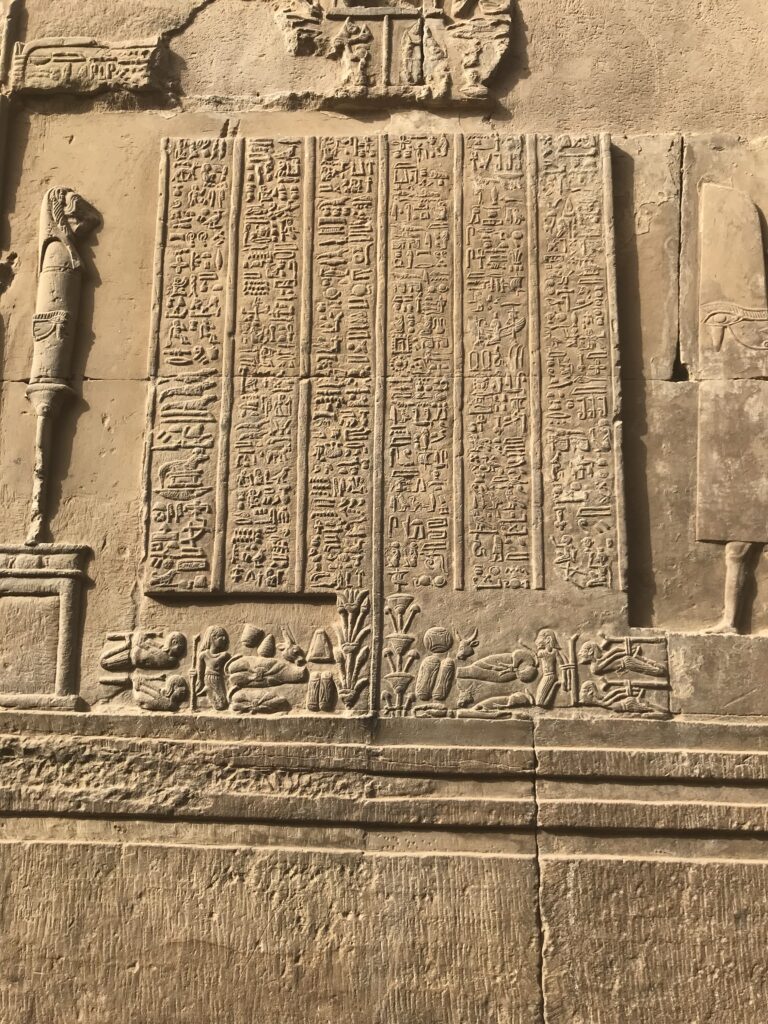
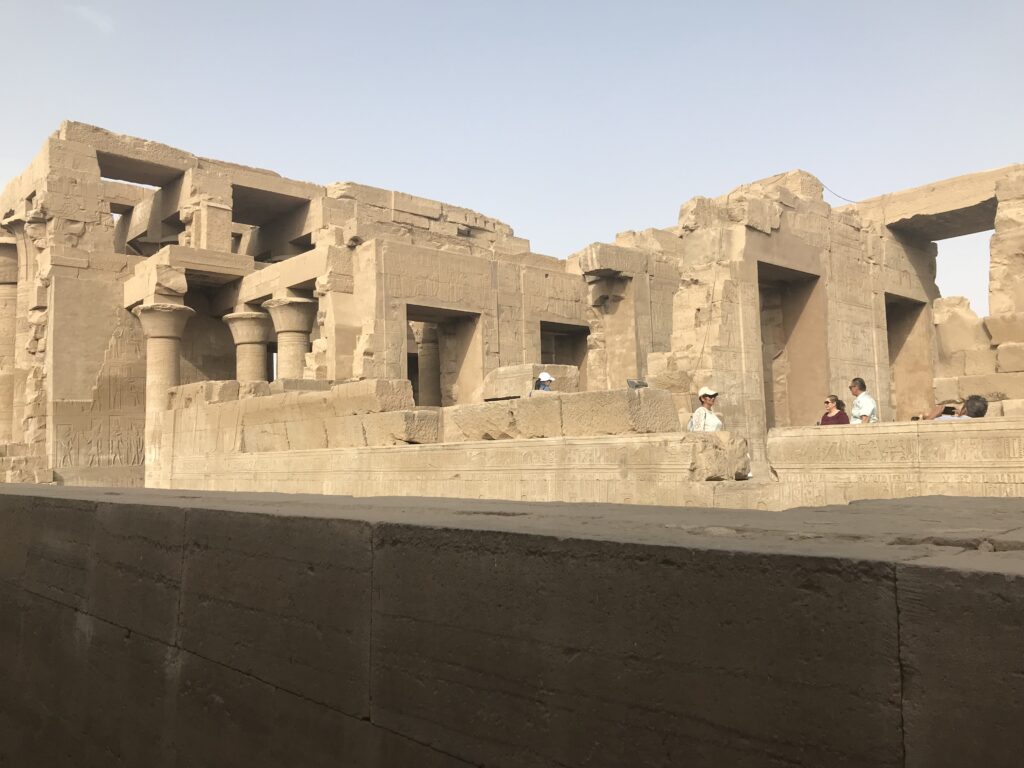
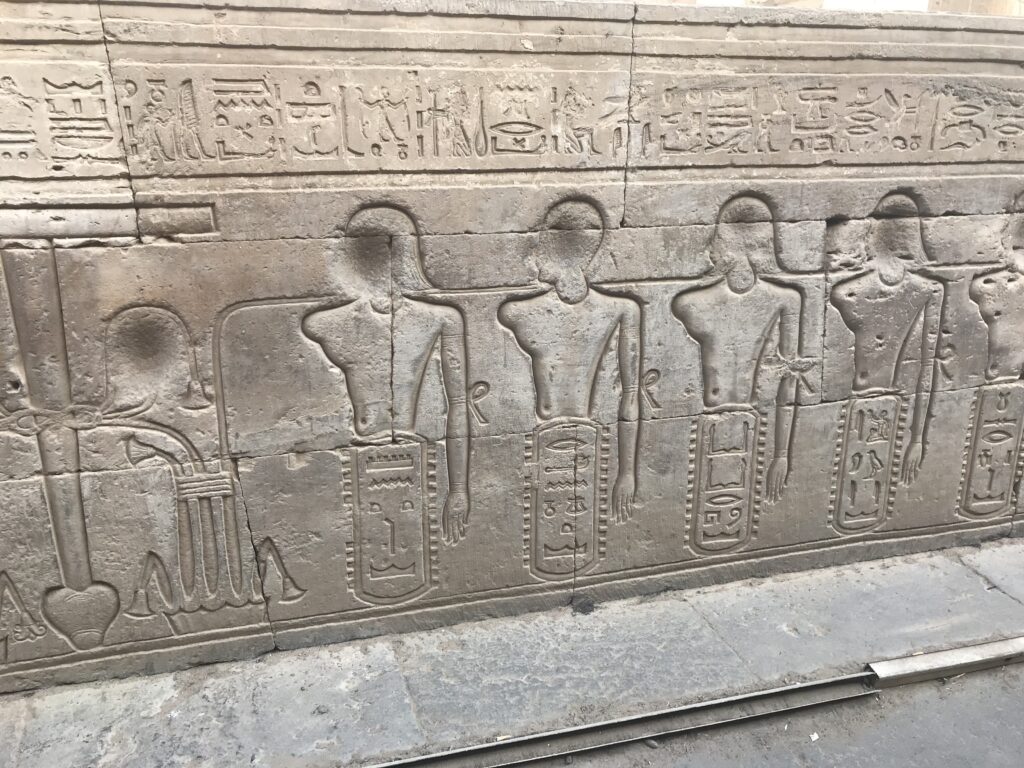
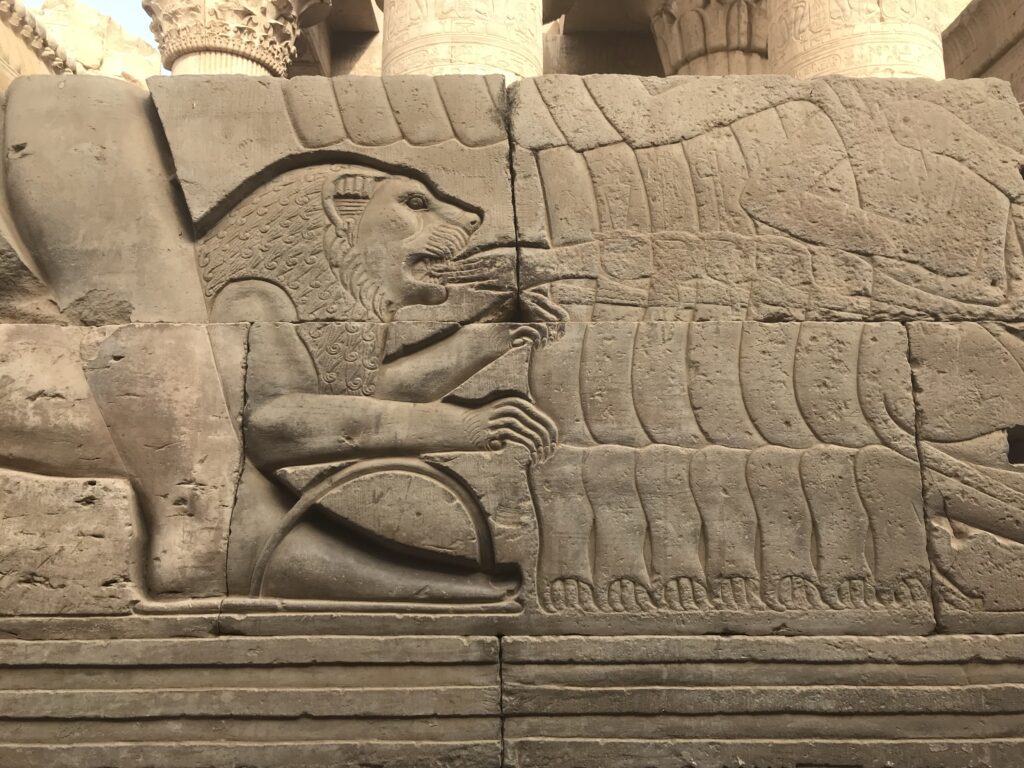
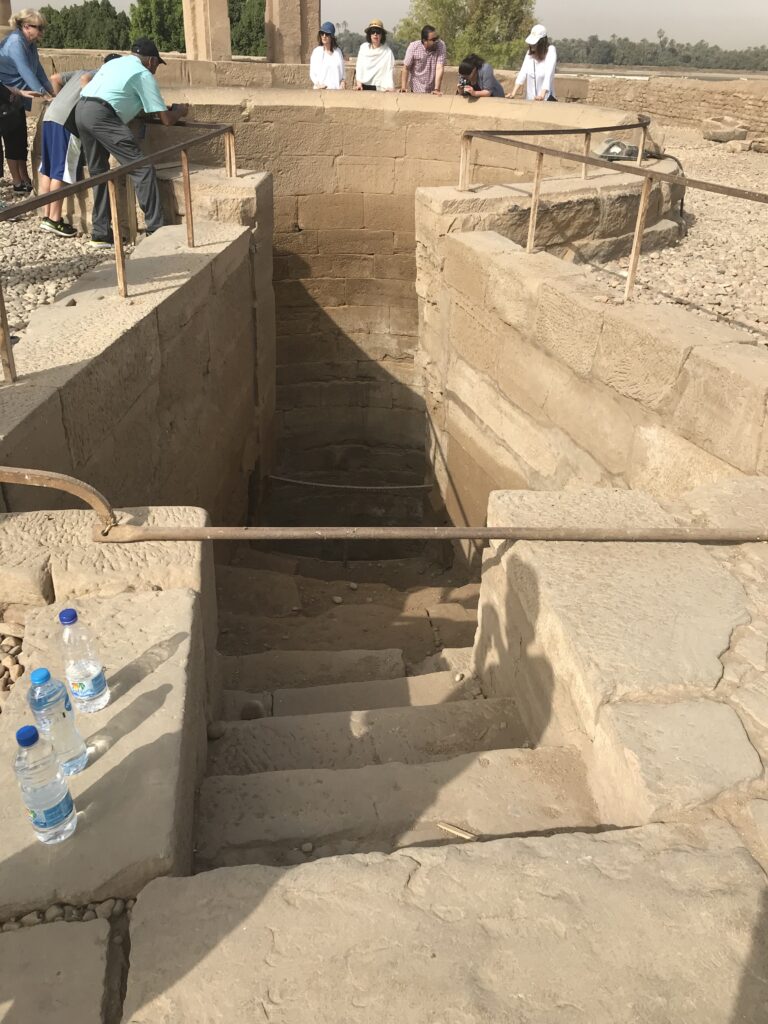
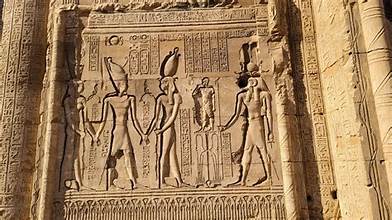
This morning we sailed to the site of the ancient trading town at Kom Ombo, which sat on the great caravan route from Nubia. Here we toured the double temple, dedicated to both the crocodile-headed god Sobek and to the falcon-headed god Haroeris (2,200 years old). The two temples are exactly symmetrical with twin entrances, two linked hypostyle halls with carvings of the two gods on either side, and twin sanctuaries. These Ptolemaic temples overlook the Nile and feature fascinating drawings on the walls, including detailed drawings of surgical instruments which suggests that the temple was a place of healing. Near the Ptolemaic gateway on the southeast corner of the complex is a small shrine to Hathor, while a small mammisi (birth house) stands in the southwest corner. Beyond this to the north is a deep well that supplied the temple with water, and close by is a small pool in which crocodiles, Sobek’s sacred animal, were raised. The path out of the complex leads to the new Crocodile Museum with a beautiful collection of mummified crocodiles and ancient carvings. A side activity–at the entrance to the tomb, local crocodile handlers showed us how to hold the crocodiles and gave us an opportunity to try. This variety was quite small.
Edfu–Temple of Horus
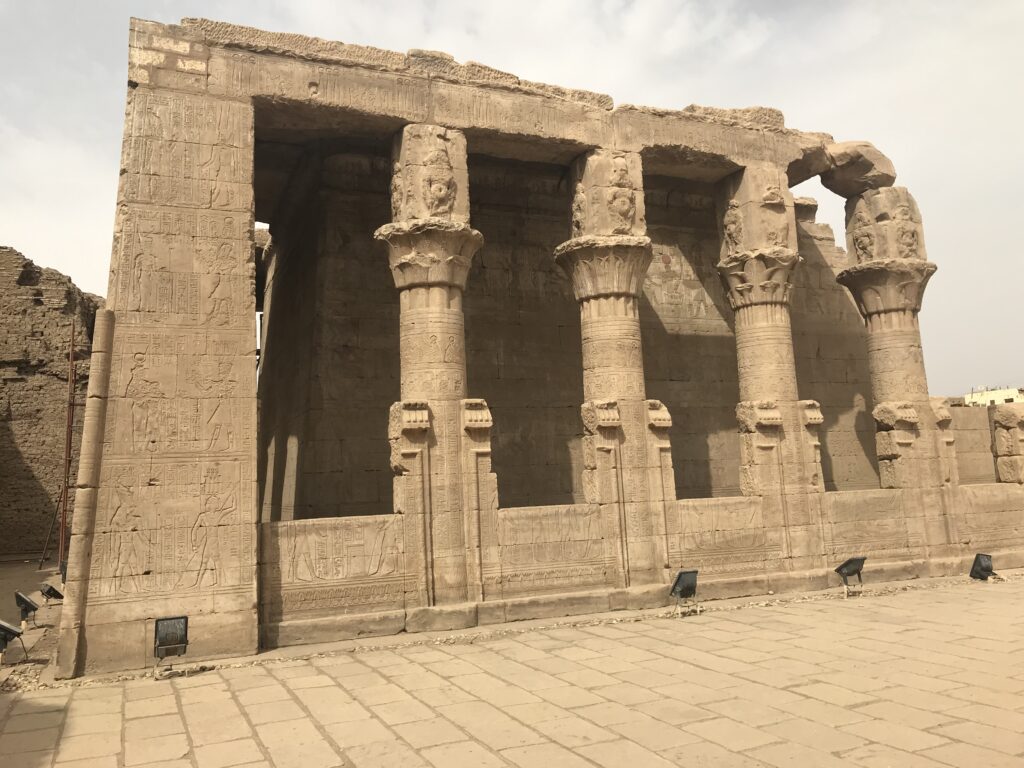
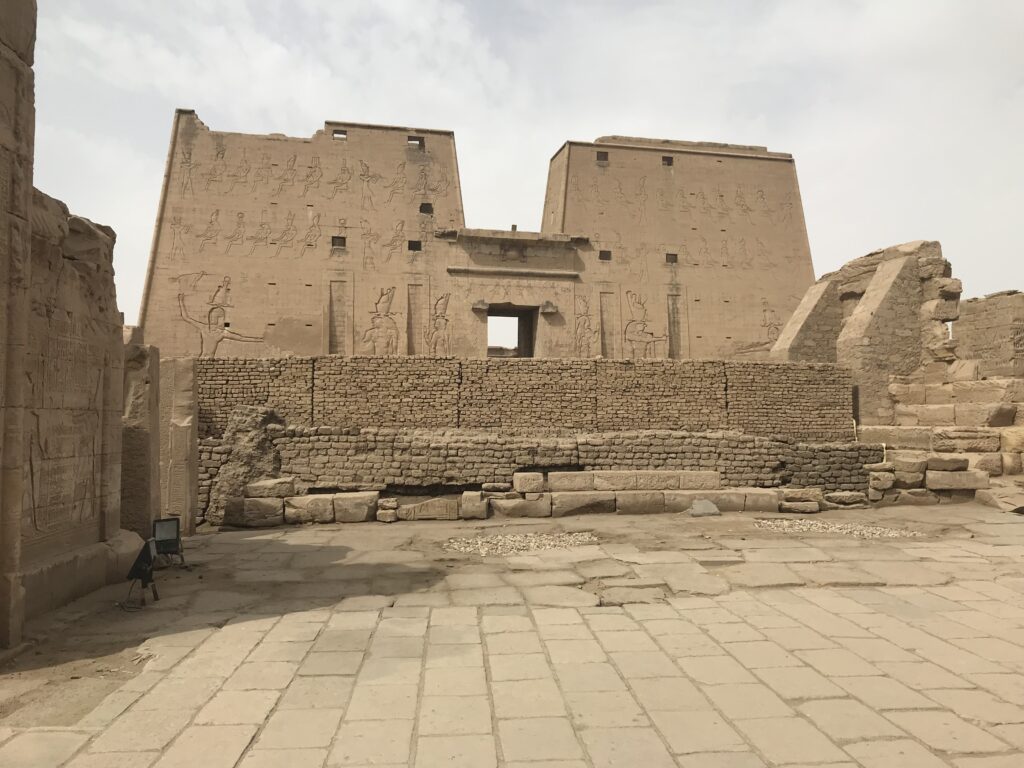
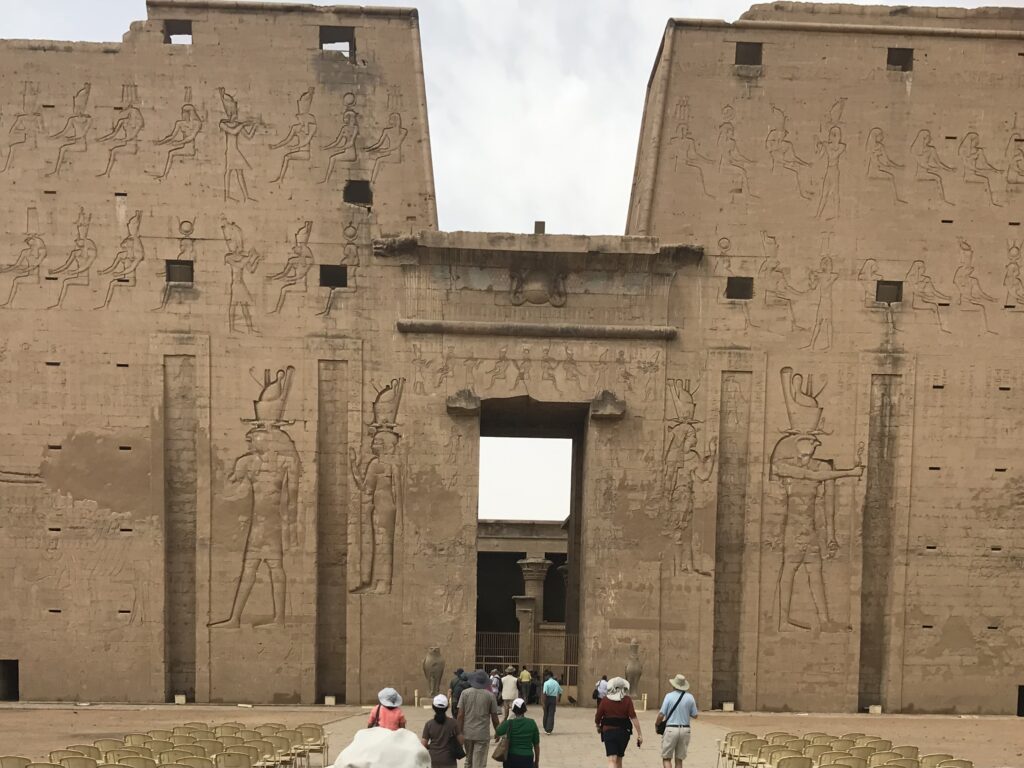
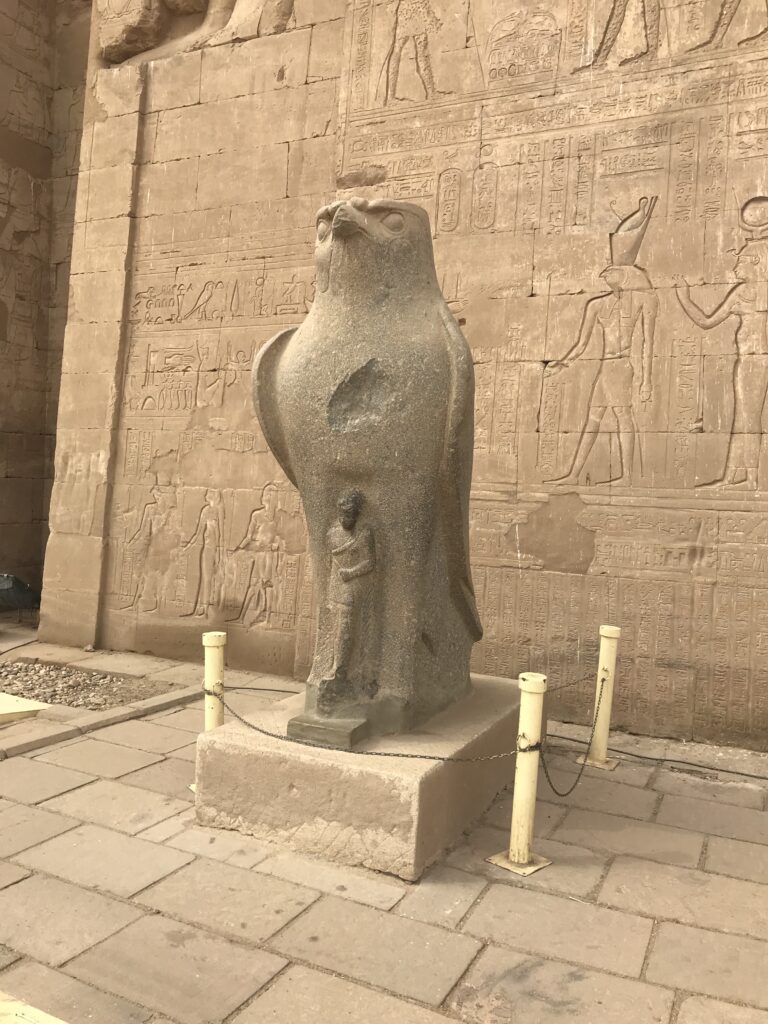
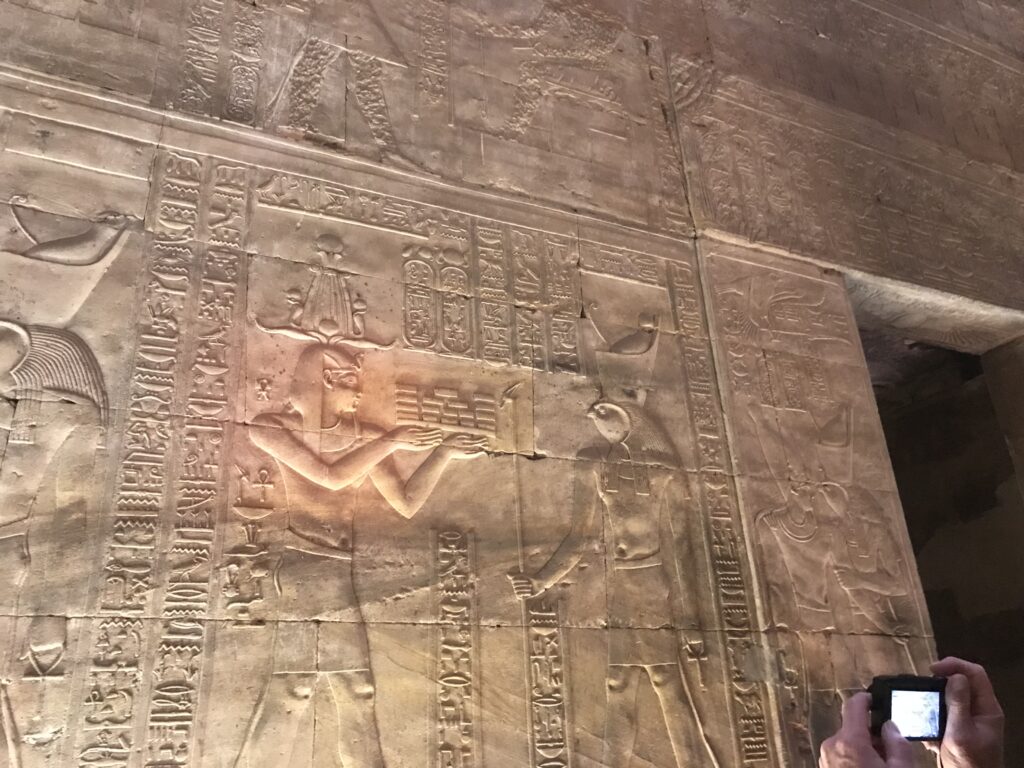
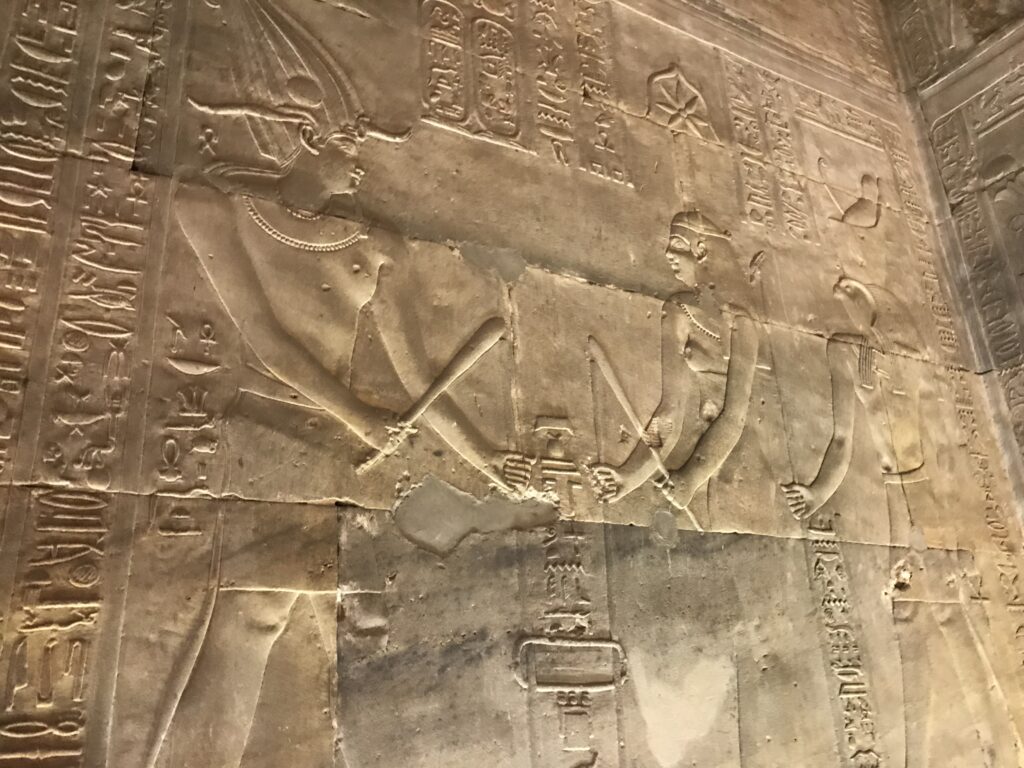
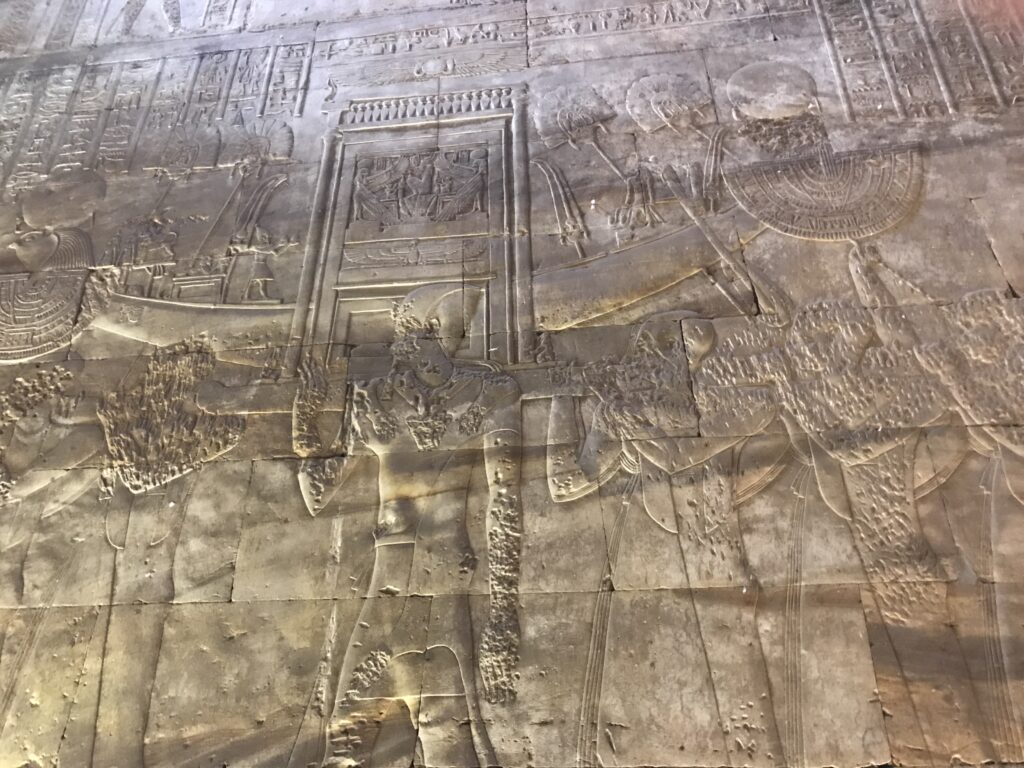
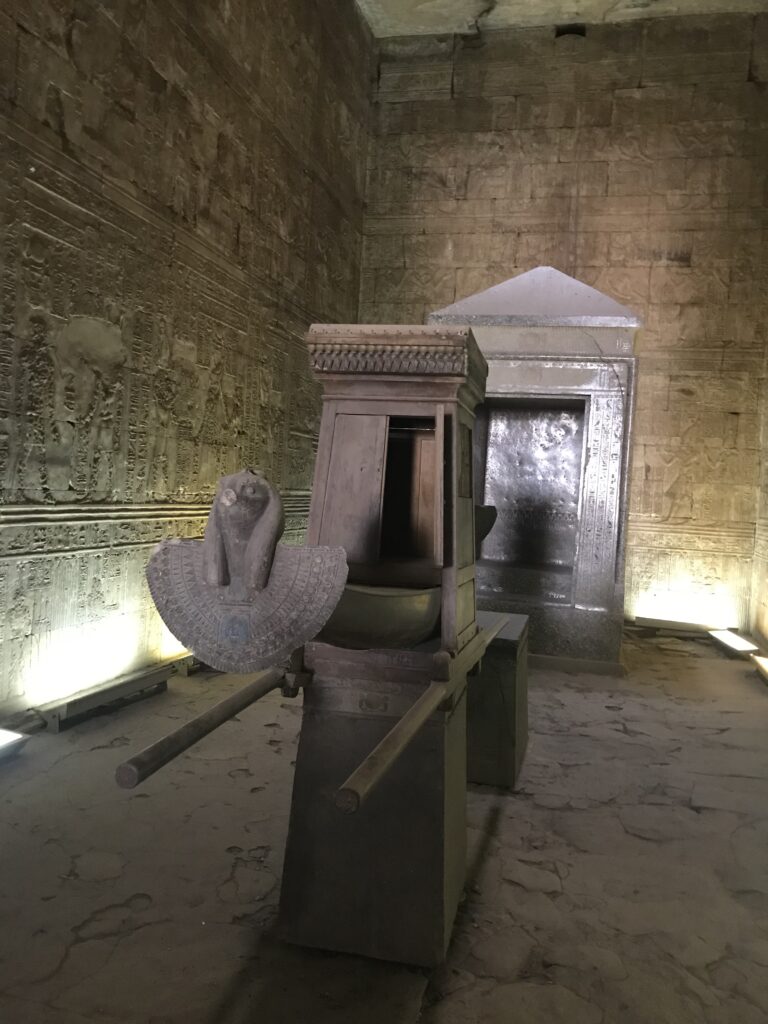
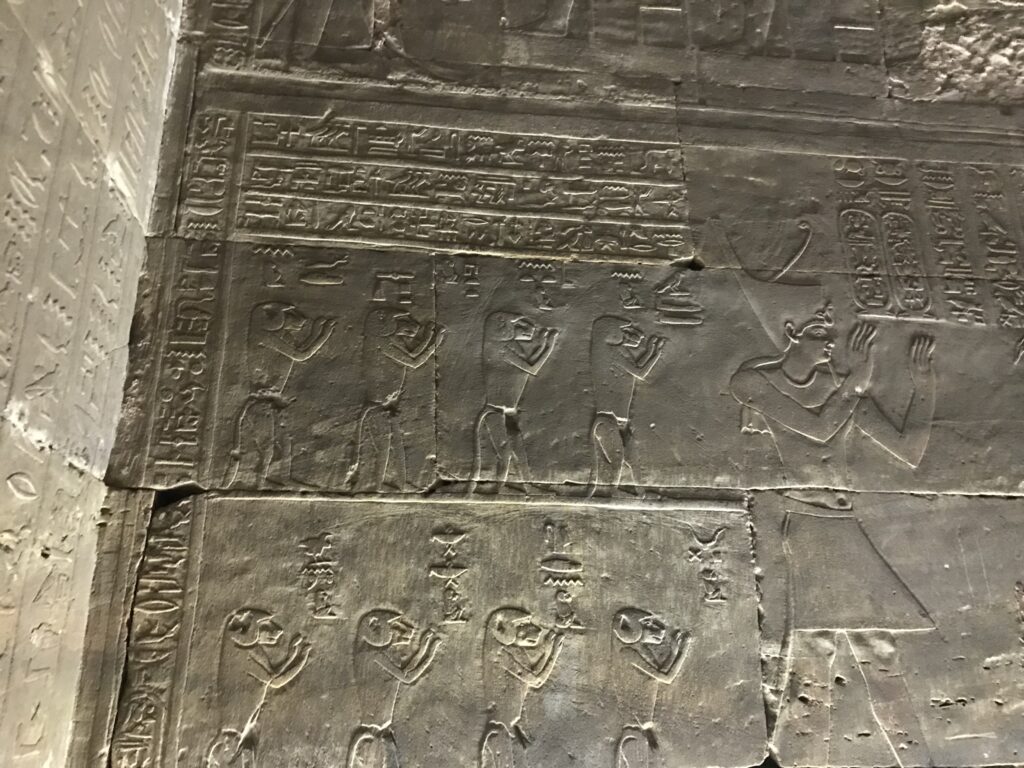
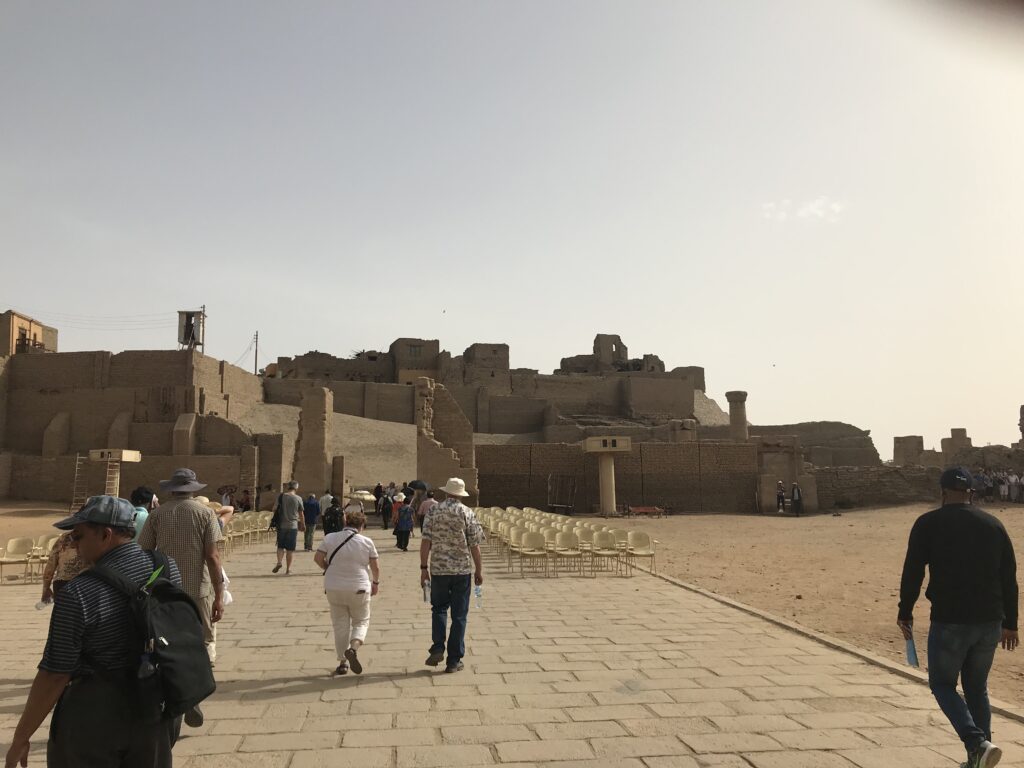
Then we sailed to Edfu to explore the temple of Horus, considered Egypt’s best-preserved ancient temple. Its construction began under Ptolemy III in 237 BCE and was completed 200 years later. Twelve enormous columns stand in front of the Great Halls. The inscriptions on its walls provide important information on language, myth, and religion during the Hellenistic Period in Egypt. There are also important scenes and inscriptions of the Sacred Drama which related the age-old conflict between Horus and Seth.
Esna–Temple of Khnum
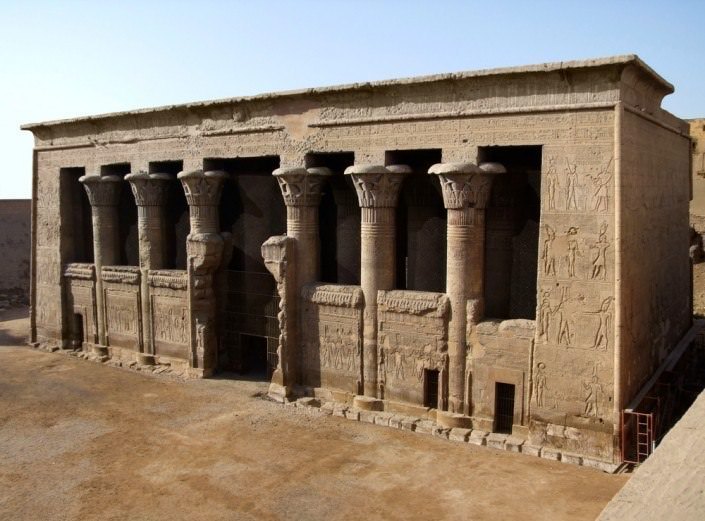
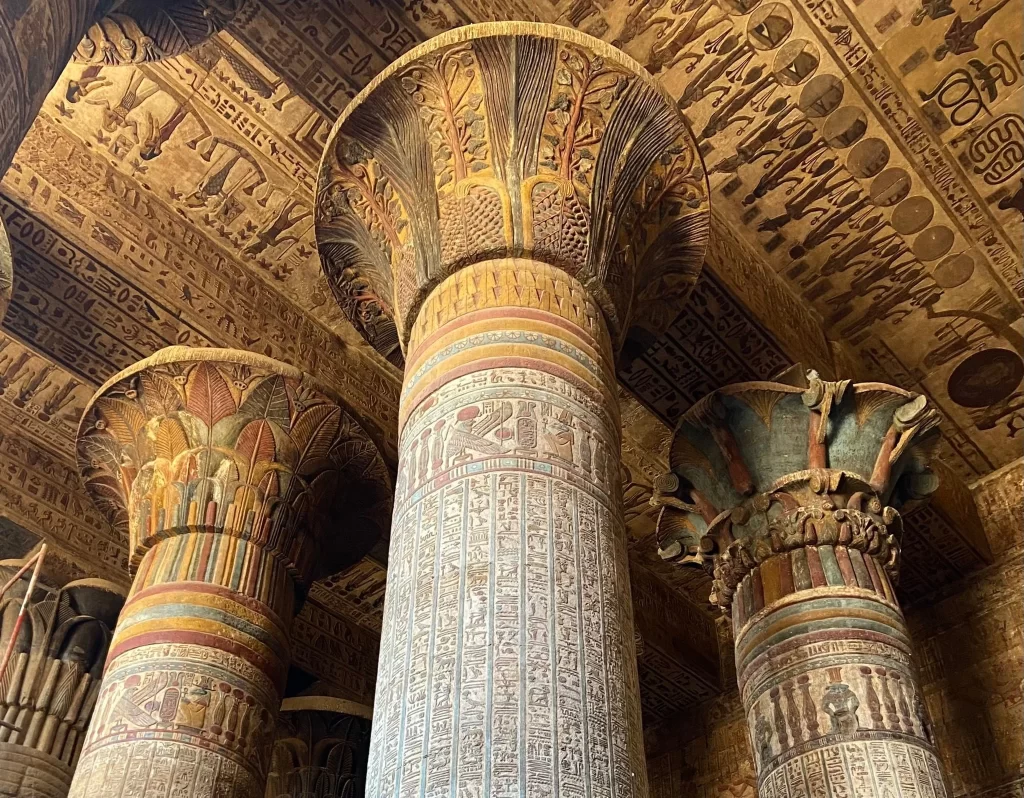
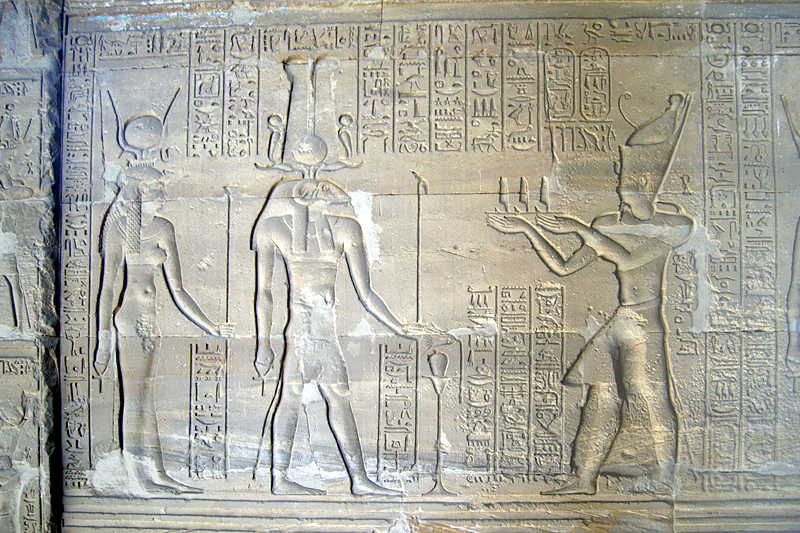
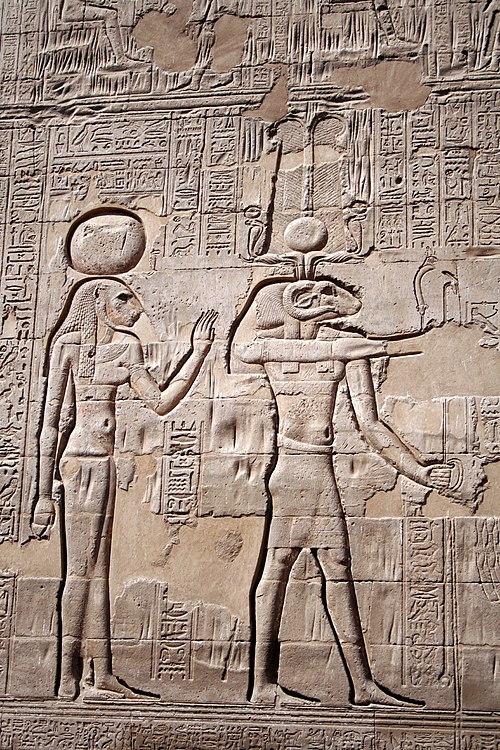
Our final stop on our trip to Luxor was Esna where we saw the Temple of Khnum, the ram-headed creator god. Most of the temple is covered by the old town of Esna. A quay connecting the temple to the Nile was built by Roman emperor Marcus Aurelius (AD 161–180). The roof of the entryway is supported by 18 columns with wonderfully varied floral capitals in the form of palm leaves, lotus buds and papyrus fans; some also have bunches of grapes. The roof is decorated with astronomical scenes, while the pillars are covered with hieroglyphic accounts of temple rituals. beside the smaller doorways, are two hymns to Khnum. On the walls, Roman emperors dressed as pharaohs make offerings to the local gods of Esna.
Next up is Luxor and the Valley of the Kings. It will be hard to choose pictures from all the tombs we visited.
Leave a Reply